 ManualGo.com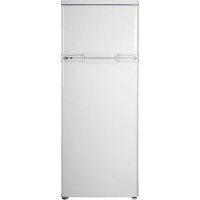
HRFN250D - Fridge HAIER - Free user manual and instructions
Find the device manual for free HRFN250D HAIER in PDF.


Download the instructions for your Fridge in PDF format for free! Find your manual HRFN250D - HAIER and take your electronic device back in hand. On this page are published all the documents necessary for the use of your device. HRFN250D by HAIER.
USER MANUAL HRFN250D HAIER
EC- Declaration of conformityInside cover
1 Protection of the environment and instructions for disposal 2
2 Selecting the installation location 2
3 Installing the appliance 2
Potential hazards2 / 3 / 5 / 6
4 The rating plate 3
5 Connecting to the power supply 3
7 Supercooling function 4
9 Changing the lamp 4
11 Arranging the produce 4
13 Freezer compartment
14 Preparing ice cubes, ice cream etc. 5
15 Placing the appliance out of service 5
16 Cleaning and care 5/6
19 What to do if 7/8
20 Getting your appliance serviced / After-sales service 8
21 Building into a fitted kitchen 8
22 Guarantee conditions 8
Please read these user instructions carefully to understand, quickly and thoroughly, how to use your new fridge / freezer.
Underline any parts you consider particularly important. Look after this document so that you may consult it in future or pass
it on to any future owners.
You have purchased a reliable appliance which will serve you for many years if it is used and maintained correctly
The detailed illustrations can be found on the last pages of this user manual.
This appliance is designed for domestic use. If it is installed for professional or commercial use, the standards applicable to
the respective trade must be observed.
The appliance has been tested against leakage in compliance with the relevant legal safety standards.
Should you have bought your new fridge / freezer to replace an old appliance, please make sure that all existing latch- or
bolt-locks on the old appliance are destroyed, before you dispose of it.
This will ensure that a child cannot get trapped inside.
Please have the old appliance ecologically disposed of by a company specialised in environmental protection, since the
appliance may contain harmful components in the refrigerant and this must be removed with special equipment, Please
check with your dealer or with your local authority.
Make sure that the refrigerating system containing the refrigerant, especially the heat exchanger at the back of the appliance,
is not damaged during transportation to the disposal or collection site, so that you can be sure that the refrigerant does not
leak out. Details of the utilised refrigerant and insulation propellant are on the rating plate affixed to the appliance.
After installation of the appliance, the plug should be easily accessible.
If the power cable is damaged, an approved cable provided by a manufacturer or a service agent must be used for replacement.
Warning: Keep the appliance well ventilated; remove any transport supports from cavity.
Warning: Do not usa hard objects to remove frost.
Warning: Ensure the refrigeration pipeline cannot be damaged.
Warning: Do not use electric appliances within the food storage compartment except for models recommended by the manufacturer.English Instruction for use Refridgerator
The user instructions apply to several models, for this
reason there may be some differences in the details
given, according to the type of the appliance..
1 Protecting the environment / advice for disposal
serves to protect the appliance during transportation and
recyclable materials have been used for packaging.
Corrugated board/cardboard (mainly from waste paper).
- shaped parts in PS (foamed CFC- free polystyrene)
- foils and bags in PE (polyethylene)
- strapping tapes in PP (polypropylene)
- Please hand over all packaging to the nearest official
collection point, so that all the different materials can
be re-used or recycled as far as possible and any
illegal depositing of such materials is thus avoided
2 Deciding where to locate your appliance
In order to avoid any damage or injury to persons or
things, the appliance should be unpacked by two people
and placed in the chosen location
Before positioning it, check that your new appliance
has no visible outer damage.
On no account should you start up your appliance if it is
Check the appliance carefully for:
Ŷ Damage to the packaging which might indicate that
appliance has been mishandled during
Ŷ Damage to the outer casing
Ŷ Any visible damage to the cable / plug
If in any doubt let the customer service department
check the appliance.
It must at all costs be avoided, that any environmentally
damaging refrigerant leaks out by starting up the
3 Installing your appliance
a) Unpack the fridge / freezer.
b) In order not to unnecessarily waste raw materials, the
handles (requiring smaller packaging) have not been
mounted onto the separate parts of the appliance.Mount
the door handles and at the same time anyother
enclosed parts according to the relevant
instructions enclosed separately.
c) Remove any objects from inside the appliance
d) Carefully remove all film and adhesive tape from the casing
e) Remove any polystyrene pieces from around the
compressor (if present).
f) Remove all documents and accessories from inside the
g) Clean the inside of the appliance with
lukewarm water and vinegar and dry it thoroughly with
Do not use washing liquids, sharp or abrasive
household products or any other cleaning agents
Ŷ Make sure that the pipes for the circulation of the
refrigerant are not damaged in any way during
installation of the appliance.
Ŷ The appliance must only be used for the purpose for
which it is intended.
Ŷ The appliance. must be placed on a firm, level
surface. This is the only way to ensure that the
refrigerant can circulate freely and thus ensure that
your appliance will work effciently.
Ŷ If possible, place your appliance in a cool, well
Ŷ Do not place your appliance in direct sunlight, nor in a
room at high temperature.
Ŷ Do not place your appliance in the vicinity of any
sources of direct heat such as heating, ovens, cooking
stove etc. (This would mean the compressor would
have to work harder and as a result the power
consumption would be considerably higher).
If installation near a direct heat source cannot be
avoided, we recommend fitting a suitable insulation plate
between the appliance and the heat source (do not use
asbestos), or at least the following minimum distances
Ŷ from a gas or electric cooker 30cm
Ŷ from a radiator or oven etc 30 cm
Ŷ from another refrigerating appliance 30 cm
Do not place any appliances, such as microwaves,
toasters etc. which give off heat on the appliance
Never obstruct the ventilation grille.
Always pull out the plug itself and never pull the cable
when cutting the appliance off from the mains supply.
Leave the appliance standing in its final position for
at least 2 hours before switching it on, so that the
circulation of the refrigerant stabilises and no
operating problems occur.
Before connecting up the appliance, make sure that it
is absolutely dry inside - especially in the corners..
Depending on its composition, the refrigerant can be
easily inflammable. The refrigerant circuit has been
hermetically sealed and has been tested many times for
Any inexpert interference might well create a fire hazard.
Make sure nothing mechanically effects the circulation of
the refrigerant, nor, in particular, the accessible parts
around the compressor..
Only expert professional personnel should intervene
on the refrigerating system.English Instruction for use Refridgerator
Any refrigerant spilling out can injure your eyes.
In the event of eye contact with the refrigerant, wash your
eyes instantiy under plenty of running water and
call/consult a doctor (an eye specialist) immediately..
The appliance, according to its climate category, is
meant for use at certain room temperatures.
These temperatures should not be exceeded! The
climate category for your particular appliance is marked
on the rating plate. The categories are:
The rating plate with the technical data is affixed at the
side on the inner wall or on the back of the appliance.
Take a note of the technical data
Copy here below the technical data from the rating plate
so that it is easily accessible without having to move the
Operating voltage V / 50 Hz
Maximum absorbed powe (W) Watt
Safety fuse (A) Amp
Power consumption kWh/24h
Freezing capacity kg/24h
5 Connecting up your appliance to the mains
Your appliance must be connected only to a grounded
Power socket which complies with relevant standards
And has been installed by an authorised specislist.
Before you plug in your appliance to the power socket,
make absolutely sure that the voltage (V) and the safety
fuse (A) for the main fuse box stated on the appliance's
rating plate match your electrical supply.
If these do not match, notify the nearest service
department or your dealer immediately.
The appliance must not be connected up to an inverse
rectifier (e.g. solar panels).
Ŷ The appliance is not to be connected to an inverter
e.g. solar power panels.
Ŷ The appliance is not to be connected via an extension
6 Using your appliance
a) Switching on / off and Selecting the Temperature
Temperature dial (Thermostat)
The temperature dial switches the appliance on and off
and sets the cooling temperature
b) Switching on the appliance:
Turn the temperature controller clockwise. The appliance
is switched on. ( Turn the controller only as far as the
stop, otherwise it will be damaged)
Ŷ The interior light is switched on (not fitted to all
Ŷ The compressor runs unril the set temperature is
reached inside the appliance.
Ŷ The internal temperature is shown in the display (not
installed in all appliance models).
c) Temperature settings:
Turn dial left to lowest setting = slight cooling
Turn dial right to highest setting = lowest temperature
The temperature must be set according to:
Ŷ he appliance's room temperature
Ŷ quantity of stored food
Ŷ how often the appliance is opened
We recommend a medium setting. You will soon learn,
through observation, which is the most suitable setting
for your requirements.
A correct temperature setting is important for storing
food. Food is spoiled very quickly by micro-organisms
and this can be hindered or delayed by a correct storage
temperature. The temperature influences the rate of
growth of micro-organisms. These processes are slowed
down by a falling temperature.
This is why we recommend a middle setting of the
temperature controller (ca. 5
d) Switching off: Turn the controller counterclockwise
Ŷ Interior light in fridge compartment goes out
Ŷ Compressor is switched off
Ŷ The temperature display (where fitted) goes out
7 Supercooling function
(not fitted to all models):
The supercooling function enables the fridge
compartment to be cooled very fast to ca. 2 ć.
You are advised to press the supercool button when you
wish to cool large amounts of freshly stored produce or
beverages very fast.
Ŷ Press the supercool button.
The control lamp lights. The appliance now runs at its
maximum cooling capacity and the temperature falls:
Switch off the supercool button after ca. 4 to 6 hours. On
some appliance models the supercooling function cuts
Ŷ Press the supercool button so that the control lamp
(where fitted) goes out.
The appliance now operates at its normal cooling
(not fitted to all models)
A switch is installed on all appliances fitted with a light.
When the fridge is switched on via the temperatureEnglish Instruction for use Refridgerator
controller, the light is switched on automatically when the
door is opened and off when the door is closed.
The lamp is protected by a transparent cover.
Use only replacement lamps of max. 15 W with base
To change the lamp, proceed according to the separately
enclosed instructions and / or the illustration at the back
of these instructions.
9 Changing the lamp:
Ŷ Pull out the mains connector plug or unscrew or
Ŷ Remove the transparent lamp cover.
Ŷ Remove and change the lamp.
Ŷ Replace the lamp cover
Never fit a lamp with a higher wattage rating than that
stated above. The voltage (V) marked on the lamp must
always correspond to that shown on the appliance rating
10 Temperature zones
Through natural air circulation, different temperature
zones are produced inside the fridge compartment which
are suitable for storing different products. The coldest
zone is directly above the vegetable tray(s); that is to say
in the lowest area and against the rear wall (suitable for
instance for sausages and meat products); the warmest
zone is in the upper front and in the door (suitable for
butter and cheese for spreading).
So arrange your produce according to the following table
and store it so that the air can circulate properly. Do not
pack items in too closely.
In normal operation the temperature display (where
fitted) on the control panel shows the actual temperature
in the central zone inside the appliance.
If the temperature in the appliance is not in the possible
temperature display range (between 2 and 8 ć), only a
line shows in the temperature display
11 Arrangement of the produce (from top to bottom)
1. Door compartments
c) Small glasses or bottles, cans, herbs and spices
d) Large beverage bottles, cans
2. Fridge compartment (metal racks / glass shelves)
b) Bread and confectionery, ready-cooked meals
c) Dairy products / sausage and meat products
d) Sausage and meat products
e) Fruit, vegetables, salad produce
12 Moving the storage elements
In some appliance models the storage elemenls can be
moved according to the height of the products.
Ŷ Pull the element forward as far as the stop and take it
out from the front by lifting.
Ŷ Replace the storage element at the desired location
with the rear edge upwards.
The rear edge must be upwards to prevent products
from touching and freezing to the rear wall
Divided storage element (where fitted).
The front part of a divided storage element can be
taken out. This enables higher products to be placed
Moving the storage / bottle retainers in the inside of
the door (not possible in all models)
Ŷ Release the storage / bottle retainer from its
mountings by pressing together at the side and pulling
Ŷ Replace the storage / bottle retainer at the desired
location. Make sure that it is correctly and firmly
engaged in the mountings
Moving the bottle holder
(not possible in all models)
The bottle holder can be moved left or right. This renders
individual bottles more secure when opening and closing
Ŷ Food products which are susceptible to taking on or
giving off aroma or taste are always to be stored in
closed containers or suitable packing.
Ŷ Fruit, vegetables and salad produce can be stored
unpacked in the vegetable tray(s).
Ŷ Suitable packing materials for food are reusable
plastic film, aluminium foil, also metal or glass
Ŷ Products are not to touch the rear wall. otherwise
Ŷ Always leave hot food and beverages outside the
fridge sufficiently long to cool.
Ŷ Always open the door briefly so that the appliance
interior is not warmed. This saves Energy.
Ŷ Never store explosive materials or products with
flammable propellants (e.g. cream dispensers with
pressure capsules, spray cans) Risk of
Ŷ Do not place edible oil in expandable containers in
the fridge door. These can cause stress cracks in the
plastic of the door.
Ŷ High percantage alcohol is only to be stored in the
cold zone, upright and absolutely securely sealed.
13 Freezer compartment (where fitted)
The 3- star (***) or 4-star (*/***) freezer compartment is
suitable for storing deep frozen food (already
frozen food), for freezing and short-term (2-3 weeks)
storage of small quantities of fresh food, also for preparing ice
cubes and ice creams, sorbets etc.
Be sure to comply with the producer's directives on the
storage period for frozen food.
Freezer compartments with a 2-star designation (**)
Freezer compartments with a 1-star designation (*)English Instruction for use Refridgerator
reach - 6ć and colder.
They are therefore not suitable for deep freezing and for
the long-term storage of fresh food.
However, depending on their type, fresh food or deep
frozen food can be kept here for 3 to 5 days longer than in
the fridge compartment.
So-called ice compartments (no star designation) reach
0ć and colder. They are the least suitable for freezing
and long-term storage of food.
However, all the above mentioned compartments are
excellent for preparing ice cubes.
The cooling temperature is set via the temperature
controller. A temperature of - 15ć is necessary to
freeze fresh food and for the long-term storage of food.
At this temperature the growth of micro-organisms is
largely inhibited. Once the temperature rises above 10ć,
decomposition by the micro-organisms commences and
the storage life of the food products is reduced.
For this reason fully or partly defrosted food is only to be
refrozen if it has been processed to a ready-to-eat meal
(cooking or roasting). The high cooking temperatures will
ensure that most micro-organisms will be destroyed.
The higher the setting at the temperature controller, the
lower the temperature in the appliance.
A middle setting of the temperature controller is sufficient
for normal use of the appliance and the
storage of food in the freezer compartment.
We recommend a setting between middle and maximum
for normal use and for longer-term storage of food in the
freezer compartment.
Ŷ Do not store cans and bottles of beverages containing
carbon dioxide in the freezer compartment. The
contents expand on being frozen and can burst the
container. Risk of injury and damage!
Ŷ Bottles placed in the freezer compartment for rapid
cooling must be taken out after one hour at the most.
The bottles can burst. Risk of injury and damage!
Ŷ Before deep frozen ice creams and ice lollies are
eaten, they should be left a few minutes after removal
from the appliance. This is to prevent injury to the lips
and tongus (torn skin). For the same reason, avoid
contact between wet hands and the ice covered
Important information
Ŷ Store only properly packed deep frozen food in the
freezing compartment.
Ŷ When storing ready-to-eat deep frozen food, note the
use-by date stated by the producer.
Ŷ Remember that only good quality fresh food is suitable
Ŷ Freeze fresh food in suitably sized portions.
Ŷ Never freeze more than 1-2 kg of food.
Ŷ Be sure to use suitable packing materials (reusable
plastic film, aluminium foil, freezing containers).
Ŷ Press all the air from the packet.
Ŷ Seal the packets with elastic bands, plastic clips,
string or cold-resistant adhesive tape.
Ŷ Plastic film bags and tubes can also be sealed with a
film welding appliance.
Ŷ Mark the sealed packet with contents, weight and date
Ŷ Place the produce with its broad surface on the floor
of the freezer compartments so that that it freezes
right through in the shortest possible time.
Ŷ To prevent them freezing together make sure that
packets are dry before placing in the compartment.
To prevent partial defrosting place food to be frozen
so that it is not in contact with food already frozen.
Ŷ Do not refreeze fully or partly defrosted food unless it
is to be processed to a ready-to-eat meal (cooking or
Ŷ Do not consume food which has been stored beyond
its use-by date. This can result in food poisoning.
14 Preparing ice cubes, ice cream, sorbets etc.
Ice cubes: Three-quarters fill the ice cube tray with
water and place this on the floor of the freezer
compartment. The ice cubes can easily be removed
from the tray by placing the tray briefly under running
Ŷ Ice cream: Use an ice cube tray without the
separator. lce cream containing fat (cream) will take
longer to freeze than water-based ice cream. The ice
cream can be easily removed from the tray by placing
the tray briefly under running water.
15 Placing the appliance out of service
If the appliance is to be placed out of service for a long
period, turn the temperature controller to 0" and clean
the appliance as described in the chapter "Cleaning".
To prevent odoure and the formation of mould, leave the
appliance door open all the while it is not in use.
16 Cleaning and care
Before cleaning it is important to pull out the mains
connector plug or unscrew/ trip the line-side fuse.
For the upkeep of the external appearance of your fridge
/ freezer, clean the outside every now and again with
furniture polish or with an enamel protecting product
(never, on any account use it inside). Clean the door seal
with warm water now and again but do not use any
cleaning products. Do not apply any oil or grease to the
Clean the inside of the appliance at regular intervals.
Ŷ You are recommended to clean the fridge
compartment at least once per month and the freezer
compartment after each defrosting.
Ŷ Remove the produce from both compartments and
store in a cool place.
Ŷ Take out all the removable parts from the appliance.
Ŷ The various parts inside the fridge / freeaer are
generally not suitable for dishwashers. These shouldEnglish Instruction for use Refridgerator
Ŷ be washed by hand with warm water and a little
washing-up liquid. Never use the cleaning agent neat
and on no account use any abrasive or acid, i.e.
chemical cleaning products. A general all purpose pH
neutral cleaning agent is recommended.
The use of steam cleaning appliances is
extremely dangerous and is therefore strictly
Ŷ Wipe the interiors and accessories with clean water
and dry everything with a cloth. Then leave the
appliance to air for 3-4 minutes.
Ŷ Do not damage or remove the rating plate from the
inside of the appliance - it is important for the after-
sales service and for the subsequent disposal.
Ŷ Take care that no cleaning water comes into contact
with current-carrying parts inside the appliance.
Ŷ If the rear of the appliance is fitted with a heat
exchanger, - also known as a condenser -
periodically remove any accumulation of dust and
fluff. Dust and fluff obstruct the dissipation of heat
from the interior and considerably increase the
energy consumption. The best way to remove dust
from the heat exchanger is to use a soft brush or a
Ŷ Make certain that the water from defrosting can run
aperture occasionally, using a cotton wool bud or
Ŷ No cleaning water is to ren through the defrost
water drain hole. This would cause the
evaporation trap to overflow and cleaning water
would spill out on to the floor.
Whilst the compressor (refrigeration unit) is running, frost
and condensation can form on the rear wall. These do
not have to be removed as the fridge automatically
The defrost water runs from the channel via the drain
hole, into a vessel from which it evaporates..
b) Freezer compartment (where fitted)
The freezer compartment does not automatically defrost
as the frozen produce is not permitted to defrost.
Defrost the freezer compartment occasionally, at the
latest however when a ca. 5 mm thick coating of ice has
formed. Carry out the actions described in the chapter
"Cleaning and care" and the following steps.
Never use electrical appliances such as hairdryers,
hot air fans, steam cleaners, defrosting sprays or
open flames (e.g. candles) for defrosting the freezer
The plastic interior could melt and the emerging foam -
gas could be ignited by sparks or open flame.
Never use a steam cleaning appliance to melt
coatings of ice in the appliance (extremely high risk
Ŷ Remove the frozen produce and wrap it in several
layers of newspaper of blankets.
Ŷ Keep the frozen produce in a cool place until the
freezer compartment is once more ready to use.
Ŷ Leave the door of the freezer compattment open.
Ŷ The layers of frost and ice in the freezer compartment
are formed through normal operation. Afrer a certain
thickness is exceeded, these act as insulation and
impair the transfer of cold.
Ŷ Do not scrape off this frost or ice coating as this can
damage the evaporator surface.
Ŷ Carry out defrosting as quickly as possible to prevent
the removed produce from defrosting.
Ŷ Continuously remove the water with a sponge
or pull out and emply the water tray underneath, in
the fridge compartment (not fitted to all models)
Ŷ Pull out the plug - where fitted - from the water drain
hole and replace the water tray in its guideway.
Ŷ You can speed up the defrosting by placing a vessel
of hot (not boiling) water with a pot stand in the
freezer compartment. In this case close the freezer
Ŷ Take care that the water tray - where fitted - does
Ŷ When the freezer compartment is fully defrosted,
empty the water collected in the tray into your kitchen
Ŷ Replace the plug in the water drain hole and replace
Ŷ Wipe the freezer compartment dry and replace the
Ŷ Re-connect the power supply to your appliance.
Ŷ Switch the appliance back on with the temperature
controller (see chapter "Switching on/off -
Temperature selection" ) and - where fitted - press
the supercool button ( see chapter Supercooling
Ŷ Close the appliance door.
18 Troubleshooting guide
High quality manufacturing processes and the use of the
latest refrigerating and freezing technology will basically
ensure the trouble-free functioning of your appliance.
If you suspect any fault, before contacting your nearest
service department directly or via your dealer, make sure
you have followed all instructions and advice given in this
user manual.English Instruction for use Refridgerator
The compressor (also known as the refrigerating motor)
must not operate continuously.
It is controlled by a thermostat which you set on the
temperature dial and switches on automatically when the
set temperature in the appliance is exceeded and
switches off automatically when it is reached again.
Noise can be heard in every compressor - refrigerating
system when it is switched on. These noises are
produced when the motor in the compressor is running
and by the refrigerant flowing through the refrigerating
system circuit. These noises are normal and do not
indicate any fault in the functioning of your appliance.
In unheated rooms and in cold weather conditions,
condensation can build up on the outer walls of the
This does not mean there is a fault and it will disappear
when the temperature increases.
Only call the service department, if after analysis of the
possible fault factors, you cannot find any cause for the
defect or you are not able to eliminate the fault.
Therefore first check under: what to do when "
19 What to do when :
a) The appliance does not function (it's not running).
Ŷ Is the plug in good order and is it plugged in the
Ŷ Is the electricity coming through?
(check this by possibly plugging in a small appliance
such as a hand mixer or hair dryer etc.)
Is the appliance switched on? (Temperature dial
should not be set to "0").
Ŷ Is the house installation fuse screwed in and intact, or
b) The appliance is not getting sufficiently cold
Compressor is running too often
Ŷ Did you make sure that the fridge / freezer was left to
stand for at least 2 houre before switching it on? ( To
stabilise the circulation of the refrigerating fluid ) see:
If no; Pull out the appliance plug connector,
lift appliance with door closed on to one side for a short
time, or place in an inclined position and then back on its feet. Plug
in again after 2 hours. Do not open the door for ca. 12 hours.
Ŷ If the door is closing correctly, the door seal is firmly
and uniformly pressed against the casing.
Test: place a sheet or writing paper between the seal and
the casing and close the door. The paper should be
difficuit to pull out on all sides.)
Call the after-sales service if the paper can be pulled out
without resistance at one or more points.
Ŷ Heavy ice formation on the internal walls of the
freezer compartment (see "Cleaning and care")
Ŷ Is the appliance exposed to direct sunlight or is it
sited too close to a heat source (stove, radiator etc.)
Protect the appliance from direct sunlight / check
distance from heat source / place insulation board
between appliance and heat source. (see "Selecting
installation location")
Ŷ Is it filled with an excessive quantity of fresh food
Ŷ Is the aeration and venting ok, is the ventilation grille
covered or is the heat exchanger (condenser) on the
rear outside wall of the appliance laden with dust?
c) The temperature in the fridge compartment is too
Ŷ Set the temperature controller to a lower setting
Ŷ Check whether the freezer compartment door is
Ŷ Has a large amount (more than 1 kg) of fresh food
been frozen? (this will cause the refrigeration unit to
run for a very long time and the temperature in the
fridge compartment will automatically fall)
Ŷ Has the supercooling function - where fitted - not cut
c) The frozen produce defrosts because it is too
warm in the freezer compartment
Ŷ Has the room temperature for which your appliance is
designed, been fallen below? (if the room
temperature is too low, the refrigeration unit runs less
frequently. Therefore it can be too warm in the freezer
Increase the room temperature.
e) Has a thick coating of ice formed in the freezer
Ŷ Check whether the door of the freezer compartment
Ŷ If the frozen produce is frozen in place, release
it using a blunt object, e.g. with the handle of a spoon
Ŷ Allow the freezer compartment to defrost and then
clean it (see chapter Defrosting")
An excessively thick coating of ice reduces the cooling
capacity and the current consumption increases.
f) The interior light does not function
Ŷ Is the light contact switch jammed?
Ŷ If not, then the lamp is defective. Change the lamp as
described in chapter Interior light - changing the
g) Appliance is excessively noisy
Ŷ Is the appliance standing firmly on the floor, are
adjacent items of furniture or objects being caused to
vibrate by the running fridge/freeaer? Ensure that all
parts mounted to the rear wall can vibrate freely;English Instruction for use Refridgerator
Ŷ carefully bend aside any contacting parts or increase
the distance between the appliance and the obstacle.
Ŷ Are all removable parts correctly seated in the
Ŷ Are any bottles or containers touching?
Note; Flowing sounds in the refrigerant circuit cannot
In no case are any interventions of a technical nature
to be made to the appliance or attempts made to
-repair it yourself.
20 Getting your appliance serviced
Any repairs or interventions on the appliance should only
be carried out by your nearest service
department, as otherwise the user may
run considerable risks and the guarantee may no longer
Consult the enclosed guarantee card or the separately
enclosed list of after sales centres, to see which
company is responsible for servicing your appliance.
If there is no indication of the nearest service department
in the documentation provided, then contact your dealer.
Repairs by the service department to eliminate faults
which have occurred because of non-adherence to the
information and advice given in this user manual, have to
be charged to the customer and are not covered by your
In order to receive immediate help, make sure you have
ready the following essential data to identify
Ŷ Appliance type and model (see the rating plate)
Ŷ Name and place of your dealer
Ŷ Description of the fault
The general terms and duration of the guarantee are those
stated on the guarantee card here enclosed, or
supplied by your dealer at the time of purchase.
22 Built in the appliance in a fitted kitchen
If your appliance can be built in a fitted kitchen, the
relevant instructions are included among the other
appliance documentation.
The manufacturer works constantly at the further
development of all products. Please therefore bear this in
mind as the form, set up and technology are subject to
change, without prior notice.English Instruction for use Refridgerator
The drawing are for illustration purpose only
The equipment of your appliance can differ from the
Lamp: E 14 / 240V~50Hz, Max. 15W On some models the lamp cover is open at the front,enabling the
lamp to be changed without removing the cover
Unplug the appliance
1. Remove bulb cover in the direction indicated by the arrow
2. Pull out the cover sideways
Remove lamp by unscrewing
(1) * Ventilation girlle
(2) * Work surface/cover plate
(3) Freezing compartment
(4) * Interior light+ temperature controller
(6) Water drain channel
(7) * Glass/Plexiglas shelf
(8) *Vegetable tray(s)
(9) *Storage compartment
(10) Can-bottle rack
(12) Heat exchange/condenser
(14) Contact switch for interior light
(16) Door of freezer compartment
freezer compartment pull out tray,remove
stopper(18)replace tray
* According to the model
The symbol on the product or on its packaging indicates that this product may not be treated as household waste
Instead it shall be handed over to the applicable collection point for the recycling of electrical and electronic equipment.
By ensuring this product is disposed of correctly ,you will help prevent potential negative consequences for the
Environment and human health ,which could otherwise be caused by inappropriate waste handling of this product ,For
More detailed information about recycling of this product .please contact your local city office ,your house hold waste
Disposal service or the shop where you purchased the product.Français Notice d’utilisation
8 Alumbrad interior 3/4