
CAT40 NG - Coffee machine FAGOR - Free user manual and instructions
Find the device manual for free CAT40 NG FAGOR in PDF.
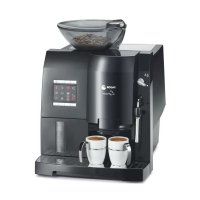



| Product type | Espresso coffee machine with grinder |
| Brand | Fagor |
| Model | CAT40 NG |
| Category | Coffee machine |
| Supply voltage | 220-240 V |
| Power | 1290-1400 W |
| Water tank capacity | 1.5 liters |
| Bean container capacity | Not specified |
| Number of simultaneous cups | 1 or 2 cups |
| Pre-infusion system | Yes, for optimal aroma |
| Grind adjustment | 7 levels (from very fine to very coarse) |
| Coffee temperature adjustment | 5 levels (warm to very hot) |
| Water quantity per cup adjustment | Programmable for each cup size |
| Steam function | Swiveling steam wand for frothing milk and heating liquids |
| Hot water function | Yes |
| Auto shut-off | Programmable from 1 to 5 hours |
| Descaling program | Integrated, 2 steps |
| Cleaning program | Integrated, with cleaning tablets |
| Indicator lights | Fill tank, empty coffee grounds container, descaling, cleaning |
| Daily cleaning | Empty and rinse coffee grounds container, water tank, drip tray |
| Monthly maintenance | Cleaning the brewing unit |
| Child safety | Do not use without supervision, hot surfaces |
| Country of origin | Not specified |
| Dimensions (W x H x D) | Not specified |
| Weight | Not specified |
Frequently Asked Questions - CAT40 NG FAGOR
User questions about CAT40 NG FAGOR
0 question about this device. Answer the ones you know or ask your own.
Ask a new question about this device
Download the instructions for your Coffee machine in PDF format for free! Find your manual CAT40 NG - FAGOR and take your electronic device back in hand. On this page are published all the documents necessary for the use of your device. CAT40 NG by FAGOR.
USER MANUAL CAT40 NG FAGOR
Please read this user manual carefully, paying special attention to the safety notes! Keep the manual in a safe place for later reference, and pass it on to any new owner.
Contents
1 Figure captions 32
1.1 Machine Parts (Fig. 1) 32 1.2 Top View (Fig. 2) 32 1.3 Control Panel (Fig. 3) 32
2 Coffee and espresso 33
3 Safety Information 33
4 Using for the First Time 35
4.1 Setting Up and Connecting the Coffee Machine 35 4.2 Filling with Water 35 4.3 Switching the Coffee Machine On 35 4.4 Switching the Coffee Machine Off 36 4.5 Setting the Water Hardness 36
5 Making Coffee with Beans 36
5.1 Filling the Coffee Bean Container 37 5.2 Select Cup Size 37 5.3 Selecting the Coffee Quantity 37 5.4 Dispensing Coffee 37
6 Making Ready-ground Coffee 38
6.1 Using the Ground Coffee Filler 38 6.2 Select Cup Size 38 6.3 Dispensing Coffee 38
7 Frothing Milk 38
8 Preparing Hot Water 39
9 Changing and Saving the Cup
10 Changing and Saving the Coffee
11 Setting the Grinding Texture 40
12 Setting the Coffee Temperature 40
13 Setting the Switch-off Time 41
14 Resetting the Coffee Machine 42
15 Cleaning and Care 42
15.1 Regular Cleaning 42 15.2 Cleaning the height adjustment 42 15.3 Emptying the Coffee Grounds
15.4 Cleaning the Grinding 43 15.5 Cleaning the Coffee-making Unit 43 15.6 Running the Cleaning Program 44 15.7 Running the Descaling Program 45 15.8 Cleaning the steam valve 47
16 What do I do, if ... 48
17 Using the Total Cups Counter 50
18 Technical Data 51
91 Information for the correct disposal of electrical and electronic appliances 51
1 Figure captions
1.1 Machine Parts (Fig. 1)
A Top view (see Fig. 2)
B Bean container with lid
C Service cover
D Selection dial for steam and hot water
E Height-adjustable dispenser with outlets
F Swivel nozzle for steam and hot water with removable frothing aid
G Coffee grounds container (removable)
H Drip grille
I Drip tray float
J Drip tray
K Type plate (at top behind service cover)
L Control panel (see Fig. 3)
M Water tank with fill level indicator (removable)
N Test strip for water hardness
O Measuring spoon with cleaning brush
0.1 Descaling agent
0.2 Cleaning agent
1.2 Top View (Fig. 2)
P Cup rack
Q Opening for ground coffee with lid (ground coffee filler)
R Bean-container position setting
S Service cover release button
T Release catch for removing grinding ring
U Lever for setting grinding texture
1.3 Control Panel (Fig. 3)
a Key for 2 cups of coffee (with indicator)
b Key for 1 cup of coffee (with indicator)
c "Coffee Quantity" key (with indicator)
d "Cup Size" key (with indicator)
e "Steam Pre-selector" key (with indicator)
f "On/Off" key ①
g "Coffee machine heating" indicator
h "Empty grounds container" indicator
i "Fill water tank" indicator
j "Descale" key (with indicator)
k "Clean" key (with indicator)
2 Coffee and espresso
Your fully automated coffee machine guarantees you
- Absolute ease of operation, both in making coffee and in maintenance and care. The excellent, individual taste is achieved by
- The pre-brewing system: before the coffee is brewed, it is first moistened to extract its full aroma. The individually controllable amount of water per cup, from a short espresso to a "long" milky coffee.
- The individually controllable temperature, at which the coffee is made. The choice between a normal or a strong cup of coffee.
- The grinding texture - adjustable to the roast of the coffee beans, and
- Last, but not least, the guaranteed crema, that small crown of froth that makes espresso-coffee so unmatched for connoisseurs.
Did you know? The time the water is in contact with the ground coffee is considerably less for espresso coffee than conventional filter coffee. As a result, less bitterness is released from the ground coffee - making espresso-coffee that much milder!
3 Safety Information
This appliance corresponds to accepted technological standards with regards to safety and to the German Appliance Safety Law. As the manufacturer, we nevertheless wish to familiarise you with the following safety information.
General safety
- The coffee machine must be connected only to a mains power supply of which the voltage, type of supply and frequency conform with the details shown on the type plate (this can be found on the upper part, behind the service cover)!
- Never allow the mains lead to come into contact with hot parts of the appliance.
- Never use the mains lead to pull the plug out of the mains socket!
- Do not use the coffee machine, if:
- the mains lead is damaged, or
- the case shows visible signs of damage.
- This appliance is not intended for use by persons (including children) with reduced physical, sensory or mental capabilities or lack of experience and knowledge unless they have been given initial supervision or instruction concerning use of the appliance by a person responsible for their safety.
Child safety
- Do not leave the coffee machine running unattended, and take special care when children are about!
Safety in operation
- Caution! The coffee dispenser, swivel nozzle and cup rack become hot in operation. Keep children at a safe distance!
- Caution! Danger of scalding when the steam nozzle is activated! Hot water or steam output can cause scalding. Activate the steam nozzle only when you are holding a container under the nozzle.
- Do not use steam to heat inflammable liquids!
- Only use the coffee machine with water in the system! Fill the water tank with cold water. Do not use hot water, milk or other liquids. Do not exceed the maximum fill level of 1.5 litres.
- Do not put frozen or caramelised coffee beans in the bean container. Use only roast coffee beans! Remove any foreign bodies from the coffee beans. Failure to do this invalidates the guarantee.
- Spoon only ground coffee into the ground coffee filler.
- Do not leave the coffee machine switched on unnecessarily.
- Do not expose the coffee machine to the weather.
- When using an extension lead, use only a commercially available cable with a conductor cross-section of at least 1.5mm2
- To avoid injury, persons with motor system disorders should never use the machine without an accompanying person.
- Operate the machine only when the drip tray, container and the drip grille are installed!
Safety in cleaning and care
- Follow the cleaning and descaling instructions.
- Switch off the coffee machine and unplug from the mains socket before carrying out any maintenance or cleaning!
- Do not immerse the coffee machine in water.
- Only clean the steam nozzle when the machine is switched off, cold and not under pressure!
- Do not clean coffee machine parts in the dishwasher.
- Never put water in the grinder. This would damage the grinder.
Never open or repair the coffee machine. Faulty repairs can result in considerable hazard to the user.
Repairs to electrical appliances must be carried out only by qualified service engineers.
If a repair becomes necessary - including replacement of the mains lead, please contact
- the dealer where you bought the coffee machine, or To Fagor's customer care service. If the coffee machine is used incorrectly, or for a purpose other than its intended purpose, we cannot accept any liability for damage caused or any guarantee claims. This provision also applies if the cleaning and descaling programs are not run in accordance with the instructions in this manual, immediately after illumination of the "Clean" key (Fig. 3, k) or the "Descale" key (Fig. 3, j).
4 Using for the First Time
4.1 Setting Up and Connecting the Coffee Machine
Place machine on a suitable horizontal, stable, unheated and water-resistant surface. Ensure there is good air circulation.
Important! If the coffee machine is brought into a warm room from a cold environment, wait about two hours before switching on!
We advise you to place the coffee machine on a suitable mat to prevent damage being caused by spray and splashes.
Hold the bean container with the marking on the "Unlockcontainer" position, and set it in place (Fig. 4). The bottom opening of the bean container must be closed (Fig. 4,a), if it is not closed (Fig. 4,b), insert the tip of a ballpoint pen in the small oval hole (arrow) of the black ring with the marking "TOP" and turn opening clock wise as far as the stop.
Now turn the bean container anticlockwise to the position "Coffee beans" (Fig. 10) or further on to the position "Powder" (Fig. 14).
Push the drip tray in, until it engages on the right under the water tank (Fig. 5).
Plug the coffee machine into an earthed mains socket. Do not use a socket that is not earthed!
If you do not need the full length of the mains lead, open the cable compartment on the back of the coffee machine, and tidy away the unused lead (Fig. 6).
4.2 Filling with Water
Each time before switching on the coffee machine, check that there is water in the water tank and refill if necessary. The coffee machine requires water for the automatic rinsing processes each time the machine is switched on or off.
Remove the water tank from the coffee machine (Fig. 7).
Fill the water tank with fresh cold water (Fig. 8).
Pour only fresh cold water in the water tank. Never put in other liquids, e.g. mineral water or milk.
Replace the water tank (Fig. 7). Press the tank firmly in, to ensure that the water-tank valve opens.
If water must be refilled during the use of the coffee machine, the "Fill water tank" indicator (Fig. 3, i) flashes. Coffee resp. hot water/steam preparation is interrupted. Fill the water tank!
To always be sure of a rich coffee, full of aroma, you should:
- change the water in the water tank daily
- wash the water tank at least once per week in normal washing-up water (not in the dishwasher). Then flush with fresh water.
4.3 Switching the Coffee Machine On
Switch the coffee machine on by means of the "On/Off" key (Fig. 3, f) (Fig. 9). While the water is being heated (approx. 60 seconds) the "Coffee machine heating" indicator (Fig. 3, g) flashes. Once the operating temperature has been reached, the coffee machine carries out an automatic flushing cycle. The water flows out into the drip tray. The "Coffee machine heating" indicator (Fig. 3, g) remains constantly on. The coffee machine is now ready to use. Immediately after being switched on the machine runs through a set-up cycle. The noises occurring are perfectly normal.
4.4 Switching the Coffee Machine Off
If you switch the coffee machine off with the "On/Off" key (Fig. 3, f) after you have finished making coffee, the machine carries out a flush program, during which time the "Empty grounds container" indicator (Fig. 3, h) flashes for about 1 minute as a reminder. If you switch the coffee machine off with the "On/Off" key (Fig. 3, f) while a function is running, all functions are immediately switched off.
4.5 Setting the Water Hardness
After first placing the machine in use or when using a different water quality you should set the machine to the water hardness level corresponding to the local water hardness. You can use the included test card to determine the water hardness, or contact your local water supply company.
Determining water hardness

Dip the test strip in cold water for around 1 second. Shake off the excess water, and gauge the hardness by means of the pink bands.
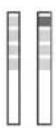
No pink bands or one pink band:
Hardness 1, soft
up to 1.24 mmol/l, or up to 7° German hardness, or up to 12.6° French hardness
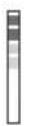
Two pink bands: Hardness 2, medium hard
up to 2.5 mmol/l, or up to 14° German hardness, or up to 25.2° French hardness
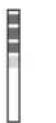
Three pink bands: Hardness 3, hard up to 3.7 mmol/l, or up to 21° German hardness, or up to 37.8° French hardness
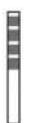
Four pink bands: Hardness 4, very hard over 3.7 mmol/l or over 21° German hardness, or over 37.8° French hardness
Setting and saving the water hardness level
You can set 4 hardness levels. The coffee machine is factory-set to hardness level 4.

With the machine switched on, turn the bean container to the "Coffee Beans" position (Fig. 10).

Press and hold the "Clean" key (Fig. 3, k).

Now repeatedly press the "Coffee Quantity" key (Fig. 3, c) until you have selected the required hardness level. Release the "Clean" key. The selected value is now saved. The indication changes back to the Coffee Quantity.
The hardness levels are indicated as follows:

Hardness level 1

Hardness level 2

Hardness level 3

Hardness level 4

To interrogate the set water hardness level: With the machine switched on, turn the bean container to the "Coffee Beans" position. Press and hold the "Clean" key (Fig. 3, k). The set water hardness level is now indicated.
5 Making Coffee with Beans
The following process for making coffee with beans runs completely automatically: grinding, portioning, pressing, pre-brewing, brewing, and ejection of the coffee grounds.
The facility to select the grinding texture and the coffee quantity allows you to individually set up the coffee machine to your own personal taste.

Ensure that you use only pure coffee beans with no caramelised or aromatised additives. Do not use frozen beans.
5.1 Filling the Coffee Bean Container

Turn the bean container to the "Coffee Beans" position (Fig. 10). The mechanism sets to the required function.

Set the grinding texture (Fig. 11). Using the grinding texture adjustment (Fig. 2, U) you can set the grinding texture of the grinder.

Note! Before putting beans into the coffee machine for the first time, you can set the grinding texture once with the grinder stationary. Once the grinder has been filled with beans, the setting can be changed only while grinding is proceeding. Otherwise the coffee machine could be damaged.

The grinder is factory-set at a medium grinding texture. Notes on changing the grinder setting can be found in "Setting the Grinding Texture".

Raise the lid of the coffee bean container, and fill the container with fresh coffee beans (Fig. 12). Then reclose the lid.

Note! Make sure that no foreign bodies, such as stones, enter the coffee bean container. Damage caused by foreign bodies in the grinder is excluded from the guarantee.
5.2 Select Cup Size
Depending on your taste, select a "short" espresso or a "long" milky coffee.

The selection is made by repeatedly pressing the "Cup Size" key (Fig. 3, d) until the desired cup symbol is indicated.
The cup sizes are indicated as follows:
Espresso cup Coffee cup Coffee mug
The coffee machine is factory-set to standard measures.

Notes on changing the cup measures can be found in "Changing and Saving the Cup Measure".
5.3 Selecting the Coffee Quantity

Repeatedly press the "Coffee Quantity" key (Fig. 3, c) until the desired coffee quantity is indicated.
The coffee quantities are indicated as follows:
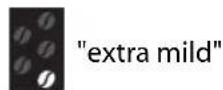
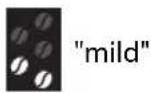




To save having to select the coffee quantity every time you switch on the coffee machine, you can save the coffee quantity in relation to the cup size. Notes on how to do this can be found in "Changing and Saving the Coffee Quantity".
5.4
Dispensing Coffee

Place one or two cups under the coffee dispenser. The dispenser can be slid up or down to match the height of your cup/mug to reduce heat loss and coffee splashes (Fig. 13).

If the height adjuster is stiff, proceed as described under "Cleaning the height adjustment".

Press the key for 1 cup of coffee (Fig. 3, b) or the key for 2 cups of coffee (Fig. 3, a). When you dispense 2 cups of coffee, the appliance brews two cups of coffee one after another. Remove the cups only after both brewing processes are complete. While the 2-cup procedure is running, the OK key indicator is flashing.

In the coffee-making process, the ground coffee is first wetted with a small quantity of water for pre-brewing. Following a short pause, the actual brewing process commences.

You can stop coffee being dispensed by briefly pressing the coffee dispensing key.
6 Making Ready-ground Coffee
This function allows you to brew pre-ground coffee, e.g., decaffeinated coffee. Note that you must use only the supplied measuring spoon, and never put more than 1 level measuring spoon of ground coffee into the ground coffee filler. The unit allows only 1 measuring spoon of ground coffee. So it is also not possible to select 1 or 2 cups.

Note! Make sure that no ground coffee has remained in the filler, and that no foreign bodies enter the filler. The ground coffee filler is not a storage container. The ground coffee must be fed directly into the coffee-making unit.

Do not put any water-soluble or freeze-dried instant powders or any other drink powder into the ground coffee filler. Coffee powder that is too fine can lead to blockages.
6.1 Using the Ground Coffee Filler

Turn the coffee bean container to the "Ground Coffee" position (Fig. 14). The mechanism sets to the required function.

When using ready ground coffee, the "Coffee Quantity" function is inactive. All coffee quantity indicator lamps (Fig. 3, c) are extinguished (Fig. 15).

Open the lid of the ground coffee filler, and spoon in the fresh ground coffee (Fig. 16).
Do not add coffee during the brewing process. Only put in ground coffee for the next cup when the brewing process has completely finished and the coffee machine is ready.

Close the lid.
6.2 Select Cup Size
Refer to "Select Cup Size".
6.3 Dispensing Coffee
Refer to "Dispensing Coffee".
7 Frothing Milk
The steam can be used to froth milk and to heat liquids. Since a higher temperature is needed to produce steam than to make coffee, the coffee machine has an additional steam mode.

To make a cappuccino, fill a large cup 1/2 to 2/3 full with espresso, and then add the frothed milk.

Caution! Danger of scalding when the steam nozzle is activated! Hot water or steam output can cause scalding. Do not activate the steam nozzle until it is immersed in the milk.

To produce steam, press the "Steam Pre selector" key (Fig. 3, e). The indicator illuminates, and at the same time the "Coffee machine heating indicator" (Fig. 3, g) flashes. When the heating process is finished, the indicator changes from flashing to constantly on. The coffee machine is now ready for frothing milk.

If the steam function is left unused for more than 1 minute, the coffee machine automatically changes back to coffee-making mode.

Pour low-fat, cold milk into a mug which must be small enough to fit under the steam nozzle.

The milk should be cold. You should also use a cold mug, preferably a stainless steel one which should not be rinsed beforehand in hot water.

Swing out the steam nozzle and hold the mug under the steam nozzle so that the nozzle opening is just immersed in the milk.
Attention! Impurities from dried milk residues in the steam nozzle. Take care not to immerse the steam nozzle in the milk far enough to cover the air intake opening at the top of the steam nozzle. Otherwise milk can be sucked into the nozzle and cause impurities in the steam nozzle. Turn the Selection dial for steam and hot water (Fig. 1, D) to the position (Fig. 17). The milk is now frothed up. Hold the mug steady during the frothing. The nozzle should not be allowed to touch the bottom of the mug and cut off the steam supply. Froth the milk to at least twice its volume. To stop frothing, turn the Selection dial for steam and hot water (Fig. 1, D) to the position and remove the jug (Fig. 17). Caution! Danger of scalding from hot milk spray! Switch the steam off, before removing the jug with the frothed milk. To finish steam mode, press the "Steam Pre selector" key (Fig. 3, e) or wait ca. 60 sec., for the machine to automatically return to the coffee mode. The indication is extinguished. The coffee machine is now ready for making coffee again. Each time you have frothed milk, let off some hot water through the nozzle for a short time by setting the Selection dial for steam and hot water (Fig. 1, D) to the position. This is necessary to prevent milk residues drying inside the nozzle, and thereby blocking it. Use a suitable container to catch the water. Remove the frothing aid after each use (Fig. 18). For this, take hold of the frothing aid by the black seal and disengage the bayonet connector by turning it slightly anticlockwise. Rinse off the milk residues under running water. Wipe the steam nozzle off with a damp cloth.
Caution! Danger of burns from the frothing aid! Hold the frothing aid only by the black seal.
8 Preparing Hot Water
The hot water can be used to pre-heat cups and for making hot drinks, e.g. tea or instant soups.
Caution! Danger of scalding when the hot water nozzle is activated! Hot water or steam output can cause scalding. Activate the hot water nozzle only when a container is under the hot water nozzle. Place a container under the hot water nozzle. Set the Selection dial for steam and hot water (Fig. 1, D) to the position (Fig. 19). Hot water is now prepared. After you have dispensed the hot water turn the Selection dial for steam and hot water (Fig. 1, D) back to the position (Fig. 19) and remove the container.
9 Changing and Saving the Cup Measure
The coffee machine is factory-set to standard measures. These measures can be individually changed to your own taste and saved for each cup size. The adjustment can take place in both bean and powder mode. The setting of "Cup Measure" is only possible for 1 cup. When dispensing 2 cups the "Cup Measure" is doubled.
Repeatedly press the "Cup Size" key (Fig. 3, d) until the cup symbol for which you wish to change the measure is illuminated. Place the appropriate cup under the coffee dispenser (e.g., a coffee mug). Press and hold the key for 1 cup of coffee (Fig. 3, b) until the cup/mug is filled to the desired measure. Release the key. Your new cup measure is now saved.

Repeat the process if you would like to change the measures for the other cup symbols.

The machine switches off automatically upon reaching the maximum cup measure. The saved measures remain stored when the coffee machine is switched off. If your coffee cups or your taste change, you can easily change the cup measure(s) to your new requirements whenever you want.
10 Changing and Saving the Coffee Quantity
You can set and save a different coffee quantity for each cup symbol to your individual requirements. This can be done only for use with coffee beans, not for use with ground coffee.

Repeatedly press the "Cup Size" key (Fig. 3, d) until the desired cup symbol is indicated.

Press and hold button b "Coffee request 1 cup" down during the entire preparation.
If you store the cup filling volume in coffee bean mode, then first of all the grinding gear starts up and grinds the coffee.
Release button b "Coffee request 1 cup" upon reaching the cup filling volume desired by you. Your desired cup filling volume is now stored.

The saved quantities remain stored when the coffee machine is switched off.
11 Setting the Grinding Texture

Note! The grinder settings must be changed only while coffee is being ground. Making adjustments to the stationary grinder can damage the coffee machine.

Press the key for 1 cup of coffee (Fig. 3, b) to make one cup of coffee.
While the coffee is being ground, use the lever for setting grinding texture (Fig. 2, U) and (Fig. 22) to change the grinding texture.
The lever positions have the following effects:

Fine grade for intensive taste

Medium grade for normal taste

Coarse grade for mild coffee
Remove foreign bodies from the grinder
Foreign bodies, such as small stones, in the grinder can damage the grinder. The coffee machine includes a stone detector. A foreign body in the coffee causes a loud, even rattle. If you hear this noise while coffee is being ground, immediately switch off the coffee machine and remove the foreign body, as described in "Cleaning the Grinding" page 41.
12 Setting the Coffee Temperature
There are five temperature levels to choose from. In the "Set Coffee Temperature" mode, the coffee quantity indicator is illuminated, which now acts as the coffee temperature indicator.
The coffee temperature levels are indicated as follows:

"lukewarm"

warm

"normal"

"hot"

"extra hot"
The factory setting is "normal". You can change this setting as follows:

Switch the appliance on and wait until it is in the base position.

Press and hold down button b "Coffee request 1 cup". Press button f "ON/OFF" additionally until indicator g "Unit heats" as well as one of the coffee grinding quantity indicators lights up.

Release all the buttons; you are now in the "Set coffee temperature" mode. Select the temperature level with button c (increase temperature) or button d (decrease temperature).

Now release all three keys.

Use the "Coffee Quantity" key (Fig. 3, c) (increase temp.) or the "Cup Size" key (Fig. 3, d) (reduce temp.) to select the temperature level you require.

When you have selected the temperature, press the "Clean" key (Fig. 3, k) to save and exit the "Set Coffee Temperature" mode.
13 Setting the Switch-off Time
If the coffee machine is not used for a set amount of time, it automatically switches off for economy reasons.
You can choose between five switch-off times (automatic switch-off after 1 to 5 hours).
In the "Set Switch-off Time" mode, the coffee quantity indicator is illuminated, which now acts as the switch-off time indicator.
The switch-off times are indicated as follows:

1 hour

2 hours

3 hours

4 hours

5 hours
The switch-off time has been factory-set to 1 hour. You can change this setting as follows:

Switch the appliance on and wait until it is in the base position.

Simultaneously press and hold the Key for 2 cups of coffee (Fig.3,a) and the "On/Off" key (Fig.3,f).
Keep both keys pressed for around 1 second, until only one of the switch-off time indicators is illuminated.

Use the "Coffee Quantity" key (Fig. 3, c) (increase time) or the "Cup Size" key (Fig. 3, d) (reduce time) to select the switch-off time you require.

When you have selected the switch-off time, press the "Clean" key (Fig. 3, k) to save the setting and exit the "Set Switch-off Time" mode.
14 Resetting the Coffee Machine
This function is used to reset any changes you have made to the factory settings.
The following settings are affected:
Cup measures - Coffee quantities - Coffee temperatures Water hardness
Switch the appliance on and wait until it is in the base position.
Simultaneously press and hold the "Descale" key (Fig. 3, j) and the "Clean" key (Fig. 3, k). Keep both keys pressed for around 3 seconds, until the coffee machine switches off for a short time, and then switches back on with the factory settings. The coffee machine is now reset.
15 Cleaning and Care
To ensure consistent coffee quality and faultless operation, always keep your coffee machine clean.
15.1 Regular Cleaning
Caution! Before cleaning, switch off the coffee machine and allow it to cool down. Do not use any abrasive, scouring or corrosive cleaning materials. Wipe the inside and outside of the case only with a damp cloth. Note: Never put the coffee machine or separate parts of the coffee machine in the dishwasher. Note: Never put water in the coffee bean container, as this would damage the grinder. Remove the water tank daily (Fig. 7) and empty any remaining water away. Rinse out the water tank with fresh water. Use fresh water every day. Empty the coffee grounds container daily, see "Emptying the Coffee Grounds Container".
Regularly drain the drip tray. This can be done at any time, but must be done when the red Drip tray float (Fig. 1, I) appears through the opening in the drip grille. Regularly (at least once per week) clean the Water tank (Fig. 1, M), Drip tray (Fig. 1, J), Drip grille (Fig. 1, H) and Coffee grounds container (Fig. 1, G) with warm water, a mild washing up liquid and possibly a brush. From time to time, remove the coffee bean container and clear away any residues. Each time the machine is used for frothing, remove the frothing aid and clean off any milk remains. The air intake opening under the seal must not become blocked. This can be cleaned out with a thin needle.
15.2 Cleaning the height adjustment
If the height adjustment of the coffee dispenser becomes stiff, remove the coffee grounds container, open the service cover and remove it. Slide the height adjuster right down, and off the bottom. To do this, gently raise the inside catch. Use warm water to clean any coffee residues from both parts. Reassemble the two parts. To do this, gently pull up the catch. Check the ease of movement of the height adjuster. Refit the service cover and push the grounds container back in place.
15.3 Emptying the Coffee Grounds Container
At regular intervals, after every 16 coffee brews "1 cup" resp. 8 coffee brews "2 cups", the "Empty grounds container" indicator (Fig. 3, h) signals that the container has to be emptied and cleaned.
When the coffee machine is in daily use, empty the container daily. The indicator flashes for around 1 minute each time the machine is switched off, as a reminder to do this.
Always empty the grounds container with the coffee machine switched on, otherwise the coffee machine does not register that the container has been emptied.
15.4 Cleaning the Grinding
Use the supplied brush to remove ground coffee residues.
Note: Never put water in the grinder. This would damage the grinder. Press the "On/Off" key (Fig. 3, f) switch off the coffee machine. Unplug from the mains socket. Turn the bean container so that the mark is at the "Unlock Container" position and remove the container (Fig. 23). Remove any remaining coffee beans (you could use the vacuum cleaner with the hose or crevice tool attachment for this). If a foreign body is impossible to remove, take off the grinding ring. To do this, proceed as follows (Fig. 24):
- Push the release catch for removing the grinding ring (Fig. 2, T) forward toward the center of the grinder.
- Keep it in this position and turn the lever for setting the grinding texture (Fig. 2, U) approximately one full turn clockwise until it comes up against the stop. You can continue to turn the lever for setting the grinding texture (Fig. 2, U) only if the release catch for removing the grinding ring (Fig. 2, T) is pressed. Now release the grinding ring (Fig. 25) and remove the foreign body or bodies. Caution! Risk of injury from the spinning grinder. Never switch the coffee machine on when you are working on the grinder. This can lead to severe injuries. Before starting work, ensure that the machine is unplugged from the mains socket.
When refitting the grinding ring, ensure that both catches on the grinding ring holder engage in the corresponding slots (Fig. 25).
Failure to do this can lead to damage to the grinder.
Turn the lever for setting the grinding texture (Fig. 2, U) approximately one full turn anticlockwise until it comes up against the stop. Set the bean container in place at the "Unlock Container" position and turn it back to the "Coffee Beans" position. Add a small quantity of coffee beans, and test the proper operation of the grinder by making a cup of coffee. The first time the grinder is used, or after cleaning, less ground coffee will enter the coffee-making unit, because the channel first has to be filled. This can influence the first cup of coffee.
15.5 Cleaning the Coffee-making Unit
We recommend cleaning the brewing unit monthly. More frequent cleaning is recommended if the machine is used more intensively. If your appliance is left unused for longer periods (e.g., holidays), it is necessary to empty the coffee grounds container and the water reservoir.
Before reconnecting, clean the brewing unit thoroughly.
Removing the brewing unit:
Switch off the appliance with button h "ON/OFF". The appliance carries out a rinsing process and asks you subsequently to empty the coffee grounds container.
- Pull the coffee grounds container out of the appliance, empty and clean it.
Fig. 26
- Press the unlocking button on the service door. Fig. 27
- The service door opens to the front.
Fig. 28
- The brewing unit is located behind the service door. Fig 29
Caution! Risk of burning through hot brewing unit! If you have just dispensed coffee, then the dispenser could still be hot! 5/6 Remove the brewing unit by inserting your index finger through the ring of the coffee dispenser at the front of the brewing unit and pull the brewing unit straight forwards. Prevent the brewing unit with the other hand from falling. Fig 30, 31. Cleaning the brewing unit / inserting the brewing unit 1. The brewing unit is open and the ejection lever folds down. Turn the brewing unit around. Both stainless steel sieves are easily accessible now. Fig.32 2. Clean the brewing unit under warm running water, particularly the stainless steel sieves must be well rinsed and cleaned of coffee remains. Dip the brewing unit in hot water to release the dried coffee remains. Dry the brewing unit. Fig.33 3. Inserting the brewing unit: Turn the brewing unit to the correct position (the outlet tube faces forwards and downwards), set the brewing unit in the guide grooves and push the brewing unit fully into the appliance. Fig.34 4. Close the service door until it locks audibly into position. Fig. 35 5. Reinsert the coffee grounds container. Fig.36 The appliance can only be switched on if the brewing unit is set in and the service door is closed. After switching on the brewing unit re-adjusts itself, the normal heating process starts again. When dispensing coffee for the first time after cleaning, an increased amount of water will access the coffee grounds container.
15.6 Running the Cleaning Program
The cleaning programme allows complete removal of coffee fat even at areas which are not normally accessible. Start the cleaning programme at the latest, when indicator k "Start cleaning programme" flashes. The cleaning process is carried out in 2 phases, takes several minutes and should not be interrupted.
In case of water insufficiency the appliance will automatically turn off. Therefore it is important that the water tank is filled completely. Just clean the brewing unit after the cleaning program has finished. Please use only the cleaning tablets recommended by the manufacturer. When using other cleaning agents, the manufacturer will not be liable for any damage. Cleaning tablets are available from specialized dealers or from the manufacturer.
Method phase 1: cleaning
Switch the appliance on. Use button f "ON/OFF" for this purpose. Directly after switching on, the appliance adjusts itself. The noises caused by this are normal. Rotate the beans container to the position "Powder mode". Wait till the mechanism is set and all indications of the coffee grinding quantity display go off. Fig. 38 Rinse the system twice, by pressing the button d "Cup filling volume" until the middle cup symbol "Coffee cup" has been selected on the display. Press the coffee requesting button b. When the rinsing process is finished, press button b again. Put a cleaning tablet in the coffee powder duct. Fig.40 Press button k "Start cleaning programme" for 3 seconds. Fig.20
The indicator k "Start cleaning programme" lights up after about 3 seconds. and indicator h "Empty coffee grounds container" starts flashing.
The appliance is activated and the resulting noises are normal.
Place the drained coffee grounds container under the coffee outlet as illustrated. It serves as a collecting tank for the cleaning water. Fig 26 Press button k "Start cleaning programme" again. The indicator h "Empty coffee grounds container" stops flashing and switches to steady light. The programme starts; the process should not be interrupted. Fig.21
The programme executes 5 cycles with fresh water rinsing. The pause periods enable the cleaning tablet to take effect. The programme must be restarted in case of power failure! Indicator c flashes intermittently during the cleaning operation. The cleaning operation is interrupted after about 5 minutes, if the indicator h "Empty coffee grounds container" flashes.
Empty the coffee grounds container and insert it again. The appliance switches on directly there after. The resulting noises are normal. The indicator h "Empty coffee grounds container" goes off. If indicator h "Empty coffee grounds container" flashes again, place the drained coffee grounds container under the coffee outlet as illustrated. It serves as a collecting vessel for the cleaning water. Fig 26 Method phase 2: rinse Press button k "Start cleaning programme" again. The indicator h "Empty coffee grounds container" stops flashing and switches to steady light. The programme is continued; the process should not be interrupted. Fig.21 The cleaning procedure is ended after about 1 minute, if the indicator h "Empty coffee grounds container" flashes.
Empty the coffee grounds container and insert it again so that indicator h "Empty coffee grounds container" goes off. The indicator k "Start cleaning programme" goes off too. Turn the coffee beans container into the required position and fill up the water reservoir. The appliance is now ready for operation again. We recommend pouring away the first cup of coffee made after running the cleaning programme.
15.7 Running the Descaling Program
The descaling program allows you to simply and effectively descale your coffee machine. The coffee machine should be regularly descaled, every 4-6 months, but no later than when the "Descale" key (Fig.3,j) indicator flashes.
Important: Do not under any circumstances use descalers based on formic acid or vinegar or pure lemon juice, as these can damage the appliance. Powdered descalers are not recommended. Use only limescale removal products recommended by FAGOR. You may obtain them from our authorised distributor network or through our Customer Care Helpline. The descaling process runs over two phases and should not be interrupted.
Phase 1: descending phase, and Phase 2: flushing phase. In the event of a power failure or interruption, the program must be restarted!
Phase 1: Descaling
Before starting the descaling program, switch the coffee machine off. Remove and clean the coffee-making unit (refer to "Cleaning the Coffee-making Unit"). The coffee-making unit is replaced only after the descaling. Replace the service cover. Empty the coffee grounds container and re-insert it.
When using other descaling agents, the manufacturer will not be liable for any damage.
Pull out the water tank. Put 125ml of descaling agent into the water tank. Then add 250ml of water into the water tank by filling the empty descaler bottle twice with fresh water. Insert the water reservoir again. Fig.37
Press button j "Start descaling programme" for 3 seconds. The indicator j "Start descaling programme" lights up after about 3 seconds. Empty and clean the coffee grounds container. The coffee grounds container serves as a collecting vessel for the descaling solution. Insert the empty coffee grounds container again. Please wait until the brewing unit is set. Fig.41
The appliance is activated and the resulting noises are normal. Fig.43
The programme starts; the process should not be interrupted. The programme executes 18 cycles. The pause periods enable the descaling agent to take effect. The programme must be restarted in case of power failure! Indicator flashes intermittently during the descaling operation.
The descaling process is interrupted after 18 cycles, if the indicator e "Steam preselection" flashes. Caution! Risk of scalding when the steam valve is in use!
Hot water can cause scalding. Only use the steam valve when holding a container underneath or turn the steam valve into the position in which liquid can flow into the drip tray.
Put a receptacle under the hot water valve. The receptacle must have a capacity of 300ml. Fig.42
Open the hot water nozzle. The descaling process is started over the hot water nozzle. Indicator e "Steam preselection" illuminates.
The programme executes 7 cycles. The pause periods enable the descaling agent to take effect. The program must be restarted in case of power failure! Indicator c flashes intermittently during the descending operation. The pump stops automatically after the rinsing operation is finished. The symbols of the indicators c and indicator e "Steam preselection" flash.
The descending process is interrupted after 7 cycles.
Shut the steam valve. Indicator e "Steam preselection" goes off, indicator h "Empty coffee grounds container" flashes.
Empty the coffee grounds container and re-insert it. Fig.41 The indicator h "Empty coffee grounds container" goes off.
Indicator i "Refill water" starts flashing after the descending process in phase 1 is over.
Method phase 2: rinse
Rinse the water reservoir, fill it with about 750 ml of fresh water and re-insert it. Fig.44
Press button j "Start descending programme" again. The indicator e "Steam preselection" starts to flash.
Fig.45
Steam valve is in use!
Hot water can cause scalding. Only use the steam valve when holding a container underneath or turn the steam valve into the position in which liquid can flow into the drip tray.
Put a receptacle under the hot water valve. Fig.42
The receptacle must have a capacity of 300 ml.
Open the hot water nozzle.
The indicator e "Steam preselection" goes off. The program executes a fresh water rinsing operation over the hot water nozzle. The pump stops automatically after the rinsing operation is over, indicator "Steam preselection" starts to flash.
Shut the steam valve. The indicator e "Steam preselection" goes off.
The program executes a fresh water rinsing operation over the brewing unit.
The pump stops automatically after the rinsing operation is over, indicator
27 Empty coffee grounds container" flashes.
Empty and clean the coffee grounds container. Put the coffee grounds container back into the unit, the indicator h "Empty coffee grounds container" goes off.
Pull out the drip tray, rinse it thoroughly and re-insert it. Pull out the water reservoir, fill it up with fresh water and insert it again.
The appliance is now ready for operation again.
In case of power failure during the descending process the program has to be started again! The appliance is now ready for operation again and the status is that of the last coffee mode selected.
We recommend pouring away the first cup of coffee made after running the descending programme.
15.8 Cleaning the steam valve
Clean the frothing unit as well as the steam valve after frothing or heating up milk. If the
steam valve allows only a reduced amount or no steam or hot water to pass through, we
recommend decaling in addition.
Caution! Risk to health through milk residue on the frothing unit and steam valve!
Contamination through dried milk on the frothing unit as well as the steam valve is a breading ground for bacteria. Keep these parts of the appliance clean at all times.
Caution! Risk of burning on the frothing unit and steam valve!
The frothing unit as well as the steam valve get very hot during the frothing of milk or the preparation of hot water, and can cause burns.
Allow these parts of the appliance to cool down before starting cleaning.
Only hold the frothing unit by the black cap.
Method:
- Remove the frothing unit and rinse off the milk residue under flowing water.
- Subsequently wipe the steam valve with a damp cloth. Fig.47
- Clean the air suction opening of the frothing unit if blocked by poking the clogged opening carefully with a pointed needle. Fig.48
- Now unscrew the outlet valve from the steam valve. For this, use the measuring spoon P with the integrated tool function. Fig.49
Clean the outlet valve by poking the clogged opening carefully with a pointed needle.
Then rinse thoroughly and check that the valve is free. Fig. 50
To clean the steam valve, place a container under the steam valve.
Turn rotary switch D "Hot water/steam" into position and allow hot water to pass
through briefly without the screwed-on outlet valve. This rinses out any
remaining contamination from the steam valve.
- Now screw the cleaned outlet valve back onto the steam valve using the measuring spoon P. Fig 51
- Then again place the frothing unit onto the steam valve and lock. Fig.52
Caution, protection of the appliance! A clogged steam valve can damage the appliance!
If the steam valve still does not let through any steam or hot water following cleaning of the outlet valve, the device must be descaled. Corresponding information can be found in the chapter "Starting the descending programme".
16 What do I do, if ...
... coffee-making is interrupted and the "Fill water tank" indicator (Fig. 3, i) flashes?
- The water tank is empty. Fill the water tank and press the key or the key again.
- The water tank is not properly inserted. Check that the water tank is properly seated.
- The coffee is ground too finely. Clean the coffee-making unit and adjust the grinding texture.
... the coffee machine does not operate, and the "Empty grounds container" indicator (Fig. 3, h) flashes?
- Container is full: Empty container and clean thoroughly; see "Emptying the Coffee Grounds Container" ... the coffee machine does not operate, and all 5 indicator lights Coffee Quantity and are flashing?
- The coffee-making unit is blocked or overfilled. Refer to "Cleaning the Coffee-making Unit". Completely remove any encrusted coffee remains from the coffee-making unit.
- Reduce the amount of ground coffee spooned in. -In powder coffee mode, fill in max. 1 measuring spoon of coffee powder.
- Set a small coffee quantity; see "Changing and Saving the Coffee Quantity".
- Check ejector.
...the coffee machine does not operate and humming noise is to hear, all 3 cup size indicator are flashing.
- Brewing unit is blocked.
- Remove the brewing unit and loosen the brewing unit using the tool function of the measuring spoon P. see page 49.
... "Clean" key (Fig. 3, k) is flashing?
Number of coffees dispensed necessitates cleaning: Run cleaning program; see "Running the Cleaning Program".
... the cleaning program cannot be started?
- Turn the bean container to the powder setting, then start the cleaning program.
... "Descale" key (Fig. 3, j) is flashing?
Number of coffees dispensed necessitates descaling: Carry out descaling: see "Running the Descaling Program".
... the espresso/coffee is not hot enough?
- Preheat the cups with hot water.
- Increase coffee temperature; see "Setting the Coffee Temperature".
...the espresso/coffee is too weak?
Not enough ground coffee. Increase the amount of ground coffee, max. 2 measuring spoons. - The coffee bean container is empty. Add coffee beans. - The coffee quantity is set too low. Increase the coffee quantity, see "Changing and Saving the Coffee Quantity". - The grinding texture is set too coarse. Set the grinding texture to a finer grade, see "Setting the Grinding Texture". - Check the grinding ring. - Try another type of coffee.
...the crema is too weak?
- Use fresh water.
- Use fresh beans or fresh coffee powder.
Clean the coffee-making unit, see "Cleaning the Coffee-making Unit".
...milk is not frothy enough?
- The milk is too hot or too old or the fat content is too high. Use suitable milk. - Blocked steam nozzle. Clean the steam nozzle.
- The air intake in the frothing aid is blocked. Clean the frothing aid.
- The valve inside the frothing attachment is loose: remove the frothing attachment and tighten the valve using the adapter integrated into the enclosed measuring spoon.
- ... the bean container will not locate on the grinder?
- Coffee bean residue on or around the grinder: Remove coffee bean residue from the grinder.
- Coffee bean residue is jammed in the bean container lock. Clear the bean container lock of coffee bean residue.
- ... the grinder makes very loud noises when grinding?
- The grinder is blocked by a foreign body. Remove the foreign body as described in this manual, refer to "Cleaning the Grinding". If necessary, have the coffee machine checked by the Customer Service Centre.
... the coffee-making unit will not come out?
- The coffee-making unit is not in the base position.
-Re-assemble the appliance and switch on. -Now switch the appliance off again in the normal way. The coffee-making unit runs to the base position. - Remove the coffee-making unit, refer to "Cleaning the Coffee-making Unit".
... the coffee machine has to be transported?
- Keep the original packaging as transport protection. It is important to use the original film as a protection against scratches.
- Secure the coffee machine against jarring.
- Empty the coffee machine tank and container and allow any remaining moisture in the system to steam off. This will protect your coffee machine from being damaged by freezing in cold weather.
To steam off the system, remove water tank and then select the steam function. When no more steam is released, turn off the steam tap and switch off the coffee machine. Allow the appliance to cool before packing.
- Care should also be taken with the location of the coffee machine - especially in cold weather, when damage can be caused by freezing.
- ... Brewing unit is blocked?
- Remove the brewing unit and loosen the brewing unit using the tool function of the measuring spoon P.
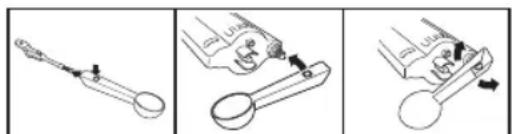
- ... The brewing unit cannot be removed?
- Position of the notched connecting pin at the end of the brewing unit is incorrect: Turn the notched connecting pin
- ... The appliance switches off after rinsing or while coffee is being requested?
- Pressure in the brewing unit too high:
Open rotary switch "Hot water / Steam" to position
- Remove brewing unit and clean. Open the brewing unit before cleaning. To do this, turn on the black toothed cone. Fig. 32 shows the opened brewing unit
... Insufficient water level display despite full water tank?
Air in the system: take some hot water.
... The appliance cannot be switched on?
- Mains plug unplugged: insert mains plug.
Service door not closed: insert brewing unit and close the sevice door.
- Brewing unit not inserted: insert brewing unit and close the service door.
- ... Water in the coffee grounds container?
- During every rinsing process, water gets into the coffee grounds container: None (for technical reasons).
- Preceding abortion of coffee making, for example due to insufficient water level: check water tank for sufficient water level prior to each use.
- ... No water comes out of the coffee outlet during rinsing?
- Brewing unit blocked: clean brewing unit.
- ... Descaling programme does not start 3 seconds after pressing the button?
Emptying of the coffee grounds container was not recognised: empty the coffee grounds container or if it is empty, pull it out and insert it again after about 10 seconds.
17 Using the Total Cups Counter
The coffee machine has the facility to display the total number of cups of coffee made.

If the Key for 2 cups of coffee (Fig. 3, a) is used to make 2 cups of coffee at the same time, these are counted as 2 cups.

Switch the appliance on and wait until it is in the base position.

Simultaneously press and hold the "Steam Pre selector" key (Fig. 3, e) and the "On/Off" key (Fig. 3, f). Keep both keys pressed for around 1 second, until the Key for 1 cup of coffee (Fig. 3, b) indicator and the Coffee Quantity indicator come on.

Now release both keys.
Now individual indicator lights start to flash in sequence, showing the number of cups made:

1 x flash corresponds to 10,000 cups

1 x flash corresponds to 1,000 cups

1 x flash corresponds to 100 cups

1 x flash corresponds to 10 cups

1 x flash corresponds to 1 cup
The flashing sequence is continuously repeated. All the indicators are briefly illuminated at once before each repetition.

Count the number of individual flashes by each indicator.
Example: The following flashing sequence corresponds to 1,529 cups.

0xflash

1xflash

5xflashes

2 x flashes

9 x flashes

To exit this mode, press the "Clean" key (Fig. 3, k).
18 Technical Data
Mains voltage: 220-240 V
Power consumption: 1290-1400 W
This coffee machine complies with the following EU Directives:
73/23/EEC of 19.2.1973 "Low Voltage Directive", including Amendment Directive 93/68/EEC. 89/336/EEC of 3.5.1989 "EMI Directive", including Amendment Directive 92/31/EEC.
19 Information for the correct disposal of electrical and electronic appliances

At the end of its working life, the product must not be disposed of as urban waste. It must be taken to a special local authority differentiated waste collection centre
or to a dealer providing this service.
Disposing of a household appliance separately avoids possible negative consequences for the environment and health deriving from inappropriate disposal and enables the constituent materials to be recovered to obtain significant savings in energy and resources.
To remind you that you must collaborate with a selective collection scheme, the symbol shown appears on the product warning you not to dispose of it in traditional refuse containers.
For further information, contact your local authority or the shop where you bought the product.
Dear customer,
1 blink = 10 cups

1 blink = 1 cup
The manufacturer reserves the right to modify the models described in this User's Manual.

- CONTENTS
- FIGURE CAPTIONS
- COFFEE AND ESPRESSO
- SAFETY INFORMATION
- USING FOR THE FIRST TIME
- MAKING COFFEE WITH BEANS
- MAKING READY-GROUND COFFEE
- FROTHING MILK
- PREPARING HOT WATER
- CHANGING AND SAVING THE CUP
- CHANGING AND SAVING THE COFFEE
- SETTING THE GRINDING TEXTURE
- SETTING THE COFFEE TEMPERATURE
- SETTING THE SWITCH-OFF TIME
- RESETTING THE COFFEE MACHINE
- CLEANING AND CARE
- WHAT DO I DO, IF
- USING THE TOTAL CUPS COUNTER
- TECHNICAL DATA
- INFORMATION FOR THE CORRECT DISPOSAL OF ELECTRICAL AND ELECTRONIC APPLIANCES
- MACHINE PARTS (FIG. 1)
- TOP VIEW (FIG. 2)
- CONTROL PANEL (FIG. 3)
- GENERAL SAFETY
- CHILD SAFETY
- SAFETY IN OPERATION
- SAFETY IN CLEANING AND CARE
- SETTING UP AND CONNECTING THE COFFEE MACHINE
- FILLING WITH WATER
- SWITCHING THE COFFEE MACHINE ON
- SWITCHING THE COFFEE MACHINE OFF
- SETTING THE WATER HARDNESS
- SETTING AND SAVING THE WATER HARDNESS LEVEL
- FILLING THE COFFEE BEAN CONTAINER
- SELECT CUP SIZE
- SELECTING THE COFFEE QUANTITY
- DISPENSING COFFEE
- USING THE GROUND COFFEE FILLER
- CHANGING AND SAVING THE CUP MEASURE
- CHANGING AND SAVING THE COFFEE QUANTITY
- REMOVE FOREIGN BODIES FROM THE GRINDER
- REGULAR CLEANING
- CLEANING THE HEIGHT ADJUSTMENT
- EMPTYING THE COFFEE GROUNDS CONTAINER
- CLEANING THE GRINDING
- CLEANING THE COFFEE-MAKING UNIT
- REMOVING THE BREWING UNIT
- FIG
- RUNNING THE CLEANING PROGRAM
- METHOD PHASE 1: CLEANING
- RUNNING THE DESCALING PROGRAM
- PHASE 1: DESCALING
- METHOD PHASE 2: RINSE
- STEAM VALVE IS IN USE
- CLEANING THE STEAM VALVE
- METHOD
- CAUTION, PROTECTION OF THE APPLIANCE! A CLOGGED STEAM VALVE CAN DAMAGE THE APPLIANCE
- MILK IS NOT FROTHY ENOUGH
- THE BEAN CONTAINER WILL NOT LOCATE ON THE GRINDER
- THE GRINDER MAKES VERY LOUD NOISES WHEN GRINDING
- THE COFFEE-MAKING UNIT WILL NOT COME OUT
- THE COFFEE MACHINE HAS TO BE TRANSPORTED
- BREWING UNIT IS BLOCKED
- THE BREWING UNIT CANNOT BE REMOVED
- THE APPLIANCE SWITCHES OFF AFTER RINSING OR WHILE COFFEE IS BEING REQUESTED
- INSUFFICIENT WATER LEVEL DISPLAY DESPITE FULL WATER TANK
- DEAR CUSTOMER
Brand : FAGOR
Model : CAT40 NG
Category : Coffee machine