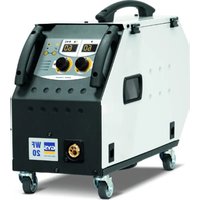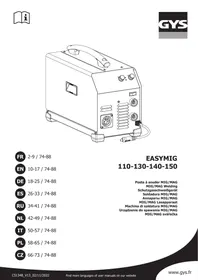
EASYMIG 110-130-140-150 - Welding machine GYS - Free user manual and instructions
Find the device manual for free EASYMIG 110-130-140-150 GYS in PDF.



| Product type | Semi-automatic MIG/MAG, flux-cored and MMA welding machine |
| Models | EASYMIG 110, EASYMIG 130, EASYMIG 140, EASYMIG 150 |
| Power supply | Single-phase 230 V ~ 50/60 Hz, 16 A CEE7/7 plug |
| Maximum welding current | Up to 150 A depending on model |
| Wire diameters | Steel/Stainless: 0.6 and 0.8 mm; Aluminum: 0.8 and 1.0 mm (models 140/150); Flux-cored: 0.9 mm |
| Shielding gas | Argon + CO2 for steel, pure Argon for aluminum, gasless possible with flux-cored wire |
| Maximum gas pressure | 0.5 MPa (5 bar) |
| Protection rating | IP21 |
| Operating temperature | -10 °C to +40 °C |
| Storage temperature | -20 °C to +55 °C |
| Maximum altitude | 1000 m |
| Relative humidity | ≤ 50% at 40 °C, ≤ 90% at 20 °C |
| Power cable length | 2.20 m |
| Spool holder | 100 mm (models 110/130/140); 100/200 mm (model 150) |
| Main functions | MIG/MAG, flux-cored, MMA welding; wire speed and voltage adjustment; Anti-Sticking function; thermal protection with orange indicator |
| Maintenance and cleaning | Regular dusting with compressed air, checking electrical connections, inspecting power cord condition |
| Safety | Thermal protection, automatic shutdown on overheating, disconnect from mains before intervention, wait 2 minutes after unplugging |
| Spare parts and repairability | Torch, contact tips, drive rolls, liner, nozzle, pressure regulator available; replacement by qualified person |
| General information | Use on inclined surface max 10°, ventilated area, sheltered from rain and sun, welding cables fully unwound |
Frequently Asked Questions - EASYMIG 110-130-140-150 GYS
User questions about EASYMIG 110-130-140-150 GYS
0 question about this device. Answer the ones you know or ask your own.
Ask a new question about this device
Download the instructions for your Welding machine in PDF format for free! Find your manual EASYMIG 110-130-140-150 - GYS and take your electronic device back in hand. On this page are published all the documents necessary for the use of your device. EASYMIG 110-130-140-150 by GYS.
USER MANUAL EASYMIG 110-130-140-150 GYS
INSTALLATION - FONCTIONNEMENT PRODUIT
ANOMALIES, CAUSES, REMEDES
Read and understand the following safety recommendations before using or servicing the unit. Any change or servicing that is not specified in the instruction manual must not be undertaken.
The manufacturer is not liable for any injury or damage due to non-compliance with the instructions featured in this manual. In the event of problems or uncertainty, please consult a qualified person to handle the inspection properly.
ENVIRONMENT
This equipment must only be used for welding operations in accordance with the limits indicated on the descriptive panel and/or in the user manual. The operator must respect the safety precautions that apply to this type of welding. In case of inadequate or unsafe use, the manufacturer cannot be held liable for damage or injury.
This equipment must be used and stored in a place protected from dust, acid or any other corrosive agent. Operate the machine in an open, or well-ventilated area.
Operating temperature:
Use between -10 and +40^ (+14 and +104^)
Store between -20 and +55^ (-4 and 131^ ).
Air humidity:
Lower or equal to 50% at 40^ (104^)
Lower or equal to 90% at 20^ (68^)
Altitude:
Up to 1000 meters above sea level (3280 feet).
PROTECTION OF THE INDIVIDUALS
Arc welding can be dangerous and can cause serious and even fatal injuries.
Welding exposes the user to dangerous heat, arc rays, electromagnetic fields, noise, gas fumes, and electrical shocks. People wearing pacemakers are advised to consult with their doctor before using this device.
To protect oneself as well as the other, ensure the following safety precautions are taken:

In order to protect you from burns and radiations, wear clothing without cuffs. These clothes must be insulated, dry, fireproof and in good condition, and cover the whole body.

Wear protective gloves which guarantee electrical and thermal insulation.

Use sufficient welding protective gear for the whole body: hood, gloves, jacket, trousers... (varies depending on the application/operation). Protect the eyes during cleaning operations. Do not operate whilst wearing contact lenses.
It may be necessary to install fireproof welding curtains to protect the area against arc rays, weld spatters and sparks.
Inform the people around the working area to never look at the arc nor the molten metal, and to wear protective clothes.

Ensure ear protection is worn by the operator if the work exceeds the authorised noise limit (the same applies to any person in the welding area).
Stay away from moving parts (e.g. engine, fan...) with hands, hair, clothes etc...
Never remove the safety covers from the cooling unit when the machine is plugged in - The manufacturer is not responsible for any accident or injury that happens as a result of not following these safety precautions.
The pieces that have just been welded are hot and may cause burns when manipulated. During maintenance work on the torch or the electrode holder, you should make sure it's cold enough and wait at least 10 minutes before any intervention. The cooling unit must be on when using a water cooled torch in order to ensure that the liquid does not cause any burns.
ALWAYS ensure the working area is left as safe and secure as possible to prevent damage or accidents.
WELDING FUMES AND GAS
The fumes, gases and dust produced during welding are hazardous. It is mandatory to ensure adequate ventilation and/or extraction to keep fumes and gases away from the work area. An air fed helmet is recommended in cases of insufficient air supply in the workplace.
Check that the air intake is in compliance with safety standards
pieces of metal containing lead, cadmium, zinc, mercury or beryllium can be extremely toxic. The user will also need to degrade the workpiece before welding.
Gas cylinders must be stored in an open or ventilated area. The cylinders must be in a vertical position secured to a support or trolley. Do not weld in areas where grease or paint are stored.
FIRE AND EXPLOSIONS RISKS
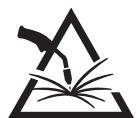
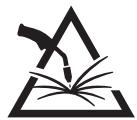
Protect the entire welding area. Compressed gas containers and other inflammable material must be moved to a minimum safe distance of 11 meters.
A fire extinguisher must be readily available.
Be careful of spatter and sparks, even through cracks. It can be the source of a fire or an explosion.
Keep people, flammable objects and containers under pressure at a safe distance.
Welding of sealed containers or closed pipes should not be undertaken, and if opened, the operator must remove any inflammable or explosive materials (oil, petrol, gas...).
Grinding operations should not be directed towards the device itself, the power supply or any flammable materials.
GAS BOTTLE

Gas leaking from the cylinder can lead to suffocation if present in high concentrations around the work area.
Transport must be done safely: Cylinders closed and product off. Always keep cylinders in an upright position securely chained to a fixed support or trolley.
Close the bottle after any welding operation. Be wary of temperature changes or exposure to sunlight.
Cylinders should be located away from areas where they may be struck or subjected to physical damage.
Always keep gas bottles at a safe distance from arc welding or cutting operations, and any source of heat, sparks or flames.
Be careful when opening the valve on the gas bottle, it is necessary to remove the tip of the valve and make sure the gas meets your welding requirements.
ELECTRIC SAFETY
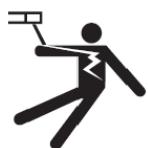
The machine must be connected to an earthed electrical supply. Use the recommended fuse size.
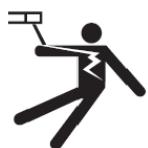
An electrical discharge can directly or indirectly cause serious or deadly accidents.
Do not touch any live part of the machine (inside or outside) when it is plugged in (Torches, earth cable, cables, electrodes) because they are connected to the welding circuit.
Before opening the device, it is imperative to disconnect it from the mains and wait 2 minutes, so that all the capacitors are discharged. Do not touch the torch or electrode holder and earth clamp at the same time.
Damaged cables and torches must be changed by a qualified and skilled professional. Make sure that the cable cross section is adequate with the usage (extensions and welding cables). Always wear dry clothes in good condition, in order to be insulated from the electrical circuit. Wear insulating shoes, regardless of the environment in which you work in.
EMC CLASSIFICATION
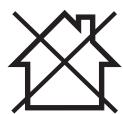
These Class A devices are not intended to be used on a residential site where the electric current is supplied by the public network, with a low voltage power supply. There may be potential difficulties in ensuring electromagnetic compatibility on these sites, because of the interferences, as well as radio frequencies.
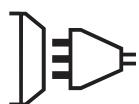
This equipment does not comply with IEC 61000-3-12 and is intended to be connected to private low-voltage systems interfacing with the public supply only at the medium- or high-voltage level. On a public low-voltage power grid, it is the responsibility of the installer or user of the device to ensure, by checking with the operator of the distribution network, which device can be connected.
This equipment complies with the IEC 61000-3-11 standard.
ELECTROMAGNETIC INTERFERENCES
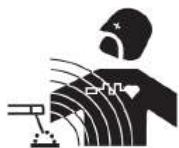
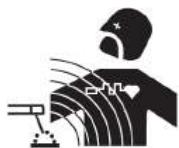
The electric currents flowing through a conductor cause electrical and magnetic fields (EMF). The welding current generates an EMF field around the welding circuit and the welding equipment.
The EMF fields may disrupt some medical implants, such as pacemakers. Protection measures should be taken for people wearing medical implants. For example, access restrictions for passers-by or an individual risk evaluation for the welders.
All welders should take the following precautions in order to minimise exposure to the electromagnetic fields (EMF) generated by the welding circuit:
- position the welding cables together – if possible, attach them;
- keep your head and torso as far as possible from the welding circuit;
- never enroll the cables around your body;
- never position your body between the welding cables. Hold both welding cables on the same side of your body;
- connect the earth clamp as close as possible to the area being welded;
- do not work too close to, do not lean and do not sit on the welding machine
- do not weld when you're carrying the welding machine or its wire feeder.

People wearing pacemakers are advised to consult their doctor before using this device.
Exposure to electromagnetic fields while welding may have other health effects which are not yet known.
RECOMMANDATIONS TO ASSES THE AREA AND WELDING INSTALLATION
Overview
The user is responsible for installing and using the arc welding equipment in accordance with the manufacturer's instructions. If electromagnetic disturbances are detected, it is the responsibility of the user of the arc welding equipment to resolve the situation with the manufacturer's technical assistance. In some cases, this remedial action may be as simple as earthing the welding circuit. In other cases, it may be necessary to construct an electromagnetic shield around the welding power source and around the entire piece by fitting input filters. In all cases, electromagnetic interferences must be reduced until they are no longer bothersome.
Welding area assessment
Before installing the machine, the user must evaluate the possible electromagnetic problems that may arise in the area where the installation is planned.
In particular, it should consider the following:
a) the presence of other power cables (power supply cables, telephone cables, command cable, etc...) above, below and on the sides of the arc welding machine.
b) television transmitters and receivers;
c) computers and other hardware;
d) critical safety equipment such as industrial machine protections;
e) the health and safety of the people in the area such as people with pacemakers or hearing aids;
f) calibration and measuring equipment
g) the isolation of the equipment from other machinery.
The user will have to make sure that the devices and equipments that are in the same room are compatible with each other. This may require extra precautions;
h) make sure of the exact hour when the welding and/or other operations will take place.
The surface of the area to be considered around the device depends on the building's structure and other activities that take place there. The area taken in consideration can be larger than the limits determined by the companies.
Welding area assessment
Besides the welding area, the assessment of the arc welding systems installation itself can be used to identify and resolve cases of disturbances. The assessment of emissions must include in situ measurements as specified in Article 10 of CISPR 11. In situ measurements can also be used to confirm the effectiveness of mitigation measures.
RECOMMENDATION ON METHODS OF ELECTROMAGNETIC EMISSIONS REDUCTION
a. National power grid : The arc welding machine must be connected to the national power grid in accordance with the manufacturer's recommendation. If interferences occur, it may be necessary to take additional preventive measures such as the filtering of the power supply network. Consideration should be given to shielding the power supply cable in a metal conduit. It is necessary to ensure the shielding's electrical continuity along the cable's entire length. The shielding should be connected to the welding current's source to ensure good electrical contact between the conduct and the casing of the welding current source.
b. Maintenance of the arc welding equipment : The arc welding machine should be be submitted to a routine maintenance check according to the manufacturer's recommendations. All accesses, service doors and covers should be closed and properly locked when the arc welding equipment is on. The arc welding equipment must not be modified in any way, except for the changes and settings outlined in the manufacturer's instructions. The spark gap of the arc start and arc stabilization devices must be adjusted and maintained according to the manufacturer's recommendations.
c. Welding cables : Cables must be as short as possible, close to each other and close to the ground, if not on the ground.
d. Electrical bonding : consideration should be given to bonding all metal objects in the surrounding area. However, metal objects connected to the workpiece increase the risk of electric shock if the operator touches both these metal elements and the electrode. It is necessary to insulate the operator from such metal objects.
e. Earthing of the welded part : When the part is not earthed - due to electrical safety reasons or because of its size and its location (which is the case with ship hulls or metallic building structures), the earthing of the part can, in some cases but not systematically, reduce emissions It is preferable to avoid the earthing of parts that could increase the risk of injury to the users or damage other electrical equipment. If necessary, it is appropriate that the earthing of the part is done directly, but in some countries that do not allow such a direct connection, it is appropriate that the connection is made with a capacitor selected according to national regulations.
f. Protection and plating : The selective protection and plating of other cables and devices in the area can reduce perturbation issues. The protection of the entire welding area can be considered for specific situations.
TRANSPORT AND TRANSIT OF THE WELDING MACHINE

This welding power source comes equipped with a top strap so that it can be carried by hand. Be careful not to underestimate its weight. The strap is not intended to be used to suspend or hang the device.
Do not use the cables or torch to move the welding power source. It should be moved in an upright position. Do not carry or transport the power source overhead of people or objects. It is advisable to remove the wire-feed spool before lifting or transporting the welding power source.
EQUIPMENT INSTALLATION
- Put the machine on the floor (maximum incline of 10^ ).
- Ensure the work area has sufficient ventilation for welding, and that there is easy access to the control panel.
- The machine must not be used in an area with conductive metal dusts.
- The machine must be placed in a sheltered area away from rain or direct sunlight.
- The machine protection level is IP21, which means :
- Protection against access to dangerous parts from solid bodies of a ≥ 12.5mm diameter and,
- Protection against vertically falling drops.
The power cables, extensions and welding cables must be fully uncoiled to prevent overheating.

The manufacturer does not incur any responsibility regarding damages to both objects and persons that result from an incorrect and/or dangerous use of the machine.

Stray welding currents/voltages may destroy earth conductors, damage electrical equipment or cause components to warm up which may cause a fire.
- All welding connections must be firmly secured, check regularly!
- Check that the metal piece fixation is strong and without any electrical problems !
- Attach or hang all the electrically conductive elements, such as the trolley in order to insulate them.
- Do not place any electrical equipment such as drills on top of the welding machine without insulating them !
- Always place welding torches or electrodes holders on an insulated surface when they're not in use !
MAINTENANCE / RECOMMENDATIONS
- Maintenance should only be carried out by a qualified person. Annual maintenance is recommended.
- Ensure the machine is unplugged from the mains, and wait for two minutes before carrying out maintenance work. DANGER High Voltage and Currents inside the machine.
- Remove the casing 2 or 3 times a year to remove any excess dust. Take this opportunity to have the electrical connections checked by a qualified person, with an insulated tool.
- Regularly check the condition of the power supply cable. If the power cable is damaged, it must be replaced by the manufacturer, its after sales service or an equally qualified person.
- Ensure the ventilation holes of the device are not blocked to allow adequate air circulation.
- Do not use this equipment to thaw pipes, to charge batteries, or to start any engine.
INSTALLATION - USING THE PRODUCT
Only experienced personnel, authorised by the manufacturer, may carry out the machine's set-up. During set-up, ensure that the power source is unplugged from the mains. It is recommended to use the welding cables supplied with the unit in order to obtain the optimum product settings.
DESCRIPTION
Thank you for choosing this machine. To get the best use from your machine, please read the following carefully : The EASYMIG range are semi-automatic MIG/MAG, MMA and flux cored wire welding stations. They are manual settings machine, with the help of the table printed on the product. They are recommended for welding steel, stainless steel and aluminium.
POWER SUPPLY
This machine is fitted with a 16A socket type CEE7/7 which must be connected to a single-phase 230V (50 - 60 Hz) power supply fitted with three wires and one earthed neutral. The absorbed current (I1eff) is indicated on the device at maximum usage. Check that the power supply and its protection (fuse and/or circuit breaker) are compatible with the current needed for use. In some countries, it might be necessary to change the plug to allow maximum performance. The device must be installed so that the mains socket is accessible.
MACHINE DESCRIPTION (FIG I)
1- Adjustment of welding settings (wire speed and welding voltage).
6- Power Cable (2.20 m)
2- Switch MIG/MMA
7- Power switch
3- European standard torch connection.
Reel adaptor 100 mm (EASYMIG 110/130/140) or 100/200mm (EASYMIG 150)
4- Connectors
9- Gas input
5- Polarity reversal cable
10- Fixed torch
USING EXTENSION LEADS
All extension leads must be of a size and cross-section appropriate for the equipment's voltage.
Use an extension lead that complies with national safety regulations.
| Input voltage | Extension-lead length (<45 m) |
| 230 V - 1~ | 1.5 mm² |
SEMI-AUTOMATIC WELDING FOR STEEL / STAINLESS STEEL (MAG MODE)
Set the voltage output and the wire speed according to the thickness of the weld piece, following the instructions/recommendations printed on the side of the machine.
The EASYMIG can weld Steel wire 0.6/0.8mm, and Stainless Steel of 0.8mm.
The machine is fitted with 0.8mm Steel or Stainless Steel rollers. The contact tube, the groove of the roller and the sleeve of the torch are all compatible with 0.8mm wire. Should you wish to weld 0,6 wire, use a torch of maximum 3m long. The contact tip must be changed (fig IV-D) as well as the wire feeder's roller that must be replaced by an optional reference (042339 / 039483) with a 0.6 diameter groove. In this case, the position in such a way to observe 0.6. For use with Steel, the gas requirement is argon + CO2. (Ar + CO2) . The proportion of CO2 required will vary depending on the use. For Stainless Steel, use the combination of 2 % CO2 For specific gas requirements, please contact your gas distributor. The gas flow in steel is between 8 and 12 Litres/minute depending on the environment. Maximum gas pressure : 0.5 MPa (5 bars).
SEMI-AUTOMATIC WELDING FOR ALUMINIUM (MIG MODE)
Set the voltage output and the wire speed according to the thickness of the weld piece, following the instructions/recommendations printed on the side of the machine.
The EASYMIG 140 and 150 can be equipped to weld with aluminium wire 0,8 or 1,0 (fig II-B).
The Easy Mig 110 and 130 are delivered equipped for welding Aluminium of 0.8mm (Occasional and non-intensive).
In this case the wire used should be stiff to facilitate wire feeding.
For use with aluminium, the gas requirement is pure argon (Ar). For the specific gas requirements please contact your distributor. The gas flow in Aluminium is between 20 and 30 Litres/minute depending on the environment, and the experience of the welder. Maximum gas pressure : 0.5 MPa (5 bars).
Below are the differences between welding with Steel and Aluminium :
- Specific rollers are needed for welding with Aluminium.
- Adjust the pressure of the drive rolls to prevent the wire being crushed.
- Only use a capillary tube for welding with Steel or Stainless Steel.
- Use a special Aluminium Torch with a teflon sheath to reduce friction.
DO NOT cut the sheath close to the joint, it is used to guide the wire from the the rollers.
- Contact Tube : Use a special aluminium contact tube specific to the diameter of wire being used.
GASLESS WIRE WELDING
Set the voltage output and the wire speed according to the thickness of the weld piece, following the instructions/recommendations printed on the side of the machine.
The EASYMIG can weld gasless wire up to 0.9mm , if the polarity is reversed respecting a maximum pressure of 5Nm. For parameters of use, please refer to the instructions indicated on page 75. Welding gasless wire with a standard nozzle can lead to overheating and deterioration of the torch. It is recommended to use a "No Gas" nozzle (ref. 041868), or remove the genuine nozzle (Fig. III).
ELECTRODE WELDING
- The reverse polarity cable must be disconnected in MMA (stick welding) mode in order to connect the electrode holder and earth clamp. Connect the electrode holder and earth clamp as indicated on the electrode packaging.
- Respect the basic rules of welding.
- This device has 1 feature specific to Inverter machines :
- Anti-Sticking: Enables easy removal of the electrode from the metal. The anti-sticking feature, after its start, requires approximately a 3 seconds delay before resuming normal welding operations.
SETTINGS PANEL (FIG V)
| 1 | ·Green light «ON»: when the machine is switched on the light turns on. ·In case of power failure, the green light goes off but the device remains powered while the power cable is unplugged. | ON |
| 2 | Orange light: ·Over-temperature: in such a case you shall wait a few minutes, the light will turn off and the machine will start again. ·Over-current on primary circuit: in such a case you shall switch off the machine (with the main switch) and switch on. | |
| 3 | ·Left button: - MIG / MAG Welding: Adjust the wire feeder speed up to maximum speed. -MMA welding: Adjust the welding current. | 6 7 8 5 6 7 8 4 5 6 8 9 3 4 5 6 7 8 m/min |
| 4 | ·Right button: - Adjust the voltage reference up to the maximum value. | A B C D A MAX E F U |
| Advices The wire speed adjustment is often determined « by the noise »: the arc must be stable and have a low crackling. If the speed is too low, the arc is not continuous. If the speed is too high, the arc crackles and the wire pushes back the torch. | ||
PROCESS OF REELS AND TORCHES ASSEMBLY (FIG IV)
- Remove the contact tube and its support (fig D), and the nozzle (fig E) from the torch.
Fig A :
- Position the wire reel on the reel support :
- Adjust the reel brake (1) to avoid reel movement tangling the wire when welding stops. Be careful not to tighten too much. EASYMIG 150 : For a 200mm wire reel tighten the reel to the maximum. The adaptor (4) is only to be used for a 200mm reel.
Fig B:
The drive rollers included have 2 grooves (0,8 and 0,9). For 0.8mm steel wire, use the V shaped groove. For flux cored wire, remove and reverse the roller to use the 0.9mm groove.
For 0.8mm aluminium wire, remove and replace the roll with a model specifically designed for aluminium with a U shaped groove (not included).
Fig C:
To select the adjustment of the drive rollers.
- Loosen the drive roller knob (3) as far as possible and insert the wire, tighten the knob again slightly.
- Start the motor by pressing the trigger of the torch.
- Tighten the knob whilst pressing the trigger until the wire starts to move.
Nb : When welding with Aluminium, use the minimum possible pressure to avoid crushing the wire
- Leave about 5cm of wire out of the torch, then put the contact tube (fig. D), and the nozzle (fig. E) adapted to the wire to be used at the extremity.
GAS COUPLING
- Connect a pressure regulator to the gas bottle. Connect the welding machine (fig. F) using the pipes supplied, and place the two clamps to avoid leakages.
- Set the gas flow by adjusting the dial located on the pressure regulator.
NB : to help facilitate the adjustment of the gas flow, operate the drive rollers by pressing the trigger of the torch (ensure that the drive roller is completely loose so the wire is not fed through).
This procedure does not apply to «Gasless» welding mode.
RECOMMENDED COMBINATIONS
| (mm) | Current (A) | Ø Wire (mm) | Ø Nozzle (mm) | Flow rate L/min | |
| MIG | 0.8-2 | 20-100 | 0.8 | 12 | 10-12 |
| 2-4 | 100-200 | 1.0 | 12-15 | 12-15 | |
| MAG | 0.6-1.5 | 15-80 | 0.6 | 12 | 8-10 |
| 1.5-3 | 80-150 | 0.8 | 12-15 | 10-12 |
RISK OF INJURY DUE TO MOVING PARTS

The wire feeders contain moving parts that may catch hand, hair, clothes or tools which can lead to injuries! Take extra care.
- Do not lay a hand to swivel or moving components or parts to the drive!
-
Ensure that the housing covers or protective covers remain closed during operation!
-
Do not wear gloves when threading the filler wire and changing the filler wire spool.
ADVICE & THERMAL PROTECTION
This device is equipped with a ventilator regulated by the inside temperature. When the machine's thermal protection is activated, it will not deliver any current. Orange light (Fig-V-2) will turn on until the temperature of the machine has returned to normal.
- Do not block/cover the ventilation holes, ensure free flow of air.
- Whilst in thermal protection mode leave the machine plugged into the mains after welding to allow it to cool.
General observations :
- Always respect the basic rules of welding.
- Always work in an adequately ventilated area.
- Do not work on a damp surface.
TROUBLESHOOTING
| SYMPTOMS | POSSIBLE CAUSES | REMEDIES |
| The welding wire speed is not constant. | Debris is blocking up the opening. | Clean out the contact batch or change it and replace the anti-adherence product. Ref.041806. |
| The wire skids in the rollers. | • Control the roller pressure or replace it. • Wire diameter non-compatible with roller • Covering wire guide in the torch non-compatible. | |
| The wire-feeder motor doesn't operate. | Reel or roller brake too tight. | Release the brake and rollers. |
| Electrical supply problem. | Check that the power switch is in the "On" position. | |
| Bad wire feeding. | Covering wire guide dirty or damaged. | Clean or replace |
| The drive roller is too loose | Tighten the drive roller knob | |
| Reel brake too tight | Release the brake | |
| No welding current | Bad connection to the main supply. | Check the mains connection and look if the plug is fed by 230 V (1PH) power socket. |
| Bad earth connection. | Check the earth cable (connection and clamp condition). | |
| Torch trigger inoperative. | Check the torch trigger / replace torch | |
| The wire jams (after the rollers) | Guide wire sheath crushed. | Check the sheath and torch body. |
| Wire jammed in the torch | Clean or replace. | |
| No capillary tube. | Check the presence of capillary tube. | |
| Wire speed too fast | Reduce the wire speed | |
| The welding bead is porous | The gas flow rate is not sufficient. | Adjust flow range 15 to 20 L / min. |
| Clean the working metal. | ||
| Gas bottle empty. | Replace it. | |
| Gas quality unsatisfactory. | Replace it. | |
| Air flow or wind influence. | Prevent drafts, protect welding area. | |
| Gas nozzle dirty. | Clean or replace the gas nozzle. | |
| Poor quality wire. | Use suitable WIRE for MIG-MAG welding. | |
| Surface to weld in bad condition. (rust, etc...) | Clean the metal before welding. | |
| Very important flashing particules. | Arc voltage too low or too high. | See welding settings. |
| Bad earth connection. | Adjust the earth cable for a better connection. | |
| Insufficient gas flow. | Adjust the gas flow. | |
| No gas flow at the end of the torch. | Bad gas connection. | Check the gas connection at the welding machine. Check the gas regulator and the solenoid valves. |
WARRANTY
The warranty covers faulty workmanship for 2 years from the date of purchase (parts and labour).
The warranty does not cover:
- Transit damage.
- Normal wear of parts (eg.: cables, clamps, etc.).
- Damages due to misuse (power supply error, dropping of equipment, disassembling).
- Environment related failures (pollution, rust, dust).
In case of failure, return the unit to your distributor together with:
- The proof of purchase (receipt etc ...)
- A description of the fault reported.

OKPYXKAHOUJIAR CPEDA
3To 60bOBAHn D0JIKHO 6bITb NcIIOB3OBAHO NCKIIOUHTeJIbHO DJI CBAPoOHbIX pa60T, OrpaHNUBaRcB yka3aHnM 3aBOIDcOy Ta6JIuHKn I/INN INCTpyKcUn. Heo6XoIMMo CO6JIIODaT bInepeKTINbI NO mepam 6e3OnacHocTn. B clyuae HeHaJnxKaIero nnn OnaCHOrO NcIIOB3OBAHn IPOUN3BOIDTeH He HecET OTBETCTBeHHOCtN.
Annapat dOJxhen 6bIb yCTaHOBlen B nOMEeHn 6e3 nbIn, KcNtObl, Bo3rpaembx rA3OB, nn Dpyrnx Koppo3n HbIX BeuectB. TaKne JxocIOBn IOnXhbl 6bIb coJIIOHebl dIra erO xpaHEny. Y6eINTEcb B npncytCTBn BEHTnlaunn npn nCNOJb30BaHm annapapata.
Tempepatypnbie ppejbl:
IcnoJIb3OBAHnE: oT -10 do +40°C (oT +14 do +104°F).
XpaHeHHe: oT -20 do +55°C (oT -4 do 131°F).
BlaJxHocTb Bo3dUxa:
50% nii nHXke npn 40^ (104^)
90% nii nixe npn 20^ (68^)
BbICota NaI yPObHem MOpA:
1000M BbICToBHaD yPoBHeM MOp8 (3280 cyTob).
INHINBNUdYAlbHAR 3AUNTA IN 3AUNTA OKPYXAOUHX
DyroBa CbapKa MoKet 6bIb OaCHO N Bb3BaTb TAgKeIbIe I daKe CMePeTbHbIe paHeHn.
Cbapouhble pa60tbl nOdbepraIOT nOlb3OBaTeJI B03dEiCTBnIO ONaCHOr IOCTOHNka TeNla, CBeTOBOr IO3JUyeHnry dYrN, 3JIeKTPOMarHnTHbIX nOJIe (OCo6oe BHNMaHHe IIncAm, IMeIoUIm 3JIeKTPOKApDIOCTMMyJlAToP), CNJIbHOMy 7UMy, BbIJeHnM ra3a, a TAKKe MOrYT cTAtb pIpyHOn IopaxeHnry 3JIeKTPuYeCKIM TOKOM.
YTo 6bl npabnIbHO 3aunITnb ce6n 3aunITnb OkpykaIoUx, co6nOdaJte cneDyIoune npabuna 6e3oNaChocnt:

YTo6bI 3aunTb Ce6r OTOXOROB N O6nyehn npn pa6ote c annapatom, HadeBaTe cyxuipo 6ooyuo 3aunTHyO ODexdy (B XopoWeem COCTOAHN) n3 orHeynopHOn TkaHN, 6e3 OTBOPOTOB, KOtopa NOKpbIBaET NlHOCTbIO BCE TeNo.

Pa6oTaIe B 3aUHTbIX pyKabuIax, o6ecneUHbIoUne 3JeKtro- I TepMOH3OJIaIIO.

IcnoJIb3yIte cpeCTBa 3aIITbI dIe CBapKn I/IIIN IJIeM dIe CBapKn COOTBeTCTBYIOSeO yPoBHe 3aIITbI (B 3aBVCIMOCtNtncIOJIb3OBAHnI).3aIITeTgla3aIprnOepaunxOuNCtKn.HoWeHneKoHTaKTHbIXJINH3BOCnPceuaETc. B HeKOTOpbIX ClyuayX Heo6XODIMO OKpyXuTb 3OHy OrHeYIpOpHbIMn UTOPaMI,
yTO6bI 3aunITb 30Hy CBAPKn OT lyuei, 6pbI3r n HakaJIeHHoro 7Jlaka. IpeDynpTe OkpykaIOxH He cMOptb Ha nyu o6pa6aTbIBaEMbIe deTaII n HaJeBaTb 3aunTHyo pa6Ouyo ODexdy.

Hocnte HauuHnKn npotnb yMa, cInn CBapOHyb Ipocecc DoCTnraet 3ByKOBOrO ypOBHry BblIe Do3BOJIeHHOrO (3TO Xe OTHOCNTcK KO BCem LlcaM, HaxoJyUIMcR B 3OHe CBapKn).
Hn B Koem Cnyuae He Bapntb 6bn3n Kupa nn Kpaackn.
PNUCKIPOXKAPA INB3PbIBA
POnHocTbIO 3aunntte 30Hy CBapKn. Bo3rOpaemble MaTePnaIbI doJXhbl 6bItb YdaJIeHbI KaK MHNmym Ha 11 MeTpOB. PpOTnBOIpoxkapHoe 6OpuyoBaHne DoJXHO HaxoDITbcra B6JInn IpOBeJeHncaBapOchbIX pa6Ot.
OcToPoxKHO C 6pbI3ramn ropJrero MaTePnana IIN NCKp, daJe chepe3 uen. OHN MOrT NOBLeuB 3a co6oN noXap IIN B3pbIB. YdaJInte IIOeH, Bo3ropaemble npEmdetb IN BCE EMKOCTn IOd daBHeHEm Ha 6e3OnaChoe pacCToHHe.
Hn B KOem cnyaee He Bapnte B KOhteiHepax IIN 3akpbIbIX Tpy6ax. B cnyae, ecIn OHI OTKpbITbI, To neped CBapKO INx HUJHO OCBO6OHTb OT BCEX B3pbIbHaTbIX IIN BO3rOpaEmbIX BeIeCTB (MaCNo, TOJIINBO, OCTaTOHble ra3bl ...).
Bo Bpem Oepaunn IInIfoBaHnne HnnpabTte INCTpyMeHT B CTOPOHy NCTOCHNka CBapOHoro Toka nn Bo3ropaembIX MaTePnaJIOB.
T30BbIEBAJIIOHbl

a30M BbIXOaIIM N3 ra3OBbIX 6aJIIOHOB, MOxHOb 3aDOXHyTbcR B Cnyuae erO KOHcHTpaUIN B nOMEeHN CBapKIN (xopoio npoBeTpBaaiTe).
TpaHcnpOpBbKa DOLJXHa 6bITb 6e3OanChOH : npn 3aKpbIbIX ra3OBbIX 6aJIIOHOB n BvIKNoUeHHOM nCTOCHNe. BaJIIOHbI DOJIxHbI 6bITb B VePTNkaJIbHOM NIOLOXKeHNn N 3aKpeJIleHbI Ha NODCTaBKe, UTO6bI OrpaHUnITb PnCK naDeHn.
3aKpbIbaiTe 6aJIIOH B IpepeBbIe MExdy DByM y CNOJIb3OBAHnAMy. ByIbTe BHIMaTeJIbHbI K N3MeHeHIO TempepaTpybI n Ipe6bIBaHIO Ha coJIHcE.
Baanon He doJxhen cOnpnaCaTbCn PJIaMeHem, 3neKtpnuecko Dyro, rOpelko, 3axmOM Maccbl nIc CIO6bIM dpyrM INCTOHNKOM Tepna nIi CBeueHn.
JepKnte ero noaJIbwe ot 3JeKtpnuecknx n CBapOuHbIX cIeNei n, CJIeIOBaTeNbHO, HIKoTgA He BapNTe 6aJIIOH NOI daBLeHneM. BydbTe BHNMaTeMbHi: npN OTkpbltnn BeHTnla 6aJIIOHa y6epNTe rIoBOy OT BeHTnla n y6eINTEcB, YTO IcNoJIb3yEmbI ra3 COOTBETCTByET MeToDy CBapKn.
3JIeKTPnueCKa B3OnACHOCTb
IcnoJIb3yemaj 3eKtpnuecka CeT bdoJxHa o63aTeNbHO 6bTb 3a3EmHNo. C6JIIOaJIte KaJIIN6p npedeoxpaHInTeJe Yka3aHHb Ha aannapate. 3eKtpnueckn pa3prd MOKeT BblBaTb npMble IIN KOCBEHNbIe paHeHn, n daXe CMeptb.
Hnkorga He doTpaBnBaTecb Do cacte NOD HaprJxHeM KAK BHTPN, TAK N ChapyK INCTOCHNka, KOrda OH NOD HaprJxHeM (ropeKN, 3axmbl, Ka6enl, 3neKTpoDb), T.K. OHN NOkJIIOUChEbl K CBAPoHOn CEIN.
Ipeen TeM, kak OTkpblb nCTOuHnK, ero HxkHO OTKlIOuHTb OT cETn INoDOXdaTb 2 MInHytbl dJa TOrO, YTO6bl BCE KOHdeHcaTopbl pa3pndnnCb.
HnKOrda He DToParnBaIteCb ODNOBpeMeHNO Do ropeKn IJIN 3eKtpoOdePkaTeJI N Do 3aXIMa MaCbl.
Ecn Kabei, RopEnKn NOBpeXdeHbI, Nonpocnte KBaInNfUncPOBaHHbx IN yNOIHOmOeHHbIX CneuaJIncTOB INx 3aMeHNTb. Pa3MepbI ceHHeNka6BeJe IOnJhBi COOTBeTCTBOBaTb PnIMeHHeHIO. Bcerda Hocnte cyxyIO OdekBy BXopoWem CoCToAHIN dIy I3OJIaCNI OT CBAPouHNo CEHN. HocTe I3OInpyUsoYIO oSyBb He3aBNCIMO OT ToI cpeBIs, rIe Bbl pa6oTaete.
KJIACCHIKAÇNIA 3JEKTPOMAGHHTHOJ COBMECTMIOCTN
3TO 6ObOpUdOBaHHe KlaCa A He NODxOuNT DnI NcNObTbOBaHnB XKnIbIX KBapTaJax, rIe 3JIeKTPnueckn TOK NOdaTcR O6IeCTBeHHoN CnCTeMoN NiTuHn Hn3KOrO HnPaJxKeHn. B TaKnx KBapTaJax MOryT Bo3HnKHyTb TpyDnOCTn O6ecneueHn EJIeKTpOMaHHTHyIO COBMeCTnMOCTb I3-3a KOHdYKTnBbIX IN HdYKTNBbIX NOMex Ha paAnouactote.
3TOT annapaT He COOTBeCTByet DnpeKtBc CEI 61000-3-12 n npedHa3HaueH dny pa6oTbO t OacThbIX 3JeKtpocTei, NOBedeHHbIX K ObseCTBeHHbIM 3JeKtpocTeiM TOnbKO CpeHero N BbICOKO HnpanJKeHn. CneuaJIncT, yCTaHOBBuHm annapaT, INN PONb3OBaTeB, DOJXhbl y6eHTbcR, 6paTbUWNCb Pn HAnO6HoCTN K oprAH3aun, OTBeauOe 3a EKnPlyatauCnCTEmbl PtAHHa, B TOM, YTO OH MOKeT K He NpOdkluOHTbcR.

3TOT annapat COOTBeTCTByET HopMe CEI 61000-3-11.
MAGHNTbIe NOJIa
3NeKtpnueckn TOK, npoxoJHn qeep3 IIO60 npOBODNk Bbl3bIbaet JOKaJIIN3OBAHHbIe 3NeKtpOMaTHNbIE nOJa (EMF). CBapouHbTOK Bbl3bIbaET 3NeKtpOMaTHHoe nOJe BOKpyr CBapOCHOn cENn n CBapOCHOrO o6OpydoBaHn.
3NeKtpomarHnTHbIe noJIy EMF Moryt co3daTb nomexn dJe HeKOToPbIX MeINuHcNx IMnJaHTaTOB, HApPmep 3NeKtpokapDIOCTMMyJrTopOB. Mepbl 6e3OanchoCTn DoJXhbl 6bITb PrnHrTb IJr IIODe, Hoczux MeINuHcKne IMnJaHTaTbI. HanpImep: orpaHnueHne doCTyndI pyoxoxnx, nIi OceHKa INDbUdyaIbHoro pNCKa dJI CBAPsika.
YTo6bI CBeCTN K MInHMMy BO3DeiCTBHe 3JIeKTpOMaHnTHbIX POnEi CBApOuHbIX Zepei, CBapUKN DoJxHbI CJeIOBaTb CJeDyHOzIM Yka3aHnM:
- CBAPOCHIe Ka6eIIN DoJXHbI HxOxDtBcR BMeCTe; eCIN BO3MOKHO CoEiHNHTe IX XOMYTOM;
BaIe TUYOBuIe I rOJIOBa DOnKbI HxOJITbcra KaK MoXHO DaJIbIe OTe CBapOChNo cenN; - He 6MaTbIaIe CBaOpHbIe Ka6eIi BOKpyr BaIero TeJa;
BaIe TeNo He DoJHKHO 6bITb paCnoJIOKeHo MExdy CBapOHyIMN Ka6eJIaMn. Oba CBapOHyBIX Ka6eJIa DoJHXbI 6bITb paCnoJIOKeHbI NO ONDy CTOpOHy OT BaUero TeHa; - 3akpeinTe Ka6eJIb 3a3emIeHnHa CbapNbaEmOi DeTaln KaMoxHo 6IuXe C 30He CbapKn;
He pa6oTaTe pAOM, He cnDInTe H He oBIOkaUBaIteCb Ha nCTOuHnK CBAPoHOrO ToKa; - He BapNTe, KOrDa Bbl IpeHocHTe NCTOChNK CBapOCHoro TOKa IIN YCTpOJCTBO NIOaN NPOBOJOKN.

Liuca, nCnoB3yIOUe 3JeKtpokapDIOCTMMyJATOpbI, DOnXHbI npOKOHcyJIbTnPOBaTbcra y Bpaa nepe da60Toi c daHHbIM o6OpYoDaHneM.
Bo3deICTBnE 3JleKtpomarHHTHO nOJI B npOceCE CBapKn MoKe T MeTb N DpyrHe, eIe He I3BeCTHbIe HayKe, PocJeCTBnI dIy 3DopOBbI.
PEKOMEHDAUIN IJIA OULEHKN 3OHBI CBAPKN I CBAPOHOU YCTAHOBKN
06une noLOXeHnA
Iolb3OBaTeIb OTBeuAeT 3a yCTaHOKBy I nCIOJIb3OBAHne UCTaHOBKn pyUHOy DnyBOO CBAPKN, CJIeDy Yka3AHnM npON3BOIDTeJI.
Pn O6HApUKeHHN 3JNeKTpOMarHHTbIX N3JIyEHHN IOnb3OBaTeJIb aannapata pyHNO DYROBOCBAPKN DOJXeH pa3peWHTb IpO6JEmy C
NOMoUbIO TexHnueCKo NODepKKn IpnON3BOIDTeJI. B HeKOtOpbIX Clyuayx 3TO KORPeKTHpyUooee DeiCTBNE MOKeT 6bITb DOCTaTOH0
npocTbIM, HAnpIMep 3a3emLeHne CBAPOUHO uen. B dpyrNX CUYAAx BO3MOXHO NOTpe6byTCs CO3dAHne 3JNeKTpOMarHHTHO rKpaHa
BOKpyr IVCTOChnKa CBAPOUHOro TOKA i BcE CBAPINBaEMoI DeTaII NpyTEM MOHTPOBaHHra BXOHBIX FInbTPOB. B IIO6OM cUYae
3JNeKTpOMarHHTbIe IN3JIyEHHN DOJIXHbI 6bITb YMeHbUeHbI TaK, UTObI OH N6JIbSe He CO3DaBAln NOMex.
OuêHka 30HbI CBapKIn
Ipeed yctaHOBko O6OpydoBaHnry DyrOBoi CBApKn Nol3oBaTeN BoJxHeN OueHNb BO3MOXHbE 3eKTPOMarHHTbIe npo6JIeMbI, KOtOpbIE MOry B03HnKHyTb B OkpyKaIOSeI cpe. CJeDyIOUne MOMeHTb I DoJHXbI 6bIT npINrTaBIO BV HmMaHHe:
a) Haniuhe Na, noi nn pRdom c o6opudobHnem dIyroBo CBapKn, npnx Ka6eJe nItaHn, ynpabHeN, cnHaJI3aunn TelefoHa;
b) npneMHnki n nepeaTchnk paJno n TeJeBnEHHia;
c) KOMBIOTEPOB IN dpynIX yCTpoiCTB ynpaBJIeHIN;
d) 6opuydoBaHne IaI 6e3oNaChOCTn, Haprimep, 3aunTa npomblJeHHoro 6opuydoBaHnra;
e) 3dopobbe HaxoJxnxCno-6n3OCTn IIOde, HApnpMep, nCNoIb3yUoXN KApDIOCTmUyTAOpbl N yCTpOJICTBa O T rIyXOTbl;
f) INCTpymeHT, INCNoIb3yEmblДЯ KaIIN6pOBKn IINn I3MepeHnIA;
g) nomexoyctoynBOCTb dpyrOTo 6OpydoBaHn, HaxoJaIeOc np6bn30ctn.
Iolb3oBaTeJIb DOnJIeH y6eIITbcB B TOM, YTO BCE aAnpaTbI B NOMEuEHN COBMeCTIMbl dpyr C dpyrom. 3TO MOxET nOTpe6oBaTb Co6JIIODeHn DOONHHTeJIbHbIX MEP 3aUNTbl:
h) onpeelenenHoe Bpem dH, KOrda Cbapka IIN npyrgne pa60tb MoxHO 6yET BbInONHHTb.
Pa3mepb paaccmatpmbaem030hcbapkn 3abncrt OT ctpkyktpbl 3daHnI npytnx pa6oT, KOtOpbIE B HEM npOBOJrTc. PaCCMaTPBbEma 30Ha MoKET pOCTnpaTbcra 3a ppeJebl pa3MeueHn yCTaHOBKn.
OuEHa cBapouHoi yCTaHOBKn
IOMIMO OueHKN 30HbI, OueHKa aannapatoB pyHOn dyroBOB CBAPKN MOKeT NOMOy ONpeJeINtB IN peuINt B CUYAN 3JIeKTPomarHHTbIX NOMex. OueHKa N3JIyueHn DOLJHNa YUHTbIBaTB N3MepeHn B YCIOBnX 3KcPIyatauN, KAK 3TO yKa3aHO B CtaTbe 10 CISPR 11. N3MepeHn B YcIOBnX 3KcPIyatauN MOryt TAKKe I03BOJInT b IOdTBePdINb 3ΦΦeKTHBHOCTb Mep NO CMrYeHnIO BO3DeIcTBnI.
PEKOMEHAZUNI PO METOJNKE CHNXEHNIA 3JIEKTPOMAHHTHOrO N3JIYUHNA
a.ObseCTBeHHaCnCTema nHTAHN: annapat pyHOn dyROBo CBapKn HxKHO NOckIIOHTb K oBSeCTBeHHo Cetn PNTAHN, cIeDypeKOMeHdaunm pOn3BOJntEJI.B Cnyuae BO3HNKHOBEHn NOMex BO3MOXHO 6yDet Heo6xoJIMO npINrT b DOnOIHTeNBhIE ppeDyPepTeJBHe B Mebp, TaKne KaK fNbTPaunra OoSeCTBeHHO CNCTeMbI nHTAHN. Bo3MOXHO 3aUnITb shHyp nHTAHN annapata C nOMoBIO EkapHn3npyUoJe onlETKNI, IIn60 NooxkIM pncnOc6JIeHnEM (B Cnyuae eCIn annapat pyHOn dyROBo
CBAPKN NOCTOHHo HaxoHITcH Ha ONpeDeneHHom pa6oHem MecTe). Heo6xOJIMO o6ecneHTb 3JeKTPnueCKyU HenpepbHBnocTb 3KpaHn3npyuOeI onJIETkn IIO BceI dInHe. Heo6xOJIMO nOdoCoEINHTb 3KpaHn3npyuOuTyO nOnJIeTKy K NCTOCHNky CBapOHoro TOka DnA O6ecneueHnX xopoWeRo 3JeKTPnueCKOrO KOHTaMeJdy ShyPOM N Kopnycom NCTOCHNka CBapOHoro TOka.
b. Texo6cnyxnbHne annapata pyuHoi dyuroBo CBAPK: annapaT pyuHoi DYROBO CBAPKN HUJHO Heo6xoDIMO nepnoOnueckn 06cIyXNBtB corlachO peKOMeHdaunm npOn3BOUnTeJI. Heo6xoDIMO, yTO6bl BCE doCTynbl, IIOKn OTKNbIBaHOUIceC qACTN KOpnyca 6bln 3akpytbl n PpaBnJIbHO 3akpenJIeHbl, KOrDa annapaT pyuHoi DYROBO CBAPKN rOTOB K pa6ote nn HaxoDITCB pa6oYem coSTOnHnn. Heo6xoDIMO, yTO6bl annapaT pyuHoi DYROBO CBAPKN He 6bl nepeDeJAN KaKIM 6bl TO Hn 6blIO o6pa3OM, 3a NCKIIuOHeHem HAcTpoE, Yka3aHHbIX B pkyoBDCTBe npOn3BOUnTeJI. B UactHocTN, cJeDuET OTpeRyInpOBAbTH n ObcLyXNBATb NCKPOB0 IpomexyTok dYrN uCTPoICTB NOxKINa n CTa6NJIn3aUN DyrN B COOTBETCTBN C peKoMeHDAaunMn pOn3BOUnTeJI.
c. CbapoHbIe Ka6eHn : Ka6eHn DoJxHbI 6bITb KaK MoXHo KopoYe I NOMEuEhbl Dpyr praOM C dpYROM B6JIu3N OT POna nn Ha noLy.
d. 3KBHnOteHcuaNbHbIe CoeHHeHn: Heo6xOIMo o6ecneHTb CoeHNHeHne Bcex MeaJIInuecknx npedMeTOB OkpyKaIOSei 30hbl. Tem He MeHee, MeaJIInueckne npedMeTb, CoeHNHeHHbIe CO CBAPINBaEMoI DeTaIbHO, yBeINuBAHOT PNCK dIy NOlb3ObaTeIa Ydapa 3JeKTPnueckm TOKOM, ecIn OH OJHOBpeMeHHO KOCHETcR 3TINX MeaJIInuecknx npedMeTOB n 3JeKTPoJa. OnepaToPdoJIxKe H 6blb N3OJInpOBaH OH TaKINx MeaJIInuecknx npedMeTOB.
e. 3a3emJHne CBAPBaEMoB Detaln: B clyuae, ecln CBAPBaemag DeTALb He 3a3emJeHa NO COOpaXeHnM 3JeKTPueckoB 6e0nacnoctn nll B cnly CBOx pa3mepOB n CBOero pacnoLoKeHnA, Ka, Hanpimep, B clyuae Kopnyca Cyndha nll MeTaJIIOKHOCTpykunn npomblJeHHoro o6bekta, TO coEINHeHne DeTALn C 3emNe, MoKET B HEKOToPbIX CUYaX, HO He CNCTeMaTHueCKn, COKpaTntb Bbl6pcbI. Heo6xoJIMo n36eRaTb 3a3emJeHne DeTalne, KOToPbIe MOrIn 6bl yBeJIuHTb Dnla Nolb3oBaTeIe PnCKn paHeHn IINI Xe NobpeDnTb dpyrIe 3JeKtpoyCTahOBKn. Ppi NaDo6HoCTn, CneDuET HaprrMyIO NODcoEHNHTb DeTAlb K 3eMle, HO B HEKOToPbIX CTpaHax, KOTOpBie He pa3peWAIOT pRmOE IOcEOHHeHne, ERO HUxHIO CDeLaTb C NOMOUsIO NDOxOJaIeRO KOHDeHCaTopa, BBi6paHHoro B 3aBNCIMOCTN OT HaCIOHAJIbHO r 3aKOHODaTEJBCTBa.
f. 3aunTa n 3kpann3npuOaag OIeTka: BbI6OpOHa 3aunTa n 3kpann3npUOaag OIeTka dpyrnx Ka6ene n o6OpydoBaHna, HaxoJxxCsB 6bn3JeXaUem pa6oHem yuaCTke, nOMoKet orpaHnHTb npo6JIeMbI, CBraHHbIe C nomexAmN. 3aunTa Bce CBapOchOn 30Hb MOKeT paccMaTPnbTcB C HeKOToPbIX oc6bIX clyuaX.
TPAHCPIOPTNPOBKA IN TPAH3NT ICTOCHNKA CBAPOHOTO TOKA

Cbapouhbl nctouhnik nntanra ochauepehem dna obleuerhen pyuho nepeHocKn. BybTe BnImaTeIbHbl: He HeDOOeHNBaIte Bec aannapaT. Pemehb He MOKET 6bITb NCIOJb3OBaH dla CTponOBKn.
He noIb3yIeTcB ka6eIamn nn IropeJIko nI nepeHoc a nCTouHnka CBapOuHoro ToKa. Ero moJHO nepeHocHT bToIbKO B BeptnKaJIbHOM noLOXKeHH. He nepeHocITb nCTouHnK naIIOdbm nn InpEaMeTaMn. XeJaTeJIbHO cHrTb 606Hy npOBolOKn nepeD TeM, KaK noDnHMaTb nn InepeHocITb nCTouHnK CBapOuHoro ToKa.
YCTAHOBKA ANIAPATA
- Поставытей Источник CBаpoчно Toka на пол, Мaksимальов Нakлон Которо 10°.
- Ппсдусмтпгд ДОCTаTOHNO 60Льшоe пocstpaHCTBO ДЯ Xopoшero пobetpmbaHnЯ nctOCHNka CBapOCHNOrTo kA ndoCTyNa K ynpabJIeHnIO.
- He nCnoJb3OBA Tb B cpeDe coDepKauee MeTaJIInuecKU O bIb- IpoBOoHnK.
- IVCTOuHnK CBAPoUHOrO ToKa DoJIxKeH 6bITb YkPbI T O pOJIuNbHOrO DoJxJa N He CToRb Ha COJIHcE.
- 06opuyoBaHne nMeet 3aunTy IP21, yTo o3NaueT:
- 3aunty OT nonanahnB onachbIe 30HbI TBepbIX TeI dnaMetpOM >12,5 MM I
- 3auntyOTBepTnKaJIbHbIXKaIeJIb BOdI
IHy npntaHn, ydInHHteB n CBapOchBie Ka6eN DoJxHb 6bTb NOnHocTbO paKpyeHb BO n36exaHne neperpeBa.

Ipn3BODITeH He Hecet OTBETCTBEHHOCTN OTHOCTeJIbHO yuepe6a,HaHeceHHOro IINaAM INn PpeMeTaM, 3-3a HnpabINbHOrO n OnaCHO NcNoJIb3OBaHnA 3TOrO o6OpydoBaHnA.

Блуждаюше CBAPочны TOKIMORYt pa3pyuNTb 3a3eMЯJOUIne npOBOda, NOBpeNDt b O6OpydoBaHne n 3JIeKtpnueckne npIb6opbl N BbI3BaTb HArpeBaHne KOMIIeK TYIOUX, YTO MOnkET npNBecTN K IOxapy.
- BCE cbapoohhle coeHHeHn JOnKhbI KpeNko DepkaTbcr. IpoBepraTe nX peRyIrpHo!
- Y6eɪntecb B TOM, yTO KpeŋJIeHne DeTaJIn pIpoHoe n 6e3 pIpo6JIem əJIeKtpiKn!
- CoeHnIte BmecTe IINI NIOBecTe BCE 3JIeMeHTb CBapOCHoro NCTOChNka, nPoBOJaIe 3JIeKTpUcE TBO, TaKHe, KaK IaCCN, TeJExKKa I IOBemHbIe 3JIeMeHTb, UTo6bI n3OJIinpOBaTb Ix!
- He klaadnte Ha cbapouhbl nctouhkn, Ha Telejcky nlln Ha noDbemhblte TaKne np6opbl, KaK dpelen, TOnHbIe MaunHKn nT.d., eCNI OHn He n3OJInpoBaHbl1
- Bcerda knaDnTe cBapOchIbe ropeKIn nIn 3JIeKToPOJdePkaTeJI Na I3OJInpOBaHHyIO NOBepXHOCTb, KOrDa Bbl Nx He IcNoIb3yeTe!
ОБCLУЖКВАНЕ / COBETbl
- TexHnuecko 06cnyxnbAHne DoJXHO npOn3BODntbCra TObko KBaINΦnIcnpoBaHHbIM CneuaJIncTOM. Cobetyetc npOBDoNTb exeRdoHoe texo6cnyxnbAHne.
- OTKIIOUHTe NITAHHe, BbIePHyB BUNKy I3 po3ETK, IN POIoXJNTe 2 MHNyTbI nepei TeM, KaK pNCTyINrB K texo6cnyJBnBAHHo. BHyTpIn annapaTa BbICOKne In onaChbIe HAnpJxKeHne n TOK.
- PerylaepHO OTKpbIbaiTe annapat n npOdyBaIte ero, yTo6bl OCHNTb OT nbJIn. Heo6xOIMo TAKKe npOBepaTb BCE 3JIeKtpnueckne coeINHeHn C nOMOsbIO N3OJInpOBaHHOrO IHCTpyMeHTa. IpOBepKa DOJXHa OCyUeCTBIAIbTc KBAJIINΦNUPOBaHHbIM CNEUJIINCTOM.
- Perylarpno npobepre Te coctoHne shhpy nitaHn. EcIn uHyp nitaHn noBpeJdeH, OH doJKeH 6bItb 3aMeHn npOn3BOiTeIeM, erO cepBnCHO cnjX60n nn KBaIIuNpOpOBaHHbIM cneuaJIInCTOM BO n36exHaHne onaCHOtN.
- Octablayte OTBepctna IcTochnka CBapOchno ToKa CbO6OnhIMn IJny npoxOxJeHmBa3Dyxa.
- He nCnoJIb3OBAt b daHHbI aannapat dIy pa3MOp03Kn Tpy6, 3aIaIKN 6aTapei/akKMyJrTOPOB nn 3aNycca dBnIATEneI.
YCTAHOBKA I PPNHcIeICTBna
ToIbKO OINbTHB N yIPOJHOMOeHHb I pON3BOIDTeJem CneuaJInc T MoKeT OcyUeCTBIArTB yCTaHOBky. Bo BpeM yCTaHOBKn y6eIITecb, YTO nCTOuHnK OKKIIouH e OT cETn. PekomeHdyetcra NcNoIb3OBaTb CBapOChbE Ka6eN iNyUe H B KOMPJIeKte C annapaTOM dJa ONTImaJIbHOH NaCTpOKN MaunHbI.
ONHCAHNE
Cnacn6o 3a BaW Bb6op! YTo6bI NpHocTbU HcNoJIb3OBA Tb erO Bo3MOxHocTn, NOXaJyCTa, BHIMATEbHO npoTuTe HnKeCneJeuOee:
IonyabTomatbI MIG/MAG rammbl EASYMIG Baprt npoikobon npoboJokoi nB pexime MMA. Hacpojka c nomoizbBO BCnOMOrataIbHO Ta6nIcH naXOJaIeIcH Na Kopnyce aannapaT. PeKomeHdyIOTcI dNra CBapKn CTaII, HepkBaEkn n aIhOMHHia.
3JIeKTPoNTAHNE
DahHoe o6OpuyoBAHne noCTabJIeTcR C BnIKo16 A Tnna CEE7/7 n OJXHO 6bITb NODcoEINHeO K OJHOa3HOJ 3JeKTPuYeCKOyCTaHOBKe 230 B (50 - 60 Tc) c 3 npoBOMn, C 3a3emJIeHHbIM HJleBbIM Ka6eJIeM. 3ΦΦeKTHBHOe 3HaueHne Notpe6IeMoTO Toka(I1eff) drr NaONb3OBAHnB MaKcImaJIbHbIX yCNoBnX yKa3aHO Ha annapate. PpOBepbTe YTO nITaHne n erO 3aUHTa (PnabKn npedoxpaHntJIb n/II nn ppebIBaTeJIb) COBMeCTmblc TOKOM, Heo6xOIMbIM drr pa6Ot b annapata. B HeKOToPbIX cTpaHax BO3MOxHO NOHaIO6NTcR NOMeHrTB BnIKy Drr NcNOJb3OBAHnprn MaKcImaJIbHbIX ycNoBHX.
Прии ИNTEHCBHOM ИСПОЛБЗOBAHИN (>ПВ%) мОжET ВКЛЮЧТьСЯ ТЕПLOВая 3ацNTa.В 3ТOM сLYчae Дуг рогachETи 3агорNTсУнДИКATOP 3aцNTbl.
ONHCAHNE ANIAPATA (PNC. I)
1- INHTepfceN dIJI hAcTpoKn npaMeTpOB cbapKn (CKOpocTb nOdaun / 3aDaHHOe HAnpJxKeHne).
2-пеклочаель MIG/MMA
3- Pa3bEm dIra rOpelkn eBponeckoro cTahdapTa
4-Pa3beMbl
5- Ka6eIb IINBepCn nOJIaRPhOCTN
6- Lhnp nntaHn (2,20 M)
7-пеклочаель ON/OFF
8-ДерхаTeь 606ины 100 MM (EASYMIG 110/130/140) nIIM 100/200MM (EASYMIG 150)
9- Iopdaa ra3a
10- HENoDnBnKnHbI ΦoHaPb
NCIOJIb3OBAHHe ydJIINHNTEJIa
YdHnHTeIN DoJXhbl IMtbpa3Mep n CeHeHne B COOTBETCTBn C HanpJxHeHm aannapaTa.
IcnoIb3yIte ydIINHITeIb,OTBeuHaOUsn HOpMaM BaSeI CTpaHbl.
HENCINPABHOCTN, PIPUINHbI, YCTPAHEHNE
WAARSCHUWINGEN - VEILIGHEIDSINSTRUCTIES
ALGEMENE INSTRUCTIES

BESCHRIJVING VAN HET APPARAAT (FIG I)
GEADVISEERDE COMBINATIONS
| (mm) | Stroom (A) | Ø Draad (mm) | Nozzle (mm) | Gastoevoer (L/min) | |
| MIG | 0.8-2 | 20-100 | 0.8 | 12 | 10-12 |
| 2-4 | 100-200 | 1.0 | 12-15 | 12-15 | |
| MAG | 0.6-1.5 | 15-80 | 0.6 | 12 | 8-10 |
| 1.5-3 | 80-150 | 0.8 | 12-15 | 10-12 |
RISICO OP VERWONDINGEN VEROORZAAKT DOOR BEWEGENDE ONDERDELEN

Po walks up and down.
Po walks up and down.
Po walks up and down.
INTERFEJS STEROWANIA (WYKRES V)
PROBLEM, PRICINY, RESENI