
GNEV422X - American fridge BEKO - Free user manual and instructions
Find the device manual for free GNEV422X BEKO in PDF.



| Product type | American refrigerator (side-by-side) |
| Brand | BEKO |
| Model | GNEV422X |
| Category | American refrigerator |
| Approximate dimensions (H x W x D) | Height 1780 mm, Width 900 mm, Depth 750 mm |
| Approximate net weight | 100 kg |
| Power supply | 220-240 V, 50 Hz |
| Total estimated volume | Approximately 600 L |
| Estimated refrigerator volume | Approximately 400 L |
| Estimated freezer volume | Approximately 200 L |
| Main functions | Water and ice dispenser (ice cubes, crushed ice, fresh water), ionizer, blue lighting, sliding shelves, minibar, fresh zone compartment, quick freezing, quick cooling, holiday mode, Auto Eco function, control lock |
| Safety | Child lock (Key Lock), open door indicators, high temperature alarm, protection against electric shock (mandatory earthing) |
| Maintenance | Clean interior with warm water and baking soda; replace water filter every 6 months; automatic defrosting of refrigerator and freezer compartments |
| Spare parts and reparability | Interior bulb (15 W max, E14 base); water filter; water connection kit (hose, adapter); pump for carafe; service life of 10 years, spare parts available during this period |
| General information | Refrigerant R600A (flammable); water pressure: 1-8 bar; minimum ambient temperature 10°C; climate class not specified |
Frequently Asked Questions - GNEV422X BEKO
User questions about GNEV422X BEKO
0 question about this device. Answer the ones you know or ask your own.
Ask a new question about this device
Download the instructions for your American fridge in PDF format for free! Find your manual GNEV422X - BEKO and take your electronic device back in hand. On this page are published all the documents necessary for the use of your device. GNEV422X by BEKO.
USER MANUAL GNEV422X BEKO
Please read this manual first!
Dear Customer,
We hope that your product, which has been produced in modern plants and checked under the most meticulous quality control procedures, will provide you an effective service.
For this, we recommend you to carefully read the entire manual of your product before using it and keep it at hand for future references.
This manual
- Will help you use your appliance in a fast and safe way.
- Read the manual before installing and operating your product.
- Follow the instructions, especially those for safety.
- Keep the manual in an easily accessible place as you may need it later.
- Besides, read also the other documents provided with your product.
Please note that this manual may be valid for other models as well.
Symbols and their descriptions
This instruction manual contains the following symbols:
Important information or useful usage tips.
Warning against dangerous conditions for life and property.
Warning against electric voltage.
This product is supplied with the selective sorting symbol for waste electrical and electronic equipment (WEEE).
This means that this product must be handled pursuant to European Directive 2002/96/EC in order to be recycled or dismantled to minimise its impact on the environment. For further information, please contact your local or regional authorities.
Electronic products not included in the selective sorting process are potentially dangerous for the environment and human health due to the presence of hazardous substances.
1 Your Refrigerator 3
2 Important SafetyWarnings 4
Intended use. 4
For products with a water dispenser;.... 6
Child safety. 6
HCA Warning 6
Things to be done for energy saving..... 7
Recommendations for freshfood compartment 7
3 Installation 8
Points to be considered when re-transporting your refrigerator............ 8
Before operating your refrigerator...... 8
Electric connection. 9
Disposing of the packaging. 9
Disposing of your old refrigerator............ 9
Placing and Installation. 9
Floor balance adjustment 10
Adjusting the gap between the upper door 12
Installing Water Filter 13
Connection of the Water Pipe to the Refrigerator 14
Connection of Water Hose to the Jug 16
Connection of the Water Pipe to the Cold Water Mains Line 17
Prior to first use of Ice/Water Dispenser18
4 Preparation 19
5 Using your refrigerator 20
Setting the fridge compartment temperature 21
Setting the freezer compartment temperature 21
Fresh Freeze Function 21
Quick Cool Function. 22
Vacation Button 22
Auto Eco Button (Special Economy function) 22
loniser 22
Key Lock Button 22
Water Dispenser Illumination 22
Water/Ice Type Selection 22
Ice/Water Dispenser 22
Using the Ice Dispenser 23
Ice Off. 23
Using the water spring 24
Spillage Tray 24
Sliding Body Shelves 24
Blue light 25
lon: 25
Egg tray. 25
Fresh Freeze Compartment 25
Crisper humidity control sliders. 25
Recommendations for preservation of frozen food 26
Defrosting 26
Replacing the Interior Light Bulb...... 26
6 Maintenance and cleaning28
Protection of plastic surfaces 28
Icebox and Water Dispenser 29
Chiller compartment. 30
Minibar 31
7 Recommended solutions for the problems 32
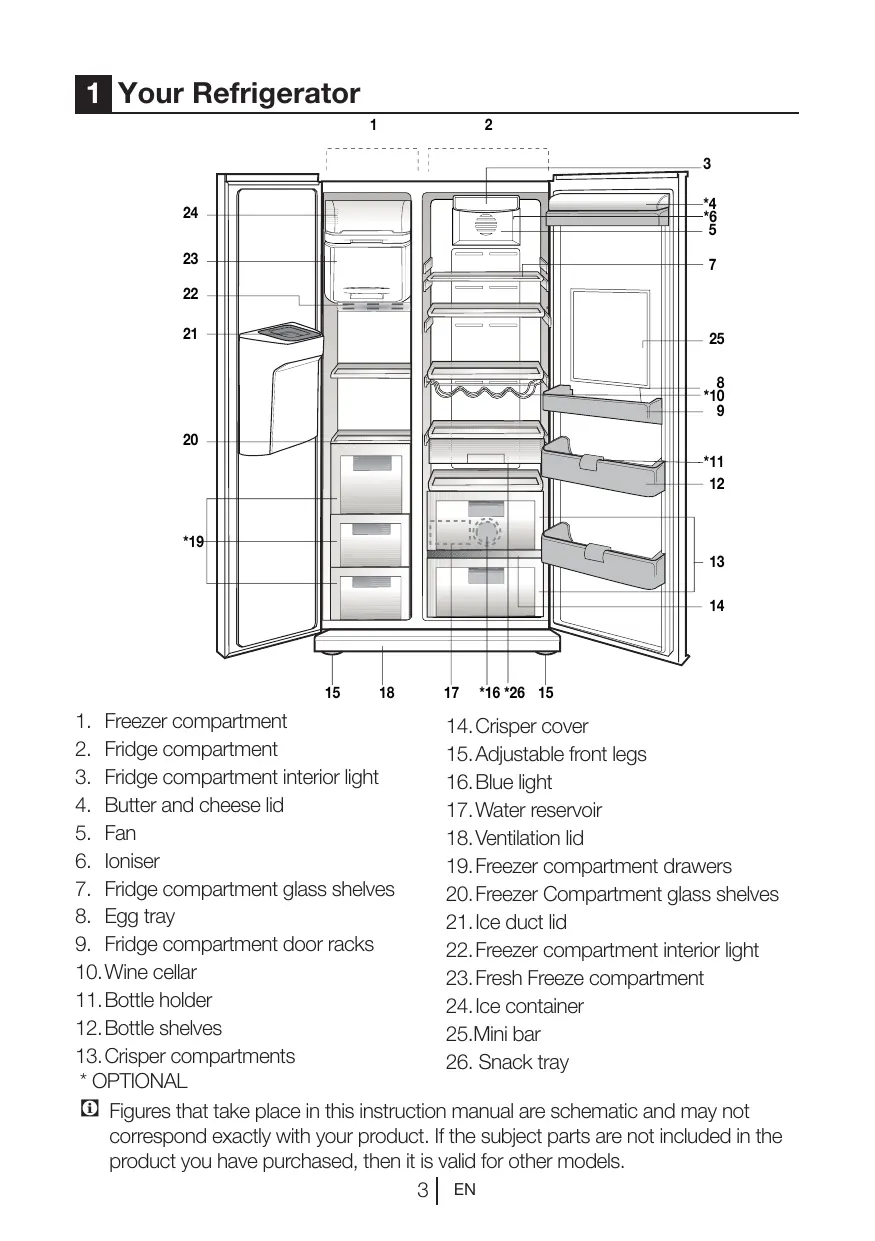
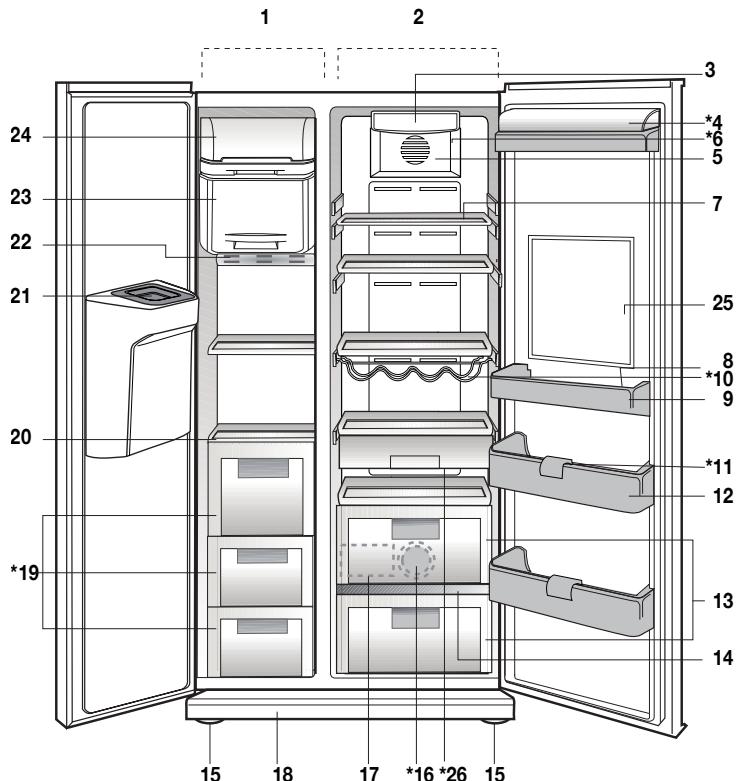
1 Your Refrigerator
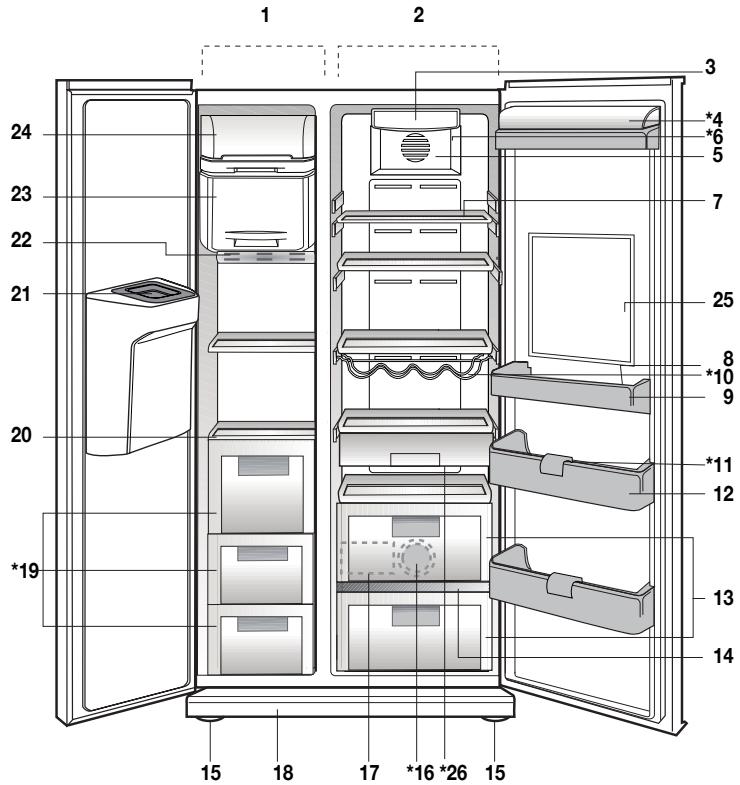
- Freezer compartment
- Fridge compartment
- Fridge compartment interior light
- Butter and cheese lid
- Fan
- Ioniser
- Fridge compartment glass shelves
- Egg tray
- Fridge compartment door racks
10.Wine cellar - Bottle holder
- Bottle shelves
-
Crisper compartments
-
OPTIONAL
-
Crisper cover
- Adjustable front legs
- Blue light
- Water reservoir
- Ventilation lid
19.Freezer compartment drawers - Freezer Compartment glass shelves
- Ice duct lid
- Freezer compartment interior light
- Fresh Freeze compartment
- Ice container
- Mini bar
- Snack tray
1 Figures that take place in this instruction manual are schematic and may not correspond exactly with your product. If the subject parts are not included in the product you have purchased, then it is valid for other models.
2 Important SafetyWarnings
Please review the following information. Failure to observe this information may cause injuries or material damage. Otherwise, all warranty and reliability commitments will become invalid.
The usage life of the unit you purchased is 10 years. This is the period for keeping the spare parts required for the unit to operate as described.
Intended use
This product is intended to be used
indoors and in closed areas such as homes;
- in closed working environments such as stores and offices;
- in closed accommodation areas such as farm houses, hotels, pensions.
- This product should not be used outdoors.
General safety
- When you want to dispose/scrap the product, we recommend you to consult the authorized service in order to learn the required information and authorized bodies.
- Consult your authorized service for all your questions and problems related to the refrigerator. Do not intervene or let someone intervene to the refrigerator without notifying the authorised services.
-
For products with a freezer compartment; Do not eat cone ice cream and ice cubes immediately after you take them out of the freezer compartment! (This may cause frostbite in your mouth.)
-
For products with a freezer compartment; Do not put bottled and canned liquid beverages in the freezer compartment. Otherwise, these may burst.
- Do not touch frozen food by hand; they may stick to your hand.
- Unplug your refrigerator before cleaning or defrosting.
- Vapor and vaporized cleaning materials should never be used in cleaning and defrosting processes of your refrigerator. In such cases, the vapor may get in contact with the electrical parts and cause short circuit or electric shock.
- Never use the parts on your refrigerator such as the door as a means of support or step.
- Do not use electrical devices inside the refrigerator.
- Do not damage the parts, where the refrigerant is circulating, with drilling or cutting tools. The refrigerant that might blow out when the gas channels of the evaporator, pipe extensions or surface coatings are punctured causes skin irritations and eye injuries.
- Do not cover or block the ventilation holes on your refrigerator with any material.
- Electrical devices must be repaired by only authorised persons. Repairs performed by incompetent persons create a risk for the user.
-
In case of any failure or during a maintenance or repair work, disconnect your refrigerator's mains supply by either turning off the relevant fuse or unplugging your FN appliance.
-
Do not pull by the cable when pulling off the plug.
- Place the beverage with higher proofs tightly closed and vertically.
- Never store spray cans containing flammable and explosive substances in the refrigerator.
- Do not use mechanical devices or other means to accelerate the defrosting process, other than those recommended by the manufacturer.
- This product is not intended to be used by persons with physical, sensory or mental disorders or unlearned or inexperienced people (including children) unless they are attended by a person who will be responsible for their safety or who will instruct them accordingly for use of the product
- Do not operate a damaged refrigerator. Consult with the service agent if you have any concerns.
- Electrical safety of your refrigerator shall be guaranteed only if the earth system in your house complies with standards.
- Exposing the product to rain, snow, sun and wind is dangerous with respect to electrical safety.
- Contact authorized service when there is a power cable damage to avoid danger.
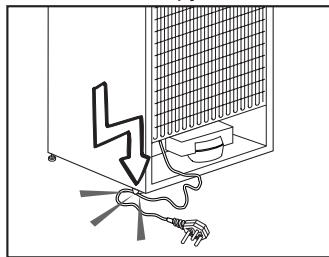
- Never plug the refrigerator into the wall outlet during installation. Otherwise, risk of death or serious injury may arise.
- This refrigerator is intended for only storing food items. It must not be used for any other purpose.
-
Label of technical specifications is located on the left wall inside the refrigerator.
-
Never connect your refrigerator to electricity-saving systems; they may damage the refrigerator.
- If there is a blue light on the refrigerator, do not look at the blue light with optical tools.
- For manually controlled refrigerators, wait for at least 5 minutes to start the refrigerator after power failure.
This operation manual should be handed in to the new owner of the product when it is given to others. - Avoid causing damage on power cable when transporting the refrigerator. Bending cable may cause fire. Never place heavy objects on power cable. Do not touch the plug with wet hands when plugging the product.
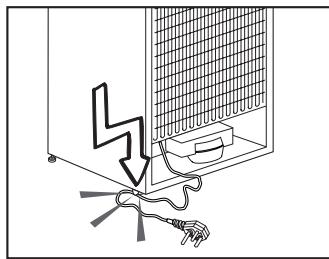
- Do not plug the refrigerator if the wall outlet is loose.
- Water should not be sprayed directly on inner or outer parts of the product for safety purposes.
- Do not spray substances containing inflammable gases such as propane gas near the refrigerator to avoid fire and explosion risk.
-
Never place containers filled with water on top of the refrigerator, otherwise this may cause electric shock or fire.
-
Do not overload your refrigerator with excessive amounts of food. If overloaded, the food items may fall down and hurt you and damage refrigerator when you open the door. Never place objects on top of the refrigerator; otherwise, these objects may fall down when you open or close the refrigerator's door.
- As they require a precise temperature, vaccines, heat-sensitive medicine and scientific materials and etc. should not be kept in the refrigerator.
- If not to be used for a long time, refrigerator should be unplugged. A possible problem in power cable may cause fire.
- The plug's tip should be regularly cleaned; otherwise, it may cause fire.
- The plug's tip should be cleaned regularly with a dry cloth; otherwise, it may cause fire.
- Refrigerator may move if adjustable legs are not properly secured on the floor. Properly securing adjustable legs on the floor can prevent the refrigerator to move.
- When carrying the refrigerator, do not hold it from door handle. Otherwise, it may be snapped.
- When you have to place your product next to another refrigerator or freezer, the distance between devices should be at least 8cm. Otherwise, adjacent side walls may be humidified.
For products with a water dispenser;
Pressure of water mains should be minimum 1 bar. Pressure of water mains should be maximum 8 bars.
- Use only potable water.
Child safety
- If the door has a lock, the key should be kept away from reach of children.
- Children must be supervised to prevent them from tampering with the product.
HCA Warning
If your product's cooling system contains R600a:
This gas is flammable. Therefore, pay attention to not damaging the cooling system and piping during usage and transportation. In the event of damage, keep your product away from potential fire sources that can cause the product catch a fire and ventilate the room in which the unit is placed.
Ignore this warning if your product's cooling system contains R134a.
Type of gas used in the product is stated in the type plate which is on the left wall inside the refrigerator.
Never throw the product in fire for disposal.
Things to be done for energy saving
- Do not leave the doors of your refrigerator open for a long time.
- Do not put hot food or drinks in your refrigerator.
- Do not overload your refrigerator so that the air circulation inside of it is not prevented.
- Do not install your refrigerator under direct sunlight or near heat emitting appliances such as ovens, dishwashers or radiators.
- Pay attention to keep your food in closed containers.
- For products with a freezer compartment; You can store maximum amount of food items in the freezer when you remove the shelf or drawer of the freezer. Energy consumption value stated for your refrigerator has been determined by removing freezer shelf or drawer and under maximum load. There is no harm to use a shelf or drawer according to the shapes and size of food to be frozen.
- Thawing frozen food in fridge compartment will both provide energy saving and preserve the food quality.
Recommendations for freshfood compartment
* OPTIONAL
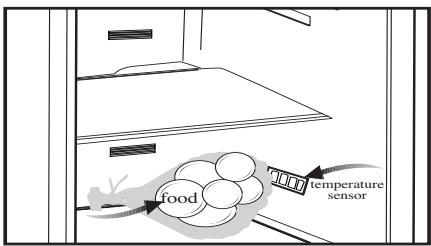
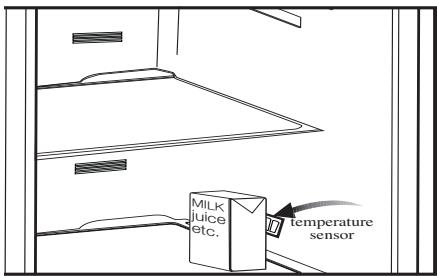
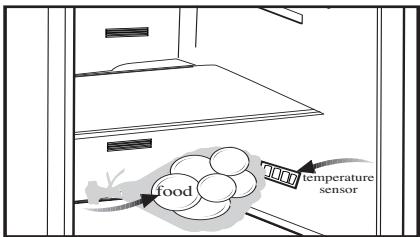
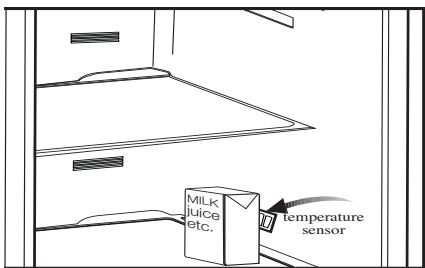
- Please do not let any foodstuff to come to contact with the temperature sensor in freshfood compartment. In order to maintain freshfood compartment at ideal storage temperature, the sensor must not be blocked by fodstuffs.
- Do not place hot foodstuff in your appliance.
3 Installation
Please remember that the manufacturer shall not be held liable if the information given in the instruction manual is not observed.
Points to be considered when re-transporting your refrigerator
- Your refrigerator must be emptied and cleaned prior to any transportation.
- Shelves, accessories, crisper and etc. in your refrigerator must be fastened securely by adhesive tape against any jolt before repackaging.
- Packaging must be tied with thick tapes and strong ropes and the rules of transportation printed on the package must be followed.
Always remember...
Every recycled material is an indispensable source for the nature and for our national resources. If you wish to contribute to recycling the packaging materials, you can get further information from the environmental bodies or local authorities.
Before operating your refrigerator
Before starting to use your refrigerator check the following:
-
Is the interior of the refrigerator dry and can the air circulate freely in the rear of it?
-
Clean the interior of the refrigerator as recommended in the "Maintenance and cleaning" section.
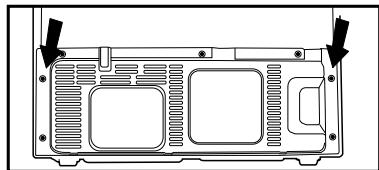
- Insert the 2 plastic wedges onto the rear ventilation as illustrated in the following figure. Unscrew the existing ones and use the screws given in the same bag of wedges. Plastic wedges will provide the required distance between your refrigerator and the wall in order to allow the air circulation.
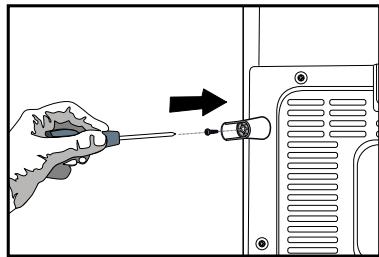
- Plug the refrigerator into the wall outlet. When the door is open the respective interior light will come on.
- You will hear a noise as the compressor starts up. The liquid and gases sealed within the refrigeration system may also give rise to noise, even if the compressor is not running and this is quite normal.
- Front edges of the refrigerator may feel warm. This is normal. These areas are designed to be warm to avoid condensation.
Electric connection
Connect your refrigerator to a grounded socket which is being protected by a fuse with the appropriate capacity. Important:
The connection must be in compliance with national regulations.
The power cable plug must be easily accessible after installation.
The specified voltage must be equal to your mains voltage.
Extension cables and multiway plugs must not be used for connection.
A damaged power cable must be replaced by a qualified electrician.
The appliance must not be operated before it is repaired! There is danger of electric shock!
Disposing of the packaging
The packing materials may be dangerous for children. Keep the packing materials out of the reach of children or dispose them of by classifying them in accordance with the waste instructions. Do not dispose them of along with the normal household waste.
The packing of your refrigerator is produced from recyclable materials.
Disposing of your old refrigerator
Dispose of your old machine without giving any harm to the environment.
You may consult your authorized dealer or waste collection center of your municipality about the disposal of your refrigerator.
Before disposing of your refrigerator, cut out the electric plug and, if there are any locks on the door, make them inoperable in order to protect children against any danger.
Placing and Installation
Caution: Never plug the refrigerator into the wall outlet during installation. Otherwise, risk of death or serious injury may arise.
If the entrance door of the room where the refrigerator will be installed is not wide enough for the refrigerator to pass through, than call the authorised service to have them remove the doors of your refrigerator and pass it sideways through the door.
- Install your refrigerator to a place that allows ease of use.
- Keep your refrigerator away from heat sources, humid places and direct sunlight.
- There must be appropriate air ventilation around your refrigerator in order to achieve an efficient operation. If the refrigerator is to be placed in a recess in the wall, there must be at least 5 cm distance with the ceiling and at least 5 cm with the wall.
If the floor is covered with a carpet, your product must be elevated 2.5 cm from the floor.
- Place your refrigerator on an even floor surface to prevent jolts.
- Do not keep your refrigerator in ambient temperatures under 10° C .
Floor balance adjustment
If your refrigerator is unbalanced; You can balance your refrigerator by turning the front legs of it as illustrated in the figure. (See Figure A) The corner where the leg exists is lowered when you turn in the direction of black arrow and raised when you turn in the opposite direction. Taking help from someone to slightly lift the refrigerator will facilitate this process.
Door height adjustment
In case there is a problem with the alignment of the doors with respect
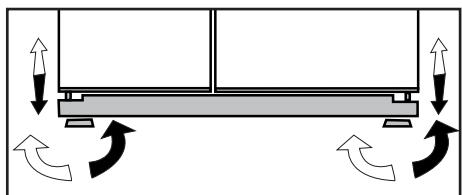
(A)
to each other, they may be re-aligned vertically in the order given below. Ensure that door shelves are empty when adjusting the door height.
- Remove the lower ventilation cover by unscrewing its screws as shown in the figure below. (See Figure B)
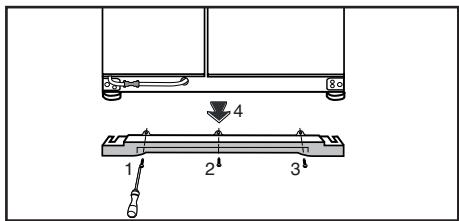
(B)
- Loosen the three screws of the hinges of the lower door, which you wish to escalate, with the help of a screwdriver as shown in the figure
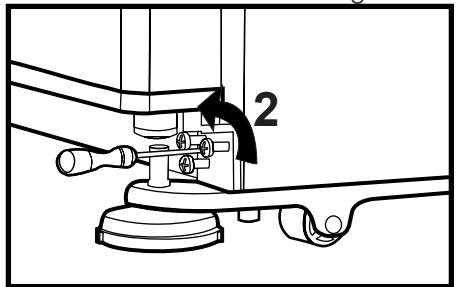
(C)
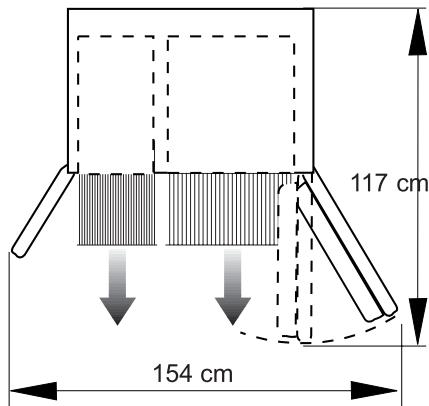
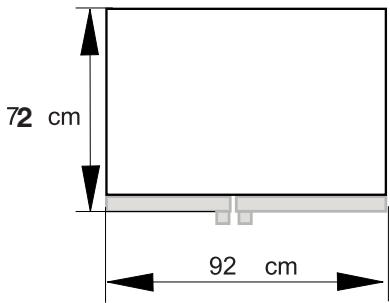
below. (Do not remove completely)
(See Figure C)
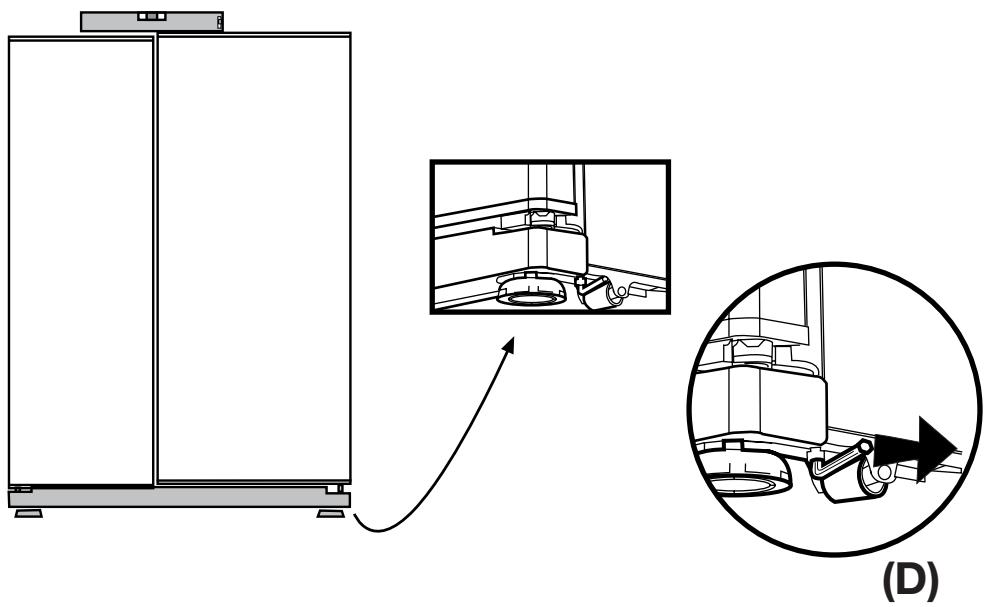
- If the freezer compartment door is lower than the fridge compartment door, bring them to the same level by turning the turning the elevation screw on the freezer compartment side in the direction of arrow using a M6 Allen wrench as illustrated in Figure D.
- If the freezer compartment door is higher than the fridge compartment door, bring them to the same level by turning the elevation screw on the freezer compartment side in the reverse direction of arrow using a M6 Allen wrench as illustrated in Figure D.
After bringing the doors to the same level by elevating the front part with the aid of the elevation screws, ensure the doors of the refrigerator shall close properly. If the doors do not close properly, this might adversely affect the efficiency of the refrigerator.
Adjusting the gap between the upper door
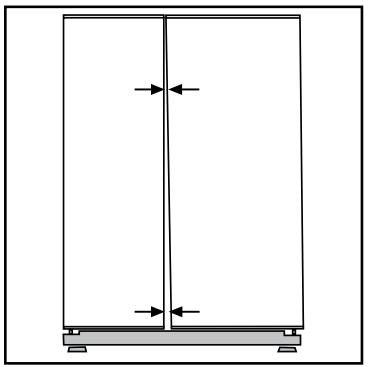
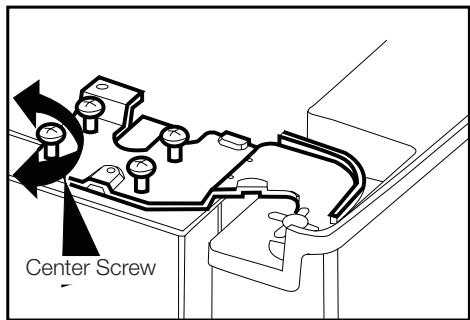
You can adjust the gap between the fridge compartment doors as illustrated in the figures.
Door shelves should be empty when adjusting the door height.
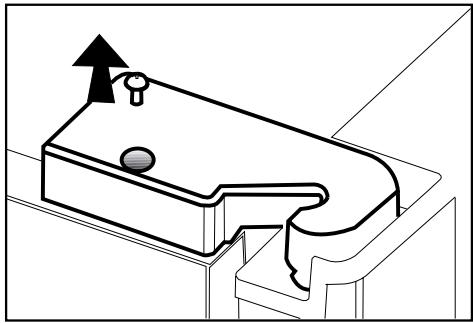
Because of being wires in the hinge cover of the freezer door, switch off the refrigerator power
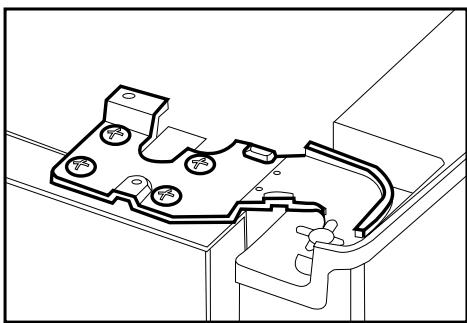
before removing hinge covers and this situation should be made to take care.
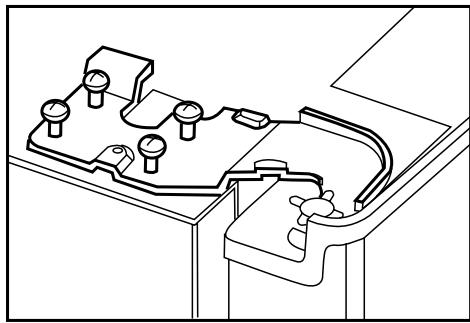
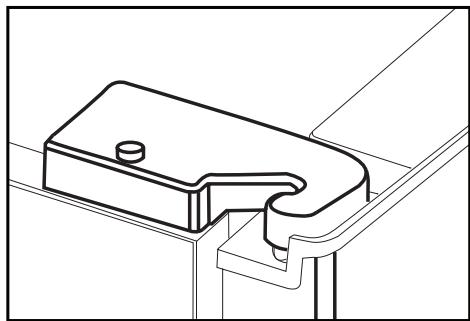
Using a screwdriver, remove the screw of upper hinge cover of the door you want to adjust.
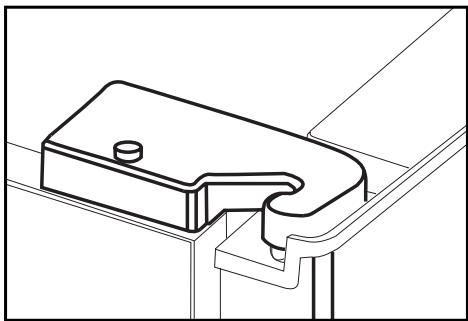
Adjust the door appropriately as you desire by loosing the screws.
Fix the door you have adjusted by tightening the screws without changing the position of the door.
i Replace the hinge cover and fix with the screw.
Installing Water Filter
(in some models)
Installation Requirements
Two different water sources may be connected to the refrigerator for water supply: the mains cold water supply and water in a jug.
A pump should be used for jug water usage.
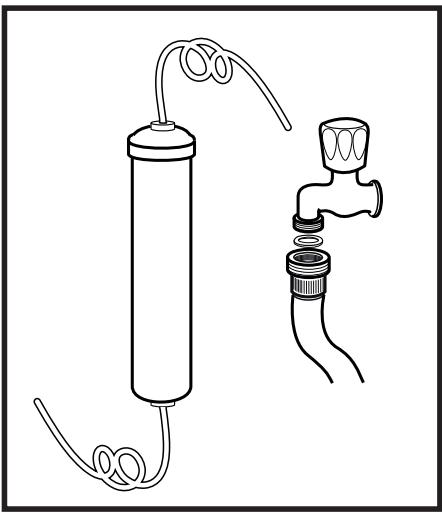
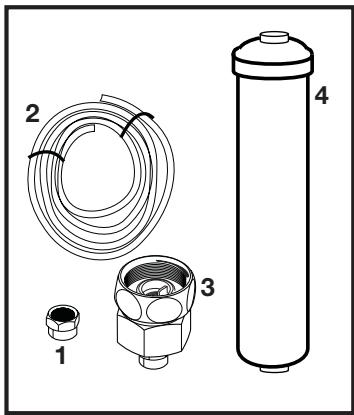
Check that the parts stated below are supplied with your appliance.
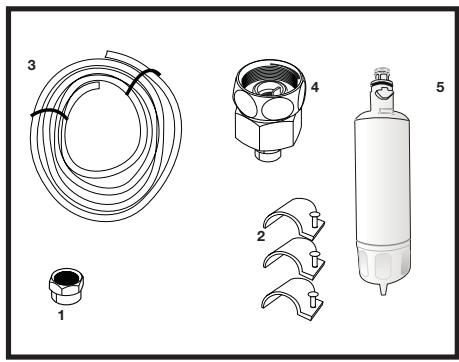
- Union for connection of the water pipe to the rear of the appliance
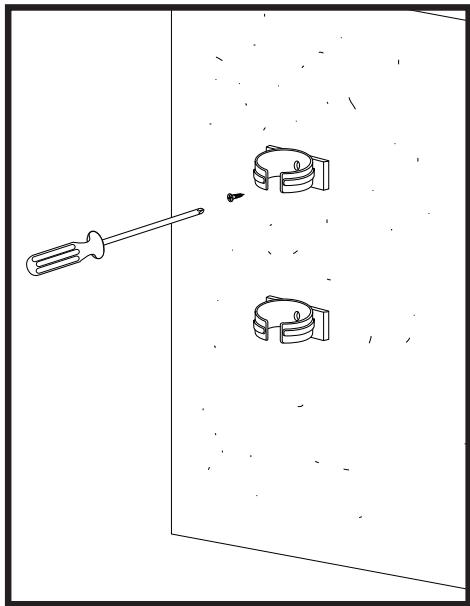
- 3 pieces of pipe clips (In case required to secure the water pipe)
Note: Since the following parts are not required in use with a jug, they may not be found in the product you purchased.
- 5 meter long water pipe (1/4 inch in diameter)
- Cold mains water valve with mesh filter (Tap Adapter)
- Water Filter to be fitted to the bracket inside the fridge compartment.
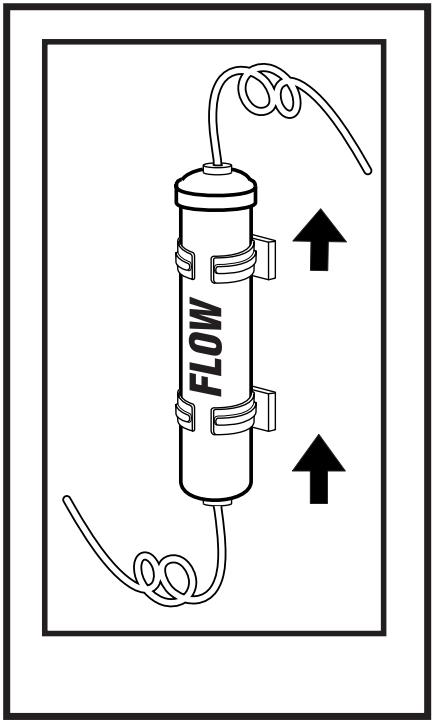
Water connection to the refrigerator Please follow the instructions below.
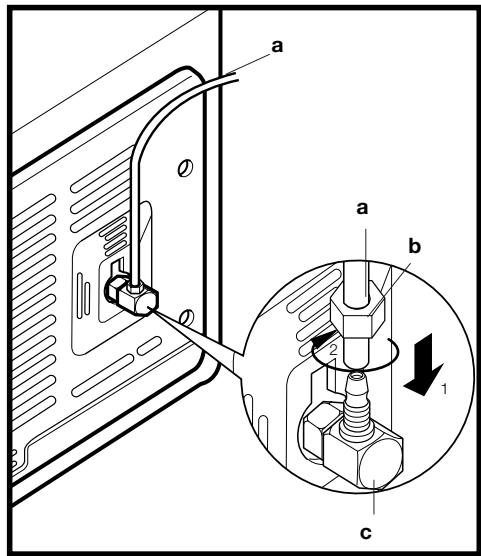
Connection of the Water Pipe to the Refrigerator
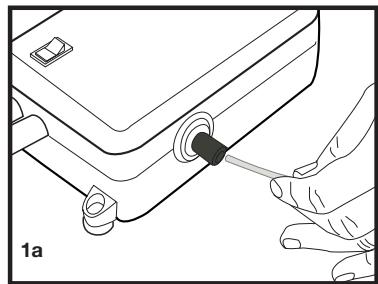
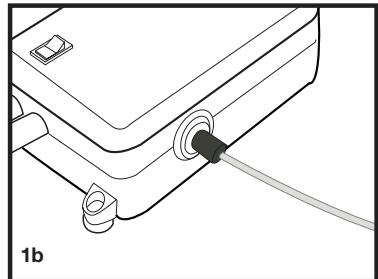
- After installing the union onto the water pipe, insert the water pipe to the refrigerator inlet valve by pressing downwards firmly.
- Fix union as seen in the opposite figure, by squeezing by hand on the refrigerator inlet valve.
(a- Water Pipe, b-Union, c-Valve)
Note 1: You should not need to tighten the union with a tool to achieve water tight assembly. In case of a leak use a spanner or a pair of pliers to tighten the union.
To fit the water filter follow the instructions below referring to figures supplied:
- Press ice cancel button on the display. (Figure 1)
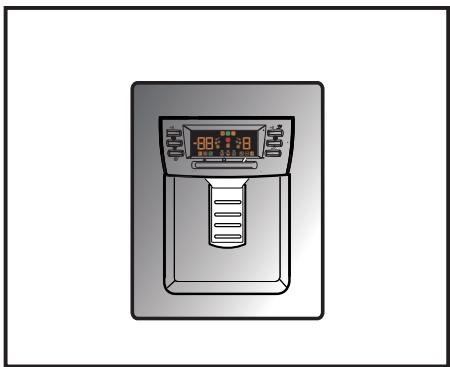
- Remove the filter cover in the fridge compartment by pulling it forward. (Figure 2)
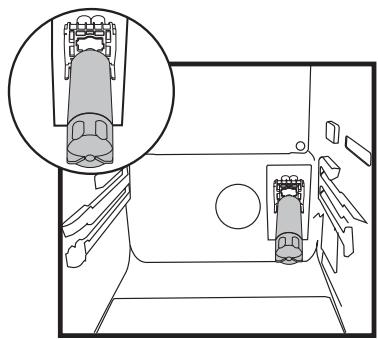
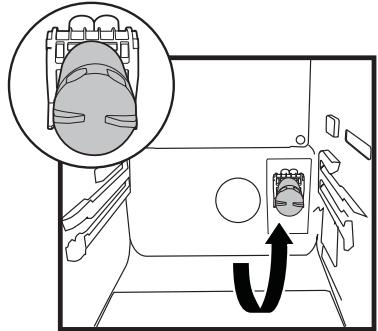
- Take out the water filter by-pass cover by rotating it downwards. (Figure 3-4)
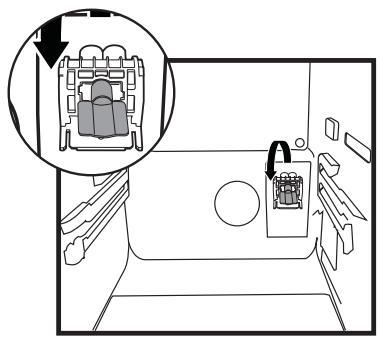
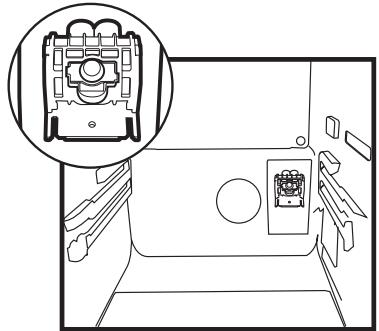
Warning: Make sure that the "Ice off" mode is active before taking out the by-pass cover.
Note: It is normal that a few drops of water drip after the cover has been taken out.
- Remove the lid on top of the water filter to place it as shown in the figure and turn upwards to lock it. (Figure 5)
- Press ice cancel button on the display again to exit from this mode. Water filter should be replaced every 6 months. The water filter must be removed as shown in the figure when it is going to be replaced or when it will no longer be used and by-pass cover must be attached. It must be made sure that Ice Off mode is active before taking it out.
Warning: Water filter cleans some foreign particles in the water. It does not purify water from microorganisms.
Warning: Ice Off button must always be pressed during replacement of the water filter or installing the bypass cover.
Connection of Water Hose to the Jug
(in some models)
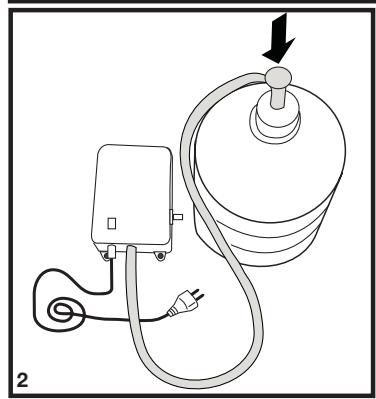
To connect water to the refrigerator from a jug, a pump is needed. Follow the instructions below after connecting one end of the water pipe coming out of the pump to the refrigerator as described on the previous page.
-
Finish the connection by pushing the other end of the water pipe into the water pipe inlet of the pump as shown in the figure.
-
Put and fix the pump hose into the jug as shown in the figure.
- After completing the connection, plug in and run the pump.
To provide an efficient operation of the pump, wait for 2-3 minutes after starting the pump.
Note: You may refer to the user manual of the pump while making the water connection.
Connection of the Water Pipe to the Cold Water Mains Line
(in some models)
If you want to use your refrigerator by connecting it to the cold water mains line,
you will have to connect a standard 1 / 2" valve connection fitting to the cold water supply in your house. In case this valve is not present or in case you are not sure, consult a qualified plumber.
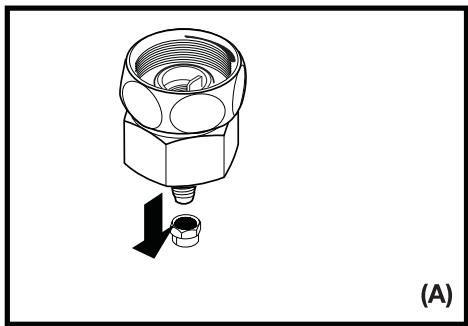
- Separate the union from the tap adaptor. (Figure A)
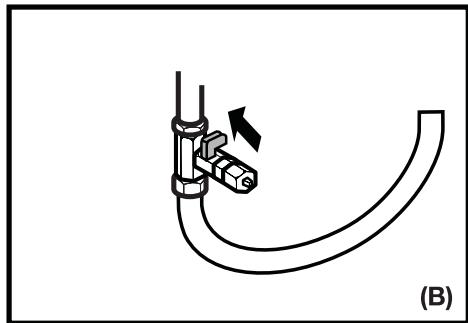
- Install the tap adaptor to 1 / 2" valve fitting as shown in the figure. (Figure B)
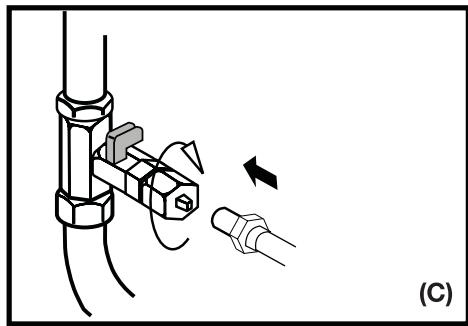
- After inserting the water pipe to the union, install it to the tap adaptor and insert to the tap as shown in the figure. (Figure C)
- Tighten the union manually. In case of a leak use a spanner or a pair of pliers to tighten the union.
Warning: Secure the water pipe to suitable points by means of the pipe clips supplied to avoid any damage or displacement or accidental disconnection.
Warning: After turning on the water valve, make sure that there is no leakage at both connection points of the water pipe. In case of a leak, turn off the valve immediately and tighten all joints again using a spanner or a pair of pliers.
Warning: Make sure that standard 1 / 2" valve fitting fed by cold mains water supply is available and is turned off fully.
Note -1: There is no need to use water filter in case a jug is used.
Note -2: Pump must be used when jug will be used.
Prior to first use of Ice/Water Dispenser
Water mains pressure must not be below 1 bar.
Water mains pressure must not be over 8 bars.
Pumps must be used in case the supply water pressure drops below 1 bar or if a jug is going to be used.
Water system of the refrigerator must be connected to the cold water line. It must not be connected to hot water line.
i No water may be obtained in the initial startup of the refrigerator. This is caused by the air in the system. To discharge air from the system, press Dispenser latch for periods of 1 minute until water comes from the Dispenser. Water flow may be irregular in the beginning. Irregular water flow will be normalized after the air in the system is discharged.
At the initial startup of the refrigerator approx.12 hours must pass before cold water can be obtained.
Water mains pressure must be between 1-8 bars for the operation of Ice/Water Dispenser smoothly. For this, check that 1 glass of water (100 cc) can be filled in 10 seconds.
The first 10 glasses of water should not be consumed.
12 hours must pass to obtain ice from the Ice Dispenser for the first time. If there is not enough ice in the ice dispenser, ice may not be obtained from ice dispenser.
Approximately the first 30 cubes of ice to be obtained from the Ice Dispenser must not be used.
Always use the water filter when a jug is not being used.
4 Preparation
6 Your refrigerator should be installed at least 30 cm away from heat sources such as hobs, ovens, central heater and stoves and at least 5 cm away from electrical ovens and should not be located under direct sunlight.
The ambient temperature of the room where you install your refrigerator should at least be 10°C . Operating your refrigerator under cooler conditions than this is not recommended with regard to its efficiency.
Please make sure that the interior of your refrigerator is cleaned thoroughly.
If two refrigerators are to be installed side by side, there should be at least 2 cm distance between them.
When you operate your refrigerator for the first time, please observe the following instructions during the initial six hours.
- The door should not be opened frequently.
- It must be operated empty without any food in it.
- Do not unplug your refrigerator. If a power failure occurs out of your control, please see the warnings in the "Recommended solutions for the problems" section.
Original packaging and foam materials should be kept for future transportation or moving.
5 Using your refrigerator
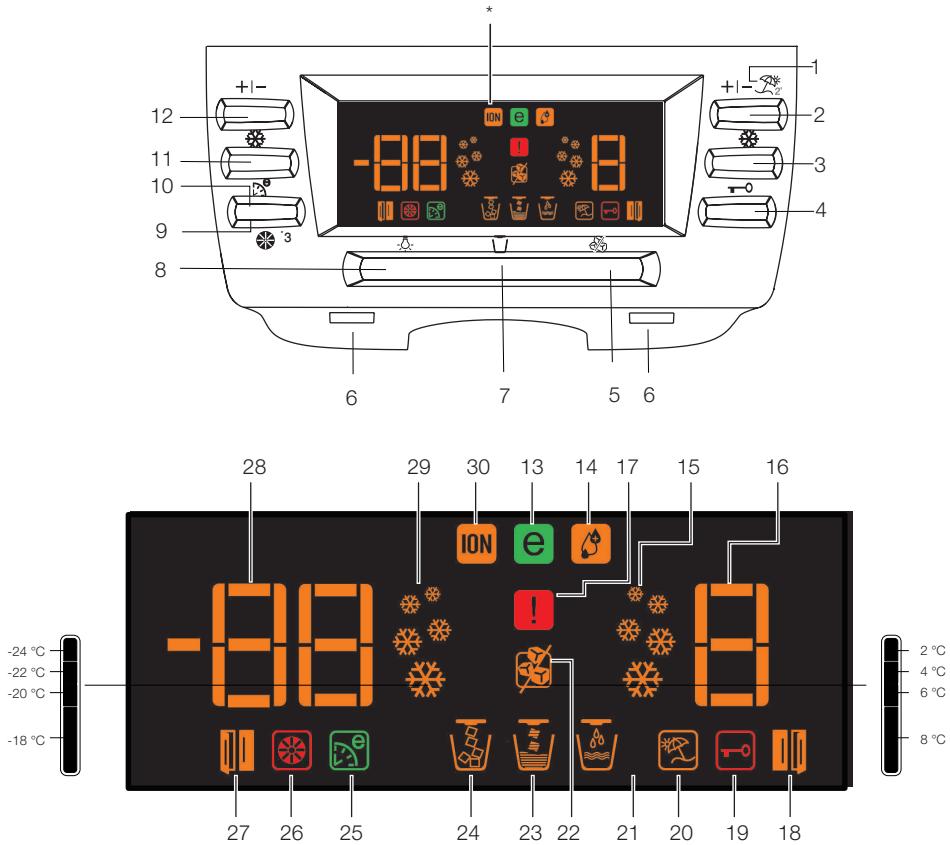
- Fridge Set button
- Vacation mode button
- Quick fridge button
- Key lock button
- Ice Off button
- Water Dispenser Lights
- Ice / Wate selection button
- Water Dispenser light button
- Filter Reset button
- Auto Eco button
- Quick freeze button
- Freezer Set button
- Economy mode indicator
- High humidity indicator
- Quick cool indicator
-
Fridge temperature setting indicator
-
High temperature/errorm warning indicator
- Fridge door open indicator
- Key Lock indicator
- Vacation mode indicator
- Water indicator
- No ice indicator
- Crash Ice indicator
- Cube Ice indicator
- Auto Eco indicator
- Filter reset indicator
- Freezer door open indicator
- Freezer Compartment Temperature Setting indicator
- Fast Freeze indicator
- Ioniser indicator OPTIONAL
| Freezer Compartment Adjustment | Fridge Compartment Adjustment | Explanations |
| -15°C | 4°C | This is the normal recommended setting. |
| -18,-21 or -24°C | 4°C | These settings are recommended when the ambient temperature exceeds 30°C. |
| Fresh Freeze | 4°C | Use this when you wish to freeze your food or make ice in a short time. Your refrigerator will return to its previous mode when the process is over. |
| -15°C or colder | 2°C | If you think that your fridge compartment is not cold enough because of the hot conditions or frequent opening and closing of the door. |
| -15°C or colder | Quick Cool | You can use it when your fridge compartment is overloaded or if you wish to cool down your food rapidly. |
Setting the fridge compartment temperature
Fridge compartment temperature can be set at one of the following temperatures: 8,6,4 and 2°C
Press the Fridge Set button to change. The temperature will decrease by 2°C . Every time you press the button, the temperature will go down and then return to the highest setting. Release at the desired temperature and the new set temperature will be stored. If you think that your food is colder than you desire, you can adjust the temperature setting of fridge compartment to 6 or 8.
Setting the freezer compartment temperature
Freezer temperature can be set at one of the following temperatures : -15 /-18 / -21 / -24 and -24°C
Press the Freezer Set button to change. The temperature will decrease by 2°C . Every time you press the button, the temperature will go down and then return to the highest setting. Release at the desired temperature and the new set temperature will be stored.
Fresh Freeze Function
When you press "Fresh Freeze" button, the compressor will run for about 14 hours. Fresh Freeze indicator will glow. To cancel this function press Fresh Freeze button again. Fresh Freeze indicator will turn off and return to its normal settings. Fresh Freeze will cancel itself automatically after about 12 hours if you do not cancel it.
If you want to freeze large amounts of fresh food, press the Fresh Freeze button 14 hours before putting the food into the freezer compartment.
Quick Cool Function
When you press Quick Cool button, the temperature of the compartment will be colder than the adjusted values. This function can be used for food placed in the fridge compartment and required to be cooled down rapidly. After pressing the Quick Cool button, Quick Cool indicator will glow. To cancel this function press Quick Cool button again. Quick Cool indicator will turn off and return to its normal settings. Quick Cool function will cancel itself automatically in case you do not cancel it.
Vacation Button
In case the fridge compartment will not be used for a long time, the usage of the fridge compartment may be cancelled by pressing on the Vacation Button. By this way, the refrigerator may operate more economically. Press on Vacation Button for 3 seconds to activate this function. When this function is active, the door of the fridge compartment must be kept closed and no food must be left in the fridge compartment.
Auto Eco Button (Special Economy function)
When "Auto Eco" button is pressed, Auto Economy Function will be activated. If the door of the fridge compartment is kept closed for a long time when this function is selected, the fridge compartment will switch to a more economic operation mode to save electricity automatically. When the Auto Eco button is pressed again, this function is deactivated.
Ioniser
The ioniser helps purify the air in the fridge and is carried out automatically Key Lock Button
The key lock is activated when this button is pressed for 3 seconds and all buttons and the dispenser latch will not work. If you want to deactivite key lock press again for 3 seconds.
Water Dispenser Illumination
When the Light button is pressed, the water dispenser lamp will light up and it will go off when the button is pressed again. This illumination will also light up when the water dispenser latch is pressed, and it will go off a short while after the latch is released.
Water/Ice Type Selection
With Dispenser Selection button, either one of "water", "ice cube" or "crushed ice" options is selected.
Ice/Water Dispenser
With its three different functions, the dispenser efficiently meets your cold water, cube ice and crushed ice needs without having to open the door of the refrigerator. It is a continuous cold water and ice source without adding water. User friendly control panel provides the following dispensing functions:
Note:
Water or ice can be dispensed for a maximum of 90 seconds at each use.
- When the freezer door is open, the dispenser will not work.

Ice Cube Water

Crushed Ice

Cold
Using the Ice Dispenser
Please note, first ice cubes will not be ready before 12 hours after switching on the appliance.
In case you do not need ice, such as during winter or in case you are on vacation, select the ice off function.
Ice device produces approximately 110 cubes of ice in 24 hours and this amount may change according to the frequency of opening of doors, refrigerator settings and power outage. Produced ice may be obtained from the dispenser as cube ice or crushed ice.
It is normal to get crushed ice from the dispenser in a longer time than in getting the ice cubes and also flowing of some crushed ice before the ice cubes drop if crushed ice option had been selected before selecting ice cube option.
If the ice dispenser hasn't been used for a long time or after a power cut the ice may form clumps or if the ice has taken on a change in smell or taste then the ice must be disposed of and the icebox cleaned thoroughly.
Warnings
i No ice must be added to the ice dispenser compartment. This may adversely affect the ice supply or crushing the ice.
It is normal to have a couple of ice cubes stuck together in the icebank.
Moving parts such as blades in a housing at the ice outlet of the dispenser must not be touched to avoid injury.
Never use sharp objects to break the ice in the icebox. This may cause damage on the icebox.
Food stuff should never be placed into the icebox for quick cooling purposes.
When the icebox is to be removed for any reason, first of all Ice Off Button must be pressed.
Ice Off
1 To stop ice formation, Ice Off button is pressed. When Ice Off is selected, no water will be taken into the Icematic. However, already existing ice can be taken from the dispenser. To restart ice formation, Ice Off button must be pressed again.
Warning: If you do not use the ice dispenser, do not forget to put ice duct cover into the ring inside of the freezer door. (See. Your Refrigerator section)
FILTER Reset Button:
Water filter should be replaced every six months. Filter reset indicator lits if water filter needs to be changed Press filter Reset Button for 3 seconds to remove filter reset indicator warning.
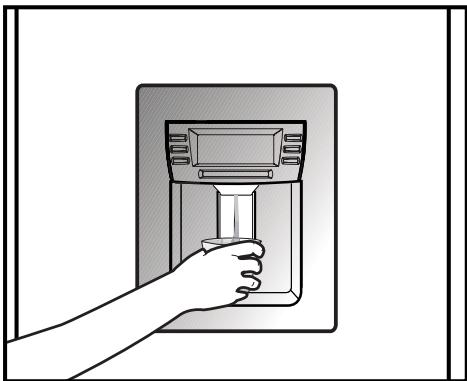
Using the water spring
Warnings
It is normal for the first few glasses of water taken from the dispenser to be warm.
In cases where the water dispenser has not been used frequently, sufficient amount of water must be drained from the dispenser to get fresh water.
Spillage Tray
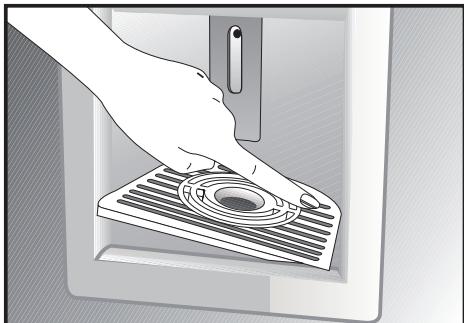
Water drops that drip during use, accumulates in the spillage tray. You can remove spillage tray by pulling it to yourself. You can remove the water with a sponge or a soft cloth.
Sliding Body Shelves
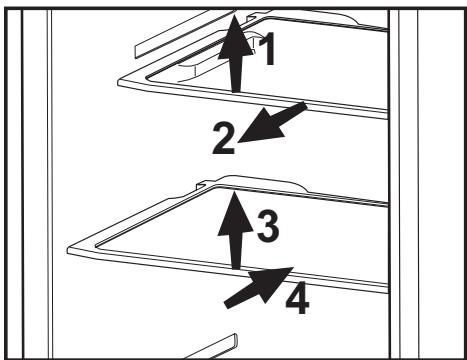
Sliding body shelves can be pulled by slightly lifting up from the front and moved back and forth. They come to a stop point when pulled towards front to allow you reach the foods placed at the back of the shelf; when it is pulled after slightly lifting upwards at the second stop point, the body shelf will be released.
The shelf should be held tightly from the bottom as well in order to prevent it from tipping over. The body shelf is placed on the rails at the sides of the refrigerator body by bringing it to one lower or one upper level.
The body shelf should be pushed backwards to seat it completely.
Blue light
Foodstuff stored in the crispers that are enlightened with a blue light continue their photosynthesis by means of the wavelength effect of blue light and thus, preserve their freshness and increase their vitamin content.
Ion:
Air is ionized by means of the ionizer system in the fridge compartment air duct. Thanks to this system, air-borne bacteria and particles that cause odor are removed.
Egg tray
- You can install the egg holder to the desired door or body shelf.
- Never store the egg holder in the freezer compartment.
Fresh Freeze Compartment
This compartment freezes your food quickly and preserves their tastes and nutritional values.
Crisper humidity control sliders
Using the crisper humidity control sliders
Crisper of your refrigerator is designed specially to keep your vegetables fresh without loosing their humidity. Cold air circulates basically around the crisper and the amount of the cold air passing through the crisper is controlled by the sliders on the front side of the crisper cover.
You can adjust the humidity control sliders to a suitable position according to the humidity and cooling condition of your food in the crisper.
If you want your food in the crisp to cool more, open the holes of the humidity control sliders and if you want them to cool less and keep their humidity for a longer time, close the holes.
Recommendations for preservation of frozen food
- Prepacked commercially frozen food should be stored in accordance with the frozen food manufacturer's instructions for a × 100 (4 star) frozen food storage compartment.
- To ensure that the high quality achieved by the frozen food manufacturer and the food retailer is maintained, the following should be remembered:
1.Put packets in the freezer as quickly as possible after purchase.
2. Ensure that contents are labelled and dated.
3. Do not exceed "Use By", "Best Before" dates on the packaging. If there is a power failure do not open the freezer door. Even if the power failure lasts up to the time specified on Type Label (inside left of the refrigerator), frozen food will not be affected. In case the failure lasts longer, the food must be checked and when necessary, must be consumed immediately or must be frozen after cooked.
Defrosting
The fridge and freezer compartments defrost automatically.
Replacing the Interior Light Bulb
Should the light fail to work, proceed as follows:
- Switch off at the socket outlet and pull out the mains plug.
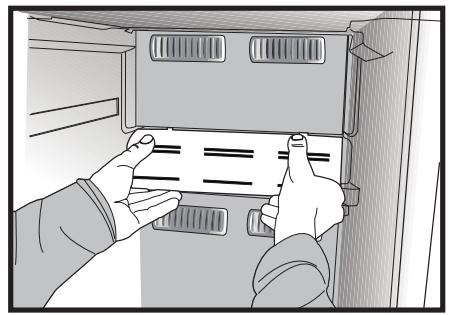
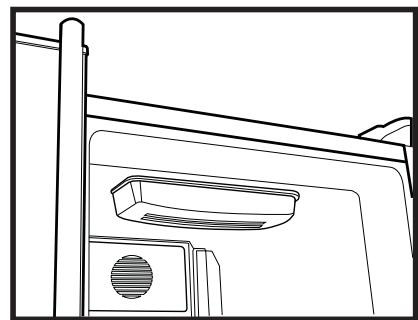
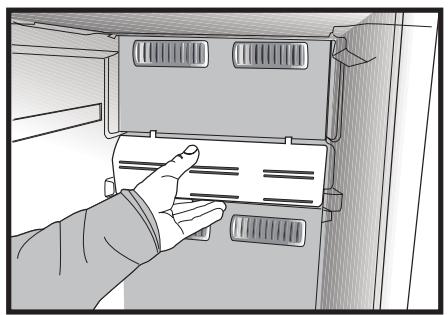
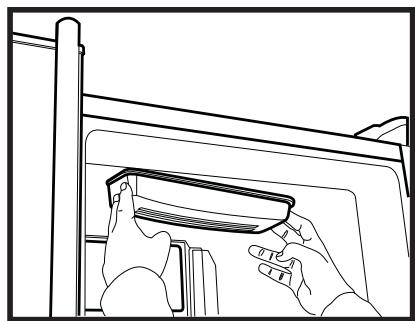
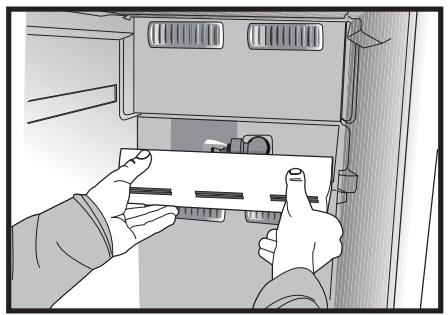
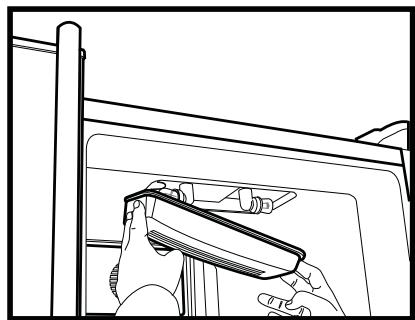
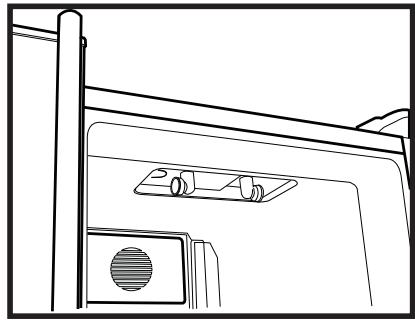
Remove all shelves and drawers for easy access. - Illumination covers in freezer and fridge sections are opened by pressing by hand; first release one side and then the other by pressing on the sides as shown in the figures.
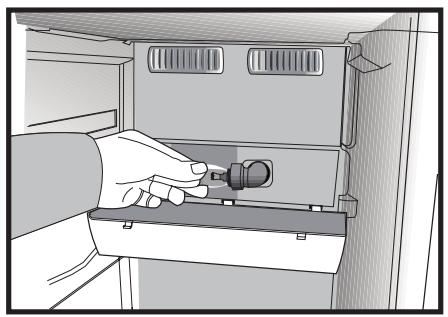
- First check that the bulb has not worked loose by ensuring that it is screwed securely in the holder.
Reinsert the plug and switch on. If the bulb works, reinstall the light cover by inserting the rear lug and pushing up to locate the front two lugs.
- If the light still fails to work, switch off at the socket outlet and pull out the mains plug. Replace the bulb with a new 15 watt (max) screw cap E14 (SES) bulb.
- Carefully dispose of the burnt-out light bulb immediately.
Replacement light bulb can easily be obtained from a good local electrical or DIY store.
6 Maintenance and cleaning
Never use gasoline, benzene or similar substances for cleaning purposes.
We recommend that you unplug the appliance before cleaning.
Never use any sharp abrasive instrument, soap, household cleaner, detergent and wax polish for cleaning.
Use lukewarm water to clean the cabinet of your refrigerator and wipe it dry.
Use a damp cloth wrung out in a solution of one teaspoon of bicarbonate of soda to one pint of water to clean the interior and wipe it dry.
Make sure that no water enters the lamp housing and other electrical items.
If your refrigerator is not going to be used for a long period of time, unplug the power cable, remove all food, clean it and leave the door ajar.
Check door seals regularly to ensure they are clean and free from food particles.
To remove door racks, remove all the contents and then simply push the door rack upwards from the base.
Protection of plastic surfaces
Do not put the liquid oils or oil-cooked meals in your refrigerator in unsealed containers as they damage the plastic surfaces of your refrigerator. In case of spilling or smearing oil on the plastic surfaces, clean and rinse the relevant part of the surface at once with warm water.
Icebox and Water Dispenser
1 Follow the procedure and warnings below to clean the icebox:
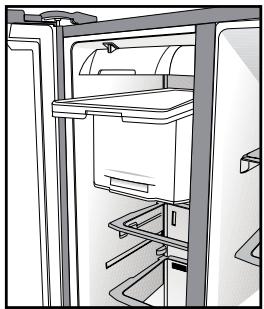
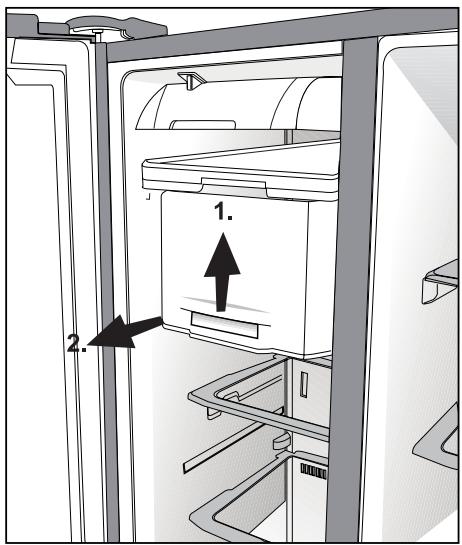
Δ Remove the Icebox by lifting first and then pulling towards yourself as shown in the diagram.
Empty the ice in the Icebox if any. To take out the stuck ice, use objects that are not sharp to avoid any damage on the Icebox.
Pay attention that the inside of the Icebox is not wet/damp before placing it back to its housing.
If you want to get ice from the ice dispenser after placing the Icebox back to its housing and closing the freezer door, exit from Ice Off mode by pressing the Ice Off key again.
Do not touch moving parts like the knife in the Icebox.
i Leave the Water Reservoir empty when you are not going to use for a long time
Chiller compartment
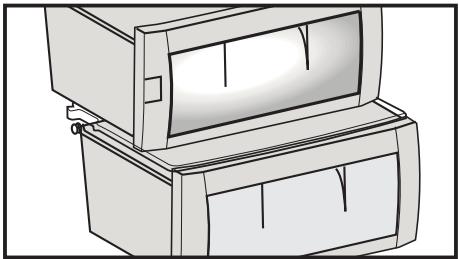
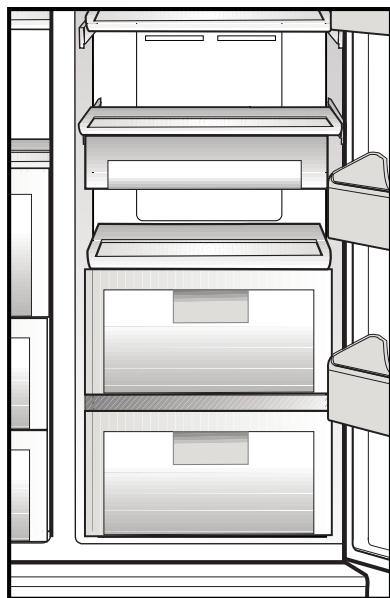
If you wish to use the storage container under the shelf as the Chiller compartment, the storage container under the shelf should be placed as shown in the picture.
Chiller compartments enable the foods to be frozen become ready for freezing. You can also use these compartments to store your food at a temperature a few degrees below the fridge compartment.
You can increase the inner volume of your refrigerator by removing any of the chiller compartments. To do this, pull the compartment towards yourself; the compartment will lean against the stopper and stop. This compartment will be released when you lift it about 1 cm and pull it towards yourself.
Minibar
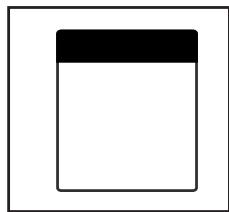
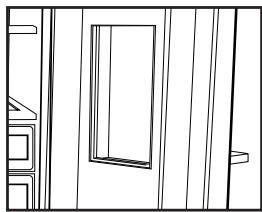
Minibar door provides you extra comfort when using your refrigerator. The door shelf in the refrigerator can be accessed without opening the refrigerator door; thanks to this feature, you can easily pick from the refrigerator the foods and drinks which you frequently consume. Since you do not have to open the refrigerator door frequently, you will have decreased the power consumption of refrigerator.
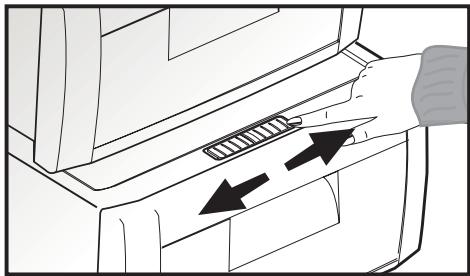
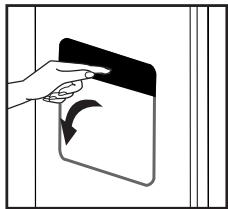
To open the minibar door, press by your hand on the minibar and pull back to open.
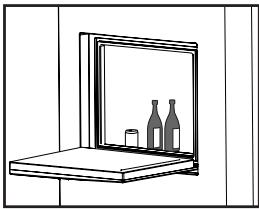
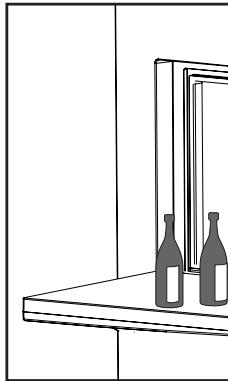
When the door of minibar is open, you may use the inner face of the door as a table on which you may put your bottles and glasses for a short time as shown in the figure.
Warning: Never do things that may. may put pressure on the door such as sitting on, climbing up or hanging to the table and do not place heavy objects on it. This may cause damage on the refrigerator or personal injuries.
Warning: Never perform cutting on the Minibar door and be careful that the door is not damaged by pointed objects.
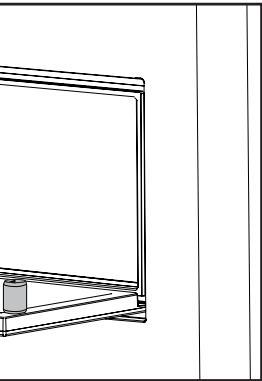
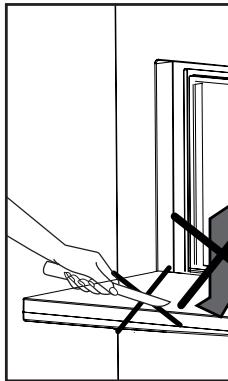
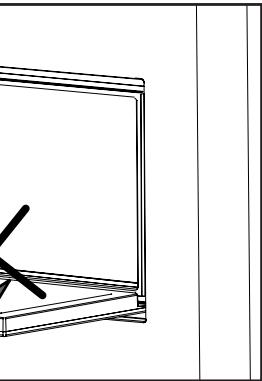
Recommended solutions for the problems
Please review this list before calling the service. It might save you time and money. This list includes frequent complaints that are not arising from defective workmanship or material usage. Some of the features described here may not exist in your product.
| The refrigerator does not operate. |
| • Is the refrigerator properly plugged in? Insert the plug to the wall socket. • Is the fuse of the socket which your refrigerator is connected to or the main fuse blown out? Check the fuse. |
| Condensation on the side wall of the fridge compartment (MULTIZONE, COOL CONTROL and FLEXI ZONE). |
| • Very cold ambient conditions. Frequent opening and closing of the door. Highly humid ambient conditions. Storage of food containing liquid in open containers. Leaving the door ajar. Switching the thermostat to a colder degree. • Decreasing the time the door left open or using it less frequently. • Covering the food stored in open containers with a suitable material. • Wipe the condensation using a dry cloth and check if it persists. |
| Compressor is not running |
| • Protective thermic of the compressor will blow out during sudden power failures or plug-out plug-ins as the refrigerant pressure in the cooling system of the refrigerator has not been balanced yet. Your refrigerator will start running approximately after 6 minutes. Please call the service if the refrigerator does not startup at the end of this period. • The fridge is in defrost cycle. This is normal for a full-automatically defrosting refrigerator. Defrosting cycle occurs periodically. • Your refrigerator is not plugged into the socket. Make sure that the plug is properly fit into the socket. • Are the temperature adjustments correctly made? • Power might be cut off. |
| The fridge is running frequently or for a long time. |
| ·Your new product may be wider than the previous one. This is quite normal. Large refrigerators operate for a longer period of time. ·The ambient room temperature may be high. This is quite normal. ·The refrigerator might have been plugged in recently or might have been loaded with food. Cooling down of the refrigerator completely may last for a couple of hours longer. ·Large amounts of hot food might have been put in the refrigerator recently. Hot food causes longer running of the refrigerator until they reach the safe storage temperature. ·Doors might have been opened frequently or left ajar for a long time. The warm air that has entered into the refrigerator causes the refrigerator to run for longer periods. Open the doors less frequently. ·Freezer or fridge compartment door might have been left ajar. Check if the doors are tightly closed. ·The refrigerator is adjusted to a very low temperature. Adjust the refrigerator temperature to a warmer degree and wait until the temperature is achieved. ·Door seal of the fridge or freezer may be soiled, worn out, broken or not properly seated. Clean or replace the seal. Damaged/broken seal causes the refrigerator to run for a longer period of time in order to maintain the current temperature. |
| Freezer temperature is very low while the fridge temperature is sufficient. |
| ·The freezer temperature is adjusted to a very low temperature. Adjust the freezer temperature to a warmer degree and check. |
| Fridge temperature is very low while the freezer temperature is sufficient. |
| ·The fridge temperature might have been adjusted to a very low temperature. Adjust the fridge temperature to a warmer degree and check. |
| Food kept in the fridge compartment drawers are freezing. |
| ·The fridge temperature might have been adjusted to a very low temperature. Adjust the fridge temperature to a warmer degree and check. |
| Temperature in the fridge or freezer is very high. |
| ·The fridge temperature might have been adjusted to a very high degree. Fridge adjustment has an effect on the temperature of the freezer. Change the temperature of the fridge or freezer until the fridge or freezer temperature reaches to a sufficient level. ·Doors might have been opened frequently or left ajar for a long time; open them less frequently. ·Door might have been left ajar; close the door completely. ·Large amount of hot food might have been put in the refrigerator recently. Wait until the fridge or freezer reaches the desired temperature. ·The refrigerator might have been plugged in recently. Cooling down of the refrigerator completely takes time. |
| The operation noise increases when the refrigerator is running. |
| ·The operating performance of the refrigerator may change due to the changes in the ambient temperature. It is normal and not a fault. |
| Vibrations or noise. |
| ·The floor is not even or it is weak. The refrigerator rocks when moved slowly. Make sure that the floor is strong enough to carry the refrigerator, and level. ·The noise may be caused by the items put onto the refrigerator. Items on top of the refrigerator should be removed. |
| There are noises coming from the refrigerator like liquid spilling or spraying. |
| ·Liquid and gas flows happen in accordance with the operating principles of your refrigerator. It is normal and not a fault. |
| There is a noise like wind blowing. |
| ·Fans are used in order to cool the refrigerator. It is normal and not a fault. |
| Condensation on the inner walls of refrigerator. |
| ·Hot and humid weather increases icing and condensation. It is normal and not a fault. ·Doors might have been left ajar; make sure that the doors are closed fully. ·Doors might have been opened frequently or left ajar for a long time; open them less frequently. |
| Humidity occurs on the outside of the refrigerator or between the doors. |
| ·There might be humidity in the air; this is quite normal in humid weather. When the humidity is less, condensation will disappear. |
| Bad odour inside the refrigerator. |
| ·Inside of the refrigerator must be cleaned. Clean the inside of the refrigerator with a sponge, lukewarm water or carbonated water. ·Some containers or package materials might cause the smell. Use a different container or different brand packaging material. |
| The door is not closing. |
| ·Food packages may prevent the door's closing. Replace the packages that are obstructing the door. ·The refrigerator is not completely upright on the floor and rocking when slightly moved. Adjust the elevation screws. ·The floor is not level or strong. Make sure that the floor is level and capable to carry the refrigerator. |
| Crispers are stuck. |
| ·The food might be touching the ceiling of the drawer. Rearrange food in the drawer. |
Chere clientele, cher client,
Compartment Ultra Congélation 25
Compartment Ultra Congélation
Compartment Zone fraîche
Ice Off (Vypnout led) 23
Ice Off (Vypnout led)
Ochrana plastovych ploch
"Ice Off" (Vypnuty'lad) 23
"Ice Off" (Vypnuty I'ad)
IJIaI3JeIc pa3daTqNKOM OXJaXDeHHO BObbl: 6
Be30napocbTee 6
IpeDynpexKdHne opraHOB 3dpaBOOxpaHeHn. 6
PeKOMeHdaaunno3koHOMn 3JeKtpo3Heprnn. 7
PeKOMeHdaaunnoNCNoB3OBAHnIOOTdJeHnI DnI CBexnx npOdyKTOB...7
3 YctaHOBka 8
YTO cIeJeT yHITbIbA Tb npi TpaHCnOpTnpOBKe xOIoNIIbHnKa.....8
Ipepe3Kcnpnyatauney xoJOnJIbHnka 8
IopKIOUeHne K 3JeKTPoCeTn. 9
Ytuiin3aun ynaKOBkn. 9
YtJn3aunCTaporoXoJOnDbHnKa..9
Pa3MeIeHne I yctaHOBka. 9
Perynipobka noJoxeHn Ha nOy..... 10
PeryunipobKa 3a3opa MeKdy BepxHmNnBepcaMn 12
UcTaHOBka BOJHOrO QnJIbTpA 13
IIOKJIIOHHe BOIOPOBOHO Tpy6bIKXOIOINbHNKy. 14
IoiCoeHHeHne IlaHaRa IoJaU BObl K 6aky 16
IoiKJIIOUeHHe BOJOpBOJHOI Tpy6bIK BOJOpBOJHOI JINHN 17
(B HeKOTOpbIX MoDJIaX) 17
Ppejde yem nCnoB3OBaTb pacnpedeIeNTel Jbda/BOdbI 18
4 Poirotobka 19
5 3KcnpnyaTaunxOJouNJIbHnka 20
PeryunipobKa TeMpeaTpybl xoJOnIbHOrO OTeJeHnra 21
PerynipobKa TeMpeaTpybl MOp03nIbHOrO OTeJeHnra. 21
Функцязаморжьаня CBexnx npodykTOB 21
Функцябьстporo oxlaжденя.....22
KhoPka pexkma BpeMeHHoro OTKIOUeHnA 22
KhoNka «Auto Eco» (Функця особ эКоHOMиного ржIMа).. 22
Hohnsatop 22
KhoNka 6JIoKnpOBKn KnaBn.. 22
Poncbetka pacnpedeHntenB OdbI..22
Bb6op BoDbl/IIbda 22
PacnpedentnelbIbda/BoDbbl. 22
IcnoJIb3OBAHne pacnpedeJInteJIa Ibda. 23
ФункцИОТКЛЮЧЕнЯлда.. 23
IoiB3OBAHnE KpaHOM IoJaU BObbl 24
JIoTOK dIa pa3nITbIX npOdyKTOB ....24
BbIbIXHbIe noIKn. 24
CnHnCBet. 25
MOnHaZaUa: 25
JIoTOK dIa Iu.. 25
OTdeneHne 3amopaxnBaHnCbExnx npOyKTOB 25
PeylaTOpblBnaXHoCTN B KOHTeHepax DnI ppyKToB n OBOuSei 25
Pekomehdaunno xpaheHIO 3amopoxeHHbIX npoDyKTOB. 26
Pa3mopaxkBaHne 26
3aMeHa lamnoKb BHyTpEnHero OCBeUeHnI 26
6 06cnyxmbaHne n uicTkca 28
3aunTa nlaactMaCCOBbIX noBepxHocTei 28
KoHTeHepIJIaJIbDaIpaCppeJEnITeJIb BOJbl 29
Munu-6ap. 31
7 PeKOMeHdaCmno yCTpaHeHnHo HeuCnpaBHOcTe 32
- MopozilbHoe OTeJeHne
- XoIOnIINbHoe OTdJIeHHe
- BnyTpeneHHe oCBeSeHne XoJIoNJIbHOI KaMepbl
- KpbIwka OTecka IaMa Macna n Cbpa
- BeHTnIaTOp
- Nohm3aTop
- CTeKJIHHbIe IONKIN XOIOINbHOrO OTDeJIeHnIa
- JIOTOKJINRAH
- Дернаг стокамошьн Камерbl
10.OTCEKINIBN
11.Дерхателдябулok
12.ПолкдЯбулOK - OTdeneHnI nI OBOUeI nOpyKTOB
- KpbiShaKa KOHTeHepa DnA φpyKToB n OBOSei
I NIIIOCTpaUNB DaHNO IHNCTpyKUNYBIAHOTc CXeMaTHyBMIMN MOrTy OTNIuHaTbCnT BAsEi MoDEJI. EcIN HeKOTOpBIE KOMNoHEHTbI HE BXOaRt B CoCTab PnIO6peTeHHORo BamN 3DeJIIn, OHJ DeIcTBnTEhblI DnI dpynx MoDEJIe.
2 Baxkhble yka3aHnno TEsHnke 6e3OpacHOCTN
O63aTeIbH O3NaKOMbTcB CO cNeIyUoSei
INΦOPMaIeN. IrHOpIPOBaHne daHHO
INΦOPMaIIMoKET npIBecTI K
IpiuHHeHIO TpaBM IJI NIOBpeXdEHNIO
IMUseCTBa.KpOME TORO, rapaHTnIhBiE
O63aTeIbCTBa I O63aTeIbCTBa IO
3KcPnLyataUOnHNO HaIeXHoCTN yTpAraT CNIy.
Cpok cnjxkbpi npo6peTeHHoro Bamn n3dennr coctabniet 10 let. 3To cpoK, B TeueHne KOtopornpedocTabnIOTc3aapanchbIe qactn, HeobxOIMbIe IIn HOpMaJIbHO pa60tby n3deNIA.
IcnoJb3ObaHne IHOHa3HaueHnIO
3To n3dJIne npedHa3NaeHcNo dIy NCIOJIb3OBAHnI
B NOMeUeHn Ha 3aKpbItbIX npocTpaHCTbax,HanpIMep,B DOME;
B3akpbItbIX pa6OuNX NOMeUeHnX, HapPImep, B MaRa3Inhax N OΦncax;
B 3aKpbItbIX JxNJIbIX NOMeUeHnX, HApnpMep,B 3aROpOdHbIX Domax, RocTHnHnLcax, NaHCNOhax.
-3TO n3dJIne IpeJHa3HaueHo dIgNcONb3OBaHnT OJbKO B NOMeUeHN.
06uine npabnla texhnn 6e3onachoctn
B cnlyucae Heo6xOaMocTn yTuN3nPobatb nn yHuNToxKntb N3dJeIne dIpy nOlyueHna Heo6xOaIMoN INΦOpMaζn peKOMeHNdyETcR o6paTtBcR B qnpMeHHbI cepBnCHbI ceHTp, a TaKKe B MeCTHbI opraHbI BnactN.
- ПО BCEM BONPOCAM, KACAJOUIMCЯ
холоДиЛьнИka, OБрашаITecbВ
фирмEHнь серВиСьн�цЕТр. He
ВМeшИВaIITecbВ pa6OTу ИЗДELЯ
и He pa3peшaIte 3TORO ДPyrIMM 6e3
УВeДOMПЕНЯ ФирмEHнORO серВиСHorO
цEHTpa.
ДяиИЗдени CМОРОЗИNBHIM OTДЕЛЕнEHМ: He eIbTe MOPOJOKeHoe B pOKKax I KByIKN IbJa cpa3y NocNe Ix ИЗВLEЧENЯ ИЗ MOPO3INbHOrO OTDEJIENIA! (TO MOKET BbI3BaTb OБMOPOJOKeHne nIoNoCTn pTa.)
ДяИЗдeлиСМОриЛьнБIM OTДeLEHINEM:He NOMEuaIte HAnITKIN B6yTbIInKax IN6aHKax B MOPO3NJIbHoe OTДeLEHINE.Они мOrYTNOnHyTb.
He IOTpaIbaiTecb Do 3amOpOKeHHbIX npOyKTOB-OH NMOrYT pIIMep3HyTb K pyKaM.
- OTKIIOUaIte XOIOJINbHnK OT cETn nepeD. YNCTKOI INI pa3MOPaXnBaHNeM.
HnB Koem cnyae He nCnoJIb3yIte IJNA YNCTKN npa3MOPaXINBaHINXOIOINbHNIKA nap NIIa3P030NBhIE YNCTAUIe CpeCDtBA. B 3TOM cnyae nap MOKET NOnactb Ha 3NeKTPnueCKne KOMTOHeHTbl, UTO pINBeTeK KOPOTKOMY 3aMbIAKHIO NNl nopAAKeHHIO 3JeKTPnueCKIM TOKOM.
HnB Koem cnyae He NcNoIb3yIte XoIOJIbHNI KIN IIN ERO YactN (HaNPIMep, DBepU) B KaYeCTBe NOdCTaBKN IIN ONOpbl.
He nCnoJb3yIte 3JeKtpnueckne npn6opbl BHyTPn XOJIOuJIbHNIka.
He IOnyckaIte NOBpeKdEnHn YacTei, B KOTOpbIX UINPKUInpuyeT XnAdaReHT, INCIOJIb3yR peKyuIe HIN CBePInIbHbIe INHCTpyMeNTbl. XnAdaReHT MOKeT BbIPBaTcR N3 PIO6BtOrO INCnapITeR, Tpy6oPiPoBOIDOB INN POKbTIIN NOBepXHOCTNI BbI3BaTb pa3DpaXeHne KOHN IopaxeHne rJa3.
Hn B Koem cnyae He 3akpbIbaiTe n He 3aKyIopNbAIte BEHTUNLAIOHHbIe OTBepCTnXoJOniNbHnKa.
- Pemont 3neKtpueckoro 6obopyoBaHnna D0JXHbI npOn3BOIDtB TOnbKO KbaJIncuPObaHHbIe CneUmaNCTbI. Pemont, BblIOJIHeHHbI HeKOMPeTeHTHBIM NlIcAMn, MoKeT Co3dTaB ONaCHOCTb Ira notpe6nteIa.
B clyuae HeNoJaOK BO Bpemr 3KcIpyaTaUIN, a TaKke Iprn IpOBeDeHIn NTexO6CnyJbAHN INIpeMOHTa OTKJIQUHTe XOJODINbHN, BvIKJIQUHb COOTBETCTByUcHIN IpeOxpaHITeB INI INBbHyB WUnP pNTaHIN I3 PO3eTKn.
He TAHHTe 3a CeTeBOI UHyp, BbIHIMaBnIKy u3 pO3ETKn.
KpeIKeIe cIInpTbIe HAnITKcIeIyET XpaHnTb B IIOHTHO 3aKpbITOM BInde I BePTKaJIbHOM IIOJoxEHN.
- HeJIb3Я xpaHHTb B XOJODIJIbHNIke 6aHKn C rOpHcIMN N B3pbIBOONaCHbIMN BEUeCTBaMn.
Дя усореня поцeccа
размогжваня He Incpoьзу Te
mexaHueckne yctpoiCTBa IIN
dpytne cpeDCTBa, KpOME tex, KOTopbIe
peKOMeHDoBAhbl npOn3BODInTeJEM.
Данньий злелктponрибор He npedHa3haeHдя Испльзовая ЛцамИ (ВКЛючаядTei)СоганчehнblIMФиЗИЧЕCKIMN,CEHCOPHBIMN INHTeJIKeKТУаNBbIMBO3MOЖHOCTAMMЛБОHe IMeOuIMNOblTaIи 3нани.ОнМоуТ ПОЛьЗOBaTbc3лелктponриборToJbKOpoI NaIIODeHnEMЛца,OTBETCTBEHHorO3aИx6be3OJaCHOCtB,NINpoI eropykoBOdCTBOM.
Hn B KOem Cnyae HeIb3a NOpIb3OBaTbcA HEnCIPpaBhbIM XOIOJINJIbHNKOM. Ppi BO3HNKHOBeHm BNPOCOM O6paUaITeCb K KBaJIINΦIIuPObaBHOM cyueNaJInCTy.
3JIeKTPnuecka 6e3ONaChOcTb rapaHTnpyetc TOnbKO B TOM Cnyae, ecNI CnCTema 3a3EmJIeHnB BaUeM DOME COOTBETCTByET CTaNdapTam.
Bo3eCTBnHe Ha yctpoiCtBO DoJx, CHera, coJIHcA nIIn BeTpa OAnCHO C ToKIN 3peHnI 3JeKToPo6e3OnaNCHOCTn.
B clyuae noBpeKdEHHa shHypa nHTAHnI N T.I. o6paNTeCb B qIpMeHHbI CepBnCHbI ueHTp, yTo6bl He npDBepratb c68 onachOCTn.
Hn B KOem Cnyae HeIb3B BKJIOUaTb XOIOINbHNI B PO3ETKY BO BPEMy YCTaHOBKn. 3TO MOKET pINBecTN K cepbe3HbIM TpaBMam NIN CMEpTN.
- ΘTOT XOLOДИNBHнКпрEDиЗнанчЕнТOLькОДЯханеняПИSeBbIXnpOДуKТВ.ЕгНБ3ЯИСПОЛБ3OBaTБДЯΚАnx-ЛИбОИHBxцeел.
TabnUka cTexHnueckmXapaKTePncTnKaMn HaxOJNTcCneBaHaBHyTpEnHei CteHKe XoIOnJIbHnka.
HnB Koem Cnyae HeIb3a NIOKIIOuATb XOIOJINbHNI K 3JIeKTPOHHbIM CNTeMaM 3KOHOOMN 3JIeKTPO3HePmN, PNOCKoJIbKy 3TO MOKeT PnIBcTeN K ERO NOJOMKe.
Пин haJIINuB XOJIOJIbHnKe CInHeI NOcBETKHe CMOTpITe Ha Hee Upe3 ONTINueCKNe yCTpoiCTBa.
- Пи OTKПОЧЕНМ OТ сETи 3ЛЕКТРОПИТАнЯ
XOLODINHBNIGA CpyHbIM UYPaBJIeHNeM
ПОДЖДITE He MeHee 5 MInHyT, Рждев
ЧEM ПОДКПЮЧаТ b erO ChOBa.
B Cnyae npoDAxHn3dEInna 3Ty INcTpyKUIO NO 3KcNpyaTuCN CNeDyET nepeDaTb HOBOMY BnAeNBtu.
- Пи Транслортуровke xолдьнika
нзбегаite Ровжденишура
питаня.ИЗгбане Шура питаня
может рпвестк в ВОзгораню. He
CTавыт ha Hero Тяжелbleпедmetы.
Пи подknioчени xолдьнika к сети
эл ektrponтаняп He рпигасалteсь K
Вилcke Влархьимpykamn.
Hn B Koem Cnyae HeIb3a NIOKnIouaTb XOIOINbHK PINOXO 3AkpeIeHHoCTeHHo p03eTKe cTeN 3JKeKTPoINTaHn.
I3coobpaxKeHm6e3oNaChocTnHe IOnyUcKaITe PONaDaHnBaObIHaBHeUHne HIn BHyTpEHNHe YactN XOLOINbHnka.
He pacnbIyIte pIOM c XOJIOINbHNIKOM BOCIIaMeHryIOUeCEra3bl, TaKne KaK ra3 npOnaH, BBnDpyPcKa IOKapa NJI B3pbIBa.
He cTaBbTe cocydbI c BDOIOH Ha XOJODINbHnK, NOCOKbky 3TO MOKeT npINBeCTN K nopaxKeHHo 3JIeKTpNueCKIM TOKOM INI INoXapy.
He 3aRpykaIte xOIOdINbHnK npOyKTamc CbePx MepbI. Ecnx xOIOdINbHnK nepepykeH, npOyKtbl MOyr BbInactb Pn OTKpbITn INBepCBy IN TpaBMIpOBaTb Bac nIIIN NOBpeINTb XOIOdINbHnK. He KlaDITE ppeIMeTb I Ha xOIOdINbHnK, NockoJIbKy OHI MOyr yNaCTb Pn OTKpbITN INI 3aKpbITn DBePcbl.
B XOLODINbHnke HeIb3xpaHnTb BeIeCTBa, Tpe6yUoIne OIpTeIeHNbIX TemNepaTyPbIX YCIOBNI, TaKHe KaB BaKUHbI, TepMOuyBCTBnTeNbHbIE MeDNiKamEHTbl, MaTePnAblДЯ HayHybIX NCCJeEOBAHNI T.I.
XoIOnIbHnK CJIeDyET OTKIQUHTb OT 3JIeKTPocETn,ecnON He 6yIeT IcIOJIb3OBAtCBa TteHHe IINTeJIbHOTo BpeMeH.NHeICnpaBHoCTb UHypa PITaHn MOKeT pINBeCTN K BO3rOpaHnIO.
Heo6xoDIMO peryIpyrHO OuIuaTb KOHcI BUNKU Hypa 3JKeTPOINTaHn; Heco6JIIOJeHne 3TORO yCIOBn MOKeT npINBeCTN K IOkApy.
Heo6xOdmopeyIpaH0ouuIaTb KOHTaKtBbBnIKnUHypaPiTaHnCyXoI TkaHbIO.HecobnOeHne3ToRTO npabnla MoKeT pInBeCTN KnoKapy.
XoIOnIbHnK MoKeT CMeUaTbCra,ecIIN peYInpyeMbIe HOKKN He 3aΦNKCuPObaHbHa nOly.ΦIKCuPObaHne peYInpyeMbIX HOKEHnOly ppeDfTbpATNT CMeUeHne XoIOnIbHnKa.
Припегемшенихолдиьнika He deprжite ero 3a pyky.В потвhom cnyucae OH MOKET NOJOMATbCra.
Пиустановке xлодьнka pacstюнe мекду НИМ И дугIM xлодьнбКOM ИЛ MОр3ЛьнбКOMdoлжно coctabTb МИнИМу8 cm.В пotиВHom слуаe bOKOBbie npinleraHUIne CTeHKn 6byt yBnaxKHTbCra.
He cxngraite Te n3dene Ie B ceIy ytnn3aun.
Pekomehdaunno3KOHOMn3JIeKtpo3Heprnn
He octabJnTe DBepy XoIoDnIbHnka OTKpbIToH Na DInTeJIbHOe BpeM.
He knaIte B xOIOINbHnK ropyne npOdykTbI nn HAnITKN.
He nepeprykaTe XoIOnIIbHnK, YTo6bI He HapyuTaB UINPKyIaIIO BO3dyxa.
He yctaHaBnBaIte XOJOnJIbHbIK B MeCTax, Ie Ha Hero IonoJaIaOT npIyMble COJIHeHbIe IyUH, INI NIObIM3OCTN OT NCTOCHNKOB TeJIa, TAKIX KAK IIITa, NOCyDOMoEHaH MaIHa INI paIaNATOP OTONJIeHbIa.
CJIeIITe 3a TEM, YTObI KOHTeHepbl C npOdyKTAMn 6blnn 3aKpbITbl.
ДяиИЗдeелc MОро3ЛьнБIM OTДeLEHnEM:ВМОро3Льнhoe OTДeLEHnE XOLOДиЛьнИКа MOxH0 3aIoxNtB MaKcIMaJIbHO EKOnIyEcTBo IpoDyKTOB,ecIN DoCTaTb N3 Hero IOnKy IInIЯSiNK.Уka3aHHO BTEXHueCkIXX xaPakTePrcNTiKax 3HeRpONIoTpe6JIeHne XOLOДиЛьнИКa OIpeDElENo IprYUCOBn,чTO ПОЛKa IInIЯSiNK MOpO3ЛьнHOrO OTДeLEHnE I3BLeUeHbl, IN B Hero 3aRpyKeHo MaKcIMaJIbHO BO3MOxHOb KOLIIYeCTBO IpoDyKTOB. IOnKy IЯSiNK MoXHo IcNoIb3OBaTb ДЯЯamopaxKIBaHnI pyOdyKTOB B COOTBETCBn C INx ФoPmOи pa3MepOM.
TaeHne 3aMOpOKeHHbIX INpoDyKTOB BXoIOnIbHOM OTdIeHnIObeCpeHIT 3KOHOIMIO 3NeKToP03HeprnN COxpaHeHne KaHeCTBa npOdyKTOB.
PeKOMeHdaCuNnPo NCPOJb3OBAHNIO OTDeJIeHnna ДЯ CBexnx PpOdyKTOB *Heo6y3aTeNbHbI
- He donyckaTe KaKoro-Jn6o KOHTaTnpOdyKTOB C TempepatYbHbIM DaTChkOM BOTdeHenIN DnA CBexNX npOdyKTOB.ДЯpoDcEpaHnI NDeaIbHoN TempeatypbIXpHaHeB O TDeHenIN DnA CBexNXnpOdyKTOB DaTCHK He DoJIkeH 3aKpbBaTbCxaPahuImncr TaTnpOdyKTAmn.
-He nomeuain Te B xonodnblnk ropnye npodykTbl.
i IOMHnTe, YTO nPOn3BODnteIb He HecET OTBeTCTBEHHOCTN B Cnyuae HecobJIOJeHnY yKa3aHn, PnRBeDeHHbIX B HactoAizem pyKOBoDCTBe.
OTperpynpyIte DBepb NO CBOeMy yCMOTpeHIO, HEMHOrO Ocna6Jra BnHTbl.
i 3aФИКСИРУТЕ OТРЕУЛПОВАнHуОДБерь, 3aTAHYВ BInHTbl, He ИЗМЕΗΝΟЛОЖЕΗΝДБери.
i YcTaHOBnTE Ha MeCTO KpbIshky NeTIN N3aΦnKcpynTe BnHTOM.
YcTaHOBKa BODaHORO cnIbTp a
(B HeKOTOpbIX MOdJIaX)
TpeboBaHnNo yctaHOBKe
(B HeKOTOpBIX MoDJIaX)
BHMMaHHe! C NOMOuBIOCKo6 3aKpeNITe BOODPBOBDHyTOpy6yB COOTBeTCTBYUONX MeCTax DnI TORO, YTo6bI n36EkaTb NOBpExKeHn, CMeueHnI INI CNyuAHOrO OTCoeDInHEnH.
BHMaHne! Pocne nobopoTa BOJHoro KlaIaHa NaPOBepbTe, uTO6bIB OBeHX TOKAX COeINHeHNA BOJHO Tpy6bI He 6blNO yTeKn. Ipn HaJIuNy yTeKn HEmEJIeHNO OTKJIIOHTe KlaIaN H CHOBA 3aTAHNTe BCE CoeINHeHNA, BOCNoJIb3OBAUBUNCb raeYhbIM KJIIOCHOM NII NIOCKORY6aAMN.
BHMaHHe!Y6eIITecb H aJIuHnCTaHapTHORo naTpy6ka C KlaNaHOM 1/2" BJIINHNIOdaChXOJIoHNoBDo b N B TOM, YTO OHNONHOCTbIO OTKIOUcH.
Примочанue-1. B clyuae nCNoIb3OBAHn6aka HET Heo6xOIMOCTN B pa60Te BOJHOroФИьТра.
7 PeKOMeHdaZnI NO yCTpaHEnIHO HeNCpPaBHOCTeI
Ipejde yem obpaataBcB CepBnchbI ueHTp, npocMOTpnte 3TOT nepeueHb.
3TO MOKET NOMOy Bam C3KOHOMITb BpeMn IeHbIg. HnXe nepeueNCJIeHbI yacTo BO3NkAIOUne Ipo6JIeMbI, npuHHoN KOtOpbIX He RAJIHOCTeΦeKTBIpON3BOIDCTBa IIN MaTePnaIOB. HeKOTOpbIe n3 cyHKcun, OINCAHHbIX 3deCb, MOrY T OTCyTCTBOBaTb B BaWem n3dJIIn.
| Xoнольник He pa6o7aet. |
| Празвilingио Лим Вкlioунен xoнольникВ сеты?ВставытЕ вилкуВ розелкуЗл ektpocetи. |
| He перорел лим розохсангел розел,В кOTOPУВ BKlioqueha МОрозILAнайКамер,И палынй розохсангел?ПроберытЕ розохсангел. |
| Koнондаця на бokовий сменke xoнольного OTделеня(MULTI ZONE, COOLCONTROLи FLEXI ZONE). |
| Очень НИЗКая Temпература Okружаюшени среды.Частoe OTКрьIBанеи 3akрьIBанe Деврсы. Изделиpe рботаETВ усLOВЯХ NOБИШENNOВАНСВДВАЖHOCТИ.Харазенie рpoДуКТOB,CODERJAKAUNIXЖIDKOCSTBY,B OTKрьITbIX KOHTeHepax.HenЛLOTHO 3akрьITA DBерца. ПepeKлIOчITE TepmoCTAT Ha 6Олee Hn3Kую Temператур. |
| Умени ТВрем OTКрьIBанIH DVERрсы lIM NOKрьIBaITE ee ржес. |
| Нakрочи рpoДуКТы,хpaHЯшпесьВ OTKрьITbIX KOHTeHepax,COOTBETCTBYUQUIMMaTePINAлOM. |
| ВыITРITE KOндаHCAT cyхоT TXANHBO I pnoBepbTe,He obpa3yeTcR li ON CHOBA. |
| He pa6o7aet KOMPpeccop |
| Термоз资助КOMPpeccopa может сра6otatь рпri НeoЖидньх OTКlioquehaXЗнprostchabжени ЛбО рпь ВькlioquehaX-BKlioquehaNпрбора,поскову Кдавлиех Xладаг entaВ СИСТЕМохлajдeнIH He yCneBaET CStaBILIN3IPOBaTcB.ХлodиьнКн haynet рботыВ орeHTINPOBOUCHOчeр3 6 MInHy.T.Есл noICteЧeHIM 3TOGOВЕмHxОлоДиьнКн He 3apa6otal,obpatNTeCB B cepВиСьнYцentp. |
| Xoнольникн начEDITСВВ ржIMе рa3mOpaxЖИВAH.N.ЗToHopmaЛьнДПЯпнOTCtBu ABTOMATINQUEСКИ рa3mOpaxЖИВAOJOEGOCSHoxOлДиьнka.LizknIpa3MopaxЖИВAHn BvIOnJIHЯETCNR epinoDINUECKI. |
| Xoнольникн He BVKlioquEHВ PozETKу 3JIeKTPocetN. Y6eIITeCb,чTo BVlnkaДOLЖьIM OБра3OM BVKlioquaETCB pOZeTКY. |
| Празвilingио Лим OТруглирOBaHaТe Temператур? |
| Возможно,OTКlioqueha ПОДач aЗлЕТрОЗнргИ. |
| Xoнольникв BKlioquaETСССИКOMЧАСТОИПИЯPA6OTaETССИКOMДОЛГ. |
BaHOBbI xOJINbHcK MoKet 6bITb 60JIbSe, Yem npEdbIyu.3TO BnONHe HopMaJIbHO. BoJIbUne xOJINbHcK pa6oTaIOT B TeueHne 6Oone dInTeJIbHorO BpeMeHn.
Bo3MOxH0, tempepaTpaB nOmeueHn noBbIeHa. 3TO BnONHe HopMaJIbHO.
Bo3MOxHNO, xOIOuINbHnK 6bln HeaBHO BkJIouChEN IIN 3aRpyKeH npOdyKTAMN. POnHoe OXJaXdHeNe XoIOuINbHnKa MoKeT npOIOJkaTbCn Ha napy YacOB DoJIbWe.
Bo3MOxHOb, B xOIOINbHnK HeaBHO NOMEcTIN6oNb0e KOINueCTBO ropRHX npOyKToB. IopYHne npOyKtBi B XOIOINbHnke 3actaBnIOT erO pa6oTaTb DOnbSe, noka He 6yTeT DoCTnHyTa HxJHna TempepaTpyaXpaHeHHa.
Bo3MOxH0, DBePcI yacTo OTKpbIBaIOCTa IIn6 6bln pnpOTkpBTb B TeueHne dInTeBHOro BpeMeHN. TeNbI B03dYx, nonaIauOuB XoIoJbHnK, 3actabHnet eropapOtaTb DoIbWe. OTKpbBaIte DBepCupeKe.
- HenlnotHO 3aKpbIa DBepua MOpO3nIbHOro IIn XoIoNJIbHOrO OTdeneHn. PpOBepbTe, PLoTHO IIN 3aKpbITb DBepuI.
XoIouJIbHnK OTpEryInpOBaH Ha oueH Hn3KyIO TeMnepaTypy. OTpEryInpuYTe TEMpepatyxOIOJIbHnKa Do 6olee BbICOKOro 3HaueHnA nNoJokDInTe, Noka yCTaHOBHeHHa TEmpepatya He 6dyet DOCTUHyTa.
- YnIIOTHNITeNb DBepeRx XOLOINIBHORO INI MOpO3INbHORO OTDeJIeHnR, BO3MOXHO, 3aIpy3HeH, IN3HOWeH, pa3OpBaH INI HeIpaBnBHO yCTaHOBJeH. IOnuCTIte INI 3aMeHNTe yNIOHTNITeNb. IOBpeJdeHHbI/pa3OpBaHHbY nIIOTHNITeNb 3aCTaBJIReT XOLOINbHnK pa6oTaTB DoJIbSe IJr TORO, UTO6bl IOndepKnBaTb TEkyUTo TEMnePaTyPy.
Tempepatya B MOpO3nIbHOM OTJeHn CnIuKOM Hn3Ka, B TO BpEma KaK Tempepatya B XoIOnIbHOM OTJeHn DoCTaTOHa.
TemnepaType Mop03nIbHOrO OTeJeHnY yCTaHOBJIeHa Ha OeyHb Hn3Koe 3HaueHne. OTPeryIpyuTe TempepaTy Mop03nIbHOrO OTeJeHnHa 6Oone BbICOKoe 3HaueHne n npOBepbTe pa6Oty.
TempepaTpaXoJIoDnIbHOrOOTdJeHEnIyOeHb Hn3Ka, BTOBpeMaK TempepaTpaB MOp03NlbHom OTdJeHEnIOCTaTOUHa.
Bo3moKHO, TempepaTpy xonoDnBHorO OTdeJeHn OTopeyInpoBaHa Ha ouHeH n3Koe 3NaueHne. OTopeyInpuyTe TempepaTy xonoDnBHorO OTdeJeHn Do 60Jee BbICOKOro 3NaueHn I npOBepbTe pa6OtY.
3aMep3aIOT npOdykTbIBBbIDBxKHOHTeHepax XoIOJNbHBOOTDeJeHnA.
Bo3moKHO, Tempepatya xonoDnIbHoro OTdeJeHHa OTepyInpoBaHa Ha ouHeH Hn3Koe 3NaueHne. OTPeryInpyIte TempepatypxonoDnIbHoro OTdeJeHHa Do 60Jee BbICOKO 3NaueHHu I npOBepbTe pa6Oty.
TempepaTpaB XOJIOINJBHOM MOP03INJBHOM OTJeJIeHN CJIUJKOM BbICOKaJ.
Bo3moKHO, Tempepatya xoJOniNbHoro OTdelenHnO TperyynipobaHa Ha ouehb BbcOKoe 3haueHne. HAcTpoIka XoJOniNbHoro OTdelenHnBnIeRt Ha Tempeatypy MOp03iNbHoro OTdelenHn. N3MeHnte Tempeatypy XoJOniNbHoro IJIIM MOp03iNbHoro OTdelenHn, POKa He 6yJeT DOCTUHyT HxKhbI yPOBeHb TEMpepatpybl.
Bo3MOxHNO, DBeepbIyacTo OTKpbIBaIOCTI6o 6bIIN npOTKpbITbI B TeueHne IINTeBHorO BpeMeHN; OTKpbIBaIte INx peXe.
Bo3MOxH0, DBePca xOJIoNtBnHa npIOrKpbIta; 3aKpOte ee nONHOCTbH.
Bo3MOxHOb, B xOJOnJIbHnK HeaBHO NOMeCTuIN 60JIbWoE KOJIueCtBO rOpAUX npOyKTOB. IIOJoxIInTe, noka xOJOnJIbHoe INN MOpO3nJIbHoe OTdJeHHe NOCTnIRHeT HxKHOI TempepaTypbl.
Bo3MOxHOb, MOpO3nIbHnK 6bIJ HeaBHO BkIIOueH B cTeB. Ha nOJIHOe oxJaXdHeHne XoIoDnIbHnKa IOTpe6yeTcR Bpemr.
| Уровенpbabocheroшуma nobbyaeeTcB BO Brame pa60tbI xolodnilbHnka. |
| Рабочихарakteprnstknu n3deJIЯ mOryt n3MeHATbCBA 3aBncIMocTn OTn3meHEnm TempeatypbOkpykaIoSeI cpebl. 3To HopMaJIbHO n He YBJIeTcNAHeNCpapabHocTbI. |
| Вибраци niIi shyM. |
| Пол НерOBhI niIi NeTbePdIb.II Prn MeDJIeHNOM nepeMeSeHIn MOpO3NlBnHKdoxJIT. Y6eDITeCbB TOM,чTO pol nobHyI n DoCTaTOHNO npOchHyI,чTo6blByIDEpxKaTb BeC XOLODIIbHnka. |
| ШуМоryт bbl3bIbAtb ppeMeTbI,poCTaBLeHbIe Ha XOLODIIbHnK. ПОCTOPOHnIpeMeTbI cIeDyET y6paTb C XOLODIIbHnka. |
| ИЗ xOLODIIbHnKa DOHOCNTsA WUM nbIOSeIeCSI niIi PaCbIJIaIOUeCSI XIKIOCTN. |
| РасхODжИдКOSTи rga3a n3MeHЯETcB B COOTBeTCTBnC n PrinHcIaMnPa6OttblnDEJIa. 3To HopMaJIbHO n He YBJIeTcNA HeNCpapabHocTbI. |
| Слышen shyM, noXoxJnHa WzM Betpa. |
| Дли OXlaJxDeHnI XOLODIIbHnKa IcNoJIb3yIOTcB BEHTINIArTopb. 3To HopMaJIbHO n He YBJIeTcNA HeNCpapabHocTbI. |
| КондсацявlaRnHa BnyTpEHNIX CTeHkax XOLODIIbHnka. |
| Жаркay n BIAxHnA NorOda cNoCo6CTByET obpa3OBoHnIO lBaDa n KOHdEHCaZIMBlaRn. 3To HopMaJIbHO n He YBJIeTcNA HeNCpapabHocTbI. |
| ВОзмоЖнO, dBePcIb XOLODIIbHnKa npINOtKpbITbI; y6eDITeCsB,чTO OHI NOLHOCTbIO3akpybl. |
| ВОзмоЖнO, dBePcIbЧaTcO TOKpbIbAOHTcI li6o 6blIi npINOtKpbITbI B TeChEneДЛТeHbHOrO BpeMeH; OTKpbIbAIte ИХ ресe. |
| ПогВелпe ВlaRn Chapuxn XOLODIIbHnKa Ili MExdY DBePcAm. |
| ВОзdUnx MoKet 6blT BIAxHbIM; 3To BNoJIHe HOPMaJIbHO prn BIAxHnI porn BIAxHnI. |
| НерийTNbI 3anax BNYtpn XOLODIIbHnka. |
| СледуET bblOJIHnTb ChSTKу BNYtpn XOLODIIbHnKa.ПрotPitE BNYTpENHIOчaTb CnomOtsbI r6bKn,TeJIPOI niI ra3IpOBaHnO BODbl. |
| Некотрьк KoTHeHepblNi Ili yNAKOBOUHbIe MaTePnaJIbIa TAKKe MOrTy 6blIbIcTOnHKNOM 3aIaXa. IcNoJIb3yIte dpyroI KOTheHep niIi yNAKOBOUHbI MATEPnaIaNpyroI Mapkn. |
| Дberua He 3aKpbItA, kak cIeDyET. |
| Уразовки пбodyктOB MOryt пpeЯTCTBOBaTb 3akpbIBaHInIO DBePcIb. ПepeMeCTnteynaKOBaHHbIe npOduKtbl,пpeЯTCTBvIOUeIe 3akpyblIO dupeIb. |
| XOLODIIbHnK CTOnT He COBcEM BepTnKaJIbHo, 3To MOxET Bbl3BaTb ДрoxaHne Дожe ри He3NauchIeTbHOM pepeMeSeHIn. OTPeyIpyuIte PeryIpynoPoBOHbIe BVNTbl. |
| Пол НерOBHnI niIi NeTbePdIb. Y6eDITeCsB TOM,чTO pol nobHyI n MOxETBblIepeJxKobHbI BCOHIOHbIa |
| КontэнHerpblДгфрктOB n OBOUeIprinIPII. |
| ВОзмоЖнO, пбodyктbl kacaIOTcB epxHneЧаTs KOnTeHepa. ПepeMeCTnteпрodyктbl B KOtheHpe. |
Prosimo, da najprej preberete navodila za uporabo!
Dragi kupec,
Compartmento 'Fresh Freeze' 26
- PLEASE READ THIS MANUAL FIRST
- THIS MANUAL
- SYMBOLS AND THEIR DESCRIPTIONS
- YOUR REFRIGERATOR
- IMPORTANT SAFETYWARNINGS
- INSTALLATION
- PREPARATION
- USING YOUR REFRIGERATOR
- MAINTENANCE AND CLEANING
- RECOMMENDED SOLUTIONS FOR THE PROBLEMS
- INTENDED USE
- GENERAL SAFETY
- FOR PRODUCTS WITH A WATER DISPENSER
- CHILD SAFETY
- HCA WARNING
- IF YOUR PRODUCT'S COOLING SYSTEM CONTAINS R600A
- IGNORE THIS WARNING IF YOUR PRODUCT'S COOLING SYSTEM CONTAINS R134A
- THINGS TO BE DONE FOR ENERGY SAVING
- RECOMMENDATIONS FOR FRESHFOOD COMPARTMENT
- OPTIONAL
- POINTS TO BE CONSIDERED WHEN RE-TRANSPORTING YOUR REFRIGERATOR
- ALWAYS REMEMBER
- BEFORE OPERATING YOUR REFRIGERATOR
- ELECTRIC CONNECTION
- DISPOSING OF THE PACKAGING
- DISPOSING OF YOUR OLD REFRIGERATOR
- PLACING AND INSTALLATION
- FLOOR BALANCE ADJUSTMENT
- DOOR HEIGHT ADJUSTMENT
- ADJUSTING THE GAP BETWEEN THE UPPER DOOR
- INSTALLING WATER FILTER
- INSTALLATION REQUIREMENTS
- CONNECTION OF WATER HOSE TO THE JUG
- CONNECTION OF THE WATER PIPE TO THE COLD WATER MAINS LINE
- PRIOR TO FIRST USE OF ICE/WATER DISPENSER
- SETTING THE FRIDGE COMPARTMENT TEMPERATURE
- SETTING THE FREEZER COMPARTMENT TEMPERATURE
- FRESH FREEZE FUNCTION
- QUICK COOL FUNCTION
- VACATION BUTTON
- AUTO ECO BUTTON (SPECIAL ECONOMY FUNCTION)
- IONISER
- WATER DISPENSER ILLUMINATION
- WATER/ICE TYPE SELECTION
- ICE/WATER DISPENSER
- NOTE
- USING THE ICE DISPENSER
- WARNINGS
- ICE OFF
- FILTER RESET BUTTON
- USING THE WATER SPRING
- SPILLAGE TRAY
- SLIDING BODY SHELVES
- BLUE LIGHT
- ION
- EGG TRAY
- FRESH FREEZE COMPARTMENT
- CRISPER HUMIDITY CONTROL SLIDERS
- RECOMMENDATIONS FOR PRESERVATION OF FROZEN FOOD
- DEFROSTING
- REPLACING THE INTERIOR LIGHT BULB
- PROTECTION OF PLASTIC SURFACES
- ICEBOX AND WATER DISPENSER
- CHILLER COMPARTMENT
- MINIBAR
- COMPARTMENT ULTRA CONGÉLATION
- COMPARTMENT ZONE FRAÎCHE
- ICE OFF (VYPNOUT LED)
- OCHRANA PLASTOVYCH PLOCH
- ICE OFF" (VYPNUTY I'AD)
- YCTAHOBKA
- POIROTOBKA
- KCNPNYATAUNXOJOUNJIBHNKA
- CNYXMBAHNE N UICTKCA
- PEKOMEHDACMNO YCTPAHEHNHO HEUCNPABHOCTE
- BAXKHBLE YKA3AHNNO TESHNKE 6E3OPACHOCTN
- ICNOJB3OBAHNE IHOHA3HAUEHNIO
- UINE NPABNLA TEXHNN 6E3ONACHOCTN
- PEKOMEHDAUNNO3KOHOMN3JIEKTPO3HEPRNN
- PEKOMEHDACUNNPO NCPOJB3OBAHNIO OTDEJIEHNNA ДЯ CBEXNX PPODYKTOB *HEO6Y3ATENBHBI
- YCTAHOBKA BODAHORO CNIBTP A
- TPEBOBAHNNO YCTAHOBKE
- PEKOMEHDAZNI NO YCTPAHENIHO HENCPPABHOCTEI
- PROSIMO, DA NAJPREJ PREBERETE NAVODILA ZA UPORABO
- DRAGI KUPEC
Brand : BEKO
Model : GNEV422X
Category : American fridge