
VHP61SS - VHP61WH - Electric oven PROLINE - Free user manual and instructions
Find the device manual for free VHP61SS - VHP61WH PROLINE in PDF.



| Product type | Built-in electric oven |
| Brand | PROLINE |
| Model | VHP61SS / VHP61WH |
| Dimensions (H x W x D) | Approx. 595 x 595 x 550 mm |
| Weight | Approx. 30 kg |
| Power supply | 230 V ~ 50/60 Hz |
| Maximum power | Approx. 3000 W |
| Oven capacity | Approx. 70 L |
| Cooking functions | Fan-forced heat, Natural convection, Bottom fan, Turbo grill, Grill, Bottom heat, Defrost, Lighting |
| Cleaning | Pyrolytic (depending on version), manual cleaning |
| Lighting | LED (14 LEDs for non-pyrolytic version, 10 LEDs for pyrolytic version) |
| Child safety | Yes (control lock) |
| Timer | Yes, with automatic shut-off |
| Door | Removable glass for cleaning |
| Included accessories | Metal rack, drip tray |
| Energy class | A (estimated) |
| Repairability | Replaceable bulb and glass |
Frequently Asked Questions - VHP61SS - VHP61WH PROLINE
User questions about VHP61SS - VHP61WH PROLINE
0 question about this device. Answer the ones you know or ask your own.
Ask a new question about this device
Download the instructions for your Electric oven in PDF format for free! Find your manual VHP61SS - VHP61WH - PROLINE and take your electronic device back in hand. On this page are published all the documents necessary for the use of your device. VHP61SS - VHP61WH by PROLINE.
USER MANUAL VHP61SS - VHP61WH PROLINE
- WARNING: the appliance and accessible parts become hot during use. Be careful not to touch any hot parts.
- WARNING: the accessible parts can become hot when the oven is in use. Children must be kept at a safe distance.
- WARNING: ensure that the appliance is switched off before replacing the bulb, to avoid the possibility of electric shocks.
-
WARNING: before initiating the automatic cleaning cycle:
-
Clean the oven door;
- Remove large or coarse food residues from the inside of the oven using a damp sponge. Do not use detergents;
- Remove all accessories and the sliding rack kit (where present);
- Do not place tea towels
- In ovens with meat probe it is necessary, before making the cleaning cycle, close the hole with the nut provided. Always close the hole with the nut when the meat probe is not used.
Children under 8 must be kept at a safe distance from the appliance if not continuously supervised. - Children must not play with the appliance. The appliance can be used by those aged 8 or over and by those with limited physical, sensorial or mental capacities, without experience or knowledge of the product, only if supervised or provided with instruction as to the operation of the appliance, in a safe way with awareness of the possible risks.
- Cleaning and maintenance should not be carried out by unsupervised children.
- Do not use rough or abrasive materials or sharp metal scrapers to clean the oven door glasses, as they can scratch the surface and cause the glass to shatter.
- The oven must be switched off before removing the removable parts and, after cleaning, reassemble them according the instructions.
- Only use the meat probe recommended for this oven.
- Do not use a steam cleaner for cleaning operations.
- Connect a plug to the supply cable that is able to bear the voltage, current and load indicated on the tag and having the earth contact. The
socket must be suitable for the load indicated on the tag and must be having the earth contact connected and in operation. The earth conductor is yellow-green in colour. This operation should be carried out by a suitably qualified professional. In case of incompatibility between the socket and the appliance plug, ask a qualified electrician to substitute the socket with another suitable type. The plug and the socket must be conformed to the current norms of the installation country. Connection to the power source can also be made by placing an omnipolar breaker between the appliance and the power source that can bear the maximum connected load and that is in line with current legislation. The yellow-green earth cable should not be interrupted by the breaker. The socket or omnipolar breaker used for the connection should be easily accessible when the appliance is installed.
-
The disconnection may be achieved by having the plug accessible or by incorporating a switch in the fixed wiring in accordance with the wiring rules.
-
If the power cable is damaged, it must be substituted with a cable or special bundle available from the manufacturer or by contacting the customer service department.
-
The type of power cable must be H05V2V2-F.
-
Failure to comply with the above can compromise the safety of the appliance and invalidate the guarantee.
-
Any excess of spilled material should be removed before cleaning.
-
During the pyrolytic cleaning process, surfaces can heat up more than usual, children must therefore be kept at a safe distance.
-
The appliance must not be installed behind a decorative door in order to avoid overheating.
-
When you place the shelf inside, make sure that the stop is directed upwards and in the back of the cavity.
The shelf must be inserted completely into the cavity
-
WARNING: Do not line the oven walls with aluminum foil or single-use protection available from stores. Aluminum foil or any other protection, in direct contact with the hot enamel, risk melting and deteriorating the enamel of the insides.
-
WARNING: Never remove the oven door seal.
General Instructions
5
1.1 Safety indications
1.2 Electrical safety
1.3 Recommendations
1.4 Installation
1.5 Waste management
1.6 Conformity declaration
Product Description
7
2.1 Overview
2.2 Accessories
2.3 First use
Use of the Oven
8
3.1 Display description
3.2 Cooking modes
Oven Cleaning and Maintenance
11
4.1 General notes on cleaning
4.2 Maintenance
- Removal and cleaning of the glass door
- Changing the bulb
Troubleshooting
13
5.1 F.A.Q.
1. General Instructions
We thank you for choosing one of our products. For the best results with your oven, you should read this manual carefully and retain it for future reference. Before installing the oven, take note of the serial number so that you can give it to customer service staff if any repairs are required. Having removed the oven from its packaging, check that it has not been damaged during transportation. If you have doubts, do not use the oven and refer to a qualified technician for advice. Keep all of the packaging material (plastic bags, polystyrene, nails) out of the reach of children. When the oven is switched on for the first time, strong
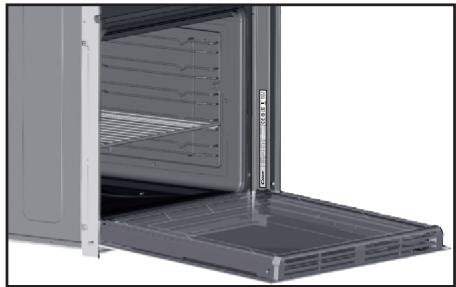
smelling smoke can develop, which is caused by the glue on the insulation panels surrounding the oven heating for the first time. This is absolutely normal and, if it occurs, you should wait for the smoke to dissipate before putting food in the oven. The manufacturer accepts no responsibility in cases where the instructions contained in this document are not observed.
NOTE: the oven functions, properties and accessories cited in this manual will vary, depending on the model you have purchased.
1.1 Safety Indications
Only use the oven for its intended purpose, that is only for the cooking of foods; any other use, for example as a heat source, is considered improper and therefore dangerous. The manufacturer cannot be held responsible for any damage resulting from improper, incorrect or unreasonable usage.
The use of any electrical appliance implies the observance of some fundamental rules:
- do not pull on the power cable to disconnect the plug from the socket;
- do not touch the appliance with wet or damp hands or feet;
- in general the use of adaptors, multiple sockets and extension cables is not recommended;
- in case of malfunction and/or poor operation, switch off the appliance and do not tamper with it.
1.2 Electrical Safety
ENSURE THAT AN ELECTRICIAN OR QUALIFIED TECHNICIAN MAKES THE ELECTRICAL CONNECTIONS.
The power supply to which the oven is connected must conform with the laws in force in the country of installation. The manufacturer accepts no responsibility for any damage caused by the failure to observe these instructions. The oven must be connected to an electrical supply with an earthed wall outlet or a disconnector with multiple poles, depending on the laws in force in the country of installation. The electrical supply should be protected with suitable fuses and the cables used must have a transverse section that can ensure correct supply to the oven.
CONNECTION
The oven is supplied with a power cable that should only be connected to an electrical supply with 220-240 Vac 50Hz power between the phases or between the phase and neutral. Before the oven is connected to the electrical supply, it is important to check:
- power voltage indicated on the gauge;
- the setting of the disconnector.
The grounding wire connected to the oven's earth terminal must be connected to the earth terminal of the power supply.
WARNING
Before connecting the oven to the power supply, ask a qualified electrician to check the continuity of the power supply's earth terminal. The manufacturer accepts no responsibility for any accidents or other problems caused by failure to connect the oven to the earth terminal or by an earth connection that has defective continuity.
NOTE: as the oven could require maintenance work, it is advisable to keep another wall socket available so that the oven can be connected to this if it is removed from the space in which it is installed. The power cable must only be substituted by technical service staff or by technicians with equivalent qualifications.
1.3 Recommendations
After each use of the oven, a minimum of cleaning will help keep the oven perfectly clean.
Do not line the oven walls with aluminium foil or single-use protection available from stores. Aluminium foil or any other protection, in direct contact with the hot enamel, risks melting and deteriorating the enamel of the insides. In order to prevent excessive dirtying of your oven and the resulting strong smokey smells, we recommend not using the oven at very high temperature. It is better to extend the cooking time and lower the temperature a little. In addition to the accessories supplied with the oven, we advise you only use dishes and baking moulds resistant to very high temperatures.
1.4 Installation
The manufacturers have no obligation to carry this out. If the assistance of the manufacturer is required to rectify faults arising from incorrect installation, this assistance is not covered by the guarantee. The installation instructions for professionally qualified personnel must be followed. Incorrect installation may cause harm or injury to people, animals or belongings. The manufacturer cannot be held responsible for such harm or injury.
The oven can be located high in a column or under a worktop. Before fixing, you must ensure good ventilation in the oven space to allow proper circulation of the fresh air required for cooling and protecting the internal parts. Make the openings specified on last page according to the type of fitting.
1.5 Waste management and environmental protection
This appliance is labelled in accordance with European Directive 2012/19/EU regarding electric and electronic appliances (WEEE). The WEEE contain both polluting substances (that can have a negative effect on the environment) and base elements (that can be reused). It is important that the WEEE undergo specific treatments to correctly remove and dispose of the pollutants and recover all the materials. Individuals can play an important role in ensuring that the WEEE do not become an environmental problem; it is essential to follow a few basic rules:
-
the WEEE should not be treated as domestic waste;
-
the WEEE should be taken to dedicated collection areas managed by the town council or a registered company.
In many countries, domestic collections may be available for large WEEEs. When you buy a new appliance, the old one can be returned to the vendor who must accept it free of charge as a one-off, as long as the appliance is of an equivalent type and has the same functions as the purchased appliance.
SAVING AND RESPECTING THE ENVIRONMENT
Where possible, avoid pre-heating the oven and always try to fill it. Open the oven door as infrequently as possible, because heat from the cavity disperses every time it is opened. For a significant energy saving, switch off the oven between 5 and 10 minutes before the planned end of the cooking time, and use the residual heat that the oven continues to generate. Keep the seals clean and in order, to avoid any heat dispersal outside of the cavity. If you have an electric contract with an hourly tariff, the "delayed cooking" programme makes energy saving more simple, moving the cooking process to start at the reduced tariff time slot.
1.6 Declaration of compliance
The parts of this appliance that may come into contact with foodstuffs comply with the provisions of EEC Directive 89/109.
By placing the mark on this product, we are confirming compliance to all relevant European safety, health and environmental requirements which are applicable in legislation for this product.
2. Product Description
2.1 Overview
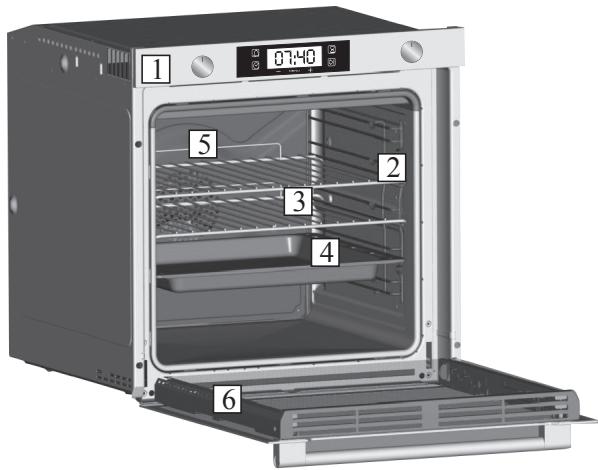
- Control panel
- Shelf positions (lateral wire grid if included)
- Metal grill
- Drip pan
- Fan (behind the steel plate)
- Oven door
2.2 Accessories (According to model)
Metal grill
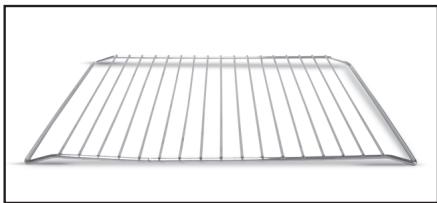
Holds baking trays and plates.
2 Drip pan
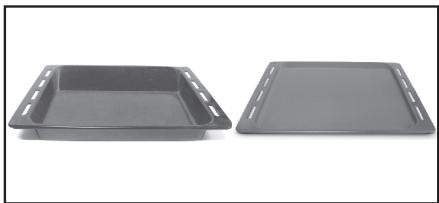
Collects the residues that drip during the cooking of foods on the grills.
3 Led vision
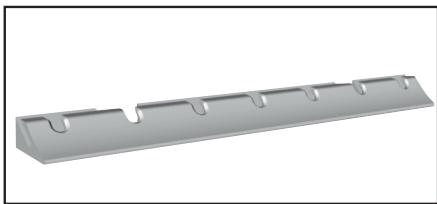
Is an illumination system which replaces the traditional « light bulb ». 14 LED (for non-pyrolitic versions) or 10 High Power LED (for pyrolitic versions) lights are integrated within the door. These produce white high quality illumination which enables to view the inside of the oven with clarity without any shadows on all the shelves.
Advantages:
This system, besides providing excellent illumination inside the oven, lasts longer than the traditional light bulb its easier and to maintain and most of all saves energy.
-Optimum view
-Long life illumination
- Very low energy consumption, -95% in comparison with the traditional illumination High.
PRELIMINARY CLEANING
Clean the oven before using for the first time. Wipe over external surfaces with a damp soft cloth. Wash all accessories and wipe inside the oven with a solution of hot water and washing up liquid. Set the empty oven to the maximum temperature and leave on for about 1 hour, this will remove any lingering smells of newness.
3. Use of the Oven
3.1 Display description
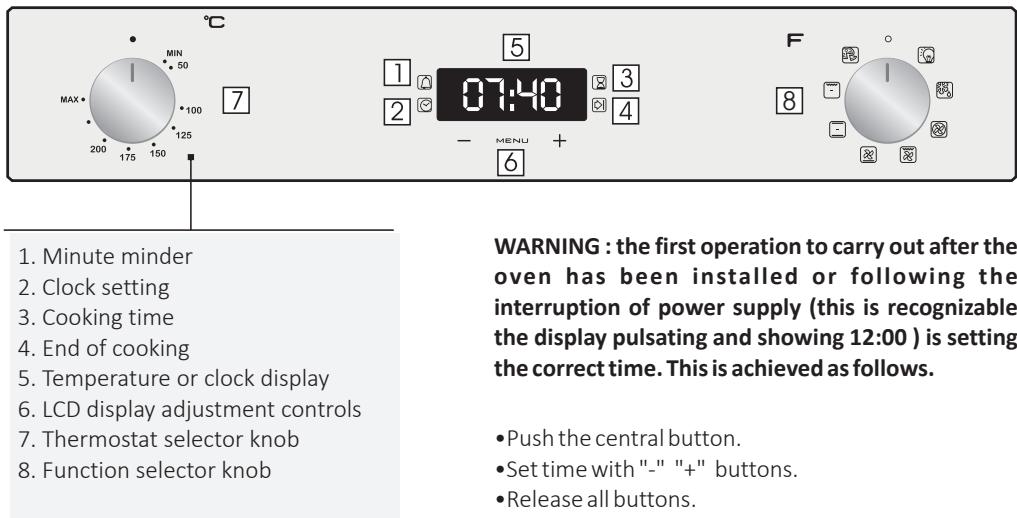
WARNING : the first operation to carry out after the oven has been installed or following the interruption of power supply (this is recognizable the display pulsating and showing 12:00 ) is setting the correct time. This is achieved as follows.
- Push the central button.
-Settimewith"-""+"buttons. - Release all buttons.
ATTENTION: The oven will only operate providing the clock is set.
| FUNCTION | HOW TO USE | HOW TO DEACTIVATE | WHAT IT DOES | WHY IT IS NEEDED |
| KEY LOCK | ·Child Lock function is activated by touching Set (+) for a minimum of 5 seconds. From this moment on all other function are locked and the display will flash STOP and preset time intermittently. | ·Child Lock function is deactivated by touching touchpad Set (+) again for a minimum of 5 seconds. From this moment on all functions are selectable again. | ||
| MINUTE MINDER | ·Push the central button 1 times ·Press the buttons "-" "+" to set the required time ·Release all the buttons | ·When the set time as elapsed an audible alarm is activated (this alarm will stop on its own, however it can be stopped immediately by pressing the button) SELECT. | ·Sounds an alarm at the end of the set time. ·During the process, the display shows the remaining time. | ·Allows to use the oven as alarm clock (could be activated either with operating the oven or with out operating the oven) |
| COOKING TIME | ·Push the central button 2 times ·Press the buttons "-" or "+"to set the lenght of cooking required ·Release all buttons ·Set the cooking function with the oven function selector | ·Push any button to stop the signal. Push the central button to return to the clock function. | ·It allows to preset the cooking time required for the recipe chosen. ·To check how long is left to run press the SELECT button 2 Times. ·To alter/change the preset time press SELECT and "-" +" buttons. | ·When the time is elapsed the oven will switch off automatically. Should you wish to stop cooking earlier either turn the function selector to 0, or set time to 0:00 (SELECT and "-" +" buttons) |
| END OF COOKING | ·Push the central button 3 times ·Press the buttons "-" "+" to set the time at which you wish the oven to switch off ·Release the buttons ·Set the cooking function with the oven function selector. | ·At the time set, the oven will switch off. To switch off manually, turn the oven function selector to position O. | ·Enables you to set the end of cooking time ·To check the preset time push the central button 3 times ·To modify the preset time press buttons SELECT + "-" +" | ·This function is typically used with "cooking time" function. For example if the dish has to be cooked for 45 minutes and needs to be ready by 12:30, simply select the required function, set the cooking time to 45 minutes and the end of cooking time to 12:30. ·At the end of the cooking set time, the oven will switch off automatically and an audible alarm will ring. ·Cooking will start automatically at 11:45 (12:30 minus 45 mins) and will continue until the preset end-of-cooking-time, when the oven will switch itself off automatically. WARNING. If the END of cooking is selected without setting the length of cooking time, the oven will start cooking immediately and it will stop at the END of cooking time set. |
3.2 Cooking Modes
| Function Dial | Function (Depends on the oven model) |
| LAMP: Turns on the oven light. | |
| DEFROST: When the dial is set to this position. The fan circulates air at room temperature around the frozen food so that it defrosts in a few minutes without the protein content of the food being changed or altered. | |
| FAN COOKING: We recommend you use this method for poultry, pastries, fish and vegetables. Heat penetrates into the food better and both the cooking and preheating times are reduced. You can cook different foods at the same time with or without the same preparation in one or more positions. This cooking method gives even heat distribution and the smells are not mixed. Allow about ten minutes extra when cooking foods at the same time. | |
| * - | CONVENTIONAL COOKING: Both top and bottom heating elements are used. Preheat the oven for about ten minutes. This method is ideal for all traditional roasting and baking. For seizing red meats, roast beef, leg of lamb, game, bread, foil wrapped food (papillotes), flaky pastry. Place the food and its dish on a shelf in mid position. |
| FAN + LOWER ELEMENT: The bottom heating element is used with the fan circulating the air inside the oven. This method is ideal for juicy fruit flans, tarts, quiches and pâté. It prevents food from drying and encourages rising in cakes, bread dough and other bottom-cooked food. Place the shelf in the bottom position. | |
| * | FAN ASSISTED GRILL: use the turbo-grill with the door closed. The top heating element is used with the fan circulating the air inside the oven. Preheating is necessary for red meats but not for white meats. Ideal for cooking thick food items, whole pieces such as roast pork, poultry, etc. Place the food to be grilled directly on the shelf centrally, at the middle level. Slide the drip tray under the shelf to collect the juices. Make sure that the food is not too close to the grill. Turn the food over halfway through cooking. |
| GRILL: use the grill with the door closed. The top heating element is used alone and you can adjust the temperature. Five minutes preheating is required to get the elements red-hot. Success is guaranteed for grills, kebabs and gratin dishes. White meats should be put at a distance from the grill; the cooking time is longer, but the meat will be tastier. You can put red meats and fish fillets on the shelf with the drip tray underneath. The oven has two grill positions: Grill: 2140 W Barbecue: 3340 W | |
| PIZZA - With this function hot air circulated in the oven to ensure perfect result for dishes such as pizza or cake. |
*Tested in accordance with the CENELEC EN 60350-1 used for definition of energy class.
4. Oven cleaning and maintenance
4.1 General notes on cleaning
The lifecycle of the appliance can be extended through regular cleaning. Wait for the oven to cool before carrying out manual cleaning operations. Never use abrasive detergents, steel wool or sharp objects for cleaning, so as to not irreparably damage the enamelled parts. Use only water, soap or bleach-based detergents (ammonia).
GLASS PARTS
It is advisable to clean the glass window with absorbent kitchen towel after every use of the oven. To remove more obstinate stains, you can use a detergent-soaked sponge, well wrung out, and then rinse with water.
OVEN WINDOW SEAL
If dirty, the seal can be cleaned with a slightly damp sponge.
ACCESSIONS
Clean accessories with a wet, soapy sponge before rinsing and drying them: avoid using abrasive detergents.
DRIP PAN
After using the grill, remove the pan from the oven. Pour the hot fat into a container and wash the pan in hot water, using a sponge and washing-up liquid.
If greasy residues remain, immerse the pan in water and detergent. Alternatively, you can wash the pan in the dishwasher or use a commercial oven detergent. Never put a dirty pan back into the oven.
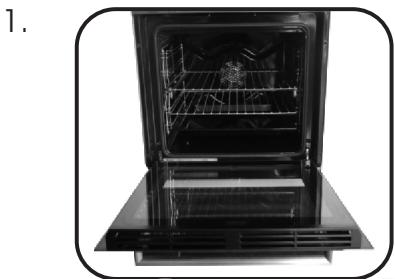
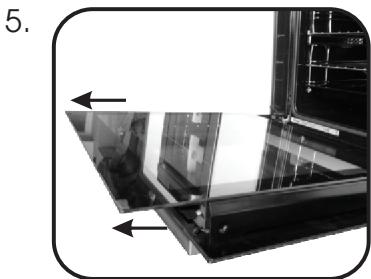
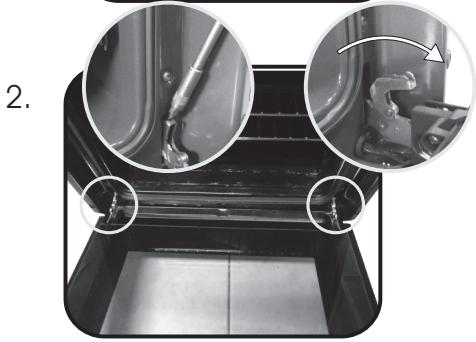
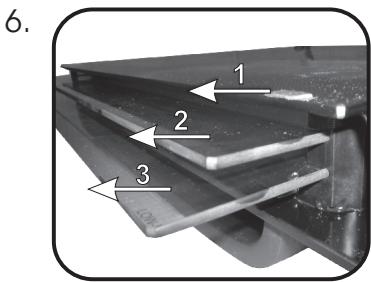
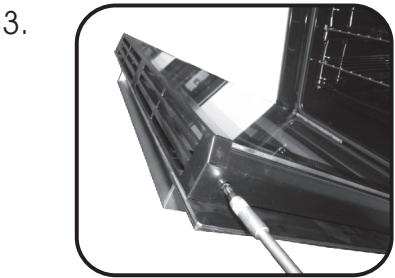
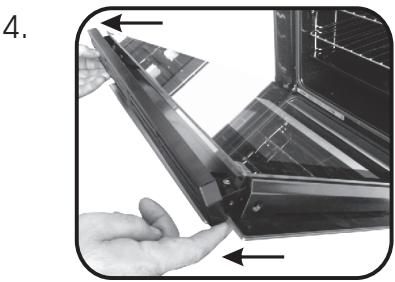
REMOVAL AND CLEANING OF THE GLASS DOOR
- Open the oven door.
2.3.4. Lock the hinges, remove the screws and remove the upper metal cover by pulling it upwards.
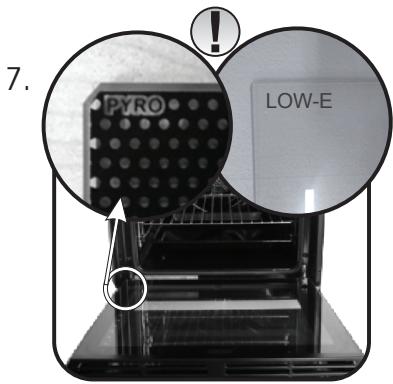
5.6. Remove the glass, carefully extracting it from the oven door (NB: in pyrolytic ovens, also remove the second and third glass (if present)). - At the end of cleaning or substitution, reassemble the parts in reverse order.
On all glass, the indication "Pyro" must be legible and positioned on the left side of the door, close to the left-hand lateral hinge. In this way, the printed label of the first glass will be inside the door.
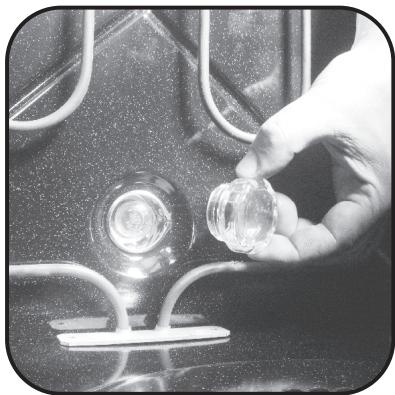
CHANGING THE BULB
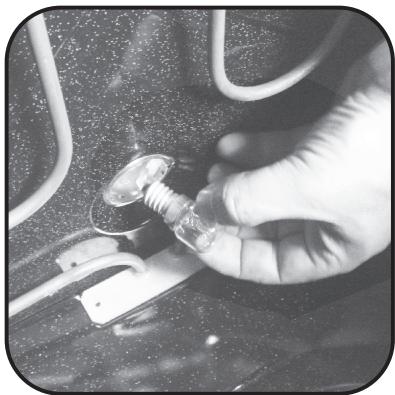
- Disconnect the oven from the mains supply.
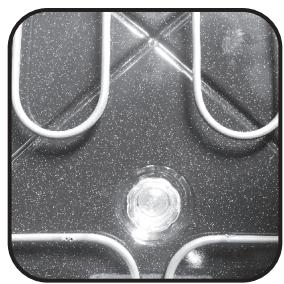
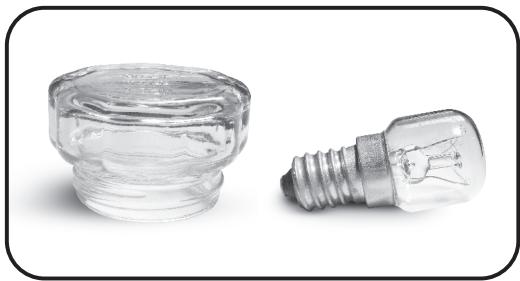
- Undo the glass cover, unscrew the bulb and replace it with a new bulb of the same type.
- Once the defective bulb is replaced, replace the glass cover.
5. Troubleshooting
5.1 FAQ
| PROBLEM | POSSIBLE CAUSE | SOLUTION |
| The oven does not heat up | The clock is not set | Set the clock |
| The oven does not heat up | The child lock is on | Deactivate the child lock |
| The oven does not heat up | A cooking function and temperature has not been set | Ensure that the necessary settings are correct |
| No reaction of the touch user interface | Steam and condensation on the user interface panel | Clean with a microfiber cloth the user interface panel to remove the condensation layer |
GB If the furniture is coverage with a bottom at the back part, provide an opening for the power supply cable.
The manufacturer will not be responsible for any inaccuracy resulting from printing or transcript errors contained in this brochure. We reserve the right to carry out modifications to products as required, including the interests of consumption, without prejudice to the characteristics relating to safety or function.
FR
Hotline Darty France
This appliance is intended for domestic household use only and should not be used for any other purpose or in any other application, such as for non-domestic use or in a commercial environment.
This appliance can be used by children aged from 8 years and above and persons with reduced physical, sensory or mental capabilities or lack of experience and knowledge if they have been given supervision or instruction concerning use of the appliance in a safe way and understand the hazards involved. Children shall not play with the appliance. Cleaning and user maintenance shall not be made by children without supervision.
If the supply cord is damaged, it must be replaced by the manufacturer, its service agent or similarly qualified persons in order to avoid a hazard.
There shall be adequate ventilation of the room when the range hood is used at the same time as appliances burning gas or other fuels.
There is a fire risk if cleaning is not carried out in accordance with the instructions.
Do not flambé under the range hood.
CAUTION: Accessible parts may become hot when used with cooking appliances.
The air must not be discharged into a flue that is used for exhausting fumes from appliances burning gas or other fuels.
Regulations concerning the discharge of air have to be fulfilled.
When the range hood is located above a gas appliance, the minimum distance between the supporting surface for the cooking vessels on the hob and the lowest part of the range hood shall be at least 65~cm .
For details concerning the method and frequency of cleaning, please see section "Cleaning and maintenance" on pages 6-7.
IMPORTANT SAFETY INSTRUCTIONS
- Carefully read this instruction book and keep it in a safe place for future reference. In the case of sale, cession or move, make sure it is kept together with the product.
- The manufacturer declines all responsibility, for any eventual inconveniences, damages or fires caused by not complying with the instructions in this manual.
Always wear work gloves for all installation and maintenance operations. - Do not connect the appliance to the mains until the installation is fully complete.
- Do not carry out electrical or mechanical variations on the product or on the discharge conduit.
- Do not check the status of the filters while the range hood is operating.
- Any frying must be done with care in order to make sure that the oil does not overheat and ignite.
- Do not use the hood without the lamp correctly mounted due to the possible risk of electric shocks.
- Never use the hood without effectively mounted grease filter.
The hood must NEVER be used as a support surface. - The presence of exposed flames is detrimental to the filters and may cause a fire risk, and must therefore be avoided in all circumstances.
- Do not touch the light bulbs after operating the appliance, you might get burnt.
- Before any cleaning or maintenance operation, disconnect hood from the mains by removing the plug or disconnecting the mains electrical supply.
DESCRIPTION
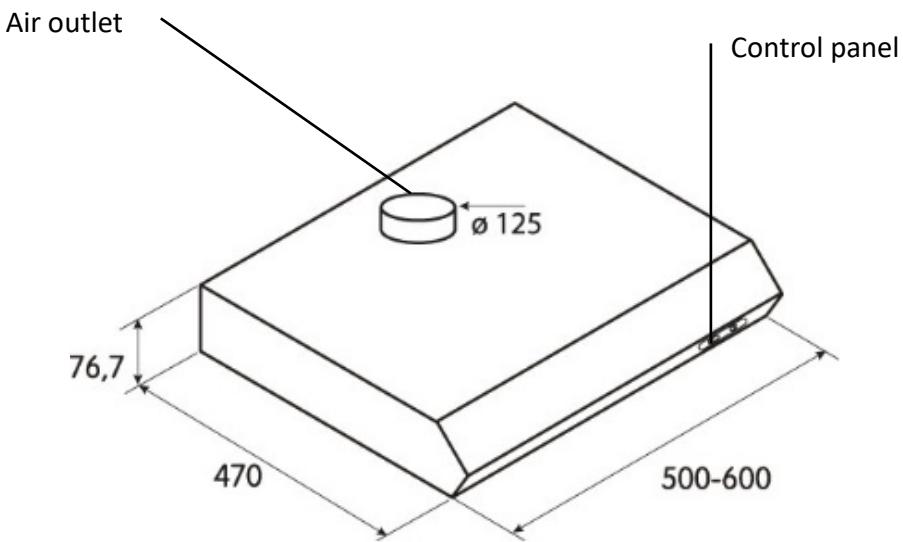
The hood is designed to be used either for ducting or filter version.
BEFORE INSTALLATION
Before proceeding with the installation of your appliance, check that it is not damaged. Otherwise, do not proceed with the installation and contact your dealer.
You should also make sure that the dimensions of the appliance and its conduit are compatible with your kitchen and ceiling height.
INSTALLATION
This appliance has to be installed by 2 people.
Expansion wall plugs are provided to secure the hood to most types of walls/ceilings. However, a qualified technician must verify suitability of the materials in accordance with the type of wall/ceiling. The wall/ceiling must be strong enough to take the weight of the hood.
WARNING! Failure to follow the instructions in this manual may result in electrical hazards.
In case of doubt, consult an authorised service assistance centre or similar qualified person.
Detailed installation procedure
The hood can be fixed directly on the wall above your cooker or under a furniture. Either way, the installation procedure will be the same.
- Take the dimensions of your cooker in order to have the range hood centred above it. Stick the installation and drilling template on the wall above your cooker, taking care to comply with the required minimum distance.
Note: The minimum distance between the supporting surface for the cooking equipment on the hob and the lowest part of the range hood must be not less than 50cm from electric cookers and 65cm from gas or mixed cookers. If the instructions for installation for the gas hob specify a greater distance, this must be adhered to.
Beware: the pattern is designed for 2 different range hood dimensions, therefore you must make sure to conform to the dimensions of your appliance (60cm).
- On the wall, mark the position of 3 of the 4 holes showed on the template (2 upper + 1 lower), and drill the holes by using a drill bit with an 8mm diameter. In the upper holes, insert the supplied wall plugs (8mm diameter, 40mm depth) and screws (5mm diameter, 45mm depth).
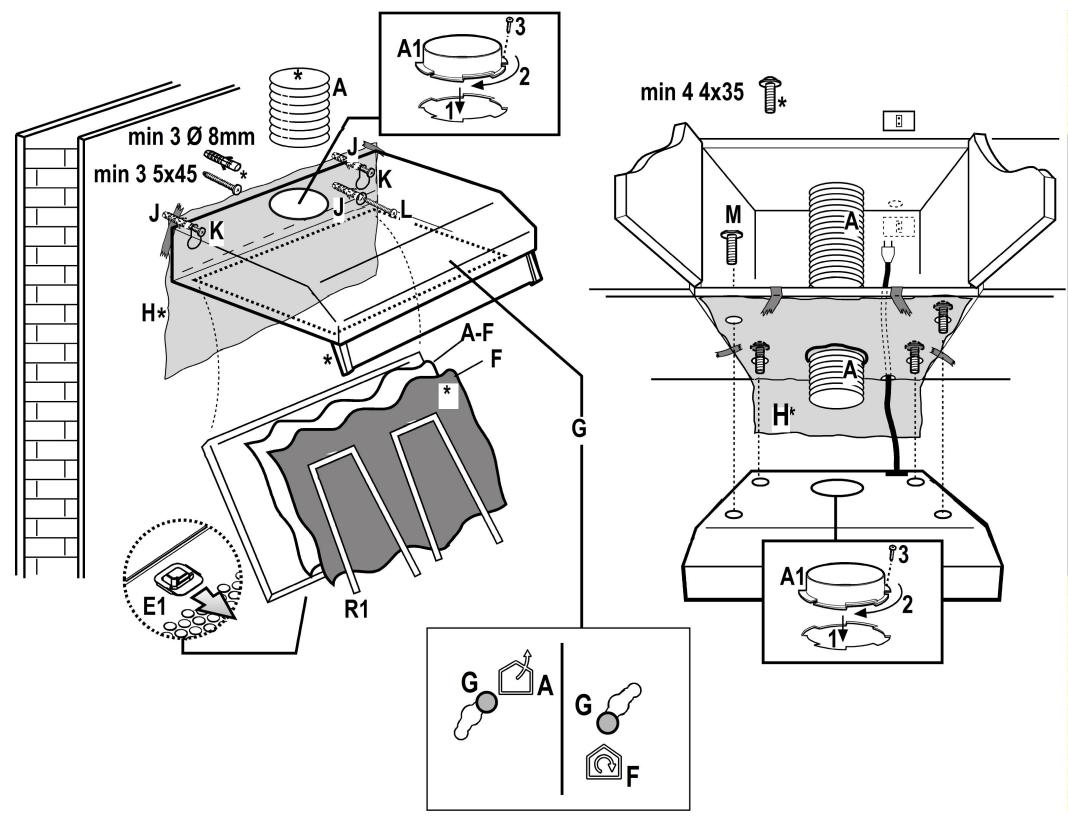
- Position the hood on the upper screws that you inserted. Remove the grease filter to access the lower screw, and insert the wall plug and screw.
- Make sure the appliance is level by using a spirit level, and tighten the screws.
- The selector [G] located inside the hood, next to the conduit, enables to choose the desired evacuation mode: suction [position A] or filtering [position F].
To use the hood in suction mode, remove the circular pre-mounted metal wall and install the supplied upper air outlet [A1: bayonet mount + screws], as well as exhaust pipe of the same dimension (not supplied). Check that the selector [G] is in suction position [A].
To use the hood in filtering mode, do not remove the circular pre-mounted metal wall. Install a charcoal filter (supplied): the fumes and steam will be recycled into the kitchen through the grill located above the control panel. Check that the selector [G] is in filtering position [F].
Electrical connection
For your safety, ask a qualified technician to perform the electrical installation of the hood.
The mains power supply must correspond to the rating indicated on the plate situated inside the hood. If provided with a plug connect the hood to a socket in compliance with current regulations and positioned in an accessible area, after installation. If it not fitted with a plug (direct mains connection) or if the plug is not located in an accessible area, after installation, apply a double pole switch in accordance with standards which assures the complete disconnection of the mains under conditions relating to over-current category III, in accordance with installation instructions.
Warning! Before re-connecting the hood circuit to the mains supply and checking the efficient function, always check that the mains cable is correctly assembled.
USING YOUR APPLIANCE

Ducting version
In this case the fumes are conveyed outside of the building by means of a special pipe connected with the air outlet located on top of the hood.
Beware! The exhaust pipe and ring are not supplied and must be purchased apart.
In the horizontal runs the exhausting pipe must be slightly slanted (about 10^ ) and directed upwards to vent the air easily from the room to the outside.
Beware! If the hood is supplied with active charcoal filter, then it must be removed.
Connect the hood and discharge holes on the walls with a diameter equivalent to the exhaust pipe (flange and ring). Using tubes and discharge holes on walls with smaller dimensions will affect the suction performance and drastically increase the noise.
- Use a duct of the minimum necessary length.
- Use a duct with as few elbows as possible (maximum elbow angle: 90^ ).
- Avoid drastic changes in the duct cross-section.
Use a duct as smooth as possible inside. - The duct must be made of certified material.
In the case of not being able to discharge the fumes and the steam of cooking outside, the hood can be used in the filter version: the aspirated air will be degreased and deodorised before being fed back into the room.
In order to use the hood in this version, you have to install a charcoal filter (supplied).
Operation
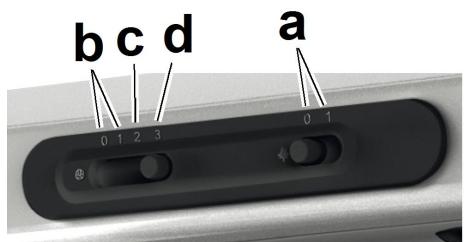
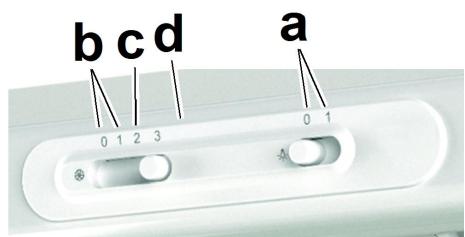
The hood is fitted with a control panel with aspiration speed selection control and a light switch to control cooking area lights. Use the high suction speed in cases of concentrated kitchen vapours.
a. ON/OFF light switch
b. Speed 1/OFF switch
c. 2-speed selection
d. 3-speed selection
Tips on saving energy
Here are some suggestions to help you reduce the environmental impact of your appliance:
Switch on the hood at minimum speed when you start cooking and keep it running for a few minutes after cooking is finished. Increase the speed only in case of a large amount of smoke and vapour and use higher speed only in extreme situations.
Replace the charcoal filter when necessary to maintain a good odour reduction efficiency. Replace the grease filter when necessary to maintain a good grease filter efficiency.
CLEANING AND MAINTENANCE
Beware! Before performing any cleaning or maintenance operation, isolate the hood from the electrical supply by switching off at the connector and removing the connector fuse. Or if the appliance has been connected through a plug and socket, then the plug must be removed from the socket.
The cooker hood should be cleaned regularly internally and externally (about once a month). Clean using the cloth dampened with neutral liquid detergent. Do not use abrasive products. DO NOT USE ALCOHOL!
WARNING: Failure to carry out the basic cleaning recommendations of the cooker hood and replacement of the filters may cause fire risks.
Cleaning the external surface
- To protect the external surface of the hood from corrosion over a long period of time, it should be cleaned with hot water plus non corrosive detergent every two months.
- Keep the motor and other parts free from water, as this will cause damage to the appliance.
- The charcoal filter shall not be exposed to heat.
Replacing the grease and charcoal filters
The grease filter and the charcoal filter supplied on this hood cannot be washed or regenerated; they need to be replaced regularly (depending on the frequency of use, between once a month and 2-3 times a year).
Replacing lamps
Disconnect the appliance from the mains.
Warning! Prior to touching the light bulbs, ensure they are cooled down.
Replace the old light bulb with the one of the same type:
Use E14 3W max LED lamps only. For more details, check enclosed leaflet "ILCOS D" (alfanumeric position "1d").
If the lights do not work, make sure that the lamps are fitted properly into their housings before you call for technical assistance.
SPECIFICATIONS
Below is the sheet of range hood according to EU regulations No 65/2014.
| Brand | Proline | |
| Model number | VHP61SS, VHP61WH | |
| Annual energy consumption (AEC hood) | 42.3 kWh/year | |
| Energy efficiency class * | C | |
| Energy Efficiency Index (EEI Hood): | 83.8 | |
| Fluid dynamic efficiency (FDE hood) | 5.5 % | |
| Fluid dynamic efficiency class * | F | |
| Lighting efficiency (LE hood) | 28,1 lux/W | |
| Lighting efficiency class * | A | |
| Grease filtering efficiency | 76.0 % | |
| Grease filtering efficiency class * | C | |
| Air flow | At minimum speed | 95 m³/h |
| At maximum speed | 165 m³/h | |
| Acoustic level | At minimum speed | 52 dB |
| At maximum speed | 64 dB | |
| Power consumption in off mode (P0) | N/A | |
| Power consumption in standby mode (PS) | N/A | |
- A (most efficient) to G (least efficient)
DISPOSAL
As a responsible retailer we care about the environment.
As such we urge you to follow the correct disposal procedure for the appliance and packaging materials. This will help conserve natural resources and ensure that it is recycled in a manner that protects health and the environment.
You must dispose of this appliance and its packaging according to local laws and regulations. Because this appliance contains electronic components, the appliance and its accessories must be disposed of separately from household waste when the appliance reaches its end of life.
Contact your local authority to learn about disposal and recycling.
The appliance should be taken to your local collection point for recycling. Same collection points accept appliance free of charge.
We apologise for any inconvenience caused by minor inconsistencies in these instructions, which may occur as a result of product improvement and development.
Ets Darty & fils SAS © 14, route d'Aulnay 93140 Bondy, France.
10/10/2018
WAARSCHUWINGEN
- General Instructions
- 5
- Product Description
- 7
- Use of the Oven
- 8
- Oven Cleaning and Maintenance
- 11
- Troubleshooting
- 13
- General Instructions
- Safety Indications
- Electrical Safety
- ENSURE THAT AN ELECTRICIAN OR QUALIFIED TECHNICIAN MAKES THE ELECTRICAL CONNECTIONS.
- CONNECTION
- WARNING
- Recommendations
- Installation
- Waste management and environmental protection
- SAVING AND RESPECTING THE ENVIRONMENT
- Declaration of compliance
- Product Description
- Overview
- Accessories (According to model)
- Metal grill
- Drip pan
- Led vision
- Advantages:
- PRELIMINARY CLEANING
- Use of the Oven
- Display description
- Cooking Modes
- Oven cleaning and maintenance
- General notes on cleaning
- GLASS PARTS
- OVEN WINDOW SEAL
- ACCESSIONS
- DRIP PAN
- REMOVAL AND CLEANING OF THE GLASS DOOR
- CHANGING THE BULB
- Troubleshooting
- FAQ
- FR
- Hotline Darty France
- IMPORTANT SAFETY INSTRUCTIONS
- DESCRIPTION
- BEFORE INSTALLATION
- INSTALLATION
- Detailed installation procedure
- Electrical connection
- USING YOUR APPLIANCE
- Ducting version
- Operation
- Tips on saving energy
- CLEANING AND MAINTENANCE
- Cleaning the external surface
- Replacing the grease and charcoal filters
- Replacing lamps
- SPECIFICATIONS
- DISPOSAL
- WAARSCHUWINGEN
Brand : PROLINE
Model : VHP61SS - VHP61WH
Category : Electric oven