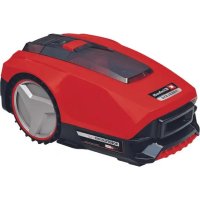
USER MANUAL FREELEXO+ EINHELL

PRODUKTINFORMATIONEN

PREISINFORMATIONEN

VERFÜGBARKEITEN

TRACK &TRACE
- Safety regulations
- Layout and items supplied
- Intended use
- Technical data
- Starting up
- Operation
- Cleaning, maintenance and ordering spare parts
- Storage
-
Transport
-
Disposal and recycling
-
Indicators on the charging station and troubleshooting
- Indicators on the robot lawn mower and troubleshooting
- Charger indicator
GB

Danger! - Read the operating instructions to reduce the risk of injury.
Children are not allowed to use this equipment. This equipment can be used by people with limited physical, sensory or mental capacities or those with no experience and knowledge if they are supervised or have received instruction in how to use the equipment safely and understand the dangers which result from such use. Children are not allowed to play with the equipment.
Children are not allowed to clean the equipment or carry out user-level maintenance work.
GB
Danger!
When using the equipment, a few safety precautions must be observed to avoid injuries and damage. Please read the complete operating instructions and safety regulations with due care. Keep this manual in a safe place, so that the information is available at all times. If you give the equipment to any other person, hand over these operating instructions and safety regulations as well. We cannot accept any liability for damage or accidents which arise due to a failure to follow these instructions and the safety instructions.
1. Safety regulations
The corresponding safety information can be found in the enclosed booklet.
Warning!
Read all the safety information, instructions, illustrations and technical data provided on or with this power tool. Failure to adhere to the following instructions may result in electric shock, fire and/or serious injury.
Keep all the safety information and instructions in a safe place for future use.
Explanation of the symbols used (see Fig. 14)
A. WARNING - Read the operating instructions before you start using the machine.
B. WARNING - Keep a safe distance away from the machine when it is in operation.
C. WARNING - Always actuate the locking mechanism before carrying out any work on the machine or before lifting the machine. CAUTI-ON - Do not touch rotating blades
D. WARNING - Do not ride on the machine. CAUTION - Do not touch rotating blades
E. Protection class II (double-insulated)
F. Store the battery only in dry rooms with an ambient temperature of +10^ to +40^ . Place only charged batteries in storage (charged at least 40% ).
G. Switch mode power supply unit
H. Protection class III
I. Slow fuse 3.15 A
J. Isolating transformer with protection against short-circuits
K. For use in dry rooms only.
Important!
Always pull out the power plug and disconnect the perimeter wire from the charging station during a storm.
2. Layout and items supplied
2.1 Layout (Fig. 1/2)
- Robot lawn mower
- Control panel
- STOP button
- Cutting height adjustment facility
- Rain sensor
- Carry-handle
- Main switch
- Rear wheel
- Battery compartment cover
- Blades
- Blade plate
- Front wheel
- Power supply unit (cable)
- Fastening peg
- Fastening nail
- Cable connector
- Spare blades
- Perimeter wire
- Charging station
- Charging pin
- LED indicator
- Rechargeable battery
- Charger
- Display cover
2.2 Items supplied and unpacking
Please check that the article is complete as specified in the scope of delivery. If parts are missing, please contact our service center or the sales outlet where you made your purchase at the latest within 5 working days after purchasing the product and upon presentation of a valid bill of purchase. Also, refer to the warranty table in the service information at the end of the operating instructions.
- Open the packaging and take out the equipment with care.
- Remove the packaging material and any packaging and/or transportation braces (if available).
- Check to see if all items are supplied.
- Inspect the equipment and accessories for transport damage.
If possible, please keep the packaging until the end of the guarantee period.
Danger!
The equipment and packaging material are not toys. Do not let children play with plastic bags, foils or small parts. There is a danger of swallowing or suffocating!
GB
Items supplied
Robot lawn mower
Power supply unit (cable)
- Charging station
Fastening nails (4 pcs)
Original operating instructions
Safety information
Assembly material and accessories (not supplied)
- Spare blades
Fastening pegs
- Perimeter wire
- Cable connectors
Rechargeable battery
- Charger
Required aids (not supplied)
- Hammer
- Pair of pliers
- Pair of pliers for stripping cables
3. Intended use
The robot lawn mower is intended for private use, i.e. for use in home and garden environments and only for mowing lawns.
The equipment is allowed to be used only for its prescribed purpose. Any other use is deemed to be a case of misuse. The user/operator and not the manufacturer will be liable for any damage or injuries of any kind resulting from such misuse.
Please note that our equipment has not been designed for use in commercial, trade or industrial applications. Our warranty will be voided if the equipment is used in commercial, trade or industrial businesses or for equivalent purposes.
4. Technical data
Voltage 18V
Motor speed 3100 rpm
Protection . IPX4
Protection class . III
Weight 9.3 kg
Cutting width 18 cm
Number of blades 3
Max. gradient 35%
Sound pressure level LoA 48.7 dB(A)
Uncertainty K 3 dB (A)
Sound power level LWA 59,4 dB(A)
Uncertainty K 3 dB (A)
Cutting height
adjustment 20-60 mm; infinitely adjustable
Permissible length of perimeter wire .. max. 250 m
Power-X-Change lithium-ion battery
Voltage: 18 V DC
Power supply unit
Input voltage: 100-240 V ~ 50/60 Hz
Output voltage: 18 V DC
Output current: 1.8 A
Protection class: II /回
Power-X-Charger
Input voltage: 200-240 V ~ 50/60 Hz
Output voltage: 18 V DC
Output current: 3 A
Protection class: II/回
Sound values were measured in accordance with the standards EN ISO 3744:1995 and ISO 11094: 1991.
Warning!
This equipment generates an electromagnetic field during operation. Under certain circumstances this field may actively or passively impede medical implants. To reduce the risk of serious or fatal injuries, we recommend persons with medical implants to consult their doctor and the manufacturer of the medical implant prior to using the equipment.
GB
5. Starting up
Read the operating instructions fully before you start work on the installation of the robot lawn mower. The quality of the installation work affects how effectively the robot lawn mower works later on.
5.1 How it works
The robot lawn mower chooses its direction on a random basis. The robot lawn mower works its way over every area which is enclosed within the perimeter wire (18), so that the entire garden gets mowed. Whenever the robot lawn mower detects a correctly installed perimeter wire (18), the robot lawn mower turns about and drives in a different direction within the area. All zones that you wish to protect within the lawn area – e.g. garden ponds, trees, furniture or flower beds – must be cordoned off by the perimeter wire (18). The perimeter wire (18) must form a closed circuit. If the robot lawn mower bumps into an obstacle within the mowing area, it reverses and then continues mowing in a different direction (Fig. 3).
5.2 Sensors
The robot lawn mower is equipped with a number of safety sensors.
Lifting sensor:
If the robot lawn mower is lifted by more than 30^ from the ground at the back, the robot lawn mower and the rotation of the blades (10) are stopped immediately.
- Tilting sensor:
If the robot lawn mower tilts severely in any direction, the robot lawn mower and the rotation of the blades (10) are stopped immediately.
- Obstruction sensor:
The robot lawn mower is able to detect obstacles in its path. If the robot lawn mower collides with an obstacle, its movement will be stopped in this direction and it will reverse away from the obstacle.
- Rain sensor:
The robot lawn mower is equipped with a rain sensor (5) to prevent the robot lawn mower from operating in the rain. The robot lawn mower returns to the charging station (19) when it detects rain and is completely recharged there. Once the rain sensor is dry again, the robot lawn mower stays in the charging station (19) for two hours before resuming operation. Do not short-circuit the two metal sensors with metal or any other conductive material.
This will impede the correct operation of the robot lawn mower.
5.3 Preparations
First, draw a sketch of your lawn. Include obstacles in your sketch and draw up a plan for how you intend to protect them. This will make it easier to find a good position for the charging station (19) and to lay the perimeter wire (18) around bushes, flower beds, etc. (Fig. 4). If the grass is taller than 60mm it has to be shortened first to avoid exposing the robot lawn mower to excessive load and adversely affecting its operating efficiency. Use a conventional lawn mower or trimmer to do this. Remove all loose objects from the lawn which could get damaged by the robot lawn mower or damage the robot lawn mower itself. Have the following tools ready: Hammer, pair of pliers and pair of pliers for stripping cables.
Fitting the battery
Open the battery compartment cover (9) by pulling the snap fastener. Press the of the pushlock button of the rechargeable battery (22) and push the rechargeable battery (22) into the mount provided. Close the battery compartment cover (9) and make sure that it latches in place correctly. (Fig. 10)
5.4 Charging station
5.4.1 Position of the charging station
Determine the best position for the charging station first (19). An outdoor socket outlet is required which supplies a permanent supply of electricity so that the robot lawn mower works at all times. The charging station (19) must be placed on a flat area at the level of the turf. Make sure that the area is flat and dry. Select a position which is in the shade, because it is best if the rechargeable battery (22) is charged up in a cool area (Fig. 5a). Also note that the perimeter wire has to be laid in a straight line for least 2m in front of the charging station (19). Curves immediately in front of the charging station (19) could cause problems when docking for charging.
5.4.2 Localization of the charging station
When the rechargeable battery (22) is almost empty, the robot lawn mower returns to the charging station (19) by following the perimeter wire (18) in a counterclockwise direction until it reaches the charging station (19). Make sure, therefore, that the charging station (19) faces in the right direction when you position it. (Fig. 5b)
GB
5.4.3 Connecting the charging station to the power supply unit
- Before you connect the charging station (19) to the power supply, check that the mains power supply is 100 - 240V at 50 / 60Hz .
- Connect the power supply unit (13) directly to a socket outlet. Do not use the cable for any other use.
- Do not use the power supply unit if it is damaged (13). In the event of any damage to cables or the power supply unit (13), contact an authorized professional immediately for replacement.
- Do not charge up the robot lawn mower in a damp location. Do not charge up the robot lawn mower at temperatures above 40^ or below 5^ .
- Keep the robot lawn mower and the power supply unit (13) away from water, sources of heat and chemicals. Keep the cable of the power supply unit (13) away from sharp edges in order to prevent damage.
- Connect the power supply unit (13) to the charging station (19). (Fig. 5c)
To charge up the rechargeable battery (22) for the robot lawn mower straight away while you are still doing the installation work, first switch on the robot lawn mower with the main switch (7) and place the robot lawn mower in the charging station (19).
The robot lawn mower returns to the charging station (19) in each of the following situations:
- You send the robot lawn mower back manually.
The battery charge level drops below 30% .
The end of the daily work time has been reached.
The rain sensor has tripped.
The robot lawn mower has become overheated.
In these cases the robot lawn mower automatically runs along the perimeter wire (18) until it reaches the charging station (19).
When the robot lawn mower runs back to the charging station (19), it looks for the perimeter wire (18). To ensure that the robot lawn mower arrives at the charging station (19) at an optimum angle, the robot lawn mower runs a short distance along the perimeter wire (18) in a clockwise direction first. Then the robot lawn mower turns in the right direction and follows the perimeter wire (18).
This ensures that the robot lawn mower always drives into the middle of the charging station (19) in a straight line.
The LED indicator (21) on the charging station (19) lights up red while charging of the rechargeable battery (22) is in progress.
When the LED indicator (21) on the charging station (19) turns to green, this indicates that the rechargeable battery (22) is fully charged. Once it has been fully charged, the robot lawn mower resumes operation or remains in the charging station until the next work time window (19).
If there is an obstacle on the perimeter wire (18) during the trip back to the charging station (19), the robot lawn mower will come to a stop in front of the obstacle after several attempts and will not be able to get back to the charging station (19). Remove all obstacles on the perimeter wire (18). If the temperature of the rechargeable battery (22) exceeds 45^ , charging will stop in order to prevent damage to the rechargeable battery. Charging resumes automatically once the temperature has dropped again.
If the temperature of the controller of the robot lawn mower exceeds 75^ , the robot lawn mower will return to the charging station (19). Operation resumes in accordance with the settings once the temperature has dropped again.
If the rechargeable battery (22) becomes empty before the robot lawn mower has returned to the charging station (19), it will not be possible for the robot lawn mower to start up again. Bring the robot lawn mower back to the charging station (19) and leave the main switch (7) switched on. The robot lawn mower will be charged up automatically.
5.5 Perimeter wire
IMPORTANT! Severed perimeter wires and consequential damages are not covered by the warranty!
5.5.1 Laying the perimeter wire
The perimeter wire (18) can be laid both on the ground and in the ground. The fastening pegs (14) can break when hammered in if the ground is hard or dry. Water the lawn before installing the perimeter wire if the ground is very dry.
Installation on the ground
Lay the perimeter wire (18) securely on the ground and fasten it with the supplied fastening pegs (14) if you do not intend to scarify or aerate the lawn any time later. You can still adjust the position of the perimeter wire again during the first few weeks of using the robot
GB
lawn mower. After a certain time, however, the perimeter wire will become overgrown with grass and no longer visible. Install the perimeter wire with a maximum distance of 1m between fastening pegs (14). Reduce the distance between the fastening pegs on uneven areas of the lawn. Avoid situations in which the wire is not actually on the ground. Make sure that the perimeter wire cannot be severed by the robot lawn mower.
Installation in the ground
Bury the perimeter wire in the ground at a depth of up to 5cm . This will prevent the perimeter wire (18) getting damaged during scarring or aeration, for example.
Important!
Keep a reserve of 1m of wire at the rear end of the charging station so that you can make corrections at a later time.
5.5.2 Narrow points
If the lawn has a narrow point, your robot lawn mower will be able to operate there as long as the corridor has a width of at least 1.4m (80 cm between the perimeter wires) and a maximum length of 8 m. (Fig. 3).
5.5.3 Distance to the garden perimeter
When the robot lawn mower approaches a perimeter wire (18), the perimeter wire is detected by the sensors in the front of the robot lawn mower. Before the robot lawn mower turns about, however, it runs over the perimeter wire (18) by up to 30~cm . Please bear this in mind when planning your mowing area. (Fig. 6a)
5.5.4 Laying the wire in corners
Avoid laying the perimeter wire at a right-angle (90^) in corners. To make sure that the robot lawn mower does not run too far over the perimeter wire, lay the perimeter wire with two shallow angles instead. (Fig. 6b)
5.5.5 Calculating the gradient of the lawn
The robot lawn mower can cope with gradients of up to 35% . You therefore need to avoid steeper gradients. The gradient can be determined on the basis of the height divided by the distance. (Fig. 6c)
Example: a / b = 35 cm/100 cm = 35%
5.5.6 Installation of the perimeter wire on gradients
The robot lawn mower can slip on gradients, especially if the grass is wet, and run over the perimeter wire (18) as a result. It is therefore recommendable to pay attention to the following points (Fig. 6d):
- In the area at the top of a slope, the perimeter wire (18) should not be installed on gradients over 35% . Make sure that a distance of 30~cm from obstacles and the edges of the lawn is maintained.
- In the area at the bottom of a slope, the perimeter wire (18) should not be installed on gradients over 17% . Make sure that a distance of 40~cm from obstacles and the edges of the lawn is maintained.
5.5.7 Driveways and paved paths
Cordon off raised pathways, areas surfaced with gravel or containing bark mulch, lower lying beds or other similar areas. Lay the perimeter wire (18) at a distance of at least 30~cm away. (Fig. 6e and 6g)
- Paths which are flush with the turf do not need to be cordoned off, because the robot lawn mower can simply run over them. You can also lay the perimeter wire (18) over paths. (Fig. 6f and 6g)
5.5.8 Perimeter islands
To protect obstacles in the mowing area, create perimeter islands. This will enable collisions with delicate objects, garden ponds, trees, furniture, flower beds, etc., to be avoided. (Fig. 6h and 6i)
- Roll out the perimeter wire (18) from the edges to the objects you want to protect.
- Secure the perimeter wire (18) with fastening pegs (14) in a clockwise direction around the object you want to protect.
- Completely enclose the perimeter islands and then run the perimeter wire (18) back to the point at which you left the edge of the lawn.
- Perimeter islands need to be at least 1m apart. Alternatively, combine the objects to make them into a joint perimeter island. (Fig. 6h)
- The perimeter wires (18) to and from the perimeter island should be laid parallel and very close to one another. - Caution! Perimeter wires (18) must not cross over! - You should therefore fasten both the parallel perimeter wires (18) to the ground together using the same fastening peg (14). (Fig. 6i)
GB
- The robot lawn mower will run over the two parallel perimeter wires (18) in the mowing area, but the robot lawn mower will stop where single perimeter wires (18) are laid.
5.5.9 Obstacles
- Obstacles with a height over 10cm (Fig. 6j)
Solid obstacles which are over 10cm in height, e.g. trees, walls, fences, garden furniture, etc., are detected by the collision sensors. If the robot lawn mower collides with an obstacle, it will stop, reverse and turn so that it can continue mowing in the other direction. Soft, instable and valuable obstacles need to be protected by a perimeter island using perimeter wire (18).
- Stones and low obstacles
Stones, rocks and low obstacles of less than 10cm in the mowing area need to be protected, because otherwise the robot lawn mower could run over them. If not, this could result in the robot lawn mower getting damaged or blocked.
Trees (Fig. 6k)
The robot lawn mower treats trees as obstacles. However, where any tree roots project above the ground to a height of less than 10 cm, the area in which they are located needs to be protected. This will prevent damage to the roots and to the robot lawn mower. Make sure that the minimum distance between the perimeter wire (18) and the obstacle is 30 cm.
5.6 Connecting the charging station
Finish laying the complete perimeter wire (18) before you connect it to the charging station. Keep an extra length of 1 m of perimeter wire (18) at each end so that you can make further adjustments at a later time.
Using a wire stripper, remove a length of 10 to 15 mm of the insulation at the ends of the perimeter wire (18) for connecting to the charging station (19).
Pull out the power plug before you connect the perimeter wire (18) to the charging station (19). The perimeter wire (18) laid to the front end of the charging station (19) must be run to the back via the cable holders on the underside of the charging station (19). Connect this perimeter wire (18) to the "+" connection and the rear perimeter wire to the "S1" connection. (Fig. 7a)
Important! Perimeter wires (18) must not cross over!
Then connect the power supply. The LED indicator (21) on the charging station (19) should light up green and stay on permanently. If the LED does not light up, check the connections first. If the LED lights up green but not permanently, read the "Indicators on the charging station and troubleshooting" table at the end of these operating instructions.
5.7 Switching on and checking the installation
As soon as the LED indicator (21) on the charging station (19) lights up green, the mowing area is ready for the robot lawn mower. Please check first that all the fastening pegs (14) on the perimeter wire (18) have been fully tapped in. Place the robot lawn mower about 3m to the rear of the charging station (19) in front of the perimeter wire (18). The robot lawn mower needs to be facing the perimeter wire (18) at an angle of 90^ (Fig. 7b).
Switch on the main switch (7) (ON) (Fig. 8).
Press the POWER button (51) on the control panel (2) for two seconds. Unlock the robot lawn mower using the PIN and confirm the entry with the "OK" button (54) (see chapter "Locking mechanism / PIN").
Press the "HOME" button (53) and then press the "OK" button again (54). The robot lawn mower will now follow the perimeter wire (18) in a counterclockwise direction. Observe the robot lawn mower during the complete trip along the perimeter wire (18) until it is back in the charging station (19). If the robot lawn mower has any problems at any points, correct the perimeter wire (18) if necessary and repeat the operation. The rechargeable battery (22) of the robot lawn mower will now be fully charged. If any problems occur with docking, you may need to reposition the charging station (19) sideways until docking works without any problems.
To stop the robot lawn mower at any time, press the red STOP button (3). When you press the STOP button (3), the robot lawn mower will come to a stop and wait for further instructions.
5.8 Securing the charging station
Once the robot lawn mower operates properly and a suitable position for the charging station (19) has been found, the charging station (19) must be secured using the fastening nails (15). Using a hammer, tap the fastening nails (15) completely into the ground. (Fig. 7c)
GB
5.9 Battery charge level indicator
Press the button for the battery charge level indicator. The battery charge level indicator indicates the charge state of the battery by means of 3 LEDs (Fig. 13b).
All 3 LEDs are lit:
The battery is fully charged.
2 or 1 LED(s) are lit:
The battery has an adequate remaining charge.
1 LED flashes:
The battery is empty, recharge the battery.
All LEDs flash:
The rechargeable battery has undergone exhaustive discharge and is defective. Do not use or charge a defective rechargeable battery.
5.10 Charging the rechargeable battery with the charger
- Check that your mains voltage is the same as that marked on the rating plate of the battery charger. Insert the power plug of the charger (23) into the socket outlet. The green LED will then begin to flash.
- Insert the rechargeable battery (22) into the battery charger (23) (Fig. 13a).
- In the section entitled „Charger indicator“ you will find a table with an explanation of the LED indicator on the charger.
The rechargeable battery can become a little warm during the charging. This is normal.
If the battery pack fails to charge, check:
whether there is voltage at the socket outlet
- whether there is good contact at the charging contacts
If the battery pack still fails to charge, send
the charger
and the battery pack
to our customer service center.
To ensure that the battery pack provides long service, you should take care to recharge it promptly. You must recharge the rechargeable battery when you notice that the performance of the equipment drops. Never allow the battery pack to become fully discharged. This will cause it to develop a defect.
6. Operation
6.1 Main switch
The robot lawn mower is equipped with a main switch (7). Use the main switch (7) to switch the robot lawn mower on (ON) and off (OFF) (Fig. 8). Once the robot lawn mower has been switched on, it is locked by a PIN.
6.2 Control panel
The robot lawn mower has already been programmed at the factory and default settings have been made for it. However, these can be changed if required. Even though the factory settings will be suitable for most gardens, you should still familiarize yourself with the available options nevertheless.
Description of the control panel with LCD display (Fig. 9a)
-
LCD
-
POWER button
- "START" button
- "HOME" button
- "OK" button
- Back button
- Navigation buttons
- Numeric keypad
6.3 Cutting height adjustment facility
Important! Adjust the cutting height only when the robot lawn mower has been switched off. Do this by pressing the STOP button (3). The cutting height adjustment facility (4) allows the cutting height of the robot lawn mower to be set to infinitely adjustable settings between 20 and 60mm , which can be viewed on the scale.
If the grass is taller than 60~mm it has to be shortened to a maximum of 60~mm first to avoid exposing the robot lawn mower to excessive load and adversely affecting its operating efficiency. Use a conventional lawn mower or trimmer to do this.
After installation has been completed, the cutting height can be adjusted using the cutting height adjustment facility (4). Always start with a higher cutting height and reduce it in small steps until you reach the desired height.
6.4 Locking mechanism / PIN
The locking mechanism prevents the unauthorized use of the robot lawn mower without a valid code. You have to enter a personal four-digit security code for this.
GB
Lock release
Before you start using the robot lawn mower, you have to enter the correct PIN (standard PIN: "1-2-3-4"). Enter the PIN slowly in sequence and confirm the entry with the "OK" button (54).
Standard PIN: 1234
New PIN:
Changing the PIN
To change the PIN, proceed as follows.
- In the main menu of the LCD display (50), use the navigation buttons (56) to navigate to the "Change PIN" tab and confirm the entry with the "OK" button (54).
- First, enter the current PIN (standard PIN: 1-2-3-4) using the numeric keypad (57).
- Then use the numeric keypad (57) to enter your personal PIN.
- After this, confirm the settings you have made by pressing the "OK" button (54).
- Confirm the message "Save changes?" with the "OK" button (54) or press the Back button (55) to discard the change.
- Important! Make a note of the new PIN.
Requesting your PIN if you lose it
Have the receipt and the serial number of the robot lawn mower ready. You need them in order to get your PIN.
- Connect a USB stick to the USB connection as shown in the illustration. (Fig. 11).
- Switch on the main switch (7) (ON)
- Press the POWER button (51) and the "OK" button (54) at the same time. The robot lawn mower will now start in boot mode.
- Press the 1 key on the numeric keypad (57).
- Pull out the USB stick. Import the data from the USB stick to a computer. A text file (.txt) will have been created by the robot lawn mower. This file contains a PUK, a personal code. Please contact the customer services team to obtain your PIN.
6.5. Settings of the robot lawn mower
The main menu of the LCD display (50) shows you the current date and time setting of the robot lawn mower, as well as the current charge status. You can choose between the tab options of "General settings", "Mowing time settings" and "Change PIN". Using the navigation buttons (56), move the display to the tab you require and confirm the entry with the "OK" button (54).
General settings
Time settings
Using the navigation buttons (56), go to the point that you wish to change and enter the figure you require using the numeric keypad (57). After this, confirm the settings you have made by pressing the "OK" button (54). Confirm the message "Save changes?" with the "OK" button (54) or press the back button (55) to discard the change.
- Mowing in the rain
The rain sensor (5) can be switched on and off with this setting. The default factory setting for the sensor is "On". Using the navigation buttons (56), go to the setting that you require. After this, confirm the settings you have made by pressing the "OK" button (54). Confirm the message "Save changes?" with the "OK" button (54) or press the back button (55) to discard the change.
Language
Using the navigation buttons (56), go to the language that you require. After this, confirm the settings you have made by pressing the "OK" button (54). Confirm the message "Save changes?" with the "OK" button (54) or press the back button (55) to discard the change.
- Multi-starting point
Where gardens have lots of angles the robot lawn mower may have problems reaching every part of the lawn and completely mowing all of it. In this case you can select a number of starting points on the perimeter wire (18) with the assistance of the app. This means that the robot lawn mower will also manage to get to areas of your garden which are more difficult to reach. The robot lawn mower will run the selected distance along the perimeter wire (18) and then start mowing in this area (Fig. 9b). Using the navigation buttons (56), go to the point that you wish to change and enter the figure you require using the numeric keypad (57). After this, confirm the settings you have made by pressing the "OK" button (54). Confirm the message "Save changes?" with the "OK" button (54) or press the Back button (55) to discard the change.
This provides you with information about the current software version of your robot lawn mower
GB
Mowing time settings
- Operating time
This provides you with information about the current settings of the operating times of your robot lawn mower
- Mowing edges
For a tidy lawn edge, the "Edge mowing" setting can be activated. The robot lawn mower starts its mowing work every 7 work days by first mowing once along the entire perimeter wire. In addition, the robot lawn mower mows on the way to the charging station at the end of the daily mowing interval, if the charge level of the rechargeable battery is over 70% .
- Fault memory
This provides you with information about the most recent fault messages of your robot lawn mower.
Mower statistics
This provides you with information about a range of mower statistics.
Changing the PIN
You can change the PIN for the robot lawn mower and use your own personal PIN. To do so, proceed as described in the chapter "Locking mechanism / PIN". Important! Make a note of the new PIN.
6.6 Control of the robot lawn mower
Starting procedure
- Unlock the control panel (2).
- Press the "START" button (52) first.
- Close the display cover (24).
The robot lawn mower will now operate in accordance with the mowing time setting. The battery charge level is monitored during the work time and displayed on the LCD-display (50). Whenever the battery charge level drops to 30% , the robot lawn mower automatically returns to the charging station (19).
Stopping mowing
- To bring the robot lawn mower to an immediate stop, press the STOP button (3).
- Unlock the control panel (2).
- Press the "HOME" button (53) to send the robot lawn mower along the perimeter wire (18) and back to the charging station (19).
- Close the display cover (24).
6.7 Control of the robot lawn mower using the app
All settings that you can make using the control panel can also be made using the app. To do so, first download the Einhell app for robot lawn mowers to your smart phone. The Einhell app is available via the following link and QR code:
iOS: http://qr.einhell.com/12e103ce

Android: http://qr.einhell.com/176c0443

Use a Bluetooth connection to connect the robot lawn mower with your smart phone and follow the steps shown there.
7. Cleaning, maintenance and ordering spare parts
Hazard!
The equipment must be disconnected from the power supply (pull out the power plug and switch off the equipment by the main switch (7) (OFF) (Fig. 8) prior to performing any cleaning and maintenance work.
Caution! Wear work gloves!
7.1 Cleaning
- Keep all safety devices, air vents and the motor housing free of dirt and dust as far as possible. Wipe the equipment with a clean cloth or blow it down with compressed air at low pressure.
- Do not clean the robot lawn mower with running water, particularly with high-pressure water.
Clean the equipment regularly with a damp cloth and some soft soap. Do not use cleaning agents or solvents; these may be aggressive to the plastic parts in the equipment.
GB
Ensure that no water can get into the interior of the equipment.
- For best results, clean the robot lawn mower with a brush or rag.
- Check the freedom of movement of the blades (10) and the blade plate (11)
- Use cleaning product for metal or very fine abrasive paper to clean the charging contacts on the robot lawn mower (1) and the charging station (19). Clean them in order to ensure efficient charging.
7.2 Software update
If you want to update the software, copy the new software to an empty USB stick. Make sure that the rechargeable battery is fully charged before you carry out the following steps.
- Connect a USB stick to the USB connection as shown in the illustration. (Fig. 11).
- Switch on the main switch (7) (ON)
- Press the POWER button (51) and the "OK" button (54) at the same time. The robot lawn mower will now start in boot mode.
-
Press the 3 key on the numeric keypad (57) to start the update. The robot lawn mower will then start updating the software and will display the current progress as it does so. Once the new software has been completely copied, the robot lawn mower will switch to its normal operating state.
-
Pull out the USB stick.
7.3 Maintenance
- Worn or damaged blades (10) and their fastening screws must always be replaced as a set.
- Replace excessively worn or damaged parts immediately.
- In order to ensure that you enjoy the equipment for many years to come, all screwed parts, as well as the wheels and axles, should be cleaned and lubricated.
- Keeping your robot lawn mower in good condition not only ensures a long lifespan and high performance, but also enables the equipment to thoroughly cut your grass with minimal effort.
- The blades (10) are subject to more wear and tear than any other component. Therefore, routinely check the condition of the blades (10) and make sure that they are tightly fastened. An excessively vibrating robot lawn mower can indicate that the blades (10) are damaged or have become deformed from striking an object. If the blades (10) are worn
or damaged, they must be replaced immediately.
- There are no other parts inside the equipment which require maintenance.
7.4 Replacing the blades
Only replace the blades with genuine blades, as this will ensure top performance and safety.
The robot lawn mower is equipped with three blades (10) fitted to a blade plate (11). These blades (10) have a service life of up to 3 months (if they do not strike any obstacles). Please replace all three blades (10) at the same time to ensure that there is no possibility of any impairment to the efficiency and balance of your equipment.
To change the blades (10), proceed as follows (Fig. 12):
7.5 Repairing the perimeter wire
- Undo the fastening screws
- Remove the blades (10) and replace them with new ones. Always replace all three blades (10) as a set.
- Then retighten the fastening screw. Check that the new blades (10) are able to rotate freely.
Perform a general inspection of the robot lawn mower at regular intervals and remove any deposits which may have accumulated. At the start of each season, ensure that you check the condition of the blades (10). If repairs are necessary, please contact our customer service center. Use only genuine spare parts.
If the perimeter wire (18) gets severed at any point, use the supplied cable connectors (16) to repair it. To do so, insert both ends of the severed perimeter wire (18) into the cable connector (16) and squeeze it together with the help of a pair of pliers. Connect the power plug to the socket outlet. Then check whether it is working properly by checking the LED indicator (21) on the charging station (19).
GB
7.6 Ordering spare parts
Please provide the following information when ordering spare parts:
Type of unit
Article number of the unit
ID number of the unit
- Spare part number of the required spare part For our latest prices and information please go to www.Einhell-Service.com
Replacement blades Art. No.: 34.140.20
10. Disposal and recycling
The equipment is supplied in packaging to prevent it from being damaged in transit. The raw materials in this packaging can be reused or recycled. The equipment and its accessories are made of various types of material, such as metal and plastic. Never place defective equipment in your household refuse. The equipment should be taken to a suitable collection center for proper disposal. If you do not know the whereabouts of such a collection point, you should ask in your local council offices.
8. Storage
Fully charge up the rechargeable battery (22) before putting it into storage over winter and switch off the robot lawn mower at the main switch (7) (OFF). Take the rechargeable battery (22) out of the equipment. Disconnect the power supply unit (13) from the power supply and the charging station (19).
The perimeter wire (18) can be left outdoors over winter. However, make sure that the connections are protected against corrosion. To do so, disconnect the connections of the perimeter wire (18) from the charging station (19).
Store the equipment and accessories out of children's reach in a dark and dry place at above freezing temperature. The ideal storage temperature is between 5 and 30^ . Store the equipment in its original packaging.
9. Transport
- Switch off the equipment at the main switch (7) (OFF). (Fig. 8).
- Fit the shipping protectors, if any.
- Protect the machine from damage and the strong vibrations that can occur particularly when transporting in vehicles.
- Secure the machine against slipping and tipping over.
- Carry the robot lawn mower by the carryhandle (6) with the blade plate (11) facing away from your body.
11. Indicators on the charging station and troubleshooting
| LED indicator (21) | Description | Solution |
| Off | - No power supply | - Check the power supply |
| Lit up green | - Ready for mowing
- Rechargeable battery (22) is fully charged
- Perimeter wire (18) is correctly installed | |
| Flashing green | - Perimeter wire (18) is severed
- Perimeter wire (18) is not properly connected | - Inspect the perimeter wire (18) for a break
- Check the two connections on the charging station (19) |
| Lit up red | - Rechargeable battery (22) is charging | - Wait until the rechargeable battery (22) is fully charged. |
12. Indicators on the robot lawn mower and troubleshooting
Fault messages of the robot lawn mower in the LCD display (50)
| Fault | Possible cause | Remedy |
| "Robot lawn mower has lifted". | - The lifting sensor has been continually tripped for 10 seconds | Press the "OK" button (54) to restart the robot lawn mower.
- If this fault occurs frequently, check the mowing area for obstacles taller than 10 cm and either remove them or cordon them off from the mowing area with perimeter wire (18). |
| "Robot lawn mower is stuck"
The robot lawn mower has come to a stop near an obstacle. | - The obstruction sensor has tripped 10 times within one minute | Press the "OK" button (54) to restart the robot lawn mower.
- Check whether the robot lawn mower is blocked by an obstacle or jammed between trees, bushes, etc. Remove the obstacle or avoid this area.
- If this fault occurs frequently, check the way in which the perimeter wire (18) has been laid. Pay particular attention to tight angles, corridors, fences, rocks, etc., and adjust the layout of the perimeter wire (18) if necessary.
- Check whether the grass is too tall and the robot lawn mower gets blocked. If this is the case, mow the grass to below 60 mm. |
GB
| Fault | Possible cause | Remedy |
| "Hall-effect sensor"
The robot lawn mo-
wer has come to a
stop right next to an
obstacle. | - The obstacle sensor has been continually tripped for 10 seconds | Switch off the main switch (7) (OFF) and place the robot lawn mower at a different point in the mowing area. Switch on the main switch (7) again (ON) to restart the robot lawn mower.
- Check whether the robot lawn mower is blocked by an obstacle or jammed between trees, bushes, etc. Remove the obstacle or avoid this area.
- If this fault occurs frequently, check the way in which the perimeter wire (18) has been laid. Pay particular attention to tight angles, corridors, fences, rocks, etc., and adjust the layout of the perimeter wire (18) if necessary. |
| "Perimeter wire/sig-
nal fault"
The robot lawn mo-
wer goes round in
circles to search for
the perimeter signal
and ultimately co-
mes to a complete
stop. | - The robot lawn mower is out-
side the mowing area
- Perimeter wire (18) is not properly connected
- Perimeter wire (18) is se-
vered
- No power supply | Switch off the main switch (7) (OFF) and then switch it back on (ON) again to re-start the robot lawn mower.
- Check that the robot lawn mower is inside the mowing area.
- Check whether the LED indicator (21) on the charging station (19) is lit up green.
- If the robot lawn mower repeatedly leaves the mowing area at the same point, check the area for high voltage cables. Change the position of the perimeter wire (18).
- If the robot lawn mower leaves the mowing area on a slope, avoid the area by changing the position of the perimeter wire (18). |
| "Rechargeable ba-
tery/battery fault"
The rechargeable battery does not charge up. | - Poor charging pin (20) contact
- The rechargeable battery (22) has reached the end of its service life | Switch off the main switch (7) (OFF) and then switch it back on (ON) again to re-start the robot lawn mower.
- Please check if there is a problem with the power supply.
- Clean the charging pins (20).
- Replace the rechargeable battery (22) if necessary.
- Contact your customer service center. |
GB
| Fault | Possible cause | Remedy |
| “Battery temperature outside the normal range”The robot lawn mower returns to the charging station during the set work time and/or the re-chargeable battery does not charge up at the charging station. | The temperature of the rechar-geable battery is too high/low or the controller is overheatedIf the battery temperature exceeds 75°C, the robot lawn mower will return to the charging station (19).If the battery temperature ex-ceeds 45°C or drops below 0°C, charging will be stopped and the robot lawn mower will wait at the charging sta-ton (19). | - Set the work time in summer to the early hours of morning and avoid running the robot lawn mower during the hours of the day when it is hot.- After the rechargeable battery or control-ler has cooled down to the permissible temperature range, the robot lawn mower automatically returns to programmed operation. |
| “Motor overloaded”The robot lawn mo-wer has come to a stop in tall and thick grass. | - The robot lawn mower has come to a stop because of overcurrent in the motor or because of a motor fault | Switch off the main switch (7) (OFF) and then switch it back on (ON) again to restart the robot lawn mower.- Check the height of the grass in the mowing area and, if necessary, mow the grass to below 60 mm using a conventio-nal lawn mower.- Increase the cutting height. Always start with a higher cutting height and reduce it in small steps until you reach the desired height.- Inspect the blade plates (11) and wheels for dirt and give these parts a thorough clean.- Check the rear wheels and the blade plate (11) for blockages. If you are unable to remove the blockages, contact the res-ponsible customer service center. |
| “Robot lawn mower is tilted”The robot lawn mower has toppled over and come to a stop. | - The robot lawn mower has tilted- The robot lawn mower has been tilted for a prolonged time in one direction | Press the “OK” button (54) to restart the robot lawn mower.- Move the robot lawn mower to a level area and restart it.- If the robot lawn mower is tilted because of a steep slope in the mowing area, ad-just the perimeter wire (18) accordingly to avoid severe inclines. |
| “Mower is stuck”The robot lawn mo-wer comes to a stop on the way back to the charging station. | - The movement of the robot lawn mower is blocked by an obstacle on the perimeter wire (18) | Switch off the main switch (7) (OFF) and place the robot lawn mower at a different point in the mowing area. Switch on the main switch (7) again (ON) to restart the robot lawn mower.- Remove all obstacles on the perimeter wire (18). |
GB
Troubleshooting
| Fault | Possible cause | Remedy |
| The robot lawn mower comes to a stop in the mowing area. The robot lawn mower cannot be switched on: | - Battery voltage too low
- Fault in the power circuit or the electronic components | - Bring the robot lawn mower back to the charging station (19) for charging.
- Switch on the main switch (7) (ON).
- Contact your customer service center. |
| The robot lawn mower cannot move into the charging station. | - The charging station (19) is not installed correctly. | - Make sure that the LED indicator (21) on the charging station (19) is lit up green.
- Make sure that the perimeter wires (18) on the underside and front of the charging station (19) are connected and that the front perimeter wire (18) is laid in the middle underneath the charging station (19).
- Make sure that the charging station (19) is positioned correctly. |
| The robot lawn mower shows irregular behavior around perimeter islands | - The perimeter wire (18) has not been installed correctly around the perimeter islands. | - Adjust the position of the perimeter wire (18).
- Take care to ensure that the perimeter wire (18) is not crossed over and is laid clockwise around the perimeter islands. |
| The robot lawn mower is very loud. | - Damaged blades (10)
- A large amount of foreign bodies adhere to the blades (10)
- The robot lawn mower has started too close to obstacles
- Damaged blade drive or drive motor
- Other parts of the robot lawn mower are damaged | - - Replace the blades (10). The 3 blades (10) must all be replaced together at the same time.
- The operating efficiency of the robot lawn mower is dependent on the sharpness of the blades (10). You should therefore ensure that the blades (10) are maintained in good condition.
- Switch off the robot lawn mower safely and wear work gloves while you clean the blades (10) in order to avoid getting cut.
- Arrange for the motor to be repaired or replaced by your customer service center. |
| The robot lawn mower stays in the charging station. The robot lawn mower keeps returning to the charging station | - Incorrect work time settings
- The rechargeable battery (22) is empty | - Check the work time settings.
- The robot lawn mower begins its work at the same time each day and works within the set time window. Outside this time window the robot lawn mower stays in the charging station (19). |
IMPORTANT! Severed perimeter wires and consequential damages are not covered by the warranty!
13. Charger indicator
| Indicator status | Explanations and actions |
| Red LED | Green LED |
| Off | Flashing | Ready for use
The charger is connected to the mains and is ready for use; there is no battery pack in the charger |
| On | Off | Charging
The charger is charging the battery pack in quick charge mode. The charging times are shown directly on the charger.
Important! The actual charging times may vary slightly from the stated charging times depending on the existing battery charge. |
| Off | On | The battery is charged and ready for use.
The unit then changes over to gentle charging mode until the battery is fully charged.
To do this, leave the rechargeable battery on the charger for approx. 15 minutes longer.
Action:
Take the battery pack out of the charger. Disconnect the charger from the mains supply. |
| Flashing | Off | Adapted charging
The charger is in gentle charging mode.
For safety reasons the charging is performed less quickly and takes more time. The reasons can be:
- The rechargeable battery has not been used for a very long time.
- The battery temperature is outside the ideal range.
Action:
Wait for the charging to be completed; you can still continue to charge the battery pack. |
| Flashing | Flashing | Fault
Charging is no longer possible. The battery pack is defective.
Action:
Never charge a defective battery pack.
Take the battery pack out of the charger. |
| On | On | Temperature fault
The battery pack is too hot (e.g. due to direct sunshine) or too cold (below 0°C).
Action:
Remove the battery pack and keep it at room temperature (approx. 20°C) for one day. |
GB
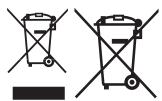
For EU countries only
Never place any electric power tools in your household refuse.
To comply with European Directive 2012/19/EC concerning old electric and electronic equipment and its implementation in national laws, old electric power tools have to be separated from other waste and disposed of in an environment-friendly fashion, e.g. by taking to a recycling depot.
Recycling alternative to the return request:
As an alternative to returning the equipment to the manufacturer, the owner of the electrical equipment must make sure that the equipment is properly disposed of if he no longer wants to keep the equipment. The old equipment can be returned to a suitable collection point that will dispose of the equipment in accordance with the national recycling and waste disposal regulations. This does not apply to any accessories or aids without electrical components supplied with the old equipment.
The reprinting or reproduction by any other means, in whole or in part, of documentation and papers accompanying products is permitted only with the express consent of the iSC GmbH.
Subject to technical changes
GB
We have competent service partners in all countries named on the guarantee certificate whose contact details can also be found on the guarantee certificate. These partners will help you with all service requests such as repairs, spare and wearing part orders or the purchase of consumables.
Please note that the following parts of this product are subject to normal or natural wear and that the following parts are therefore also required for use as consumables.
| Category | Example |
| Wear parts* | Battery |
| Consumables* | Blades |
| Missing parts | |
- Not necessarily included in the scope of delivery!
In the effect of defects or faults, please register the problem on the internet at www.Einhell-Service.com. Please ensure that you provide a precise description of the problem and answer the following questions in all cases:
Did the equipment work at all or was it defective from the beginning?
Did you notice anything (symptom or defect) prior to the failure?
- What malfunction does the equipment have in your opinion (main symptom)?
Describe this malfunction.
GB
Warranty certificate
Dear Customer,
All of our products undergo strict quality checks to ensure that they reach you in perfect condition. In the unlikely event that your device develops a fault, please contact our service department at the address shown on this guarantee card. You can also contact us by telephone using the service number shown. Please note the following terms under which guarantee claims can be made:
- These guarantee terms apply to consumers only, i.e. natural persons intending to use this product neither for their commercial activities nor for any other self-employed activities. These warranty terms regulate additional warranty services, which the manufacturer mentioned below promises to buyers of its new products in addition to their statutory rights of guarantee. Your statutory guarantee claims are not affected by this guarantee. Our guarantee is free of charge to you.
- The warranty services cover only defects due to material or manufacturing faults on a product which you have bought from the manufacturer mentioned below and are limited to either the rectification of said defects on the product or the replacement of the product, whichever we prefer. Please note that our devices are not designed for use in commercial, trade or professional applications. A guarantee contract will not be created if the device has been used by commercial, trade or industrial business or has been exposed to similar stresses during the guarantee period.
-
The following are not covered by our guarantee:
-
Damage to the device caused by a failure to follow the assembly instructions or due to incorrect installation, a failure to follow the operating instructions (for example connecting it to an incorrect mains voltage or current type) or a failure to follow the maintenance and safety instructions or by exposing the device to abnormal environmental conditions or by lack of care and maintenance.
- Damage to the device caused by abuse or incorrect use (for example overloading the device or the use or unapproved tools or accessories), ingress of foreign bodies into the device (such as sand, stones or dust, transport damage), the use of force or damage caused by external forces (for example by dropping it).
-
Damage to the device or parts of the device caused by normal or natural wear or tear or by normal use of the device.
-
The guarantee is valid for a period of 24 months starting from the purchase date of the device. Guarantee claims should be submitted before the end of the guarantee period within two weeks of the defect being noticed. No guarantee claims will be accepted after the end of the guarantee period. The original guarantee period remains applicable to the device even if repairs are carried out or parts are replaced. In such cases, the work performed or parts fitted will not result in an extension of the guarantee period, and no new guarantee will become active for the work performed or parts fitted. This also applies if an on-site service is used.
- To make a claim under the guarantee, please register the defective device at: www.Einhell-Service.com. Please keep your bill of purchase or other proof of purchase for the new device. Devices that are returned without proof of purchase or without a rating plate shall not be covered by the guarantee, because appropriate identification will not be possible. If the defect is covered by our guarantee, then the item in question will either be repaired immediately and returned to you or we will send you a new replacement.
Of course, we are also happy offer a chargeable repair service for any defects which are not covered by the scope of this guarantee or for units which are no longer covered. To take advantage of this service, please send the device to our service address.
Also refer to the restrictions of this warranty concerning wear parts, consumables and missing parts as set out in the service information in these operating instructions.
F
Sommaire
Chere cliente, cher client,
First CE: 19
Art.-No.:34.139.50 I-No.:11019
Subject to change without notice
Archive-File/Record: NAPR019919
Documents registrar: Thomas Fischer
Wiesenweg 22, D-94405 Landau/Isar
EH 11/2019 (03)