ATTIX 200 - Industrial vacuum cleaner NILFISK - Free user manual and instructions
Find the device manual for free ATTIX 200 NILFISK in PDF.



| Product type | Industrial vacuum cleaner |
| Brand | NILFISK |
| Model | ATTIX 200 (M and H versions) |
| Dimensions (L x W x H) | 1600 x 800 x 1810 mm |
| Net weight | 305 kg |
| Power supply | 400 V / 50 Hz / 7.5 kW (nominal power) / 5 kW (according to EN 60335-2-69) |
| Protection rating | IP55 |
| Insulation class | F |
| Tank capacity | 175 L |
| Suction diameter | 100 mm |
| Maximum vacuum | 2500 mm H2O |
| Maximum airflow (without hose) | 13 500 L/min |
| Maximum airflow (hose Ø50 mm, 3 m) | 9 100 L/min |
| Primary filter surface area | 3.5 m² |
| Absolute filter surface area H (suction) | 12 m² |
| Absolute filter surface area H (blowing) | 17 m² |
| H14 absolute filter efficiency | 99.995% (according to EN 1822) |
| Sound level | 78 dB(A) |
| Dust classes | M (medium risk) and H (high risk) |
| Authorized vacuumed materials | Non-explosive dry substances, class M/H hazardous dusts |
| Prohibited materials | Burning materials, flammable liquids, explosive dusts |
| Main functions | Dry suction, manual primary filter shaking (knob), clogging indicator (vacuum gauge), audible alarm for air speed < 20 m/s |
| Routine maintenance | Emptying the tank, filter shaking, checking and cleaning filters and ducts, sealing check |
| Safety | Emergency stop (button), phase inverter, thermal protection, grounding, differential circuit breaker 30 mA |
| Recommended spare parts | Star filter (L/M), filter holder ring, gasket, clamp, H absolute filter, tank/cover |
Frequently Asked Questions - ATTIX 200 NILFISK
User questions about ATTIX 200 NILFISK
0 question about this device. Answer the ones you know or ask your own.
Ask a new question about this device
Download the instructions for your Industrial vacuum cleaner in PDF format for free! Find your manual ATTIX 200 - NILFISK and take your electronic device back in hand. On this page are published all the documents necessary for the use of your device. ATTIX 200 by NILFISK.
USER MANUAL ATTIX 200 NILFISK
Operating Instructions
Mode d'emploi
Betriebsanleitung
MANUEL D'INSTRUCTIONS
F
BETRIEBSANLEITUNG
D
Instructions for use 2
Operator safety 2
Proper uses 2
Versions and variations 2
Classification in compliance with standard EN 60335-2-69 - Annexe AA. 3
Dust emissions into the environment 3
General recommendations 3
Vacuum cleaner description - Labels 4
Optional kits 4
Accessories 4
Packing and unpacking 5
Setting to work - connection to the power supply. 5
Extensions 5
Dry applications. 6
Maintenance and repairs. 6
Technical specifications - Dimensions. 7
Controls, indicators and connections 8
Inspection prior to starting 8
Starting up 8
Vacuum cleaner operation 8
Shaking the primary filter 8
Stopping - Emergency stopping 9
Emptying the dust container 9
At the end of a cleaning session 9
Maintenance, cleaning and decontamination 10
Primary and absolute filter disassembly and replacement 10
Primary filter replacement 10
HEPA filter replacement 11
Motor cooling fan inspection and cleaning 11
Tightness inspection 11
Separator cleaning and replacement 11
Vacuum cleaner disposal 11
Wiring diagrams 12
Recommended spare parts 13
Troubleshooting 13
Additional information about Type 22 variants 14
Instructions for use
Read the operating instructions and comply with the important safety recommendations identified by:

DANGER!
Operator safety

DANGER!

Before starting the vacuum cleaner, it is absolutely essential to read these operating instructions and to keep them ready at hand for consultation.
The vacuum cleaner can only be used by people
who are familiar with the way it works and who have been explicitly authorised and trained for the purpose.
Before using the vacuum cleaner, the operators must be informed, instructed and trained on how to work it and for which substances its usage is permitted including the safe method for removing and disposing of the vacuumed material.

DANGER!
The use of vacuum cleaner by people (including children) with limited physical and mental capacities or lacking in experience and knowledge is strictly forbidden, unless they are supervised by a person who is experienced in the use and safe handling of the machine.
Children must be supervised to make sure they will not play with the machine.
General information for using the vacuum cleaner
Use of the vacuum cleaner is governed by the laws in force in the country where it is used.
Besides the operating instructions and the laws in force in the country where the vacuum cleaner is used, the technical regulations for ensuring safe and correct operation must also be observed (Legislation concerning environmental and labour safety, i.e. European Union Directive 89/391/EC and successive Directives).
Do not carry out any operation that could jeopardize the safety of people, property and the environment.
Comply with the safety indications and prescriptions in this instruction manual.
Proper uses
This vacuum cleaner is suitable for collective use, e.g. in hotels, schools, hospitals, factories, shops, offices and residences.
The vacuum cleaners described in this instruction manual are designed for industrial use. They are produced in different versions and for different applications (variants).
The vacuum cleaner has been designed to be used by one operator at a time.
Versions and variations
A. Versions

DANGER!
Dust classification
This vacuum cleaner is produced in:
- version for dust harmful to health: M and H classes. In this case, the vacuum cleaner is suitable for use with hazardous, non-combustible/non-explosive dust in accordance with standard EN 60335-2-69, par. AA. 2. 202 b), c).
Check the tolerated dust hazardousness class on the data plate and on the label applied to the vacuum cleaner: M (medium risk), H (high risk).
B. Variants (versions)
- B1
This vacuum cleaner can also be produced as "Type 22" variant (version) in compliance with standard EN60335-2-69 - Annexe AA for cleaning explosive dust (dry and flammable dust).
Classification in compliance with standard EN 60335-2-69 - Annexe AA
Vacuum cleaners for dust harmful to health are classified according to the following dust classification:
- M (medium risk) suitable for separating dust with an exposure limit value of over 0.1mg / m^3 , depending on the occupied volume;
- H (high risk) for separating all dust with an exposure limit value lower than 0.1mg / m^3 , depending on the occupied volume, including carcinogenic and pathogenic dusts.
Dust emissions into the environment
Indicative values of performance of:
- versions for dust harmful to health (Classes L - M - H):
L: retains at least 99.1% of particles measuring ≥ 3 m
M: retains at least 99.9% of particles measuring ≥ 3 m
H: H14 class absolute filter in accordance with EN1822.
General recommendations

DANGER!
Risk of fire outbreaks and explosions.
- The vacuum cleaner can only be used when active sources of ignition are not going to be vacuumed.
It is forbidden to vacuum the following materials: burning materials (embers, hot ashes, lighted cigarettes, etc.), flammable liquids, aggressive fuels (e.g. gasoline, solvents, acids, alkaline solutions, etc.).
It is forbidden to vacuum the following materials: explosive dust or dust liable to spontaneous ignition (such as magnesium or aluminium dusts, etc.). - The vacuum cleaner is not suitable for vacuuming explosive or similar substances, as established by the laws governing explosive substances, particularly: liquid fuels and mixtures of flammable dust and liquids.

DANGER!
Emergency
If an emergency situation occurs:
- filter breakage;
- fire outbreak;
short-circuit;
engine seizing; - electric shock;
etc.;
turn off the vacuum cleaner, unplug it and ask for
assistance to be performed by qualified personnel.

Note
Check the place of work and substances tolerated for the vacuum cleaner in Type 22 variant (version).

DANGER!
The vacuum cleaners must not be used or stored outdoors, or in damp places.
The vacuum cleaner is not suitable for vacuuming liquids, it can only be used to vacuum dry materials.
Vacuum cleaner description - Labels
Figure 1
A. Identification plate: Model code which includes the class (M - H), technical data, serial number, CE marking, year of manufacture
B. Dust container
C. Latches
D. On-off switch
E. Handle
F. Inlet
G. Inlet plug (for M - H vacuum cleaner classes)
H. Warning label (for M - H vacuum cleaner classes)
- Attention plate Draws the operator's attention to the fact that the filter must only be shaken when the vacuum cleaner is off (see also par. "Shaking the primary filter".)
L. Outlet
M. Panel power plate Indicates that the panel is powered by the voltage indicated on the data plate.
N. Attention plate (tension)
The access to the panel is allowed to specialized personnel only who, before touching the electrical equipment, must disconnect the cleaner from its power source by turning the main switch "D" to -0-position (off) and by removing the plug from the electric socket.
This vacuum cleaner creates a strong air flow which is drawn in through the inlet "F" and blows out through the outlet "L". After the hose and tools have been fitted, make sure that the motor turns correctly.
Before turning on the vacuum cleaner, fit the vacuum hose into the inlet and then fit the required tool on to the end part. Refer to the manufacturer's accessory catalogue or Service Centre, particularly for Type 22 vacuum cleaner variant use genuine antistatic accessories only.
The diameters of the authorised hoses are given in the technical specifications table.
This vacuum cleaner is equipped with an internal baffle plate which subjects the vacuumed substances to a circular centrifugal movement that makes them drop into the container. The vacuum cleaner is equipped with a primary filter which enables it to be used for the majority of class M applications for dust harmful to health.
Besides the primary filter, which retains the most common types of dust, the vacuum cleaner can be fitted with a secondary filter (absolute H) with a higher filtering capacity for fine dusts and dusts that are hazardous to health.
Optional kits
Various optional kits are available for converting the vacuum cleaner:
- Removable separator;
- Clamp and bracket;
- Downstream absolute filter;
Grill and depressor;
Grid; - Cartridge filter;
Electric filter shaker;
On request, the vacuum cleaner can be supplied with optional kits already installed. However, they can also be installed at a later date.
Please contact the sales network for further details. Instructions describing how to fit the optional kits and the relative operation and maintenance manuals are supplied together with the optional kits.

DANGER!
Use only genuine optional kits.
Accessories
Various accessories are available; refer to the accessories catalogue.

DANGER!
"Type 22" variant (version): please contact the sales network for further details.

DANGER!
Type 22 variants have special safety ports that can only be fitted with genuine accessories.
Do not tamper with the inlet.

DANGER!
Use only genuine accessories.
Packing and unpacking
Dispose of the packing materials in compliance with the laws in force.
Figure 2
Nylon packing
| Model | ATTIX200 - M ATTIX200 - H |
| A (mm) | 1,700 |
| B (mm) | 900 |
| C (mm) | 1,950 |
| Weight (kg) | 333 |
Setting to work - connection to the power supply

DANGER!
- Make sure that the vacuum cleaner is in perfect condition before starting work.
Before plugging the vacuum cleaner into the electrical mains, make sure that the voltage rating indicated on the data plate corresponds to that of the electrical mains. - Plug the vacuum cleaner into a socket with a correctly installed ground contact/connection. Make sure that the vacuum cleaner is off.
- The plugs and connectors of the connection cables must be protected against splashed water.
- Make sure that connections to the electrical mains and plug are correct.
- Use the vacuum cleaners only when the cables that connect to the electrical mains are in perfect condition (damaged cables could lead to electric shocks!).
- Regularly check that the electric cable does not show signs of damage, excessive wear, cracks or ageing.

DANGER!
When the vacuum cleaner is operating, do not:
- Crush, pull, damage or tread on the cable that connects to the electrical mains.
- Only disconnect the cable from the electrical mains by removing the plug (do not pull the cable).
- Only replace the electric power cable with one of the same type as the original (HO7 RN - F); the same rule applies if an extension is used.
- The cable must be replaced by the manufacturer's Service Centre staff or by equivalent qualified personnel.
Extensions
If an extension cable is used, make sure it is fit for the power draw and protection degree of the vacuum cleaner.

DANGER!
Type 22 variant: extensions, plugged in electrical devices and adapters cannot be used when the vacuum cleaner is used for flammable dust.
Minimum section of extension cable L = 20 m .
Cable = HO7 RN - F.
| Max power (kW) | 3 | 5 | 15 | 22 |
| Minimum section (mm2) | 2.5 | 4 | 10 | 16 |

DANGER!
Sockets, plugs, connectors and installation of the extension cable must maintain the IP protection degree of the vacuum cleaner, as indicated on the data plate.

DANGER!
The vacuum cleaner's power socket must be protected by a differential circuit-breaker with surge current limitation, that shuts off the power supply when the current discharged to the ground exceeds 30mA for 30 msec. or an equivalent protection circuit.

DANGER!
Never spray water on the vacuum cleaner: this could be dangerous for persons and could short circuit the power supply.
Consult the latest edition of the European Union Directives, the Laws in the country of use and the current standards in force (UNI - CEI - EN), particularly European standard EN60335-2-69.
Dry applications

Note
- The supplied filters and the safety container (if applicable) must be installed correctly.

DANGER!
Comply with the safety regulations governing the materials for which the vacuum cleaner is used.
Use as a dust extractor only (M and H classes only)

WARNING!
The vacuum cleaner, only in M and H versions, can be used as a "dust extractor" in compliance with EN60335-2-69: 2003-08 – par AA.22.202. These versions are equipped with a horn that warns the user when the vacuum speed drops under 20~m / s .
The horn is set to work properly when the vacuum cleaner is connected to a 3-meter-long hose with a nominal diameter that complies with the indications in the technical data table (page 7). For different configurations, please contact the manufacturer's Service Centre.

WARNING!
When the vacuum cleaner is used as a dust extractor, it must be used in well-ventilated areas, to provide proper air change in the room where the exhaust air will be delivered. Always refer the Laws in the country of use.
Maintenance and repairs

DANGER!
Disconnect the vacuum cleaner from its power source before cleaning, servicing, replacing parts or converting it to obtain another version/variant; the plug must be removed from the socket.
- Carry out only the maintenance operations described in this manual.
Use only original spare parts. - Do not modify the vacuum cleaner in any way.
Failure to comply with these instructions could jeopardize your safety. Moreover, such action would immediately void the EC declaration of conformity issued with the vacuum cleaner.

DANGER!
To carry out maintenance operations which are not described in this manual contact the manufacturer's Service Centre or our sales network.
Technical specifications - Dimensions
Technical specifications
| Parameter | Units | ATTIX 200 - M ATTIX 200 - H |
| Voltage (50 Hz) | V | 400 |
| Power rating | kW | 7.5 |
| Power rating (EN 60335-2-69) | kW | 5 |
| Weight | kg | 305 |
| Noise level | dB(A) | 78 |
| Protection | IP | 55 |
| Insulation | Class | F |
| Capacity | L | 175 |
| Inlet | mm | Ø 100 |
| Max vacuum | mm H2O | 2,500 |
| Maximum air flow rate without hose and reductions | L/m' | 13,500 |
| Maximum air flow rate(3 m Ø 50 mm hose) | L/m' | 9,100 |
| Hoses allowed for “M” and “H” classes | mm | Ø 70 |
| Main filter surface (N) | m² | 3.5 |
| Upstream absolute H filter surface (code 17050) | m² | 12 |
| Downstream absolute filter surface (code 17092) | m² | 17 |
| Absolute filter efficiency according to MPPS method (EN 1822) | % | 99.995 (H14) |

Note
- Storage conditions: T: -10 +40^ Humidity: ≤ 85%
- Operating conditions: Maximum altitude 800 m (up to 2,000 m with reduced performances) T: -10 +40^ Humidity: ≤ 85%
Dimensions
Figure 3
| Model | ATTIX 200 - M ATTIX 200 - H |
| A (mm) | 1,600 |
| B (mm) | 800 |
| C (mm) | 1,810 |
| Weight (kg) | 305 |
Controls, indicators and connections
Figure 4
A. Vacuum gauge
B. Main switch (ON "1", OFF "0")
C. Reverse phase indicator (M-H versions)
D. Thermal operation indicator light
E. Electrically powered machine indicator light
F. Phase inverter
G. Electric filter shaker start button (optional)
H. Stop button
I. Start button
L. Hour counter
M. Filling level indicator
N. Castor brakes
O. Inlet
P. Dust container release lever
Q. Filtering chamber
R. Dust container
S. Main filter shaker knob
T. Horn for speeds below 20 ~m / s
U. Connecting connector to mouth micro-switch
Inspection prior to starting
Prior to starting, check that:
The filters are installed;
All latches are tightly locked;
The vacuum hose and tools have been correctly fitted onto the inlet "F" (Fig. 5);
The bag or safety container is installed, if applicable.
- Do not use the vacuum cleaner if the filter is faulty.
Starting up
- Lock the castor brakes before starting the vacuum cleaner "E" (Fig. 6);
- To wire up the mouth start/stop remote switch (if equipped), remove the connector "V" (Fig. 6) on the panel and use the connector "Z" (Fig. 6) supplied with the vacuum cleaner.
- Turn the switch "B" (Fig. 6) to "l" position.
Press the button "1" to start the vacuum cleaner.
Activate the mouths (if equipped).
Press the button "H" to stop the vacuum cleaner. - Turn the main switch "B" to "0" position to turn the vacuum cleaner off.
If the vacuum cleaner does not work and the indicator "C" (Fig. 4) lights up, turn the inverter "F" in the opposite direction.
Vacuum cleaner operation
Figure 7
- RED ZONE
- GREEN ZONE
Check the flow rate:
- When the vacuum cleaner is operating, the pointer of the vacuum gauge "A" (Fig. 7) must remain in the green zone (OK) to ensure that the speed of the intake air does not drop below the safety value of 20 ~m / s ;
- If the pointer is in the red zone (STOP), it means that the speed of the air in the vacuum hose is less than 20m / s and that the vacuum cleaner is not operating in safety conditions. The horn (of M and H versions) emits a pulsing sound. The filters must be cleaned or replaced.
After cleaning or replacing the filters, the vacuum gauge pointer must return to the green zone and the sound must stop. - When the vacuum hose is closed, the pointer of the vacuum gauge must switch from the green zone (OK) to the red zone (STOP) and the horn must emit a pulsing sound.

DANGER!
Use only hoses with diameters that comply with the indications in the Technical data table in order to prevent the air speed from dropping below 20m / sec

DANGER!
When the vacuum cleaner is operating, always check that the vacuum gauge pointer remains in the green zone (OK). Consult the "Troubleshooting" chapter if faults occur.
Shaking the primary filter
Depending on the quantity of dust cleaned up, shake the main filter by means of the knob "J" (Fig. 8) when the vacuum gauge "A" (Fig. 7) pointer switches from the green zone (OK) to the red zone (STOP).

DANGER!
Stop the vacuum cleaner before shaking the filter.
Do not shake the filter while the vacuum cleaner is on, as this could damage the filter itself.
Wait before restarting the vacuum cleaner, to allow the dust to settle.
Replace the filter element if the pointer still remains in the red zone (STOP) even after the filter has been shaken (see par.
"Primary filter replacement".)
Stopping - Emergency stopping
Push the stop button "H" (Fig. 4).
Emptying the dust container

DANGER!
Before proceeding with these operations, turn off the vacuum cleaner and remove the plug from the power socket.
- Check the class of the vacuum cleaner.
Before emptying the container it is advisable to clean the filter (see par. "Shaking the primary filter".)
A. Versions for dust harmful to health: M - H classes suitable for vacuuming hazardous and/or carcinogenic dust (H class).

DANGER!
- These operations can only be carried out by trained and qualified personnel who must wear adequate clothing, in compliance with the laws in force.
Take care not to raise dust when this operation is carried out. Wear a P3 protective mask.
In case of dangerous and/or toxic dust, use the plastic bag (code 40100). - Use a safety container if asbestos is to be vacuumed. Therefore, in this case, the vacuum cleaner must be equipped with our ABS safety container (code 830202 - 831365 Fig. 10) in order to dispose of the dust.
- The container and/or bag must only be disposed of by qualified personnel and in compliance with the laws in force.
How to replace the safety container:
- Place the vacuum hose in a safe and dust-free place;
- Release the dust container "l" (Fig. 10);
- Close the safety container with the supplied cover, remove it from the dust container "I" (Fig. 10), and replace it with an empty one.
- Start the motor again to prevent dust from being blown about.
- Make sure that the seal is in perfect condition and correctly positioned.
- Switch off the motor, fit an empty container in place and fasten it in position.
At the end of a cleaning session
- Turn off the vacuum cleaner and remove the plug from the socket.
- Wind the connection cable (Fig. 11).
- Empty the container as described in the "Emptying the container" paragraph.
Clean the vacuum cleaner as described in the "Maintenance, cleaning and decontamination" paragraph.
- Wash the container with clean water if aggressive substances have been vacuumed.
- Store the vacuum cleaner in a dry place, out of reach of unauthorized people.
- Shut the inlet with the appropriate plug "A" (Fig. 11) when the vacuum cleaner is transported or not being used (particularly in the case of M-H versions).
Maintenance, cleaning and decontamination

DANGER!
IMPORTANT: The precautions described below must be taken during all the maintenance operations, including cleaning and replacing of the main and HEPA filters.
A. To allow the user to carry out the maintenance operations, the vacuum cleaner must be disassembled, cleaned and overhauled as far as is reasonably possible, without causing hazards for the maintenance staff or other people. The suitable precautions include decontamination before disassembling the vacuum cleaner, adequate filter ventilation of the exhaust air from the room in which is disassembled, cleaning of the maintenance area a suitable personal protection.
B. If the vacuum cleaner belongs to the M or H class, the external parts must be decontaminated by cleaning and vacuuming methods, dedusted or treated with sealant before being taken out of a hazardous zone. All parts of the vacuum cleaner must be considered as contaminated when they are removed from the hazardous zone and appropriate actions must be taken to prevent dust from dispersing. When maintenance or repair procedure are carried out all the contaminated elements that cannot be properly cleaned, must be eliminated.
These elements must be disposed of in sealed bags conforming to the applicable regulations and in accordance with the local laws governing the disposal of such material.
This procedure must also be followed when the filters are eliminated (main, HEPA and downstream filters).
IMPORTANT: Compartments that are not dust-tight must be opened with suitable tools (screwdrivers, wrenches, etc.) and thoroughly cleaned.
C. Carry out a technical inspection at least once a year, for example: check the filters to find out whether the air-tightness of the vacuum cleaner has been impaired in any way and make sure that the electric control panel operates correctly. This inspection must be carried out by the manufacturer or by a competent person.

DANGER!
Use only original spare parts.
Primary and absolute filter disassembly and replacement

DANGER!
When the vacuum cleaner is used to vacuum hazardous substances, the filters become contaminated, thus:
- work with care and avoid spilling the vacuumed dust and/or material;
- place the disassembled and/or replaced filter in a sealed plastic bag;
close the bag hermetically; - dispose of the filter in accordance with the laws in force.

DANGER!
Filter replacement is a serious matter. The filter must be replaced with one of identical characteristics, filtering surface and category.
Otherwise the vacuum cleaner will not operate correctly.
Primary filter replacement

DANGER!
Check the vacuum cleaner class (M - H).
Take care not to raise dust when this operation is carried out.
Wear a P3 mask and other protective clothing plus protective gloves (DPI) suited to the hazardous nature of the dust collected, refer to the laws in force.
Before proceeding with these operations, turn off the vacuum cleaner and remove the plug from the power socket.
Disassembly
- Remove the hose "A" (12) from the lower inlet.
- Release the stop "B" (12) and unscrew the filter shaker knob "C".
- Release the two closing hooks "D" (Fig. 12) and remove the cover "E".
- Lift the filter "F" (Fig. 12), unscrew the clamp "G" and detach the ring "H".
- Remove the cage "I" (Fig. 12) and turn the filter upside down.
Cut the clamps "L" (Fig. 12) and detach the cage from the filter.
Assembly
- Fit the filter catch and retention ring of the old filter on to the new one.
- Insert the cage "I" (Fig. 12) and fix it to the filter by means of the clamps "L" on the bottom of the filter itself.
- Fit the filter into the filtering chamber, then mount the cover "E" (Fig. 12) and lock it in place with the two closing hooks "D".
- Fit the filter shaker knob and lock it in the lowered position with the stop so that the filter is kept stretched.
- Fit the suction hose on the lower inlet.
- Dispose of the filter according to the laws in force.
HEPA filter replacement
Version for dust harmful to health: H class.

DANGER!
Take care not to raise dust when this operation is carried out.
Wear a P3 mask and other protective clothing plus protective gloves (DPI) suited to the hazardous nature of the dust collected, refer to the laws in force.
Upstream HEPA filter replacement
Unscrew the knob "A" (Fig. 13);
Remove cover "B" (Fig. 13);
- Release the filter knob “C”(Fig. 13), cover the filter “D” with a plastic bag and remove everything;
- Seal the plastic bag hermetically, insert a new filter unit which complies with the laws in force and seal the cover again hermetically.

Note
Type 22 vacuum cleaner: perform galvanic continuity tests in accordance with the accident-prevention standards (e.g.: VBG4 and according to DIN VDE 0701 part 1 and part 3).
Standard EN 60335-2-69 prescribes inspections at regular intervals or after repairs or modifications.
Motor cooling fan inspection and cleaning
Periodically clean the motor cooling fan to prevent the motor from overheating, especially if the vacuum cleaner is used in a dusty place.
Tightness inspection
Hoses check
Check that hoses "A", "B" and "C" (Fig. 14) are in good condition and correctly fixed.
If the hoses are damaged, broken or badly connected to the unions, they must be replaced.
When sticky materials are treated, check for possible clogging along the hose "C" (Fig. 14), in the inlet and on the baffle plate inside the filtering chamber.
Scrape the inlet from the outside and remove the deposited waste as indicated in figure 14.
Cover tightness check
If the gasket "A" (Fig. 15) under the cover "D" has become slack, unscrew the screws "B" that lock the closing hooks "C" in place and allow them to slide downwards until the deck "D" closes perfectly. Now tighten the locking screws "B" (Fig. 15). Replace the gasket "A" (Fig. 15) if the degree of tightness is still not optimum.
Filtering chamber tightness check
If the gasket "A" (Fig. 16) between the container and the filtering chamber "C" fails to guarantee tightness:
- Loosen the four screws “B” (Fig. 16) that lock the filtering chamber “C” against the vacuum cleaner structure.
- Allow the filtering chamber "C" (Fig. 16) to lower down and tighten the screws "B" once it has reached the tightness position.
The gasket must be replaced if it is torn, cut, etc...
Replace the gasket "A" (Fig. 16) if the degree of tightness is still not optimum.
Separator cleaning and replacement

Note
If there is only a dust deposit on the separator "D" (Fig. 17) allow the dust to drop through the central hole.
The separator "D" (Fig. 17) should first be disassembled in order to be perfectly cleaned:
- Release the closing hooks “A” (Fig. 17) of the cover “B” and remove the cover.
- Remove the filter.
- Unscrew the two screws "C" (Fig. 17) and remove it from the container.
- Replace the part if it is excessively worn.
Fit the separator "D" (Fig. 17) back in place.
Lock it and fix it by means of the two screws "C" (Fig. 17). - Fit the filter back in place, close the cover “B” (Fig. 17) and lock it by means of the two the closing hooks “A”.
Vacuum cleaner disposal
Dispose of the vacuum cleaner in compliance with the laws in force.
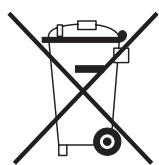

Proper disposal (electric and electronic waste) (applicable in the European Union and in countries providing a separate collection system)
The symbol shown is present on the product or in its documentation and it indicates that the product cannot be disposed of together with other domestic waste at the end of its life cycle. To prevent damages to the environment or the health caused by improper waste disposal, please separate this product from other waste and recycle it responsibly in order to support the sustainable reuse of material resources. Domestic users should contact the retailer or the local office providing information on separate collection and recycling of this product.
Companies should contact the supplier and check the purchase contract terms and conditions. This product can not be disposed of together with other commercial waste.
Wiring diagrams
Figure 18
- MAIN SWITCH
- INVERTER
- TRIPOLAR FUSE HOLDER
- PHASE SEQUENCE RELAY
- THERMAL RELAY
- VACUUM CLEANER
- TRANSFORMER FUSE HOLDER
Figure 20
| Model | "F1" Fuse |
| ATTIX 200 | 3 x 35 A |
Figure 19
- TRANSFORMER
- VOLTAGE SIGNALLING (WHITE INDICATOR)
- THERMIC INDICATION (RED INDICATOR)
-
WRONG PHASE SEQUENCE INDICATOR (YELLOW INDICATOR)
-
STOP BUTTON
- START BUTTON
- LINE ELECTROMAGNETIC SWITCH
- HOUR COUNTER
- STAR-DELTA TIMER
- STAR CONTACTOR
- DELTA CONTACTOR
- VACUUM CLEANER SWITCH-OFF DELAY TIMER
- MOUTH CONNECTION
Figure 21
- ELECTRICAL MAINS POWER SUPPLY
- VACUUM CLEANER
- CARTRIDGE KIT
- HORN
- AIR SPEED SENSOR
- FUSE HOLDER
- MOUTH CONNECTION
Figure 22
Figure 23
| Pos. | Description | Q.ty |
| H1 | White lamp | 1 |
| H2 | Red indicator | 1 |
| H3 | Yellow lamp | 1 |
| KM1 | kW11 Line electromagnetic switch | 1 |
| KM2 | kW11 Star contactor | 1 |
| KM3 | kW11 Delta contactor | 1 |
| KT1 | Star/delta timer | 1 |
| KT2 | 24 VAC Timer | 1 |
| K1 | 24 VAC Relay | 1 |
| K2 | 24 VAC Relay | 1 |
| MH1 | 24 VAC Hour counter | 1 |
| PA | Red button | 1 |
| PM | Green button | 1 |
| Q1 | 32 A Main switch | 1 |
| Q2 | 32 A Inverter | 1 |
| SF1 | Phase sequence | 1 |
| TR1 | 63 VA 400/24 V Transformer | 1 |
| F1 | 63 A Tripolar fuse holder | 1 |
| F10 | 7-10 A Thermal relay | 1 |
| XC1 | 3P + T Connector | 1 |
Cartridge kit (1/1)
- TS2 TIMER SEQUENCE
- FILTER CLEANING SOLENOID VALVE 1
- FILTER CLEANING SOLENOID VALVE 2
- FILTER CLEANING SOLENOID VALVE 3
- FILTER CLEANING SOLENOID VALVE 4
- T3 / P2 = TIME BETWEEN CLEANING CYCLES
- T1 / WORK = FILTER CLEANING TIME
- T2 / P1 = WORK HOLD TIME
Recommended spare parts
The following is a list of spare parts that should be kept ready at hand in order to speed up maintenance operations.
List of recommended spare parts
Figure 24
| Pos. | Description | Mod. | Dimensions | Code number |
| 1 | Star filter “L” | Ø 560 | 8 17081 | |
| 2 | Star filter “M” | Ø 560 | 8 17246 | |
| 3 | Filter ring | Ø 560 | 8 15005 | |
| 4 | Filter ring gasket | Ø 560 | 8 17027 | |
| 5 | Filter clamp | Ø 560 | 8 18081 | |
| 6 | Upstream Hepa filter “H” | Ø 400 x 400 | 8 17264 | |
| 7 | Downstream HEPA filter | 475 x 610 x 292 | 8 17093 | |
| 8 | Container/cover | Ø 460 | 8 40275 |
Troubleshooting
| Problem | Cause | Remedy |
| The vacuum cleaner suddenly stops | Clogged primary filter | Shake the filter. Replace it if necessary |
| Clogged vacuum hose | Check the vacuum hose and clean it | |
| Circuit breaker activation | Check the setting. Check the motor electrical input. Contact an authorized Service Centre if necessary. | |
| Dust leaks from the vacuum cleaner | The filter is torn | Replace it with another of identical type |
| Inadequate filter | Replace it with another of a suitable category and check | |
| The vacuum cleaner blows instead of vacuuming | Incorrect connection to the electrical mains | Remove the plug and invert two of the phase wires |
| Electrostatic current on the vacuum cleaner | Non existent or inefficient grounding | Check all ground connections. Especially check the inlet. Lastly, the hose must be strictly antistatic. |
Additional information about Type 22 variants
A. Type 22 industrial vacuum cleaners - Zone 22

NOTE
- Only genuine, authorized hoses and accessories may be used.
- Extension cables, adapters or electric plug reducers must not be used.
- Type 22 industrial vacuum cleaners are technically suitable for vacuuming dry flammable dust in Zone 22.
Dusts with an extremely low inflammability energy (MZE < 1mJ ) are excluded.
Use of the vacuum cleaner for this type of dust requires a specific safety inspection in conjunction with further provisions if required. The vacuum cleaners are therefore not suitable for vacuuming on unmanned machinery.
- The container must be emptied when required and always after each use.
- If the motor turns in the wrong direction, e.g. because of an incorrect polarity of the mains, the vacuum cleaner must be stopped immediately to prevent critical conditions from being caused by the blowing action working in the opposite direction, or by overheating.
- When the industrial vacuum cleaner operates in both normal and abnormal conditions, certain parts of it can become as hot as 135^ (e.g.: the motor.)
- Type 22 industrial vacuum cleaners are not suitable for vacuuming explosive dust or similar substances, as established in par. 1 of the "German Law for explosive substances", or liquids, or mixtures of combustible dust with liquids.
- All parts of the vacuum cleaner are grounded to prevent electrostatic charges.
- During maintenance operations and when the filter is replaced, periodically check that the PE ground cables are undamaged and correctly fixed.
Index
Mode d'emploi 2
Elimination machine 11
Kit cartouches (1/1)
- SEQUENCE MINUTEUR TS2
- ELECTROVANNE NETTOYAGE Filtre 1
- ELECTROVANNE NETTOYAGE Filtre 2
- ELECTROVANNE NETTOYAGE Filtre 3
- ELECTROVANNE NETTOYAGE Filtre 4
- T3 / P2 = TEMPS ENTRE CYCLES DE NETTOYAGE
- T1 / WORK = TEMPS DE NETTOYAGE DU FiltRE
- T2 / P1 = TEMPS DE PAUSE TRAVAIL
WARNING: This appliance contains dust hazardous to health. Emptying and maintenance operations, including removal of the dust collecting means, must only be carried out by authorised personnel wearing suitable personal protection. Do not operate without the full filtration system fitted.
Part of the Nilfisk-Advance Group
4080 B Sladeview Crescent, Unit 1
Mississauga, Ontario L5L 5Y5
Tel.: +1 905 569 0266
Fax: +1 905 569 8586
CHINA
Nilfisk-Advance (Shenzhen) Ltd.
Blok 3, Unit 130 1001 Honghua Road
Int. Commercial & Trade Center
Fuitian Free Trade Zone
518038 Shenzhen
Tel.: +86 755 8359 7937
Fax: +86 755 8359 1063
CZECH REPUBLIC
ALTO Ceska Republika s.r.o.
Zateckych 9
14000 Praha 4
Tel.: +420 24 14 08 419
Fax: +420 24 14 08 439
E-mail: info@alto-cz.com
DENMARK
Nilfisk-ALTO
Division of Nilfisk-Advance A/S
Industrivej 1
9560 Hadsund
Tel.: +45 7218 2100
Fax: +45 7218 2105
Nilfisk-ALTO Food division
Division of Nilfisk-Advance A/S
Blytaekkervej 2
9000 Aalborg
Tel.: +45 7218 2100
Fax: +45 7218 2099
E-mail: scanio.techology@nilfisk-alto.dk
FINLAND
Division of Nilfisk-Advance BV
Camastraat 9
3322 BB Almere
Tel.: +31 36 546 07 60
Fax: +31 36 546 07 61
E-mail: info@nilfisk-alto.nl
www.nilfisk-alto.nl
HONG KONG
Nilfisk-Advance Ltd.
2001 HK Worsted Mills Ind'l Bldq.
31-39 Wo Tong Tsui St.
Kwai Chung
Tel.: +852 2427 5951
Fax: +852 2487 5828
HUNGARY
Nilfisk-Advance Kereskedelmi Kft.
Sintra Business Park
Zona Industrial Da Abrunheira
Edificio 1, 1^ A
P2710-089 Sintra
Vyatskaya str. 27, bld. 7
127015 Moskow
Tel.: +7 495 783 96 02
Fax: +7 495 783 96 03
E-mail: info@nilfisk-advance.ru
SINGAPORE
Nilfisk-Advance Pte. Ltd.
Nilfisk-ALTO Division
40 Loyang Drive
Singapore 508961
Tel.: +65 6 759 9100
Fax: +65 6 759 9133
E-mail: sales@nilfisk-advance.com.sg
SPAIN
Nilfisk-ALTO
Division of Nilfisk-Advance S.A.
Torre D'Ara
Member of Nilfisk-Advance Group
Aminogatan 18, Box 4029
431 04 Molndal
Tel.: +46 31 706 73 00
Fax: +46 31 706 @nilfisk-alto.se
www.nilfisk-alto.se
TAIWAN
Nilfisk-Advance Taiwan Branch
No. 5, Wan Fang Road
Taipei
Tel.: +886 227 002 268
Fax: +886 227 840 843
THAILAND
Nilfisk-Advance Co. Ltd.
89 Soi Chokechai-Ruammitr
Viphavadee-Rangsit Road
Layao, Jatuchak, Bangkok 10900
Tel.: +66 2 275 5630
Fax: +66 2 691 4079
TURKEY
Nilfisk-Advance Professional Temizlik
14600 21st Avenue North
Plymouth, MN 55447-3408
Tel.: +1 763 745 3500
Nilfisk-Advance Representative Office
No. 46 Doc Ngu Str.
Ba Dinh Dist.
Hanoi
Tel.: +84 4 761 5642
Fax: +84 4 761 5643
E-mail: nilfisk@vnn.vn