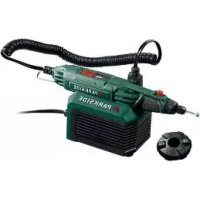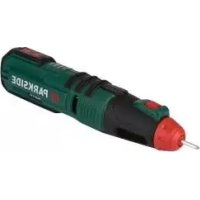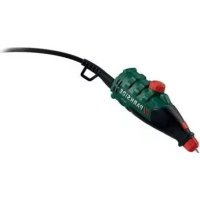
KH 3037 MODELLING AND ENGRAVING SET - Modeling and engraving tools PARKSIDE - Free user manual and instructions
Find the device manual for free KH 3037 MODELLING AND ENGRAVING SET PARKSIDE in PDF.


| Product Type | Multifunction Rotary Modeling and Engraving Kit |
| Brand | PARKSIDE |
| Model | KH 3037 |
| Category | Modeling and Engraving Tools |
| Max. drilling diameter | 3.2 mm |
| Power supply | Electric, 12 V DC (power adapter included) |
| Variable speed | Yes, 5000 – 20000 rpm |
| Dimensions (L × W × H) | 200 × 50 × 50 mm |
| Weight | 500 g |
| Main functions | Engraving, polishing, grinding, drilling, sanding, milling |
| Included accessories | Collet, several engraving bits, grinding stones, brushes, polishing discs |
| Maintenance and cleaning | Clean after each use with a dry cloth; lubricate moving parts periodically |
| Safety | Wear safety goggles; unplug before changing accessories; do not use near water |
| Spare parts | Bits, collets, carbon brushes available online |
| Repairability | Professional repair recommended; standard parts easily replaceable |
| General information | Complete kit for precision work on wood, metal, plastic; ideal for model making |
Frequently Asked Questions - KH 3037 MODELLING AND ENGRAVING SET PARKSIDE
User questions about KH 3037 MODELLING AND ENGRAVING SET PARKSIDE
0 question about this device. Answer the ones you know or ask your own.
Ask a new question about this device
Download the instructions for your Modeling and engraving tools in PDF format for free! Find your manual KH 3037 MODELLING AND ENGRAVING SET - PARKSIDE and take your electronic device back in hand. On this page are published all the documents necessary for the use of your device. KH 3037 MODELLING AND ENGRAVING SET by PARKSIDE.
USER MANUAL KH 3037 MODELLING AND ENGRAVING SET PARKSIDE
Operation and Safety Notes
SE
SET FÖR MODELLBYGGE OCH GRAVYR
Before reading, unfold the page containing the illustrations and familiarise yourself with all functions of the device.
F
Proper use.. 6
Features and equipment.. Page 6
Included items . Page 7
Technical information.. 7
General safety advice for electrical power tools.. Page 7
1.Workplace safety. Page 8
2. Electrical safety.. Page 8
3. Personal safety.. Page 8
4. Careful handling and use of electrical power tools.. Page 9
Device-specific safety instructions for small
drill KH3037 and mains adapter KH3037-1. Page 9
Operation
Inserting or replacing a tool / collet. Page 10
Switching on and off/Setting the speed range.. Page 10
Advice on working with materials/Tools/Speed ranges.. Page 11
Tips and tricks.. Page 11
Maintenance and cleaning
Service
Warranty
Disposal
Manufacturer's Declaration of Conformity / Manufacturer
| The following pictograms are used in these operating instructions/ on the device: | |||
| Read instruction manual! | Keep children away from electrical power tools! | ||
| V~ | Volt (AC) | Caution - electric shock!Danger to life! | |
| W | Watts (Effective power) | For indoor use only! | |
| - - - | Direct current (Type of current and voltage) | Risk of loss of life by electric shock from damaged mains lead or mains plug! | |
| n0 | Design no-load speed | Wear hearing protection, dust protection mask, protective glasses and protective gloves. | |
| mA A/Ah | Milliamps / Amps / Amp-hours | Avoid contact with rapidly rotating tools! | |
| Safety class II | Risk of fire! | ||
| ! | Observe caution and safety notes! | Proper procedure and handling. | |
| Risk of explosion!! | Dispose packaging and appliance in an environmentally-friendly way! | ||
Modelling and engraving set PMGS 12
Introduction

Please make sure you familiarise yourself fully with the way the device works before you use it for the first time and that you
understand how to handle electrical power tools correctly. To help you do this please read the accompanying operating instructions. Keep these instructions in a safe place. If you pass the device on to anyone else, please ensure that you also pass on all the documentation.
Proper use
The small drill is to be used for drilling, milling, engraving, polishing, cleaning up, grinding, separating
and sawing of wood, metal, plastic, ceramic or stone in dry rooms. Any other use or modification to the drill /grinder shall be considered as improper use and could give rise to considerable dangers. The manufacturer will not accept liability for loss or damage arising from improper use. Not intended for commercial use.
- Features and equipment
Small drill:
ON/OFF switch/Rotational speed control
2 Metal stirrup hanger
Plug for mains adapter
4 Clamping nut
5 Spigot nut
6 Spindle lock
Mains adapter (see Fig. A):
7 Plug-in device for plug 3
8 Tray
9 Mains adapter
10 Power cable (with mains plug)
Accessories (see Fig. B):
11 6 HSS drills
12 2 Mandrels for mounting tools
13 3 Polishing wheels
14 4 Grinding wheels
15|1 Metal brush
[16] 1 Saw blade
17 10 Cutting wheels
18 5 Collets
19|2 Plastic brushes
20 3 Milling bits
[2] 2 Engraving bits
25Grinding bits
23Combination tool
- Included items
1 Small drill
1 Mains adapter
1 Plastic case
1 Accessory kit (45-piece)
1 Operating instructions
Technical information
Small drill PMGS 12:
Nominal voltage: 12V---
Nominal output: 22W
Idle-running speed: n_0 5,000 - 20,000 min^-1
Max. drill bit diameter: 3.2mm
Certified acc. to: EN60745-1; EN60745-2-1
Noise and vibration data:
Values determined in accordance with EN 60745 The sound pressure level (A-weighted) of the device is typically 61dB A.Uncertainty K = 3 dB.The sound level while working can exceed 75dB A.
Evaluated acceleration, typical:
Hand/arm vibration: 2,63m / s^2
Uncertainty K = 1,5m / s^2
WARNING! The vibration level given in these instructions has been measured in accordance with a standardised measurement procedure specified in EN 60745 and can be used to compare devices. Different uses of the device give rise to different vibration levels and in many cases they may exceed the values given in these instructions. It is easy to underestimate the vibration load if the electrical power tool is used regularly in particular circumstances.
Note: If you wish to make an accurate assessment of the vibration loads experienced during a particular period of working, you should also take into account the intervening periods of time when the device is switched off or is running but is not actually in use. This can result in a much lower vibration load over the whole of the period of working.
Mains adapter PMGS 12-1: INPUT:
Rated voltage: 230V 50Hz
OUTPUT:
Nominal voltage: 12V = - - -
Nominal current: 1 A
Protection class: II/回
Certified acc. to: EN61558

General safety advice for electrical power tools
WARNING: Read all the safety advice and instructions! Failure to observe the safety advice and instructions may result in electric shock, fire and/or serious injury.
KEEP ALL THE SAFETY ADVICE AND INSTRUCTIONS IN A SAFE PLACE FOR FUTURE REFERENCE! THE TERM "ELECTRICAL TOOL" USED IN THE SAFETY ADVICE REFERS TO ELECTRICAL TOOLS POWERED BY MAINS ELECTRICITY (BY
MEANS OF A MAINS LEAD) AND ELECTRICAL TOOLS POWERED BY RECHARGEABLE BATTERIES (WITHOUT A MAINS LEAD).
1. Workplace safety
a) Keep your working area clean and well lit. Untidy or poorly lit working areas can lead to accidents.
b) Do not work with the device in potentially explosive environments in which there are inflammable liquids, gases or dusts.
Electrical power tools create sparks, which can ignite dusts or fumes.
c) Keep children and other people away while you are operating the electrical tool.
Distractions can cause you to lose control of the device.
2. Electrical safety

To avoid danger to life from electric shock:
a) The mains plug on the device must match the mains socket. The plug must not be modified in any way. Do not use an adapter plug with devices fitted with a protective earth. Unmodified plugs and matching sockets reduce the risk of electric shock.
b) Avoid touching earthed surfaces such as pipes, radiators, ovens and refrigerators with any part of your body. There is an increased risk of electric shock if your body is earthed.
c) Keep the device away from rain or moisture. Water entering an electrical device increases the risk of electric shock.
d) Do not use the mains lead for any purpose for which it was not intended, e.g. to carry the device, to hang up the device or to pull the mains plug out of the mains socket.
Keep the mains lead away from heat, oil, sharp edges or moving parts of the device. Damaged or tangled mains leads increase the risk of electric shock.
e) When working outdoors with an electrical power tool always use extension cables that are also approved for use outdoors. The use of an extension cable suitable for outdoor use reduces the risk of electric shock.
f) Use a residual current device (RCD) for protection if operating the electrical power tool in a moist environment is unavoidable. The use of an RCD reduces the risk of electric shock.
3. Personal safety
a) Remain alert at all times, watch what you are doing and always proceed with caution. Do not use the device if you are tired or under the influence of drugs, alcohol or medication. One moment of carelessness when using the device can lead to serious injury.
b) Wear personal protective equipment and always wear safety glasses. The wearing of personal protective equipment such as dust masks, non-slip safety shoes, safety helmets or ear protectors, appropriate to the type of electrical power tool used and work undertaken, reduces the risk of injury.
c) Avoid unintentional operation of the device. Check that the electrical power tool is switched off before you connect it to the mains, pick it up or carry it. Accidents can happen if you carry the device with your finger on the ON/OFF switch or with the device switched on.
d) Remove any setting tools or spanners before you switch the device on. A tool or spanner left attached to a rotating part of a device can lead to injury.
e) Avoid placing your body in an unnatural position. Keep proper footing and balance at all times. By doing this
you will be in a better position to control the device in unforeseen circumstances.
f) Wear suitable clothing. Do not wear loose clothing or jewellery. Keep your hair, clothing and gloves clear of moving parts. Loose clothing, jewellery or long hair can become trapped in moving parts.
g) If vacuum dust extraction and collection devices are fitted do not forget to check that they are properly connected and correctly used. The use of these devices reduces the hazard presented by dust.
4. Careful handling and use of electrical power tools
a) Do not overload the device. Always use an electrical power tool that is intended for the task you are undertaking. By using the right electrical power tool for the job you will work more safely and achieve a better result.
b) Do not use an electrical power tool if its switch is defective. An electrical power tool that can no longer be switched on and off is dangerous and must be repaired.
c) Pull the mains plug out of the socket before you make any adjustments to the device, change accessories or when the device is put away. This precaution is intended to prevent you from unintentionally starting the device.
d) When not in use always ensure that electrical power tools are kept out of reach of children. Do not let anyone use the device if he or she is not familiar with it or has not read the instructions and advice. Electrical power tools are dangerous when they are used by inexperienced people.
e) Look after the device carefully. Check that moving parts are working properly and move freely. Check for any parts that are broken or damaged enough to detrimentally affect the functioning of the device. Have damaged parts repaired before you use
the device. Many accidents have their origins in poorly maintained electrical power tools.
f) Keep cutting tools clean and sharp. Carefully maintained cutting tools with sharp cutting edges are less likely to jam and are easier to control.
g) Use the electrical power tool, accessories, inserted tools etc. in accordance with these instructions and advice, and the stipulations drawn up for this particular type of device. In doing this, take into account the working conditions and the task in hand. The use of electrical power tools for purposes other than those intended can lead to dangerous situations.

Device-specific safety instructions for small drill KH3037 and mains adapter KH3037-1
When you use the drill/ grinder wear the following protective equipment: safety glasses and protective gloves.
CAUTION! The tool continues to rotate after it has been switched off! Avoid contact with rapidly rotating drill/grinder components.
A!WARNING! Securely support the workpiece. Use clamps or a vice to grip the workpiece firmly. This is much safer than holding it in your hand.
A WARNING! Never support yourself by placing your hands near or in front of the device or the workpiece surface. A slip can result in injury.
Avoid contact with moving sanding or grinding tools.
DANGER OF FIRE FROM FLYING SPARKS! Abrading metal creates flying sparks. For this reason, always
make sure that nobody is placed in any danger and that there are no inflammable materials near the working area.
WARNING! DUST HAZARD! Any harmful/ noxious dusts generated from machining represent a risk to the health of the person operating the device and to anyone near the work area.

Wear a dust mask!
A WARNING! NOXIOUS FUMES!
Ensure that there is adequate ventilation when machining surfaces containing plastic or covered with paint, varnish etc.
- Do not soak the materials or the surface you are about to work on with liquids containing solvents.
Avoid abrading paints containing lead or other substances hazardous to health. - Do not machine materials containing asbestos. Asbestos is a known carcinogen.
- Do not machine moist materials or damp surfaces.
NOTE! Do not allow the tool to come to a standstill by overloading it!
WARNING! Switch the device off and allow it to come to a standstill before you put it down.
A WARNING! Always keep the device clean, dry and free of oil or grease.
Children or persons who lack the knowledge or experience to use the device or whose physical, sensory or intellectual capacities are limited must never be allowed to use the device without supervision or instruction by a person responsible for their safety. Children must never be allowed to play with the device.
Operation
Take note of the mains voltage:
The mains voltage at the mains socket must match that shown on the rating plate on the device. Devices marked with 230V can also be operated at 220V .
- Never use the device for a purpose for which it was not intended or with non-original parts/accessories. The use of tools or accessories other
than those recommended in the operating instructions could lead to you suffering an injury.
- Inserting or replacing a tool / collet
Press the spindle lock 6 and keep it pressed.
Rotate the clamping nut 4 until the lock engages.
Loosen the clamping nut 4 with the combination key 23.
If a tool is already inserted, remove it.
First insert the tool you wish to use though the clamping nut 4 before you insert it into the collet 18 suitable for the tool shaft.
Press the spindle lock 6 and keep it pressed.
Insert the collet [18] into the threaded insert and tighten the clamping nut 4 on the thread using the combination key 23.
Using the Insertion tool with mandrel [12]:
NOTE: Use the screwdriver end of the combination key [23] to release or tighten the screw of the mandrels [12].
Insert the mandrel into the electrical tool as described.
With the aid of the combination wrench [23], unscrew the screw from the mandrel [12].
Place the insertion tool you wish to have onto the screw between the two washers.
With the aid of the combination wrench 23, tighten the screw on the mandrel 12.
- Switching on and off / Setting the speed range
Switching on/Setting the speed range:
Connect the plug 3 to the power supply unit 9 by inserting it into the plug-in device provided for such purposes (see Fig. C).
Connect the device to the power supply by inserting the mains plug into the socket.
Set the ON/OFF switch 1 to a position between "5" and "20".
Switching off:
Set the ON/OFF switch 1 to position "0".
- Advice on working with materials/Tools/Speed ranges
Use the highest speed when working on steel or iron with the milling bits [20].
Use a short trial on a test piece to determine the optimum rotational speed range for working on zinc, zinc alloy, aluminium, copper and lead.
Use the low speed range for working on plastics and low-melting point materials.
Use high speeds on wood.
Use the medium speed range for cleaning, polishing and buffing.
The following information shall be considered as recommendatory only. Learn by practical experience which tools and settings are the best for the materials you work with.
Setting the appropriate speed:
| Symbols on ON/OFF switch 1 | Material to be worked on |
| OFF | (Drill / grinder switched off) |
| 5 | Plastics and low melting point materials |
| 7 | Stone, Ceramics |
| 10 | Softwood, metal |
| 17 | Hardwood |
| 20 | Steel |
Examples of appropriate tool selection Function:
| Function | Accessory | Application |
| Drilling | HSS drill 11 | Drilling wood |
| Milling | Milling bits 20 | Various tasks, e.g. hollowing out, gouging, shaping, grooving or slotting |
| Function | Accessory | Application |
| Engraving | Engraving bits 21 | Making marks, craft projects (see Fig. D) |
| Polishing, derusting | Metal brush 15 | Derusting |
| CAUTION! Use only the lightest contact pressure of the tool on the work-piece. | Polishing wheel 13 | Working on various metals and plastics, in particular noble metals like gold or silver (see Fig. E) |
| Cleaning | Plastic brush 19 | E.g. cleaning complex plastic housings or the area around a door lock |
| Metal brush 15 | E.g. cleaning cutlery, jewellery, tools (The metal brush is softer than steel) | |
| Grinding | Grinding wheels 14, grinding bits 22 | Grinding work on stone, wood; fine work on hard materials such as ceramic or alloyed steel (see Figs. F, G) |
| Cutting and sawing | Cutting discs 17 | Cutting metal, plastic or wood |
| Saw blade 16 | Saw blade, Saw-ing steel, metal, wood or plastic (see Fig. H) |
- Tips and tricks
If you use press too hard you run the risk of breaking the tool or damaging the workpiece. You will achieve the best results by operating the tool at a constant rotational speed and using a low contact pressure on the workpiece.
- Maintenance and cleaning
The device is maintenance-free.
Clean all the dirt off the drill/grinder. Use a dry cloth for cleaning.
Service
WARNING: Have your device repaired at the service centre or by qualified specialist personnel using original manufacturer parts only. This will ensure that your device remains safe to use.
WARNING! If the plug or lead needs to be replaced, always have the replacement carried out by the manufacturer or its service centre. This will ensure that your device remains safe to use.
Warranty
This appliance is guaranteed for 3 years from the date of purchase. It has been carefully produced and meti-culously checked before delivery. Please keep your receipt as proof of purchase. Contact your service centre by telephone in case of questions pertaining to the warranty. Your goods can be transmitted free of cost only in this manner. This warranty applies only to the initial purchaser and is non-transferrable.
The warranty covers only material or manufacturing faults, not normal wear or damage to fragile parts such as switches or rechargeable batteries. The appliance is intended solely for private, not commercial, use.
If this product has been subjected to improper or inappropriate handling, abuse, or interventions not carried out by one of our authorised sales and service outlets, the warranty will be considered void. This warranty does not affect your statutory rights.
GB
DES Ltd
Units 14-15
Bilston Industrial Estate
Oxford Street
Bilston (Great Britain)
WV147EG
Tel.: 0870/787-6177
Fax: 0870/787-6168
e-mail: support.uk@kompernass.com
IE
Kompernaß Service Ireland
Tel.: 1850 930 412 (0,082 €/Min.)
- Standard call rates apply.
Mobile operators may vary.
e-mail: support.ie@kompernass.com
- Disposal

The packaging is wholly composed of environmentally-friendly materials that can be disposed of at a local recycling centre.

Do not dispose of electric tools in the household waste!
In accordance with European Directive 2002/96/EC about waste electrical and electronic equipment and its transposition into national legislation, worn out electric tools must be collected separately and taken for environmentally compatible recycling.
Please contact your municipal or city council to ask about how to dispose of old electrical tools.
Manufacturer's Declaration of Conformity/Manufacturer C€
We, Kompernaß GmbH, Burgstr. 21, D-44867 Bochum, Germany, declare that this product complies with the following EU directives:
Machinery Directive (98/37/EC)
EU Low Voltage Directive (2006/95/EC)
Electromagnetic compatibility (2004/108/EC)
Type/Device description: Modelling and engraving set PMGS 12
Bochum, 31.07.2009

Hans Kompernaß - Managing Director -
We reserve the right to make technical modifications in the course of further development.
Aluksi
14231 N.lonia Athens (Greece)
Tel.: 210-2790865
Fax: 210-2796982
e-mail: support.gr@kompernass.com
Anóoupon

H ouakeuaia anoteAeitai anokkeiotik a nUká nou oβovtai to pIaλov.
AToOuPteTnMeTnBohTeiaTovkata TtoucUnnpesivavakukawonC.

Mny nntare note nkektpika epya- 1eia oikiaka anoppmuata!
a e TnV Eupwnaikn O8nyia 2002/96/EC
Tepi Taaiv nAektpiKwV kai nAektpovikw ouakeuwv
kai eapauoyn tnc oE thiodelta taipenei va
yivetai fexwiotn oulloyn axpnoW vAektpiKwV
epyaieiw kai oikooyikn avakukawon autw.
Tia ticduvatotntrecdiatheoncunxpoioiotoioupeVWnleovouakeuwevnepoweiteaTOIC apxoc Tou hou n Tc Koivotntac oac.
47623 Kevelaer, Germany
Kompernass Service Switzerland
Tel.: +41 (0) 848 000 525
(max. 0,0807 CHF/min.)
e-mail: support.ch@kompernass.com

Entsorgung

© by ORFGEN Marketing