
Cardio 30 - Sports Watch Bryton - Free user manual and instructions
Find the device manual for free Cardio 30 Bryton in PDF.


| Product type | GPS sports watch |
| Brand | Bryton |
| Model | Cardio 30 |
| Dimensions | 4.2 x 6.9 x 1.25 cm |
| Weight | 47 g |
| Display | Segmented FSTN negative LCD 23.18 x 14 mm |
| Battery life (watch mode) | Up to 35 days |
| Battery life (GPS training mode) | Up to 8.5 hours |
| Operating temperature | -10°C to 50°C |
| Battery charging temperature | 0°C to 40°C |
| GPS | Built-in high sensitivity Sirf IV receiver with patch antenna |
| Wireless connectivity | ANT+ 2.4 GHz |
| Internal memory | 512 MB Serial Flash |
| Integrated sensor | 3-axis accelerometer |
| Main functions | Stopwatch, alarm, training tracking (distance, speed, pace, calories, heart rate, cadence, stride) |
| Training modes | Running, cycling, walking |
| Optional accessories | Heart rate sensor, speed/cadence sensor |
| Package contents | Cardio 30, USB cable, user guide |
| Available languages | French, German, Italian, Spanish, Dutch, Brazilian Portuguese |
| Accessory weight | Heart rate sensor 44 g, speed/cadence sensor 25 g |
| Water resistance of accessories | Heart rate sensor 10 ATM, speed sensor 1 ATM |
| Power supply | Rechargeable battery via USB |
| Maintenance | Clean with a soft dry cloth. Avoid chemical products. |
Frequently Asked Questions - Cardio 30 Bryton
User questions about Cardio 30 Bryton
0 question about this device. Answer the ones you know or ask your own.
Ask a new question about this device
Download the instructions for your Sports Watch in PDF format for free! Find your manual Cardio 30 - Bryton and take your electronic device back in hand. On this page are published all the documents necessary for the use of your device. Cardio 30 by Bryton.
USER MANUAL Cardio 30 Bryton
Auto Calibrate Time by GPS .....8
Use Stopwatch 8
Clock Mode Settings .....9
Exercise Mode 12
Start / Stop Running .....12
Mark Lap 13
View Exercise Info 13
Set Training 14
Link Sensors ....18
View Training Record ......18
Turn GPS On/Off 19
Set Training Type ......19
Stride Length 19
Set Profile ......20
Set Unit 21
Clear Storage 21
Icons 22
Specifications 23
Screen Terminologies ...... 24
Introduction
Cardio 30, the smallest GPS sports watch on the market, is for all levels of athletes. By setting goals in the pre-training programs, Cardio 30 can accurately calculate and record your location, speed, distance, pace, stride rate, cadence*, heart rate*, and more. Your training results can then be shared and analyzed at brytonsport.com. Also, with the built-in sensor in Cardio 30, no extra foot pod is needed for indoor exercise.
Package Contents
Make sure the following items are in the box:
Cardio 30•
USB cable•
User's Guide•
Optional accessories:
Heart rate monitor•
Speed / Cadence sensor•
* HRM or SPD/CAD sensor is required.

Getting Started
Step 1. Connect, Sync, and Charge
- Connect Cardio 30 to a PC using the supplied USB cable.
- Download the Bryton Bridge application at bb.brytonsport.com and sync with Cardio 30.
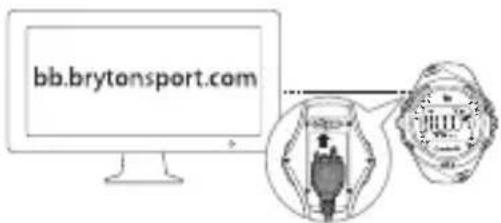
Keep Cardio 30 connected to the PC to charge the battery.
Note: For first time use, charge the battery for at least 2.5 hours.
Step 2. Turn On
Short press the OK button to turn on Cardio 30.
Note: To turn off, long press the OK button for 5 seconds.
Step 3. Initial Setup
For first time use, the setup wizard appears.
- Select your preferred language.
- Select the unit of measurement.
-
Enter your user profile (recommended).
Note: Data accuracy will highly affect your training analysis. -
Enter your max heart rate.
- Go outdoors to acquire GPS signal. Once the GPS signal is fixed, Cardio 30 automatically sets the date and time. To manually set the date and time, go to Time settings (see page 8).
- Press OK to complete setup.
Modes
Cardio 30 operates in two modes:
Clock Mode Exercise Mode
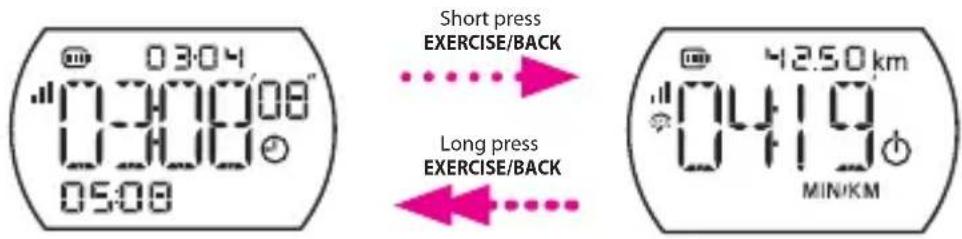
The typical wristwatch, with:
Date and time•
Alarm•
Stopwatch•
Provides training analysis:
Time• Heart Rate•
Distance• Calorie•
Pace• Lap•
Speed• Stride Rate•
Buttons
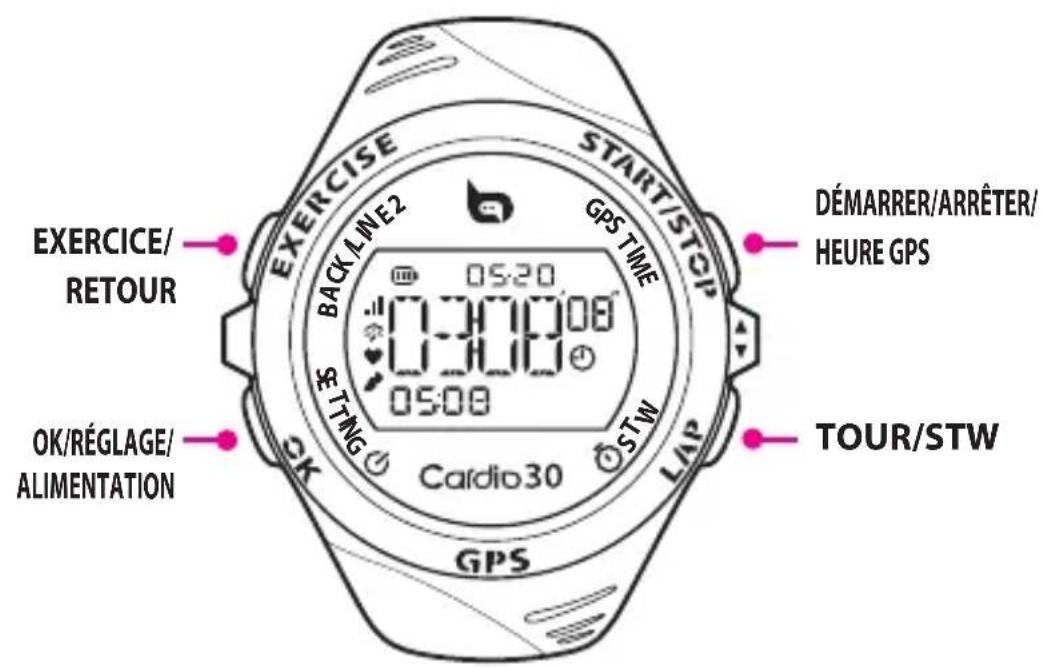
Cardio 30 has four buttons that are used for multiple functions.
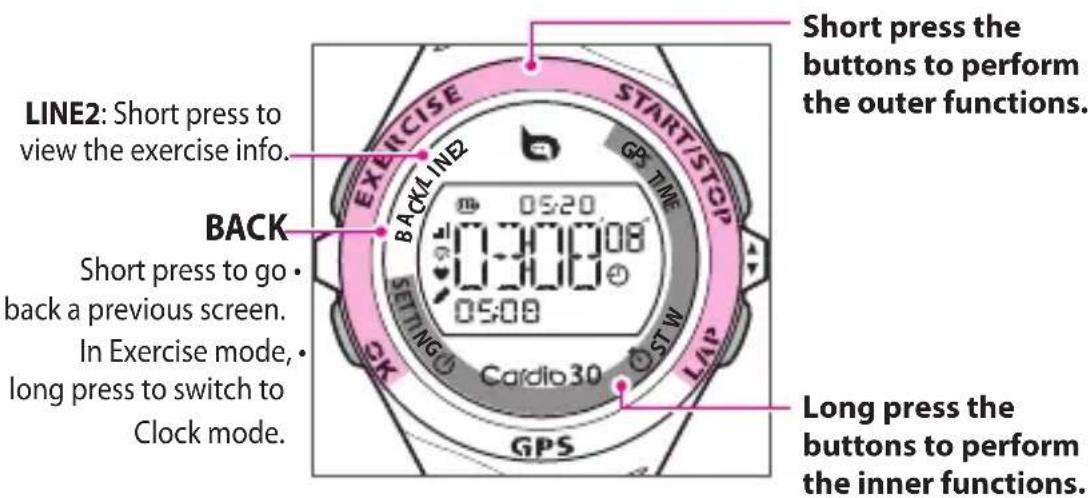
The table below provides a graphical indication on using the buttons which will be used in later sections.
| Buttons Short Press Buttons | Long Press | ||
| EXERCISE/BACK/LINE2 | ......> | BACK | ......> |
| OK/Backlight | ——> | SETTING/POWER | ——> |
| START/STOP GPS TIME | ......> | ......> | |
| LAP STW | ......> | ......> | |
Menu Structure
Long press OK/SETTING to access Settings.
Short press EXERCISE/BACK to go back the previous page.
Clock Mode Menu
(Accessible in Clock Mode only)
Exercise Mode Menu
(Accessible in Exercise Mode only)
| 1. Alarm |
| 2. Date |
| 3. Time |
| 4. Backlight |
| 5. Tone |
| 6. Language |
| 1. Training1.1 Easy1.1.1 Time1.1.2 Distance1.1.3 Calories1.2 Zone1.2.1 HR1.2.2 Pace1.2.3 Speed1.3 Lap1.4 Interval | 2. Link1.1 Foot pod1.2 HRM1.3 Speed1.4 Cadence1.5 Combo | 5. Type5.1 Run5.2 Bike5.3 Treadmill |
| 6. Stride | ||
| 7. Profile | ||
| 3. File | 8. Unit | |
| 4. GPS | 9. ClearStorage |
When navigating on the menu settings, similar screen may appear:
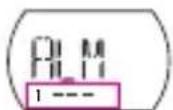
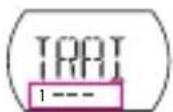
Clock Mode Exercise Mode
Each space represents a menu level ( 1st , 2nd , 3rd , 4th ).
The number indicates the sequence of the current option in the menu.
Z

Clock Mode
The Clock mode displays the date and time with alarm and stopwatch functions.

Display/Hide Time 2
Long press EXERCISE/BACK to display/hide Time2.
Auto Calibrate Time by GPS
Long press START/STOP to reset the date and time based on your GPS location.
Use Stopwatch
- Enter stopwatch mode, long press LAP/STW.
- To start timer, short press START/STOP.
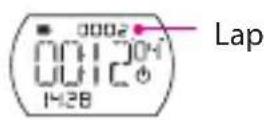
- To mark lap, short press LAP/STW.
- To stop timer, short press START/STOP.
View Stopwatch History
Use the Stopwatch setting to view the stopwatch history record.
![graph LR A["0508 0508"] --> B["0000 0000"] B --> C["FILE"] C --> D["0012 0012"] D --> E["(Press to browse stopwatch history)"] style A fill:#f9f,stroke:#333 style B fill:#ccf,stroke:#333 style C fill:#cfc,stroke:#333 style D fill:#fcc,stroke:#333 style E fill:#ffc,stroke:#333](/content/2026/06/1240075/images/b43c059bec06d559b762704e1f12e028c1bc3eb96ad33f21e162101bf9fdd3de.jpg)
Clock Mode Settings
Set Alarm
![graph LR A["ALARM OFF"] --> B["OFF"] B --> C["(If Off, skip this step)"] C --> D["(Alarm is set)"]](/content/2026/06/1240075/images/d776610783447ba63f0a1192b7339c13376141e5dacceaaa8c8836919350d16a.jpg)

Set Date and Time
Use the Date setting to set the date and time manually.
![graph LR A["0:30:08 0:30:08 05:08"] --> B["DATE"] B --> C["0:30:08"] C --> D["0:30:00"] D --> E["(Set hour, minute)(Set year, month, day)"]](/content/2026/06/1240075/images/d89fee988f6236b6b849f54d6da52d82acca118d37c72375cda7396584bd4291.jpg)

Set Time2
Use the Time setting to set and display a secondary time (Time2) or adjust the current time (Time1) manually.
![graph LR A["0.0008<br>0.0008<br>0.0008"] --> B["TIME"] B --> C["TIME1<br>TIME 2"] C --> D["OFF<br>ON<br>(Select On)"] D --> E["0.0008<br>0.0008<br>0.0008"]](/content/2026/06/1240075/images/a2663230522800ee2cc37bc9b599c7abc77f2caa809c73b39dedd4db28a9db07.jpg)
Set Time Format
Use the Format setting to select the time format.
![graph LR A["0:00:08 0:00:08 05:08"] --> B["TIME"] B --> C["FMT"] C --> D["12HR"] D --> E["0:30:08 0:30:08 05:08"] style A fill:#f9f,stroke:#333 style B fill:#ccf,stroke:#333 style C fill:#cfc,stroke:#333 style D fill:#fcc,stroke:#333 style E fill:#cff,stroke:#333](/content/2026/06/1240075/images/962347ec5102b81fb26f1a0b6dc2d014a13a22da1bcdb7cfb07d4c8a82c85c30.jpg)

Set Backlight
Use the Backlight setting to set the backlight.
![graph LR A["0.3008 0.3008 0.508"] --> B["LIGH"] B --> C["ON"] C --> D["AUTO 0.3008 0.3008 0.508"] style A fill:#f9f,stroke:#333 style D fill:#f9f,stroke:#333 note1["BACKLIGHT ON"] --> B note2["AUTO"] --> C](/content/2026/06/1240075/images/c3b17291b9846a33327fbe5944dc0eed73932c8d9fd9723f1b1a41c538dad7ca.jpg)
Set Tone
Use the Tone setting to enable or disable the key tone.
![graph LR A["0:00:08 0:00:08 0:00:08"] --> B["TONE"] B --> C["ON"] C --> D["0:30:08 0:30:08 0:30:08"] style A fill:#f9f,stroke:#333 style D fill:#f9f,stroke:#333](/content/2026/06/1240075/images/30a07947a407f1e1ab3f22ef814136ea85c6cf3105ef120bfc2d7969f1870ba9.jpg)
Change Language
Use the Language setting to select desired language.
![graph LR A["0.30008\n0.30008\n0.508"] --> B["LANG"] B --> C["EN"] C --> D["0.30008\n1.00008\n0.508"] style A fill:#f9f,stroke:#333 style D fill:#f9f,stroke:#333 note right of B: LANGUAGE ENGLISH (EN)](/content/2026/06/1240075/images/92e1d13a58da42d3b12a2e4d882819405d630170dbe3d51eac001c8c990c91e7.jpg)
FRENCH (FR)
GERMAN (DE)
ITALIAN (IT)
ESPAÑOL (ES)
DUTCH (DU)
Brazilian Portuguese (PTBR)

Exercise Mode
The Exercise mode allows you to measure and record your running activities and displays your current performance. Displayed information varies on user preference.
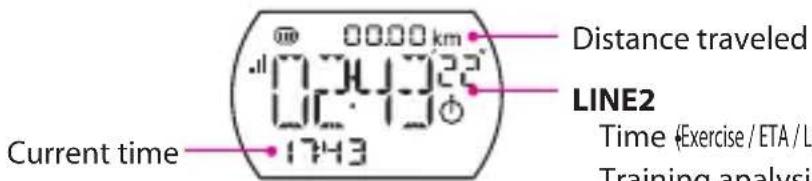
LINE2
Time (Exercise / ETA / Lap / Interval)
Training analysis (Pace / Heart Rate /
Calorie / Distance / Speed / Stride Rate)

Before you start
Link sensors (page 13), optional•
Start / Stop Running
Short press START/STOP to start or end an activity.
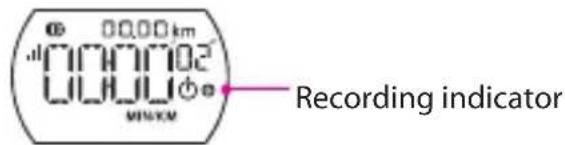
Note: Please go outdoors to acquire GPS signal when you see "Find GPS" on the screen.
12

Mark Lap

- Start an activity first by short pressing START/STOP.
- Short press LAP to mark lap.
View Exercise Info
View Time/Training Analysis Display
By default, time and training analysis are shown on LINE2. Press EXERCISE/BACK (LINE2) to change display.
![graph LR A["Exercise Time / Interval time"] --> B["Pace"] B --> C["Heart rate (only when linked with a Heart rate monitor)"] C --> D["Cadence (only when linked with a cadence sensor)"] D --> E["Calorie"] E --> F["Distance"] F --> G["SpeedStride Rate"] G --> H["Speed Stride Rate"] H --> I["Balance/Ti…](/content/2026/06/1240075/images/906c8effd204884ff188f0afc593a8ea7b38e60b2fd24baf113222edb68516e7.jpg)

Note: The type of data displayed depends on the current mode:
Total time is displayed when an activity is started.
Lap info appears only when training is set to Lap mode.
Interval time appears only when training is set to Interval mode.
ETA (Estimated Time of Arrival) appears only when training is set to distance.
Screen legends:•
| H = Heart Rate S = Speed = Distance | 3 |
| C = Cadence R = Stride Rate |
If the screen below appears, the device cannot detect the sensor. Adjust the • sensor and connect again.
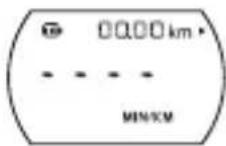

Set Training
Use the Training setting to select the type of training you want. Training can be based on easy, zone, lap, or interval.
Note: After setting the Training mode, short press START/STOP to record the results of your training.
By Time/Distance / Calories
Training can be set by time, distance, or calories burned.
![graph LR A["TRAI Training Time"] --> B["EASY"] B --> C["TIME"] C --> D["(Set value)"] D --> E["(Displayed info varies)"] E --> F["(Displayed screen varies depending on selected training)"] F --> A](/content/2026/06/1240075/images/67c54bffcd911c2bd984a10039e069cb61ff25e525d7e197e7b8f069ac32e196.jpg)
By Heart Rate / Pace / Speed
Training can be set by heart rate, pace, or speed.
![graph LR A["0.00012 TMS"] --> B["TRAI"] B --> C["ZONE"] C --> D["HR"] D --> E["(Set value)"] E --> F["(Displayed info varies)"] F --> G["(Displayed screen varies depending on selected training)"] style A fill:#f9f,stroke:#333 style B fill:#ccf,stroke:#333 style C fill:#cfc,stroke:#333 style D fill:#…](/content/2026/06/1240075/images/9a0443206862ef717a2973c3c94be84ee580032d622c3962f0dcca202eb7389e.jpg)

By Interval
Use the Interval setting to specify the interval between training, warm up, and cool down time. By default, warm up and cool down time are set to 10 minutes.
![graph TD A["100%"] --> B["TARI"] B --> C["INTE"] C --> D["WARM"] D --> E["YES"] E --> F["NO (Set Warm up)"] F --> G["OUR"] G --> H["DURATION"] H --> I["TIME"] I --> J["SET value"] J --> K["TARG"] K --> L["TARGET HR ZONE"] L --> M["NONE ZONE 1"] M --> N["NONE ZONE 7 (Select Target zone)"] N --> O["RE…](/content/2026/06/1240075/images/6a56b5c7a9033a7ce856b221e8443267a4706b460de00763330f9dbab96a2ce6.jpg)
By Lap Distance / Lap Location
Use Lap by Distance to specify the distance of each lap. After running a specified distance, Cardio 30 will automatically mark the lap.
![graph LR A["0.000m 17x3"] --> B["TRAI"] B --> C["LAP"] C --> D["DIST"] D --> E["0.030"] E --> F["(Set value)TRAINING LAP DISTANCE"] F --> G["0.030"] G --> H["End"]](/content/2026/06/1240075/images/0055f1c4bcc3fa67d8d27d7d2cde679cb1c7fcc5015b69f8a8f64f8c0b22e5e4.jpg)
Use Lap by Location setting to set your current location as the lap point. Upon reaching the lap point, Cardio 30 will automatically mark the lap.
![graph LR A["1743"] --> B["TRAI"] B --> C["LAP"] C --> D["LOCA"] D --> E["1743"]](/content/2026/06/1240075/images/df738d9eed878b600fa49752a0a319949726a0d7b2ed8b6507e0dac680fb842a.jpg)

Link Sensors
Use the Link setting to pair sensors and other optional accessories to Cardio 30.
![graph LR A["400000Hz UCL12o TH3"] --> B["LINK"] B --> C["FOOT"] C --> D["OFF"] D --> E["(Displayed icon varies depending on selected sensor)"] style A fill:#f9f,stroke:#333 style B fill:#ccf,stroke:#333 style C fill:#cfc,stroke:#333 style D fill:#fcc,stroke:#333 style E fill:#cff,stroke:#333](/content/2026/06/1240075/images/a0e651f48f71d5d5a845cf6276cb1985610de15a4cf95778fab6a4af85162e65.jpg)
Note: Choose SCAN if it is the first time to pair with the sensor. Choose ON if the sensor has been paired before.
View Training Record
Use File to view your training history.
![graph LR A["001"] --> B["002"] B --> C["003"] C --> D["Change displayed info"]](/content/2026/06/1240075/images/45def12982c5ec1bc738baf8300c3310918db9ee6414dfbabe6090ed2d2e6dee.jpg)
Turn GPS On/Off
Use the GPS setting to turn GPS on or off.
![graph LR A["Digital Display"] --> B["GPS"] B --> C["ON"] C --> D["OFF"] style A fill:#f9f,stroke:#333 style B fill:#ccf,stroke:#333 style C fill:#cfc,stroke:#333 style D fill:#fcc,stroke:#333](/content/2026/06/1240075/images/f2ecc2e2f16b1b57c16d717dd6b40b3bf74d27b5fbf43a85cbfe21172b2a0e17.jpg)
Set Training Type
Use the Type setting to select the training type: RUN, BIKE or TREADMILL.
![graph LR A["Timer"] --> B["TYPE"] B --> C["RUN"] C --> D["Treadmill"] style A fill:#f9f,stroke:#333 style B fill:#ccf,stroke:#333 style C fill:#cfc,stroke:#333 style D fill:#fcc,stroke:#333](/content/2026/06/1240075/images/f816f0027f060a4ec6e1278ea93890afe55a75085551aa3f6f3794415e8a3658.jpg)
Stride Length
You can calibrate stride length by fixed 800m or input your own stride length manually.
![graph LR A["0.000μm<br>0.000μs<br>1.0Hz"] --> B["STRI"] C["0.000μm<br>0.000μs<br>1.0Hz"] --> D["CALI"] B --> E["STRIDE LENGTH CALIBRATE (Fixed at 800m)<br>SET (manual input)"] D --> F["0.000μm<br>0.000μs<br>1.0Hz"]](/content/2026/06/1240075/images/e1dfbac8c8d4b0600e51d8b2b985837e97715eb8dfbc5f8c39969d6c2d67bb33.jpg)

Note: Availability of the Stride Length setting depends on the selected training type: Stride length is not available in BIKE training.
In RUN training, CALIBRATE is not available because the built-in sensor calibrates • your stride length automatically or you can manually input it by SET.
Set Profile
Use Profile to enter or update your profile.
Note: All information must be entered accurately. Missing or inaccurate data may cause inconsistencies of training results.
![graph TD A["Profile Height"] --> B["PROF"] B --> C["HEIG"] C --> D["(Enter value)"] D --> E["SEX"] E --> F["MALE FEMALE"] F --> G["(Enter value)"] G --> H["MAXIMUM HEART RATE"] H --> I["MAX"] style A fill:#f9f,stroke:#333 style B fill:#ccf,stroke:#333 style C fill:#cfc,stroke:#333 style D fill:#fcc,…](/content/2026/06/1240075/images/59fb5b671b5d3923882a4e24d3023af9014a24619a0c2474001250b9fba9cf2e.jpg)
Set Unit
Use the Unit setting to set the default unit of measurement.
![graph LR A["1000nm"] --> B["UNIT"] B --> C["METR"] C --> D["1000nm"]](/content/2026/06/1240075/images/d25d5f0d24c39ead7d19438211ff40cf2fb6fb70c1d37d5373d0d6f51cb26eaf.jpg)
Clear Storage
Use Clear Storage to delete all training and lap records in Cardio 30.
Note: Make sure you have backed up all your data through the Bryton Bridge application before using this function.
![graph LR A["0.020μs"] --> B["Clear Storage"] B --> C["0.020μs"]](/content/2026/06/1240075/images/0301d77e8d7acbcfebb352911af47ae16421ef17b0deeafb455247eda5d78570.jpg)
Icons
| Icon Item Solid icon | Flashing icon | ||
 | Battery icon | Battery level Battery charging | |
 | - Battery low | ||
 | GPS icon GPS | signal level Searching GPS signal | |
 | Memory icon | Memory full, must clear storage | - |
 | Record icon - | Recording in progress | |
 | Heart rate icon | Linked with heart rate monitor | Pairing with heart rate monitor in progress |
  | Foot pod or cadence icon | Linked with food pod or cadence sensor | Pairing with foot pod or cadence sensor in progress |
 | Speed sensor icon | Linked with speed sensor | Pairing with speed sensor in progress |
 | Alarm icon Alarm is set - | ||
 | Stopwatch icon | Stopwatch is set - | |
 | Clock icon Clock mode is set - | ||
Specifications
Cardio 30
| Item Description | |
| Display 23.18 x 14 mm | Positive FSTN Segemet LCD |
| Physical size 4.2 x 6.9 x 1.25 cm | |
| Weight 47 g | |
| Operating temperature | -10°C ~ 50°C |
| Battery charge temperature | 0°C ~ 40°C |
| Battery life Up to 35 days in clock modeUp to 8.5 hours in training mode with GPS on | |
| GPS Integrated high-sensitivity Sirf IV receiver with embedded patch antenna | |
| RF transceiver 2.4 GHz ANT+ transceiver with embedded antenna | |
| Storage Embedded 512 MB serial flash | |
| G-Sensor 3-axis acceleration sensor | |
Screen Terminologies
| Terminology Screen Display | |
| Alarm ALM | |
| Stopwatch STW | |
| Time format FMT | |
| Language LANG | |
| Daily DAY | |
| Weekday WDAY | |
| Time1 TM1 | |
| Time2 TM2 | |
| Clear storage CLS | |
| Combo sensor DUAL | |
| Speed SPD | |
| Calorie CAL | |
| Exercise EXE | |
| HR Zone 1 HRZ1 | |


Cardio 30
Guide d'utilisation
FR
bb.brytonsport.com
FR
Table des matières
Introduction 3
Prise en main 4
Modes ....5
Boutons 6
Structure du menu 7
Mode Horloge......8
Par Heure/Distance/Calories
Data
Orologio/ Spia allarme
Ora 2
Orario secondario
Distanza percorsa
LINEA2
Distancia recorrida
LÍNEA2
Training instellen ....14
Link sensoren....18
Trainingrecord bekijken......18
* HRM of SPD/CAD-senor vereist
Aan de slag
NL
Oefenmodus
Afgelegde afstand
REGEL2
Trainingtype instellen
Premir brevemente
EXERCÍCIO/VOLTAR
Manter premido
EXERCÍCIO/VOLTAR

O relógio de pulso típico, com:
Data e hora•
Alarme•
Cronómetro•
Oferece análise de treino:
Hora•
Distância•
Ritmo•
Velocidade•
Frequência •
cardíaca
Caloria•
Lap•
Accessories (Optional)
Heart Rate Monitor Moniteur de fréq. card. Herzfrequenzmesser Cardiofrequenzimetro Monitor de ritmo cardíaco Hartslagmonitor Sensor de frequência Cardiaca
1

2

3
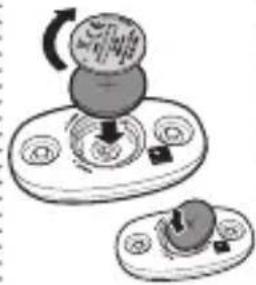
4

:5
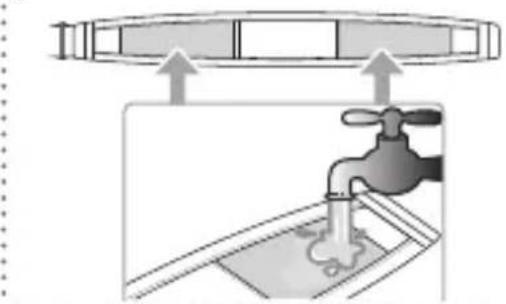
6
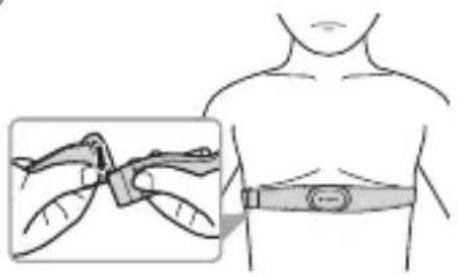
Speed/Cadence Sensor •Capteur de vitesse/Capteur de cadence • Geschwindigkeitssensors/Kadenzsensor • Sensore di velocità/Sensore di cadenza • Sensor de velocidad/Sensor de cadencia • Snelheidssensor/Ritmesensor • Sensor de Velocidade/Cadência
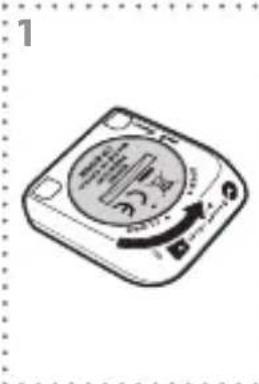

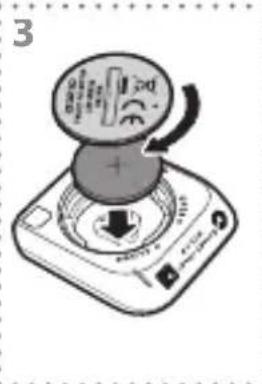
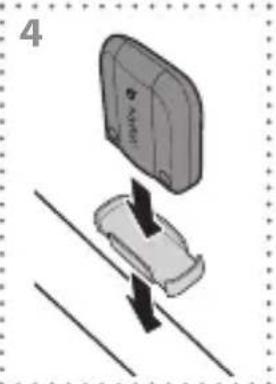

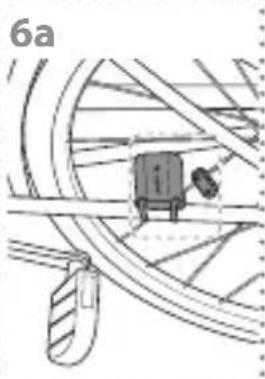
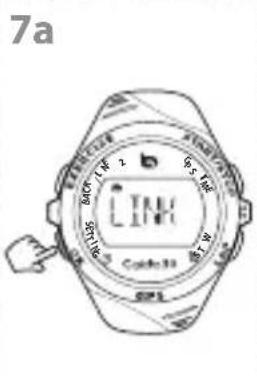


Bike Mount • Mountainbike • Vélo tout terrain • Bicicleta de montaña • Mountain Bike • Mountainbike • Bicicleta de montanha
1
2

3

3

| EN Specification Heart Rate Monitor Speed/Cadence Sensor | ||
| Physical size 66 x 37 x 11 mm | 37.5 x 35 x 12 mm | |
| Weight 44 g 25 g | ||
| Water resistance 10 ATM 1 ATM | ||
| Transmission rate 3 m 3 m | ||
| Battery life 1 hour per day for | 16 months (480 hours) 1 hour per day for 22 months (660 hours) | |
| Operating temperature 5°C ~ | 40°C 5°C ~ 40°C | |
| Radio frequency/protocol 2.4GHz / Dynastream ANT + Sport wireless communications protocol | 2.4GHz / Dynastream ANT + Sport wireless communications protocol | |
Note: Accuracy may be degraded by poor sensor contact, electrical interference, and receiver distance from transmitter.


- INTRODUCTION
- PACKAGE CONTENTS
- GETTING STARTED
- STEP 1. CONNECT, SYNC, AND CHARGE
- STEP 2. TURN ON
- STEP 3. INITIAL SETUP
- MODES
- BUTTONS
- MENU STRUCTURE
- CLOCK MODE MENU
- EXERCISE MODE MENU
- CLOCK MODE
- DISPLAY/HIDE TIME 2
- AUTO CALIBRATE TIME BY GPS
- USE STOPWATCH
- VIEW STOPWATCH HISTORY
- CLOCK MODE SETTINGS
- SET DATE AND TIME
- SET TIME2
- SET TIME FORMAT
- SET BACKLIGHT
- SET TONE
- CHANGE LANGUAGE
- EXERCISE MODE
- LINE2
- BEFORE YOU START
- START / STOP RUNNING
- MARK LAP
- VIEW EXERCISE INFO
- VIEW TIME/TRAINING ANALYSIS DISPLAY
- SET TRAINING
- BY TIME/DISTANCE / CALORIES
- BY HEART RATE / PACE / SPEED
- BY INTERVAL
- BY LAP DISTANCE / LAP LOCATION
- LINK SENSORS
- VIEW TRAINING RECORD
- TURN GPS ON/OFF
- SET TRAINING TYPE
- STRIDE LENGTH
- SET PROFILE
- SET UNIT
- CLEAR STORAGE
- SPECIFICATIONS
- SCREEN TERMINOLOGIES
- CARDIO 30
- GUIDE D'UTILISATION
- FR
- TABLE DES MATIÈRES
- PAR HEURE/DISTANCE/CALORIES
- LINEA2
- LÍNEA2
- AAN DE SLAG
- OEFENMODUS
- REGEL2
- TRAININGTYPE INSTELLEN
- ACCESSORIES (OPTIONAL)
Brand : Bryton
Model : Cardio 30
Category : Sports Watch