
DOP1170GX - Four encastrable DE DIETRICH - Notice d'utilisation et mode d'emploi gratuit
Retrouvez gratuitement la notice de l'appareil DOP1170GX DE DIETRICH au format PDF.


| Type de produit | Four encastrable |
| Marque | DE DIETRICH |
| Modèle | DOP1170GX |
| Dimensions (H x L x P) | Environ 59,5 x 59,5 x 56,8 cm |
| Poids | Environ 35 kg |
| Alimentation électrique | 230 V ~ 50 Hz |
| Puissance totale | Environ 3,3 kW |
| Capacité utile | Environ 70 L |
| Type de cuisson | Chaleur tournante, chaleur combinée, traditionnel éco, gril turbo, gril haut, gril moyen, maintien au chaud, pain, décongélation |
| Fonctions intelligentes | Expert, Recette, ICS (système de cuisson intelligent), Basse température |
| Minuteur | Oui, programmable jusqu'à 99:59:59 |
| Nettoyage | Pyrolyse avec modes Pyromax (2h) et Pyrocontrol (automatique) |
| Verrouillage commandes (sécurité enfant) | Oui, par bouton dédié |
| Éclairage intérieur | Lampe halogène |
| Nombre de niveaux de grille | 5 |
| Option Gril+ | Oui, pour dorer en fin de cuisson |
| Mode démonstration | Oui (Demo Mode, sans chauffe) |
| Affichage numérique | Écran avec rétroéclairage réglable |
| Langues disponibles | Français, anglais, allemand, néerlandais, danois, espagnol, portugais |
| Indice de réparabilité | Non communiqué |
| Pièces détachées | Disponibles via service après-vente |
| Consommation énergétique | Affichage des consommations (heures pleines/creuses) |
FOIRE AUX QUESTIONS - DOP1170GX DE DIETRICH
Questions des utilisateurs sur DOP1170GX DE DIETRICH
0 question sur cet appareil. Repondez a celles que vous connaissez ou posez la votre.
Poser une nouvelle question sur cet appareil
Téléchargez la notice de votre Four encastrable au format PDF gratuitement ! Retrouvez votre notice DOP1170GX - DE DIETRICH et reprennez votre appareil électronique en main. Sur cette page sont publiés tous les documents nécessaires à l'utilisation de votre appareil DOP1170GX de la marque DE DIETRICH.
MODE D'EMPLOI DOP1170GX DE DIETRICH
Four
Oven
Horno
Forno
Backofen
De Dietrich

Dear valued customer,
To discover a De Dietrich product is to experience the range of unique emotions which only high-value items can produce.
The attraction is immediate, from the moment you set eyes on the product. The sheer quality of the design shines through thanks to the timeless style and outstanding finishes which make each appliance an elegant and refined little masterpiece in its own right, each in perfect harmony with the others.
Next, comes the irresistible urge to touch it. De Dietrich's design makes extensive use of robust and prestigious materials. The accent is placed firmly upon authenticity.
By combining state-of-the-art technology with top quality materials, De Dietrich produces beautifully crafted products to help you get the most from the culinary arts, a passion shared by all lovers of cooking and fine food.
We hope that you enjoy using this new appliance and we would love to receive your suggestions and to answer any questions you may have. Please feel free to contact our customer service department via our website.
To benefit from the many advantages offered by the brand, we recommend that you register your product at: www.de-dietrich.com.
Thank you for choosing a DeDietrich product.
De Dietrich
You can find a full range of information about the brand at www.de-dietrich.com
Visit the De Dietrich Gallery, 6 rue de la Pétinière (Paris eighth district)
Open from Tuesday to Saturday from 10 am to 7 pm
Customer service department: 0892 02 88 04
1/ DESCRIPTION OF YOUR APPLIANCE
• Introduction to your oven 4
• Introduction to the controls 5
2 / USING YOUR APPLIANCE
- Cooking 6
- Settings when switching on for the first time 7
o Resetting the time. 7
- Putting into standby mode 8
The "EXPERT" function 8
o Temperature 9
^ Cooking time and end of cooking time 9
^ Grill+ option 10
^ Starting a cooking programme 11
- The "RECIPE" function 12
^ Advice and tips 13
The "I.C.S." function 18
- “LOW TEMPERATURE function” 26
The "SETTINGS" function 27
^ Time 27
Sound 27
Display 27
Consumption 28
Language 28
- Services 29
Demo mode 29
The "TIMER" function 30
The "CLEANING" function 31
- Locking the controls (child safety) 32
3/ AFTER-SALES SERVICE
- Repairs 34
- Customer relations 34
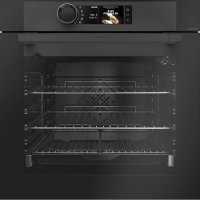
INTRODUCTION TO YOUR OVEN
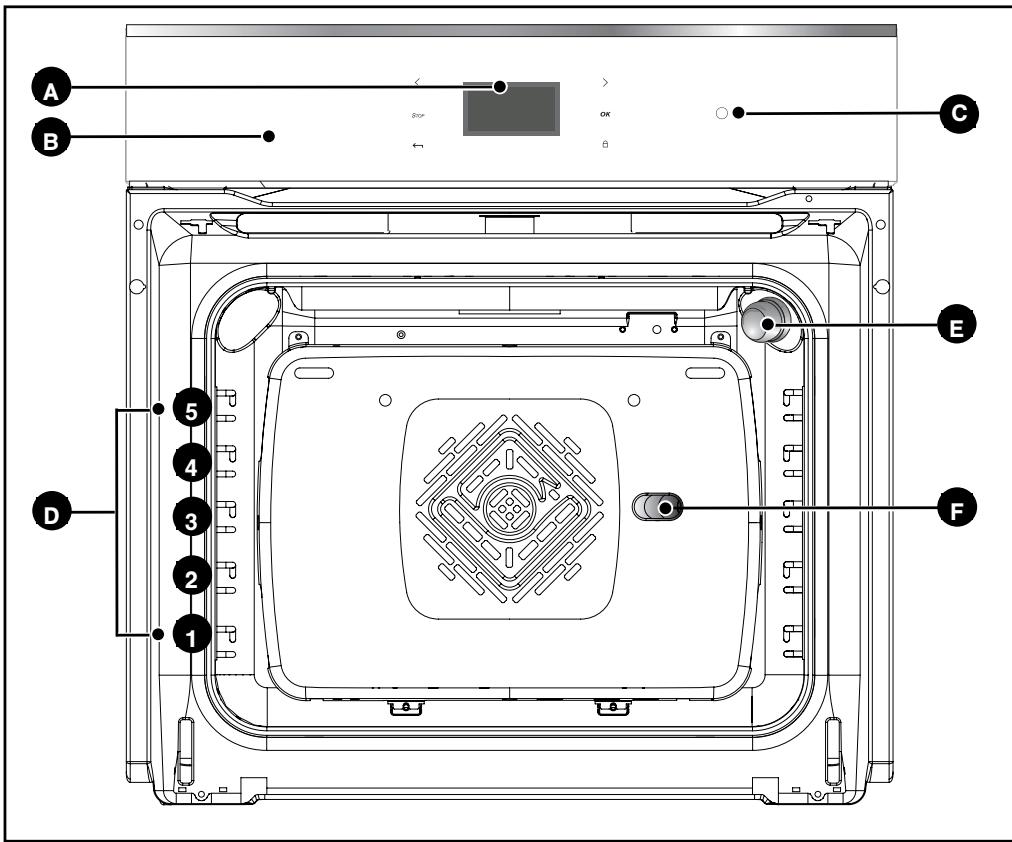
A Programmer
B Control buttons
Wake up
Wire shelf supports
Lamp
F Hole for rotisserie
INTRODUCTION TO THE CONTROLS
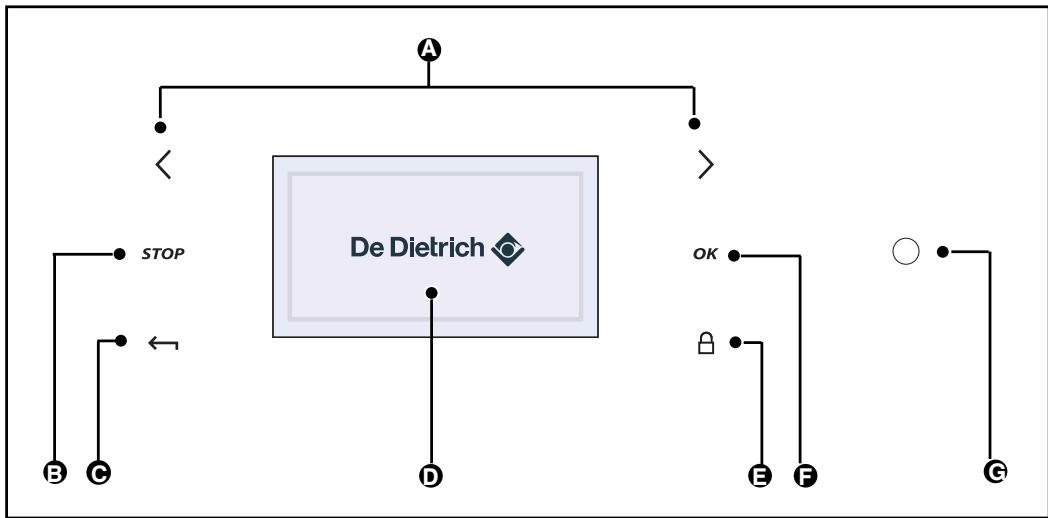
A Selector buttons
B Switch off the oven or cooking programme
Back to the previous level
D Information display
E Keypad locking
F Confirm button
"Wake up" button (come out of standby)
First use: before using your oven for the first time, heat it up while empty with the door closed for approximately 15 minutes on the maximum setting, in order to "cure" the appliance. The rock wool that surrounds the oven cavity may initially release a particular odour caused by its composition. Similarly, you may notice a little smoke. All of this is normal.
List of symbols:

Programming in progress

Door locked

Keypad locked

Cleaning recommended
De Dietrich

COOKING
This oven gives you to access four different types of programming, depending on your knowledge of the recipe in question:
- For a recipe where you know all the settings (you choose the type of cooking, temperature and cooking time yourself): select the "EXPERT" function.
- For a recipe where you need assistance from the oven (simply choose the type of food from a list and the weight; the oven will select the most suitable settings: temperature, cooking time, type of cooking), select the "RECIPCE" function.
- For a recipe managed automatically by the oven: you select from a list of the 12 most popular dishes, the one which you would like to cook(temperature, cooking time and cooking programme are defined by the oven), select the "ICS" function (Intelligent Cooking System).
- For a recipe to a specific programme managed electronically by the oven, to give you an incomparably tender result for meat and exceptional flavour, select the "LOW TEMPERATURE" function.
- SETTINGS WHEN SWITCHING ON FOR THE FIRST TIME
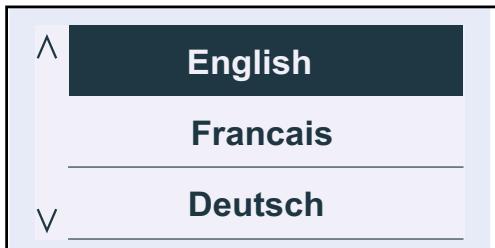
Language
The oven automatically displays the following screen.
It allows you to select your language by pressing the < and > buttons.
Confirm by pressing OK.
Time
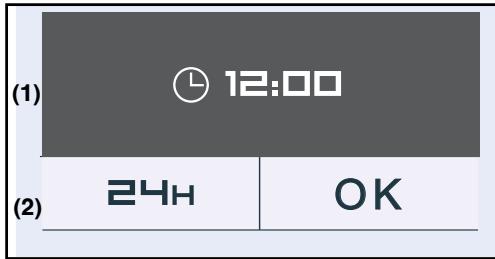
A second screen then appears, to allow you to set the time.
Set the time using the < and > buttons and then press OK.
The hours flash, you can adjust them with the < and > buttons and confirm by pressing OK.
Do the same for the minutes (1).
You can choose a 12-hour (am/pm) or 24-hour display (2).
Select using the < and > buttons and then confirm by pressing OK.
- Resetting the time
- Press the OK button.
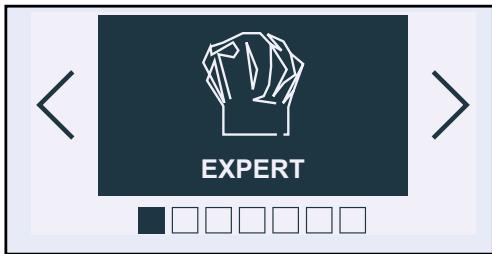
The oven displays the following screen by default ("Expert" function).
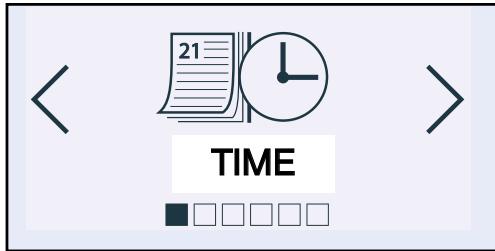
- Press the < and > buttons until the "Settings" screen appears, confirm with OK. The "time" screen is displayed; press OK again to access the time data screen and then proceed as for switching on for the first time.

Digital display
PUTTING INTO STANDBY MODE
After 4 minutes with no action by the user, the display switches off to save energy (except for a delayed start) and the button starts flashing. The screen is then in standby mode.
To activate the oven and restore the display to full brightness, press the "wake up" button.
The screen shows the time again.
- THE "EXPERT" FUNCTION
The "Expert" function
The Expert function allows you to set the cooking parameters yourself: temperature, type of cooking, cooking time
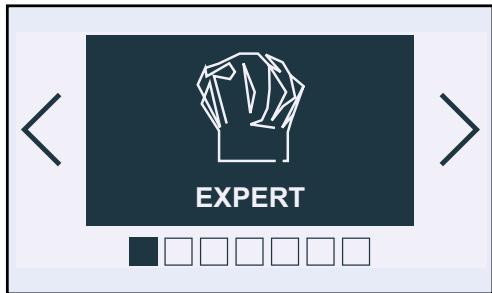
- Press the OK button. You move to the "Expert" screen.
-
Press OK again to choose the type of cooking from the following list by pressing the < and > buttons (to make a selection, refer to the cooking guide on the next page):
-
Circulating heat
- Combined heat
Traditional Eco - Turbo grill (+ Rotisserie)
High grill (+ Rotisserie)
Medium grill (+ Rotisserie) - Keep warm
Bread - Defrost
Confirm your selection by pressing OK.
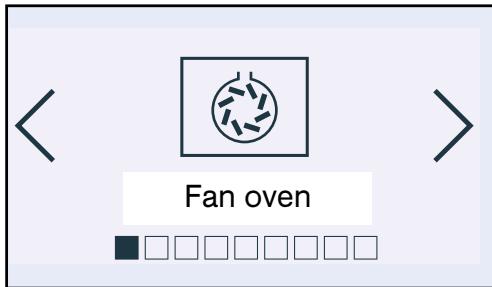
Example

Warning
90 seconds after closing the door or start a cooking lamp turns off the oven cavity.
A simple press a button lights the lamp (Except STOP)
THE "EXPERT" COOKING MODES
FAN
(recommended temperature 190^ min 35^ max 250^ )
- Cooking controlled by the heating element located at the back of the oven by the fan.
- Rapid temperature increase: Some dishes can be placed in the oven while it is still cold.
- Recommended for keeping white meat, fish and vegetables moist. For cooking multiple items on up to 3 levels.

COMBINED HEAT
(recommended temperature 180^ min 35^ max 230^ )
- Cooking controlled by the upper and lower heating elements and by the fans.
- Three combined sources of heat: a lot of heat from the bottom, a little circulating heat and a bit from the grill.
- Recommended for quiches, pies, wet fruit tarts, placed preferable on an earthenware dish.

ECO HEAT
(recommended temperature 200^ min 35^ max 275^ )
- Cooking is controlled by the upper and lower heating elements.
- This position allows for energy savings while preserving the quality of the cooking.
- The ECO position is used for energy label performance.
- All types of cooking are done without preheating.

TURBO GRILL + SPIT
(recommended temperature 190^ min 100^ max 250^ )
- Cooking controlled, alternately, by the upper element and by the fan.
- Preheating is unnecessary. Roasts and poultry are juicy and crispy all over.
- The spit keeps turning until the door is opened.
- Slide the drip tray onto the bottom shelf support.
- Recommended for all poultry and roasts on the spit, for cooking leg joints thoroughly, and cuts of beef. To keep fish steaks moist.
THE "EXPERT" COOKING MODES

HIGH GRILL + SPIT
(recommended positions 4 - min 1 - max 4)
- Cooking is done by the upper element without the fan.
- Preheat the oven for 5 minutes.
- Recommended for browning vegetable dishes, pasta, fruit, etc, placed under the grill.

MEDIUM GRILL + SPIT
(recommended positions 2-min1-max4)
- Cooking is done by the upper element.
- Preheating is unnecessary. Roasts and poultry are juicy and crispy all over.
- The spit keeps turning until the door is opened.
- Slide the drip tray onto the bottom shelf support.
- Recommended for all roasts on the spit, for sealing and thoroughly cooking leg, cuts of beef. To keep fish steaks moist.

KEEP WARM
(recommended temperature 60^ min 30^ max 100^ )
- This position allows you to keep your dishes hot by occasional heating from the bottom of the oven along with the fan.
- Recommended for letting dough rise for bread, brioche, kugelhopf... without exceeding 40^ (plate warming, defrosting).

BREAD
(recommended temperature 205^ min 35^ max 275^ )
- Cooking sequence recommended for baking bread.
- After preheating, place the ball of dough on the pasty dish - 2nd shelf.
- Do not forget to place a ramekin of water on the bottom to get a crispy, shiny crust.

DEFROSTING
(recommended temperature 30^ min 30^ max 50^ )
-
Dishes are defrosted by a limited amount of heat and the fan.
-
Ideal for delicate dishes (fruit tart, custard pie, etc).
- Meat, buns, etc, are defrosted at 50^ (meat should be placed under the grill with a dish underneath to catch drips from the defrosting which are not edible).
THE "EXPERT" FUNCTION
The oven asks you to enter the other cooking parameters.
- Temperature
Based on the type of cooking you have already selected, the oven will recommend the ideal cooking temperature. This temperature can be adjusted as follows:
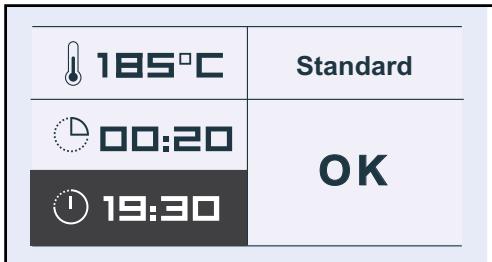
Select the "Temperature" box by pressing < or > . Confirm with the OK button and the "Temperature" symbol flashes: choose the desired temperature by pressing < or > and then confirm.
In the grill position (medium or high), select the "grill power" symbol and use the < and > buttons to set the power to the desired level (between 1 and 4) and then confirm.
Cooking time and end of cooking time.
You may enter the cooking time for your dish by selecting the symbol.
Press < or > and then
confirm so that the symbol flashes. Enter the cooking time by pressing < and > and then confirm. When you set the cooking time, the end of cooking time (symbol (-) ) automatically moves forward.
You can change the end of cooking time, if you want to delay the programme start.
In that case, select the field and proceed as described for setting the cooking time.
Once you have selected the cooking end time, confirm.
Your oven will display the time and the end of cooking time symbol until cooking starts.
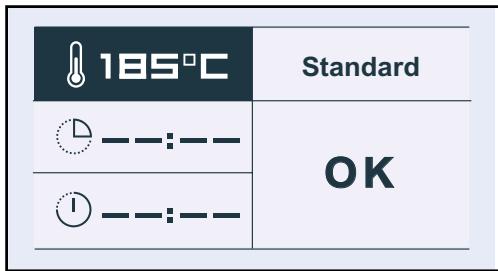
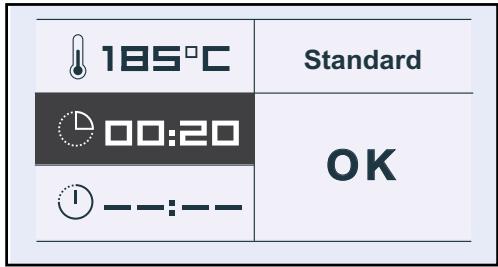

NB: You can opt not to select a cooking time. In this case, leave the cooking time and end of cooking time blank and go directly to "OK". Confirm to start cooking. To switch the oven off, press the "STOP" button twice, when you feel the dish has been cooked sufficiently.
THE "EXPERT" FUNCTION
- The "Grill+" option
Select the "Standard" symbol and then confirm by pressing OK. "Standard" starts to flash. You can access the "Grill+" function by pressing the < and > buttons and confirming. This function lets you finish your cooking programme by browning the dish for the last five minutes of the cooking time.
This function is represented by a flashing grill on the screen when it is activated five minutes before the end of cooking.
Note: "Grill +" can be used with the "Expert" and "Recipe" cooking modes, with the exception of some functions, such as: grill (high grill, variable grill), keep warm and traditional Eco.

THE "EXPERT" FUNCTION
Starting a cooking programme
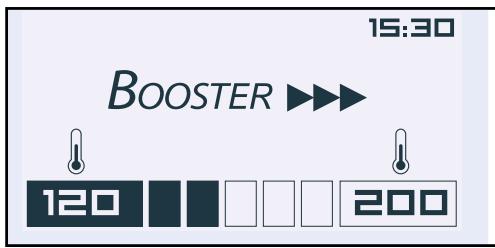
When cooking begins, the following screen is displayed, telling you that the oven is in rapid heating mode (Booster), depending on the type of cooking. You can monitor the progress of the temperature rise in the oven by looking at the shading in the arrow. The current oven temperature is indicated on the left and the recommended temperature is displayed on the right.
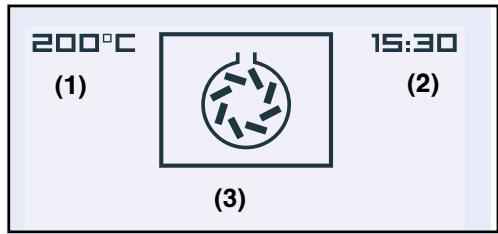
Once this temperature has been reached, the oven goes into cooking mode and the following screen is displayed:
Cooking with no specified duration
(1) the temperature inside the oven
(2) the time
(3) the type of cooking chosen (animation).
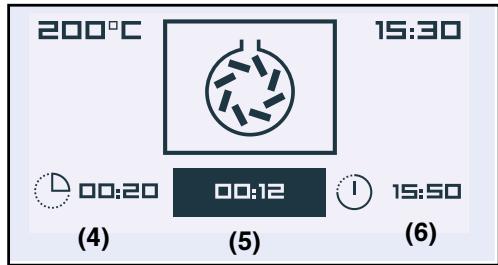
Cooking for a set time
(1) the temperature
(2) the time
(3) the type of cooking chosen (animation).
(4) the cooking time
(5) the remaining cooking time (flashing)
(6) the end of cooking time
AT THE END OF COOKING:
Cooking with no specified duration
Turn off the oven when cooking is complete by pressing the STOP button.
Confirm the end of cooking by pressing OK.
Cooking for a set time
The oven turns off automatically and beeps for 2 minutes.
Press OK to stop the beeps.
An animation wishes you "Bon Appétit!"
THE "RECIPE" FUNCTION
The "Recipe" function selects the appropriate cooking parameters for you based on the food being prepared and its weight.
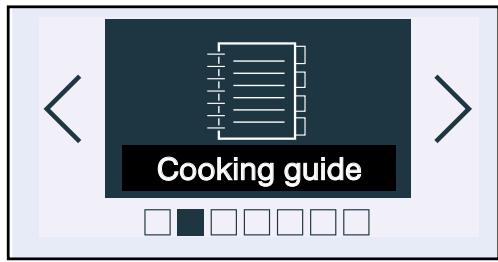
- Press the < and > buttons. Select "Recipes". Confirm.
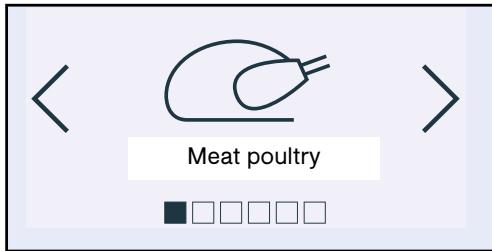
- The oven then suggests various food categories.
Press the < and > buttons to choose from the families offered:
White meat
Red meat
Fish
Vegetables
Cakes
Tarts and quiches
When you have made your choice, press OK to confirm.
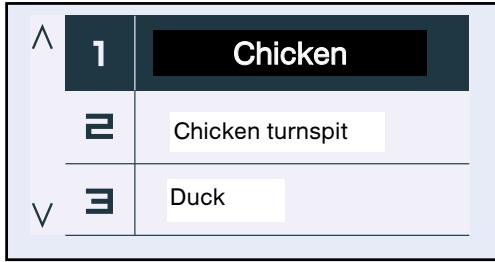
- Then choose the specific dish you are cooking and confirm.
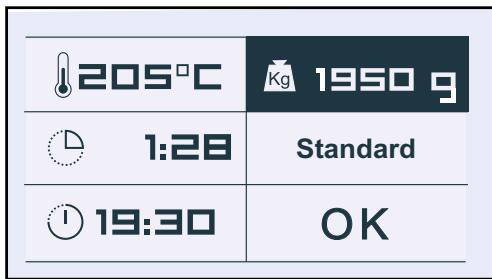
- Once you have selected the food, the oven will ask you to enter its weight (symbol kg) or the material your cookware is made of (aluminium, porcelain, etc) in some cases such as cakes, quiches, tarts and vegetables or the size of the food (brioche).
Enter the weight (or cookware type) and the oven will automatically calculate and display the ideal cooking time. If you wish, you can change the end of cooking time by selecting the symbol “ ” and displaying the new end of cooking time.
Once you have confirmed by pressing "OK", the oven recommends the height of the shelf on which you should place the dish.
THE "RECIPE" FUNCTION
- Place your dish in the oven on the recommended shelf level (from 1 at the bottom to 5 at the top).
- Confirm by pressing OK; the oven switches on.
- The oven beeps and switches off when the cooking time has finished and and animation wishes you "Bon appetit!".
Additional details for cooking according to: "Recipes"
All cooking is done WITHOUT preheating the oven.
COOKING PROGRAMME: RED MEAT
-Lamb-saddle
-Lamb-leg
- Roast beef - medium
- Roast beef - rare
Cooking is done automatically with the TURBO-GRILL element.
You should place the meat on the shelf using the shelf + drip tray assembly (without a dish). You can turn the meat half-way through cooking.
COOKING PROGRAMME: CAKES/TARTS
Choosing the type of baking tin:
Aluminium: coloured non-stick tins and flexible silicone moulds are very suitable for moist batters (quiches or fruit tarts).
COOKING PROGRAMME: TERRINES
Place the terrine in a bain-marie (a larger dish, half-full of boiling water).
Insert the dish nivel 1

OK
BON APPETIT!
| FAMILIES | RECIPES |
| white meat: | chicken (dish) |
| chicken (spit) | |
| duck | |
| turkey leg | |
| rabbit | |
| goose | |
| guinea fowl | |
| pork loin | |
| pork fillet | |
| terrine | |
| veal roast | |
| RED MEAT: | shoulder of lamb |
| leg of lamb | |
| saddle of lamb | |
| beef medium done | |
| beef rare | |
| pheasant | |
| harebrochet | |
| FISH: | pike |
| bream | |
| whiting | |
| salmon | |
| trout | |
| fish terrine | |
| roast fish | |
| VEGETABLES: | endives |
| vegetable flans | |
| potato gratin | |
| lasagna | |
| stuffed peppers | |
| stuffed tomatoes | |
| CAKES: | bun |
| cake | |
| puff pastry | |
| chocolate cake | |
| yoghurt cake | |
| genoese | |
| kugelhopf | |
| meringues | |
| pound cake | |
| biscuits/cookies | |
| TARTS/QUICHES: | quiche |
| short crust | |
| flaky crust | |
| cheese tart | |
| rising crust | |
| fruit tart | |
| meat pie | |
| souffle | |
| bread |
- Beef, pork, lamb
- You must take all meat out of the refrigerator well before cooking it: cold-hot temperature shocks toughen meat; this way you will produce roast beef that is browned outside, red inside and warm in the middle.
Do not salt before cooking: salt absorbs the blood and dries out the meat. Use spatulas to turn the meat: if you pierce the meat, the blood runs. Always let meat rest after cooking for 5 to 10 minutes: wrap it in a sheet of aluminium foil and place in a warm oven: this allows the blood drawn towards the outside during cooking to return to the middle and moisten the roast.
- Use earthenware roasting dishes: glass encourages grease splashes.
- Do not cook in the enamelled drip tray.
- Avoid sticking garlic cloves into a leg of lamb, this will cause it to lose its blood; rather slip the garlic between the meat and the bone or cook unpeeled cloves alongside the lamb and crush them when cooking is complete to season the sauce; strain it and serve it very hot in a gravy boat.
Fish
- When you buy it, it should smell pleasant and not too "fishing".
- The body should be firm and rigid and the scales should be firmly stuck to the skin; the eyes should be bright and rounded and the gills look shiny and moist.
Tarts, quiches
- Avoid glass and porcelain dishes: because they are too thick, they extend the cooking time and the bottom of the crust is not crispy.
- With fruit, the bottom of the tart risks becoming soggy: just add a few spoonfuls of fine semolina, crushed biscuit crumbs, almond powder or tapioca, which will absorb the juice during cooking.
- With high-water content or frozen vegetables (leeks, spinach, broccoli or tomatoes) you can sprinkle in a tablespoon of corn flour.
Pizza
- To prevent cheese or tomato sauce from dripping in the oven, you can place a piece of parchment paper between the shelf and the pizza.
THE "I.C.S." FUNCTION
The ICS (Intelligent Cooking System) function completely simplifies cooking for you because the oven automatically calculates all the cooking parameters (temperature, cooking time, cooking mode) based on the selected dish, using electronic sensors in the oven that constantly measure the moisture level and temperature variations.
OPERATING THE ICS FUNCTION:
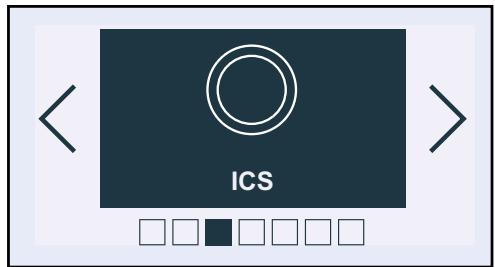
- Press the < and > buttons until the "ICS" function appears and confirm.
The oven offers a choice of 14 dishes:
Pizza
- Savoury tarts
- Beef (rare, medium, well done)
Roast pork
Chicken
- Lamb (pink, well done)
Fish
- Stuffed vegetables
- Sweet tarts
Cakes
- Small biscuits
-Souffle
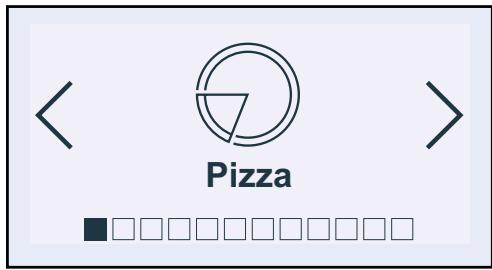
- Press the < and > buttons to select your dish.
Example: Pizza
After selecting your dish, confirm by pressing OK.
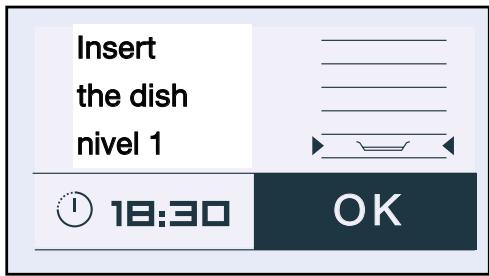
You can change the end of cooking time before putting your dish in the oven at the recommended shelf height.
- Enter by pressing the OK button to start cooking.
THE "I.C.S." FUNCTION
N.B.: No preheating is required when using the ICS function. Cooking absolutely MUST start in a cool oven. You should wait for the oven to cool down completely before beginning a second cooking programme.
IMPORTANT: Do not open the door during this phase or you may disturb the recording of data.
This information gathering phase is identified by a symbol alongside the cooking time.
This cooking mode takes place in two phases:
- An information gathering phase during which the oven starts heating and determines the ideal cooking time. This phase lasts between 5 and 40 minutes depending on the dish.
-
A second cooking phase: the oven has calculated the necessary time; the symbol disappears. The remaining cooking time indicated takes into account the cooking time from the first phase. You can now open the door (e.g. to baste a roast).
-
The oven beeps and switches off when the cooking time is complete and the screen then indicates that the dish is ready.
DELAYED START FUNCTION:
To program a delayed start,
- Select the cooking end function and change the cooking end time.
PLEASE NOTE: If you want to programme a subsequent ICS cooking cycle, wait until the oven has cooled completely. However, you can still use the "Expert" function, even if the oven is hot.
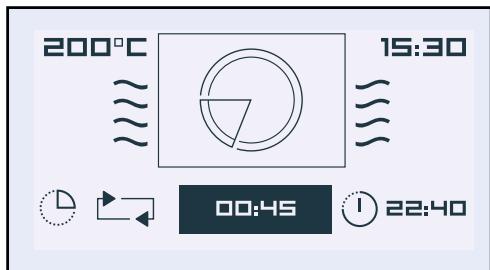
calculation phase (information gathering)
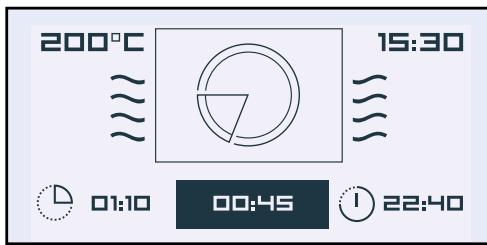
cooking phase
| Pizza | ·Fresh store-bought pizza ·Ready-to-use pizza dough ·Home-made pizza dough ·Frozen pizza |
| Tarts (savoury) | ·Fresh quiches ·Frozen quiches ·Frozen mini-pasta |
| Roast Beef | ·Roast beef (prepared rare) ·Place the roast on the grid using the grid + drip tray assembly. You can turn it over when the cooking time becomes fixed. |
| Roast Pork | ·Pork roasts - Loin -Tenderloin |
| Chicken | ·Chickens weighing 1 to 1.7 kg ·Duck, guinea fowl, etc. |
| Lamb | Leg of 1kg to 2,500kg ·Place the roast on the grid using the grid + drip tray assembly. You can turn it over when the cooking time becomes |
| Fish | ·Whole fish (sea bream, pollock, trout, mackerel, etc.) ·Roasted fish |
| Vegetables stuffed | ·Tomatoes, stuffed peppers & vegetables ·Lasagna (fresh or frozen) ·Shepherd's pie, brandade, etc. |
| Tarts (sweet) | ·Fresh tarts ·Frozen tarts |
| Cakes | ·Home-style cakes: sweet or savoury loaves, pound cake. ·Ready-to-mix batters in packets. |
| Small Biscuits | ·Small individual pastries: cookies, croissants, buns, fruit bread in a mould, croque-monsieur. |
| Souffle | ·Use a tall mould with straight edges and a diameter of 21cm. |
- Place it on the grid for a crispy crust (you can place a sheet of parchment paper between the grid and the pizza to protect the oven from cheese drippings).
-
Place the pizza on the baking tray for a soft crust.
-
Use a non-stick aluminium mould: the crust will be crispy on the bottom.
-
Remove the tray from frozen quiches before placing them on the grid.
-
Take the roast out of the refrigerator at least one hour before starting the cooking programme:
- If you prefer meat rare; if you prefer it well done, opt for a traditional cooking function.
- Trim away as much fat as possible: it causes smoke.
-
At the end of cooking, allow the meat to sit for 7 to 10 minutes wrapped in a sheet of aluminium foil before carving.
-
Take the roast out of the refrigerator at least one hour before starting the cooking programme: the colder the meat is, the closer it will be to the end of cooking.
- Use an earthenware dish. Add one to two tablespoons of water.
- At the end of cooking, allow the meat to sit for 7 to 10 minutes wrapped in a sheet of aluminium foil before carving. Add salt when cooking is finished.
- Turnspit cooking: do not forget to place the drip tray on the first shelf support to catch the drippings.
- Cooking in a dish: Opt for earthenware dishes to avoid splattering.
-
Pierce the skin of poultry to avoid splattering.
-
Take the meat out of the refrigerator at least one hour before starting the cooking programme:
- Select a leg that is round and plump rather than long and lean.
-
Wrap the meat in aluminium and let it sit after cooking.
-
Use this function only for whole fish cooked with herbs and white wine. (Grilled fish or papillote preparations require that the oven be preheated.)
-
Properly adjust the dimensions of the dish to the quantity of food to be cooked to avoid juices spilling over.
-
Use a non-stick aluminium mould:
-
The crust will be crispy on the bottom.
-
Cakes made in a cake mould, round, square... and always placed on the grid. It is possible to place two cake moulds side by side.
-
Small individual cakes made on a pastry tray and placed on the grid.

Puff pastry must be cooked on "CAKES" to achieve good results.
- Butter the mould and do not touch the inside with your fingers or the souffle will not rise.
Pizza
To prevent cheese or tomato sauce from dripping in the oven, you can place a piece of parchment paper between the grid and the pizza.
Tarts / Quiches
Avoid glass and porcelain dishes: because they are too thick, they extend the cooking time and the bottom of the crust is not crispy. With fruit, the bottom of the tart risks becoming soggy: just add a few spoonfuls of fine semolina, crushed biscuit crumbs, almond powder or tapioca, which will absorb the juice during cooking. With high-water content or frozen vegetables (leeks, spinach, broccoli or tomatoes) you can sprinkle a tablespoon of cornmeal.
Fish
When buying it, it should smell pleasant and not too "fishing". The body should be firm and rigid and the scales should be firmly attached to the skin; the eyes should be bright and rounded and gills will appear shiny and moist.
Beef / Pork / Lamb
You must take all meet out of the refrigerator well before cooking it: cold-hot temperature shocks toughen meat; this way you will produce a roast beef that is golden outside, red inside and warm in the middle. Do not salt before cooking: salt absorbs the blood and dries out the meat. Turn the meat using spatulas: if you pierce the meat the blood drips out. Always let meat sit after cooking for 5 to 15 minutes: wrap it in a sheet of aluminium and place it just inside a warm oven: This allows the blood drawn toward the outside during cooking to return to the middle and moisten the roast.
Use earthenware roasting dishes: glass promotes grease splattering.
Do not cook in the enamelled drip tray.
Avoid piercing the leg of lamb with cloves of garlic as the lamb will lose its juices; instead, slide the garlic in underneath the skin, or bake the unpeeled garlic beside the leg and crush it when it has finished cooking to flavour the gravy; sieve it and serve very hot in a gravy boat.
Pizza Base: 1 pizza crust
with vegetables: 6 tablespoons tomato sauce + 100g diced courgettes + 50g diced bell peppers + 50g sliced aubergine +2 small sliced tomatoes + 50g grated gruyere + oregano + salt + pepper.
with roquefort and smoked bacon: 6 tablespoons tomato sauce + 100g smoked bacon + 100g roquefort in small chunks + 50g walnuts + 60g grated gruyere.
*with sausage and cottage cheese: 200 g drained cottage cheese spread on the crust + 4 sausages, sliced + 150g ham slivers + 5 olives + 50g grated gruyere + oregano + salt + pepper.
Quiches: Base: 1 aluminium mould, diameter 27 to 30~cm
1 ready-to-use short crust pastry
3 beaten eggs + 50 cl heavy cream
salt, pepper, nutmeg.
Various garnishes:
200g precooked larding bacon
or - 1 kg cooked endives + 200g grated gouda
or - 200g broccoli + 100g small bacon pieces + 50g blue cheese
or - 200g salmon + 100g spinach, cooked and drained
Roast beef PARSLEY SAUTERNES Sauce with ROQUEFORT:
Cook 2 tablespoons of sliced shallots in butter until translucent. Add 10 cl Sauternes, let it evaporate. Add 100g Roquefort, let it melt slowly. Add 20 cl liquid cream, salt, pepper. Bring to a boil.
Roast pork Pork with prunes
Ask the butcher to carve a hole through the length of the roast. Stuff 20 prunes inside. Serve sliced with its juices or cold with an endive salad.
Chicken
Stuff it with a good bouquet of fresh tarragon or rub it with a mixture of 6 crushed cloves of garlic with a pinch of coarse salt, and some peppercorns.
Lamb Anchovy sauce:
Puree 100g black olives, 50g capers and 3 anchovies, 1/2 clove of garlic and 10 cl olive oil. Add 10 cl crème fraîche. Serve with sliced leg of lamb.
Fish
Black sea bream with dry cider:
1 bream weighing 1.5kg
500g button mushrooms.
2 sour apples.
2 shallots.
2 tablespoons heavy cream.
100g butter.
1/2 litre cider. Salt, pepper.
Gut and scale the fish. Place it in a buttered dish on the finely minced shallots and sliced mushrooms. Add the cider, salt and pepper and some cubes of butter. Put it in the oven. In the butter cook the unpeeled quartered apples. When cooking is complete, transfer the fish to a warm dish, strain the juice and deglaze the dish with the cream. Add the cream to the juice, serve with apples and mushrooms.
Stuffed vegetables
Leftovers from pot au feu, leg of lamb, pork roasts, and roasted poultry can be finely chopped for an excellent base.
Flaky praline apple tart
1 flaky pastry crust rolled and pricked with a fork.
200 ml cream brought to a boil with a vanilla pod.
2 beaten eggs with 30g sugar, add the cooled cream.
2 apples cut into cubes rolled in 70g crushed pralines.
Add cream and apples to crust. Place in the oven.
Pound cake with citrus fruits
Caramel: 20 lumps of sugar (200g).
Cake: 4 eggs.
200g granulated sugar.
200g flour.
200g good butter.
2 teaspoons baking powder.
Fruits: 1 small tin of citrus fruits in syrup.
Drain the fruit. Prepare a caramel icing. When it has taken on colour, turn it out into a cake pan; tip it around to distribute the caramel. Let cool. In the bowl of an electric blender, mix the softened butter with the sugar. Add the whole eggs one at a time, then the sifted flour. Finish with the baking powder. Place the citrus sections in a flower pattern on the caramel icing. Pour in the batter. Place in the oven on the "CAKES" setting. Unmould in a pretty dish and serve cold. Other fruits can be used, such as apples, pears or apricots.
Individual chocolate cakes
12 individual aluminium ramekins.
60g butter.
200g bitter chocolate (more than 50% cocoa).
100g caster sugar.
4 eggs.
1 packet of baking powder.
70g sifted flour.
Melt the chocolate with the butter over very low heat. Work the egg yolks into the sugar until the mixture becomes smooth. Add the flour, melted chocolate with butter and finish with the baking powder. Beat the egg whites into stiff peaks and gently fold them into the mixture. Lightly butter and flour the aluminium ramekins and pour the batter into them (without dripping any on the edges). Place the ramekins on the baking tray and choose the "BISCUITS" mode. Unmould and let cool on a grid. Serve with vanilla crème anglaise or coconut ice cream.
Souflés
Béchamel sauce base:
1/2 litre milk.
60g flour.
100g butter.
4 egg yolks + whites beaten into stiff peaks.
salt, pepper, nutmeg.
Depending on the type of souffle, you will add 150g shredded gruyere or 1 kg cooked, chopped spinach or 1 kg cooked, chopped cauliflower or 150g shredded leftover cooked fish or 150g chopped ham.
- "LOW TEMPERATURE" FUNCTION
It is absolutely essential that "LOW TEMPERATURE"cooking starts in a cool oven.
Select "LOW TEMPERATURE" with the < and > buttons and confirm.
Choose the cooking type from the following lists by pressing the < and > buttons and place your food on the wire shelf, except for pots of yoghurt which should be placed in the enamel dish.
- Roast veal (4h15)
- Roast beef rare (3h00)
- Roast beef well done (4h00)
- Roast pork (4h15)
- Lamb rare (1h50)
- Lamb well done (4h00)
- Small fish (1h15)
- Large fish (1h35)
- Yoghurt (3h00)
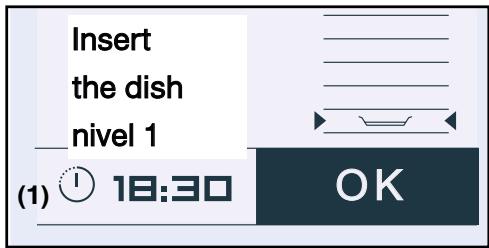
Example: yoghurt (fig.2).
Confirm your selection by pressing OK.
- The recommended shelf level is displayed.
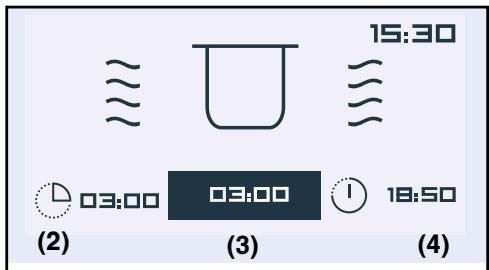
You can modify the end of cooking time, if necessary, (1) then confirm by pressing OK.
During cooking, the screen displays: the cooking time (2) which cannot be altered, the remaining cooking time (3) and the end of cooking time (4).
The oven automatically switches off and beeps for 2 minutes to tell you that the food is ready. Press OK to stop the beeps.
Meat is kept warm (for 1 hour).
For yoghurt, there is a "rapid cooling" phase (duration 1 hour).
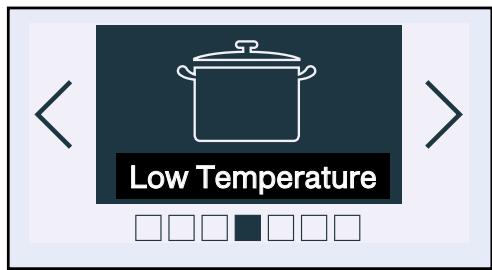
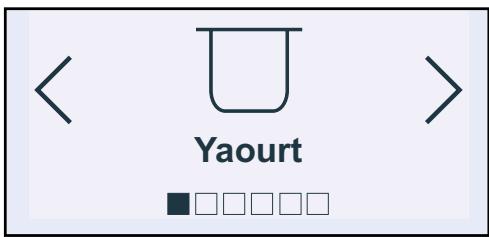
- THE " SETTINGS" FUNCTION
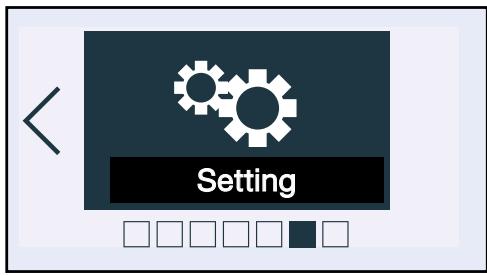
Press the < and > buttons until the "Settings" screen is displayed.
Confirm by pressing OK.
You have access to the following settings:
- Time (see beginning of this section)
-Sound
-Display - Consumption
- Language
- De Dietrich services
Sound:
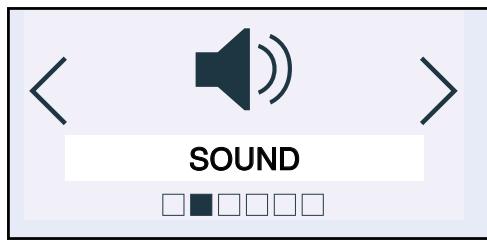
Press the < and > buttons until "Sound" is displayed.
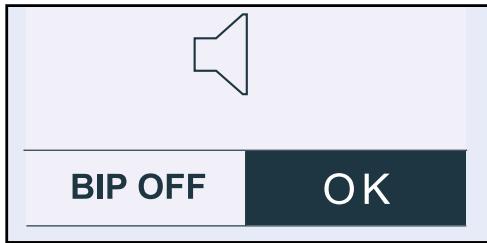
Adjustment of the sound emitted when buttons are pressed:
If you wish, you can mute the beeps emitted each time you press confirm.
To do this, go to this option and select:
Beep on (active) or Beep off (silent). Confirm.
Display:
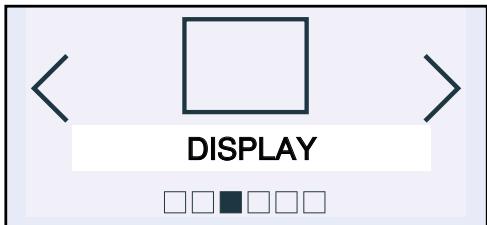
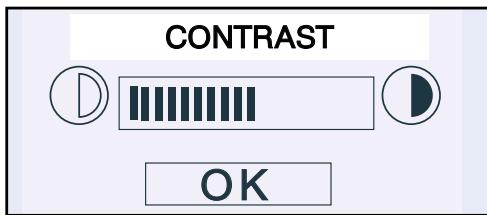
Adjustment of screen brightness:
Press the < and > buttons until "Display" is displayed.
Select the line with the < and > buttons and confirm.
Increase or decrease the brightness using the < and > and then confirm by pressing OK.
- THE " SETTINGS" FUNCTION
Consumption:
- Adjusting electricity consumption:
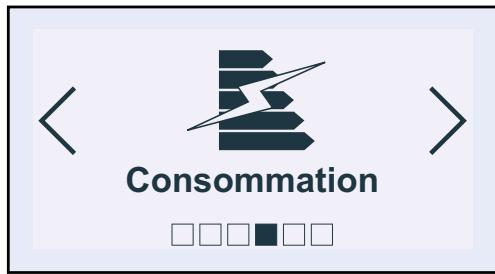
By accessing this screen, you will be able to view your oven's energy consumption since the last time it was reset to zero (RESET).
If you have an energy bill arrangement with off-peak hours, you can consult the corresponding time periods and obtain detailed information about your consumption during peak and off-peak hours.
To enter or modify this data, press OK, then enter the times for peak and off-peak periods.
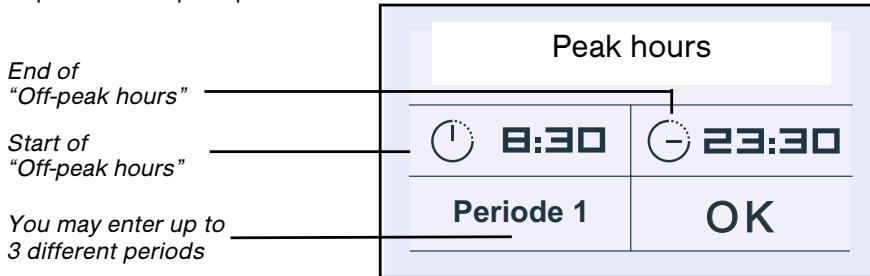

If you entered off-peak hours, whenever you programme a pyrolysis cycle, your oven will automatically suggest that you schedule the cycle to begin cleaning during the next off-peak period.
If you want to carry out an immediate pyrolysis cycle, you will have to cancel the programmed off-peak hours.
Language:
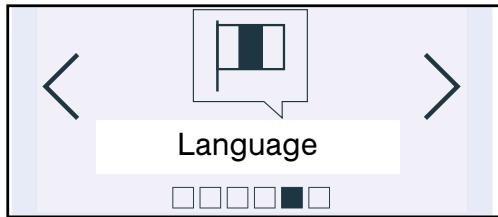
- Setting the language:
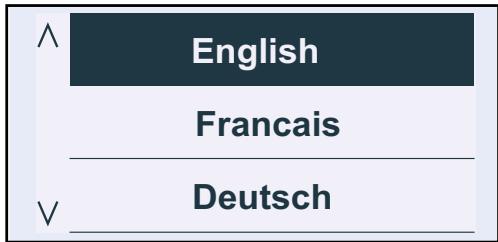
By selecting this screen, you can choose the language used to communicate with your oven.
There are 7 languages available:
-French
- English
- German
- Dutch
- Danish
- Spanish
- Portuguese
- THE " SETTINGS" FUNCTION
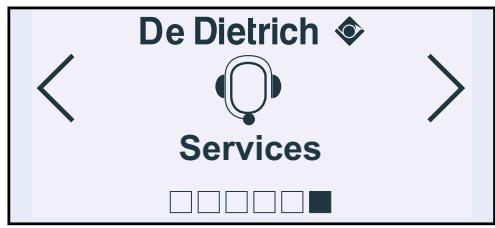
De Dietrich services
This option provides you with contact information for the Customer Service and After Sales Service departments.

DEMO MODE:
- Set the time to 00:00 (1).
See how to set the timer page 7.
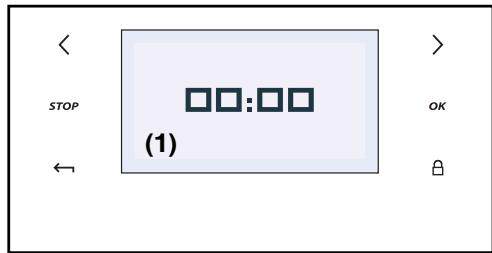
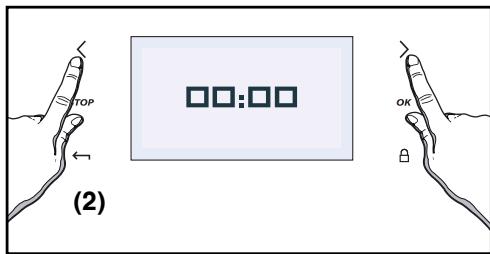
Press the < and > for 10 seconds (2).
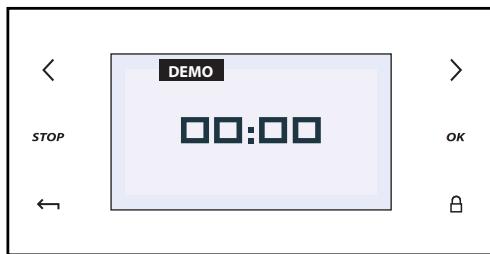
DEMO appears in the display.
Perform the operation described in step 2 to return to normal.

Warning
When your oven is in "DEMO MODE",
the heaters are not active.
THE "TIMER" FUNCTION
Select this option to access the timer function.
This function is accessible, so long as the oven is not in pyrolysis mode.
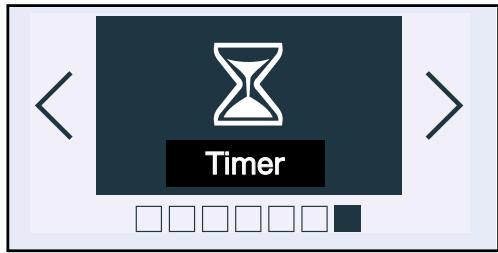
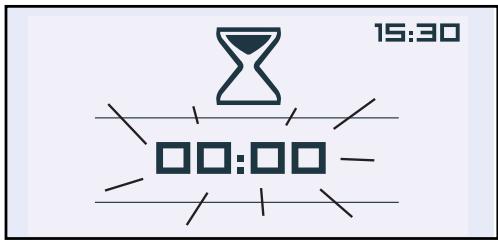
Press the < and > buttons until "Timer" is displayed then confirm.
The displays flashes 00:00:00.
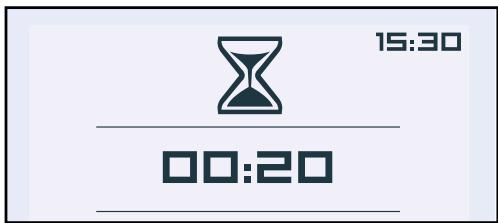
Enter the desired time using the < or > button and confirm with the OK button.
The timer starts to count down when OK is pressed and beeps at the end.
Press the Stop button to cancel the timer.
- THE CLEANING FUNCTION
This oven is equipped with a pyrolysis cleaning function:
- Pyrolysis is a cycle during which the oven cavity is heated to a very high temperature in order to eliminate dirt caused by splashes and spills.
Fumes and odours released are destroyed by passing through a catalytic converter. - Pyrolysis is not necessary after each cooking cycle, but simply when the degree of dirt warrants it; your oven will inform you when cleaning is required via the control panel (1).
As a safety measure, cleaning only occurs after the door locks automatically. Once the temperature inside the oven exceeds cooking temperatures, it is not possible to open the door.
WHEN TO USE PYROLYSIS
If your oven releases smoke during preheating or releases a great deal of smoke during cooking or if there is an unpleasant odour after cooking various dishes (lamb, fish, grills, etc.).

Note
You should not wait until the oven is heavily coated in grease to carry out a cleaning cycle.
| Low mess cooking operations | Biscuits, vegetables, pastry, quiches, soufflés... | Cooking with no splashing: pyrolysis is not required. |
| Messy cooking operations | Meats, fish (in a dish), stuffed vegetables. | Pyrolysis may be required after three cooking cycles. |
| Extremely messy cooking operations | Large cuts of meat on the spit. | Pyrolysis can be done after cooking this type of dish, since there is a lot of splashing. |
HOW TO PROGRAMME A PYROLYSIS CYCLE
Remove any large-scale food residue that may be in the oven, to avoid the risk of ignition or excessive smoke.
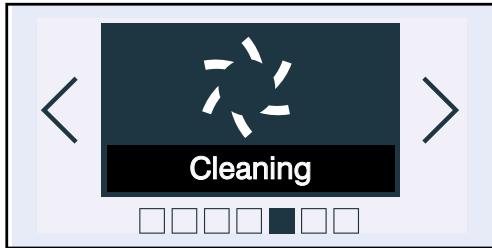
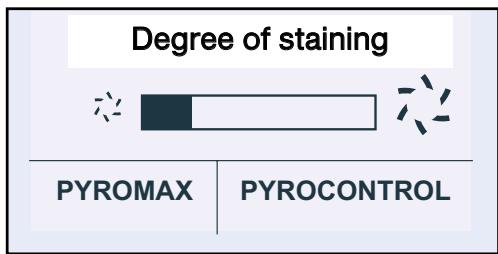
Select "Cleaning" from the main menu. Your oven indicates the dirtiness of the cavity and suggests two cleaning modes:
Pyromax and Pyrocontrol.
A) Pyromax
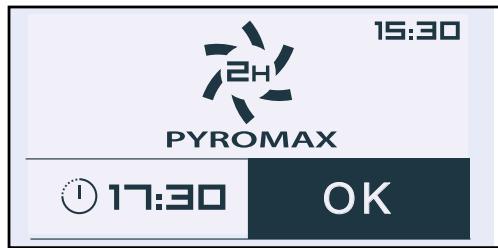
Pyromax is a pyrolysis system with a pre-set duration: it lasts for two hours and provides thorough, intensive cleaning of the oven cavity.
To delay the start time, select end time and change it by entering the desired end time for the pyrolysis cycle.
Note: If you entered the information for off-peak hours and peak hours (see Settings function), your oven recommends a cleaning cycle during off-peak hours to save on energy costs. However, you can change this recommendation by changing the end of pyrolysis time and starting the cleaning cycle immediately, if you choose.
Confirm by pressing "OK".
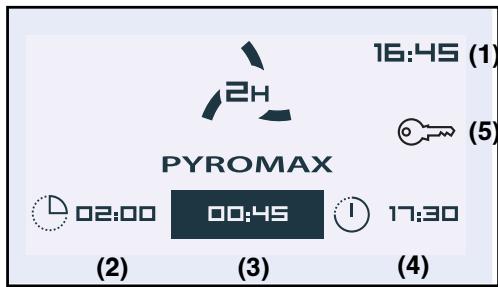
The cleaning cycle begins. Your screen indicates:
- the time (1)
- the total cycle time (2)
- the remaining time (3)
- the pyrolysis cycle end time (4)
-door locking (5)
B) Pyrocontrol
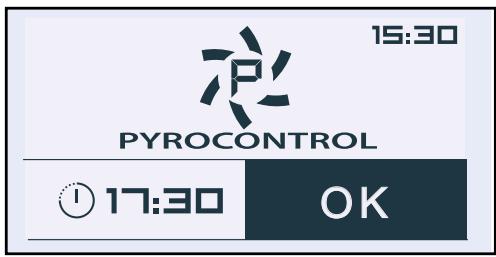
Pyrocontrol is a system that lets the oven automatically calculate the cleaning time depending on the amount of soiling, which makes it possible to save energy by adjusting the pyrolysis time to actual need.
If you with to delay the start time, select the end time and change it by entering the desired end time for the pyrolysis cycle.
Confirm by pressing "OK"

Note
Surfaces may become hotter than during normal use. It is advisable to keep small children at a distance.
END OF PYROLYSIS
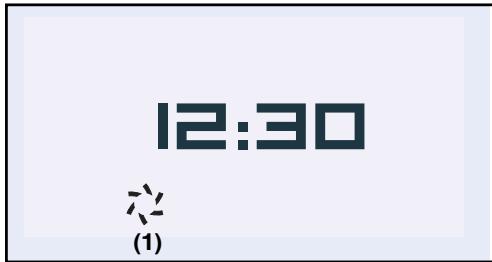
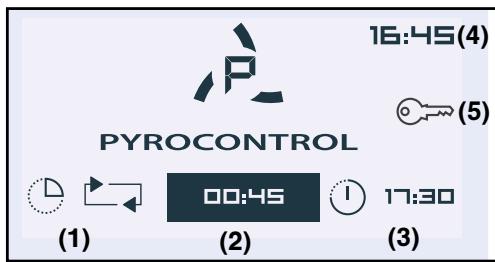
At the beginning of the cycle, the oven calculates the pyrolysis time based on the level of dirt. This step lasts a few minutes and is represented by rotating arrows on the screen (1).
The screen displays:
- the rotating arrows (1)
- the time remaining (2)
- the planned pyrolysis cycle end time (3)
- the time (4)
-door locking (5)
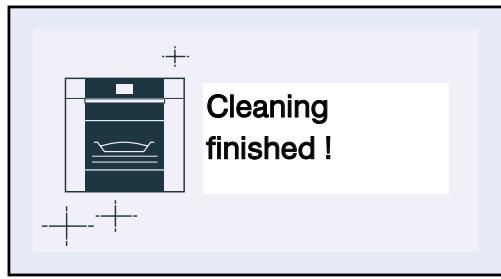
The oven informs you when the pyrolysis cleaning cycle is complete.
Once the door has been unlocked, the oven informs you that the cleaning cycle has finished.
Simply remove the ash residue from the cavity with a damp sponge.
- LOCKING THE CONTROLS (Child safety)
You can prevent access to the oven controls by taking the following steps:
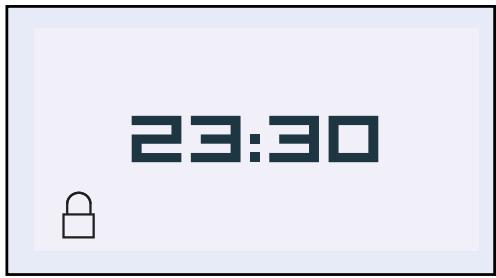
When the oven is off, hold the button pressed for a few seconds; a padlock will then be displayed on the screen and access to the oven controls is now blocked.
To unlock it, press the button again, then select the "Unlock" symbol and confirm.
The oven controls are once again accessible.

Note
You cannot lock the oven if you have programmed a cooking cycle.
- De Dietrich
- 1/ DESCRIPTION OF YOUR APPLIANCE
- / USING YOUR APPLIANCE
- 3/ AFTER-SALES SERVICE
- INTRODUCTION TO YOUR OVEN
- INTRODUCTION TO THE CONTROLS
- List of symbols:
- COOKING
- - SETTINGS WHEN SWITCHING ON FOR THE FIRST TIME
- Language
- Time
- - Resetting the time
- PUTTING INTO STANDBY MODE
- - THE "EXPERT" FUNCTION
- The "Expert" function
- Warning
- THE "EXPERT" COOKING MODES
- FAN
- COMBINED HEAT
- ECO HEAT
- TURBO GRILL + SPIT
- HIGH GRILL + SPIT
- MEDIUM GRILL + SPIT
- KEEP WARM
- BREAD
- DEFROSTING
- - Temperature
- Cooking time and end of cooking time.
- - The "Grill+" option
- Starting a cooking programme
- Cooking with no specified duration
- Cooking for a set time
- AT THE END OF COOKING:
- THE "RECIPE" FUNCTION
- Additional details for cooking according to: "Recipes"
- COOKING PROGRAMME: RED MEAT
- COOKING PROGRAMME: CAKES/TARTS
- COOKING PROGRAMME: TERRINES
- - Beef, pork, lamb
- Fish
- Tarts, quiches
- Pizza
- THE "I.C.S." FUNCTION
- OPERATING THE ICS FUNCTION:
- DELAYED START FUNCTION:
- Tarts / Quiches
- Beef / Pork / Lamb
- Pizza Base: 1 pizza crust
- Quiches: Base: 1 aluminium mould, diameter 27 to 30~cm
- Various garnishes:
- Roast beef PARSLEY SAUTERNES Sauce with ROQUEFORT:
- Roast pork Pork with prunes
- Chicken
- Lamb Anchovy sauce:
- Stuffed vegetables
- Flaky praline apple tart
- Pound cake with citrus fruits
- Individual chocolate cakes
- Souflés
- - "LOW TEMPERATURE" FUNCTION
- - THE " SETTINGS" FUNCTION
- Sound:
- Display:
- Adjustment of screen brightness:
- Consumption:
- - Adjusting electricity consumption:
- Language:
- - Setting the language:
- De Dietrich services
- DEMO MODE:
- THE "TIMER" FUNCTION
- - THE CLEANING FUNCTION
- WHEN TO USE PYROLYSIS
- Note
- HOW TO PROGRAMME A PYROLYSIS CYCLE
- Pyromax and Pyrocontrol.
- A) Pyromax
- B) Pyrocontrol
- END OF PYROLYSIS
- - LOCKING THE CONTROLS (Child safety)
Marque : DE DIETRICH
Modèle : DOP1170GX
Catégorie : Four encastrable