
LXC SA18 - Mill Cocraft - Free user manual and instructions
Find the device manual for free LXC SA18 Cocraft in PDF.


| Brand | Cocraft |
| Model | LXC SA18 |
| Product Type | Sander |
| Power Source | 18V lithium-ion battery (LXC series, sold separately) |
| Battery Type | Lithium-ion |
| Charger | Sold separately |
| Sanding Plate Dimensions (Hook and Loop) | 140 x 140 x 80 mm |
| Strokes per Minute | 22,000 |
| Noise Level (Sound Pressure) | 79 dB(A) (K=3 dB) |
| Noise Level (Sound Power) | 90 dB(A) (K=3 dB) |
| Vibration Emission | 7.121 m/s² (K=1.5 m/s²) |
| Weight (without battery) | 0.8 kg |
| Overload Protection | Yes (automatic reset) |
| Overheat Protection | Yes (automatic reset) |
| Low Voltage Protection | Yes (automatic shut-off) |
| Dust Extraction Connection | Yes |
| Application | Sanding and polishing wood, dry filler, painted or varnished surfaces |
| Safety Features | Read manual, use ear/eye/respiratory protection |
| Maintenance | Keep ventilation openings clean, use mild cleaning agents, store in cool place |
Frequently Asked Questions - LXC SA18 Cocraft
User questions about LXC SA18 Cocraft
0 question about this device. Answer the ones you know or ask your own.
Ask a new question about this device
Download the instructions for your Mill in PDF format for free! Find your manual LXC SA18 - Cocraft and take your electronic device back in hand. On this page are published all the documents necessary for the use of your device. LXC SA18 by Cocraft.
USER MANUAL LXC SA18 Cocraft
Cocraft LXC is a tool system incorporating lithium-ion technology for an entire series of Cocraft power tools. A single universal battery and charger is all that is needed to power the entire series.

LITHIUM XROSS CONNECT

Important!
Read the entire instruction manual carefully and make sure that you fully understand it before you use the equipment. Keep the manual for future reference.
Viktig information:
Original instructions
Bruksanvisning i original
Originalbruksanvisning
Postal 10 - 13 Market Place
Kingston Upon Thames
Surrey
KT1 1JZ
DEUTSCHLAND
Please read the entire instruction manual before using the product and then save it for future reference. We reserve the right for any errors in text or images and any necessary changes made to technical data. If you have any questions regarding technical problems please contact our Customer Services.
Safety
General Power Tool Safety Warnings - Personal Safety
WARNING! Read all safety warnings and all instructions. Failure to follow the warnings and instructions may result in electric shock, fire and/or serious injury.
SAVE ALL WARNINGS AND INSTRUCTIONS FOR FUTURE REFERENCE.
The term "power tool" in the warnings refers to your mains-operated (corded) power tool or battery-operated (cordless) power tool.
1) Work area safety
a) Keep work area clean and well lit. Cluttered or dark areas invite accidents.
b) Do not operate power tools in explosive atmospheres, such as in the presence of flammable liquids, gases or dust. Power tools create sparks which may ignite the dust or fumes.
c) Keep children and bystanders away while operating a power tool. Distractions can cause you to lose control.
2) Electrical safety
a) Power tool plugs must match the outlet. Never modify the plug in any way. Do not use any adapter plugs with earthed (grounded) power tools. Unmodified plugs and matching outlets will reduce risk of electric shock.
b) Avoid body contact with earthed or grounded surfaces, such as pipes, radiators, ranges and refrigerators. There is an increased risk of electric shock if your body is earthed or grounded.
c) Do not expose power tools to rain or wet conditions. Water entering a power tool will increase the risk of electric shock.
d) Do not abuse the cord. Never use the cord for carrying, pulling or unplugging the power tool. Keep cord away from heat, oil, sharp edges or moving parts. Damaged or entangled cords increase the risk of electric shock.
e) When operating a power tool outdoors, use an extension cord suitable for outdoor use. Use of a cord suitable for outdoor use reduces the risk of electric shock.
f) If operating a power tool in a damp location is unavoidable, use a residual current device (RCD) protected supply. Use of an RCD reduces the risk of electric shock.
3) Personal safety
a) Stay alert, watch what you are doing and use common sense when operating a power tool. Do not use a power tool while you are tired or under the influence of drugs, alcohol or medication. A moment of inattention while operating power tools may result in serious personal injury.
b) Use personal protective equipment. Always wear eye protection. Protective equipment such as dust mask, non-skid safety shoes, hard hat, or hearing protection used for appropriate conditions will reduce personal injuries.
c) Prevent unintentional starting. Ensure the switch is in the off-position before connecting to power source and/or battery pack, picking up or carrying the tool. Carrying power tools with your finger on the switch or energising power tools that have the switch on invites accidents.
d) Remove any adjusting key or wrench before turning the power tool on.
A wrench or a key left attached to a rotating part of the power tool may result in personal injury.
e) Do not overreach. Keep proper footing and balance at all times. This enables better control of the power tool in unexpected situations.
f) Dress properly. Do not wear loose clothing or jewellery. Keep your hair, clothing and gloves away from moving parts. Loose clothes, jewellery or long hair can be caught in moving parts.
g) If devices are provided for the connection of dust extraction and collection facilities, ensure these are connected and properly used. Use of dust collection can reduce dust related hazards.
4) Power tool use and care
a) Do not force the power tool. Use the correct power tool for your application.
The correct power tool will do the job better and safer at the rate for which it was designed.
b) Do not use the power tool if the switch does not turn it on and off. Any power tool that cannot be controlled with the switch is dangerous and must be repaired.
c) Disconnect the plug from the power source and/or the battery pack from the power tool before making any adjustments, changing accessories, or storing power tools. Such preventive safety measures reduce the risk of starting the power tool accidentally.
d) Store idle power tools out of the reach of children and do not allow persons unfamiliar with the power tool or these instructions to operate the power tool. Power tools are dangerous in the hands of untrained users.
e) Maintain power tools. Check for misalignment or binding of moving parts, breakage of parts and any other condition that may affect the power tool's operation. If damaged, have the power tool repaired before use.
Many accidents are caused by poorly maintained power tools.
f) Keep cutting tools sharp and clean. Properly maintained cutting tools with sharp cutting edges are less likely to bind and are easier to control.
g) Use the power tool, accessories and tool bits, etc. in accordance with these instructions, taking into account the working conditions and the work to be performed. Use of the power tool for operations different from those intended could result in a hazardous situation.
5) Battery tool use and care
a) Recharge only with the charger specified by the manufacturer. A charger that is suitable for one type of battery pack may create a risk of fire when used with another battery pack.
b) Use power tools only with specifically designated battery packs. Use of any other battery packs may create a risk of injury and fire.
c) When battery pack is not in use, keep it away from other metal objects, like paper clips, coins, keys, nails, screws or other small metal objects, that can make a connection from one terminal to another. Shorting the battery terminals together may cause burns or a fire.
d) Under abusive conditions, liquid may be ejected from the battery; avoid contact. If contact accidentally occurs, flush with water. If liquid contacts eyes, additionally seek medical help. Liquid ejected from the battery may cause irritation or burns.
6) Service
a) Have your power tool serviced by a qualified repair person using only identical replacement parts. This will ensure that the safety of the power tool is maintained.
Safety instructions specific to sanders
- Wear a dust mask whenever sanding and a dust extractor connected to the machine should also be used wherever possible.
- Extra caution should be taken when sanding lead paint, wood, metal or other materials which produce toxic dust. Make sure any bystanders in the work area are well protected.
- Remember that dust caused by sanding can be very flammable when mixed with air.
Safety Warnings for battery pack
a) Do not dismantle, open or shred cells or battery pack.
b) Do not short-circuit a battery pack. Do not store battery packs haphazardly in a box or drawer where they may short-circuit each other or be short-circuited by conductive materials. When battery pack is not in use, keep it away from other metal objects, like paper clips, coins, keys, nails, screws or other small metal objects, that can make a connection from one terminal to another. Shorting the battery terminals together may cause burns or a fire.
c) Do not expose battery pack to heat or fire. Avoid storage in direct sunlight.
d) Do not subject battery pack to mechanical shock.
e) In the event of battery leaking, do not allow the liquid to come into contact with the skin or eyes. If contact has been made, wash the affected area with copious amounts of water and seek medical advice.
f) Seek medical advice immediately if a cell or battery pack has been swallowed.
g) Keep battery pack clean and dry.
h) Wipe the battery pack terminals with a clean dry cloth if they become dirty.
i) Battery pack needs to be charged before use. Always refer to this instruction and use the correct charging procedure.
j) Do not maintain battery pack on charge when not in use.
k) After extended periods of storage, it may be necessary to charge and discharge the battery pack several times to obtain maximum performance.
I) Battery pack gives its best performance when it is operated at normal room temperature (20 ± 5 °C).
m) When disposing of battery packs, keep battery packs of different electrochemical systems separate from each other.
n) Recharge only with the specified charger. Do not use any charger other than that specifically provided for use with the equipment.
A charger that is suitable for one type of battery pack may create a risk of fire when used with another battery pack.
o) Do not use any battery pack which is not designed for use with the equipment.
p) Keep battery pack out of the reach of children.
q) Retain the original product literature for future reference.
r) Remove the battery from the equipment when not in use.
s) Dispose of properly.
General safety instructions for batteries and chargers
- Never attempt to dismantle a battery.
- Never store a battery in direct sunlight or at temperatures above 40 °C.
- Only charge the battery when the ambient temperature is between +5 and 40 °C.
- Never expose the battery or charger to water.
Vibration
- The measurement of the vibration emission level declared in this instruction manual has been carried out in accordance with a standardised test method described in EN 60745 and can be used for comparing one power tool with another.
- The measurement method may also be used for a preliminary assessment of vibration exposure.
- The declared vibration emission level applies when the power tool is used in accordance with this instruction manual. If however, the power tool is used for other purposes and with other accessories or has not been properly maintained, the vibration emission level could increase significantly over the total working period.
- For an exact assessment of the vibration exposure, the times when the tool is switched off or running idle should also be taken into account. This significantly reduces the vibration exposure over the total working period. Decide upon safety measures to protect the operator from the effects of vibration during all types of use.
Product safety symbols

Read the entire instruction manual.

Always use ear protection.
Always use safety glasses.
Always use respiratory protection.
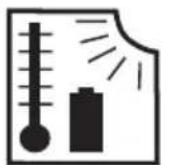
max 50 °C

Protect the battery against heat, e. g., against continuous intense sunlight, fire, water, and moisture. Danger of explosion.
Buttons and functions
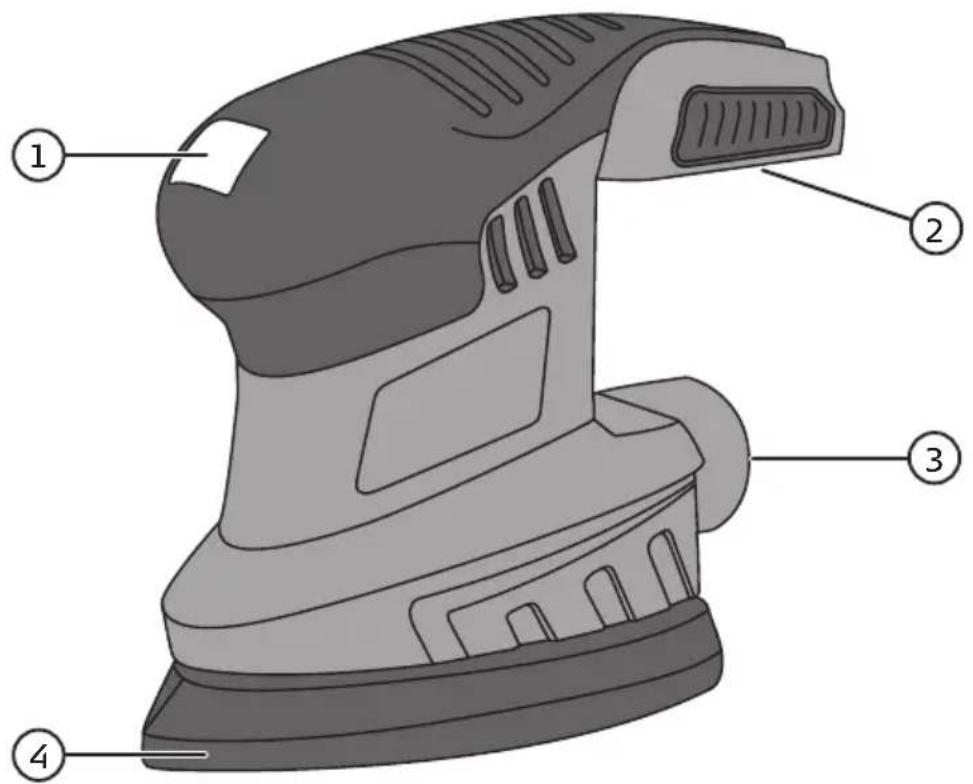
- [I]/[0] Power switch
- Battery connection
- Dust extractor connection
- Sanding pad
Operating instructions
This machine is designed for sanding and polishing wood, dry filler, painted or varnished surfaces. Make sure that the surfaces you plan to sand/polish are dry.
- Stand steady and balanced, holding the sander in a firm grip.
- Press [1] on the power switch to turn the sander on.
- Turn off the sander by pressing [0] on the power switch.
Changing sanding sheets
- Remove the battery from the sander before changing the sanding sheet.
- Remove the old sanding sheet and replace it with a new one.
Overload protection and other safety features
The machine/battery has a number of safety features that prevent damage to the machine and battery during use.
- During short high-load situations the overload protection may turn off the machine/battery. This protection resets automatically. Set the power switch to 0, wait a few seconds, ensure that there is no load and then restart the machine. The machine should now function normally again.
- During high-load for extended periods the overheating protection may turn off the machine/battery. The protection resets itself but the machine cannot be restarted until it has returned to normal operating temperature. Let the machine cool properly before trying to restart it. Adverse temperatures can occur in direct sunlight and should therefore be avoided.
- The battery has low-voltage protection which operates when the battery becomes discharged. The low-voltage protection turns off the machine automatically and the battery then needs to be recharged.
Care and maintenance
Important: Always remove the battery from the machine before carrying out any adjustment, service or maintenance.
- Keep the motor ventilation openings free from contaminants.
- Clean the machine using a lightly moistened cloth. Only use mild cleaning agents, never solvents or corrosive chemicals.
- Do not allow the battery to completely discharge unless the machine is not to be used for a long time. Fully charge the battery regularly.
Troubleshooting guide
| Problem Possible cause Action | ||
| The sander will not start. | Flat/discharged battery. Recharge the battery. | |
| The battery is overheated. Let the battery cool down. | ||
| Worn brushes. Contact our Customer Services. | ||
| Faulty power trigger. | ||
| The sander is sluggish and/or cuts out. | Worn sandpaper. Replace the sandpaper. | |
| Too much pressure applied. Decrease applied pressure. | ||
| Flat/discharged battery. Recharge the battery. | ||
| The battery is overheated. Let the battery cool down. | ||
| The motor is overheated. Let the machine cool down. | ||
| Sparks in the motor. | Faulty brushes. Contact our Customer Services. | |
| Winding short circuited. | ||
| Dirty commutator. | ||
Responsible disposal
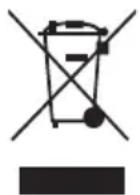
This symbol indicates that this product should not be disposed of with general household waste. This applies throughout the entire EU. In order to prevent any harm to the environment or health hazards caused by incorrect waste disposal, the product must be handed in for recycling so that the material can be disposed of in a responsible manner. When recycling your product, take it to your local collection facility or contact the place of purchase. They will ensure that the product is disposed of in an environmentally sound manner.
Specifications
Hook and loop sanding plate 140 × 140 × 80 mm
Strokes per minute 22,000
Battery 18 V lithium-ion LXC (sold separately)
Noise level LpA: 79 dB(A), Uncertainty KpA: 3 dB(A)
LwA: 90 dB(A), Uncertainty KwA: 3 dB(A)
Vibration value
a_h : 7.121 m/s ^2 , Uncertainty K: 1.5 m/s ^2
Weight
0.8 kg (without battery)
(Battery and charger sold separately)
Slipmaskin
- [I]/[0] Strømbryter
- Batteritilkobling
- Tilkoblingspunkt for støvsugeradapter
- Slipeplate
Bruk
Declaration of Conformity
Declares that this product complies with the requirements of the following directives and standards
Machinery Directive 2006/42/EC
EN 60745-1:2009
+A11:2010
EN 60745-2-4:2009
+A11:2011
EMC Directive 2004/108/EC
EN 55014-1:2006
+A1:2009 +A2:2011
EN 55014-2:1997
+A1:2001 +A2:2008
Hemid Alfredson
Henrik Alfredsson
Manager Technique & Quality
Insjön, Sweden, 2016-02-03
LXC
LITHIUM XROSS CONNECT
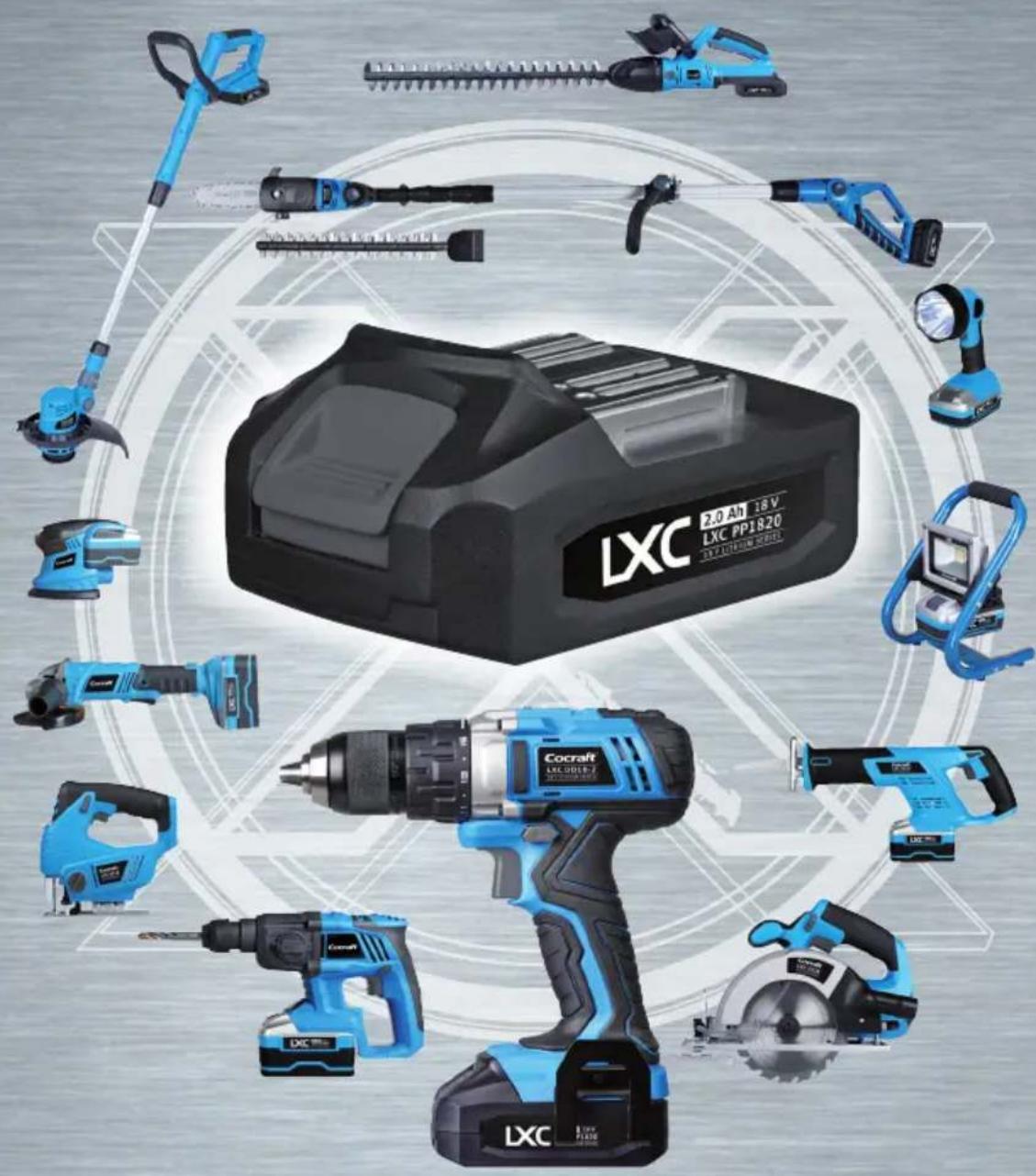
18V LITHIUM SERIES


- Important!
- Viktig information:
- DEUTSCHLAND
- Safety
- General Power Tool Safety Warnings - Personal Safety
- 1) Work area safety
- 2) Electrical safety
- 3) Personal safety
- 4) Power tool use and care
- 5) Battery tool use and care
- 6) Service
- Safety instructions specific to sanders
- Safety Warnings for battery pack
- General safety instructions for batteries and chargers
- Vibration
- Product safety symbols
- Buttons and functions
- Operating instructions
- Changing sanding sheets
- Overload protection and other safety features
- Care and maintenance
- Troubleshooting guide
- Responsible disposal
- Specifications
- Slipmaskin
- Bruk
- Declaration of Conformity
- LXC
- LITHIUM XROSS CONNECT
- 18V LITHIUM SERIES
Brand : Cocraft
Model : LXC SA18
Category : Mill