YT-85176 - Blower Yato - Free user manual and instructions
Find the device manual for free YT-85176 Yato in PDF.


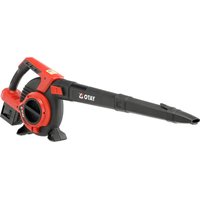
| Product type | Cordless garden blower |
| Brand | Yato |
| Model | YT-85176 |
| Power supply | Li-Ion battery 18 V (4 Ah) |
| Rotation speed (normal/turbo) | 13 000 / 16 000 min⁻¹ |
| Airflow (normal/turbo) | 400 / 570 m³/h |
| Maximum air speed | 126 km/h |
| Battery capacity | 4 Ah (72 Wh) |
| Charger | Input 220-240 V ~ 50/60 Hz, output 21 V / 2.4 A |
| Charging time | Approximately 2 hours |
| Weight (with battery) | 3.3 kg |
| Sound pressure level | 76.3 dB(A) ± 3.0 |
| Sound power level | 90.9 dB(A) ± 2.67 |
| Vibration level | 0.49 m/s² ± 1.5 |
| Electrical protection class | III |
| Protection rating | IPX0 |
| Compatible battery type | YATO 18 V Li-Ion (YT-82842, YT-82843, YT-82844, YT-82845) |
| Special features | Turbo (30 seconds max.), automatic charge indicator |
| Maintenance and cleaning | Disconnect battery before maintenance; clean with a soft brush or damp cloth |
| Safety | Safety glasses and hearing protection recommended; do not expose to rain; do not blow hot ashes |
| Includes | Nozzle, battery (4 Ah), charging station |
Frequently Asked Questions - YT-85176 Yato
User questions about YT-85176 Yato
0 question about this device. Answer the ones you know or ask your own.
Ask a new question about this device
Download the instructions for your Blower in PDF format for free! Find your manual YT-85176 - Yato and take your electronic device back in hand. On this page are published all the documents necessary for the use of your device. YT-85176 by Yato.
USER MANUAL YT-85176 Yato
natural_image
Black and gray industrial fan blade device with no visible text or symbolsPL EN DE RU UA LT LV CZ SK HU RO ES FR IT NL GR BG PT HR AR
natural_image
Close-up of hands holding a mechanical component with a metallic clip, no visible text or symbols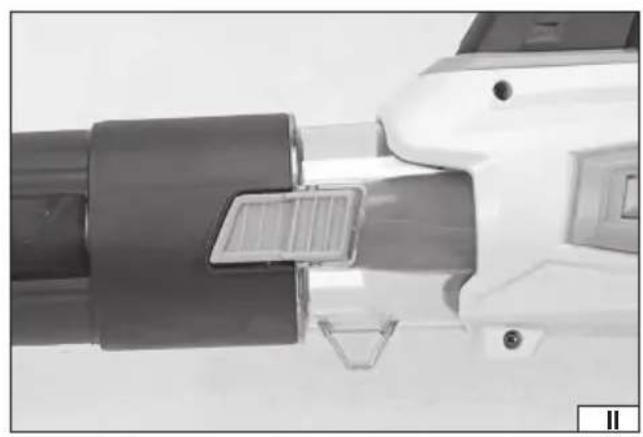
natural_image
Close-up of a white mechanical component with a black cylindrical connector and a gray internal structure (no visible text or symbols)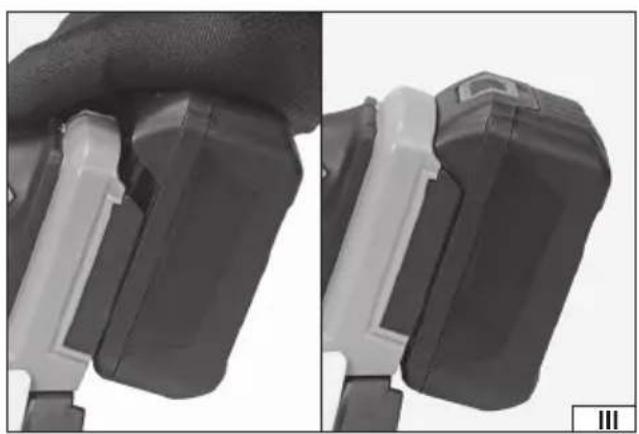
natural_image
Close-up of a hand holding a black plastic object, showing internal structure and side view (no text or symbols visible)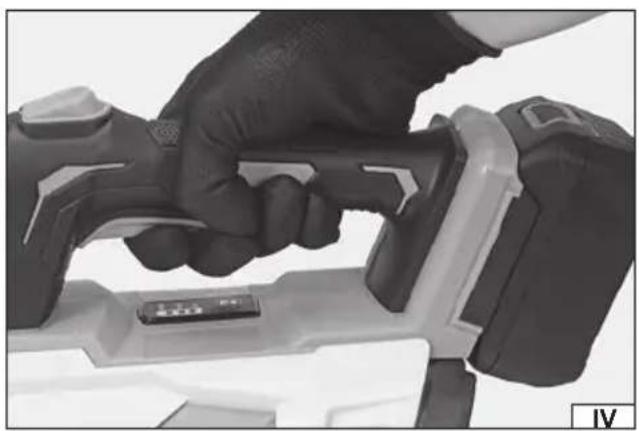
natural_image
Close-up of a hand using a handheld device to adjust or install a component (no visible text or symbols)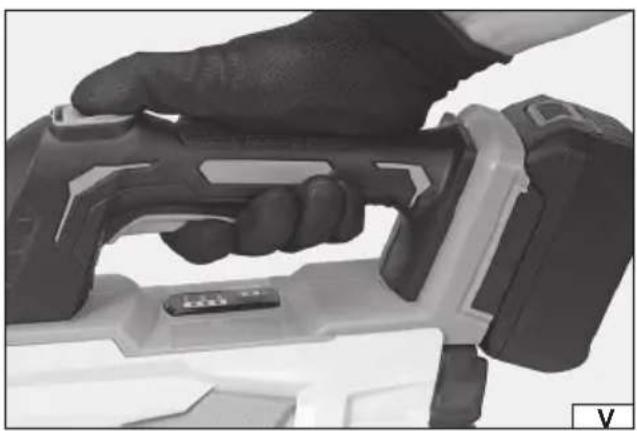
natural_image
Close-up of a gloved hand holding a handheld electronic device with a black handle (no visible text or symbols)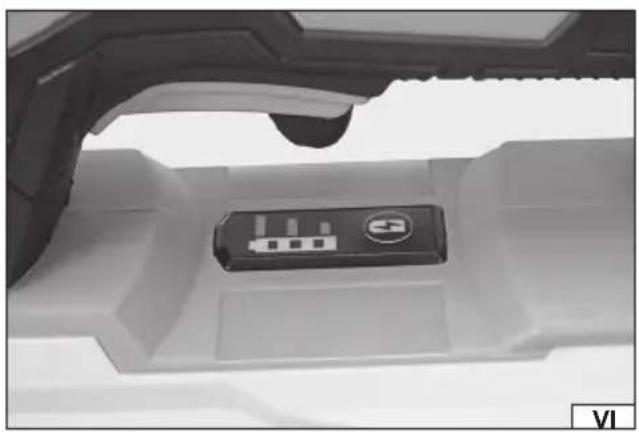
natural_image
Close-up of a mechanical component with a black button and connector (no visible text or symbols)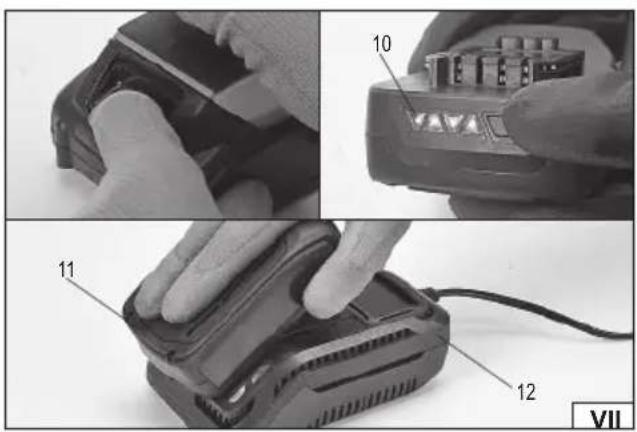
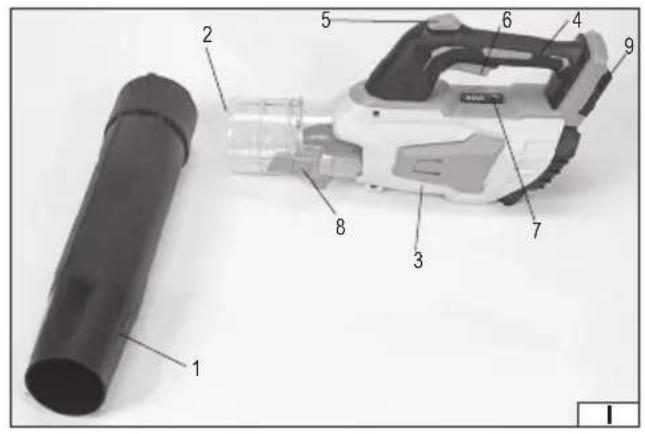
- nozzle
- air outlet
- housing
- handle
- turbo button
- power switch
- battery charge check button
- nozzle lock button
- battery socket
- battery charge indicator
- battery
- charging station
DE
Read the operating instruction
Wear protective goggles
Wear hearing protectors
Before adjusting, cleaning, if the cord becomes entangled or damaged, turn the device off and remove the battery from the tool socket.
Beware of ejected objects.
Stay away from bystanders
Do not expose to precipitation
This symbol indicates that waste electrical and electronic equipment (including batteries and storage cells) cannot be disposed of with other types of waste. Waste equipment should be collected and handed over separately to a collection point for recycling and recovery, in order to reduce the amount of waste and the use of natural resources. Uncontrolled release of hazardous components contained in electrical and electronic equipment may pose a risk to human health and have adverse effects for the environment. The household plays an important role in contributing to reuse and recovery, including recycling of waste equipment. For more information about the appropriate recycling methods, contact your local authority or retailer.
This heavy duty blower is used for cleaning in the garden and directly in the vicinity of the house. It can be used to move fallen leaves or grass cuttings with a jet of air. It is also suitable, for example, for drying surfaces before painting stripes on a car park, drying the edges of roofing felt before welding, or for removing chips/bark residues when working with wood. The turbo button increases the axial flow so that the airstream reaches its maximum speed of 126 km/h. Battery power supply greatly facilitates operation and increases its operating range. Blowing or vacuuming up ash is prohibited.
Proper, reliable, and safe operation of the product depends on its appropriate use; that is why you should:
The supplier is not liable for any damage resulting from failure to observe the safety instructions and recommendations contained in this manual.
EQUIPMENT
The product is delivered complete but requires certain preliminary assembly actions described in further sections of the manual. The following are supplied with the product: nozzle, battery, charging station.
Caution! The product with the following catalogue number: YT-85177 is not supplied with a battery and charging station.
TECHNICAL DATA
| Parameter Unit Value | ||
| Part No. YT-85176, YT-85177 | ||
| Rated voltage [VDC] 18 | ||
| Rated rpm [min] | ^- ] 13000/16000 | |
| Blow capacity [m] | ^3 h] 400 – 570 | |
| Electrical protection class III | ||
| Protection rating IPX0 | ||
| Noise | ||
| - sound pressure L_mA ± K [dB(A)] 76.3 ± 3.0 | ||
| - acoustic power L_mA ± K | [dB(A)] | 90.9 ± 2.67 |
| Vibration level a_p ± K | [m/s2] 0.49 ± 1.5 | |
| Weight | [kg] | 3.3 |
| Battery type | Li-Ion | |
| Battery capacity* | [Ah] | 4 |
| Battery energy* | [Wh] | 72 |
| Charging station* | ||
| Input voltage | [V~] | 220-240 |
| Mains frequency | [Hz] | 50/60 |
| Rated power | [W] | 60 |
| Output voltage | [V] | 21 |
| Output current | [A] | 2.4 |
| Charging time** | [h] | 2 |
*only for models equipped with a battery and charger
**the specified charging time applies only to the battery with the capacity listed in the table
SAFETY INSTRUCTIONS
WARNING! Read all the following instructions. Failure to do so may result in electric shock, fire, or personal injury.
OBSERVE THE INSTRUCTIONS BELOW
Do not use the machine in a potentially explosive environment containing flammable liquids, gases, or vapours. Do not place the machine near any heat or fire sources. Protect the
EN
machine from moisture. Do not expose the machine to rain or other precipitation. Never immerse any part in water or other liquids. Do not use in an environment with relative humidity above 80%. Avoid using the machine in bad weather, especially when there is a risk of lightning. Connect the machine only to a battery with the rated voltage shown on its nameplate. After each use, disconnect the battery from the machine.
Warning! Never start the machine if any persons, especially children or animals, are nearby. The machine should only be used as a garden blower. Any other use is prohibited. Do not use the blower for pumping, e.g., mattresses, firing up barbecues, or bonfires. Do not blow into hot ash, embers, or fire. Embers scattered by the blow may cause fire and lead to serious burns. Do not use the machine to blow snow or water. Do not direct the air outlet at yourself, other people, or animals. Before blowing, check the work area and remove any objects that may cause danger. Please note that ejected particles can bounce off obstacles and hit the operator. When operating the machine, wear personal protective equipment such as work clothing with long legs and sleeves as well as protective gloves. Wear eye protection and a face mask. Moreover, use hearing protection. Wear solid footwear with full uppers and non-slip soles. Do not obstruct the vent holes and make sure they are clear. Obstructed or clogged ventilation openings may cause the machine to overheat. This can lead to damage to the machine and cause fire or electrocution. If you notice any damage to any part of the machine, you must discontinue using it. In this case, hand the machine over to an authorised service centre or replace this part by yourself, provided the user's manual permits this. Turn off the machine and disconnect the battery before performing any activities related to replacing parts, cleaning, or adjustment. Turn off the machine and disconnect the battery before replacing the accessories. The machine must not be used by children or persons with reduced physical, sensory or mental capabilities, or lack of experience and knowledge, as well as those who fail to read this manual. Local regulations may restrict the operator's age. Children should not play with the machine. Children left unattended should not be allowed to perform the cleaning and maintenance of the machine. Hold the machine by the handle. Make sure that air inlet and outlet are not obstructed when holding the product. The air inlet must not be too close to the ground to prevent dirt from being sucked into the machine. Keep a proper standing position during work so that you can always maintain balance. When working on a slope, move across the slope. Never run while working, always walk. Always use the machine when it is fully assembled. Never use the product without the attached nozzle.
Do not touch dangerous moving parts until the machine has been disconnected from the power supply by disconnecting the battery and the dangerous moving parts have come to a complete stop. Before connecting, ensure that the battery fits into the machine socket and that its voltage rating is the same as stated on the machine's rating plate. Always connect the batteries to the machine after making sure that the power switch is in the off position. Check the machine's condition each time before you start it, or after dropping it, or when the blower hits an object. If you notice any damage, such as a cracked housing, you must not use the machine until the damage has been remedied. If, during operation, a malfunction or accident occurs, turn off the machine first, disconnect the batteries and then administer aid to injured persons. Rectify the cause of the malfunction or accident. Check the condition of the machine for damage before resuming operation. Always disconnect the power supply by disconnecting the batteries: when
EN
the user leaves the machine; before removing the jam; before inspecting, cleaning, or works on the machine; after the machine has hit an object to check for damage; if the machine starts to vibrate abnormally, for an immediate check. If the machine starts to vibrate excessively after start-up or during operation, this means that the machine is not operating correctly. In this case, turn the machine off immediately, disconnect the batteries and check it. Check the nozzle for any obstructions in the air inlet and outlet. Once the obstruction has been removed, reassemble the machine, connect it to the power source, and restart it. If excessive vibration persists, immediately turn the machine off with the power switch, disconnect the batteries and hand it over to an authorised service centre. Although precautions have been taken during the machine's engineering and design and considering that the guidelines in this manual have been followed, there is still a residual risk in terms of exposure to vibration and noise. Therefore, use personal protective equipment, do not work too long, and take regular breaks. Make sure that the batteries have been disconnected from the machine before carrying out its maintenance. Keep the machine out of reach of unauthorised persons, especially children. Make sure that the machine is out of the reach of unauthorised persons, especially children, also during operation.
PRODUCT OPERATION
Preparing for operation
Unpack the product by removing all packaging components. It is recommended not to dispose of the packaging as it may be useful for later storage of the product. Check all parts of the product for damage. Check the nozzle for any obstructions in the air inlet and outlet. Warning! Make sure that the product is turned off during assembly i.e. the power switch is in the off position, and the batteries are not connected to the machine's socket.
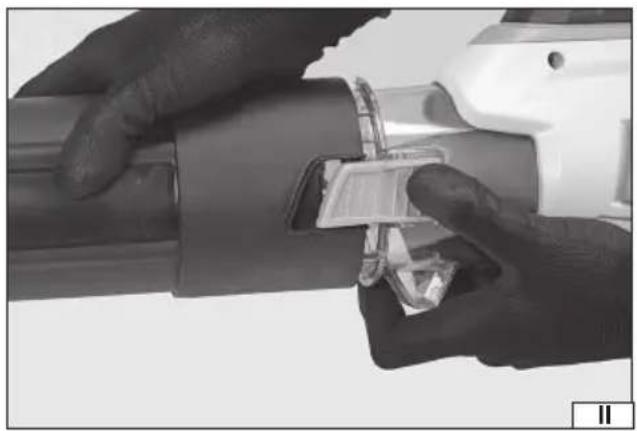
Product assembly (II)
The nozzle should be fitted to the air outlet in the blower housing. To do this, press and hold the nozzle lock button, then slide the nozzle onto the blower air outlet, release the button. The locking latch should hit the hole on the nozzle. Ensure that the connection is properly locked. A properly fitted nozzle can only be removed by pressing and holding the locking button and then removing the nozzle.
Connection to power supply (III)
Slide the battery into the power socket until the battery latches engage. Make sure that the battery will not slide out on its own during operation. Disconnect the battery by pressing the latch and then pulling the battery out of the trimmer housing.
Only the following 18V Li-Ion YATO batteries can be used to power the tool: YT-82842, YT-82843, YT-82844 and YT-82845, which can only be charged with YATO YT-82848 or YT-82849 chargers. It is forbidden to use other batteries with a different rated voltage and not matching the tool battery socket. It is forbidden to modify the socket or battery to make them match.
Blower activation (IV)
Ensure that the battery is connected to the blower. Grasp the product by the handle, make sure that neither the air inlet nor the air outlet is obstructed. Direct the nozzle outlet so that the airflow is not directed at any person, animal or object. Start the product by pressing the switch with your finger. Pressing the switch will start the blower. Keep the switch depressed at all times during operation. Blower operation is stopped when the pressure on the switch is released. Once the blower has come to a complete stop, disconnect the machine from the power supply by disconnecting the battery. Next, proceed with maintenance.
Turbo function (V)
During blower operation, it is possible to increase the blowing capacity by using the turbo function. This function should only be used briefly, for a maximum of 30 seconds, only if the airflow in normal operation is insufficient. The turbo function cannot be activated until the machine has reached full speed for normal operation. Then press and hold the turbo button on the top of the handle. Releasing pressure on the turbo button will allow the machine to return to normal operation.
Battery charge indicator (VI)
It is possible to check the approximate state of charge of the battery before starting up the device. To do this, ensure that the battery is connected to the blower, then press and hold the battery charge check button. The lights indicating the approximate state of charge of the battery will illuminate: Red, orange, green – battery charged. Red, orange – battery partially charged. Red – battery needs charging, release button.
When the blower is running, the approximate battery charge status is displayed automatically.
EN
Safety instructions for battery charging
Caution! Before starting charging, make sure that the power unit body, cable and plug are not cracked or damaged. It is forbidden to use a defective or damaged charging station and power unit! Use only the supplied charging station and power unit to charge the batteries. The use of another power unit may result in fire or damage to the tool. The battery should only be charged in a closed, dry room, protected against unauthorised access, especially by children. Do not use the charging station and power unit without the constant supervision of an adult! If you need to leave the room where the product is being charged, disconnect the charger from the mains by removing the power unit's plug from the mains socket. If smoke, suspicious odours, etc. are escaping from the charger, remove the charger plug from the mains socket immediately! The device is supplied with an uncharged battery and should therefore be charged according to the procedure described below with the included power unit and charging station before use. Li-ion (lithium-ion) batteries do not have the so-called "memory effect", which means they can be recharged at any time. However, it is recommended to discharge the battery during normal operation and then charge it to full capacity. If, due to the nature of work, it is not possible to use the battery in such a manner every time, it should be done at least every several work cycles. Never discharge any batteries by short-circuiting the battery plates, as this will cause irreparable damage! In addition, do not check the battery charge status by short-circuiting the electrodes and checking their sparking.
Storing the battery
Ensure proper storage conditions to extend the battery's life. The battery can last for approximately 500 charge-discharge cycles. Store the battery at a temperature ranging from 0^ C to 30^ C at a relative air humidity of 50%. Charge the battery to approx. 70% of its total capacity to store it for a longer period of time. In case of prolonged storage, the battery should be periodically charged once a year. Do not over-discharge the battery as this will shorten its life and may cause irreparable damage. During storage, the battery will gradually discharge due to leakage. The self-discharge process depends on the storage temperature – the higher the temperature is, the faster the discharge process is. If the batteries are stored incorrectly, the electrolyte may leak. In case of leakage, secure the leak with a neutralising agent. In the case of electrolyte contact with eyes, rinse eyes thoroughly with water, and immediately seek medical attention. It is not allowed to use the tool with a damaged battery. If the battery is completely worn, return it to a specialist waste disposal centre.
Transporting the batteries
Lithium-ion batteries are treated as hazardous goods according to legal regulations. The user of the tool can transport the product together with the battery and the batteries alone by land. In that case, no additional conditions have to be met. If you entrust transport to third parties (e.g. a courier company), follow the regulations regarding the transport of hazardous goods. Before shipping, please contact a properly qualified person. It is not allowed to transport damaged batteries. For the duration of transport, remove the demountable batteries from the product and secure the exposed contacts, e.g. by covering them with insulation tape. Protect the batteries in the packaging in such a way that they do not move inside the packaging during transport. National regulations for the transport of hazardous materials must also be observed.
Charging the battery
Caution! Before charging, disconnect the charging station power unit from the mains by removing the plug from the mains socket. In addition, clean the battery and battery clamps of dirt and dust with a soft, dry cloth.
The battery has a built-in charge indicator. The LEDs will light up by pressing the button (VII), the more of them come on, the more charged the battery is. If the LEDs do not light up when the button is pressed, the battery is discharged. Disconnect the battery from the tool. Slide the battery into the charger socket (VIII). Plug the charger into a mains socket. The red LED will light up, which indicates the charging process. When charging is complete, the red LED will turn off and the green LED will light up to indicate that the battery is fully charged. Pull the power unit plug out of the mains socket. Pull the battery out of the charging station by pressing the battery latch button.
Caution! If the green LED lights up when the charger is connected to the mains, the battery is fully charged. In this case, the charger will not start the charging process.
PRODUCT MAINTENANCE AND STORAGE
Whenever work is completed, disconnect the batteries from the product and proceed with maintenance. Ensure that the device is unplugged. Remove the nozzle. To do this, press and hold the nozzle lock button, pull the nozzle off the blower. Do not remove the nozzle by force or with tools to avoid damaging the unit. Clean both the ventilation openings and the inlet and outlet with a soft handheld brush or a painting brush with plastic bristles. Clean the housing, handle, and controls with a soft, slightly dampened with water cloth and then dry them. A compressed air stream with a pressure not exceeding 0.3 MPa can be used for cleaning. Once the nozzle is removed, it can be cleaned with a jet of water and then dried or left to dry. Do not use sharp objects, abrasives, solvents, or alcohol for cleaning.
Product storage
Store the product disassembled. The storage area should guarantee that unauthorised access to the product is prevented. The storage area must be protected from moisture, direct sunlight, and excessively low temperatures. Store the product in a temperature range 0\~+40°C with a maximum relative humidity of 80%. It is recommended to store the product in the original packaging.
PRODUKTBESCHREIBUNG
CARACTÉRISTIQUES DU PRODUIT
Transport van accu's
Transport akumulatora
DECLARATION OF CONFORMITY
0425/YT-85176/EC/2025
We declare and guarantee with full responsibility that the following products:
Cordless leaf blower; 18 V; 450 + 570 m³/h; 13000 / 16000 min⁻¹; item no. YT-85176, YT-85177
meet requirements of the following European Standards / Technical Specifications:
EN 60335-1:2012 + A11:2014 + A13:2017 + A1:2019 + A14:2019 + A2:2019 + A15:2021
EN 50636-2-100:2014
EN ISO 12100:2010
EN 62233:2008
EN IEC 55014-1:2021
EN IEC 55014-2:2021
and fulfill requirements of the following European Directives:
2006/42/EC Machinery and safety elements
2014/30/EU Electromagnetic compatibility (EMC) Directive
2011/65/EU Restriction of the Use of Certain Hazardous Substances
Serial number: concern all serials numbers of item(s) mentioned in this declaration
The person authorized to compile the technical file:
Agnieszka Rędziak
TOYA S.A., ul. Sołtysowicka 13 - 15, 51-168 Wrocław, Poland
Wrocław, 2025.04.17
(Place and date of issue)
V-CE PREZES ZARZADU
JAN SZMIDT
(Name and signature of authorized person)
TOYA S.A.
DECLARATION OF CONFORMITY
0425/YT-85176/EC/2025
We declare and guarantee with full responsibility that the following products:
Cordless leaf blower; 18 V; 450 + 570 m³/h; 13000 / 16000 min⁻¹; item no. YT-85176, YT-85177
fulfil requirements of the following European Directive: 2000/14/WE
Conformity assessment procedure:
Manufacturer quality-control system
Measured sound power level on an equipment representative for this type: 90,9 dB(A)
Guaranteed sound power level for this equipment: 94 dB(A)
conformity and references of the other Community Directives applied:
2006/42/WE Machinery and safety devices
2014/30/UE Electromagnetic compatibility
2011/65/UE Restriction of the Use of Certain Hazardous Substances
Wrocław, 2025.04.17
(Place and date of issue)
V-CE PREZES ZARZADU
JAN SZMIDT
(Name and signature of authorized person)
TOYA S.A.