
NR 1838DKA - Stapler HiKOKI - Free user manual and instructions
Find the device manual for free NR 1838DKA HiKOKI in PDF.


| Product Type | Cordless metal connector stapler/nailer |
| Brand | HiKOKI |
| Model | NR 1838DKA |
| Nail length | 38 mm (1-1/2 in) |
| Loading capacity | 31 nails |
| Trigger mode | Full sequential |
| Cycle frequency | 2 nails/sec (intermittent) |
| Power source | 18 V Li-ion battery (model BSL1840M included) |
| Charger | Model UC18YFSL, input AC 120 V 60 Hz, charging voltage 14.4–18 V DC, current 3.5 A |
| Charging time (BSL1840M) | Approximately 60 min at 20 °C |
| Weight (with battery) | 4.0 kg (8.8 lbs) |
| Dimensions (L × W × H) | 310 × 129 × 340 mm |
| Motor | Brushless DC motor |
| Safety | Push lever, trigger lock, auto shut-off after 30 min, double activation protection |
| Lighting | Built-in LED to illuminate work area |
| Operating temperature | 0 °C to 40 °C |
| Maintenance | Regularly clean the magazine and push lever with compressed air; wipe with a soft cloth; do not use solvents |
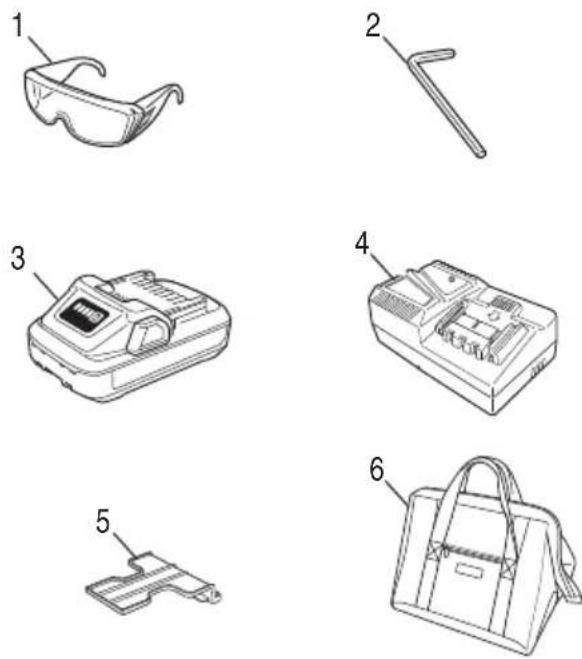
| Included accessories | Safety glasses, M5 hex wrench, BSL1840M battery, UC18YFSL charger, battery cover, tool bag |
| Recommended nails | Original metabo HPT 38 mm paper collated nails, full head or hardened |
| Warranty | Have repaired by an authorized metabo HPT service center; use only original parts |
Frequently Asked Questions - NR 1838DKA HiKOKI
User questions about NR 1838DKA HiKOKI
0 question about this device. Answer the ones you know or ask your own.
Ask a new question about this device
Download the instructions for your Stapler in PDF format for free! Find your manual NR 1838DKA - HiKOKI and take your electronic device back in hand. On this page are published all the documents necessary for the use of your device. NR 1838DKA by HiKOKI.
USER MANUAL NR 1838DKA HiKOKI
Cordless Metal Connector Nailer
INSTRUCTION AND SAFETY MANUAL
DANGER
Improper use of this Nailer can result in death or serious injury!
This Manual contains important information about product safety.
Read and understand this Manual before operating the Nailer.
Never allow anyone who has not reviewed this manual to use the tool.
This manual should be stored in safe place.
MANUEL D'INSTRUCTIONS ET DE SECURITE
DANGER
IMPORTANT SAFETY INFORMATION

Read and understand tool labels and all of the operating instructions, safety precautions and warnings in this manual before operating or maintaining this nailer. Failure to follow warnings could result in DEATH or SERIOUS INJURY.
Most accidents that result from the operation and maintenance of Nailers are caused by the failure to observe basic safety rules or precautions. An accident can often be avoided by recognizing a potentially hazardous situation before it occurs, and by observing appropriate safety procedures.
Basic safety precautions are outlined in the "SAFETY" section of this Manual and in the sections which contain the operation and maintenance instructions.
Hazards that must be avoided to prevent bodily injury or machine damage are identified by DANGERS and WARNINGS on the Nailer and in this Manual.
NEVER use this Nailer for applications other than those specified in this Manual.
DEFINITIONS OF SIGNAL WORDS
DANGER indicates an imminently hazardous situation which, if not avoided, will result in death or serious injury.
WARNING indicates a potentially hazardous situation which, if not avoided, could result in death or serious injury.
CAUTION indicates a potentially hazardous situation which, if not avoided, may result in minor or moderate injury, or may cause machine damage.
NOTE emphasizes essential information.
EXPLANATION OF THE NAILING ACTION OF THE metabo HPT NAILER
FULLSEQUENTIAL ACTUATION MECHANISM:
First, press the push lever against the wood; next, pull the trigger to drive the fastener. Follow the same sequence to continue driving fasteners.
SAFETY
GENERAL POWER TOOL SAFETY WARNINGS

WARNING
Read all safety warnings and all instructions. Failure to follow the warnings and instructions may result in electric shock, fire and/or serious injury.
Save all warnings and instructions for future reference.
The term "power tool" in the warnings refers to your mains-operated (corded) power tool or battery-operated (cordless) power tool.
1) Work area safety
a) Keep work area clean and well lit. Cluttered or dark areas invite accidents
b) Do not operate power tools in explosive atmospheres, such as in the presence of flammable liquids, gases or dust. Power tools create sparks which may ignite the dust or fumes.
c) Keep children and bystanders away while operating a power tool. Distractions can cause you to lose control.
2) Electrical safety
a) Power tool plugs must match the outlet. Never modify the plug in any way. Do not use any adapter plugs with earthed (grounded) power tools.
Unmodified plugs and matching outlets will reduce risk of electric shock.
b) Avoid body contact with earthed or grounded surfaces such as pipes, radiators, ranges and refrigerators. There is an increased risk of electric shock if your body is earthed or grounded.
c) Do not expose power tools to rain or wet conditions. Water entering a power tool will increase the risk of electric shock.
d) Do not abuse the cord. Never use the cord for carrying, pulling or unplugging the power tool.
Keep cord away from heat, oil, sharp edges or moving parts.
Damaged or entangled cords increase the risk of electric shock.
e) When operating a power tool outdoors, use an extension cord suitable for outdoor use.
Use of a cord suitable for outdoor use reduces the risk of electric shock.
f) If operating a power tool in a damp location is unavoidable, use a residual current device (RCD) protected supply.
Use of an RCD reduces the risk of electric shock.
3) Personal safety
a) Stay alert, watch what you are doing and use common sense when operating a power tool. Do not use a power tool while you are tired or under the influence of drugs, alcohol or medication.
A moment of inattention while operating power tools may result in serious personal injury.
b) Use personal protective equipment. Always wear eye protection.
Protective equipment such as dust mask, nonskid safety shoes, hard hat, or hearing protection used for appropriate conditions will reduce personal injuries.
c) Prevent unintentional starting. Ensure the switch is in the off-position before connecting to power source and/or battery pack, picking up or carrying the tool.
Carrying power tools with your finger on the switch or energising power tools that have the switch on invites accidents.
d) Remove any adjusting key or wrench before turning the power tool on.
A wrench or a key left attached to a rotating part of the power tool may result in personal injury.
e) Do not overreach. Keep proper footing and balance at all times.
This enables better control of the power tool in unexpected situations.
f) Dress properly. Do not wear loose clothing or jewellery. Keep your hair, clothing and gloves away from moving parts.
Loose clothes, jewellery or long hair can be caught in moving parts.
g) If devices are provided for the connection of dust extraction and collection facilities, ensure these are connected and properly used.
Use of dust collection can reduce dust-related hazards.
4) Power tool use and care
a) Do not force the power tool. Use the correct power tool for your application.
The correct power tool will do the job better and safer at the rate for which it was designed.
b) Do not use the power tool if the switch does not turn it on and off.
Any power tool that cannot be controlled with the switch is dangerous and must be repaired.
c) Disconnect the plug from the power source and/or the battery pack from the power tool before making any adjustments, changing accessories, or storing power tools.
Such preventive safety measures reduce the risk of starting the power tool accidentally.
d) Store idle power tools out of the reach of children and do not allow persons unfamiliar with the power tool or these instructions to operate the power tool.
Power tools are dangerous in the hands of untrained users.
e) Maintain power tools. Check for misalignment or binding of moving parts, breakage of parts and any other condition that may affect the power tool's operation. If damaged, have the power tool repaired before use.
Many accidents are caused by poorly maintained power tools.
f) Keep cutting tools sharp and clean.
Properly maintained cutting tools with sharp cutting edges are less likely to bind and are easier to control.
g) Use the power tool, accessories and tool bits etc. in accordance with these instructions, taking into account the working conditions and the work to be performed.
Use of the power tool for operations different from those intended could result in a hazardous situation.
5) Battery tool use and care
a) Recharge only with the charger specified by the manufacturer.
A charger that is suitable for one type of battery pack may create a risk of fire when used with another battery pack.
b) Use power tools only with specifically designated battery packs.
Use of any other battery packs may create a risk of injury and fire.
c) When battery pack is not in use, keep it away from other metal objects like paper clips, coins, keys, staples, screws, or other small metal objects, that can make a connection from one terminal to another.
Shorting the battery terminals together may cause burns or a fire.
d) Under abusive conditions, liquid may be ejected from the battery; avoid contact. If contact accidentally occurs, flush with water. If liquid contacts eyes, additionally seek medical help.
Liquid ejected from the battery may cause irritation or burns.
6) Service
a) Have your power tool serviced by a qualified repair person using only identical replacement parts.
This will ensure that the safety of the power tool is maintained.

WARNING
To reduce the risk of injury, user must read instruction manual.
NAILER SAFETY WARNINGS

WARNING
Always assume that the tool contains fasteners.
Careless handling of the nailer can result in unexpected firing of fasteners and personal injury.
- Do not point the tool towards yourself or anyone nearby. Unexpected triggering will discharge the fastener causing an injury.
- Do not actuate the tool unless the tool is placed firmly against the workpiece. If the tool is not in contact with the workpiece, the fastener may be deflected away from your target.
- Disconnect the tool from the power source when the fastener jams in the tool. While removing a jammed fastener, the nailer may be accidentally activated if it is plugged in.
Use caution while removing a jammed fastener.
The mechanism may be under compression and the fastener may be forcefully discharged while attempting to free a jammed condition.
- Do not use this nailer for fastening electric cables.
It is not designed for electric cable installation and may damage the insulation of electric cables thereby causing electric shock or fire hazards.
IMPORTANT SAFETY INSTRUCTIONS FOR USING NAILERS
READ ALL INSTRUCTIONS

DANGER

- OPERATORS AND OTHERS IN WORK AREA MUST WEAR SAFETY GLASSES WITH SIDE SHIELDS.
When operating the Nailer, always wear safety glasses with side shields, and make sure others in work area wear safety glasses, too.
Safety glasses must conform to the requirements of American National Standards Institute, ANSI Z87.1 and provide protection against flying particles both from the front and side.
The employer must enforce the use of safety glasses by the Nailer operator and others in work area.
The Nailer is designed for use with pre-punched holed metal connector only.
If fasteners are driven into hard materials, the fasteners can ricochet and hurt someone.
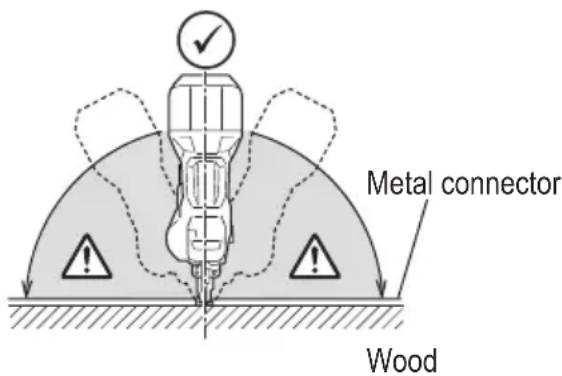
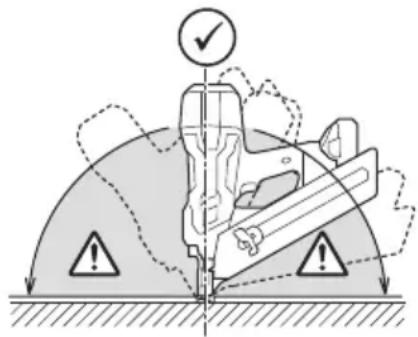
- TO OPERATE THE NAILER, HOLD
PERPENDICULAR TO THE WORKPIECE.
Fasteners not driven straight can deflect, causing injury.

WARNING
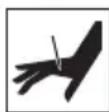
- NEVER POINT TOOL AT YOURSELF OR OTHERS IN WORK AREA.
Always assume the Nailer contains fasteners.
Never point the Nailer at yourself toward yourself or others, whether it contains fasteners or not.
If fasteners are mistakenly driven, it can lead to severe injuries.
Never engage in horseplay with the Nailer.
Respect the Nailer as a working implement.
- KEEP FINGERS AWAY FROM TRIGGER WHEN NOT DRIVING FASTENERS TO AVOID ACCIDENTAL FIRING.
Never carry the Nailer with finger on trigger since you could drive a fastener unintentionally and injure yourself or someone else. Always carry the Nailer by the handle only.
- ALWAYS WEAR EAR AND HEAD PROTECTION.
Always wear ear protection to protect your ears from loud noise. Always wear head protection to protect your head from flying objects.
- OPERATE WITHIN PROPER TEMPERATURE RANGE.
The operating environment for this device is between 32^ (0^) and 104^ (40^) so ensure use within this temperature range.
The device may fail to operate below 32^ (0^) or above 104^ (40^) .
- STORE NAILER PROPERLY, AND BATTERY REMOVED.
When not in use, the Nailer, battery and battery charger should be stored in a dry place. Keep out of reach of children. Lock the storage area.
- KEEP WORK AREA CLEAN.
Cluttered areas invite injuries. Clear all work areas of unnecessary tools, debris, furniture, etc.
- KEEP VISITORS AWAY.
Do not let visitors handle the Nailer.
All visitors should be kept safely away from work area.
- DRESS PROPERLY.
Do not wear loose clothing or jewelry as they can be caught in moving parts.
Rubber gloves and nonskid footwear are recommended when working outdoors.
Wear protective hair covering to contain long hair.
- CHECK PUSH LEVER BEFORE USE.
Make sure the push lever operates properly. (The push lever may be called "Safety".) Never use the Nailer unless the push lever is operating properly, otherwise the Nailer could drive a fastener unexpectedly. Do not tamper with or remove the push lever, otherwise the push lever becomes inoperable.
- KEEP ALL SCREWS AND COVERS TIGHTLY IN PLACE.
Keep all screws and covers tightly mounted. Check their condition periodically.
Never use the Nailer if parts are missing or damaged.
- DO NOT LOAD FASTENERS WITH TRIGGER OR PUSH LEVER DEPRESSED.
When loading fasteners into the Nailer,
(1) do not depress the trigger;
(2) do not depress the push lever; and
(3) keep the Nailer pointed downward.
- KEEP FACE, HANDS AND FEET AWAY FROM FIRING HEAD DURING USE.
Never place your face, hands or feet closer than 8 inches (200 mm) from the firing head.
A serious injury can result if the fasteners are deflected by the workpiece, or are driven away from the point of entry. - PLACE NAILER PROPERLY ON WORKPIECE.
Do not drive fasteners on top of other fasteners or with the Nailer at too steep of an angle; the fasteners can ricochet and hurt someone. - BE CAREFUL OF DOUBLE FIRE DUE TO RECOIL.
If the push lever is unintentionally allowed to recontact the workpiece following recoil, an unwanted fastener will be driven.
In order to avoid this undesirable double fire,
1) Pull the trigger rapidly and firmly.
2) Use the probe to ensure nails were fired accurately into the holes. - DO NOT DRIVE FASTENERS INTO THIN BOARDS OR NEAR CORNERS AND EDGES OF WORKPIECE.
The fasteners can be driven through or away from the workpiece and hit someone. - NEVER DRIVE FASTENERS FROM BOTH SIDES OF A WALL AT THE SAME TIME.
The fasteners can be driven into and through the wall and hit a person on the opposite side. - CHECK FOR LIVE WIRES.
Avoid the risk of severe electrical shock by checking for live electrical wires that may be hidden by walls, floors or ceilings. Turn off the breaker switch to ensure there are no live wires. - DO NOT OVERREACH.
Keep proper footing and balance at all times. - NEVER USE NAILER WHICH IS DEFECTIVE OR OPERATING ABNORMALLY.
If the Nailer appears to be operating unusually, making strange noises, or otherwise appears defective, stop using it immediately and arrange for repairs by a metabo HPT authorized service center. - REMOVE ALL REMAINING FASTENERS AND BATTERY FROM NAILER WHEN:
(1) doing maintenance and inspection;
(2) checking proper operation of push lever and trigger;
(3) clearing a jam;
(4) it is not in use;
(5) leaving work area;
(6) moving it to another location; and
(7) handing it to another person.
Never attempt to clear a jam or repair the Nailer unless you have removed battery and all remaining fasteners from the Nailer.
The Nailer should never be left unattended since people who are not familiar with the Nailer might handle it and injure the themselves.
24. REMOVE BATTERY FROM NAILER WHEN:
(1) loading fasteners;
- STAY ALERT.
Watch what you are doing. Use common sense. Do not operate the Nailer when you are tired. The Nailer should never be used by you if you are under the influence of alcohol, drugs or medication that makes you drowsy.
- HANDLE NAILER CORRECTLY.
Operate the Nailer according to this Manual. Never allow the Nailer to be operated by children, individuals unfamiliar with its operation or unauthorized personnel.
-
NEVER USE NAILER FOR APPLICATIONS OTHER THAN THOSE SPECIFIED IN THIS MANUAL.
-
HANDLE NAILER CAREFULLY.
Do not drop the Nailer or strike the Nailer against hard surfaces; and do not scratch or engrave signs on the Nailer. Handle the Nailer carefully.
- MAINTAIN NAILER WITH CARE.
Keep the Nailer clean and lubricated for better and safer performance.
- USE ONLY PARTS, ACCESSORIES OR FASTENERS SUPPLIED OR RECOMMENDED BY metabo HPT.
Unauthorized parts, accessories, or fasteners may void your warranty and can lead to malfunction and resulting injuries.
Only service personnel trained by metabo HPT, distributor or employer shall repair the Nailer.
- NEVER MODIFY OR ALTER A NAILER.
Doing so may cause it to malfunction and personal injuries may result.
- NEVER allow magnets (or similar magnetic devices) to be adjacent to the nailer, because the nailer has a magnetic sensor inside.
Doing so will cause a failure or risk of injury by malfunction.
- Always point probe away from yourself and others.
Keep your face, hands, feet and other body parts, as well as those of other persons away from the firing head to avoid possible injury during use and carrying.
IMPORTANT SAFETY INSTRUCTIONS FOR BATTERY CHARGER
WARNING
Death or serious bodily injury could result from improper or unsafe use of battery chargers. To avoid these risks, follow these basic safety instructions:
READ ALL INSTRUCTIONS
- This manual contains important safety and operating instructions for battery charger Model UC18YFSL.
- Before using battery charger, read all instructions and cautionary markings on (1) battery charger, (2) battery, and (3) product using battery.
- To reduce risk of injury, charge metabo HPT rechargeable batteries. Other type of batteries may burst causing personal injury and damage.
- Use of an attachment not recommended or sold by the battery charger manufacturer may result in a risk of fire, electric shock, or injury to persons.
- To reduce risk of damage to electric plug and cord, pull by plug when disconnecting battery charger.
- Make sure cord is located so that it will not be stepped on, tripped over, or otherwise subjected to damage or stress.
- An extension cord should not be used unless absolutely necessary. Use of improper extension cord could result in a risk of fire and electric shock. If extension cord must be used make sure:
a. That blades of extension cord are the same number, size, and shape as those of plug on battery charger:
b. That extension cord is properly wired and in good electrical condition; and
c. That wire size is large enough for AC ampere rating of battery charger as specified in Table 1.
Table 1: RECOMMENDED MINIMUM AWG SIZE FOR EXTENSION CORDS FOR BATTERY CHARGERS
| AC Input Rating Amperes *1 | AWG Size of Cord | ||||
| Equal to or greater than | but less than | Length of Cord, Feet (Meter) | |||
| 25 (7.5) | 50 (15) | 100 (30) | 150 (45) | ||
| 0 | 2 | 18 | 18 | 18 | 16 |
| 2 | 3 | 18 | 18 | 16 | 14 |
| 3 | 4 | 18 | 18 | 16 | 14 |
*1 If the input rating of a battery charger is given in watts rather than in amperes, the corresponding ampere rating is to be determined by dividing the wattage rating by the voltage rating-for example:
$$ \frac {1 , 2 5 0 \text {w a t t s}}{1 2 5 \text {v o l t s}} = 1 0 \text {a m p e r e s} $$
- Do not operate battery charger with damaged cord or plug-replace them immediately.
- Do not operate battery charger if it has received a sharp blow, been dropped, or otherwise damaged in any way; take it to a qualified serviceman.
- Do not disassemble battery charger; take it to a qualified serviceman when service or repair is required. Incorrect reassembly may result in a risk of electric shock or fire.
- To reduce risk of electric shock, unplug charger from receptacle before attempting any maintenance or cleaning. Removing the battery will not reduce this risk.
IMPORTANT SAFETY INSTRUCTIONS FOR USE OF THE BATTERY AND BATTERY CHARGER
You must charge the battery before you can use the power tool. Before using the model UC18YFSL battery charger, be sure to read all instructions and cautionary statements on it, the battery and in this manual.
REMEMBER: USE ONLY metabo HPT BATTERIES. OTHER TYPES OF BATTERIES MAY BURST AND CAUSE INJURY!
Follow these instructions to avoid the risk of injury:
WARNING
Improper use of the battery or battery charger can lead to serious injury. To avoid these injuries:
- NEVER disassemble the battery.
- NEVER incinerate the battery, even if it is damaged or is completely worn out. The battery can explode in a fire.
- NEVER short-circuit the battery.
- NEVER insert any objects into the battery charger's air vents. Electric shock or damage to the battery charger may result.
- NEVER charge outdoors. Keep the battery away from direct sunlight and use only where there is low humidity and good ventilation.
- NEVER charge when the temperature is below 32^ (0^) or above 104^ (40^) .
- NEVER connect two battery chargers together.
-
NEVER insert foreign objects into the hole for the battery or the charger.
-
NEVER use a booster transformer when charging.
- NEVER use an engine generator or DC power to charge.
- NEVER store the battery or charger in places where the temperature may reach or exceed 104^ (40^) such as inside metal box or car.
- NEVER expose the battery or charger to rain or wet conditions.
- ALWAYS operate charger on standard household electrical power (120 volts). Using the charger on any other voltage may overheat and damage the charger.
- ALWAYS wait at least 15 minutes between charges to avoid overheating the charger.
- ALWAYS disconnect the power cord from its receptacle when the charger is not in use.
CAUTION ON LITHIUM-ION BATTERY
To extend the lifetime, the lithium-ion battery equips with the protection function to stop the output.
In the cases of 1 to 3 described below, when using this product, even if you are pulling the switch, the motor may stop. This is not the trouble but the result of protection function.
-
When the battery power remaining runs out, the motor stops. In such case, charge it up immediately.
-
If the tool is overloaded, the motor may stop. In this case, release the switch of tool and eliminate causes of overloading. After that, you can use it again.
-
If the battery is overheated under overload work, the battery power may stop. In this case, stop using the battery and let the batte cool. After that, you can use it again.
Furthermore, please heed the following warning and caution.
WARNING
In order to prevent any battery leakage, heat generation, smoke emission, explosion and ignition beforehand, please be sure to heed the following precautions.
-
Make sure that swarf and dust do not collect on the battery.
During work make sure that swarf and dust do not fall on the battery.
Make sure that any swarf and dust falling on the power tool during work do not collect on the battery.
Do not store an unused battery in a location exposed to swarf and dust.
Before storing a battery, remove any swarf and dust that may adhere to it and do not store it together with metal parts (screws, nails, etc.). -
Do not pierce battery with a sharp object such as a nail, strike with a hammer, step on, throw or subject the battery to severe physical shock.
- Do not use an apparently damaged or deformed battery.
- Do not use the battery for a purpose other than those specified.
- If the battery charging fails to complete even when a specified recharging time has elapsed, immediately stop further recharging.
- Do not put or subject the battery to high temperatures or high pressure such as into a microwave oven, dryer, or high pressure container.
- Keep away from fire immediately when leakage or foul odor are detected.
- Do not use in a location where strong static electricity generates.
- If there is battery leakage, foul odor, heat generated, discolored or deformed, or in any way appears abnormal during use, recharging or storage, immediately remove it from the equipment or battery charger, and stop use.
- Do not immerse the battery or allow any fluids to flow inside. Conductive liquid ingress, such as water, can cause damage resulting in fire or explosion. Store your battery in a cool, dry place, away from combustible and flammable items. Corrosive gas atmospheres must be avoided.
- If alkaline lubricant or cutting fluid adheres to the battery, quickly wipe it off with a dry cloth. Failure to do so may result in damage or degradation of the case.
CAUTION
- If liquid leaking from the battery gets into your eyes, do not rub your eyes and wash them well with fresh clean water such as tap water and contact a doctor immediately.
If left untreated, the liquid may cause eye-problems.
- If liquid leaks onto your skin or clothes, wash well with clean water such as tap water immediately.
There is a possibility that this can cause skin irritation.
- If you find rust, foul odor, overheating, discolor, deformation, and/or other irregularities when using the battery for the first time, do not use and return it to your supplier or vendor.
WARNING
If an electrically conductive foreign object enters the terminals of the lithium ion battery, a short-circuit may occur resulting in the risk of fire. Please observe the following matters when storing the battery.
- Do not place electrically conductive cuttings, nails, steel wire, copper wire or other wire in the storage case.
- Either install the battery in the power tool or store by securely pressing into the battery cover until the ventilation holes are concealed to prevent short-circuits.
REGARDING LITHIUM-ION BATTERY TRANSPORTATION
When transporting a lithium-ion battery, please observe the following precautions.
WARNING
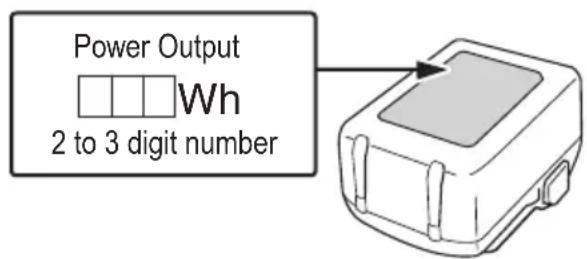
Notify the transporting company that a package contains a lithium-ion battery, inform the company of its power output and follow the instructions of the transportation company when arranging transport.
- Lithium-ion batteries that exceed a power output of 100 Wh are considered to be in the freight classification of Dangerous Goods and will require special application procedures.
- For transportation abroad, you must comply with international law and the rules and regulations of the destination country.
EMPLOYER'S RESPONSIBILITIES
- Ensure that this MANUAL is available to operators and personnel performing maintenance.
- Ensure that Nailers are used only when operators and others in work area are wearing EYE PROTECTOR.
- Enforce the use of EYE PROTECTOR by operators and others in work area.
- Keep Nailers in safe working order.
- Maintain Nailers properly.
- Ensure that Nailers which require repair are not further used before repair.
SAVE THESE INSTRUCTIONS AND MAKE THEM AVAILABLE TO OTHER USERS AND OWNERS OF THIS TOOL!
OPERATION
NOTE
The information contained in this Manual is designed to assist you in the safe operation of the Nailer.
NEVER operate the Nailer unless you have first read and understood all safety instructions contained in this manual.
Some illustrations in this Manual may show details or attachments that differ from those on your own Nailer.
NAME OF PARTS
- Cordless Metal Connector Nailer
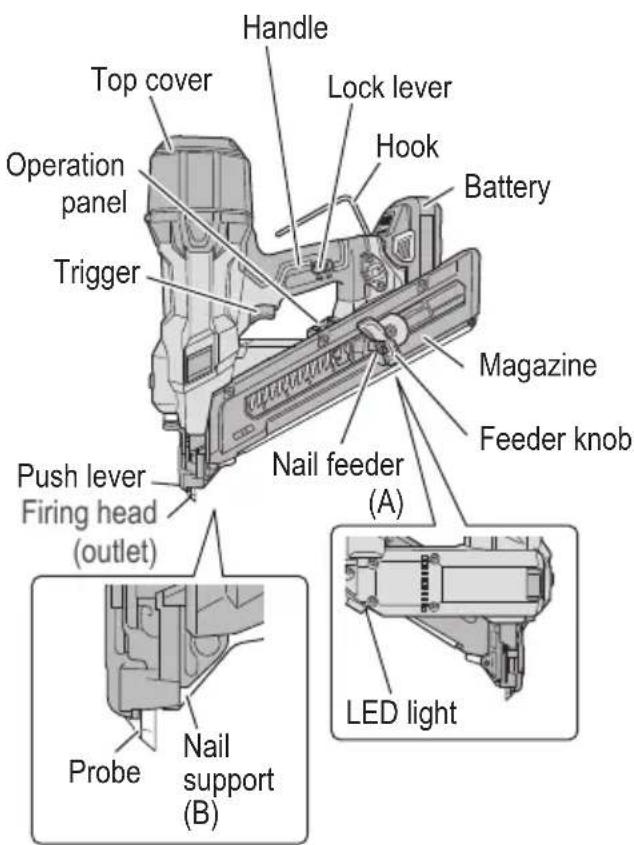
- Battery
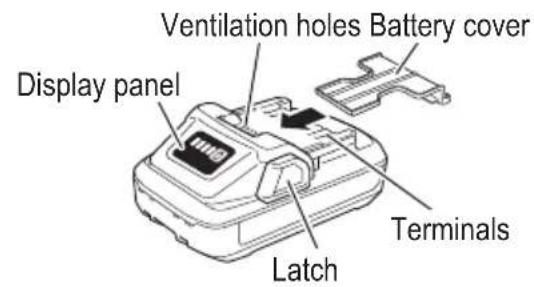
- Battery Charger
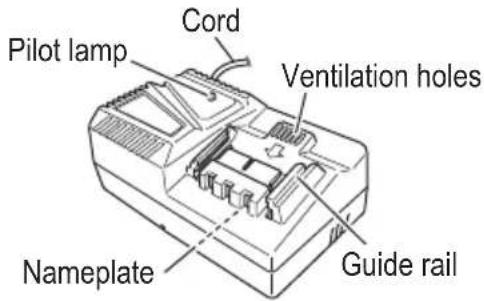
SPECIFICATIONS
- Cordless Metal Connector Nailer
| Model NR1838DKA | |
| Motor DC Brushless | |
| Applicable Nail Length | 1-1/2" (38 mm) |
| Nail Loading capacity | 31 nails |
| Firing mode Full sequential | |
| Cycle rate 2 nails/second (Intermittent) | |
| Weight*1 *2 | 8.8 lbs. (4.0 kg) |
| Length 12-7/32" (310 mm) | |
| Width*2 | 5-3/32"(129 mm) |
| Height | 13-13/32"(340 mm) |
1 Include the battery BSL1840M
2 Excluding hook portion
2. Battery
| Model BSL1840M | |
| Type Li-ion battery | |
| Voltage DC 18 V |
3. Battery Charger
| Model UC18YFSL | |
| Input power source Single phase: AC 120 V 60 Hz | |
| Charging time (At a temperature of 68°F (20°C)) | BSL1840M: Approx. 60 min |
| Charging voltage DC 14.4-18 V | |
| Charging current DC 3.5 A | |
| Weight 1.1 lbs. (0.5 kg) | |
NOTE
The charging time may vary according to temperature and power source voltage.
NAIL SELECTION

WARNING
Be sure to use only the genuine metabo HPT nails for the NR1838DKA. The use of any other nails can result in tool malfunction and/or nail breakdown, leading to serious injuries.
Only nails shown in the Table below can be driven with this Nailer.
Dimensions of nails
Paper collated strip nails
Full-head nails
Hardened nails
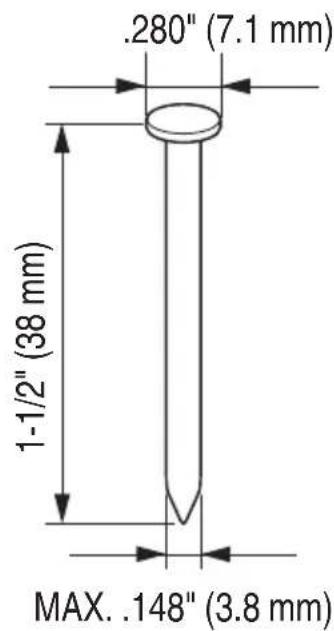
ACCESSIONS

DANGER
Accessories other than those shown below can lead to malfunction and resulting injuries.
STANDARD ACCESSORIES
(LA)
- Safety glasses 1
- Allen wrench for M5 screw.. 1
- Battery (BSL1840M) 1
- Battery Charger (UC18YFSL) 1
- Battery cover (Code No. 329897) 1
- Contractor bag.. 1
OPTIONAL ACCESSORIES
sold separately
BATTERY(BSL1840M)
NOTE
Accessories are subject to change without any obligation on the part of the metabo HPT.
APPLICATIONS
Pre-punched holed metal connector to wood stud installation only.
REMOVAL AND INSTALLATION METHOD OF BATTERY
WARNING
Be sure keep the fingers away from the trigger and push lever away from the wood.
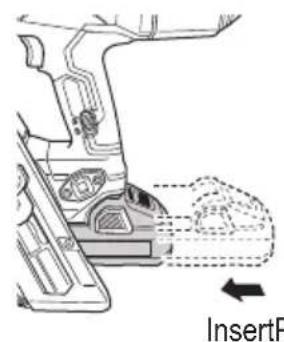
How to install the battery.
Align the battery with the groove in tool handle and slip it into place.
Always insert it all the way until it locks in place with a little click, If not, it may accidentally fall out of the tool, causing injury to you or someone around you.
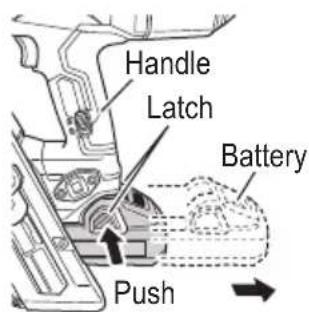
How to remove the battery.
Withdraw battery from the tool handle while pressing the latch (2 pcs) of the battery.
CHARGING METHOD
NOTE
Before plugging into the receptacle, make sure the following points.
The power source voltage is stated on the nameplate.
The cord is not damaged.
WARNING
Do not charge at voltage higher than indicated on the nameplate.
If charged at voltage higher than indicated on the nameplate, the charger will burn out.
- Connect the charger's power cord to a receptacle.
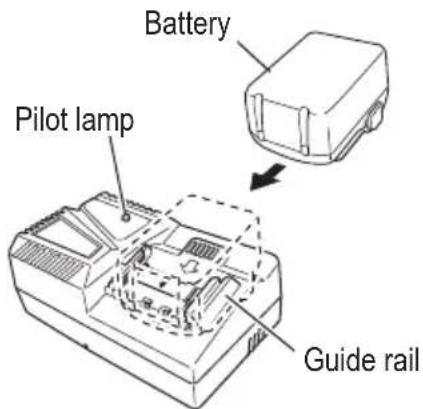
When the power cord is connected, the pilot lamp will blink in red. (See Table 2)
WARNING
Do not use the electrical cord if damaged. Have it repaired immediately.
- Insert the battery to the battery charger.
Firmly Insert the battery into the battery charger as shown in the figure.
3. Charging
When inserting a battery in the charger, the pilot lamp will light up continuously in red.
When the battery becomes fully recharged, the pilot lamp will blink in red. (See Table 2)
(1) Lamp indication
The indications of the pilot lamp will be as shown in Table 2, according to the condition of the battery charger or the battery.
Table 2: Indications of the pilot lamp
| ON/OFF at 0.5 sec. intervals | Before charging *1 or Charging complete |
| Lights continuously | While charging |
| Lights for 1 sec. at intervals of 0.5 sec. | Overheat standby *2 |
| ON/OFF at 0.1 sec. intervals | Charging impossible *3 |
NOTE
*1 If the red lamp continues to blink even after the charger has been attached, check to confirm that the battery has been fully inserted.
*2 Battery overheated. Unable to charge. Although charging will start once the battery has cooled down even when left in situ, the best practice is to remove the battery and allow it to cool down in a shaded, well-ventilated location before charging.
*3 Malfunction in the battery or the charger
Fully insert the battery.
- Check to confirm that no foreign matter is stuck to the battery mount or terminals. If there are no foreign objects, it is probable that the battery or charger is malfunctioning. Take it to your authorized Service Center.
If the pilot lamp does not blink in red even though the charger cord is connected to the power, it indicates that the protection circuit of the charger may be activated.
Remove the cord or plug from the power and then connect it again after 5 minutes or so. If this does not cause the pilot lamp to blink in red, please take the charger to the metabo HPT Authorized Service Center.
- When the battery charger has been continuously used, the battery charger will be heated, thus constituting the cause of the failures. Once the charging has been completed, give 15 minutes rest until the next charging.
(2) Regarding the temperature of the rechargeable battery.
Table 3
| Rechargeable batteries | Temperatures at which the battery can be recharged |
| BSL1840M | 32°F-122°F (0°C-50°C) |
(3) Regarding recharging time (At 68^ (20^)
Table 4: Charging time
| Battery Charger: UC18YFSL | |
| BSL1840M Approx. 60 min |
NOTE
The recharging time may vary according to the ambient temperature.
If charging takes a long time
- Charging will take longer at extremely low ambient temperatures. Charge the battery in a warm location (such as indoors).
-
Do not block the air vent. Otherwise the interior will overheat, reducing the charger's performance.
If the cooling fan is not operating, contact a metabo HPT Authorized Service Center for repairs. -
Disconnect battery charger from the receptacle.
CAUTION
Do not pull the plug out of the receptacle by pulling on the cord.
Make sure to grasp the plug when removing from receptacle to avoid damaging cord.
- Remove the battery from the battery charger.
Supporting the battery charger with hand, pull out the battery from the battery charger.
NOTE
Be sure to pull out the battery from the battery charger after use, and then keep it.
Regarding electric discharge in case of new batteries, etc.
As the internal chemical substance of new batteries and batteries that have not been used for an extended period is not activated, the electric discharge might be low when using them the first and second time. This is a temporary phenomenon, and normal time required for recharging will be restored by recharging the batteries 2-3 times.
How to make the batteries perform longer
(1) Recharge the batteries before they become completely exhausted. When you feel that the power of the tool becomes weaker, stop using the tool and recharge its battery. If you continue to use the tool and exhaust the electric current, the battery may be damaged and its life will become shorter.
(2) Avoid recharging at high temperatures. A rechargeable battery will be hot immediately after use. If such a battery is recharged immediately after use, its internal chemical substance will deteriorate, and the battery life will be shortened. Leave the battery and recharge it after it has cooled for a while.
BEFORE OPERATION
Read section titled "SAFETY" (pages 2-9).
Make sure of the followings before operation.
PREPARING THE BATTERY
Read section titled "SAFETY, IMPORTANT SAFETY INSTRUCTIONS FOR BATTERY CHARGER" (page 6).
You must charge the battery before use. The charging method of battery is shown in pages 12-13.
1. Remaining battery indicator
You can check the battery's remaining capacity by pressing the remaining battery indicator switch to light the indicator lamp. (Table 5) It is best to use the remaining battery indicator as a guide since there are slight differences such as ambient temperature and the condition of the battery. Also, the remaining battery indicator may vary from those equipped to a tool or charger.
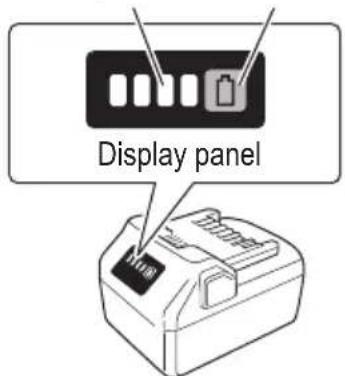
Remaining battery indicator lamp
Remaining battery indicator switch
Table 5
| Lights; The battery remaining power is over 75%. | |
| Lights; The battery remaining power is 50%-75%. | |
| Lights; The battery remaining power is 25%-50%. | |
| Lights; The battery remaining power is less than 25%. | |
| Blinks; The battery remaining power is nearly empty. Recharge the battery soonest possible. | |
| Blinks; Output suspended due to high temperature. Remove the battery from the tool and allow it to fully cool down. |
| Blinks;Output suspended due to failure or malfunction. The problem may be the battery so please contact your dealer. |
As the remaining battery indicator shows somewhat differently depending on ambient temperature and battery characteristics, read it as a reference.
CAUTION
Do not give a strong shock to the display panel or break it. It may lead to a trouble.
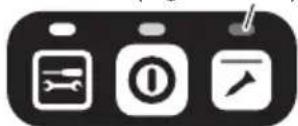
Under the condition of "Power switch OFF", push and hold on Power switch more than 1 second, then power indicator lights in Green and nailing operation indicator lights in Blue.
NOTE
Do not press the push lever and/or pull the trigger during the process of turning the power switch ON. Doing so will prevent the power switch from turning ON.
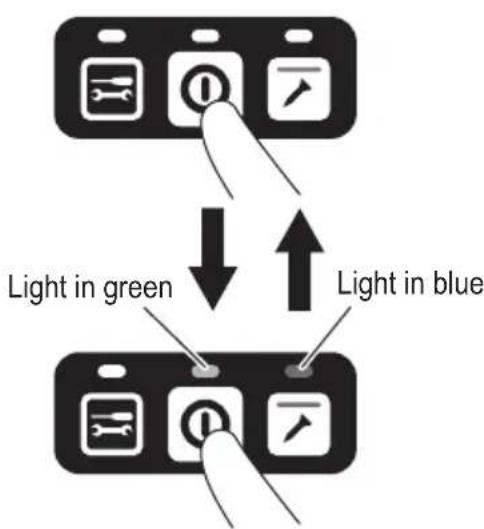
2. Power switch OFF
Under the condition of "Power switch ON", push and hold on Power switch more than 1 second, then power indicator goes off.
Under the condition of "Power switch ON", functions below are active.
3. Other functions
In case of operation error, LED lamps show as below.
| Status of indicator | |
| Information indicator blinks in red. The power automatically turns off after 60 seconds. | Battery low The battery remaining power is empty Recharge the battery as soon as possible |
| Information indicator blinks in red and LED light blinks in 0.5 second interval. The power automatically turns off after 10 seconds. | Machine is in too cold (below 23°F (-5°C)) or too hot condition. Allow the nailer to cool or warm-up thoroughly in adequate condition. |
| Information indicator blinks in orange. The power automatically turns off within 10 seconds. | Contact metabo HPT for inspection. |
4. How to use the LED light
While the power switch on, the LED light will automatically light up the tip portion of the tool.
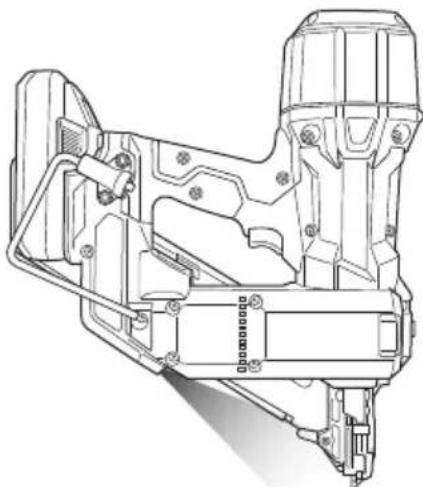
CAUTION
- Do not expose directly your eye to the light by looking into the light. If your eye is continuously exposed to the light, your eye will be hurt.
- Wipe off any dirt or grime attached to the lens of the LED light with a soft cloth, being careful not to scratch the lens.
Scratches on the lens of the LED light can result in decreased brightness.
TRIGGER LOCK MECHANISM
WARNING
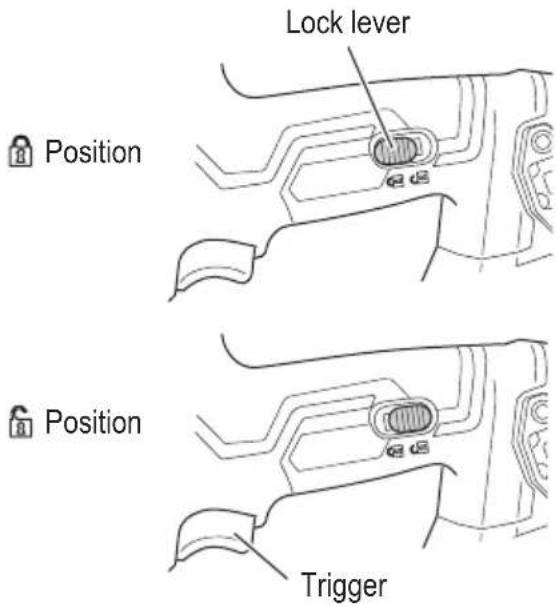
Make sure the trigger is locked when not firing nails.
This Nailer has a lock mechanism to prevent the nails from being fired.
Set the lock lever at the position to lock the trigger.
Slide the lock lever to the position when the Nailer is to be used, and to the position when it is not in use.
TESTING THE NAILER

DANGER
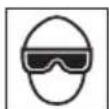
Operators and others in work area MUST wear safety glasses with side shields which conforms to ANSI Z87.1 specifications.

WARNING
- Never use Nailer unless push lever is operating properly.
The machine employs a preventive mechanism for unloaded operation.
The machine enters a state where the push lever cannot be pushed up. This takes place when the magazine is not loaded with nails or when the remaining number of nails becomes less than 6.

CAUTION
Use caution not to throw the push lever tip onto wood.
Before actually beginning the nailing work, test the Nailer by using the checklist below. Conduct the tests in the following order.
If abnormal operation occurs, stop using the Nailer and contact a metabo HPT authorized service center immediately.
- REMOVE ALL NAILS AND BATTERY FROM NAILER.
ALL SCREWS MUST BE TIGHTENED.
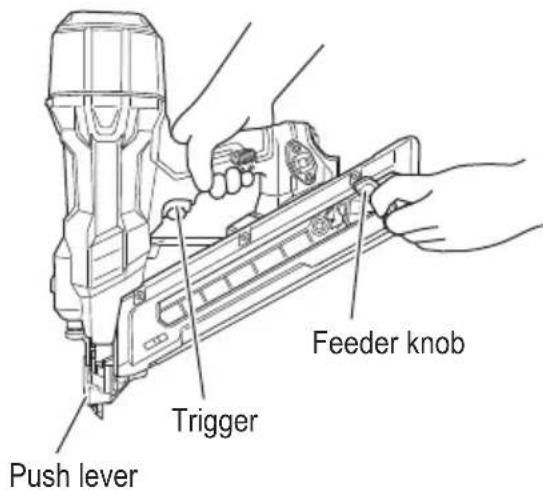
THE PUSH LEVER AND TRIGGER MUST MOVE SMOOTHLY with pulling back the feeder knob.
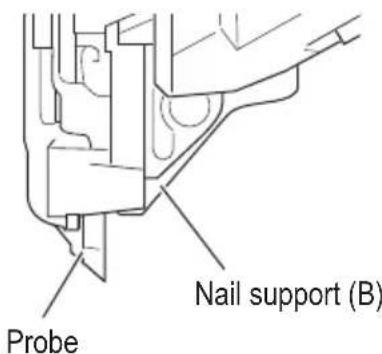
PROBE AND NAIL SUPPORT (B) ARE SURELY MOUNTED ON AND NO DEFECT.
- Installing the battery.
Do not operate the push lever or trigger while installing the battery.
- Turn on the Power switch.
Turn on the Power switch by push and hold on Power switch more than 1 second.
Make sure the power indicator is lighting in green, and nailing operation indicator is lighting in blue.
(FULL SEQUENTIAL ACTUATION MECHANISM)
NOTE
Do not press the push lever and/or pull the trigger during the process of turning the power switch ON. Doing so will prevent the power switch from turning ON.
[Auto power off]
When the power is turned on but the Nailer is not used for 30 minutes, the Nailer is automatically turned off. To turn on again, press the power switch.
![HiKOKI NR 1838DKA - [Auto power off] - 1](/content/2026/04/743818/images/40769d5cbc109a63d9b481e2c615a5d795c7271957a6f91a5c0fc5c40d57ec3c.jpg)
WARNING
Never leave the Nailer with the power on. This could result in an accident.
Nailing operation indicator
Lighting (Blue):
FULLSEQUENTIAL ACTUATION MECHANISM
NOTE
While the power is ON, the nailing operation indicator continuously lights in blue.
- Remove the finger from the trigger and press the push lever against the workpiece with pulling back the feeder knob.
- Separate the push lever from the workpiece. Next, point the nailer downward, with pulling back the feeder knob, pull the trigger and then wait in that position for 5 seconds or longer.
(1) Without touching the trigger, depress the push lever against the workpiece with pulling back the feeder knob. Next, pull the trigger.
(2) Hold the trigger back and depress the push lever against the workpiece again.
(3) Separate the finger from the trigger. Next, (1) is operated again.
- Separate the push lever from the workpiece, pull the trigger.
Depress the push lever against the workpiece within 2 seconds.
- If no abnormal operation is observed, you may load nails in the Nailer. Drive nails into the workpiece that is the same type to be used in the actual application.
- When loading nails into Nailer, 1) remove battery from the nailer; 2) do not pull trigger;
3) do not depress push lever; and
4) keep nailer pointed downward.
- Do not insert different length sized nail strips at the same time. If do so, it could result in damaging nail strips and jamming.
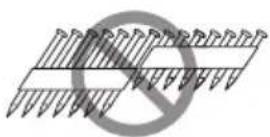
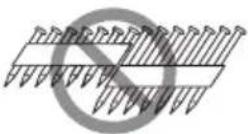
- Insert nail strip into the back of the magazine.
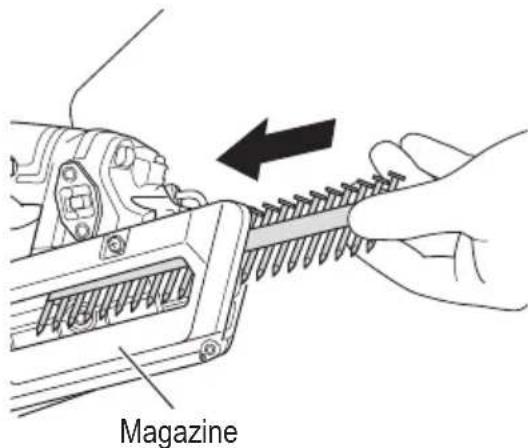
- Slide the nail strip forward in the magazine.
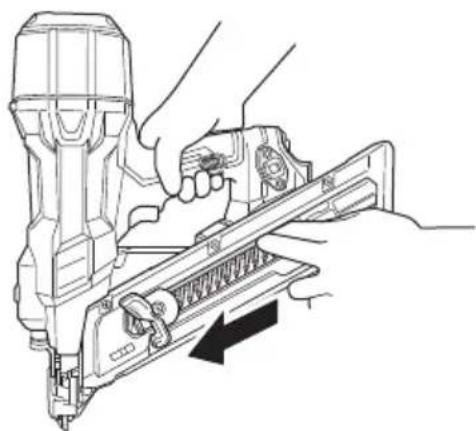
- Pull back the feeder knob while pushing the nail feeder (A) to set the nail strip in place.
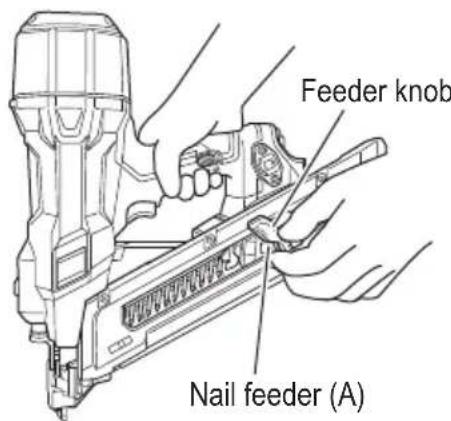
NOTE
- Quietly push the nail feeder (A) and feeder knob against the nail. If the nail feeder (A) and feeder knob are released from backward the magazine and bumped against the nail, the connecting paper of the nail can be damaged.
Use nail strip of more than 10 nails.
Use an unbroken nail strip with nails of all the same length.
The Nailer is now ready to operate.
Removing the nails:
- Pull the feeder knob backward.
- Return the feeder knob forward quickly while pushing the nail feeder (A).
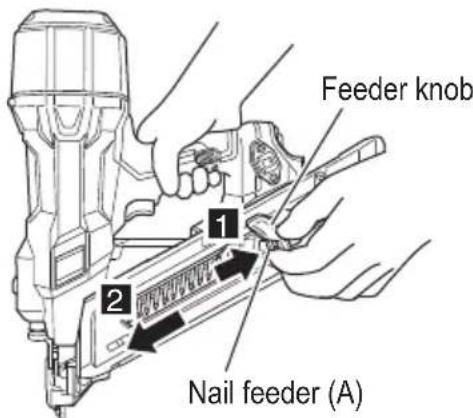
- Pull out nails from the back of the magazine.
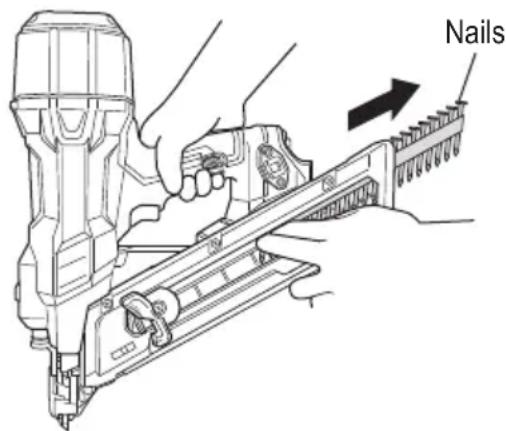
NOTE
There may be a nail remaining in the blade guide. It is difficult to see if there is a nail remaining in the blade guide, so check to ensure there is not.
NAILER OPERATION
Read section titled "SAFETY" (pages 2-9).

DANGER
Operators and others in work area MUST wear safety glasses with side shields which conforms to ANSI Z87.1 specifications.

WARNING
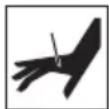
NEVER point tool at yourself or others in work area.
- Keep fingers AWAY from trigger when not driving nails to avoid accidental firing.
- Do not use the electrical cord if damaged. Have it repaired immediately.
- Please read and understand "METHOD OF OPERATION" found below.
- Never place your face, hands or feet near firing head when using.
- Do not drive nails on top of other nails or with Nailer at too steep of an angle; nails can ricochet and hurt someone.
- Do not drive nails into thin boards or near corners and edges of workpiece. Nails can be driven through or away from workpiece and hit someone.
- Be sure to position and insert the probe through the hole in the metal connectors.
- Do not drive nails at tilted, since the nails can ricochet and hurt yourself or someone else.
- Never drive nails from both sides of a wall at the same time. Nails can be driven into and through the wall and hit a person on the opposite side.
- Never use Nailer which is defective or operating abnormally.
- Do not use Nailer as hammer.
- Remove all remaining fasteners and battery from nailer when:
1) doing maintenance and inspection;
2) checking proper operation of push lever and trigger;
3) cleaning a jam;
4) it is not in use;
5) leaving work area;
6) moving it to another location; and
7) handing it to another person.
- Remove battery from Nailer when:
1) loading nails;
Explanation of nailing operations
FULLSEQUENTIAL ACTUATION MECHANISM:
First, press the push lever against the wood; next, pull the trigger to drive the nail.
Follow the same sequence to continue driving nails. After nailing once, nailing will not be possible again until remove finger from the trigger and lift the tool off the wood surface completely.
The machine employs a preventive mechanism for unloaded operation.
The machine enters a state where the push lever cannot be pushed up. This takes place when the magazine is not loaded with nails or when the remaining number of nails becomes less than 6.
METHODS OF OPERATION
This Nailer is equipped with the push lever and does not operate unless the push lever is depressed.
There is a method of operation to drive nails with this Nailer.
It is intermittent operation (Trigger fire) only.
(Nailing operation indicator is light in blue.)
WARNING
-
Confirm that the nailing operation indicator is lit in blue.
-
To avoid double firing or accidental firing due to recoil.
1) Pull the trigger rapidly and firmly.
2) Use the probe to ensure nails were fired accurately into the holes.
(1) Set probe into the hole of the metal connector securely with finger off the trigger.
WARNING
- This tool and nails are designed for metal connector with pre-punched holes. Never drive nails into metal. Only drive into prepunched metal holes.
If you are not sure to set the probe through the metal hole, never drive nails. If the probe is not set properly, it could ricochet and hurt yourself or someone.
To operate the Nailer, hold perpendicular to the workpiece.

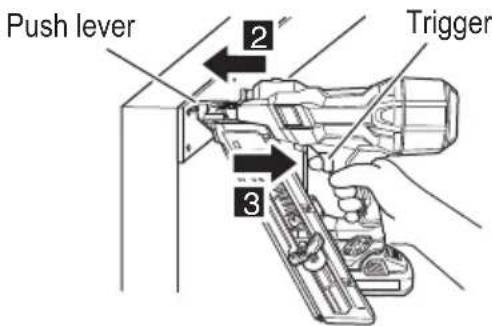
(2) Depress the push lever firmly until it is completely depressed.
(3) Pull the trigger to drive a nail.
(4) Remove finger from the trigger and lift the tool off the wood surface completely.
To continue nailing in a separate location, move the nailer along the metal connector, repeating steps (1)-(4) as required.
NOTE
Operations (2) and (3) should be done within 2 seconds of each other. If more than 2 seconds pass after (2), the Nailer will not work properly. If this happens, retry from (2).

Nailing operation indicator (Light in blue)

WARNING
- Keep your finger off the trigger except during nailing operation, because serious injury could result if the push lever accidentally contacts you or others in work area.
- Keep hands and body away from the discharge area. This metabo HPT nailer may bounce from the recoil of driving a nail and unwanted subsequent nail may be driven, possibly causing injury.
NOTE
If all warnings and instructions are followed, safe operation is possible with all systems.
Always handle nails and package carefully. If nails are dropped, collating bond may be broken, which will cause mis-feeding and jamming.
O After nailing:
- remove battery from the Nailer;
- remove all nails from the Nailer;
USING THE HOOK

WARNING
- When using the hook, turn off the power switch (green light "OFF").
Pay sufficient attention so that the main equipment does not fall. If the tool falls, there is a risk of accident.
Hook can be installed on the left or right side.
(1) Securely hold the main unit and remove the M5 bolts using the allen wrench.
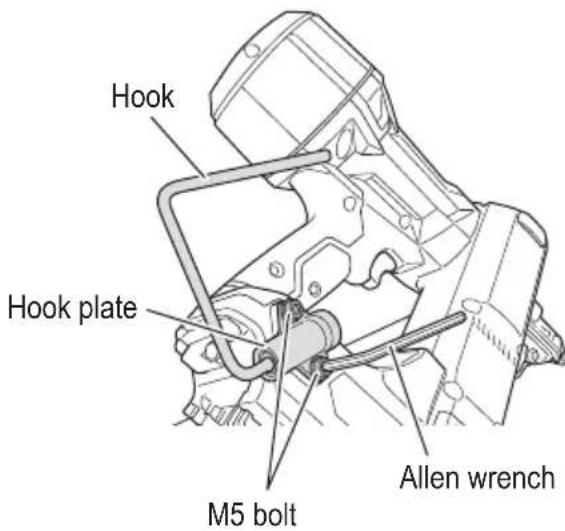
(2) Remove the hook and hook plate.
(3) Install the hook on the other side and securely fasten with M5 bolt.
CLEARING A JAM
If nails are jammed in the firing head, remove them in the following order.

WARNING
Be sure to turn off the power switch and pull out the battery.

CAUTION
NEVER point the firing head at yourself or another person, to avoid risk of injury by misfiring.
Even if the battery is removed from the nailer, there is still energy of compressed air remaining inside.
(1) Remove the battery from the Nailer.
(2) Remove all nails from the magazine.
(3) Remove the M5 bolts with the allen wrench.
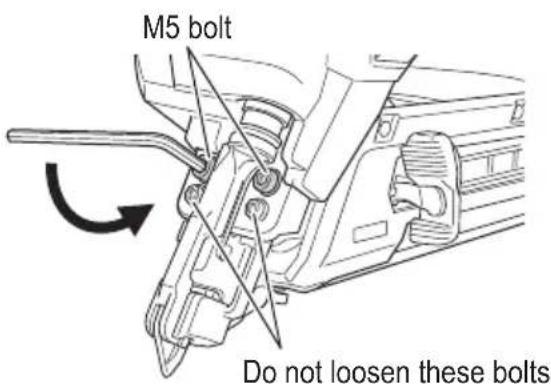
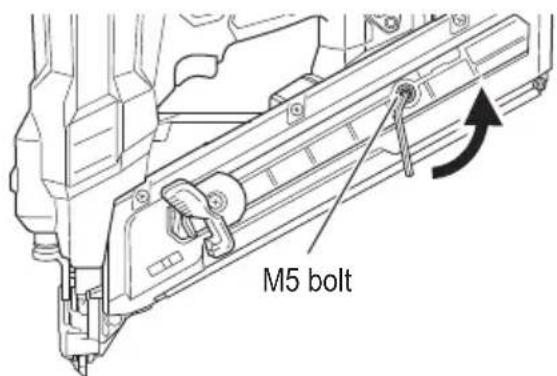
(4) Pull magazine away from the firing head, and clear jam.

CAUTION NEVER hit the driver blade.
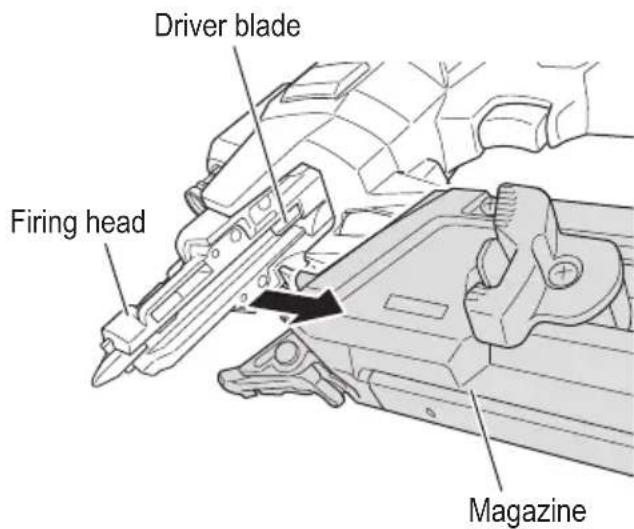
(5) Attach the magazine to the firing head and tighten with the M5 bolts.
(6) After assembling, ensure that the push lever slides smoothly.
NOTE
If the tip of the driver blade becomes worn, nail jamming is more likely to occur. In case of frequent jam, contact a metabo HPT authorized service center.
MAINTENANCE
NOTE
The information contained in this Manual is designed to assist you in the safe maintenance of the Nailer.
NEVER attempt any maintenance on the nailer unless you have first read and understood all safety instructions contained in this manual.
Some illustrations in this Manual may show details or attachments that differ from those on your own Nailer.
MAINTENANCE AND INSPECTION
Read section titled "SAFETY" (pages 2-9).

WARNING
Remove battery and all remaining fasteners from Nailer when:
1) doing maintenance and inspection; and 2) clearing a jam.
- Inspecting the magazine
(1) Remove battery.
(2) Clean the magazine. Remove dust and wooden chips which may have accumulated in the magazine.
CAUTION
Check that the nail feeder (A) and (B) move smoothly by pulling it with finger. If not smooth, nails can be driven at an irregular angle and hurt someone.
2. WARNING LABELS
Change the WARNING LABELS if missing or damaged.
New WARNING LABELS are available from a metabo HPT authorized service center.
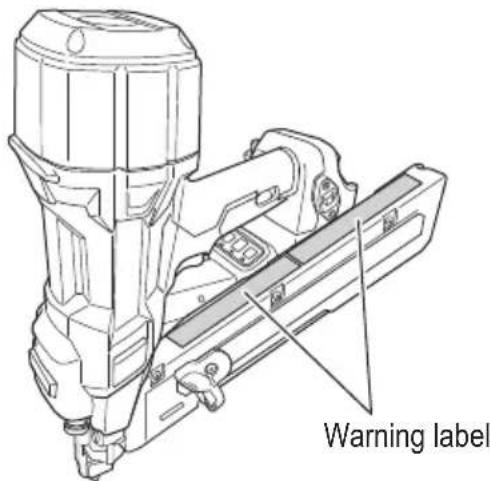
-
Everyday maintenance
-
Check for dust
Blow clean the magazine and feeder mechanism daily, to prevent jamming.
- Blow clean the push lever daily, to keep the push lever working properly and to promote operator safety and efficient Nailer operation.
Dust may be removed with a soft cloth or a cloth dampened with soapy water.
Do not use bleach, chlorine, gasoline or thinner, for they may damage the plastics.
- Inspection of terminals (Tool and battery)
Check to make sure that swarf and dust have not collected on the terminals.
On occasion check prior, during and after operation.
CAUTION
Remove any swarf or dust which may have collected on the terminals.
Failure to do so may result in malfunction.
6. Disposal of the exhausted battery

WARNING
Do not dispose of the exhausted battery. The battery must explode if it is incinerated. The product that you have purchased contains a rechargeable battery. The battery is recyclable. At the end of it's useful life, under various state and local laws, it may be illegal to dispose of this battery into the municipal waste stream. Check with your local solid waste officials for details in your area for recycling options or proper disposal.
7. Storage
Store in a place between 23^ (-5^) and 104^ (40^) , and out of the reach of children. When not in use, the Nailer, and battery should be stored in a warm and dry place.
NOTE
- Storing lithium-ion batteries
- Make sure the lithium-ion batteries have been fully charged before storing them.
- Prolonged storage (3 months or more) of batteries with a low charge may result in performance deterioration, significantly reducing battery usage time or rendering the batteries incapable of holding a charge.
- However, significantly reduced battery usage time may be recovered by repeatedly charging and using the batteries two to five times.
- If the battery usage time is extremely short despite repeated charging and use, consider the batteries dead and purchase new batteries.
CAUTION
In the operation and maintenance of power tools, the safety regulations and standards prescribed in each country must be observed.
Important notice on the batteries for the metabo HPT cordless power tools
Please always use one of our designated genuine batteries. We cannot guarantee the safety and performance of our cordless power tool when used with batteries other than these designated by us, or when the battery is disassembled and modified (such as disassembly and replacement of cells or other internal parts).
SERVICE AND REPAIRS

WARNING
- Only service personnel trained by metabo HPT, distributor or employer shall repair the Nailer.
Use only parts supplied or recommended by metabo HPT for repair.
All quality Nailers will eventually require servicing or replacement of parts because of wear from normal use.
NOTE
Specifications are subject to change without any obligation on the part of metabo HPT.
TROUBLESHOOTING GUIDE

WARNING
- To avoid injury from an accidental start, turn the switch OFF and pull out the battery from the power source or remove the battery from the main body before making any adjustments.
- All electrical or mechanical repairs should be done only by qualified service technicians. Contact metabo HPT Authorized Service Center.
| Problem Possible Cause | Possible Solution | |
| Power switch doesn't turn on. Turn on once, but turn off automatically. | Low battery charge. Charge the battery. | |
| Damaged internal electronics. Contact | metabo HPT for inspection. | |
| Push lever and/or trigger is ON state? | Keep push lever and trigger in OFF state. |
| Problem Possible Cause | Possible Solution | |||
| Power switch doesn't turn on. Turn on once, but turn off automatically. | Keep no operation over 30 minutes? (Auto-power off function) | Push and hold power switch more than 1 second to switch "ON" | ||
| Nailer doesn't operate (Power switch ON). | Nailer not enough pressed against workpiece. | Hold nailer firmly and press to the workpiece completely. | ||
| The Nailer is not perpendicular to the workpiece. | Hold the Nailer perpendicular to the workpiece. | |||
| Trigger not enough pulled. Pull the trigger firmly. | ||||
| More than 2 seconds pass from push lever ON to trigger ON (or trigger ON to push lever ON). (LED light blinks at 1-second intervals) | Make sure that less than 2 seconds pass between push lever ON and trigger ON (or between trigger ON and push lever ON). | |||
| Preventive mechanism activated. (No nails, or too few fasteners remaining) | Reload the nails into magazine. | |||
| Lock lever (Trigger lock function) is "ON" position. | Set Lock lever to "OFF" position. (Refer to page 15) | |||
| Machine is too cold (below 23°F (-5°C)) or too hot. (LED light blinks at 0.5-second intervals, and 10 seconds later the power turns OFF) | Allow the nailer to cool or warm-up thoroughly in adequate condition. | |||
| Damaged internal electronics. Contact | metabo HPT for inspection. | |||
| Nailer operates, but no nail is driven. Magazine is dirty. Blow and wipe clean the magazine. | ||||
| Check for a jam. Clear a jam (refer to page 21). | ||||
| Driver blade worn or damaged? Contact | metabo HPT for inspection. | |||
| Ribbon spring weakened or damaged? | Replace ribbon spring. | |||
| Nail feeder damaged? Replace nail feeder. | ||||
| Check for proper nails. Use only recommended nails. | ||||
| Weak drive. Driver blade worn? Contact metabo HPT for inspection. | ||||
| Compressed air pressure has become low. | ||||
| Damaged internal electronics. | ||||
| Skipping nails. Check for proper nails. Use only recommended nails. | ||||
| Nail feeder damaged? Replace nail feeder. | ||||
| Ribbon spring weakened or damaged? | Replace ribbon spring. | |||
| Driver blade worn or damaged? Contact metabo HPT for inspection. | ||||
| Nails jam.Driven nail is bent. | Check for proper nails. Use only recommended nails. | |||
| Driver blade worn or damaged? Contact metabo HPT for inspection. | ||||
| Nail not driven into hole. Probe not positioned over hole Position the probe in the hole before firing. | ||||
| Probe is damaged or worn. Contact metabo HPT for inspection. | ||||
| Nail support (B) is damaged. (Refer to page 10) | Contact metabo HPT for inspection. | |||
| Blockage due to debris Remove debris. | (Refer to page 21) | |||
INFORMATIONS IMPORTANTES DE SÉCURITÉ

ACCESSIONS EN OPTION
vendu séparation
BATTERIE (BSL1840M)
REMARQUE
Please contact Koki Holdings America Ltd. at 1-800-59-TOOLS (toll free), or metabo HPT AUTHORIZATION POWER TOOL SERVICE CENTER regarding COLLECTION.

Pour le RAMASSAGE,contacter Koki Holdings America Ltd. au 1-800-59-TOOLS (appel Gratisit), ou UN SERVICE APRES-VENTE D'OUTILS ELECTRIQUE AGREE PAR metabo HPT.

Koki Holdings America Ltd. Canadian Branch
3405 American Drive, Units 9-10, Mississauga, ON, L4V 1T6
- INSTRUCTION AND SAFETY MANUAL
- DANGER
- MANUEL D'INSTRUCTIONS ET DE SECURITE
- IMPORTANT SAFETY INFORMATION
- DEFINITIONS OF SIGNAL WORDS
- EXPLANATION OF THE NAILING ACTION OF THE metabo HPT NAILER
- SAFETY
- GENERAL POWER TOOL SAFETY WARNINGS
- WARNING
- 3) Personal safety
- 4) Power tool use and care
- 5) Battery tool use and care
- NAILER SAFETY WARNINGS
- IMPORTANT SAFETY INSTRUCTIONS FOR USING NAILERS
- READ ALL INSTRUCTIONS
- REMOVE BATTERY FROM NAILER WHEN:
- IMPORTANT SAFETY INSTRUCTIONS FOR BATTERY CHARGER
- IMPORTANT SAFETY INSTRUCTIONS FOR USE OF THE BATTERY AND BATTERY CHARGER
- CAUTION ON LITHIUM-ION BATTERY
- CAUTION
- WARNING
- REGARDING LITHIUM-ION BATTERY TRANSPORTATION
- EMPLOYER'S RESPONSIBILITIES
- SAVE THESE INSTRUCTIONS AND MAKE THEM AVAILABLE TO OTHER USERS AND OWNERS OF THIS TOOL!
- OPERATION
- NOTE
- NAME OF PARTS
- SPECIFICATIONS
- Battery
- Battery Charger
- NAIL SELECTION
- Dimensions of nails
- ACCESSIONS
- STANDARD ACCESSORIES
- OPTIONAL ACCESSORIES
- APPLICATIONS
- REMOVAL AND INSTALLATION METHOD OF BATTERY
- CHARGING METHOD
- Charging
- Regarding electric discharge in case of new batteries, etc.
- How to make the batteries perform longer
- BEFORE OPERATION
- PREPARING THE BATTERY
- Read section titled "SAFETY, IMPORTANT SAFETY INSTRUCTIONS FOR BATTERY CHARGER" (page 6).
- Remaining battery indicator
- Power switch OFF
- Other functions
- How to use the LED light
- TRIGGER LOCK MECHANISM
- TESTING THE NAILER
- [Auto power off]
- NAILER OPERATION
- The machine employs a preventive mechanism for unloaded operation.
- METHODS OF OPERATION
- USING THE HOOK
- CLEARING A JAM
- MAINTENANCE
- MAINTENANCE AND INSPECTION
- WARNING LABELS
- Disposal of the exhausted battery
- Storage
- Important notice on the batteries for the metabo HPT cordless power tools
- SERVICE AND REPAIRS
- TROUBLESHOOTING GUIDE
- INFORMATIONS IMPORTANTES DE SÉCURITÉ
- ACCESSIONS EN OPTION
- REMARQUE
- Koki Holdings America Ltd. Canadian Branch
Brand : HiKOKI
Model : NR 1838DKA
Category : Stapler