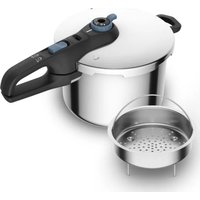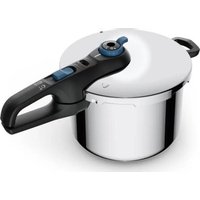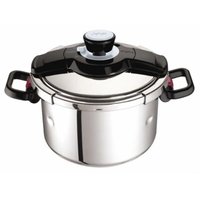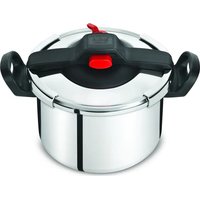
Clipso Essential P43948 - Pressure Cooker TEFAL - Free user manual and instructions
Find the device manual for free Clipso Essential P43948 TEFAL in PDF.


User questions about Clipso Essential P43948 TEFAL
0 question about this device. Answer the ones you know or ask your own.
Ask a new question about this device
Download the instructions for your Pressure Cooker in PDF format for free! Find your manual Clipso Essential P43948 - TEFAL and take your electronic device back in hand. On this page are published all the documents necessary for the use of your device. Clipso Essential P43948 by TEFAL.
USER MANUAL Clipso Essential P43948 TEFAL
February 2014 - M. 413928 - Delafloso, France Guelipe.
Tefal®
CLIPSO® ESSENTIAL
Pressure cooker
Autocuiseur
Χύτρα ταχύτητας
Düdüklü tencere
طنجرة ضغط
ديک زودیر
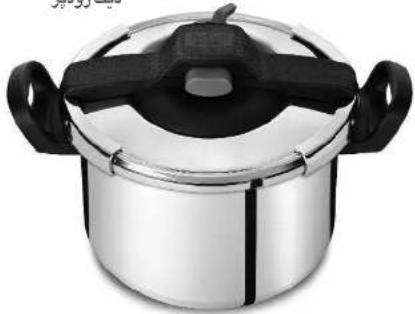
natural_image
Exterior view of a stainless steel cooking pot with black lid and side handles (no text or symbols visible)User's Manual
"depending on model / seon mobile / cayaya ps to port/na / mobile gone delight (2) / "
For your safety, this device complies with the applicable standards and regulations:
- Pressure vessel appliance
- Materials in contact with food
• This product has been designed for domestic use only.
- Any commercial use, inappropriate use or failure to comply with the instructions, the
manufacturer accepts no responsibility and the guarantee will not apply.
Take time to read all of the instructions and always refer back to the "User's Guide".
- As with any cooking appliance, ensure close supervision if you are using the pressure cooker with children ready.
• Do not put your
- Do not put your pressure cooker into a hot oven.
- When the pressure cooker is under pressure, take great care when moving it. Do not touch the
not surfaces. Use the handles and knobs. Wear gloves if necessary.
- Regularly check that the pan handles are fixed properly. Higher if necessary.
- Do not use your pressure cooker for any purpose other than that for which it is designed.
- Your pressure cooker cooks under pressure. Burns could result from boiling over if not used properly. Make sure that the pressor cooker is physically clear before bringing it up to pro
property. Make sure that the pressure cooker is properly closed before bringing it up to pressure. Refer to part on "Closing".
• always make sure that th
- Always make sure that the valve is in the decompression position before opening your
• Never force the
- Never force the pressure cooker open. Make sure that the internal pressure has returned to normal. Refer to section "Safety".
Heel to Section Society
- Never use your pressure cooker without liquid: this could cause serious damage. Always make
sure that there is enough liquid in the cooking.
- Use heat sources(s) that are compatible with your pressure cooker, in line with the
- Never make milk?
- Never make the based recipes, such as rice pudding, chili and pudding ... in your pressure cooker.
- 100 not in finished
- Never fill your pressure conker more than two-thirds full (maximum fill mark)
• For food that expands during cooking, like rice or dried vegetables or stewed fruit, etc., never fill your
pressure cooker more than half full. For certain soups like pumpkin or courgette, give your pressure
cooker a few minutes to cool down, then cool it down fully by placing it under cold turni
• After cooking meat which has an outer layer of skin (such as ox tongue), which could swell due
to the effects of pressure, do not pierce the skin after cooking if it appears swollen: you could get
burnt. Pierce it before cooking.
- When cooking food with a thick texture (chick peas, rhubarb, stewed fruit, etc.) the pressure cooker
should be shaken slightly before opening to ensure that the food does not spurt out.
- Always check that valves are clear before use. Refer to section "Before cooking"
- Do not use the pressure cooker to fry under pressure using oil.
- Do not interfere with the safety systems, except for cleaning and maintenance in accordance
with Instructions
- Use only original TEFAL spare parts suitable for your model. Particularly, use a TEFAL pan and lid.
- Alcohol vapours are flammable. Bring to a boil for about 2 minutes before placing the lid. Watch
your appliance when preparing alcohol-based recipes.
- Do not use your pressure cooker to store acidic or salty food before and after cooking to avoid
damaging your pan
- You can use the pan to cook food without the lid. Do not use the lid if you do not intend the food
to be cooked under pressure
KEEP THESE INSTRUCTIONS
2
Descriptive diagram
A. Operating valve
B. Valve positioning mark
C. Steam release outlet
D. Lid opening/closing button
E. Pressure indicator
F. Safety valve
G. Seal
H. Steam basket*
I. Trivet*
J. Maximum fill mark
K. Pan
L. Pan handle*
Specifications
Pressure cooker base diameter - references
| Capacity | ∅ Pan diameter | ∅ Base diameter | CLIPSO ESSENTIAL | Pan and lid material |
| 6 L 24 | cm 18 cm P4 | 4247 | Stainless steel7, | |
| 9 L 24 | cm 18 cm P4 | 4249 |
5 L 24 cl
Technical information:
Maximum operating pressure: 55 kPa:(8 psi)
Maximum safety pressure: 110 kPa:(16 psi)
Compatible heat sources
- Your pressure cooker can be used on all heat sources including induction except Aga type cookers.
GAS SOLID
HOTPLATE
GLASS CERAMIC RADIANT HALOGEN
INDUCTION
ELECTRIC COIL





Never heat your pan when empty, as you risk damaging your product.
- Your pressure cooker can be used on all heat sources except Aga hobs but including induction.
-
On a solid hotplate, use a plate with a diameter equal to or less than that of the pressure cooker base.
-
On ceramic and halogen hobs, make sure that the base of the pan is clean and dry.
- On gas, the flame should not extend beyond the diameter of the pan.
For all heat sources, make sure that your pressure cooker is well centered.
TEFAL Accessories
- The following Clipso pressure cooker accessories are available. Contact the helpline - see contact list.
| Accessories Reference number | ||
| Gasket | 6L - 7,5L - 9L | X1010006 |
| Steam basket* | 6L - 7,5L - 9L | 792654 |
| Trivet* | 792691 | |
- To replace parts or for repairs, contact the helpline - see contact list.
- Use only original TEFAL parts suitable for your model.
Use Opening
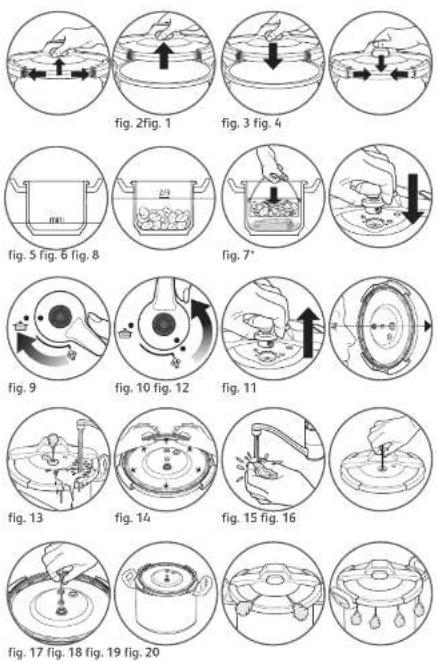
- Press the opening button (D) on the lid - fig. 1.
- Lift the lid keeping the button pressed down - fig. 2.
Closing
natural_image
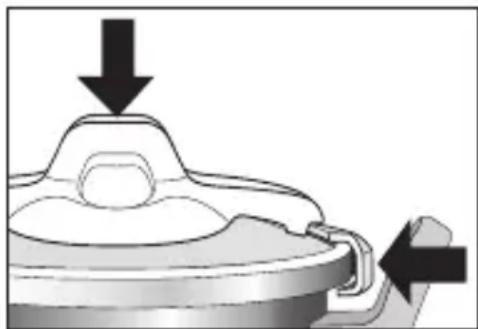
Diagram of a mechanical component with arrows indicating force or movement (no text or symbols)- Press the opening/closing button (D) on the lid and place it on the pan - fig. 3.
- Apply a little force on the top of the lid before releasing the button (D) to trigger the locking mechanism.
- Release the opening/closing button (D) on the lid and ensure that the jaws are properly locked under the rim of the pan (K) - fig. 4.
Minimum and maximum filling
• Minimum 250 ml (2 glasses) - fig. 5.
• Maximum 2/3^rd of the depth of the pan (J) - fig. 6.
For some foods:
- For foodstuffs that expand during cooking, like rice or soups or dried vegetables or stewed fruit, etc., do not fill your pressure cooker more than half full. For soups, we recommend you carry out a fast pressure release (refer to section "End of cooking").
Using the steam basket\*
Food placed in the steam basket* must not touch the pressure cooker lid.
- Pour 750 ml of water into the base of the pan (K).
- Place the trivet* (I) in the base of the pan.
- Place the basket* (H) on the trivet* - fig. 7.
Using the operating valve
- Place the valve (A) on the steam release outlet (C) aligning the two symbols.
- Press the valve down fully - fig. 8 and turn until it stops at fig. 9.
To cook food:
- Turn the valve positioning mark until it stops at 📋
To remove the operating valve (when it is no longer pressurised):
- Press down on the operating valve (A) and align the two symbols - fig. 10.
- Remove it - fig. 11.
First use
- Place the trivet* (I) in the base of the pan.
- Fill the pressure cooker up to 2/3rd full with water (J) - fig. 6.
- Place the steam basket* (H) on the trivet* (I) - fig. 7.
- Close the pressure cooker.
- Fit the operating valve (A) and turn until it stops at -. 9.
- Place the pressure cooker on a heat source set to maximum power.
- When steam starts escaping through the valve, reduce the heat source and set a timer for 20 minutes.
• After 20 minutes, turn off the heat. - Gradually turn the valve positioning mark until it stops at adjusting the speed at which you want to release the pressure.
- When the pressure indicator (E) drops, your pressure cooker is no longer under pressure.
- Open the pressure cooker - fig. 1 - 2 and rinse it. Note: the appearance of stains on the inside of the pan does not alter the quality of the metal in any way. They are simply scale deposits. To remove the deposits, you can use a sponge pad with a little diluted white vinegar.
Position your pressure cooker so that the steam is released away from you.
Before cooking
- Every time you use your cooker, first visually check in good daylight that the steam release outlet (C) is not blocked - fig. 12.
- Also check that the safety valve (F) moves freely - (refer to section “Cleaning and maintenance”).
- Fill the pressure cooker with the food and the necessary amount of liquid for cooking (see Minimum and Maximum filling' section..
- Close the pressure cooker - fig. 3 - 4.
• Fit the operating valve (A) - fig. 8. - Press the valve down fully and turn until it stops at ☑ - fig. 9.
- Make sure that the pressure cooker is properly closed before bringing it up to pressure.
- Place the pressure cooker on a heat source set to maximum power.
During cooking
- When steam escapes through the operating valve continuously, and a regular hissing sound (PSCHHHT) is heard, reduce the heat source.
- Set a timer for the cooking time stated in your recipe.
- During cooking, check that the valve murmurs regularly. If there is not enough steam, increase the heat source slightly; if there is too much steam, reduce the heat source.
The pressure indicator (E) prevents the pressure cooker from increasing in pressure if it is not properly closed.
As with any cooking appliance, watch over it carefully especially if you are using your pressure cooker around children.
Steam is very hot as it exits the steam release outlet.
End of cooking
The pressure indicator (E) prevents you from opening the pressure cooker if it still under pressure.
If the pressure indicator (E) does not drop, place the base of your pressure cooker into a sink filled with cold water - fig. 13. Never interfere with the pressure indicator.
If food or liquid starts to spray out while you are releasing the steam, return the operating valve (A) to cooking position then release the steam using the fast pressure release method described opposite.
To release the steam:
• After the heat has been turned off you have two alternatives:
- Slow pressure release:
- Gradually turn the operating valve (A) adjusting the speed at which you want to release the pressure until it stops at Make sure that the cooker is positioned so that the steam is directed away from you.
- When the pressure indicator (E) drops again, your pressure cooker is no longer under pressure. This method is used for stews, vegetables, meat joints and fish dishes. If you notice any food or liquid start to spray out from the valve when you are releasing steam, set the selector to cooking position then wait a minute and then gradually turn the operating valve again, making sure that nothing else spurts out.
- Fast pressure release:
- Place your pressure cooker in a sink under cold running water, directing the flow onto the metal part of the lid- fig. 13.
- When the pressure indicator (E) drops again, your pressure cooker is no longer under pressure.
Turn off the water and then, turn the positioning mark
● of the operating valve (A) until it stops at ⚙
- You can open the pressure cooker - fig. 1 - 2.
This method is used for soups, rice, pasta, cake and pudding mixes, recipes containing rice or pasta and recipes with a high liquid content.
If in doubt about which method of pressure release is correct, use the fast pressure release method.
- When cooking frothy or starchy foods, do not release the pressure by turning the operating valve (A). Instead lift the pressure cooker away from the heat source, leave the operating valve (A) in the cooking position and let the cooker cool slowly at room temperature (takes about 15 minutes) until the pressure indicator drops down. Reduce the recommended cooking time a little.
- You can open the pressure cooker - fig. 1 - 2.
Cleaning and maintenance Cleaning the pressure cooker
To ensure the correct operation of your pressure cooker, follow these cleaning and maintenance recommendations after each use.
- Wash the pressure cooker (pan and lid) after each use using warm water with washing-up liquid in it. Follow the same procedure for the basket*.
- Never use bleach or products containing chlorine.
- Do not overheat your pan when empty.
To clean the inside of the pan:
- Wash with a sponge pad and washing-up liquid.
- If the interior of the steel pan has an iridescent sheen, clean it using white vinegar or a special stainless steel cleaning product.
To clean the outside of the pan:
- Wash using a sponge and washing-up liquid. Clean it with a special stainless steel cleaning product.
The browning and marks which may appear following long term use do not affect the operation of the pressure cooker.
Regularly check that the pan handles are attached properly. Tighten them again if necessary.
For a longer pressure cooker life, do not overheat your pressure cooker pan when it is empty.
To clean the lid:
- Wash the lid using a sponge and washing-up liquid.
To clean the lid seal:
- After each use, clean the seal (G) and its groove using a sponge, warm water and washing-up liquid..
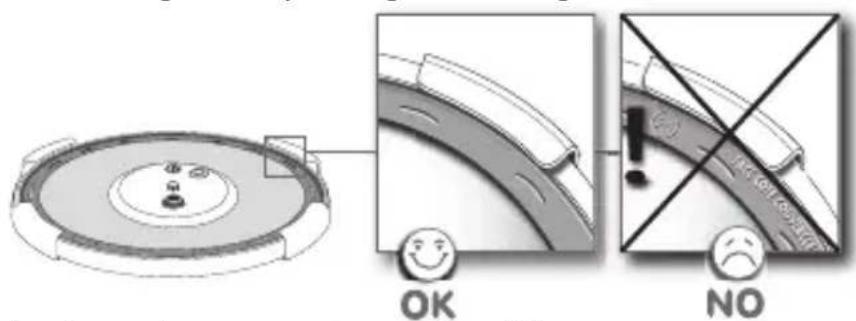
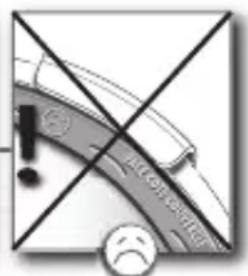
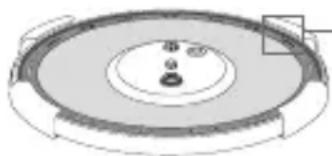
- To refit the seal, refer to- fig. 13 - 14. Ensure that the words "face côté couvercle" [facing lid side] are against the lid.
- Replace the pressure cooker seal every year or if it shows signs of splitting or damage.
To clean the operating valve (A):
- Remove the operating valve (A)- fig. 10 -11.
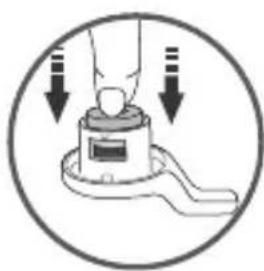
- Wash the operating valve (A) under running tap water - fig. 15.
- Check that it moves freely: see drawing on the right.
To clean the steam release (C) outlet on the lid:
- Remove the valve (A) - fig. 10 - 11.
- Check visually and in plain daylight that the steam release outlet (C) is clear and round - fig. 12. If necessary, clean with a toothpick - fig. 16 and rinse.
To clean the safety valve (F):
- Clean the part of the safety valve located inside the lid by placing it under running water.
- Check its correct operation by pressing hard, using a cotton bud, on the pin, which should move freely - fig. 17.
To change the seal of your pressure cooker:
- Change the seal of your pressure cooker every year or if it has any splits or is damaged.
- Always use an original TEFAL seal suitable for your model.
You can wash the pan and the lid in the dishwasher after you have removed the seal and the operating valve.
Never put the seal in the dishwasher.
natural_image
Diagram of a hand pressing down on a mechanical component, enclosed in a circle (no text or symbols)If the safety valve accidentally comes out of its housing partly or fully, this may cause a leak without any danger. Contact the helpline - see contact list.
For a longer pressure cooker life, do not overheat your pressure cooker pan when it is empty.
To store your pressure cooker:
- Turn the lid over on the pan - fig. 18.
You must have your pressure cooker checked in a TEFAL Approved Service Centre after 10 years of use.
Safety
The pressure indicator (E) prevents you the pressure cooker from increasing in pressure if is still under pressure.
Your pressure cooker is fitted with several safety devices:
- Closing safety:
- The jaws must be in contact with the rim of the lid. If this is not the case, there is steam leakage from the pressure indicator and the pressure cooker will not build up pressure.
- Opening safety:
- If the pressure cooker is under pressure, the opening button cannot be pressed.
- Never try to force the pressure cooker open.
- Above all do not interfere with the pressure indicator.
- Make sure that the internal pressure has fallen.
The pressure indicator (E) prevents from opening the pressure cooker if it still under pressure.
- Two safety devices operate to prevent overpressure:
- First device: the safety valve (F) releases the pressure and steam escapes - fig. 19.
- Second device: the seal allows steam to escape from between the lid and the pan - fig. 20.
If one of the overpressure safety systems is triggered:
- Turn off the heat source.
- Let the pressure cooker cool down completely.
- Open it (refer to section "Opening").
- Check and clean the operating valve (A), the steam release outlet (C), the safety valve (F) and the seal (G).
- If, after these checks and cleaning, your product leaks or no longer works, take it to a TEFAL Approved Service Centre. Contact the Customer Relations Helpline - see contact list.
Recommendations for use
1 - Steam is very hot when it leaves the operating valve.
2 - As soon as the pressure indicator rises, you can no longer open your pressure cooker.
3 - As with any cooking utensil, ensure close supervision if you are using the pressure cooker near children.
4 - Watch out for the jet of steam.
5 - To move the pressure cooker, use the two pan handles.
6 - Never leave food in your pressure cooker.
7 - Never use bleach or products containing chlorine, as these will alter the quality of the and steam stainless steel.
8 - Do not leave the lid soaking in water.
9 - Change the seal every year or if it has any splits or is damaged.
10 - You must only clean your pressure cooker when it is cold and empty.
11 - It is essential to have your pressure cooker checked in a TEFAL Approved Service Centre after 10 years of use. Contact the Customer Relations Helpline - see contact list.
Guarantee
- TEFAL pressure cookers have a 10 year guarantee from the date of purchase against any faulty materials or workmanship related to the pot or any premature damage of the metal base provided the product is used in accordance with the manufacturer's recommended product instructions. This guarantee does not include any damage due to inappropriate use or resulting from knocks, falls or by placing the product in the oven.
- It should be noted that the normal life of the gasket, pressure control, valves, handles or locking indicator seal is limited. These parts are excluded from the guarantee and will require periodic renewal. It should also be noted that for models with an electronic timer, the timer is guaranteed for the first year only. Accessories such as the basket, trivet and steam basket are also guaranteed for 12 months only.
| Marking Location | |
| Identification of manufacturer or commercial brand | On the lid |
| Production year and batch Inside of the lid | |
| CapacityModel referenceMaximum safety pressure (PS)Maximum operating pressure (PF) | On the exterior base of the pan |
TEFAL answers your questions
| Problems Recommendations | |
| If you are unable to close the lid: | Press the opening/closing button (D) on the lid and place it on the pan - fig. 3.Apply a little force on the top of the lid before releasing the button (D) to trigger the locking mechanism.Release the opening/closing button (D) on the lid and ensure that the jaws are properly locked under the rim of the pan (K) - fig. 4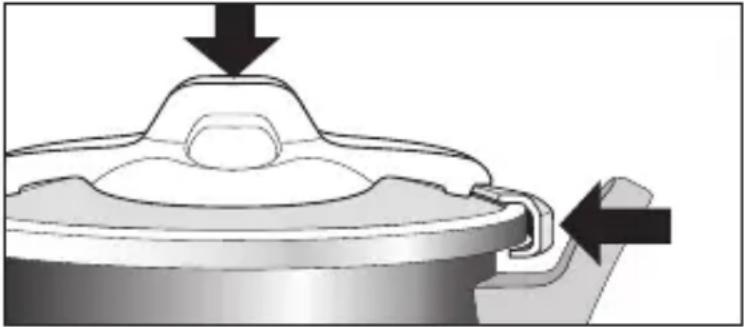 |
| If your pressure cooker has been heated under pressure without any liquid in it: | Have your pressure cooker checked by a TEFAL Approved Service Centre. Contact the Customer Relations Helpline - see contact list. |
| If the pressure indicator has not risen and nothing is escaping through the valve during cooking: | This is normal during the first few minutes.If this problem persists, check that:- The heat source is sufficiently high; if not, increase it.- The quantity of liquid in the pan is sufficient.- The operating valve is on [IMAGE]- The pressure cooker is properly closed.- The seal or the edge of the pan is not damaged.- The seal is correctly positioned in the lid, (refer to section “Cleaning and Maintenance”) |
| Problems | Recommendations |
| If the pressure indicator has risen and nothing is escaping through the valve during cooking: | This is normal during the first few minutes.If the problem persists, place your pressure cooker in a sink under cold running water from a tap until the pressure indicator drops - fig. 13.Clean the operating valve (A) - fig. 15 and the steam release outlet (C) - fig. 16 and check that the safety valve pin drops without difficulty - fig. 17. |
| If steam leaks from around the lid, check: | The correct closure of the lid.The position of the lid seal.The seal is correctly fitted in the lid.The cleanliness of the lid, the seal and its groove in the lid.The rim of the pan is in good condition and not damaged. |
| If you are unable to open the lid: | Check that the pressure indicator is in the lowered position.Otherwise, place your pressure cooker in a sink under cold running water from a tap until the pressure indicator drops - fig. 13.Never interfere with the pressure indicator. |
| If the food is not cooked or is burned, check: | The cooking time.The power of the heat source.The correct position of the operating valve.The quantity of liquid. |
| If food has burned in the pressure cooker: | Leave the pan to soak before cleaning it.Never use bleach or products containing chlorine. |
| If one of the overpressure safety systems is triggered: | Turn off the heat source.Let the pressure cooker cool down without moving it.Wait for the pressure indicator to drop and open the pressure cooker. (refer to section “Opening”). Check and clean the operating valve, the steam outlet, the safety valve and the seal.If the problem persists, contact the Customer Relations Helpline - see contact list. |
Delicious Recipes
All the recipes are intended for 4 people. For pressure cookers with a capacity of less than 6 litres, reduce the proportions by a third.
Soup
Lentil Soup
500 gm lentil, 50 gm white rice, 6 glasses of water, 12 teaspoon salt, 12 teaspoon cumin powder, finely chopped onion, 1 dessert spoonful (10 ml) oil, 12 small bunch finely chopped parsley, toasted bread (optional).
Serves 4. Clean and wash the lentils before you put them in the Pressure cooker with 750 ml cold water. Close the pressure cooker. As soon as the valve starts to whistle, reduce the heat and leave to cook for 30 min. Release the pressure using the fast release method. During this time, fry the chopped onion in the oil. Pour the lentils with their liquid into a electric blender, and process for 2 minutes then sieve to remove the skins. Pour them into the pressure cooker, add the fried onions and the rice, stir with a wooden spoon on medium heat, when it boils, fit the lid and close the pressure cooker. As soon as the valve starts to whistle, reduce the heat and leave to cook for the specified time. Release the pressure using the fast release method. Open the lid, add the pepper, salt, and cumin and then the parsley. Stir. Serve with toasted bread.
Vegetable Soup
4 potatoes 1 leek, 4 carrots, 1 turnip, 1 litre of water, salt, pepper.
Serves 4. Peel and wash the vegetables. Cut the potatoes and the turnip into large preparation: dice. Thinly slice the carrots and the leek. Pour 1 litre of water into the 15 min. pressure cooker, and then add the vegetables, the salt and the pepper. Seal Cooking: the pressure cooker. As soon as the valve begins to whistle, reduce the heat and cook for the recommended amount of time. Decompress under water.
Poultry
Stuffed chicken
2 whole 'chickens each weighing 1 kg, 14 cup pine kernels, 14 cup peeled pistachio, 250 gm minced meat, 1 glass of rice, 2 glasses of water, 12 cup oil, 1 tea spoon of flour, 1 teaspoon of each : salt, pepper, cinnamon, turmeric, cardamon powder, 1 laurel leaf.
Serves 4. Heat the oil in the pressure cooker on a high heat and brown the pine Preparation: kernels and keep aside. Then brown the pistachios and set aside. Fry the 20 min. minced meat on all sides and add the salt with ½ the quantity of the pepper, then pour in 250 ml of water. Wash the rice and drain it, then add 25 min. it to the meat, and stir. Close the pressure cooker bring to full pressure and + 30 min. then lower the heat and cook on medium heat for 25 minutes. While + 10 min. cooking wash the chicken and clean the inside. When the rice is ready, mix in oven it with pine kernels, pistachios and pepper. Stuff the chicken with rice, and close the opening of the chicken by securing with string. Put the 2 chickens in the pressure cooker, add the bay leaf and 250 ml of water. After boiling, remove the scum, add salt and close the pressure cooker. Bring to full
pressure and then cook on low heat for 30 minutes. As soon as it is done, take out the chicken and put them on an oven tray brushed with a little oil, cook in a preheated oven at 180 C for 10-15 minutes to brown. While cooking, prepare the gravy. Put one teaspoon of flour in the liquid from the cooked chicken, stir on medium heat until thickened.
Serve in a big dish decorated with chopped parsley. Gravy is optional.
Variation: you can stir fry vermicelli in oil before adding to the gravy to cook.
Vegetables
Stuffed Cabbage
1 whole cabbage weighing 1.5 kg, 14 cup oil, 8 garlic gloves, peeled and crushed, 12 glass of lemon juice, 1 tablespoon ful of tomato puree, 1 teaspoon of dry mint, 375 ml of water..
Stuffing: 1 ½ glasses of rice, 500 g minced meat, salt, pepper, cinnamon.
Serves 5. Cut the thick ribs off the cabbage and separate the leaves, boil in water for one minute, and keep 5 large leaves aside, cut the remaining leaves into medium size pieces. Prepare the stuffing and stuff the cabbage remaining leaves (spread the leaf out flat and put the stuffing in its centre then fold). Arrange the stuffed cabbage leaves inside the pressure cooker then add the oil. Dissolve the tomato puree in 375 ml of water, add the garlic and the dried mint and pour in the pressure cooker. Close the pressure cooker. As soon as the valve starts to whistle, reduce the heat and leave to cook for 15 minutes. Release the pressure. Carefully transfer the cooked stuffed cabbage and liquid into a large dish. Serve with yogurt.
Fish\*
Citrus cod parcels
4 cod fillet steaks each weighing 150 g, 1 grapefruit, 1 orange, the juice of 1 lime, 2 tomatoes, 1 onion, 2 chopped shallots, 60 g butter, a few leaves of fresh basil, salt and pepper, 750 mls of water.
Serves 4. Cut the tomatoes into slices. Peel the onion and chop into very small pieces. Preparation: Peel the grapefruit and the orange and remove the pith. Separate into segments, making sure that you keep all the juice. 25 min.
Cooking: 7 min. Take four sheets of aluminum foil and place 3 slices of tomato on the centre of each sheet, slightly overlapping one another. Cover with some of the onion and the chopped shallots. Add a few leaves of basil and place the cod fillets on top. Lift up the edges of each parcel in order to pour 1 dessert spoonful of grapefruit/orange juice on top of the fish without spilling. Add a few drops of lime juice, and season with salt and pepper. Arrange 1 wedge of grapefruit, 2 wedges of orange and 15 g fresh butter on top of each fish fillet. Close the parcels firmly before placing them gently in the steam basket. Pour 750 ml of water into the pressure cooker. Place the steam basket on its stand inside the pressure cooker, making sure that it is not touching the water. Close the pressure cooker. As soon as the valve starts to whistle, reduce the heat and leave to cook for the specified time. Immerse the pressure cooker into a bowl of cold water to cool it down quickly before opening. Remove the steam basket from the pressure cooker and gently place 1 cod parcel onto each plate. Open the parcels at the table using scissors. They can be served with an avocado salad.
Meat & vegetables
Peas with meat & tomatoes
2 kg washed fresh peas, 500 g. meat cut into medium size cubes, 3 carrots (diced or thinly sliced), 1 ½ kg fresh tomatoes, 4 garlic gloves, salt, pepper, cinnamon, 60 ml of vegetable oil, 375 ml water, 1 small bunch fresh coriander (finely chopped).
Serves 5. Preparation: 15 min. Cooking: 40 min.
Peel and cut the tomato and process in a blender. Boil the meat in 450 ml water in the pressure cooker without the lid on, remove the scum. Close the pressure cooker. As soon as the valve starts to whistle, reduce the heat and leave to cook for 20 minutes. Remove the meat and keep warm, clean the pressure cooker, then add the carrots, peas, oil and put it on a medium heat and cook for 5 minutes without the lid on. Add the tomato, garlic, coriander, and the 375 ml water, then close the pressure cooker. As soon as the valve starts to whistle, reduce the heat and leave to cook for 15 minutes. Serve with hot rice.
Home made desserts
Sweet Rice
1 cup of rice, 5 glasses water, 2 cups of sugar, 600 gm white cheese, 5 pieces of arabic musk, 12 glass of rose water.
Serves 7. Preparation: 20 min. Cooking: 90 min.
If the cheese is salty, cut it in to thin slices and soak in water, change the water every 15 minutes unto the cheese becomes sweet, drain and keep aside. Wash the rice several times. Pour water into the pressure cooker then add the rice and stir. Close the pressure cooker. As soon as the valve starts to whistle, reduce the heat and leave to cook for 45 minutes. Put the rice in a blender to make it smooth. Then put the rice in the pressure cooker on medium heat, stir with a wooden ladle, add the sugar and stir. If the rice is too hard add 12 glass (60 ml) of water. Close the pressure cooker. As soon as the valve starts to whistle, reduce the heat and leave to cook for 60 minutes. Add the musk powder with one spoon of sugar then the rose water and stir. Add the cheese slowly step by step to dissolve in the mixture. Pour in dishes and serve.
Mufattaqah
500 g sesame juice, 500 g rice, 1 kg sugar, ¼ glass turmeric, ½ teaspoon cinnamon, 5 glasses water, 1 cup of pine kernels.
Serves 10. Preparation: 20 min. Cooking: 180 min.
Wash the rice several times and soak in warm water for 3 hours. Drain the rice and put it in the pressure cooker, on high heat, add the turmeric, and 10 glasses of water, stir a little. When it boils close the pressure cooker. As soon as the valve starts to whistle, reduce the heat and leave to cook for 30 minutes. Add the sesame juice, the sugar, and the cinnamon, stir well with a wooden ladle, then put the pressure cooker on the heat, stir the mixture until boiling. Close the pressure cooker. As soon as the valve starts to whistle, reduce the heat and leave to cook for 60 minutes. Open the pressure cooker and put it on low heat and stir the Mufattaqah with a wooden ladle to prevent sticking, stir continuously for 45 minutes (depends on Quality of sesame oil) until it becomes one full unit and the yellow oil (sesame oil) of the Mufattaqah comes out. Add the pine kernels, mix it. Pour in dishes and let it cool, then serve.
Table of Cooking Times\*
Fresh Vegetables
| Cooking Time | |||
| Artichoke | - steam* | 18 min. | |
| - immersion** | 15 min. | ||
| Asparagus | - immersion | 5 min. | |
| Beets - steam | 20 - 30 min. | ||
| Broccoli | 3 min. | ||
| Carottes | 6 min. | ||
| Celery | - steam | 6 min. | |
| - immersion | 10 min. | ||
| Mushrooms | sliced - steam | 1 min. | |
| whole | - immersion | 112 min. | |
| Chou vert | sliced | 6 min. | |
| whole | 7 min. | ||
| Brussels sprouts | 7 min. | ||
| Cauliflower | - immersion | 3 min. | |
| Courgettes | - steam | 612 min. | |
| - immersion | 2 min. | ||
| Endives | 12 min. | ||
| Spinach | - steam | 5 min. | |
| - immersion | 3 min. | ||
| Semi-dried beans | - immersion | 20 min. | |
| Green beans | 7 min. | ||
| Turnips | - steam | 7 min. | |
| - immersion | 6 min. | ||
| Peas | 112 min. | ||
| Leeks | 212 min. | ||
| Pumkin (puree) | 8 min. | ||
| Potatoes (quartered) | - steam | 10 min. | |
| - immersion | 6 min. | ||
| Flageolet beans (dried pulses) | - immersion | 45 min. | |
| Green lentils (dried vegetable) | - immersion | 10 min. | |
| Split peas (dried vegetable) | - immersion | 14 min. | |
| Rice (dried vegetable) | - immersion | 7 min. | |
| Wheat (dried vegetable) | 15 min. | ||
Frozen Vegetables
| Cooking Time | |||
| Broccoli | - steam | 3 min. | |
| Carrots (sliced) | - steam | 6 min. | |
| Baby carrots (whole) | - steam | 10 min. | |
| Mushrooms | - steam | 6 min. | |
| Brussels sprouts - immersion | 6 min. | ||
| Cauliflower | - steam | 5 min. | |
| Courgettes | - steam | 11 min. | |
| Spinach (leaves) | 9 min. | ||
| Flageolet beans | - steam | 12 min. | |
| Artichoke hearts | - steam | 6 min. | |
| Butter beans | - steam | 8 min. | |
| Flat beans | - steam | 6 min. | |
| Extra-fine green beans | - steam | 6 min. | |
| Peas | - steam | 4 min. | |
| Leeks (sliced) | - steam | 24 min. | |
*steam = in the steam basket **immersion = in water
FR
Précautions importantes
natural_image
Diagram of a mechanical component with arrows indicating direction (no text or symbols)natural_image
Diagram of a hand pressing down on a mechanical component, enclosed in a circle (no text or symbols)
natural_image
Mechanical component diagram showing a valve or pump with directional arrows (no text or symbols)natural_image
Close-up of a curved surface with a smiley face icon (no text or symbols)OK
NO
natural_image
Circular mechanical component with central hub and mounting flanges (no text or symbols)natural_image
Diagram of a hand pressing down on a mechanical component, enclosed in a circle (no text or symbols)
natural_image
Diagram of a mechanical component with arrows indicating force or direction (no text or symbols)natural_image
Diagram of a hand pressing down on a mechanical component, enclosed in a circle (no text or symbols)natural_image
Diagram of a hand pressing down on a mechanical component with downward arrows indicating force or movement (no text or symbols)natural_image
Diagram of a mechanical component with arrows indicating downward and leftward movement (no text or symbols)AR
natural_image
Diagram of a hand pressing down on a mechanical component, showing downward arrows (no text or symbols)FA
natural_image
Diagram of a mechanical component with arrows indicating direction (no text or symbols)| - | G |
| * | H |
| - | I |
| * | J |
| - | K |
| * | L |