
SS-21965 - Refrigerator Sogo - Free user manual and instructions
Find the device manual for free SS-21965 Sogo in PDF.
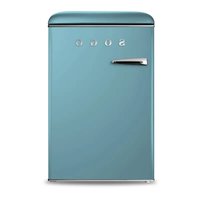


| Product type | Refrigerator-freezer |
| Brand | Sogo |
| Model | SS-21965 |
| Dimensions (width) | 552 mm |
| Power supply | 220-240 V ~ 50 Hz, 0.45 A |
| Refrigerant | R600a (23 g) |
| Freezer temperature | ≤ -18 °C |
| Refrigerator temperature | 0 ~ 8 °C |
| Climate class | Not specified (type I) |
| Noise level | < 42 dB(A) |
| Temperature control | Manual rotary knob (0-7, 0 = off, 7 = max cold) |
| Interior light | Screw-in bulb (replaceable by a professional) |
| Number of steel shelves | 1 |
| Number of vegetable drawers | 1 (crystal) with cover |
| Number of door racks | 3 |
| Defrosting | Manual (when frost reaches 5 mm) |
| Maintenance | Interior cleaning with clean water or neutral liquid |
| Safety | Disconnect before cleaning; do not use mechanical devices to defrost |
| Installation | Side space 5-10 cm, top space 30 cm; flat and stable surface |
| After-sales service | www.sogosat.com / 0034 902 222 161 |
Frequently Asked Questions - SS-21965 Sogo
User questions about SS-21965 Sogo
0 question about this device. Answer the ones you know or ask your own.
Ask a new question about this device
Download the instructions for your Refrigerator in PDF format for free! Find your manual SS-21965 - Sogo and take your electronic device back in hand. On this page are published all the documents necessary for the use of your device. SS-21965 by Sogo.
USER MANUAL SS-21965 Sogo
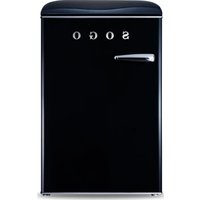
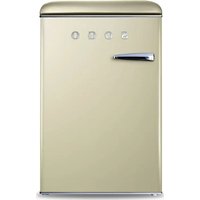
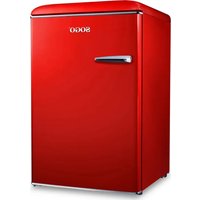
ref. SS-21950 ref. SS-21955
ref. SS-21960
ref. SS-21965
Download your manual Téléchargez votre manuel Baixe seu manual Laden Sie Ihr Handbuch herunter Scarica il tuo manuale Stáhněte si manuál Download din manual Prenesite svoj priročnik Preuzmite svoj priručnik Pobierz swoją instrukcję Descărcati manualul dvs Завантажте посібник Descàrrega el teu manual
110L MINI REFRIGERATOR
MINI FRIGORIFICO 110L
MINI RÉFRIGÉRATEUR 110L
MINI-FRIGORÍFICO 110L
MINI-KÜHLSCHRANK 110L
MINI FRIGORIFERO 110L
MINI CHLADNIČKA 110L
MINI K∅LESKAB 110L
MINI HLADILNIK 110L
MINI HLADNJAK 110L
MINI LODÓWKA 110L
MINI-REFRIGERATOR 110L
Declaration of conformity, Responsibility of Electronic products disposal, Importers Details and After-sales service on the last pages.
INSTRUCTIONS FOR USE
MAINTENANCE
• Always read the instruction manual carefully before use. - This manual can be downloaded from our website www.sogo.es. - Keep these instructions for future reference.
2. Safety instructions for the user
GENERAL
PRECAUTIONS
General precautions during the use of electrical equipment
- Do not use or store the appliance outdoors.
- This product is designed for indoor domestic, non-industrial and non-commercial use. Do not use the item outdoors or for any other purpose. Misuse or improper handling may cause problems with the appliance and may cause injury to the user.
- The unit must only be used for its intended purpose. No liability is accepted for damage resulting from improper use or incorrect handling.
- Make sure that the voltage indicated on the nameplate matches the mains voltage before plugging in the appliance. • Always remove the plug from the socket when the appliance is not in use. Do not leave the appliance unattended when it is switched on.
- It is necessary to supervise when any electrical appliance is being used by or near children.
- Before cleaning or storing your appliance, always unplug the appliance from the power supply and allow it to cool down.
- The device is not completely disconnected from the power supply, even after it has been switched off. To disconnect it completely, unplug it from the mains socket.
- The appliances are not designed to be operated by an external timer or a separate remote-control system.

Restrictions on use to avoid personal injury
- Do not leave the appliance unattended.
- Do not place or use this appliance near water sources.
- Do not place or use the appliance and its power cord on or near hot surfaces (e.g., hotplates) or open flames.
- Do not leave the power cord hanging over sharp edges and keep it away from hot objects and naked flames. Do not coil the cord around the appliance or bend it.
- Never use accessories not recommended by the manufacturer.
- The use of accessories not recommended or sold by the appliance manufacturer may result in fire, electric shock or injury to persons.
- To avoid electric shock, make sure your hands are dry before plugging
or unplugging the appliance.
- Do not use the appliance with wet hands, on wet floors or when the environment is damp, there is a risk of electric shock.
- Never immerse the appliance or the plug-in water or any other liquid. Should the appliance fall into water, disconnect it immediately from the mains and take it to an authorised service centre for repair before using it again.
- Do not use the appliance if it has fallen on the floor, if it shows visible signs of damage or if it is leaking.
- Do not use the appliance if the cable or plug is damaged. In the event of damage to the cord, it must be replaced only by the manufacturer, its service agent or similarly qualified persons in order to avoid hazards.
- In case of malfunction of the appliance, or if it has been damaged in any way, return the appliance to the nearest authorised service centre for examination, repair or adjustment.
- To avoid overloading the circuit when using this product, do not operate another high voltage product on the same electrical circuit.
- It is not recommended to use an extension cord with this product, but if an extension cord should be used:
- The marked electrical rating of the cable must be at least as good as that of the product.
- Arrange the extension cord so that it does not hang down where it can be tripped over or pulled unintentionally.

Restrictions for use with children and the elderly
- Children should be supervised to ensure that they do not play with the appliance.
- Cleaning and maintenance of the user must not be carried out by children.
• Children must not play with the appliance.
- This appliance can be used by children aged from 8 years and above and persons with reduced physical, sensory or mental capabilities or lack of experience and knowledge if they have been given supervision or instruction concerning use of the appliance in a safe way and understand the hazards involved.
- Keep the appliance and its cord out of the reach of children under 8 years of age.
- Children under 3 years of age should be kept away from the appliance unless they are under constant supervision.
- Children from 3 to 8 years of age are allowed to operate the on/off button ONLY if the appliance is installed and ready for operation and the children have been supervised and instructed in safe operation of the appliance and they understand all associated risks
- Children aged 3 to 8 years MUST NOT: insert the plug into the
socket, make adjustment, clean the appliance or carry out user maintenance operations.
- Children aged from 3 to 8 years are allowed to load and unload refrigerating appliances.
- Do not allow children to play with the controls of the refrigerator.

Instructions to be followed when using the device
- The circuitry for the refrigerator must be isolated. The cross-sectional area of the wire must be larger than 0.75 mm². The power plug should have its own socket, and the socket must be grounded, as an adapter may cause the socket to overheat.
- The voltage and frequency of this product should be 220-240V; 50Hz. Contact the local maintenance station or retailer if the wire is damaged.
- Stop the power only by pulling the power plug out of the socket directly, not by the wire.
- Do not damage the refrigerant circuit.
- Keep ventilation openings, in the appliance enclosure or in the built-in structure, clear of obstruction.
- Before you throw away your old refrigerator or freezer:
- Remove the doors;
- Leave the shelves in place so that children may not easily get inside.
- Do not store explosive substances such as aerosol cans with a flammable propellant in this appliance.
- This appliance is intended to be used in household and similar applications such as:
- staff kitchen areas in shops, offices and other working environments;
- farm houses and by clients in hotels, motels and other residential type environments;
- bed and breakfast type environments;
- catering and similar non-retail applications.
- Do not use electrical appliance inside the food storage compartments of the appliance, unless they are of the type recommended by the manufacturer.
- This refrigerating appliance is not intended to be used as a built-in appliance.
- To avoid contamination of food, please respect the following instructions:
- Opening the door for long periods can cause a significant increase of the temperature in the compartments of the appliance.
- Clean regularly surfaces that may come into contact with food and accessible drainage systems.
- Clean water tanks if they have not been used for 48 hours; flush the water system connected to a water supply if water has not been drawn for 5 days.
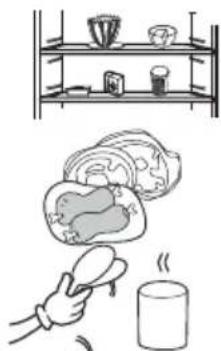
- Store raw meat and fish in airtight containers in the refrigerator to prevent contact with or dripping onto other food.
- Two-star frozen-food compartments are suitable for storing pre-frozen food, storing or making ice cream, and making ice cubes.
- One-, two-, and three-star compartments are not suitable for freezing fresh food.
- If the refrigerating appliance is left empty for long periods, switch it off, defrost, clean, dry, and leave the door open to prevent mold from developing inside.
- WARNING: When positioning the appliance, ensure the supply cord is not trapped or damaged.
- WARNING: Do not place multiple portable socket-outlets or portable power supplies at the rear of the appliance.
- If gas leaks from its container, do not pull the plug out or in; it may cause sparks and fire hazards.
- Do not splash water on the rear of the appliance; it may cause malfunction or electric shock.
- Do not store flammable materials such as ether, benzene, LP gas, and glue in the refrigerator.
- Do not place bottled beverages in the freezer; they may cause bottles to break.
- It is better not to place objects on top of the appliance that are magnetic, heavy, or filled with water. Electronic components may not work steadily if water gets inside.
- The refrigerant of this product is R600a, which is flammable. Therefore, ensure the cooling system is not damaged during transportation and installation.
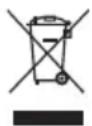
- DISPOSAL: Do not dispose of this product as unsorted municipal waste. Separate collection of such waste for special treatment is necessary.
- Warning: Do not use any electronic equipment inside the appliance.
- WARNING: Do not use mechanical devices or appliances to accelerate the defrosting process, except those recommended by the manufacturer.
- Do not place carbonated beverages in the freezer compartment. Ice cream can cause "freezer burns". This can happen if they are ingested immediately after removal from the freezer.
- Do not remove items from the refrigerator with wet hands to avoid skin abrasions caused by freeze burns. Do not place bottles or cans in the freezer compartment.
- See the storage times recommended by the manufacturer.
- The refrigerator is a heavy household appliance. Caution must be taken while moving it. It is dangerous to alter specifications or attempt to modify this appliance in any way.
- This refrigeration appliance is not suitable for built-in installation.
- WARNING: If doors or lids are fitted with locks and keys, they must be kept out of reach of children and not in the vicinity of the refrigerating appliance, to prevent children from being locked inside.
- WARNING: The refrigerant used in your appliance and the insulation materials must be disposed of correctly.
- SPECIFICATIONS AND PARAMETERS
| Climate class | ||
| Electric shock protection type I | ||
| 18 | ||
| 92 | ||
| Voltage (V) | AC 220-240 | |
| Frequency (Hz) 50 | ||
| Current (A) 0.45 | ||
| Voice [dB(A)] <42 | ||
| Refrigerant R600a/23g | ||
| Interior temperature (C) | Freezer | ≤-18 |
| Refrigerator 0~8 | ||
| Dimension (mm) With 552 | ||
| Depth 617 | ||
| Height 900 | ||
This product complies with EU regulation 2023/826 under directive 2009/125/EC on the Eco design requirements.
Power consumption in off mode:
Power consumption in standby mode:
Time after which the product enters into off mode:
4. NAMES OF THE PARTS
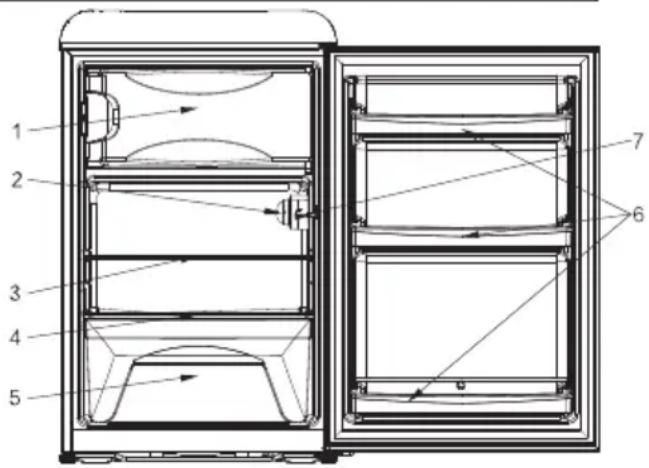
- Freezer compartment
- Light and temperature control knob
- Steel shelf
- Crystal vegetable drawer
- Crystal drawer cover
- Door bar
- Lamp switch
Accessories
Crystal vegetable drawer: 1,
Crystal drawer cover: 1,
Steel shelf: 1,
Door Bar: 3,
Before first use
- If you use the refrigerator for the first time, remove the adhesive tapes from the drawers, balconies, egg tray, and the drain tube plug.
- Do not pull or push the drawers and balconies forcefully during installation, as this can cause damage.
- Adjust the temperature control to the highest setting you can accept, which will save energy and money.
- Do not open the refrigerator door repeatedly during normal operation.
- Keep the combination of drawers, baskets, and shelves consistent with the original standard.
INSTALLATION INSTRUCTIONS
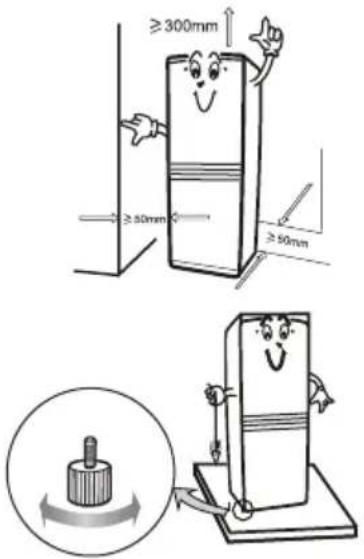
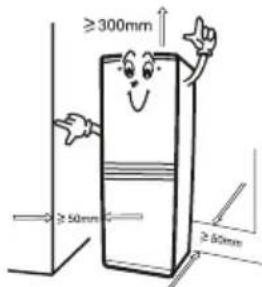
- The refrigerator should be placed on a completely flat surface. Leave 5-10 cm between each side of the appliance and the wall, and 30 cm between the top of the appliance and the ceiling.
- Choose a location that is not exposed to sunlight, high temperature, or humidity, as humidity may cause stains.
- Pull out the bottom panel before installation.
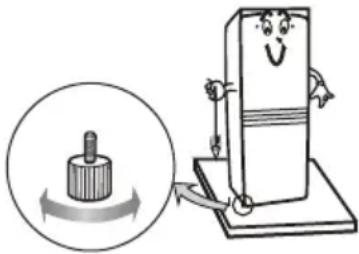
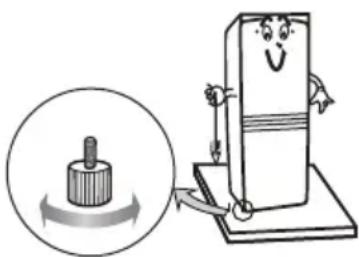
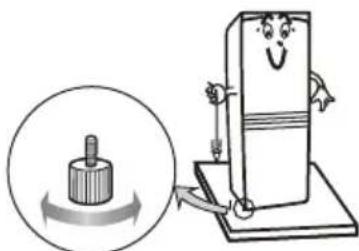
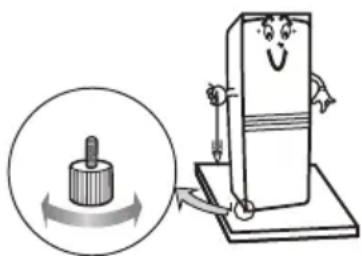
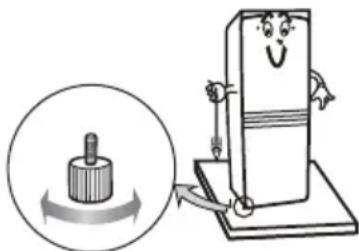
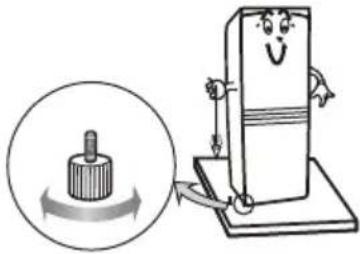
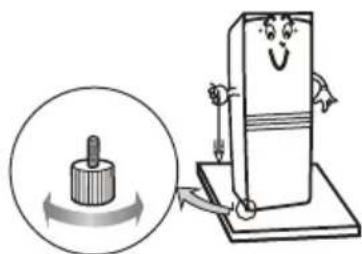
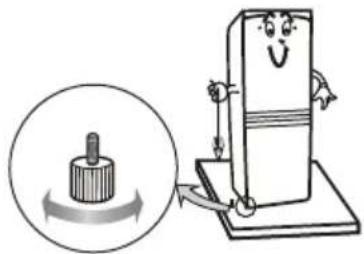
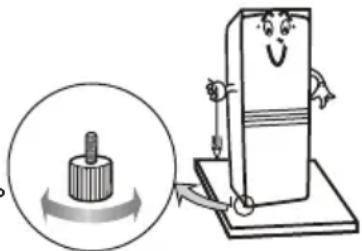
- If the appliance is unstable, adjust it by rolling the two front legs at the bottom. Rolling clockwise raises the appliance.
- The surface should be firm and flat. An uneven position may cause noise and vibration: (a) Noise may increase if the floor is not stable and flat. (b) Place a sheet under the appliance to dissipate heat if you place it on a carpet. Make sure the adjustable legs are firmly on the floor, and tilt the appliance slightly backward to keep the doors closed tightly.
How to install the handle
- Handle
- Handle trim
- Screws
- Socket spanner
- Unpack the accessories from the bags, including the handle, handle trim, and three screws.
- Retrieve a socket spanner from your toolkit.
- Align the three screw holes of the handle with those on the door, then securely fasten each screw.
- Affix the handle trim onto the installed handle for a finished look.
5. OPERATION INSTRUCTIONS
PLACEMENT OF FOOD
- There should always be some space between items inside for air circulation.
- Food should be kept in seal pack containers to avoid becoming dry or inherit smell.
- Hot food should be cooled down before placing into the appliance. Otherwise, internal temperature and electronic consumption will increase.
- Reducing the frequency of door opening can efficiently reduce the electronic consumption
INSTRUCTION FOR USAGE
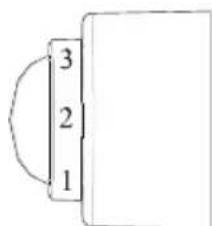
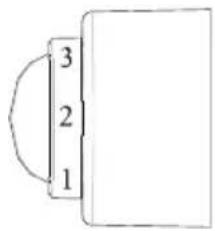
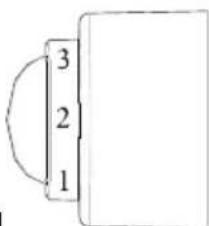
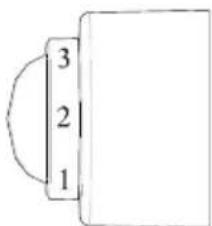
The temperature of the refrigerator can be controlled manually by the knob. However, the number shown on the knob does not directly represent the temperature. Instead, the larger the number, the lower the interior temperature will be. 0 stands for off. 7 stands for the coolest temperature level. Compartment temperature varies depending on the compartment level. In the freezer, the temperature will be below 0°C. So, please select the knob accordingly before starting. Turn the knob to 4 to keep the temperature normal and balanced. If a lower interior temperature is required, turn the knob to level 4-6. Conversely, when a higher temperature is needed, turn the knob between 1-4.
DEFROST
Heavy frost will influence the refrigerating of the appliance and increase energy consumption. Thus, defrosting is needed when the frost is as thick as 5 mm. The processes of manual defrost are listed as follows: take all the food out of the compartment; remove the drawers and shelves; unplug the electronic power cord; open the doors and wait for the ice to melt down; wipe up the water with a dry cloth.
Note: Do not use any other equipment or method to push the defrost process. It may destroy the cooling system.
DISCONNECTING THE APPLIANCE
After a power failure, even in summer, the refrigerator can store food normally for several hours.
Discontinuation during power failure
After a power failure, do not put additional food in the appliance and reduce the frequency of door opening. If you know about the power failure beforehand, make some ice in a container and put it in the top of the fridge.
Discontinuation during vacation
Please remove the easily perishable food from the fridge before a short vacation.
In case of a long vacation, please remove all the food, close the door firmly, and cut off the power. After defrosting, clean up the liner of the appliance and wipe it dry, and leave the door open.
Stop using
If the refrigerator stops after being used for a long time, please unplug the outlet and clean up the appliance. The door should be kept open in order to prevent unpleasant smells caused by food.
Attention: In normal conditions, do not stop the appliance, as this can affect its life. After unplugging the power, please leave at least 5 minutes before resuming.
6. HINTS AND TIPS
HINTS FOR ENERGY SAVING
Freezer: 1. The internal configuration of the appliance is the one that ensures the most efficient use of energy.
- The colder the temperature setting, the higher the energy consumption.
Fridge: 1. The most efficient use of energy is ensured in the configuration with the drawers in the bottom part of the appliance and shelves evenly distributed.
- Position of the door bins does not affect energy consumption.
- Do not open the door frequently or leave it open longer than necessary.
- Do not set too high temperature to save energy unless it is required by the characteristics of the food.
- If the ambient temperature is high and the temperature control is set to low temperature and the appliance is fully loaded, the compressor may run continuously, causing frost or ice formation on the evaporator. In this case, set the temperature control toward higher temperature to allow automatic defrosting and to save energy this way.
- Ensure a good ventilation. Do not cover the ventilation grilles or holes.
HINTS FOR FREEZING
- Activate Super Freeze function at least 24 hours before placing the food inside the freezer compartment.
- Before freezing, wrap and seal fresh food in: aluminium foil, plastic film or bags, airtight containers with lid.
- For more efficient freezing and thawing, divide food into small portions.
- It is recommended to put labels and dates on all your frozen food. This will help to identify foods and to know when they should be used before their deterioration.
- The food should be fresh when being frozen to preserve good quality.
- Especially fruits and vegetables should be frozen after the harvest to preserve all of their nutrients.
- Do not freeze bottles or cans with liquids, in particular drinks containing carbon dioxide - they may explode during freezing.
- Do not put hot food in the freezer compartment. Cool it down at room temperature before placing it inside the compartment.
- To avoid increase in temperature of already frozen food, do not place fresh unfrozen food directly next to it. Place food at room temperature in the part of the freezer compartment where there is no frozen food.
- Do not eat ice cubes, water ices or ice lollies immediately after taking them out of the freezer. Risk of frostbites.
- Do not re-freeze defrosted food. If the food has defrosted, cook it, cool it down and then freeze it.
HINTS FOR STORAGE OF FROZEN FOOD
Higher temperature setting inside the appliance may lead to shorter shelf life.
- The whole freezer compartment is suitable for storage of frozen food products.
- Leave enough space around the food to allow air to circulate freely
- For adequate storage, refer to the food packaging label to see the shelf life of the food.
- It is important to wrap the food in such a way that prevents water, humidity, or condensation from getting inside.
SHOPPING TIPS
After grocery shopping:
- Ensure that the packaging is not damaged - the food could be deteriorated. If the package is swollen or wet, it might not have been stored in optimal conditions and defrosting may have already started.
- To reduce the defrosting process, buy frozen goods at the end of your grocery shopping and transport them in a thermal and insulated cool bag.
- Place the frozen foods immediately in the freezer after coming back from the shop.
- If food has defrosted even partially, do not refreeze it. Consume it as soon as possible.
- Respect the expiry date and the storage information on the package.
SHELF LIFE FOR FREEZER COMPARTMENT
| Type of food Shelf life (months) | |
| Bread 3 | |
| Fruits (except citrus) 6 - 12 | |
| Vegetables 8 - 10 | |
| Leftovers without meat 1 - 2 | |
| Dairy Food | |
| Butter | 6 - 9 |
| Soft cheese (e.g. mozzarella) | 3 - 4 |
| Hard cheese (e.g. parmesan, cheddar) | 6 |
| Sea food | |
| Fatty fish (e.g. salmon, mackerel) | 2 - 3 |
| Lean fish (e.g. cod, flounder) | 4 - 6 |
| Shrimps | 12 |
| Shucked clams and mussels | 3 - 4 |
| Cooked fish | 1 - 2 |
| Meat | |
| Poultry 9 - 12 | |
| Beef 6 - 12 | |
| Pork 4 - 6 | |
| Lamb 6 - 9 | |
| Sausage 1 - 2 | |
| Ham 1 - 2 | |
| Leftovers with meat 2-3 | |
HINTS FOR FRESH FOOD REFRIGERATION
- A good temperature setting that ensures preservation of fresh food is a temperature less than or equal to +4°C.
- A higher temperature setting inside the appliance may lead to a shorter shelf life of food.
- Cover the food with packaging to preserve its freshness and aroma. Always use airtight containers for liquids and for food, to avoid flavors or odors in the compartment.
- To avoid cross-contamination between cooked and raw food, cover the cooked food and separate it from the raw one.
- It is recommended to defrost the food inside the fridge.
- Do not insert hot food inside the appliance. Make sure it has cooled down at room temperature before inserting it. • To prevent food waste, the new stock of food should always be placed behind the old one.
- Meat (all types): wrap in a suitable packaging and place it on the glass shelf above the vegetable drawer. Store meat for max. 1-2 days.
- Fruit and vegetables: clean thoroughly (eliminate the soil) and place in a special drawer (vegetable drawer).
- It is advisable not to keep exotic fruits like bananas, mangos, papayas etc. in the refrigerator.
- Vegetables like tomatoes, potatoes, onions, and garlic should not be kept in the refrigerator.
- Butter and cheese: place in an airtight container or wrap in aluminium foil or a polythene bag to exclude as much air as possible.
- Bottles: close them with a cap and place them on the door bottle shelf, or (if available) on the bottle rack. • Always refer to the expiry date of the products to know how long to keep them.
TECHNICAL DATA
The technical information is situated on the rating plate on the internal side of the appliance and on the energy label.
The QR code on the energy label supplied with the appliance provides a web link to the information related to the performance of the appliance in the EU EPREL database. Keep the energy label for reference together with the user manual and all other documents provided with this appliance.
It is also possible to find the same information in EPREL using the link https://eprel.ec.europa.eu and the model name and product number that you find on the rating plate of the appliance.
See the link www.theenergylabel.eu for detailed information about the energy label.
INFORMATION FOR TEST INSTITUTES
Installation and preparation of the appliance for any EcoDesign
Verification shall be compliant with EN 62552. Ventilation requirements, recess dimensions and minimum rear clearances shall be as stated in this User Manual at Chapter 3. Please contact the manufacturer for any other further information, including loading plans.
ENVIRONMENTAL CONCERNS
Recycle materials with the symbol. Put the packaging in relevant containers to recycle it. Help protect the environment and human health by recycling waste of electrical and electronic appliances. Do not dispose of appliances marked with the symbol with the household waste.
Return the product to your local recycling facility or contact your municipal.
PACKING AND MOVING
- Unpack, repack and carry: Please memorize the position of each accessory of the appliance while unpacking. Repack the product and check it carefully before transportation.
- Do not lift or pull by the door or the door handle during transportation.
- When moving, the appliance cannot be sloped more than 45 degrees (the angle to the vertical direction). Please avoid strong vibration and hit.

MAINTENANCE
The appliance should be maintained and cleaned frequently. For your safety please pull the plug out of the socket before the cleaning.
- Interior maintenance: Clean the interior of the appliance with clean water or neutral cleaning liquid. Scour it with clean water and wipe it with a piece of dry cloth.
- Maintenance of door gasket: It is easy to damage if the door gaskets are polluted by the stain like oil, sauce and etc., so it is advised to clean them carefully.
- Outer maintenance: Wipe the dust with a piece of dry cloth. If necessary, clean it with neutral cleaning liquid.
- The appliance is equipped with a screwing lamp or a long-life LED interior light. (Screwing lamp can be replaced by professionals. Long life LED is non-replaceable).
USER NOTIFICATIONS
- Do not splash water on the refrigerator, as it will cause oxidation and malfunction.
- Electronic components such as the on/off button should be wiped dry.
- Cleansers such as soap powder, abrasive cleaning powder, alkali cleansers, chemical cloth, thinner, alcohol, acid petroleum products, and hot water should not be used to clean the refrigerator as they
may damage the painted cover and plastics.
- Smear can damage the interior plastic components, so wipe it off as soon as possible.
Please check the points below after maintenance:
(1) Is there any damage or loss of the electronic wire? (2) Can the plug be put into the socket reliably and smoothly? (3) Is the plug heating unusually?
Warning: Please get rid of the gasket of the door before disposal. The disposed appliance should be handled by professional staff, as it may be harmful to the environment.
TROUBLESHOOTING TIPS
- The refrigerator does not work: It may not be connected to the power supply (plug, power cut, or fuse) or the voltage is too low.
- The refrigerator does not work efficiently as expected: It may be caused by heavy frost, or by warm temperature setting, or by frequently opening the door.
- It makes unusual noise: It may be caused by an imbalance or loose ground locating the appliance, or by resonation between the appliance and other ambient objects.
- The compressor keeps working for a long period: The environment temperature may be too high. The doors may be opened frequently or left open. The temperature control knob setting between (4-7) might also increase the working time of the compressor.
- Food is having a strong smell: Food with a strong smell should be packed tightly in vacuum-tight containers and then placed into the fridge. Please check whether there are any deteriorated food items or whether the liners are left dirty for a long time.
- Water leaks from the bottom of the refrigerator: The drain tube is jammed. Please clean it properly or use a proper tool to solve it.
- Heavy frost occurs on the rear of the appliance: keeping humid or hot food in the appliance may cause this problem. Or it might be caused by high environmental humidity.
The following cases are not malfunctions.
- Moisture may form dew on the outside of the product during the humid season; wipe it with a damp cloth.
- The flow of refrigerant through the pipeline coil can cause a bicker.
- It is normal that the sides of the product get warm as a result of the cooling pipeline working.
- The frame of the appliance will be warm during working due to the defrost pipeline inside it.

MAINTENANCE
Before first use
DEFROST
TURNING OFF THE APPLIANCE
MAINTENANCE
DEFROSTING
MAINTENANCE
NOTICES TO USERS
Before first use
- If you are using the refrigerator for the first time, remove the adhesive tapes from the drawers, shelves, egg tray, and the drain pipe cap.
- Do not pull or push the drawers and shelves forcefully during installation, otherwise you may cause damage.
- Adjust the temperature control to the highest acceptable setting, which will save energy consumption of the refrigerator and your money.
- Do not open the refrigerator door multiple times under normal operating conditions.
- Keep the combination of drawers, baskets, and shelves of the refrigerator in accordance with the original standard.
INSTALLATION INSTRUCTIONS
- The refrigerator should be placed on a completely flat surface, leave 5~10 cm between each side of the appliance and the wall, and leave 30 cm between the top of the appliance and the ceiling.
- Choose a location that is not exposed to sunlight, high temperature, or humidity, as moisture can cause stains.
- Pull out the bottom panel before installation.
- When the position of the appliance is unstable, it can be adjusted by turning its 2 lower front feet. Turning clockwise can raise the appliance.
- The surface must be solid and flat. An uneven position can cause noise and release: (a) Noise may increase if the floor is not stable and flat. (b) Place a sheet under the appliance to address heat emission if you need to place it on carpet. Make sure the adjustable feet are in contact with the floor and set the appliance slightly tilted backward so that the doors remain firmly closed.
DEFROSTING
MAINTENANCE
The appliance should be maintained and cleaned frequently. For your safety, unplug the appliance from the outlet before cleaning.

DEFROST
DEFROST
MAINTENANCE
How to install the handle
DEFROSTING
Before first use
DEFROST
6. TIPS AND ADVICE
TIPS FOR ENERGY SAVING
DÉCLARATION DE CONFORMITÉ
DECLARATION OF CONFORMITY
This device complies with EU Low Voltage Directive 2014/35/EU.
Electromagnetic Compatibility Directive 2014/30/EU. Directive 2015/863/EU on the restriction of the use of certain hazardous substances in electrical.
Directive 2009/125/EC on the eco-design requirements applicable to energy-related products.
This symbol on the product or on the packaging indicates that this product can't be disposed as normal rubbish or household waste. All the electrical, electronic equipment's and battery-operated units must recycle in proper manner and according to the local municipal laws. You can recycle them by taking them to government authorized disposal centres or specialized bins which you can find in any nearby big super markets, electronics or electro domestics products stores or malls who have these types of facilities available.
Designed by: SOGO based on European quality standards Imported by: Sanysan Appliances S.L, NIF: B98753056, C/ Barcas 2, 2, 46002 Valencia, Spain Product manufactured in CHINA. After-sales service: www.sogosat.com sogosat@sogosat.com / 0034 902 222 161

- INSTRUCTIONS FOR USE
- MAINTENANCE
- SAFETY INSTRUCTIONS FOR THE USER
- GENERAL
- PRECAUTIONS
- GENERAL PRECAUTIONS DURING THE USE OF ELECTRICAL EQUIPMENT
- RESTRICTIONS ON USE TO AVOID PERSONAL INJURY
- RESTRICTIONS FOR USE WITH CHILDREN AND THE ELDERLY
- INSTRUCTIONS TO BE FOLLOWED WHEN USING THE DEVICE
- NAMES OF THE PARTS
- ACCESSORIES
- BEFORE FIRST USE
- INSTALLATION INSTRUCTIONS
- HOW TO INSTALL THE HANDLE
- OPERATION INSTRUCTIONS
- PLACEMENT OF FOOD
- INSTRUCTION FOR USAGE
- DEFROST
- DISCONNECTING THE APPLIANCE
- DISCONTINUATION DURING POWER FAILURE
- DISCONTINUATION DURING VACATION
- STOP USING
- HINTS AND TIPS
- HINTS FOR ENERGY SAVING
- HINTS FOR FREEZING
- HINTS FOR STORAGE OF FROZEN FOOD
- SHOPPING TIPS
- HINTS FOR FRESH FOOD REFRIGERATION
- TECHNICAL DATA
- INFORMATION FOR TEST INSTITUTES
- ENVIRONMENTAL CONCERNS
- PACKING AND MOVING
- USER NOTIFICATIONS
- TROUBLESHOOTING TIPS
- THE FOLLOWING CASES ARE NOT MALFUNCTIONS
- TURNING OFF THE APPLIANCE
- DEFROSTING
- NOTICES TO USERS
- TIPS AND ADVICE
- TIPS FOR ENERGY SAVING
- DÉCLARATION DE CONFORMITÉ
- DECLARATION OF CONFORMITY
Brand : Sogo
Model : SS-21965
Category : Refrigerator