
USX-ST1 - Steam cleaner Ulsonix - Free user manual and instructions
Find the device manual for free USX-ST1 Ulsonix in PDF.
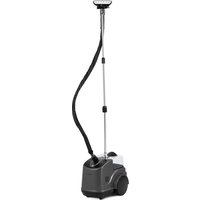


| Product type | Vertical steam iron |
| Brand / Model | Ulsonix USX-ST1 |
| Power supply voltage | 230 V ~ / 50 Hz |
| Rated power | 2000 W |
| Steam levels | 2 |
| Heat-up time | Less than 45 seconds |
| Maximum steam flow | 36 g/min |
| Continuous operation time | 70 minutes |
| Water tank capacity | 3 L |
| Electrical insulation class | I |
| Dimensions (L × D × H) | 420 × 310 × 350/1640 mm |
| Weight | 6.7 kg |
| Steam hose length | Adjustable telescopic tube |
| Nozzle type | Steam head with optional brush |
| Usage | Vertical steam ironing |
| Safety | Manual shut-off, overheating protection, automatic shut-off? |
| Maintenance | Drain the tank after each use, preferably use distilled water |
| Cleaning | Clean with a damp cloth, do not immerse |
| Storage | In a dry and cool place, away from sunlight |
| Included accessories | Water tank, telescopic tube, steam hose, steam head, brush |
| Repairability | Repairs by after-sales service only, original parts |
Frequently Asked Questions - USX-ST1 Ulsonix
User questions about USX-ST1 Ulsonix
0 question about this device. Answer the ones you know or ask your own.
Ask a new question about this device
Download the instructions for your Steam cleaner in PDF format for free! Find your manual USX-ST1 - Ulsonix and take your electronic device back in hand. On this page are published all the documents necessary for the use of your device. USX-ST1 by Ulsonix.
USER MANUAL USX-ST1 Ulsonix
| Description of the parameter | Value of the parameter |
| Product name | Steam iron |
| Model | USX-ST1 |
| Supply voltage [V~] / Frequency [Hz] | 230/50 |
| Rated power [W]. | 2000 |
| Number of steam generation levels | 2 |
| Warm-up time [s] | <45 |
| Maximum steam output [g/min]. | 36 |
| Continuous operating time [min]. | 70 |
| Water tank capacity [ml] | 3 |
| Safety class | • l: |
| Dimensions [Width x Depth x Height; mm] | 420x310x350/1640 |
| Weight [kg] | 6.7 |
1. General Description
The instruction manual is intended to assist in safe and reliable use. The product is designed and manufactured strictly according to technical specifications using the latest technology and components and maintaining the highest quality standards.
PLEASE CAREFULLY READ AND UNDERSTAND THIS INSTRUCTION MANUAL BEFORE OPERATION.
To ensure long and reliable operation of the unit, make sure to operate and maintain it properly in accordance with the guidelines in this instruction manual. The technical data and specifications contained in this instruction manual are up to date. The manufacturer reserves the right to make changes in order to improve the quality. Taking the technical progress and the possibility of reducing noise into account, the unit is designed and built in such a way so that risks resulting from noise emissions are reduced to the lowest possible level.
Explanation of symbols
| CE | The product complies with applicable safety standards. |
 | Please read the instructions before use. |
 | Recyclable product. |
 | CAUTION! or WARNING! or REMINDER! describing a situation.(general warning sign). |
 | CAUTION! Warning of electric shock! |
 | Caution! Hot surface can cause burns! |
 | For indoor use only. |

The original instruction manual is in the German language version. Other language versions are translations from German.
2. Safety of use

CAUTION! Read all safety warnings and all instructions. Failure to follow the warnings and instructions may result in electric shock, fire and/or severe personal injury or death.
The term "unit" or "product" in the warnings and in the description of the instructions refers to the STEAM IRON.
2.1. Electrical safety
a) The plug of this unit must fit into the outlet. Do not modify the plug in any way. Original plugs and matching outlets reduce the risk of electric shock. b) Avoid touching grounded parts, such as pipes, heaters, ovens, and refrigerators. There is an increased risk of electric shock if your body is grounded and touches the unit exposed to direct rain, wet pavement, and operation in a humid environment. If water enters the unit, there is an increased risk of damage to the unit and electric shock. c) Do not touch the unit with wet or damp hands. d) Do not use the cord in an unintended manner. Never use it to carry the unit or to pull the plug out of the socket. Keep the cord away from heat sources, oil, sharp edges or moving parts. Damaged or tangled cords increase the risk of electric shock. e) If you cannot avoid using the unit in a wet environment, use a residual current unit (RCD). Using an RCD reduces the risk of electric shock. f) Do not use the unit if the power cord is damaged or shows signs of wear. A damaged power cord should be replaced by a qualified electrician or the manufacturer's service department. g) To avoid electric shock, do not immerse the cable, plug, or unit itself in water or other liquid. Do not use the unit on wet surfaces. h) CAUTION - THREAT TO LIFE! When cleaning or using the unit, never immerse it in water or other liquids. i) Do not allow the machine to get wet. Risk of electric shock!
2.2. Safety in the workplace
a) Keep the work area tidy and well lit. Disorder or poor lighting can lead to accidents. Be foresighted, watch what you are doing and use common sense when using the unit. b) Do not use the unit in an explosive area, for example in the presence of flammable liquids, gases or dust. c) If you find any damage or irregularities in the operation of the unit, immediately turn it off and report it to an authorized person. d) If you have any doubts as to whether the unit is working properly or if it is damaged, contact the manufacturer's service department. e) Only the manufacturer's service department can repair the unit. Do not carry out repairs yourself! f) In case of open flames or fire, use only dry powder or snow (CO2) fire extinguishers to extinguish the live equipment.
g) No children or unauthorized persons are allowed in the work area. (Inattention may result in loss of control of the unit.) h) Use the unit in a well-ventilated area. i) Check the condition of the safety stickers regularly. Replace them if they are illegible. j) Keep these instructions for use for future reference. If the unit is to be passed on to a third party, the operating instructions must also be handed over together with the unit. k) Keep the packaging and small assembly parts out of the reach of children. l) Keep the unit away from children and animals.

Please note! Keep children and other bystanders safe while operating the unit.
2.3. Personal safety
a) Do not operate this product if you are tired, ill or under the influence of alcohol, drugs or medication that could impair your ability to operate the product. b) The unit is not intended to be used by persons (including children) with reduced mental, sensory or intellectual functions or persons who lack experience and/or knowledge unless they are supervised or have been instructed by a person responsible for their safety on how to operate the unit. c) The unit may be operated by persons who are physically fit, capable of operating it and appropriately trained, and who have read this instruction manual and have been trained in occupational safety and health. d) Use caution and common sense when operating this unit. A moment's inattention during operation may result in serious personal injury. e) To prevent accidental start-up, make sure the switch is in the off position before connecting to a power source. f) Do not overestimate your capabilities. Maintain body balance and equilibrium at all times during operation. This allows for better control of the machine in unexpected situations. g) The unit is not a toy. Children should be watched to ensure that they do not play with the unit.
2.4. Safe use of the unit
a) Do not use the unit if the ON/OFF switch does not function properly (does not turn on and off). Units that cannot be controlled by the switch are unsafe, cannot operate, and must be repaired. b) Disconnect the unit from the power supply before adjusting, cleaning, or servicing. This precaution reduces the risk of accidental start-up. c) Keep unused equipment out of the reach of children and out of the reach of anyone unfamiliar with the unit or this instruction manual. These units are dangerous in the hands of inexperienced users. d) Keep the unit in good working condition. Check before each use for general damage or damage to moving parts (cracks in parts and components or any other condition that may affect the safe operation of the unit). If damaged, have the unit repaired before use. e) Keep the unit out of the reach of children. f) Repairs and maintenance should be carried out by qualified personnel using only original spare parts. This will ensure the safety of use. g) To ensure the designed operational integrity of the unit, do not remove factory-installed covers or loosen screws. h) Do not leave the unit switched on unattended. i) Clean the unit regularly to prevent permanent dirt build-up. j) Before each use, make sure that the nozzle is properly mounted in the machine and that the hose is properly attached and undamaged. k) The unit is not a toy. Cleaning and maintenance must not be performed by children without adult supervision. l) Do not tamper with the unit to alter its performance or design. m) Keep the unit away from sources of fire and heat. n) Never aim the steam jet at your body, other people or animals. The hot steam causes skin burns! o) Never operate the unit with an empty water tank. p) Never refill the water tank with hot water. q) Do not use the iron in a horizontal position, always hold the nozzle upwards - it makes it difficult for the condensed steam to return to the tank, causes water dripping from the nozzle, etc. r) Do not hold clothes with your hand during ironing - this will cause a risk of skin burns. s) Always disconnect the unit from the power supply when emptying the tank or refilling water. t) Take special care when emptying or refilling the tank. u) There is a risk of skin burns. v) Do not iron clothing that is worn on the body. w) Caution: the steam supply hose and nozzle become hot during use. Use caution to avoid skin burns.

CAUTION! Although the product has been designed to be safe, with adequate safeguards, and despite the additional safety features provided to the user, there is still a slight risk of accident or injury when handling the unit. You are advised to use caution and common sense when using this product.
3. Rules of use
The unit is designed for ironing clothes with steam.
The user is responsible for any damage resulting from misuse.
3.1. Description
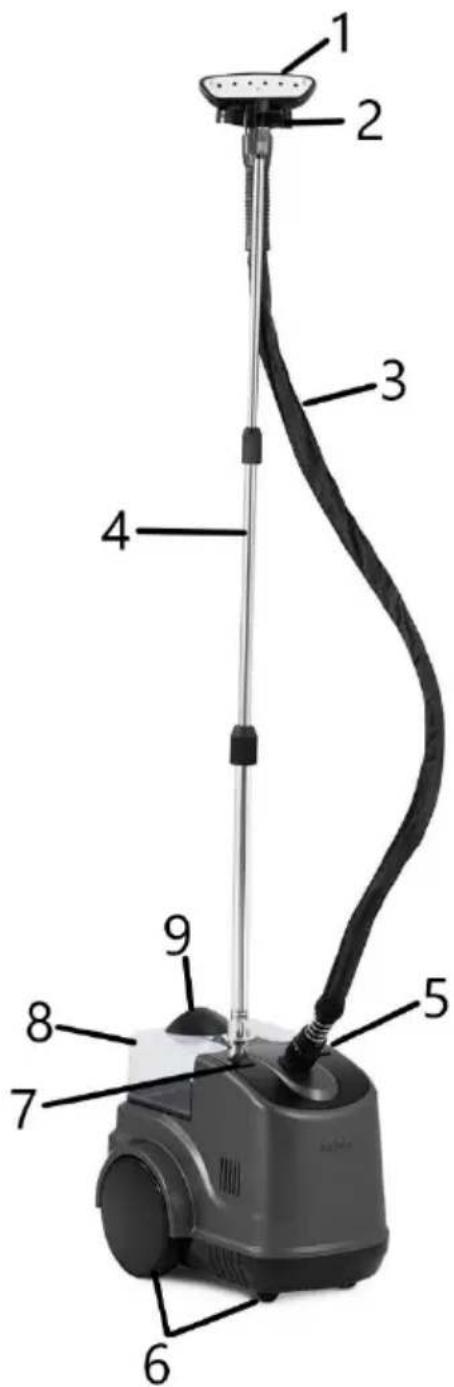
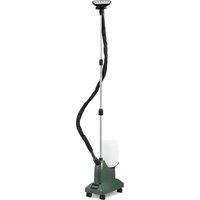
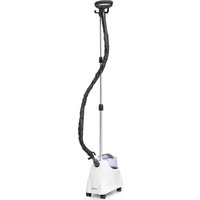
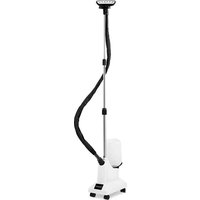
- Steamer head
- Handle for steam head
- Steam hose
- Telescopic tube
- On/Off button
- Wheels
- Steam level selection button
- Water tank
- Water tank holder
3.2. Preparation for operation
POSITIONING OF THE UNIT
The ambient temperature must not exceed 40°C and ambient humidity should not exceed 85%. Place the unit in a way that ensures good air circulation. Maintain a minimum clearance of 10 cm from any wall of the unit. Keep the unit away from any hot surfaces. Always operate the unit on a level, stable, clean, fireproof and dry surface and out of the reach of children and persons of impaired mental, sensory and intellectual functions. Place the unit in such a way that the mains plug can be reached at any time. Ensure that the power supply to the unit corresponds to that specified on the identification plate!
ASSEMBLY OF THE UNIT
Caution: Do not assemble the unit while it is connected to the power supply or while it is still hot after previous use.
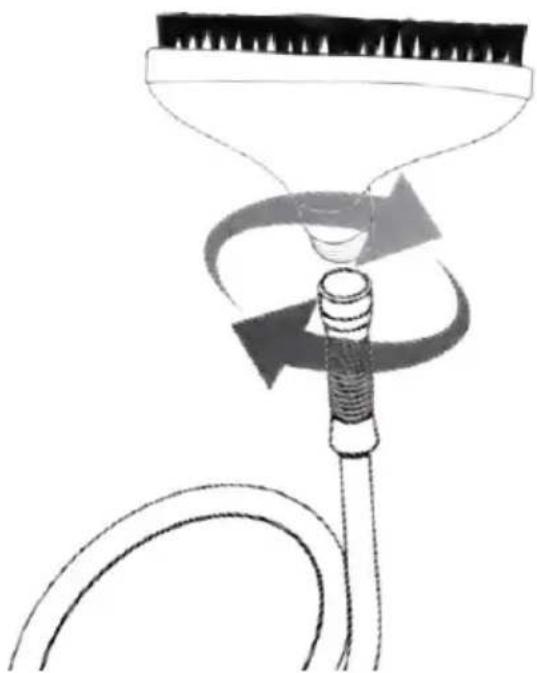
- Assemble the telescopic tube. Connect the pipes by turning them in a clockwise direction.

- Screw the telescopic tube clockwise to the machine.
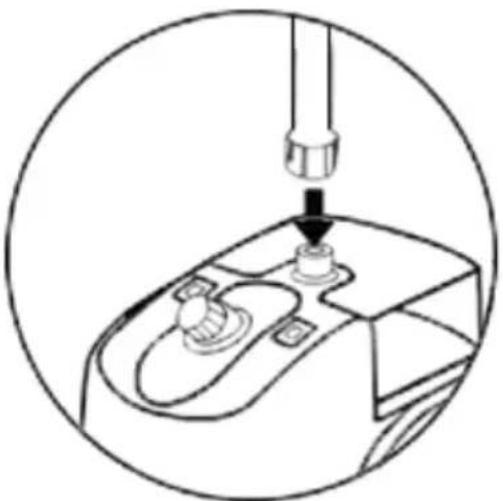
- Slide the steam head holder onto the top of the telescopic tube.
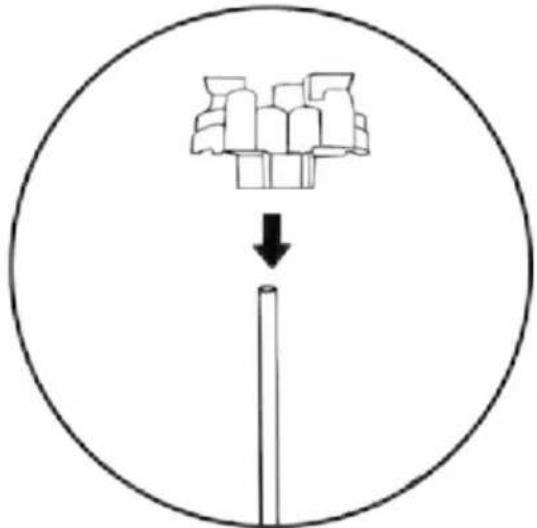
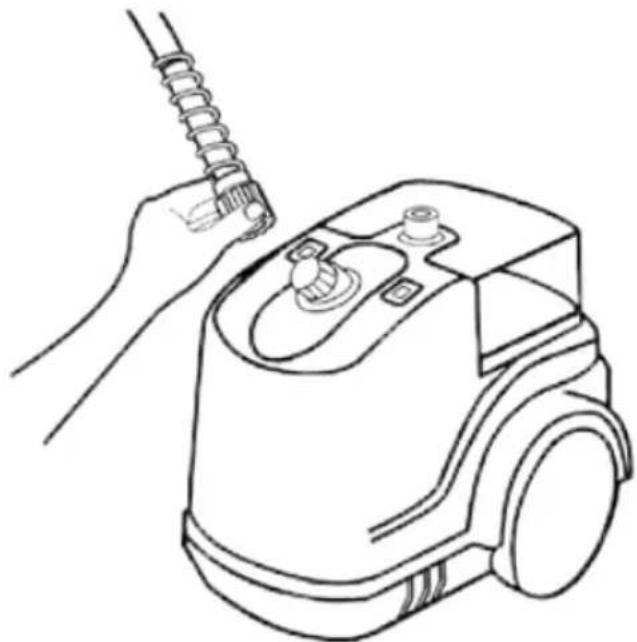
- Install the steam hose into the unit.
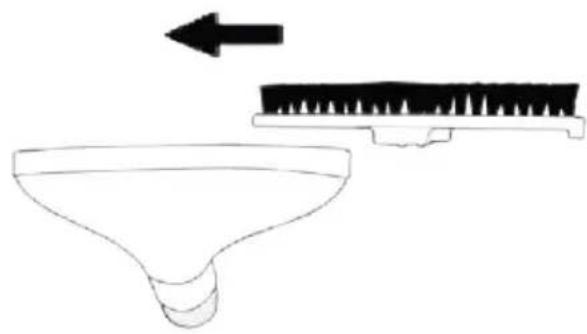
- An optional brush can be attached to the steam head.
- Screw the steam heads clockwise to the end of the steam hose.
3.3. Working with the unit
- Place the fabric to be ironed on the hanger (not included).
- Remove the water tank from the unit, unscrew the plug and fill the tank with clean, cold water. Do not pour hot water into the tank. Close the cap and place the water tank back in the dispenser.
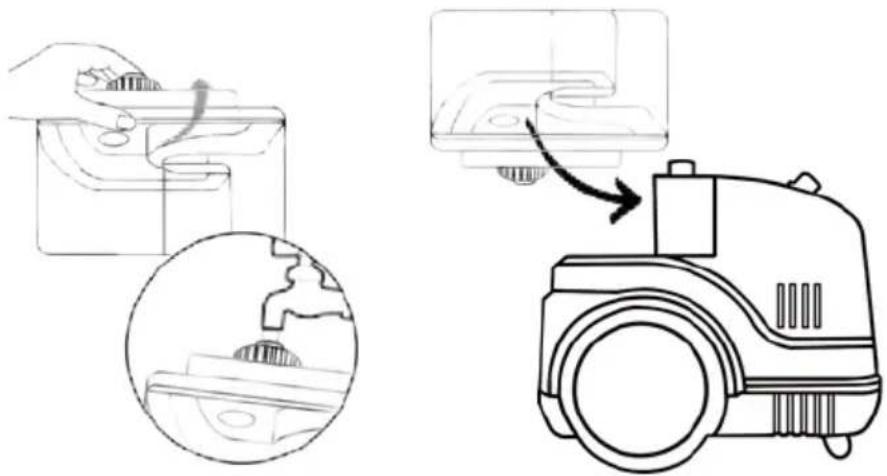
- Connect the unit to the power supply. Switch on with the I/O button in the "I" position.
- Use the steam level selection button to set the preferred level.
- The unit will begin to heat up and will be ready for use after approx. 60s.
- Filling the tank with water while the unit is switched on is prohibited. To refill the tank, switch off the unit and let it cool down to avoid skin contact with hot steam and heated parts.
- To turn off the machine, set the I/O button to the "O" position and disconnect from the power source.
- After use and after waiting for the machine to cool down, always empty the water tank to avoid limescale deposits.
INSTRUCTIONS FOR USE
- Steam ironing should begin with a test on a small area of fabric in the least conspicuous place.
- Adding detergents, fragrances, etc. to the water in the tank is prohibited. This can damage the machine.
- Avoid kinks in the steam hose.
- Before ironing, always try to straighten the garment on the hanger as much as possible by hand.
- Depending on the garment to be ironed, use vertical or horizontal movements. Follow the clothing manufacturer's recommendations.
• Thick fabrics will require a longer ironing time.
- Be especially careful when ironing fabrics decorated with stones, sequins etc., hot steam may damage them.
- Refilling the tank with hot water is prohibited! Pouring hot water may deform the tank.
- Always turn the machine off when not in use, before moving it to another location, and when pouring/emptying the water tank.
- Check the water level in the water tank. Do not operate the machine with an empty water tank.
- Wearing protective gloves when you need to hold clothing during ironing is recommended.
- Using distilled or demineralized water is recommended. Using tap water may cause limescale to build up in the unit, resulting in reduced performance.
3.4. Cleaning and maintenance
a) Cleaning and maintenance. Pull the mains plug and let the unit cool down completely before cleaning, adjusting or replacing accessories and when the unit is not in use. b) Use only non-corrosive cleaning agents for cleaning the surfaces. c) After each cleaning, all the parts should be dried well before the unit is used again. d) Store the unit in a dry and cool place protected from moisture and direct sunlight. e) Do not spray the unit with a stream of water or immerse it in water. f) Make sure that no water enters through the ventilation openings in the casing. g) Clean the ventilation openings with a brush and compressed air. h) Perform regular inspections of the unit checking technical fitness and any damages. i) Always empty the water tank after using the unit to prevent limescale build-up.
For the disposal of the device please consider and act according to the national and local rules and regulations.
expondo Polska sp. z o.o. sp. k.
- GENERAL DESCRIPTION
- PLEASE CAREFULLY READ AND UNDERSTAND THIS INSTRUCTION MANUAL BEFORE OPERATION
- EXPLANATION OF SYMBOLS
- SAFETY OF USE
- ELECTRICAL SAFETY
- SAFETY IN THE WORKPLACE
- PERSONAL SAFETY
- SAFE USE OF THE UNIT
- RULES OF USE
- DESCRIPTION
- PREPARATION FOR OPERATION
- ASSEMBLY OF THE UNIT
- WORKING WITH THE UNIT
- INSTRUCTIONS FOR USE
- CLEANING AND MAINTENANCE
Brand : Ulsonix
Model : USX-ST1
Category : Steam cleaner