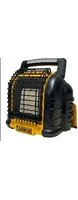
DXRH012E - Heating DEWALT - Free user manual and instructions
Find the device manual for free DXRH012E DEWALT in PDF.


| Product type | Portable propane / butane-propane gas heater |
| Brand | DeWalt |
| Model | DXRH012E |
| Gas energy source | Propane (G31) or 70/30 butane/propane blend (G30+G31) |
| Electronic energy source | DEWALT 18 V MAX rechargeable battery (1.3 / 1.5 / 2.0 Ah) |
| Thermal power | 2.2 kW (158 g/h) or 2.8 kW (200 g/h) depending on setting |
| Fan airflow | 135 CFM (approx. 229 m³/h) |
| Integrated lighting | 400 lumens in adjustable handle |
| USB ports | 3 ports, 5 V DC / 2 A total |
| Ignition | Piezoelectric impulse ignition (AAA battery included) |
| Compatible gas cartridge | Disposable 465 g propane cartridge (G31) or 450 g butane/propane cartridge (G30+G31) with 7/16-28 EN417 thread |
| Runtime | 1.5 to 3.5 h with 450 g cartridge (depending on setting) |
| Usage | Well-ventilated indoor (min. opening 77 cm²) or outdoor |
| Safety | Oxygen depletion sensor (ODS), tip-over switch, leak detection |
| Maintenance | Periodic cleaning of burner, pilot and orifice; leak check |
| Repairability | Spare parts available; repair by qualified service agency |
| Warranty | 2 years against material and workmanship defects |
Frequently Asked Questions - DXRH012E DEWALT
User questions about DXRH012E DEWALT
0 question about this device. Answer the ones you know or ask your own.
Ask a new question about this device
Download the instructions for your Heating in PDF format for free! Find your manual DXRH012E - DEWALT and take your electronic device back in hand. On this page are published all the documents necessary for the use of your device. DXRH012E by DEWALT.
USER MANUAL DXRH012E DEWALT
If you have questions or comments, contact us
www.DEWALT.com
INSTRUCTION MANUAL
DEWALT®
LANGUAGES INCLUDED: ENGLISH, GERMAN, FRENCH, ITALIAN
PORTABLE PROPANE (G31) AND BUTANE/PROPANE MIXTURE (G30 + G31) HEATER FOR RECREATIONAL, COMMERCIAL AND EMERGENCY INDOOR USE DXRH012E

2797/20
EN 449:2002+A1:2007
EN 521:2006
TP 6.39
EN 60335-1:2012+A13:2017
EN 60335-2-102:2006+A2:2016
SAVE THESE INSTRUCTIONS
WARNING: READ INSTRUCTIONS CAREFULLY: Read and follow all instructions. Place instructions in a safe place for future reference. Do not allow anyone who has not read these instructions to assemble, adjust or operate the heater.
Every time a cartridge is connected to unit, connection must be checked for leaks in one or more ways: Apply soapy water to connection, look for bubbles, listen for hiss of escaping gas, feel for extreme cold, smell for rotten egg odour. If there is a leak on your appliance (smell of gas), take it outside immediately into a well ventilated flame free location where the leak may be detected and stopped. If you wish to check for leaks on your appliance, do it outside. Do not try to detect leaks using a flame, use soapy water. Any changes to this heater or its controls can be dangerous. DO NOT modify appliance.
△WARNING: This appliance shall only be used with Vapor Pressure Propane 100%(G31) and Propane Butane Mixture 70/30 (G30+G31) fuels It may be hazardous to attempt to fit other types of gas cartridges.
This is an unvented gas-fired portable heater. It uses air (oxygen) from the area in which it is used. Adequate combustion and ventilation air must be provided. Refer to page 5.
WARNING:
- Do not store or use gasoline or other flammable vapors and liquids in the vicinity of this or any other appliance.
- A Propane (G31) or Butane/Propane mixture (G30+G31) cartridge not connected for use shall not be stored in the vicinity of this or any other appliance.
- WHAT TO DO IF YOU SMELL GAS
- Do not try to light appliance.
- Extinguish any open flame.
- Shut off gas to appliance.
Service must be performed by a qualified service agency.
⚠ WARNING:
Early signs of carbon monoxide poisoning resemble the flu, with headache, dizziness and/or nausea. If you have these signs, heater may not be working properly. Get fresh air at once! Have heater serviced.
⚠ WARNING: If the recreational or commercial enclosure
does not have a window or roof vent, DO NOT USE THIS HEATER
INSIDE. Use only in a well ventilated area.
Caution:
- Some carpets or linoleum surfaces may discolor if heater is placed directly on these floor coverings.
- When operating the heater at altitudes over 2.13 km above sea level the heater may shut off. (Please read the GENERAL INFORMATION)
CONTENTS
WARNINGS 2
HEATER SPECIFICATIONS 3
Odour FADE WARNINGS 4
SAFETY PRECAUTIONS 5
GAS TYPE:....Propane (G31) Gas shall only be used with Coleman and Primus Power Gas 70/30 Butane/ Propane (G30+G31)
INPUT (kW): 2.2 kW (158 G/H)
2.8kW (200 G/H)
INJECTION SIZE....1.01 mm
Minimum Clearances from normal combustible material
From outlet 60.96 cm
From top 76.2 cm
From Sides....15.24 cm
From Rear 0 cm
WARNING: CERTIFIED FOR USE WITH PROPANE ONLY
WARNING: CERTIFIED FOR USE WITH DEWALT RECHARGEABLE BATTERY PACKS. REFER TO LIST BELOW A LIST OF APPROVED BATTERIES.
DEWALT 18V MAX batteries
• 1.3 Ah
• 1.5 Ah
• 2.0Ah
BATTERIES AND CHARGER ARE NOT INCLUDED.
Electronic Features (requires battery)
• 400 Lumens Light embedded in adjustable handle
• 135 CFM Fan
• 3 USB Power Outlets (5 Volts DC current, 2 Amps)
⚠ WARNING: If the information in this manual is not followed exactly, a fire or explosion may result causing injury or loss of life.
General Information
The DXRH012E is safe for indoor use in small recreational enclosures having means for providing combustion air and ventilation, such as enclosed porches, cabins, fishing huts, trailers, tent trailers, tents, truck caps and vans. It may be used for emergency indoor heating when connected disposable 465g propane (G31) OR 450g Butane/Propane mixture (G30+G31) cartridge and for indoor use in commercial enclosures, provided that there is sufficient air for combustion and ventilation (specified in OPERATING PRECAUTIONS page 5).
NOTE: This heater can be used outdoors, but may experience nuisance shutoffs in certain wind conditions.
- A DEWALT battery is necessary only for Fan, USB Power Outlets, and Light operation.
- A Propane gas supply is necessary only for Heating operation.
- When the heater is cold or at room temperature, it will take a few minutes for the burner tile to turn bright orange. This is normal and the heater is working properly. If burner tile is visibly flaming, turn heater off and call a qualified service technician.
- When the unit is lit, there should be about a quarter inch (.635 cm) border around the tile that will not turn bright orange. This is normal.
- When operating the heater for the first time, the top area of the reflector may discolor. This is also normal and is no reason for concern.
- The protective grill on the front of this heater is coated with a special high-temperature resistant paint. When the heater is used for the first time, the grill may give off noticeable smoke or fumes. This is normal and will not occur during subsequent uses. The fumes are not harmful.
- When operating the heater at altitudes over 2.13km above sea level, the unit may not burn as bright as in lower altitudes. This is normal. At higher altitudes the heater may shut off. If this happens provide fresh air, wait 5 minutes, and then re-light. Due to local atmospheric conditions heater may not re-light.
- When moving heater when lit or bumping heater setting it down, the tip over switch may shut off heater. If this happens, relight.
- Due to natural operation of small cartridges, condensation may build up on cartridge and drip on surface under heater. Sometimes this condensation may freeze due to the extreme cold caused when propane (G31) vaporizes. This is normal and no reason for alarm.
- Operating time will vary depending on the heater setting and the supply cartridge size. Up to 1.5 to 3.5 hours on a 450G 70/30 Butane/Propane mixture (G30+G31) cartridge. Due to the properties of Propane gas (G31), run times can be significantly reduced when operating continuously at temperatures below -6.6 C.
- Do not use in unventilated areas
- The flow of combustion and ventilation air must not be obstructed
- Proper ventilation air must be provided to support the combustion air requirements of the heater being used.
- Refer to the specification section of the heater's manual, heater dataplate, or contact the factory to determine combustion air ventilation requirements of the heater.
- Lack of proper ventilation air will lead to improper combustion
- Improper combustion can lead to carbon monoxide poisoning leading to serious injury or death. Symptoms of carbon monoxide poisoning can include headaches, dizziness and difficulty in breathing.
Fuel Gas Odour
Propane gas(G31) and butane/propane mixture (G30+G31) gases have man-made odourants added specifically for detection of fuel gas leaks. If a gas leak occurs you should be able to smell the fuel gas. Since Propane (G31) is heavier than air you should smell for the gas odour low to the floor. ANY GAS Odour IS YOUR SIGNAL TO GO INTO IMMEDIATE ACTION!
- Do not take any action that could ignite the fuel gas.
- Do not operate any electrical switches.
- Do not pull any power supply or extension cords.
- Do not light matches or any other source of flame.
- Do not use your telephone.
- Get everyone out of the building and away from the area immediately. Close all propane gas (G31) tank or cylinder fuel supply valves, or the main fuel supply valve located at the meter if you use natural gas.
- Propane gas (G31) is heavier than air and may settle in low areas. When you have reason to suspect a propane leak, keep out of all low areas.
- Use a telephone remote from the area of the leak and call your fuel gas supplier and your fire department. Do not re-enter the building or area.
-
Stay out of the building and away from the area until declared safe by the firefighters and your fuel gas supplier.
-
FINALLY, let the fuel gas service person and the firefighters check for escaped gas. Have them air out the building and area before you return. Properly trained service people must repair any leaks, check for further leakages, and then relight the appliance for you.
- Some people cannot smell well. Some people cannot smell the odour of the man-made chemical added to propane gas (G31). You must determine if you can smell the odourant in these fuel gases.
- Learn to recognize the odour of propane gas (G31).
- Smoking can decrease your ability to smell. Being around an odour for a period of time can affect your sensitivity to that particular odour. Odours present in animal confinement buildings can mask fuel gas odour.
- The odourant in propane gas (G31) is colorless and the intensity of its odour can fade under some circumstances. If there is an underground leak, the movement of gas through the soil can filter the odourant.
- Propane gas (G31) odour may differ in intensity at different levels. Since Propane gas (G31) is heavier than air, there may be more odour at lower levels.
- Always be sensitive to the slightest gas odour. If you continue to detect any gas odour, no matter how small, treat it as a serious leak. Immediately go into action as discussed previously.
Odour Fading - No Odour Detected
ATTENTION - Critical Points to Remember!
- Propane gas (G31) or Butane/Propane mixture (G30+G31) has a distinctive odour. Learn to recognize these odours. (Reference Fuel Gas Odour and Odour Fading sections on this same page)
- Even if you are not properly trained in the service and repair of the heater, ALWAYS be consciously aware of the odours of propane gas(G31) and natural gas.
- If you have not been properly trained in repair and service of propane gas(G31) or Butane/Propane mixture(G30+G31) then do not attempt to light heater, perform service or repairs, or make any adjustments to the heater on the propane (G31) or Butane/Propane mixture(G30+G31) gas fuel system.
- A periodic sniff test around the heater or at the heater's joints; i.e. hose, connections, etc., is a good safety practice under any conditions. If you smell even a small amount of gas, CONTACT YOUR FUEL GAS SUPPLIER IMMEDIATELY. DO NOT WAIT!
General Safety Instructions
THIS IS A HEATING APPLIANCE. DO NOT OPERATE THIS APPLIANCE WITHOUT THE FRONT WIRE GUARD INSTALLED. DO NOT ATTEMPT TO WARM OR COOK FOOD ON THIS HEATER.
-
REGULATOR IN HEATER MUST ALWAYS BE IN PLACE DURING OPERATION.
-
Due to high temperatures, the appliance should be located out of traffic and away from combustible materials. (See Specifications on page 3.)
-
CAUTION: Accessible parts may become very hot. Keep young children away from the appliance Children and adults should be alerted to the hazard of high surface temperatures and should stay away to avoid burns or clothing ignition.
-
Young children should be carefully supervised when they are near the appliance.
-
Do not place clothing or other flammable material on or near the appliance.
-
If the wire guard is removed for servicing, it must be replaced prior to operating the heater.
-
Do not use non-approved attachments on this heater. Do not modify appliance.
-
The appliance should be inspected before each use. Frequent cleaning may be required. The control compartments, burner and circulating air passageways of the appliance must be kept clean. (See MAINTENANCE on page 7.)
-
Do not use this heater is any part has been under water. Immediately call a qualified service technician to inspect the heater and to replace any part of the control system and any gas control which has been under water.
-
This heater can only be used in a recreational or commercial enclosure with a window or roof vent. It may also be used outdoors.
-
This heater requires a well ventilated location of 77 cm2 (example 7.62 cm x 10.16 cm opening) minimum for adequate ventilation during operation which is in accordance with national requirements for the supply of combustion air. Do not use other fuel burning appliances inside.
-
GAS PRESSURE AT HEATER IS REGULATED AND FIXED AT 2.74 kPa. IN ANY CASE DO NOT REGULATE OR REDUCE PROPANE(G31) OR BUTANE/PROPANE MIXTURE(G30+G31) CARTRIDGE SUPPLY PRESSURE TO HEATER!
-
When used without adequate combustion and ventilation air, this heater may give off excessive CARBON MONOXIDE, an odourless, poisonous gas.
-
Some people - pregnant women, persons with heart or lung disease, anemia, those under the influence of alcohol, those at high altitudes - are more affected by carbon monoxide than others.
-
Do not operate heater in any moving vehicle such as leisure vehicles like caravans and auto caravans. Do not use in high rise flats, basements, bathrooms or bedrooms.
-
When heater is placed on the ground, make sure the ground is level and keep any objects at least 60.96 cm from the front of the heater. DO NOT MOVE THE APPLIANCE WHEN OPERATING, SHOCKS AND BUMPS MAY ACTIVATE THE SAFETY TIP OVER DEVICE. DO NOT LEAVE HEATER UNATTENDED OR WHERE CHILDREN MAY CAUSE THE HEATER TO TIP OVER. NEVER OPERATE THE HEATER WHILE SLEEPING!
Preparation for Operation
⚠ WARNING: Always inspect propane cylinder and heater propane connections for damage, dirt, and debris before attaching propane cylinder. Do not use if head of cylinder is damaged, punctured or deteriorated.
ALWAYS ATTACH OR DETACH CYLINDER OUTDOORS AWAY FROM FLAMES, OTHER IGNITION SOURCES, AND ONLY WHEN HEATER IS COOL TO TOUCH. NEVER SMOKE WHEN ATTACHING OR REMOVING PROPANE CYLINDER OR MAKING REMOTE CONNECTIONS!
- Propane cylinder(s) must be disconnected from heater when not in use.
Pulse Ignition
The Pulse Ignition Button is located at the bottom of the USB Compartment (Figure 4, page 6). Unscrew the button cap to install the "AAA" battery (included), with positive end toward the button.
Lighting/Operating Instructions
USE WITH DISPOSABLE 465G PROPANE OR 450G 70/30 BUTANE PROPANE MIXTURE(G30+G31) CARTRIDGES: START
- Use only 465g disposable propane (G31) cartridges that mate with No. 600 valve connection or butane/propane (70/30) (G30+G31) mixtures with thread type 7/16-28 EN417.
- Heater and attached cylinder must be in an upright position during operation.
- Check that seals (between the appliance and the gas cartridge) are in place and in good condition before connecting to the gas cartridge. Refer to Figure 3. Do not use an appliance which has damaged or worn seals. Do not use an appliance which is leaking, damaged or which does not operate properly.
- Make sure the four-position Control Knob is in "OFF" position. See Figure 1
- To use with propane: Swivel regulator outward for easy cartridge installation. Screw 465g disposable Propane-gas (G31) supply cartridge clockwise (from bottom) into portable heater until hand-tight. See Figure 2. DO NOT use thread sealant on this connection.
- To use with Butane/Propane mixture (G30–G31): Screw brass adapter clockwise into portable heater regulator (from bottom) until tight. See Figure 3. Do not use thread sealant on this connection. Screw 450g butane propane mixture cartridge into the adapter (clockwise), once the shaft on the adapter starts to turn, the cartridge is connected.
- Check adapter and cartridge connection for leaks with soapy water at the threaded connection under the domed plastic cover where the cylinder screws into the regulator. SEE WARNING! ON DOMED PLASTIC COVER.
- Turn control knob counterclockwise to "PILOT" position and depress. While holding knob down, depress the pulse ignition button located in the USB Compartment, see Figure 4 and 5. The pilot should remain lit.
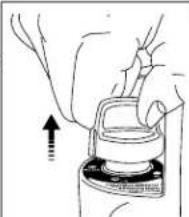
- After pilot lights, hold down for 30-60 seconds and then release knob. Knob should return to fully extended position, see Figure 6. To operate heater, slightly depress knob and gently turn to lock in the "HI" position to light burner tile. Leave on "HI" position until burner tile turns bright orange.
- If heater does not light, hold knob down for approximately 30 seconds; release and depress again. Repeat until pilot lights.
- After burner tile has turned bright orange, adjust heat output by turning control knob to desired position ("LO" or "HI" setting).
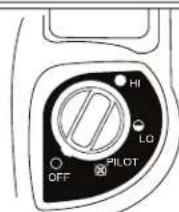
Figure 1: Control Knob
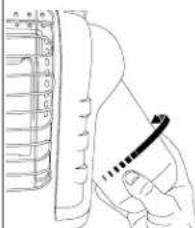
natural_image
Line drawing of a hand holding a device with a curved arrow indicating motion (no text or symbols)Figure 2: Attach Fuel Cartridge
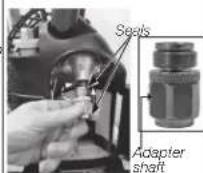
Figure 3: Butane Adapter
WARNING: DO NOT OPERATE HEATER UNLESS CONTROL KNOB IS LOCKED IN A POSITION MARKED "HI", "LO" OR "PILOT". NEVER SET CONTROL KNOB BETWEEN LOCKED POSITIONS. POOR COMBUSTION AND HIGHER LEVELS OF CARBON MONOXIDE MAY RESULT.
USE WITH DISPOSABLE 465g PROPANE CYLINDER(S): STOP
- To shut off heater, slightly push down and turn control knob clockwise to "OFF" position
- CAUTION: After turning heater off, wire guard will remain hot. Allow to thoroughly cool before storing.
- Check that burners are extinguished before disconnecting the gas cartridge.
- TO REMOVE PROPANE (G31) CARTRIDGE: Remove cartridge from stand and turn cartridge counterclockwise until it is fully unscrewed off of heater.
- TO REMOVE BUTANE/PROPANE MIXTURE (G30+G31) CARTRIDGE: Remove cartridge from stand and turn cartridge counterclockwise until it is fully unscrewed off of adapter.
- Once Cartridge is removed then the Butane adapter can be unscrewed turning counterclockwise until it is fully unscrewed off of the heater.
- Do not operate, store or remove cartridge near flammable items or ignition sources. Only change cartridges in a well ventilated location, preferably outside, away from any sources of ignition such as naked flames, pilots, electric fires and away from other people.
- Propane-GAS (G31) or Butane/Propane mixture (G30+G31) cartridges MUST BE DISCONNECTED FROM HEATER WHEN NOT IN USE! Make sure to check the seals before connecting a new gas cartridge to the appliance.
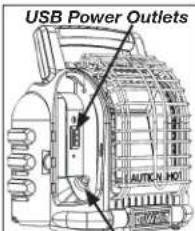
Pulse Igniter
Figure 4: USB Compartment
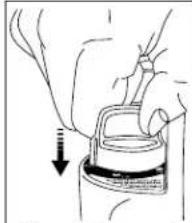
natural_image
Illustration of hands using a handheld device to press or install a component (no text or symbols visible)Figure 5: Depressed Control Knob
natural_image
Illustration of hands using a handheld device to interact with a device (no text or symbols visible)Figure 6: Released Control Knob
Electronic Operation
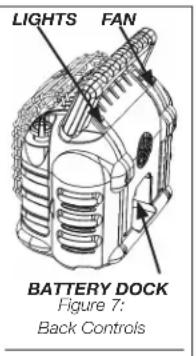
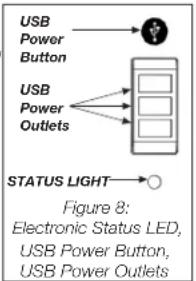
When a charged DeWALT battery is inserted into the battery dock, Figure 7, the heater may activate the following electronic features. The battery inserts into the battery dock upright, with contacts facing the roof of the dock. These Electronic features may be used individually or simultaneously. When any of them are in use the status light, Figure 8, will illuminate with a steady green glow to visually signal that an electronic feature is active. If the status light is blinking see the diagnostics section below.
Lights
Toggling the Light control button on the back of the heater activates/deactivates the lights in the handle bar. The Lights operate with any orientation of the heater and handle.
Fan
Toggling the Fan control button on the back of the heater activates/deactivates the fan. Using the fan while the heater is active enhances the heaters convective heating ability. Using the fan while the heater is inactive will make the heater into a fan, meaning that you may enjoy the DXRH012E no matter the season!
USB Power Outlets
Inside the USB Compartment which houses the pulse igniter are also 3 USB Power Outlets, a power button, and a status light. Toggling the power button will activate/deactivate the USB Power Outlets with 5 Volts of DC current at 2 amps rating, signaled by illumination of the status light. The USB Power Outlets facilitate the charging or powering of up to three USB devices. NOTICE: The USB power should be shut off when not in use. Failure to do so may cause battery to drain.
flowchart
graph TD
    A["USB Power Button"] --> B["Device"]
    C["USB Power Outlets"] --> B
    D["STATUS LIGHT"] --> E["○"]
Status Light Diagnostics: Steady On/Off Blinking
If the Status Light is blinking on and off steadily this is an indication that the DrWALT battery is low on charge. See Battery Charging Precautions and Instructions, starting on page 9. The battery must be removed from the heater in order to charge.
Status Light Diagnostics: Double Flash
(2 Blinks, 1 Pause)
If the Status Light is "Double Flashing" (repetition of 2 rapid blinks followed by a pause) this is an indication that the battery is outside of its operating temperature range.
Maintenance
Always keep the heater area clear and free from combustible materials, gasoline and other flammable vapors and liquids.
Keep the vent areas (slots in the bottoms and the top at the front and rear of heater) clear at all times.
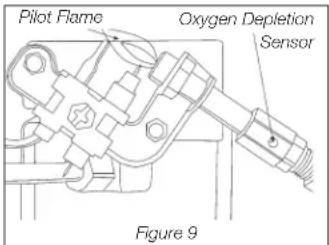
Visually inspect the pilot flame and burner periodically during use. The pilot flame should be blue in color (not yellow) and will extend beyond the thermocouple. The flame will surround the thermocouple just below the tip, see Figure 8.
A slight yellow flame may occur where the pilot flame and main burner flame meet. The burner should be bright orange (with a slight blue color around the border, a red-orange haze that is visible on the ceramic tile is acceptable) and without a noticeable flame. A blue flame that rolls out at the top of the ceramic tile indicates an accumulation of dust, lint or spider webs inside the casing assembly and main burner assembly. If the pilot is yellow or the burner has a noticeable flame, cleaning may be required. Use the following procedure to inspect the casing assembly and main burner assembly. It is necessary to periodically check the burner orifice and burner venturi tube to make sure they are clear of insects/nests or spider webs that may accumulate over time. A clogged tube can lead to a fire.
- Allow heater to thoroughly cool before performing any maintenance.
- Remove disposable 465g cylinder from heater or turn OFF gas supply at remote cylinder valve, and disconnect hose from heater.
- Remove (4) four screws that secure the rear cover to the Heater.
- Pivot cover outward from bottom. Release from 2 top clips. Set aside.
- Remove (4) four burner retaining screws and fuel line from burner assembly.
- Remove burner assembly from back of housing.
- Inspect interior of housing for accumulation of dust, insect or spider webs. If necessary, clean interior housing with a vacuum cleaner or apply air pressure. Do not damage any
components within the housing assembly when you are cleaning.
- Inspect and clean main burner orifice (threaded into orifice holder). Orifice holder is attached to the burner assembly venturi with (2) two screws.
- Inspect and clean pilot (mounted to bracket) by using a vacuum or apply air pressure through the holes in the pilot indicated by the arrows in Figure 9.
WARNING: Never use needles, wires, or similar cylindrical objects to clean the pilot to avoid damaging the calibrated orifice that cor
-
Apply air pressure (max. 30 psi) into ceramic tile of burner assembly and the venture tube to remove dust, lint or spider webs.
-
Reassemble main burner orifice holder onto the burner.
- Reinstall burner assembly into the heater housing.
- Reinstall fuel line and check for leaks.
- Install heater back cover.
TROUBLESHOOTING
IF SPARK ELECTRODE DOES NOT PRODUCE SPARK CHECK
- Spark electrode broken - replace ODS (Oxygen Depletion Sensor)
- Igniter wire may not be attached to spark electrode
- Igniter wire damaged - replace
- Pulse Igniter Battery dead - replace AA battery
IF SPARK ELECTRODE PRODUCES SPARK BUT PILOT DOES NOT LIGHT. CHECK
- No gas to heater - install disposable cylinder or connect hose and filter where required and turn on valve at remote cylinder.
- "PILOT" position not properly aligned - turn gas control knob to "PILOT" position and depress.
- Pilot is blocked from spider web or dirt - clean pilot (See MAINTENANCE beginning on page 7.)
IF PILOT FLAME DOES NOT STAY LIT WHEN KNOB IS RELEASED CHECK
- Control knob in "PILOT" position not completely depressed or held in long enough to purge air from lines.
- Pilot flame not surrounding thermocouple - clean pilot (See MAINTENANCE beginning on page 7.)
- Pilot Assembly defective - replace
- Tip switch wires disconnected - connect
IF MAIN BURNER DOES NOT IGNITE CHECK
- Main burner orifice is blocked - clean burner (See MAINTENANCE beginning on page 7.)
IF HEATER KEEPS SHUTTING "OFF" DURING NORMAL OPERATION CHECK
- Pilot is blocked - clean pilot (See MAINTENANCE beginning on page 7.)
- Provide minimum fresh air opening of 77 cm2 (example 7.62 cm x 10.16 cm opening)
- Tip over switch activated from bumping heater. Re-light.
• Regulator defective - Replace regulator. - Internal contamination - Replace control valve and regulator
- Call Technical Services for additional information.
Important Safety Instructions for all Battery Chargers
SAVE THESE INSTRUCTIONS: This manual contains important safety and operating instructions for battery chargers.
- Before using the charger, read all instructions and cautionary markings on the charger, battery pack and product using the battery pack.
⚠ WARNING: Shock hazard. Do not allow any liquid to get inside the charger. Electric shock may result.
⚠ WARNING: We recommend the use of a residual current device with a residual current rating of 30mA or less.
⚠️ CAUTION: Bum hazard. To reduce the risk of injury, charge only DeWALT rechargeable batteries. Other types of batteries may burst causing personal injury and damage.
⚠️ CAUTION: Children should be supervised to ensure that they do not play with the appliance.
NOTICE: Under certain conditions, with the charger plugged into the power supply, the charger can be shorted by foreign material. Foreign materials of a conductive nature, such as, but not limited to, grinding dust, metal chips, steel wool, aluminum foil or any buildup of metallic particles should be kept away from the charger cavities. Always un-plug the charger from the power supply when there is no battery pack in the cavity. Unplug the charger before attempting to clean.
⚠ WARNING: DO NOT let children come into contact with the charger. Supervision is required when inexperienced operators use this charger.
- Young children and the infirm. This appliance is not intended for use by young children or infirm persons without supervision.
- This product is not intended for use by persons (including children) suffering from diminished physical, sensory or mental abilities, or for lack of experience and/or for want of knowledge or skills unless they are supervised by a person responsible for their safety. Children should never be left alone to play with this product.
- Only use rechargeable batteries with this charger.
• These battery chargers and battery packs are professional tools.
WARNING:
- DO NOT attempt to charge the battery pack with any chargers other than the ones in this manual. The charger and battery pack are specifically designed to work together.
- These chargers are not intended for any uses other than charging DEWALT rechargeable batteries. Any other uses may result in risk of fire, electric shock or electrocution.
- Do not expose the charger to rain or snow.
- DO NOT use under wet conditions or in presence of flammable liquids or gases.
- Pull by the plug rather than the cord when disconnecting the charger. This will reduce the risk of damage to the electric plug and cord.
- Make sure that the cord is located so that it will not be stepped on, tripped over or otherwise subjected to damage or stress.
- Do not use an extension cord unless it is absolutely necessary. Use of improper extension cord could result in risk of fire, electric shock or electrocution.
- When operating a charger outdoors, always provide a dry location and use an extension cord suitable for outdoor use. Use of a cord suitable for outdoor use reduces the risk of electric shock.
- Do not place any object on top of the charger or place the charger on a soft surface that might block the ventilation slots and result in excessive internal heat. Place the charger in a position away from any heat source. The charger is ventilated through slots in the top and the bottom of the housing.
- Do not operate the charger with a damaged cord or plug - have them replaced immediately.
- Do not operate the charger if it has received a sharp blow, been dropped or otherwise damaged in any way. Take it to an authorized service center.
- Do not disassemble the charger; take it to an authorized service center when service or repair is required. Incorrect reassembly may result in a risk of electric shock, electrocution or fire.
- In case of damaged power supply cord the supply cord must be replaced immediately by the manufacturer, its service agent or similar qualified person to prevent any hazard.
- Disconnect the charger from the outlet before attempting any cleaning. This will reduce the risk of electric shock. Removing the battery pack will not reduce this risk.
• NEVER attempt to connect 2 chargers together. - The charger is designed to operate on standard 230V household electrical power. Do not attempt to use it on any other voltage. This does not apply to the vehicular charger.
- Take care to ensure that the charger is standing in a steady, secure position. A falling battery or charger may present a risk of injury to yourself and/or others.
IMPORTANT SAFETY INSTRUCTIONS FOR ALL BATTERY PACKS
When ordering replacement battery packs, be sure to include the catalog number and voltage. Consult the chart at the end of this manual for compatibility of chargers and battery packs. The battery pack is not fully charged out of the carton. Before using the battery pack and charger, read the safety instructions below and then follow charging procedures outlined.
READ ALL INSTRUCTIONS
WARNING:
- Do not charge or use the battery pack in explosive atmospheres, such as in the presence of flammable liquids, gases or dust. Inserting or removing the battery pack from the charger may ignite the dust or fumes.
- NEVER force the battery pack into the charger. DO NOT modify the battery pack in any way to fit into a non-compatible charger as battery pack may rupture causing serious personal injury.
- Charge the battery packs only in designated DEWALT chargers.
- DO NOT splash or immerse in water or other liquids.
- Do not store or use the tool and battery pack in locations where the temperature may reach or exceed 40 °C (such as outside sheds or metal buildings in summer). For best life store battery packs in a cool, dry location. NOTE: Do not store the battery pack in a tool with the trigger switch locked on. Never tape the trigger switch in the ON position.
⚠ WARNING: Never attempt to open the battery pack for any reason. If the battery pack case is cracked or damaged, do not insert into the charger. Do not crush, drop or damage the battery pack. Do not use a battery pack or charger that has received a sharp blow, been dropped, run over or damaged in any way (e.g., pierced with a nail, hit with a hammer, stepped on). Damaged battery packs should be returned to the service center for recycling.
⚠ WARNING: Fire hazard. Do not store or carry the battery pack so that metal objects can contact exposed battery terminals. For example, do not place the battery pack in aprons, pockets, tool boxes, product kit boxes, drawers, etc., with loose nails, screws, keys, etc.
⚠️ CAUTION: When not in use, place tool on its side on a stable surface where it will not cause a tripping or falling hazard. Some tools with large battery packs will stand upright on the battery pack but may be easily knocked over.
SPECIFIC SAFETY INSTRUCTIONS FOR LITHIUM ION (Li-Ion)
- Do not incinerate the battery pack even if it is severely damaged or is completely worn out. The battery pack can explode in a fire. Toxic fumes and materials are created when lithium ion battery packs are burned.
- If battery contents come into contact with the skin, immediately wash area with mild soap and water. If battery liquid gets into the eye, rinse water over the open eye for 15 minutes or until irritation ceases. If medical attention is needed, the battery electrolyte is composed of a mixture of liquid organic carbonates and lithium salts.
- Contents of opened battery cells may cause respiratory irritation. Provide fresh air. If symptoms persist, seek medical attention.
WARNING: Burn hazard. Battery liquid may be flammable if exposed to spark or flame.
⚠ WARNING: Fire hazard. Transporting batteries can possibly cause fires if the battery terminals inadvertently come in contact with conductive materials such as keys, coins, hand tools and the like. When transporting individual battery packs, make sure that the battery terminals are protected and well insulated from materials that could contact them and cause a short circuit. Dangerous Goods by Road (ADR). Lithium-ion cells and batteries have been tested to section 38.3 of the UN Recommendations on the Transport of Dangerous Goods Manual of Tests and Criteria.
In most instances, shipping a DeWALT battery pack will be excepted from being classified as a fully regulated Class 9 Hazardous Material. In general, only shipments containing a lithium-ion battery with an energy rating greater than 100 Watt Hours (Wh) will require being shipped as fully regulated Class 9. All lithium-ion batteries have the Watt Hour rating marked on the pack. Furthermore, due to regulation complexities, DeWALT does not recommend air shipping lithium-ion battery packs alone regardless of Watt Hour rating. Shipments of tools with batteries (combo kits) can be air shipped as excepted if the Watt Hour rating of the battery pack is no greater than 100 Whr.
Regardless of whether a shipment is considered excepted or fully regulated, it is the shipper's responsibility to consult the latest regulations for packaging, labeling/marking and documentation requirements.
The information provided in this section of the manual is provided in good faith and believed to be accurate at the time the document was created. However, no warranty, expressed or implied, is given. It is the buyer's responsibility to ensure that its activities comply with the applicable regulations.
TRANSPORTING THE FLEXVOLT BATTERY
The DeWALT FLEXVOLT battery has two modes: Use and Transport.
Use Mode: When the FLEXVOLT battery stands alone or is in a DEWALT 18V product, it will operate as an 18V battery. When the FLEXVOLT battery is in a 54V or a 108V (two 54V batteries) product, it will operate as a 54V battery.
Transport Mode: When the cap is attached to the FLEXVOLT battery, the battery is in transport mode. Keep the cap for shipping. When in Transport mode, strings of cells are electrically disconnected within the pack resulting in 3 batteries with a lower Watt hour (Wh) rating as compared to 1 battery with a higher Watt hour rating. This increased quantity of 3 batteries with the lower Watt hour rating can exempt the pack from certain shipping regulations that are imposed
upon the higher Watt hour batteries.
Transport Wh rating indicates 3 x 36 Wh, meaning 3 batteries of 36 Watt hours each. The Use Wh rating indicates 108 Watt hours (1 battery implied).
Chargers
The DCB118 charger accepts 18V Li-Ion XR and XR FLEXVOLT battery packs (DCB180, DCB181, DCB182, DCB183, DCB183B, DCB184, DCB184B, DCB185 and DCB546).
DeWALT chargers require no adjustment and are designed to be as easy as possible to operate.
Charging a Battery (Fig. 10)
-
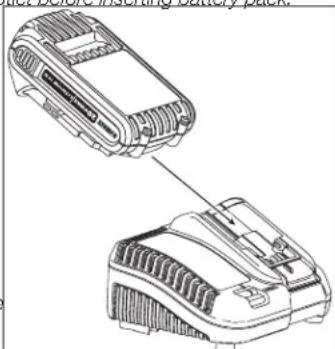
Plug the charger into an appropriate outlet before inserting battery pack.
-
Insert the battery pack into the charger, making sure the battery pack is fully seated in the charger. The red (charging) light will blink continuously indicating that the charging process has started.
-
The completion of charge will be indicated by the red light remaining ON continuously. The battery pack is fully charged and may be used at this time or left in the charger. To remove the battery pack from the charger, push the battery release button on the battery pack.
NOTE: To ensure maximum performance and life of lithium-ion battery packs, charge the battery pack fully before first use.
natural_image
Technical line drawing of two battery modules with no visible text or symbolsFigure 10
Refer to the indicators below for the charge status of the battery pack.
* The red light will continue to blink, but a yellow indicator light will be illuminated during this operation. Once the battery pack has reached an appropriate temperature, the yellow light will turn off and the charger will resume the charging procedure.
CHARGE INDICATORS
| CHARGING | — — — — | |
| FULLY CHARGED | — | |
| HOT/COLD PACK DELAY | — — — | — |
The charger will not charge a faulty battery pack. The charger will indicate faulty battery pack by refusing to light.
NOTE: This could also mean a problem with a charger.
If the charger indicates a problem, take the charger and battery pack to be tested at an authorized service center.
HOT/COLD PACK DELAY
When the charger detects a battery pack that is too hot or too cold, it automatically starts a Hot/Cold Pack Delay, suspending charging until the battery pack has reached an appropriate temperature. The charger then automatically switches to the pack charging mode. This feature ensures maximum battery pack life.
A cold battery pack will charge at a slower rate than a warm battery pack. The battery pack will charge at that slower rate throughout the entire charging cycle and will not return to maximum charge rate even if the battery pack warms.
XR Li-Ion tools are designed with an Electronic Protection System that will protect the battery pack against overloading, overheating or deep discharge. The tool will automatically turn off if the Electronic Protection System engages. If this occurs, place the lithium-ion battery pack on the charger until it is fully charged.
Important Charging Notes
- Longest life and best performance can be obtained if the battery pack is charged when the air temperature is between 18^-24^ . DO NOT charge the battery pack in an air temperature below +4.5 °C, or above +40 °C. This is important and will prevent serious damage to the battery pack.
- The charger and battery pack may become warm to the touch while charging. This is a normal condition, and does not indicate a problem. To facilitate the cooling of the battery pack after use, avoid placing the charger or battery pack in a warm environment such as in a metal shed or an uninsulated trailer.
-
If the battery pack does not charge properly:
-
Check operation of the receptacle by plugging in a lamp or other appliance;
- Check to see if the receptacle is connected to a light switch which turns the power off when you turn out the lights;
- Move the charger and battery pack to a location where the surrounding air temperature is approximately 18° – 24 °C;
-
If charging problems persist, take the tool, battery pack and charger to your local service center.
-
The battery pack should be recharged when it fails to produce sufficient power on jobs which were easily done previously. DO NOT CONTINUE to use it under these conditions. Follow the charging procedure. You may also charge a partially used pack whenever you desire with no adverse effect on the battery pack.
-
Foreign materials of a conductive nature such as, but not limited to, grinding dust, metal chips, steel wool, aluminum foil, or any buildup of metallic particles should be kept away from charger cavities. Always unplug the charger from the power supply when there is no battery pack in the cavity. Unplug the charger before attempting to clean it.
-
Do not freeze or immerse the charger in water or any other liquid.
WARNING: Shock hazard. Don't allow any liquid to get inside the charger. Electric shock may result.
⚠ WARNING: Burn hazard. Do not submerge the battery pack in any liquid or allow any liquid to enter the battery pack. Never attempt to open the battery pack for any reason. If the plastic housing of the battery pack breaks or cracks, return it to a service center for recycling.
These chargers are designed to be wall mountable or to sit upright on a table or work surface. If wall mounting, locate the charger within reach of an electrical outlet, and away from a corner or other obstructions which may impede air flow. Use the back of the charger as a template for the location of the mounting screws on the wall. Mount the charger securely using drywall screws (purchased separately) at least 25.4 mm long, with a screw head diameter of 7–9 mm, screwed into wood to an optimal depth leaving approximately 5.5 mm of the screw exposed. Align the slots on the back of the charger with the exposed screws and fully engage them in the slots.
Charger Cleaning Instructions
⚠ WARNING: Shock hazard. Disconnect the charger from the AC
outlet before cleaning. Dirt and grease may be removed from the exterior of the charger using a cloth or soft non-metallic brush. Do not use water or any cleaning solutions. Never let any liquid get inside the tool; never immerse any part of the tool into a liquid.
Storage Recommendations
-
The best storage place is one that is cool and dry, away from direct sunlight and excess heat or cold. For optimum battery performance and life, store battery packs at room temperature when not in use.
-
For long storage, it is recommended to store a fully charged battery pack in a cool dry place out of the charger for optimal results.
NOTE: Battery packs should not be stored completely depleted of charge. The battery pack will need to be recharged before use.
SAVE THESE INSTRUCTIONS FOR FUTURE USE
Electrical Safety
Always check that the battery pack voltage corresponds to the voltage on the rating plate. Also make sure that the voltage of your charger corresponds to that of your mains.
Your DEWALT charger is double insulated in accordance with EN60335; therefore no earth wire is required.
If the supply cord is damaged, it must be replaced by a specially prepared cord available through the DeWALT service organisation.
Mains Plug Replacement (U.K. Only)
If a new mains plug needs to be fitted:
- Safely dispose of the old plug.
- Connect the brown lead to the live terminal in the plug.
- Connect the blue lead to the neutral terminal.
⚠ WARNING: No connection is to be made to the earth terminal.
Follow the fitting instructions supplied with good quality plugs. Recommended fuse: 3 A.
Using an Extension Cable
An extension cord should not be used unless absolutely necessary. Use an approved extension cable suitable for the power input of your charger (see
Technical Data in see Battery Charger manual). The minimum conductor size is 1 mm2; the maximum length is 30 m.
When using a cable reel, always unwind the cable completely.
Maintenance
The charger and battery pack are not serviceable. There are no serviceable parts inside the charger or battery pack.
- Do not attempt to repair the charger. To assure product safety and reliability, repairs, maintenance, and adjustments should be performed by authorized DEWALT service centers.
Protecting the Environment

Separate collection. Products and batteries marked with this symbol must not be disposed of with normal household waste.
Products and batteries contain materials that can be recovered or recycled reducing the demand for raw materials. Please recycle electrical products and batteries according to local provisions. Further
information is available at www.2helpU.com.
Rechargeable Battery Pack
This long life battery pack must be recharged when it fails to produce sufficient power on jobs which were easily done before. At the end of its technical life, discard it with due care for our environment:
- Run the battery pack down completely, then remove it from the tool.
- Li-Ion cells are recyclable. Take them to your dealer or a local recycling station. The collected battery packs will be recycled or disposed of properly.
DXRHO12E REPLACEMENT PARTS LIST
| # | Description Part # | |
| 1 | Regulator Assy. 32126 | |
| 2 | Right Side Housing | 32148 |
| 3 | Knob 32123 | |
| 4 | Right Gas Door 32150 | |
| 5 | Vire Guard 32181 | |
| 6 | Burner Assy. | 32151 |
| 7 | Left Side Housing 32152 | |
| 8 | Pulse Igniter 32153 | |
| 9 | USB Compartment Door 32154 | |
| 10 | Left Gas Door 32155 | |
| 11 | Heater Control Board 32156 | |
| 12 | ODS 78422 | |
| 13 | Control Valve Assy. | 32124 |
| 14 | Fan Cover | 32157 |
| 15 | Back Cover | 32158 |
| 16 | Fan | 32159 |
| 17 | Button | 32160 |
| 18 | Button Cover 32162 |
This product is covered by one or more patents/patents pending. Please visit http://www.enercogroupinc.com/patents for more information
▲ Warning
USE ONLY MANUFACTURER'S REPLACEMENT PARTS. USE OF ANY OTHER PARTS COULD CAUSE INJURY OR DEATH. REPLACEMENT PARTS ARE ONLY AVAILABLE DIRECT FROM THE FACTORY AND MUST BE INSTALLED BY A QUALIFIED SERVICE AGENCY.
PARTS ORDERING INFORMATION:
PURCHASING: Accessories may be purchased at any DeWALT® local dealer or direct from the factory.
FOR INFORMATION REGARDING SERVICE:
www.DEWALT.com
www.2helpU.com
Please include the model number, date of purchase, and description of problem in all communication.
LIMITED WARRANTY
DEWALT® warrants its heaters and accessories to be free from defects in material and workmanship for a period of 2 years from date of purchase. DEWALT® will repair or replace this product free of charge if it has been proven to be defective within the 2 year period, and is returned at customer expense with proof of purchase to DEWALT® within the warranty period.
For Sale in the following countries:


DK NO


SE


FI


2797/20
DeWALT®, GUARANTEED TOUGH® and the yellow and black color scheme are trademarks of the DeWALT Industrial Tool Co., used under license. ©2020 DeWALT. EGI/Enerco Group Inc. Under license from DeWALT Industrial Tool Co
EN 449:2002+A1:2007
EN 521:2006
TP 6.39
EN 60335-1:2012+A13:2017
EN 60335-2-102:2006+A2:2016
natural_image
Line drawing of a hand holding a tool near a vertical panel (no text or symbols)natural_image
Illustration of hands using a handheld device to lift or lift an object (no text or symbols visible)natural_image
Illustration of hands holding a mechanical device with an upward arrow (no text or symbols)natural_image
Technical line drawing of two electronic device modules with no visible text or symbolsFigure 10
• 3 ports USB, (5 VC, 2A)
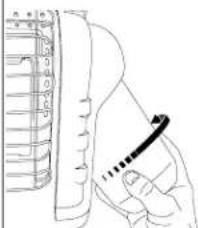
Figure 1: Bouton de commande
natural_image
Line drawing of a hand holding a tool near a device panel (no text or symbols)Figure 2: Fixez la cartouche de combustible
natural_image
Illustration of hands using a pressure iron to lift a small object (no text or symbols visible)natural_image
Illustration of hands using a handheld device to interact with a device (no text or symbols visible)natural_image
Technical line drawing of two mechanical components with internal structure, no text or symbols presentFigure 10
NE JAMAIS LAISSER L'APPAREIL DE CHAUFFAGE SANS SURVEILLANCE QUAND IL FONCTIONNE
NE JAMAIS LAISSER L'APPAREIL DE CHAUFFAGE SANS SURVEILLANCE QUAND IL FONCTIONNE
LISTE DES PIÈCES DE RECHANGE DXRH012E
natural_image
Line drawing of a hand holding a device with a curved arrow indicating motion (no text or symbols)natural_image
Illustration of hands using a power tool to lift a motor (no text or symbols)natural_image
Illustration of a hand holding a device with an upward arrow, no text or symbols presentSE L'ELETTRODO DI ACCENSIONE PRODUCE SCINTILLE MA LA FIAMMELLA NON SI ACCENDE.
CONTROLLARE
natural_image
Technical line drawing of two mechanical components with no visible text or symbolsFigura 10
NON LASCIARE MAI IL RISCALDATORE INCUSTODITO DURANTE LA COMBUSTIONE!
NON LASCIARE MAI IL RISCALDATORE INCUSTODITO DURANTE LA COMBUSTIONE!
ELENCO COMPONENTI DI RICAMBIO DXRH012E