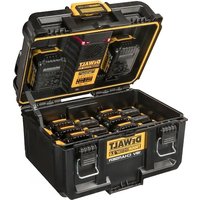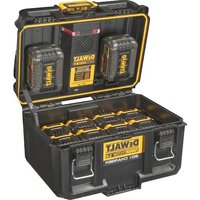
DWST08050 - Battery charger DEWALT - Free user manual and instructions
Find the device manual for free DWST08050 DEWALT in PDF.


User questions about DWST08050 DEWALT
0 question about this device. Answer the ones you know or ask your own.
Ask a new question about this device
Download the instructions for your Battery charger in PDF format for free! Find your manual DWST08050 - DEWALT and take your electronic device back in hand. On this page are published all the documents necessary for the use of your device. DWST08050 by DEWALT.
USER MANUAL DWST08050 DEWALT
English (original instructions) 4
1 Carry handle
2 Storage door
3 Door latch handle
4 Metal latch
5 Latch pin slot
6 Charging lights
7 USB-C port cover.
8 Power cord
9 Cord retaining hooks
10 Security locking hole
11 Stacking latch
text_image
Technical diagram of a mechanical assembly with numbered components and an arrow indicating motion or force direction.Fig. D Fig. E
text_image
Technical diagram of a mechanical assembly with numbered components and an arrow indicating motion or force direction.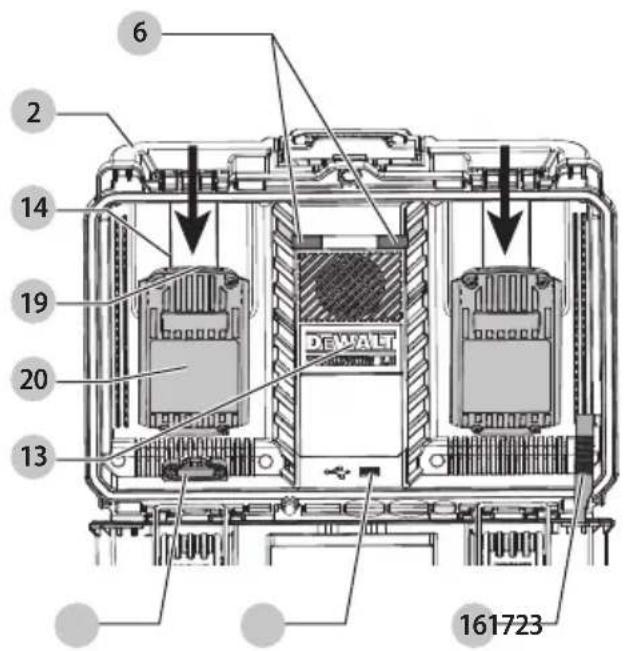
text_image
6 2 14 19 20 13 DEWALT 161723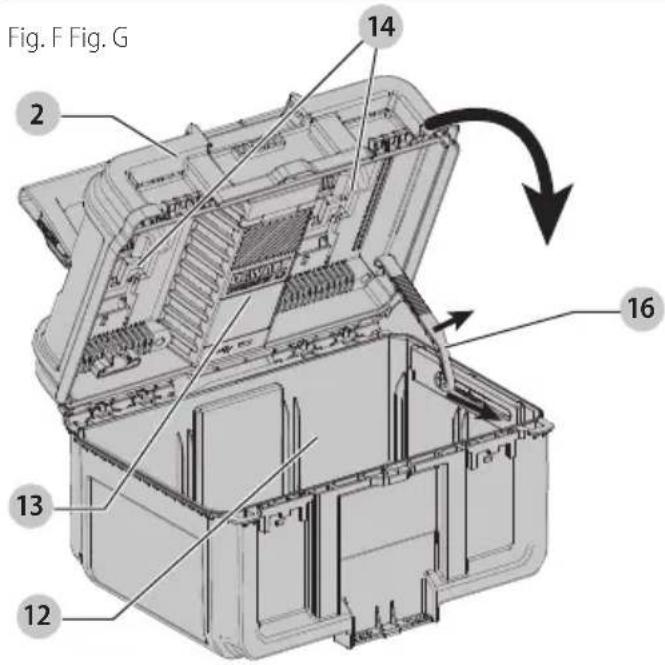
text_image
Fig. F Fig. G 2 14 16 13 12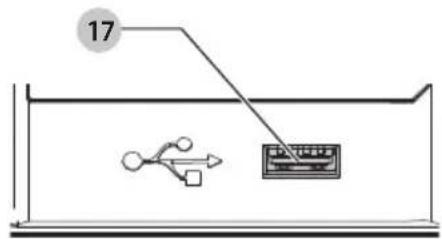
text_image
17
text_image
187Fig. H Fig. I
text_image
Technical diagram of a mechanical device with numbered parts labeled 21 and 22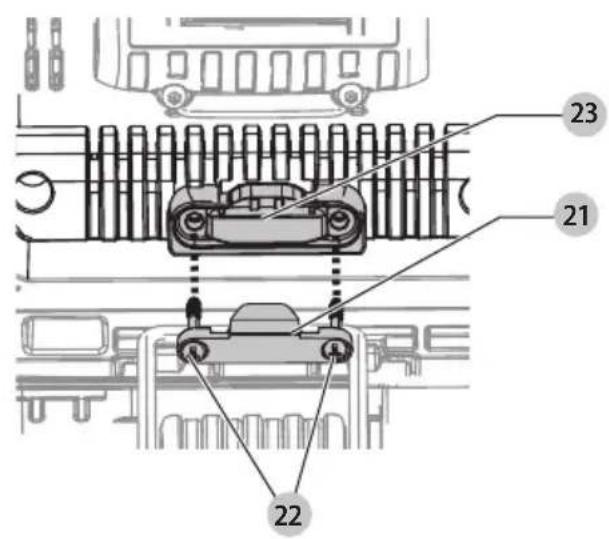
text_image
23 21 22English
WARNING: Read all safety warnings and all instructions. Failure to follow the warnings and instructions may result in electric shock, fire and/or serious injury.

WARNING: To reduce the risk of injury, read the instruction manual.
Intended Use
The DWST08050 battery charger is designed to charge DEWALT 20V Max* lithium-ion and most FLEXVOLT™ battery packs. This charger requires no adjustment and is designed to be as easy as possible to operate. Simply place your battery pack into a receptacle of the plugged in charger and it will automatically charge the pack.
DO nOT use under wet conditions or in presence of flammable liquids or gases.
DO nOT let children come into contact with the tool. Supervision is required when inexperienced operators use this appliance. This appliance is not intended for use by persons (including children) with reduced physical, sensory or mental capabilities, or lack of experience and knowledge, unless they have been given supervision or instruction concerning use of the appliance by a person responsible for their safety.
Definitions: Safety Alert Symbols and Words
This instruction manual uses the following safety alert symbols and words to alert you to hazardous situations and your risk of personal injury or property damage.
DANGER: Indicates an imminently hazardous situation which, if not avoided, will result in death or serious injury.
WARNING: Indicates a potentially hazardous situation when, if not avoided, could result in death or serious injury.
CAUTION: Indicates a potentially hazardous situation which, if not avoided, may result in minor or moderate injury.
(### without word) Indicates a safety related message.
NOTICE: Indicates a practice not related to personal injury which, if not avoided, may result in property damage.
GENERAL POWER TOOL SAFETY WARNINGS
WARNING: Read all safety warnings, instructions, illustrations and specifications provided with
this power tool. Failure to follow all instructions listed below may result in electric shock, fire and/or serious injury.
SAVE ALL WARNINGS AND INSTRUCTIONS FOR FUTURE REFERENCE.
The term "power tool" in the warnings refers to your mains-operated (corded) power tool or battery-operated (cordless) power tool.
1) Work Area Safety
a) Keep work area clean and well lit. Cluttered or dark areas invite accidents.
b) Do not operate power tools in explosive atmospheres, such as in the presence of flammable liquids, gases or dust. Power tools create sparks which may ignite the dust or fumes.
c) Keep children and bystanders away while operating a power tool. Distractions can cause you to lose control.
2) Electrical Safety
a) Power tool plugs must match the outlet. Never modify the plug in any way. Do not use any adapter plugs with earthed (grounded) power tools. Unmodified plugs and matching outlets will reduce risk of electric shock.
b) Avoid body contact with earthed or grounded surfaces, such as pipes, radiators, ranges and refrigerators. There is an increased risk of electric shock if your body is earthed or grounded.
c) Do not expose power tools to rain or wet conditions. Water entering a power tool will increase the risk of electric shock.
d) Do not abuse the cord. Never use the cord for carrying, pulling or unplugging the power tool. Keep cord away from heat, oil, sharp edges or moving parts. Damaged or entangled cords increase the risk of electric shock.
e) When operating a power tool outdoors, use an extension cord suitable for outdoor use. Use of a cord suitable for outdoor use reduces the risk of electric shock.
f) If operating a power tool in a damp location is unavoidable, use a ground fault circuit interrupter (GFCI) protected supply. Use of a GFCI reduces the risk of electric shock.
3) Personal Safety
a) Stay alert, watch what you are doing and use common sense when operating a power tool. Do not use a power tool while you are tired or under the influence of drugs, alcohol or medication. A moment of inattention while operating power tools may result in serious personal injury.
b) Use personal protective equipment. Always wear eye protection. Protective equipment such as a dust mask, non-skid safety shoes, hard hat, or hearing protection used for appropriate conditions will reduce personal injuries.
c) Prevent unintentional starting. Ensure the switch is in the off-position before connecting to power source and/or battery pack, picking up or carrying the tool. Carrying power tools with your finger on the switch or energizing power tools that have the switch on invites accidents.
d) Remove any adjusting key or wrench before turning the power tool on. A wrench or a key left attached to a rotating part of the power tool may result in personal injury.
e) Do not overreach. Keep proper footing and balance at all times. This enables better control of the power tool in unexpected situations.
f) Dress properly. Do not wear loose clothing or jewelry. Keep your hair, clothing and gloves away from moving parts. Loose clothes, jewelry or long hair can be caught in moving parts.
g) If devices are provided for the connection of dust extraction and collection facilities, ensure these are connected and properly used. Use of dust collection can reduce dust-related hazards.
h) Do not let familiarity gained from frequent use of tools allow you to become complacent and ignore tool safety principles. A careless action can cause severe injury within a fraction of a second.
4) Power Tool Use and Care
a) Do not force the power tool. Use the correct power tool for your application. The correct power tool will do the job better and safer at the rate for which it was designed.
b) Do not use the power tool if the switch does not turn it on and off. Any power tool that cannot be controlled with the switch is dangerous and must be repaired.
c) Disconnect the plug from the power source and/or remove the battery pack, if detachable, from the power tool before making any adjustments, changing accessories, or storing power tools. Such preventive safety measures reduce the risk of starting the power tool accidentally.
d) Store idle power tools out of the reach of children and do not allow persons unfamiliar with the power tool or these instructions to operate the power tool. Power tools are dangerous in the hands of untrained users.
e) Maintain power tools and accessories. Check for misalignment or binding of moving parts, breakage of parts and any other condition that may affect the power tool's operation. If damaged, have the power tool repaired before use. Many accidents are caused by poorly maintained power tools.
f) Keep cutting tools sharp and clean. Properly maintained cutting tools with sharp cutting edges are less likely to bind and are easier to control.
g) Use the power tool, accessories and tool bits etc. in accordance with these instructions, taking into account the working conditions and the work to be performed. Use of the power tool for operations different from those intended could result in a hazardous situation.
h) Keep handles and grasping surfaces dry, clean and free from oil and grease. Slippery handles and grasping surfaces do not allow for safe handling and control of the tool in unexpected situations.
5) Battery Tool Use and Care
a) Recharge only with the charger specified by the manufacturer. A charger that is suitable for one type of battery pack may create a risk of fire when used with another battery pack.
b) Use power tools only with specifically designated battery packs. Use of any other battery packs may create a risk of injury and fire.
c) When battery pack is not in use, keep it away from other metal objects, like paper clips, coins, keys, nails, screws or other small metal objects, that can make a connection from one terminal to another. Shorting the battery terminals together may cause burns or a fire.
d) Under abusive conditions, liquid may be ejected from the battery; avoid contact. If contact accidentally occurs, flush with water. If liquid contacts eyes, additionally seek medical help. Liquid ejected from the battery may cause irritation or burns.
e) Do not use a battery pack or tool that is damaged or modified. Damaged or modified batteries may exhibit unpredictable behavior resulting in fire, explosion or risk of injury.
f) Do not expose a battery pack or tool to fire or excessive temperature. Exposure to fire or temperature above 265 °F (130 °C) may cause explosion.
g) Follow all charging instructions and do not charge the battery pack or tool outside the temperature range specified in the instructions. Charging improperly or at temperatures outside the specified range may damage the battery and increase the risk of fire.
6) Service
a) Have your power tool serviced by a qualified repair person using only identical replacement parts. This will ensure that the safety of the power tool is maintained.
b) Never service damaged battery packs. Service of battery packs should only be performed by the manufacturer or authorized service providers.
Additional Safety Information
WARNING: Never modify the power tool or any part of it. Damage or personal injury could result.
English
The label on your tool may include the following symbols. The symbols and their definitions are as follows:
V....volts
Hz....hertz
min......minutes
- - - - or DC.....direct current
Class I Construction (grounded)
.../min.....per minute
BPM.....beats per minute
Class II Construction (double insulated)
n_0 no load speed
n......rated speed
PSI..... pounds per square inch
earthing terminal
⚠️ ......safety alert symbol
▲......visible radiation do not stare into the light
E ....wearrespiratory protection
wear eye protection
○....wearhearing protection
read all documentation
do not expose to rain
Wireless Certifications and Safety Information
- This device is either CAN ICES-3(B)/NMB-3(B) or CAN ICES-5(B)/NMB-5(B) compliant.
- This device complies with Part 15 of the FCC Rules and Industry Canada License-exempt RSS standard(s). Operation is subject to the following two conditions: 1) This device may not cause harmful interference, and 2) This device must accept any interference received, including interference that may cause undesired operation.
This equipment has been tested and found to comply with the limits for a Class B digital device, pursuant to Part 15 of the FCC Rules. These limits are designed to provide reasonable protection against harmful interference in a residential installation. This equipment generates, uses and can radiate radio frequency energy and, if not installed and used in accordance with the instructions, may cause harmful interference to radio communications. However, there is no guarantee that interference will not occur in a particular installation. If this equipment does cause harmful interference to radio or television reception, which can be determined by turning the equipment off and on, the user is encouraged to try to correct the interference by one or more of the following measures: 1) Reorient or relocate the receiving antenna, 2) Increase the separation between the equipment and receiver, 3) Connect the equipment into an outlet on a circuit different from that to which the receiver is connected or 4) Consult the dealer or an experienced radio/TV technician for help.
- Changes or modifications to this equipment not expressly approved by the manufacturer could void the user's authority to operate the device.
• Under Industry Canada regulations, this radio transmitter may only operate using an antenna of a type and
maximum (or lesser) gain approved for the transmitter by Industry Canada. To reduce potential radio interference to other users, the antenna type and its gain should be so chosen that the equivalent isotropically radiated power (e.i.r.p.) is not more than that necessary for successful communication.
• To comply with FCC and Industry Canada RF exposure limits for general population/uncontrolled exposure, the antenna(s) used for this transmitter must be installed to provide a separation distance of at least 20 cm from all persons and must not be co-located or operated in conjunction with any other antenna or transmitter.
BATTERIES AND CHARGERS
The battery pack is not fully charged out of the carton. Before using the battery pack and charger, read the safety instructions below and then follow charging procedures outlined. When ordering replacement battery packs, be sure to include the catalog number and voltage.
READ ALL INSTRUCTIONS
Important Safety Instructions for All Battery Packs
WARNING: Read all safety warnings, instructions, and cautionary markings for the battery pack, charger and product. Failure to follow the warnings and instructions may result in electric shock, fire and/or serious injury.
- Do not charge or use the battery pack in explosive atmospheres, such as in the presence of flammable liquids, gases or dust. Inserting or removing the battery pack from the charger may ignite the dust or fumes.
- NEVER force the battery pack into the charger. DO NOT modify the battery pack in any way to fit into a non-compatible charger as battery pack may rupture causing serious personal injury. Consult the chart at the end of this manual for compatibility of batteries and chargers.
- Charge the battery packs only in DEWALT chargers.
• DO NOT splash or immerse in water or other liquids.
• DO NOT allow water or any liquid to enter battery pack.
- Do not store or use the tool and battery pack in locations where the temperature may reach or exceed 104 °F (40 °C) (such as outside sheds or metal buildings in summer). For best life store battery packs in a cool, dry location.
NOTE: Do not store the battery packs in a tool with the trigger switch locked on. Never tape the trigger switch in the ON position.
- Do not incinerate the battery pack even if it is severely damaged or is completely worn out. The battery pack can explode in a fire. Toxic fumes and materials are created when lithium-ion battery packs are burned.
- Do not expose a battery pack or appliance to fire or excessive temperature. Exposure to fire or temperature above 265 °F (130 °C) may cause explosion.
- Follow all charging instructions and do not charge the battery pack or appliance outside of the temperature
range specified in the instructions. Charging improperly or at temperatures outside of the specified range may damage the battery and increase the risk of fire.
- If battery contents come into contact with the skin, immediately wash area with mild soap and water. If battery liquid gets into the eye, rinse water over the open eye for 15 minutes or until irritation ceases. If medical attention is needed, the battery electrolyte is composed of a mixture of liquid organic carbonates and lithium salts.
- Contents of opened battery cells may cause respiratory irritation. Provide fresh air. If symptoms persist, seek medical attention.
- Battery liquid may be flammable if exposed to spark or flame.
- Never attempt to open the battery pack for any reason. If the battery pack case is cracked or damaged, do not insert into the charger. Do not crush, drop or damage the battery pack. Do not use a battery pack or charger that has received a sharp blow, been dropped, run over or damaged in any way (e.g., pierced with a nail, hit with a hammer, stepped on). Damaged battery packs should be returned to the service center for recycling.
Storage Recommendations
The best storage place is one that is cool and dry, away from direct sunlight and excess heat or cold. Store the fully charged battery pack out of the charger.
Battery Pack Cleaning Instructions
Dirt and grease may be removed from the exterior of the battery pack using a cloth or soft non-metallic brush. Do not use water or any cleaning solutions.
Fuel Gauge Battery Packs (Fig. B)
Some battery packs include a fuel gauge. When the fuel gauge button is pressed and held, the LED lights will indicate the approximate level of charge remaining. This does not indicate tool functionality and is subject to variation based on product components, temperature, and end-user application.
Transportation
WARNING: Fire hazard. Do not store, carry, or transport the battery pack so that metal objects can contact exposed battery terminals. For example, do not place the battery pack in aprons, pockets, tool boxes, product kit boxes, drawers, etc., with loose nails, screws, keys, coins, hand tools, etc. When transporting individual battery packs, make sure that the battery terminals are protected and well insulated from materials that could contact them and cause a short circuit. NOTE: Li-ion battery packs should not be put in checked baggage on airplanes and must be properly protected from short circuits if they are in carry-on baggage.
Shipping the DEWALT FLEXVOLT® Battery Pack
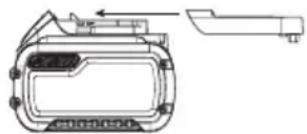
The DEWALT FLEXVOLT® battery pack has a battery cap that should be used when shipping the battery pack.
natural_image
Technical line drawing of a mechanical component with no visible text or symbolsAttach the cap to the battery pack to ready it for shipping. This converts the battery pack to three separate 20V batteries. The three batteries have the Watt hour rating labeled "Shipping" on the battery pack. If shipping without the cap or in a tool, the pack is one battery at the Watt hour rating labeled "Use."
Example battery pack label:
USE: 120 Wh SHIPPING: 3 x 40 Wh
In this example, the battery pack is three batteries with 40 Watt hours each when using the cap. Otherwise, the battery pack is one battery with 120 Watt hours.
The RBRC® Seal
Please take your spent battery packs to an authorized DEWALT service center or to your local retailer for recycling. In some areas, it is illegal to place spent battery packs in the trash. You may also contact your local recycling center for information on where to drop off the spent battery pack. Do not place in curbside recycling. For more information visit www.call2recycle.org or call the toll-free number in the RBRC® Seal.

RBRC ^® is a registered trademark of Call 2 Recycle, Inc.
USB Charging Port Safety Warnings
- The USB charging port is not intended for any use other than supplying power/charging small USB electronics. Any other uses may result in risk of fire, electric shock or electrocution.
- Do not expose the USB charging port to rain or snow.
- When operating the USB charging port outdoors, always provide a dry location.
- Do not operate the USB charging port if charger has received a sharp blow, been dropped or otherwise damaged in any way. Take the product to an authorized service center.
Important Safety Instructions for All Battery Chargers
WARNING: Read all safety warnings, instructions, and cautionary markings for the battery pack, charger and product. Failure to follow the warnings and instructions may result in electric shock, fire and/or serious injury.
- DO NOT attempt to charge the battery pack with any chargers other than a DEWALT charger. DEWALT chargers and battery packs are specifically designed to work together.
• These chargers are not intended for any uses other than charging DEWALT rechargeable battery packs.
ENGLISH
Charging other types of battery packs may cause them to overheat and burst, resulting in personal injury, property damage, fire, electric shock or electrocution.
- Do not expose the charger to rain or snow.
- Do not allow water or any liquid to enter charger.
- Pull by the plug rather than the cord when disconnecting the charger. This will reduce the risk of damage to the electric plug and cord.
- Make sure that the cord is located so that it will not be stepped on, tripped over or otherwise subjected to damage or stress.
- Do not use an extension cord unless it is absolutely necessary. Use of improper extension cord could result in risk of fire, electric shock or electrocution.
- When operating a charger outdoors, always provide a dry location and use an extension cord suitable for outdoor use. Use of a cord suitable for outdoor use reduces the risk of electric shock.
- An extension cord must have adequate wire size (AWG or American Wire Gauge) for safety. The smaller the gauge number of the wire, the heavier the cord and thus the greater its capacity. An undersized cord will cause a drop in line voltage resulting in loss of power and overheating. The following table shows the correct size to use depending on total length of all extension cords plugged together, and nameplate ampere rating. If in doubt, use the next heavier gauge.
Minimum Gauge for Cord Sets
| Volts | Total Length of Cord in Feet (meters) | ||||
| 120V 25 (7.6) | 50 (15.2) 100 | (30.5) 150 (45.7) | |||
| Ampere Rating | American Wire Gauge | ||||
| More Than | Not More Than | ||||
| 0618 | 161614 | ||||
| 6 | 10 | 18161412 | |||
| 1012 | 16161412 | ||||
| 1216 | 1412 Not Recommended | ||||
- Do not place any object on top of the charger or place the charger on a soft surface that might block the ventilation slots and result in excessive internal heat. Place the charger in a position away from any heat source. The charger is ventilated through slots inside the storage door.
- Do not operate the charger with a damaged cord or plug. Have them replaced immediately.
- If the supply cord is damaged, it must be replaced by the manufacturer, its service agent or similarly qualified persons in order to avoid a hazard.
- Do not operate the charger if it has received a sharp blow, been dropped or otherwise damaged in any way. Take it to an authorized service center.
- Do not disassemble the charger; take it to an authorized service center when service or repair is required. Incorrect reassembly may result in a risk of electric shock, electrocution or fire.
- The charger is designed to operate on standard 120V household electrical power. Do not attempt to use it on any other voltage.
- Foreign materials of a conductive nature, such as, but not limited to, grinding dust, metal chips, steel wool, aluminum foil or any buildup of metallic particles should be kept away from the charger cavities and ventilation slots.
• Always unplug the charger from the power supply when there is no battery pack in the cavity.
Charging a Battery (Fig. A, E, F)
- Plug the charger into an appropriate outlet.
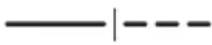
- Insert and fully seat battery packs. The red charging light(s) 6 will continuously blink while charging.
- Charging is complete when the red charging light(s) remain(s) continuously ON. Battery packs can be left in charger or removed. Some chargers require the battery pack release button to be pressed for removal.
WARNING: Only charge batteries in air temperature over 10 °F (4.5 °C) and below 104 °F (+40 °C).
- Charger will not charge a faulty battery pack, which may be indicated by the charging light(s) staying OFF. Take charger and battery pack to an authorized service center if light(s) stay(s) OFF.
Hot/Cold Pack Delay
When the charger detects a battery pack that is too hot or too cold, it automatically starts a Hot/Cold Pack Delay, suspending charging until the battery pack has reached an appropriate temperature. The charger then automatically switches to the pack charging mode. This feature ensures maximum battery pack life.
A cold battery pack may charge at a slower rate than a warm battery pack.
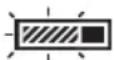
The hot/cold pack delay will be indicated by the red light(s) continuing to blink but with the yellow light(s) continuously ON. Once the battery pack has reached an appropriate temperature, the yellow light(s) will turn OFF and the charger will resume the charging procedure.
The DWST08050 charger is equipped with an internal fan. The fan will turn on automatically when a battery is being charged.
CAUTION: Never operate the charger if the fan does not operate or if the ventilation slots are blocked. Do not permit foreign objects to enter the interior of the charger.
NOTE: To ensure maximum performance and life of lithium-ion battery packs, charge the battery pack fully before first use.
- Plug the charger into an appropriate outlet before inserting battery pack.
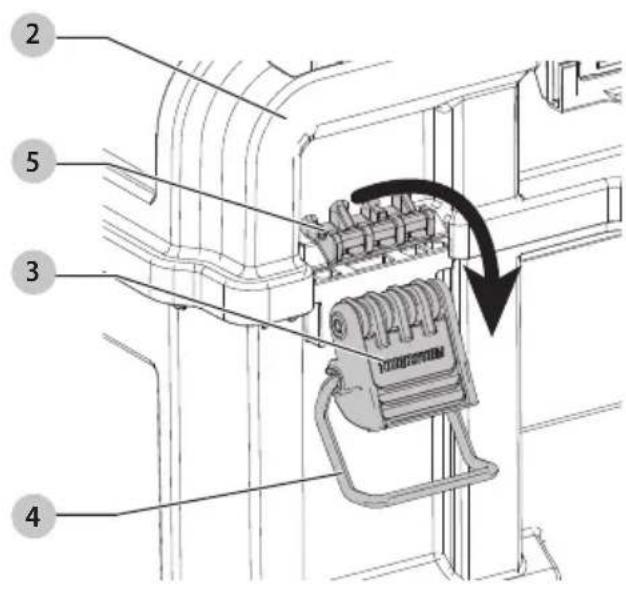
- To unlock the storage door 2, flip up the door latch handles 3 and lift and move the metal latches 4 from the latch pin slot 5 of the storage door.
- Open the storage door 2 to access the storage compartment 12 and the battery charger 13.
- Slide the battery pack 20 onto the left or right side charger rails 14, making sure the battery is fully seated. The left or right side charging light 6 will blink continuously indicating that the charging process
has started.
NOTE: Charging can take place with the storage door 2 open or closed.
NOTE: To close the storage door 2, use one hand to support the storage door and use the other hand to lift up and slide the door brace 16 towards the front of the box.
- The Stage 1 charging blink indicator represents the charge process that charges the majority of the battery's capacity.
- The Stage 2 charging blink indicator represents the remainder, or top off charge process, for the battery to reach full capacity.
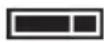
- The completion of charge for Stage 1 or Stage 2 will be indicated by the stage's light remaining ON continuously.
- The battery pack is fully charged when both Stage 1 and Stage 2 charging lights remain ON continuously, and it may be removed and used at this time or left in the charger.
NOTE: To remove the battery pack 20, some chargers require the battery pack release button 19 to be pressed.
Indicators
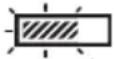
Stage 1 Charging
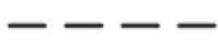

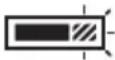
Stage 2 Charging

Fully Charged


Hot/Cold Pack Delay


A charger will not charge a faulty battery pack. The charger refusing to light could indicate a problem with the charger or a faulty battery pack.
NOTE: If the charger refuses to light, take the charger and battery pack to be tested at an authorized service center.
Leaving the Battery Pack In the Charger
The charger and battery pack can be left connected with the charge indicators showing pack charged.
Important Charging Notes
- Longest life and best performance can be obtained if the battery pack is charged when the air temperature is between 65 ^ - 75 ^ ( 18 ^ - 24 ^ ). DO NOT charge when the battery pack is below +40 ^ (+4.5 ^ ), or above +104 ^ (+40 ^ ). This is important and will prevent serious damage to the battery pack.
-
The charger and battery pack may become warm to the touch while charging. This is a normal condition, and does not indicate a problem. To facilitate the cooling of the battery pack after use, avoid placing the charger or battery pack in a warm environment such as in a metal shed or an uninsulated trailer.
-
If the battery pack does not charge properly:
a. Check operation of receptacle by plugging in a lamp or other appliance;
b. Check to see if receptacle is connected to a light switch which turns power off when you turn out the lights;
c. If charging problems persist, take the tool, battery pack and charger to your local service center.
- You may charge a partially used pack whenever you desire with no adverse effect on the battery pack.
Charger Cleaning Instructions
WARNING: Shock hazard. Disconnect the charger from the AC outlet before cleaning. Dirt and grease may be removed from the exterior of the charger using a cloth or soft non-metallic brush. Do not use water or any cleaning solutions.
OPERATION
WARNING: To reduce the risk of serious personal injury, turn unit off and disconnect it from power source and remove the battery pack before making any adjustments or removing/installing attachments or accessories. An accidental start-up can cause injury.
Carry Handle (Fig. A)
This DWST08050 has a built in carry handle 1 that allows you to carry the DWST08050 when not attached to a ToughSystem® storage box.
Storage Compartment (Fig. F)
WARNING: Avoid overfilling the storage department to prevent any interference with the batteries being charged.
WARNING: Do not force close the storage door. If the storage door will not fully close or the door latches will not lock easily, ensure the storage compartment is not overfilled. Remove a few items and try closing the storage door and locking the latches again.
This DWST08050 has a built in storage compartment 12 to carry your extra batteries, cords or tools.
- To unlock the storage door 2, flip up the door latch handles 3 and lift and remove the metal latches 4 from the latch pin slot 5 of the storage door.
- To access the storage compartment 12, open the storage door 2 until the door brace 16 locks into position.
- To close the storage door 2, use one hand to support the storage door 2 and use the other hand to lift up and slide the door brace 16 towards the front of the box.
- To lock the storage door 2, lift and move the metal latches 4 to the latch pin slot 5 of the storage door. Press down and inward on the door latch handles 3 until they make an audible click. Ensure the door latch handles are securely held in place.
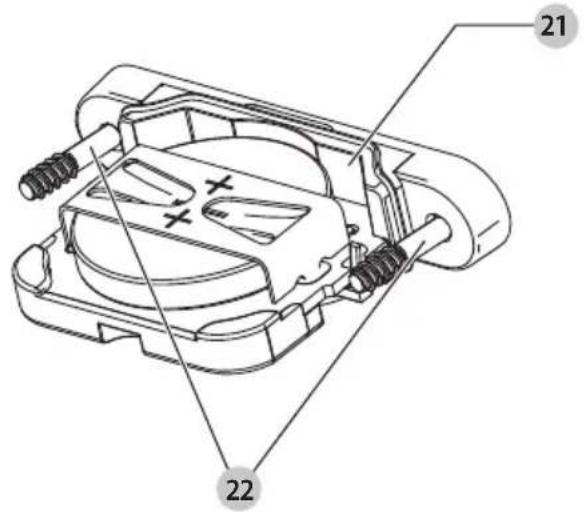
USB Charging Ports (Fig. A, G)
The DWST08050 is equipped with one USB 17 and one USB-C 18 charging ports. The USB 17 delivers up to 2.0 amps and the USB-C 18 delivers up to 3.0 amps of total current.
NOTE: The current delivered to the device is dependent upon the user's device and user's chosen cable.
NOTE: Do not plug in devices that exceed the output ratings on the DWST08050 rating label. Doing so will shorten the charger's useful life.
Using the USB port:
- Open the storage door to gain access to the USB charging port 17.
- Insert a USB plug into USB charging port 17 to supply power or charge your device.
Using the USB-C port:
- The USB-C charging port 18 is located on the back of the box, above the power cord 8.
- Pull back the USB-C port cover 7 to reveal the USB-C charging port 18.
- Insert a USB-C plug into USB-C charging port 18 to supply power or charge your device.
NOTE: Ensure the port cover is reinstalled after use.
MAINTENANCE
WARNING: To reduce the risk of serious personal injury, turn unit off and disconnect it from power source and remove the battery pack before making any adjustments or removing/installing attachments or accessories. An accidental start-up can cause injury.
Your DEWALT product has been designed to operate over a long period of time with a minimum of maintenance. Continuous satisfactory operation depends upon proper care and regular cleaning.
Storage and Transportation
• Always store disconnected from power supply!
- Avoid using the product outdoors or transporting in an open vehicle if there is noticeable damage to the sealing gasket or plastic exterior.
- Avoid continuous exposure to rain or other precipitation if stored outdoors or on a vehicle, or if transported in an open vehicle.
- Store the charger in a place that is as cool and dry as possible.
- Store the charger in a place where it cannot be accessed by children or unauthorized persons.
- Check the charger for damage before use after long periods of storage.
Cleaning
WARNING: Never use solvents or other harsh chemicals for cleaning the non-metallic parts of the tool. These chemicals may weaken the plastic materials used in these parts. Use a cloth dampened only with water and mild soap. Never let any liquid get inside the tool; never immerse any part of the tool into a liquid.
Accessories
WARNING: Since accessories, other than those offered by DEWALT, have not been tested with this product, use of such accessories with this product could be hazardous. To reduce the risk of injury, only DEWALT recommended accessories should be used with this product.
Recommended accessories for use with your product are available at extra cost from your local dealer or authorized service center. If you need assistance in locating any accessory, please contact DEWALT call 1-800-4-DEWALT (1-800-433-9258) or visit our website: www.dewalt.com
Tool Connect™ Chip (Fig. H, I)
Optional Accessory
Your tool is Tool Connect™ Chip ready and has a location for installation of a Tool Connect™ Chip.
Tool Connect™ chip 21 communicates with an optional application for your smart device (such as a smart phone or tablet) that connects the device to utilize the mobile application for inventory management functions.
Refer to Tool Connect™ Chip Instruction Sheet for more information.
Installing the Tool Connect™ Chip
- Insert the Tool Connect™ Chip 21 into the empty pocket 23.
- Ensure that the Tool Connect™ Chip is flush with the housing. Secure it with the retaining screws 22 and tighten the screws.
- Refer to Tool Connect™ Chip Instruction Sheet for further instructions.
Repairs
The charger and batteries are not serviceable. There are no serviceable parts inside the charger or battery pack.
WARNING: To assure product SAFETY and RELIABILITY, repairs, maintenance and adjustment (including power cord repairs, and brush inspection and replacement, when applicable) should be performed by a DEWALT factory service center or a DEWALT authorized service center. Always use identical replacement parts.
Register Online
Thank you for your purchase. Register your product now for:
- WARRANTY SERVICE: Registering your product will help you obtain more efficient warranty service in case there is a problem with your product.
- CONFIRMATION OF OWNERSHIP: In case of an insurance loss, such as fire, flood or theft, your registration of ownership will serve as your proof of purchase.
- FOR YOUR SAFETY: Registering your product will allow us to contact you in the unlikely event a safety notification is required under the Federal Consumer Safety Act.
- Register online at www.dewalt.com.
Three Year Limited Warranty
For warranty terms, go to https://www.dewalt.com/Legal/Warranty/3-Year-Limited-Warranty.
To request a written copy of the warranty terms, contact: Customer Service at DEWALT Industrial Tool Co., 701 East Joppa Road, Towson, MD 21286 or call 1-800-4-DEWALT (1-800-433-9258).
LATIN AMERICA: This warranty does not apply to products sold in Latin America. For products sold in Latin America, see country specific warranty information contained in the packaging, call the local company or see website for warranty information.
FREE WARNING LABEL REPLACEMENT: If your warning labels become illegible or are missing, call 1-800-4-DEWALT (1-800-433-9258) for a free replacement.
portezdes protections auditives
natural_image
Technical line drawing of a device casing with mounting bracket and handle (no text or symbols)--- o CD.....corriente directa
natural_image
Technical line drawing of a mechanical device with no visible text or symbolsEje Central Lázaro Cárdenas No. 18 - Local (55) 5588 9377 D, Col. Obrera
MERIDA, YUC
Calle 63 #459-A - Col. Centro (999) 928 5038
MONTERREY, N.L.
Av. Francisco I. Madero 831 Poniente - Col. (818) 375 23 13 Centro
PUEBLA, PUE
17 Norte #205 - Col. Centro (222) 246 3714
QUERETARO, QRO
Av. San Roque 274 - Col. San Gregorio (442) 2 17 63 14
SAN LUIS POTOSI, SLP
Col. Santa Fe Alvaro Obregon,
Ciudad de Mexico, Mexico.
C.P 01210
TEL(52) 55 53267100
R.F.C.BDE8106261W7
Registro en Línea
www.dewalt.com/Legal/Warranty/3-Year-Limited-Warranty.
Battery Packs Blocs-piles
DCB200, DCB201, DCB203, DCB204, DCB204BT**, DCB205, DCB205BT**, DCB206, DCB208, DCB210, DCB230, DCBP234, DCB240, DCBP520
60V Max* Li-Ion DCB608aDCB609, DCB612
* Maximum initial battery voltage (measured without a workload) is 20, 60 or 120 volts. Nominal voltage is 18, 54 or 108. (120V Max* is based on using 2 DEWALT 60V Max* lithium-ion batteries combined.)
* La tension initiale maximum du bloc-piles (mesurée à vide) est de 20, 60 ou 120 volts. La tension nominale est de 18, 54 ou 108. (120 V max* se base sur l'utilisation combinée de 2 blocs-piles au lithium ion DEWALT de 60 V max*).
* El máximo voltaje inicial de la batería (medido sin carga de trabajo) es 20 o 60 voltios. El voltaje nominal es de 18, 54 o 108 V. (120 V Máx* se basan en el uso de 2 baterías de iones de litio DEWALT de 60 V Máx* combinadas.)
**BT - Bluetooth®
NOTE: The Bluetooth ^® word mark and logos are registered trademarks owned by the Bluetooth ^® , SIG, Inc. and any use of such marks by DEWALT is under license. Other trademarks and trade names are those of their respective owners.
JING: Use of any other battery packs may create a risk of injury and fire.