L20 Ultra - Vacuum Cleaner DREAME - Free user manual and instructions
Find the device manual for free L20 Ultra DREAME in PDF.


| Product type | Robot vacuum |
| Brand | Dreame |
| Model | L20 Ultra (RLX41CE-1) |
| Dimensions (L x W x H) | 350 x 350 x 100 mm (estimated) |
| Weight | 4.7 kg (estimated) |
| Robot power supply | 14.4 V lithium-ion battery |
| Base station power supply | 220-240 V~ 50-60 Hz, output 20 V 2 A |
| Charging time | Approximately 4.5 hours |
| Rated power (robot) | 75 W |
| Rated power (station - dust collection) | 1000 W |
| Rated power (station - cleaning) | 55 W |
| Rated power (station - charging and drying) | 80 W |
| Main functions | Vacuuming, automatic mop washing, automatic emptying, laser mapping, AI navigation, vacuum only, mop only, vacuum then mop, spot cleaning, Do Not Disturb mode, child safety |
| Included accessories | Side brush, main brush, mop ×2, mop holder ×2, filter, dust bag ×2, cleaning solution, cleaning tool |
| Safety | Drop sensors, Class 1 laser, child safety, Do Not Disturb mode |
| Maintenance | Regular cleaning of sensors, contacts, brush, washboard, tanks, emptying dust bag and dirty water tank |
| Spare parts | Main brush, side brush, filter, mop, mop holder, dust bag, battery (replacement by technician) |
Frequently Asked Questions - L20 Ultra DREAME
User questions about L20 Ultra DREAME
0 question about this device. Answer the ones you know or ask your own.
Ask a new question about this device
Download the instructions for your Vacuum Cleaner in PDF format for free! Find your manual L20 Ultra - DREAME and take your electronic device back in hand. On this page are published all the documents necessary for the use of your device. L20 Ultra by DREAME.
USER MANUAL L20 Ultra DREAME
Robot Vacuum and Mop with Auto-Empty and Mop Self-Cleaning User Manual

natural_image
Line drawing of a rectangular electronic device with a circular base and top panel, no text or symbols present.The illustrations in this manual are for reference only. Please refer to the actual product.
DREAME
Contents
EN User Manual
DE Benutzerhandbuch 30
FR Manuel d'utilisation 60
IT Manuale utente 89
ES Manual de usuario 118
RU Руководство пользователя 147
PL Instrukcja obsługi 178
NL Gebruikershandleiding 208
NO Brukerhåndbok 237
SV Användarmanual 266
Safety Information
EN
To avoid electric shock, fire or injury caused by improper use of the appliance, please read the user manual carefully before using the appliance and keep it for future reference.
Usage Restrictions
This product should not be used by children younger than 8 years old nor persons with physical, sensory, intellectual deficiencies, or limited experience or knowledge without the supervision of a parent or guardian to ensure safe operation and to avoid any risks. Cleaning and maintenance shall not be performed by children without supervision.
The appliance is only to be used with the power supply unit provided with the appliance.
· This appliance contains batteries that are only replaceable by skilled persons.
Clear the area to be cleaned. Children shall not play with the appliance. Ensure children and pets are kept at a safe distance from the robot while it is operating.
Do not install, charge or use the appliance in the bathrooms or around the pools.
This product is for floor cleaning in a home environment only. Do not use it outdoors, on non-floor surfaces, or in a commercial or industrial setting.
- Ensure that the appliance operates correctly in a proper environment. Otherwise, do not use the appliance.
If the power cord is damaged, it must be replaced by a special cord or assembly available from the manufacturer or its service agent.
Do not use the robot in an area suspended above ground level without a protective barrier.

Safety Information
Usage Restrictions
Do not place the robot upside down. Do not use the LDS cover, robot cover, or bumper as a handle for the robot.
Do not use the robot at an ambient temperature above 40^ C or below 0^ C or on a floor with liquids or sticky substances.
To prevent damage or harm from dragging, clear any loose objects from the floor, and remove cables or power cords on the cleaning path before operating the appliance.
- Remove fragile or small items from the floor to prevent the robot from bumping into and damaging them.
- Keep hair, fingers, and other body parts away from the suction opening of the robots.
- Keep the cleaning tool out of reach of children.
Do not operate the appliance in a room where an infant or child is sleeping.
Do not place children, pets, or any item on top of the robot regardless of whether it is stationary or moving.
- Keep the cleaning solution out of reach of children.
· Use only the officially-approved detergent. Do not add any liquid such as alcohol or disinfectant.
Do not use the robot to clean any burning objects. Do not use the robot to pick up flammable or combustible liquids, corrosive gases, or undiluted acids or solvents.
Safety Information
EN
Usage Restrictions
Do not vacuum hard or sharp objects. Do not use the appliance to pick up objects such as stones, large pieces of paper or any item that may clog the appliance.
- Plug must be removed from the socket-outlet before cleaning or maintaining the appliance.
Do not wipe the robot or the base station with a wet cloth or rinse them with any liquid. After cleaning washable parts, fully dry the parts before reinstalling and using them.
Please use this product in accordance with the instructions in the User Manual. Users are responsible for any loss or damage that arise from improper use of this product.
Batteries and Charging
Do not use any third-party battery or base station. The robot can only be used with the model RCXE2-1 base station.
Do not attempt to disassemble, repair, or modify the battery or the base station on your own.
Do not place the base station near a heat source.
Do not use a wet cloth or wet hands to wipe or clean the base station's charging contacts.
Do not improperly dispose of old batteries. Unneeded batteries should be discarded at an appropriate recycling facility.
If the power cord becomes damaged or broken, stop using it immediately and contact after-sales service.
EN
Safety Information
Batteries and Charging
- Make sure the robot is turned off when being transported and kept in its original packaging if possible.
If the robot will not be used for an extended period of time, fully charge it, then turn it off and store it in a cool, dry place. Recharge the robot at least once every 3 months to avoid over-discharging the battery.
Laser Safety Information
The laser sensor in this product meets the IEC 60825-1:2014/EN 60825-1:2014/A11:2021 Standard for Class 1 laser products. Please avoid direct eye contact with it during use.
CLASS 1 LASER PRODUCT CONSUMER LASER PRODUCT EN 50689:2021
Hereby, Dreame Trading(Tianjin)Co., Ltd. declares that the radio equipment type RLX41CE-1 is in compliance with Directive 2014/53/EU. The full text of the EU declaration of conformity is available at the following internet address: https://global.dreametech.com For detailed e-manual, please go to https://global.dreametech.com/pages/user-manuals-and-faqs
Product Overview
EN
Package Contents (DreameBot L20 Ultra)

Robot
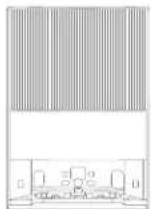
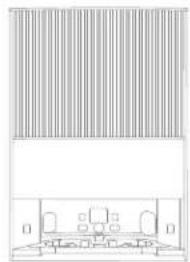
Base Station
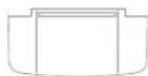
Base Station Ramp Extension Plate
Other Accessories
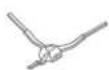
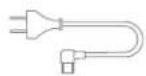
Side Brush Power Cord Cleaning Tool
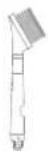
(Stored in the base station storage bin)

Dust Bag × 2
(Stored in the dust tank)
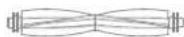
Main Brush (pre-installed)
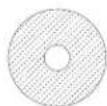
Mop Pad × 2
(pre-installed)
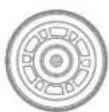
Mop Pad Holder × 2
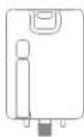
Cleaning Solution
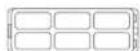
User Manual Dust Box's Filter
(pre-installed)
EN
Product Overview
Package Contents (DreameBot L20 Ultra Complete)
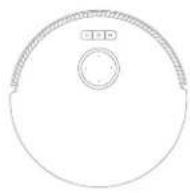
Robot
natural_image
Pure architectural line drawing of a building facade with vertical slats and a central structure (no text or symbols)Base Station
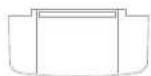
Base Station Ramp Extension Plate
Other Accessories
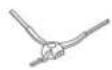
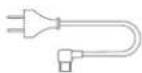
Side Brush × 3 Power Cord Cleaning Tool
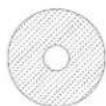
Mop Pad × 14 (× 2 pre-installed)
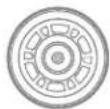
Mop Pad Holder × 2
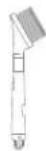
(Stored in the base station storage bin)

Dust Bag × 5
(× 2 stored in the dust tank)
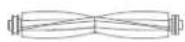
Main Brush × 2
(× 1 pre-installed)
Cleaning Solution × 4 User Manual
Dust Box's Filter × 4
(×1 pre-installed)
Product Overview
EN
Robot
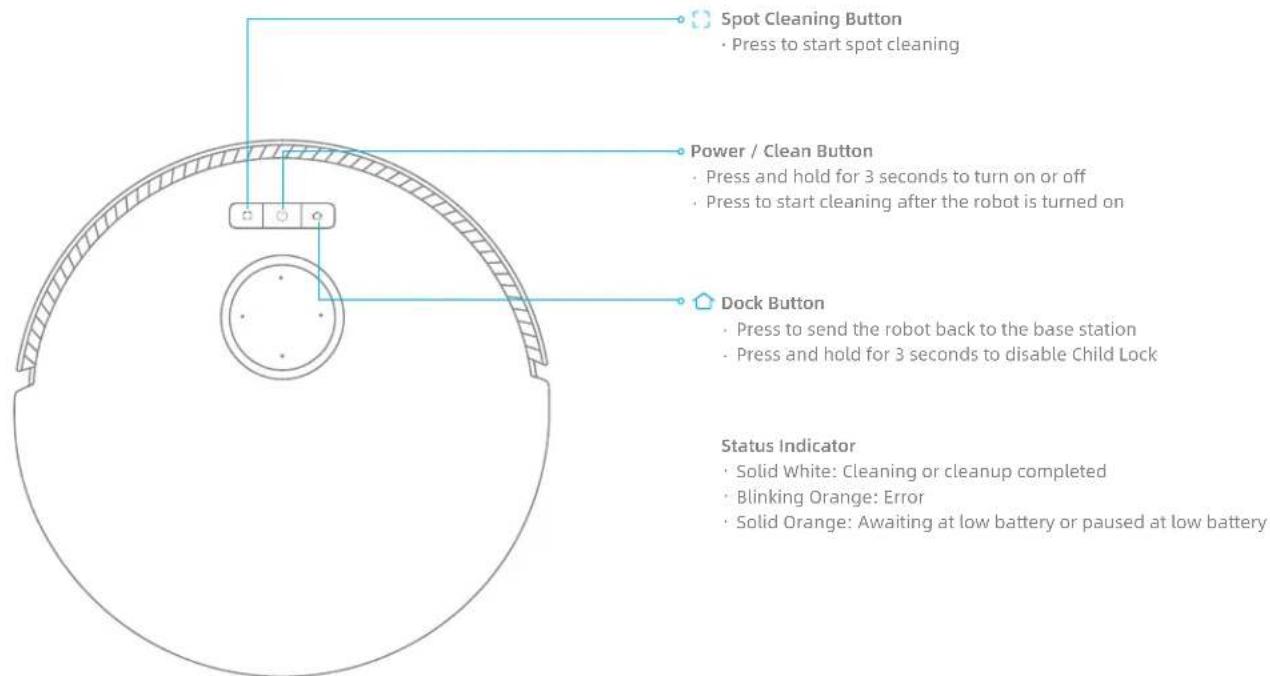
Note: Press any button on the robot to pause while the robot is cleaning or returning to charge.
Product Overview
Robot and Sensors

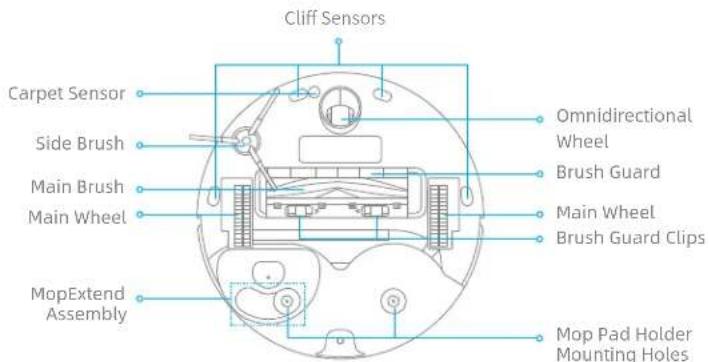
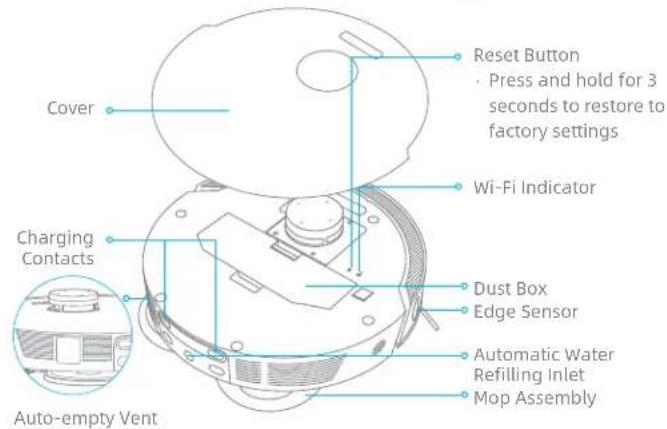
Dust Box

Mop Assembly

Product Overview
EN
Base Station
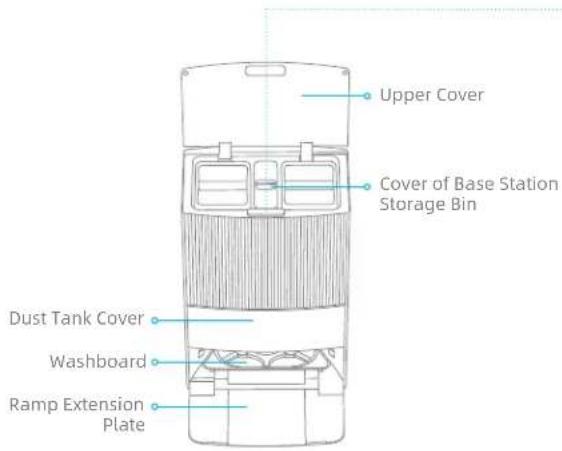

Base Station Buttons
Leave Button
When the robot is on the base station, press to exit the base station
Clean Button
- When the robot is on the base station, press to start cleaning - When the mop pad washing task is in process, press to pause
Drying Button
When the robot is on the base station, press to make the base station start or stop drying the mop pads
Status Indicator
- Solid White: The base station is connected to power - Solid Orange: The base station has an error
Child Lock
When the robot is on the base station, press and hold 🔒 and ⚡ for 3 seconds to enable or disable the child lock. You can also use the app to control the child lock function.
Clean the Washboard
After the robot exits the base station, press and hold the button ☐ for 3 seconds to add water from the base station to the washboard, and then press and hold the button ☐ for 3 seconds to pump out the used water in the washboard.
Product Overview
Base Station
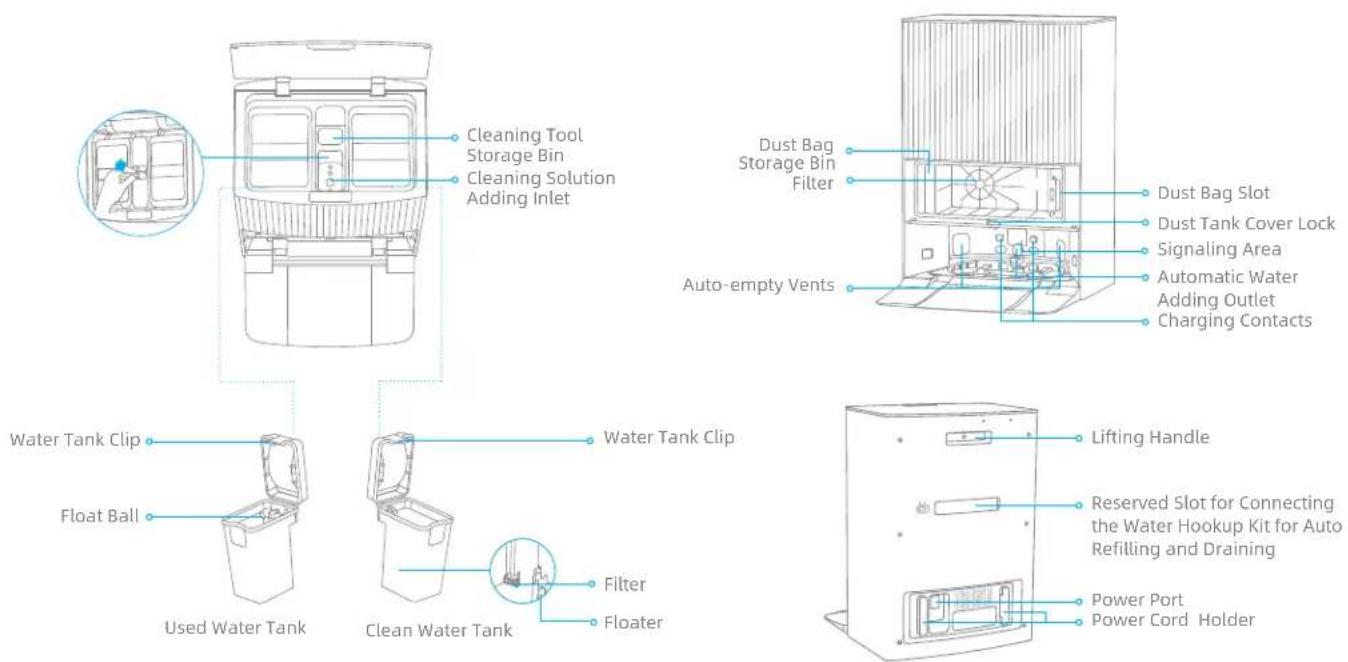
Note: The water hookup kit for auto refilling and draining needs to be purchased separately. (Only available in specific regions)
Preparing Your Home
EN
natural_image
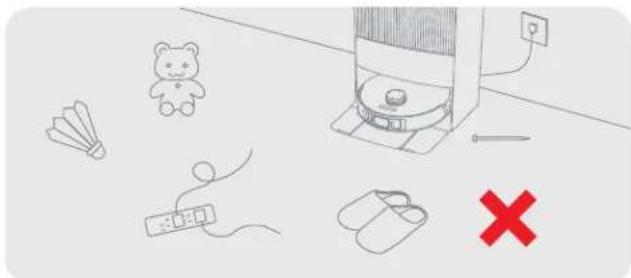
Illustration of a vacuum cleaner with icons for teddy bear, fan, mouse, and red X mark (no text or symbols)Before cleaning, please move away unstable, fragile, valuable or dangerous items, and clean up cables, cloths, toys, hard objects and sharp objects on the ground to avoid being entangled, scratched or knocked over by the robot and causing losses.
natural_image
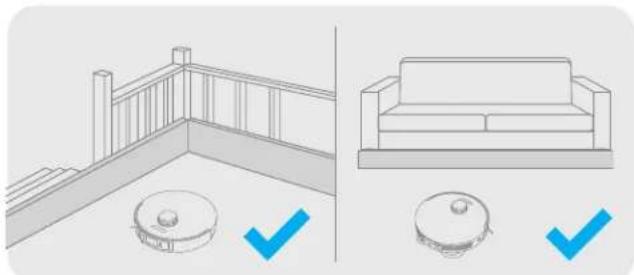
Illustration showing a balcony railing and a sofa with circular objects, both marked with blue checkmarks (no text or symbols)Before cleaning, place a physical barrier at the edge of the stairs and sofa to ensure the secure and smooth operations of the robot.
natural_image
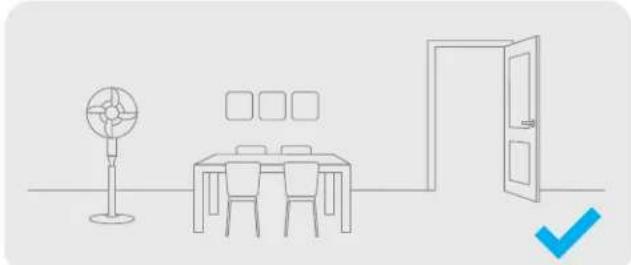
Line drawing of a simple dining room with a desk, chair, fan, and door (no text or symbols)Open the door of the room to be cleaned, and put the furniture in its proper place to leave more space.
natural_image
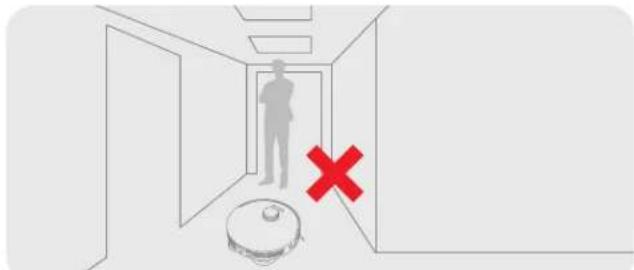
Interior hallway with a person standing at the entrance and a red X mark on the floor (no text or symbols)To prevent the robot from not recognizing areas that need to be cleaned, do not stand in front of the robot, or in a threshold, hallway, or narrow places.
Note:
- When operating the robot for the first time, follow it around while cleaning to remove any potential obstacles in time.
- LED fill lights will provide auxiliary lighting in dimly lit environments.
- Do not vacuum hard objects like stones, steel balls and toy parts, or sharp objects like construction waste, broken glass and nails, otherwise the ground may be scratched.
EN
Before Use
1. Connect to an Electrical Outlet
Insert the power cord into the base station and plug it into the socket.
Place the base station in a location that is as open as possible with a good Wi-Fi signal.
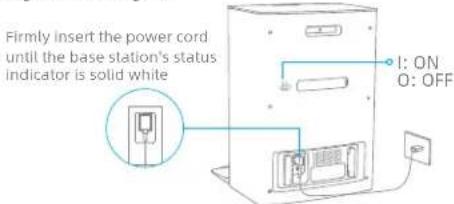
2. Place the Base Station and Install the Base Station Ramp Extension Plate
Remove any objects that are closer than 1.5m from the front and 5cm from either side of the base station. Then install the base station ramp extension plate down to the base station.
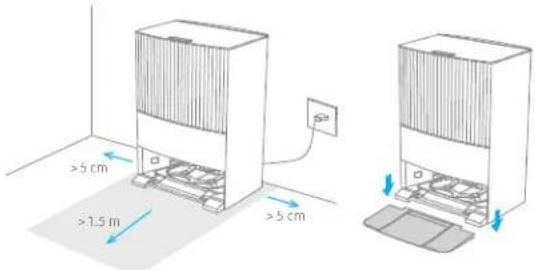
Note: To prevent water stains from wetting wood floors or carpets, placing the base station on tile floors or marble floors is recommended.
3. Remove the Protections
Remove the two stickers on front and back of the robot, then take down the robot cover to remove the protective strip.
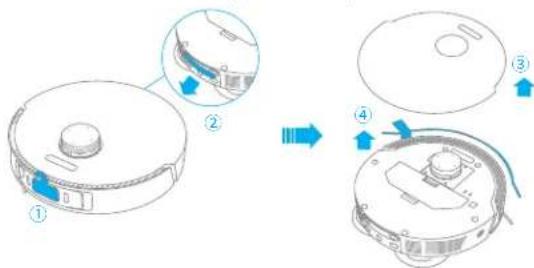
4. Turn on the Robot and Install the Side Brush and Mop Assembly
Press and hold the power button on the robot for 3 seconds to turn it on. Install the side brush and mop assembly into place.
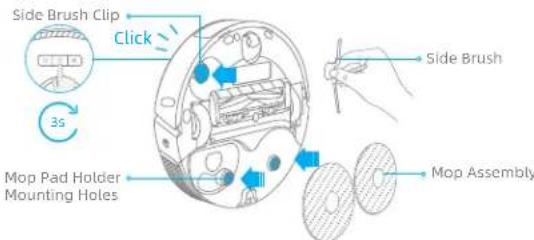
Note: Install the side brush until it clicks into place.
Before Use
5. Connect the Robot to the Base Station
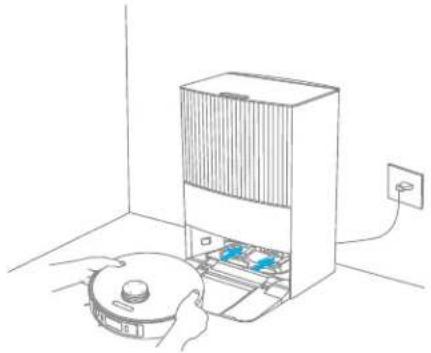
Place the robot onto the base station with the mop assembly facing toward the washboard. Then you will hear a voice prompt when the robot successfully connects to the base station.
natural_image
Line drawing of hands operating a circular device next to a server rack with a power outlet (no text or symbols)Note: It is recommended to fully charge the robot before its first use. When the robot cannot be turned on after the battery is depleted, manually connect the robot with the base station to charge it.
6. Install the Cleaning Solution Bottle
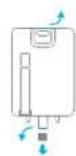
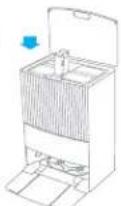
Remove the cap of the cleaning solution bottle, and tear off the two seals on the bottle as shown in the figure. Open the upper cover of the base station and install the bottle along the slot into place. The cleaning solution will be added automatically while working.
①
②
Note: Do not add any liquid other than the officially-approved cleaning solution, otherwise it may cause base station malfunction.
7. Add Water to the Clean Water Tank
Take out the clean water tank from the base station, and fill it with clean water up to the max water line. Then install it back into the base station.
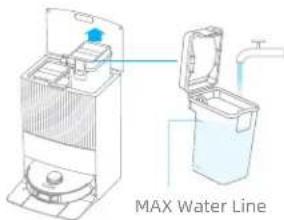
Note: Do not add hot water to the water tank as this may cause the tank to become deformed.
EN
Connecting with the Dreamehome App
1. Download the Dreamehome App
Scan the QR code on the robot, or search "Dreamehome" in the app store to download and install the app.
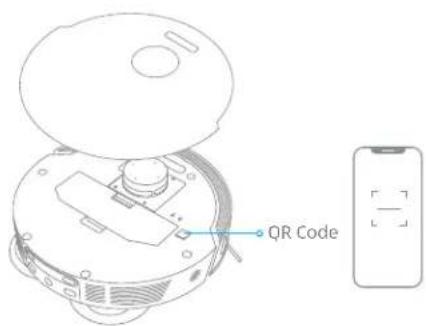
Note:
- Only 2.4 GHz Wi-Fi is supported.
- Due to upgrades in the app software, the actual operations may differ from the directions in this manual. Please follow the instructions based on the current app version.
2. Add Device
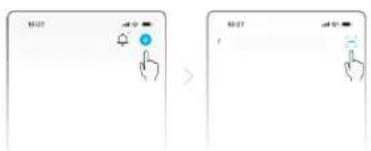
Open the Dreamhome app, tap " + " in the upper right corner, and scan the same QR code on the robot again to add the device. Please follow the prompts to finish the Wi-Fi connection.
Note:
- If you want to reset Wi-Fi, repeat step 2 and then follow the prompts to finish the Wi-Fi connection.
- To disconnect the device from Wi-Fi network, press and hold the Reset button on the robot for 3 seconds.

How to Use
Turn On/Off
Press and hold the power button for 3 seconds to turn on the robot. The power indicator should be illuminated. Place the robot onto the base station, the robot should turn on automatically and begin charging. To turn off the robot, move the robot away from the base station and press and hold the power button for 3 seconds.
Fast Mapping
After configuring the network for the first time, follow the instructions in the app to quickly create a map. The robot will start mapping without cleaning. When the robot returns to the base station, the mapping process has been completed and the map will be saved automatically.
Pause/Sleep
When the robot is running, press any button to pause it. If the robot is paused for more than 10 minutes, it automatically enters sleep mode. All indicators on the robot will turn off. Press any button on the robot or base station, or use the app to wake up the robot.
Note: If the robot is paused and placed onto the base station, the current cleaning process will end.
Auto Resume Cleaning
If the battery is too low, the robot will automatically return to the base station to charge. After charging to the appropriate battery level, it will resume unfinished cleaning tasks.
Note: To use this function, please open it in the App.
Do Not Disturb (DND) Mode
When the robot is set to Do Not Disturb (DND) mode, the robot will be prevented from resuming cleaning and the power indicator will turn off. DND mode is disabled by default at the factory. You can use the app to enable DND mode or modify the DND period. The DND period is 22:00-8:00 by default.
Note:
- The scheduled cleaning tasks will be performed as usual during the DND period.
- The robot will resume cleanup where it left off after the DND period expires.
Spot Cleaning
When the robot is awaiting, press briefly the button to enable the spot cleaning mode. In this mode, the robot cleans a square-shaped area of 1.5 × 1.5 meters around it and returns to its starting point once the spot cleaning is completed.
Robot Restarting
If the robot stops responding or cannot be turned off, press and hold the power button for 10 seconds to forcefully turn it off. Then, press and hold the power button for 3 seconds to turn the robot on.
EN
How to Use
Vacuum and Mop
Note: When using the mop assembly for the first time, the robot performs the "Vacuum and Mop" task by default.
1. Start cleaning
Press the clean button on the base station or the power button on the robot, or use the app to make the robot start from the base station. Then the robot will plan the optimal cleaning route and perform the cleaning task based on the created map.
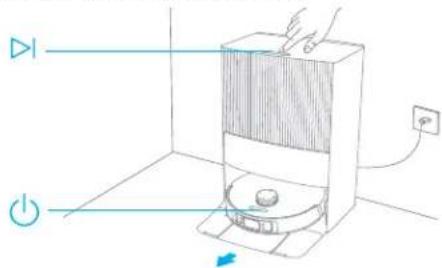
Note:
- To ensure the robot can easily return to the base station after cleaning, it is recommended to make the robot start from the base station.
- The mop pads will be cleaned before the robot starts mopping, please wait patiently.
- Do not move the base station, the clean water tank, the used water tank, or the washboard during operation.
2. Auto mop washing
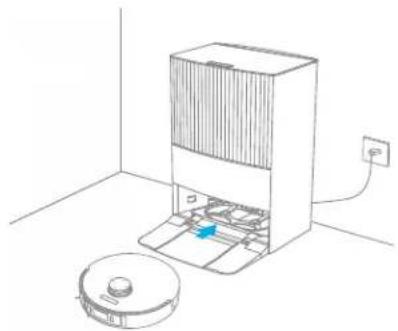
When cleaning, the robot will automatically return to the base station to wash mop pads based on the mop pad cleaning frequency specified in the app. The base station will automatically refill the robot's water tank and the robot will resume cleanup.
natural_image
Line drawing of a cleaning appliance with a vacuum cleaner and power outlet (no text or symbols)How to Use
3. Automatically empty the dust box and wash and dry the mop pads after finishing the "Vacuum and Mop" task
After the robot finishes a cleaning task and returns to the base station to charge, the base station will automatically start emptying the dust box. Then it will wash and dry the mop pads.
Note:
- If the auto-empty function is turned off in the app, the base station will not automatically empty the dust box.
- The base station will empty the dust box according to the frequency set in the app.
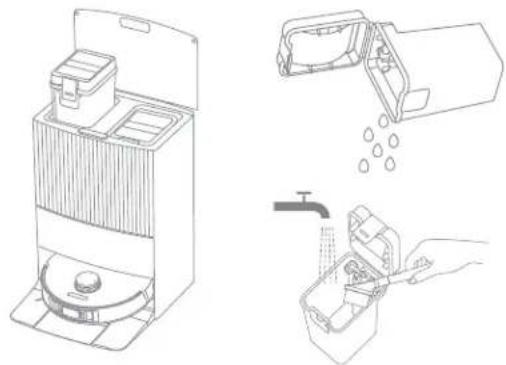
4. Clean the used water tank
After the robot has completed its task, please clean the used water tank to prevent any odor.
natural_image
Line drawings of a cleaning device with water drop and tap (no text or symbols)Vacuum then Mop
Select "Vacuum then Mop" in the app, and the robot will automatically remove the mop assembly on the base station to vacuum the floor. After vacuuming is completed, the robot will return to the base station to install the mop assembly and the base station will automatically start emptying the dust box. And then, the robot will start mopping after the main brush is raised.
Vacuum Only
Select "Vacuum Only" in the app, and the robot will automatically remove the mop assembly on the base station and start vacuuming.
Mop Only
Select "Mop Only" in the app, and the robot will automatically check if the mop assembly is installed on the base station. If not, the robot will install the mop assembly and start mopping after the main brush is raised.
EN
Routine Maintenance
Parts
To keep the robot in good condition, it is recommended to refer to the accessory usage in the app or the following table for routine maintenance.
| Part Maintenance Frequency | Replacement Period | |
| Used water tank After each use | / | |
| Clean water tank | months | |
| Main brush Every 6 to 12 months | ||
| Side brush Every 3 to 6 months | once every 2 weeks | |
| Mop pad holder / | ||
| Dust box's filter Every 3 to 6 months | ||
| Washboard | Once every month / | |
| Base station's signaling area | ||
| Base station's charging contacts | ||
| Base station's auto-empty vents | ||
| Laser Distance Sensor (LDS) | ||
| Robot's charging contacts | ||
| Robot's auto-empty vent | ||
| Robot's automatic water refilling inlet | ||
| Part | Maintenance Frequency | Replacement Period |
| Line laser sensor | Once every month | / |
| AI visual sensor | ||
| LED fill lights | ||
| Edge sensor | ||
| Bumper | ||
| Omnidirectional wheel | ||
| Carpet sensor | ||
| Cliff sensors | ||
| Bottom of the robot | ||
| Cleaning solution adding inlet | Recommended to clean after removing the cleaning solution (bottle) | |
| Dust box Clean it as needed | ||
| Dust bag | / | 6-8 weeks |
| Mop pad | Every 1 to 3 months |
Note: The replacement frequency will depend on your usage of the robot. If an exception occurs due to special circumstances, the parts should be replaced.
Routine Maintenance
Washboard
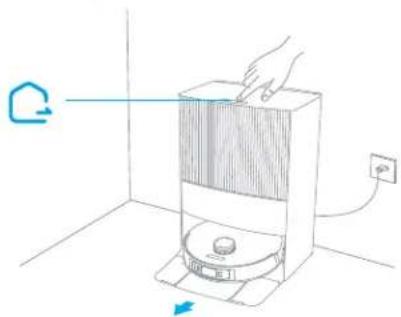
- Press the button 🔒 to make the robot exit the base station.
natural_image
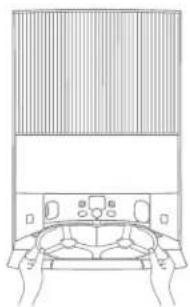
Line drawing of a kitchen appliance with a hand pressing down on a tray, showing no text or symbols.- Remove the washboard and rinse it with clean water.
natural_image
Line drawing of a vehicle dashboard with front wheel and side monitors (no text or symbols)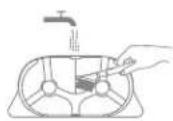
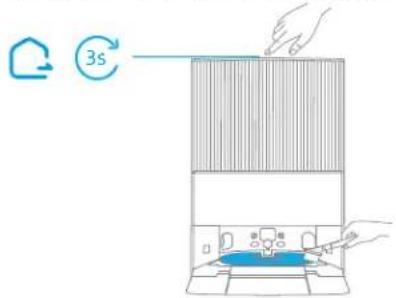
- Press and hold the button ☐ for 3 seconds to add water to the bottom of the base station. Then use the included cleaning tool to clean it.
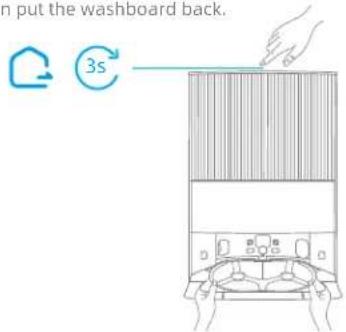
- Press and hold the button 📋 for 3 seconds to pump out the used water in the bottom of the base station, dry it with a soft and dry cloth, and then put the washboard back.
EN
Routine Maintenance
Dust Bag
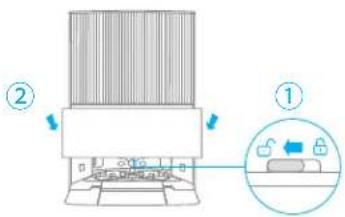
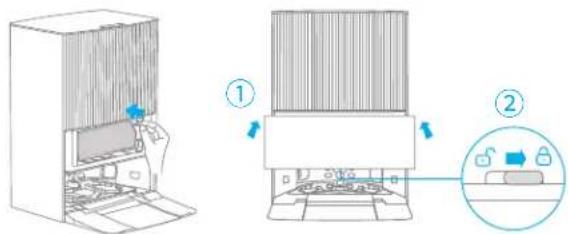
- Unlock the dust tank cover and then remove it.
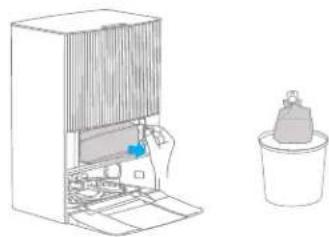
- Discard the dust bag.
natural_image
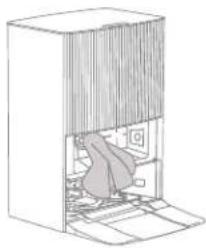
Line drawing of a desktop computer with an open base and a separate cup (no text or symbols)Note: Pulling outwards on the handle will seal the dust bag to prevent the dust and debris from accidentally falling out.
- Remove the dust and debris from the filter with a dry cloth.
natural_image
Line drawing of a mechanical device with internal components and a handle (no text or symbols)- Install a new dust bag. Then install back the dust tank cover and lock it.
Routine Maintenance
Used Water Tank
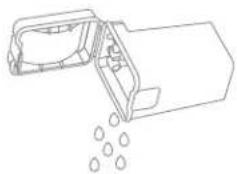
- Remove the used water tank, open its cover and pour out the used water.
natural_image
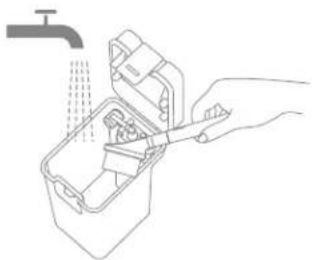
Line drawing of a mechanical device with internal components and particles (no text or symbols)- Rinse the used water tank with clean water, and use the provided cleaning tool to clean the inner wall of the used water tank.
natural_image
Line drawing of a hand using a tool to adjust or install a small container with liquid, no text or symbols presentNote: The float ball in the used water tank is a movable part. Do not apply too much force when cleaning it to avoid damaging it.
EN
Main Brush
- Press the brush guard clips inwards to remove the brush guard and lift the brush out of the robot.
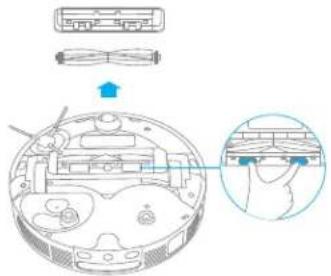
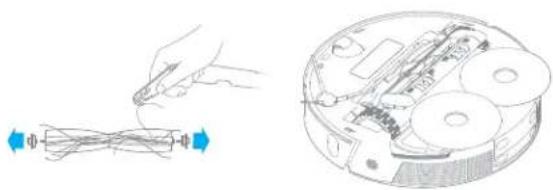
- Pull out the brush covers at both ends of the brush as shown in the figure. Use the provided cleaning tool to remove any hair tangled in the brush. Reinstall the brush covers on both ends of the brush, and then reinstall the brush. Press on the brush guard to lock it in place.
natural_image
Diagram showing a hand holding a cable with directional arrows, next to an open CD or DVD disc (no text or symbols present)EN
Routine Maintenance
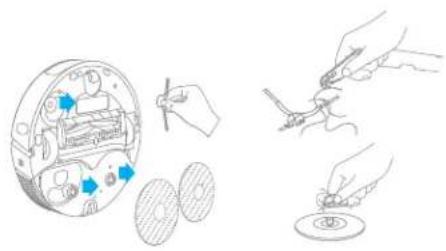
Side Brush & Mop Pad Holder
Remove and clean the side brush and mop pad holder.
natural_image
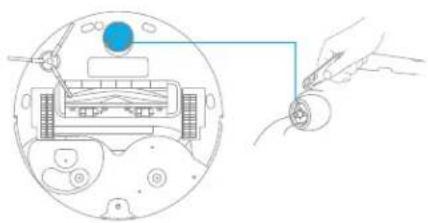
Illustration showing hands installing or adjusting a mechanical component with arrows indicating motion (no text or symbols present)Omnidirectional Wheel
natural_image
Diagram showing a hand inserting a cable into a device inside a circular frame (no text or symbols)Note:
- Use a tool such as a small screwdriver to separate the axle and tire of the omnidirectional wheel. Do not use excessive force.
- Rinse the omnidirectional wheel under the running water and put it back after drying it completely.
Dust Box
- Open the robot's cover and press the clip to remove the dust box.
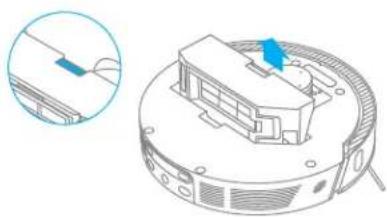
natural_image
Diagram showing a device mounted on a circular base with a blue arrow pointing to a component (no text or symbols present)- Open the dust box cover and empty the dust box as shown in the diagram.
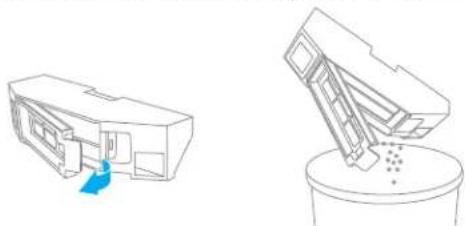
natural_image
Two technical line drawings showing a device with a blue arrow pointing to it and a container with particles (no text or symbols)Routine Maintenance
Filter
- Remove the filter and tap its basket gently.
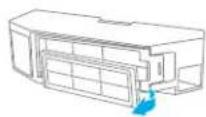
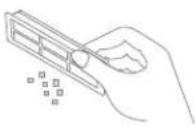
Note: Do not attempt to clean the filter with a brush, a finger or sharp objects to prevent damage.
- Rinse the dust box and filter with water and dry them completely before reinstalling.

Note:
- Rinse the dust box and filter with clean water only. Do not use any detergent.
- Use the dust box and filter only when they are completely dry.
Robot Sensors and Charging Contacts
Wipe sensors and charging contacts of the robot by using a soft and dry cloth, as shown in the below figure:
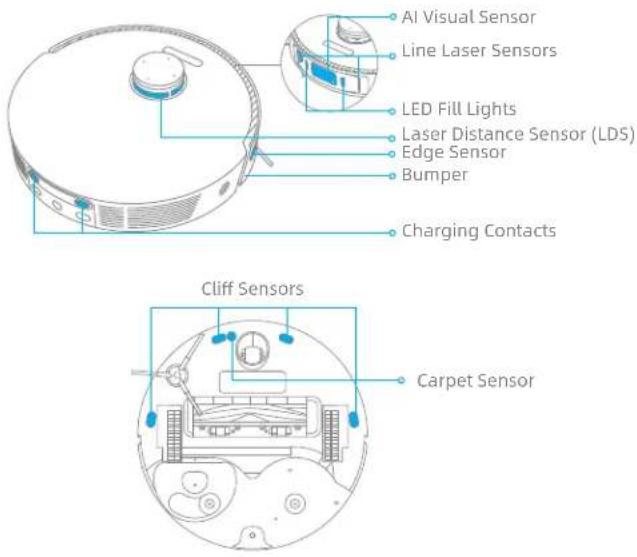
Note: A wet cloth can damage sensitive elements within the robot and the base station. Please use a dry cloth for cleaning.
EN
Routine Maintenance
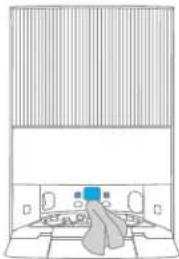
Charging Contacts
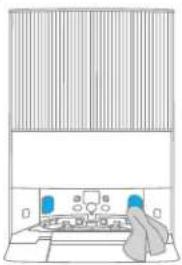
Clean the charging contacts and the signaling area of the base station with a soft and dry cloth.
natural_image
Top-down line drawing of a room with a blue square on the floor and a gray cloth, no text or symbols present.Auto-empty Vents
Clean the auto-empty vents of the robot and the base station with a soft and dry cloth.

natural_image
Line drawing of a vacuum cleaner with a circular top and attached sensor array (no text or symbols)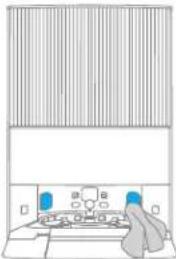
natural_image
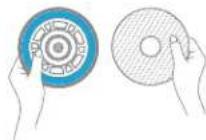
Illustration of a kitchen counter with two blue gloves and a large striped curtain on top (no text or symbols)Mop Pad
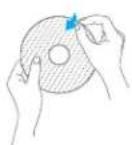
Remove the mop pad from the mop pad holder to replace it.
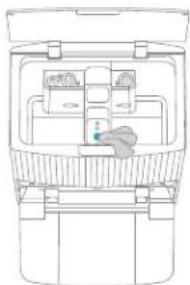
Cleaning Solution Adding Inlet
If the cleaning solution adding inlet is dirty, wipe it with a soft and dry cloth.
natural_image
Top-down line drawing of a mechanical device with internal compartments and a handle (no text or symbols)Battery
The robot contains a high-performance lithium-ion battery pack. Make sure that the battery remains well-charged for daily use to maintain optimal battery performance.
Troubleshooting
| Problem Solution | |
| The robot will not turn on. | The battery is low. Recharge the robot on the base and try again.The temperature of the battery is too low or too high. It is recommended to operate the appliance at a temperature between 32°F (0°C) and 104°F (40°C). |
| The robot will not charge. | The base station is not connected to power, please make sure both ends of its power cord are correctly plugged in.The contact between the charging contacts on the base station and the robot is poor, please clean the charging contacts.Check whether there is any foreign object at the connector of the robot and remove the foreign object if any. |
| The robot fails to connect to Wi-Fi. | The Wi-Fi network password is incorrect. Make sure the password used to connect to your Wi-Fi network is correct.The robot does not support a 5 GHz Wi-Fi connection. Make sure the robot is connected to a 2.4 GHz Wi-Fi connection.The Wi-Fi signal is weak. Make sure the robot is in an area with good Wi-Fi coverage.The robot may not be ready to be configured. Please exit and re-enter the app, and then try again as instructed. |
| The robot cannot find and return to the base station. | The base station is disconnected from power or moved when the robot is not on it. Please connect the base station to the power supply or place the robot onto the base station to charge.There are too many obstructions around the base station. Place the base station in a more open area.Moving the robot may cause it to re-position itself, and it will recreate a map if re-positioning fails. If the robot is too far from the base station, it might not be able to automatically return on its own, in which case you will need to manually place the robot onto the base station.Wipe the signaling area on the base station to remove dust or debris. |
| The robot gets stuck in front of the base station and cannot return to it. | Clear any obstruction within 5 cm on the left and right sides or within 1.5 m in front of the base station to prevent the robot from being blocked.The route for returning to charge is blocked, e.g. the door is closed.The robot may slip if the floor in front of the base station is overly wet. If so, clean the excess water before trying again.It is recommended to move the base station to a different place and try again. |
EN
Troubleshooting
| Problem Solution | |
| The robot will not turn off. | The robot cannot be turned off when it is charging. It is recommended to move the robot from the base station, and then press and hold the power button for 3 seconds to turn it off.If the robot cannot be turned off by performing step 1, press and hold the power button for 10 seconds to forcibly turn off the robot. If the problem persists, please contact after-sales service. |
| The charging speed is slow. | It takes about 4.5 hours to fully charge the robot when its battery is low.If you operate the robot at temperatures outside of the specified range, the charging speed will automatically slow down to extend the battery life.The charging contacts on both the robot and the base may be dirty, please wipe them with a dry cloth. |
| The noise increases while the robot is operating. | Check whether the dust box filter is clogged. If so, clean it or replace it.A hard object may be caught in the main brush or the dust box. Check and remove any hard object.The main brush or the side brush may become tangled. Check and remove any foreign objects.Switch the suction mode to Standard or Quiet. |
| The robot moves without following the set route. | Objects such as power cords and slippers should be organized before using the robot.Working on wet slippery surfaces may cause the main wheel to slip. It is recommended to dry any wet areas before using the robot.Wipe the line laser sensors and the AI visual sensor on the robot with a clean, soft, and dry cloth to keep them clean and unobstructed. |
| The robot misses the rooms to be cleaned. | Make sure that the doors of the rooms to be cleaned are open.Check whether there is a threshold higher than 2 cm at the door of the room. The robot cannot climb over high thresholds or steps.The place in front of the room to be cleaned may be wet and slippery, causing the robot to slip and work abnormally. Please try drying the floor before using the robot. |
Troubleshooting
| Problem Solution | |
| The robot will not resume cleaning after charging. | Make sure that the robot is not set to the Do Not Disturb (DND) mode, which will prevent it from resuming cleaning.The robot will not resume cleaning after you manually place the robot on the base station or send the robot to charge via the app or the button ⚙. |
| The station cannot automatically empty the dust box. | Check whether the dust bag in the dust tank is full.If the dust bag is not full, check whether there is any obstruction at the auto-empty vents of the robot, the base station, or the dust box. If any, clean the blocked part in time. |
| The water level in the washboard is abnormal. | Remove the washboard and check whether the drain is blocked and clean it.Gently press down on the used water tank to make sure it is installed correctly.Check whether the seal on the used water tank is loose or not correctly installed, and manually reset it if so. If the problem persists, please contact the after-sales service team.Check the cleaning solution. Do not add any liquid other than the officially-approved cleaning solution. |
| The mop pad holder is raised abnormally. | Please remove the mop pad holder to check if there is any foreign object stuck in it, and try to restart the robot. If the problem persists, please contact the after-sales service team. |
| There is water under the clean water tank or around the seal. | When taking out the clean water tank, some water in the pipe may be left under the tank or around the seal. This is normal. Please wipe with a dry cloth. |
For more support, contact us via https://global.dreametech.com

Specifications
Robot
| Model RLX41CE-1 | |
| Charging Time Approx. 4.5 hours | |
| Rated Voltage 14.4 V | --- |
| Rated Power 75 W | |
| Operation Frequency 2400-2483.5 MHz | |
| Maximum Output Power <20 dBm | |
Base Station/Charging Dock
Power consumption in off mode: ≤0.3 W
Power consumption in standby mode: ≤0.5W (within 15 minutes after the robot leaves the base station/charging dock)
Robot&Base Station/Charging Dock
The equipment does not have a standby mode or other equivalent states in terms of standby requirements, power management function, or the ability to deactivate wireless network connections due to battery maintenance needs. The power consumption of the equipment is likely to be higher than other equipment models meeting these functional requirements.
Base Station
| Model RCXE2-1 | |
| Rated Input 220-240 V 50-60 Hz | ~ |
| Rated Output 20 V 2 A | == |
| Rated Power (during dust emptying) | 1000 W |
| Rated Power (during cleaning) | 55 W |
| Rated Power (during charging and drying) | 80 W |
Under normal use of condition, this equipment should be kept a separation distance of at least 20cm between the antenna and the body of the user.
Note: Rated Power (during charging and drying) is determined by the power value during full load period.
Battery Disposal and Removal
EN
The built-in lithium-ion battery contains substances that are hazardous to the environment. Before disposing of the battery, make sure the battery is removed by qualified technicians and discarded at an appropriate recycling facility.
- the battery must be removed from the appliance before it is scrapped;
- the appliance must be disconnected from the supply mains when removing the battery;
- the battery is to be disposed of safely.
CAUTION:
Before removing the battery, disconnect the power and run out the battery as much as possible.
Unneeded batteries should be discarded at an appropriate recycling facility.
Do not expose to high temperature environment to avoid risks of explosion.
Under abusive conditions, liquid may be ejected from the battery. If contact occurs, flush with water and seek medical help.
Removal Guide:
- Turn over the robot, use a proper tool to remove the screws on the back of the robot, and then remove the cover.
- Unplug the terminals between the battery and PCB board to remove the battery.
WEEE Information

All products bearing this symbol are waste electrical and electronic equipment (WEEE as in directive 2012/19/EU) which should not be mixed with unsorted household waste. Instead, you should protect human health and the environment by handing over your waste equipment to a designated collection point for the recycling of waste electrical and electronic equipment, appointed by the government or local authorities. Correct disposal and recycling will help prevent potential negative consequences to the environment and human health. Please contact the installer or local authorities for more information about the location as well as terms and conditions of such collection points.
natural_image
Architectural elevation drawing showing a building facade with windows and a sloped roof (no text or symbols)Basisstation
natural_image
Illustration of a cleaning or cleaning facility with icons for teddy bear, keyboard, mouse, and red X mark (no text or symbols)natural_image
Architectural diagram showing a railing and a sofa with a vacuum cleaner, both marked with blue checkmarks (no text or symbols present)natural_image
Line drawing of a simple room layout with a desk, chair, fan, and door (no text or symbols)natural_image
Interior hallway with a person standing at the entrance and a robot on the floor, marked with a red X (no text or symbols)natural_image
Line drawing of a hand holding a circular device next to a mounted appliance with a power outlet (no text or symbols)Hinweis:
natural_image
Line drawing of a cleaning appliance with a vacuum cleaner and power outlet (no text or symbols)Gebrauchsanleitung
natural_image
Line drawings of a cleaning device with three steps: opening, pouring liquid into a container, and adding a tap (no text or symbols)natural_image
Hand placing a component into a device in a room with a wall-mounted power outlet (no text or symbols visible)natural_image
Technical line drawing showing a front view of a device with a water tap and a close-up of its internal components (no text or symbols)natural_image
Line drawing of a printer with a blue clip inserted into the case, next to a small container (no text or symbols)natural_image
Line drawing of a refrigerator interior with open door and side panel (no text or symbols)Regelmäßige Wartung
Schmutzwassertank
natural_image
Line drawing of a mechanical device with internal components and liquid droplets (no text or symbols)natural_image
Line drawing of a hand using a tool to adjust or install a small mechanical component into a container (no text or symbols)natural_image
Technical illustration of a mechanical assembly with tool and cross-section view (no text or symbols)Regelmäßige Wartung
natural_image
Illustration showing hands using a tool to adjust or install a circular component with blue arrows indicating parts (no text or symbols present)natural_image
Diagram showing a hand inserting a cable into a device inside a circular housing (no text or symbols)Hinweis:
natural_image
Diagram showing a device mounted on a circular base with a blue arrow indicating the component (no text or symbols present)natural_image
Two technical line drawings: one showing a 3D mechanical component with a blue arrow indicating direction, the other showing a device with particles emerging from a circular base (no text or symbols)Regelmäßige Wartung
Filter
Hinweis:
natural_image
Simple line drawing of a room with a blue object on the floor and a striped ceiling (no text or symbols)natural_image
Technical line drawing of a vacuum cleaner and its front-mounted control panel (no text or symbols)Wischmopp
natural_image
Illustration showing hands holding a disc and a circular target with arrow, no text or symbols presentnatural_image
Top-down line drawing of a mechanical device with internal compartments and a handle (no text or symbols)Batterie
natural_image
Illustration of a cleaning or cleaning facility with icons for teddy bear, computer mouse, and a red X mark (no text or symbols)natural_image
Diagram showing a balcony railing and a sofa with circular components, both marked with blue checkmarks (no text or symbols present)natural_image
Line drawing of a simple room layout with a desk, chair, fan, and door (no text or symbols)natural_image
Interior hallway with a person standing at the top and a robot near the bottom, marked with a red X (no text or symbols)natural_image
Line drawing of a hand holding a circular device next to a rack-mounted appliance, with an electrical outlet connected (no text or symbols)Mode d'utilisation
FR
Allumer/éteindre
Remarque :
natural_image
Line drawing of a cleaning appliance with a vacuum cleaner and power outlet (no text or symbols)Mode d'utilisation
natural_image
Line drawing of a mechanical device with a lid and housing (no text or symbols)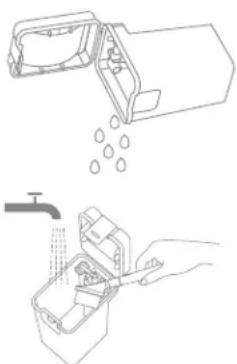
natural_image
Line drawing showing two steps of a hand pouring liquid into a container with a faucet (no text or symbols)natural_image
Hand placing a component into a device in a room with a wall-mounted power outlet (no text or symbols visible)natural_image
Technical line drawing showing a front view of a device with a water tap and a close-up of its internal components (no text or symbols)natural_image
Illustration of a hand inserting a component into a device with a blue tool, next to a small container (no text or symbols)natural_image
Line drawing of a refrigerator interior showing the door, seat, and front panel (no text or symbols)FR
Maintenance de routine
natural_image
Line drawing of a mechanical device with internal components and liquid droplets (no text or symbols)natural_image
Line drawing of a hand using a tool to adjust or install a small mechanical component into a container (no text or symbols)natural_image
Technical illustration of a hand operating a cable with a close-up view of the internal components (no text or symbols)Maintenance de routine
natural_image
Illustration showing three steps of a mechanical assembly: cutting into a circular component, holding a tool, and using a tool to cut a circular component (no text or symbols present)natural_image
Diagram showing a hand inserting a cable into a device inside a circular frame (no text or symbols)Remarque :
natural_image
Diagram showing a device mounted on a circular base with a magnified inset view of its cable (no text or symbols present)natural_image
Two technical line drawings of a device with a blue arrow pointing to a component, and a container filled with granules (no text or symbols)Maintenance de routine
Filtre
Remarque :
natural_image
Simple line drawing of a room with a window, ceiling, and floor (no text or symbols)natural_image
Technical line drawing of a vacuum cleaner and its front-mounted control panel (no text or symbols)Serpillière
natural_image
Three hand-drawn diagrams showing a disc being cut, with one showing the circular target and others holding the disc (no text or symbols)natural_image
Top-down line drawing of a refrigerator interior with no visible text or symbolsBatterie
natural_image
Architectural line drawing of a room layout with vertical slats and furniture (no text or symbols)Stazione di Base
natural_image
Illustration of a vacuum cleaner with icons for teddy bear, keyboard, mouse, and red X symbol (no text or labels)natural_image
Line drawing of a simple dining room layout with a desk, chair, lamp, and door (no text or symbols)natural_image
Illustration showing a robotic vacuum cleaner on a balcony versus a single sofa, both with blue checkmarks (no text or symbols)natural_image
Interior hallway with a person standing at the entrance and a robot on the floor, marked with a red X (no text or symbols)natural_image
Line drawing of a hand holding a circular device next to an electronic device with a power outlet (no text or symbols)Istruzioni utente
Nota:
natural_image
Line drawing of a cleaning appliance with a vacuum cleaner and a circular base, no text or symbols presentIstruzioni utente
natural_image
Line drawings of three different cleaning or disinfection methods: a digital kitchen, a hand washing a container with liquid, and a water tap (no text or symbols present)natural_image
Hand placing a component into a device in a room with a wall-mounted power outlet (no text or symbols visible)natural_image
Technical line drawing of a device with a top panel and a side-view view showing internal components (no text or symbols)natural_image
Illustration of a laboratory setup with a rack-mounted device and a beaker (no text or symbols visible)natural_image
Line drawing of a refrigerator interior with open door and drawer (no text or symbols)natural_image
Line drawing of a mechanical component with liquid droplets (no text or symbols)natural_image
Line drawing of a hand using a tool to adjust or install a small container with a faucet (no text or symbols)natural_image
Technical line drawing showing a hand holding a cable and a CD inside a disc (no text or symbols)natural_image
Illustration showing hands using a tool to adjust or install a mechanical component, with no visible text or symbols.natural_image
Diagram showing a hand inserting a cable into a device inside a circular frame (no text or symbols)Nota:
natural_image
Diagram showing a device mounted on a circular base with a blue arrow indicating the component (no text or symbols present)natural_image
Technical line drawing showing two views of a mechanical component: one with a blue arrow pointing to a component, the other with particles being poured into a container (no text or symbols)Nota:
natural_image
Simple line drawing of a kitchen appliance with a blue bowl on the side (no text or symbols)natural_image
Line drawing of a circular vacuum cleaner with a lid and attached cloth (no text or symbols)