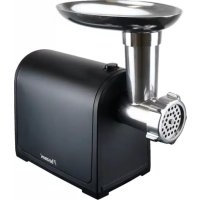
AMM1300 - Food Processor BESTRON - Free user manual and instructions
Find the device manual for free AMM1300 BESTRON in PDF.


| Brand | Bestron |
| Model | AMM1300 |
| Appliance Type | Food processor (meat grinder) |
| Functions | Grinding, kibbeh preparation, sausage making |
| Switch | ON/OFF/Reverse |
| Maximum Operating Time | 3 continuous minutes |
| Grinding Plates Included | 3 plates: fine, medium, and large holes |
| Included Accessories | Filling tray, pusher, auger, knife, kibbeh adapter (inner and outer), sausage funnel |
| Cleaning | Hand wash with soapy water, do not put in dishwasher |
| Motor Unit Care | Clean with a damp cloth, do not immerse |
| Safety | Reverse function for unclogging, stop before changing accessories |
| Warranty | 60 months (5 years) from date of purchase |
| Usage | Household use only |
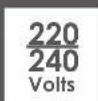
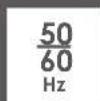
| Power Supply | 220-240 V ~ 50/60 Hz (check rating plate) |
| Compliance | European Directives |
Frequently Asked Questions - AMM1300 BESTRON
User questions about AMM1300 BESTRON
0 question about this device. Answer the ones you know or ask your own.
Ask a new question about this device
Download the instructions for your Food Processor in PDF format for free! Find your manual AMM1300 - BESTRON and take your electronic device back in hand. On this page are published all the documents necessary for the use of your device. AMM1300 by BESTRON.
USER MANUAL AMM1300 BESTRON
natural_image
Exterior view of a stainless steel meat maker (no text or symbols visible on the device body)

AMM1300 INSTRUCTION MANUAL
DE
Bedienungsanleitung
FR
Mode d'emploi
NL
Handleiding
EN
Instruction manual
IT
R. Neyman
Quality control
FUNKTION - Teilen
natural_image
Line drawing of a mechanical tool with arrows indicating force or movement (no text or symbols)natural_image
Illustration of a hand turning a mechanical component with arrows indicating rotation (no text or symbols)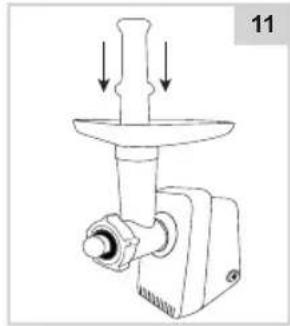
natural_image
Technical line drawing of a mechanical tool or device with no visible text or symbolsnatural_image
Diagram of a mechanical device with internal components and directional arrows, no text or symbols present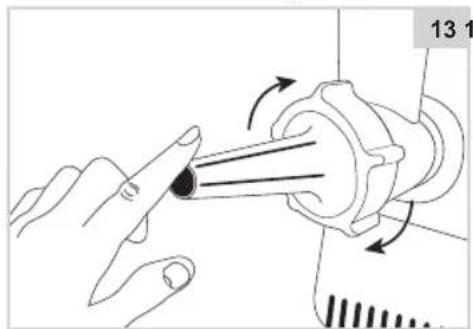
natural_image
Illustration of a hand turning a mechanical component with directional arrows indicating motion (no text or symbols)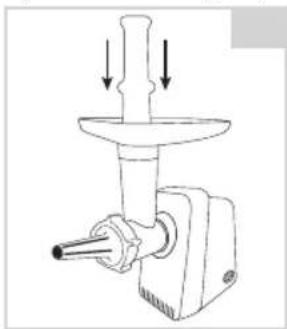
natural_image
Technical line drawing of a mechanical component with arrows indicating motion or force direction (no text or symbols)ACHTUNG:
DÉCLARATION DE CONFORMITÉ CE
R. Neyman
Contrôle qualité
FONCTIONNEMENT - Parties
FONCTIONNEMENT - Hacher de la viande
ATTENTION:
natural_image
Line drawing of a meat maker with arrows indicating force or movement (no text or symbols)FONCTIONNEMENT - Fonction "Reverse"
natural_image
Illustration of a hand turning a mechanical component with arrows indicating rotation (no text or symbols)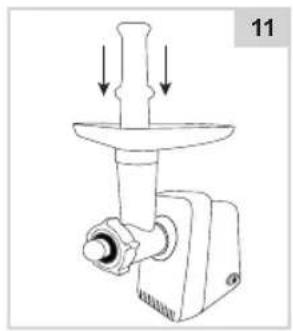
natural_image
Technical line drawing of a mechanical device with a lever and base, showing no text or symbols.FONCTIONNEMENT - Préparer des saucisses
natural_image
Technical diagram of a mechanical component with labeled parts (no text or symbols present)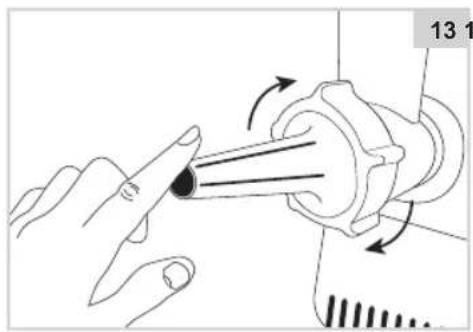
natural_image
Illustration of a hand turning a mechanical component with motion arrows indicating rotation (no text or symbols)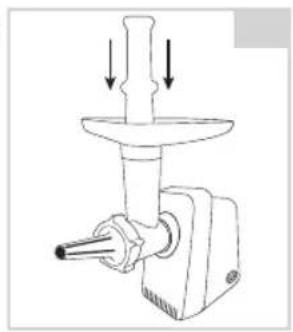
natural_image
Technical line drawing of a mechanical tool or device with no visible text or symbolsATTENTION:
WAT U MOET WETEN OVER DIT APPARAAT
R. Neyman Quality control
WERKING - Onderdelen
natural_image
Line drawing of a mechanical device with a rotating shaft and mounting base (no text or symbols)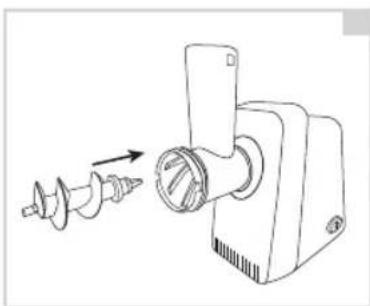
natural_image
Diagram of a mechanical device with a rotating shaft and housing, showing motion direction (no text or symbols)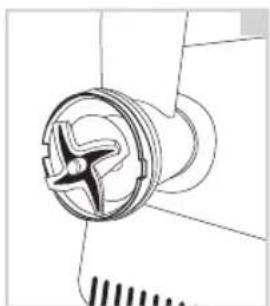
natural_image
Technical line drawing of a mechanical component with a central hub and mounting bracket (no text or symbols)natural_image
Line drawing of a mechanical tool with arrows indicating force or movement (no text or symbols)WERKING - Kibbeh maken
natural_image
Diagram of a hand turning a mechanical component with directional arrows indicating rotation (no text or symbols)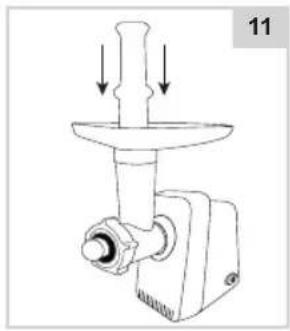
natural_image
Technical line drawing of a mechanical device with a central knob and mounting base (no text or symbols)WERKING - Worst maken
natural_image
Technical diagram of a conical device with internal components and directional arrows (no text or symbols)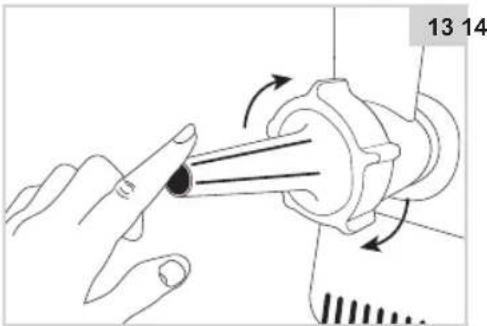
natural_image
Technical line drawing of a mechanical device with arrows indicating motion or force (no text or symbols)LET OP:
Congratulations with the purchase of this Bestron product. These instructions tell you how the product works and how to use it. Read the instructions carefully before you start using the appliance. Only use the appliance in the manner described in the instructions. Keep these instructions in a safe place for future reference.
Defects:
If the appliance is defective, do not try to repair it yourself. Always have a qualified mechanic carry out any repairs.
Children:
- This device may not be used by children and persons with reduced physical, sensory or mental capabilities or lack of experience and know-how.
• Children are not allowed to clean or maintain the appliance. - Keep the appliance and the cable out of reach of children.
- Keep an eye on children to ensure that they do not play with the appliance.
WHAT YOU SHOULD KNOW ABOUT ELECTRICAL APPLIANCES
- Check that the mains voltage corresponds with that shown on the rating plate of an electrical appliance before you use it.
- Check that the socket to which you connect the electrical appliance is earthed.
• Always install electrical appliances on a stable and level surface where it cannot fall over. - Certain parts of an electrical appliance may become warm or sometimes hot. Do not touch them as you may burn yourself.
• Make sure your hands are dry when you touch an electrical appliance, a cord or a plug. - Electrical appliances must be able to lose their heat to avoid fire hazards. Therefore, make sure that the appliance has sufficient clearance around it and that it does not come into contact with flammable materials. Electrical appliances must never be covered.
- Make sure that electrical appliances, cords or plugs do not come into contact with water.
- Never immerse electrical appliances, cords or plugs in water or any other liquid.
- Do not touch electrical appliances if they have fallen in the water. Immediately pull the plug out of the socket. Stop using the appliance.
• Make sure that electrical appliances, cords and plugs do not come into contact with heat sources, such as a hot hob or open fire.
- Never let cords hang over the edge of the sink, a worktop or a table.
• Always remove plug from the socket when you are not using the electrical appliance.
- Remove the plug from the socket by pulling the plug itself and not the cord.
- Regularly check if the cord of the electrical appliance is not damaged. Do not use the electrical appliance if the cord shows signs of damage. If the cord is damaged, it should be replaced by the manufacturer, a technical service provider or a person with an equivalent qualification, to avoid any danger.
- The appliance may not be switched on with the aid of an external time switch, or by a separate system with remote control.
WHAT YOU SHOULD KNOW ABOUT THIS APPLIANCE
- Be careful when using the appliance outdoors.
- Never use the appliance in damp or wet locations.
- Thoroughly clean the appliance after use (see Cleaning and Maintenance).
- Keep your fingers clear of all moving parts whilst the appliance is in operation.
- Do not switch on the appliance unless the accessories are fitted properly.
• Always switch off the appliance before changing the accessories. - Never use the appliance for longer than 3 minutes. Switch it off and wait a few minutes to allow it to cool before continuing use.
• Always lift the device with both hands. Lift it by holding on to the housing, never hold on to the head or tray. - Do not grind hard food like nuts, bones, ginger roots, etc.
- To avoid jamming, do not use excessive force when pushing food through the device.
ENVIRONMENT
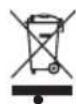
- Dispose of packaging material such as plastic and cardboard boxes in the designated containers.
Do not dispose of this product as normal domestic waste at the end of its life, but hand it in at a collection point for the reuse of electric and electronic equipment. Look for the symbol on the product, the user instructions or the packaging showing the type of waste.
- The materials can be used as indicated. By helping us reuse and process the materials or otherwise recycle the old equipment, you will be making an important contribution towards the protection of the environment.
- Your municipality can tell you where to find the designated waste collection point in your neighbourhood.
CE DECLARATION OF CONFORMITY
This product meets the requirements of European guidelines.
R. Neyman Quality control
FUNCTION - Parts
The appliance is intended only for domestic use, not for professional use.
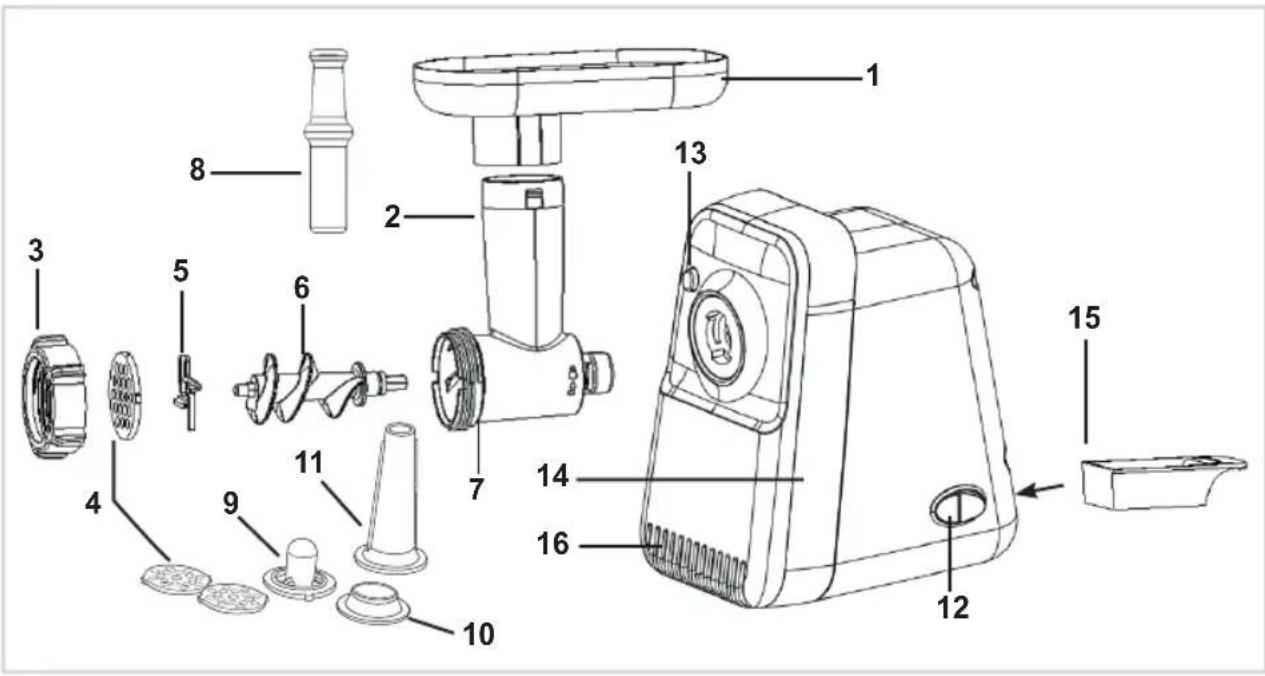
- Feeding tray
- Filling shaft
- Locking ring
- Grinding discs (coarse, medium and fine)
- Spinning blade
- Grinding cylinder
- Head (includes grinding cylinder and spinning blade)
-
Presser
-
Kibbeh attachment (inner part)
-
Kibbeh attachment (outer part)
- Sausage attachment
- "ON/OFF/Reverse" switch
- Lock / unlock button (filling shaft)
- Motor housing
- Storage area
- Ventilation opening
FUNCTION - Using for the first time
- Remove the packaging.
- Clean the device to remove any manufacturing residues (see "Cleaning and maintenance").
FUNCTION - Assembling
WARNING:
• Make sure the device is placed on a stable, flat surface.
• The air vents at the side and bottom of the device should not be blocked.
- During assembling the device should not be plugged into a socket.
-
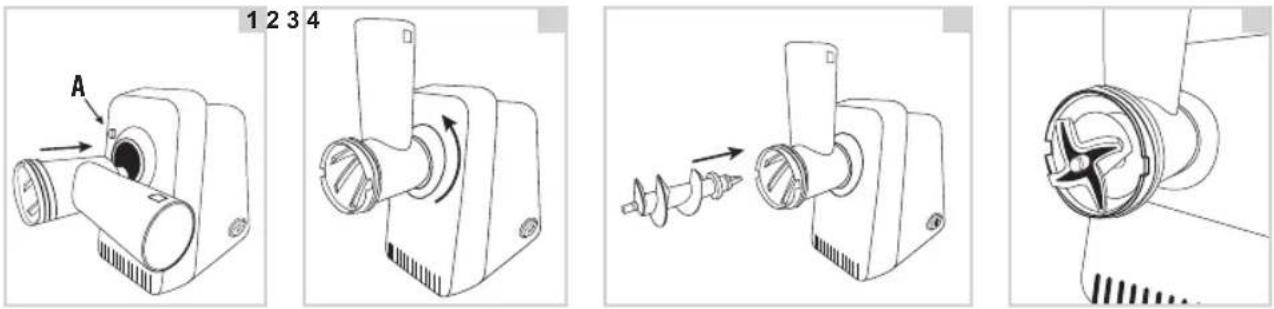
Place the head horizontally to the machine (see figure 1). You do this by holding in the lock / unlock button (figure 1A) and placing the head in the recess of the machine. Turn the head counterclockwise so that the filling shaft is pointing upwards. (see figure 2).
-
Then place the grinding cylinder in the head of the machine. Turn the grinding cylinder clockwise until it sinks into the appliance and can't turn any further. (See figure 3)
-
Place the spinning blade on the grinding cylinder. Note: the flat side must face out (see figure 4)
-
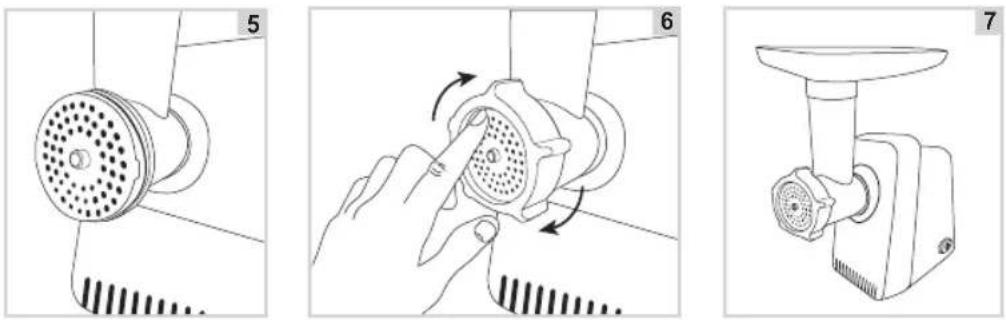
Now you can place the grinding disc (coarse, medium or fine) against the rotary blade. Make sure the grinding wheel falls into the recess of the head. (See figure 5)
-
Hold the grinding disc in place with your hand. Then turn the locking ring on the head. You do this by turning the locking ring clockwise until you can't turn any further. (Note: It is important that the grinding disc remains in the recess when turning on the locking ring.) (See figure 6)
-
Place the feeding tray on top of the filling shaft (See figure 7)
FUNCTION - Grinding meat
WARNING:
- Only use the presser (part number 8) supplied with the device to push food into the device
- Cut all the food into pieces that'll easily fit into the opening. Sinewless, boneless and fatless meat is recommended.
- Never use the appliance for longer than 3 minutes. Switch it off and wait a few minutes to allow it to cool before continuing use.
-
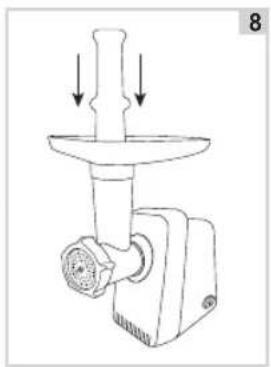
Put the plug into the socket. Push the "ON" position. Put the "ON/OFF/Reverse" switch (part number 12) in the "ON" position (this is the position where the switch remains pressed). The device is now turned on.
-
Use the presser to push food from the feeding tray (part number 1) into the opening (see figure 8).
-
Shut the device down after use and pull the plug from the socket.
natural_image
Line drawing of a mechanical tool with arrows indicating force or movement (no text or symbols)FUNCTION - "Reverse" function
When the device jams, set the "ON/OFF/Reverse switch in the "Reverse" position (this is the position where you need to keep pressing down the switch). The grinding cylinder will run in the opposite direction, allowing you to dislodge the blocking element.
WARNING:
- If you cannot manage to remove the blocking element by utilizing the "Reverse" function you need to shut down the device, disassemble the head and clean it.
FUNCTION - Making Kibbeh
For the stuffing of kibbeh, an oriental meat dish, sheep meat is recommended. For every 100 grams of meat add a tablespoon of olive oil, a table spoon of finely cut onion and a tablespoon of flour. Season the meat according to taste.
- Grind the meat once or twice. See "FUNCTION - Grinding meat"
- Fry the onion until it's brown and add the rest of the ingredients.
For the casing of kibbeh you should use 450 grams of lean meat, 150 to 200 grams of flour and one finely cut or ground piece of nutmeg. Season according to taste.
- Grind the meat three times and add all the ingredients together in a bowl.
- Grind the mixture three additional times.
Remove the spinning blades and the grinding disc from the head.
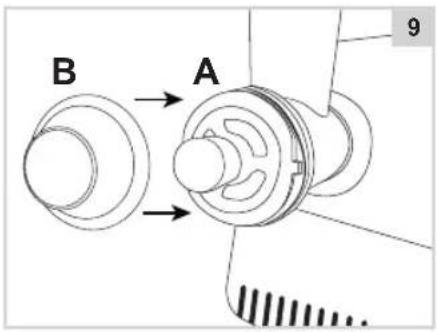
- Place the inner part of the Kibbeh attachment (A) and subsequently the outer part (B) onto the grinding cylinder with the protruding parts fitting into the appropriate slots in the head (see figure 9).
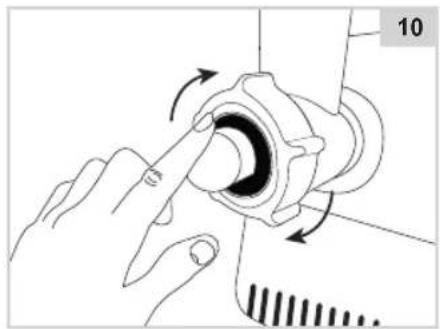
- Place the locking ring (see figure 10). Meanwhile, hold the attachment in place with your hand. Do not turn the ring any further than necessary clockwise.
- Push the mixture through the opening in the feeding tray (see figure 11). The device will create the kibbeh-casing.
- Fill the casing with the stuffing you made earlier.
natural_image
Illustration of a hand turning a mechanical component with directional arrows indicating rotation (no text or symbols)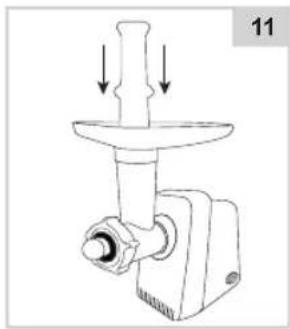
natural_image
Technical line drawing of a mechanical component with arrows indicating force or movement (no text or symbols)FUNCTION - Preparing sausages
Whenever you wish to make sausage, follow the steps as described in the chapter 'Assembling.' Once you have done this, follow the next steps:
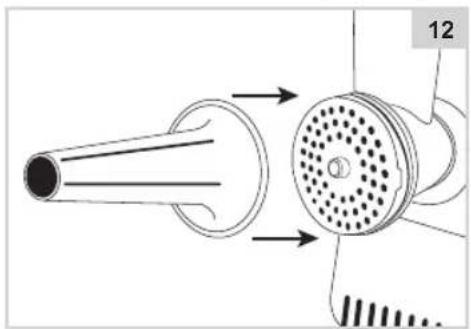
- Place the sausage attachment against the grinding disc at the head (see figure 12).
- Then place the locking ring. Turn it clockwise. Meanwhile, hold the attachment in place with your hand (see figure 13). Do not turn the locking ring any further than necessary.
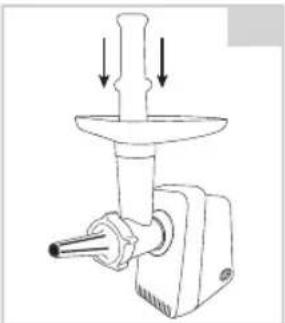
- Push the mixture through the opening in the filling tray with the pusher (see figure 14).
natural_image
Technical diagram of a mechanical component with labeled parts (no text or symbols present)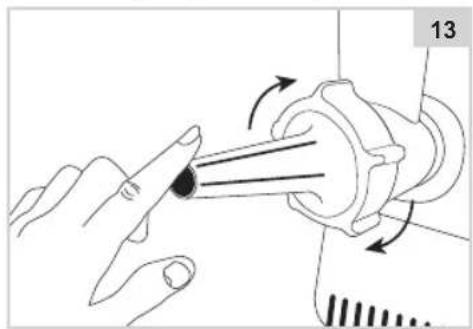
natural_image
Illustration of a hand turning a mechanical component with motion arrows indicating rotation (no text or symbols)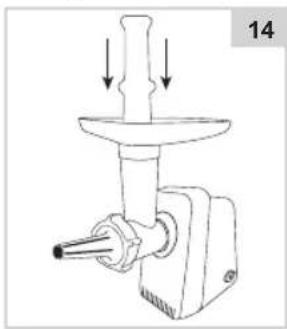
natural_image
Technical line drawing of a mechanical tool or device with a conical component and directional arrows indicating motion (no text or symbols)WARNING:
- If you wish to use a natural casing for your homemade sausage, attach it to the end of the sausage attachment. Clamp the casing with (with the closing strip of a sandwich bag, for instance) and tie it shut at the desired length.
CLEANING AND MAINTENANCE
- Take the plug from the wall socket.
- Disassemble the device by following the steps described in the chapter "Assembling" in the opposite direction.
WARNING:
- Clean the device after each use.
-
If you are experiencing difficulty in removing the grinding disc, place the flat edge of a spoon at the edge between the grinding disc and the head. This way, you can tilt the grinding disc out of the head.
-
Clean the parts in warm water with soap. The device is not dishwasher-proof.
-
Clean the housing with a clean cloth moistened with a disinfectant cleaner, and dry thoroughly.
WARNING:
- Never use corrosive or scouring cleaning agents or sharp objects (such as knives or hard brushes) to clean the device.
- Do not immerse the motor unit in water, or in other liquids.
• The device is not dishwasher-proof.
WARRANTY CONDITIONS
Bestron offers a 60-month warranty on this equipment against defects resulting from manufacturing and/or material errors, subject to the following conditions.
- No labour or material costs will be charged during this warranty period.
- Any repairs carried out under the warranty will not extend the warranty period.
- Faulty parts, or in the event of exchange, the faulty equipment itself, will automatically become the property of Bestron.
-
The warranty is valid for the first buyer only and is non-transferable.
-
The warranty is not valid for damage caused by:
-
Accidents
- Improper use
- Wear and tear
- Neglect
- Faulty installation
- Connection to a different mains voltage than indicated on the type plate
- Unauthorised changes
• Repairs carried out by unqualified third parties - Use in violation with the applicable statutory, technical or safety standards
-
Careless transport without suitable packaging or other protection
-
Warranty cannot be claimed:
• For damage during transport
- If the serial number of the appliance is removed or changed
- Items excluded from warranty are:
- Cords
- Lamps
- Glass parts
-
The warranty does not entitle the purchaser to compensation for any damage other than replacement or repair of the faulty parts. Bestron cannot in any event be held liable for any indirect or consequential losses caused by or in relation to the equipment it has provided.
-
Claims under a warranty may only be submitted to your (online) retailer or directly to the Bestron Service Department. Never send items without being asked to. We may refuse the parcel and you will be liable for the costs. Contact us first and we tell you how the appliance should be packaged and sent. Each claim under a warranty must be accompanied by the relevant receipt.
SERVICE
If an unexpected problem occurs, please contact the BESTRON service department:
www.bestron.com/service
COMPLIMENTI!
R. Neyman
Controllo qualità
natural_image
Technical line drawing of a mechanical component with circular head and textured base (no text or symbols)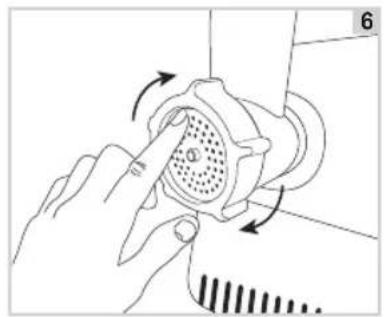
natural_image
Illustration of a hand using a tool to press or adjust a mechanical component, showing rotational motion arrows (no text or symbols)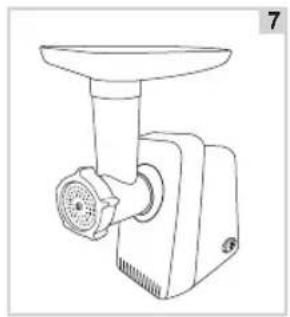
natural_image
Line drawing of a kitchen meat maker (no text or symbols)natural_image
Line drawing of a meat processing device with arrows indicating downward force (no text or symbols)natural_image
Illustration of a hand turning a mechanical component with directional arrows (no text or symbols)
natural_image
Technical line drawing of a mechanical device with a central component and two downward arrows indicating force or movement (no text or symbols present)natural_image
Technical diagram of a mechanical component with labeled parts (no text or symbols present)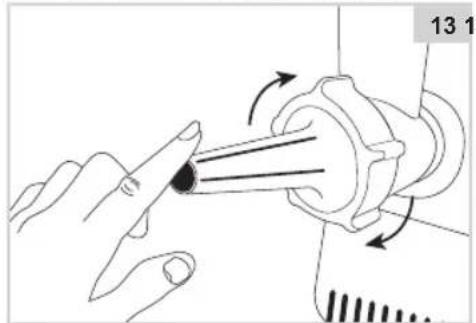
natural_image
Illustration of a hand turning a mechanical component with motion arrows indicating rotation (no text or symbols)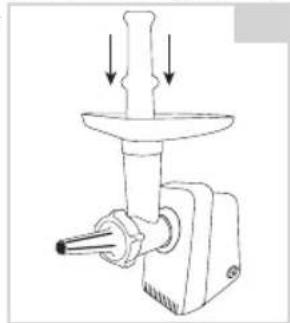
natural_image
Technical line drawing of a mechanical tool or device with no visible text or symbolsATTENZIONE:
R. Neyman
Control de calidad
natural_image
Line drawing of a mechanical tool with arrows indicating motion or force (no text or symbols)natural_image
Illustration of a hand turning a mechanical component with arrows indicating rotation (no text or symbols)
natural_image
Technical line drawing of a mechanical tool or device with no visible text or symbolsnatural_image
Technical diagram of a mechanical component with labeled parts (no text or symbols present)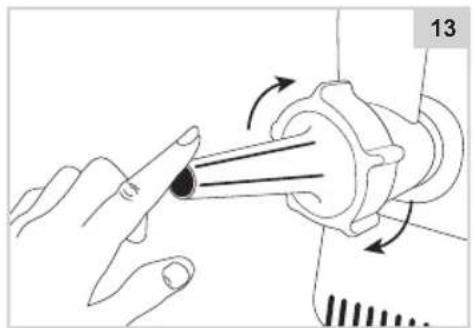
natural_image
Illustration of a hand turning a mechanical component with motion arrows indicating rotation (no text or symbols)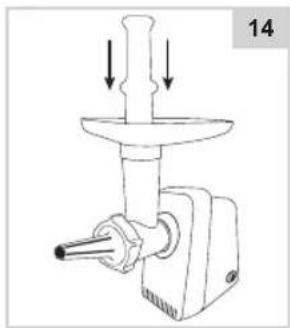
natural_image
Technical line drawing of a mechanical device with a handle and base, showing motion arrows (no text or symbols)ATENCIÓN:
R. Neyman Kvalitetskontroll
ANVÄNDNING - Delar
natural_image
Technical line drawing of a mechanical device with labeled component A (no text or symbols beyond label)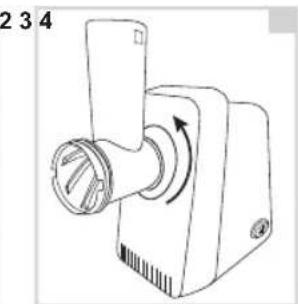
natural_image
Line drawing of a mechanical device with a knob and arrow indicating rotation (no text or symbols)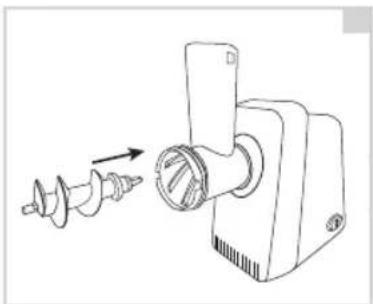
natural_image
Technical line drawing of a mechanical component with an arrow indicating direction (no text or symbols)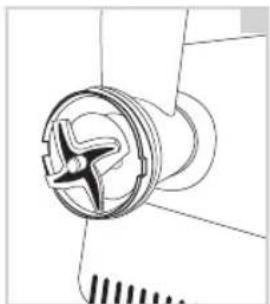
natural_image
Technical line drawing of a mechanical component with no visible text or symbolsANVÄNDNING- Mala kött
OBSERVERA:
natural_image
Line drawing of a mechanical tool with arrows indicating force or movement (no text or symbols)ANVÄNDNING - "Bakåt"-funktion
natural_image
Illustration of a hand turning a mechanical component with arrows indicating motion (no text or symbols)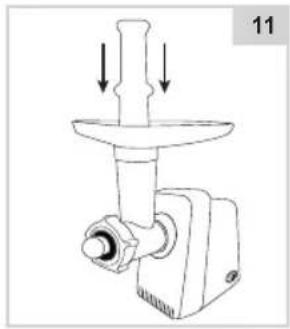
natural_image
Technical line drawing of a mechanical component with arrows indicating force or movement (no text or symbols)ANVÄNDNING - Göra korv
natural_image
Technical diagram of a mechanical component with labeled parts (no text or symbols present)
natural_image
Illustration of a hand turning a mechanical component with motion arrows indicating rotation (no text or symbols)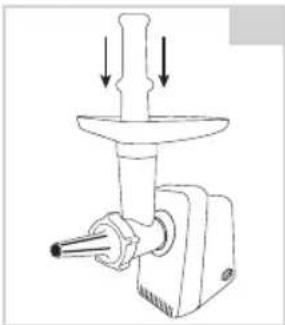
natural_image
Technical line drawing of a mechanical tool or device with no visible text or symbolsNEED HELP? CHAT WITH US! WHATSAPP CUSTOMER SERVICE

BESTRON.COM/WHATSAPP