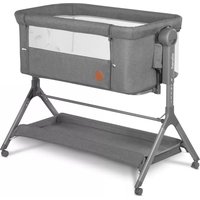
Leonie Plus - Bed Lionelo - Free user manual and instructions
Find the device manual for free Leonie Plus Lionelo in PDF.


| Product type | Baby bed with crib and co-sleeping functions |
| Brand | Lionelo |
| Model | Leonie Plus |
| Main functions | Baby bed, cradle (manual rocking), co-sleeping (co-parent bed) |
| Height adjustment | 6 levels, possibility of different heights (max 2 levels of inclination) |
| Wheels | 4 wheels with individual locking |
| Included accessories | Mattress, accessory basket, fixing straps for co-sleeping, Allen key |
| Mattress | Included, maximum thickness indicated by a red line inside the bed |
| Cover material | Textile machine washable at 30°C |
| Cleaning | Cover washable at 30°C; metal and plastic parts with damp cloth and mild detergent |
| Safety standards | EN 1130:2019+AC:2020 and EN 16890:2017+A1:2021 |
| Warnings | Do not use if child can sit, kneel or pull themselves up; no additional objects in the bed; adult bed max 72.5 cm for co-sleeping |
| Assembly | Assembly with click mechanism, use provided Allen key |
| Power supply | None (non-electric product) |
| Manufacturer | BrandLine Group Sp. z o.o. |
| Warranty | Detailed conditions available on the manufacturer's website |
Frequently Asked Questions - Leonie Plus Lionelo
User questions about Leonie Plus Lionelo
0 question about this device. Answer the ones you know or ask your own.
Ask a new question about this device
Download the instructions for your Bed in PDF format for free! Find your manual Leonie Plus - Lionelo and take your electronic device back in hand. On this page are published all the documents necessary for the use of your device. Leonie Plus by Lionelo.
USER MANUAL Leonie Plus Lionelo
natural_image
Line drawing of a portable bathtub with adjustable legs and side supports (no text or symbols)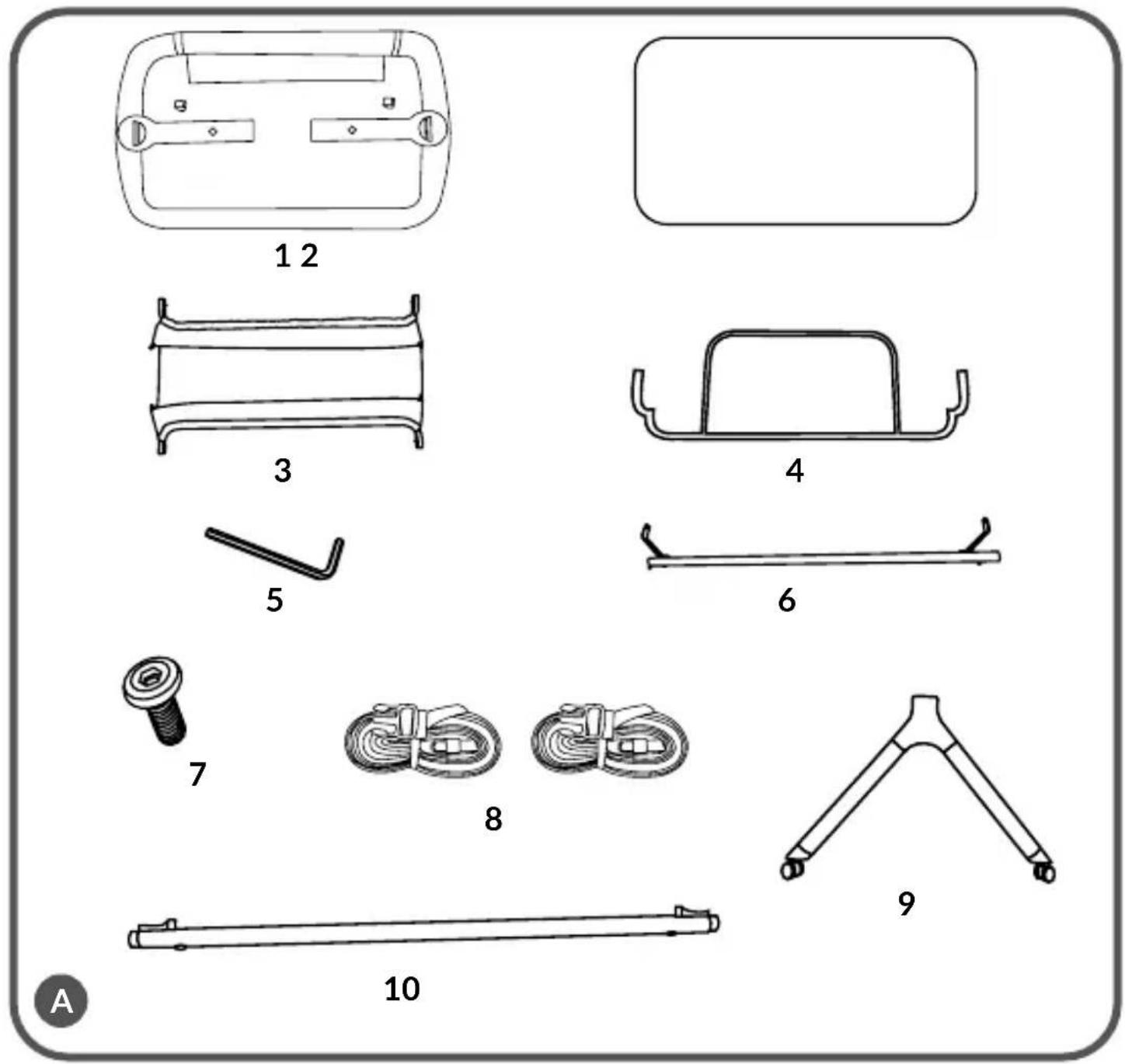
natural_image
Diagram of a device with two vertical posts and a circular component, showing directional arrows (no text or symbols)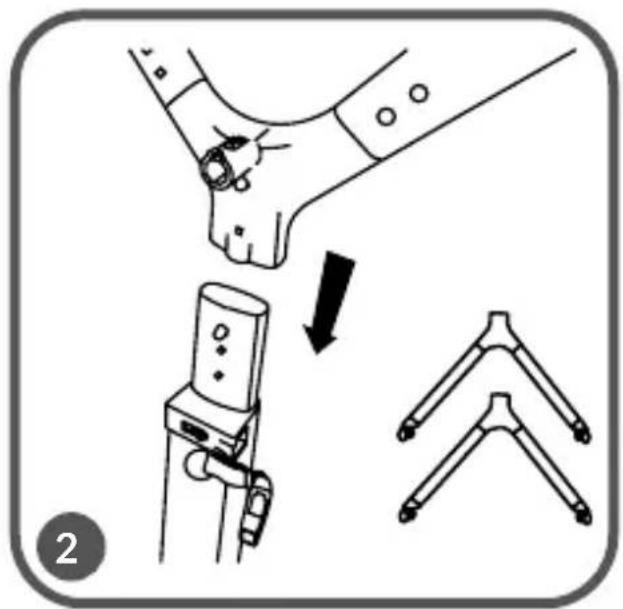
natural_image
Mechanical assembly diagram showing a lever mechanism with an arrow indicating motion (no text or symbols present)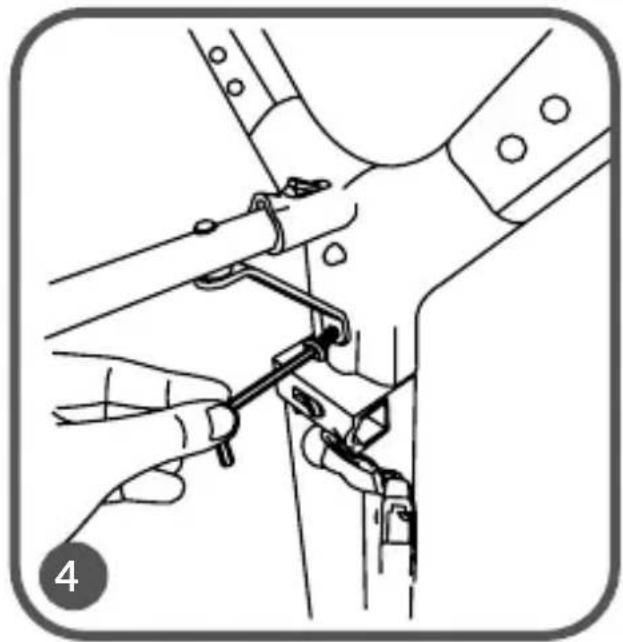
natural_image
Mechanical assembly diagram showing hands connecting a linkage mechanism (no text or symbols)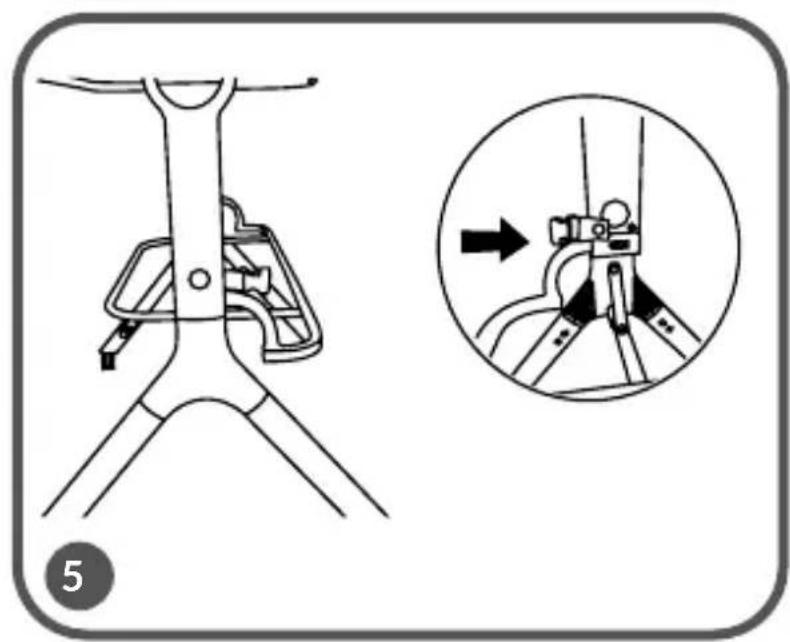
natural_image
Technical diagram of a mechanical device with an inset showing a close-up of the internal components (no text or symbols present)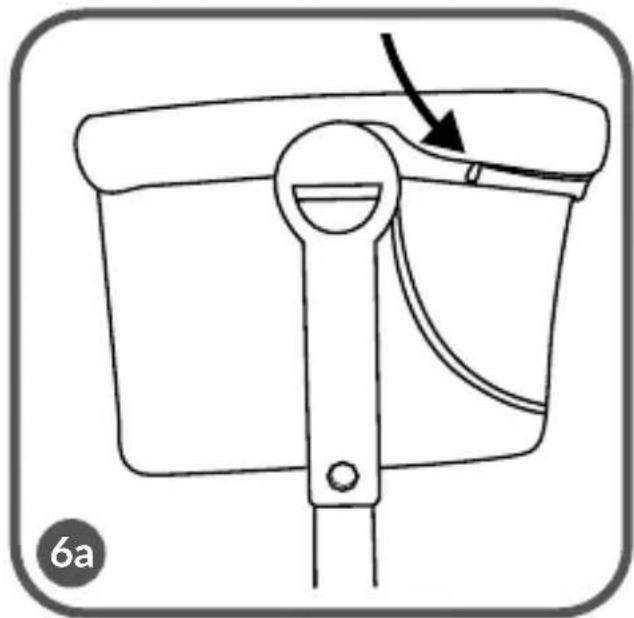
natural_image
Line drawing of a bicycle bucket with a handle and arrow indicating direction (no text or symbols)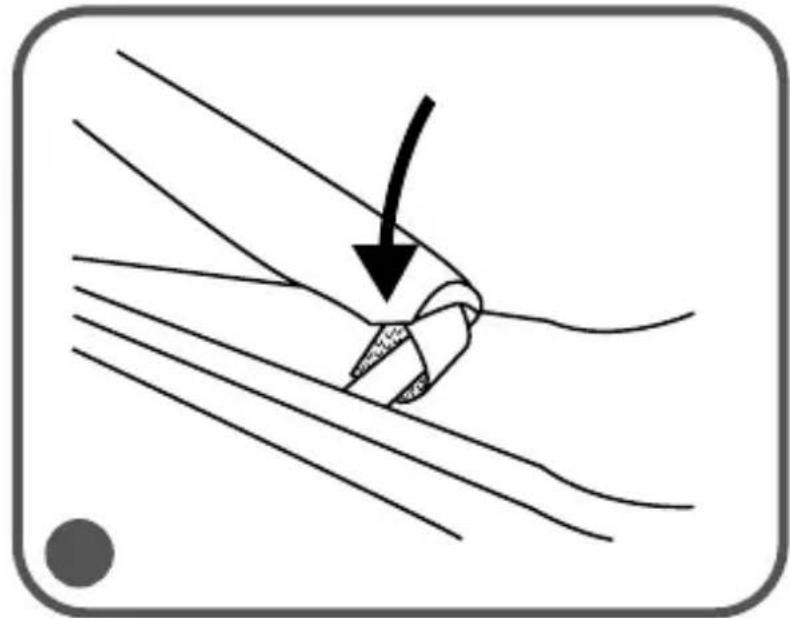
natural_image
Diagram showing a hand holding a small object with a curved arrow indicating direction (no text or symbols)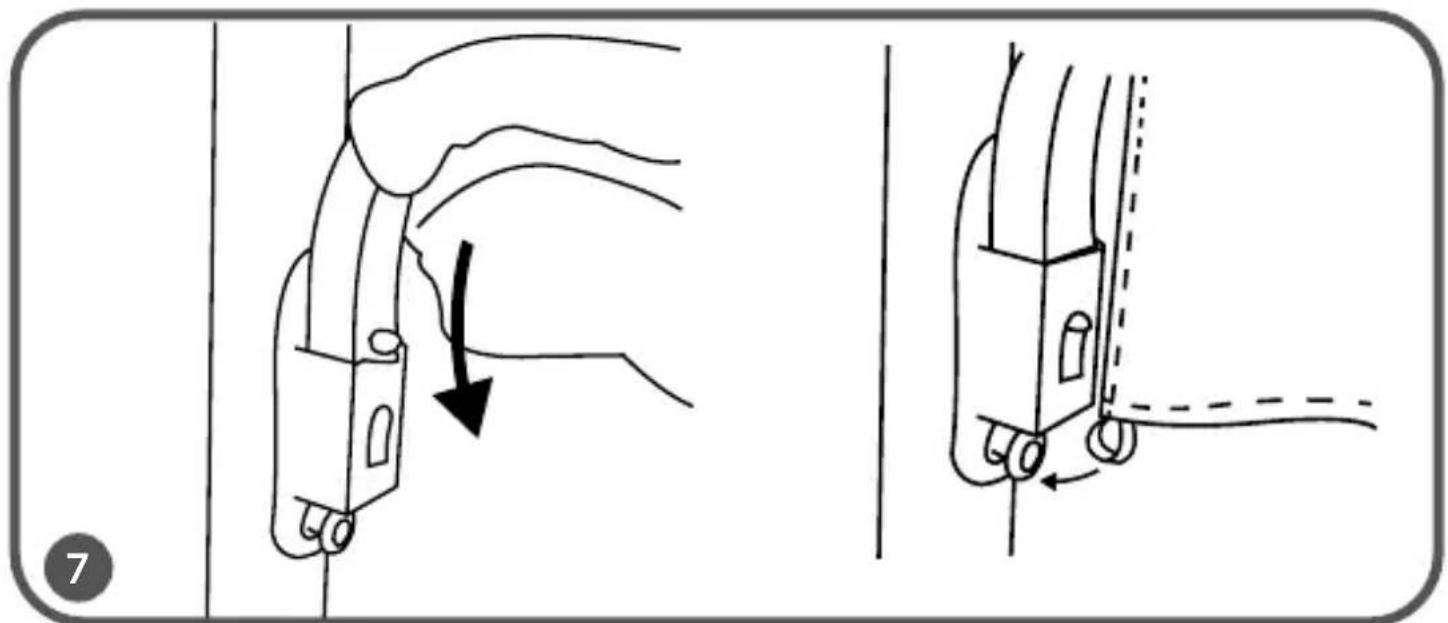
natural_image
Illustration of two hands performing a manual press or grip technique on a mechanical joint (no text or symbols present)10
natural_image
Diagram of a device with a slide and lever mechanism, showing no text or symbols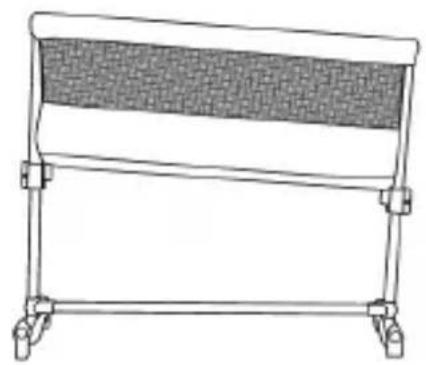
natural_image
Line drawing of a folding chair with a mesh backrest and support legs (no text or symbols)11
12
natural_image
Line drawing of a mechanical component with a curved handle and arrow indicating direction (no text or symbols)
natural_image
Line drawing of a hand holding a tool with an arrow indicating direction (no text or symbols)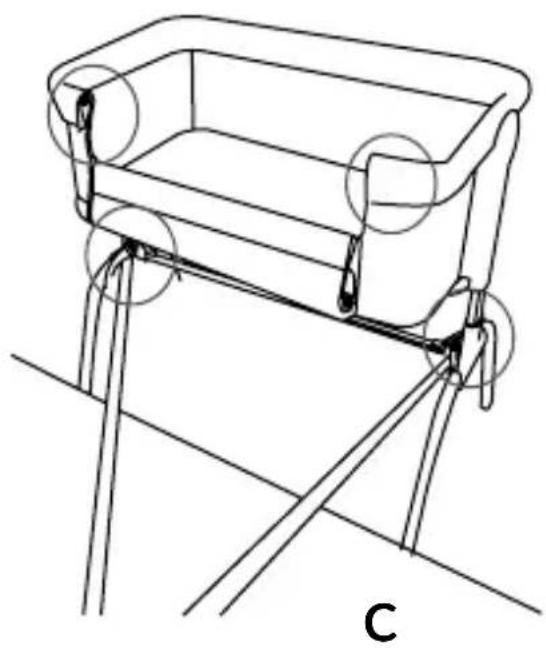
natural_image
Line drawing of a small boat or container with wheels and legs, labeled 'C' at the bottom (no text or symbols on the diagram itself)13
natural_image
3D diagram of a rectangular object with dashed internal lines, placed on top, next to a chair (no text or symbols)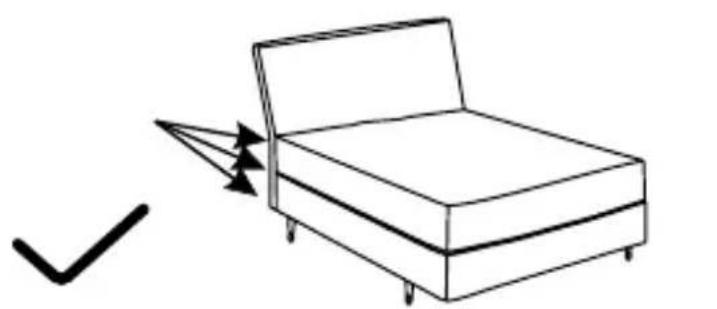
natural_image
Simple line drawing of a chair with legs and a side panel, no text or symbols present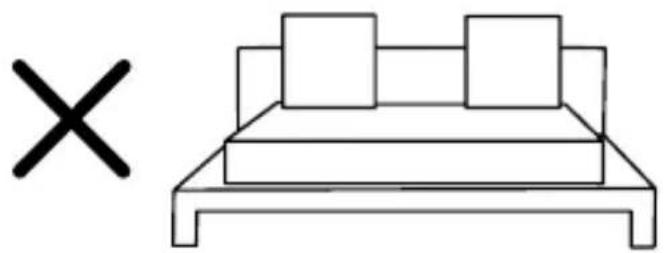
natural_image
Diagram of a mechanical component with an arrow indicating upward motion (no text or symbols)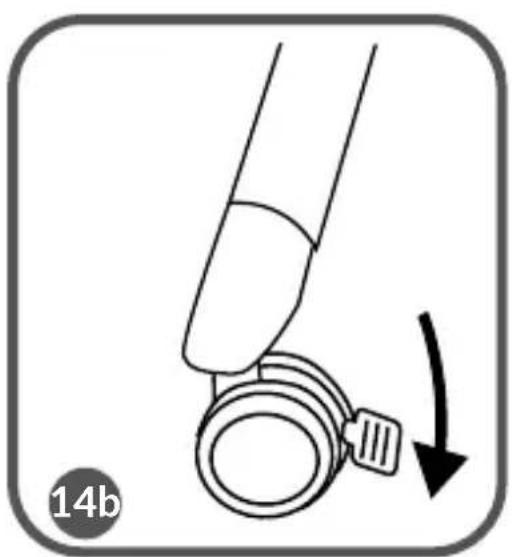
natural_image
Diagram of a mechanical component with a curved arrow indicating motion, no text or symbols present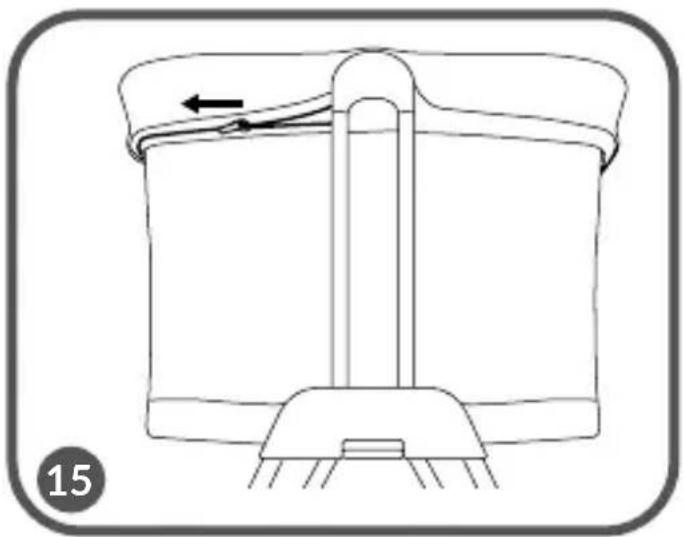
natural_image
Line drawing of a mechanical component with a lever and directional arrow (no text or symbols)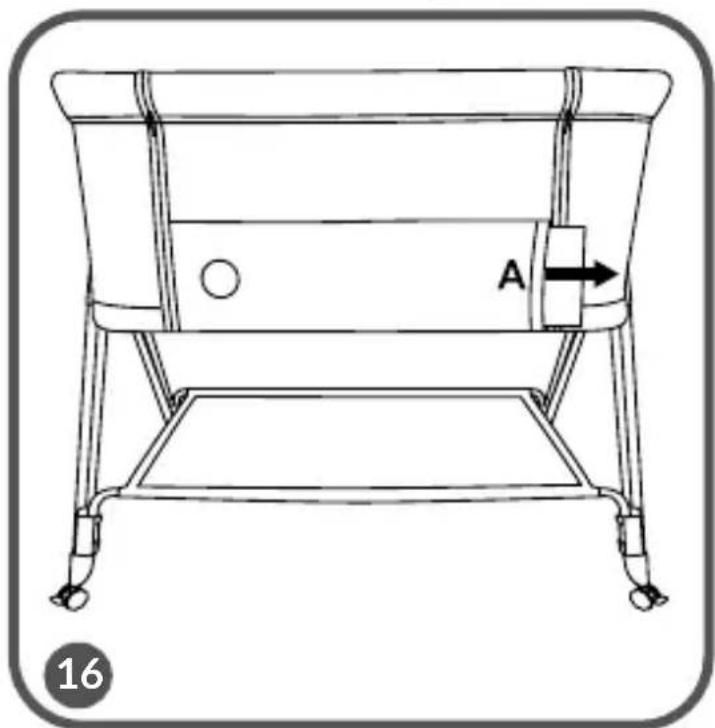
natural_image
Line drawing of a simple chair with legs and seat, labeled A, showing structural details (no text or symbols beyond label)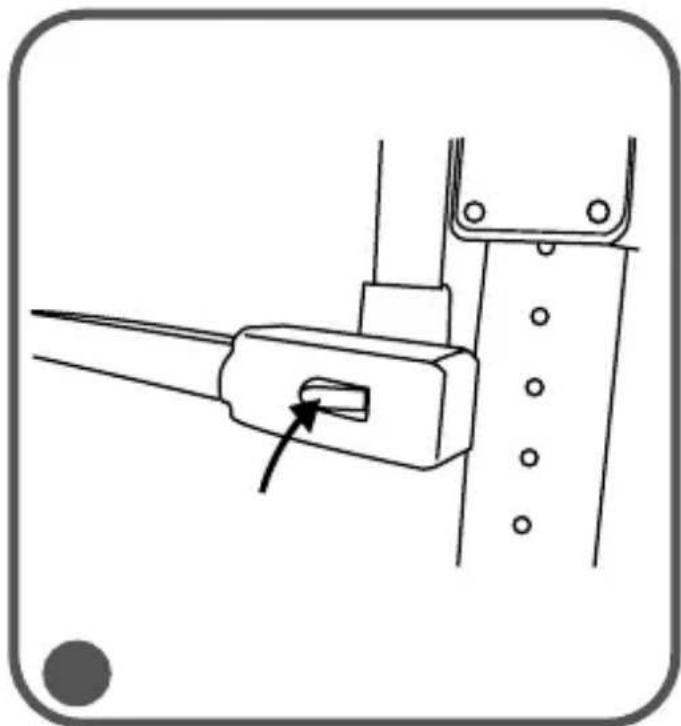
natural_image
Technical diagram of a mechanical clamp or bracket assembly with a labeled component (no text or symbols present)
natural_image
Diagram of a mechanical clamp or bracket assembly with a dashed line indicating a reference, and an arrow pointing to a specific part (no text or symbols present)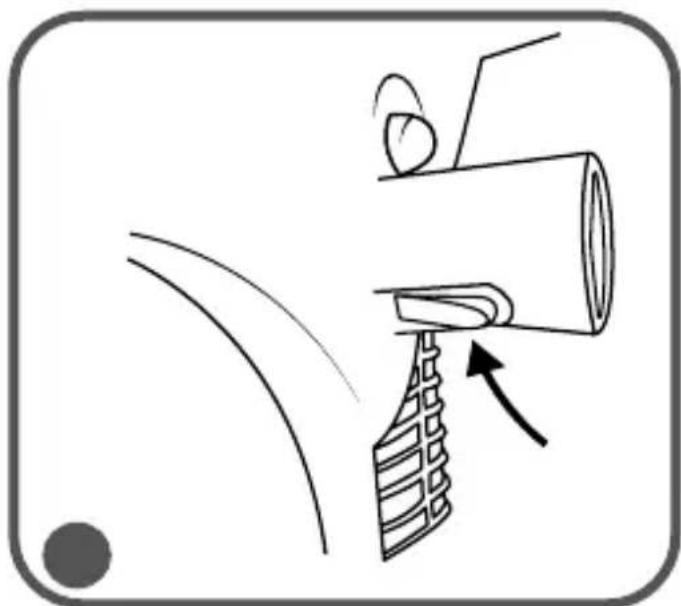
natural_image
Diagram of a car exhaust pipe with a valve and exhaust nozzle, showing airflow direction (no text or symbols)Dear Customer!
Should you have any remarks or questions concerning the product, please do not hesitate to contact us: help@lionelo.com
Producer:
BrandLine Group Sp. z o. o.
NOTE! IMPORTANT! READ CAREFULLY AND KEEP FOR FUTURE REFERENCE
WARNING
- Do not use this product without reading the instructions for use first.
- Stop using the product as soon as the child can sit or kneel or pull itself up.
- Placing additional items in the cot may cause suffocation.
- Do not place the product close to another product, which could present a danger of suffocation or strangulation, e.g. strings, blind/curtain cords, etc.
- Do not use more than one mattress in the product.
- The product should be placed on a level floor.
- Young children should not be allowed to play unsupervised near the cot.
-
The cot should be locked when the baby is left unattended.
-
All installation components should always be properly tightened. Be careful that no screws are loose, as the child may catch body parts or clothing (e.g., cords, necklaces, toy ribbons, etc.) which may pose a strangulation risk.
- The maximum thickness of the mattress is marked with a red line on the inside of the cot. Do not use a thicker mattress than allowed.
- Be aware of the risks posed by cigarettes, open flames or other sources of high heat, such as electric stoves, gas stoves, etc., elements near the cot.
- DO NOT use the cot if any part is missing or broken or damaged. Contact Lionelo for spare parts and instructions if needed. DO NOT replace parts in the cot yourself.
MATTRESS WARNINGS:
- Do not use the mattress if its component is broken, torn or lost, use only spare parts approved by the manufacturer.
- Do not use more than one mattress in the cot.
- Be aware of the risks of open fire and other sources of strong heat, such as electric bar fires, gas fires, etc. in the near vicinity of the cot.
- DO NOT use the bedside sleeper if any parts are missing, damaged or broken. Contact Lionelo for replacement parts and instructional literature if needed. DO NOT substitute parts.
- The height from the floor of the bed of an adult to which the cot is suitable is: max. 72.5 cm.
- The bedside sleeper is for standard adult beds only. Do not use the product with waterbeds or those with rounded shapes.
- Do not use other mounting systems than those described in the instruction manual.
- Never use the bedside sleeper in a tilted position.
- To avoid the risk of suffocation, always attach the bedside sleeper properly to the parents' bed using the attachment
systems described in the instruction manual.
- There must not be any free space between the bottom of the bedside sleeper and the mattress of the adult bed.
- Before each use, check the tension of the cot's attachment system, to do this try pulling the cot away from the parent's bed.
- If there is free space between the bedside sleeper and the adult's bed, DO NOT use the product.
- The gap between the cot and the adult's bed should not be filled with pillows, blankets and other objects.
- DANGER! Always lift the drop side completely when the cot is not attached to the adult's bed.
- WARNING: To avoid the dangers of the baby's neck catching on the top of the lowered side of the cot at the parent's bed, make sure the top rail is not higher than the adult mattress.
- WARNING: To avoid the risk of strangulation of the baby, the attachment system to the parent's bed should always be retracted and kept away from the cot.
DESCRIPTION OF PARTS (FIG. A)
- Cot frame
- Mattress
- Accessory basket
- Support frame
-
Allen key
-
Bracket
- Screw x2
- Fastening straps
- Legs x2
- Handrail connecting tube
MOUNTING
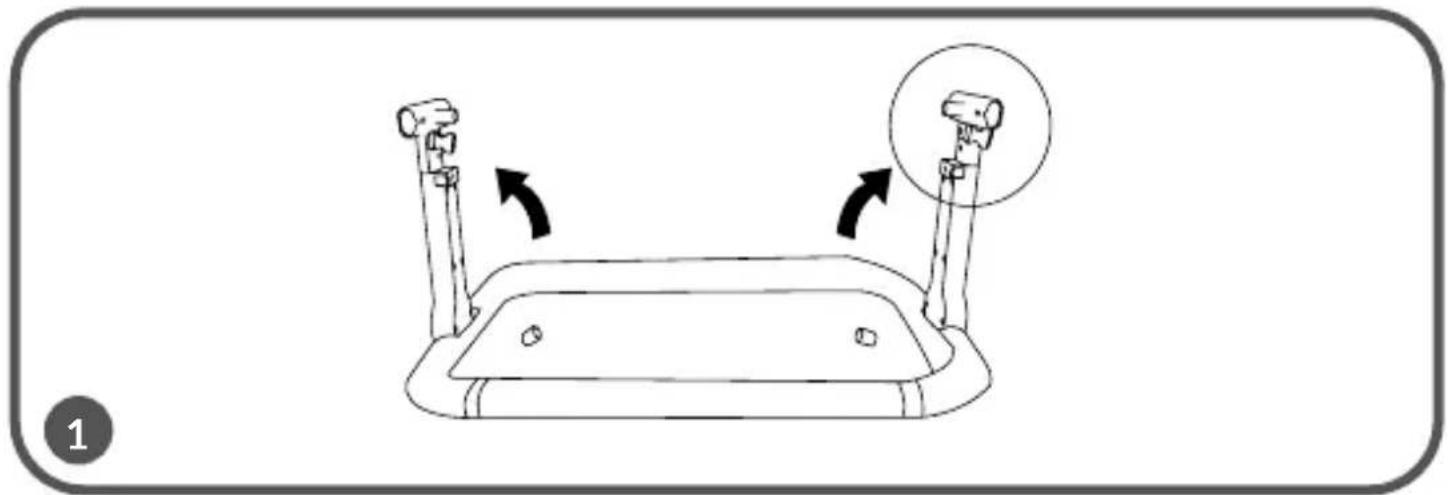
- Unfold the frame of the cot (fig. 1). On both sides of it, mount the legs of the cot, inserting them into the appropriate holes (fig. 2). Correct installation will signal a click.
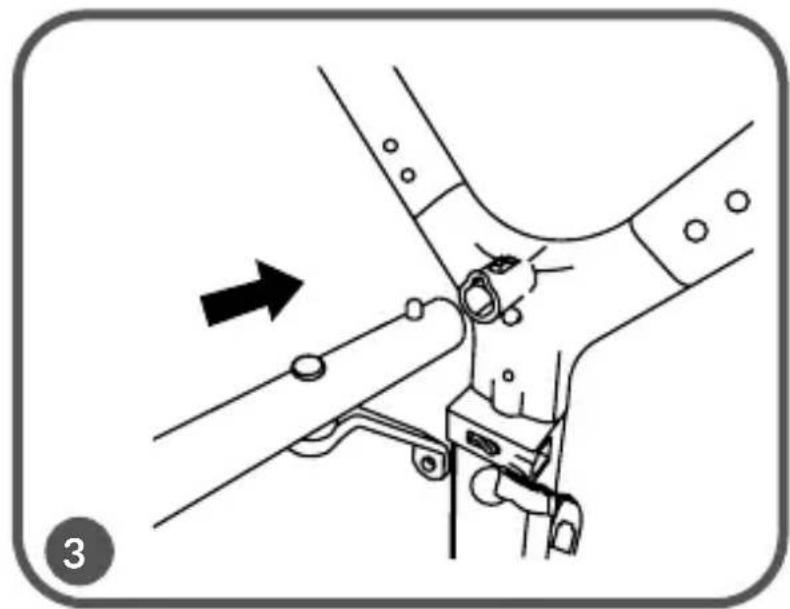
- Connect the bracket to the legs of the cot (fig. 3). Correct installation will signal a click.
-
Tighten the screws with an Allen key on each side (fig. 4).
-
Place the cot in an upright position. Insert the support frame into the corresponding holes in the cot frame, facing upwards on either side (fig. 5). Make sure the metal tabs are inside the holes. Correct installation will signal a click.
- Place the cot cover over the frame and then zip up (fig. 6a). Connect the cover from below to the support frame using hook and loop fasteners (fig. 6b).
- Place the accessory basket in the corresponding openings of the cot frame (fig. 7a). Make sure the metal tabs are inside the holes. Correct installation will signal a click.
- Secure the basket with elastic bands, which should be hooked over the frame projection (fig. 7b).
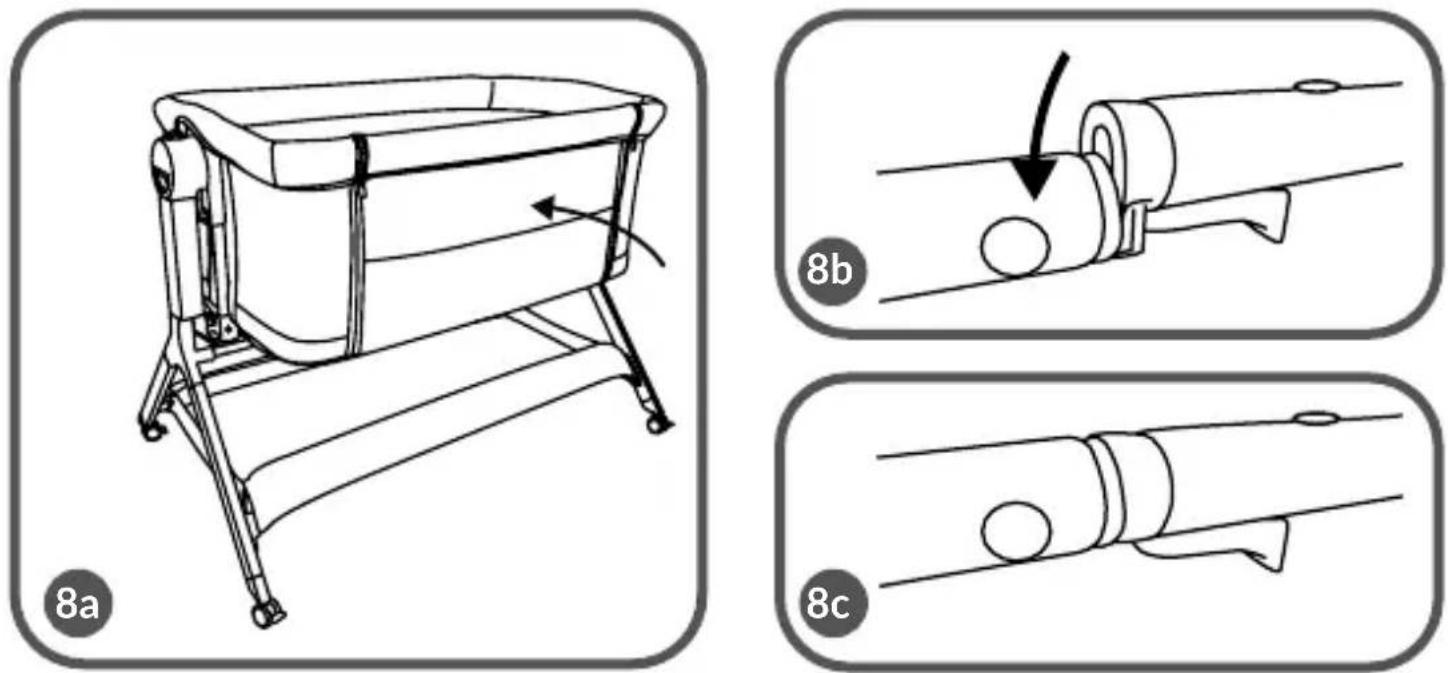
- Insert the handrail connecting tube (10, fig. A) into the cover of the opening side of the cot (fig. 8a). Connect the tube to the frame of the cot on both sides (fig. 8b, 8c). You will hear a click. Fasten the zip.
- Place the mattress in the cot (2, fig. A). The cot has been fitted correctly.
HEIGHT ADJUSTMENT
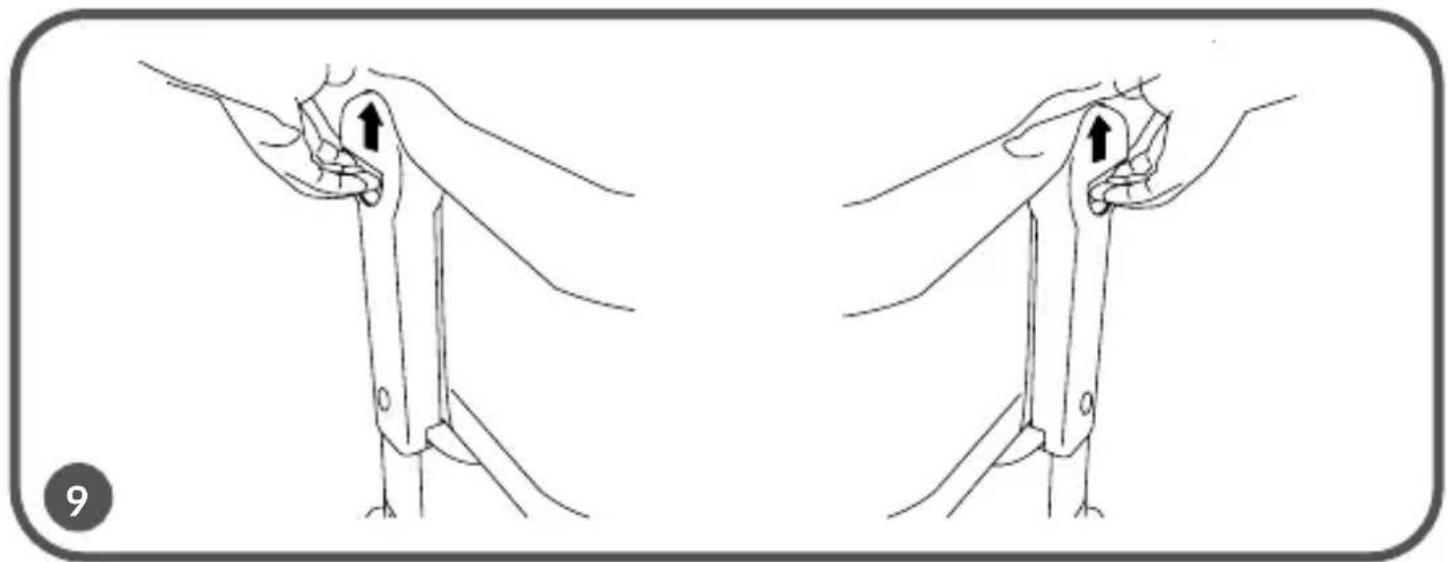
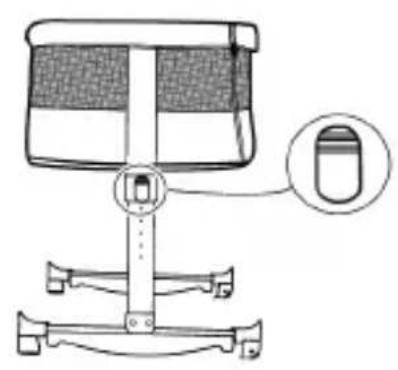
Press the height adjustment lever on both sides of the cot (fig. 9) and set the desired height. There are 6 height levels available. It is also possible to set different heights on either side (fig. 10).
WARNING: The maximum permissible tilt of the cot is a difference of 2 levels. The baby's head must always be on the side in the higher position.
NOTE: Before changing the height, take the child out of the cot.
WHEEL LOCK
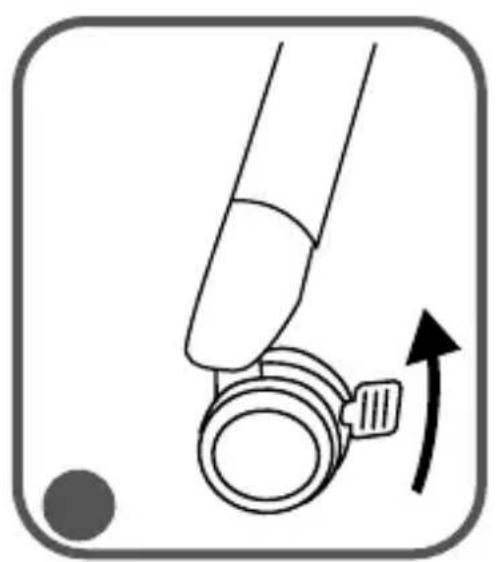
To lock the wheels, press in the locks located on each wheel (fig. 14a). To unlock the wheels again, lift the wheel locks (fig. 14b).
ROCKER FUNCTION
Note! The wheels must first be locked (see: Wheel lock).
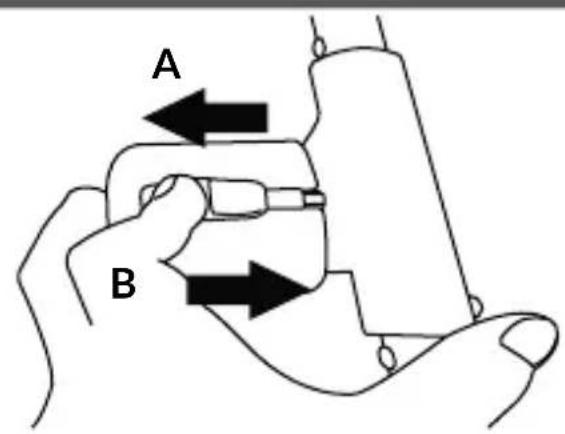
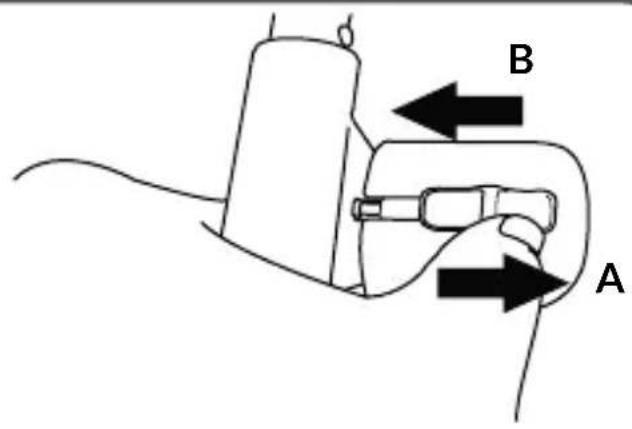
To unlock the rocker function, move the buttons on both sides of the cot towards the outside (A, fig. 11). To lock, slide back towards the inside (B, fig. 11). Correct unlocking and locking will be signaled by a click. The rocker function is controlled
manually.
In order to use the bedside sleeper function, the product must be prepared accordingly. To do this:
- Undo the zips on both sides of the opening side (fig. 8a).
- Slide the locks (A, fig. 12). Release the handrail connecting tube.
- Lower the side wall of the cot. Secure the handrail connecting tube with the elastic bands located on both sides of the opening side.
- Align the cot with the caregivers bed and adjust the height of the cot so that the caregiver's mattress is of equal height or a maximum of 2 cm higher than the top of the opening side of the cot.
Note! The bottom of the cot in the bedside sleeper function must be parallel to the ground. A difference in level between the sides of the cot is not permitted.
- Connect the installation straps to the cot by fastening the buckles (B, fig. 12).
-
Wrap the installation straps around the mattress of the caregivers' bed and then fasten the buckles (C, fig. 12).
-
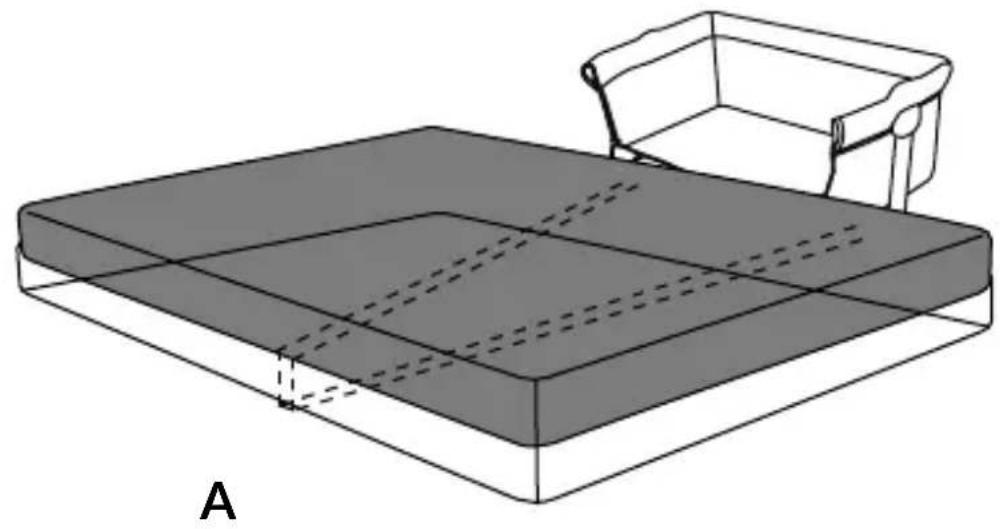
Adjust the length of the straps and make sure there is no gap between the caregivers' bed and the cot (A, fig. 13).
NOTE: Before each use, check that there is no gap between the caregivers' mattress and the side wall of the cot.
WARNING: Use of the product is only permitted with beds and/or mattresses that have straight sides. The use of the product next to beds and/or round mattresses and water mattresses is prohibited (B, fig. 13).
DISASSEMBLY INSTRUCTIONS
- Remove the mattress from the cot.
- Undo the zips in the cot's cover (fig. 15).
- Release and remove the handrail connecting tube (fig. 8b).
- Unfasten the hook and loop fasteners connecting the cover to the support frame (fig. 6b), remove the stiffening element for the opening side (fig. 16) and then remove the cover.
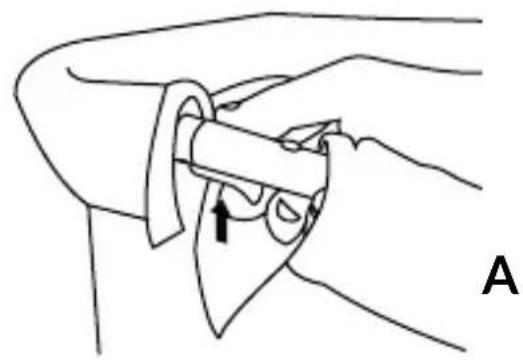
- Remove the support frame by pressing the release button (fig. 17).
-
Remove the accessory basket by pressing the release button (fig. 18).
-
Remove the bracket by unscrewing the screws with the Allen key and then pressing the release button (fig. 19).
- Remove the legs of the cot (9, fig. A) and then assemble the frame. The height should be set at position "1".
CLEANING AND MAINTENANCE
- The cot cover can be washed by hand at max. 30°C. Unfasten the hook and loop fasteners connecting the cover to the support frame (fig. 6b), remove the stiffening element for the opening side (fig. 16) and then remove the cover.
- Metal and plastic parts should be cleaned with a damp cloth and mild cleaning agents.
- Never clean any part of the cot with abrasives, ammonia, bleach or alcohol.
- Store the cot in a dry place, away from sources of heat and moisture. Avoid direct exposure to sunlight.
The product has been tested and meets all standard requirements: EN 1130:2019+AC:2020 and EN 16890:2017+A1:2021.
The photos are for reference only, the actual look of the products may differ from the ones shown in the pictures.
PL
Drogi Kliencie!
WAARSCHUWING VOOR DE AANSCHUIFWIEG
ADVARSLER for madrass:
ADVARSLER for barneseng:
Detailed warranty conditions are available on the website:



- Dear Customer!
- Producer:
- NOTE! IMPORTANT! READ CAREFULLY AND KEEP FOR FUTURE REFERENCE
- WARNING
- MATTRESS WARNINGS:
- DESCRIPTION OF PARTS (FIG. A)
- MOUNTING
- HEIGHT ADJUSTMENT
- WHEEL LOCK
- ROCKER FUNCTION
- DISASSEMBLY INSTRUCTIONS
- CLEANING AND MAINTENANCE
- The product has been tested and meets all standard requirements: EN 1130:2019+AC:2020 and EN 16890:2017+A1:2021.
- Drogi Kliencie!
- WAARSCHUWING VOOR DE AANSCHUIFWIEG
- ADVARSLER for madrass:
- ADVARSLER for barneseng:
Brand : Lionelo
Model : Leonie Plus
Category : Bed