
GST 680 Professional - Saw BOSCH - Free user manual and instructions
Find the device manual for free GST 680 Professional BOSCH in PDF.
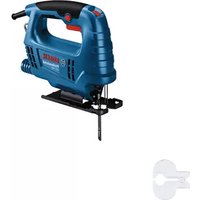



| Product type | Jigsaw |
| Brand | Bosch |
| Model | GST 680 Professional |
| Rated power input | 500 W |
| No-load stroke rate | 800 – 3,100 min-1 |
| Stroke | 20 mm |
| Max. cutting depth in wood | 68 mm |
| Max. cutting depth in aluminum | 10 mm |
| Max. cutting depth in steel (non-alloy) | 3 mm |
| Max. bevel angle | 45° (left/right) |
| Weight according to EPTA-Procedure 01:2014 | 2.0 kg |
| Protection class | II (double insulation) |
| Power supply | Mains, 230 V |
| Stroke rate preselection | Yes, 6 positions |
| On/Off switch lock | Yes |
| Anti-splinter guard (accessory) | Available for splinter-free cutting |
| Connection for dust extraction | Extraction hose, compatible vacuum cleaner |
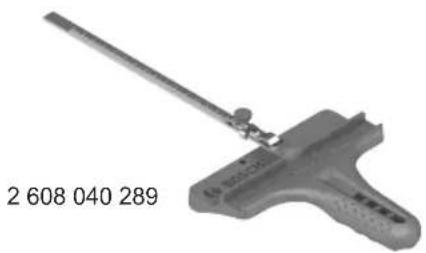
| Parallel guide with circle cutter (accessory) | For parallel and circular cuts |
| Blade type | T-shank or U-shank (1/4\") |
| Maintenance | Clean ventilation slots, grease guide roller |
| Number of pages in manual | 65 |
Frequently Asked Questions - GST 680 Professional BOSCH
User questions about GST 680 Professional BOSCH
0 question about this device. Answer the ones you know or ask your own.
Ask a new question about this device
Download the instructions for your Saw in PDF format for free! Find your manual GST 680 Professional - BOSCH and take your electronic device back in hand. On this page are published all the documents necessary for the use of your device. GST 680 Professional by BOSCH.
USER MANUAL GST 680 Professional BOSCH
Original instructions
Original instructions
Original instructions
Original instructions
Original instructions
English ...... Page 5
Français Page 10
1 609 92A 89R | (25.07.2023) Bosch Power Tools
English
Safety Instructions
General Power Tool Safety Warnings
WARNING
Read all safety warnings, instructions, illustrations and specifications provided with this power tool.
Failure to follow all instructions listed below may result in electric shock, fire and/or serious injury.
Save all warnings and instructions for future reference.
The term "power tool" in the warnings refers to your mains-operated (corded) power tool or battery-operated (cordless) power tool.
Work area safety
▶ Keep work area clean and well lit. Cluttered or dark areas invite accidents. ▶ Do not operate power tools in explosive atmospheres, such as in the presence of flammable liquids, gases or dust. Power tools create sparks which may ignite the dust or fumes. ▶ Keep children and bystanders away while operating a power tool. Distractions can cause you to lose control.
Electrical safety
▶ Power tool plugs must match the outlet. Never modify the plug in any way. Do not use any adapter plugs with earthed (grounded) power tools. Unmodified plugs and matching outlets will reduce risk of electric shock. ▶ Avoid body contact with earthed or grounded surfaces, such as pipes, radiators, ranges and refrigerators. There is an increased risk of electric shock if your body is earthed or grounded. ▶ Do not expose power tools to rain or wet conditions. Water entering a power tool will increase the risk of electric shock. ▶ Do not abuse the cord. Never use the cord for carrying, pulling or unplugging the power tool. Keep cord away from heat, oil, sharp edges or moving parts. Damaged or entangled cords increase the risk of electric shock. ▶ When operating a power tool outdoors, use an extension cord suitable for outdoor use. Use of a cord suitable for outdoor use reduces the risk of electric shock. ▶ If operating a power tool in a damp location is unavoidable, use a residual current device (RCD) protected supply. Use of an RCD reduces the risk of electric shock.
Personal safety
▶ Stay alert, watch what you are doing and use common sense when operating a power tool. Do not use a power tool while you are tired or under the influence of drugs, alcohol or medication. A moment of inattention
while operating power tools may result in serious personal injury.
▶ Use personal protective equipment. Always wear eye protection. Protective equipment such as a dust mask, non-skid safety shoes, hard hat or hearing protection used for appropriate conditions will reduce personal injuries. ▶ Prevent unintentional starting. Ensure the switch is in the off-position before connecting to power source and/or battery pack, picking up or carrying the tool. Carrying power tools with your finger on the switch or energising power tools that have the switch on invites accidents. Remove any adjusting key or wrench before turning the power tool on. A wrench or a key left attached to a rotating part of the power tool may result in personal injury. ▶ Do not overreach. Keep proper footing and balance at all times. This enables better control of the power tool in unexpected situations. ▶ Dress properly. Do not wear loose clothing or jewellery. Keep your hair and clothing away from moving parts. Loose clothes, jewellery or long hair can be caught in moving parts. ▶ If devices are provided for the connection of dust extraction and collection facilities, ensure these are connected and properly used. Use of dust collection can reduce dust-related hazards. ▶ Do not let familiarity gained from frequent use of tools allow you to become complacent and ignore tool safety principles. A careless action can cause severe injury within a fraction of a second.
Power tool use and care
▶ Do not force the power tool. Use the correct power tool for your application. The correct power tool will do the job better and safer at the rate for which it was designed. ▶ Do not use the power tool if the switch does not turn it on and off. Any power tool that cannot be controlled with the switch is dangerous and must be repaired. ▶ Disconnect the plug from the power source and/or remove the battery pack, if detachable, from the power tool before making any adjustments, changing accessories, or storing power tools. Such preventive safety measures reduce the risk of starting the power tool accidentally. ▶ Store idle power tools out of the reach of children and do not allow persons unfamiliar with the power tool or these instructions to operate the power tool. Power tools are dangerous in the hands of untrained users. ▶ Maintain power tools and accessories. Check for misalignment or binding of moving parts, breakage of parts and any other condition that may affect the power tool's operation. If damaged, have the power tool repaired before use. Many accidents are caused by poorly maintained power tools.
▶ Keep cutting tools sharp and clean. Properly maintained cutting tools with sharp cutting edges are less likely to bind and are easier to control. ▶ Use the power tool, accessories and tool bits etc. in accordance with these instructions, taking into account the working conditions and the work to be performed. Use of the power tool for operations different from those intended could result in a hazardous situation. ▶ Keep handles and grasping surfaces dry, clean and free from oil and grease. Slippery handles and grasping surfaces do not allow for safe handling and control of the tool in unexpected situations.
Service
▶ Have your power tool serviced by a qualified repair person using only identical replacement parts. This will ensure that the safety of the power tool is maintained.
Safety instructions for jigsaws
▶ Hold the power tool by insulated gripping surfaces, when performing an operation where the cutting accessory may contact hidden wiring or its own cord. Cutting accessory contacting a "live" wire may make exposed metal parts of the power tool "live" and could give the operator an electric shock.
▶ Use clamps or another practical way to secure and support the workpiece to a stable platform. Holding the workpiece by hand or against your body leaves it unstable and may lead to loss of control.
▶ Keep hands away from the sawing area. Do not reach under the workpiece. Contact with the saw blade can lead to injuries.
▶ Only bring the power tool into contact with the workpiece when switched on. Otherwise there is danger of kickback if the cutting tool jams in the workpiece.
▶ Ensure that the footplate always rests securely while sawing. A jammed saw blade can break or lead to kick-back.
When the cut is completed, switch off the power tool and then pull the saw blade out of the cut only after it has come to a standstill. In this manner you can avoid kickback and can place down the power tool securely.
▶ Always wait until the power tool has come to a complete stop before placing it down. The application tool can jam and cause you to lose control of the power tool.
▶ Use only undamaged saw blades that are in perfect condition. Bent or dull saw blades can break, negatively influence the cut, or lead to kickback.
▶ Do not brake the saw blade to a stop by applying side pressure after switching off. The saw blade can be damaged, break or cause kickback.
▶ Only use the power tool with the base plate. If you do not use the base plate, you are at risk of not being able to control the power tool.
▶ Use suitable detectors to determine if utility lines are hidden in the work area or call the local utility company for assistance.
pany for assistance. Contact with electric lines can lead to fire and electric shock. Damaging a gas line can lead to explosion. Penetrating a water line causes property damage or may cause an electric shock.
Product Description and Specifications

Read all the safety and general instructions. Failure to observe the safety and general instructions may result in electric shock, fire and/or serious injury.
Please observe the illustrations at the beginning of this operating manual.
Intended Use
The power tool is intended for making separating cuts and cut-outs in wood, plastic, metal, ceramic plates, rubber and laminate/HPL (High Pressure Laminate) while resting firmly on the workpiece. It is suitable for straight and curved cuts with mitre/bevel angles of up to 45°. The saw blade recommendations are to be observed.
Product Features
The numbering of the product features refers to the diagram of the power tool on the graphics page.
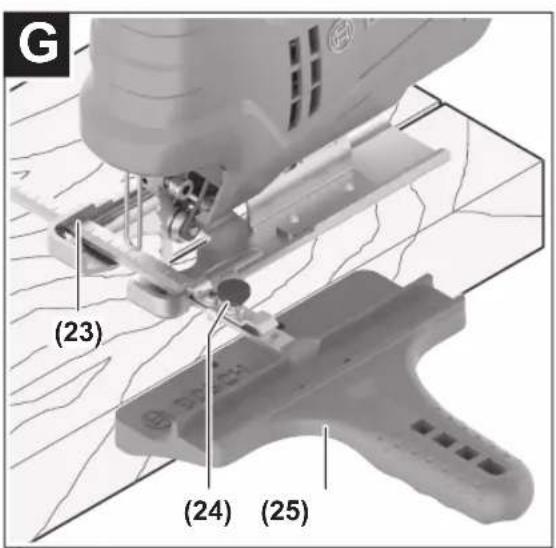
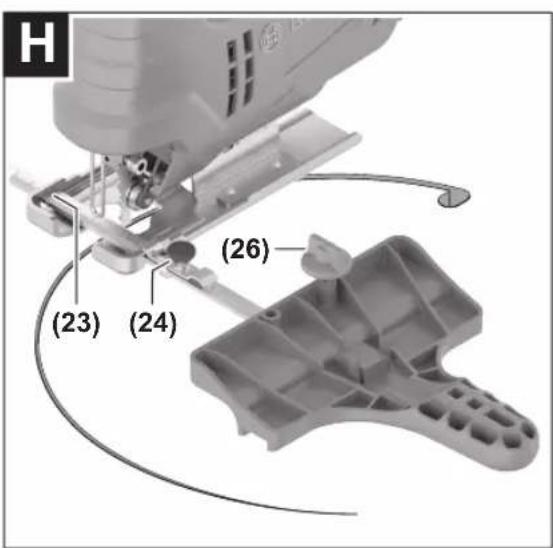
(1) Stroke rate preselection thumbwheel (2) On/off switch (3) On/off switch locking mechanism (4) Hex key (5 mm) (5) Extraction hose (6) Extraction outlet (7) Base plate (8) Saw blade fastening screw (9) Guide roller (10) Saw blade (11) Shock protection guard (12) Hood for dust extraction (13) Saw blade receptacle (14) Handle (insulated gripping surface) (15) Anti-splinter guard a) (16) Base plate screw (17) Scale for mitre/bevel angles (18) Profiled plate for base plate fastening (19) Positioning cam (20) Opening for positioning cam (21) Standard hole for base plate fastening (22) Hole for sawing close to edges (23) Guide for parallel guide (24) Locking screw for parallel guide a) (25) Parallel guide with circle cutter a)
(26) Circle cutter centring tip a)
a) Accessories shown or described are not included with the product as standard. You can find the complete selection of accessories in our accessories range.
Technical Data
| Jigsaw GST 680 | ||
| Article number | 3 601 EB4 0.. | |
| Rated power input W 500 | ||
| No-load stroke rate n0 min | -1 | 800-3100 |
| Stroke mm 20 | ||
| Max. cutting depth | ||
| - in wood mm 68 | ||
| - in aluminium mm 10 | ||
| - in steel (unalloyed) mm 3 | ||
| Max. cutting angle (left/right) ° 45 | ||
| Weight according to EPTA-Procedure 01:2014 | kg 2.0 | |
| Protection class | ☐/II | |
The specifications apply to a rated voltage [U] of 230 V. These specifications may vary at different voltages and in country-specific models.
Assembly
▶ Pull the plug out of the socket before carrying out any work on the power tool.
Inserting/changing the saw blade
When fitting or changing the saw blade, wear protective gloves. Blades are sharp and can become hot when used for prolonged periods of time.
Selecting the saw blade
You will find an overview of recommended saw blades at the end of these operating instructions. Only use saw blades with a single lug shank (T shank) or with a 1/4" universal shank (U shank). The saw blade should not be longer than required for the intended cut.
Use a narrow saw blade when sawing tight curves.
Inserting the saw blade (see figure A)
Clean the shaft on the saw blade before inserting it.
A dirty shaft cannot be securely fixed in place.
Loosen the saw blade fastening screw (8) using the hex key (4) provided.
Push the saw blade (10), with the teeth in the cutting direction, into the saw blade receptacle (13) ① until it clicks into place.
Make sure when inserting the saw blade that the back of the saw blade is in the groove on the guide roller (9).
Firmly tighten the screw (8) with the hex key (4) ②.
Check that the saw blade is seated securely. A loose saw blade can fall out and lead to injuries.
Removing the saw blade (see figure B)
Unscrew the saw blade fastening screw (8) ① and remove the saw blade (10) ②.
Anti-splinter guard (accessory) (see figure C)
The anti-splinter guard (15) (accessory) can prevent splintering of the surface while sawing wood. The anti-splinter guard can only be used with certain saw blade types and only at a cutting angle of 0°. When sawing with the anti-splinter guard, the base plate (7) must not be moved to the rear for sawing close to edges.
Push the anti-splinter guard (15) into the base plate (7) from below.
Dust/Chip Extraction
The dust from materials such as lead paint, some types of wood, minerals and metal can be harmful to human health. Touching or breathing in this dust can trigger allergic reactions and/or cause respiratory illnesses in the user or in people in the near vicinity.
Certain dusts, such as oak or beech dust, are classified as carcinogenic, especially in conjunction with wood treatment additives (chromate, wood preservative). Materials containing asbestos may only be machined by specialists.
- Use a dust extraction system that is suitable for the material wherever possible.
- Provide good ventilation at the workplace.
- It is advisable to wear a P2 filter class breathing mask.
The regulations on the material being machined that apply in the country of use must be observed.
- Avoid dust accumulation at the workplace. Dust can easily ignite.
Hood
Fit the hood (12) before you connect the power tool to the dust extraction system.
Position the hood (12) on the power tool so that the brackets click into place in the recesses on the housing.
Remove the hood (12) when working without a dust extraction system and for mitre cuts. To do this, push the hood together at the level of the outer brackets and remove it by pulling it forwards.
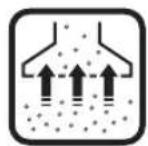
Connecting the dust extraction system
Connect a dust extraction hose (5) (accessory) to the extraction outlet (6). Connect the dust extraction hose (5) to a dust extractor (accessory).
You will find an overview of connecting to various dust extractors at the end of these operating instructions.
For optimum dust extraction, where possible use the anti-splinter guard (15).
The dust extractor must be suitable for the material being worked.
When extracting dry dust that is especially detrimental to health or carcinogenic, use a special dust extractor.
Operation
▶ Products that are only sold in AUS and NZ: Use a residual current device (RCD) with a nominal residual current of 30 mA or less.
Operating modes
▶ Pull the plug out of the socket before carrying out any work on the power tool.
Adjusting the mitre/bevel angle (see figure D)
The base plate (7) can be swivelled to the right or left to make mitre cuts up to 45°.
The anti-splinter guard (15) cannot be used while mitre cuts are being made.
- Remove the anti-splinter guard (15).
- Loosen the screw (16) and push the base plate (7) slightly towards the mains cable.
- The base plate has lock-in points at 0° and 45° on the left and right so that precise mitre/bevel angles can be set. Swivel the base plate (7) to the desired position according to the scale (17). Other mitre/bevel angles can be adjusted using a protractor.
- Then push the base plate (7) towards the saw blade (10) as far as it will go.
- Retighten the screw (16).
Moving the base plate (see figure E)
You can move the base plate (7) back for sawing close to edges.
Fully unscrew the screw (16) using the hex key (4). Remove the screw together with the profiled plate (18).
Lift the base plate (7). Move the base plate towards the power cable so that the hole for sawing close to edges (22) is above the threaded hole in the power tool housing. The positioning cam (19) must engage in the opening (20) of the base plate at the same time. Insert the screw (16) along with the profiled plate (18) in the threaded hole and tighten the screw.
Sawing with an offset base plate (7) is only possible with a mitre/bevel angle of 0°. In addition, the parallel guide with circle cutter (25) (accessory) as well as the anti-splinter guard (15) must not be used.
Starting Operation
Pay attention to the mains voltage! The voltage of the power source must match the voltage specified on the rating plate of the power tool. Power tools marked with 230 V can also be operated with 220 V.
Switching on/off
Make sure that you are able to press the On/Off switch without releasing the handle.
To switch on the power tool, press the on/off switch (2).
To lock the on/off switch (2), press and hold it while also pressing the locking mechanism (3).
To switch off the power tool, release the on/off switch (2). If the on/off switch (2) is locked, press the switch first and then release it.
Preselect the stroke rate
You can preselect the stroke rate and change it during operation using the stroke rate preselection thumbwheel (1).
The required stroke rate is dependent on the material and the work conditions and can be determined using practical tests.
It is recommended that you reduce the stroke rate when placing the saw blade on the workpiece and when sawing plastic and aluminium.
The number of strokes can be adjusted using six different settings, allowing the cutting speed, cutting capacity and the cut itself to be optimally adapted to the material that you want to cut.
| Setting Stroke rate, approx. (min -1 ) | Application/Material |
| 1 800 Metal | |
| 2 1300 Metal, narrow curved cuts | |
| 3 1800 Narrow curved cuts | |
| 4 2200 Curved cuts | |
| 5 2600 Curved cuts | |
| 6 3000 Standard cuts, fast cuts |
During prolonged periods of use at a low stroke rate, the power tool may heat up significantly. Remove the saw blade and let the power tool run at the maximum stroke rate for around three minutes to cool down.
Working Advice
▶ Pull the plug out of the socket before carrying out any work on the power tool. ▶ Switch the power tool off immediately if the saw blade becomes blocked. ▶ When machining small or thin workpieces, always use a stable base or saw table (accessory).
Jigsaws are primarily designed for curved cuts. The range of products from Bosch also includes accessories which enable straight cuts or circular cuts (depending on the jigsaw model, e.g. parallel guide, guide rail or circle cutter).
Hand-held jigsaws generally tend to go off at an angle, i.e. under certain circumstances the angle and cutting accuracy can no longer be ensured. Decisive influencing factors on the accuracy are the saw blade thickness, cutting length and the material thickness and strength of the workpiece.
Therefore, always check using test cuts whether the cutting result of the selected system meets the requirements of your application.
Before sawing into wood, chipboard, building materials, etc., check for and remove any foreign objects such as nails, screws, etc.
Plunge cutting (see figure F)
▶ Plunge cuts may only be applied to soft materials, such as wood, gypsum board, etc.
For plunge cutting, use only short saw blades. Plunge cutting is possible only with a mitre angle of 0° .
Place the power tool so that the front edge of the base plate (7) rests on the workpiece, without the saw blade (10)
touching the workpiece, and switch it on. On power tools with stroke rate control, select the maximum stroke rate.
Press the power tool firmly against the workpiece and allow the saw blade to plunge slowly into the workpiece.
As soon as the base plate (7) rests fully on the workpiece, continue sawing along the required cutting line.
Parallel guide with circle cutter (accessory)
When working with the parallel guide with circle cutter (25) (accessory), the workpiece must be no more than 30 mm thick.
Parallel cuts (see figure G): Loosen the locking screw (24) and slide the scale on the parallel guide through the guide
(23) in the base plate. Adjust the desired cutting width as a scale value on the inside edge of the base plate. Retighten the locking screw (24).
Circular cuts (see figure H): Drill a hole large enough to push the saw blade through on the cutting line within the circle to be cut. Machine the drill hole with a router or file so that the saw blade can lie flush with the cutting line.
Position the locking screw (24) on the other side of the parallel guide. Slide the scale on the parallel guide through the guide (23) into the base plate. Drill a hole in the workpiece in the middle of the section to be cut out. Insert the centring tip (26) through the inner opening of the parallel guide and into the drilled hole. Adjust the radius as a scale value on the inside edge of the base plate. Retighten the locking screw (24).
Coolant/lubricant
As the material heats up along the cutting line when cutting metal, you should apply coolant or lubricant.
Maintenance and Service
Maintenance and Cleaning
Pull the plug out of the socket before carrying out any work on the power tool. To ensure safe and efficient operation, always keep the power tool and the ventilation slots clean.
In order to avoid safety hazards, if the power supply cord needs to be replaced, this must be done by Bosch or by an after-sales service centre that is authorised to repair Bosch power tools.
Clean the saw blade receptacle regularly. For this, remove the saw blade from the power tool and lightly tap out the power tool on a level surface.
If the power tool becomes very dirty, this can lead to serious faults. For this reason, do not cut materials which generate large quantities of dust from below or overhead.
In extreme conditions, always use a dust extractor if possible. Blow out ventilation slots frequently and install a residual current device (RCD) upstream. When machining metals, conductive dust can settle inside the power tool, which can affect its protective insulation.
If the dust outlet becomes blocked, switch off the power tool, disconnect the dust extraction system and remove the dust and chips.
Apply a drop of oil to the guide roller (9) from time to time.
Check the guide roller (9) regularly. If worn, it must be replaced through an authorised Bosch after-sales service centre.
After-Sales Service and Application Service
Our after-sales service responds to your questions concerning maintenance and repair of your product as well as spare parts. You can find explosion drawings and information on spare parts at: www.bosch-pt.com
The Bosch product use advice team will be happy to help you with any questions about our products and their accessories.
In all correspondence and spare parts orders, please always include the 10-digit article number given on the nameplate of the product.
Malaysia
Robert Bosch Sdn. Bhd.(220975-V) PT/SMY
No. 8A, Jalan 13/6
46200 Petaling Jaya
Selangor
Tel.: (03) 79663194
Toll-Free: 1800 880188
Fax: (03) 79583838
E-Mail: kiathoe.chong@my.bosch.com
www.bosch-pt.com.my
You can find further service addresses at:
www.bosch-pt.com/serviceaddresses
Disposal
The power tool, accessories and packaging should be recycled in an environmentally friendly manner.
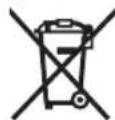
Do not dispose of power tools along with household waste.
French
Robert Bosch Morocco SARL
53, Rue Lieutenant Mahroud Mohamed
20300 Casablanca
Tel.: +212 5 29 31 43 27
E-Mail: sav.outillage@ma.bosch.com
www.bosch-pt.com/serviceaddresses
www.bosch-pt.com/serviceaddresses
Disposal
www.bosch-pt.com/serviceaddresses
Disposal
www.bosch-pt.com/serviceaddresses
Disposal
Arkadia Green Park Tower G - 7th floor
Jl. Let. Jend. TB. Simatupang Kav.88
Jakarta 12520
Tel.: (021) 3005 5800
Fax: (021) 3005 5801
E-Mail: boschpowertools@id.bosch.com
www.bosch-pt.co.id
www.bosch-pt.com/serviceaddresses
Disposal
www.bosch-pt.com/serviceaddresses
Disposal
Robert Bosch Morocco SARL
www.bosch-pt.com/serviceaddresses
www.bosch-pt.com/serviceaddresses
for special materials
precision.
SoftMaterial
T 1013 AWP, ...


special
SoftMaterial
T113A,...


special
Ceramic
T 130 RF, ...


endurance
FiberPlaster
T 141 HM, ...


64
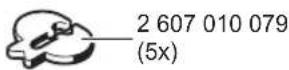
1 619 PA7 326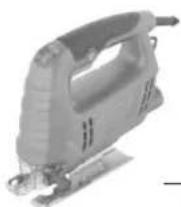
∅ 22 mm: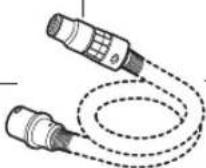
2 608 000 571 (3 m)
2 608 000 567 (5 m)
∅ 35 mm:
2 608 000 569 (3 m)
2 608 000 565 (5 m)
1 619 PB3 826 (3 m)
∅ 22 mm:
2 608 000 572 (3 m)
2 608 000 568 (5 m)
∅ 35 mm:
2 608 000 570 (3 m)
2 608 000 566 (5 m)
GAS 15 PS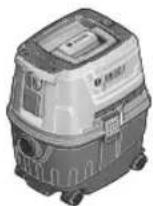
GAS 12-25 PL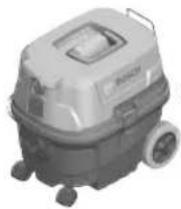
GAS 35 L SFC+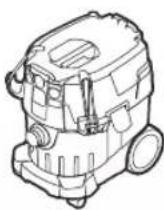
GAS 35 L AFC
GAS 35 M AFC
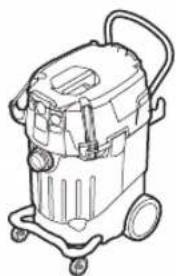
GAS 55 M AFC
2 608 000 585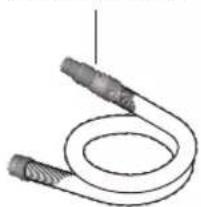
∅ 35 mm: 2 608 000 658 (1.6 m)
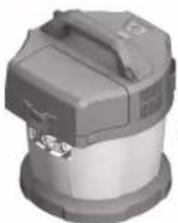
GAS 18V-10 L

- ENGLISH
- SAFETY INSTRUCTIONS
- GENERAL POWER TOOL SAFETY WARNINGS
- WARNING
- WORK AREA SAFETY
- ELECTRICAL SAFETY
- PERSONAL SAFETY
- POWER TOOL USE AND CARE
- SERVICE
- SAFETY INSTRUCTIONS FOR JIGSAWS
- PRODUCT DESCRIPTION AND SPECIFICATIONS
- INTENDED USE
- PRODUCT FEATURES
- ASSEMBLY
- INSERTING/CHANGING THE SAW BLADE
- SELECTING THE SAW BLADE
- INSERTING THE SAW BLADE (SEE FIGURE A)
- REMOVING THE SAW BLADE (SEE FIGURE B)
- ANTI-SPLINTER GUARD (ACCESSORY) (SEE FIGURE C)
- DUST/CHIP EXTRACTION
- HOOD
- CONNECTING THE DUST EXTRACTION SYSTEM
- OPERATION
- OPERATING MODES
- ADJUSTING THE MITRE/BEVEL ANGLE (SEE FIGURE D)
- MOVING THE BASE PLATE (SEE FIGURE E)
- STARTING OPERATION
- SWITCHING ON/OFF
- PRESELECT THE STROKE RATE
- WORKING ADVICE
- PLUNGE CUTTING (SEE FIGURE F)
- PARALLEL GUIDE WITH CIRCLE CUTTER (ACCESSORY)
- COOLANT/LUBRICANT
- MAINTENANCE AND SERVICE
- MAINTENANCE AND CLEANING
- AFTER-SALES SERVICE AND APPLICATION SERVICE
- MALAYSIA
- YOU CAN FIND FURTHER SERVICE ADDRESSES AT
- DISPOSAL
- FRENCH
- FOR SPECIAL MATERIALS
Brand : BOSCH
Model : GST 680 Professional
Category : Saw