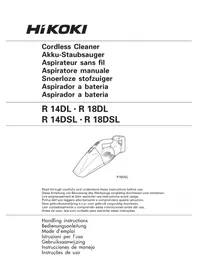
R14DL - Mop HiKOKI - Free user manual and instructions
Find the device manual for free R14DL HiKOKI in PDF.


| Brand | HiKOKI |
| Model | R14DL |
| Product type | Cordless vacuum cleaner |
| Battery voltage | 14.4 V |
| Dust collection capacity | 670 mL |
| Continuous operation time (with BCL1430) | Approximately 23 min |
| Weight (without battery) | 0.84 kg |
| Motor type | DC motor |
| Applications | Dry and wet surface vacuuming |
| Standard accessories | Brush nozzle, crevice tool, squeegee |
| Compatible batteries (optional) | BCL1415, BCL1430 |
| Compatible charger (optional) | UC18YRL, UC18YRSL |
| Recommended charging temperature | 0 to 40°C |
| Filter maintenance | Wash with cold or lukewarm water, dry in shade |
| Cleaning the device | Dry soft cloth or dampened with soapy water |
| Storage | Temperature below 40°C, out of reach of children |
| Battery safety | Protection against short circuits, do not expose to heat or fire |
| Warranty | In accordance with national regulations, does not cover normal wear and tear |
Frequently Asked Questions - R14DL HiKOKI
User questions about R14DL HiKOKI
0 question about this device. Answer the ones you know or ask your own.
Ask a new question about this device
Download the instructions for your Mop in PDF format for free! Find your manual R14DL - HiKOKI and take your electronic device back in hand. On this page are published all the documents necessary for the use of your device. R14DL by HiKOKI.
USER MANUAL R14DL HiKOKI
natural_image
Line drawing of a handheld vacuum cleaner (no text or symbols)R18DSL
Read through carefully and understand these instructions before use.

2
3
4
5
6
7
8
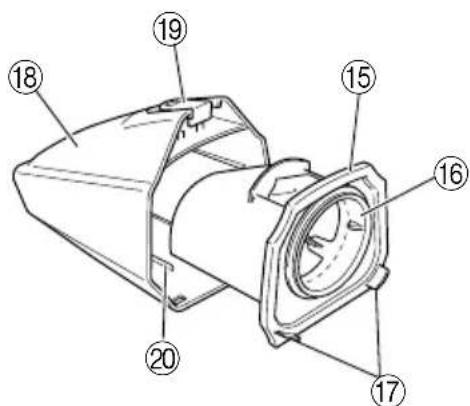
9
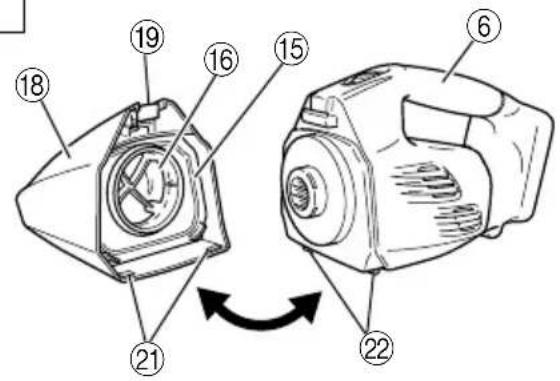
10
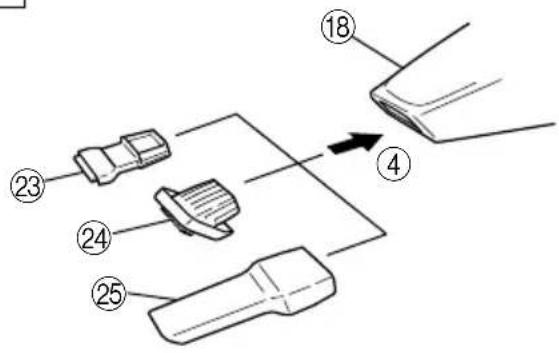
11 12
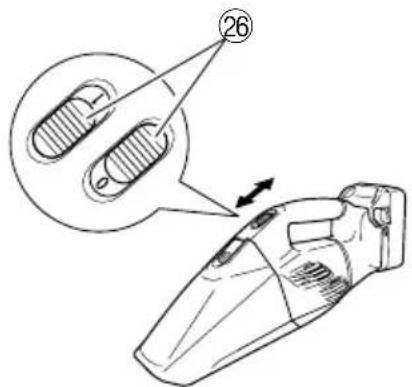
13
natural_image
Illustration of a hand holding a spray gun with particles falling (no text or symbols)14
| English Deutsch | Français Italiano | |||
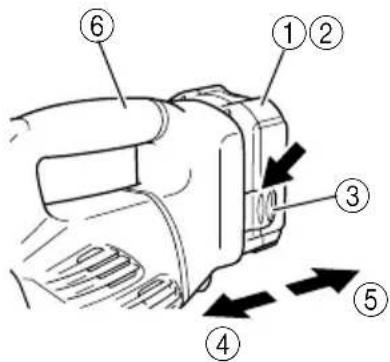
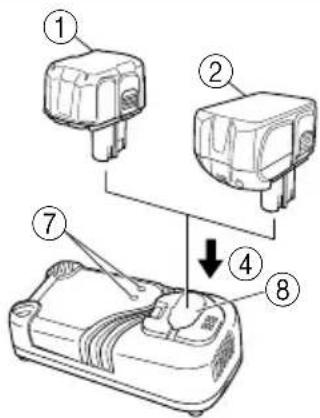
| 1 | 14.4 V Rechargeable battery (For R14DL) | 14,4 V aufladbare Batterie (Für R14DL) | Batterie rechargeable 14,4 V (Pour R14DL) | Batteria ricaricabile da 14,4 V (Per R14DL) |
| 2 | 18 V Rechargeable battery (For R18DL) | 18 V aufladbare Batterie (Für R18DL) | Batterie rechargeable 18 V (Pour R18DL) | Batteria ricaricabile da 18 V (Per R18DL) |
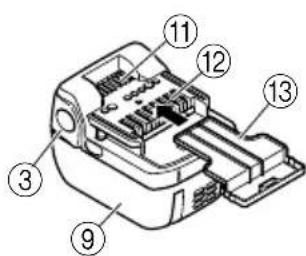
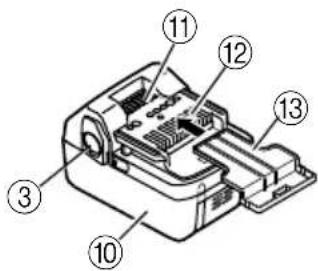
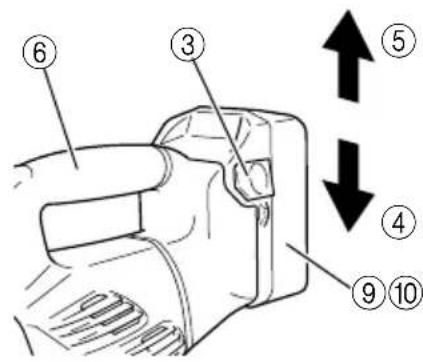
| 3 | Latch | Verriegelung | Taquet | Fermo |
| 4 | Insert | Einsetzen | Insérer | Inserire |
| 5 | Pull out | Herausziehen | Tirer vers l'extérieur | Estrarre |
| 6 | Handle | Handgriff | Poignée | Impugnatura |
| 7 | Pilot lamp | Kontrollampe | Lampe témoin | Spia |
| 8 | Hole for connecting the rechargeable battery | Anschlußloch für Ladebatterir | Orifice de raccordemente de la batterie rechargeable | Foro di collegamento della batteria ricaricabile |
| 9 | 14.4 V Rechargeable battery (For R14DSL) | 14,4 V aufladbare Batterie (Für R14DSL) | Batterie rechargeable 14,4 V (Pour R14DSL) | Batteria ricaricabile da 14,4 V (Per R14DSL) |
| 10 | 18 V Rechargeable battery (For R18DSL) | 18 V aufladbare Batterie (Für R18DSL) | Batterie rechargeable 18 V (Pour R18DSL) | Batteria ricaricabile da 18 V (Per R18DSL) |
| 11 | Ventilation holes | Belüftungslöcher | Orifices de ventilation | Fori di ventilazione |
| 12 | Terminals | Anschlüsse | Bornes | Terminali |
| 13 | Battery cover | Batterieabdeckung | Couvercle de batterie | Coperchio per la batteria |
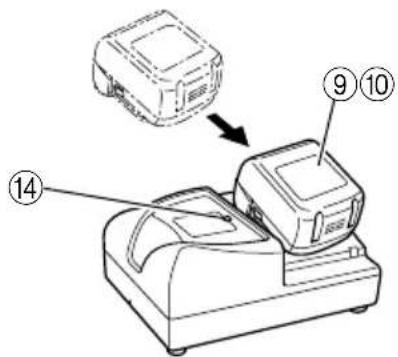
| 14 | Charging time indicator lamp | Anzeigelämpchen für Ladezeit | Témoin indicateur de la durée du chargement | Spia di indicazione del tempo di carica |
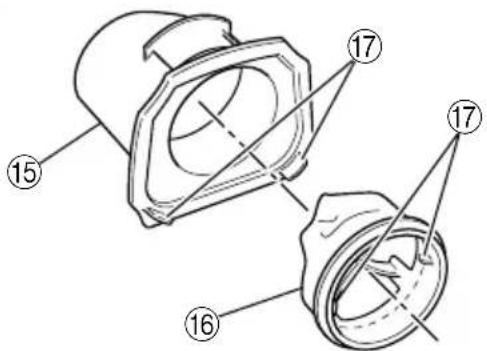
| 15 | Water guard | Wasserschutz | Protection anti-éclaboussures | Protezione dell'acqua |
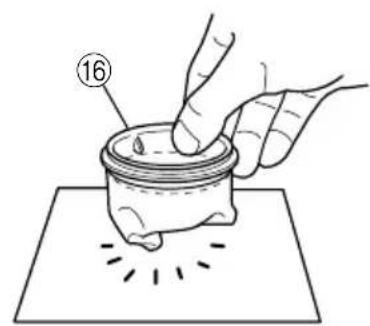
| 16 | Filter | Filter | Filtre | Filtro |
| 17 | Knob | Knauf | Bouton | Manopola |
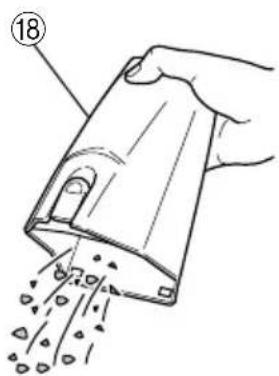
| 18 | Dust case | Staubfach | Bac à poussière | Alloggiamento per la polvere |
| 19 | Release button | Freigabeknopf | Bouton de déverrouillage | Pulsante di rilascio |
| 20 | Ribs (6 pcs.) | Rippen (6 Stk.) | Cannelures (x6) | Scanalature (6 pezzi) |
| 21 | Slots | Nute | Orifices | Fessure |
| 22 | Tabs | Nasen | Onglets | Linguette |
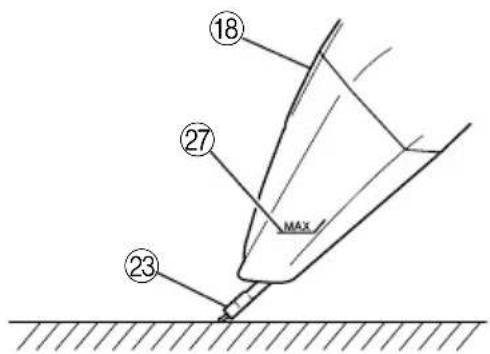
| 23 | Squeegee nozzle | Schrubberdüse | Raclette | Beccuccio del raschiatoio |
| 24 | Brush nozzle | Bürstendüse | Embout à brosse | Beccuccio della spazzola |
| 25 | Crevice nozzle | Fugendüse | Suceur plat | Beccuccio delle fessure |
| 26 | Switch | Schalter | Interrupteur | Interruttore |
| 27 | Full line indicator | Anzeige Gerät voll | Indicateur de remplissage | Indicatore linea piena |
| Nederlands E | spanol | Português | |
| 1 | 14,4 V oplaadbare batterij (voor R14DL) | Batería recargable de 14,4 V (Para R14DL) | Bateria recarregável de 14,4 V (Para R14DL) |
| 2 | 18 V oplaadbare batterij (voor R18DL) | Batería recargable de 18 V (Para R18DL) | Bateria recarregável de 18 V (Para R18DL) |
| 3 | Vergrendeling | Cierre | Lingüeta |
| 4 | Insteken | Insertar | Inserir |
| 5 | Uittrekken | Sacar | Retirar |
| 6 | Handgreep | Asidero | Cabo |
| 7 | Controlelampje | Lámpara piloto | Lâmpada piloto |
| 8 | Aansluiting voor oplaadbare batterij | Agujero para conectar la batería recargable | Orifício para conectar a bateria recarregável |
| 9 | 14,4 V oplaadbare batterij (voor R14DSL) | Batería recargable de 14,4 V (Para R14DSL) | Bateria recarregável de 14,4 V (Para R14DSL) |
| 10 | 18 V oplaadbare batterij (voor R18DSL) | Batería recargable de 18 V (Para R18DSL) | Bateria recarregável de 18 V (Para R18DSL) |
| 11 | Ventilatieopeningen | Orificios de ventilación | Orificios de ventilação |
| 12 | Aansluitpunten | Terminales | Terminais |
| 13 | Batterijdeksel | Tapa de batería | Tampa da bateria |
| 14 | Laadtijdindicatielampje | Luz indicadora del tiempo de carga | Luz indicadora do tempo de carregamento |
| 15 | Waterbeschermer | Protector para agua | Protecção de água |
| 16 | Filter | Filtro | Filtro |
| 17 | Knop | Pomo | Manípulo |
| 18 | Stofhouder | Caja de polvo | Caixa de pó |
| 19 | Ontgrendelknop | Botón de desbloqueo | Botão de libertação |
| 20 | Ribben (6 stuks) | Varilla (6 pzs) | Encaixes (6) |
| 21 | Gleuven | Ranuras | Ranhuras |
| 22 | Uitsteeksels | Lengüetas | Saliências |
| 23 | Wateropzuigmondstuk | Tobera barredera | Rodo |
| 24 | Borstelmondstuk | Tobera con cepillo | Bico de escova |
| 25 | Spleetmondstuk | Tobera para rincones | Bico de frinchas |
| 26 | Schakelaar | Interruptor | Interruptor |
| 27 | Vol indicatiestreepje | Indicador de línea llena | Indicador de linha cheia |
| Symbols⚠ WARNINGThe following show symbols used for the machine. Be sure that you understand their meaning before use. | Symbole⚠ WARNUNGDie folgenden Symbole werden für diese Maschine verwendet. Achten Sie darauf, diese vor der Verwendung zu verstehen. | Symboles⚠ AVERTISSEMENTLes symboles suivants sont utilisés pour l’outil. Bien se familiariser avec leur signification avant d’utiliser l’outil. | Simboli⚠ AVVERTENZADi seguito mostriamo i simboli usati per la macchina. Assicurarsi di comprenderne il significato prima dell’uso. | |
 | Read all safety warnings and all instructions.Failure to follow the warnings and instructions may result in electric shock, fire and/or serious injury. | Lesen Sie sämtliche Sicherheitshinweise und Anweisungen durch.Wenn die Warnungen und Anweisungen nicht befolgt werden, kann es zu Stromschlag, Brand und/oder ernsthaftenVerletzungen kommen. | Lire tous les avertissements de sécurité et toutes les instructions.Tout manquement à observer ces avertissements et instructions peut engendrer des chocs électriques, des incendies et/ou des blessures graves. | Leggere tutti gli avvertimenti di sicurezza e tutte le istruzioni.La mancata osservanza degli avvertimenti e delle istruzioni potrebbe essere causa di scosse elettriche, incendi e/o gravi lesioni. |
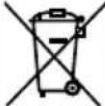 | Only for EU countriesDo not dispose of electric tools together with household waste material!In observance of European Directive 2002/96/EC on waste electrical and electronic equipment and its implementation in accordance with national law, electric tools that have reached the end of their life must be collected separately and returned to an environmentally compatible recycling facility. | Nur für EU-LänderWerfen Sie Elektrowerkzeuge nicht in den Hausmüll!Gemäss Europäischer Richtlinie 2002/96/EG über Elektro- und Elektronik-Altgeräte und Umsetzung in nationales Recht müssen verbrauchte Elektrowerkzeuge getrennt gesammelt und einer umweltgerechtenWiederververitung zugeführt werden. | Pour les pays européens uniquementNe pas jeter les appareils électriques dans les ordures ménagères!Conformément à la directive européenne 2002/96/EG relative aux déchets d’équipements électriques ou électroniques (DEEE), et à sa transposition dans la législation nationale, les appareils électriques doivent être collectés à part et être soumis à un recyclage respectueux de l’environnement. | Solo per Paesi UENon gettare le apparecchiature elettriche tra i rifiuti domestici.Secondo la Direttiva Europea 2002/96/CE sui rifiuti di apparecchiature elettriche ed elettroniche e la sua attuazione in conformità alle norme nazionali, le apparecchiature elettriche esauste devono essere raccolte separatamente, al fine di essere reimpiegate in modo eco-compatibile. |
| Symbolen⚠ WAARSCHUWINGHieronder staan symbolen afgebeeld die van toepassing zijn op deze machine. U moet de betekenis hiervan begrijpen voor gebruik. | Símbolos⚠ ADVERTENCIAA continuación se muestran los símbolos usados para la máquina. Asegúrese de comprender su significado antes del uso. | Símbolos⚠ AVISOA seguir aparecem os símbolos utilizados pela máquina. Assimile bem seus significados antes do uso. | ||
 | Lees alle waarschuwingen en instructies aandachtig door.Nalating om de waarschuwingen en instructies op te volgen kan in een elektrische schok, brand en/of ernstig letsel resulteren. | Lea todas las instrucciones y advertencias de seguridad.Si no se siguen las advertencias e instrucciones, podría producirse una descarga eléctrica, un incendio y/o daños graves. | Leia todas as instruções e avisos de segurança.Se não seguir todas as instruções e os avisos, pode provocar um choque eléctrico, incêndio e/ou ferimentos graves. | |
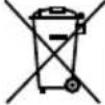 | Alleen voor EU-landen Geef elektrisch gereedschap niet met het huisvuil mee!Volgens de Europese richtlijn 2002/96/EG inzake oude elektrische en elektronische apparaten en de toepassing daarvan binnen de nationale wetgeving, dient gebruikt elektrisch gereedschap gescheiden te worden ingezameld en te worden afgevoerd naar een recycle bedrijf dat voldoet aan de geldende milieu-eisen. | Sólo para países de la Unión Europea¡No deseche los aparatos eléctricos junto con los residuos domésticos!De conformidad con la Directiva Europea 2002/96/CE sobre residuos de aparatos eléctricos y electrónicos y su aplicación de acuerdo con la legislación nacional, las herramientas eléctricas cuya vida útil haya llegado a su fin se deberán recoger por separado y trasladar a una planta de reciclaje que cumpla con las exigencias ecológicas. | Apenas para países da UENão deite ferramentas eléctricas no lixo doméstico!De acordo com a directiva europea 2002/96/CE sobre ferramentas eléctricas e electrónicas usadas e a transposição para as leis nacionais, as ferramentas eléctricas usadas devem ser recolhidas em separado e encaminhadas a uma instalação de reciclagem dos materiais ecológica. |
GENERAL POWER TOOL SAFETY WARNINGS
WARNING
Read all safety warnings and all instructions.
Failure to follow the warnings and instructions may result in electric shock, fire and/or serious injury.
Save all warnings and instructions for future reference.
The term "power tool" in the warnings refers to your mains-operated (corded) power tool or battery-operated (cordless) power tool.
1) Work area safety
a) Keep work area clean and well lit.
Cluttered or dark areas invite accidents.
b) Do not operate power tools in explosive atmospheres, such as in the presence of flammable liquids, gases or dust.
Power tools create sparks which may ignite the dust or fumes.
c) Keep children and bystanders away while operating a power tool.
Distractions can cause you to lose control.
2) Electrical safety
a) Power tool plugs must match the outlet.
Never modify the plug in any way.
Do not use any adapter plugs with earthed (grounded) power tools.
Unmodified plugs and matching outlets will reduce risk of electric shock.
b) Avoid body contact with earthed or grounded surfaces, such as pipes, radiators, ranges and refrigerators.
There is an increased risk of electric shock if your body is earthed or grounded.
c) Do not expose power tools to rain or wet conditions.
Water entering a power tool will increase the risk of electric shock.
d) Do not abuse the cord. Never use the cord for carrying, pulling or unplugging the power tool. Keep cord away from heat, oil, sharp edges or moving parts.
Damaged or entangled cords increase the risk of electric shock.
e) When operating a power tool outdoors, use an extension cord suitable for outdoor use.
Use of a cord suitable for outdoor use reduces the risk of electric shock.
f) If operating a power tool in a damp location is unavoidable, use a residual current device (RCD) protected supply.
Use of an RCD reduces the risk of electric shock.
3) Personal safety
a) Stay alert, watch what you are doing and use common sense when operating a power tool. Do not use a power tool while you are tired or under the influence of drugs, alcohol or medication. A moment of inattention while operating power tools may result in serious personal injury.
b) Use personal protective equipment. Always wear eye protection.
Protective equipment such as dust mask, non-skid safety shoes, hard hat, or hearing protection used for appropriate conditions will reduce personal injuries.
c) Prevent unintentional starting. Ensure the switch is in the off-position before connecting to power source and/or battery pack, picking up or carrying the tool.
Carrying power tools with your finger on the switch or energising power tools that have the switch on invites accidents.
d) Remove any adjusting key or wrench before turning the power tool on.
A wrench or a key left attached to a rotating part of the power tool may result in personal injury.
e) Do not overreach. Keep proper footing and balance at all times.
This enables better control of the power tool in unexpected situations.
f) Dress properly. Do not wear loose clothing or jewellery. Keep your hair, clothing and gloves away from moving parts.
Loose clothes, jewellery or long hair can be caught in moving parts.
g) If devices are provided for the connection of dust extraction and collection facilities, ensure these are connected and properly used.
Use of dust collection can reduce dust related hazards.
4) Power tool use and care
a) Do not force the power tool. Use the correct power tool for your application.
The correct power tool will do the job better and safer at the rate for which it was designed.
b) Do not use the power tool if the switch does not turn it on and off.
Any power tool that cannot be controlled with the switch is dangerous and must be repaired.
c) Disconnect the plug from the power source and/or the battery pack from the power tool before making any adjustments, changing accessories, or storing power tools.
Such preventive safety measures reduce the risk of starting the power tool accidentally.
d) Store idle power tools out of the reach of children and do not allow persons unfamiliar with the power tool or these instructions to operate the power tool.
Power tools are dangerous in the hands of untrained users.
e) Maintain power tools. Check for misalignment or binding of moving parts, breakage of parts and any other condition that may affect the power tools' operation.
If damaged, have the power tool repaired before use.
Many accidents are caused by poorly maintained power tools.
f) Keep cutting tools sharp and clean.
Properly maintained cutting tools with sharp cutting edges are less likely to bind and are easier to control.
g) Use the power tool, accessories and tool bits etc. in accordance with these instructions, taking into account the working conditions and the work to be performed.
Use of the power tool for operations different from those intended could result in a hazardous situation.
5) Battery tool use and care
a) Recharge only with the charger specified by the manufacturer.
A charger that is suitable for one type of battery pack may create a risk of fire when used with another battery pack.
b) Use power tools only with specifically designated battery packs.
Use of any other battery packs may create a risk of injury and fire.
c) When battery pack is not in use, keep it away from other metal objects like paper clips, coins, keys, nails, screws, or other small metal objects that can make a connection from one terminal to another.
Shorting the battery terminals together may cause burns or a fire.
d) Under abusive conditions, liquid may be ejected from the battery; avoid contact. If contact accidentally occurs, flush with water. If liquid contacts eyes, additionally seek medical help. Liquid ejected from the battery may cause irritation or burns.
6) Service
a) Have your power tool serviced by a qualified repair person using only identical replacement parts.
This will ensure that the safety of the power tool is maintained.
PRECAUTION
Keep children and infirm persons away.
When not in use, tools should be stored out of reach of children and infirm persons.
CAUTION ON LITHIUM-ION BATTERY
To extend the lifetime, the lithium-ion battery equips with the protection function to stop the output.
In the cases of 1 to 3 described below, when using this product, even if you are pulling the switch, the motor may stop. This is not the trouble but the result of protection function.
- When the battery power remaining runs out, the motor stops.
In such case, charge it up immediately.
-
If the tool is overloaded, the motor may stop. In this case, release the switch of tool and eliminate causes of overloading. After that, you can use it again.
-
If the battery is overheated under overload work, the battery power may stop.
In this case, stop using the battery and let the battery cool. After that, you can use it again. (BSL1830)
Furthermore, please heed the following warning and caution.
WARNING
In order to prevent any battery leakage, heat generation, smoke emission, explosion and ignition beforehand, please be sure to heed the following precautions.
- Make sure that swarf and dust do not collect on the battery.
○During work make sure that swarf and dust do not fall on the battery.
○Make sure that any swarf and dust falling on the power tool during work do not collect on the battery.
○Do not store an unused battery in a location exposed to swarf and dust.
Before storing a battery, remove any swarf and dust that may adhere to it and do not store it together with metal parts (screws, nails, etc.).
-
Do not pierce battery with a sharp object such as a nail, strike with a hammer, step on, throw or subject the battery to severe physical shock.
-
Do not use an apparently damaged or deformed battery.
-
Do not use the battery in reverse polarity.
-
Do not connect directly to an electrical outlets or car cigarette lighter sockets.
-
Do not use the battery for a purpose other than those specified.
-
If the battery charging fails to complete even when a specified recharging time has elapsed, immediately stop further recharging.
-
Do not put or subject the battery to high temperatures or high pressure such as into a microwave oven, dryer, or high pressure container.
-
Keep away from fire immediately when leakage or foul odor are detected.
-
Do not use in a location where strong static electricity generates.
-
If there is battery leakage, foul odor, heat generated, discolored or deformed, or in any way appears abnormal during use, recharging or storage, immediately remove it from the equipment or battery charger, and stop use.
CAUTION
-
If liquid leaking from the battery gets into your eyes, do not rub your eyes and wash them well with fresh clean water such as tap water and contact a doctor immediately. If left untreated, the liquid may cause eye-problems.
-
If liquid leaks onto your skin or clothes, wash well with clean water such as tap water immediately. There is a possibility that this can cause skin irritation.
-
If you find rust, foul odor, overheating, discolor, deformation, and/or other irregularities when using the battery for the first time, do not use and return it to your supplier or vendor.
WARNING (R14DSL/R18DSL)
If an electrically conductive foreign object enters the terminals of the lithium ion battery, a short-circuit may occur resulting in the risk of fire. Please observe the following matters when storing the battery.
○Do not place electrically conductive cuttings, nails, steel wire, copper wire or other wire in the storage case.
○Either install the battery in the power tool or store by securely pressing into the battery cover until the ventilation holes are concealed to prevent short-circuits. (See Fig. 4)
PRECAUTIONS FOR CORDLESS CLEANER
- Always charge the battery at a temperature of 0 – 40°C. A temperature of less than 0°C will result in over charging which is dangerous. The battery cannot be charged at a temperature higher than 40°C.
The most suitable temperature for charging is that of 20 - 25°C.
- When one charging is completed, leave the charger for about 15 minutes before the next charging of battery.
Do not charge more than two batteries consecutively. - Do not allow foreign matter to enter the hole for connecting the rechargeable battery.
- Never disassemble the rechargeable battery and charger.
- Never short-circuit the rechargeable battery. Short-circuiting the battery will cause a great electric current and overheat. It results in burn or damage to the battery.
- Do not dispose of the battery in fire. If the battery is burnt, it may explode
- Bring the battery to the shop from which it was purchased as soon as the post-charging battery life becomes too short for practical use. Do not dispose of the exhausted battery.
- Using an exhausted battery will damage the charger.
- Do not insert object into the air ventilation slots of the charger.
Inserting metal objects or inflammables into the charger air ventilation slots will result in electrical shock hazard or damaged charger. - Prevent the appliance from sucking in the following: Fire or injury may result.
○ Foaming liquids such as oil, hot water, chemicals or detergent.
○ Generated spark during metal grinding or cutting.
○ High temperature things, such as lighted cigarette.
○ Inflammable substances (gasoline, thinner, benzine, kerosene, paint, etc.), explosive substances (nitroglycerine, etc.), combustible substances (aluminum, zinc, magnesium, titanium, red phosphorus, yellow phosphorus, celluloid, etc.)
○ Sharp things, such as nail and razor.
Solidification materials, such as cement powder and toner, and conductive fine dusts, such as metal powder and carbon powder.
11. Set the filter correctly before use. Do not use the appliance without the filter or with it set in a wrong position, or do not use a torn filter. May cause failures, such as motor burnout.
12. This appliance is for indoor use. Do not use in the rain. Keep away from water or oil.
Malfunction may result as this appliance is not waterproof.
13. Do not use the appliance with its suction opening or exhaust opening obstructed. The temperature of the motor may rise abnormally, causing troubles such as deformation of parts or motor burnout.
14. Do not operate the appliance when the suction opening is blocked.
The motor may overheat, causing deformation of parts or malfunction of the motor.
15. When you drop or bump the appliance accidentally, check for breakage, crack, or deformation in the appliance. Breakage, crack or deformation may cause injuries.
16. When the appliance is out of condition or emits abnormal sound during use, immediately turn off the switch and request repair from your local retailer or authorized servicing agent. If you continue to use the appliance as it is, it may lead to injuries.
SPECIFICATIONS
| Model R14DL R18DL R14DSL R18DSL | ||||
| Battery voltage 14.4 V 18 V 14.4 V 18 V | ||||
| Motor DC motor | ||||
| Dust collecting capacity 670 mL | ||||
| Continuous operating time | Approx. 23 min.(using BCL1430) | Approx. 29 min.(using EBM1830) (using BSL1430) | Approx. 23 min. Approx. using BSL1430) (using BSL1830) | Approx. 29 min. using BSL1830) |
| Usable battery BCL1415 BCL1815(Optional accessories) BCL1430 | EBM1830 | BSL1415BSL1415XBSL1430 | BSL1815XBSL1830 | |
| Usable charger(Optional accessory) | UC18YRL | UC18YRSL | ||
| Weight (without battery) | 0.84 kg | 0.85 kg | ||
STANDARD ACCESSORIES
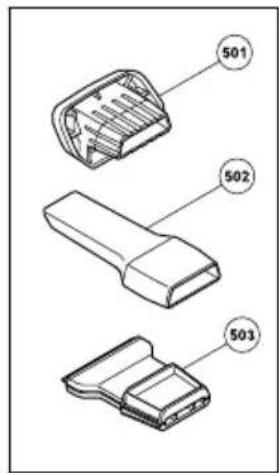
○ Brush Nozzle .... 1
○ Crevice Nozzle .... 1
○ Squeegee Nozzle .... 1
Standard accessories are subject to change without notice.
OPTIONAL ACCESSORIES (sold separately)
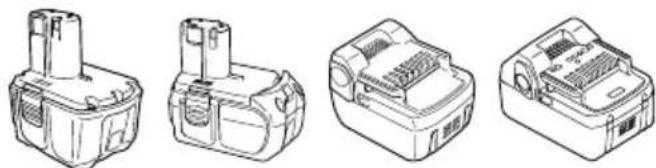
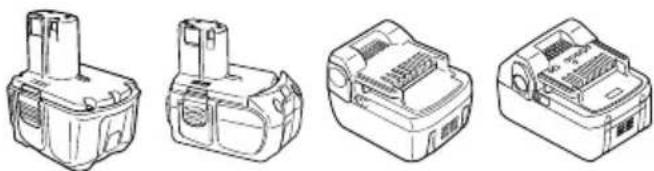
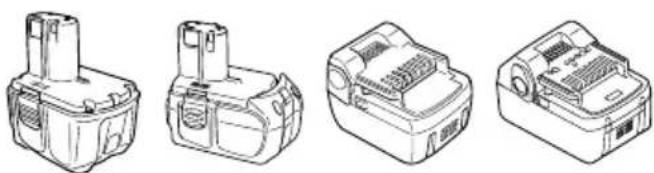
1. Battery
○ BCL1415, BCL1430 (For R14DL)
○ BCL1815, EBM1830 (For R18DL)
○ BSL1415, BSL1415X, BSL1430 (For R14DSL)
○ BSL1815X, BSL1830 (For R18DSL)
natural_image
Line drawings of four different types of power bank batteries (no text or symbols present)BCL1415 BCL1815 BSL1415 BSL1815X
BCL1430 EBM1830 BSL1415X BSL1830
BSL1430
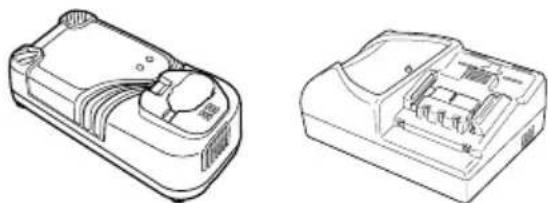
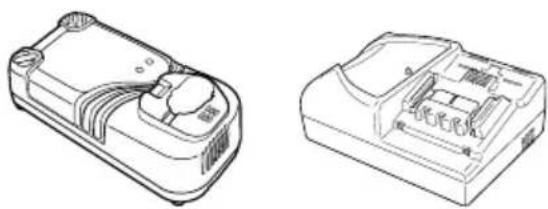
2. Charger
○UC18YRL (Charging voltage: 7.2 V – 18 V)
○UC18YRSL (Charging voltage: 7.2 V – 18 V)
natural_image
Technical line drawings of two electronic device modules (no text or symbols)UC18YRL UC18YRSL
Optional accessories are subject to change without notice.
APPLICATIONS
○Light-duty vacuuming of dry surfaces
○Light-duty vacuuming of damp or wet surfaces
BATTERY REMOVAL/INSTALLATION
1. Battery removal
Hold the handle tightly and push the battery latch (2 pcs.) to remove the battery (see Figs. 1, 2, 4 and 5).
CAUTION
Never short-circuit the battery.
2. Battery installation
Insert the battery while observing its polarities (see Figs. 1, 2, 4 and 5).
CHARGING
For rechargeable batteries, please charge in according to the handling instructions of the charger which you are using. (Figs. 3 and 6)
PRIOR TO OPERATION
1. Setting up and checking the work environment
Check if the work environment is suitable by following the precautions.
2. Mounting and dismounting the water guard and filter
Before using the appliance, check that the filter is securely mounted. (Figs. 7 and 8)
(1) Mounting
①Match the outside diameter of the filter to the inside diameter of the water guard and insert as far as the filter ring will go. (Fig. 7)
②Match the shape of the water guard (with the filter attached) to the shape of the hole in the dust case and insert as far as it will go (6 points). (Fig. 8)
(2) Dismounting
To dismount the water guard and the filter, follow the above procedures in reverse.
3. Attaching and removing the suction opening
Insert the suction opening into the suction port of the appliance as required. (Fig. 10)
HOW TO USE THE CORDLESS CLEANER
CAUTION
To prevent accidents when installing or removing the rechargeable battery, make sure that the appliance is switched off.
○Make sure that the rechargeable battery is properly installed. If not properly installed, the battery may fall out, causing injury.
1. Switch operation
Flip the switch towards you to start operation and back to stop operation. (Fig. 11)
2. Vacuuming water
Attach the squeegee nozzle as required. (Figs. 10 and 12)
CAUTION
○The maximum line on the dust case indicates the maximum amount of water that can be vacuumed. Do not vacuum beyond this line. (Fig. 12)
○Empty the water immediately after vacuuming.
○Do not carry the appliance with water in the dust case.
3. Emptying the dust case
CAUTION
To prevent accidents, make sure the power is switched off and remove the rechargeable battery from the appliance.
○Do not subject the dust case to strong impacts as this may cause deformation or damage.
○Empty the dust case frequently and keep the appliance, filter, etc. clean. Failure to do so may reduce vacuuming efficiency or cause malfunction of the motor or odor.
(1) Press the release button and remove the dust case. (Fig. 9)
(2) Hold the knob on the water guard (with the filter attached) to remove it from the dust case. (Fig. 8)
(3) Empty the dust case. (Fig. 13)
(4) Take hold of the knob on the filter and remove the filter from the water guard. (Fig. 7)
(5) Lightly tap the filter to remove all the dust. (Fig. 14)
(6) Fit the filter to the water guard. Match the outside diameter of the filter to the inside diameter of the water guard and insert as far as the filter ring will go. (Fig. 7)
(7) Match the shape of the water guard (with the filter attached) to the shape of the hole in the dust case and insert as far as it will go (6 points). (Fig. 8)
(8) Insert the projecting part of the appliance into the hole in the dust case and fit the dust case to the appliance. (Fig. 9)
MAINTENANCE AND INSPECTION
1. Cleaning the filter
CAUTION
○Do not wash the filter in a washing machine.
○Do not wash the filter in hot water or dry it by fire. If the vacuuming efficiency is poor even when the dust case has been emptied, remove the filter and wash it in cold or warm water. (The water should not be hot to the touch.)
After washing, dry out of direct sunlight.
2. Inspecting the mounting screws
Regularly inspect all mounting screws and ensure that they are properly tightened. Should any of the screws be loose, retighten them immediately. Failure to do so could result in serious hazard.
3. Maintenance of the motor
The motor unit winding is the very "heart" of the power tool.
Exercise due care to ensure the winding does not become damaged and/or wet with oil or water.
4. Cleaning on the outside
When the coldless cleaner is stained, wipe with a soft dry cloth or a cloth moistened with soapy water. Do not use chloric solvents, gasoline or paint thinner, for they melt plastics.
5. Storage
Store the coldless cleaner in a place in which the temperature is less than 40^ C and out of reach of children.
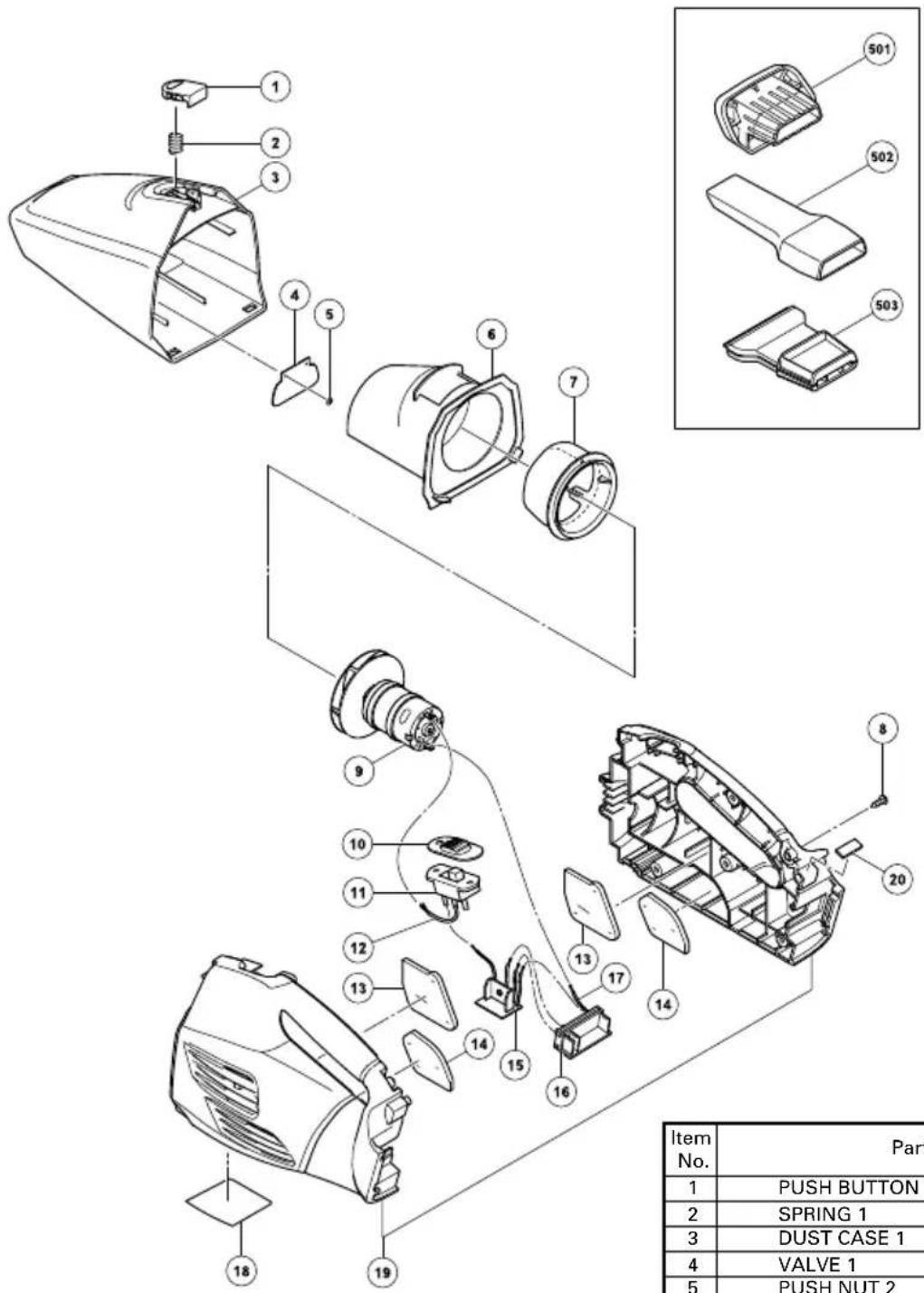
6. Service parts list
CAUTION
Repair, modification and inspection of HiKOKI Power Tools must be carried out by a HiKOKI Authorized Service Center.
This Parts List will be helpful if presented with the tool to the HiKOKI Authorized Service Center when requesting repair or other maintenance.
In the operation and maintenance of power tools, the safety regulations and standards prescribed in each country must be observed.
MODIFICATIONS
HiKOKI Power Tools are constantly being improved and modified to incorporate the latest technological advancements.
Accordingly, some parts may be changed without prior notice.
GUARANTEE
We guarantee HiKOKI Power Tools in accordance with statutory/country specific regulation. This guarantee does not cover defects or damage due to misuse, abuse, or normal wear and tear. In case of complaint, please send the Power Tool, undismantled, with the GUARANTEE CERTIFICATE found at the end of this Handling instruction, to a HiKOKI Authorized Service Center.
NOTE
Due to HiKOKI's continuing program of research and development, the specifications herein are subject to change without prior notice.
natural_image
Line drawings of four different types of HP batteries (no text or symbols present)BCL1415 BCL1815 BSL1415 BSL1815X
BCL1430 EBM1830 BSL1415X BSL1830
BSL1430
- Ladegerät
natural_image
Technical line drawings of two electronic device modules (no text or symbols)UC18YRL UC18YRSL
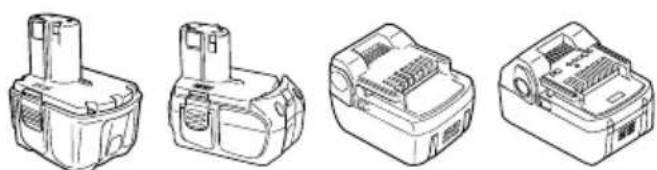
○BCL1415, BCL1430 (Pour R14DL)
○BCL1815, EBM1830 (Pour R18DL)
○BSL1415, BSL1415X, BSL1430 (Pour R14DSL)
○BSL1815X, BSL1830 (Pour R18DSL)
natural_image
Line drawings of four different types of batteries (no text or symbols present)BCL1415 BCL1815 BSL1415 BSL1815X
BCL1430 EBM1830 BSL1415X BSL1830
BSL1430
2. Chargeur
○UC18YRL (Tension de chargement: 7,2 V – 18 V)
○UC18YRSL (Tension de chargement: 7,2 V - 18 V)
natural_image
Two technical line drawings of electronic devices, one with internal components and the other with a labeled housing (no text or symbols present)UC18YRL UC18YRSL
○BCL1415, BCL1430 (Per R14DL)
○BCL1815, EBM1830 (Per R18DL)
○BSL1415, BSL1415X, BSL1430 (Per R14DSL)
○BSL1815X, BSL1830 (Per R18DSL)
natural_image
Line drawings of four different types of battery pack designs (no text or symbols)BCL1415 BCL1815 BSL1415 BSL1815X
BCL1430 EBM1830 BSL1415X BSL1830
BSL1430
2. Caricatore
natural_image
Technical line drawings of two electronic device modules (no text or symbols)UC18YRL UC18YRSL
WAARSCHUWING (R14DSL/R18DSL)
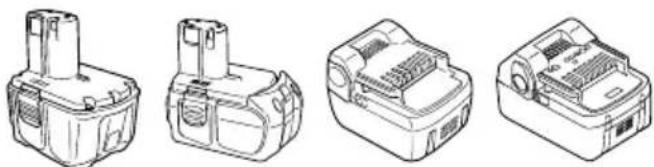
○BCL1415, BCL1430 (Voor R14DL)
○BCL1815, EBM1830 (Voor R18DL)
○BSL1415, BSL1415X, BSL1430 (Voor R14DSL)
○BSL1815X, BSL1830 (Voor R18DSL)
natural_image
Line drawings of four different types of battery modules (no text or symbols)BCL1415 BCL1815 BSL1415 BSL1815X
BCL1430 EBM1830 BSL1415X BSL1830
BSL1430
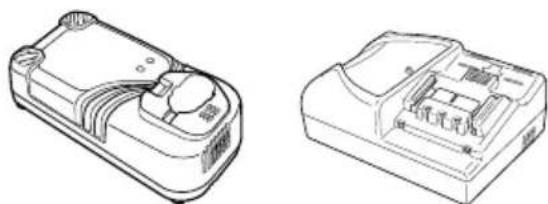
- Acculader
○UC18YRL (Laadspanning: 7,2 V - 18 V)
○UC18YRSL (Laadspanning: 7,2 V - 18 V)
natural_image
Technical line drawings of two electronic devices (no text or symbols visible)UC18YRL UC18YRSL
○BCL1415, BCL1430 (Para R14DL)
○BCL1815, EBM1830 (Para R18DL)
○BSL1415, BSL1415X, BSL1430 (Para R14DSL)
○BSL1815X, BSL1830 (Para R18DSL)

natural_image
Line drawings of four different types of HP batteries (no text or symbols present)BCL1415 BCL1815 BSL1415 BSL1815X
BCL1430 EBM1830 BSL1415X BSL1830
BSL1430
2. Cargador
natural_image
Technical line drawings of two electronic device modules (no text or symbols)UC18YRL UC18YRSL
○BCL1415, BCL1430 (Para R14DL)
○BCL1815, EBM1830 (Para R18DL)
○BSL1415, BSL1415X, BSL1430 (Para R14DSL)
○BSL1815X, BSL1830 (Para R18DSL)
natural_image
Line drawings of four different types of HP batteries (no text or symbols present)BCL1415 BCL1815 BSL1415 BSL1815X
BCL1430 EBM1830 BSL1415X BSL1830
BSL1430
2. Recarregador
natural_image
Two technical line drawings of electronic devices, one with internal components and the other with a labeled housing (no text or symbols present)UC18YRL UC18YRSL
| Item No. | Part Name Q'TY | |
| 1 | PUSH BUTTON 1 | |
| 2 | SPRING 1 | |
| 3 | DUST CASE 1 | |
| 4 | VALVE 1 | |
| 5 | PUSH NUT 2 | |
| 6 | WATER GUARD 1 | |
| 7 | FILTER 1 | |
| 8 | TAPPING SCREW (W/FLANGE) D4×20 6 | |
| 9 | MOTOR 1 | |
| 10 | SWITCH COVER 1 | |
| 11 | SLIDE SWITCH 1 | |
| 12 | NTERNAL WIRE 1 | |
| 13 | NOISE PACKING (A) 2 | |
| 14 | NOISE PACKING (B) 2 | |
| 15 | TERMINAL | 1 |
| 16 | TERMINAL SUPPORT (A) | 1 |
| 17 | TERMINAL | 1 |
| 18 | NAME PLATE | 1 |
| 19 | HOUSING (A) (B) SET | 1 |
| 501 | BRUSH NOZZLE | 1 |
| 502 | CREVICE NOZZLE | 1 |
| 503 | SQUEEGEE NOZZLE | 1 |
| Item No. | Part Name Q'TY | |
| 1 | PUSH BUTTON 1 | |
| 2 | SPRING 1 | |
| 3 | DUST CASE 1 | |
| 4 | VALVE 1 | |
| 5 | PUSH NUT 2 | |
| 6 | WATER GUARD 1 | |
| 7 | FILTER 1 | |
| 8 | TAPPING SCREW (W/FLANGE) D4×20 6 | |
| 9 | MOTOR 1 | |
| 10 | SWITCH COVER 1 | |
| 11 | SLIDE SWITCH 1 | |
| 12 | INTERNAL WIRE 1 | |
| 13 | NOISE PACKING (A) 2 | |
| 14 | NOISE PACKING (B) 2 | |
| 15 | PCB ASS'Y 1 | |
| 16 | BATTERY TERMINAL | 1 |
| 17 | INTERNAL WIRE 1 | |
| 18 | NAME PLATE | 1 |
| 19 | HOUSING (C) (D) SET | 1 |
| 20 | PACKING | 1 |
| 501 | BRUSH NOZZLE | 1 |
| 502 | CREVICE NOZZLE | 1 |
| English | Nederlands | ||
| GUARANTEE CERTIFICATE1Model No.2Serial No.3Date of Purchase4Customer Name and Address5Dealer Name and Address(Please stamp dealer name and address) | GARANTIEBEWIJS1Modelnummer2Serienummer3Datum van aankoop4Naam en adres van de gebruiker5Naam en adres van de handelaar(Stempel a.u.b. naam en adres vande de handelaar) | ||
| Deutsch | Español | ||
| GARANTIESCHEIN1Modell-Nr.2Serien-Nr.3Kaufdaturn4Name und Anschrift des Kunden5Name und Anschrift des Händlers(Bitte mit Namen und Anschrift des Handlers abstempeln) | CERTIFICADO DE GARANTIA1Número de modelo2Número de serie3Fecha de adquisición4Nombre y dirección del cliente5Nombre y dirección del distribudor(Se ruega poner el sellú del distribudor con su nombre y dirección) | ||
| Français Português | |||
| CERTIFICAT DE GARANTIE1No. de modèle2No de série3Date d'achat4Nom et adresse du client5Nom et adresse du revendeur(Cachet portant le nom et l'adresse du revendeur) | CERTIFICADO DE GARANTIA1Número do modelo2Número do série3Data de compra4Nome e morada do cliente5Nome e morada do distribuidor(Por favor, carímbe o nome e morada do distribuidor) | ||
| Italiano | |||
| CERTIFICATO DI GARANZIA1Modello2N° di serie3Data di acquisto4Nome e indirizzo dell'acquirente5Nome e indirizzo del rivenditore(Si prega di apporre il timbro con questi dati) | |||
HiKOKI
| 1 | |
| 2 | |
| 3 | |
| 4 | |
| 5 |
natural_image
Line drawing of a quill pen with inkwell (no text or symbols)
natural_image
Line drawing of a quill pen with inkwell (no text or symbols)Siemensring 34, 47877 willich, Germany
Tel: +49 2154 49930
Fax: +49 2154 499350
URL: http://www.hikoki-powertools.de
Hikoki Power Tools Netherlands B.V.
Brabanthaven 11, 3433 PJ Nieuwegein, The Netherlands
Tel: +31 30 6084040
Fax: +31 30 6067266
URL: http://www.hikoki-powertools.nl
Hikoki Power Tools (U.K.) Ltd.
Precedent Drive, Rooksley, Milton Keynes, MK 13, 8PJ,
United Kingdom
Tel: +44 1908 660663
Fax: +44 1908 606642
URL: http://www.hikoki-powertools.uk
Hikoki Power Tools France S.A.S.
Hikoki Power Tools Belgium N.V./S.A.
Koningin Astridlaan 51, B-1780 Wemmel, Belgium
Tel: +32 2 460 1720
Fax: +32 2 460 2542
URL http://www.hikoki-powertools.be
Hikoki Power Tools Italia S.p.A
Via Piave 35, 36077, Altavilla Vicentina (VI), Italy
Tel: +39 0444 548111
Fax: +39 0444 548110
URL: http://www.hikoki-powertools.it
Hikoki Power Tools Ibérica, S.A.
C/ Puigbarral, 26-28, Pol. Ind. Can Petit, 08227 Terrassa
(Barcelona), Spain
Tel: +34 93 735 6722
Fax: +34 93 735 7442
URL: http://www.hikoki-powertools.es
- GENERAL POWER TOOL SAFETY WARNINGS
- WARNING
- Save all warnings and instructions for future reference.
- 1) Work area safety
- 2) Electrical safety
- 3) Personal safety
- 4) Power tool use and care
- PRECAUTION
- CAUTION ON LITHIUM-ION BATTERY
- CAUTION
- WARNING (R14DSL/R18DSL)
- PRECAUTIONS FOR CORDLESS CLEANER
- STANDARD ACCESSORIES
- OPTIONAL ACCESSORIES (sold separately)
- Battery
- Charger
- APPLICATIONS
- BATTERY REMOVAL/INSTALLATION
- Battery removal
- Battery installation
- CHARGING
- PRIOR TO OPERATION
- Setting up and checking the work environment
- Mounting and dismounting the water guard and filter
- Mounting
- Dismounting
- Attaching and removing the suction opening
- HOW TO USE THE CORDLESS CLEANER
- Switch operation
- Vacuuming water
- Emptying the dust case
- MAINTENANCE AND INSPECTION
- Cleaning the filter
- Inspecting the mounting screws
- Maintenance of the motor
- Cleaning on the outside
- Storage
- Service parts list
- MODIFICATIONS
- GUARANTEE
- NOTE
- Chargeur
- Caricatore
- WAARSCHUWING (R14DSL/R18DSL)
- Cargador
- Recarregador
- HiKOKI
- Hikoki Power Tools Netherlands B.V.
- Hikoki Power Tools (U.K.) Ltd.
- Hikoki Power Tools France S.A.S.
- Hikoki Power Tools Belgium N.V./S.A.
- Hikoki Power Tools Italia S.p.A
- Hikoki Power Tools Ibérica, S.A.
Brand : HiKOKI
Model : R14DL
Category : Mop