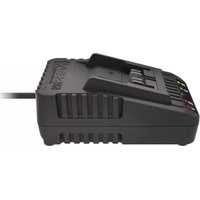
KAC02 - Battery charger KRESS - Free user manual and instructions
Find the device manual for free KAC02 KRESS in PDF.



| Brand | Kress |
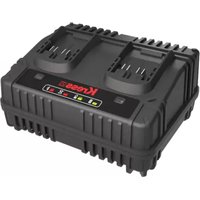
| Model | KAC02 |
| Product Type | Battery Charger |
| Input Voltage | 220-240 V AC, 50/60 Hz |
| Charging Current | 2 A |
| Rated Power | 50 W |
| Compatible Battery Type | Li-Ion Kress (recommended models) |
| Number of Cells | 4, 5 or 10 |
| Charging Time (2.0 Ah) | Approximately 1 hour |
| Charging Time (4.0 Ah) | Approximately 2 hours |
| Charging Time (8.0 Ah) | Approximately 4 hours |
| Weight | 0.45 kg |
| Protection Class | II (double insulation) |
| Usage | Indoor only |
| LED indicator | Green LED (charging/complete), red (defective battery or hot/cold delay) |
| Safety functions | Hot/cold delay, defective battery detection, short-circuit protection |
| Maintenance | Disconnect before cleaning; use a dry cloth; do not use water or chemical cleaners |
| Recommended charging temperature | 18 °C to 24 °C |
| Compliance | Directives 2014/35/EU, 2014/30/EU, 2011/65/EU and standards EN 60335-1, EN IEC 60335-2-29, etc. |
| Included accessories | Charger only; battery sold separately |
Frequently Asked Questions - KAC02 KRESS
User questions about KAC02 KRESS
0 question about this device. Answer the ones you know or ask your own.
Ask a new question about this device
Download the instructions for your Battery charger in PDF format for free! Find your manual KAC02 - KRESS and take your electronic device back in hand. On this page are published all the documents necessary for the use of your device. KAC02 by KRESS.
USER MANUAL KAC02 KRESS
TABLE OF CONTENTS
Introduction....3
Safety Instructions....4
Component List....5
Technical Data....6
Charging Procedure....6
Problem Solution....7
Maintenance....7
Environmental Protection....7
Declaration of Conformity....8
INTRODUCTION
Dear Customer,
Thank you for buying this Kress product. We are dedicated to developing high quality products to meet you lawn & garden requirements.
The Kress brand is synonymous with premium quality service. Over the years of your products life, if you have any questions or concerns about your product, please contact your location of purchase or our Customer Service Team for assistance.
We are confident you will enjoy working with your Kress product for years to come.
Users can view the electronic instructions at https://www.kress.com/.
ORIGINAL INSTRUCTIONS GENERAL SAFETY WARNINGS
WARNING Read all safety warnings and all instructions. Failure to follow the warnings and instructions may result in electric shock, fire and/or serious injury.
Save all warnings and instructions for future reference.
This appliance can be used by children aged from 8 years and above and persons with reduced physical, sensory or mental capabilities or lack of experience and knowledge if they have been given supervision or instruction concerning use of the appliance in a safe way and understand the hazards involved. Children shall not play with the appliance. Cleaning and user maintenance shall not be made by children without supervision.
If the supply cord is damaged, it must be replaced by the manufacturer, its service agent or similarly qualified persons in order to avoid a hazard.
ADDITIONAL SAFETY INSTRUCTIONS FOR YOUR BATTERY CHARGER
- Before charging, read the instructions.
- Do not charge a leaking battery.
- Do not use chargers for works other than those for which they are designed.
- Before charging, ensure your charger is matching the local AC supply.
- For indoor use, or do not expose to rain.
- The charging device must be protected from moisture.
- Do not use the charging device outdoors.
- Do not short out the contacts of battery or charger.
- Do not open the unit and keep out of the reach of children.
- Do not charge the batteries of other manufactures or ill-suited models.
- Ensure that the connection between the battery charger and battery is correctly positioned and is not obstructed by foreign bodies.
- Keep battery charger's slots are free of foreign objects and protect against dirt and humidity. Store in a
dry and frost-free place.
- When charging batteries, ensure that the battery charger is in a well-ventilated area and away from inflammable materials. Batteries can get hot during charging. Do not overcharge any batteries. Ensure that batteries and chargers are not left unsupervised during charging.
- Do not recharge non-rechargeable batteries, as they can overheat and break.
- Longer life and better performance can be obtained if the battery pack is charged when the air temperature is between 18°C and 24°C. Do not charge the battery pack in air temperatures below 0°C, or above 40°C. This is important as it can prevent serious damage to the battery pack.
- Charge only battery pack of the same model provided by Kress and of models recommended by Kress.
SYMBOLS
 | Read the operator's manual. |
 | Warning |
 | For indoor use only |
 | Double insulation |
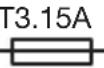 | Fuse |
 | Positive terminal |
 | Negative terminal |
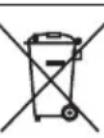 | Waste electrical products must not be disposed of with household waste. Please recycle where facilities exist. Check with your local authorities or retailer for recycling advice. |
COMPONENT LIST
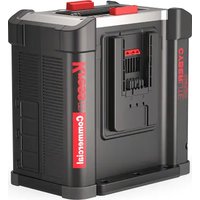
- BATTERY PACK *
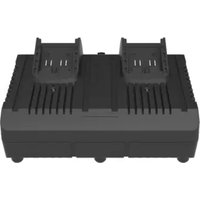
- CHARGER
- CHARGE INDICATOR LIGHT
* Not all the accessories illustrated or described are included in standard delivery.
We recommend that you purchase your accessories listed in the above list from the same store that sold you the battery charger. Use of any other accessory or attachment may increase the risk of injury. Refer to the accessory packaging for further details. Store personnel can assist you and offer advice.
TECHNICAL DATA
| Rated input voltage 220~ | 240V 50/60HZ |
| Output voltage | 20V--- |
| Charging current 2A | |
| Rated power 50W | |
| Charge battery Li-ion | |
| Charging time (approx.) | |
| 2.0Ah | 1hr |
| 4.0Ah | 2hrs |
| 8.0Ah | 4hrs |
| Protection class | □/II |
| Machine weight 0.41kg | |
For the technical data of the types, the number of cells and the rated capacity of the batteries that can be charged, please refer the nameplate of the battery pack supplied by Kress.
CHARGING PROCEDURE

NOTE: Before using the tool, read the instruction book carefully.
CHARGING INSTRUCTIONS
1. CHARGING YOUR BATTERY PACK
WARNING: The charger and battery pack are specifically designed to work together so do not attempt to use any other devices. Never insert or allow metallic objects into your charger or battery pack connections because an electrical failure and hazard will occur.
Your battery pack is UNCHARGED and you must charge once before use. When you charge the new battery or one which has not been used for long periods of time, it may not reach full charge until after you have discharged it fully in use and recharge it several times.
3. HOW TO CHARGE YOUR BATTERY CHARGING PROCEDURE
1) Plug the charger into an appropriate outlet.
2) Slide the battery pack into the charger, the green light flashes to indicate the charging process has started.
3) After charging approx 1-2 hours, the light will stay green without flashing. The pack is now fully charged, unplug the charger and remove the battery pack.

WARNING:
When battery charge runs out after
continuously use or exposure to direct sunlight or heat, allow time for the tool to cool down before re-charging to achieve the full charge.
CHARGING INDICATOR
This charger is designed to detect some problems that can arise with battery packs. Indicator lights indicate problems (see table below). If this occurs, insert a new battery pack to determine if the charger is OK. If the new battery charges correctly, then the original pack is defective and should be returned to a service center or recycling service center. If the new battery pack displays the same problem as the original Battery Pack, have the charger tested at an authorized service center.
| Light | ON/OFF flash | Status |
| Red on | Defective Battery | |
| Red flash | ---- Hot/Cold Delay | |
| Green on | Fully Charged | |
| Green flash | ---- Charging | |
HOT/COLD BATTERY PACK DELAY
This charger has a HOT/COLD battery pack delay feature. When the charger detects a battery pack that is too hot or cold, it automatically starts a HOT/COLD Pack Delay (Red light flashes), and suspends charging until the battery pack has reached the correct temperature. The charging process will then automatically begin (Green light become flash continuously). This feature ensures maximum battery life.
DEFECTIVE BATTERY PACKS
This charger will detect a weak battery pack. When a weak battery pack is inserted into the charger, the charger will try to repair it. This process will last about 30mins (Green light flashes). If the repair finish, it will automatically begin to charge the battery pack to the highest capacity possible (Green light become flash continuously). If the light keeps Red on, the battery pack is dead.
NOTE: Repaired battery packs are still usable but should not be expected to perform as much work as new battery packs.
IMPORTANT CHARGING NOTES:
- For a new battery or a battery that has been
in storage for sometime, please recharge the battery before use. If you want to store the battery for a long time, please fully charge the battery pack to ensure maximum battery life.
- Longer life and better performance can be obtained if the battery pack is charged when the air temperature is between (18-24°C). Do not charge the battery pack in air temperatures below 0°C, or above 40°C. This is important as it can prevent serious damage to the battery pack.
- Never freeze your charger or immerse charger in water or any other liquid.
- When the battery pack fails to produce sufficient power on jobs that were previously done easily, please recharge your battery, do not continue to use under this condition. You may charge a partially used pack whenever you desire with no adverse effect on the battery pack.
- When charging it is normal that the charger and battery pack may become warm to touch.
- If the battery pack does not charge properly:
a. Check current at power outlet by plugging in another appliance.
b. Plug and unplug to check whether the charger is ok.
c. Check whether the battery has been damaged
d. Move the charger and battery pack to a location where the surrounding air temperature is approximately 18-24°C.
e. If the charging problem persists, take the tool, battery pack and charger to an authorized service center.
f. Under certain conditions, when the charger is plugged into the power supply, the exposed charging contacts inside the charger can be shorted by foreign material. Foreign materials of a conductive nature such as metallic particles should be kept away from charger cavities. Always unplug the charger from the power supply when there is no battery pack in the charger or before attempting to clean.
TO REMOVE OR INSTALL BATTERY PACK
Depress the Battery Pack Release Button to remove the Battery Pack from your tool. After recharging, insert the battery pack into the battery port. A simple push and slight pressure will be sufficient.
PROBLEM SOLUTION
I CANNOT FIT THE BATTERY INTO THE BATTERY CHARGER. WHY?
a) Check if the charger and the battery pack are specifically designed for working together.
b) The battery can be inserted into the charger only in one direction. Turn the battery around until it can be inserted into the slot, the indicator light should be green and flash when the battery is charging.
REASONS FOR DIFFERENT CHARGING TIMES
The charging time can be affected by many reasons which are not defects in your product.
a) If the battery pack is only partly discharged it may be re-charged fully in 1 hour.
b) If the battery pack and ambient temperature are very cold/ hot, it may take longer (1-2 hours) to re-charge. Please find an appropriate environment with proper air temperature to start charging.
c) If the battery pack is very hot, remove battery pack from the charger and allow battery pack to cool first to ambient temperature and then recharging can be started.
MAINTENANCE
Remove the plug from the socket before carrying out any adjustment, servicing or maintenance.
Your battery charger requires no additional lubrication or maintenance. Never use water or chemical cleaners to clean your charger. Wipe clean with a dry cloth. Always store your charger in a dry place.
If the supply cord is damaged, it must be replaced by the manufacturer, its service agent or similarly qualified persons in order to avoid a hazard.
ENVIRONMENTAL PROTECTION

Waste electrical products must not be disposed of with household waste. Please recycle where facilities exist. Check with your
local authorities or retailer for recycling advice.
DECLARATION OF CONFORMITY
We,
Positec Germany GmbH
Postfach 32 02 16, 50796 Cologne, Germany
Declare that the product,
Description Kress Battery Charger
Type KAC02
Complies with the following Directives,
2014/35/EU, 2014/30/EU,
2011/65/EU&(EU)2015/863
Standards conform to
EN 60335-1, EN IEC 60335-2-29, EN 62233,
EN IEC 55014-1, EN IEC 55014-2,
EN IEC 61000-3-2, EN 61000-3-3
EN IEC 63000

8
EN
2023/08/21
Allen Ding
Deputy Chief Engineer, Testing & Certification
Positec Technology (China) Co., Ltd
18, Dongwang Road, Suzhou Industrial
Park, Jiangsu 215123, P. R. China
INHALTSVERZEICHNIS
Einführung......9
18, Dongwang Road, Suzhou Industrial
Park, Jiangsu 215123, P. R. China
SOMMAIRE
Introduction....15
Procedure De Charge....18
DÉCLARATION DE CONFORMITÉ
Nous,
Positec Germany GmbH
Postfach 32 02 16, 50796 Cologne, Germany
18, Dongwang Road, Suzhou Industrial
Park, Jiangsu 215123, P. R. China
INDICE
Introduzione....21
Standards conform to
EN 60335-1, EN IEC 60335-2-29, EN 62233,
EN IEC 55014-1, EN IEC 55014-2,
EN IEC 61000-3-2,
EN 61000-3-3
EN IEC 63000

26
|
2023/08/21
Allen Ding
18, Dongwang Road, Suzhou Industrial
Park, Jiangsu 215123, P. R. China
ÍNDICE
18, Dongwang Road, Suzhou Industrial
Park, Jiangsu 215123, P. R. China
INHOUDSOPGAVE
Inleiding....33
18, Dongwang Road, Suzhou Industrial
Park, Jiangsu 215123, P. R. China
INDHOLDSFORTEGNELSE
Introduktion....39
18, Dongwang Road, Suzhou Industrial
Park, Jiangsu 215123, P. R. China
СОДЕРЖАНИЕ
Введение....44
INNEHÅLLSFÖRTECKNING
Introduktion....50
Säkerhetsinstruktioner....51
Komponenter....52
Teknisk Information....52
Laddningsprocedur....53
Felsökning....54
Underhåll....54
Miljöskydd....54
Deklaration Om Överensstämmelse....54
INTRODUKTION
Bästa kund,
Save all warnings and instructions for future reference.
18, Dongwang Road, Suzhou Industrial Park, Jiangsu 215123, P. R. China


- TABLE OF CONTENTS
- INTRODUCTION
- ORIGINAL INSTRUCTIONS GENERAL SAFETY WARNINGS
- Save all warnings and instructions for future reference.
- ADDITIONAL SAFETY INSTRUCTIONS FOR YOUR BATTERY CHARGER
- COMPONENT LIST
- TECHNICAL DATA
- CHARGING PROCEDURE
- CHARGING INSTRUCTIONS
- CHARGING YOUR BATTERY PACK
- HOW TO CHARGE YOUR BATTERY CHARGING PROCEDURE
- WARNING:
- CHARGING INDICATOR
- HOT/COLD BATTERY PACK DELAY
- DEFECTIVE BATTERY PACKS
- IMPORTANT CHARGING NOTES:
- TO REMOVE OR INSTALL BATTERY PACK
- PROBLEM SOLUTION
- I CANNOT FIT THE BATTERY INTO THE BATTERY CHARGER. WHY?
- REASONS FOR DIFFERENT CHARGING TIMES
- MAINTENANCE
- Remove the plug from the socket before carrying out any adjustment, servicing or maintenance.
- ENVIRONMENTAL PROTECTION
- DECLARATION OF CONFORMITY
- INHALTSVERZEICHNIS
- SOMMAIRE
- DÉCLARATION DE CONFORMITÉ
- INDICE
- ÍNDICE
- INHOUDSOPGAVE
- INDHOLDSFORTEGNELSE
- СОДЕРЖАНИЕ
- INNEHÅLLSFÖRTECKNING
- INTRODUKTION
Brand : KRESS
Model : KAC02
Category : Battery charger