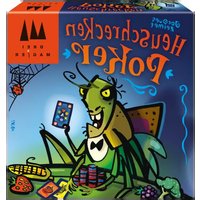
Heuschrecken Poker - Board game Schmidt - Free user manual and instructions
Find the device manual for free Heuschrecken Poker Schmidt in PDF.




| Product type | Board game |
| Brand | Schmidt |
| Model | Heuschrecken Poker |
| Number of players | 2 to 4 |
| Recommended age | 8 years and up |
| Game duration | 20 minutes |
| Box contents | 4 sets of 8 poker cards (distinct colors), garden cards, winner tokens |
| Box dimensions | 15 x 10 x 3 cm |
| Weight | 200 g |
| Power supply | None (card game) |
| Materials | Cardboard, paper |
| Care and cleaning | Clean with a dry, soft cloth |
| Safety | Not suitable for children under 3 years due to small parts |
| Spare parts and repairability | Not available |
Frequently Asked Questions - Heuschrecken Poker Schmidt
User questions about Heuschrecken Poker Schmidt
0 question about this device. Answer the ones you know or ask your own.
Ask a new question about this device
Download the instructions for your Board game in PDF format for free! Find your manual Heuschrecken Poker - Schmidt and take your electronic device back in hand. On this page are published all the documents necessary for the use of your device. Heuschrecken Poker by Schmidt.
USER MANUAL Heuschrecken Poker Schmidt
natural_image
Four colorful, ornate cards with stylized designs and no visible text or symbolsnatural_image
Illustration of a fan-shaped playing cards with various colorful and cartoon character designs (no text or symbols)Gartenkarten /Garden cards /Cartes de jardin/Carte giardino
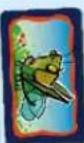
14
Heuschrecken
Grasshoppers
Criaguets
Cavallette

13
Mais
Corn
Maïs
Mais

13
Erdbeeren
Strawberries
Fraises
Fragole
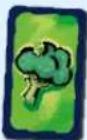
13
Brokkoli
Broccoli
Brocoli
Broccoli
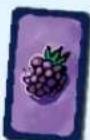
13
Brombeeren
Blackberries
Mûres
More
24 Gewinnchips / Win chips / Jetons gagnants / Gettoni premio

D
Heuschrecken Poker
Spielidee
text_image
Illustration showing a set of playing cards with visible card symbols and numbers, possibly representing card types or rankings.text_image
Illustrated food categories with cartoon illustrations and corresponding color blocks for different types of vegetables.
text_image
Illustrated food preparation guide showing a tray with vegetables, corn, strawberries, and grapes, with a gift box highlighting the food item.Heuschreckenplage
natural_image
Cartoon illustration of three green caterpillars with fruits and vegetables (no text or symbols)flowchart
graph TD
    A["Card with X"] --> B["Game Icon"]
    B --> C["Game Icon"]
    C --> D["Game Icon"]
    D --> E["Card with Card"]
    style A fill:#f9f,stroke:#333
    style E fill:#bbf,stroke:#333
GB
Grasshopper Poker
Idea of the game
The players bid for garden cards, to achieve gainful sets of plants. But, always beware of the greedy grasshoppers!
Preparation for the game
Each player chooses a poker card set A of one colour and picks up all 8 cards in his hand. If you are playing with less than 4 players, put the other sets back into the box.
Place the win chips Ⓑ at the ready.
Shuffle the garden cards well and place them face down on the table in a draw pile ©
Reveal 3 garden cards from the draw pile and place these in the common display D. Important: If you reveal cards of the same category, place them on top of each other E
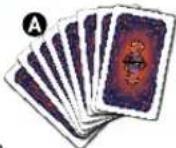
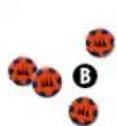
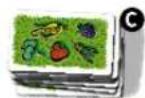
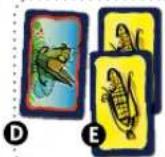
Game overview
In every turn, the players bid with their poker cards for the garden cards in the display. After 8 rounds, the last card in the hand has been played and the round ends with an intermediate score. When all the garden cards have been used up, the game ends and the winner is determined.
This is how a turn is played:
① Each player chooses one of his poker cards from his hand and places it face-down in front of them. When every player has a card in front of them, they all reveal their selected card at the same time and compare the result.
② The player with the highest number first selects a category in the common display and takes all cards of that category. Then the player with the second highest card and so on.
- The players may not pass up selecting a category.
• Each player may only pick once. Left-over categories stay in the display. - If there are not enough categories to pick, last players get out empty-handed.
3 The players then cultivate their own private garden with the cards they have won (see Garden cultivation).
4 Every player places the played poker card face-down to the side. This card can no longer be played in this round.
⑤ The common display is then made up to 3 cards with cards from the draw pile. Here again: if you reveal over cards of the same category, place them on top of each other.
The Bidding:
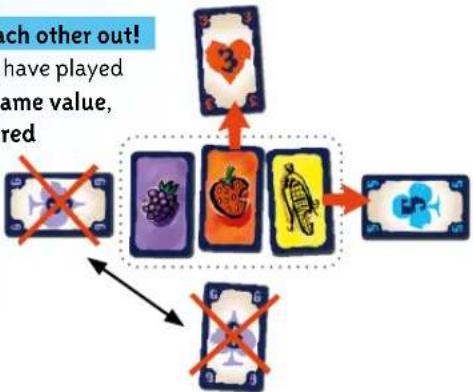
Same cards cancel each other out!
If two or more players have played poker cards with the same value, these are not considered
for choosing from the common display. They come away empty-handed from this turn.
flowchart
graph TD
    A["Player 3"] --> B["Game Center"]
    C["Player 2"] --> B
    D["Player 4"] --> B
    E["Player 5"] --> B
    F["Player 6"] --> B
    G["Player 7"] --> B
    H["Player 8"] --> B
    I["Player 9"] --> B
    J["Player 10"] --> B
    K["Player 11"] --> B
    L["Player 12"] --> B
    M["Player 13"] --> B
    N["Player 14"] --> B
    O["Player 15"] --> B
    P["Player 16"] --> B
    Q["Player 17"] --> B
    R["Player 18"] --> B
    S["Player 19"] --> B
    T["Player 20"] --> B
    U["Player 21"] --> B
    V["Player 22"] --> B
    W["Player 23"] --> B
    X["Player 24"] --> B
    Y["Player 25"] --> B
    Z["Player 26"] --> B
    AA["Player 27"] --> B
    AB["Player 28"] --> B
    AC["Player 29"] --> B
    AD["Player 30"] --> B
    AE["Player 31"] --> B
    AF["Player 32"] --> B
    AG["Player 33"] --> B
    AH["Player 34"] --> B
    AI["Player 35"] --> B
    AJ["Player 36"] --> B
    AK["Player 37"] --> B
    AL["Player 38"] --> B
    AM["Player 39"] --> B
    AN["Player 40"] --> B
    AO["Player 41"] --> B
    AP["Player 42"] --> B
    AQ["Player 43"] --> B
    AR["Player 44"] --> B
    AS["Player 45"] --> B
    AT["Player 46"] --> B
    AU["Player 47"] --> B
    AV["Player 48"] --> B
    AW["Player 49"] --> B
    AX["Player 50"] --> B
    AY["Player 6"] --> AZ["Red Box"]
    AZ --> BA["X"]
    BA --> BB["Red Box"]
    BB --> BC["X"]
    BC --> BD["X"]
    BD --> BE["X"]
    BE --> BF["X"]
    BF --> BG["X"]
    BG --> BH["X"]
    BH --> BI["X"]
    BI --> BJ["X"]
    BJ --> BK["X"]
    BK --> BL["X"]
    BL --> BM["X"]
    BM --> BN["X"]
    BN --> BO["X"]
    BO --> BP["X"]
    BP --> BQ["X"]
    BQ --> BR["X"]
    BR --> BS["X"]
    BS --> BT["X"]
    BT --> BU["X"]
    BU --> BV["X"]
    BV --> BW["X"]
    BW --> BX["X"]
    BX --> BY["X"]
    BY --> BZ["X"]

Ace
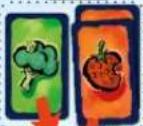
If a player plays his ace, he gets all cards in the common display.

× Card
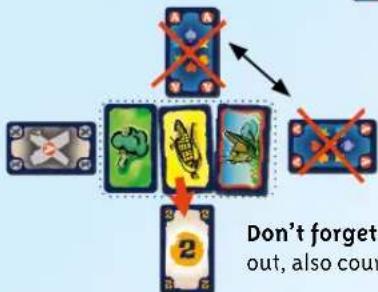
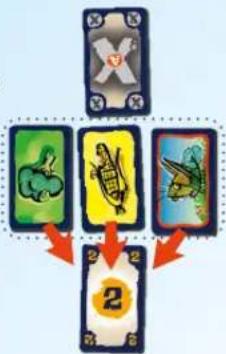
If a player plays his X card, he gets nothing and takes no category from the common display.
BUT: If an X card and an ace were played at the same time, the X card takes over the power of the ace and the the X card gets the whole display.




text_image
Don't forget: out, also counDon't forget: Same cards cancel each other out, also counts for the ace and X card.
Stalemate
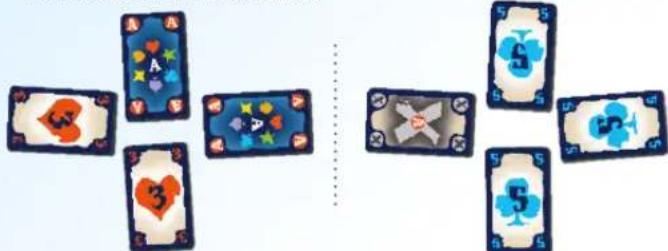
If no player could choose a category from the display, because only same cards and/or X cards were played, there is a stalemate situation:
text_image
Illustration showing a set of playing cards with visible card numbers and symbols, including Ace, Card, Basket, and X.In this case, an extra garden card is placed in the common display from the draw pile (on top of an existing category if applicable) and the players all choose a new poker card to bid for the new display.
If there are two stalemates in succession, all 4 cards of the common display are placed on the discard pile. Three new garden cards from the draw pile are played in the display and a new turn begins.
Garden cultivation
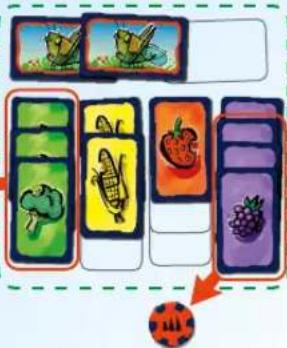
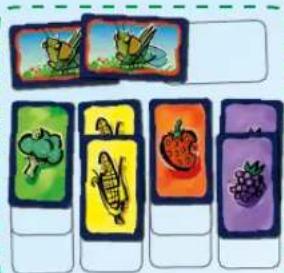
The won garden cards are laid out in your own private garden, sorted into categories.
Plants are placed in vertical rows and grasshoppers horizontally at the top:
Harvesting = 1 win chip
As soon as a player has cultivated
a set of 3 plants of the same category
in his private garden, he harvest these and swaps the 3 cards for
1 win chip. The 3 cards are placed on the discard pile.
Note: left-over plants remain in the private garden.
text_image
Illustrated children's educational cards with colorful illustrations of animals and fruits, likely for a math or children's educational material.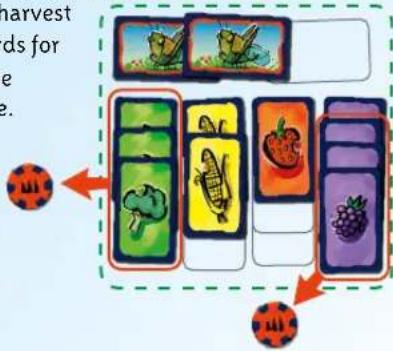
flowchart
graph TD
    A["Harvest"] --> B["Grain 1"]
    A --> C["Grain 2"]
    A --> D["Grain 3"]
    A --> E["Grain 4"]
    A --> F["Grain 5"]
    B --> G["Delivery Box 1"]
    C --> H["Delivery Box 2"]
    D --> I["Delivery Box 3"]
    E --> J["Delivery Box 4"]
    F --> K["Delivery Box 5"]
natural_image
Cartoon illustration of three green beetles with vegetables and a tomato, surrounded by grass (no text or symbols)Plague of grasshoppers
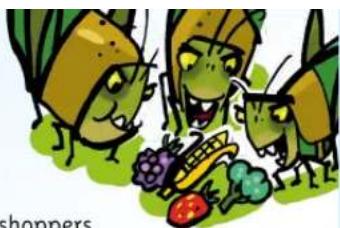
If three or more grasshoppers land in a private garden, they eat up the entire garden.
All garden cards, including all grasshoppers, are placed on the discard pile.
Important: if a player gets plants and grasshoppers, which cause a plague, at the same time, he may not cultivate the plants anymore.
End of the round and intermediate score
A round ends, when all players have played all 8 of their poker cards. Any cards left over in the common display are left there. The player with the most plants in his private garden (grasshoppers are not counted) gets 1 win chip. In case of a draw, all winners get 1 win chip.
The players pick up the 8 poker cards, which they have placed to one side and the common display is filled up to 3 cards again. A new round begins.
End of the game and the winner
The game ends, when all of the garden cards have been used up. A final intermediate score is made and the winner with the most chips is determined. If there is a draw, the player with fewer grasshoppers in his private garden wins. If there is still a draw, then there are several winners.
Game for two players
The game for two players is played by the same rules except that: if there is only one winner in a turn, the player must take the whole display.
Beginners' variation
For an easier game, the special function of the X card can be left out. The X card is then just a pass card and does not take over the function of the ace.
flowchart
graph TD
    A["X"] --> B["Green Vegetable"]
    A --> C["Antar Fruit"]
    A --> D["Blooded Turtle"]
    B --> E["2 Card Icon"]
    C --> F["2 Card Icon"]
    D --> G["2 Card Icon"]
F
Poker des Criquets
Idée du jeu
text_image
Image showing a grid of playing cards with visible card numbers and star patterns, possibly representing card types or game cards.text_image
Illustrated food categories with illustrations and labels, likely for a children's educational material.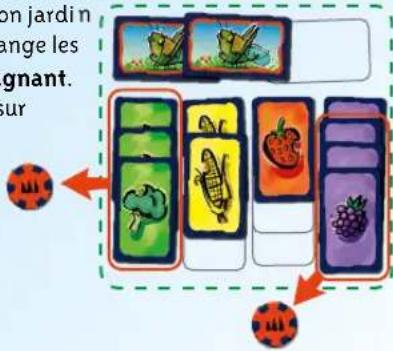
natural_image
Cartoon illustration of three green grasshoppers interacting with vegetables (no text or symbols)text_image
Illustration of playing cards with visible card symbols and numbers, including Ace, A, 3, and others.natural_image
Four colorful cartoon-style icons: frog, corn cob, strawberry, and grape cluster (no text or symbols)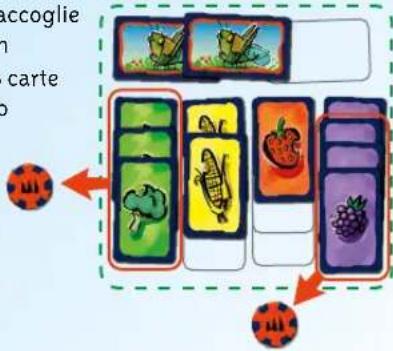
flowchart
graph TD
    A["Accoglie\nCarte\n"] --> B["Green Box with Broccoli"]
    B --> C["Yellow Box with Corned Carrot"]
    C --> D["Orange Box with Strawberries"]
    D --> E["Purple Box with Grapes"]
    E --> F["Red Box with Potato"]
    style A fill:#f9f,stroke:#333
    style F fill:#bbf,stroke:#333
natural_image
Cartoon illustration of three green caterpillars with vegetables and a corn cob, no text or symbols presentnatural_image
Cartoon illustration of a green insect with yellow eyes and blue wings perched on grass (no text or symbols)Copyright:
DREI MAGIER
The image contains no discernible text or characters. The horizontal line is a stylistic or background element and must be ignored according to the rules.