S3IC - Indoor bike trainer BH FITNESS - Free user manual and instructions
Find the device manual for free S3IC BH FITNESS in PDF.


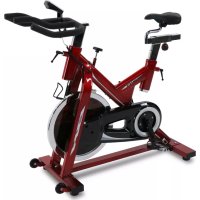
| Brand | BH Fitness |
| Model | S3IC |
| Product Type | Indoor Cycling Trainer |
| Maximum User Weight | 136 kg (300 lb) |
| Console Power | 2 AA batteries (not included) |
| Display | Speed, RPM, Calories, Distance, Time, Heart Rate (optional) |
| Resistance Type | Friction brake with tension knob |
| Drive System | Belt |
| Saddle Adjustments | Height and fore/aft |
| Handlebar Adjustments | Height |
| Included Accessories | Bottle holder, pedals with toe cages |
| Transport Wheels | Yes (on front stabilizer) |
| Leveling Feet | 4 for stability |
| Maintenance | Clean with a soft damp cloth; do not use chemicals |
| Safety | Regularly check bolts and nuts; replace defective parts; do not use if damaged |
| Frame Warranty | Lifetime (replacement) |
| Parts Warranty | 5 years |
| Labor Warranty | 1 year |
| Customer Service | Tel: 1 866 325-2339, email: CustomerSupport@BHNorthAmerica.com |
| Spare Parts | Full list provided (references S3IC-XX) |
Frequently Asked Questions - S3IC BH FITNESS
User questions about S3IC BH FITNESS
0 question about this device. Answer the ones you know or ask your own.
Ask a new question about this device
Download the instructions for your Indoor bike trainer in PDF format for free! Find your manual S3IC - BH FITNESS and take your electronic device back in hand. On this page are published all the documents necessary for the use of your device. S3IC by BH FITNESS.
USER MANUAL S3IC BH FITNESS
natural_image
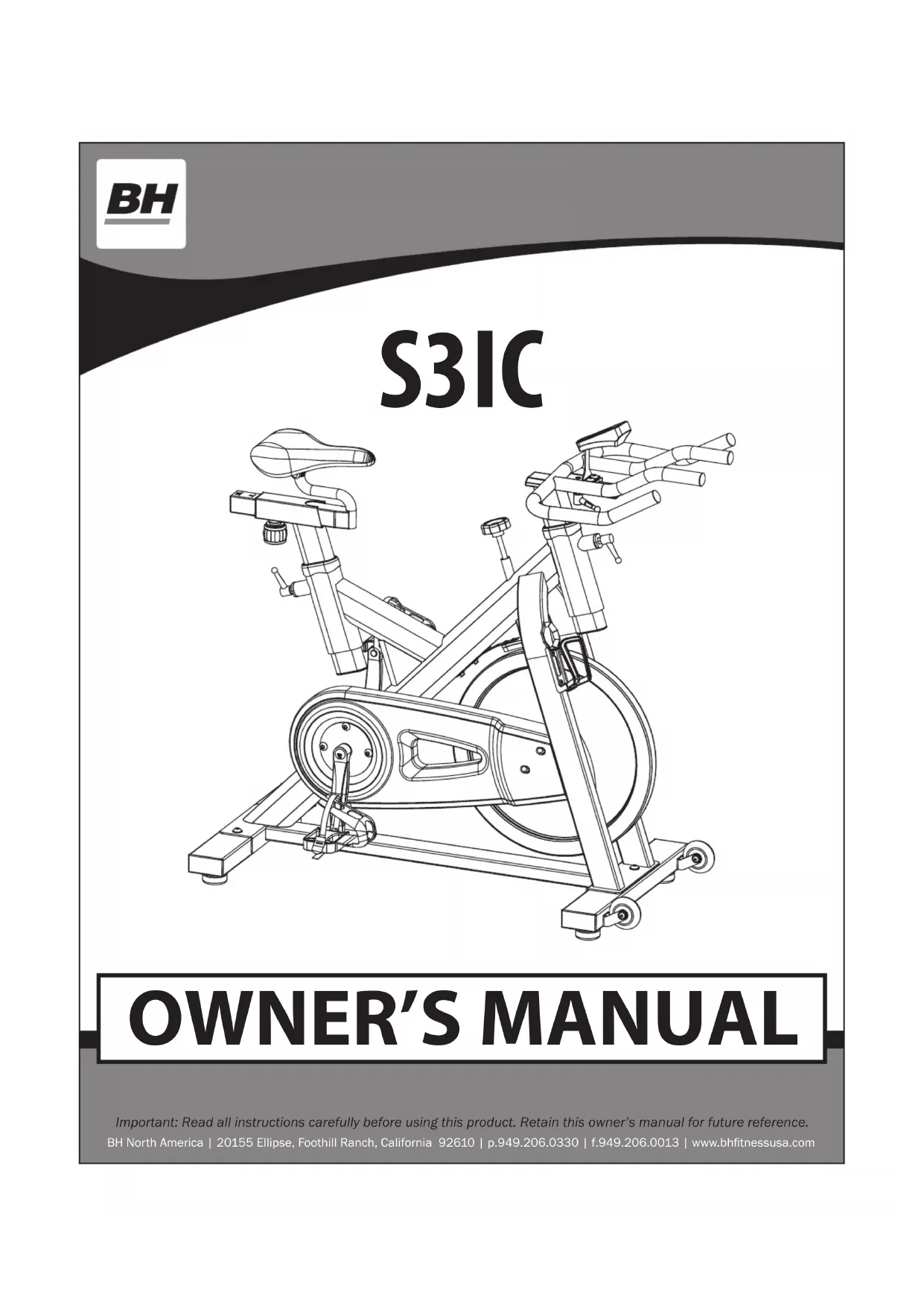
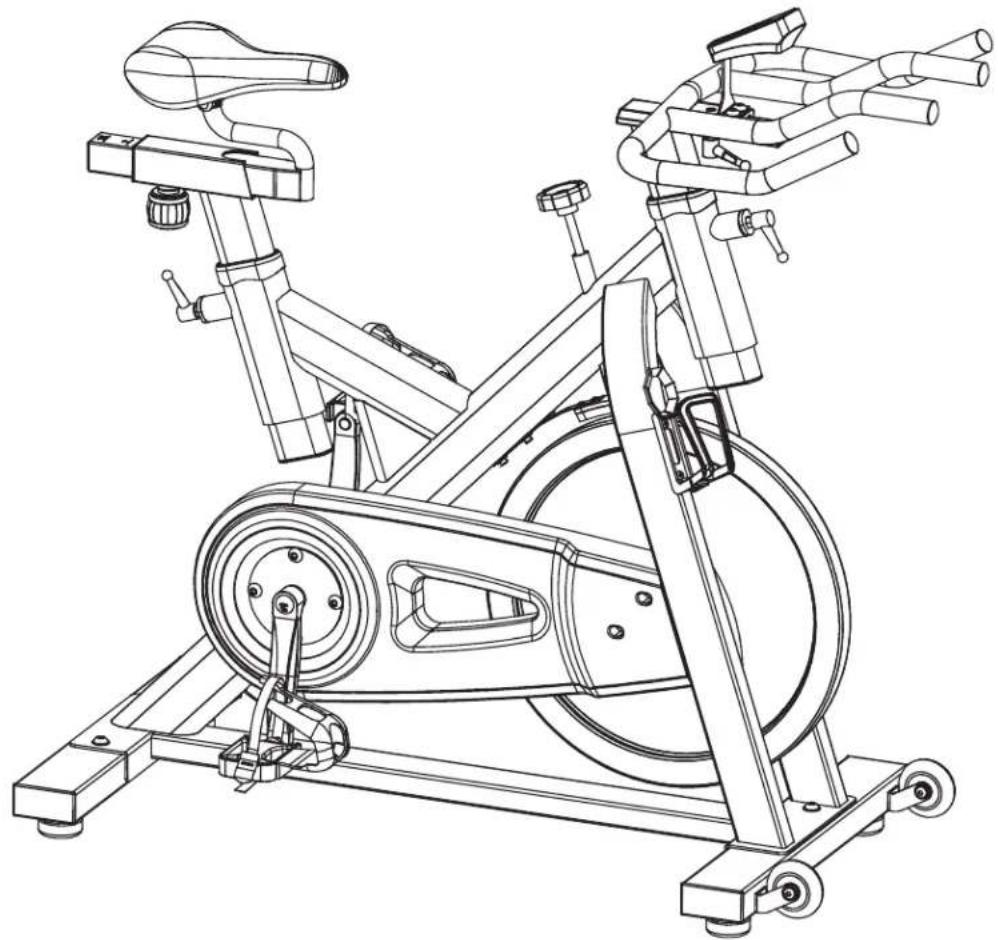
Line drawing of a stationary exercise bike with visible components and wheels (no text or symbols)OWNER'S MANUAL
Important: Read all instructions carefully before using this product. Retain this owner's manual for future reference. BH North America | 20155 Ellipse, Foothill Ranch, California 92610 | p.949.206.0330 | f.949.206.0013 | www.bhfitnessusa.com
BH
TABLE OF CONTENTS
| Title | Page |
| Introduction 03 | |
| Safety Information | 04 |
| Exercise Instruction 05 | |
| Training Guidelines 06 | |
| Suggested Stretches 10 | |
| Assembly Instructions 12 | |
| Exploded View Drawing | 19 |
| Parts List | 20 |
| Console Overview | 21 |
| Maintenance and Cleaning 23 | |
| Warranty | 24 |
CONGRATULATIONS
Congratulations on your purchase of BH Fitness equipment. We hope you appreciate the style, quality, and value that exercisers around the world have come to expect from BH Fitness.
If you have any questions, concerns or product issues please call our Customer Service Team at 1-866-325-2339 or email us at CustomerSupport@BHNorthAmerica.com.
Carefully read through the instructions contained in this manual. They provide you with important information about assembly, safety, fitness and use of the machine. Please read ALL the safety information contained on the following page.
SAFETY INFORMATION
PRECAUTIONS
This equipment has been designed and constructed to provide maximum safety. Nevertheless, certain precautions should be taken when using exercise equipment. Read the whole manual before assembling and using the machine. Please observe the following safety precautions:
- Keep children and pets away from this equipment at all times. DO NOT leave them unsupervised in the room where the machine is kept.
- If you experience dizziness, nausea, chest pains or any other symptom while using this machine STOP the exercise. SEEK IMMEDIATE MEDICAL ATTENTION!
- Use the machine on a level and solid surface. Adjust the feet for stability.
- Keep your hands away from any of the joints and moving parts.
- Wear clothing suitable for doing exercise. Do not wear baggy clothing that might get caught in the machine. Always wear athletic shoes when using the machine and tie the laces securely.
- This machine must only be used for the purposes described in this manual. DO NOT use accessories that are not recommended by BH Fitness. Read manual prior to use and follow all warnings and instructions.
- Do not place sharp objects near the machine.
- Any person with physical or coordination limitations should not use the machine without the assistance of a qualified person or doctor. Misuse of this machine may result in serious injury.
- Do warm-up stretching exercises before using the equipment.
- Do not use the machine if it is not working correctly.
- Before using the machine, thoroughly inspect the equipment for proper assembly.
- Keep a perimeter of 3 feet (1 meter) around the machine before operating the equipment.
- Use only authorized and trained technicians if a repair is needed.
- Please follow the advice for correct training, as detailed in the Training Guidelines.
- Use only the tools provided to assemble this machine.
- Replace warning labels if damaged, illegible or removed.
- This machine was designed for a maximum user weight of 300 lbs (136 kgs)
- The machine can only be used by one person at a time.
Caution: Consult your doctor before beginning to use the machine or any exercise program. Read all of the instructions before using any exercise equipment.
KEEP THESE INSTRUCTIONS SAFE FOR FUTURE USE.
EXERCISE INSTRUCTION
Use of the machine offers various benefits; it can improve fitness, muscle tone and when used in conjunction with a calorie controlled diet, it can help you lose weight.
- Consult your doctor before starting any exercise program. It is advisable to undergo a complete physical examination.
- Work at the recommended exercise level. Do not over exert yourself.
- If you feel any pain or discomfort, stop exercising immediately and consult your doctor.
- Wear appropriate clothing and footwear for the exercise; do not wear loose clothing; do not wear leather soled shoes or footwear with high heels.
- It is advised that you do warm-up stretches before working out.
- Get on the equipment slowly and securely.
- Select the program or workout option that is most closely aligned with your workout interests.
- Start slowly and work your way up to a comfortable pace.
- Be sure to cool down after your workout.
TRAINING GUIDELINES
Exercise is one of the most important factors in the overall health of an individual. Listed among its benefits are:
- Increased capacity for physical work (strength endurance)
- Increased cardiovascular (heart and arteries/veins) and respiratory efficiency
• Decreased risk of coronary heart disease
• Changes in body metabolism, e.g. losing weight - Delaying the physiological effects of age
- Reduction in stress, increase in self-confidence, etc.
There are several components of physical fitness and each is defined below.
STRENGTH
The capacity of a muscle to exert a force against resistance. Strength contributes to power and speed.
MUSCULAR ENDURANCE
The capacity to exert a force repeatedly over a period of time, e.g. it is the muscular endurance of your legs to carry you 10 km without stopping.
FLEXIBILITY
The range of motion of your joints. Improving flexibility involves the stretching of muscles and tendons to maintain or increase suppleness, and it provides increased resistance to muscle injury or soreness.
CARDIO-RESPIRATORY ENDURANCE
The most essential component of physical fitness. It is the efficient functioning of the heart and lungs.
AEROBIC FITNESS
Is an exercise of relatively low intensity and long duration, which depends primarily on the aerobic energy system. Aerobic means "with oxygen", and refers to the use of oxygen in the body's metabolic or energy-generating process. Many types of exercise are aerobic, and by definition are performed at moderate levels of intensity for extended periods of time.
ANAEROBIC TRAINING
Is an exercise intense enough to trigger anaerobic metabolism. This means “without oxygen” and is the output of energy when the oxygen supply is insufficient to meet the body’s long term energy demands. (For example, a 100 meter sprint.)
OXYGEN UPTAKE
The effort that you can exert over a prolonged period of time is limited by your ability to deliver oxygen to the working muscles. Regular vigorous exercise produces a training effect that can increase your aerobic capacity by as much as 20 to 30%. An increased VO2 Max indicates an increased ability of the heart to pump blood, of the lungs to ventilate oxygen, and of the muscles to take up oxygen.
THE TRAINING THRESHOLD
This is the minimum level of exercise which is required to produce significant improvements in any physical fitness parameter.
OVERLOAD
This is where you exercise above your comfort level. The intensity, duration and frequency of exercise should be above the training threshold and should be gradually increased as the body adapts to the increasing demands. As your fitness level improves, the training threshold should rise. Working through your program and gradually increasing the overload factor is important.
PROGRESSION
As you become more fit, a higher intensity of exercise is required to create an overload and therefore provide continued improvement.
SPECIFICS
Different forms of exercise produce different results. The type of exercise that is carried out is specific to the muscle groups being used and to the energy source involved. There is little transfer of the effects of exercise, i.e. from strength training to cardiovascular fitness. That is why it is important to have an exercise program tailored to your specific needs.
REVERSIBILITY
If you stop exercising or do not do your program often enough, you will lose the benefits you have gained. Regular workouts are the key to success.
WARM-UP
Every exercise program should start with a warm-up where the body is prepared for the effort to come. It should be gentle and preferably use the muscles group to be involved later. Stretching should be included in both your warm-up and cool down, and should be performed after 3-5 minutes of low intensity aerobic activity or calisthenic type exercise.
This involves a gradual decrease in the intensity of the exercise session. Following exercise, a large supply of blood remains in the working muscles. If it is not returned promptly to the central circulation, pooling of blood may occur in the muscles.
HEART RATE
As you exercise, your heart beat increases. This is often used as a measure of the required intensity of an exercise. You need to exercise hard enough to condition your circulatory system, and increase your pulse rate, but not enough to strain your heart.
Your initial level of fitness is important when developing an exercise program for you. When starting, you can get a good training effect with a heart rate of 110-120 beats per minute (BPM). If you are more fit, you will need a higher threshold of stimulation.
To begin with, you should exercise at a level that elevates your heart rate to about 65 to 70% of your maximum. If you find this is too easy, you may want to increase it, but it is better to lean on the conservative side.
As a rule of thumb, the maximum heart rate is 220 minus your age. As you increase in age, your heart, like other muscles, loses some of its efficiency. Some of its natural loss is won back as fitness improves. The following table is a guide to those who are “starting fitness.”
| Age | Target | Heart | Rate | 25 | 30 | 35 | 40 | 45 | 50 | 55 | 60 | |||
| 10 | Second | Count | 23 | 22 | 22 | 21 | 20 | 19 | 19 | 18 | 18 | |||
| Beats per Minute | 138 | 132 | 132 | 126 | 120 | 114 | 114 | 108 | 108 | |||||
PULSE COUNT
The pulse count (on your wrist or carotid artery in the neck, taken with two index fingers) is done for ten seconds, taken a few seconds after you stop exercising. This is for two reasons: (a) 10 seconds is long enough for accuracy, (b) the pulse count is to approximate your BPM rate at the time you are exercising. Since heart rate slows as you recover, a longer count isn't as accurate.
The target is not a magic number, but a general guide. If you're above average with your fitness, you may work comfortably a little above that suggested for your age group. The following table is a guide.
| Age | Target | Heart | Rate | 25 | 30 | 35 | 40 | 45 | 50 | 55 | 60 | ||
| 10 | Second | Count | 26 | 26 | 25 | 24 | 23 | 22 | 22 | 21 | 20 | ||
| Beats | per | Minute | 156 | 156 | 150 | 144 | 138 | 132 | 132 | 126 | 120 | ||
Don't push yourself too hard to reach the figures on this table. It can be very uncomfortable if you over exercise. Let it happen naturally as you work through your program. Remember, the target is a guide, not a rule, a little above or below is just fine.
Two final comments: (1) don't be concerned with day to day variations in your pulse rate, being under pressure or not enough sleep can affect it; (2) your pulse rate is a guide, don't become a slave to it.
MUSCLE SORENESS
For the first week or so, muscle soreness may be the only indication you have that you are on an exercise program. This, of course, does depend on your overall fitness level. A confirmation that you are on the correct program is a very slight soreness in most major muscle groups. This is quite normal and will disappear in a matter of days.
If you experience major discomfort, you may be on a program that is too advanced, or you have increased your program too rapidly.
If you experience PAIN during or after exercise, your body is telling you something. Stop exercising and consult your doctor.
WHAT TO WEAR
Wear clothing that will not restrict your movement in any way while exercising. Clothes should be light enough to allow the body to cool. Excessive clothing that causes you to perspire more than you normally would give you no advantage. The extra weight you lose is body fluid and will be replaced with the next glass of water you drink. Always wear a pair athletic shoes.
BREATHING DURING EXERCISE
Do not hold your breath while exercising. Breathe normally as much as possible. Remember, breathing involves the intake and distribution of oxygen, which feeds the working muscles.
REST PERIODS
Once you start your exercise program, you should continue through to the end. Do not break off halfway through and then restart at the same place later on without going through the warm-up stage again. The rest period required between exercises may vary from person to person.
SUGGESTED STRETCHES
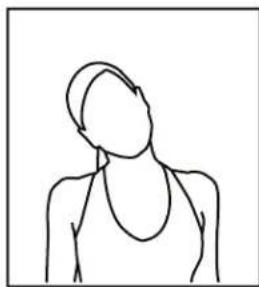
Head Rolls
Rotate your head to the right for one count while feeling the stretch up the left side of your neck. Next, rotate your head back for one count, stretching your chin to the ceiling. Rotate your head to the left for one count, and finally, drop your head to your chest for one count.
Shoulder Lifts
Lift your left shoulder up toward your ear for one count. Then lift your right shoulder up for one count as you lower your left shoulder.
Side Stretches
Open your arms to the side and continue lifting them until they are over your head. Reach your left arm as far upward as you can for one count. Feel the stretch up your left side. Repeat this action with your right arm.
Quadriceps Stretch
With one hand against a wall for balance, reach behind you and pull your left foot up. Bring your heel as close to your buttocks as possible. Hold for 15 counts and repeat with right foot up.
natural_image
Simple line drawing of a human figure with no text or symbols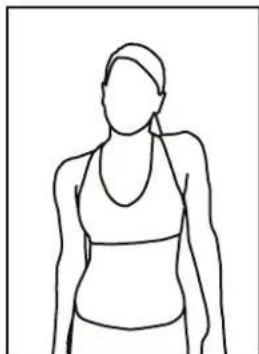
natural_image
Line drawing of a person wearing a high-brimmed top and collared shirt (no text or symbols)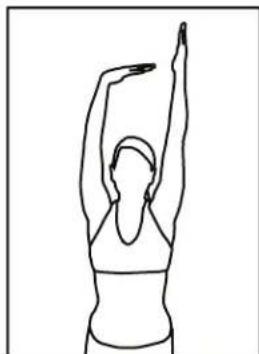
natural_image
Line drawing of a person performing a stretching exercise with arms raised (no text or symbols)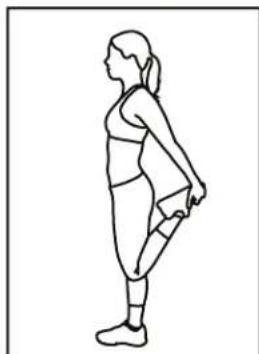
natural_image
Line drawing of a woman in athletic wear performing a stretching pose (no text or symbols)SUGGESTED STRETCHES
Inner Thigh Stretch
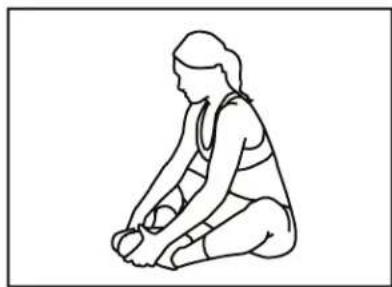
Sit with the soles of your feet together with your knees pointing outward. Pull your feet as close into your groin as possible. Gently push your knees towards the floor. Hold for 15 counts.
natural_image
Line drawing of a person in a seated posture, possibly performing a stretching or exercise (no text or symbols)Toe Touches
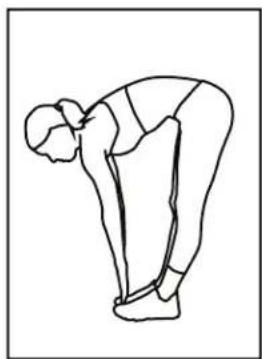
Slowly bend forward from your waist, letting your back and shoulders relax as you stretch toward your toes. Reach down as far as you can and hold for 15 counts.
natural_image
Line drawing of a person in a forward bend yoga pose (no text or symbols)Hamstring Stretches
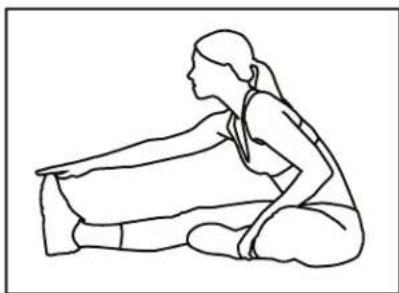
Sit with your right leg extended. Rest the soles of your left foot against your right inner thigh. Stretch toward your toes as far as possible. Hold for 15 counts. Relax and then repeat with left leg extended.
natural_image
Line drawing of a seated woman in a kneeling pose, viewed from the side (no text or symbols)Calf/Achilles Stretches
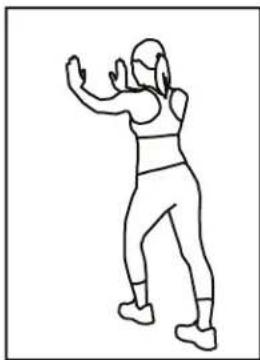
Lean against a wall with your right leg in front of the left and your arms forward. Keep your left leg straight and the right foot on the floor; then bend the right leg and lean forward by moving your hip toward the wall. Hold, then repeat on the other side for 15 counts.
natural_image
Line drawing of a person in motion, possibly dancing or gesturing (no text or symbols)ASSEMBLY INSTRUCTIONS - S3IC
text_image
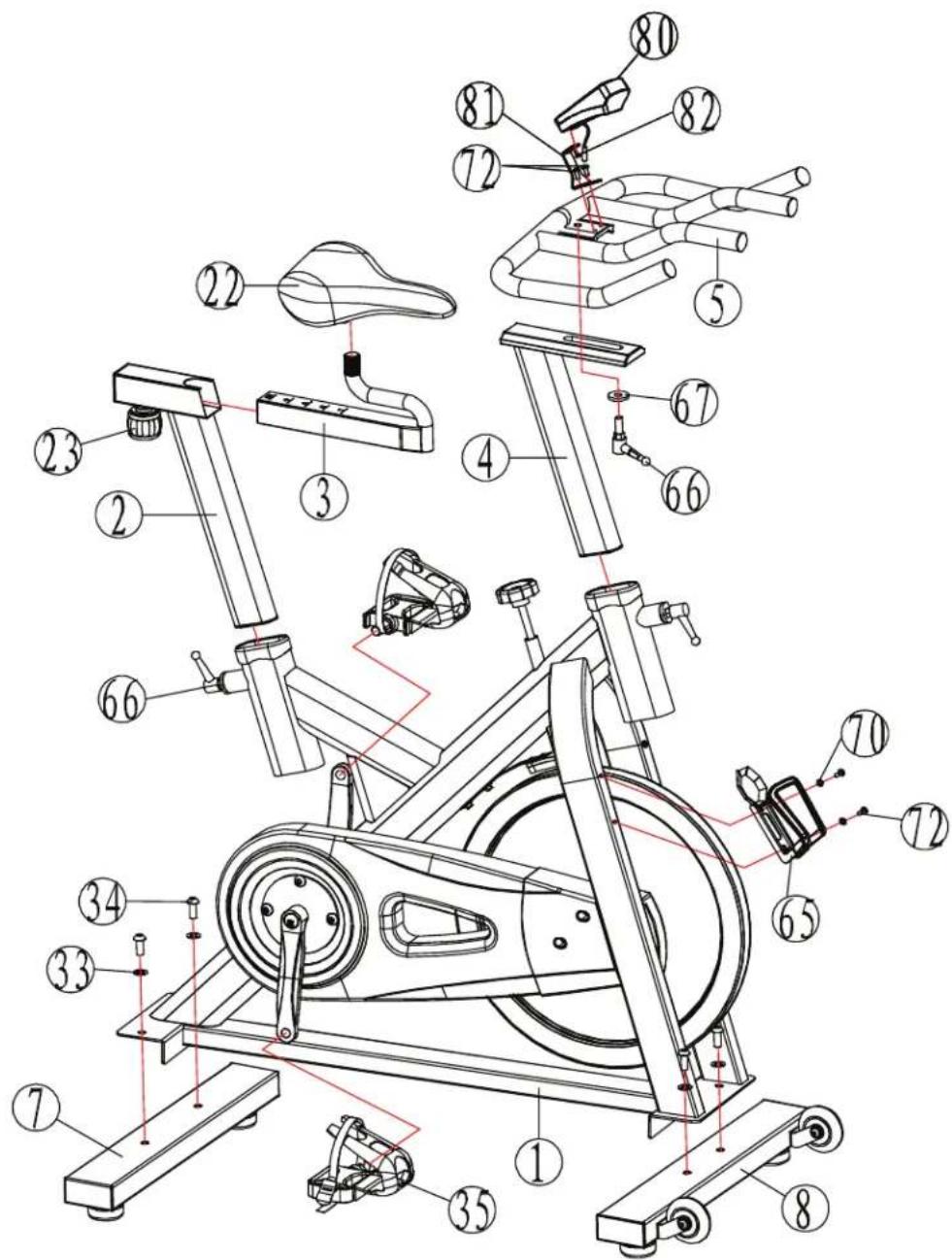
Technical diagram of an exercise bike with numbered components for identification and assembly reference.STEP 1 ASSEMBLE FRONT AND REAR STABILIZERS
Detach the shipping supports (metal pieces attached with 2 screws) – under the front and rear stabilizers. Discard the supports and screws.
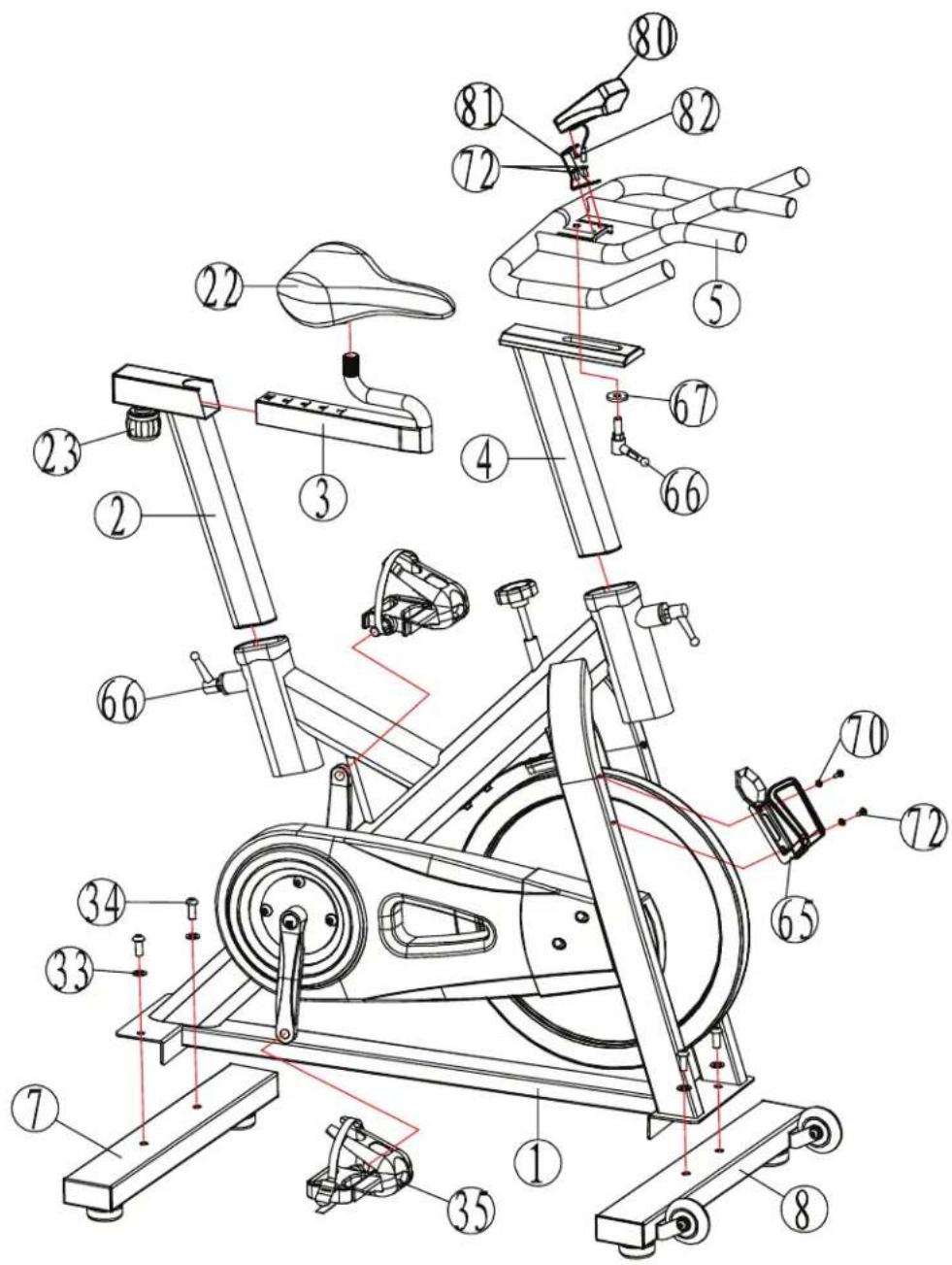
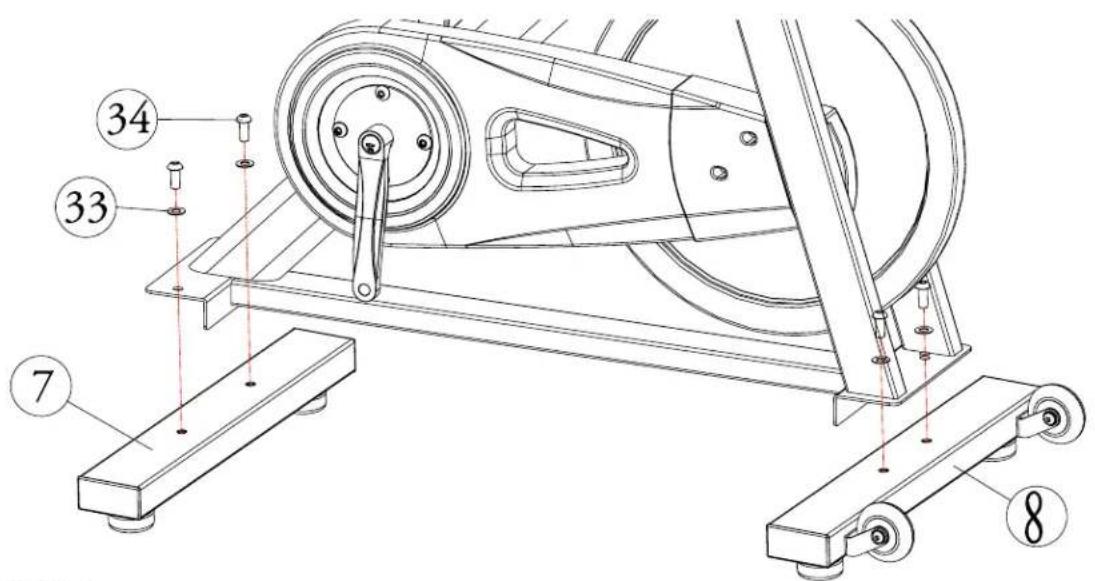
Follow the figure below and attach the Front Stabilizer (8) and Rear Stabilizer (7) under the Main Frame (1) with 4 pcs of Hex Screws (34),
4 pcs of Flat Washer (33) by using the supplied Allen wrench for fastening.
text_image
Technical diagram of a stationary exercise machine with numbered components and labeled partsSTEP 2 INSTALL LEFT AND RIGHT PEDALS
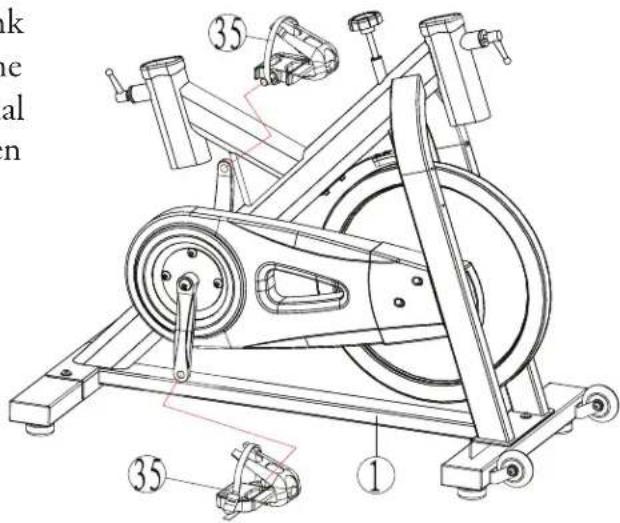
Thread the Left Pedal (35-L) onto the crank and tighten counterclockwise with the wrench provided. Thread the Right Pedal (35-R) onto the right crank and tighten clockwise to secure.
text_image
Technical diagram of an exercise bike with numbered components and labeled partsSTEP 3 ASSEMBLE THE HANDLEBAR POST
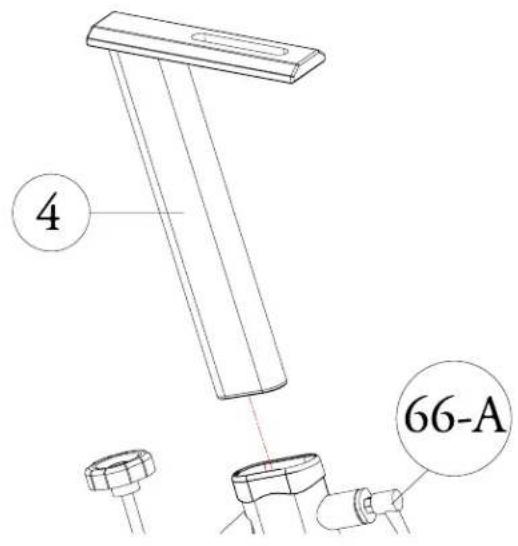
Loosen the Handle (66-A), and slide the Handlebar Post (4) into the housing on the Main Frame (1) and re-tighten the Handle (66-A).
text_image
4 66-ASTEP 4 ASSEMBLE THE HANDLEBAR
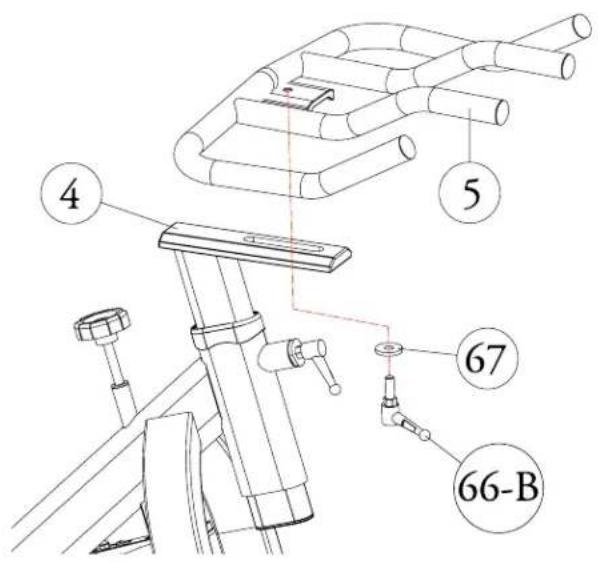
Attach the Handlebar (5) to the Handlebar Post (4) and tighten it with the Handle (66-B) and Flat Washer (bigger and thicker) (67).
text_image
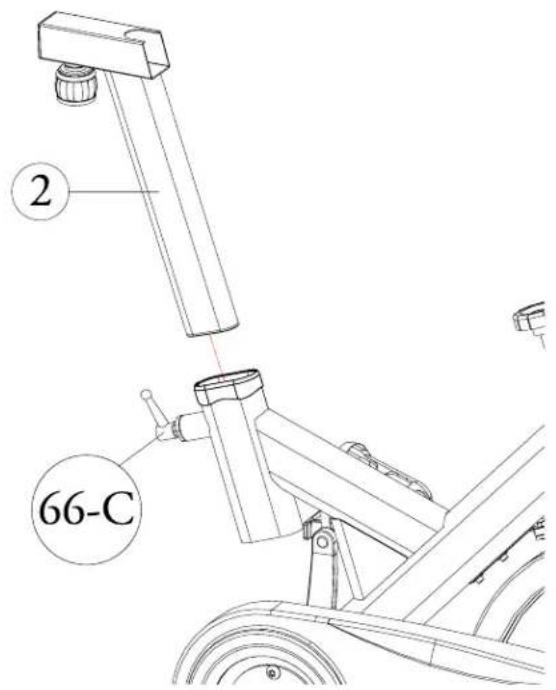
4 5 67 66-BSTEP 5 ASSEMBLE THE SEAT POST
Loosen the Handle (66-C) and slide the Seat Post (2) into the housing on the Main Frame, then re-tighten the Handle (66-C).
text_image
2 66-CSTEP 6 ASSEMBLE THE SEAT
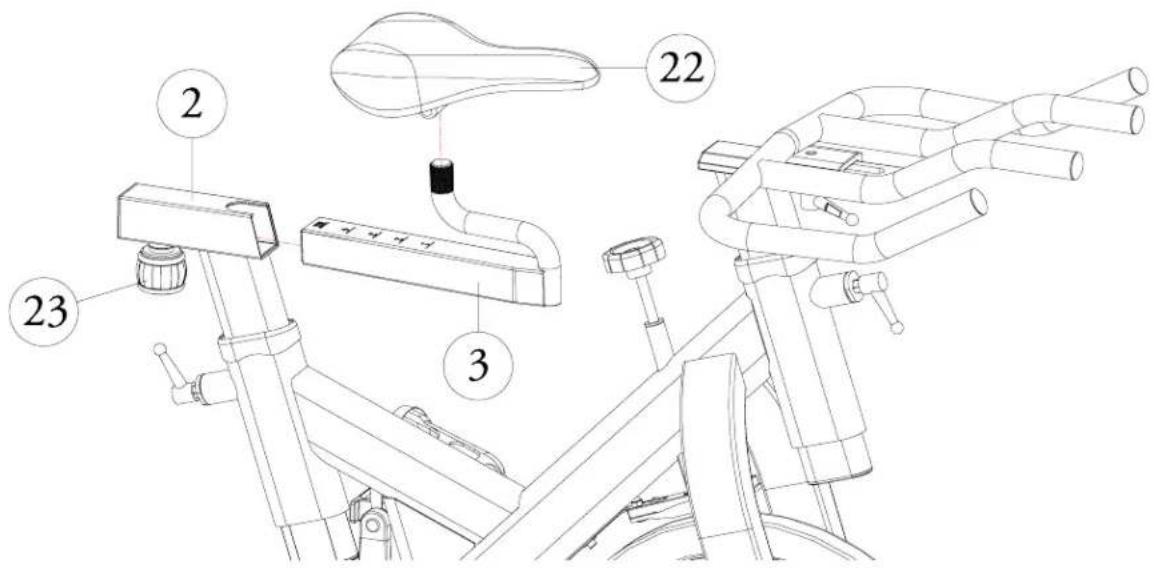
Loosen the Pop Pin (23) and pull the Pop Pin (23) down, then slide the Seat Slider (3) into the Seat Post (2). Release the Pop Pin (23) and re-tighten. Slide the Seat (22) onto the post on the Seat Slider (3). Adjust and align the seat and then secure by tightening the 2 nuts on the bottom of the seat with the wrench provided.
text_image
Technical diagram of a stationary exercise machine with numbered components and labeled partsSTEP 7 ATTACHING THE COMPUTER
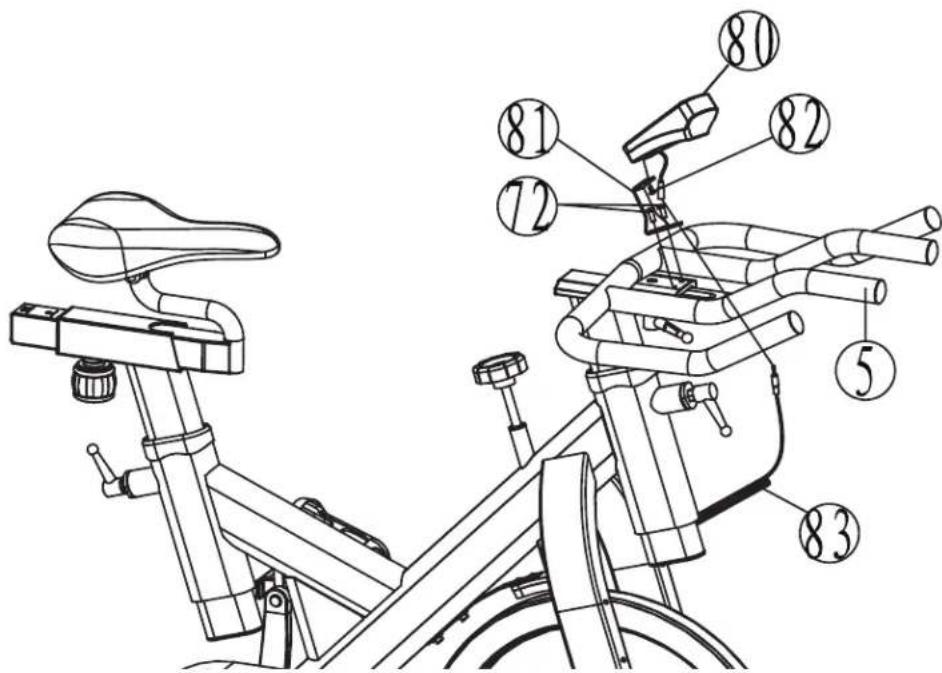
There are 2 Screws (72) on the Handlebar, unscrew them. With screws (72) take the Console Mount (81) and secure it to the Handlebar (5). Take the Console (80) and pop the back off. Install the Batteries provided, then put the back on the Console (80). There is a Screw (82) on the back of the Console, take it out. Slide the Console (80) onto the Console Mount (81) and secure with the Screw (82) to the Console Mount (81). Now plug in the Sensor Cable (83) to the connection in the Console (80).
text_image
Technical diagram of a stationary bike with numbered parts for identificationSTEP 8
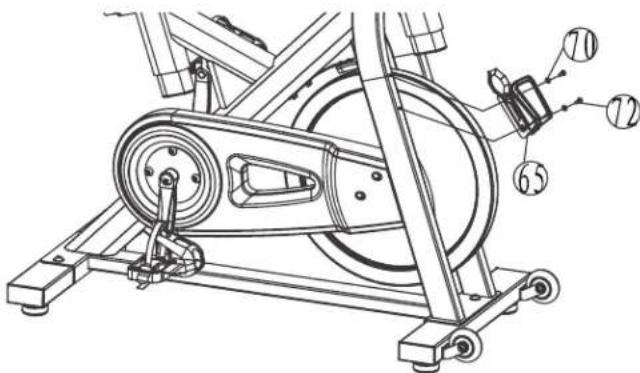
INSTALL THE WATER BOTTLE HOLDER
There are 2 Screws (72) and 2 Washers (70) mounted in the right fork of the bike, take them out. Align the Water Bottle Holder (65) with the holes on the right fork and secure with 2 Washers (70) and 2 Screws (72).
text_image
Technical diagram of an exercise machine with numbered components and labeled partsSTEP 9
SAFETY INSPECTION
Before finishing installation, please inspect all the screws and nuts carefully to make sure all of them tightened.
NOTICE
-
Inspect all the Nuts, Nut Caps and Pedals and re-tighten as needed regularly and inspect the equipment periodically. Should you find any defective parts, replace them immediately. Don't exercise until they are repaired.
-
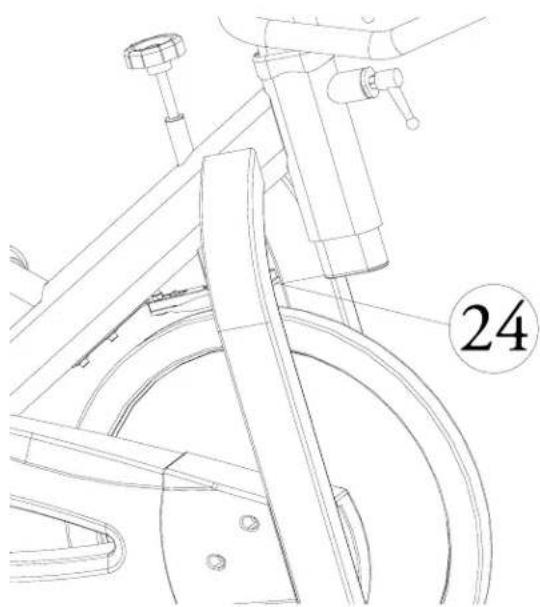
Pay more attention to normal wear on parts. As in the following figure, please inspect the Brake Pad (24) to make sure that it is in good working condition before exercise. If it is not, please replace it.
natural_image
Technical line drawing of a bicycle frame with visible wheel and mounting bracket (no text or symbols)-
Before exercise, please inspect the Pedals to make sure that they are not loose, please repeat installation Step 2 if they are loose.
-
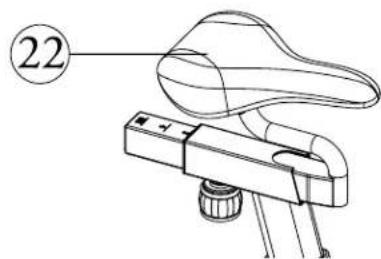
Please adjust the Hexagon Nut by using the Open Wrench if the Seat (22) is loose.
text_image
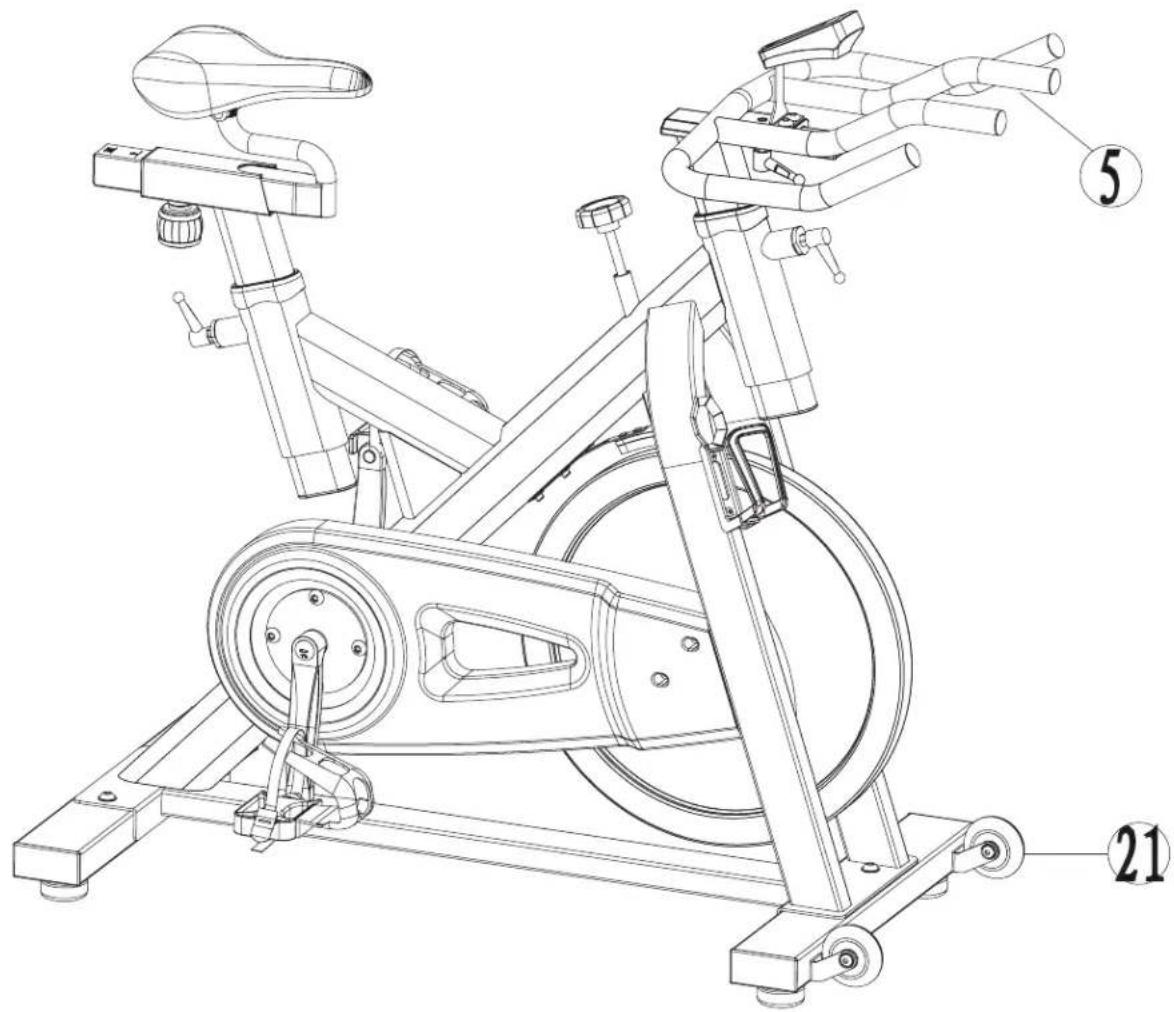
22- If you need to move the bike, use the tips of the Handlebar (5) and tilt the bike forward onto the wheels (21) and transport the bike to the desired location.
text_image
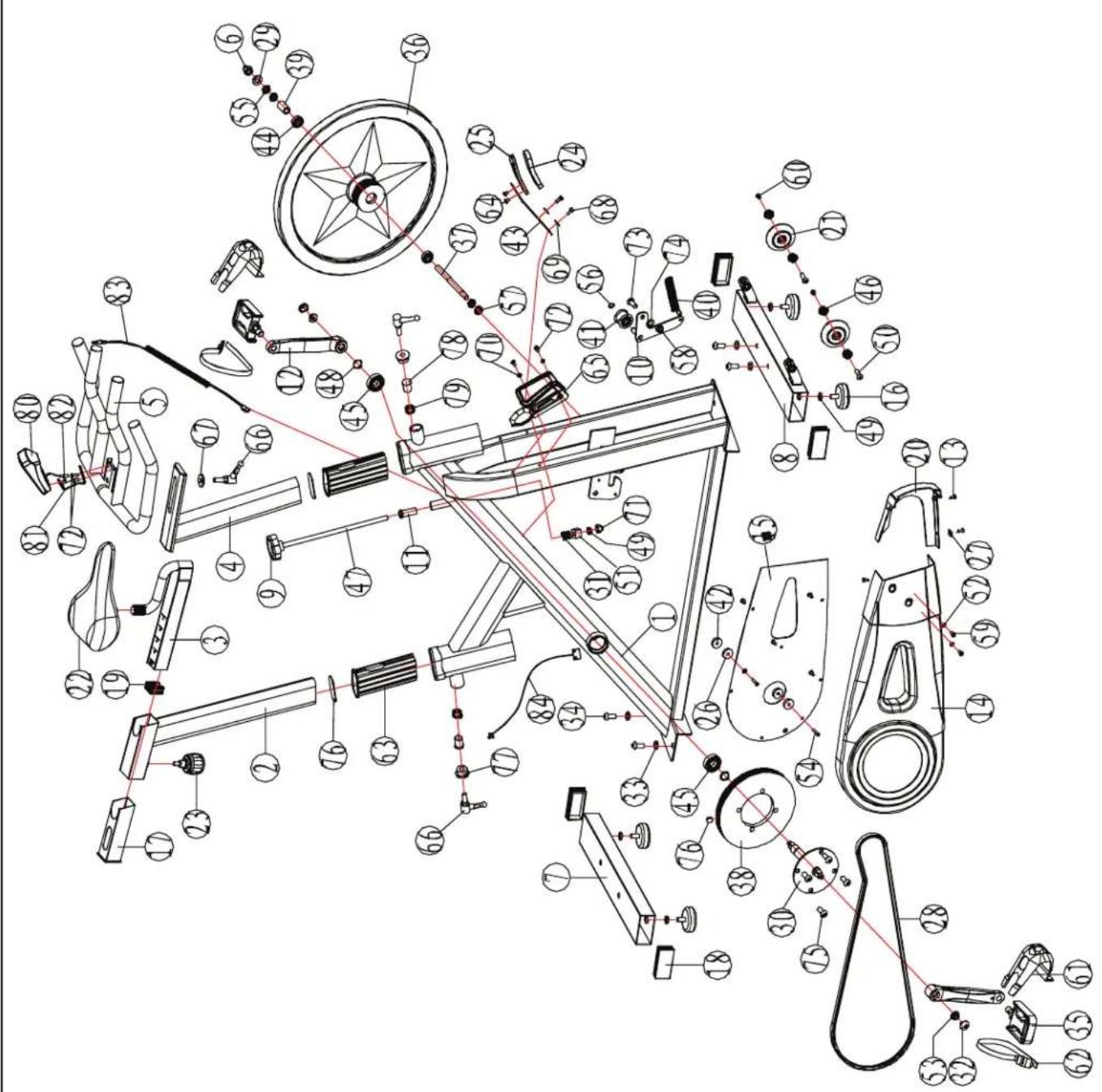
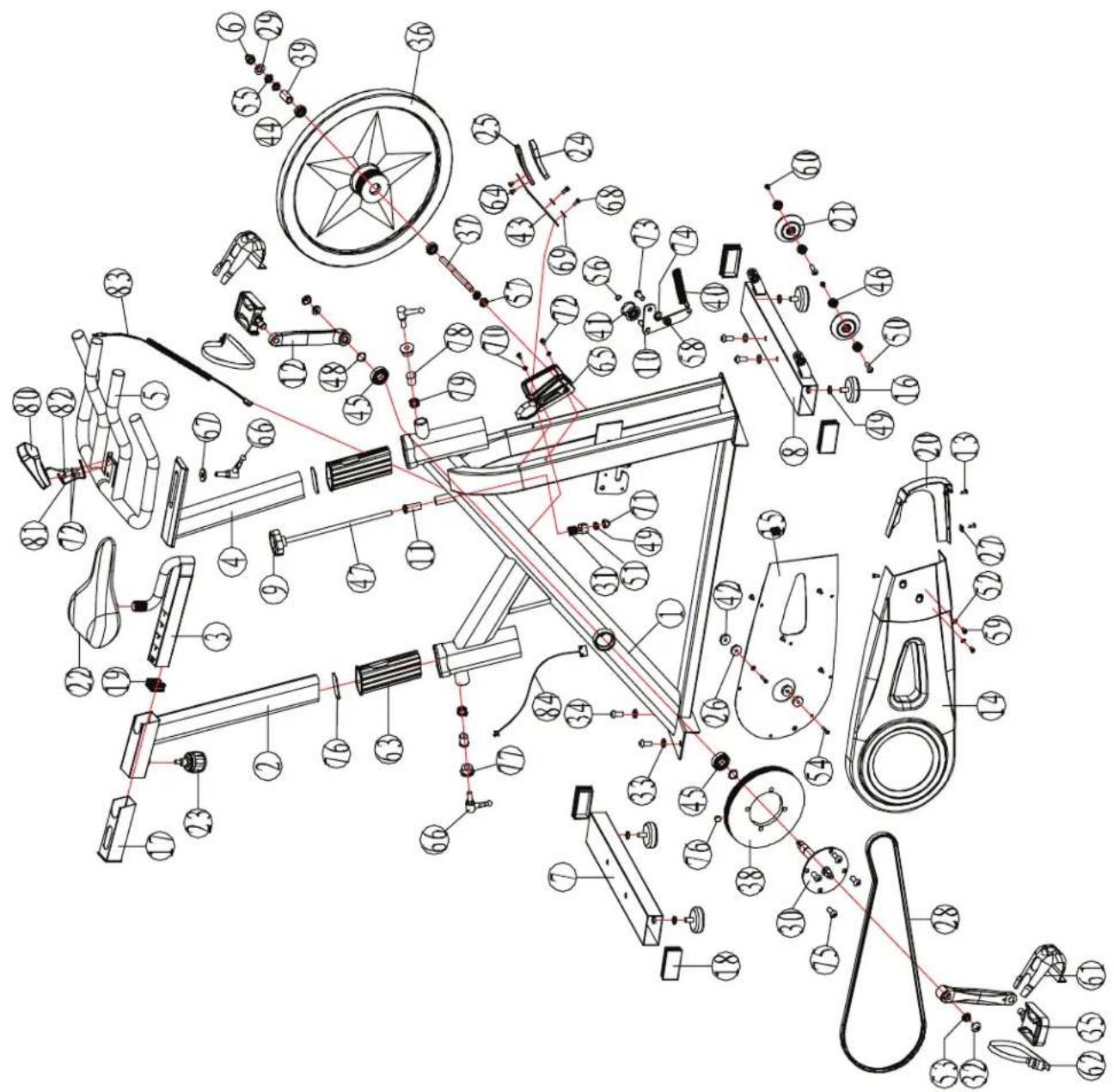
Technical line drawing of an exercise bike with numbered components and labeled partsEXPLODED VIEW DRAWING - S3IC
text_image
Technical diagram of a mechanical assembly with numbered components and exploded view, likely for engineering or manufacturing purposes.PARTS LIST - MASTER GS
To order replacement parts: provide your customer service representative with the product model number and the part number located on the Parts List below, along with the quantity you require.
| NO.DESCRIPTIONQTY.NO.DESCRIPTION | QTY. | ||||
| S3IC-1 Main Frame 1 S3IC-43 Brake | Mount 1 | ||||
| S3IC-2 Seat Post 1 S3IC-44 Bearing | 6001 2 | ||||
| S3IC-3 Seat Slider | 1 S3IC-45 | Bearing 6004 | 2 | ||
| S3IC-4 Handlebar Post | 1 S3IC-46 | Bearing 608 | 4 | ||
| S3IC-5 Handlebar | 1 S3IC-47 | Tension Rod | 1 | ||
| S3IC-6 Cap Nut | 1 S3IC-48 | C-Clip | 2 | ||
| S3IC-7 Rear Stabilizer | 1 S3IC-49 | Hex Bolt | 5 | ||
| S3IC-8 Front Stabilizer | 1 S3IC-50 | Hex Bolt | 2 | ||
| S3IC-9 Tension Knob | 1 S3IC-51 | Brake Adjustment Nut | 1 | ||
| S3IC-10 Tension Bracket | 1 | S3IC-52 | Washer | 2 | |
| S3IC-11 Plastic sleeve | 1 | S3IC-53 | Hex Flange Nut | 2 | |
| S3IC-12 Left and Right Crank | 1 set | S3IC-54 | Countersunk Bolt | 2 | |
| S3IC-13 Phillips Screw | 8 S3IC- | 55 Thin Hex | Bolt 3 | ||
| S3IC-14 Chain Cover A | 1 | S3IC-56 | C-Clip | 1 | |
| S3IC-15 Chain Cover B | 1 | S3IC-57 | Hex Bolt | 1 | |
| S3IC-16 Leveling Foot | 4 S3IC- | 58 Nut | 1 | ||
| S3IC-17 Plastic Sleeve | 1 S3IC- | 59 Bolt | 2 | ||
| S3IC-18 Stabilizer Cap | 4 | S3IC-60 | Round Head Screw | 2 | |
| S3IC-19 Seat Slider Cap | 1 | S3IC-61 | Cage | 2 | |
| S3IC-20 Front Cover | 1 S3IC- | 62 Strap | 2 | ||
| S3IC-21 Wheel | 2 | S3IC-63 | Plastic Sleeve | 2 | |
| S3IC-22 Seat | 1 S3IC- | 64 Philips Screw | 1 | ||
| S3IC-23 Pop Pin | 1 S3IC- | 65 Water Bottle Holder 1 | |||
| S3IC-24 Brake Pad | 1 S3IC- | 66 Handle | 3 | ||
| S3IC-25 Brake Pad Holder | 1 | S3IC-67 | Larger Washer | 1 | |
| S3IC-26 Chain Cover | 2 | S3IC-68 | Hex Bolt | 2 | |
| S3IC-27 Bracket Nut | 1 | S3IC-69 | Large Washer | 2 | |
| S3IC-28 Belt | 1 S3IC- | 70 Washer | 1 | ||
| S3IC-29 Flat Washer | 1 S3IC- | 71 Cap Nut | 1 | ||
| S3IC-30 Axle Plate | 1 | S3IC-72 | Philips Screw | 2 | |
| S3IC-31 Pressure Spring | 1 | S3IC-73 | Round Head Screw | 1 | |
| S3IC-32 Crank Cover 2 S3IC-74 Washer | 1 | ||||
| S3IC-33 Flat Washer | 4 | S3IC-75 | Round Head Screw | 4 | |
| S3IC-34 Hex Screw | 4 S3IC- | 76 Magnet | 2 | ||
| S3IC-35 Right & Left Pedal | 1 set | S3IC-77 | Inner Screw Cap | 2 | |
| S3IC-36 Flywheel | 1 S3IC- | 78 Limiter | 2 | ||
| S3IC-37 Flywheel Axle | 1 | S3IC-79 | Spring | 2 | |
| S3IC-38 PK Belt wheel | 1 | S3IC-80 | Computer | 1 | |
| S3IC-39 Bushing | 1 | S3IC-81 | Computer Mount | 1 | |
| S3IC-40 Tension Spring | 1 | S3IC-82 | Phillips Screw | 1 | |
| S3IC-41 Pulley Wheel | 1 | S3IC-83 | Sensor Cable (Upper) | 1 | |
| S3IC-42 Rubber Washer | 1 | S3IC-84 | Sensor Cable (Lower) | 1 | |
COMPUTER OVERVIEW
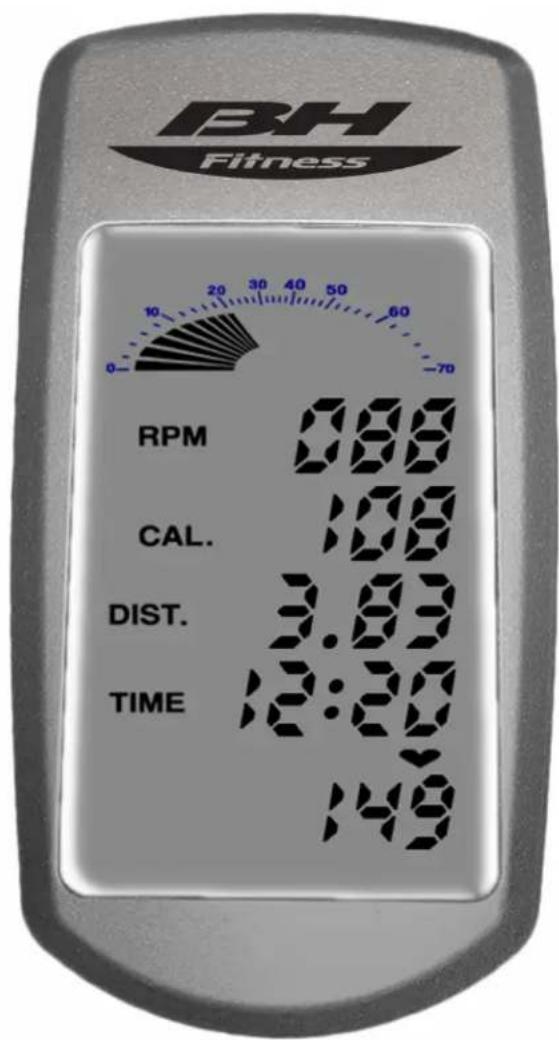
text_image
BH Fitness RPM 088 CAL. 108 DIST. 3.83 TIME 12:20 149CONSOLE OPERATIONS
GENERAL:
This console has an LCD screen which displays; Speed, RPM, Calories, Distance, Time and Pulse (optional).
POWER ON/OFF
The display will show all data upon pedaling. Once pedaling stops, the LCD will blink, displaying the latest data before pedaling stopped. The display will turn off once pedaling has stopped for over 45 seconds.
MILES/KILOMETER SETTINGS
To change Mile/Kilometer setting please follow the steps below:
- Remove the back of the console
- Remove the batteries
- Locate the two small switches in the back of the console
- When switch "1" is set to the "ON" position, the unit is in miles
- To change to Kilometers flip the “2” switch to “ON” and the “1” switch is “OFF” (or opposite to the “1” switch)
- Replace batteries
- Replace back of console
DISPLAY DATA
- SPEED - Located on top of the LCD display. Shows current speed with pointer.
- TIME - Shows total time of the workout. Range: 00:00-99:59 minutes.
- RPM - Revolutions Per Minute. Range: 0\~140. If RPM exceeds 140, LCD will show "STOP" as a safety reminder.
- CALORIES - Shows calories consumed during workout. Range: 000.0-999.9.
- DISTANCE - Range: 0-999.9; Change increment: 0.1 miles.
- PULSE - When using a compatible wireless heart rate chest strap, the bottom of the LCD will show heart rate (chest strap not included). Range: 60\~240 BPM.
MAINTENANCE AND CLEANING
Care has been taken to assure that your equipment has been properly adjusted and lubricated at the factory. It is not recommended that the user attempt service on the internal components. Instead, seek service from an authorized service center. However, you may clean the outer surface. Use a soft cloth, dampened with warm water. Do not use aerosol sprays or pump bottles as they may deposit sediments upon the console surface. The use of harsh chemicals will destroy the protective coating and cause a static build-up that may damage the some of the components.
WARRANTY
LIMITED RESIDENTIAL WARRANTY
BH North America will repair or replace, free of charge, at its option, parts that are defective as a result of material or workmanship. Lifetime replacement warranty coverage on frame and five (5) years on other parts. Labor warranty coverage is one (1) year. Warranty covers the original consumer purchaser only.
THIS WARRANTY DOES NOT COVER
- Pre-delivery set-up.
- Components that require replacement due to dirt or lack of regular maintenance.
- Expendable items which become worn during normal use.
- Repairs necessary because of operator abuse or negligence or the failure to operate and maintain the equipment according to the instructions contained in the Owner's Manual.
For more detailed warranty information or to register your product warranty easily online, visit our website at: www.BHFitness.com
FOR WARRANTY REPAIRS, PLEASE DO NOT TAKE YOUR MACHINE BACK TO THE RETAIL STORE. CONTACT BH FITNESS FIRST.
BH Fitness/BH North America Corporation
20155 Ellipse
Foothill Ranch, CA 92610
Phone: 949.206.0330; Toll Free: 866.325.2339; Fax: 949.206.0013
Email: fitness@bhnorthamerica.com
Web: www.BHFitnessUSA.com
Mon - Fri 8am - 5pm PST
S3IC
natural_image
Line drawing of a stationary exercise bike with visible components and wheels (no text or symbols)GUIDE D'UTILISATION
Suggestions d'étirements 10
TOUTES NOS FÉLICITATIONS!
natural_image
Simple line drawing of a human head in profile view (no text or symbols)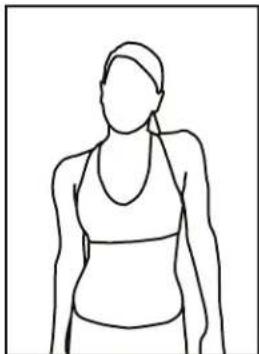
natural_image
Line drawing of a human figure wearing a tank top and high-brimmed torso (no text or symbols)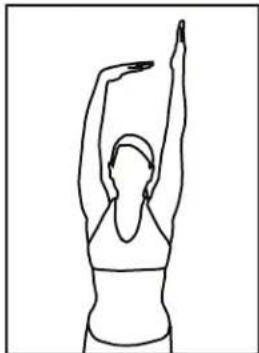
natural_image
Line drawing of a person performing a stretching exercise with arms raised (no text or symbols)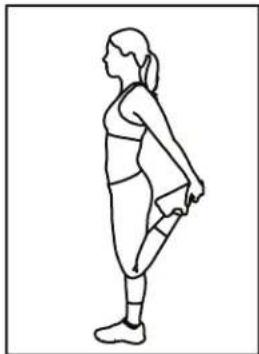
natural_image
Line drawing of a woman in a standing pose, possibly performing a stretching or exercise (no text or symbols)SUGGESTED STRETCHES
natural_image
Line drawing of a person in a seated posture, possibly performing a stretching or exercise (no text or symbols)Flexions avant
natural_image
Line drawing of a person in a forward bend yoga pose (no text or symbols)Étirements des ischio-jambiers
natural_image
Line drawing of a seated woman in a kneeling pose, viewed from the side (no text or symbols)natural_image
Line drawing of a person in motion, possibly dancing or gesturing (no text or symbols)INSTRUCTIONS D'ASSEMBLAGE DU - S3IC
text_image
Technical diagram of an exercise bike with numbered components for identification and assembly reference.Étape 2
INSTALLEZ LES PÉDALES GAUCHE ET DROITE
text_image
Technical diagram of a stationary exercise machine with numbered components and labeled partsÉTAPE 2
INSTALLEZ LES PÉDALES GAUCHE ET DROITE
text_image
Technical diagram of an exercise bike with numbered components and labeled partsÉTAPE 3 ASSEMBLEZ LA TIGE AVANT
text_image
4 5 67 66-BÉTAPE 5 ASSEMBLEZ LA TIGE DE SELLE
text_image
Technical diagram of a stationary bike with numbered parts for identificationÉTAPE 7
ATTACHEZ LE MONITEUR
text_image
Technical diagram of a stationary bike with numbered parts for identificationÉTAPE 8 INSTALLEZ LE PORTE-BOUTEILLE
text_image
Technical diagram of an exercise machine with numbered components for identificationSTEP 9 INSPECTIONS DE SÉCURITÉ
natural_image
Technical line drawing of a bicycle frame with no visible text or symbolstext_image
Technical line drawing of an exercise bike with numbered components and labeled partsVUE ÉCLATÉE - S3IC
text_image
Technical diagram of a mechanical assembly with labeled components and exploded viewLISTE DES PIÈCES – S3IC
BH Fitness/BH North America Corporation
20155 Ellipse
Foothill Ranch, CA 92610v