
LCD 1711M - Monitor NEC - Free user manual and instructions
Find the device manual for free LCD 1711M NEC in PDF.



| Brand | NEC |
| Model | LCD 1711M |
| Product Type | 17-inch LCD Monitor |
| Display Technology | Active Matrix TFT LCD |
| Maximum Resolution | 1280 x 1024 |
| Video Input | Analog RGB (VGA) |
| Horizontal Scan | 31.5 ~ 80 kHz |
| Vertical Frequency | 56 ~ 75 Hz |
| Built-in Speakers | Yes |
| VESA Mount | 100 x 100 mm, M4 screws |
| Dimensions (W x H) | 377.5 x 382.7 mm |
| Weight | 4.9 kg |
| Power Supply | 100-240 V AC, 50/60 Hz |
| Power Consumption | 0.8 A (100-120 V) / 0.4 A (220-240 V) |
| Operating Temperature | 5 °C to 35 °C |
| Operating Humidity | 30% to 80% |
| Kensington Lock | Yes |
| Main Features | Auto adjustment, multilingual OSD, DPMS power saving, speakers, foldable stand |
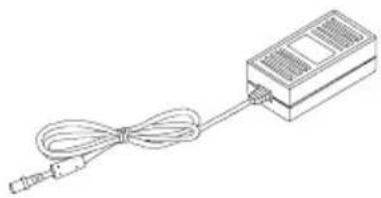
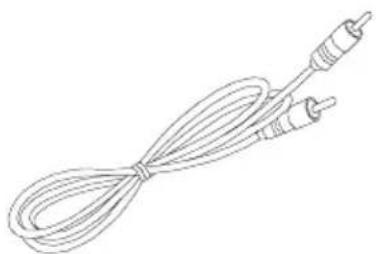
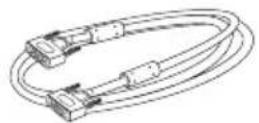
| Box Contents | Power adapter, power cable, audio cable, VGA cable, CD-ROM, user manual |
| Care and Cleaning | Use a lint-free and non-abrasive cloth. Do not use any cleaning solution or glass cleaner. |
| Safety | Do not open the casing. Do not expose to water or objects. Unplug if damaged. |
Frequently Asked Questions - LCD 1711M NEC
User questions about LCD 1711M NEC
0 question about this device. Answer the ones you know or ask your own.
Ask a new question about this device
Download the instructions for your Monitor in PDF format for free! Find your manual LCD 1711M - NEC and take your electronic device back in hand. On this page are published all the documents necessary for the use of your device. LCD 1711M by NEC.
USER MANUAL LCD 1711M NEC
Safety Precautions and Maintenance ....2
Introduction 4
About the Product....4
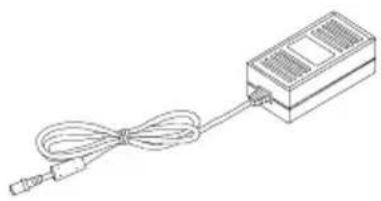
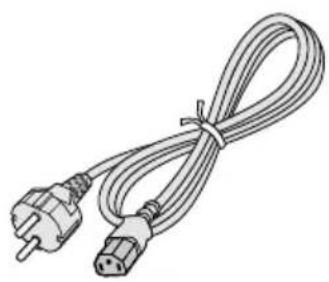
Package Overview....5
Declaration of the Manufacturer ....5
Declaration of the Manufacturer ....5
Installation 6
Product Overview 6
VESA Mount on your monitor ....7
Start Your Installation 8
User Controls 10
Front Panel Controls....10
How to Use the OSD Menus.... 11
On-Screen Display Menus.... 11
Appendix 13
Troubleshooting ....13
Warning Signal 14
Product Dimensions ....15
Compatibility Modes ....16
FCC Statement 84
TCO'99 85
Safety Precautions and Maintenance

FOR OPTIMUM PERFORMANCE, PLEASE NOTE THE FOLLOWING WHEN SETTING UP AND USING THE LCD COLOR MONITOR:

- DO NOT OPEN THE MONITOR. There are no user serviceable parts inside and opening or removing covers may expose you to dangerous shock hazards or other risks. Refer all servicing to qualified service personnel.
- Do not spill any liquids into the cabinet or use your monitor near water.
- Do not insert objects of any kind into the cabinet slots, as they may touch dangerous voltage points, which can be harmful or fatal or may cause electric shock, fire or equipment failure.
- Do not place any heavy objects on the power cord. Damage to the cord may cause shock or fire.
- Do not place this product on a sloping or unstable cart, stand or table, as the monitor may fall, causing serious damage to the monitor.
- Do not place any objects onto the monitor and do not use the monitor outdoors.
- The inside of the flourescent tube located within the LCD monitor contains mercury. Please follow the bylaws or rules of your municipality to dispose of the tube properly.
Immediately unplug your monitor from the wall outlet and refer servicing to qualified service personnel under the following conditions:
- When the power supply cord or plug is damaged.
- If liquid has been spilled, or objects have fallen into the monitor.
- If the monitor has been exposed to rain or water.
- If the monitor has been dropped or the cabinet damaged.
- If the monitor does not operate normally by following operating instructions.
- Do not bend power cord.
- Do not use monitor in high temperatured, humid, dusty, or oily areas.

CAUTION
- If monitor or glass is broken, do not come in contact with the liquid crystal and handle with care.
- Allow adequate ventilation around the monitor so that heat can properly dissipate. Do not block ventilated openings or place the monitor near a radiator or other heat sources. Do not put anything on top of monitor.
- The power cable connector is the primary means of detaching the system from the power supply. The monitor should be installed close to a power outlet which is easily accessible.
- Handle with care when transporting. Save packaging for transporting.
- Image Persistence: Image persistence is when a residual or “ghost” image of a previous image remains visible on the screen. Unlike CRT monitors, LCD monitors’ image persistence is not permanent, but constant images being displayed for a long period of time should be avoided.
To alleviate image persistence, turn off the monitor for as long as the previous image was displayed. For example, if an image was on the monitor for one hour and a residual image remains, the monitor should be turned off for one hour to erase the image.
NOTE: As with all personal display devices, NEC-Mitsubishi Electronics Display-Europe recommends using a moving screen saver at regular intervals whenever the screen is idle or turning off the monitor when not in use.

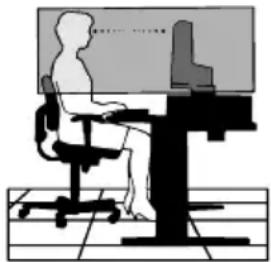
CORRECT PLACEMENT AND ADJUSTMENT OF THE MONITOR CAN REDUCE EYE, SHOULDER AND NECK FATIGUE. CHECK THE FOLLOWING WHEN YOU POSITION THE MONITOR.

- For optimum performance, allow 20 minutes for warm-up.
- Adjust the monitor height so that the top of the screen is at or slightly below eye level. Your eyes should look slightly downward when viewing the middle of the screen.
- Position your monitor no closer than 40 cm and no further away than 70 cm from your eyes. The optimal distance is 58 cm.
- Rest your eyes periodically by focusing on an object at least 6 m away. Blink often.
- Position the monitor at a 90^ angle to windows and other light sources to minimize glare and reflections. Adjust the monitor tilt so that ceiling lights do not reflect on your screen.
• If reflected light makes it hard for you to see your screen, use an anti-glare filter.
- Clean the LCD monitor surface with a lint-free, non-abrasive cloth. Avoid using any cleaning solution or glass cleaner!
- Adjust the monitor's brightness and contrast controls to enhance readability.
- Use a document holder placed close to the screen.
- Position whatever you are looking at most of the time (the screen or reference material) directly in front of you to minimize turning your head while you are typing.
- Avoid displaying fixed patterns on the monitor for long periods of time to avoid image persistence (after-image effects).
- Get regular eye checkups.
Ergonomics
To realize the maximum ergonomics benefits, we recommend the following:
- Use the preset Size and Position controls with standard signals
- Use the preset Color Setting
- Use non-interlaced signals with a vertical refresh rate between 60 - 75 Hz
- Do not use primary color blue on a dark background, as it is difficult to see and may produce eye fatigue to insufficient contrast
natural_image
Silhouette of a person sitting at a desk in an office chair, facing a computer screen (no text or symbols visible)About the Product
Having a 17" flat panel screen with an active matrix, thin-film transistor (TFT) liquid crystal display (LCD), this product also demonstrates following outstanding features.
- Analog signal input
• Active matrix TFT LCD technology
• 1280 x 1024 addressable pixels
• 17" diagonal screen size
• 31.5 \~ 80 kHz horizontal scan
• 56 \~ 75 Hz refresh rate
• VESA wall mountable - Auto-adjustment
• Multilingual OSD user controls - Foldable stand design brings users the conveniences for easy storage and VESA Mounting applications
• VESA DPMS power saving
• Built-in speakers for multimedia application
• Kensington lock capability
• Power Supply: AC 100 - 120 V / 220 - 240 V 50/60 Hz
• Current Rating: 0.8 A @ 100 - 120 V / 0.4 A @ 220 - 240 V
• Weight: 4.9 kg (10.8 lbs)
• Environmental Considerations:
Operating Temperature: 5 °C to 35 °C
Humidity: 30 % to 80 %
Altitude: 0 to 3,050 m
Storage Temperature: -10 °C to +60 °C
Humidity: 10 % to 85 %
Altitude: 0 to 12,000 m
natural_image
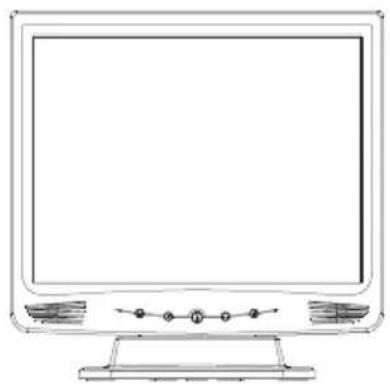
Line drawing of a flat-screen computer monitor with stand (no text or symbols)LCD Display
natural_image
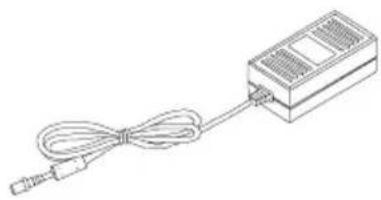
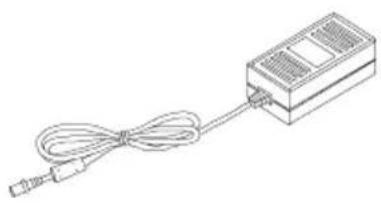
Line drawing of a connected electrical connector with wires (no text or symbols)Power Adapter
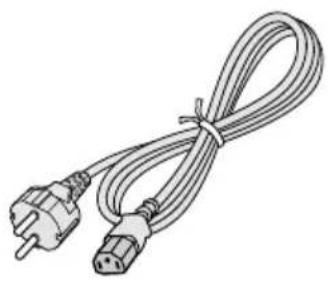
natural_image
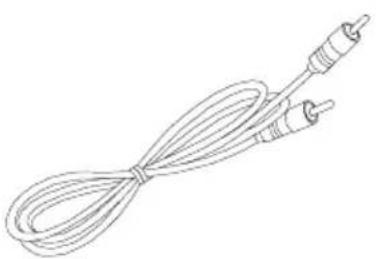
Line drawing of a cord with two connected power plugs (no text or symbols)Power Cord
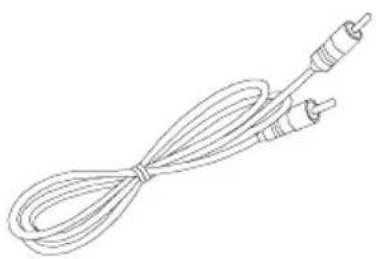
natural_image
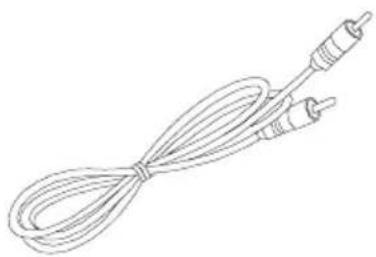
Line drawing of a coiled electrical plug with terminal connectors (no text or symbols)Audio-In Cable
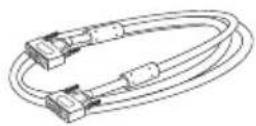
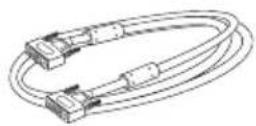
VGA Signal Cable
CD ROM
User's Manual
Declaration of the Manufacturer
We hereby certify that the
monitor LCD1711M is in compliance
with Council Directive 73/23/EEC:
- EN 60950
Council Directive 89/336/EEC:
- EN 55022
- EN 61000-3-2
- EN 61000-3-3
- EN 55024
and marked with:

NEC-Mitsubishi Electric Visual
Systems Corporation
4-13-23, Shibaura,
Minato-Ku
Tokyo 108-0023, Japan
Product Overview
Front View
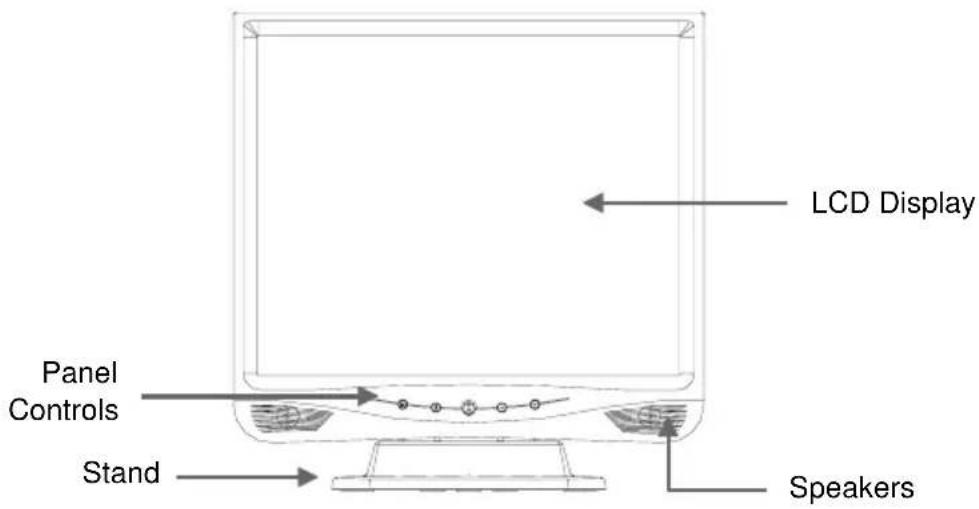
text_image
LCD Display Panel Controls Stand SpeakersRear View
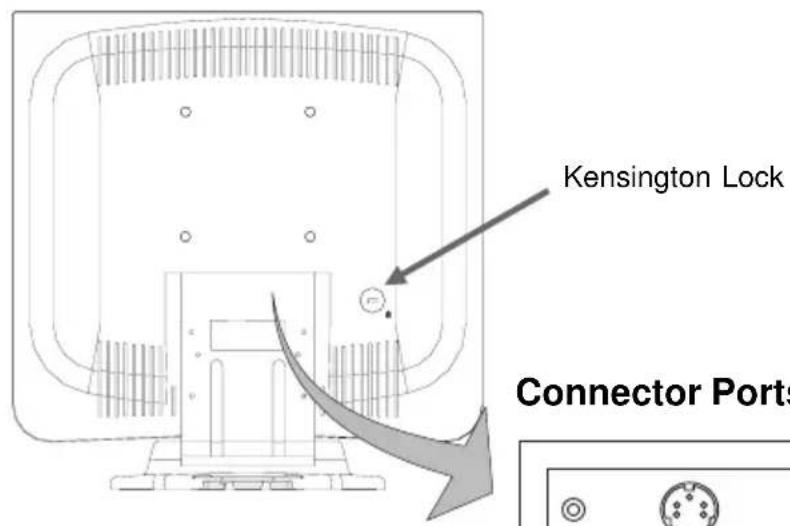
text_image
Kensington Lock Connector Ports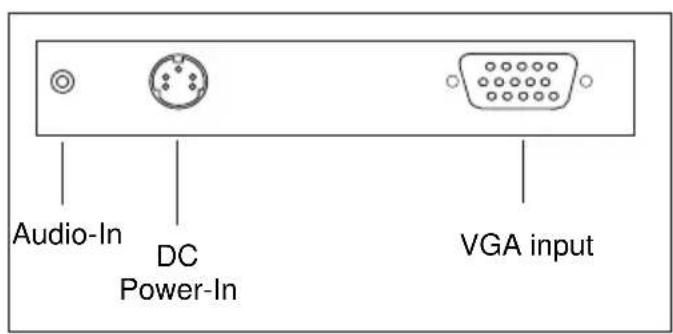
text_image
Audio-In DC Power-In VGA inputThis monitor conforms to the VESA Flat Panel Mounting Physical Mounting Interface Standard which defines a physical mounting interface for flat panel monitors, and corresponding standards for flat panel monitor mounting devices, such as wall and table arms. The VESA mounting interface is located on the back of your monitor.
To mount the monitor on a swing arm or other mounting fixture, follow the instruction included with the mounting fixture to be used.
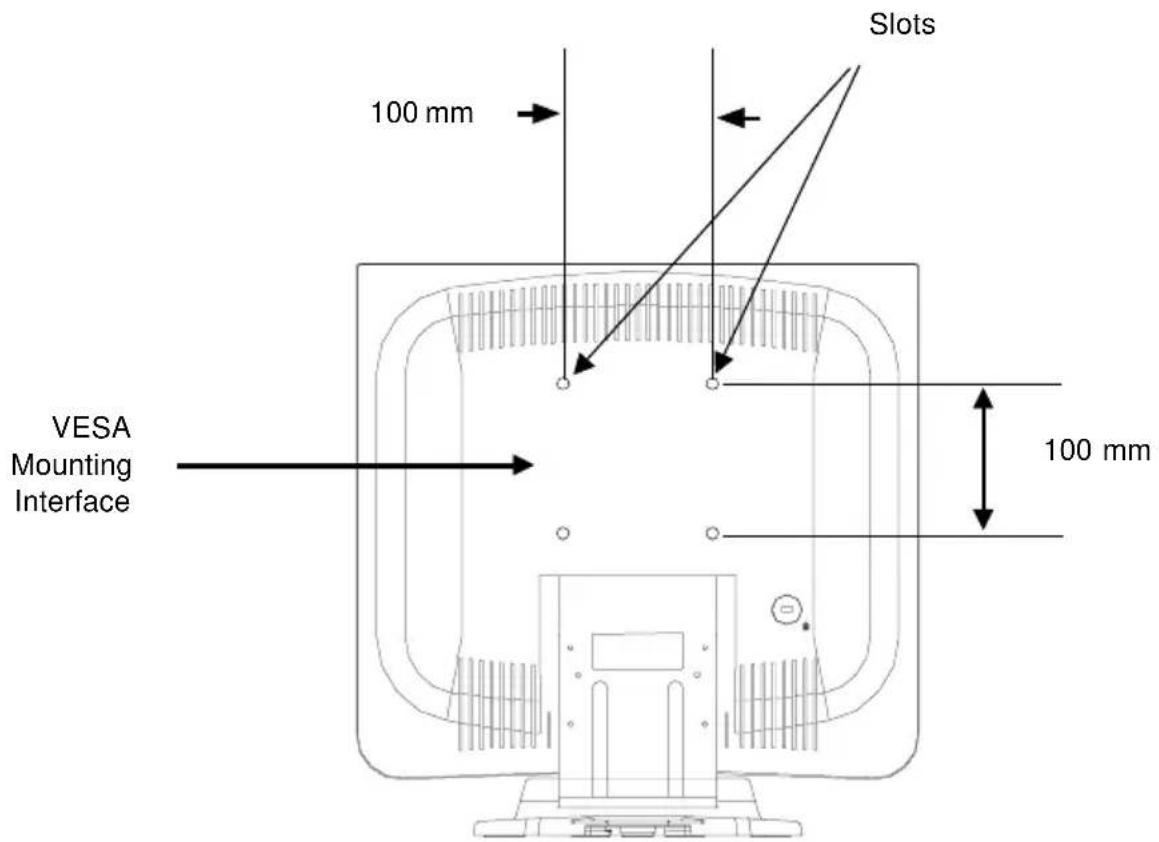
text_image
VESA Mounting Interface 100 mm Slots 100 mmCaution! Please select the proper screws!

The depth from plastic back cover to the bottom of the screw hole is 8 mm. The spec is M4 screw. To fulfil the safety requirements the monitor must be mounted to an arm which guarantees the necessary stability under consideration of the weight of the monitor. The LCD monitor shall only be used with an approved arm (e.g. GS mark).
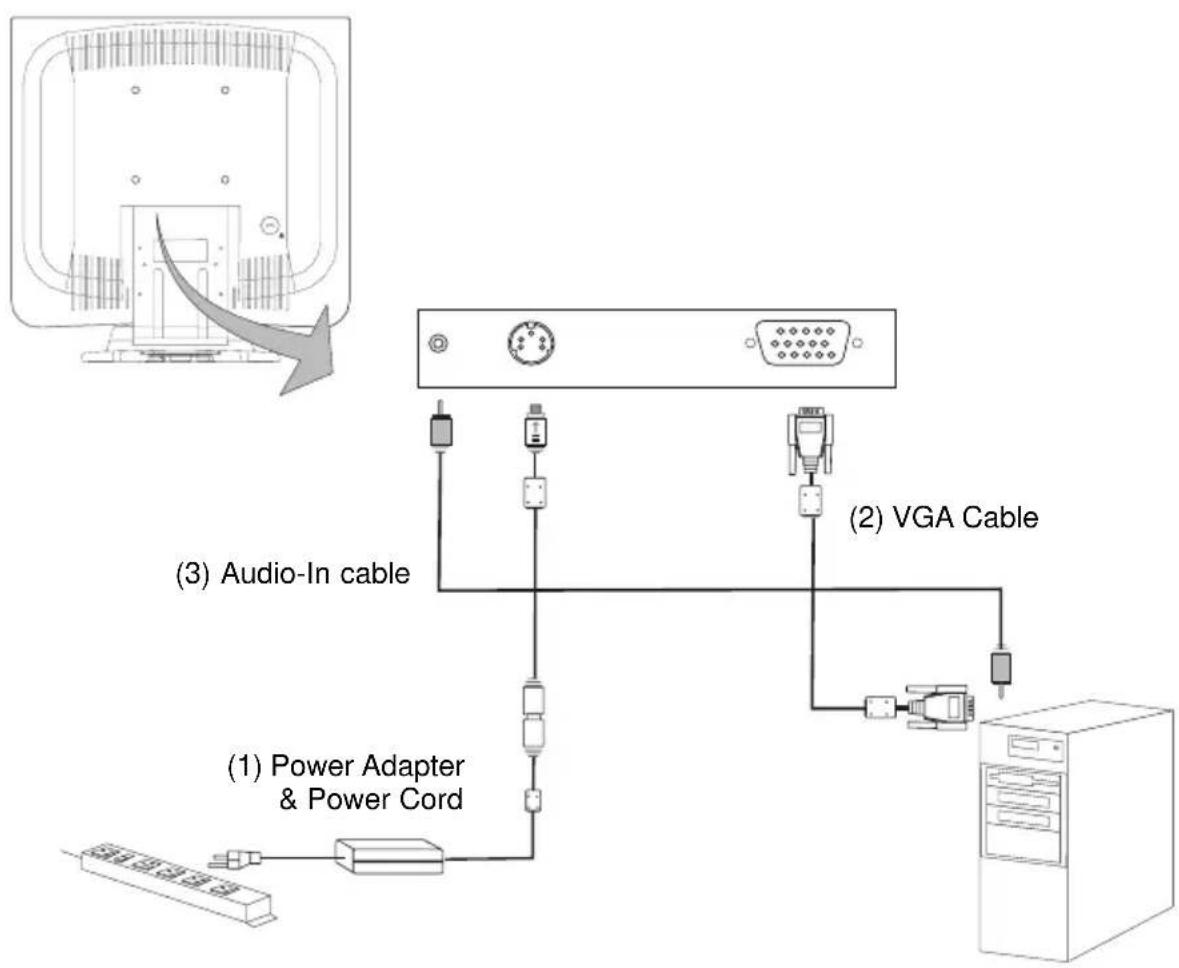
Connecting the Display (Figure 8.1)
To set up this display, please refer to the following figure and procedures.
- Be sure all equipments are off.
- Connect the DC power cord to the power connector; plug one end of the AC power cord into the power adapter, and then the other end into an electrical outlet (1).
- Connect the VGA signal cable from display VGA input connector to the 15-pin connector of your host computer and tighten the screws (2).
- Connect the Audio-In cable from audio input port of your display to the Audio-out port of your computer (3).
- Turn on your computer and display.
Notice: To ensure the LCD display can work well with your computer, please configure the display mode of your graphic card to make it less than or equal to 1280 x 1024 resolution and make sure timing of the display mode is compatible with the LCD display. We have listed the "Compatibility Modes" of this LCD display in appendices for your reference.
Figure 8.1
flowchart
graph TD
    A["Computer with monitor"] --> B["(3) Audio-In cable"]
    A --> C["(1) Power Adapter & Power Cord"]
    B --> D["Switch"]
    C --> E["Switch"]
    D --> F["Computer"]
    E --> G["Computer"]
    style A fill:#f9f,stroke:#333
    style B fill:#ccf,stroke:#333
    style C fill:#cfc,stroke:#333
    style D fill:#fcc,stroke:#333
    style E fill:#cff,stroke:#333
    style F fill:#ffc,stroke:#333
    style G fill:#fcc,stroke:#333
Front Panel Controls
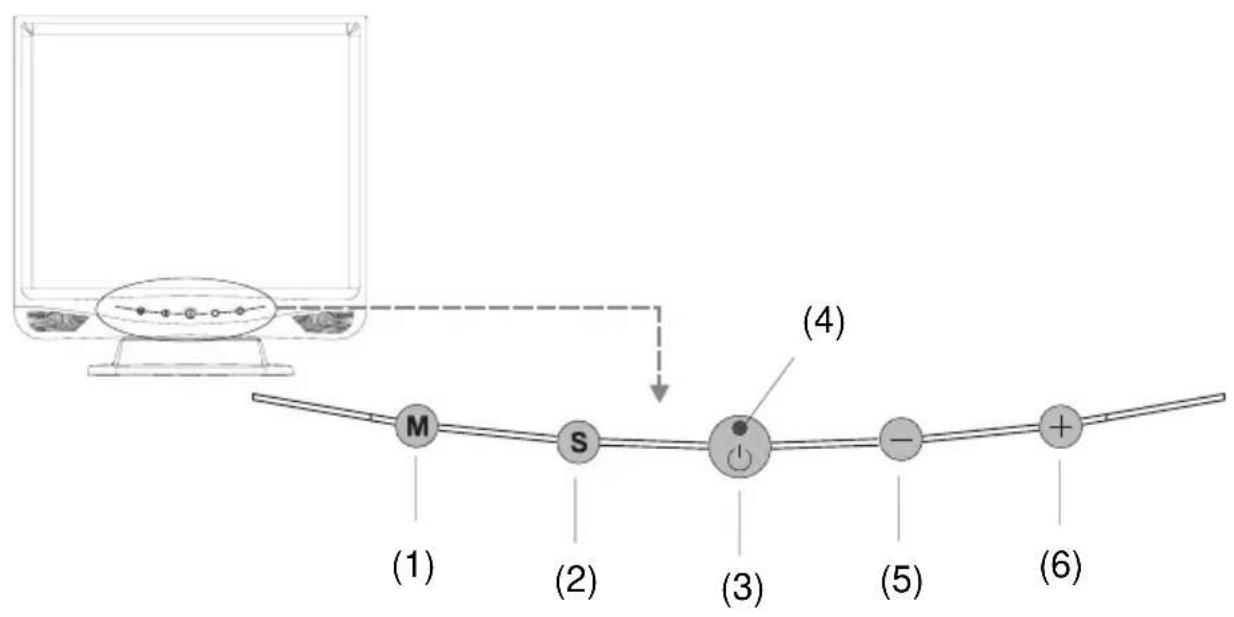
text_image
(1) (2) (3) (4) (5) (6)| nocl/.oN | I | ortnoC | |
| (1) | M | Menu Button | Display the OSD menus. |
| (2) | S | Select /Auto | 1. To select the adjustment items from OSBem2. To activate the “Auto Adjustment” function to obtain an optimum .egam |
| (3) | ∅ | Power | Switch on/off the power of the LCD display. |
| (4) | Power LED | 1. Green indicates the display is deat2. Amber indicates the display is in power-saving mode. | |
| (5) | - | 1. Minus / 2. Brightness | 1. Decrease value of the adjustments etins2. Adjust the brightness of image. |
| (6) | + | 1. Plus / 2. Mute On/Off | 1. Increase value of the adjustment etins2. Make the volume function Ineffective/effective. |
- Press the "M" button to display the OSD Menus. Press the "M" button to move between the OSD Menus. Press "S" to enter the functions to be adjusted and then press "S" to move between functions.
- Adjust the value of the option by pressing "-" and "+". Press "S" to confirm your choice.
- To exit the OSD Menus, move to "Fourth OSD Menu" and press "M".
On-Screen Display Menus
First OSD Menu:
• Auto-Adjustment
Choose this function to obtain an optimum image.
- Contrast
Adjusts the contrast of the display image.
• Horizontal Position
Changes the horizontal position of the image.
• Vertical Position
Changes the vertical position of the image.
- Frequency
Changes the display data frequency to match the frequency of your graphic card. When you are experiencing vertical flickering bar, use this function to make an adjustment.
- Tracking
Synchronizes the signal timing of the display to that of the graphic card. When you are experiencing unstable to flickering image, use this function to make an adjustment.
Second OSD Menu:
- Display Mode
Selects this function to demonstrate the display resolution, vertical refresh, and horizontal scan of the current mode
- OSD Off-Time
Adjusts the time period for OSD menu disappear.
- Language
Chooses the language you need.
- Text-Graphic
Toggles between VGA text mode (mode M03H) and graphic mode (mode M13H).
- Sharpness
Adjust the sharpness of the image.
(This function is disabled when input signal is 1280 × 1024 .)
- Reset
Returns the display parameters of the current mode to its factory default settings.
Third OSD Menu:
• Volume
It allows you to control the volume sound.
- Mute
It allows you to disable the sound immediately.
Fourth OSD Menu:
• Color Setting
Adjusts the color temperature.
• Color Adjustment-Red
It allows you to adjust the red color of the display.
• Color Adjustment-Green
It allows you to adjust the green color of the display.
• Color Adjustment-Blue
It allows you to adjust the blue color of the display.
Troubleshooting
If you are experiencing trouble with the LCD display, refer to the following. If the problem persists, please contact your local dealer or our service center.
Problem: No image appears on screen.
- Check that all the I/O and power connectors are correctly and well connected as described in the "Installation" section.
• Make sure the pins of the connectors are not crooked or broken.
Problem: Partial image or incorrectly displayed image.
- Check to see if the resolution of your computer is higher than that of the LCD display.
- Reconfigure the resolution of your computer to make it less than or equal to 1280 x 1024.
Problem: Image has vertical flickering line bars.
- Use "Frequency" to make an adjustment.
- Check and reconfigure the display mode of the vertical refresh rate of your graphic card to make it compatible with the LCD display.
Problem: Image is unstable and flickering
- Use "Tracking" to make an adjustment.
Problem: Image is scrolling
- Check and make sure the VGA signal cable (or adapter) is well connected.
- Check and reconfigure the display mode of the vertical refresh rate of your graphic card to make it compatible with the LCD display.
Problem: Vague image (characters and graphics)
- Use "Frequency" to make an adjustment. If this problem still exists, use "Tracking" to make an adjustment.
Warning Signal
Sometimes you probably will see the warning messages from this LCD screen. This means that the LCD display cannot exactly receive the signal from the computer graphic card.
There are three kinds of situations that may happen. Please check the connected cables or contact your local dealer for more information.
- No Signal
This message means that the LCD display has been powered on but it cannot receive any signal from the computer graphic card. Check all the power switches, power cables, and VGA signal cable.
- Going to Sleep
This message means that the LCD display is under the power saving mode. In addition, the LCD display will go to this sleeping mode when experiencing a sudden signal disconnecting problem.
- Out of range
This message means that the signal of the computer graphic card is not compatible with the LCD display. When the signal is not included in the compatibility mode we have listed in the Appendices of this manual, the LCD will display this message.
Front View
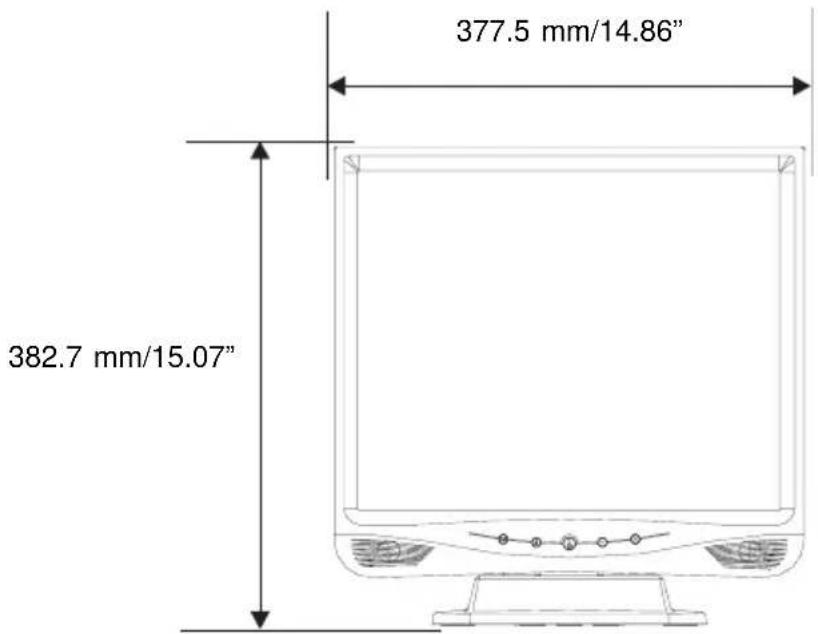
text_image
377.5 mm/14.86" 382.7 mm/15.07"Side View
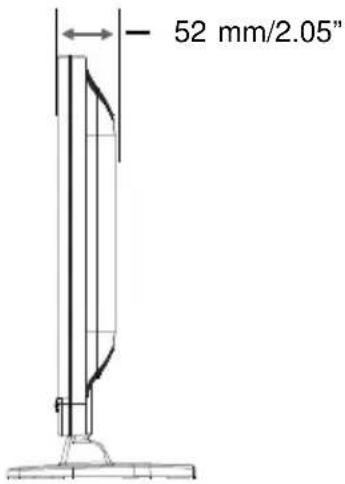
text_image
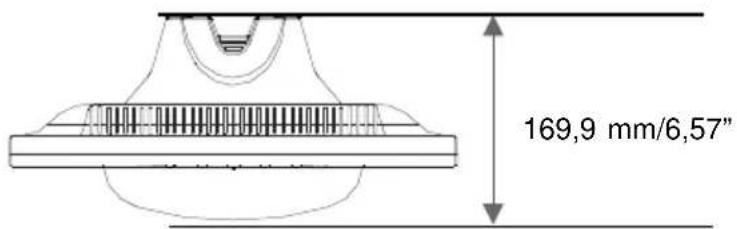
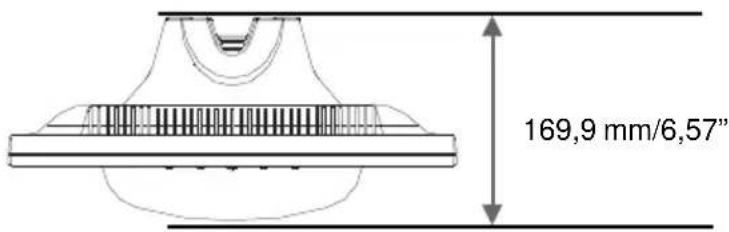
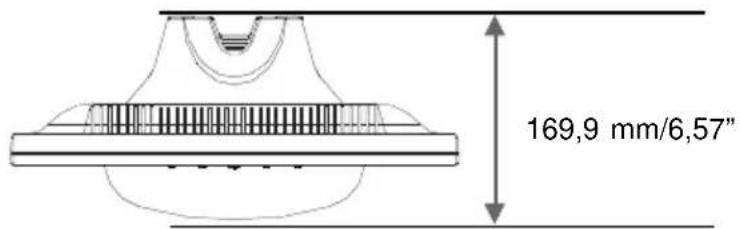
52 mm/2.05"Top View
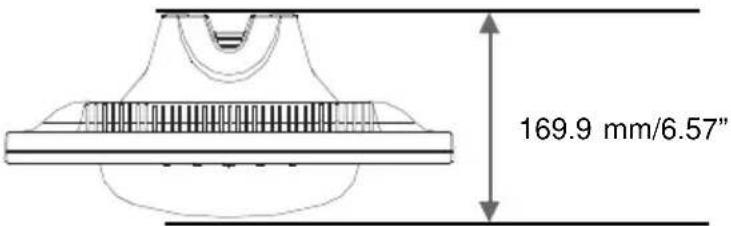
text_image
169.9 mm/6.57"| Mode | Resolution | V. Frequency (Hz) | ycr)zHk( |
| VGA | 640 x 350 | 70 | 31.5 |
| VGA | 640 x 400 | 70 | 31.5 |
| VGA | 640 x 480 | 60 | 31.5 |
| VGA | 720 x 400 | 70 | 31.5 |
| VESA VGA | 640 x 480 | 72 | 37.9 |
| VESA VGA | 640 x 480 | 75 | 37.5 |
| VESA SVGA | 800 x 600 | 56 | 35.2 |
| VESA SVGA | 800 x 600 | 60 | 37.9 |
| VESA SVGA | 800 x 600 | 72 | 48.1 |
| VESA SVGA | 800 x 600 | 75 | 46.9 |
| VESA XGA | 1024 x 768 | 60 | 48.4 |
| VESA XGA | 1024 x 768 | 70 | 56.5 |
| VESA XGA | 1280 x 1024 | 60 | 64 |
| VESA SXGA | 1280 x 1024 | 60 | 64 |
| VESA SXGA | 1280 x 1024 | 75 | 80 |
| Apple Mac LC | 640 x 480 | 67 | 34.9 |
| Apple Mac IT | 640 x 480 | 67 | 35.0 |
| Apple Mac | 832 x 624 | 75 | 49.7 |
| Apple Mac | 1024 x 768 | 75 | 60.2 |
neuqerF.H
natural_image
Silhouette of a person sitting at a desk using a computer (no text or symbols visible)Zu diesem Produkt
natural_image
Line drawing of a flat-screen computer monitor with front panel and stand (no text or symbols)LCD-Bildschirm
natural_image
Line drawing of a cable and connector connected to a rectangular device (no text or symbols)Netzadapter
natural_image
Line drawing of a straight cord with two plug connectors (no text or symbols)Netzkabel
natural_image
Line drawing of a coiled electrical plug with terminal connector (no text or symbols)Audioeingangskabel
Signalkabel VGA
CD-ROM
Bedienerhandbuch
Tokyo 108-0023, Japan
Produktübersicht
Vorderansicht
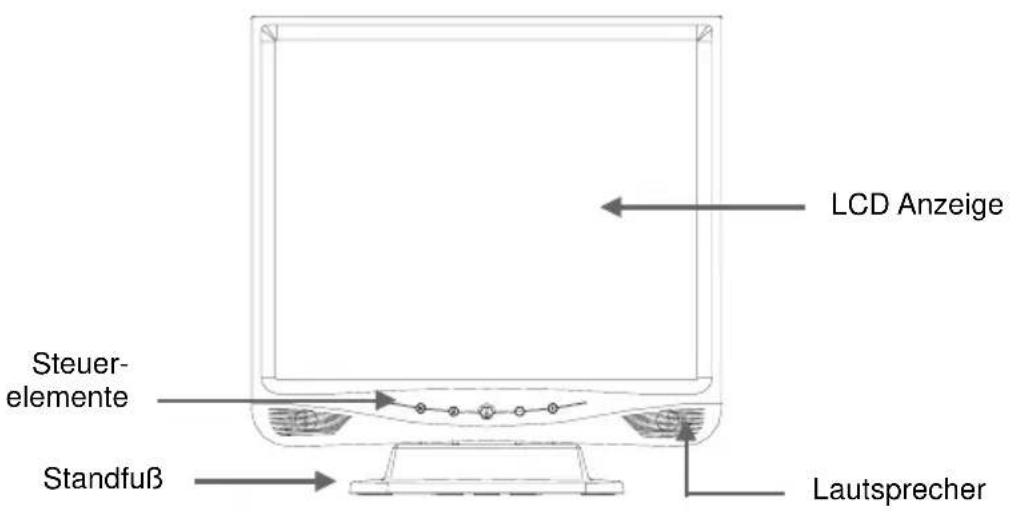
text_image
52 mm/2,05"Draufsicht
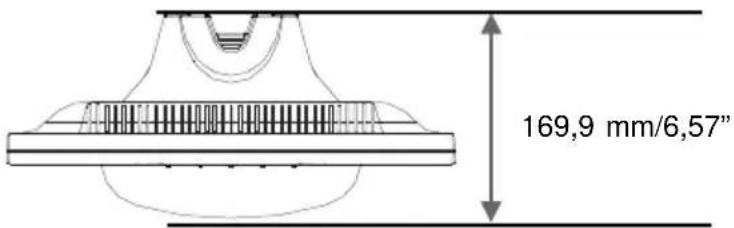
text_image
169,9 mm/6,57"| modi | -stätilibitapnsokMgnusölfuA | zneuqErV)zH | zneuqEr)zHk( |
| VGA | 640 x 350 | 70 | 31,5 |
| VGA | 640 x 400 | 70 | 31,5 |
| VGA | 640 x 480 | 60 | 31,5 |
| VGA | 720 x 400 | 70 | 31,5 |
| VESA VGA | 640 x 480 | 72 | 37,9 |
| VESA VGA | 640 x 480 | 75 | 37,5 |
| VESA SVGA | 800 x 600 | 56 | 35,2 |
| VESA SVGA | 800 x 600 | 60 | 37,9 |
| VESA SVGA | 800 x 600 | 72 | 48,1 |
| VESA SVGA | 800 x 600 | 75 | 46,9 |
| VESA XGA | 1024 x 768 | 60 | 48,4 |
| VESA XGA | 1024 x 768 | 70 | 56,5 |
| VESA XGA | 1024 x 768 | 75 | 60,0 |
| VESA SXGA | 1280 x 1024 | 60 | 64 |
| VESA SXGA | 1280 x 1024 | 75 | 80 |
| Apple Mac LC | 640 x 480 | 67 | 34,9 |
| Apple Mac IT | 640 x 480 | 67 | 35,0 |
| Apple Mac | 832 x 624 | 75 | 49,7 |
| Apple Mac | 1024 x 768 | 75 | 60,2 |
Uso recomendado ....34
natural_image
Silhouette of a person sitting at a desk in an office environment (no text or symbols visible)Ergonomía
natural_image
Line drawing of a flat-screen computer monitor with stand (no text or symbols)Pantalla LCD
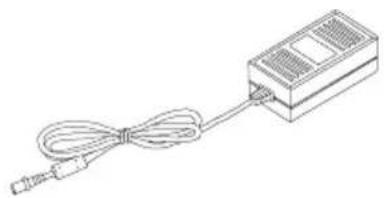
natural_image
Line drawing of a connected electrical component with wires (no text or symbols)Adaptador eléctrico
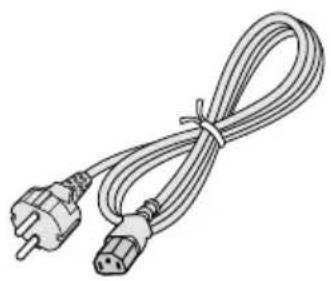
natural_image
Coiled electrical outlet cable with two terminal connectors (no text or symbols visible)Cordón eléctrico
natural_image
Line drawing of a coiled cable with a terminal plug (no text or symbols)text_image
52 mm/2,05"Vista desde Tope
text_image
169,9 mm/6,57"| odoM | n(Hz) | óicuHeierReucerF)zHk( | |
| VGA | 640 x 350 | 70 | 31,5 |
| VGA | 640 x 400 | 70 | 31,5 |
| VGA | 640 x 480 | 60 | 31,5 |
| VGA | 720 x 400 | 70 | 31,5 |
| VESA VGA | 640 x 480 | 72 | 37,9 |
| VESA VGA | 640 x 480 | 75 | 37,5 |
| VESA SVGA | 800 x 600 | 56 | 35,2 |
| VESA SVGA | 800 x 600 | 60 | 37,9 |
| VESA SVGA | 800 x 600 | 72 | 48,1 |
| VESA SVGA | 800 x 600 | 75 | 46,9 |
| VESA XGA | 1024 x 768 | 60 | 48,4 |
| VESA XGA | 1024 x 768 | 70 | 56,5 |
| VESA XGA | 1024 x 768 | 75 | 60,0 |
| VESA SXGA | 1280 x 1024 | 60 | 64 |
| VESA SXGA | 1280 x 1024 | 75 | 80 |
| Apple Mac LC | 640 x 480 | 67 | 34,9 |
| Apple Mac IT | 640 x 480 | 67 | 35,0 |
| Apple Mac | 832 x 624 | 75 | 49,7 |
| Apple Mac | 1024 x 768 | 75 | 60,2 |
natural_image
Silhouette of a person sitting at a desk using a computer (no text or symbols visible)Ergonomie
natural_image
Line drawing of a flat-screen computer monitor with front panel and stand (no text or symbols)Ecran LCD
natural_image
Line drawing of a cable being inserted into a rectangular device (no text or symbols)natural_image
Line drawing of a straight cord with two plug connectors (no text or symbols)natural_image
Line drawing of a coiled cable with two connectors (no text or symbols)text_image
52 mm/2,05"Vue supérieure
text_image
169,9 mm/6,57"| Mode | Résolution | Fréquence V. (Hz) | .HecneuqérF)zHk( |
| VGA | 640 x 350 | 70 | 31,5 |
| VGA | 640 x 400 | 70 | 31,5 |
| VGA | 640 x 480 | 60 | 31,5 |
| VGA | 720 x 400 | 70 | 31,5 |
| VESA VGA | 640 x 480 | 72 | 37,9 |
| VESA VGA | 640 x 480 | 75 | 37,5 |
| VESA SVGA | 800 x 600 | 56 | 35,2 |
| VESA SVGA | 800 x 600 | 60 | 37,9 |
| VESA SVGA | 800 x 600 | 72 | 48,1 |
| VESA SVGA | 800 x 600 | 75 | 46,9 |
| VESA XGA | 1024 x 768 | 60 | 48,4 |
| VESA XGA | 1024 x 768 | 70 | 56,5 |
| VESA XGA | 1024 x 768 | 75 | 60,0 |
| VESA SXGA | 1280 x 1024 | 60 | 64 |
| VESA SXGA | 1280 x 1024 | 75 | 80 |
| Apple Mac LC | 640 x 480 | 67 | 34,9 |
| Apple Mac IT | 640 x 480 | 67 | 35,0 |
| Apple Mac | 832 x 624 | 75 | 49,7 |
| Apple Mac | 1024 x 768 | 75 | 60,2 |
natural_image
Silhouette of a person sitting at a desk using a computer (no text or symbols visible)natural_image
Line drawing of a flat-screen computer monitor with stand (no text or symbols)Schermo LCD
natural_image
Line drawing of a cable being inserted into a rectangular device (no text or symbols)natural_image
Line drawing of a straight cord with two plug connectors (no text or symbols)Cavo alla rete
natural_image
Line drawing of a coiled cable with a plug inserted (no text or symbols)Cavo entrata audio
Cavo segnali VGA
CD ROM
Manuale utente
Tokyo 108-0023, Japan
text_image
52 mm/2,05"Vista dall'alto
text_image
169,9 mm/6,57"| odoM | e(Hz) | noi2aizrRqerF)zHk( | |
| VGA | 640 x 350 | 70 | 31,5 |
| VGA | 640 x 400 | 70 | 31,5 |
| VGA | 640 x 480 | 60 | 31,5 |
| VGA | 720 x 400 | 70 | 31,5 |
| VESA VGA | 640 x 480 | 72 | 37,9 |
| VESA VGA | 640 x 480 | 75 | 37,5 |
| VESA SVGA | 800 x 600 | 56 | 35,2 |
| VESA SVGA | 800 x 600 | 60 | 37,9 |
| VESA SVGA | 800 x 600 | 72 | 48,1 |
| VESA SVGA | 800 x 600 | 75 | 46,9 |
| VESA XGA | 1024 x 768 | 60 | 48,4 |
| VESA XGA | 1024 x 768 | 70 | 56,5 |
| VESA XGA | 1024 x 768 | 75 | 60,0 |
| VESA SXGA | 1280 x 1024 | 60 | 64 |
| VESA SXGA | 1280 x 1024 | 75 | 80 |
| Apple Mac LC | 640 x 480 | 67 | 34,9 |
| Apple Mac IT | 640 x 480 | 67 | 35,0 |
| Apple Mac | 832 x 624 | 75 | 49,7 |
| Apple Mac | 1024 x 768 | 75 | 60,2 |
- Use the attached specified cable with the LCD1711M color monitor so as not to interfere with radio and television reception.
(1) Please use the supplied power cord or equivalent to ensure FCC compliance
(2) Please use the supplied AC Adapter.
(3) Please use the supplied Audio Cable.
(4) Please use the supplied VGA Cable.
Use of other cables and adapters may cause interference with radio and television reception.
- This equipment has been tested and found to comply with the limits for a Class B digital device, pursuant to part 15 of the FCC Rules. These limits are designed to provide reasonable protection against harmful interference in a residential installation. This equipment generates, uses, and can radiate radio frequency energy, and if not installed and used in accordance with the instructions, may cause harmful interference to radio communications. However, there is no guarantee that interference will not occur in a particular installation. If this equipment does cause harmful interference to radio or television reception, which can be determined by turning the equipment off and on, the user is encouraged to try to correct the interference by one or more of the following measures:
◆Reorient or relocate the receiving antenna.
- Increase the separation between the equipment and receiver.
- Connect the equipment into an outlet on a circuit different from that to which the receiver is connected.
- Consult your dealer or an experienced radio/TV technician for help.
If necessary, the user should contact the dealer or an experienced radio/television technician for additional suggestions. The user may find the following booklet, prepared by the Federal Communications Commission, helpful: "How to Identify and Resolve Radio-TV Interference Problems." This booklet is available from the U.S. Government Printing Office, Washington, D.C., 20402, Stock No. 004-000-00345-4.
DECLARATION OF CONFORMITY
This device complies with Part 15 of FCC Rules. Operation is subject to the following two conditions. (1) This device may not cause harmful interference, and (2) this device must accept any interference received, including interference that may cause undesired operation.
U.S. Responsible Party: NEC-Mitsubishi Electronics Display of America, Inc.
Address: 1250 North Arlington Heights Road, Suite 500
Itasca, Illinois 60143-1248
Tel. No.: (630) 467-3000
Type of Product: Display Monitor
Equipment Classification: Class B peripheral
Model: LCD1711M

we hereby declare that the equipment specified above
conforms to the technical standards as specified in the FCC Rules.
Windows is a registered trademark of Microsoft Corporation. NEC is a registered trademark of NEC Corporation. ENERGY STAR ^® is a U.S. registered trademark. All other brands and product names are trademarks or registered trademarks of their respective owners.
As an ENERGY STAR® partner, NEC-Mitsubishi Electronics Display of America has determined that this product meets the Energy Star guidelines for energy efficiency. The ENERGY STAR emblem does not represent EPA endorsement of any product or service.
LCD1711M
Congratulations! You have just purchased a TCO'99 approved and labeled product! Your choice has provided you with a product developed for professional use. Your purchase has also contributed to reducing the burden on the environment and also to the further development of environmentally adapted electronics products.

text_image
ECOLOGY ENERGY EMISSIONS EKGONOMICS TCO 99Why do we have environmentally labelled computers?
In many countries, environmental labelling has become an established method for encouraging the adaptation of goods and services to the environment. The main problem, as far as computers and other electronics equipment are concerned, is that environmentally harmful substances are used both in the products and during the manufacturing. Since it has not been possible for the majority of electronics equipment to be recycled in a satisfactory way, most of these potentially damaging substances sooner or later enter Nature.
There are also other characteristics of a computer, such as energy consumption levels, that are important from the viewpoints of both the work (Internal) and natural (external) environments. Since all methods of conventional electricity generation have a negative effect on the environment (acidic and climate-influencing emissions, radioactive waste, etc.), it is vital to conserve energy. Electronics equipment in offices consume an enormous amount of energy since they are often left running continuously.
What does labelling involve?
This product meets the requirements for the TCO'99 scheme which provides for international and environmental labelling of personal computers. The labelling scheme was developed as a joint effort by the TCO (The Swedish Confederation of Professional Employees), Svenska Naturskyddsforeningen (The Swedish Society for Nature Conservation) and Statens Energimyndighet (The Swedish National Energy Administration).
The requirements cover a wide range of issues: environment, ergonomics, usability, emission of electrical and magnetic fields, energy consumption and electrical and fire safety.
The environmental demands concern restrictions on the presence and use of heavy metals, brominated and chlorinated flame retardants, CFCs (freons) and chlorinated solvents, among other things. The product must be prepared for recycling and the manufacturer is obliged to have an environmental plan which must be adhered to in each country where the company implements its operational policy. The energy requirements include a demand that the computer and/or display, after a certain period of inactivity, shall reduce its power consumption to a lower level in one or more stages. The length of time to reactivate the computer shall be reasonable for the user.
Labelled products must meet strict environmental demands, for example, in respect of the reduction of electric and magnetic fields, physical and visual ergonomics and good usability.
Environmental Requirements
Flame retardants
Flame retardants are present in printed circuit boards, cables, wires, casings and housings. In turn, they delay the spread of fire. Up to thirty percent of the plastic in a computer casing can consist of flame retardant substances. Most flame retardants contain bromine or chloride and these are related to another group of environmental toxins, PCBs, which are suspected to give rise to severe health effects, including reproductive damage in fisheating birds and mammals, due to the bioaccumulative* processes. Flame retardants have been found in human blood and researchers fear that disturbances in foetus development may occur.
TCO'99 demand requires that plastic components weighing more than 25 grams must not contain flame retardants with organically bound chlorine and bromine. Flame retardants are allowed in the printed circuit boards since no substitutes are available.
Lead\*\*
Lead can be found in picture tubes, display screens, solders and capacitors. Lead damages the nervous system and in higher doses, causes lead poisoning.
TCO'99 requirement permits the inclusion of lead since no replacement has yet been developed.
Cadmium\*\*
Cadmium is present in rechargeable batteries and in the colourgenerating layers of certain computer displays. Cadmium damages the nervous system and is toxic in high doses.
TCO'99 requirement states that batteries, the colourgenerating layers of display screens and the electrical or electronics components must not contain any cadmium.
Mercury\*\*
Mercury is sometimes found in batteries, relays and switches, Mercury damages the nervous system and is toxic in high doses.
TCO'99 requirement states that batteries may not contain any Mercury. It also demands that no mercury is present in any of the electrical or electronics components associated with the display unit.
CFCs (freons)
CFCs (freons) are sometimes used for washing printed circuit boards. CFCs break down ozone and thereby damage the ozone layer in the stratosphere, causing increased reception on Earth of ultraviolet light with consequent increased risks of skin cancer (malignant melanoma).
The relevant TCO'99 requirement; Neither CFCs nor HCFCs may be used during the manufacturing and assembly of the product or its packaging.
* Bio-accumulative is defined as substances which accumulate within living organisms.
** Lead, Cadmium and Mercury are heavy metals which are Bio-accumulative.
To obtain complete information on the environmental criteria document, order from:
TCO Development Unit
SE-114 94 Stockholm
SWEDEN
FAX Number: +46 8 782 92 07
E-mail (Internet): development@tco.se
You may also obtain current information on TCO'99 approved and labelled products by visiting their website at: http://www.tcodevelopment.com
NEC
Printed on recycling paper Printed in China
36.59307.001 Rev.A