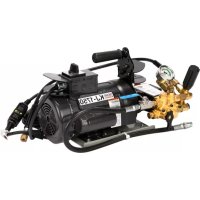
KJ1750 - Pressure washer RIDGID - Free user manual and instructions
Find the device manual for free KJ1750 RIDGID in PDF.
Questions des utilisateurs sur KJ1750 RIDGID
0 question sur cet appareil. Repondez a celles que vous connaissez ou posez la votre.
Poser une nouvelle question sur cet appareil
Download the instructions for your Pressure washer in PDF format for free! Find your manual KJ1750 - RIDGID and take your electronic device back in hand. On this page are published all the documents necessary for the use of your device. KJ1750 by RIDGID.
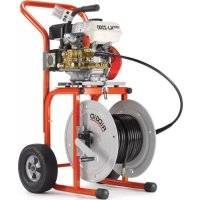
USER MANUAL KJ1750 RIDGID
Always wear properly rated eye protection such as safety goggles or face shield while spraying. (Safety glasses do not provide full protection.) General Power Tool Safety Warnings WARNING Read all safety warnings, instructions, illustrations and specications provided with this power tool. Failure to follow all instructions listed below may result in electric shock, re and/or serious injury.
SAVE ALL WARNINGS AND INSTRUCTIONS
FOR FUTURE REFERENCE! The term "power tool" in the warnings refers to your mains-operated (corded) power tool or battery-operated (cordless) power tool. Work Area Safety
- Keep work area clean and well lit. Cluttered or dark areas invite accidents.
- Do not operate power tools in explosive atmo- spheres, such as in the presence of flammable liquids, gases, or dust. Power tools create sparks which may ignite the dust or fumes.
- Keep children and by-standers away while opera- ting a power. Distractions can cause you to lose control. Electrical Safety
- Power tool plugs must match the outlet. Never mod ify the plug in any way. Do not use any adap- ter plugs with earthed (grounded) power tools. Unmodi fied plugs and matching outlets will reduce risk of electric shock.
- Avoid body contact with earthed or grounded sur- faces such as pipes, radiators, ranges and refrig- erators. There is an increased risk of electrical shock if your body is earthed or grounded.
- Do not expose power tools to rain or wet condi- tions. Water entering a power tool will increase the risk of electrical shock.
- Do not abuse the cord. Never use the cord for carrying, pulling or unplugging the power tool. Keep cord away from heat, oil, sharp edges or moving parts. Damaged or entangled cords increase the risk of electric shock.
- When operating a power tool outdoors, use an extension cord suitable for outdoor use. Use of a cord suitable for outdoor use reduces the risk of electric shock. Safety Symbols In this operator’s manual and on the product, safety symbols and signal words are used to communicate important safety information. This section is provided to improve understanding of these signal words and symbols. This is the safety alert symbol. It is used to alert you to potential personal injury hazards. Obey all safety messages that follow this symbol to avoid possible injury or death. DANGER indicates a hazardous situation which, if not avoided, will result in death or serious injury. WARNING indicates a hazardous situation which, if not avoided, could result in death or serious injury. CAUTION indicates a hazardous situation which, if not avoided, could result in minor or moderate injury. NOTICE indicates information that relates to the protection of property. This symbol means read the operator’s manual carefully before using the equipment. The operator’s manual contains important information on the safe and proper operation of the equipment. NOTICE DANGER WARNING CAUTION This symbol indicates the risk of the electrical shock. This is information symbol and indicates the product information available (including operators’ manual) by scanning the adjacent QR code. This symbol indicates the risk of high pressure water directed at body parts, causing skin puncture and injection injuries. This symbol means high pressure jets can be dangerous if subject to misuse. The jet must not be directed at persons, live electrical equipment or the appliance itself. This symbol indicates the risk of the jetter hose whipping, and causing striking or injection injuries. This symbol indicates that the marked equipment exceeds 55 lbs (25kg). Exercise caution when lifting or moving to reduce the risk of injury.3 KJ-1350 & KJ-1750 Jetter Machines
278-105-671.10_REV C
- If operating a power tool in a damp location is unavoidable, use a ground fault circuit interrupter (GFCI) protected supply. Use of a GFCI reduces the risk of electric shock. Personal Safety
- Stay alert, watch what you are doing and use common sense when operating a power tool. Do not use a power tool while you are tired or under the influence of drugs, alcohol, or medication. A mo ment of inattention while operating power tools may result in serious personal injury.
- Use personal protective equipment. Always wear eye protection. Protective equipment such as dust mask, non-skid safety shoes, hard hat, or hearing protection used for appropriate conditions will reduce personal injuries.
- Prevent unintentional starting. Ensure the switch is in the OFF position before connecting to power source and/or battery pack, picking up or carrying the tool. Carrying power tools with your finger on the switch or energizing power tools that have the switch ON invites accidents.
- Remove any adjusting key or wrench before turn- ing the power tool ON. A wrench or a key left at- tached to a rotating part of the power tool may result in personal injury.
- Do not overreach. Keep proper footing and bal- ance at all times. This enables better control of the power tool in unexpected situations.
- Dress properly. Do not wear loose clothing or jewelry. Keep your hair, and clothing away from moving parts. Loose clothes, jewelry, or long hair can be caught in moving parts.
- Do not let familiarity gained from frequent use of tools allow you to become complacent and ignore tool safety principles. A careless action can cause severe injury within a fraction of a second. Power Tool Use and Care
- Do not force power tool. Use the correct power tool for your application. The correct power tool will do the job better and safer at the rate for which it is designed.
- Do not use power tool if the switch does not turn it ON and OFF. Any power tool that cannot be controlled with the switch is dangerous and must be repaired.
- Store idle power tools out of the reach of children and do not allow persons unfamiliar with the power tool or these instructions to operate the tool. Power tools are dangerous in the hands of untrained users.
- Maintain power tools and accessories. Check for misalignment or binding of moving parts, breakage of parts and any other condition that may affect the power tool’s op er ation. If damaged, have the power tool repaired before use. Many accidents are caused by poorly maintained power tools.
- Keep cutting tools sharp and clean. Properly main- tained cutting tools with sharp cutting edges are less likely to bind and are easier to control.
- Use the power tool, accessories and tool bits etc. in accordance with these instructions, taking into account the working conditions and the work to be performed. The use of the power tool for operations different from those intended could result in a hazardous situation.
- Keep handles and grasping surfaces dry, clean and free from oil and grease. Slippery handles and grasping surfaces do not allow for safe handling and control of the tool in unexpected situations. Service
- Have your power tool serviced by a qualified repair person using only identical replacement parts. This will ensure that the safety of the power tool is maintained. Water Jetter Safety Warnings WARNING This section contains important safety information that is specic to these machines. Read these precautions carefully before using these Water Jetting Machines to reduce the risk of electrical shock or other serious personal injury.
SAVE ALL WARNINGS AND INSTRUCTIONS
FOR FUTURE REFERENCE! Keep this manual with machine for use by the operator. Water Jetter Safety
- Never operate the jetter with the hose end outside of the drain. Hose can whip, causing striking injuries and spray can penetrate skin and cause serious injury. – Risk of Injection or Injury – Do not discharge stream at persons. High pressure water can inject under skin resulting in serious injury including amputation Do not direct spray at people or animals. WARNINGKJ-1350 & KJ-1750 Jetter Machines
follow all warnings and instructions may result in property damage and/or serious injury. Grounding Instructions
- This product must be grounded. If it should mal- function or breakdown, grounding provides a path of least resistance for electric current to reduce the risk of electric shock. This product is equipped with a cord having an equipment-grounding conductor and a grounding plug. The plug must be plugged into an appropriate outlet that is properly installed and grounded in accordance with all local codes and ordinances. Improper connection of the equipment- grounding conductor can result in a risk of electrocution. Check with qualified electrician or service personnel if you are in doubt as to whether the outlet is properly grounded. Do not modify the plug provided with the product – if it will not fit the outlet, have a proper outlet installed by a qualified electrician. Do not use any type of adaptor with this product.
- Grounded tools must be plugged into an outlet, properly installed and grounded in accordance with all codes and ordinances. Never remove the grounding plug or modify the plug in any way. Do not use any adapter plugs. Check with a qualified electrician if you are in doubt as to whether the outlet is properly grounded. If the tool should electrically malfunction or break down, grounding provides a low resistance path to carry electricity away from the user. Ground Fault Circuit Interrupter Protection
- This pressure washer is provided with a Class A ground-fault circuit-interrupter (GFCI) built into the plug of the power-supply cord. This device provides additional protection from the risk of electric shock. Should replacement of the plug or cord become necessary, use only identical replacement parts that include Class A GFCI protection.
- Before using, test the Ground Fault Circuit Inter- rupter (GFCI) provided with the power cord to insure the GFCI is operating properly. Damaged GFCI increases risk of electrical shock. Extension Cords
- Use only 3-wire extension cords that have 3-prong grounding-type plugs and 3-pole cord connectors that accept the plug from the product.
- Use only extension cords that are intended for outdoor use. These extension cords are identified
- High pressure hoses, fittings and couplings are important for the safety of the appliance. Use only hoses, fittings and couplings recommended by the manufacturer.
- Do not operate jetter above pressure rating or 140°F (inlet water temperature). This increases the risk of injury, including burns, and damage to the jetter.
- Know how to stop the product and bleed pres- sures quickly. Be thoroughly familiar with the controls.
- Jetter shall not be used by children or untrained personnel. Close supervision is necessary when using the jetter near children.
- During use of high pressure cleaners, aerosols may be formed. Be thoroughly familiar with the controls.
- Risk of eye injury. Spray can splash back or pro- pel objects. Always wear properly rated eye protec- tion such as safety goggles or face shield while spray- ing. (Safety glasses do not provide full protection.)
- Always use appropriate personal protective equip- ment while handling and using drain cleaning e- quipment. Drain may contain chemicals, bacteria and other substances that may be toxic, infectious, cause burns or other issues. Appropriate personal protective equipment always includes eye protection and gloves, and may also include equipment such as latex or rub- ber gloves, protective clothing, respirators, and steel toed footwear.
- Practice good hygiene. Use hot soapy water to wash hands and other body parts exposed to drain contents after handling or using drain clean- ing equipment. Do not eat or smoke while operating or handling drain cleaning equipment. This will help prevent contamination with toxic or infectious material.
- Do not spray toxic or flammable liquids. This will reduce the risk of burns, fire, explosion or other injury.
- If connection is made to a potable water system, the system shall be protected against backflow. Water that has flowed through backflow preventer is considered to be non-potable.
- Never clean the machine using its own spray. High pressure spray may damage machine components.
- Do not spray electrical apparatus or wiring. This reduces the risk of electrical shock.
- Read and understand this manual, and the warn- ings and instructions for all equipment being used with this tool before operating. Failure to DANGER5 KJ-1350 & KJ-1750 Jetter Machines
278-105-671.10_REV C
by a marking “Acceptable for use with outdoor ap- pliances; store indoors while not in use.”
- Use only extension cords having an electrical rating not less than the rating of the product.
- Do not use damaged extension cords. Examine extension cord before using and replace if damaged. Do not abuse extension cord and do not yank on any cord to disconnect. Keep cord away from heat and sharp edges.
- Always disconnect the extension cord from the receptacle before disconnecting the product from the extension cord. To reduce the risk of electrocu- tion, keep all connections dry and off the ground. Do not touch plug with wet hands
- Extension cords are not recommended unless they are plugged into a Ground Fault Circuit Inter- rupter (GFCI) found in circuit boxes or outlet re- ceptacles. The GFCI on the machine power cord will not prevent electrical shock from the extension cords. RIDGID Contact Information If you have any question concerning this RIDGID
distributor. – Visit RIDGID.com to find your local RIDGID contact point. – Contact Ridge Tool Technical Service Department at ProToolsTechService@Emerson.com, or in the U.S. and Cana da call 844-789-8665. Description The RIDGID
KJ-1350 and KJ-1750 are portable jetters designed to use the combination of water pressure and flow to clear grease and soft blockages out of 1
/4" to 4" drain lines. The Jetters can be either hand carried or combined with a two wheeled cart and hose reel for transporting. The KJ-1350 has a 1
/2 HP electrical motor with a 1350 PSI pressure rating and a 1.4 GPM flow rate. It is de- signed for residential and light commercial applications. The KJ-1750 has 2 HP motor with a 1750 PSI pressure rating and a 1.4 GPM flow rate. It is designed for heavy commercial and industrial applications. Figure 1A – Water Jetter (KJ-1350 Shown) Figure 1B – Water Jetter (KJ-1350 Shown) Specications KJ-1350 Line Capacity ..............Recommended for 1
/4" to 4" drain lines through 200 feet. Motor ........................... 1
Standard Equipment All Jetters come with
- Appropriate Jetter Nozzles
- Nozzle Cleaning Tool See the RIDGID catalog for specific equipment supplied with each catalog number. This machine is made to clean drains. If properly used it will not damage a drain that is in good condition and properly designed, constructed and main- tained. If the drain is in poor condition or not properly designed, constructed or maintained, the drain cleaning process may not be effective or could cause damage to the drain. The best way to determine the condition of a drain before cleaning is through visual inspection with a camera. Improper use of this jetting machine can dam- age the jetter and the drain. This machine may not clear all blockages. Machine Assembly WARNING To prevent serious injury during use and prevent machine damage, follow these procedures for proper assembly. Instructions for Pump Remove plug in pump and replace with dipstick/breather cap. Check the pump oil level (jetter is shipped with oil). If oil is low, fill with SAE 30W non-detergent oil. Transport Carts H-10 Cart The two-wheeled cart has been designed to accept the KJ-1350 and the KJ-1350-2 without the need of tools. Lift and slide the jetter onto the cart making sure the one end engages the cart and on the other end, the post inserts into the receptacle (Figure 2A). Tighten the T-handle to lock the jetter down. An adapter kit is available to mount the KJ-1750 on the H-10. The hose reel and 100 feet of
/4" ID jetter hose mounts to the receptacle closest to the handle (Figure 2B). Place the post on the reel into the socket and tighten the T-handle. The length of the H-10 transport cart can be shortened for storage or lengthened by loosening two T-handles on the rails and sliding the handle in or out. Make sure all T-handles are fully tight- ened prior to transporting or lifting. H-30 Cart and Hose Reel The larger H-30 Cart and Hose Reel is designed to ac- cept the KJ-1750 without the need of tools. Lift the jetter onto the deck and place over the locator pins. Hold in place and attach front and back clips to jetter base. An adapter kit is available to mount the KJ-1350’s to the H-30. Figure 2A – Water Jetter, H-10 Cart and Hose Reel Figure 2B – Water Jetter with H-10 Cart and Hose Reel Pre-Operation Inspection WARNING Before each use, inspect your water jetter and correct any problems to reduce the risk of serious injury from high pressure water and other causes and prevent jetter damage. Always wear safety glasses, gloves and other appropriate protective equipment when inspecting your jetter to protect against chemicals and bacte- ria on the equipment.
1. Check pump oil level. If low, fill with a SAE 30 weight
non-detergent oil. NOTE! Jetter unit should be stored base down. Never NOTICE Reel PostJetter ReceptacleJetter PostT-HandleHose Reel Receptacle WARNING7 KJ-1350 & KJ-1750 Jetter Machines
278-105-671.10_REV C
store in up-right position as oil from pump will leak from reservoir.
2. Inspect the Jetter for any broken, missing, misaligned
or binding parts as well as any other conditions which may affect the safe and normal operation of the ma- chine. If any of these conditions are present, do not use the Jetter until any problem has been repaired.
3. Inspect the power cord, ground fault circuit interrupter
(GFCI) and plug for damage. If the plug has been modified, is missing the grounding pin or if the cord is damaged, do not use the jetter until the cord has been replaced. When replacing cord, use only identical replacement parts that includes GFCI protection.
4. Check inlet filter screen for debris that can restrict
water flow into the pump resulting in poor perfor- mance. If filter screen is dirty or clogged, remove, clean and replace.
5. Use accessories that are designed for your Jetter
and meet the needs of your application. The correct accessories allow you to do the job successfully and safely. Accessories suitable for use with other equipment may be hazardous when used with this machine.
6. Clean any oil, grease or dirt from all equipment han-
dles and controls. This reduces the risk of injury due to a tool or control slipping from your grip.
7. Check the jetter nozzle orifices for debris. If an orifice
is blocked, use nozzle cleaning tool to clear and re- move debris.
8. Inspect hoses for wear and damage. Hoses should
be replaced when they become damaged. Damaged hoses can burst causing seri- ous injury. Only use hoses whose pressure rating meets or exceeds that of the jetter. Machine and Work Area Set-Up WARNING Always wear safety glasses, gloves and other appropriate protective equipment when setting up your jetter to protect against chemicals and bacteria on the equipment. Rubber soled, non-slip shoes can help prevent slipping on wet surfaces.
Set up the jetter and work area according to these procedures to reduce the risk of injury from high pressure water, chemical burns, infections, electric shock and other causes, and prevent jetter damage.
1. Check work area for:
- No flammable liquids, vapors or dust that may ig- nite.
- 20 amp grounded electrical outlet.
- Clear path to the electrical outlet that does not contain any sources of heat or oil, sharp edges or moving parts that may damage electrical cord.
- Dry place for machine and operator. Do not use the machine while standing in water.
- Water supply. NOTE! If a connection is made to a potable water sys- tem, the system should be protected against backflow in accordance with all local codes and ordinances.
2. Connect the quick coupling fitting to the water supply
hose. Connect water supply hose to the jetter inlet and close the inlet supply valve. (Figure 3) Figure 3 – Connect Water Supply Hose to Jetter. Close Inlet Supply Valve (Shown In Closed Position.)
3. Connect the other end of the water supply hose to the
water faucet and turn the faucet on. Make sure there WARNING WARNING Water Supply HoseJetter Water InletInlet Supply ValveKJ-1350 & KJ-1750 Jetter Machines
are no kinks or unnecessary bends in the supply hose. Hot water improves the jetter’s perfor- mance, particularly when clearing grease blockages. Limit water temperature to below 140°F.
4. Connect a jetter hose to the jetter’s outlet quick cou-
pling on the end of the connection hose. (Refer to Jetter Hose Selection Chart.)
5. If a hose reel is used, attach connection hose to plug
fitting on hose reel.
7. Open the inlet supply valve and run water through the
jetter and hoses with unit OFF.
8. Continue to run water through the jetter until all air
9. Close the inlet supply valve.
NOTE! Both the KJ-1350’s and KJ-1750 Jetters have check valves for back flow prevention.
10. Attach a jetter nozzle to the jet hose. (Refer to Jetter
Nozzle Selection Chart.) Hand-tighten for a snug fit. Over-tightening can interfere with water flow through the nozzle orifices causing reduced flow and poor performance. Nozzles should not be removed from the drain while pressurized. Mark the hose at a distance of 24" (60cm) from nozzle to indicate the location of the nozzle.
11. Insert the jet hose into the line several feet.
12. Open the inlet supply valve and verify that water flows
freely through the nozzle.
13. Plug the Jetter into the electrical outlet making sure to
position the power cord along the clear path selected earlier. If the power cord does not reach the outlet, use an extension cord in good condition. To avoid electrical shock and electrical fires, never use an extension cord that is damaged or does not meet the following requirements:
- The cord has a three-prong plug similar to shown in Electrical Safety section.
- The cord is rated as “W” or “W-A” if being used outdoors.
- The cord has sufficient wire thickness (12 AWG). If the wire thickness is too small, the cord may overheat, melting the cord’s insulation or causing nearby objects to ignite. To reduce risk of electrical shock, keep all electrical connections dry and off the ground. Do not touch plug with wet hands. Test the Ground Fault Circuit Interrupter (GFCI) provided with the electric cord to in- sure it is operating correctly. When test button is pushed in, the indicator light should go off. Reactivate by pushing the reset button in. If indicator light goes on, the machine is ready to use. If the GFCI does not function correctly, do not use the machine. CAUTION WARNING WARNING WARNING Jetter Hose Selection Chart KJ-1350 KJ-1750 Thread Size
/4" Features three reverse jet thrusts for maximum propulsion to jet long distances. Use this nozzle for most applications H-21 H-31 H-41 H-51 Uses three jet thrusters in reverse plus one jet pointed forward to penetrate solid grease or sludge blockages. The forward jet blasts a small hole in the blockage for the nozzle to follow. It is also very effective when jetting ice blockages. H-22 H-31 H-42 H-52 Use the drop head to help negotiate difficult bends. H-24 H-44 Use spinner nozzle to clean grease and similar blockages. H-25 H-45 Applications Pipe Size Nozzle Size Hose Size (ID) Hose Size (OD) Bathroom sinks, urinals,and small lines. 1
/16" Kitchen sinks, laundry tubs and stacks, clean-outs, and vents. 2" – 3"
/4" Shower and floor drains, lateral lines, and grease traps. 3" – 4"
Operating Instructions WARNING Risk of eye injury. Spray can splash back or propel objects. Always wear properly rated eye protection such as safety goggles or face shield while spray- ing. (Safety glasses do not provide full protection.) Never operate the jetter with the hose end outside of the drain. Hose can whip, causing striking injuries and spray can penetrate skin and cause serious injury. High pressure uid can inject under skin resulting in serious injury, including amputation. Do not direct spray at people or animals. Do not operate jetter above pressure rating or 140°F (inlet water temperature). This increases the risk of injury, including burns, and damage to the jetter. Always use appropriate personal protective equip- ment while handling and using drain cleaning equipment. Drain may contain chemicals, bacteria and other substances that may be toxic, infectious, cause burns or other issues. Appropriate personal protective equipment always includes eye protec- tion and gloves, and may also include equipment such as latex or rubber gloves, protective clothing, respirators, and steel toed footwear. Follow operating instructions to reduce the risk of injury from whipping hoses, high pressure liquid injection, electric shock and other causes. Start-Up and Pressure Adjustment NOTE! Both the KJ-1350 and KJ-1750 Jetters have pulse actuators. The KJ-1350-2 and KJ-1750 have an additional pulse valve (Figure 5). Both the pulse actuator and pulse dampener valve must be in the OFF position prior to turning the jetter switch ON. To obtain maximum pressure, both pulse controls must be OFF.
1. Turn the unloader valve counter-clockwise to insure
the pressure is backed down. Turn jetter switch ON and adjust the unloader valve so that the pressure gauge shows a maximum of 1350 PSI (green zone) on the KJ-1350 and KJ-1350-2. At this pressure, the KJ-1350 Jetters draw approximately 14 amps when supplied with 120 volt A/C current.
2. On the KJ-1750, adjust the unloader valve so that the
pressure gauge shows 1750 PSI (green zone). At this pressure, the KJ-1750 draws approximately 17 amps when supplied with 120 volt A/C current. (Figure 4) NOTE! Operating pressure is increased by rotating the unloader valve clock-wise +. If electrical circuit is not dedicated to Jetter, it may be necessary to reduce pressure (amp draw) to prevent tripping the circuit breaker or blowing a fuse. Figure 4 – Adjust The Unloader Valve
3. If the jetter will not generate pressure:
- Make sure the water faucet is completely open and the inlet supply valve is open.
- Check the filter screen at the inlet port to the jetter. Make certain it is clear of debris.
- Cycle the pulse actuator on the KJ-1350 and KJ- 1750 ON and OFF several times while the jetter is running to clear any trapped air in the system.
- Cycle the pulse dampener valve on the KJ-1350-2 and KJ-1750 ON and OFF several times to clear trapped air.
- Rotate unloader valve clockwise to make sure it increases pressure. Figure 5 – Pulse Actuator/Pulse Valve OFF Pulse Control Valves The KJ-1350 and KJ-1750 Jetters have a pulse actuator on the pump. Rotating the lever clockwise will engage the
pulse. The KJ-1350-2 and KJ-1750 Jetters have two lev- els of pulsation with the addition of a pulse valve. There are now three different pulses: For optimum jetter performance, you must understand the proper use of the pulse actuator and pulse valve. Normal Jetting Turn pulse actuator (#1) to the OFF position. Turn the pulse valve (#2) on the KJ-1350-2 and KJ-1750 to the OFF position. This results in maximum pressure but no pulse action.
1. When the jetter nozzle encounters a bend, its ad-
vance will usually slow or stop. The jetter hose has a slight bend or set to it. The reverse thrust of the nozzle will advance the jetter hose but it is also nec- essary to manually feed and rotate the jetter hose to work the set around the bends.
2. If the hose won’t advance, pull back on the hose
slightly and rotate the hose a quarter to a half turn. Then advance the hose forward.
3. If the jetter hose is not advancing, it may be neces-
sary to induce some pulse action. Figure 6 – Negotiating Bends and Traps Using the Pulse Mode to Negotiate Bends and Traps In some cases, simply rotating the hose will not be enough to negotiate a bend or trap. In these instances, turn the pulse actuator (#1) to the OFF position and valve (#2) for KJ-1350-2 and KJ-1750 to the ON position (Figure 6). In the pulse mode, the pump induces large pulsation and jetter hose vibration. Rotating the hose while operating in the pulse mode will normally overcome stubborn bends and traps. Negotiating Difcult Bends (w/KJ-1350-2 and KJ-1750) By turning the pulse actuator (#1) and the pulse valve (#2) to the ON position on the KJ-1350-2 and the KJ- 1750 will achieve a higher amplitude of pulse. This will allow the jetter hose and nozzle to vibrate and negotiate difficult bends. (Figure 7) Figure 7 – Negotiating Difficult Bends NOTE! In the pulse mode, the jetter’s pressure gauge will read approximately 400 - 600 PSI. NOTE! If at any time during the jetting process the pressure oscillates up and down between 100 and 1000 PSI, stop the jetter: Turn the Jetter and water supply OFF, remove the jetter nozzle and check the nozzle orifices (They are probably blocked). Clean them with the nozzle cleaning tool by pushing the proper size wire completely through each thruster orifice. If the problem persists, remove the nozzle and insert the hose into the drain. Check the inlet filter screen at the inlet port and make sure it is clean. Restart to flush the system of any trapped air or debris that could be hampering the unit’s operation. Once through the bend or trap, return the pulse control actuator lever and valve to the OFF position. Continue the jetter head’s advance. Encountering Blockages Normally, the jetter nozzle will pass right through grease or soft blockages. More stubborn blockages may require
manual manipulation of the hose combined with the pulse action of the pump. Once through the obstruction, pass the jetter nozzle back and forth several times through that section of the drain to ensure it is thoroughly cleared, then advance the nozzle several feet further down the line before retrieving the hose. “Jet-Cleaning” or “Jetting” the Line The Jetter’s cleaning action occurs by the nozzle orifices directing high pressure water at the walls of the drain line. This same pressure produces the thrust that pushes the nozzle down the line. This cleaning action helps to restore the drain to the full inside line diameter. The slower the jetter hose is retrieved, the better the results. Before the jetter hose is retrieved back out of the drain, turn the pulse dampener valve (#2) to the OFF position. This will maximize the pressure and flow at the nozzle. Slowly retrieve the jetter hose and clean the inside walls of the drain. Never permit end of hose to rotate out of the pipe being cleaned. Hose can whip and nozzle spray can penetrate skin causing serious injury. Pressure Wash Package Both the KJ-1350 and KJ-1750 can operate as pressure washers to spray wash service vehicles, tools, drain cleaning equipment and cables. The wash wand mounted to the
/4" x 35' hose is attached to the jetter outlet port. Detergent can be dispensed for more effective cleaning by using the injector manifold. Attach the supply hose to the manifold and submerse the other end into a liquid solution. Washer Operation WARNING Do not use jetter within range of persons unless they wear protective clothing. High pressure jets can be dangerous if subject to misuse. The jet must not be directed at persons, live electrical equipment or the appliance itself. Do not direct the jet against yourself or others in order to clean clothes or footwear. During use of high pressure cleaners, aerosols may be formed. Inhalation of aerosols can be hazardous to health. Risk of explosion - Do not spray ammable liquids. The employer shall perform a risk assessment in order to specify the necessary protective measures regarding aerosols, depending on the surface to be cleaned and its environment. Respiratory masks of class FFP 2, an equivalent or higher are suitable for the protection against hydrous aerosols. To utilize the pressure wash feature make sure both pulse valves are in the OFF position. Adjust system pressure with the wash wand activated. The wash wand will fit the
/4" ID jetter hose. The injector introduces a detergent into the water flow for more effective cleaning. To use the injector:
1. Attach the injector to the outlet port by removing the
connection hose and quick coupling on the Jetter. Use thread sealant to prevent any leaks. Make sure arrow on manifold is going in the right direction (away from Jetter).
2. Re-attach connection hose and attach wash wand
hose to quick coupling.
3. Place one end of a siphon hose into the detergent’s
container and other end on injector manifold.
4. The wash wand has two adjustments on the nozzle.
By rotating the nozzle the wash pattern can be wide or narrow. The nozzle can be pushed forward for low pressure. Detergents are only dispensed when wash wand nozzle is in the low pressure setting.
5. After the application, pull the nozzle back to achieve
Optional Equipment WARNING To reduce the risk of serious injury, only use acces- sories specically designed and recommended for use with the RIDGID Water Jetter Machines, such as those listed below. Other accessories suitable for use with other tools may be hazardous when used with RIDGID Water Jetter Machines. Jetter Nozzles and Hoses Jetter Accessories H-5 Mini Hose Reel The hose reel and 100' of
/4" jetter hose that is included with the H-10 cart is available as an accessory (H-5). The reel has a total capacity of 150'. The hose reel, along with a foot valve, can be used for remote jetting through roof vents. For a complete listing of RIDGID equipment avail- able for this machine, see the Ridge Tool Catalog online at RIDGID.com or see Contact Information. Machine Storage The Water Jetter Machines must be kept indoors or well covered in rainy weather. Store the ma- chine in a locked area that is out of reach of children and people unfamiliar with drain cleaners. This machine can cause serious injury in the hands of untrained users. Maintenance Instructions WARNING Make sure machine is unplugged from po wer source before performing maintenance or making any adjustment. Always wear safety glasses and gloves when per- forming any maintenance to help protect against drain chemicals and bacteria. Inlet Filter Screen Before each use:
- Check inlet filter screen for debris that can restrict water flow into the pump resulting in poor perfor- mance. If filter screen is dirty or clogged, remove, clean, and replace. Jetter Nozzle Orice Before each use:
- Check the jetter nozzle orifices for debris. If an orifice is blocked, use nozzle cleaning tool to clear and remove debris. Jetter Flushing After use:
- Run clear water through the jetter and hose(s) in order to flush out debris or detergent. Make sure nozzle is removed from hose for maximum water flow. Flushing should always be done after using the injector in order to flush out detergents. Winterizing Freezing temperatures can cause se- rious damage to the pump. If such cold conditions are to be encountered in storage, charge the jetter with RV (non-ethylene glycol) Anti-Freeze. The winterizing kit (H-25) includes RV Anti-Freeze and a delivery hose with quick coupling that attaches to the inlet valve. EPA mandates that no substances con- taining ethylene glycol can be used in a drainage system. Catalog Model No. No. Description 64697 H-10 H-10 Cart with Hose Reel 62592 H-10 WH H-10 Cart with Hose Reel and 100' x
" Trap Hose 62882 H-5 Mini Hose Reel (fits H-10 cart) 150' x
" Capacity 64737 H-30 H-30 Cart with Hose Reel 62877 H-30 WH H-30 Cart with Hose Reel and 110' x
" Jet Hose CAUTION WARNING WARNING Catalog No. Model No. Description ConnectionHose I.D. Hose O.D. 64707 H-21 KJ-1350 Propulsion Nozzle
" Hose64762 H-52 KJ-1750 Penetrating Nozzle52957 H-1825
" x 25' Sink Trap Hose
" x 50' Sink Trap Hose
"50002 HL-1 Flexible Leader,
"50007 HL-2 Flexible Leader,
Service And Repair WARNING Improper service or repair can make the machine unsafe to operate. The “Maintenance Instructions” will take care of most of the service needs of this machine. Any problems not addressed by this section should only be handled by a RIDGID Authorized Independent Service Center. Use only RIDGID service parts. For information on your nearest RIDGID Authorized Inde- pendent Service Center or any service or repair ques- tions see Contact Information section in this manual. Disposal Parts of these tools contain valuable materials and can be recycled. There are companies that specialize in recycling that may be found locally. Dispose of the com- ponents in compliance with all applicable regulations. Contact your local waste management authority for more information. For EC Countries: Do not dispose of electri- cal equipment with household waste! According to the European Guideline 2012/- 19/EU for Waste Electrical and Electronic Equipment and its implementation into na- tional legislation, electrical equipment that is no longer usable must be collected separately and disposed of in an environmentally correct manner.
Jetter runs but produces little or no pressure. Jetter will not adjust to full operating pressure at start-up. Jetter pressure gauge oscillates from 100 to 1000 PSI. Troubleshooting Inadequate water supply. Air is trapped in system. Jetter nozzle thrusters are blocked. Jetter nozzle thrusters are blocked. Debris or air trapped in system. Make certain water supply faucet is ON. Make certain jetter's water supply inlet valve is ON. Make certain water supply hose is clear and not kinked or collapsed. Remove nozzle from jet hose and run jetter to ush air/debris from system. Remove nozzle and clean thruster orices with nozzle cleaning tool. Remove nozzle. Use nozzle cleaning tool to clear nozzle orices: select proper wire size and push completely through each thruster orice to remove debris. Remove nozzle and insert jet hose in drain line. Run jetter to ush trapped air or debris.KJ-1350 & KJ-1750 Jetter Machines
DECLARATION OF CONFORMITY
We declare that the machines listed above, when used in accordance with the operator’s manual, meet the relevant requirements of the Directives and Standards listed below.
©2010, 2025 Ridge Tool Company RIDGID and the Emerson logo are registered trademarks of Emerson Electric Co. or its subsidiaries in the US and other countries. Any other trademarks belong to their respective holders. RIDGID Emerson Professional Tools, LLC 400 Clark Street Elyria, Ohio 44035-6001 U.S.A. What is covered RIDGID
tools are warranted to be free of defects in workmanship and material. How long coverage lasts This warranty lasts for the lifetime of the RIDGID
tool. Warranty coverage ends when the product becomes unusable for reasons other than defects in workmanship or material. How you can get service To obtain the benefit of this warranty, deliver via prepaid transportation the complete product to RIDGID c/o Emerson Professional Tools, LLC in, Elyria, Ohio, or any RIDGID
AUTHORIZED INDEPENDENT SERVICE CENTER. Pipe wrenches and other hand tools should be returned to the place of purchase. What we will do to correct problems Warranted products will be repaired or replaced, at RIDGID’s option, and returned at no charge; or, if after three attempts to repair or replace during the warranty period the product is still defective, you can elect to receive a full refund of your purchase price. What is not covered Failures due to misuse, abuse or normal wear and tear are not covered by this warranty. Seller is not responsible for any incidental or consequential damages. How local law relates to the warranty Some states do not allow the exclusion or limitation of incidental or consequential damages, so the above limitation or exclusion may not apply to you. This warranty gives you specific rights, and you may also have other rights, which vary, from state to state, province to province, or country to country. No other express warranty applies This FULL LIFETIME WARRANTY is the sole and exclusive warranty for RIDGID
products. No employee, agent, dealer, or other person is authorized to alter this warranty or make any other warranty on behalf of the RIDGID. Qué cubre Las herramientas RIDGID
EasyManual