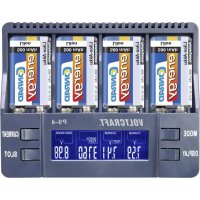
P94 - Battery charger VOLTCRAFT - Free user manual and instructions
Find the device manual for free P94 VOLTCRAFT in PDF.


| Brand | Voltcraft |
| Model | P94 |
| Product type | 9 V block battery charger |
| Number of compartments | 4, independent |
| Compatible battery types | NiMH, NiCd, Li-ion (protected) |
| Battery voltage | 7.2 V / 8.4 V / 9.6 V |
| Charging current | 50 / 75 / 100 / 150 / 200 mA |
| Charge programs | Charge, Discharge, Refresh, Test, Quick test |
| Delta-V function | Yes, automatic stop at end of charge |
| Display | LCD screen (voltage, current, capacity, time) |
| Power supply | Mains adapter 100-240 V AC / 12 V DC, 1.5 A |
| Power cable length | 1.4 m |
| Operating conditions | 0 to +45 °C, 1-90% RH |
| Storage conditions | -20 to +60 °C, 1-90% RH |
| Weight (charger only) | 93 g (power adapter) |
| Protection class | II (double insulation) |
| Maintenance and cleaning | Disconnect before cleaning; dry non-linting cloth; clean contacts |
| Safety | Overload, short-circuit, reverse polarity protection; automatic stop |
| Spare parts | Power adapter included; no specific spare parts |
| Repairability | Repair only by a specialist |
| General information | Indoor use only; do not recharge non-rechargeable batteries |
Frequently Asked Questions - P94 VOLTCRAFT
User questions about P94 VOLTCRAFT
0 question about this device. Answer the ones you know or ask your own.
Ask a new question about this device
Download the instructions for your Battery charger in PDF format for free! Find your manual P94 - VOLTCRAFT and take your electronic device back in hand. On this page are published all the documents necessary for the use of your device. P94 by VOLTCRAFT.
USER MANUAL P94 VOLTCRAFT
GB Operating Instructions
P9-4 9V battery charger
Item No. 1527210 Page 14 - 25
Notice d'emploi
www.business.conrad.at
Schweiz:
www.conrad.ch
www.biz-conrad.ch
2. Symbol-Erklärung
- Introduction....15
- Explanation of symbols .....15
- Intended use....16
- Package contents....16
- Safety instructions....17
a) General information....17
b) Rechargeable batteries....19
- Operating elements....20
- Connection to power supply 20
- Operation....21
a) General information....21
b) Function of the keys....21
c) Select program....22
d) Select charging current 22
- Programs....22
a) Charging (CHARGE)....22
b) Discharging (DISCHARGE)....22
c) Refreshing (CHARGE REFRESH)....23
d) Testing (CHARGE TEST)....23
e) Quick testing (QUICK TEST)....23
- Units (display)....24
- Care and cleaning ....24
- Disposal....24
a) Product....24
b) Rechargeable batteries....25
- Technical data ....25
a) Charger 25
b) Power adaptor....25
1. Introduction
Dear customer,
Thank you for purchasing this product.
This product complies with statutory national and European regulations.
For safety reasons, always follow the instructions in this manual.

These operating instructions are part of this product. They contain important information on setting up and using the product. Also consider this if you pass on the product to any third party. Therefore, retain these operating instructions for reference!
If there are any technical questions, please contact:
International: www.conrad.com/contact
United Kingdom: www.conrad-electronic.co.uk/contact
2. Explanation of symbols
The symbol with the lightning in the triangle is used if there is a risk to your health, e.g. due to an electric shock.

This symbol is used to highlight important information in these operating instructions. Always read this information carefully.
This symbol indicates special information and advice on how to use the product.
3. Intended use
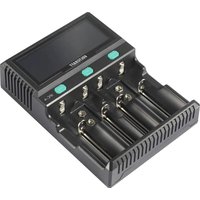
The product is designed for charging, discharging, refreshing and testing of up to four 9 V rechargeable batteries. It is only suitable for NiCd, NiMH and protected Li-ion rechargeable batteries. The product features 4 charging bays, that work independently of one another. You can therefore use different rechargeable batteries at the same time. The product has the minus delta-V function which monitors voltage during charging. As soon as NiMH and NiCd rechargeable batteries are fully charged, the product switches automatically to trickle charge.
Power supply is via the mains supply unit included in delivery.
This product is intended for indoor use only. Do not use it outdoors. Contact with moisture, e.g. in bathrooms, must be avoided under all circumstances.
For safety and approval purposes, you must not rebuild and/or modify this product. Using the product for purposes other than those described above may damage the components. In addition, improper use can cause hazards such as short circuits, fire and electric shocks. Read the instructions carefully and store them in a safe place. Make this product available to third parties only together with its operating instructions.
All company and product names are trademarks of their respective owners. All rights reserved.
4. Package contents
- 9V battery charger
- Power adapter
- Operating instructions
Up-to-date operating instructions
Download the latest operating instructions at www.conrad.com/downloads or scan the QR code on this page. Follow the instructions on the website.
5. Safety instructions
Read the operating instructions and safety information carefully. If you do not follow the safety instructions and information on proper handling in this manual, we assume no liability for any resulting personal injury or damage to property. Such cases will invalidate the warranty/guarantee.
a) General information
- This product is not a toy. Keep it out of the reach of children and pets.
- Do not leave packaging material lying around carelessly. This may become dangerous playing material for children.
- Protect the product from extreme temperatures, direct sunlight, strong jolts, high humidity, moisture, flammable gases, vapours and solvents.
- Do not place the product under any mechanical stress.
-
If it is no longer possible to operate the product safely, stop using it and prevent unauthorized use. Safe operation can no longer be guaranteed if the product:
-
is visibly damaged,
- is no longer working properly,
- has been stored for extended periods in poor ambient conditions or
-
has been subjected to any serious transport-related stress.
-
Always handle the product carefully. Jolts, impacts or a fall even from a low height may damage the product.
- The power adapter design complies with safety class II (insulated for protection). Ensure the insulation of the housing is neither damaged nor destroyed.
- The mains socket must be located near to the device and be easily accessible.
- Only use the power adapter that came with the product.
- Only connect the power adaptor to a normal mains socket connected to the public supply. Before plugging in the power adaptor, check whether the voltage stated on the power adaptor complies with the voltage of your electricity supplier.
- The power adapter must never be plugged in or disconnected when your hands are wet.
- Never unplug the power adapter from the mains socket by pulling on the cable; always use the grips on the plug.
- When setting up the product, ensure that the cable is not pinched, kinked damaged by sharp edges.
- Always lay the cables so that nobody can trip over or become entangled in them. This poses a risk of injury.
- For safety reasons, disconnect the power unit from the mains socket during storms.
- Always comply with the accident prevention regulations for electrical equipment when using the product in industrial facilities.
- In schools, training centres, hobby and self-help groups, the use of chargers and accessories must be supervised by trained personnel in a responsible manner.
- It is essential to pay attention to the charging instructions of the rechargeable battery manufacturer.
- Improper handling (e.g., incorrect rechargeable battery type) can lead to overloading or destruction of the rechargeable battery. In the worst case, the battery can explode and thereby cause serious damage.
- Do not charge conventional batteries, rechargeable alkaline batteries (RAM cells), lead-acid batteries or lithium batteries with this charger. There is a risk of explosion.
- Keep transmitting devices (mobile telephones, transmitting systems for scale models etc.) away from product as the transmitter signal could interfere with charging and possibly destroy the product and/or the rechargeable battery.
- Never use the product immediately after it has been brought from a cold room into a warm one. The condensation generated could destroy the product. Allow the product to reach room temperature before connecting it to an appliance. This may take several hours.
- Place the product on a non-sensitive, flat and smooth surface. The ventilation openings must not be covered or closed.
- Never pour out liquids above electrical appliances and never leave objects filled with liquids (e.g. glasses) in the vicinity.
- Never short-circuit the charger contacts.
- Consult a technician if you are not sure how to use or connect the product.
- Maintenance, modifications and repairs must be done by a technician or an authorized repair centre.
- If you have questions which remain unanswered by these operating instructions, contact our technical support service or other technical personnel.
b) Rechargeable batteries
- Correct polarity must be observed while inserting the rechargeable batteries.
- Remove the rechargeable batteries when charging is completed to prevent damage to the device by leakage. Leaking or damaged rechargeable batteries might cause acid burns when in contact with skin, therefore use suitable protective gloves to handle corrupted rechargeable batteries.
• Always keep batteries out of the reach of children. Do not leave rechargeable batteries lying around, as they pose a choking hazard for children or pets. - Rechargeable batteries must not be dismantled, short-circuited or thrown into fire. Never charge conventional, non-rechargeable batteries. There is a risk of explosion.
6. Operating elements
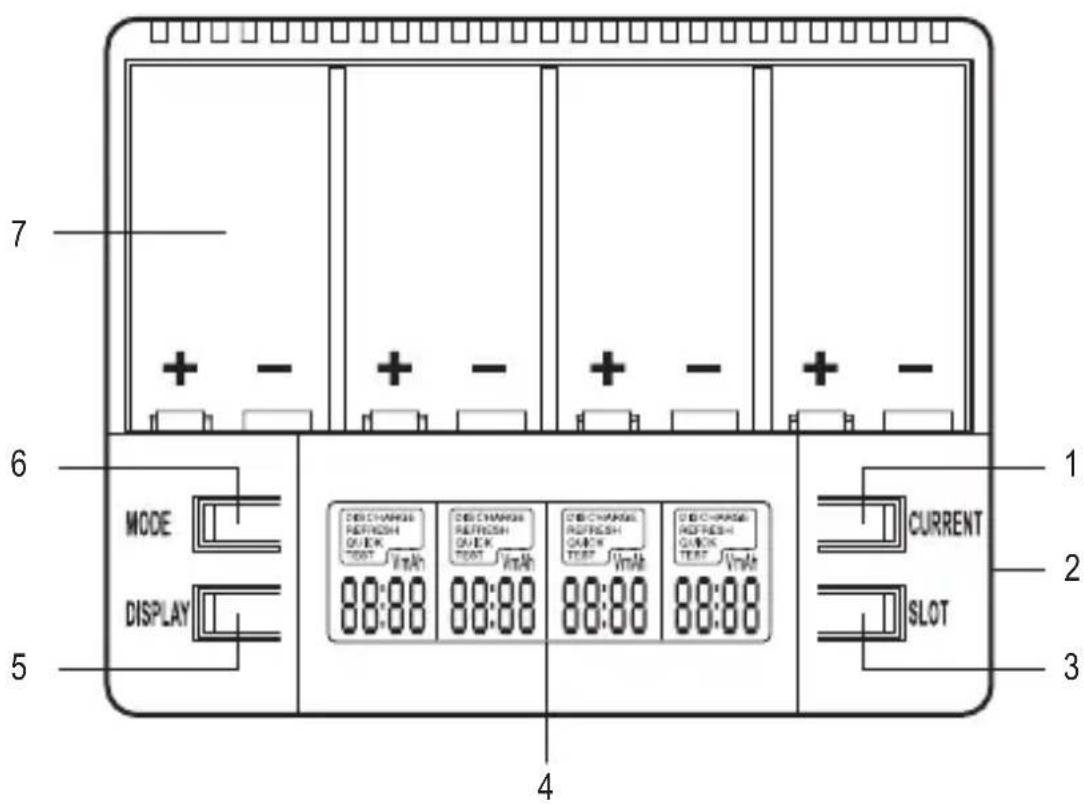
1 CURRENT button
2 Power unit jack
3 SLOT button
4 Display
5 DISPLAY button
6 MODE button
7 Charger compartment
7. Connection to power supply
- Connect the DC plug of the power adapter to the power unit jack.
- Connect the mains plug to a standard mains socket.
- The left display briefly shows the firmware version. Then all display segments are briefly displayed on all displays. The product is now ready for use. The indicator “nuLL” is shown because no rechargeable battery is inserted.
a) General information
- As soon as you insert a rechargeable battery, its voltage is displayed for 3 seconds. Then the charging current (ex factory set to 75 mA) is displayed for 3 seconds.
- If you do not press any button during this 6-second period, charging will begin.
- However, if you press a button during this 6-second period, the product waits for 10 seconds before applying the setting for the charger compartment.
- Once the program for the first rechargeable battery has been selected, you can insert the next rechargeable battery and set the desired program.
- If you make your settings while several displays are flashing, the settings are simultaneously applied to all displays.
- Once the program is started, you can no longer alter the program and the charging current. To change the program or the charging current, remove the rechargeable batteries and put them back in again or press and hold the MODE button for at least 2 seconds.
- During normal operation, if you press DISPLAY, the active displays alternately display the various display units.
b) Function of the keys
Button Function
MODE Select mode/program
DISPLAY Switching between measured values
CURRENT Set charging current
SLOT Select charger compartment; confirm setting
c) Select program
- Hold down the MODE button for 2 seconds to set the program for all four charge slots.
- Press the MODE button to change the program.
- If you want to change the program for a particular charger compartment, press the SLOT button until the appropriate display flashes. Then select the program with the MODE button.
- By changing the program you may also change the charging current.
d) Select charging current
- The default factory setting is a charging current of 75 mA.
- After you make connection to the power supply or insert a battery, press the CURRENT button within 6 seconds to change the charging current for all occupied charger compartments.
- After confirming the setting, you cannot adjust the value for the time being. If you want to adjust the charging current, select the program again or remove the batteries and put them back in.
- The discharge current is automatically adjusted according to the selected charging current.
9. Programs
a) Charging (CHARGE)
- This program is used for charging rechargeable batteries.
- The rechargeable battery is being charged to its full capacity.
- The capacity in "mAh" appears on the display.
b) Discharging (DISCHARGE)
- This program is used to reduce the so-called memory effect of rechargeable batteries.
- The rechargeable battery is discharged to a voltage of 6.3 V.
- Once the process is finished, the discharged capacity in "mAh" is displayed.
• After the program, the device does not switch to trickle charging.
c) Refreshing (CHARGE REFRESH)
- The rechargeable battery is charged and discharged 3 times to optimize its performance.
- Use this program to restore old rechargeable batteries and rechargeable batteries which have not been used for a long time to their original capacity.
- Depending on the set charging current and the rechargeable battery, this process can take between 10 hours and several days.
• After the discharge process, the entire discharged capacity in "mAh" is displayed. - During the charging process, the “mAh” displayed refers to the charged capacity reached following the previous discharge process.
d) Testing (CHARGE TEST)
- This program checks the current capacity of the rechargeable battery.
- The maximum capacity is determined by discharging the rechargeable battery after it has been fully charged.
- If the maximum capacity is significantly below the nominal capacity, the rechargeable battery has nearly reached the end of its service life.
- This program analyses the dynamic internal resistance of the battery.
- Within 10 seconds, the rechargeable battery resistance appears in milliohm.
- The internal resistance of fully functioning rechargeable batteries is between approx. 100 - 300 milliohm.
- If the internal resistance is above 1000 milliohm, the rechargeable battery in question can no longer supply a high current such as is needed for operating a multimeter, for example.
- In the case of fully discharged rechargeable batteries, it is not possible to determine a correct result.
- The measured value is strongly dependent on the quality of the contacts. If you test the same rechargeable battery again, a deviation of 10 - 20 % may occur. This is normal and is not a malfunction.
As soon as the rechargeable battery has been fully charged to the end of a program, the display shows the indicator “FuLL”. The device automatically switches to trickle charging (only with NiMH and NiCd rechargeable batteries). The trickle charge ensures protection against overloading and compensates for self-discharge.
10. Units (display)
| Unit Meaning | |
| mA Current | |
| h Duration | |
| mAh Capacity | |
| V Voltage |
11. Care and cleaning

Never use aggressive detergents, rubbing alcohol or other chemical solutions, as these could damage the casing or cause the product to malfunction.
- Always disconnect the product from the power supply before cleaning it. Remove any inserted rechargeable batteries.
- Make sure that the contacts on the product and on the rechargeable batteries are always clean and without oxide layers.
- Use a dry, lint-free cloth to clean the product.
12. Disposal
a) Product
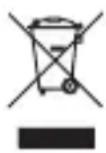
Electronic devices are recyclable waste and must not be disposed of in household waste. Always dispose of the product according to the relevant statutory regulations. Remove any inserted rechargeable batteries and dispose of them separately from the product.
b) Rechargeable batteries
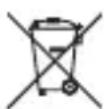
As the end user, you are required by law to return all used rechargeable batteries; they must not be disposed of in household waste!
Rechargeable batteries that contain hazardous substances are labelled with this symbol to indicate that disposal in household waste is forbidden. The abbreviations for heavy metals in batteries are: Cd = Cadmium, Hg = Mercury, Pb = Lead (indicated on rechargeable batteries, e.g. below the trash icon on the left).
Used rechargeable batteries can be returned to local collection points, our stores or rechargeable battery retailers.
You thus fulfil your statutory obligations and contribute to the protection of the environment.
13. Technical data
a) Charger
Operating voltage 12 V/DC
Charging current....50 / 75 / 100 / 150 / 200 mA
Suitable rechargeable battery types .....NiMH, NiCd, Li-ion
Rechargeable battery voltage....7.2 / 8.4 / 9.6 V
Operating conditions....0 to +45 °C, 1 - 90 % RH
Storage conditions....-20 to +60 °C, 1 - 90 % RH
Dimensions (W x H x D) 120 x 30 x 95 mm
Weight 139 g
b) Power adaptor
Input voltage....100 – 240 V/AC, 50/60 Hz
Output voltage/current....12 V/DC, 1.5 A
Protection class....II
Cable length 1.4 m
Weight 93 g
Page
France (email): technique@conrad-france.fr
Dimensions (L x H x P)....120 x 30 x 95 mm
Poids....139 g
Copyright 2017 by Conrad Electronic SE.
GB
This is a publication by Conrad Electronic SE, Klaus-Conrad-Str. 1, D-92240 Hirschau (www.conrad.com).
All rights including translation reserved. Reproduction by any method, e.g. photocopy, microfilming, or the capture in electronic data processing systems require the prior written approval by the editor. Reprinting, also in part, is prohibited. This publication represent the technical status at the time of printing.
Copyright 2017 by Conrad Electronic SE.
F
Copyright 2017 by Conrad Electronic SE.
NL
Copyright 2017 by Conrad Electronic SE.
- Symbol-Erklärung
- Introduction
- Explanation of symbols
- Intended use
- Package contents
- Up-to-date operating instructions
- Safety instructions
- a) General information
- b) Rechargeable batteries
- Operating elements
- Connection to power supply
- b) Function of the keys
- Button Function
- c) Select program
- d) Select charging current
- Programs
- a) Charging (CHARGE)
- b) Discharging (DISCHARGE)
- c) Refreshing (CHARGE REFRESH)
- d) Testing (CHARGE TEST)
- Units (display)
- Care and cleaning
- Disposal
- a) Product
- Technical data
- a) Charger
- b) Power adaptor
- Page
- GB
- F
- NL
Brand : VOLTCRAFT
Model : P94
Category : Battery charger