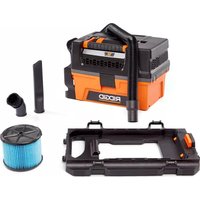
RIDGID RV2400HF0 - Vacuum Cleaner

RV2400HF0 - Vacuum Cleaner RIDGID - Free user manual and instructions

Find the device manual for free RV2400HF0 RIDGID in PDF.

📄 40 pages English EN 💬 AI Question
Notice RIDGID RV2400HF0 - page 2
View the manual : Français FR English EN Español ES

Questions des utilisateurs sur RV2400HF0 RIDGID

0 question sur cet appareil. Repondez a celles que vous connaissez ou posez la votre.

Poser une nouvelle question sur cet appareil

L'email reste privé : il sert seulement à vous prévenir si quelqu'un répond à votre question.

Aucune question pour l'instant. Soyez le premier à en poser une.

Download the instructions for your Vacuum Cleaner in PDF format for free! Find your manual RV2400HF0 - RIDGID and take your electronic device back in hand. On this page are published all the documents necessary for the use of your device. RV2400HF0 by RIDGID.
USER MANUAL RV2400HF0 RIDGID

Part No. SP7072 Printed in Mexico Wet/Dry Vacs

  • Warranty (See back cover)
  • Technical Assistance
  • Repair Parts For any questions about:Please have your Model Number andSerial Number on hand when calling.

FOR QUESTIONS OR INFORMATION CONTACT US AT 1-800-4-RIDGID (1-800-474-3443) from the US and Canada or 01-800-701-9811 from Mexico For service parts visit store.ridgid.com/wetdry.

To reduce the risk of injury, the user must read and understand the owner’s manual before using this product.

Safety is a combination of using common sense, staying alert, and knowing how your Wet/Dry Vacuum Cleaner (“Vac”) works. Safety Signal Words

DANGER: Indicates a hazardous

situation which, if not avoided, will result in death or serious injury.

WARNING: Indicates a hazardous

situation which, if not avoided, could result in death or serious injury. CAUTION: Indicates a hazardous situation which, if not avoided, could result in minor or moderate injury. When using your Vac, always follow basic safety precautions including the following: WARNING - To reduce the risk of fire, electric shock, or injury:

  • Read and understand this manual and all labels on the Wet/Dry Vac before operating.
  • Use only as described in this manual.
  • Do not leave Vac running while unattended - you may fail to notice important signs indicating abnormal operation such as loss of suction, debris/ liquid exiting exhaust, or abnormal motor noises. Immediately stop using Vac if you notice these signs.
  • Do not leave Vac when plugged in. Unplug from outlet when not in use and before servicing.
  • Sparks inside the motor can ignite flammable vapors or dust. To reduce the risk of fire or explosion, do not use near combustible liquids, gases, or dusts, such as gasoline or other fuels, lighter fluid, cleaners, oil-based paints, natural gas, coal dust, magnesium dust, grain dust, aluminum dust, or gun powder.
  • Do not vacuum anything that is burning or smoking, such as cigarettes, matches, or hot ashes.
  • To avoid the risk of ignition of drum debris, empty drum after each use. Rags and sawdust, especially containing wood stain, can be sources of such overheating.
  • Do not vacuum drywall dust, cold fireplace ash, or other fine dusts with standard filter. These may pass through the filter and be exhausted back into the air. Use a fine dust filter instead.
  • To reduce the risk of inhaling toxic vapors, do not vacuum or use near toxic or hazardous materials.
  • To reduce the risk of electric shock, do not expose to rain or allow liquid to enter motor compartment. Store indoors.
  • This Wet/Dry Vac is not intended for use by persons (including children) with reduced physical, sensory, or mental capabilities, or lack of experience and knowledge, unless they have been given supervision or instruction concerning use of the appliance by a person responsible for their safety.
  • Do not allow to be used as a toy. Close attention is necessary when used by or near children.
  • Do not use with a torn filter or without filter installed except when vacuuming liquids as described in this manual. Dry debris ingested by the impeller may damage the motor or be exhausted into the air.
  • Turn off Vac before unplugging.
  • To reduce the risk of injury from accidental starting, unplug power cord before changing or cleaning filter.
  • Do not unplug by pulling on cord. To unplug, grasp the plug, not the cord.
  • Do not use with damaged cord, plug or other parts. If your Vac is not working as it should, has missing parts, has been dropped, damaged, left outdoors, or dropped into water, call customer service.
  • Do not pull or carry by cord, use cord as handle, close a door on cord, or pull cord around sharp edges or corners. Do not run Vac over cord. Keep cord away from heated surfaces.
  • Do not handle plug, switch, or the Vac with wet hands.
  • Use only extension cords that are rated for outdoor use. Extension cords in poor condition or too small in wire size can SP7072 HD06001 HD09001 ESF_HD06001 HD09001.indd 2 7/10/18 2:07 PM3

IMPORTANT SAFETY INSTRUCTIONS

WARNING: For your own safety,

read and understand owner’s manual. Do not run unattended. Do not pick up hot ashes, coals, toxic, flammable or other hazardous materials. Do not use around explosive liquids or vapors.

WARNING: To reduce the risk of

IDENTICAL REPLACEMENT PARTS.

  • To reduce the risk of hearing damage, wear ear protectors when using for extended hours or in a noisy area.
  • For dusty operations, wear dust mask.
  • Static shocks are common when the relative humidity of the air is low. Vacuuming fine debris with your Vac can deposit static charge on the hose or Vac. To reduce the frequency of static shocks in your home or when using this Vac, add moisture to the air with a humidifier. pose fire and shock hazards. To reduce the risk of these hazards, be sure the cord is in good condition and that liquid does not contact the connection. Do not use an extension cord with conductors smaller than 16 gauge (AWG) in size.
  • This Wet/Dry Vac is double-insulated, eliminating the need for a separate grounding system. Use only identical replacement parts. Read the instructions for Servicing Double-Insulated Wet/Dry Vacs before servicing.
  • Do not put any object into ventilation openings. Do not vacuum with any ventilation openings blocked; keep free of dust, lint, hair or anything that may reduce air flow.
  • Keep hair, loose clothing, fingers, and all parts of body away from openings and moving parts.
  • To reduce the risk of falls, use extra care when cleaning on stairs.
  • To reduce the risk of back injury or falls, do not lift a Vac that is heavy with liquid or debris. Partially empty by scooping debris or draining liquid.
  • To reduce the risk of personal injury or damage to Vac, use only RIDGID recommended accessories.
  • When using as a blower: - Direct air discharge only at work area. - Do not direct air at bystanders. - Keep children away when blowing. - Do not use blower for any job except blowing dirt and debris. - Do not use as a sprayer. - Wear safety eyewear.
  • To reduce the risk of eye injury, wear safety eyewear. The operation of any utility Vac or blower can result in foreign objects being blown into the eyes, which can result in severe eye damage. Observe the following warnings that appear on the motor housing of your Vac:

SP7072 HD06001 HD09001 ESF_HD06001 HD09001.indd 3 7/10/18 2:07 PM4 This Wet/Dry Vac is intended for house- hold use. It may be used for vacuuming wet or dry media and may be used as a blower. Getting to Know Your Wet/Dry Vac Read this Owner’s Manual to familiarize yourself with the product features and to understand the specific usage of your new Vac. INTRODUCTION Extension Wands - These wands can be connected together and provide additional length. Tug-A-Long Positive Locking Hose with Dual-Flex - Provides transfer of vacuum or blowing capability to work site. Provides the means of attaching extension wands and nozzles. Utility Nozzle - General purpose nozzle for most vacuuming applications. Car Nozzle (On Select Models Only) - Dry pickup nozzle for car interiors and most upholstery cleaning. Crevice Tool (On Select Models Only) - Use to pick up debris in hard to reach locations. Dusting Brush (On Select Models Only) - Used for detailed cleaning in small spaces. Wet Nozzle (On Select Models Only) - Used for wet pickup on smooth surfaces to pick up liquid and dry the surface in one stroke. Familiarize yourself with the accessories included with the Vac. Each accessory may be used in various ways for vacuuming and blowing debris. Here is a list of the accessories and their uses. Powerhead Assembly ON/OFF Switch Caster Foot Storage Caster Caster Foot Dust Drum Drum Latch Carry Handle / Power Cord Wrap Inlet Port Blowing Port SP7072 HD06001 HD09001 ESF_HD06001 HD09001.indd 4 7/10/18 2:07 PMUnpacking

  • The Filter comes preassembled.

This Product Requires Assembly. Check all parts from carton against the Loose Parts list. If any parts are damaged or missing contact 1-800-4-RIDGID (US and Canada), 01-800-701-9811 (Mexico) or by email at info@ridgidvacs.com.

  • Select Models May Also Include: Key Description Qty K** Wet Nozzle p. 1
  • L** Dusting Brush p. 1
  • M** Car Nozzle p. 1
  • N** Crevice Tool ** Check the Contents List on your carton for a list of included accessories. INTRODUCTION SP7072 HD06001 HD09001 ESF_HD06001 HD09001.indd 5 7/10/18 2:07 PM6 ASSEMBLY NOTE: Remove Powerhead Assembly from Dust Drum prior to assembly of Casters and Caster Feet. p. 1

1. Turn Dust Drum upside down on floor.

2. Place Caster Foot on floor. Insert the

stem of a Caster into socket of Caster Foot.

3. Push on the Caster until the Caster ball

end snaps fully into the socket and the Caster swivel freely. Repeat for other three Casters and Caster Feet.

4. Place Caster Foot w/Caster over post

on bottom of Dust Drum and press firmly in place, as shown.

5. Repeat for the other three Caster/

Caster Foot assemblies.

6. Turn the Dust Drum upright.

Caster/Caster Foot Assembly Wet/Dry Vac Assembly Caster Caster Ball Caster Stem Caster Foot Post Dust Drum Caster Foot Post Hole Caster Foot

2. Press in on the two Latches located on

either side of the Dust Drum until they snap into place, securing the Powerhead Assembly to the Dust Drum.

3. To remove the Powerhead Assembly,

pull out on the two Latches and lift Powerhead Assembly from the Dust Drum. Do not force the latches to rotate more than slightly outside drum flange. Dust Drum Drum Latches (2) Attaching Powerhead Assembly to Dust Drum

1. Place Powerhead Assembly on top of

Dust Drum with the extended lip of the lid aligned with the Dust Drum inlet. Be sure Powerhead Assembly is fully seated on the Dust Drum. Extended Lip Inlet Dust Drum Powerhead Assembly SP7072 HD06001 HD09001 ESF_HD06001 HD09001.indd 6 7/10/18 2:07 PM7 ASSEMBLY Carry Handle Powerhead Assembly #10 x 3/4" Pan Head Screws (2) Extended Flange Carry Handle Assembly

1. Locate the Carry Handle and the two

(2) #10 x 3/4” Pan Head Screws in loose parts bag.

2. Position the Carry Handle on top of the

Powerhead Assembly, with the Carry Handle Extended Flange to the rear of the Powerhead, as shown.

3. Insert a #10 x 3/4” Pan Head Screw

through the hole at each end of the Carry Handle and into the Powerhead Assembly. Tighten securely. Inserting the Tug-A-Long Positive Locking Hose with Dual-Flex

1. Insert the larger end of the Tug-A-

Long Positive Locking Hose with Dual-Flex into the Inlet Port. Engage the Hose Latch to the lip of the Inlet Port. The Hose should snap into place.

2. To remove the Tug-A-Long Positive

Locking Hose with Dual-Flex from the Vac, press the Release Button on the Hose and pull the Hose out of the Inlet Port, as shown. Powerhead Assembly Tug-A-Long Positive Locking Hose with Dual-Flex Release Button Vac Inlet SP7072 HD06001 HD09001 ESF_HD06001 HD09001.indd 7 7/10/18 2:07 PM8

WARNING: To reduce the risk of fire, explosion, or damage to Vac:

  • Do not leave Vac running while unattended - you may fail to notice important signs indicating abnormal operation such as loss of suction, debris/liquid exiting the exhaust, or abnormal motor noises. Immediately stop using Vac if you notice these signs.
  • Do not leave Vac plugged in when not in use.
  • Do not continue running when float has cut off suction.
  • Sparks inside the motor can ignite airborne flammables. Do not operate Vac near flammable liquids or in areas with flammable gases, vapors, or explosive/airborne dust. Flammable liquids, gases, and vapors include: lighter fluid, solvent-type cleaners, oil-based paints, gasoline, alcohol, and aerosol sprays. Explosive dusts include: coal, magnesium, aluminum, grain, and gun powder.
  • Do not vacuum up explosive dusts, flammable liquids, or hot ashes.
  • Do not leave sawdust or rags with stain or polyurethane residue inside Vac. Empty drum after picking up these potentially self-heating materials.

WARNING: To reduce the risk of electric shock or injury:

  • Do not expose to rain or allow liquid to enter motor compartment. Store indoors.
  • Do not handle plug, switch, or Vac with wet hands.
  • Unplug Vac before servicing. If your Vac is not working as it should, has missing parts, has been dropped, damaged, left outdoors, or dropped into water, return it to an authorized service center or call customer service.
  • When using an extension cord, use only outdoor-rated cords that are in good condition. Do not allow the connection to come into contact with liquid.

OPERATION CAUTION: To reduce the risk of hearing damage, wear ear protectors when using the Vac/Blower for extended time or in a noisy area.

1. The Filter must always be correctly

installed to avoid leaks and possible Vac damage.

2. To maintain peak performance when

vacuuming fine dust, clean the Drum and Filter more regularily than usual. NOTE: Do not use a wet Filter when picking up dry material. The Filter will quickly clog and be difficult to clean.

3. If the Filter is wet, you must allow it to

dry completely or replace it with a dry Filter before using the Vac to pick up dry material. Vacuuming Liquids

1. Vacuuming up small amounts of liquid

(less than 2” (5 cm) collected in Dust Drum) does not require the removal of the Filter.

2. When larger amounts of liquid are to

be picked up, remove the filter, but not the Filter Cage or Float, to prevent the Filter from becoming saturated with liquid. If the Filter becomes saturated, you may see “mist” coming from the Blowing Port.

3. When the Drum is “full” the Float will

rise and cut off airflow. The motor sound will rise in pitch and its speed will increase indicating the Drum is “full”. Turn OFF the Vac and unplug the power cord before emptying the Drum.

4. Following use of Vac for wet pick up,

allow Filter to dry completely to avoid mildew and Filter damage. OPERATION On/Off Switch To reduce the risk of electric shock, this appliance has a polarized plug (one blade is wider than the other). This plug will fit in a polarized outlet only one way. If the plug does not fit fully in the outlet, reverse the plug. If it still does not fit, contact a qualified electrician to install the proper outlet. Do not change the plug in any way. With power cord plugged in, turn the Vac “ON” by pressing in on the “I” (top) on the Power Switch. To turn “OFF” press the “O” (bottom) of the Power Switch. The symbols used on the Switch Actuator are international “On & Off” symbols. ON/OFF Switch

WARNING: Do not operate

without filter cage and float in place. They prevent liquid from entering the impeller and damaging the motor.

1. Unplug Power Cord from power source.

2. Remove the Powerhead Assembly by

pulling outward at the top of the two Latches.

3. Lift Powerhead Assembly from the

Dust Drum and set aside.

4. Empty Dust Drum into a proper waste

to swivel end of the Hose.

4. Turn the Vac on and you are ready to

use your Vac as a Blower. Blowing Feature Your Vac features a Blowing Port. It can blow sawdust and other debris. Follow the steps below to use your Vac as a Blower.

1. Locate the Blowing Port, at the rear of

the Powerhead of your Wet/Dry Vac.

2. Insert the larger end of the Tug-A-

Long Positive Locking Hose with Dual- Flex into the Blowing Port of the Vac. Engage the Hose Latch to the lip of the Blowing Port. The Hose should snap into place.

WARNING: To reduce the risk

of injury from accidental starting, unplug power cord before emptying the drum.

Dust Drum Drum Latches (2)

WARNING: Always wear safety

eyewear complying with ANSI Z87.1 (or in Canada, CSA Z94.3) before using as a blower. CAUTION: Wear a dust mask if blowing creates dust which might be inhaled.

WARNING: To reduce the risk

of injury to bystanders, keep them clear of blowing debris.

and the accessories onto Posts of the Caster Feet.

2. To remove Wands and Accessories,

lightly rotate and pull upward.

ACCESSORY & HOSE STORAGE

Caster Feet Storage Utility Nozzle Extension Wands (2) Hose Storage The Tug-A-Long Positive Locking Hose with Dual-Flex may be wrapped around the Powerhead Assembly for storage. Cord Cord Clip Handle/ Cord Wrap Powerhead Assembly Tug-A-Long Positive Locking Hose with Dual-Flex Cord Storage To store the Cord, wrap it around the top Handle/Cord Wrap beneath the two Tabs. Secure the Cord using the Cord Clip on the Plug. SP7072 HD06001 HD09001 ESF_HD06001 HD09001.indd 11 7/10/18 2:07 PM12 MAINTENANCE NOTE: The Filter is made of high quality paper designed to stop small particles of dust. The Filter can be used for dry pick up or small amounts of liquid. Handle the Filter carefully when removing or installing it. Creases in the Filter Pleats may occur from installation but will not affect the performance of the Filter. NOTE: Failure to properly seat the bottom Gasket and Integrated Filter Plate to the Filter Cage could result in debris bypassing the Filter.

WARNING: To reduce the risk

of injury from accidental starting, unplug power cord before changing or cleaning filter.

1. Place fingers under the two Filter Tabs.

2. While pressing down with one thumb

on the Qwik Lock™ Stud that protrudes through the center of the Filter Plate, lift up on the Tabs until Filter releases.

3. Slide Filter off Filter Cage.

IMPORTANT: To avoid blower wheel and motor damage always reinstall filter before using Vac for dry pickup. Filter Installation:

2. Make sure the Rubber Gasket at the

bottom of the Qwik Lock™ Filter seats around the base of the Filter Cage.

3. Firmly press the Qwik Lock™ Integrated

Filter Plate down around the Qwik Lock™ Stud until it snaps into place.

WARNING: Do not operate

without filter cage and float, as they prevent liquid from entering the impeller and damaging the motor.

Filter Cage Powerhead Assembly Your Filter should be cleaned often to maintain peak Vac performance. Filter Removal & Installation of the Qwik Lock™ Filter SP7072 HD06001 HD09001 ESF_HD06001 HD09001.indd 12 7/10/18 2:07 PM13 MAINTENANCE Cleaning A Dry Filter

1. Some removal of dry debris can be

accomplished without removing the Filter from the Vac. Slap your hand on top of the lid while the Vac is turned off.

2. For best cleaning results due to

accumulated dust, clean the Filter in an open area. Cleaning SHOULD be done outdoors and not in the living quarters.

3. After Filter removal from Vac, remove

the dry debris by gently tapping Filter against the inside wall of your Dust Drum. The debris will loosen and fall.

4. For thorough cleaning of dry Filter

with fine dust (no debris), run water through it as described under “Cleaning A Wet Filter”. Cleaning A Wet Filter After Filter is removed, run water through the Filter from a hose or spigot. Take care that water pressure from the hose is not strong enough to damage Filter. IMPORTANT: After cleaning, check the Filter for tears or small holes. Do not use a Filter with holes or tears in it. Even a small hole can allow dust to come out of your Vac. Replace it immediately. Allow the Filter to dry completely before reinstalling and storing the Vac or picking up dry debris.

WARNING: To assure product SAFETY and RELIABILITY, any other

maintenance, repairs and adjustments should be performed by Authorized Service Centers, always using RIDGID replacement parts.

In a double-insulated Wet/Dry Vac, two systems of insulation are provided instead of grounding. No grounding means is provided on a double-insulated appliance, nor should a means for grounding be added. Servicing a double-insulated Wet/Dry Vac requires extreme care and knowledge of the system, and should be done only by qualified service personnel. Replacement parts for a double-insulated Wet/Dry Vac must be identical to the parts they replace. Your double-insulated Wet/Dry Vac is marked with the words “DOUBLE INSULATED” and the symbol (square within a square) may also be marked on the appliance.To reduce the risk of injury from electrical shock, unplug power cord before servicing the electrical parts of the Wet/Dry Vac.

6 or 9 U.S. Gallon (22.5 or 34 Liter) Wet/Dry Vac Model Numbers HD06001 / HD09001 Electrical Ratings: HD0600 120 V 7.5 A 60 Hz HD0900 120 V 8.3 A 60 Hz RIDGID parts are available on-line at store.ridgid.com/wetdry Always order by Part Number - Not by Key Number

WARNING: To reduce the risk of injury from electrical shock, unplug power cord before servicing the electrical parts of the Wet/Dry Vac.

WARNING: All disassembly and repairs should be performed by qualified personnel.

REPAIR PARTS This product has a 90 day Satisfaction Guarantee Policy as well as a Limited Lifetime Warranty. For Warranty and Policy details go to RIDGID.com/VacWarranty or call 1-800-4-RIDGID. Part No. SP7072 Form No. SP7072 Printed in Mexico 07/18

Dust Drum Drum Latches (2) Extension Wand (Optional) Swivel End of Hose Hose Blowing Port Tug-A-Long Positive Locking Hose with Dual-Flex

Manual assistant
Powered by ChatGPT
Waiting for your message
Product information

Brand : RIDGID

Model : RV2400HF0

Category : Vacuum Cleaner