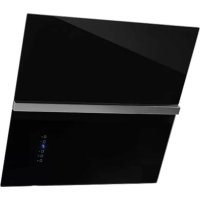
Romeo 60 N SM ECO - Range hood EICO - Free user manual and instructions
Find the device manual for free Romeo 60 N SM ECO EICO in PDF.
User questions about Romeo 60 N SM ECO EICO
0 question about this device. Answer the ones you know or ask your own.
Ask a new question about this device
Download the instructions for your Range hood in PDF format for free! Find your manual Romeo 60 N SM ECO - EICO and take your electronic device back in hand. On this page are published all the documents necessary for the use of your device. Romeo 60 N SM ECO by EICO.
USER MANUAL Romeo 60 N SM ECO EICO
INSTRUCTIONS FOR USING, MAINTAINING AND INSTALLING THE HODD
ATTENTION: The hood must only be installed by a qualified technician.
The company accepts no liability if it is installed by an unauthorised person.
Please read these instructions carefully before beginning the installation. Conserve this handbook together with the hoad
WARNING
This appliance can be used by children aged from 8 years and above and persons with reduced physical, sensory or mental capabilities, or lack of experience and knowledge if they have been given supervision or instruction concerning use of the appliance in a safe way and understand the hazards involved.
Children shall not play with the appliance. Cleaning and user maintenance shall not be made by children without supervision.
Before cleaning or performing any periodic or urgent maintenance to the hood, ensure the power is turned off by removing the plug from the socket and turning the main switch to 0 (off).
Do not connect the hood to any piping used for combustion appliances, such as burners, boilers or fireplaces.
Check that the main power supply corresponds to the voltage required by the hood, which is given on the silver label stuck inside the hood. Ensure that the electric system is correctly earthed and that the earth discharge works correctly.
When cooking do not use any materials that could form high or unusual flames. Dil that has been used twice and fats are very dangerous and could easily catch fire. Do not prepare flambe dishes under the hood.
Once the specialized technician has completed the installation of the hood equipped with a remote motor, all the leads, connectors, ground connections and the remote motor must not be accessible to the user.
Only the installer is granted access by removing the screwed on panels.
CAUTION: Do not fix the lamp in operation. It can be harmful to eyes.
Respect local legislation and regulations issued by the relative authorities regarding the exhaust air when the suction is operating. Failure to respect and perform all the maintenance and cleaning operations described in this handbook could cause a fire hazard.
ATTENTION: Accessible parts may become hot when the hood is used with cooking appliances
INSTALLATION
The minimum safety distance between the bottom of the hood and the top of the cooking hob must be 65~cm , smaller distances must be previously authorised by the manufacturer. (see installation drawings)
The hood can be used for both filtering and suction.
When the filtering function is operating, i.e. with air recycle, carbon filters must be used (refer to the paragraph on CARBON FILTERS). When the suction function is operating, i.e. exhausting the filtered air on the outside, a suitable compensation system must be used according to current standards in force. The diameter of the fume exhaust pipe must be the same or greater than the diameter of the hood pipe union.
There must be sufficient ventilation in the room where the hood is installed, to allow the simultaneous use of other appliances that use gas or other fuel.
Hoods equipped for remote motors
The hoods equipped for remote motors have a specific connector for the remote motor lead connection. The connector is situated inside the hood. Pass the remote motor lead into the hood through the aperture in the hood itself (usually near the fume exit hole) and join the two connectors. Refer to the figures in the remote motor instruction book when performing this operation.
Hoods without motor (Art. 0^** ) must only be installed and connected with extraction units with a max. output of 690W, as supplied and indicated by the manufacturer.
Once the specialized technician has completed the installation of the hood equipped with a remote motor, all the leads, connectors, ground connections and the remote motor must not be accessible to the user. Only the installer is granted access by removing the screwed on panels.
ASSEMBLY INSTRUCTIONS
Attention: Before proceeding with the installation, make sure that the screws and the anchors already supplied, are suitable for the type of wall the hood must be fixed to.
To assemble the hood use the accessories that are supplied and follow the instructions given in the enclosed handbook.
ELECTRIC WIRING
The electric wiring must be performed by a specialised electrician fully respecting current standards and legislation in force. Check that the power supply corresponds to the voltage requested by the hood, which is given on the silver label stuck inside the hood. Ensure that the wiring system conforms to current standards and the earth discharge works efficiently. Pay special attention to the hood power cable, ensure that it does not pass through any holes without a cable clamp. For direct connection to the electrical mains is necessary to provide a device that ensures disconnection from the electrical mains, with an opening distance of the contacts that allows the complete disconnection under the conditions of overvoltage category III, in accordance with the rules of installation.
The plug or omnipolar switch must be accessible when the unit is installed
If the power cord is damaged, it must be replaced by a special cord or assembly available from the manufacturer or its service agent. The cable used must be of type H05VV-F 3 x 0.75 mm2 minimum cross-section.
The manufacturer declines all responsibility if the current accident prevention standards in force are not respected, which are needed for the wiring system to operate correctly
CONTROLS
KEYBOARD CONTROLS (Fig. 1)
There are four buttons on the keyboard control version:
One for turning the lights on and off.
One for turning the motor on at 1st speed and for turning it off.
One for turning it on at 2nd speed.
One for turning it on at 3rd speed.
SOFT TOUCH CONTROL (Fig. 2)
There are four soft touch buttons on this version and a variable colour led (green min. speed, red max. speed).
One button for turning the lights on and off.
One button for turning on at 2nd speed and for turning the motor off.
N.B. If this button is kept depressed for more than three seconds, the automatic function is activated to turn the hood
off function after 10 minutes, the led flashes slowly.
Two buttons + and - for increasing and reducing the motor speed. At the 4th motor speed (intense) the led flashes quickly and after 5 minutes the 2nd speed is automatically set.
DIGITAL CONTROLS \ TOUCH CONTROLS (Fig. 3)
In this version there are five soft touch buttons and a display
One button for turning the lights on and off.
One button for turning on at 2nd speed and for turning the motor off.
Two buttons + and - for increasing and decreasing the motor speed. At the 4th motor speed (intense) the number on the display flashes and after 5 minutes the 2nd speed is automatically set.
A TIMER button for turning the motor off after 10 minutes. When the timer is activated, the number on the display flashes.
Special functions:
After 100 hours use, a D or a letter A will start flashing on the DISPLAY to remind the user to clean the metal filters. After washing the metal filters, reset the hour meter by pressing the TIMER button for more than three seconds with the hood turned off. When the hour meter has been reset a dash appears on the display, with the hood turned off.
RADIO-CONTROL (Fig. 4)
The button ON/DFF on the hood turn on simultaneously lights and the motor at the second speed or it turns off everything. After 100 working hours of the suction motor the red led will start to flash indicating the need to wash metals filters. To cancel the filters alarm, when the suction motor is switched off, you must press button ON/DFF long enough.
Radio control
ATTENTION:
The hoods with the standard remote control are already configured.
For optional and/or replacement remote controls it is necessary to start the learning process:
With the hood turned off, keep button "ON/DIFF" (DISTANTE - CEILING - SKYFRAME) or button "+" (AIDA - HAMLET - ROMED) for 5 sec. The remote control learning is indicated with the flashing alarm filters led. If within one minute arrive a valid remote control code (sent by pressing any button of the remote control) the led will be on continuously for 3 seconds and then it will turn off, indicating the proper learning.
Control buttons:
One button for turning the lights on and off. CEILING PANEL: hold the button to dim the light.
One button for turning on at 2nd speed and for turning the motor off.
Two buttons + and - for increasing and decreasing the motor speed. At the 4th motor speed (intense) the led flashes and after 5 minutes the 2nd speed is automatically set.
A TIMER button for turning the motor off after 10 minutes.
USE AND MAINTENANCE
Before beginning any sort of cleaning or maintenance work, turn power off to the hood by turning the main switch to D (OFF).
Changing the light bulbs
LED spotlight replacement should only be carried out by qualified technicians using only original spare parts.
Cleaning the metal filters:
The metal filters fitted in the hood should be washed every 2-3 months, depending on how much the hood is used, using hot water and a liquid detergent that is not too aggressive. The metal filters can be removed by the special handle, unhooking the front part of the filter and pulling it downwards (Fig. 5)
Carbon filters
If the hood is used with an internal recycle filtering system, then active carbon filters must be used. The active carbon in the filters traps the cooking smells. To remove and change the filters, refer to fig. 6
POLYESTER carbon filters cannot be reused or washed and must be periodically changed (every 4 months if the hood is used for 2 hours every day). Saturate filters could be a fire hazard.
Depending on the hood model, the carbon filters are round or rectangular.
LONG LIFE carbon filter can be cleaned and reactivated. The filter should be cleaned every other month if used normally. The filter is best cleaned in a dishwasher at the highest temperature using normal washer detergent. The filter should be washed on its own to prevent particles of food from fastening in it and then causing an unpleasant smell later on. To reactivate the carbon the filter should be dried in the oven. Chose upper/ lower heat and maximum 100 ^D C and try the filter for 10 minutes. The filter must be changed when it no longer absorbs the cooking smells sufficiently. (fig.7)
Condensation in the hood
Induction or glass ceramic hobs heat food up very quickly, creating cooking steam before the glass or steel surface of the hood has heated up, which causes condensation on the hood that then drips. Another cause for condensation could be that the fume pipe is not the size we recommend (see INSTALLATION). The steam that remains inside the hood while it is cooling down condensates and drips. Therefore it is advisable to turn the hood on ten minutes before starting to cook and when you have finished, leave it on so that all the fumes in the pipe are expelled.
Furthermore, it is important to clean the filters frequently and if they are worn they should be replaced (see CLEANING THE METAL FILTERS).
Cleaning the hood
The surfaces of the hood should be cleaned frequently, to avoid the risk of having to remove built up and encrusted deposits and stains.
For the painted or copper plated hoods just use a soft cloth with warm water and a neutral detergent. Do not pour the detergent directly onto the hood or use powdery or abrasive products
For the stainless steel hood, use special products and cloths for satin finish stainless steel (not abrasive, corrosive detergents or detergents containing chloride), ensuring to clean in the same direction as the satin finish.
Do not use aggressive products, chemical solvents or derivatives of oil distillates that could leave oily traces which could cause oxidation and polymerisation.
Hamlet - Romeo: when you use oil to cook the oil will run to the lowest part of the hood, and this edge should be cleaned more often than normally.
The manufacturer accepts no responsibility for damage to the surface of the hood due to failure to respect these instructions.
BEDIENUNGS-, WARTUNGS- UND INSTALLATIONSHANDBUCH ABZUGSHAUBE

PLINTHEXSTERN MOTOR1000

ES. 1


ES. 2
INDICE - INDEX:
ROMEO. pg.39
HAMLET. pg.43
DISTANTE R. pg.47
CEILING STRIPE 75/45. pg.49
DISTANTE 90, DISTANTE 120, CEILING STRIPE 90 SM, CEILING STRIPE 120 SM.
CEILING STRIPE 90 - 120. pg.56
CEILING STRIPER 90. pg.59
CEILING STRIPER 120. pg.62
CEILING PANLE 124. pg.65
CEILING PANLE 124 SM. pg.69
EICOE22. pg.73
EICOE22 SM. pg.77
AIDA SM. pg.81
AIDA pg.85
AMT09. pg.87
AMTIO. pg.89
AMT20. pg.91
AMT13. pg.93
PLINTH EXSTERN MOTOR 1000. pg.94
eico
EICO AS
Ostergade 118
9700 Bränderslev
WK14 Y2021
REL.19
COD.DOLIPEEICOOOOOO0018
EasyManual