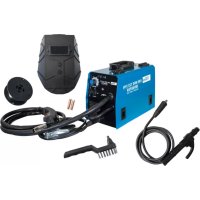
UNI MIG 125 SYN - Welding machine Güde - Free user manual and instructions
Find the device manual for free UNI MIG 125 SYN Güde in PDF.


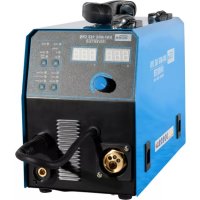
| Product type | Inverter welding machine |
| Brand | Güde |
| Model | UNI MIG 125 SYN |
| Order number | 20078 |
| Power supply | 230 V ~ 50 Hz |
| Protection | 16 A |
| Nominal maximum input current | 17.3 A |
| Effective maximum input current | 12.7 A |
| No-load voltage | 63 V |
| Protection degree | IP 21S |
| Insulation class | H |
| Dimensions (L x W x H) | 305 x 152 x 233 mm |
| Weight | 6.4 kg |
| Welding processes | MIG, MAG, WIG, MMA |
| MIG/MAG welding current | 20 - 120 A |
| WIG welding current | 20 - 100 A |
| MMA welding current | 20 - 100 A |
| MIG/MAG service voltage | 20 V |
| WIG service voltage | 14 V |
| MMA service voltage | 22 V |
| Material thickness | 1.0 - 8 mm |
| MIG wire diameter | 0.6 - 1.0 mm |
| MMA electrode diameter | 1.6 - 3.2 mm |
| WIG electrode diameter | 1.6 - 2.4 mm |
| Safety | Thermal protection, 30 mA differential circuit breaker recommended |
| Warranty | 24 months for domestic use |
Frequently Asked Questions - UNI MIG 125 SYN Güde
User questions about UNI MIG 125 SYN Güde
0 question about this device. Answer the ones you know or ask your own.
Ask a new question about this device
Download the instructions for your Welding machine in PDF format for free! Find your manual UNI MIG 125 SYN - Güde and take your electronic device back in hand. On this page are published all the documents necessary for the use of your device. UNI MIG 125 SYN by Güde.
USER MANUAL UNI MIG 125 SYN Güde
ENGLISH Please read the instructions carefully before starting the machine.
https://www.guede.com/index.html?shopart=20078


Degree of protection.. IP 21S
Insulation class.. H
Dimensions. 305 x 152 x 233 mm

Weight 6,4 Kg
MMA. MIG/MAG. WIG
Welding current I. 100 A. 120 A. 100 A
Operating voltage U, 22 V 20 V 14 V
Material thickness 1.0-8 mm 1,0-8 mm 1,0-8 mm

Regulated section 20-100A 20-120A 20-100A
Electrodes. 1,6-3,2 mm .0,6-1,0 mm .1,6-2,4 mm
- Actual working time and total working time ratio.


Read and understand the operating instructions before using the appliance. Abide by all the safety
measures stated in the service manual. Act responsibly toward third parties. In case of any doubts about connection and operation refer please to our customer center
Specified Conditions Of Use
Welder in protective atmosphere for thermal connection of ferrous metals by melting edges and including mixture. Please note that the device is designed for domestic use only.
Do not use this product in any other way as stated for normal use. Not observing general regulations in force and instructions from this manual does not make the manufacturer liable for damages.
Please note that our equipment has not been designed for commercial, craft or industrial use. If the equipment is used in commercial, craft or industrial operation or for similar activities, we cannot assume any
Safety instructions

WARNING! Electric shock! There is a risk of injury caused by electric shock!

Operation is only allowed with a safety pitch against stray current (RCD max. stray current of 30mA ).
IP21 protection degree of the welder. The welder must not be exposed to rain and moisture when being operated or stored.
Check the voltage. Technical data given on the type label must correspond with electric network voltage. Insert the plug of the electrical cable in a socket of suitable shape, voltage and frequency complying with current regulations.
Use extension cables with a maximum length of 5 meters and with a cable cross-section of not less than 1.5mm2 Use of extension cables of different length and cross-section and also of adapters and multiple sockets should be avoided.
Check the cable and/or socket for damages before the appliance putting into operation.
Defective cable or plug may cause electric shock. Do not pull the service cable to pull the plug out of socket. Do not expose yourself or other persons without protection to electric arc or hot metal. Spraying welding pearls may cause burns. A suitable welding shield, protective clothes and protective gloves to be worn at all times.
ENGLISH
Long-term inhalation of welding gases may be harmful to your health. Work with an exhaust system or in well ventilated spaces. Avoid direct inhalation of gases.
Contact with the hose bundle nozzle and the material being processed may cause burns. Special welding gloves to be worn at all times.
Let the hose bundle nozzle and the material being processed cool down after being operated.
Long-term working with the appliance may damage hearing. Hearing protection to be used at all times.
Welder may only be used on a flat surface and with a properly secured gas bottle.
Make sure the welding smoke is exhausted or the place of welding ventilated well.
Hot slag and sparks may cause fire or explosion. Never use the appliance in a flammable environment.
Wood, sawdust, "varnishes", petrol, kerosine, natural gas, acetylene, propane and similar flammable materials must be removed from the place of work and the surrounding area or protected against sparks flying away. To extinguish fire, a suitable fire extinguisher must be made ready nearby.
No welding or cutting on closed vessels and pipes.
No welding or cutting on vessels and pipes if they are open, containing materials able to explode due to heat or moisture or able to cause other dangerous reactions. Never use the welder to defrost frozen pipes.
The gas bottle must necessarily be secured against falling. The welder must never be lifted together with the gas bottle. Special regulations apply to the transport of gas bottles.
Handling of gas bottles
Make sure the gas bottles are used and stored in rooms with sufficient air inlet and outlet.
A leaking gas bottle may reduce the share of oxygen in the inhaled air and therefore represent a risk of suffocation. Before use, make sure the gas bottle contains gas designed for the work being done.
Gas bottles must always be safely fixed in a vertical position on a wall support or on a specially manufactured gas bottle cart.
The bottle with shielding gas and the fixed adjustment gas current equipment must not be moved. The gas bottle valve must be closed during transport.
Close the gas bottle valve after use.
Instructions for the installation and operation of an arc welding device to prevent possible electromagnetic interference:
As the manufacturer, we recommend that the following assessments and measures be carried out by a qualified electrician.
General
The user is responsible for setting up and operating the arc welding machines/cutting equipment in accordance with the manufacturer's instructions. If electromagnetic interference is detected, it is the responsibility of the user of the arc welding machines/cutting equipment to find a solution with the technical assistance of the manufacturer. In some cases, the measure needed may simply consist of earthing the welding circuit (see note). In other cases, it may include complete electromagnetic shielding of the power source of the arc welding machine/ cutting equipment and the workpiece, combined with input filters. In all cases, electromagnetic interference must be reduced until it no longer causes any disturbance.
Note
The approach taken to earthing the welding circuit depends on the local safety regulations.
Changing the earthing to improve electromagnetic compatibility may increase the risk of
accidents or damage to equipment
Assessing the surroundings
Before setting up the arc welding machines and/or cutting equipment, the user must assess possible electromagnetic problems in the surroundings.
When doing so, the following factors must be taken into account:
a) other mains cables, control cables, signal and telecommunication cables above, below and next to the arc welding machines and/or cutting equipment;
b) Audio and television broadcast transmitters and receivers;
c) Computers and other control devices;
d) Safety equipment, e.g. protection for commercial facilities;
e) the health of persons nearby, e.g. those using pacemakers and hearing aids;
f) Calibration and measurement equipment;
g) the resistance of other equipment in the vicinity to interference. The user must ensure that
other equipment used in the environment is suitable for such a purpose. This may require additional protective measures;
h) the time of day during which the welding, cutting, or other activities must be carried out.
The extent of that surrounding area that must be considered depends on how the building is constructed, and the other activities taking place there. This area may extend beyond the limits of the premises
Evaluation of the welding machine / cutting equipment
In addition to the assessment of the area, the arc welding machines/cutting equipment can be evaluated to assess and resolve cases of interference. An assessment of electromagnetic interference should include in situ measurements, as specified in section 10 of CISPR 11:2009. In-situ measurements can also be made to gauge the effectiveness of any minimisation measures implemented.
Guidance for minimisation measures:
Public power supplies
Welders machines/cutting equipment should be connected to the public power supply as per the manufacturer's recommendations. If there is any interference, it may be necessary to take additional precautions, such as fitting filters for the mains connection. Consider shielding the mains cable of permanently installed welding machines/cutting equipment with a metal pipe or similar. The shielding should be electrically connected for its entire length. The shielding should be connected to the welding machine/ cutting equipment power source to achieve good electrical contact between the sheath and the housing of the welding machine/cutter power source.
Maintenance of the arc welding machines/ cutting equipment
Arc welding machines/cutting equipment should be regularly maintained as per the manufacturer's recommendations. All access and service doors and covers should be closed and well secured when the welding machine/ cutting equipment is in operation. With the exception of the changes and adjustments specified in the manufacturer's instructions, the welding machines/cutting equipment should not be modified in any way. In particular, the spark gaps of arc ignition and stabilisation devices should be adjusted and maintained in accordance with the manufacturer's recommendations.
Welding cables
Welding cables should be as short as possible, close together, and should run across or near the ground.
Electrical bonding
The electrical interconnection of all metallic parts in and next to a welding machine/cutting equipment should be taken into consideration. Metallic parts connected to the workpiece can increase the risk of the welder receiving an electric shock from touching these metallic parts and the electrode at the same time. The welder should be electrically insulated from all of these connected metal parts.
Earthing the workpiece
It may be that the workpiece is not already connected to earth for reasons of electrical safety or because of its size and location, e.g. a ship's hull or steel structures. If so, grounding the workpiece can reduce emissions in some, but not all, cases. Ensure that earthing the workpiece does not increase the risk of accident for the user or cause the destruction of other electrical equipment. If necessary, the workpiece must be grounded by a direct connection to the workpiece. In countries where a direct connection is prohibited, the connection should be achieved using suitable capacitors, selected in accordance with national regulations.
Screening
Selective screening of other cables and equipment in the vicinity can reduce irradiation. The screening of the entire welding/cutting set-up may be considered for special applications.
Class A (IEC 60974-10):
If you intend to use the apparatus in residential surroundings supplied by the low voltage mains supply, an electromagnetic filter may be required to suppress electrical disturbance to a level where they will no longer be a nuisance to the user.
The apparatus may be used in industrial or other areas where power is not supplied by municipal LV mains.
Class A apparatus are not intended for use in residential areas where power is supplied via municipal LV mains, since unfavourable power conditions may cause interference. As a user, you must make sure, after consultation with your energy provider, if necessary, that your point of connection on which the machine is to be operated meets the requirements above.
The user is responsible for faults arising from the welding.
Symbols


Caution! Read the Operating Instructions!

Wear personal protective equipment.

Welding mask to be used!

Special welding gloves to be worn at all times.

Wear safety cut through resistant shoes with safety sole and steel toe!

Protective apron to be used

Before carrying out any work on the machine, disconnect the plug from the socket.

Pressure bottle to be secured by chain

Warning against dangerous voltage

Risk of explosion

Caution - hot surface!

Warning against toxic fumes!Not to be used in enclosed spaces

Protect against humidity Never expose tool to rain.

Prohibition for persons with a pacemaker!

Keep distance of persons Observe to keep out of dangerous zone

Single-phase transformer with rectifier

MIG (welding, metal-inert-gas)
MAG (welding, metal-active-gas)

WIG (tungsten inert gas welding)

MMA (electrode welding)

Suitable for welding with an increased electric risk.

Single-phase alternating current with rated frequency of 50Hz
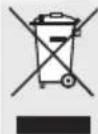
Any damaged or disposed electric or electronic devices must be delivered to appropriate collection centres.

Protect against humidity

This side up
Requirements for operating staff
The operating staff must carefully read the Operating Instructions before using the appliance.
Qualification: Apart from the detailed instructions by a professional, no special qualification is necessary for appliance using.
Minimum age: Persons over 16 years of age can only work on the appliance. An exception includes youngsters trained in order to reach knowledge under supervision of the trainer during occupational education.
Training: Using the appliance only requires corresponding training by a professional or the Operating Instructions. No special training is necessary.
Emergency procedure
Conduct a first-aid procedure adequate to the injury and summon qualified medical attendance as quickly as possible. Protect the injured person from further harm and calm them down. For the sake of eventual accident, in accordance with DIN 13164, a workplace has to be fitted with a first-aid kit. It is essential to replace any used material in the first-aid kit immediately after it has been used.
If you seek help, state the following pieces of information:
- Accident site
- Accident type
- Number of injured persons
- Injury type(s)
Maintenance
Before carrying out any work on the machine, disconnect the plug from the socket.
Prior to every use, visually check the machine to rule out any defects, in particular on the power cable and the plug.
The machine must not be used under any circumstances if the machine or the safety devices are damaged.
If the device is defective, the repair has to be made exclusively by the customer service.
Use only original accessories and original spare parts.
Never clean the machine and its components with solvents, flammable or toxic liquids. Us only a damp cloth making.
Use a soft brush to remove the deposited dust from the ventilation hole and moving parts after each use.
All moving metal parts, e.g. wheels and the side cover, to be regularly lubricated with oil.
Only a regularly maintained and treated appliance can serve as a satisfactory aid. Insufficient maintenance and care can lead to unforeseen accidents and injuries.
If necessary, a list of spare parts can be found at www.guide.com.
Guarantee
Warranty period of 12 months applies to commercial use and 24 months applies to private use and commences on the day of purchase of the device.
The guarantee solely covers inadequacies caused by material defect or manufacturing defect. Original payment voucher with the sales date needs to be submitted for any claim in the guarantee period.
The guarantee does not cover any unauthorised use such as appliance overloading, use of violence, damage as a result of any unauthorised interference or caused by foreign items. Failing to follow the operating and assembly instructions and common wear are also not included in the guarantee.
Service
Do you have any technical questions? Any claim? Do you need any spare parts or operating instructions? We will quickly help you and without needles bureaucracy at our web pages at www.guide.com in the Servicing part. Please help us be able to help you. In order to identify your device in case of claim we need the serial No., product No. and year of production. All this data can be found on the type label. Please enter it here for future reference:
Serial No.:
Art. No:
Year of production:
Failure removal
| Failures Causes Removal | ||
| Wire not feeding despite wire feed pulley turning. | Dirty current nozzle Clean | |
| Coil carrier clutch set too tight. Loosen | ||
| Damaged hose bundle Check the wire guide housing | ||
| Too low clamping pressure of the wire feed pulley | Increase the clamping pressure | |
| Interrupted or disruptive wire supply | Damaged current nozzle Replace | |
| Burnt current nozzle Replace | ||
| Dirty driving gear nozzle Clean | ||
| Cut on worn driving gear Replace | ||
| Electric arc turned off Poor contact between earth pliers and the respective part | Tighten the pliers and check them Remove paint and rust | |
| Clean or replace the current and gas nozzle Current nozzle without dirt, paint and rust remains | ||
| Too loose current nozzle Tighten the current nozzle firmly | ||
| Porous welded joint Wrong distance of inclination of the hose bundle | Distance between the hose bundle and the respective part must be 5-10 mm. Inclination must not be lower than 60 with respect to the part. | |
| No gas, too little gas or wrong gas Secure or replace the gas supply (higher volume) | ||
| Welder suddenly stops working after longer operation | Welder has overheated due to too long use and the thermal protection has activated | Let the welder cool down |
\section*{Caracteristiques Techniques}
Attention - surface chaude!


He n3BbPbBaIte Bbpyx 3aTbOpEn CbdoBe n Tpb6n HnKaBn 3aBapraBaHn nn p83aHe.
He n3BbPbBaIte BbPxy CbDoBe n Tp6n HnKaBn 3aBapBaHn Inn P83aHe DOpn N KOrato Ca OTBOpEH, KOraTO CbDbPkaT IIN Ca CbDbPkaIIMatepnaIIN, KOITNO Bb3DeiCTBHeTo HA TOIIHa IIN Blara MORa Da eKcPiOaDinpaT IIN da pNpUHHrT
dpyn onaChi peakun.
HnKora He n3non3BaIte 3aBapbHnna anapaT 3a pa3mpa3raBaHe Ha 3ampb3HaJI Tp6n.
Henpemehno 6e3onacete ra3OBata 6ytuKa cpeuy naahe.3abapbun anapat HnKora He Tpa6Ba da ce nobnra eHOBpemehno C ra3OBata 6ytuKa.
3a TpaHcnpTnpaHeTo Ha ra3OBN 6yTuJIKN BaJat Cneuajn pa3nope6n.
MaHnPyIpaHe c r3OBn 6yTnIKN
IorpnkeTe ce,ra3OBnTe 6yTuNKn Da ce n3NoJ3BaT n CbXpaHЯBt B NOMEseHn, KOnTO npITexKaBaT DOCTaTbYeH pNtOK n OTBeKdaHe Ha Bb3dYa.x.
Iponyckaata ra3oBaTa 6ytnka MoKe da HaMaann
JeBbT Ha KNCIOPOD BbB BdNWBaHnBb3dyx N da
npedn3BnKa onaCHOCT O3aDywaBaHe.
IpeynynoTpe6a ce ybepeTe,ye ra3oBaTa 6ytnla cBdbpxka ra3,KoToe npedHa3HaueH 3a n3BbPwbaHaTa pa6ota.
Ta3OBtE 6yTnKn Tp86Ba BnHarI Da ca 3akpeHn 6e3OpacHO BBB BepTKKaJHo NIOXKeHne Bbpxy CTHeH PneJeCTaI IIN Bbpxy CneUHaNHO HAnpaBeHa KOJIuCKa 3a Ra3OBn 6yTnKn.
C 6ytuKa CbC 3aHtEn Ra3 H 3akpeHeno peryu npao yctpoiCTBO 3a npOTnHa Ha ra3Ta He Tp6Ba Da Ce dBnKn. BeHTuHa Ra3OBaTa 6ytuKaTnO BpeMe Ha TpaHCnOpTnpaHe Tp6Ba Da 6bJe 3akPut.
CneI ynoTpe6a 3aTbopeTe BeHTnla Ha ra3OBaTa 6yTuNka.
KnacA" (IEC 60974-10):
Ako nckate da n3nON3BaTe yctpoiCTBOTO B KINuHa
cpea, KbdeTo 3axpaHbHeTo ce OcnrypRABa OT
O6ueCTBeHa Mpeka C HnCKo HaPpeXeHne, MoKe
da Ce HANOxN da n3NON3BaTe eJekTPomarHHTe
fHtbp, KOITo HamaJIraBa Do TaKaBa CTeneH
eJekTPomarHHTHNTe CMUeHn.
BnHdycpnaJIHn 30Hn nI npaOnn, KbJeTo 3axpaHbAHeTO He ce ocNpyra OBseCTBeHa MpeXa C HNCo HAppeXeHne, yCTPOINCTBOTo MoXe da ce N3IOJ3Ba.
YctpoiCTBaT O KlaC "A" He Tpr6Ba Da Ce
H3NoI3BaT B XnIuNHa CpeDa, KbJeTo 3aXpaHbHeTo
ce OcInrpyBa OT o6IeCTBeHa MpeKa C HnCKO
HaNPexKeHne, TbK KaTO Te MoRat Da npuHnRT
CMySeHnB B CnyaH Na He6NaIarOpnPaTHn YcNobn 3a
3axpaHbAHe.
Kato notpe6ntel Tp86ba da rapaHTnpate, ye ako e Heo6xoJIMO cnei KOHcyNTaun C Baunn DOCTaBUnk Ha eNeKTPOeHeprn, TOUkaTn HA CBp3BaHe, KOrTo NCKaTe Da n3NON3BaTe 3a pa60Ta C MaunHaTa,
OTROBAPHa HrOpHnTe N3NCKBaHnA.
Iotppe6nteTne oTROBOpEn 3a BCnKn CmUeHnB pe3yntat Ha 3aBapraBaHe
CNMBONI


BhIMaHne!
Ppoetye yIbTBaHTo 3a 06cIyXBaHe!

HoceteIuHnIpeDna3Hn nomarana.

N3noJ3BaIte 3aBapbHa MaCaKa!

Bunharn HocTe cneuaHn 3aBapbHn pbkabu

Hocete 6e3oNaChn 06yBKn CbC 3aunTa npOTNB npep3BaHe, rpy6a NOpMeTka N CTOMaHEN Bpbx!

I3non3BaIte 3aunTHa npectnka

Ipeu n3BbPwBaHe Ha KaKbTo n da 6nlo pa6oTa no NOMATA BnHaRn Hau-Hanpeu n3BaTe Uencela Ha 3axpaHbaunKa6en ot uencelHata KyTna.

Obe3onacete 6ytukkata noHaIrahe C Bepura


PpeynpeKdHne 3a onaCHOeKeTpuecko HanpeXeHne


OnachoCT oeknno3n

BHHMaHne- ropeua nobbpxHOCT!


IpeynpeJHne 3a TokcnHn n3napenHa!a He ce n3no13Ba B 3aTbopeHn npoctpaHCTBa

PnepBnaraHe n3naarMaHnHaHa DbXd.

3a6paHeNo 3a xopa c KapdnoocTmmyaTop!

Iuctanpnpoxop06bphete BHMaHne 3a TOBa B onachata 0nact da He ce 3aBpka HnKo!

MoHoΦa3eH TpaHcΦopMaTOp C TOKON3npaBnteJ

MIG 3aBapBaHe (3aBapBaHe Ha MetanHepTeH-ra3)
MAG 3aBapBaHe (3aBapBaHe Ha MeTaNakTNBeH-ra3)

WIG (3aBapBaHe c BOnΦpam-HepeTeH ra3)

MMA (eIektpoDbroBO 3aBapBaHe)

IopxOJa3a3abapBaHe c nobuWeHa eJeKtpuecka onaCHOCT.

MoHOa3eH npOMeHnB TOK C HOMHaHa yecToTa 50 Hz
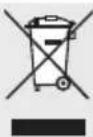
Deekn n/nnn NkBnpaHn eektpueckn nnneektpoHH ypeu Tp6Ba da ce npdaat B cbOTBeHTHe nyHKTOBe 3a cb6upahe.

PnepBna

OnakOBkata Tp86Ba da 6bde HacoueHa Harope
Translation of the EC-Declaration of Conformity
We, hereby declare the conception and construction of the below mentioned appliances correspond - at the type of construction being launched - to appropriate basic safety and hygienic requirements of EC Directives.
In case of any change to the appliance not discussed with us the Declaration expires.
- Specified Conditions Of Use
- Safety instructions
- ENGLISH
- Handling of gas bottles
- Instructions for the installation and operation of an arc welding device to prevent possible electromagnetic interference:
- General
- Note
- Assessing the surroundings
- Evaluation of the welding machine / cutting equipment
- Guidance for minimisation measures:
- Public power supplies
- Maintenance of the arc welding machines/ cutting equipment
- Welding cables
- Electrical bonding
- Earthing the workpiece
- Screening
- Class A (IEC 60974-10):
- Symbols
- Requirements for operating staff
- Emergency procedure
- Maintenance
- Guarantee
- Service
- \section*{Caracteristiques Techniques}
- MaHnPyIpaHe c r3OBn 6yTnIKN
- KnacA" (IEC 60974-10):
- CNMBONI
- Translation of the EC-Declaration of Conformity
Brand : Güde
Model : UNI MIG 125 SYN
Category : Welding machine