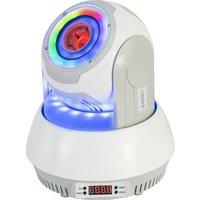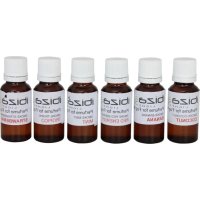
SMOKETROPIC - Smoke machine fragrance IBIZA SOUND - Free user manual and instructions
Find the device manual for free SMOKETROPIC IBIZA SOUND in PDF.



User questions about SMOKETROPIC IBIZA SOUND
0 question about this device. Answer the ones you know or ask your own.
Ask a new question about this device
Download the instructions for your Smoke machine fragrance in PDF format for free! Find your manual SMOKETROPIC - IBIZA SOUND and take your electronic device back in hand. On this page are published all the documents necessary for the use of your device. SMOKETROPIC by IBIZA SOUND.
USER MANUAL SMOKETROPIC IBIZA SOUND
text_image
ibiza LIGHTTROPICAL PERFUME
FOR SMOKE FLUID
Ref.: SMOKE-TROPIC
Code: 15-1122

text_image
ibiza LIGHTER Fperfume for Faja TROPICOMANUAL
EN- Instruction Manual - p. 2
Product form : Mixture of perfumes
Product name : Fragrance Ibiza Light - Tropico Scent - 20ml bottle
Product code : 15 - 1122
1.2. RELEVANT IDENTIFIED USES OF THE SUBSTANCE OR MIXTURE AND USES ADVISED AGAINST Relevant identified uses
Main use category: Industrial use, Professional use. Not intended for personal use
Product intended to be mixed in an artificial smoke liquid to mask the base odor with a pleasant and agreeable odor
1.3. DETAILS OF THE SUPPLIER OF THE SAFETY DATA SHEET
LOTRONIC SA
Rue F. Englert 17/2 1480 - Tubize - Belgium
Tel: +32 2 390 91 91 - +32 2 390 93 19
Website: www.lotronic.net
1.4. EMERGENCY TELEPHONE NUMBER
| Country/Area Organisation | Company Address Emergency number | |
| France ORFILA +33 1 45 42 | 59 59 |
SECTION 2: HAZARDS IDENTIFICATION
2.1. CLASSIFICATION OF THE SUBSTANCE OR MIXTURE
- Classification according to Regulation (EC) No. 1272/2008 [CLP]
- Contains Furaneol, d-Limonene. May produce an allergic reaction: EUH208
- Safety data sheet available on request. EUH210
• Full text of H- and EUH-statements: see section 16 - Adverse physicochemical, human health and environmental effects
• To our knowledge, this product does not present any particular risk, provided it is handled in accordance with good occupational hygiene and safety practice.
2.2. LABEL ELEMENTS
• Labelling according to Regulation (EC) No. 1272/2008 [CLP]
- EUH-statements: EUH208 - Contains Furaneol, d-Limonene. May produce an allergic reaction.
• EUH210 - Safety data sheet available on request.
2.3. OTHER HAZARDS
Contains no PBT and/or vPvB substances ≥ 0.1% assessed in accordance with REACH Annex XIII
The mixture does not contain substance(s) included in the list established in accordance with Article 59(1) of REACH for having endocrine disrupting properties, or substance(s) are not identified as having endocrine disrupting properties in accordance with the criteria set out in Commission Delegated Regulation (EU) 2017/2100 or Commission Regulation (EU) 2018/605 at a concentration equal to or greater than 0,1%
SECTION 3: COMPOSITION/INFORMATION ON INGREDIENTS
3.2. MIXTURES
| Name Product identifier % | Classification according to Regulation (EC) No. 1272/2008 [CLP] | ||
| (R)-p-mentha-1,8-diene; d-limonene | CAS-No.: 5989-27-5 EC-No.: 227-813-5 EC Index-No.: 601-096-00-2 | 0,1 - 0,9 F | am. Liq. 3, H226Skin Irrit. 2, H315Skin Sens. 1B, H317Asp. Tox. 1, H304Aquatic Acute 1, H400 Aquatic Chronic 3, H412 |
| Furaneol / 4-Hydroxy-2,5-dimethyl-3(2H)-furanone | CAS-No.: 3658-77-3 EC-No.: 222-908-8 | < 0.1 Acute | Tox. 4 (Oral), H302 (ATE=500 mg/kg bodyweight)Skin Corr. 1, H314Eye Dam. 1, H318Skin Sens. 1A, H317 |
Full text of H- and EUH-statements: see section 16
SECTION 4: FIRST AID MEASURES
4.1. DESCRIPTION OF FIRST AID MEASURES
- First-aid measures general: If you feel unwell, seek medical advice.
- First-aid measures after inhalation: Remove person to fresh air and keep comfortable for breathing. First-aid measures after skin contact: Wash skin with plenty of water.
- First-aid measures after eye contact: Rinse eyes with water as a precaution.
- First-aid measures after ingestion: Call a poison center or a doctor if you feel unwell.
- First-aid measures for first aider: First aid workers will be equipped with suitable personal protective equipment.
- Symptoms/effects after inhalation: Although no appropriate human or animal health effects data are known to exist, this material is expected to be an inhalation hazard.
- Symptoms/effects after skin contact: None under normal conditions.
- Symptoms/effects after eye contact: None under normal conditions.
- Symptoms/effects after ingestion: None under normal conditions.
4.3. INDICATION OF ANY IMMEDIATE MEDICAL ATTENTION AND SPECIAL TREATMENT NEEDED
Treat symptomatically.
SECTION 5: FIREFIGHTING MEASURES
5.1. EXTINGUISHING MEDIA
- Suitable extinguishing media: Water spray. Dry powder. Foam. Carbon dioxide.
- Unsuitable extinguishing media: Do not use a heavy water stream.
5.2. SPECIAL HAZARDS ARISING FROM THE SUBSTANCE OR MIXTURE
- Fire hazard: No fire hazard.
- Explosion hazard: No direct explosion hazard.
- Hazardous decomposition products in case of fire: Toxic fumes may be released.
5.3. ADVICE FOR FIREFIGHTERS
- Firefighting instructions: Fight fire from safe distance and protected location. Do not enter fire area without proper protective equipment, including respiratory protection.
- Protection during firefighting: Do not attempt to take action without suitable protective equipment. Self-contained breathing apparatus. Complete protective clothing.
SECTION 6: ACCIDENTAL RELEASE MEASURES
6.1. PERSONAL PRECAUTIONS, PROTECTIVE EQUIPMENT AND EMERGENCY PROCEDURES
- General measures: Stop leak if safe to do so. Notify authorities if product enters sewers or public waters. Absorb spillage to prevent material damage.
-
For non-emergency personnel
-
Protective equipment: Wear recommended personal protective equipment.
- Emergency procedures: Ventilate spillage area.
• For emergency responders - Protective equipment: Do not attempt to take action without suitable protective equipment. For further information refer to section 8: "Exposure controls/personal protection".
- Emergency procedures: Evacuate unnecessary personnel. Stop leak if safe to do so.
6.2. ENVIRONMENTAL PRECAUTIONS
Avoid release to the environment.
6.3. METHODS AND MATERIAL FOR CONTAINMENT AND CLEANING UP
For containment: Absorb spilled material with sand or earth. Contain any spills with dikes or absorbents to prevent migration and entry into sewers or streams. Stop leak without risks if possible.
Methods for cleaning up: Take up liquid spill into absorbent material.
Other information: Dispose of materials or solid residues at an authorized site.
6.4. REFERENCE TO OTHER SECTIONS
For further information refer to section 13.
SECTION 7: HANDLING AND STORAGE
7.1. PRECAUTIONS FOR SAFE HANDLING
• Additional hazards when processed: Not expected to present a significant hazard under anticipated conditions of normal use.
- Precautions for safe handling: Ensure good ventilation of the work station. Wear personal protective equipment.
- Hygiene measures: Do not eat, drink or smoke when using this product. Always wash hands after handling the product.
7.2. CONDITIONS FOR SAFE STORAGE, INCLUDING ANY INCOMPATIBILITIES
- Technical measures: Keep in a cool, well-ventilated place away from heat.
- Storage conditions: Keep cool. Protect from sunlight.
- Packaging materials: Store always product in container of same material as original container.
7.3. SPECIFIC END USE(S)
No additional information available
SECTION 8: EXPOSURE CONTROLS/PERSONAL PROTECTION
8.1. CONTROL PARAMETERS
No additional information available
8.2. EXPOSURE CONTROLS
- Appropriate engineering controls:
- Ensure good ventilation of the work station.
- Personal protection equipment Personal protective equipment:
- Wear recommended personal protective equipment.
• Personal protective equipment symbol(s):

natural_image
Three circular icons representing gloves, a person wearing safety goggles, and a person in uniform (no text or symbols)EYE AND FACE PROTECTION
- Eye protection: Safety glasses
-
Skin and body protection: Wear suitable protective clothing
-
Hand protection: Protective gloves
- Respiratory protection: In case of insufficient ventilation, wear suitable respiratory equipment
- Environmental exposure controls: Avoid release to the environment.
SECTION 9: PHYSICAL AND CHEMICAL PROPERTIES
Physical state: Liquid
Colour : Colourless.
Odour : Characteristic.
Odour threshold: Not available
Melting point: Not applicable
Freezing point: Not available
Boiling point: Not available
Flammability: Not available
Lower explosion limit: Not available
Upper explosion limit: Not available
Flash point > 60 °C
Auto-ignition temperature: Not available
Decomposition temperature: Not available
pH: 4.2 (3.7 - 4.7)
Viscosity, kinematic: Not available
Solubility: soluble in water.
Partition coefficient n-octanol/water (Log Kow): Not available
Vapour pressure: Not available
Vapour pressure at 50°C: Not available
Density: Not available
Relative density: 1.04 (1.02 - 1.06)
Relative vapour density at 20°C: Not available
Particle characteristics: Not applicable
9.2. OTHER INFORMATION
No additional information available
SECTION 10: STABILITY AND REACTIVITY
10.1. Reactivity : The product is non-reactive under normal conditions of use, storage and transport.
10.2. Chemical stability : Stable under normal conditions.
10.3. Possibility of hazardous reactions : No dangerous reactions known under normal conditions of use.
10.4. Conditions to avoid : None under recommended storage and handling conditions (see section 7).
10.5. Incompatible materials: No additional information available
10.6. Hazardous decomposition products : Under normal conditions of storage and use, hazardous decomposition products should not be produced.
SECTION 11: TOXICOLOGICAL INFORMATION
11.1. INFORMATION ON HAZARD CLASSES AS DEFINED IN REGULATION (EC) NO 1272/2008
- Acute toxicity (oral): Not classified (Based on available data, the classification criteria are not met)
- Acute toxicity (dermal): Not classified (Based on available data, the classification criteria are not met)
- Acute toxicity (inhalation): Not classified (Based on available data, the classification criteria are not met)
Furaneol / 4-Hydroxy-2,5-dimethyl-3(2H)-furanone (3658-77-3)
LD50 oral rat 2320 mg/kg bodyweight Animal: rat, Guideline: OECD Guideline 401 (Acute Oral Toxicity)
(R)-p-mentha-1,8-diene; d-limonene (5989-27-5)
LD50 oral rat > 2000 mg/kg bodyweight Animal: rat, Animal sex: female, Guideline: OECD Guideline 423
(Acute Oral toxicity - Acute Toxic Class Method)
| LD50 dermal rabbit | > 5000 mg/kg Source: National Library of Medicine |
- Skin corrosion/irritation: Not classified (Based on available data, the classification criteria are not met) pH: 4.2 (3.7 - 4.7)
- Serious eye damage/irritation: Not classified (Based on available data, the classification criteria are not met)
• pH: 4.2 (3.7 - 4.7) - Respiratory or skin sensitisation: Not classified (Based on available data, the classification criteria are not met) Germ cell mutagenicity: Not classified (Based on available data, the classification criteria are not met)
- Carcinogenicity: Not classified (Based on available data, the classification criteria are not met)
(R)-p-mentha-1,8-diene; d-limonene (5989-27-5)
| IARC group 3 - Not classifiable |
Reproductive toxicity: Not classified (Based on available data, the classification criteria are not met)
Furaneol / 4-Hydroxy-2,5-dimethyl-3(2H)-furanone (3658-77-3)
| NOAEL (animal/male, F0/P): 1000 mg/kg bodyweight Animal: rat, Animal sex: male, Guideline: other: | |
| (R)-p-mentha-1,8-diene; d-limonene (5989-27-5) | |
| NOAEL (animal/female, F0/P) 600 mg/kg bodyweight Animal: rat, Animal sex: female, Guideline: other: |
- STOT-single exposure: Not classified (Based on available data, the classification criteria are not met)
- STOT-repeated exposure: Not classified (Based on available data, the classification criteria are not met)
- Aspiration hazard: Not classified (Based on available data, the classification criteria are not met)
(R)-p-mentha-1,8-diene; d-limonene (5989-27-5)
| Viscosity, kinematic 1.075 mm2/s |
11.2. INFORMATION ON OTHER HAZARDS
No additional information available
SECTION 12: ECOLOGICAL INFORMATION
12.1. TOXICITY
- Ecology - general: The product is not considered harmful to aquatic organisms nor to cause long-term adverse effects in the environment.
- Hazardous to the aquatic environment, short-term (acute): Not classified (Based on available data, the classification criteria are not met)
- Hazardous to the aquatic environment, long-term (chronic): Not classified (Based on available data, the classification criteria are not met)
Furaneol / 4-Hydroxy-2,5-dimethyl-3(2H)-furanone (3658-77-3)
| LC50 - Fish [1] 1.887 mg/l Source: Ecological Structure Activity Relationships | |
| EC50 - Crustacea [1] 6.8 | mg/l Test organisms (species): Daphnia magna |
| EC50 72h - Algae [1] 194 | .03 mg/l Test organisms (species): Desmodesmus subspicatus (previous name: Scenedesmus subspicatus) |
| EC50 96h - Algae [1] 96.9 | .963 mg/l Source: Ecological Structure Activity Relationships |
(R)-p-mentha-1,8-diene; d-limonene (5989-27-5)
| LC50 - Fish [1] 720 μg/l Test organisms (species): Pimephales promelas | |
| LC50 - Fish [2] 702 μg/l Test organisms (species): Pimephales promelas | |
| EC50 - Crustacea [1]: 0.307 mg/l Test organisms (species): Daphnia magna | |
| EC50 - Crustacea [2]: 0.51 mg/l Test organisms (species): Daphnia magna | |
| EC50 72h - Algae [1]: | 0.32 mg/l Test organisms (species): Raphidocelis subcapitata (previous names: Pseudokirchneriella subcapitata, Selenastrum capricornutum) |
| EC50 72h - Algae [2]: 0.214 mg/l Test organisms (species): Raphidocelis subcapitata (previous names: Pseudokirchneriella subcapitata, Selenastrum capricornutum) |
| NOEC (chronic): 0.115 mg/l Test organisms (species): other:For freshwater invertebrates, species frequently include Daphnia magna or Daphnia pulex. Duration: '16 d' |
12.2. PERSISTENCE AND DEGRADABILITY
PASSION FRUIT FLAVOUR FP-23
- Persistence and degradability: Not rapidly degradable
• Furaneol / 4-Hydroxy-2,5-dimethyl-3(2H)-furanone (3658-77-3) - Persistence and degradability: Not rapidly degradable
• (R)-p-mentha-1,8-diene; d-limonene (5989-27-5) - Persistence and degradability: Not rapidly degradable
12.3. BIOACCUMULATIVE POTENTIAL
• Furaneol / 4-Hydroxy-2,5-dimethyl-3(2H)-furanone (3658-77-3)
- Partition coefficient n-octanol/water (Log Pow): 0.82 Source: Quantitative Structure Activity Relation
• (R)-p-mentha-1,8-diene; d-limonene (5989-27-5)
- Partition coefficient n-octanol/water (Log Pow): 4.38 Source: ECHA Registered substances
12.4. MOBILITY IN SOIL
Furaneol / 4-Hydroxy-2,5-dimethyl-3(2H)-furanone (3658-77-3)
Mobility in soil: 1.072 Source: Quantitative Structure Activity Relation
12.5. RESULTS OF PBT AND VPVB ASSESSMENT
No additional information available
12.6. ENDOCRINE DISRUPTING PROPERTIES
No additional information available
12.7. OTHER ADVERSE EFFECTS
No additional information available
SECTION 13: DISPOSAL CONSIDERATIONS
13.1. WASTE TREATMENT METHODS
- Regional waste regulation: Disposal must be done according to official regulations.
- Waste treatment methods: Dispose of contents/container in accordance with licensed collector's sorting instructions.
- Sewage disposal recommendations: Disposal must be done according to official regulations. Product/Packaging disposal recommendations: Disposal must be done according to official regulations.
• Additional information: Do not re-use empty containers.
SECTION 14: TRANSPORT INFORMATION
In accordance with ADR / IMDG / IATA
ADR IMDG IATA
| 14.1. UN number or ID number | ||
| Not regulated for transport | ||
| 14.2. UN proper shipping name | ||
| Not regulated Not regulated Not regulated | ||
| 14.3. Transport hazard class(es) | ||
| Not regulated Not regulated Not regulated | ||
| 14.4. Packing group | ||
| Not regulated Not regulated Not regulated | ||
| 14.5. Environmental hazards | ||
| Not regulated Not regulated Not regulated | ||
No supplementary information available
14.6. SPECIAL PRECAUTIONS FOR USER
• Overland transport: Not regulated
- Transport by sea: Not regulated
• Air transport: Not regulated
14.7. MARITIME TRANSPORT IN BULK ACCORDING TO IMO INSTRUMENTS
Not applicable
SECTION 15: REGULATORY INFORMATION
15.1. SAFETY, HEALTH AND ENVIRONMENTAL REGULATIONS/LEGISLATION SPECIFIC FOR THE SUBSTANCE OR MIXTURE
EU-Regulations
REACH Annex XVII (Restriction List)
Contains no substance(s) listed on REACH Annex XVII (Restriction Conditions)
REACH Annex XIV (Authorisation List)
Contains no substance(s) listed on REACH Annex XIV (Authorisation List)
REACH Candidate List (SVHC)
Contains no substance(s) listed on the REACH Candidate List
PIC Regulation (Prior Informed Consent)
Contains no substance(s) listed on the PIC list (Regulation EU 649/2012 concerning the export and import of hazardous chemicals)
POP Regulation (Persistent Organic Pollutants)
Contains no substance(s) listed on the POP list (Regulation EU 2019/1021 on persistent organic pollutants)
Ozone Regulation (1005/2009)
Contains no substance(s) listed on the Ozone Depletion list (Regulation EU 1005/2009 on substances that deplete the ozone layer)
Dual-Use Regulation (428/2009)
Contains no substance subject to the COUNCIL REGULATION (EC) No 428/2009 of 5 May 2009 setting up a Community regime for the control of exports, transfer, brokering and transit of dual-use items.
Explosives Precursors Regulation (2019/1148)
Contains no substance(s) listed on the Explosives Precursors list (Regulation EU 2019/1148 on the marketing and use of explosives precursors)
Drug Precursors Regulation (273/2004)
Contains substance(s) listed on the Drug Precursors list (Regulation EC 273/2004 on the manufacture and the placing on market of certain substances used in the illicit manufacture of narcotic drugs and psychotropic substances)
15.2. CHEMICAL SAFETY ASSESSMENT
No chemical safety assessment has been carried out
SECTION 16: OTHER INFORMATION
ABBREVIATIONS AND ACRONYMS:
| ADN European Agreement concerning the International Carriage of Dangerous Goods by Inland Waterways | |
| ADR European Agreement concerning the International Carriage of Dangerous Goods by Road | |
| ATE Acute | Toxicity Estimate |
| BCF Bioconcentration factor | |
| BLV Biological limit value | |
| BOD Biochemical oxygen demand (BOD) | |
| COD Chemical oxygen demand (COD) | |
| DMEL Derived Minimal Effect level | |
| DNEL Derived-No Effect Level | |
| EC-No. European Community number | |
| EC50 Median effective concentration | |
| EN European Standard | |
| IARC International Agency for Research on Cancer | |
| IATA International Air Transport Association | |
| IMDG International Maritime Dangerous Goods | |
| LC50 Median lethal concentration | |
| LD50 Median lethal dose | |
| LOAEL Lowest Observed Adverse Effect Level | |
| NOAEC No-Observed Adverse Effect Concentration | |
| NOAEL No-Observed Adverse Effect Level | |
| NOEC No-Observed Effect Concentration | |
| OECD Organisation for Economic Co-operation and Development | |
| OEL Occupational Exposure Limit | |
| PBT Persistent Bioaccumulative Toxic | |
| PNEC Predicted No-Effect Concentration | |
| RID Regulations concerning the International Carriage of Dangerous Goods by Rail | |
| SDS Safety Data Sheet | |
| STP Sewage treatment plant | |
| ThOD Theoretical oxygen demand (ThOD) | |
| TLM Median Tolerance Limit | |
| VOC Volatile Organic Compounds | |
| CAS-No. Chemical Abstract Service number | |
| N.O.S. Not Otherwise Specified | |
| vPvB Very Persistent and Very Bioaccumulative | |
| ED Endocrine disruptor | |
FULL TEXT OF H- AND EUH-STATEMENTS:
| Acute Tox. 4 (Oral) Acute toxicity (oral), Category 4 | |
| Aquatic Acute 1 | Hazardous to the aquatic environment - Acute Hazard, Category 1 |
| Aquatic Chronic 3 | Hazardous to the aquatic environment - Chronic Hazard, Category 3 |
| Asp. Tox. 1 | Aspiration hazard, Category 1 |
| EUH208 | Contains Furaneol, d-Limonene. May produce an allergic reaction. |
| EUH210 | Safety data sheet available on request. |
| Eye Dam. 1 | Serious eye damage/eye irritation, Category 1 |
| Flam. Liq. 3 | Flammable liquids, Category 3 |
| H226 | Flammable liquid and vapour. |
| H302 | Harmful if swallowed. |
| H304 | May be fatal if swallowed and enters airways. |
| H314 | Causes severe skin burns and eye damage. |
| H315 | Causes skin irritation. |
| H317 | May cause an allergic skin reaction. |
| H318 | Causes serious eye damage. |
| H400 Very toxic to aquatic life. | |
| H412 Harmful to aquatic life with long lasting effects. | |
| Full text of H- and EUH-statements: | |
| Skin Corr. 1 Skin corrosion/irritation, Category 1 | |
| Skin Irrit. 2 Skin corrosion/irritation, Category 2 | |
| Skin Sens. 1A Skin sensitisation, category 1A | |
| Skin Sens. 1B Skin sensitisation, category 1B | |
SAFETY DATA SHEET (SDS), EU
This information is based on our current knowledge and is intended to describe the product for the purposes of health, safety and environmental requirements only. It should not therefore be construed as guaranteeing any specific property of the product.
FICHE DE SECURITE
FICHE DE DONNÉES DE SÉCURITÉ SELON LE RÈGLEMENT REACH (CE) N° 1907/2006 MODIFIÉ PAR LE RÈGLEMENT (UE) 2020/878
VERSION 2.0 - DATE : 21.08.2024
SECTION 1 : IDENTIFICATION DE LA SUBSTANCE/DU MÉLANGE ET DE LA SOCIÉTÉ
1.1 IDENTIFICATION DU PRODUIT
natural_image
Three circular icons representing gloves, a person wearing glasses, and a person in uniform (no text or symbols)PROTECTION DES YEUX ET DU VISAGE
SECTION 14 : INFORMATIONS RELATIVES AU TRANSPORT
Furaneol / 4-Hydroxy-2,5-dimethyl-3(2H)-furanon (3658-77-3)
Furaneol / 4-Hydroxy-2,5-dimethyl-3(2H)-furanon (3658-77-3)
Furaneol / 4-Hydroxy-2,5-dimethyl-3(2H)-furanon (3658-77-3)
SECTIE 7: BEHANDELING EN OPSLAG
7.1. VOORZORGSMAATREGELEN VOOR VEILIGE BEHANDELING
natural_image
Three circular icons representing gloves, a person wearing glasses, and a person in uniform (no text or symbols)OOG- EN GEZICHTSBESCHERMING
Furaneol / 4-hydroxy-2,5-dimethyl-3(2H)-furanon (3658-77-3)
Furaneol / 4-hydroxy-2,5-dimethyl-3(2H)-furanon (3658-77-3)
natural_image
Three circular icons representing gloves, a person wearing glasses, and a person in uniform (no text or symbols)natural_image
Three circular icons representing gloves, a person wearing glasses, and a person in uniform (no text or symbols)natural_image
Three circular icons representing gloves, a person wearing safety goggles, and a person in uniform (no text or symbols)PROTECTIA OCHILOR ŞI A FEȚEI
Protectia ochilor: ochelari de protectie
Miros : characteristic.
Pragul de miros: Nu este disponibil
Transport aerian: Nereglementat
14.7. TRANSPORT MARITIM ÎN VRAC CONFORM INSTRUMENTELOR IMO
Nu se aplică
SECTIUNEA 15: INFORMATII DE REGLEMENTARE
15.1. REGLEMENTĂRI/LEGISLATII DE SIGURANTĂ, SĂNĂTATE ȘI MEDIU SPECIFICE PENTRU SUBSTANTĂ SAU AMESTEC
Reglementări UE
Anexa XVII la REACH (Lista de restrictii)
natural_image
Three circular icons representing hand, safety helmet, and person (no text or symbols)ÖGON- OCH ANSIKTSSKYDD
Furaneol/4-hydroxi-2,5-dimethyl-3(2H)-furanon (3658-77-3)
Furaneol/4-hydroxi-2,5-dimethyl-3(2H)-furanon (3658-77-3)
Furaneol/4-hydroxi-2,5-dimethyl-3(2H)-furanon (3658-77-3)
| LC50 - Fisk [1] 1,887 mg/l Källa: Ekologisk struktur Aktivitetsrelationer | |
| EC50 - Crustacea [1] 6,8 mg/l Testorganismer (art): Daphnia magna | |
| EC50 72h - Alger [1] | 194,03 mg/l Testorganismer (art): Desmodesmus subspicatus (tidigare namn: Scenedesmus subspicatus ) |
| EC50 96h - Alger [1] 96.963 mg/l Källa: Ekologisk struktur Aktivitetsrelationer | |
| (R)-p-menta-l,8-dien; d-limonen (5989-27-5) | |
| LC50 - Fisk [1] 720 μg | /l Testorganismer (art): Pimephales promelas |
| LC50 - Fisk [2] 702 μg | /l Testorganismer (art): Pimephales promelas |
| EC50 - Crustacea [1]: | 0,307 mg/l Testorganismer (art): Daphnia magna |
| EC50 - Crustacea [2]: | 0,51 mg/l Testorganismer (art): Daphnia magna |
| EC50 72h - Alger [1]: | 0,32 mg/l Testorganismer (art): Raphidocelis subcapitata (tidigare namn: Pseudokirchneriella subcapitata , Selenastrum capricornutum ) |
| EC50 72h - Alger [2]: | 0,214 mg/l Testorganismer (art): Raphidocelis subcapitata (tidigare namn: Pseudokir-chneriella subcapitata , Selenastrum capricornutum ) |
| NOEC (kronisk): 0,115 | mg/l Testorganismer (arter): övrigt:För sötvattensryggradslösa djur inkluderar arter ofta Daphnia magna eller Daphnia pulex . Varaktighet: '16 d' |
12.2. PERSISTENS OCH NEDBRYTBARHET
PASSIONSFRUKTSSMAK FP-23
Furaneol/4-hydroxi-2,5-dimethyl-3(2H)-furanon (3658-77-3)
Furaneol/4-hydroxi-2,5-dimethyl-3(2H)-furanon (3658-77-3)
Furaneol/4-hydroxi-2,5-dimethyl-3(2H)-furanon (3658-77-3)
natural_image
Three circular icons representing gloves, a person wearing glasses, and a person in uniform (no text or symbols)OCHRONA OCZU I TWARZY
9.2. INNE INFORMACJE
SEKCJA 11: INFORMACJE TOKSYKOLOGICZNE
12.5. WYNIKI OCENY WŁAŚCIWOŚCI PBT I VPVB
ROZDZIAŁ 16: INNE INFORMACJE
Skróty i akronimy:
natural_image
Three circular icons representing gloves, a person wearing safety goggles, and a person in uniform (no text or symbols)GÖZ VE YÜZ KORUMASI
LD50 dermal tavşan > 5000 mg/kg Kaynak: National Library of Medicine
Download the manual in other languages
Any questions or problems?
Contact us

IBIZALIGHTSOUND
Follow us on Instagram

Join us on facebook

Assembled in PRC • Designed by LOTRONIC S.A. •
https://ibizashop.eu/
©Copyright LOTRONIC 2024