Pipa Lite - Car seat Nuna - Free user manual and instructions
Find the device manual for free Pipa Lite Nuna in PDF.


| Product type | Baby car seat |
| Brand | Nuna |
| Model | Pipa Lite |
| Child weight | 1.8 kg to 15.9 kg (4-35 lb) |
| Child height | Under 81 cm (32 in) |
| Orientation | Rear-facing only |
| Installation | Vehicle seat belt (lap/shoulder) or Universal Anchorage System (UAS) |
| Anchorage system | Rigid UAS connectors (lower anchors) |
| Handle | Adjustable to 3 positions: car (position 1), chair (position 2), rocking (position 3) |
| Canopy | Integrated Dream Drape™ canopy, removable |
| Cover | Removable and machine washable in cold water |
| Infant insert | Included for newborns up to approximately 5 kg (11 lb) |
| Chest clip | Yes, adjustable |
| Buckle and crotch strap | Buckle with adjustable crotch strap in 3 positions |
| Harness straps | Height adjustable with 3 positions |
| Safety standards | Compliant with CMVSS 213 and 213.1 |
| Aircraft use | Certified for use aboard commercial aircraft |
| Warranty | Limited one year from date of purchase |
| Buckle cleaning | Rinse with warm water only, no soap or lubricant |
| Instruction manual storage | Under the base, in a dedicated compartment |
| Locking clip | Included to secure vehicle seat belt if needed |
| Stroller compatibility | Mounts on Nuna strollers with adapters (sold separately) |
Frequently Asked Questions - Pipa Lite Nuna
User questions about Pipa Lite Nuna
0 question about this device. Answer the ones you know or ask your own.
Ask a new question about this device
Download the instructions for your Car seat in PDF format for free! Find your manual Pipa Lite - Nuna and take your electronic device back in hand. On this page are published all the documents necessary for the use of your device. Pipa Lite by Nuna.
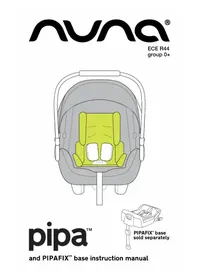
USER MANUAL Pipa Lite Nuna
Designed around your life
Canada Motor Vehicle Safety Standards have defined a system for installing Infant child restraints in vehicles. The system is called UAS* (Universal Anchorage System).
*UAS may be used IN PLACE of vehicle belt ONLY if vehicle is equipped with UAS anchor points. Please refer to vehicle owner's manual for UAS locations.
Contents
English (EN)
Information 4
Warnings 5
Parts List 12
Feature Overview 14
Child Requirements 18
Changing Harness Position 20
Securing Child in Carrier 24
Installation Instructions 28
Cleaning and Maintenance 42
Warranty and Service 43
French (FR) 45-94
Information
Model Name:
Model Number:
Manufactured Date:
Register Your Infant Restraint
Please fill in the above information. The name, model number and the manufactured date can be found on a label underneath your infant restraint. Fill out the prepaid registration postcard attached to the seat cover and mail it today.
Infant child restraints could be recalled for safety reasons. You must register this restraint to be reached in a recall. Send your name, address, and the restraint's model number and manufacturing date to:
Nuna Canada
2520 Av Marie-Curie
St-Laurent, QC, H4S 1N1
1-800-667-4111
Or, register online at www.nunababy.ca
Contact
For replacement parts, service, or additional warranty questions, please contact our customer service department.
Phone: 1-800-667-4111
or email: info@nunababy.ca
WaRNING
DEATH or SERIOUS INJURY can occur
Read all instructions before use of the infant child restraint.
Keep instructions for future use.
Use the bottom of the base for storage of the manual.
Read the instruction manual for this infant child restraint before use or installation in a vehicle. In addition, read the vehicle owner's manual for information on infant child restraint installation. Failure to the follow the infant child restraint instruction manual or the labels on this product can result in DEATH or SERIOUS INJURY.
Do not allow anyone who has not read the instruction manual to install or use this infant child restraint.
Child requirements:
1 Weight: 1.8 kg to 15.9 kg (4-35 lb)
2 Height: Less than 81 cm (32 in.)
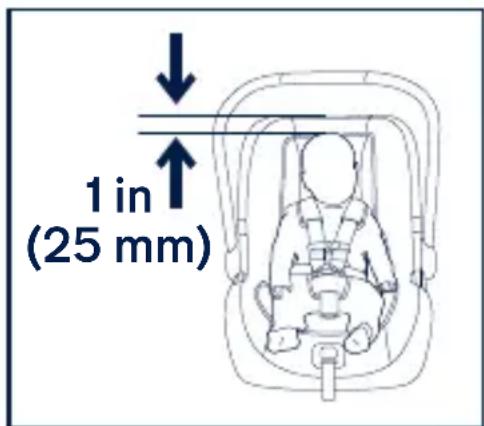
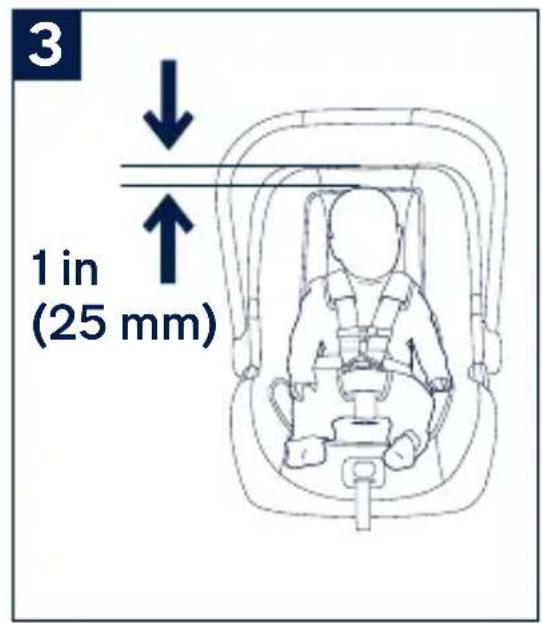
3 Top of child's head is at least 25 mm (1 in.) below top of carrier.
4 Use infant insert only if it is necessary to achieve a snug fit for infants less than 5 kg (11 lb).
This infant child restraint can ONLY be used in a rear facing position on a forward facing vehicle seat with appropriate UAS or seat belt system.
According to accident statistics, children are safer when properly restrained in rear vehicle seating positions, rather than in the front of the vehicle.
Never leave child unattended.
Never leave infant child restraint and base or other item unbelted or unsecured in your vehicle. Any unsecured item when in motion can harm occupants.
DO NOT allow carrier or handle to contact interiorofvehiclewheninstalledonbase.
Always check buckle and other parts for hot surfaces. An infant child restraint left uncovered in the sun could burn a child. Cover with blanket if leaving in car.
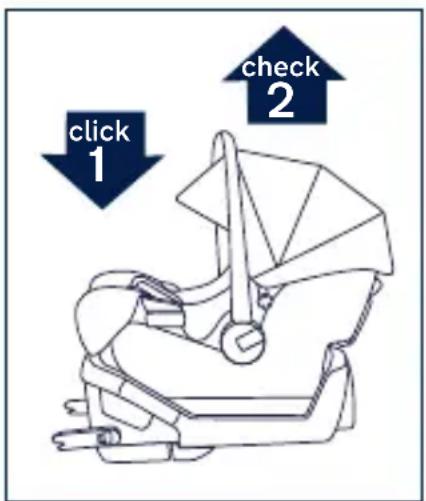
Always check carrier to base connection.
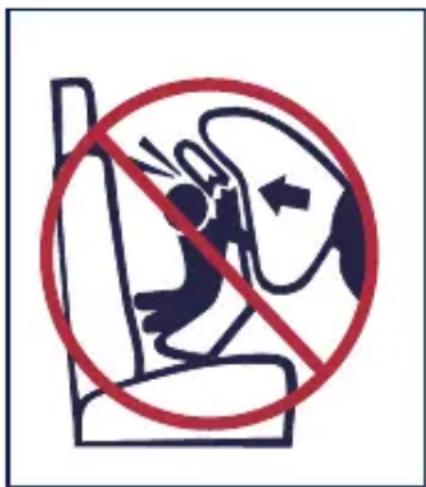
Never install infant child restraint in a vehicle seat with a front airbag. DEATH or SERIOUS INJURY may occur. Refer to your vehicle owner's manual for side airbag warnings and information.
Do not use infant child restraint if any harness straps are cut, frayed or damaged.
Do not use infant child restraint if base or carrier are damaged in anyway.
Replace this infant child restraint if it has been involved in a car accident, even if it was minor and there appears to be no damage to the infant child restraint.
Never modify any part of the infant child restraint. Only disassemble infant child restraint if instructed to by instruction manual.
Do not use any products or accessories in conjunction with infant child restraint not supplied with infant child restraint.
Do not use this infant restraint system longer than 7 years from the date of manufacture or date of purchase (proof of purchase required). Please keep a copy of the receipt with this user guide for your records and for future reference. Check the manufacturer's label 'do not use after' date on the underside of the carrier and base.
Never use clothing or blankets that interfere with providing a properly tightened harness. An unsecured child can come out of the restraint during a crash. Place blankets over child AFTER harness has been properly tightened.
FALL HAZARD: Child's activity can move carrier. NEVER place carrier on counter tops, tables, or any other elevated surface.
SUFFOCATION HAZARD: Infant carrier can roll over on soft surfaces and suffocate child. Never place carrier on beds, sofas, or other soft surfaces.
STRANGULATION HAZARD: Children have STRANGLED in loose or partially buckled harness straps. Fully restrain the child even when carrier is used outside the vehicle.
A snug strap should not allow any slack. It lies in a relatively straight line without sagging. It does not press on the child's flesh or push the child's body into an unnatural position.
Never place carrier on top of a shopping cart. Carrier will not be properly secured and could fall.
Do not use the infant child restraint if it is damaged or broken.
Only use with Nuna strollers or appropriate Nuna adapters designed for use with other strollers.
NEVER LEAVE AN INFANT CHILD RESTRAINT AND BASE UNSECURED IN YOUR VEHICLE. An unsecured infant restraint or base can be thrown around and may injure occupants in a sharp turn, sudden stop or crash. Remove it or make sure that it is securely belted in the vehicle.
If not using UAS, make sure unsecured UAS connectors are properly stored on base.
NEVER USE INFANT RESTRAINT AND BASE IF IT HAS DAMAGED OR MISSING PARTS. DO NOT use a cut, frayed or damaged infant restraint harness, vehicle seat belt or UAS belt.
THIS INFANT CHILD RESTRAINT CONFORMS to Canada Motor Vehicle Safety Standard 213 and 213.1, and is certified for use in motor vehicles and aircraft.
BE SURE handle locks into position before lifting carrier.
DO NOT place carrier near a window where cords from blinds or drapes can strangle a child.
This infant restraint system is not to be used in vehicles that do not have seat belts or UAS.
This restraint system can only be used in these classes of vehicles: passenger cars, multi-purpose passenger vehicles and trucks that have vehicle lap/shoulder belts and UAS.
This infant child restraint can be properly installed in most vehicles. However, there are some vehicle belts and vehicle seats that are not safe for use with this restraint.
Here are some vehicle belt issues:
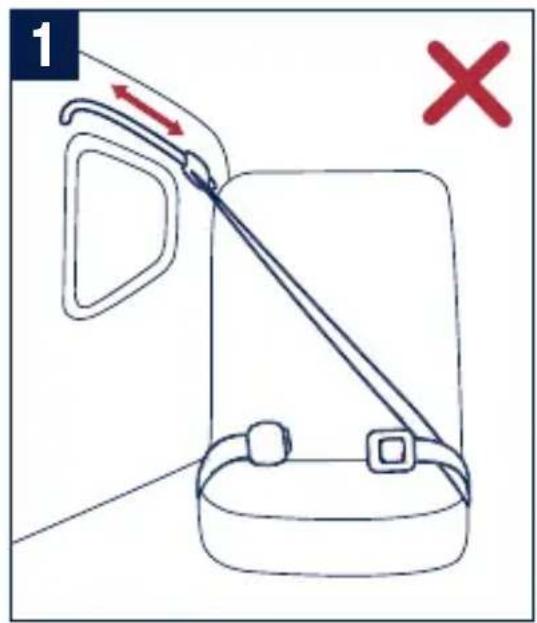
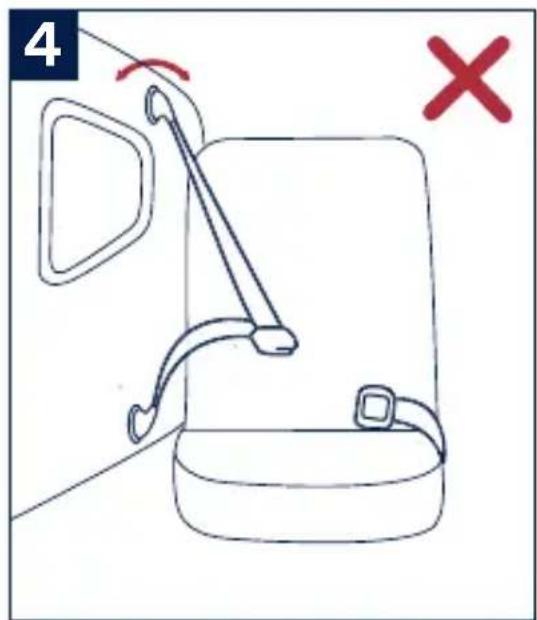
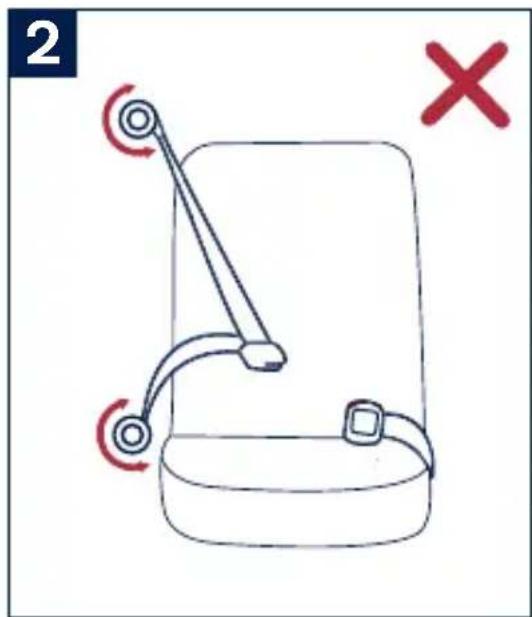
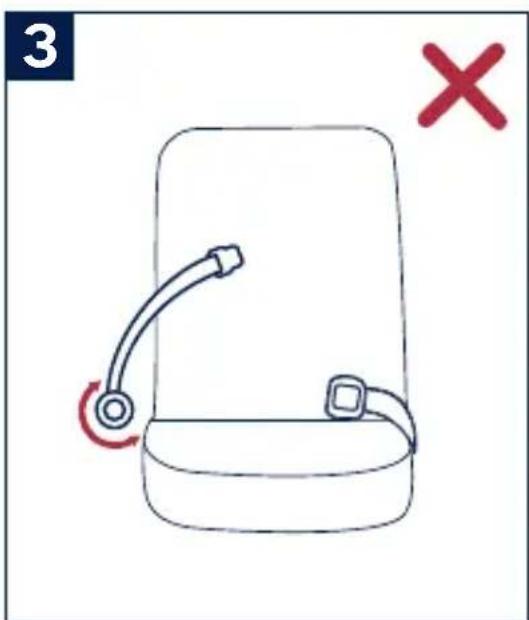
1 - Motorized / Automatic shoulder belts. These should not be used unless the shoulder belt can be removed, the lap belt is locked and use is allowed by the vehicle manufacturer.
2 - Lap / Shoulder belt both with retractors. If allowed by the manufacturer, the lap belt only may be used to secure the infant child restraint in accordance with this manual and the vehicle's manual.
3 - Lap Belt only with emergency locking retractor (ELR). This belt locks in a crash or sudden stop and should only be used with a belt shortening clip. Contact your vehicle manufacturer if needed.
4 - Door mounted lap or shoulder belts can not be used to install this infant child restraint.
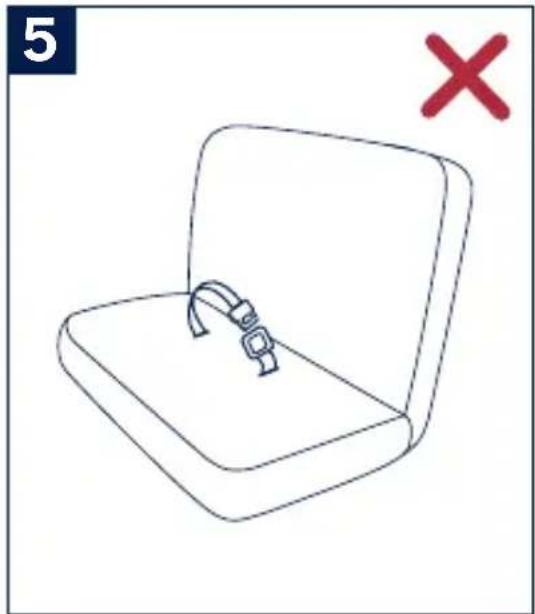
5 - Lap belt forward of the seat bight (Where the seat bottom and back meet) should not be used to install this infant child restraint.
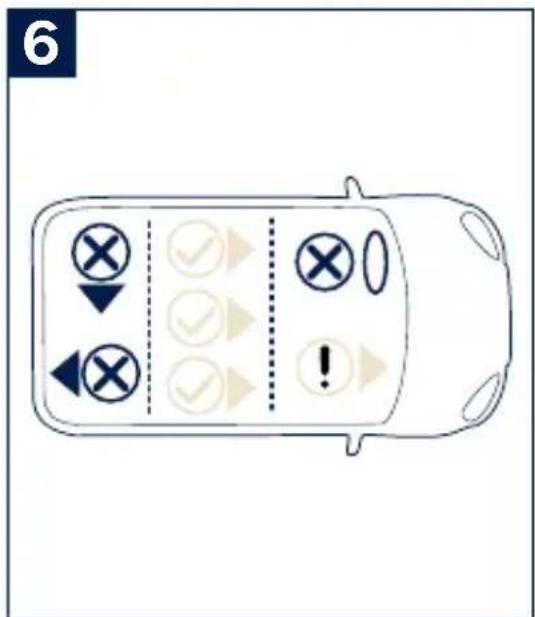
6 - Only install infant child restraint in a forward facing vehicle seat. Never install in a seat that faces the rear or the side of the vehicle.
Refer to your vehicles owner's manual for detailed information about vehicle belts, UAS (lower anchors), and preferred restraint installation positions.
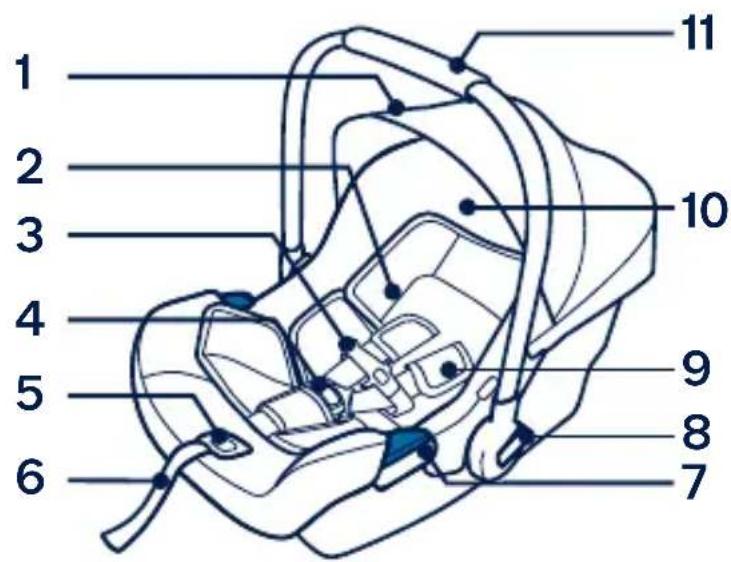
Parts List
1 Canopy
2 Infant Insert
3 Chest Clip
4 Buckle and Crotch Belt
5 Adjuster Button
6 Adjuster Strap
7 Lap Belt Guides (Blue)
8 Handle Button
9 Shoulder Pads
10 Seat Cover
11 Handle
12 Shoulder belt Guide (Blue)
13 Stroller Release Button
*only used with infant child restraint adapters
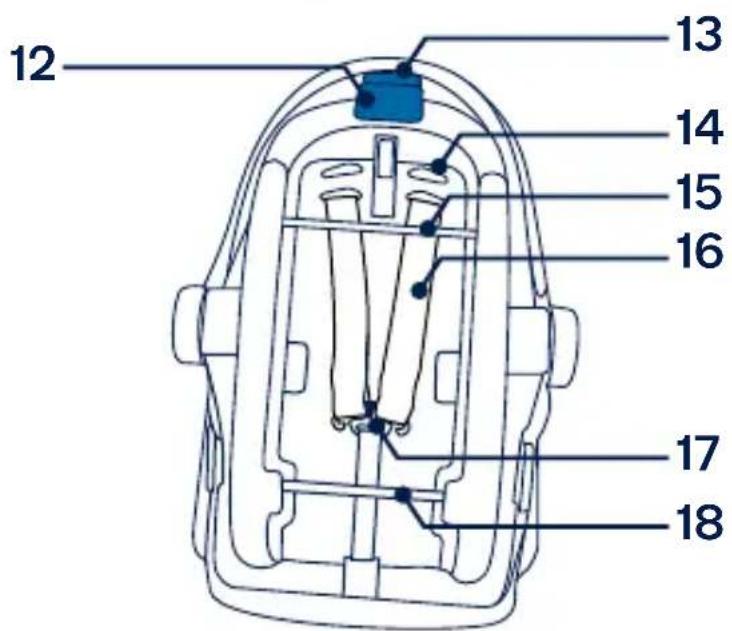
14 Harness Slots
15 Base Attachment Bar
16 Harness Straps
17 Splitter Plate
18 Base Attachment Bar
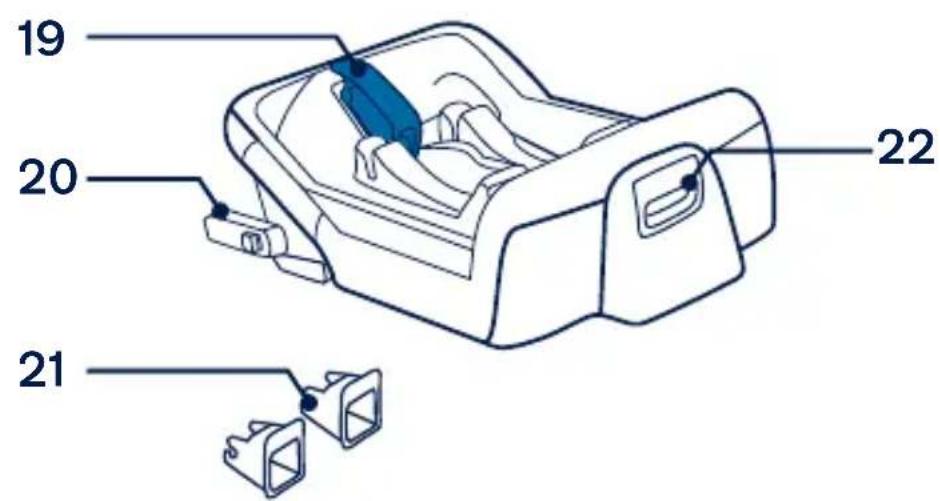
19 Lock off (Blue)
20 Rigid UAS (lower attachments)
21 Rigid UAS Guides
22 Carrier Release Button
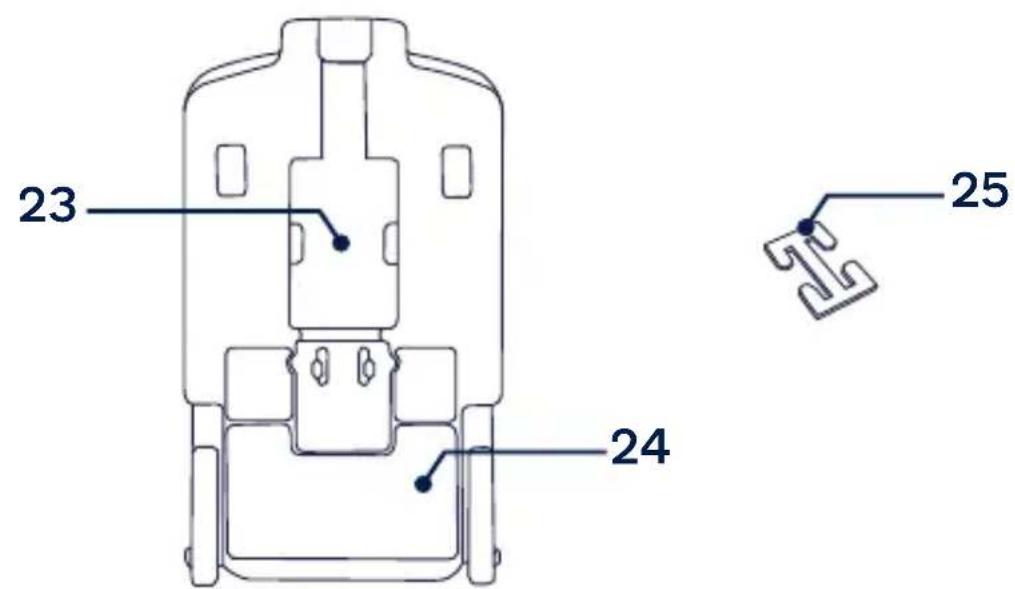
23 Instruction Manual Storage
24 Base Support
25 Locking Clip
Feature Overview
Dream Drape
Z
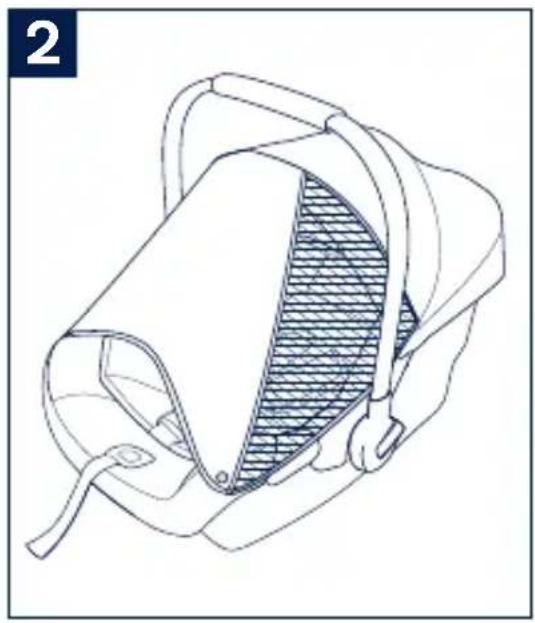
1 - Unzip the zipper behind the front canopy bow.
2 - Pull the dream drape out of the compartment.
Attach the magnets on each corner to the front of the infant child restraint.
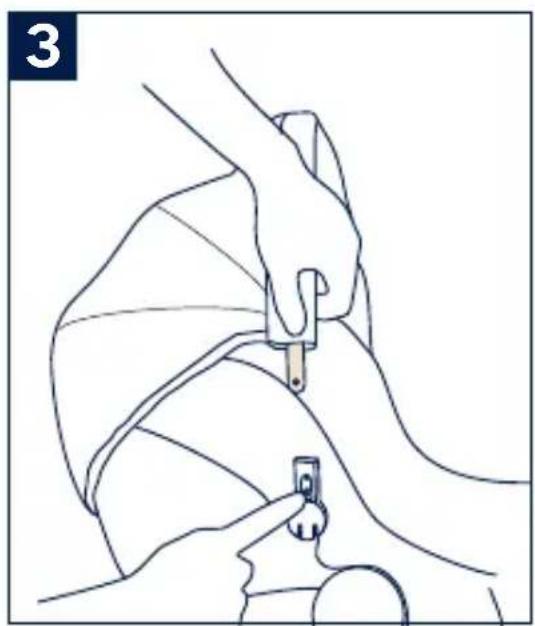
Canopy Removal
3 - To remove the canopy, press the button in the canopy mount and pull the canopy bow out.
Seat Pad Removal
4 - Pull the fastening pieces underneath the edge of the seat out.
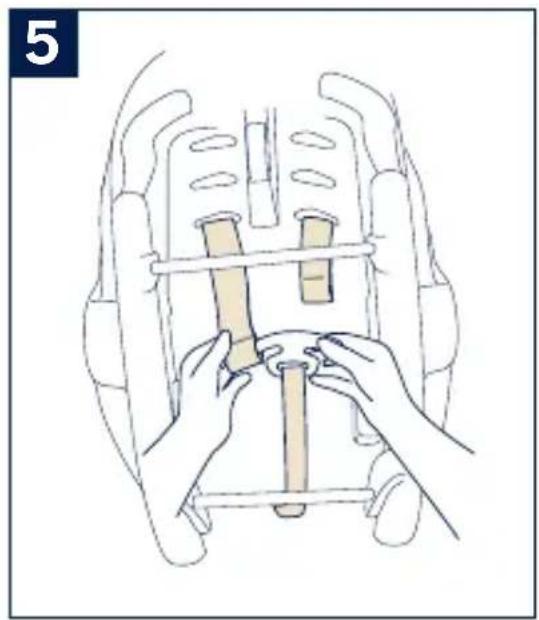
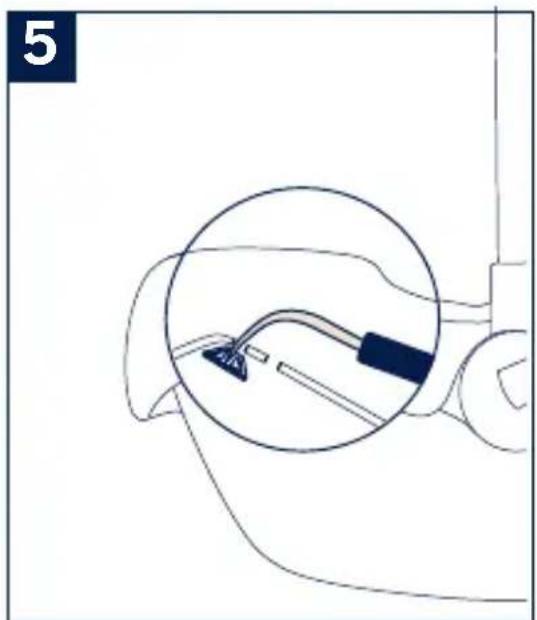
5 - Remove the harness from the splitter plate.
6 - Remove the seat pad from the adjustment button as shown.
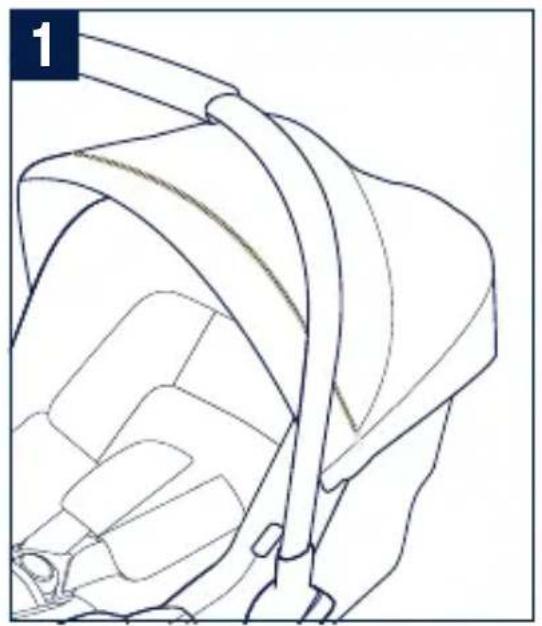
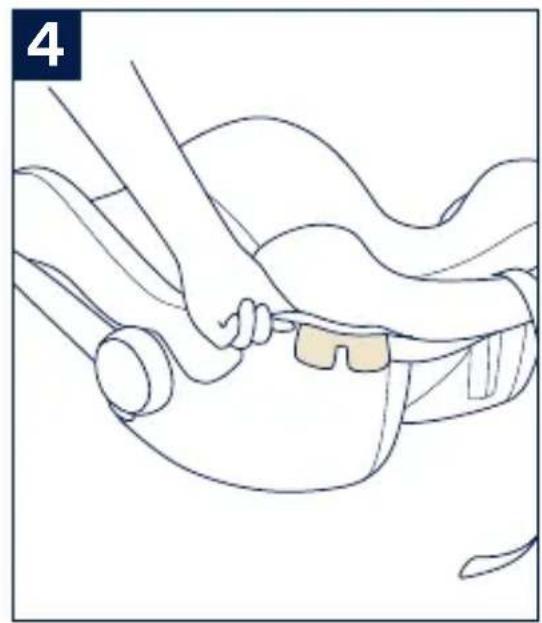
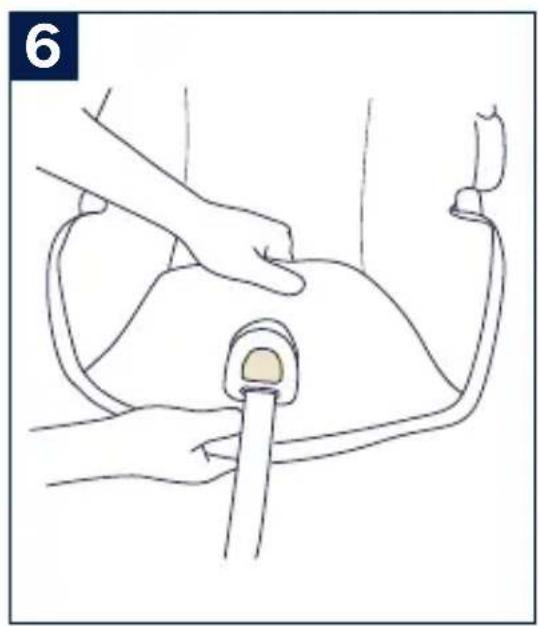
1 - Remove the seat pad from the stroller release button as shown.
*Feature used only with infant child restraint adapters. Infant child restraint adapters for strollers sold separately.
Shoulder Pads
2 - Shoulder pads are removable and are not necessary for safety.
Handle Adjustment
3 - The carrier handle can be adjusted to 3 positions.
Position for car, hand or stroller transportation. (Position 1)
Baby chair position. (Position 2)
Rocking position. (Position 3)
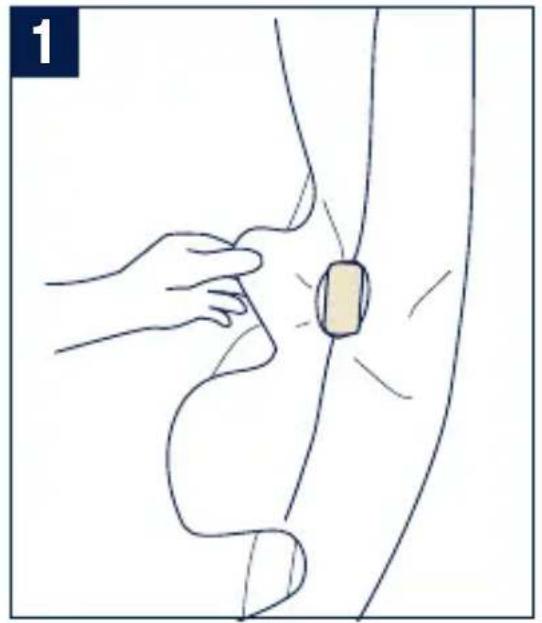
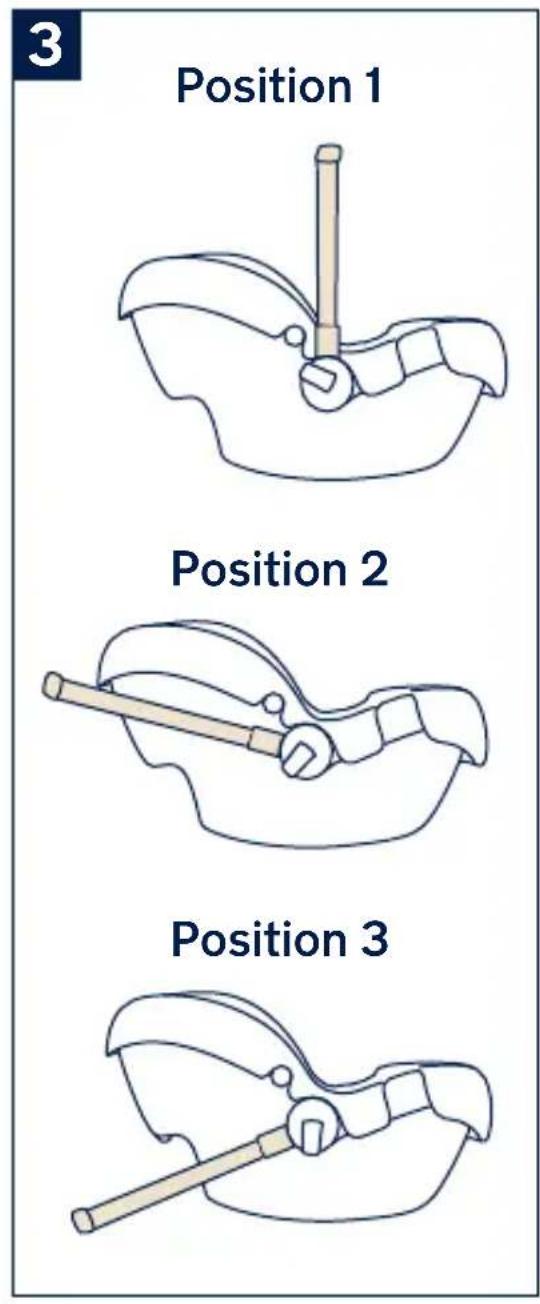
1 - To adjust the handle position, squeeze handle buttons on both sides and rotate.
2 - Rotate handle until it clicks into any of the 3 positions. In the vehicle, the handle MUST BE PLACED (LOCKED) IN POSITION 1 ONLY.
Be sure handle is locked in the carry position before lifting carrier by handle. An unlocked handle could move unexpectedly, causing injury to child.
Handle MUST NOT contact the vehicle interior when installed.
Child Requirements
3 - Weight: 1.8 to 15.9 kg (4 to 35 lb). Height: less than 81 cm (32 inches). Top of child's head is at least 25 mm (1 in.) below top of carrier.
Infant insert
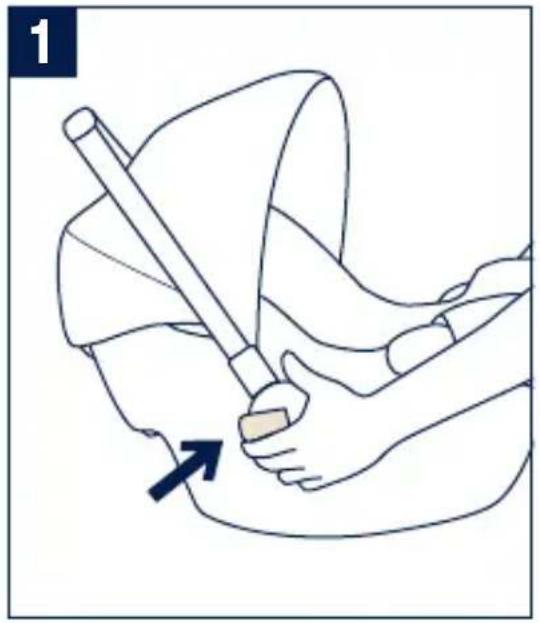
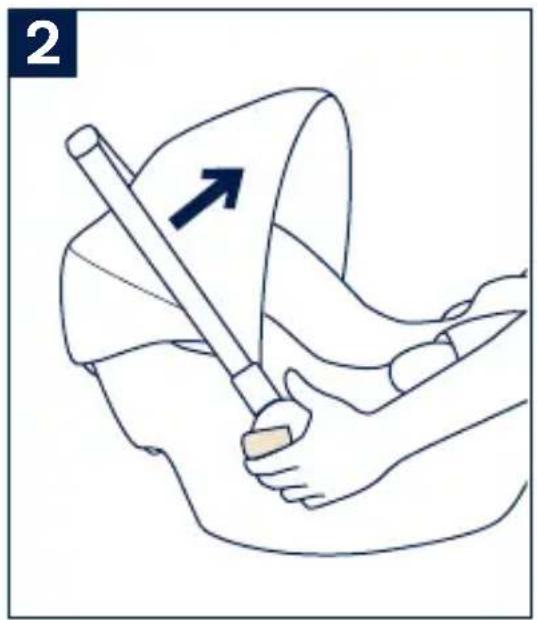
4 - The infant insert can be used as necessary to provide a snug fit for small babies. The low birth weight pillow (shown in green) can be used in the infant insert for even smaller babies, but should be removed once unnecessary. The low birth weight pillow should be removed once a snug fit can be achieved without it, at approximately 5 kg (11 lb).
Changing Harness Position
Shoulder Belts
#
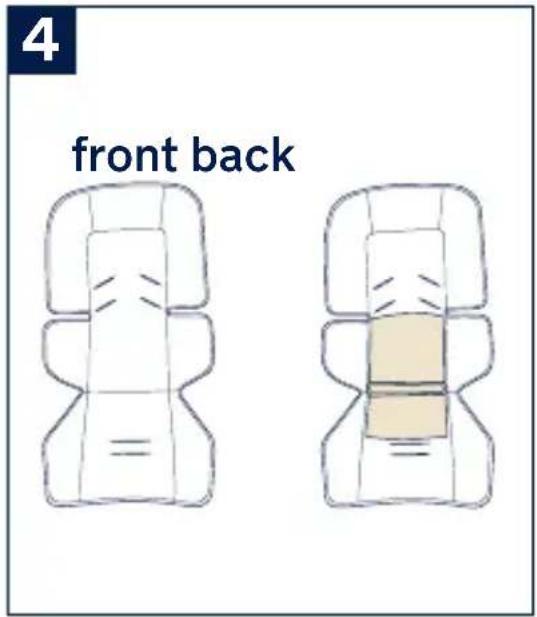
1 - With child placed in infant child restraint, identify harness slots at or just below shoulder level.
2 - With child removed, loosen harness.
3 - Turn carrier over and remove one harness loop from metal splitter plate.
4 - Pull loose end of harness loop out through slot and place in correct slot.
5 - Re-attach to splitter plate.
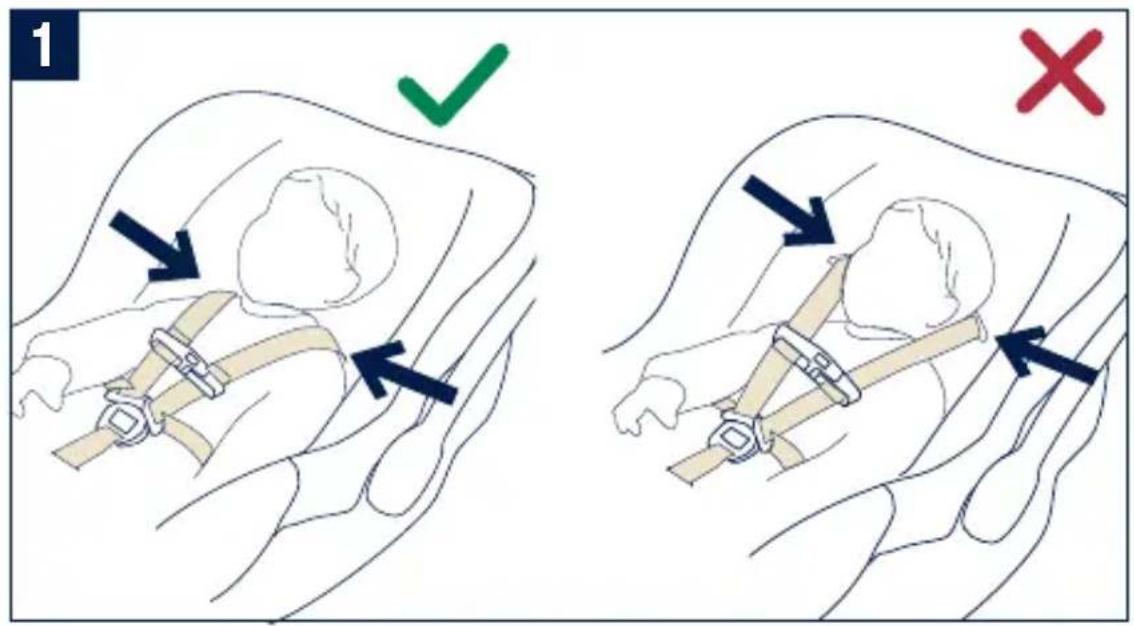
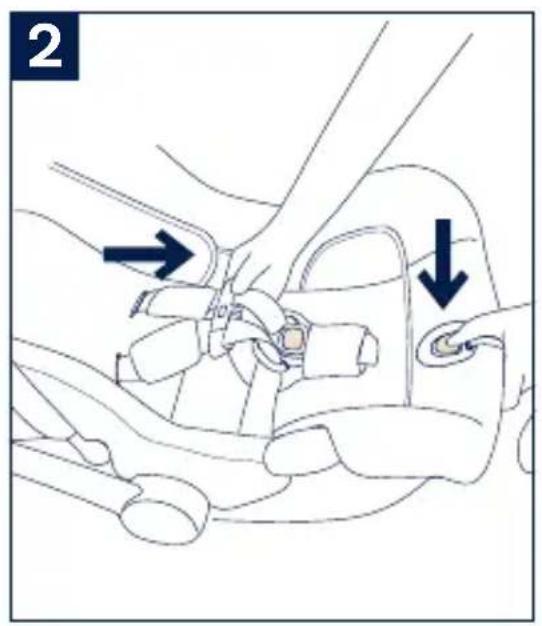
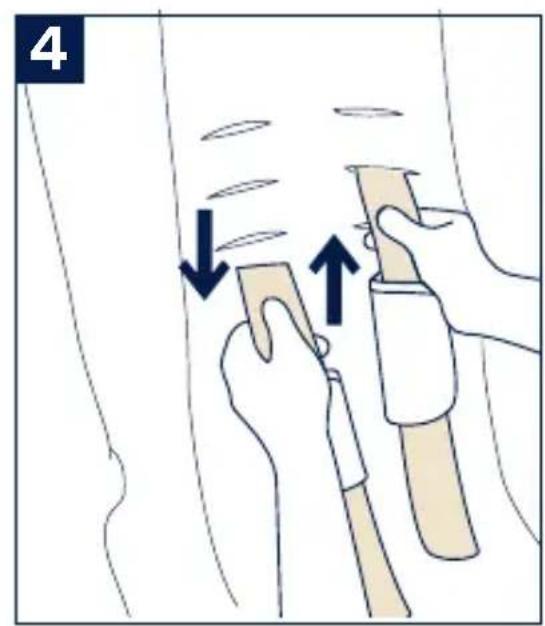
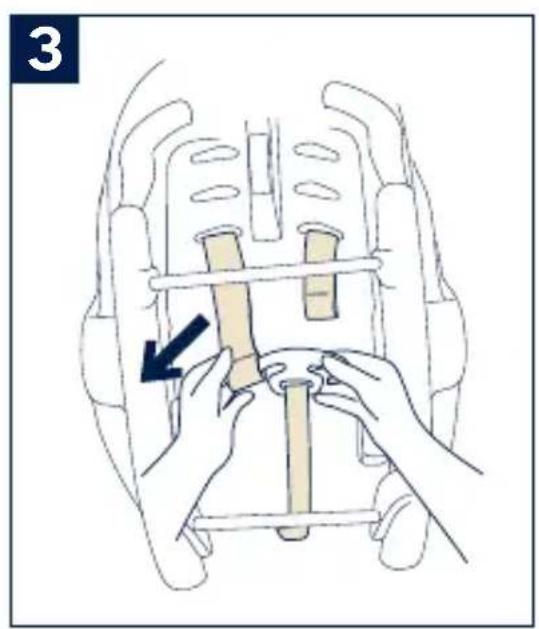
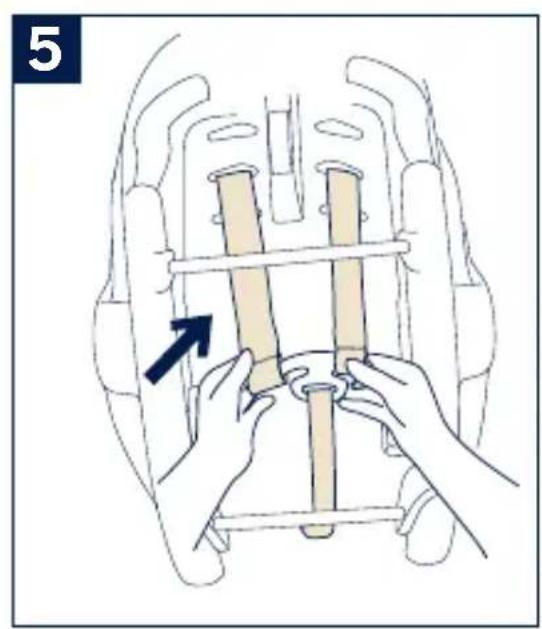
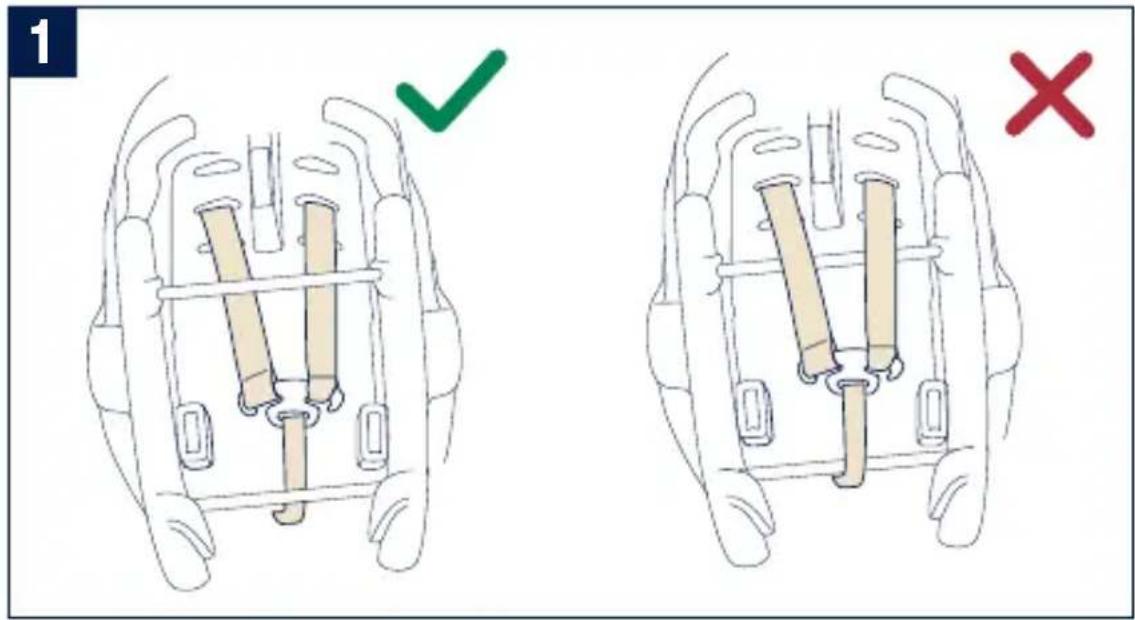
1 - Always place harness between seat and attachment bars.
Repeat process for second shoulder harness strap.
Crotch Belts
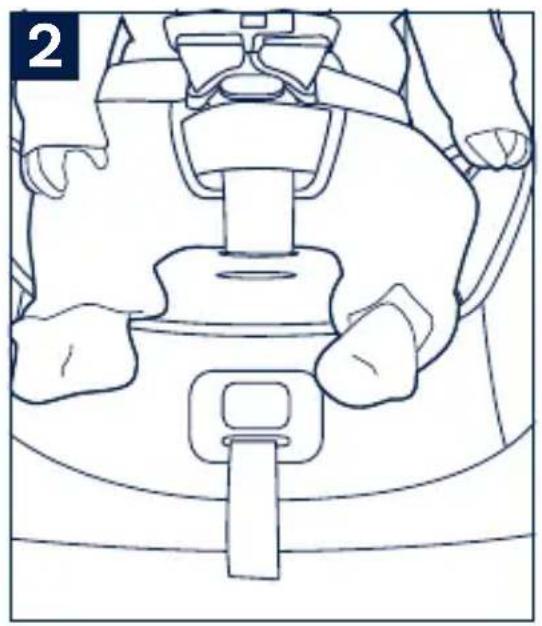
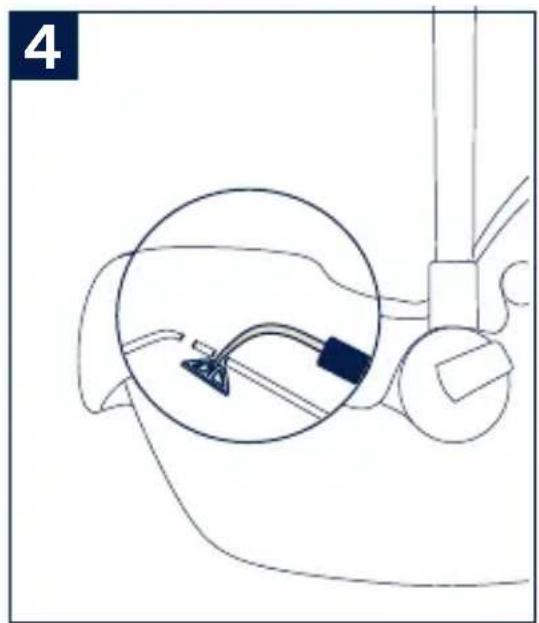
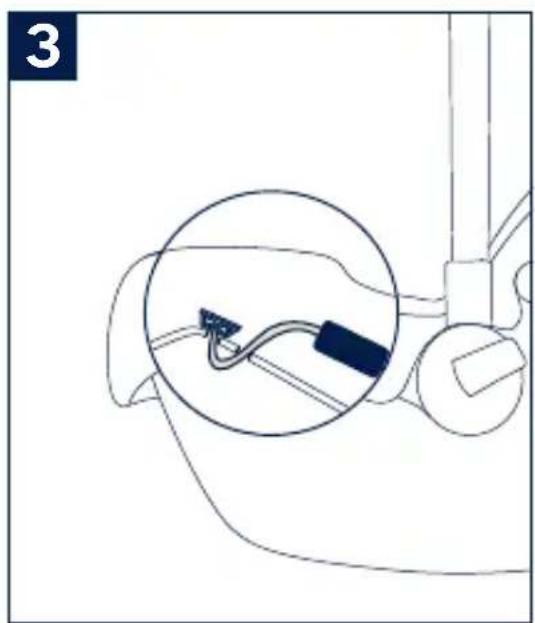
2 - Identify crotch belt slot that will achieve a snug fit. Change crotch belt slot if necessary. Three crotch belt positions are provided to achieve a snug fit as your baby grows. Choose a position that works best for your child.
3 - This position provides the smallest fit. Crotch belt is threaded through rear slot and up through front slot as shown.
4 - This position provides a medium fit. Crotch belt is threaded into rear slot as shown.
5 - This position provides the largest fit. Crotch belt is threaded through front slot as shown.
Securing Child in Carrier
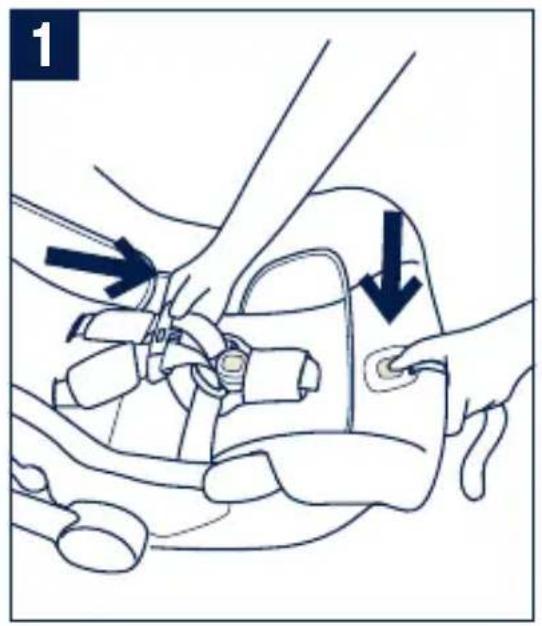
1 - Loosen harness by pressing on adjuster button while pulling on the harness straps.
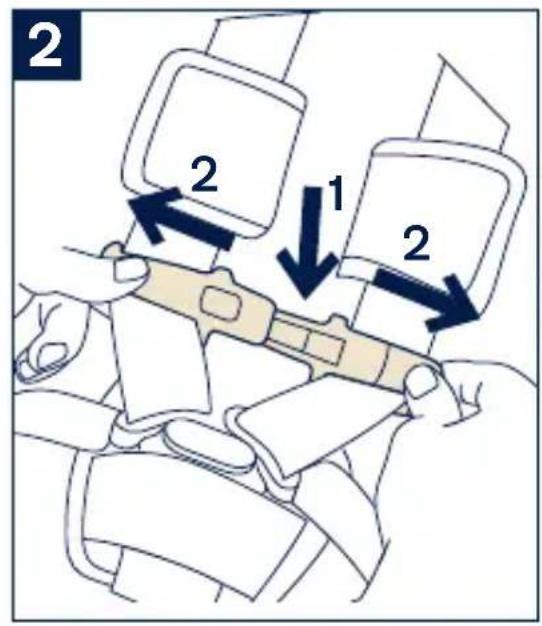
2 - Press button to release the buckles. Separate chest clip and spread harness straps apart.
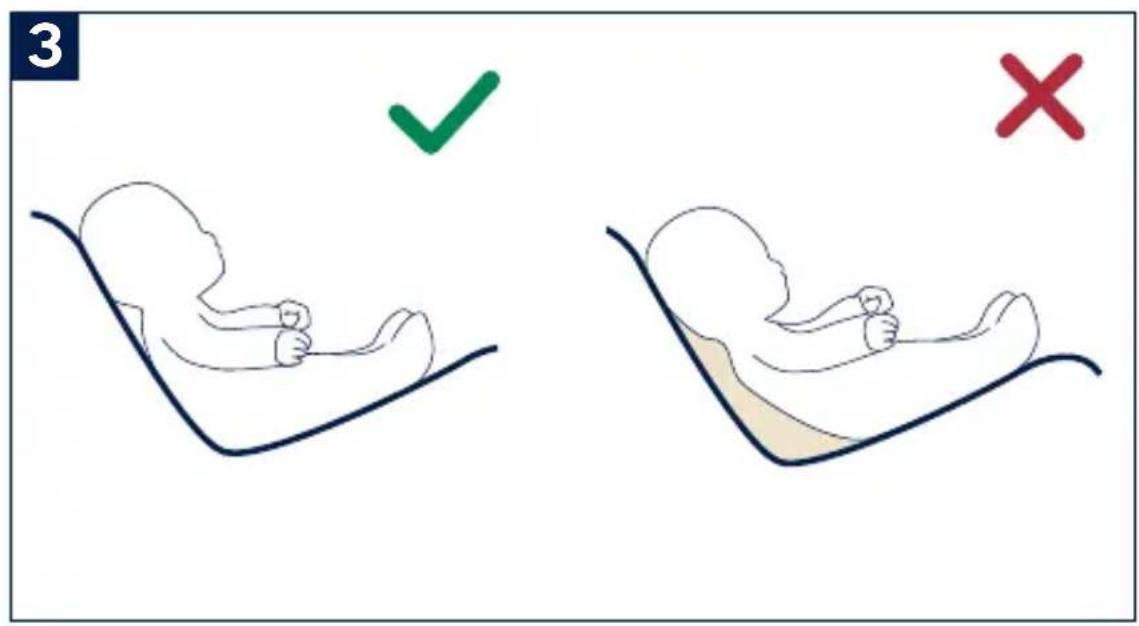
3 - Place child in carrier in seated position, resting the child against both the back and bottom of the seat.
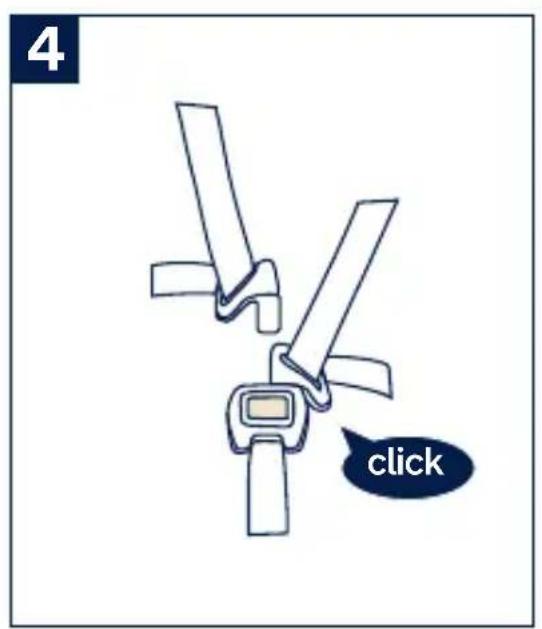
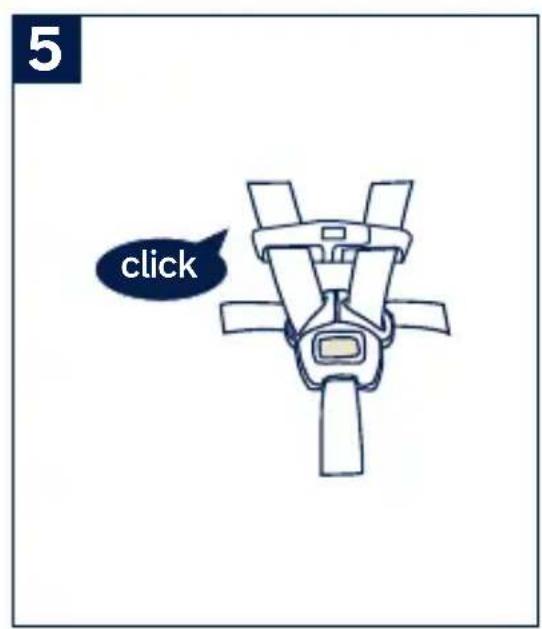
4 - Gently guide child's arms through harness loops. Insert buckle tongues into buckle. Listen for clicks. Pull on buckle to verify it is latched.
5 - Snap the chest clip together and temporarily slide towards buckle for tightening of harness.
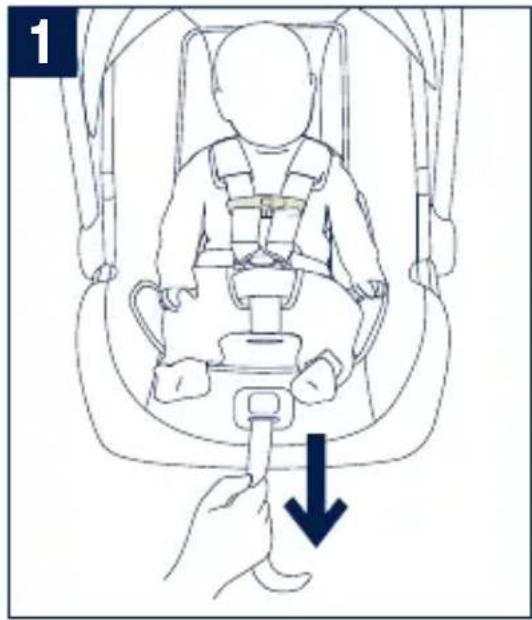
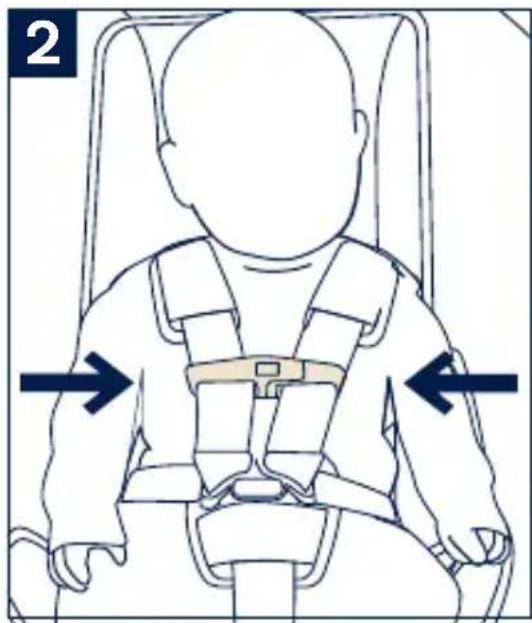
1 - Tighten harness by pulling on the adjuster strap. Pull any excess harness webbing through the buckle towards the child's shoulder and pull on the adjuster strap. This may need to be repeated several times for proper fit.
Verify that the harness is snug around the child's waist and shoulders.
2 - Position the chest clip so it is at child's armpit level.
Check that Child is Secure
Buckle is fastened.
Harness straps are not twisted.
□ Harness is snug - A snug harness cannot be pinched, and should not allow any slack.
Chest clip is at level with armpits.
If harness slots are not AT or just BELOW shoulder height, child could be ejected in a crash or sudden stop. If harness slots need to be moved, see section changing harness slot position. (Page 18)
Make sure that nothing interferes with the harness. Make sure harness is snug around child and lays flat. Serious injury or death could occur to a child that is not secured properly.
If child is not secured properly, child could be ejected in a sudden stop or crash, resulting in serious injury or death.
Installation Instructions
Base Install - Rigid UAS (Lower Attachments)
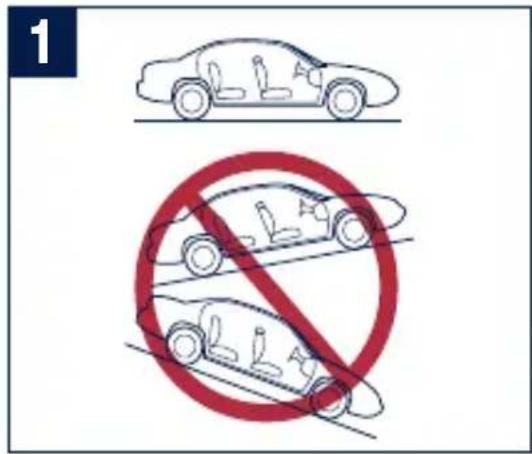
1 - Place vehicle in park and on level ground.
2 - If necessary, install plastic connector guides on vehicle UAS lower anchor bars
3 - Hook Rigid UAS (lower attachments) onto vehicle UAS lower anchor bars. Confirm proper installation by pulling on the base AND also seeing that green is indicated on the connectors.
The Rigid UAS (lower attachments) must be attached and locked onto the vehicle anchor points.
4 - Adjust the angle of the base. A rolled up towel or foam pool noodle may be used to help adjust the amount of recline. Angle is correct when blue line on carrier is levelled with ground.
Check the Installation
Place carrier in the base and ensure blue line is levelled with ground.
It is acceptable to install with both UAS (lower attachments) and the vehicle belt.
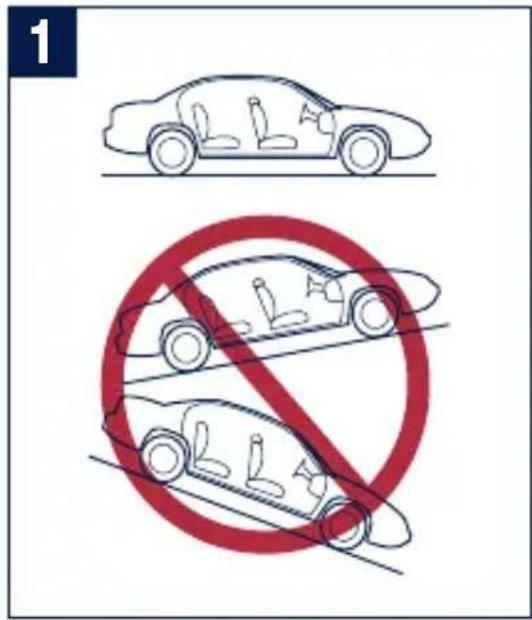
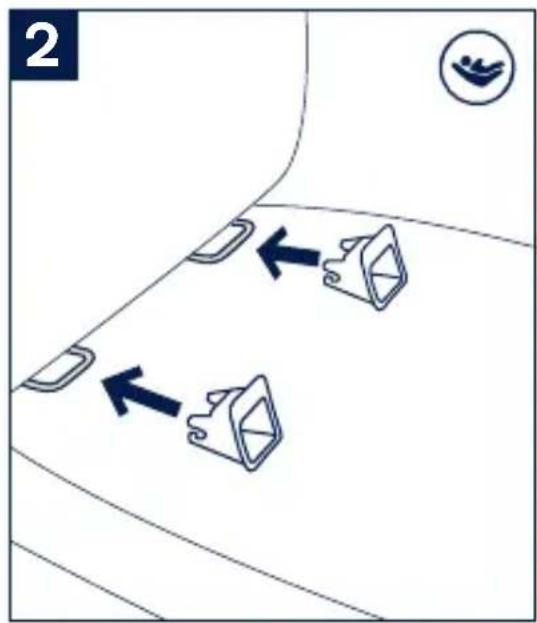
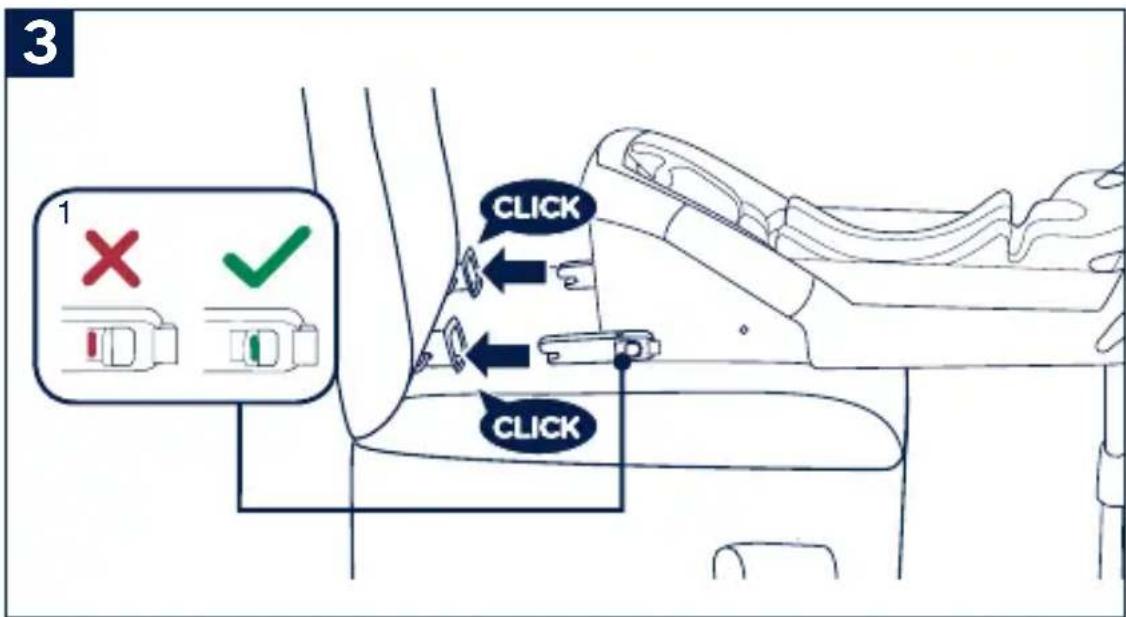
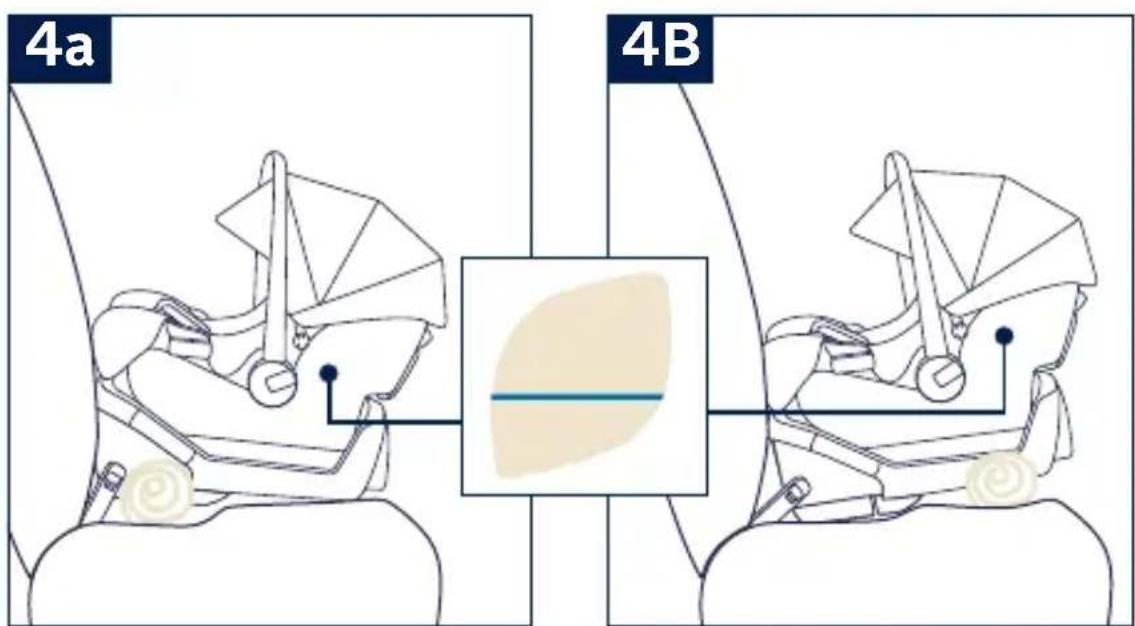

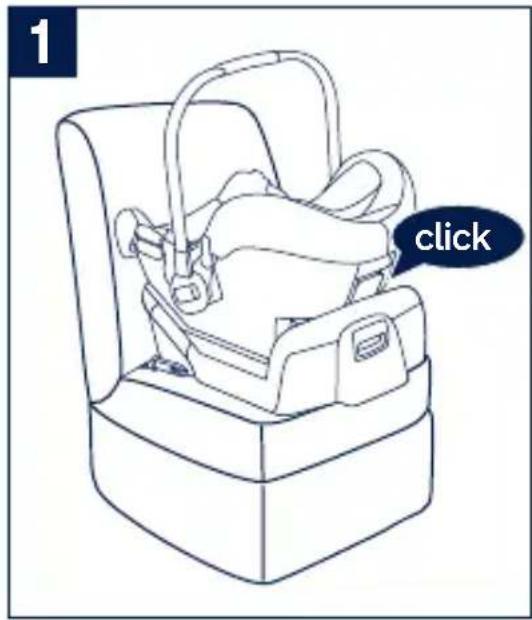
1 - After child is properly secured in carrier, press carrier on base and listen for a click. Pull on carrier to verify installation.
DO NOT allow carrier or handle to contact interior of vehicle.
Your child may not be protected in the event of a crash or sudden stop if you do not check and verify that it is securely attached.
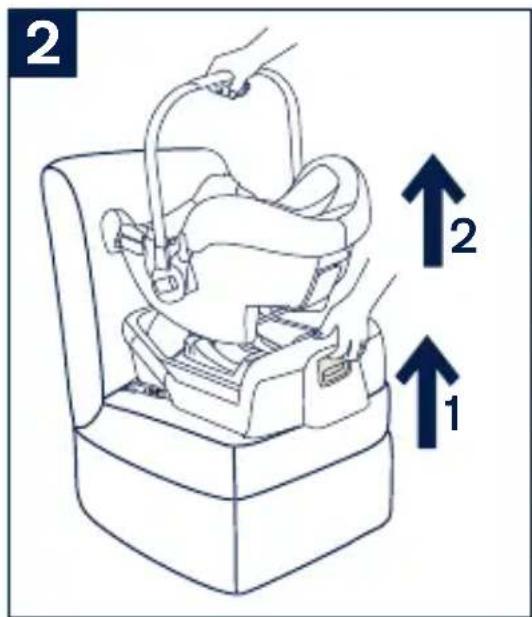
2 - To release the infant child restraint, pull the infant child restraint up while squeezing the infant child restraint release button located on the base.
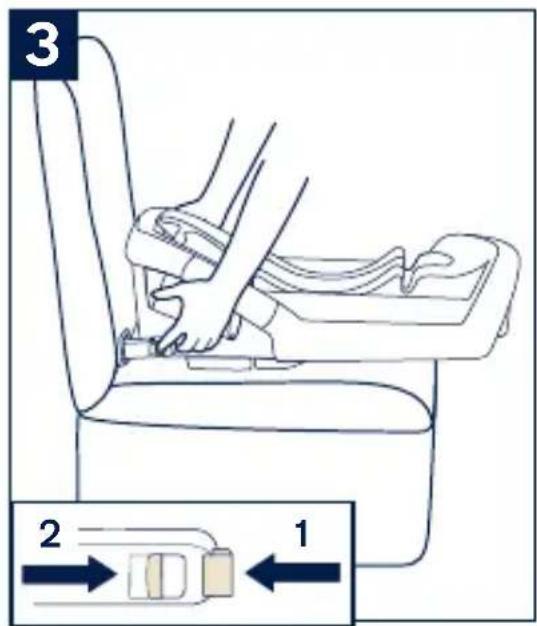
3 - To remove the base, first push the basetoward the vehicle seat with a light force whilesqueezing the Secondary and Primary RigidUAS Release Buttons.
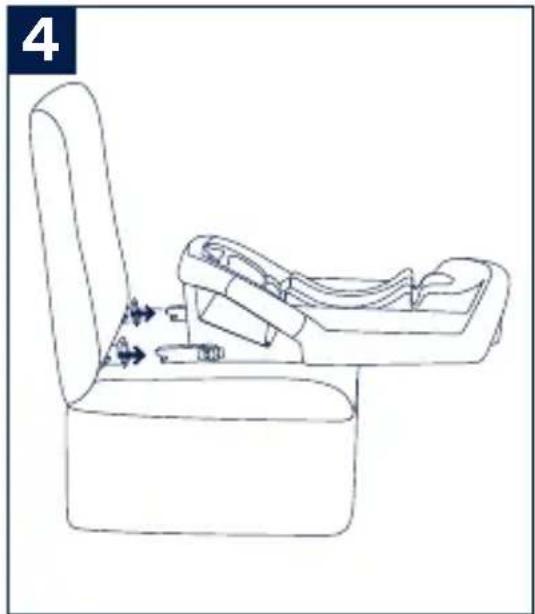
4 - Then pull the base out.
*For ease of release, push the secondary button first, then the primary button.
Base Install - Lap & Lap/Shoulder
1 - Place vehicle in park and on level ground.
2 - Route the vehicle belt through the opening in the base labeled 'Belt Path'.
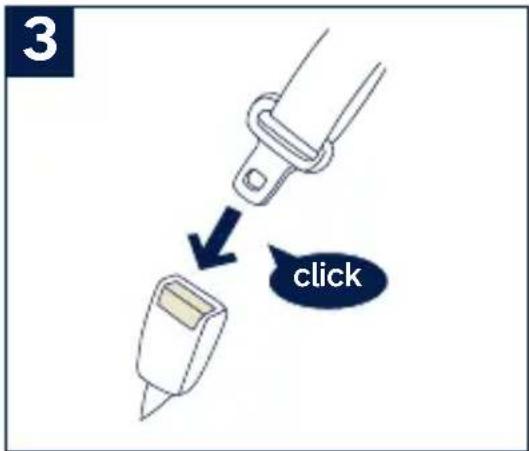
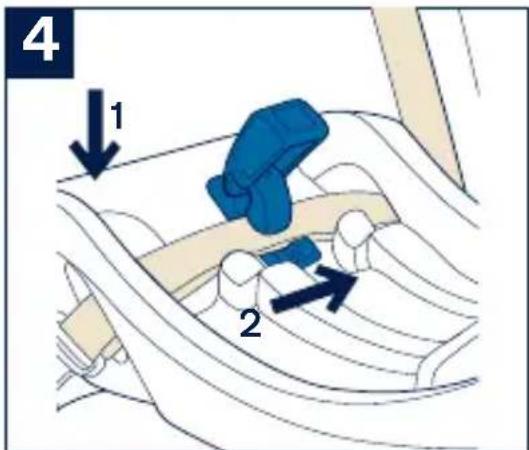
3 - Buckle the vehicle belt. Both the shoulder AND lap belt must be under the blue lock off.
4 - Tighten belt while pressing base into vehicle seat.
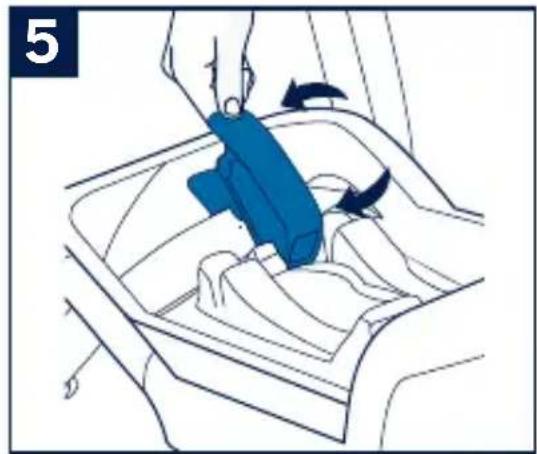
5 - While the shoulder belt is tight, hook the bottom of blue lock off and press to close the lock off on the shoulder and lap belt.
- Vehicle belts must lay flat under lock off.
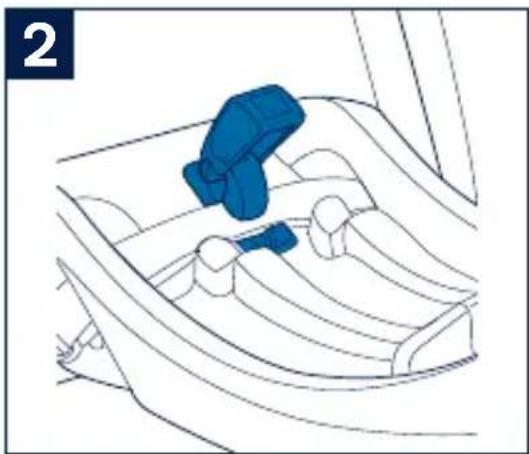
NOTE: IF THE UAS IS NOT BEING USED, THEN IT MUST BE STORED UPWARDS WHEN USING THE LAP/SHOULDER OR LAP BELT METHOD ONLY.
- If vehicle only has a lap belt, then put lap belt under blue lock off.
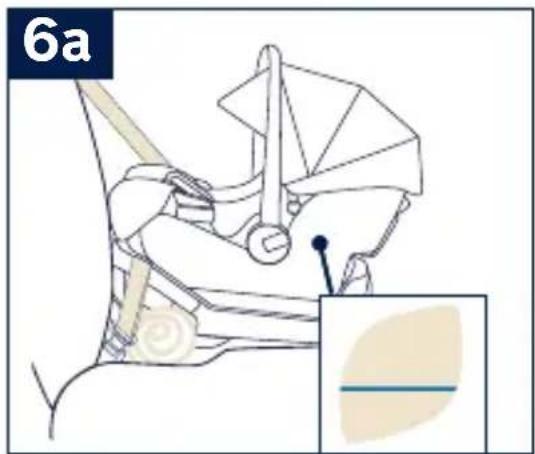
6 - Adjust the angle of the base. A rolled up towel or foam pool noodle may be used to help adjust the amount of recline.
Angle is correct when blue line on carrier is level with ground.

Check the Installation
Belts must be tight.
Place carrier in the base and ensure blue line is levelled with ground.
- Base should not move side to side more than 25mm (1 in.) at belt path.
- Belts and buckles must not interfere with attachment of carrier to base.
□ Vehicle belts must lay flat under lock off.
- It is acceptable to install with both UAS - angle towel/noodle (lower attachments) and the vehicle belt.
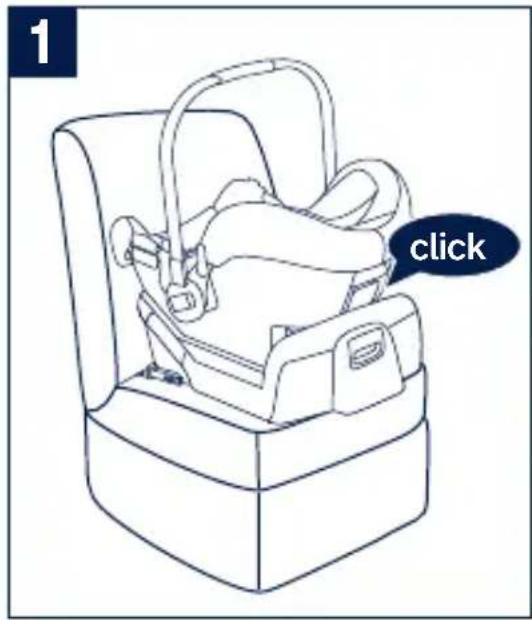
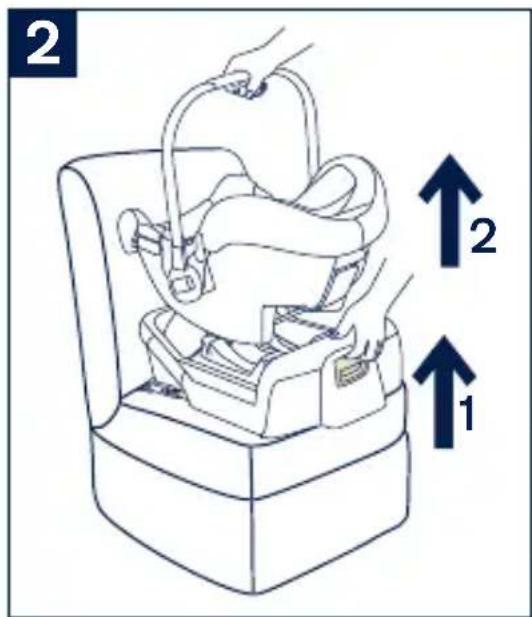
1 - After child is properly secured in carrier, press carrier on base and listen for a click. Pull on carrier to verify proper installation.
Your child may not be protected in the event of a crash or sudden stop if you do not check and verify that the seat is securely attached.
2 - To release the infant child restraint, pull the infant child restraint up while squeezing the infant child restraint release button.
Carrier Only Install
1 - Place vehicle in park and on level ground.
Position carrier so that child is facing the rear of the vehicle.
Only install in a forward facing vehicle seat. (Page 8)
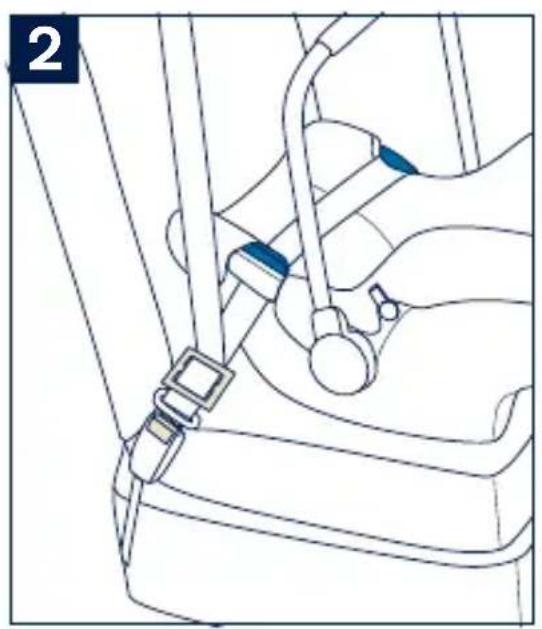
2 - Route the vehicle lap belt under both lap belt guides and buckle the vehicle belt.
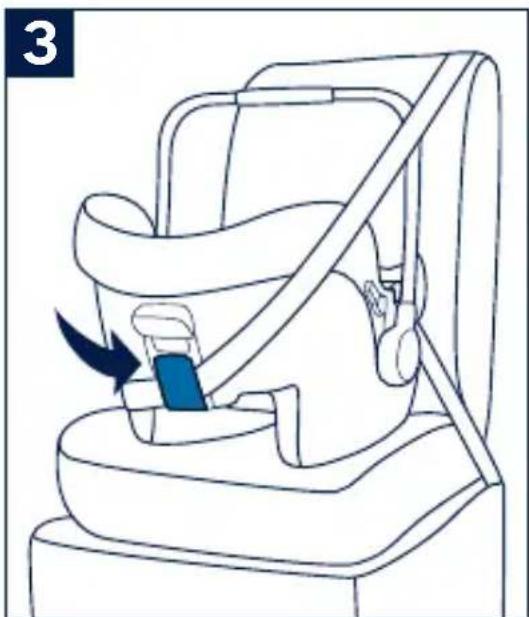
3 - Route the shoulder belt around the back of the carrier passing through the blue shoulder belt guide.
4 - If you are unable to route the shoulder belt around the back of the carrier, use only the lap belt. Allow shoulder belt to lay against vehicle seat back as shown.
5 - If your vehicle only has a lap belt, shoulder belt will not be used.
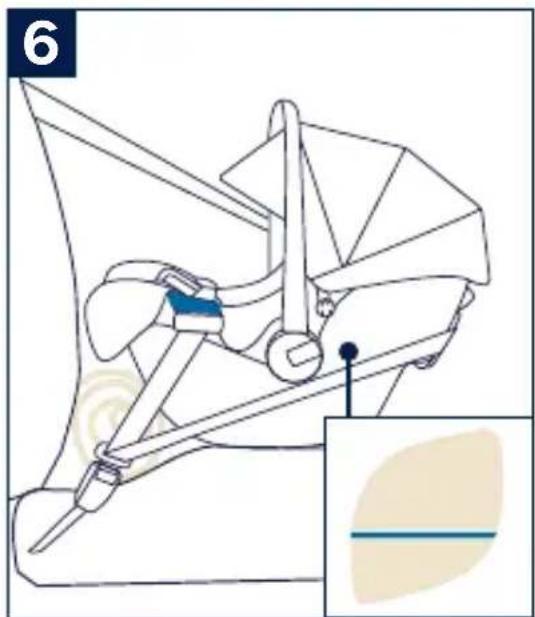
6 - Adjust the angle of the carrier. A rolled up towel or foam pool noodle may be used to help adjust the amount of recline. Angle is correct when blue line on carrier is level with ground.
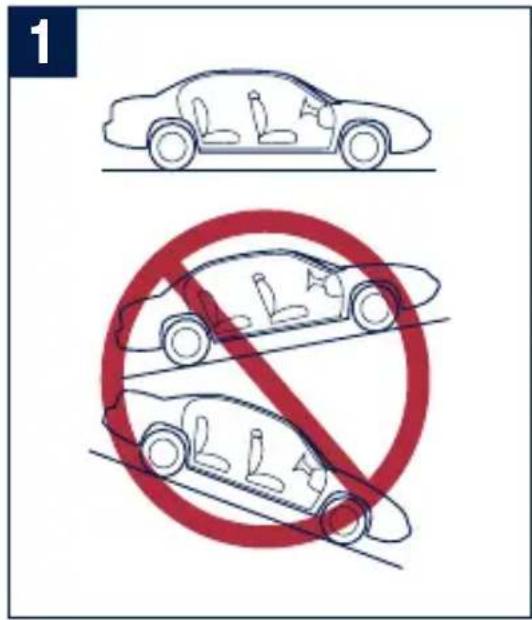
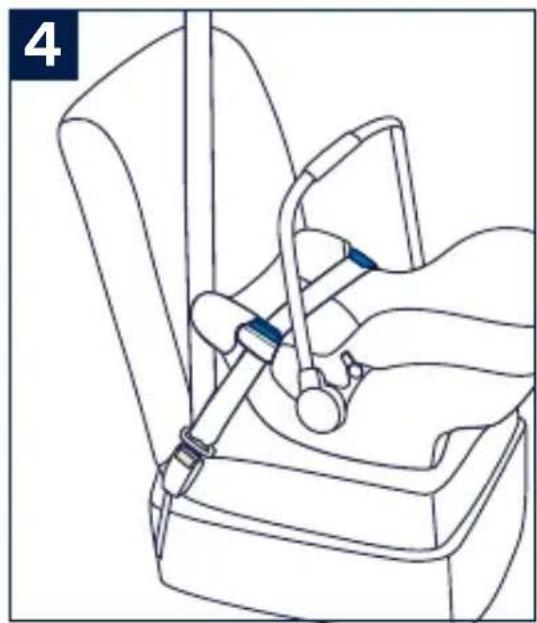
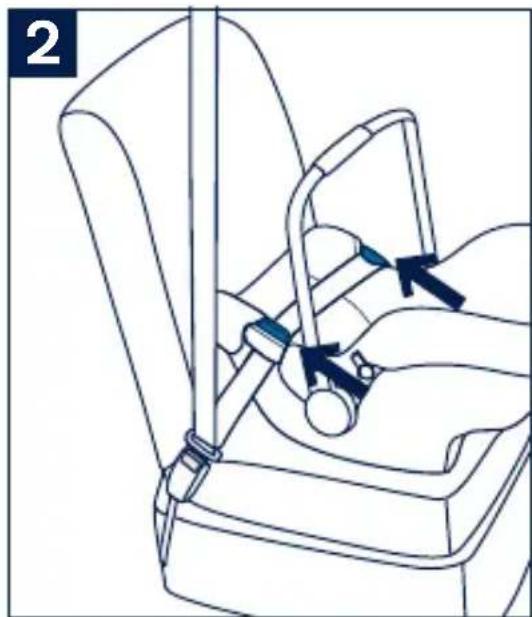
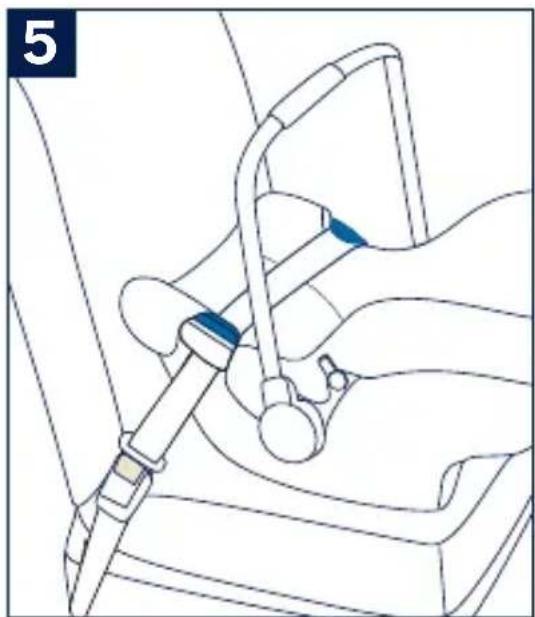
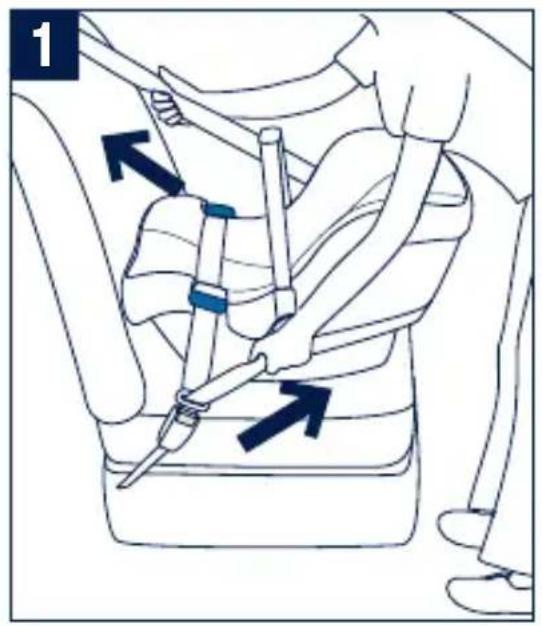
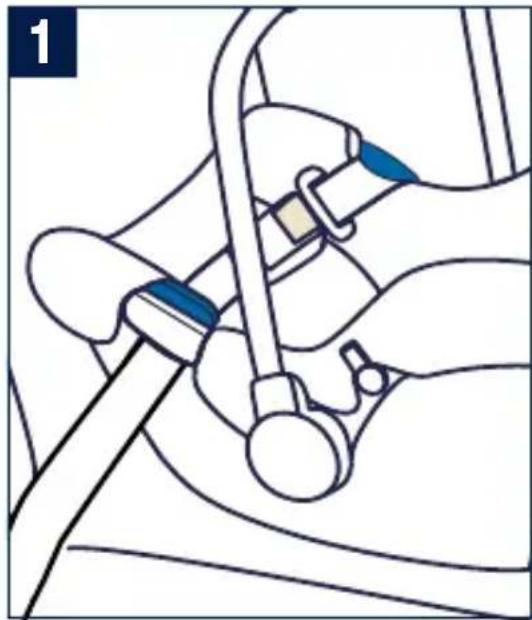
1 - Tighten vehicle belt while pushing carrier firmly into vehicle seat. Lock the vehicle belt. Refer to vehicle owner's manual for instructions. If you cannot lock the vehicle belt, you must use the provided locking clip.
Refer to your vehicle owner's manual to determine if shoulder belt will lock. If necessary, connect the shoulder and lap belts with a locking clip. Tension the vehicle safety belt as much as possible, checking that it is not loose or twisted.
This belt MUST be locked to prevent movement of the lap portion of the belt. You must use the provided locking clip.
Check the Installation
Blue line must be level with ground.
□ Vehicle belt must be buckled, tight and locked.
- Carrier must be stable - Carrier should not move side to side more than 25mm (1 in.) at belt path.
Locking Clip Use
Tighten the buckled belt by pushing down hard on the infant restraint and pulling hard on the shoulder belt. While pushing down on infant restraint, pinch the two straps together behind the buckle tongue. Unbuckle the belt without allowing it to slip
2 - Connect lap and shoulder belts with locking clip. Rebuckle belt. Check that lap belt does not move by pulling and pushing hard on infant restraint. If belt loosens or lengthens, repeat procedure.
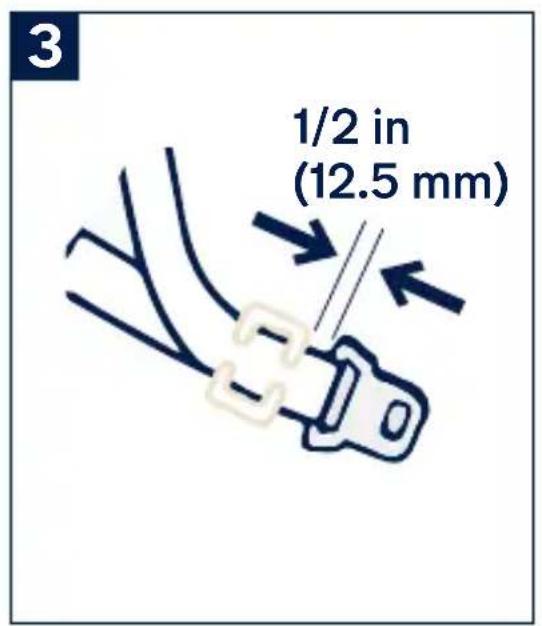
3 - The locking clip should be 12.5mm (1/2 inch) from the buckle.
Installation in an Aircraft
Position carrier so that child is facing the aircraft seat.
1 - Route the aircraft lap belt under both lap belt guides and buckle.
Adjust the angle of the carrier. A rolled up towel or foam pool noodle may be used to help adjust the amount of recline. (Page 34) The angle is correct when the blue line is level with the floor of the aircraft.
Tighten the aircraft belt while pushing the carrier firmly into the seat.
When installing in an airplane using a base, follow the instructions for vehicle installation with a base using lap belt only. (Page 30)
This Infant child restraint is certified for use in commercial aircraft with or without the base. Be sure to contact your airline prior to travel to discuss their Infant child restraint policy.
Installation on a Stroller
The Nuna PIPA infant child restraint can attach to Nuna strollers using adapters. Instructions are included with the adapters, which are sold separately.
The Nuna PIPA can also attach to other brands of strollers using adapters. Please visit nunababy.ca for more information.

Cleaning and Maintenance
Wash the seat pad with cold water and mild detergent.
Do not iron the seat pad.
Do not bleach or dry clean the seat pad.
Do not use undiluted detergent, or other solvent to wash the infant child restraint. It may cause damage to the infant child restraint.
Use only mild detergent, water and a soft cloth to clean the infant child restraint shell, handle and harness straps. Air dry.
Do not twist the soft goods to dry with great force. It may leave the seat pad with wrinkles.
Hang dry the seat pad in the shade.
Remove the infant child restraint from the vehicle seat if not in use for a long period of time. Put the infant child restraint in a cool, dry place and somewhere your child can not access it.
To clean the buckle: rinse using warm water. DO NOT use any soaps, solvents or lubricants. Using anything other than water can cause the buckle to malfunction. Air dry.
Warranty and Service
Thank you for choosing Nuna. This product is covered by a limited one-year warranty from the date of purchase. If this product shows a defect in materials or workmanship during the warranty period, please contact Nuna. Please have the proof of purchase, model number and serial number available when you contact us.
To register your product, fill out and mail in the provided registration card or go to our website at www.nunababy.ca
Conc


- Designed around your life
- Contents
- English (EN)
- Information
- Register Your Infant Restraint
- Nuna Canada
- Contact
- WaRNING
- Child requirements:
- Parts List
- Feature Overview
- Dream Drape
- Z
- Canopy Removal
- Seat Pad Removal
- Shoulder Pads
- Handle Adjustment
- Child Requirements
- Infant insert
- Changing Harness Position
- Shoulder Belts
- #
- Crotch Belts
- Securing Child in Carrier
- Check that Child is Secure
- Installation Instructions
- Base Install - Rigid UAS (Lower Attachments)
- Check the Installation
- Base Install - Lap & Lap/Shoulder
- Carrier Only Install
- Locking Clip Use
- Installation in an Aircraft
- Installation on a Stroller
- Cleaning and Maintenance
- Warranty and Service
- Conc
Brand : Nuna
Model : Pipa Lite
Category : Car seat