RAVA - Car seat Nuna - Free user manual and instructions
Find the device manual for free RAVA Nuna in PDF.


User questions about RAVA Nuna
0 question about this device. Answer the ones you know or ask your own.
Ask a new question about this device
Download the instructions for your Car seat in PDF format for free! Find your manual RAVA - Nuna and take your electronic device back in hand. On this page are published all the documents necessary for the use of your device. RAVA by Nuna.
USER MANUAL RAVA Nuna
You've just purchased a Nuna product, and you can be sure that your child is getting the best there is. Our products are expertly engineered for safety, with luxury fabrics and sophisticated style. Whatever made you fall in love with Nuna, rest assured your adventures with your little one will be easier from now on, freeing you to enjoy more happy family moments together.
Easy Installation
Our products are designed to make your life easier, so installing this child restraint doesn't require outside assistance. While we encourage the use of Certified Child Passenger Safety Technicians to ensure you have installed the seat correctly, you can install the child restraint in your vehicle without these professionals by carefully reading and following these instructions.
WARNING: Carefully read, understand and follow all instructions and warnings in this manual, and those labeled on your Child Restraint. Failure to do so can result in the SERIOUS INJURY or DEATH of your child. Store manual in pocket at rear of base for future use.
Contents
English (EN)
Important Information
Product Information/Registration 4
SafetyWarnings 6
Vehicle Compatibility 8
Child Restraint Overview
Features Overview 16
Features Usage 18
Child Usage Requirements 44
Rear Facing Installation
Rear Facing Setup 46
Using Vehicle Lap/Shoulder Belt 48
Using Universal Anchor Belt 50
Using Vehicle Lap Belt 52
Forward Facing Installation
Forward Facing Setup 54
Using Vehicle Lap/Shoulder Belt 56
Using Universal Anchor Belt 58
Using Vehicle Lap Belt 60
Securing Child in Child Restraint 62
Aircraft Installation 65
Cleaning and Maintenance 66
Seat Cover Assembly 70
Harness Function Test 73
To clean Harness Adjuster 76
French 81-160
Product Information/Registration
Model Name:
Model Number:
Manufactured Date:
Product Registration
Please fill in the above information. The name, model number and the manufactured date can be found on a label underneath your infant restraint. Fill out the prepaid registration postcard attached to the seat cover and mail it today.
Child restraints could be recalled for safety reasons. You must register this restraint to be reached in a recall. Send your name, address, and the restraint's model number and manufacturing date to:
Nuna Canada
2520 Ave Marie-Curie
St-Laurent, QC, H4S 1N1
1-800-667-4111
Or, register online at www.nunababy.ca
Contact
For replacement parts, service, or additional warranty questions, please contact our customer service department.
Phone: 1-800-667-4111
or email: info@nunababy.ca
WARNING
DEATH OR SERIOUS INJURY CAN OCCUR.
Z
Never leave child unattended in this Child Restraint.
Do not allow anyone who has not read the Instructions to install or use this Child Restraint.
Never leave Child Restraint unsecured in your vehicle even when it is unoccupied. In a crash, it could become a projectile and injure other vehicle occupants.
To avoid strangulation, do not allow children to play with vehicle or Child Restraint belts or straps. If possible, move unused belts out of reach.
Cover the Child Restraint when your vehicle is parked in sunlight. Parts of a Child Restraint can become very hot if left in the sun, and can burn a child's skin. Check for hot parts before putting your child in the Child Restraint.
Do not use any products or accessories with this Child Restraint unless they are approved by Nuna Canada for use with this Child Restraint. Doing so may be unsafe and may void the warranty.
Do not use Child Restraint if it has frayed or cut harness straps, or is damaged in any way. To find out if damaged parts are replaceable, call 1-800-667-4111.
Never modify any part of the Child Restraint.
Replace this Child Restraint if it has been involved in a moderate or severe crash. Car seats do not automatically need to be replaced following a minor crash.
A minor crash is one in which all these apply:
Vehicle can drive away from crash site, the vehicle door nearest to the car seat was not damaged, none of the passengers sustained any injury during the crash, the vehicle airbags did not deploy during crash and there is no visible damage to car seat.
Do not use Child Restraint more than 10 years from date of purchase (proof of purchase required) or manufacturing date otherwise.
Check the manufacturer's label on the bottom of the Child Restraint Base.
This restraint system can only be used in these classes of vehicles: passenger cars, multi-purpose vehicles and trucks that have lap, lap/shoulder belts and UAS connectors.
Vehicle Compatibility
WARNING: You MUST read, understand and follow ALL Child Restraint related instructions and warnings in your vehicle owner's manual to correctly and safely use this Child Restraint in your vehicle.
This Child Restraint can ONLY be installed on vehicle seats that face forward. DO NOT install in seats that face to the sides or rear of the vehicle.
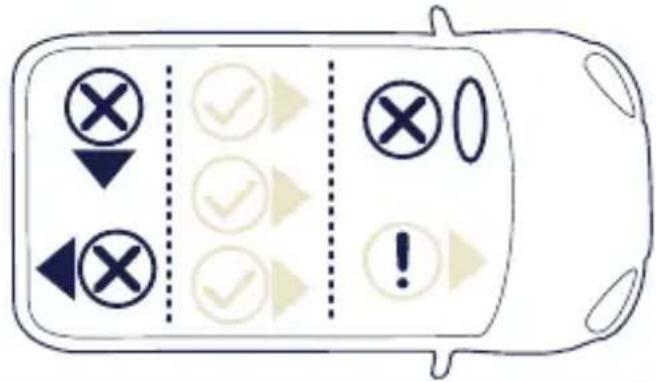
WARNING SERIOUS INJURY OR DEATH MAY OCCUR. NEVER install this Child Restraint I am facing in a vehicle seating position with a frontal air bag unless it is turned off. If your vehicle is equipped with front passenger side air bags, check your vehicle owner's manual for Child Restraint installation instructions.
IMPORTANT: According to accident statistics, children are safer when properly restrained in the rear seating positions than in the front seating positions.
This Child Restraint can be installed without vehicle belts, by connecting the Restraint's Universal Anchor Belts to the lower anchorages in your vehicle.
UAS (Universal Anchor System) is a system for installing a Child Restraint in a vehicle without using the vehicle belts. Refer to your vehicle owner's manual to determine if your vehicle is equipped with UAS, and how to correctly use UAS to install this Child Restraint in your vehicle.
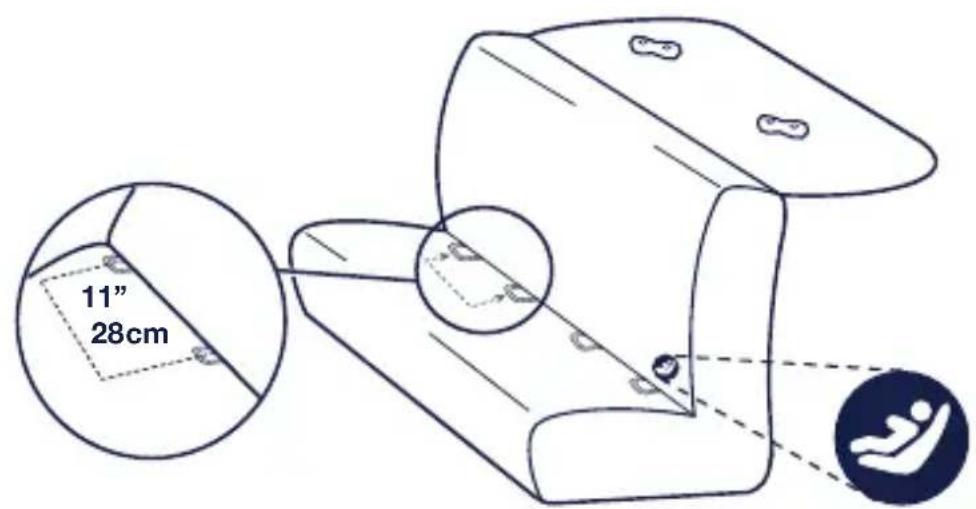
Lower Anchor and Top Tether Anchor Locations
Vehicle Top Tether Anchor Points
Vehicle Lower Anchor Points
WARNING: DO NOT USE the UAS lower anchor belts to attach this Child Restraint rear facing when restraining a child weighing over 15.8kg (35 lbs) or forward facing when restraining a child weighing over 18.1kg (40 lbs).
This Child Restraint is designed to be used with lower UAS anchors at the standard spacing of 11 inches (28 cm). UAS lower vehicle anchor points are defined as 28 cm (11 inches) from the center of one UAS anchor to the center of another UAS anchor.
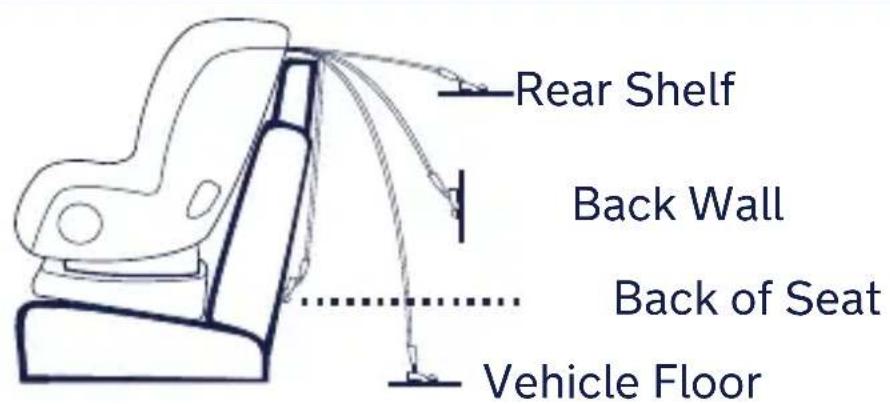
WARNING: DO NOT USE the UAS universal anchor belts to attach this Child Restraint rear facing when restraining a child weighing over 15.8kg (35 lbs) or forward facing when restraining a child weighing over 18.1kg (40 lbs). Check your vehicle owner's manual for Tether Anchor weight limits.
The Restraint's Tether Strap must be used for ALL Forward Facing Installations, as it provides a more secure installation.
WARNING: NEVER use a Child Restraint in a vehicle seating position where it cannot be correctly secured. An incorrectly installed Child Restraint will not protect your child in a crash.
The following types of vehicle belts CAN BE USED to install this Child Restraint.

1 - Lap/Shoulder Belt
2 - Lap Belt Only
Belts MUST be able to be locked.
Refer to vehicle owner's manual to determine if the belts in your vehicle lock by switching the seat belt's retractor or they have a locking latch plate that locks the vehicle's seat belts so they will not move freely.
If the belt cannot be locked using one of these methods, contact Nuna Customer Service for a locking clip.
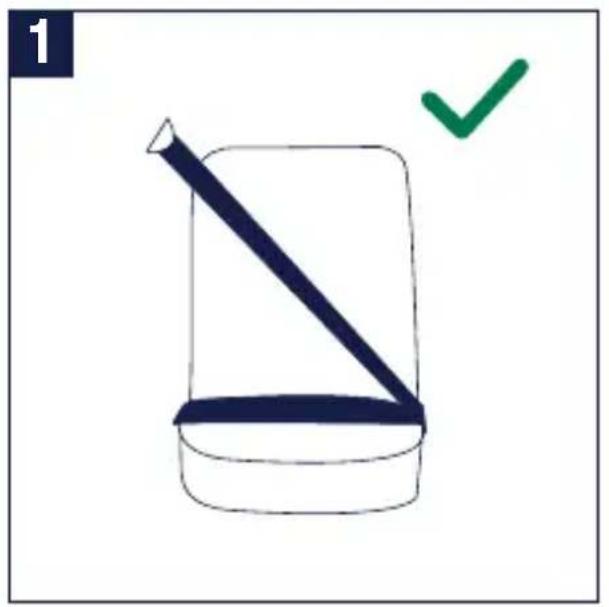
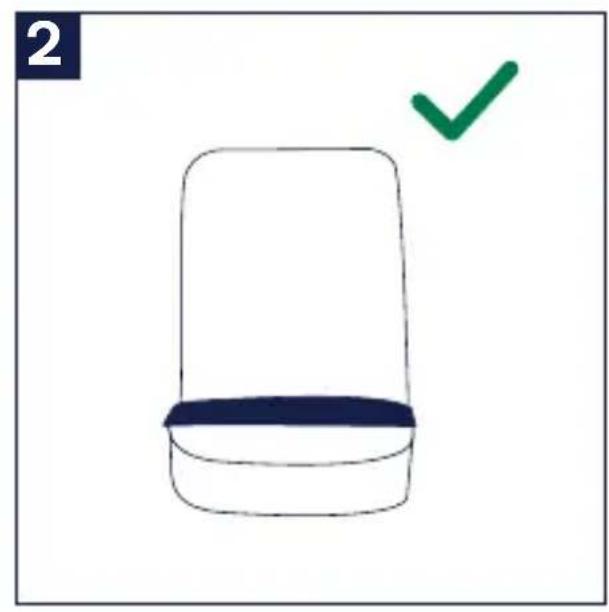
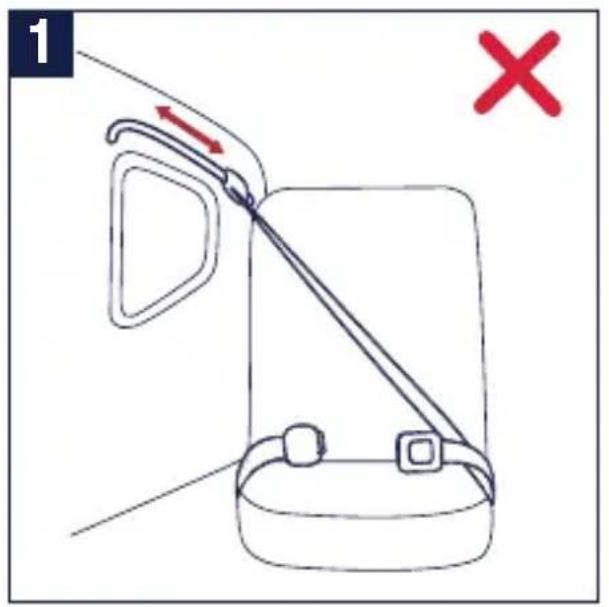
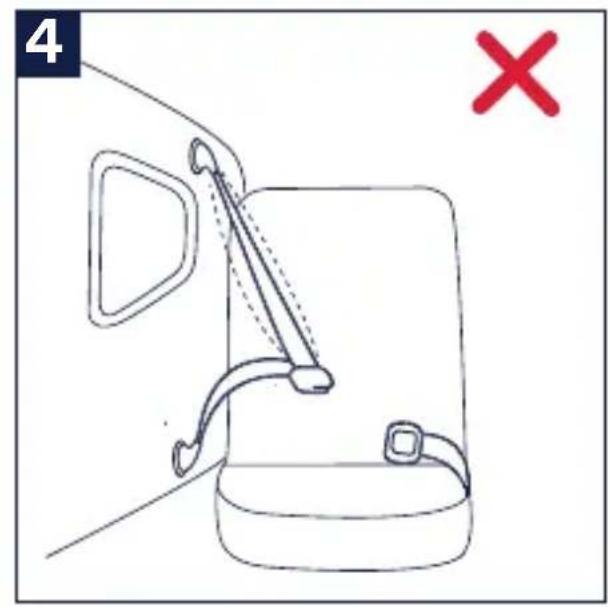
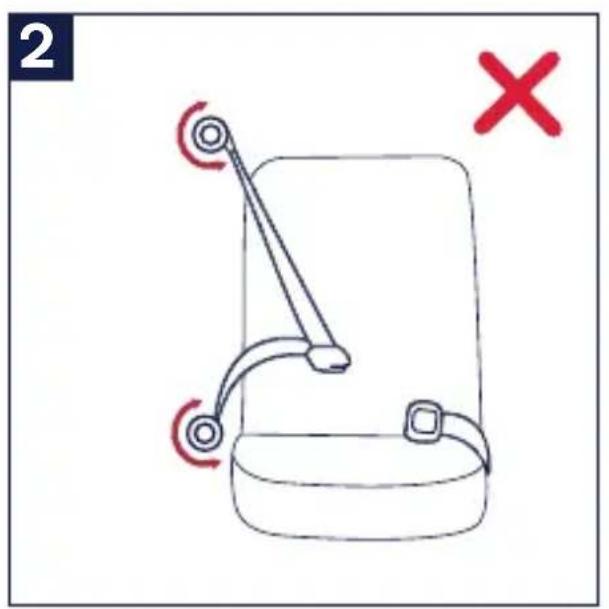
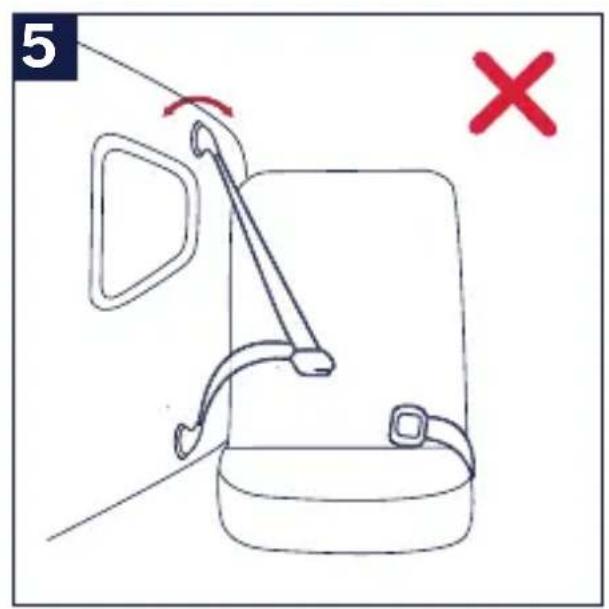
Vehicle belts that CANNOT BE USED with your child restraint:
The following types of vehicle belts MUST NOT be used to install this Child Restraint. They will not provide a secure, safe installation. Refer to your vehicle owner's manual for which seating positions in your vehicle can be used to install this Child Restraint using vehicle belts or UAS.
1 - Motorized Belts (Automatic)
These should not be used unless the shoulder belt can be removed, the lap belt is locked and use is allowed by the vehicle manufacturer.
2 - Dual Retractor Lap/Shoulder Belts
If allowed by the manufacturer, the lap belt only may be used to secure the child restraint in accordance with this manual and the vehicle's manual.
3 - Non-Locking (ELR) Lap Belts
This belt locks in a crash or sudden stop and should only be used with a belt shortening clip.
Contact your vehicle manufacturer if needed.
4 - Airbag/Inflatable Belts
This belt cannot be used to install this child restraint.
5 - Door Mounted Belts
This belt cannot be used to install this child restraint.
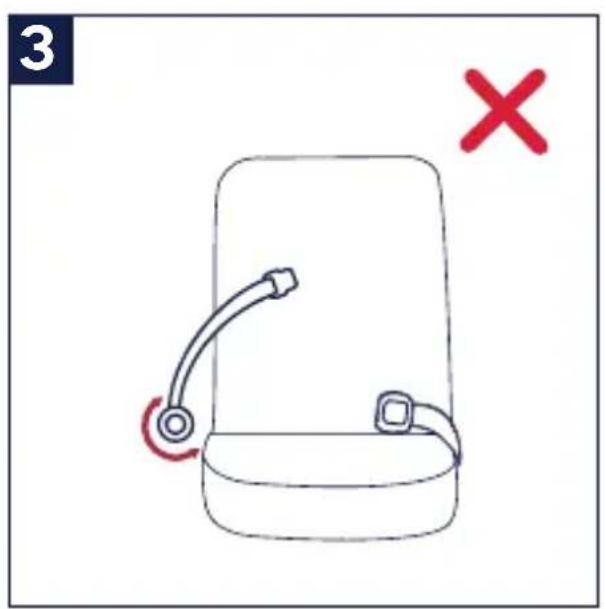
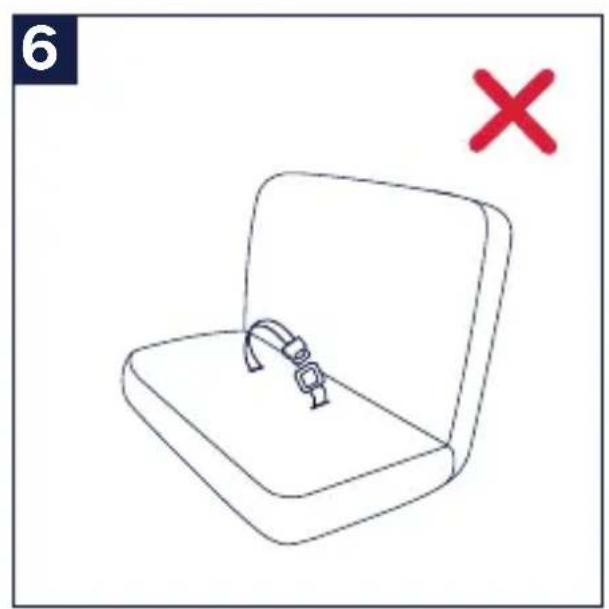
6 - Lap Belts forward of Seat Bight
This belt (where the seat bottom and back meet) cannot be used to install this child restraint.
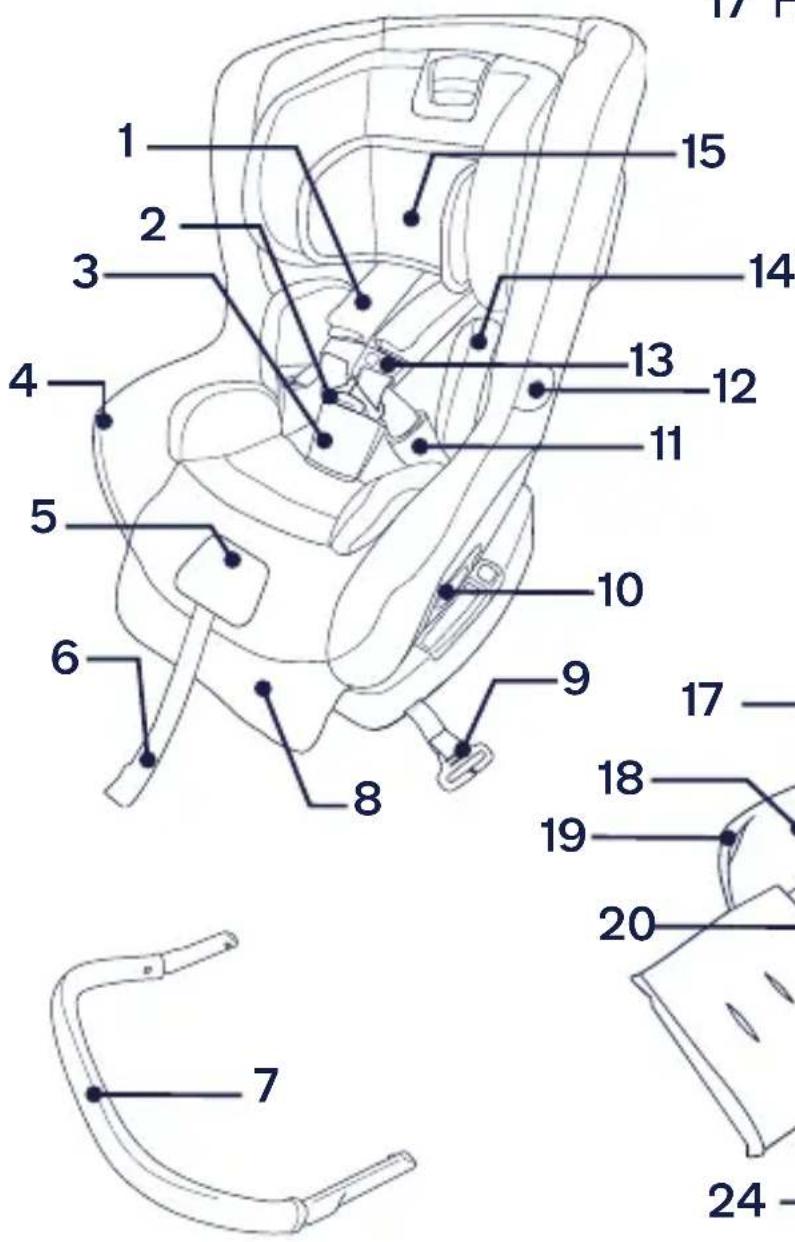
Features Overview
1 Shoulder Harness Pads
2 Harness Buckle
3 Crotch Pad
4 Rebound Bar Snap
5 Harness Release Button
6 Harness Adjuster Strap
7 Rebound Bar
8 Calf Support
9 Shoulder Belt Clip
10 Cup Holder
11 Hip Harness Pads
12 Buckle Tongue Holder
13 Chest Clip
14 Infant Insert
15 Head Insert
16 Head Support
17 Harness Strap
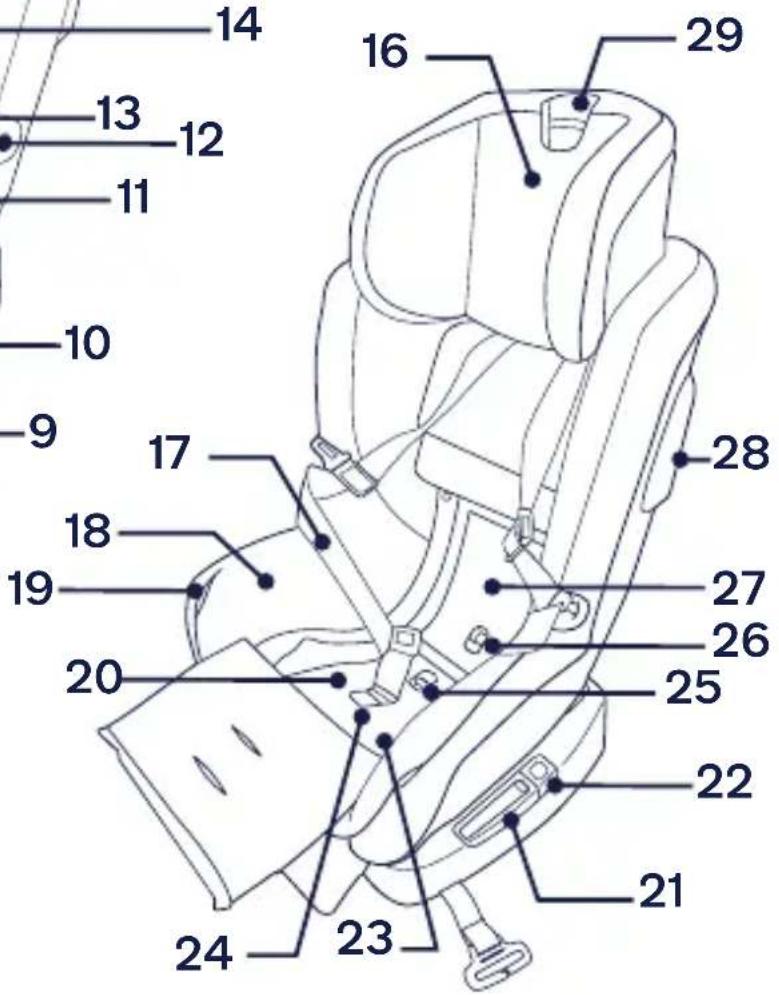
18 Seat Cover
19 Rebound Bar Receptacle
20 Universal Anchor Storage (underneath door)
21 Recline Position Indicator
22 Recline Button
23 Rear Facing True Tension Door
24 Crotch Belt Plate
25 Rear Facing True Tension Button
26 Forward Facing True Tension Button
27 Forward Facing True Tension Door
28 Side Impact Protection (SIP) Pods
29 Head Support Button
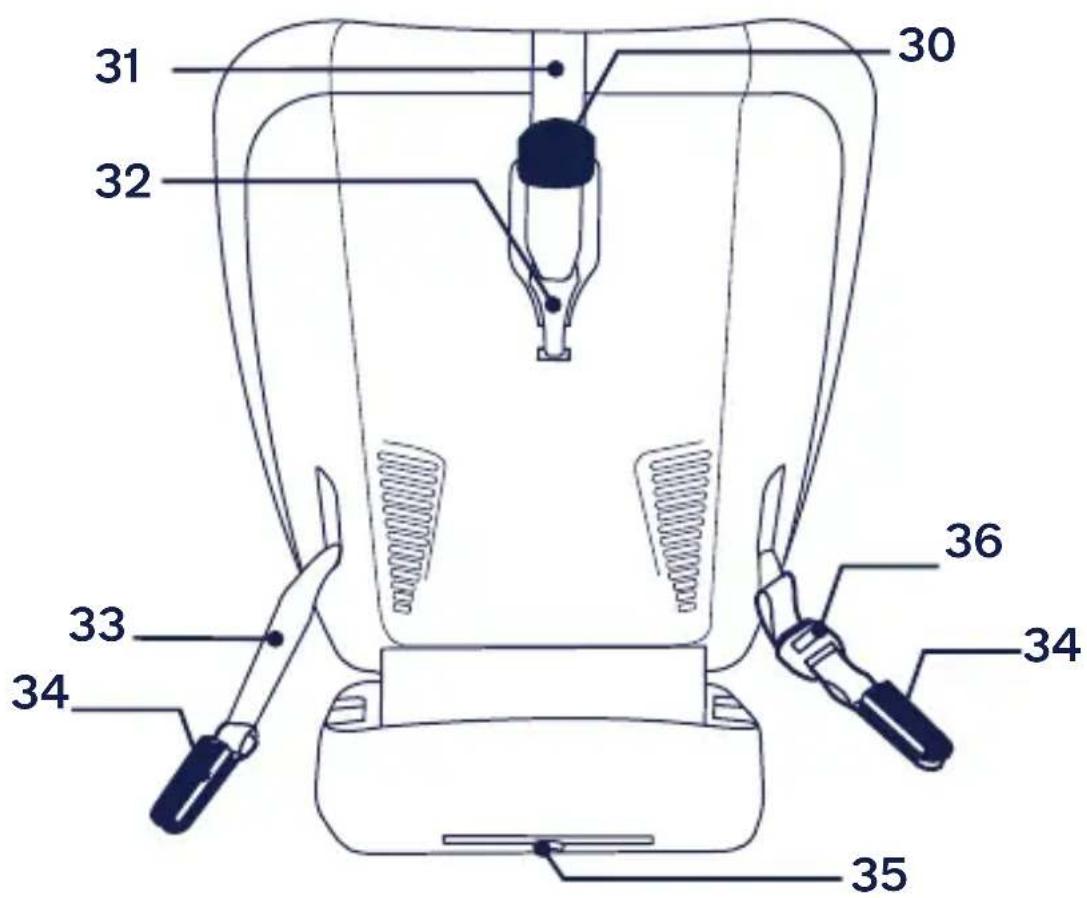
30 Tether Strap Adjuster
31 Tether Strap
32 Tether Hook
33 Universal Anchor Belt
34 Universal Anchor Connectors (UAS)
35 Instruction Manual Storage
36 Universal Anchor Adjuster
Feature Usage
Harness Use
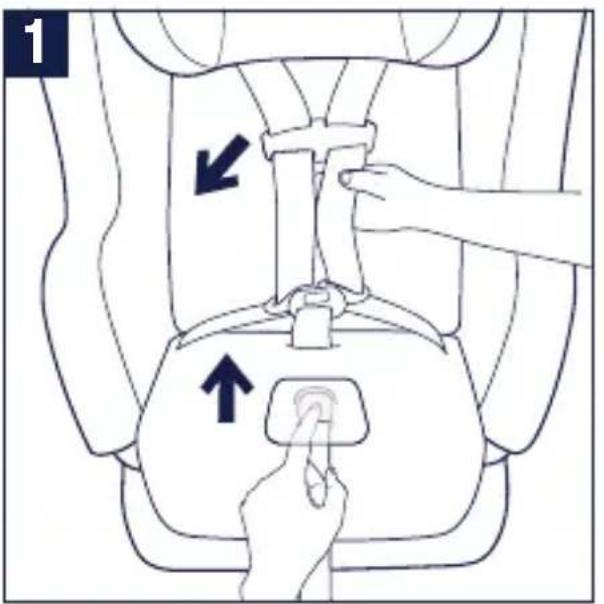
1 - To Loosen Harness
Press on Harness Release Button while pulling forward on the Harness Straps.
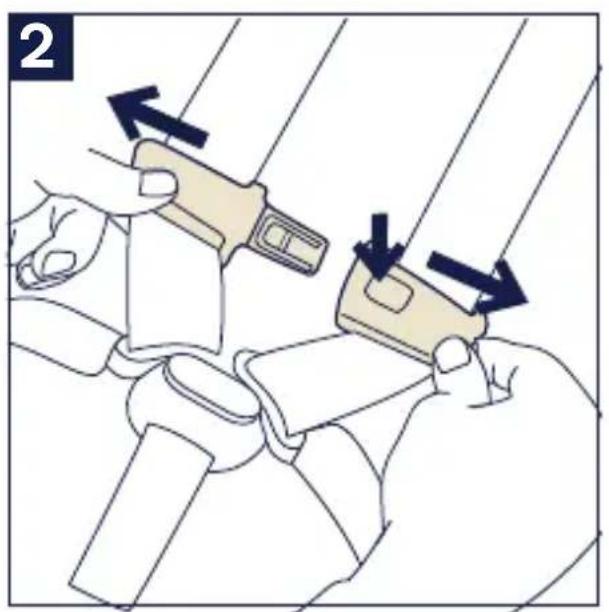
2 - To Open Chest Clip
Press button on front of Clip and pull Clip apart.
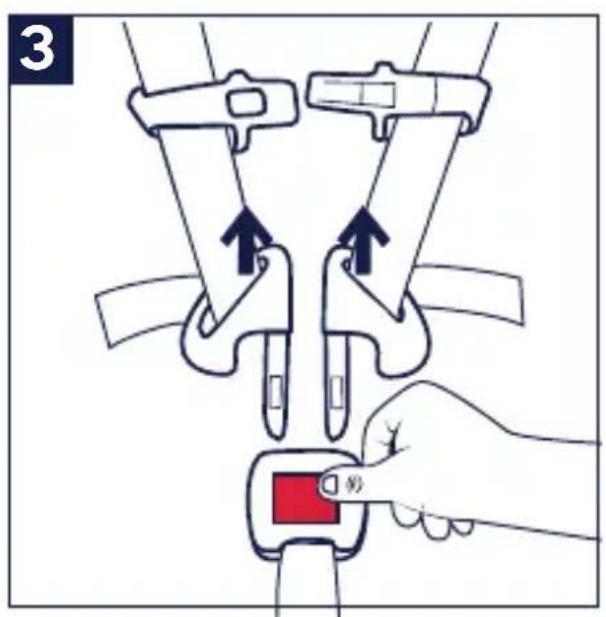
3 - To Open Harness Buckle
Press red button on front of Buckle and pull out Buckle Tongues.
4 - To Use Buckle Tongue Holders
Loosen and unfasten harness. Place Buckle Tongues in Holders.
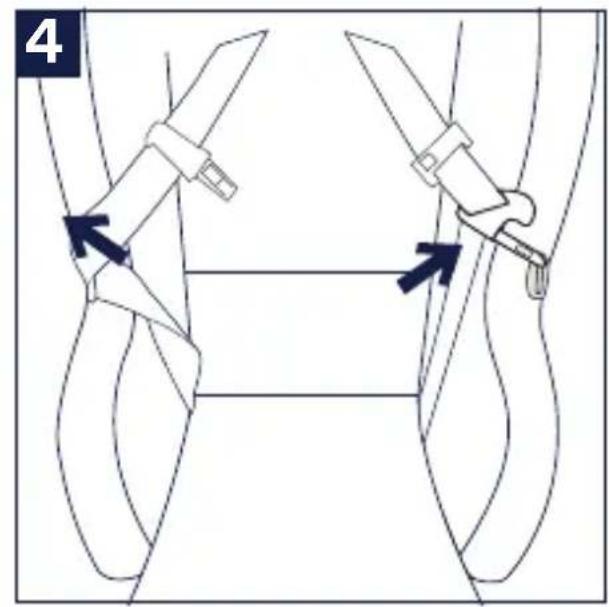
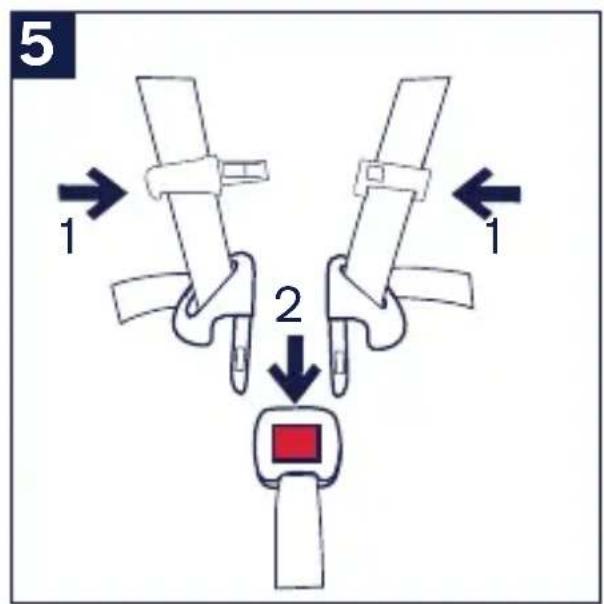
5 - To Fasten Chest Clip
Push Chest Clip halves together until they click. Pull to check. (1)
To Fasten Buckle
Insert Buckle Tongues firmly into Buckle until they click. Pull up on Tongues to ensure they are locked. (2)
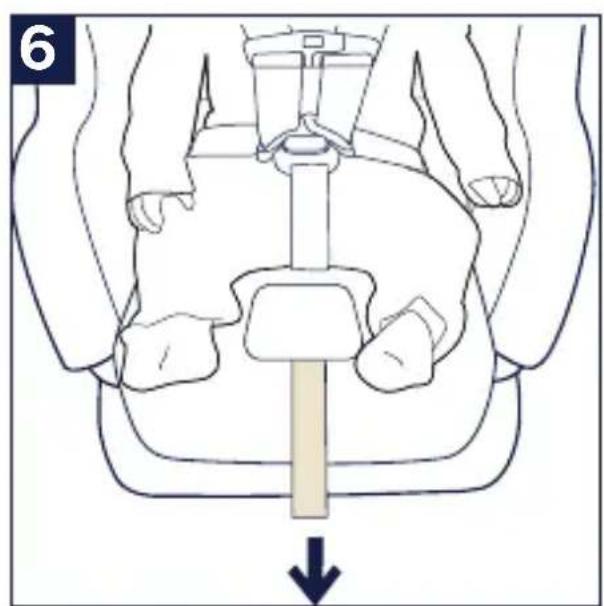
6 - To Tighten Harness
Pull on Harness Adjuster Strap.
Z
Head Insert Use
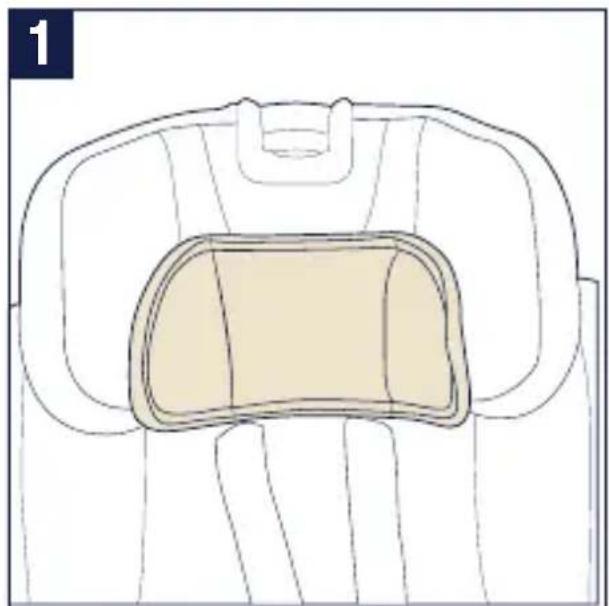
1 - The Head Insert may be used for improved comfort or fit on a child between 2.3-5 kg (5-11 lbs) ONLY.
Harness & Crotch Pad Use
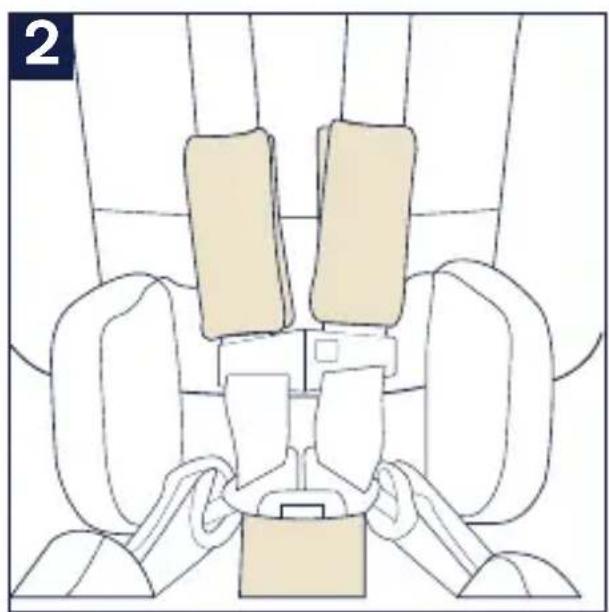
2 - The Harness Pads are a comfort feature that may be used for a child between 2.3-5 kg (5-11 lbs) ONLY.
Head Support Adjustment
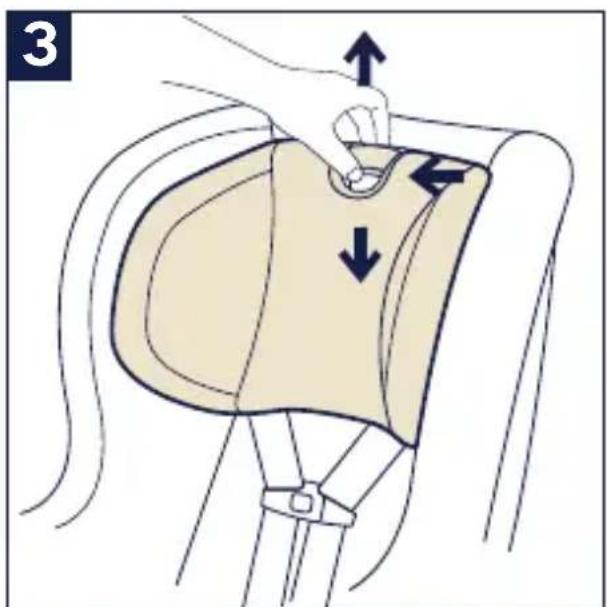
3 - With Harness loose (p.18), squeeze Head Support Button and move Head Support up or down to desired position.
Release button and slide Head Support slightly up or down to lock into appropriate use position.
Infant Insert Use
The infant insert can be used for a child that is between 2.3-5 kg (5-11 lbs) to improve the harness fit and recline angle for smaller infants.
The harness MUST be positioned AT or JUST BELOW the child's shoulders.
The head insert may be used or removed for improved comfort to the child between 2.3-5 kg (5-11 lbs).
To Install Infant Insert
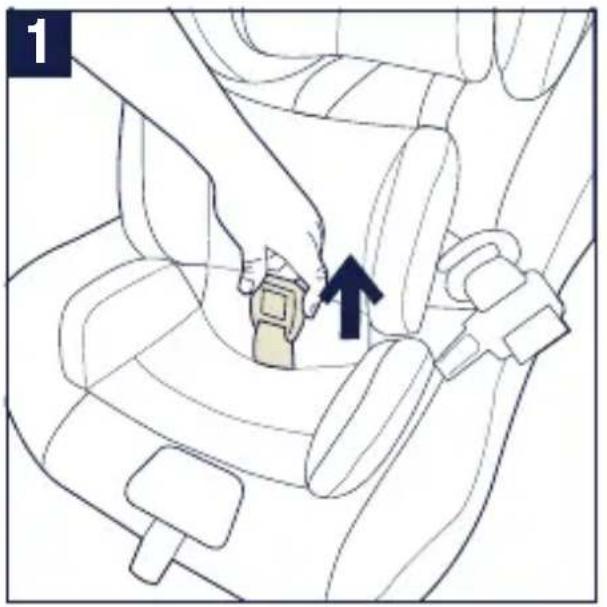
1 - Pull Harness Buckle through slot in the bottom of Infant Insert.
2 - Route Harness Straps through gaps in sides of Infant Insert.
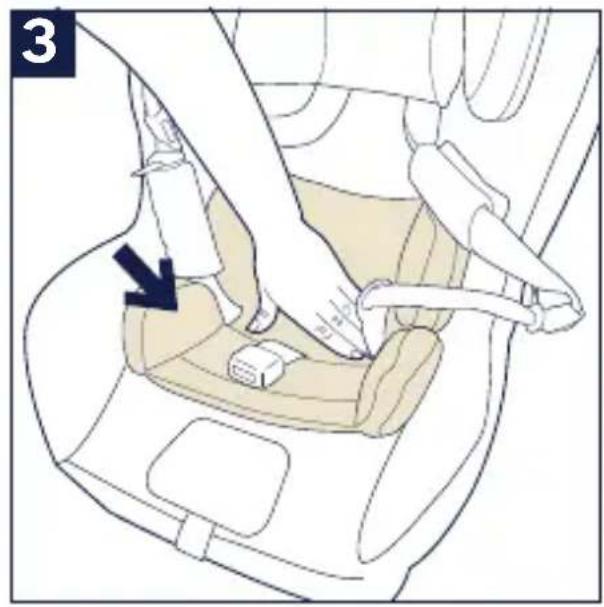
3 - Push Infant Insert firmly into Child Restraint.
4 - Make sure insert is properly positioned.
When properly installed, the Infant Insert will not interfere with Harness Straps or Crotch Belt. Crotch Belt must be locked in inner position when Infant Insert is used.
True Tension Door Use
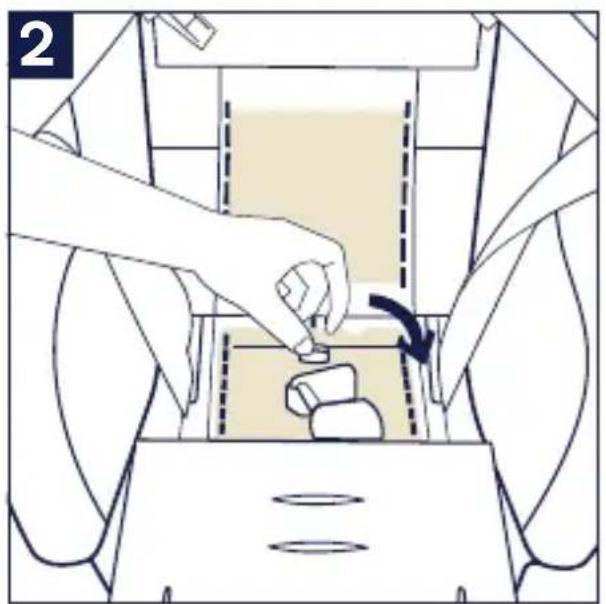
This Child Restraint has 2 True Tension Doors that aid in a simple and secure installation of the Child Restraint in your vehicle. They are located underneath the Seat Cover. The upper Door (RED) is for forward facing use, and the lower Door (BLUE) is for rear facing use.
Remove Infant Insert, loosen and unfasten Harness (p.18), and retain with Buckle Tongue Holders (p.18).
1 - Adjust Head Support to highest position, unsnap Seat Cover and pull to front of seat.
2 - Squeeze Door Release button for the appropriate True Tension Door.
3 - Lift open True Tension Door.
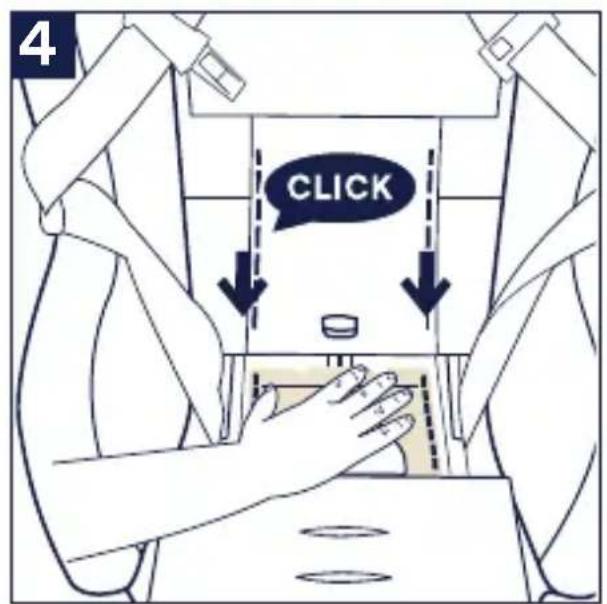
4 - Close True Tension Door by pressing down firmly on Door until both latches lock in place. Replace Seat Cover and reinstall Infant Insert if used (p.22).
Shoulder Belt Clip Use
The shoulder belt clip is used ONLY for rear facing installations and when child weighs between 2.3-18.1 kg (5-40 lbs).
It MUST be used when installing child restraint using the vehicle shoulder belt. The shoulder belt clip helps to maintain the proper position of the vehicle shoulder belt.
To Install Shoulder Belt Clip
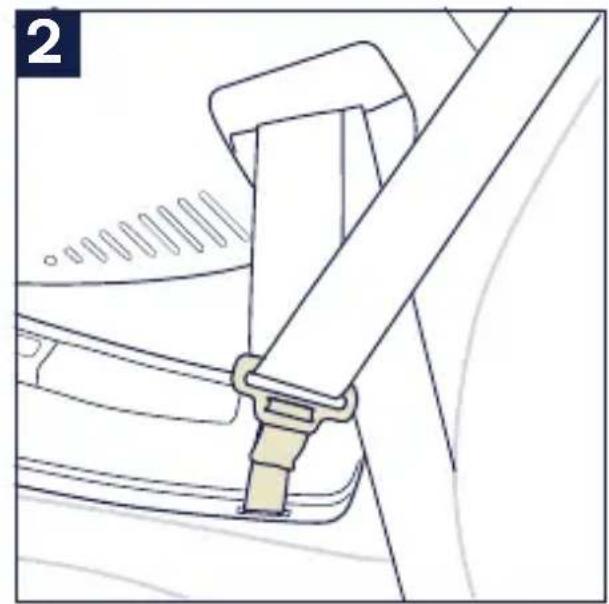
1 - Use the Shoulder belt clip that is on the opposite side of the vehicle buckle.
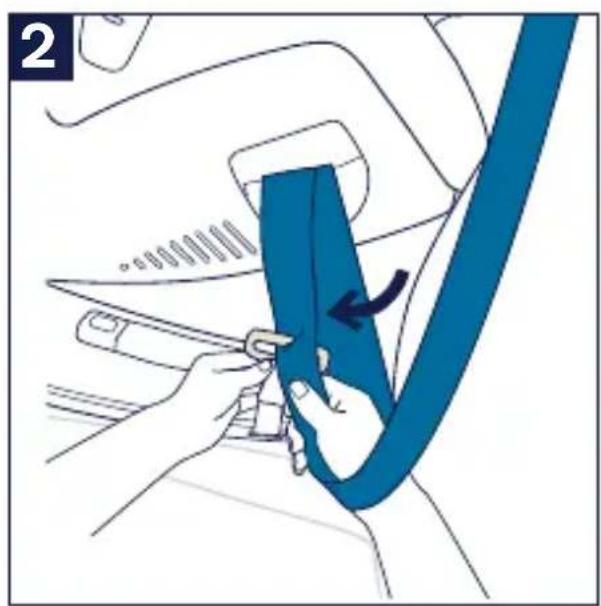
2 - Slide the vehicle shoulder belt into the shoulder belt clip. Make sure to ONLY insert the vehicle shoulder belt into the shoulder belt clip.
Ensure shoulder belt clip is positioned in front of the lap belt portion without any interference.
Crotch Belt Adjustment
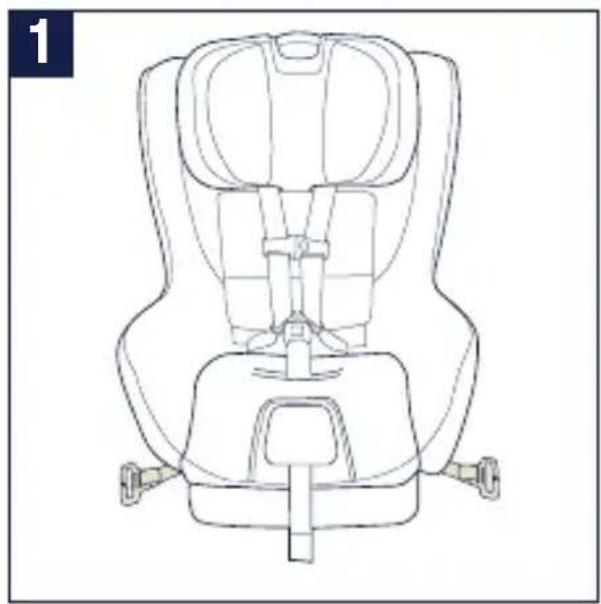
The Crotch Belt has two positions. Use the position that is closest to, but not under your child.
Remove Infant Insert (p.22) and loosen and unbuckle Harness (p.18).
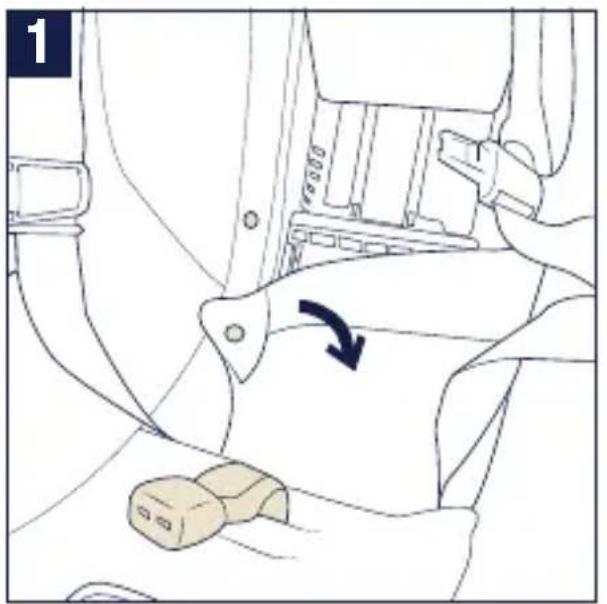
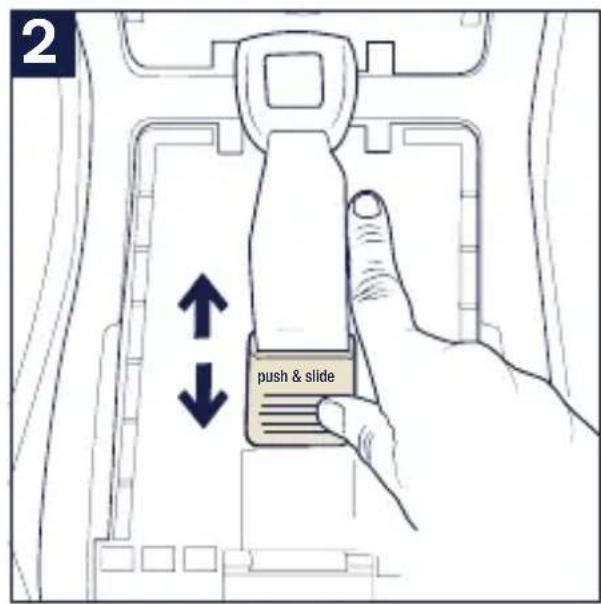
1 - Unsnap Seat Cover and pull forward while pulling crotch buckle through slot in Seat Cover.
2 - Depress and slide Crotch Belt plate forward or backward and lock in desired position. Place buckle back through correct slot in Seat Cover and replace Seat Cover and Infant Insert (if using). (p.22)
Rebound Bar Use
The rebound bar is used ONLY for rear facing install and child weighs between 2.3-18.1 kg (5-40 lbs.)
Z
The rebound bar reduces the rotation of the child restraint during a crash and increases the stability of the child restraint when installed rear facing.
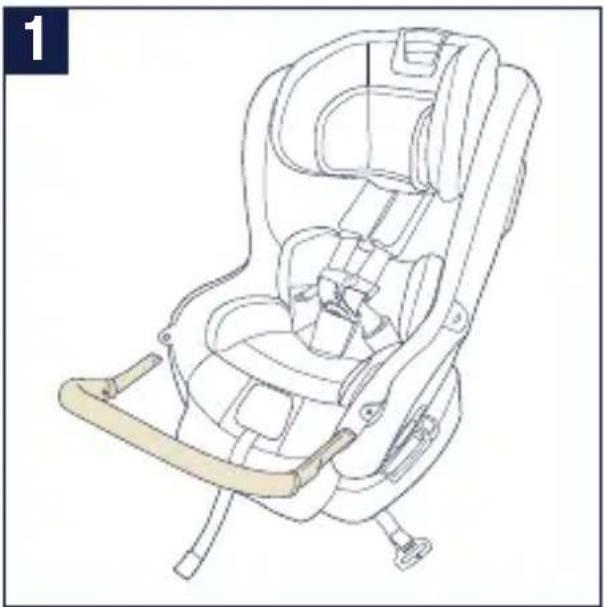
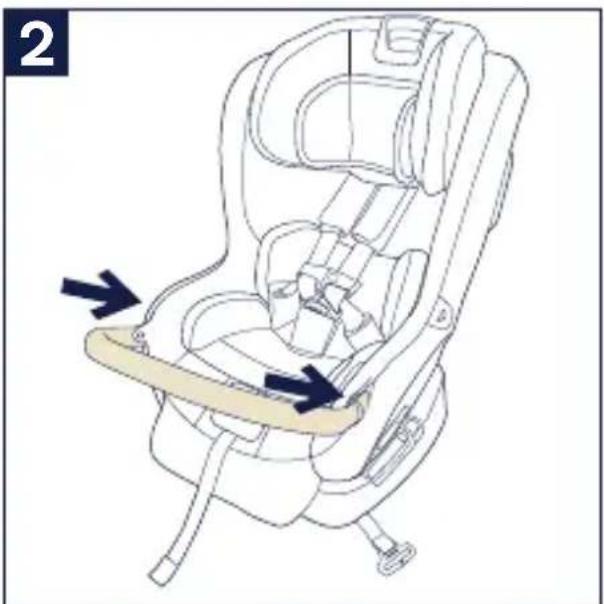
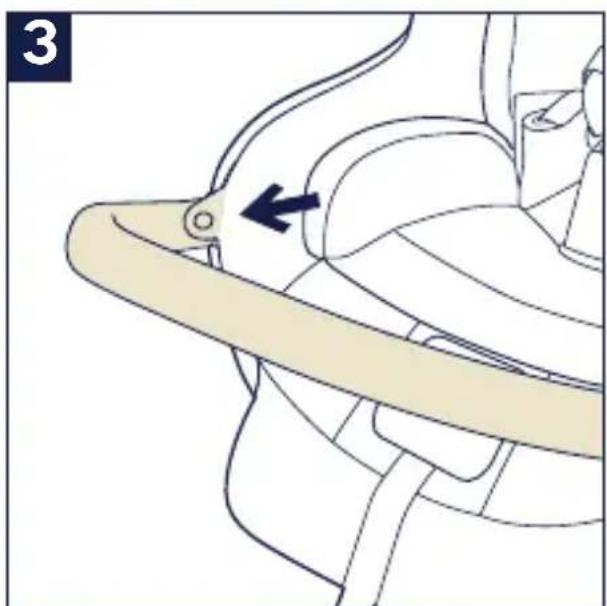
To Install Rebound Bar
1 - Locate the rebound bar receptacles of the rebound bar with the openings at the foot of the child restraint.
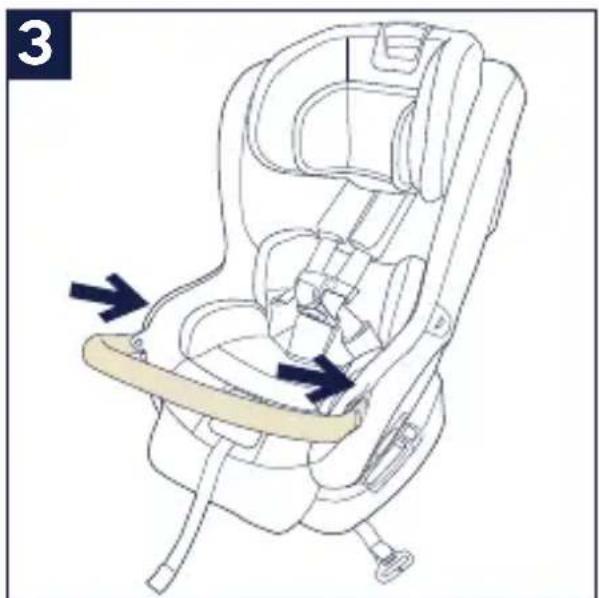
2 - Slide the rebound bar into the openings. Push on the rebound bar until it is completely secure.
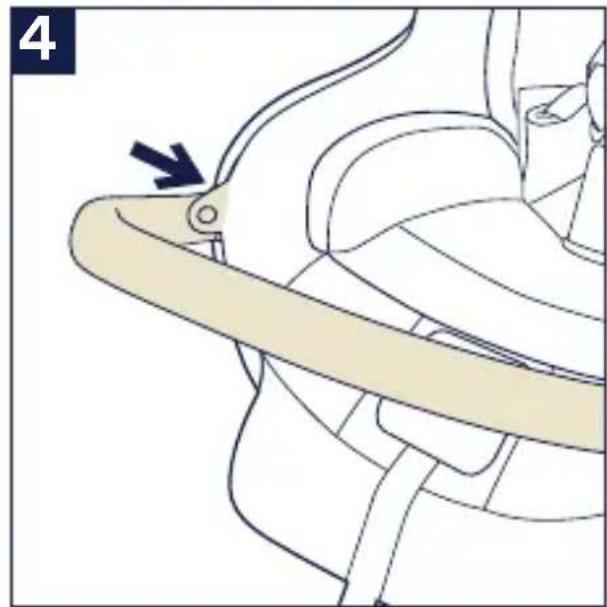
3 - Secure the rebound bar by connecting the snap on the seat to the snap on the bar. Repeat for other side.
Lightly tug on the rebound bar to make sure it is attached properly.
WARNING: To prevent falls: NEVER carry the car seat by the Rebound Bar. NEVER USE IN FORWARD FACING INSTALLATION.
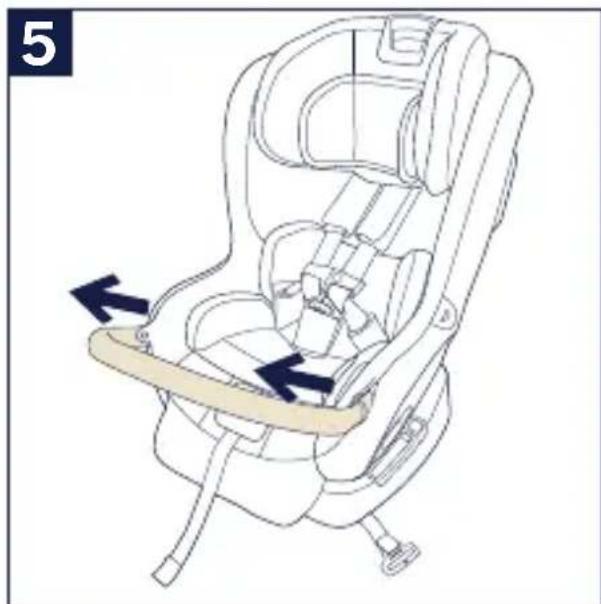
To Remove Rebound Bar
4 - Unclip the snap on each side of the seat.
5 - Pull on each side of the rebound bar to remove.
Z
Universal Anchor Belt Storage and Use
The Universal Anchor Belt, located in Storage Compartment under the Rear Facing True Tension Door, can be used instead of a vehicle belt to install this Child Restraint. The Universal Anchor Belt must not be used rear facing if your child weighs more than 15.8kg (35 lbs), or forward facing if your child weighs more than 18.1kg (40 lbs).
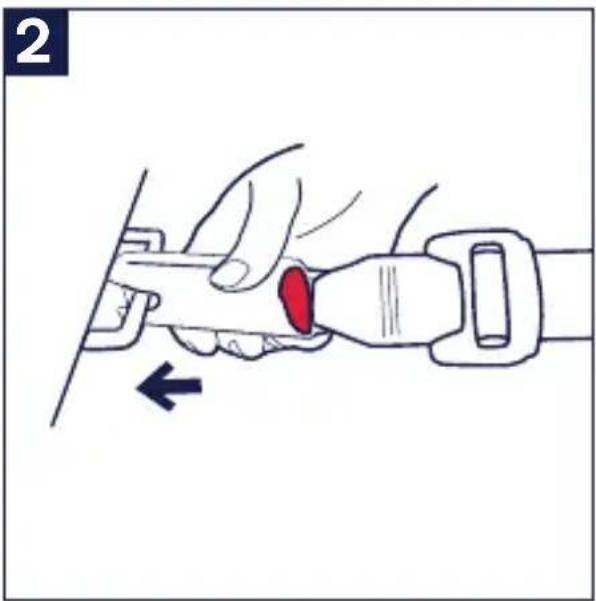
1 - To use Universal Anchor Belt, open Rear Facing True Tension Door (p.24), remove Universal Anchor Belt, and lengthen by pressing adjuster button while pulling on Belt.
2 - To connect Universal Anchor Belt to lower anchors in vehicle, press Connector firmly onto lower anchor and pull to check.
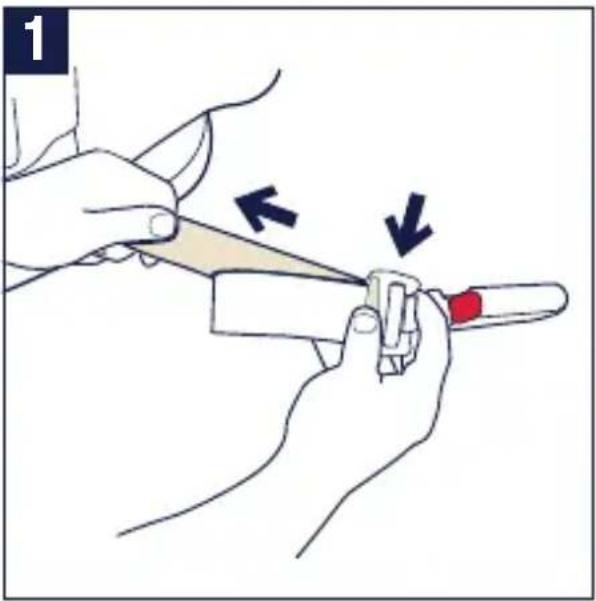
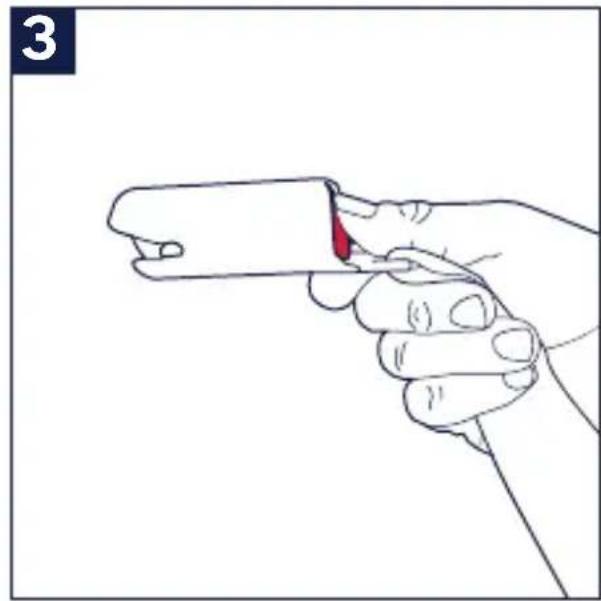
3 - To release Universal Anchor Belt, press red button on end of Connector while pulling on Belt.
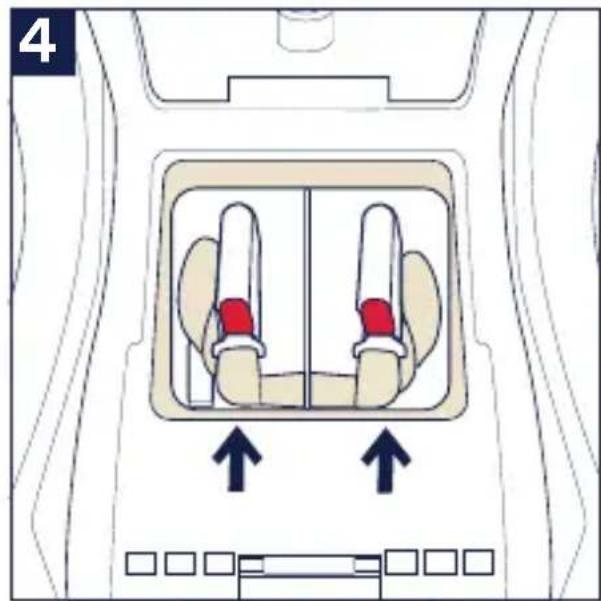
4 - To store, fold Universal Anchor Adjuster and Universal Anchor Belt, and place in Storage Compartment. Store other Universal Anchor Belt in adjacent Storage Compartment. Tuck excess webbing.
When not in use, the Universal Anchor Belt MUST be properly stored in Universal Anchor Storage Compartment under Rear Facing True Tension Door, and MUST NOT interfere with latching of Door.
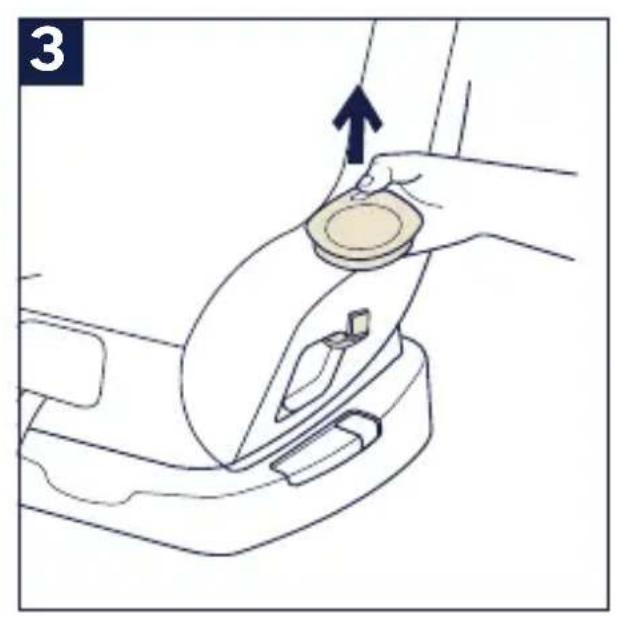
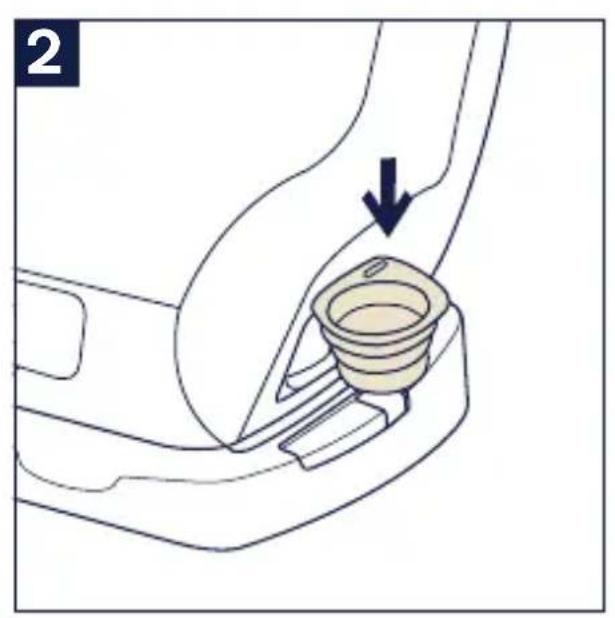
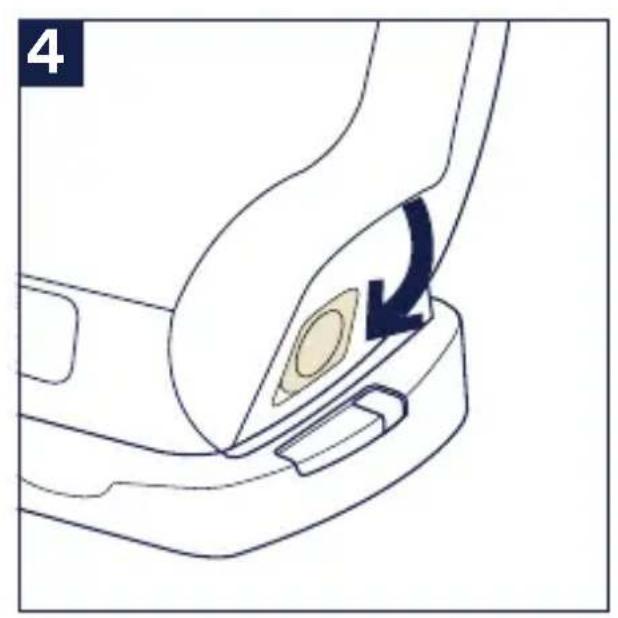
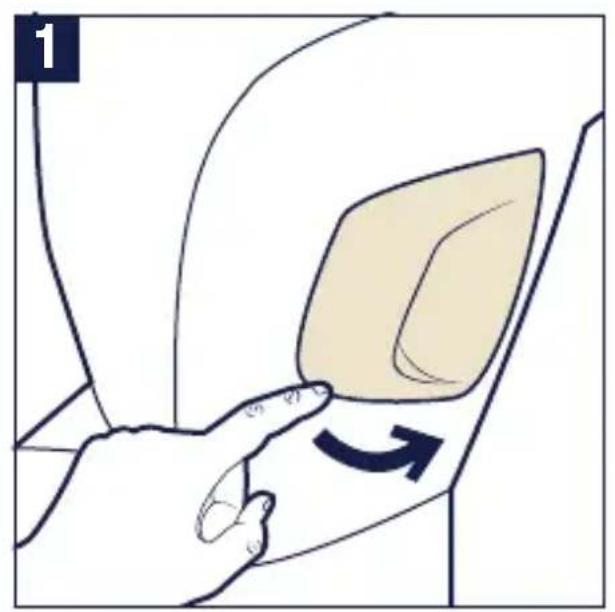
Cup Holder Use
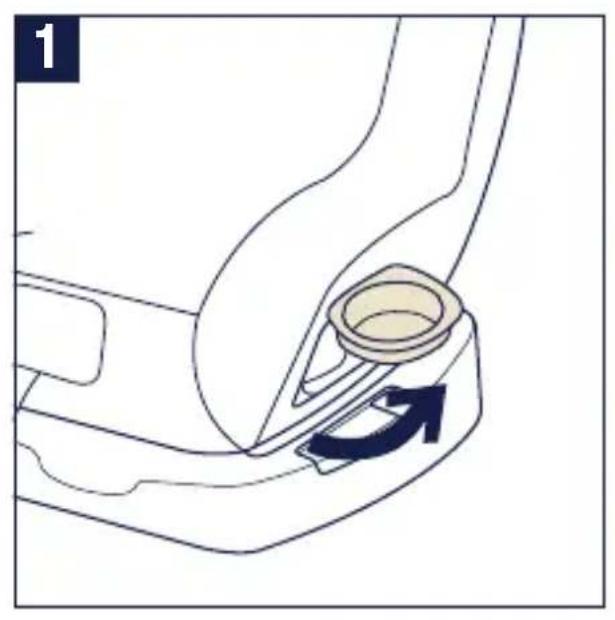
1 - Pivot Cup Holder up and lock in use position.
2 - Push center of Cup Holder down to extend to opened position.
3 - While in the opened position, pull up on the Cup Holder to remove for washing OR remove for easier Rear Facing Belt Installation.
4 - To store, collapse Cup Holder and pivot down.
Cup Holder must be opened to access Belt Path during Rear Facing Installation of Child Restraint. Cup Holder may be collapsed down against vehicle belt after belt installation.
DO NOT place glass or metal containers or hard or sharp objects in Cup Holder. In a crash they could cause serious injury.
Side Impact Protection (SIP) Use
SIP pods should only be used on the door side of the child restraint. If the child restraint is installed in the middle seat position the SIP pods should not be used.
1 - Pull out SIP Pod until it locks into position.
2 - To store, press button and push SIP Pod into stored position.
Calf Support Use
The Calf Support must be used to give your child more leg room or improve installation when rear facing and provide improved comfort when forward facing. It is designed to change position without damage if excessive force is applied.
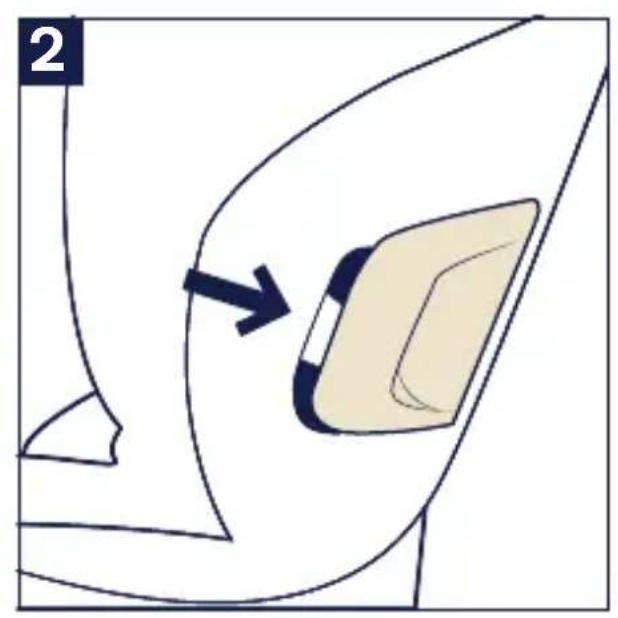
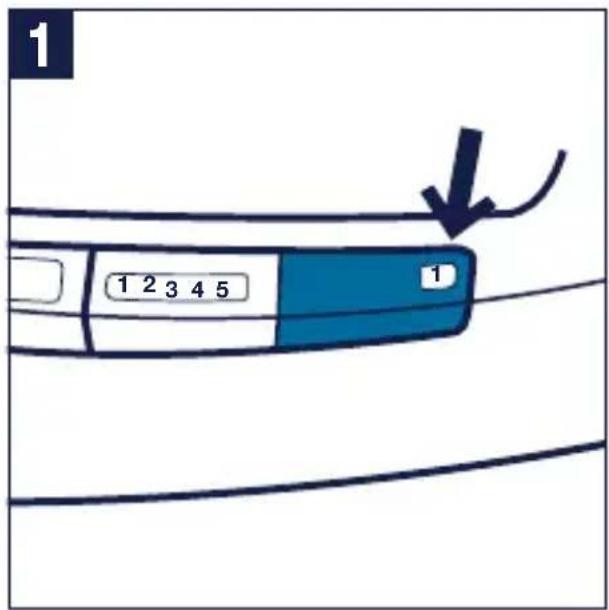
1 - Recline Child Restraint to rear facing position 1 (BLUE).
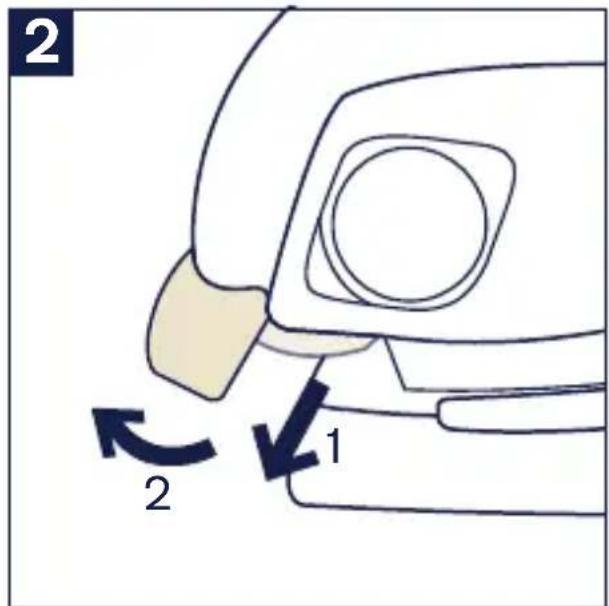
2 - Move Calf Support to USE position (upwards) by reaching under front of Child Restraint and rotating Calf Support down and forward.
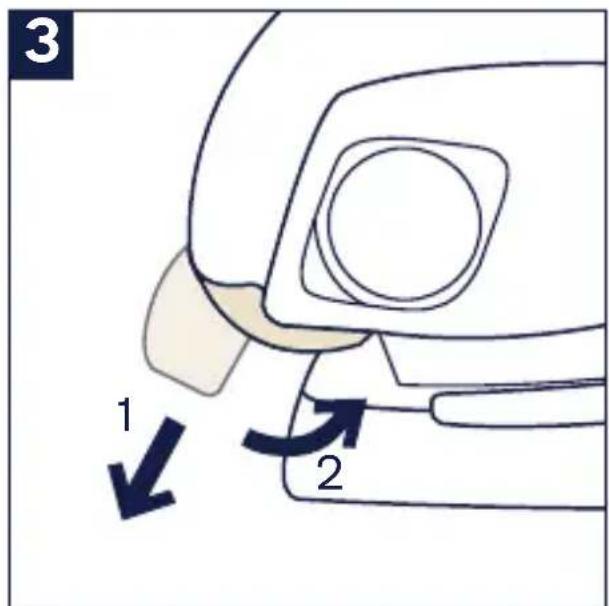
3 - Move Calf Support to STORAGE position by pulling down on Calf Support to unlock, and rotating it to storage position.
Calf support MUST be used in BOTH rear facing and forward facing positions.
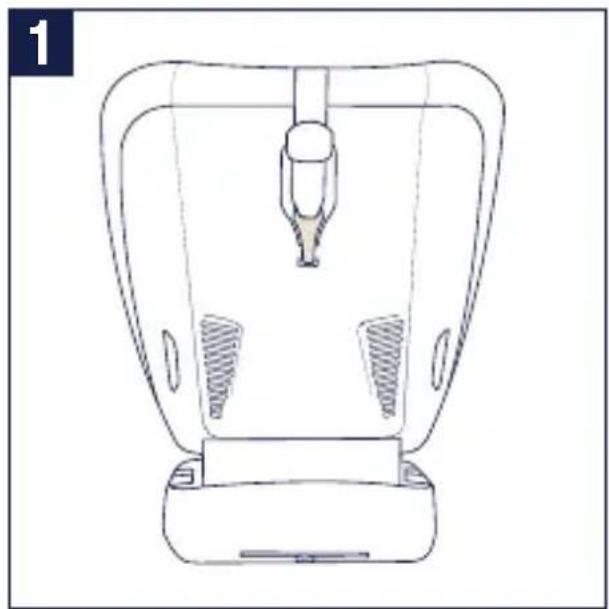
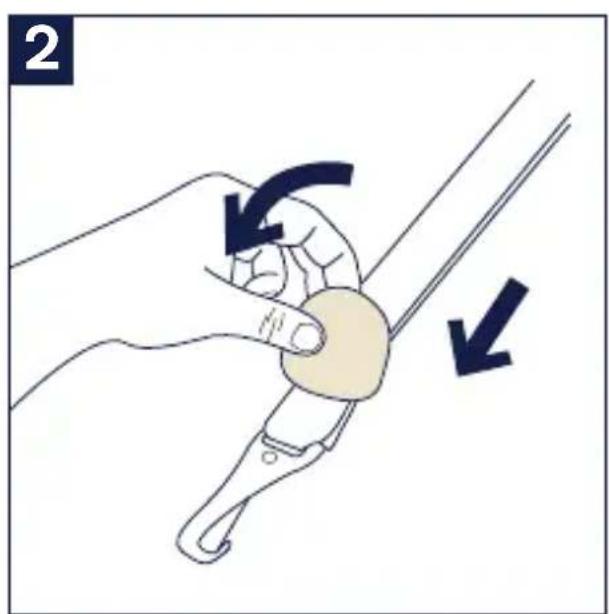
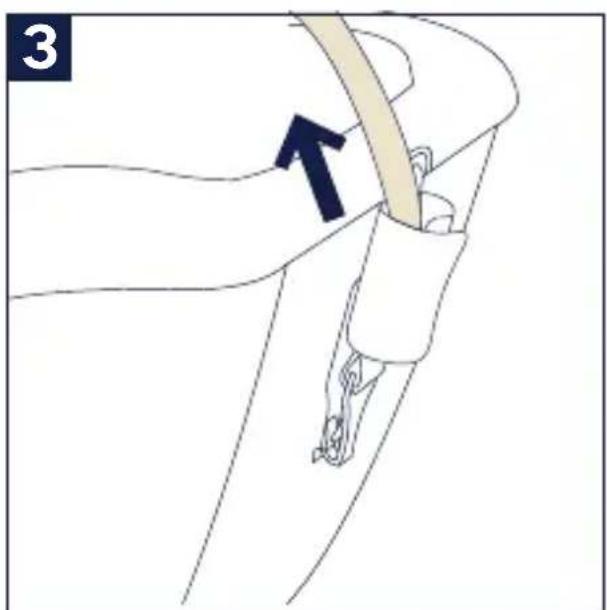
Tether Use
1 - To use, remove Tether by loosening strap and unclipping from storage anchor.
2 - To extend Tether for use, tilt Tether Adjuster and pull to lengthen.
3 - To store, attach Tether to storage anchor and remove slack in strap by pulling on free end of strap. Loose strap should be stored in provided tether cover. When not in use, Tether MUST be properly stored.
WARNING: ALWAYS USE TETHER for forward facing installation (see vehicle owner's manual). NEVER USE IN REAR FACING INSTALLATION.
Recline Use
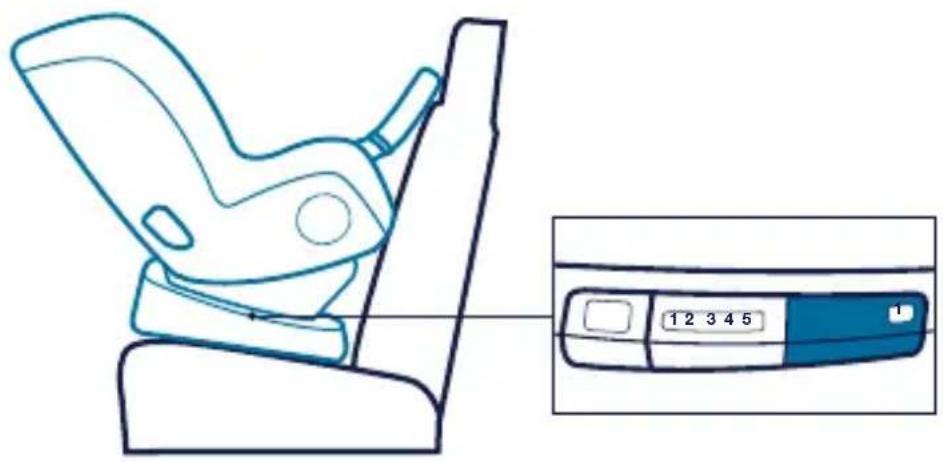
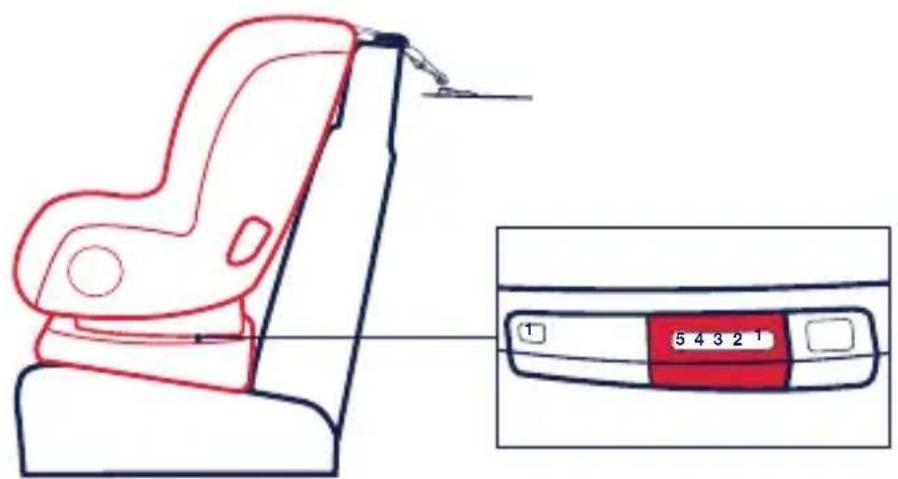
This Child Restraint has 6 recline positions. Recline can be changed for child's comfort or to improve installation of Child Restraint.
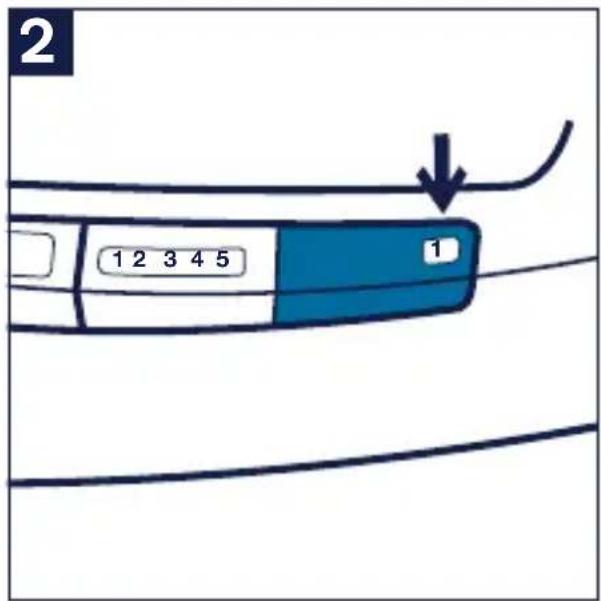
1 - Positions 1 (BLUE) are for rear facing use with children 2.3 - 18.1kg (5-40 lbs).
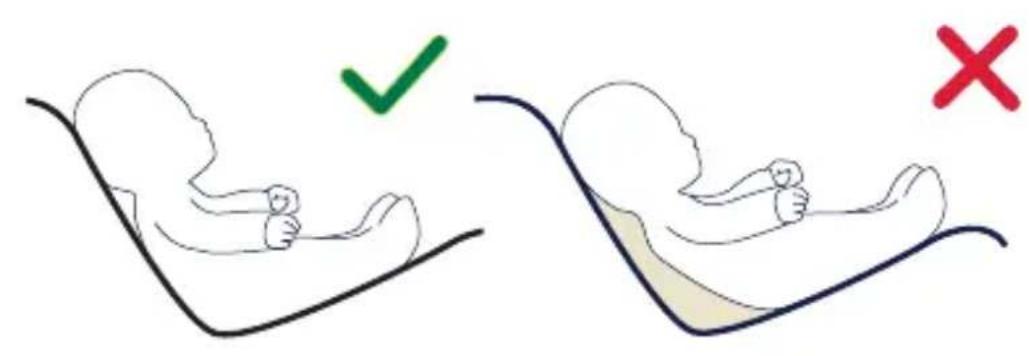
If infant's head falls forward, use Infant Insert with infants 2.3 - 5kg (5-11 lbs) to improve the recline angle for smaller infants.
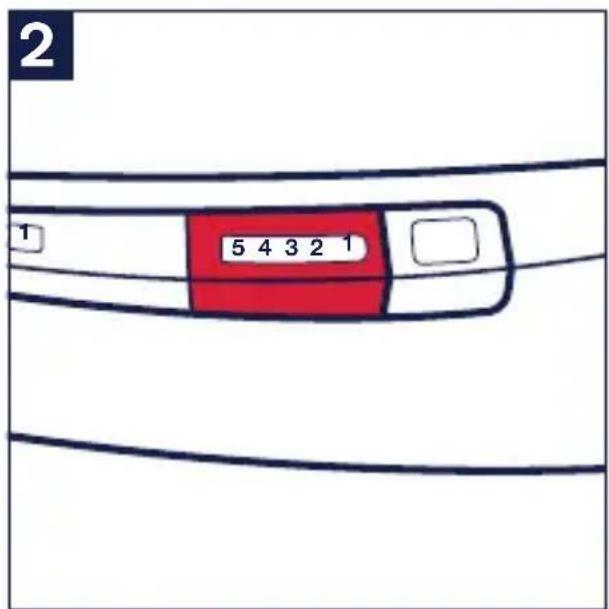
2 - Positions 1-5 (RED) are for forward facing use with children 11.3-29.4 kg (25-65 lbs).
To Adjust Recline
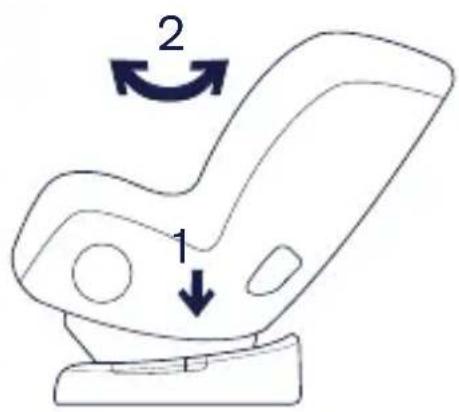
3 - Press Recline Button (1) on either side of the Child Restraint and move seat to desired recline position. (2)
Release Recline Button, and check that Child Restraint is locked in desired recline position.
To change recline position after installation, uninstall Child Restraint, select new recline position, and reinstall Child Restraint.
1
2
3
Child Usage Requirements
To use this Child Restraint, your child must meet ALL of the following weight and height requirements below:
Weight: 2.3 - 29.4 kg( 5 - 65lbs)
Height: 124 cm (49 in) or less
The Infant Insert (p.22) is only for use with infants who weigh between 2.3-5 kg (5-11 lbs).
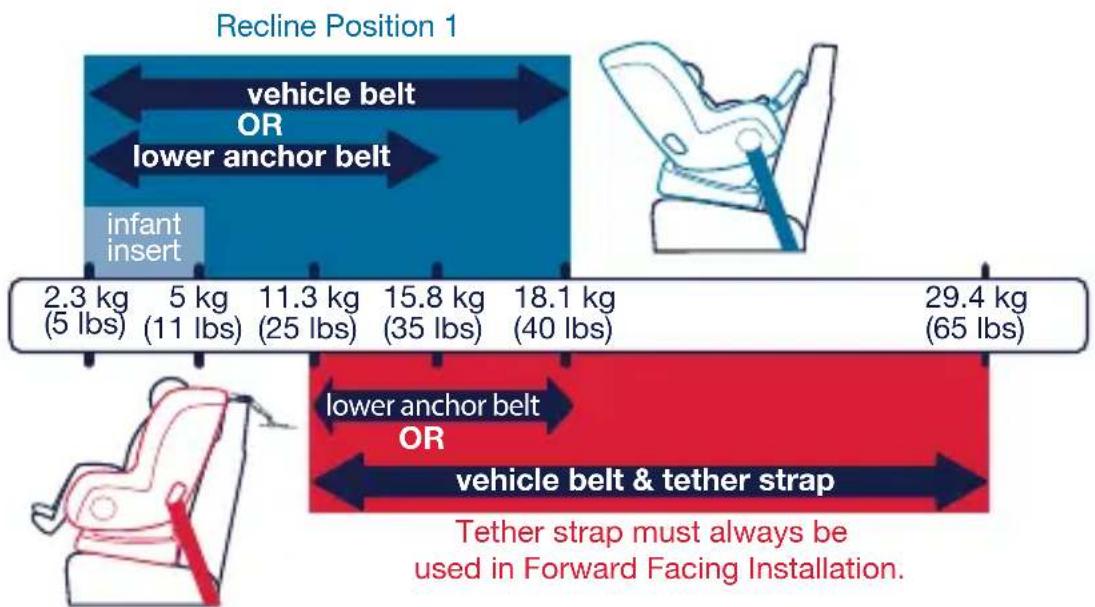
Rear Facing Installation recommended up to 2+ years 2.3-18.1 kg (5-40 lbs) height: 124 cm (49 in) or less
Forward Facing Installation recommended 2 years or older 11.3-29.4 kg (25-65 lbs) height: 124 cm (49 in) or less
WARNING: Use either vehicle seat belt or Lower Anchors. Never use both methods to install Child Restraint.
Rear Facing Installation recommended up to 2+ years or older 2.3-18.1 kg (5-40 lbs)
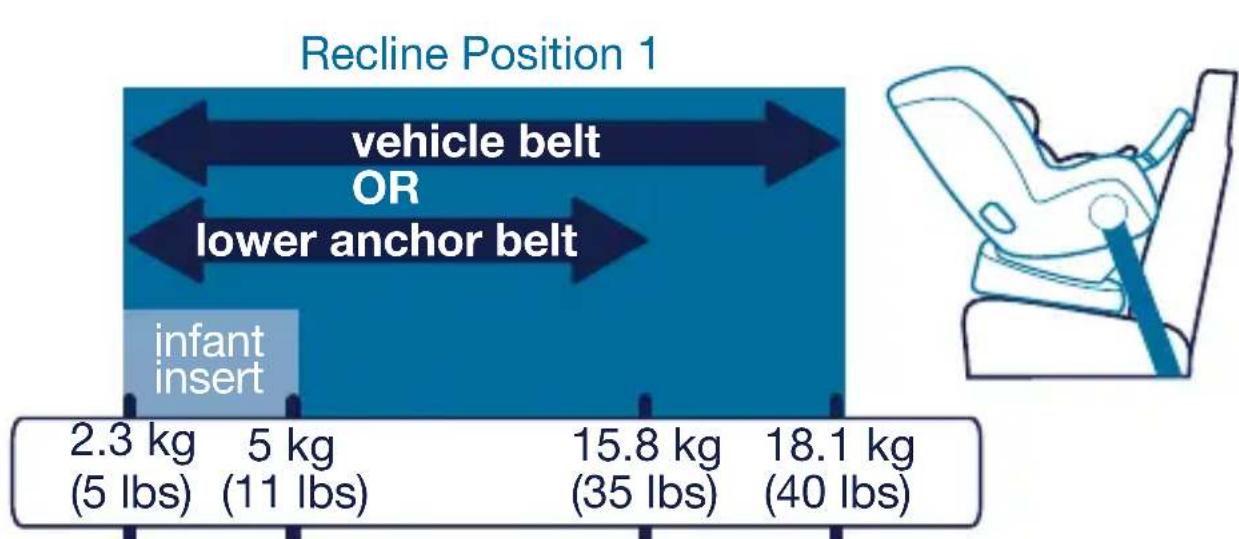
height: 124 cm (49 in) or less
The Canadian Paediatric Society recommends children should ride rear facing for as long as possible until they reach maximum height and weight for their seat.
Rear Facing Setup
Before install, store tether strap.
Move Calf Support to installation position (p.38).
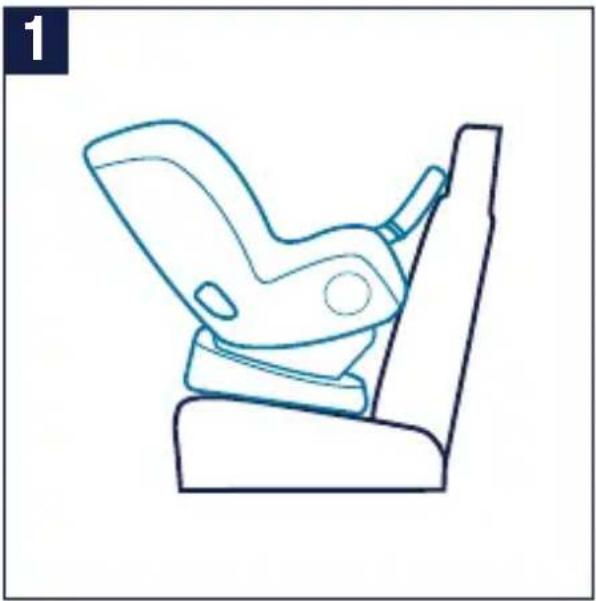
1 - Place Child Restraint rear facing in a compatible vehicle seat (p.8).
2 - Select rear facing recline position 1 (BLUE) (p.42).
If infant's head falls forward, use Infant Insert with infants 2.3 - 5kg (5-11 lbs) to improve the recline angle for smaller infants.
Loosen and unbuckle Harness and retain with Buckle Tongue Holders (p.18).
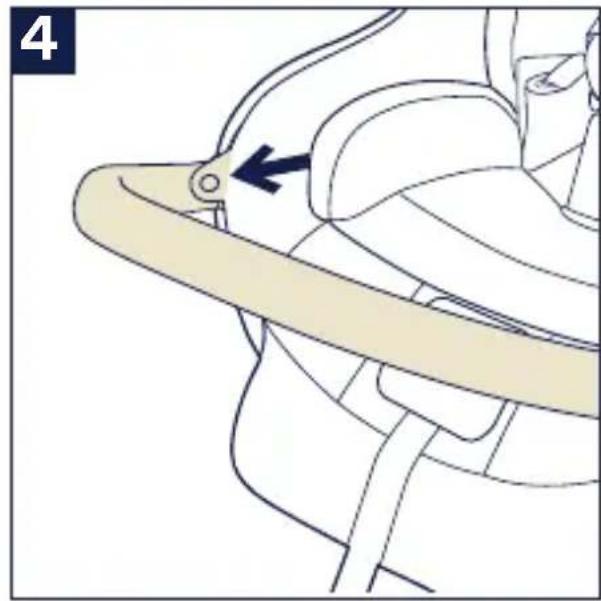
Pivot Cup Holders to USE position to access Rear Facing Belt Path (p.34). If desired, cupholders can be removed for easier access to Rear Facing Belt Path.
3 - Slide the Rebound bar ends into the openings. Push on the Rebound bar until it is completely seated into the openings.
4 - Secure the rebound bar by connecting the snap on the seat to the snap on the bar. Repeat for other side.
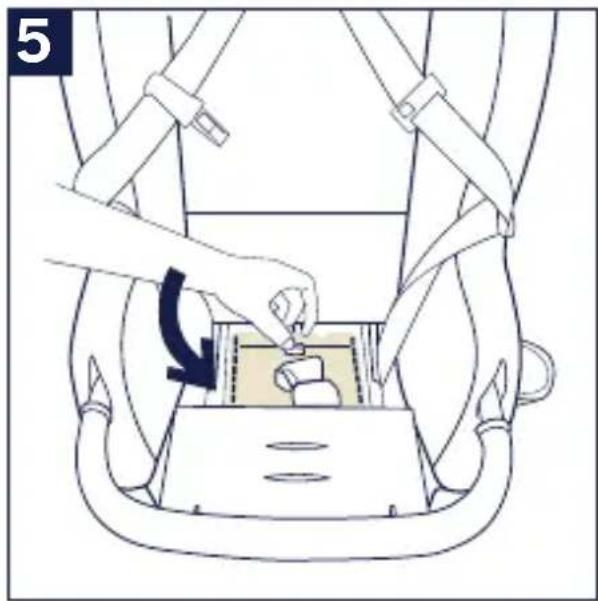
5 - Remove Infant Insert, lift lower Seat Cover, and open Rear Facing True Tension Door (p.24).
Complete installation using your vehicle's Lap/Shoulder Belt (p.48), the Universal Anchor Belt (p.50), or a compatible vehicle Lap Belt (p.52).
Using Vehicle Lap/Shoulder Belt
(preferred installation method)
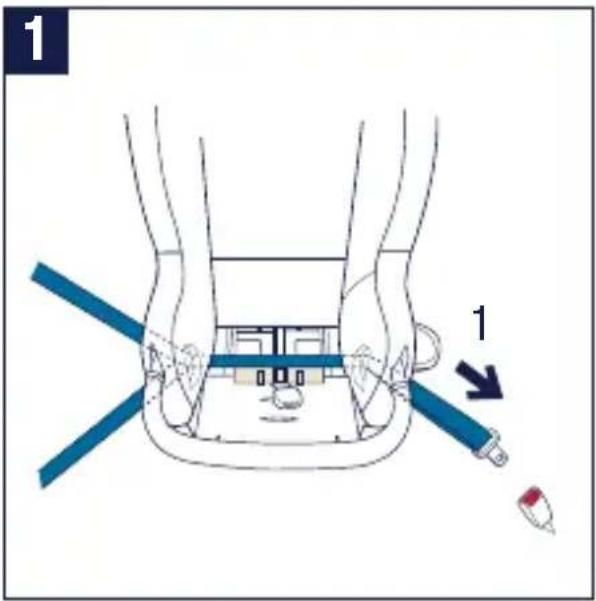
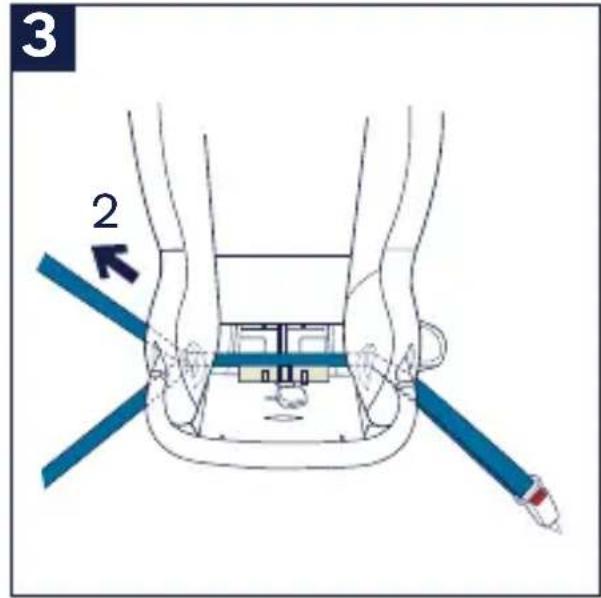
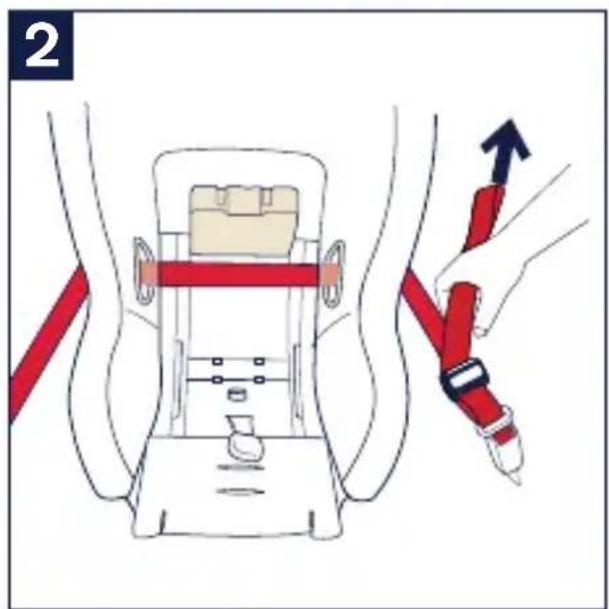
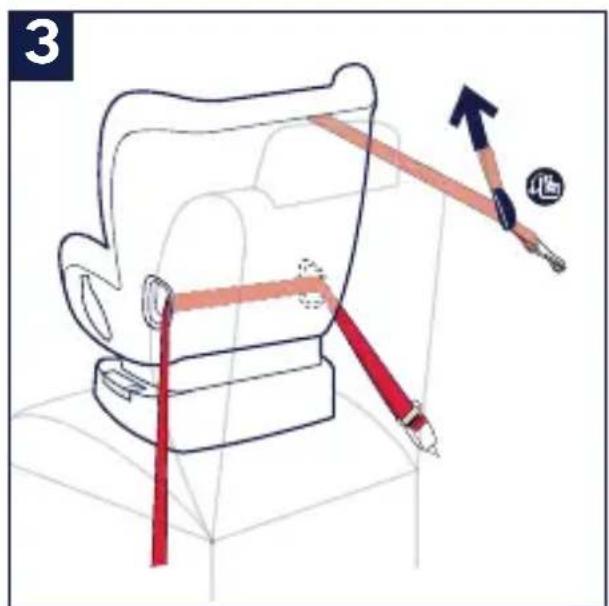
1 - Route vehicle Lap/Shoulder belt through BLUE Rear Facing Belt Path and buckle vehicle Lap/Shoulder Belt. Vehicle belt must be routed under True Tension Door. (1)
2 - Insert ONLY the Shoulder belt into the Shoulder Belt Clip on the opposite side of the vehicle buckle.
3 - Remove all slack from the vehicle belt system to properly secure this child restraint. Lock vehicle belt (refer to vehicle owner's manual). (2)
4 - Close True Tension Door and replace Seat Cover. Test by pulling on shoulder belt to ensure it is locked. To open True Tension Door, unbuckle vehicle belt and push down slightly on door to release tension.

WARNING: Check that Child Restraint is securely talled before each use.
Check Installation
- Seat is in appropriate rear facing recline position and calf support is in the USE position.
- Seat is securely installed. Hold seat near rear-facing belt path and move seat side to side, front to back, and up and down. Seat should move less than 2.5 cm (1 inch).
Tether strap is not used for Rear Facing Installation and must be secured in storage location on back of Child Restraint.
Cup Holders may be placed in any position after installation.
Shoulder belt is properly installed in the shoulder belt clip and the shoulder belt clip is placed in front of lap belt without any interference.
Using Universal Anchor Belt
WARNING: Do not install by this method for a child weighing more than 15.8kg (35 lbs).
1 - Remove Universal Anchor Belt from Storage Compartment (p.32) and route through BLUE Rear Facing Belt Path under Cup Holder.
2 - Lengthen Universal Anchor Belt as necessary (p.32) and attach to Lower Anchor points in vehicle.
3 - Remove all slack from Universal Anchor Belt by pulling loop at end of Belt.
4 - Close True Tension Door and replace Seat Cover and Infant Insert (if used). Pull crotch belt through slot.
To open True Tension Door, unbuckle vehicle belt and push down slightly on door to release tension.
WARNING: Check that Child Restraint is securely installed before each use.
Check Installation
- Seat is in appropriate rear facing recline position and calf support is in the USE position.
- Seat is securely installed. Hold seat near rear-facing belt path and move seat side to side, front to back, and up and down. Seat should move less than 2.5 cm (1 inch).
Tether strap is not used for Rear Facing Installation and must be secured in storage location on back of Child Restraint. - Cup Holders may be placed in any position after installation.
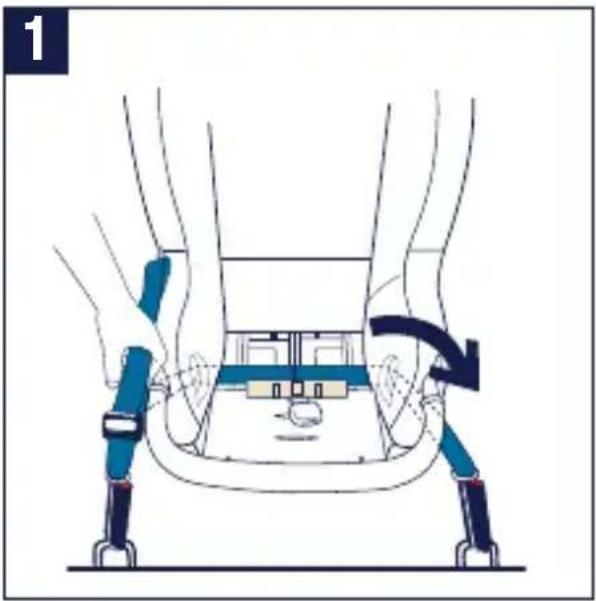
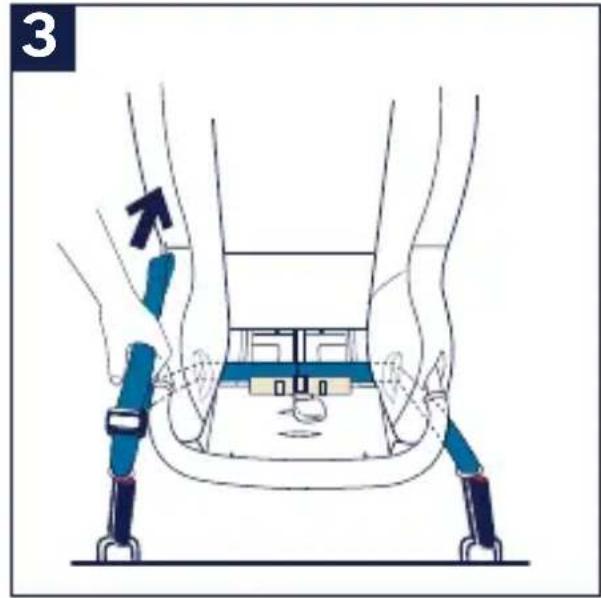
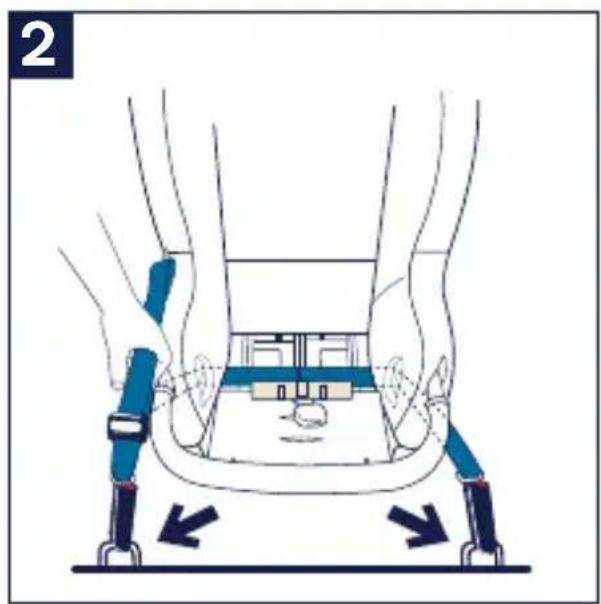
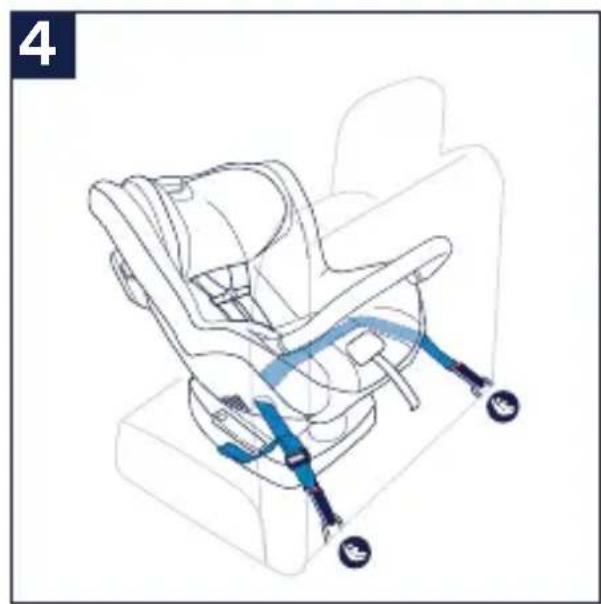
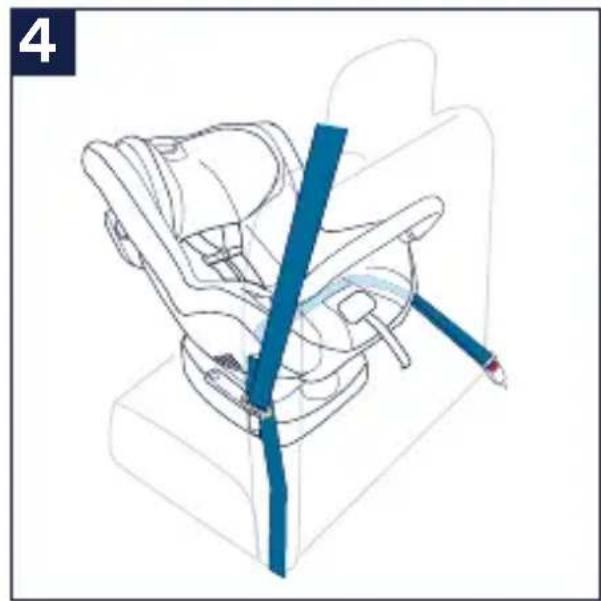
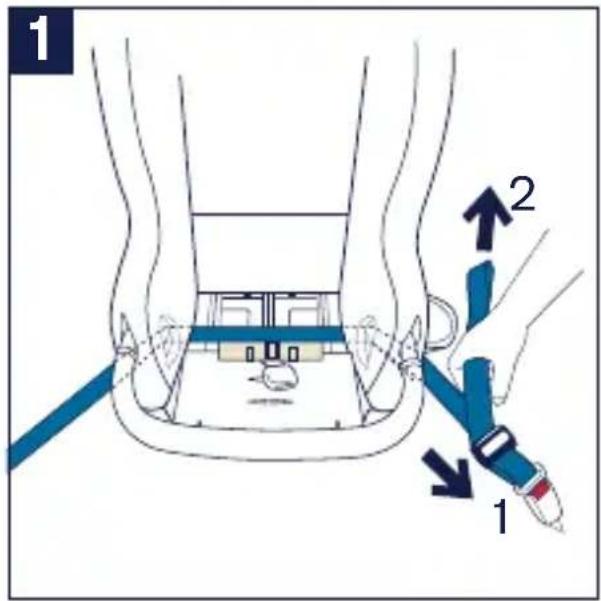
Using Vehicle Lap Belt
1 - Route vehicle Lap belt through BLUE Rear Facing Belt Path and buckle vehicle Lap Belt. (1)
Remove all slack from vehicle Lap Belt. (2)
2 - Close True Tension Door and replace Seat Cover and Infant Insert (if used).
To open True Tension Door, unbuckle vehicle belt and push down slightly on door to release tension.
WARNING: Check that Child Restraint is securely installed before each use.
Check Installation
- Seat is in appropriate rear facing recline position and calf support is in the USE position.
- Seat is securely installed. Hold seat near rear-facing belt path and move seat side to side, front to back, and up and down. Seat should move less than 2.5 cm (1 inch).
Tether strap is not used for Rear Facing Installation and must be secured in storage location on back of Child Restraint. - Cup Holders may be placed in any position after installation.
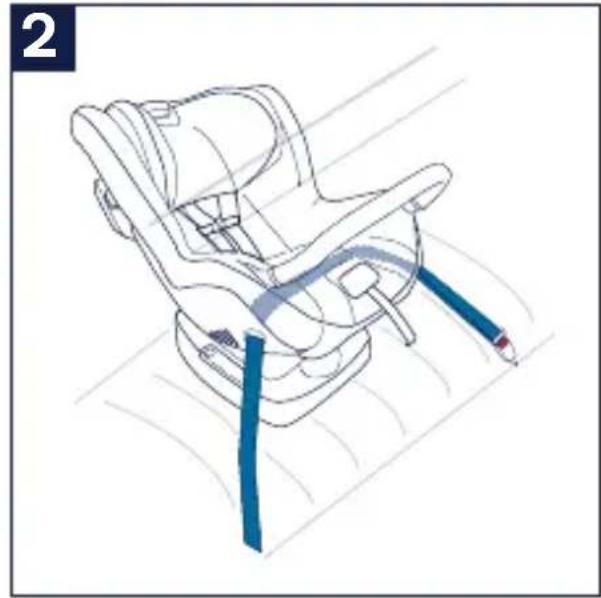
Forward Facing Installation recommended 2 years or older 11.3-29.4 kg (25-65 lbs)

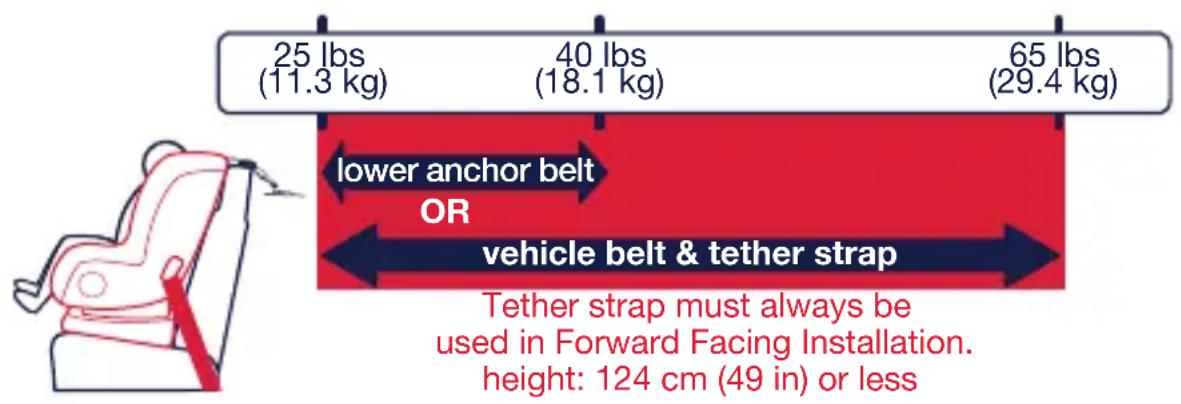
Forward Facing Setup
Remove Tether from storage location and lengthen for use (p.40).
Move Calf Support to installation position (p.38).
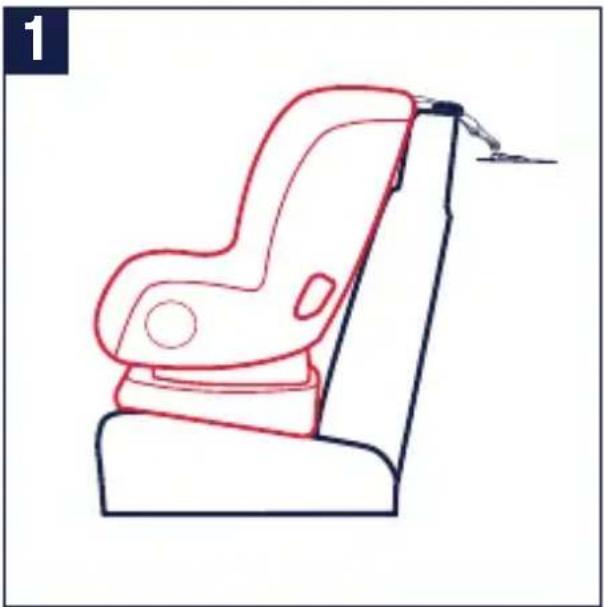
1 Place Child Restraint forward facing in a compatible vehicle seat (p.8).
2 Select desired forward facing recline position 1-5 (RED) (p.42).
Loosen and unbuckle harness and retain with Buckle Tongue Holders (p.18).
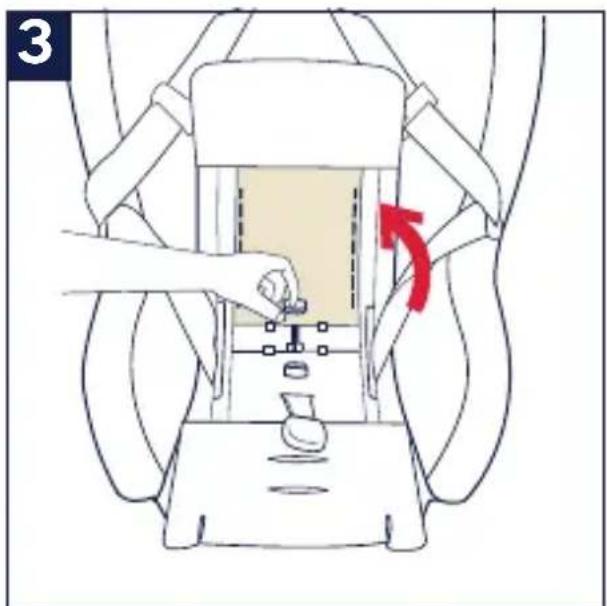
3 Fully raise Head Support, lift Seat Cover, and open Forward Facing True Tension Door (p.24).
Complete installation using your vehicle's Lap/Shoulder Belt (p.56), the Universal Anchor Belt (p.58), or a compatible vehicle Lap Belt (p.60).
Using Vehicle Lap/Shoulder Belt
(preferred installation method)
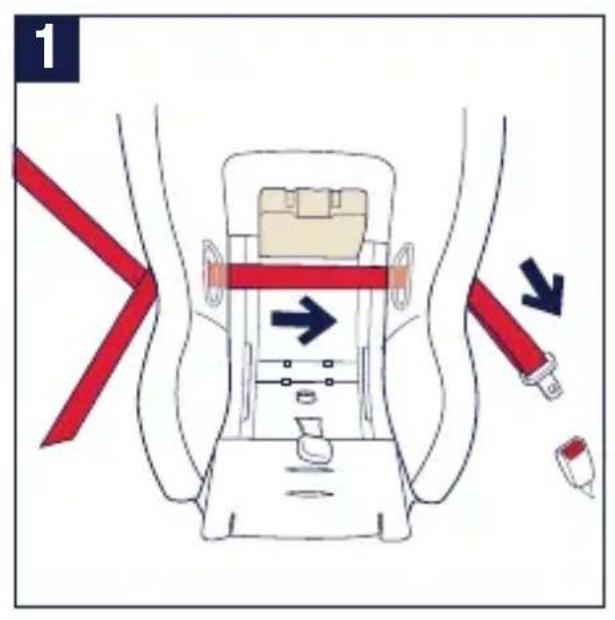
1 - Route vehicle Lap/Shoulder belt through RED
Forward Facing Belt Path and buckle vehicle Lap/ Shoulder Belt.
2 - Lock vehicle belt (refer to vehicle owner's
manual). Remove all slack from the vehicle belt system to properly secure this child restraint.(1)
Close True Tension Door and replace Seat Cover.
Test by pulling on shoulder belt to ensure it is locked.
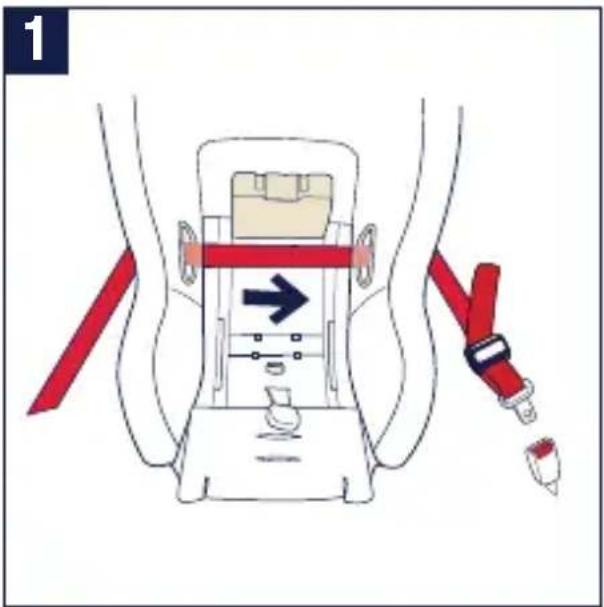
3 - Attach Tether Hook to Tether Anchor on vehicle and
tighten (p.40).
4 - Tuck excess webbing behind Child Restraint.
To open True Tension Door, unbuckle vehicle belt and push down slightly on door to release tension.
WARNING: Check that Child Restraint is securely installed before each use.
Check Installation
- Seat is in appropriate forward facing recline position and calf support is in the USE position.
- Seat is securely installed. Hold seat near forward facing Belt Path and move seat side to side, front to back, and up and down. Seat should move less than 2.5 cm (1 inch).
Tether is properly used and attached to vehicle Tether Anchor.
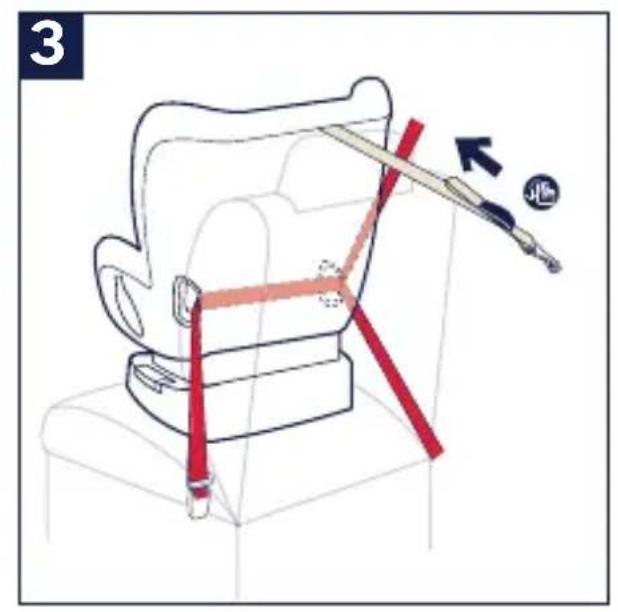
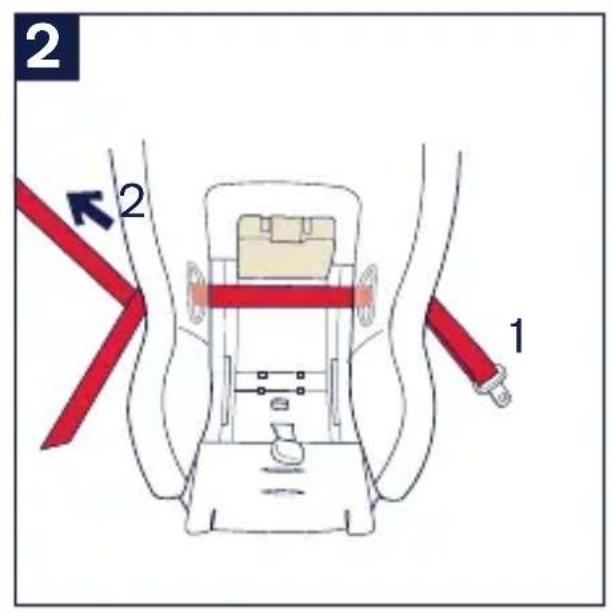
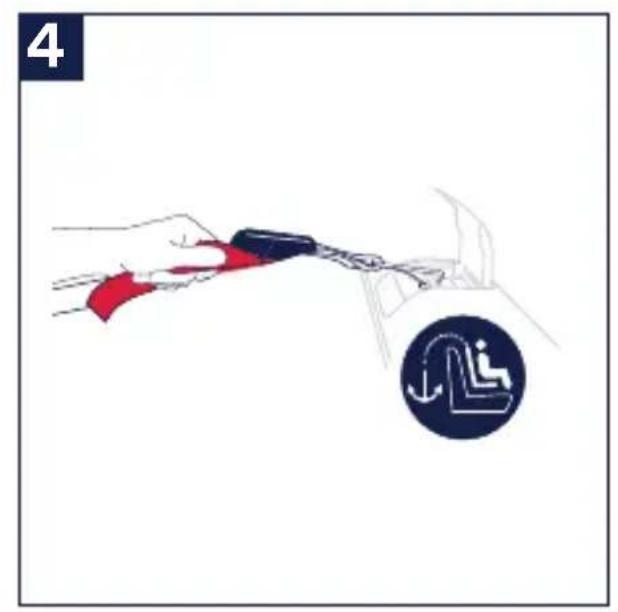
Using Universal Anchor Belt
WARNING: Do not install by this method for a child weighing more than 18.1kg (40 lbs).
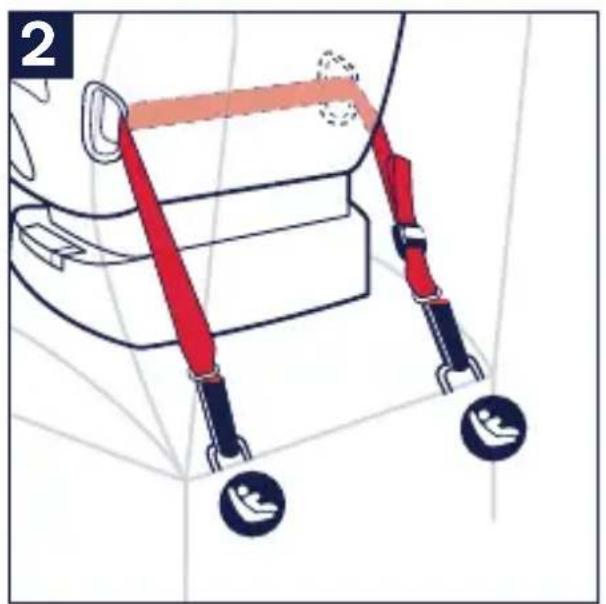
1 - Remove Universal Anchor Belt from Storage Compartment (p.32), and route through RED Forward Facing Belt Path.
2 - Lengthen Universal Anchor Belt as necessary (p.32) and attach to Lower Anchor points in vehicle.
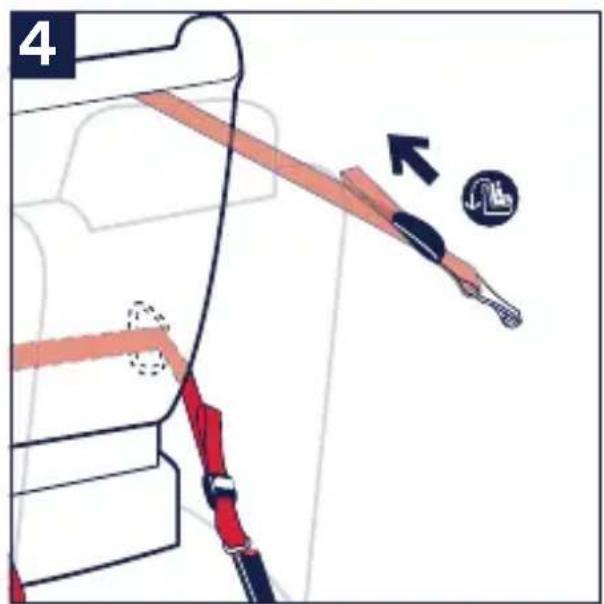
3 - Remove all slack from Universal Anchor Belt by pulling loop at end of Belt straight back from Latch Connector. Close True Tension Door and replace Seat Cover.
4 - Attach Tether Hook to Tether Anchor on vehicle and tighten (p.40). Tuck excess webbing behind Child Restraint.
To open True Tension Door, unbuckle vehicle belt and push down slightly on door to release tension.
WARNING: Check that Child Restraint is securely installed before each use.
Check Installation
- Seat is in appropriate forward facing recline position and calf support is in the USE position.
Seat is securely installed. Hold seat near forward facing Belt Path and move seat side to side, front to back, and up and down. Seat should move less than 2.5 cm (1 inch).
Tether is properly used and attached to vehicle Tether Anchor.
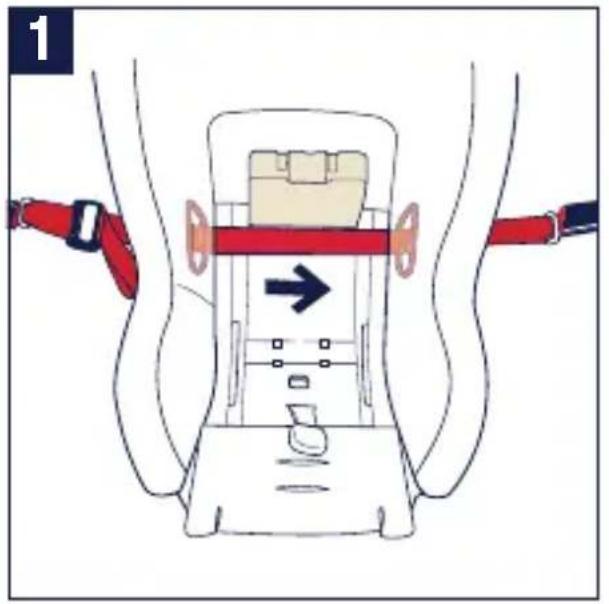
Using Vehicle Lap Belt
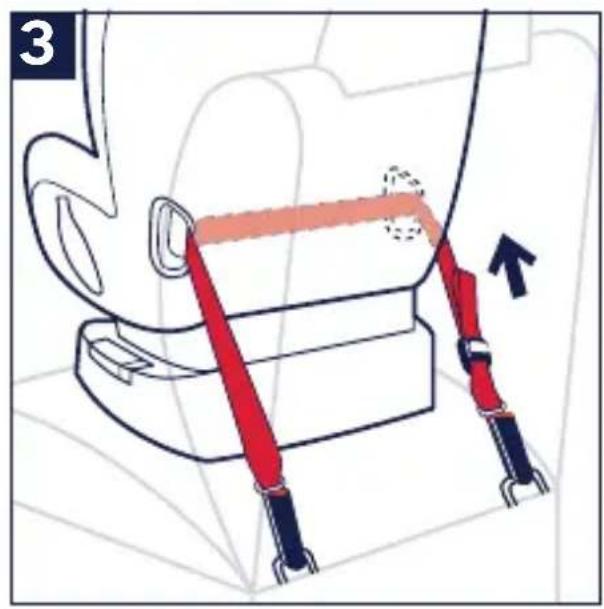
1 - Route vehicle Lap Belt through RED Forward-Facing Belt Path and buckle vehicle Lap belt.
2 - Remove all slack from vehicle Lap Belt. (1) Close True Tension Door and replace Seat Cover.
3 - Attach Tether Hook to Tether Anchor on vehicle and tighten (p.40). Tuck excess webbing behind Child Restraint.
To open True Tension Door, unbuckle vehicle belt and push down slightly on door to release tension.
WARNING: Check that Child Restraint is securely installed before each use.
Check Installation
- Seat is in appropriate forward facing recline position and calf support is in the USE position.
- Seat is securely installed. Hold seat near forward facing Belt Path and move seat side to side, front to back, and up and down. Seat should move less than 2.5 cm (1 inch).
Tether is properly used and attached to vehicle Tether Anchor.
Securing Child in Child Restraint
WARNING: If your child is not properly secured in the Child Restraint, they may be ejected in a crash, resulting in serious injury or death.
Loosen and unfasten Harness. Retain with Buckle Tongue Holders (p.18).
1 - Place child in Child Restraint with child's back flat against Child Restraint seat back.
DO NOT allow child to slouch.
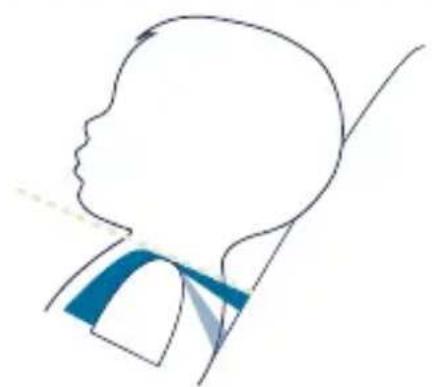
2 - For rear facing use, adjust Head Support (p.20) to position harness AT or just below shoulders.
For forward facing use, adjust Head Support (p.20) to position harness AT or just above shoulders.
Bottom of Head Support should be close to, but not compressing, child's shoulders.
Adjust Crotch Belt to fit child (p.28). Crotch Belt should be close to, but not under child.
Position harness over child's shoulders and around child's waist, and buckle harness.
3 - Tighten harness (p.18) to fit snugly on child's shoulders and thighs. It is snug if you cannot pinch a fold in the strap (1).
Fasten and position Chest Clip (p.18) level with child's armpits (2).
1
2
Rear Facing: Harness AT or just below shoulders
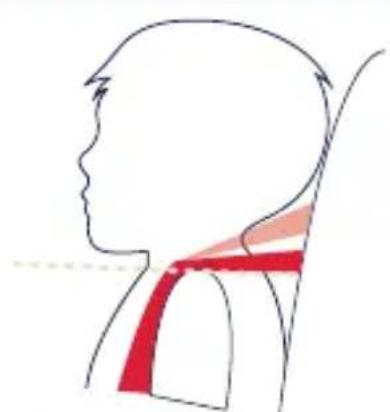
Forward Facing: Harness AT or just above shoulders
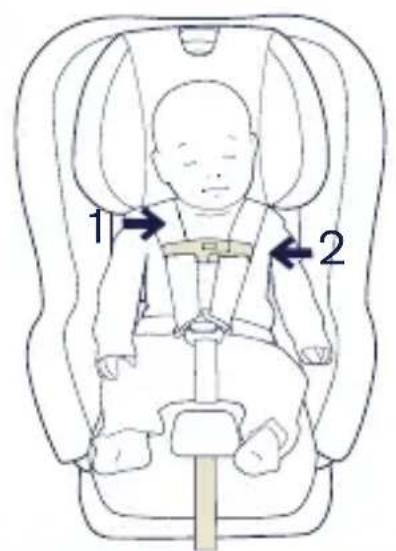
3
Secure Child Checklist
WARNING: Before securing child in the restraint, always check that Child Restraint is properly installed.
Harness straps are at correct height.
Rear Facing: AT or just below child's shoulders
Forward Facing: AT or just above child's shoulders
Use Infant Insert, Head Insert, Harness Shoulder Pads and Crotch Pad with infants 2.3-5 kg (5-11 lbs) to improve fit to seat and harness and to improve the recline angle for smaller infants.
- Recline angle is appropriate for Child.
If infant's head falls forward, use Infant Insert with infants 2.3 - 5kg (5-11 lbs) to improve the recline angle for smaller infants.
Head Support is locked in one of the 10 positions.
Harness Buckle is securely fastened. Pull to check!
- Harness Straps are snug and flat on shoulders and thighs.
A snug strap should not allow any slack. It lies in a relatively straight line without sagging. It does not press on the child's flesh or push the child's body into an unnatural position.
WARNING: Child cannot be properly secured in Child Restraint when wearing bulky clothing or wrapped in a blanket. For warmth, add blanket after properly securing Child in the Child Restraint.
Chest Clip is fastened and at Child's armpit level.
Aircraft Installation
The Civil Aviation Services of Transport Canada recommend that children up to 18.1kg (40 lbs) use a Child Restraint while travelling on an aircraft.
This Child Restraint is certified for use on aircraft. Contact your airline about their policies prior to travel.
Install Child Restraint rear facing or forward facing in a forward facing aircraft seat following "Using Vehicle Lap Belt" instructions, but install aircraft belt on top of closed True Tension Door and under Seat Cover.
Cleaning and Maintenance
WARNING: Do not attempt to disassemble the Child Restraint. Only perform steps shown in this manual.
Seat Cover Removal
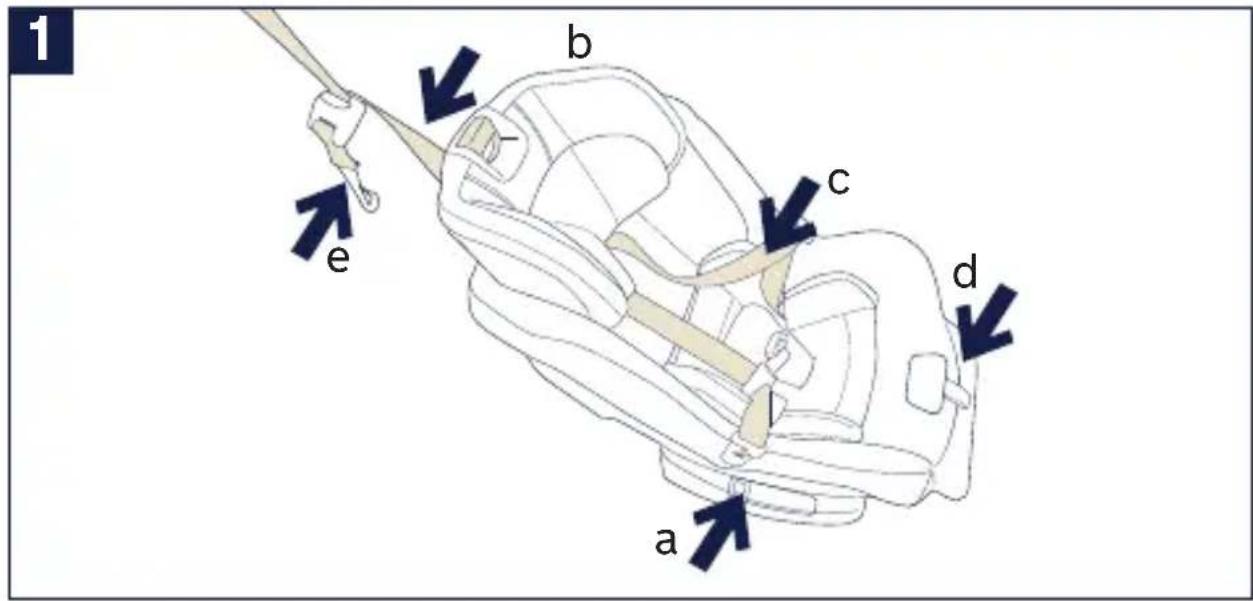
1 - To remove seat pad:
a Recline Child Restraint to rear facing position 1 (BLUE).
b Set Head Support in highest position.
c Loosen and unbuckle Harness and Chest Clip.
d Fully extend Calf Support.
e Remove Tether from Storage Anchor.
Remove Harness/Buckle Pads as well as Infant and Head Inserts.
Take care when removing Head Support Cover so as not to damage the energy absorbing foam.
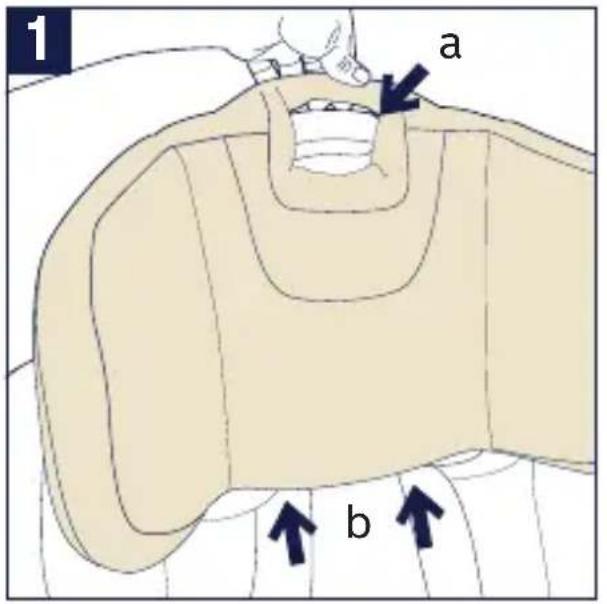
1 - Remove Head Support Cover.
a Grasp Head Support Cover at top behind Head Support Button.
b Peel Cover off Head Support; work on one side then the other. Unsnap Cover and remove.
2 - Unsnap Seat Cover.
Remove Seat Cover from Calf Support.
3 - Remove Cover from Child Restraint.
a Start at bottom, near Calf Support, work toward Buckle Holder. Pull Seat Cover out of seat cover retaining channel.
b Unhook Cover beneath Buckle Tongue Holder.
c Continue to the tether.
d Repeat steps A through C for the other side.
4 - Flip cover over the top of the Child Restraint. Slide Seat Cover off of the Tether.
Z

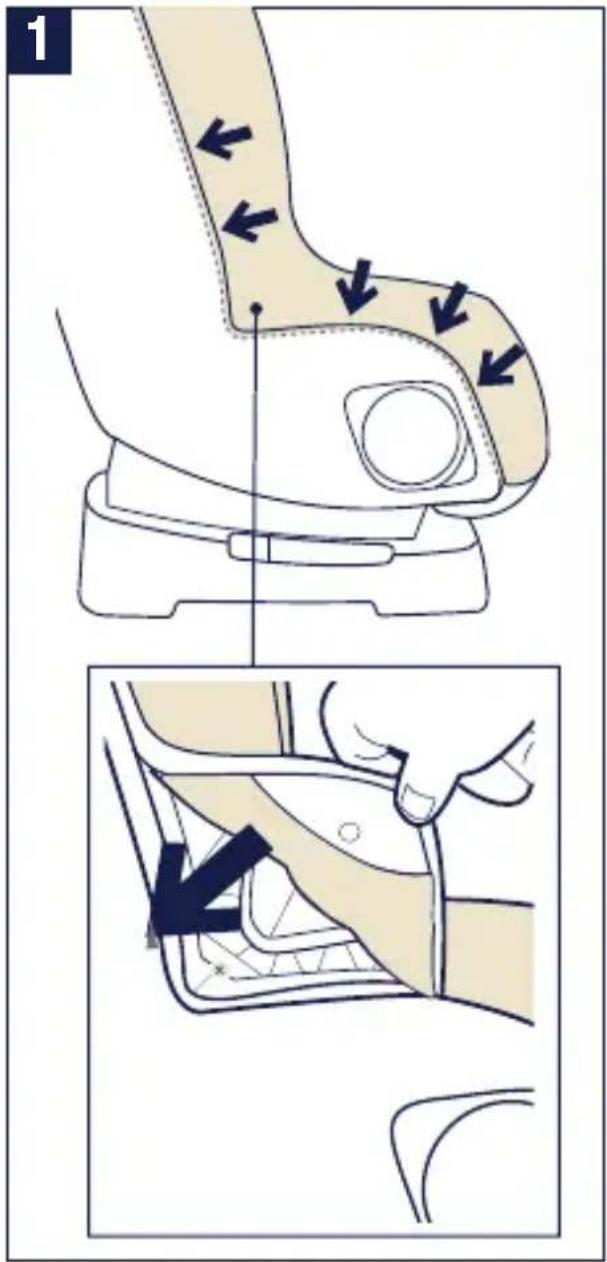
Seat Cover Assembly
Reverse steps of seat cover removal.
Recline child restraint to rear facing position 1.
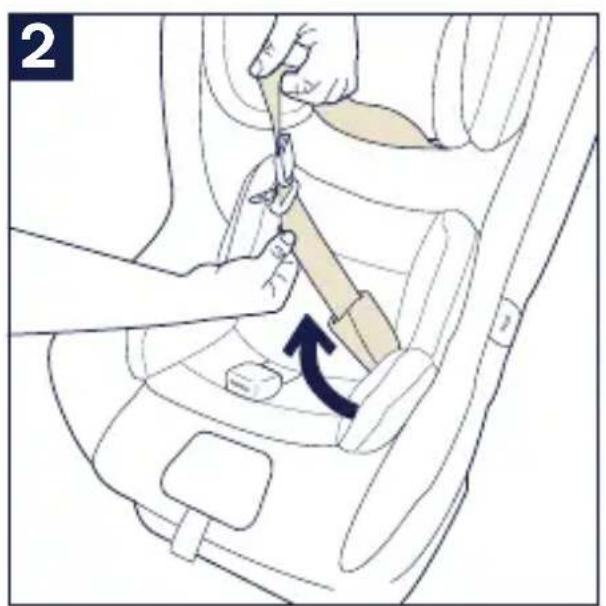
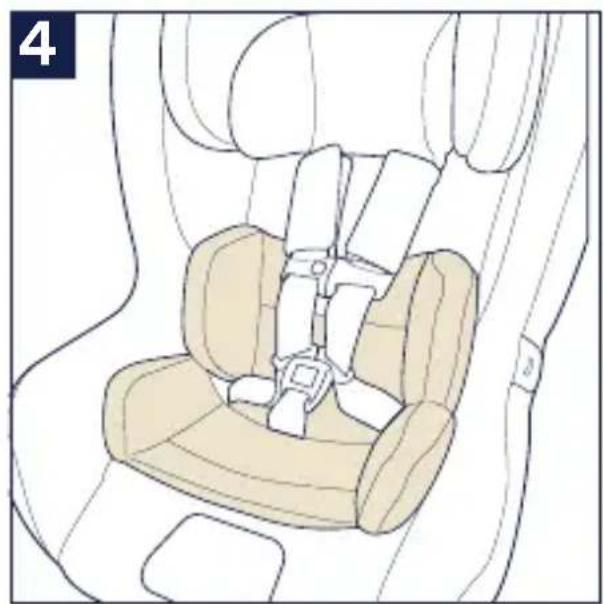
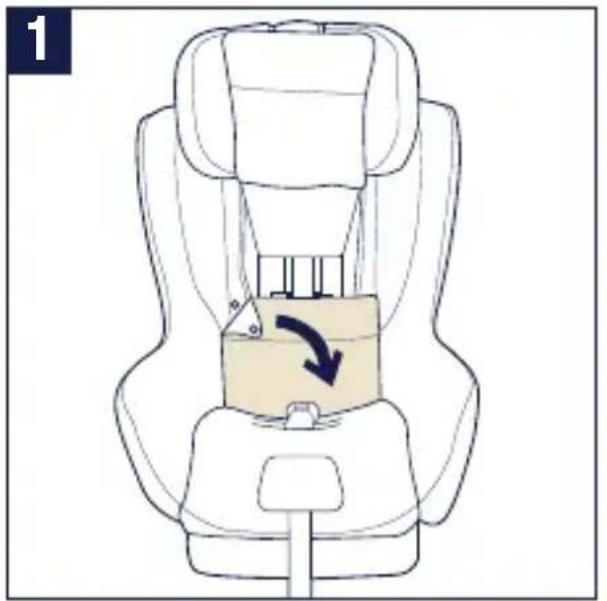
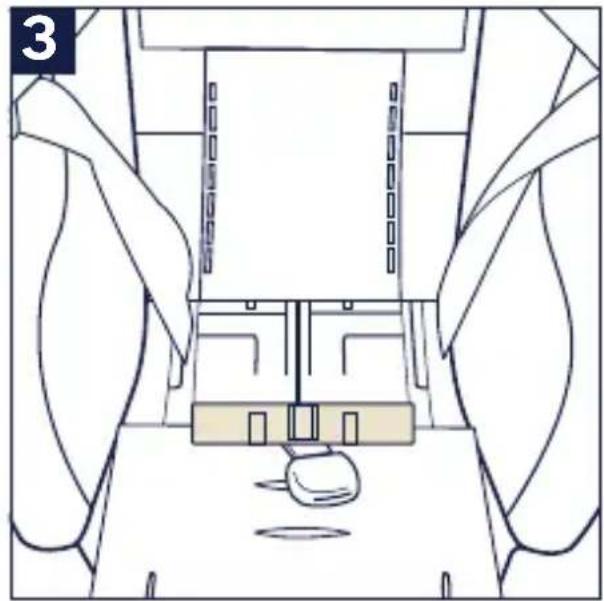
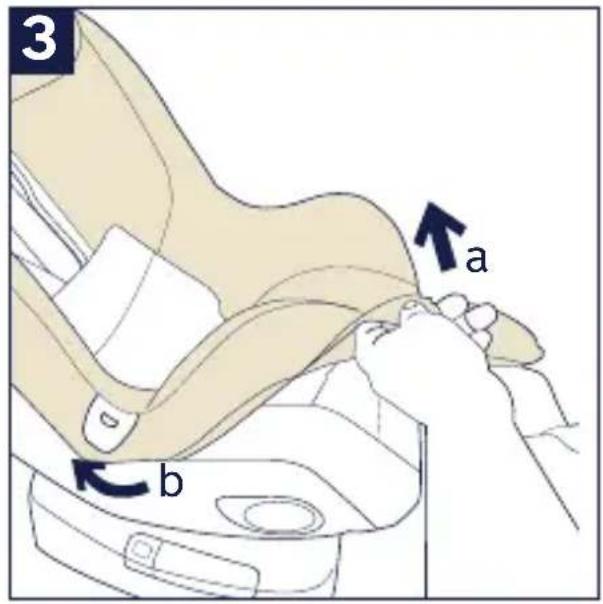
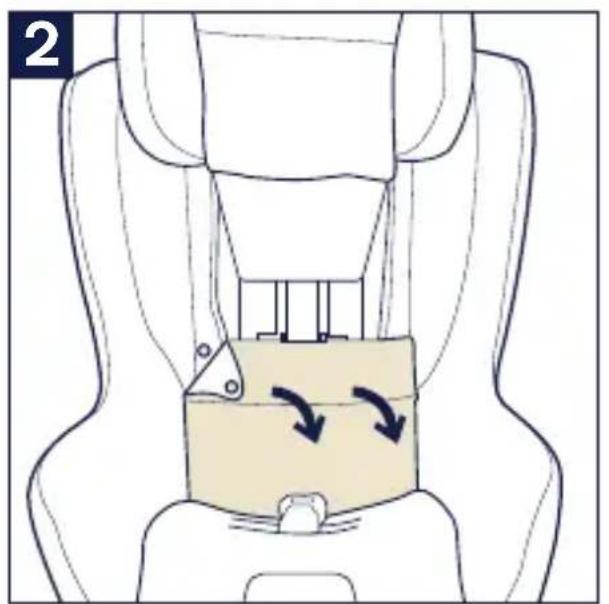
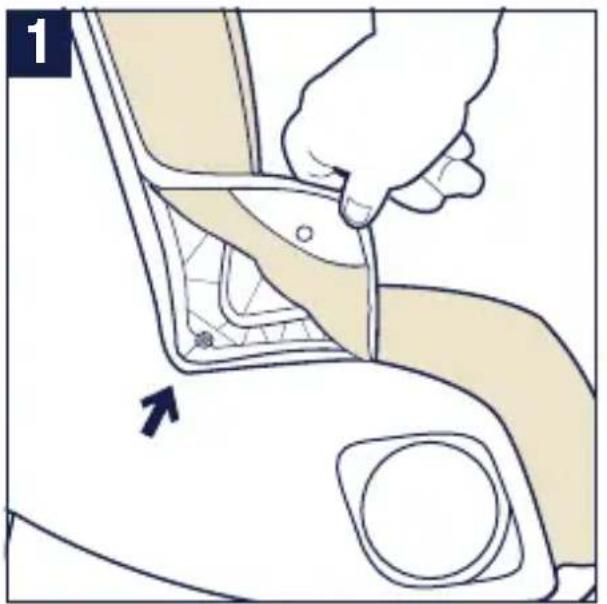
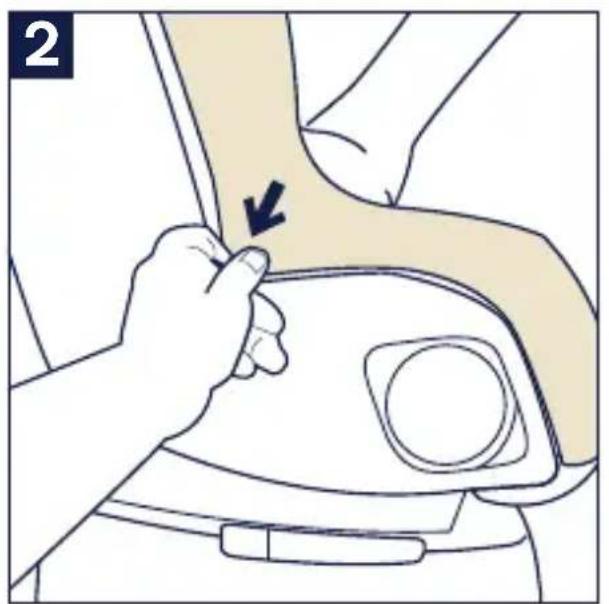
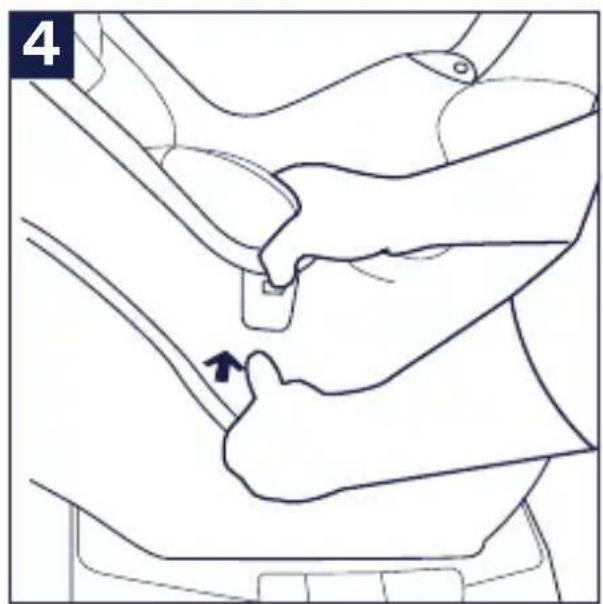
1 - Tuck the seat cover into the retaining channel along the edge of the seat and tuck the corner flap in near the screw.
From the center of the seating area, push the white plastic tab on the seat cover down over the screw.
2 - While pulling down on the fabric from the outside.
Ensure both corner pockets are secured to the outside of the calf support.
Cleaning the Seat Cover and Harness Pads
When required, seat cover and harness pads may be machine washed with cold water and mild detergent, on the delicate cycle.
Allow to air dry.
DO NOT use bleach or other harsh chemicals to clean your child restraint cover or harness.
DO NOT attempt to iron your child restraint.
Z
Cleaning the Infant Insert
When required, the Infant Insert may be machine washed with a mild soap and cold water. The support wedge located on the back side of the Infant Insert should be spot cleaned only. DO NOT machine wash the support wedge.
Allow to air dry.
Cleaning the Harness
The Child Restraint harness system cannot be removed. DO NOT attempt to remove the harness system.
When required, harness may be hand washed with a sponge and warm soapy water.
Towel dry excess water and allow to air dry.
DO NOT attempt to iron your Harness.
Cleaning the Shell
When required, shell may be hand washed with damp sponge.
Towel dry.
DO NOT use abrasive cleansers on the Shell.
Cleaning the Buckle
BUCKLE CANNOT BE REMOVED.
To clean buckle, wipe with damp cloth.
Clean Harness Adjuster
WARNING: Do not attempt to disassemble the child restraint. Only perform steps shown in this manual.
Harness Function Test
PUSH on back of seat and firmly PULL forward on the harness straps without pressing release button.
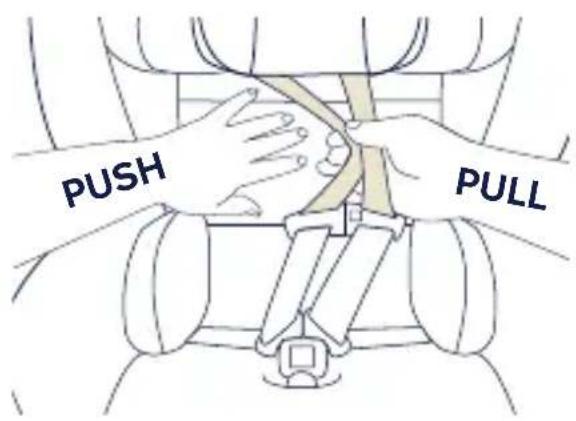
If harness remains tight, harness adjuster is functioning normally.
A harness loosens, follow Clean Harness Adjuster steps.
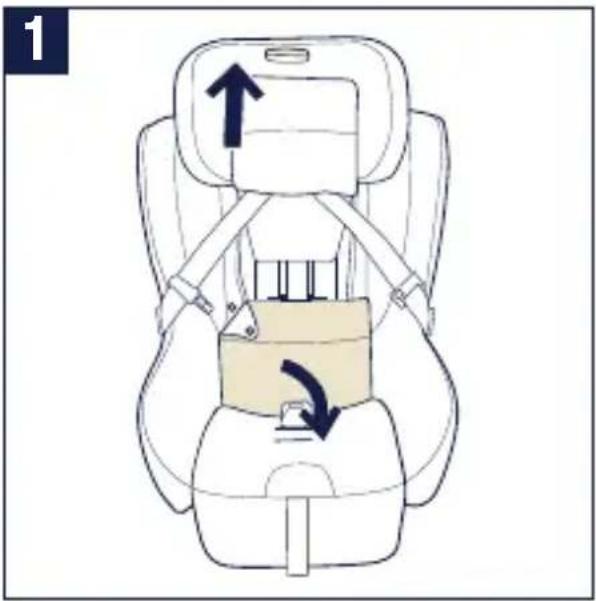
To Access Harness Adjuster
1 - Adjust head support to highest position, unsnap seat cover and pull to front of seat.
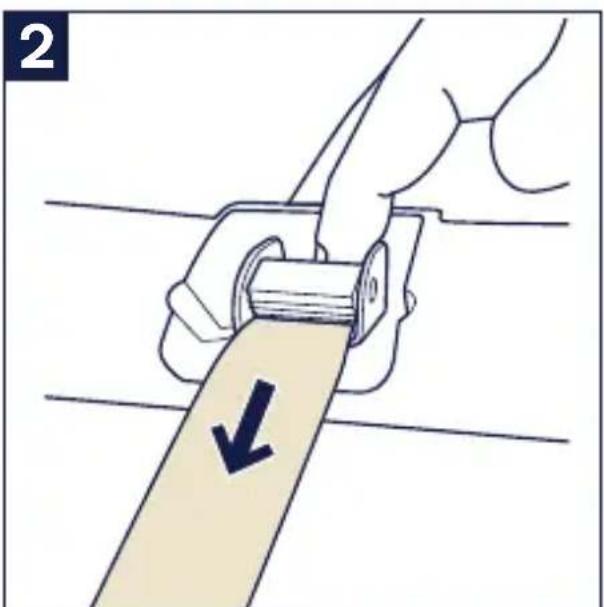
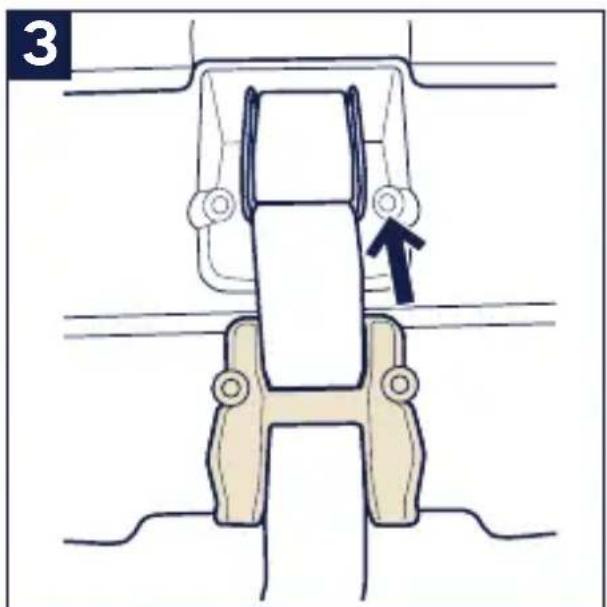
2 - Remove the two Phillips head screws from the Harness Adjuster cover. KEEP screws for reinstall.
3 - Remove Harness Adjuster Cover and slide forward on harness till it is out of the way.
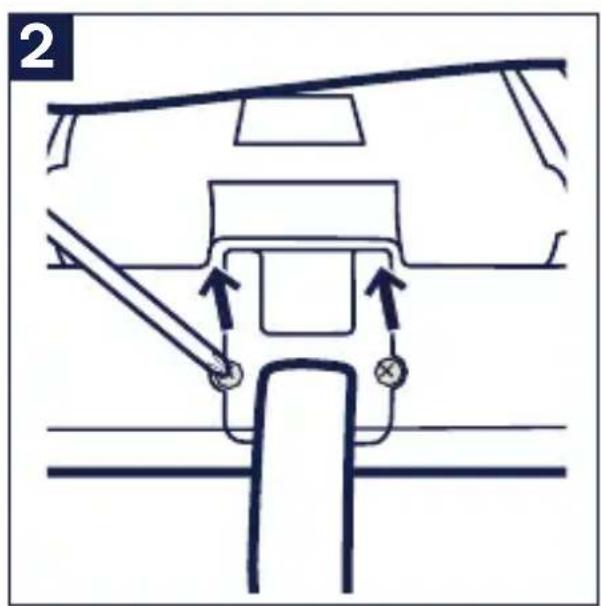
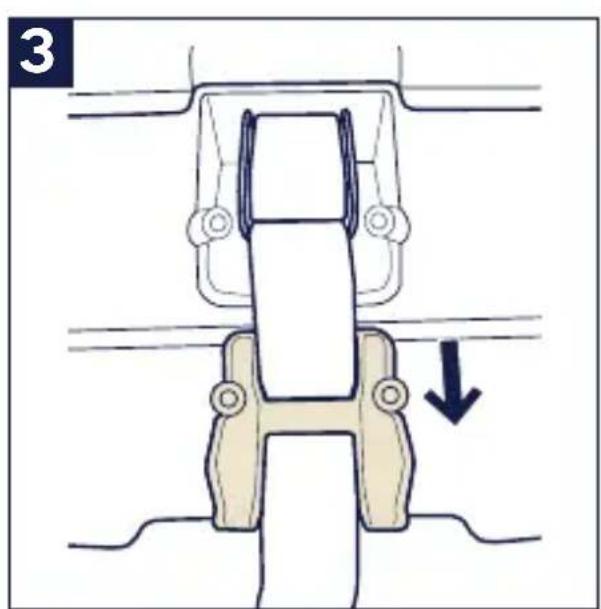
To Clean Harness Adjuster
1 - While pressing Harness Adjuster button, use a brush or toothbrush to brush/scrape the area and each tooth/ groove down to where the harness and tooth/grooves meet.
2 - Pull Harness out slightly to help remove debris out of teeth area. Clean each tooth/groove carefully. The recline may need to be reduced to help pull debris away from the teeth.
When fully cleaned, release locking mechanism and re-do Harness Function Test (p. 73).
Reassemble Harness Adjuster
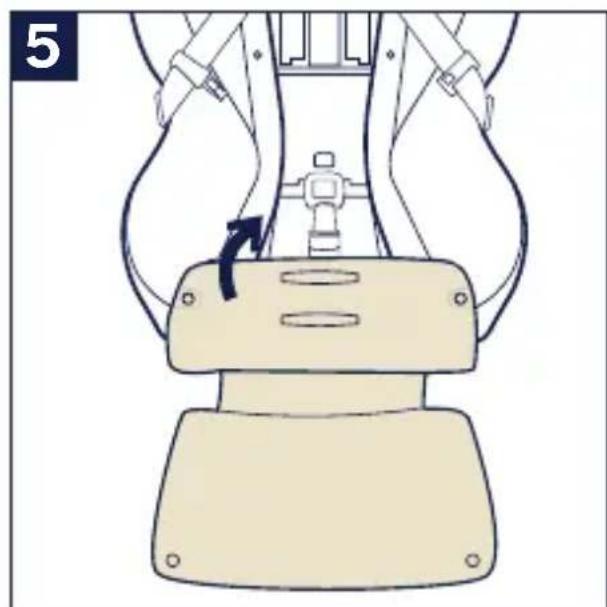
3 - Slide Harness Adjuster Cover up harness and reattach Harness Adjuster Cover to the seat.
4 - Attach Harness Adjuster Cover with two previously removed Phillips head screws.
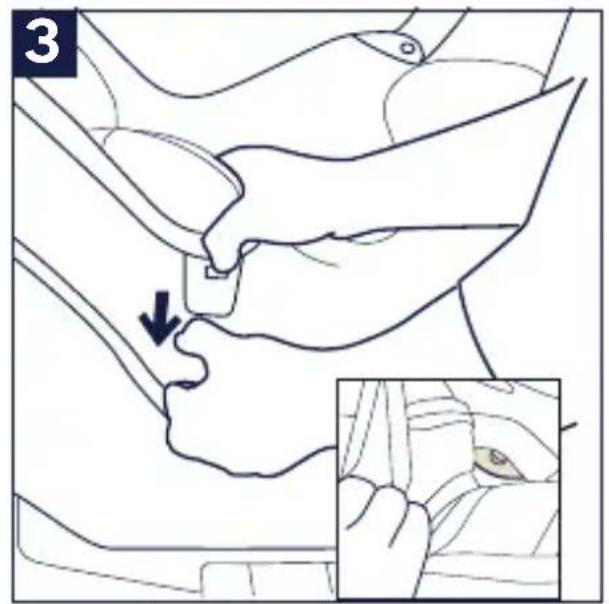
5 - Replace seat cover in seat
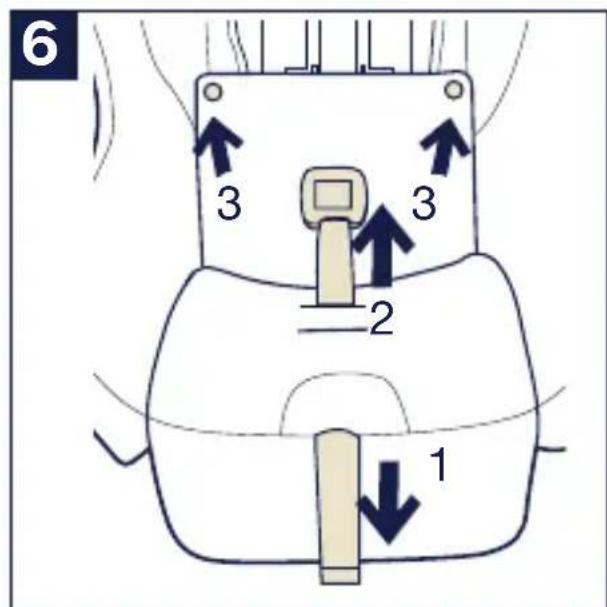
6 - Pull harness strap (1) and buckle (2) through slot in seat cover and snap seat cover back to seat (3).
Repeat Harness Function Test (p.8) with fully assembled child restraint. If harness does not remain tight after reassembly, contact Nuna at 1-800-667-4111 or info@nunababy.ca for additional assistance with cleaning.
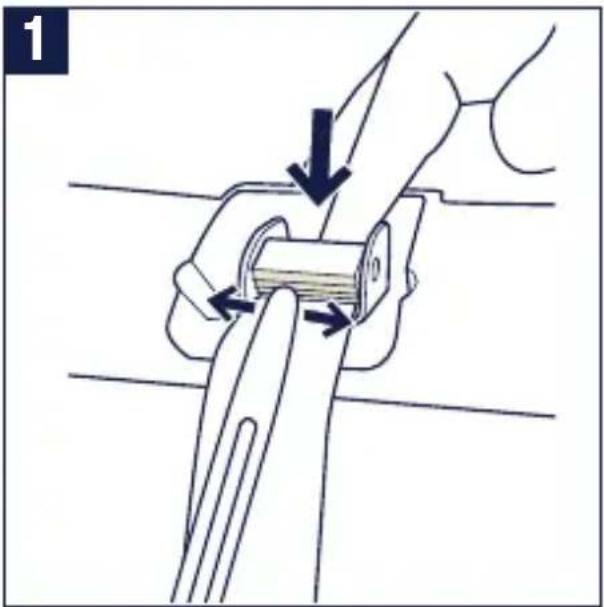
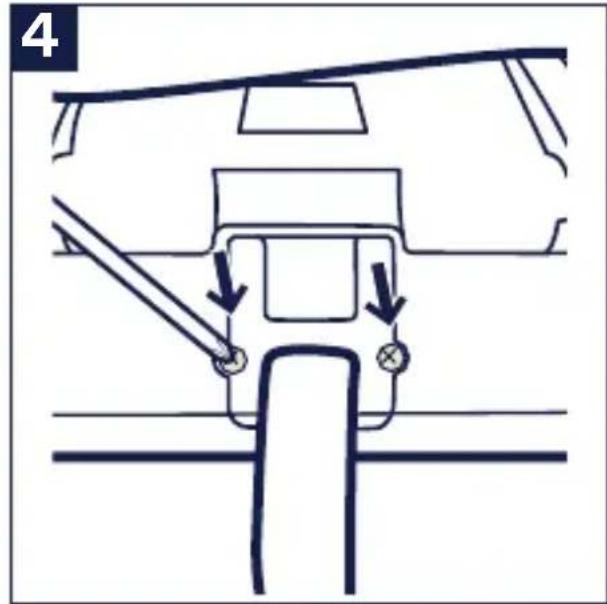
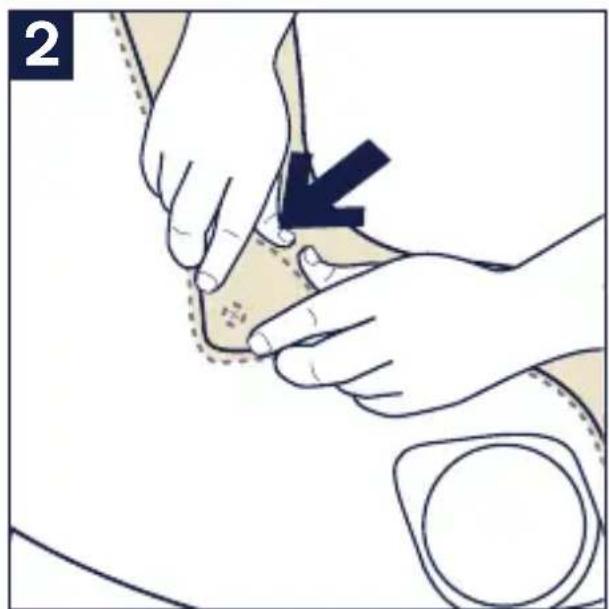
Seat Cover Assembly
- Reverse steps of seat cover removal.
- Recline child restraint to rear facing position 1.

1 - Tuck the seat cover into the retaining channel along the edge of the seat and tuck the corner flap in near the screw.
2 - With corner flap inserted into retaining channel, push firmly on plastic in corner flap until opening in plastic slides over screw.
Pull on seat pad to ensure flap is secured to screw. Ensure both corner pockets are secured to the outside of the calf support.