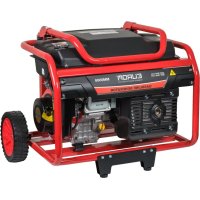
MM5500 - Generator Eurom - Free user manual and instructions
Find the device manual for free MM5500 Eurom in PDF.



| Product type | Generator |
| Brand | Eurom |
| Model | MM5500 |
| Rated voltage | 230 V |
| Frequency | 50 Hz |
| Rated power | 3800 W |
| Maximum power | 4200 W |
| Engine type | BRILLIANT GT1000, OHV 4-stroke, air-cooled |
| Displacement | 296 cm³ |
| Fuel | Unleaded gasoline |
| Tank capacity | 27 liters |
| Engine oil type | SAE 10W-30 or 10W-40 |
| Oil quantity | 1.2 liters |
| Starting system | Manual (recoil cord) |
| Oil level alarm | Yes (automatic engine shutdown) |
| Power outlets | 2 outlets 230 V |
| Protection | Circuit breaker and AC safety |
| Voltmeter | Yes |
| Weight | 79 kg |
| Dimensions (LxWxH) | 725 x 505 x 570 mm |
| Noise level (at 1 m) | Approximately 97 dB (hearing protection recommended) |
| Grounding | Grounding terminal (copper wire 2.5 mm² recommended) |
| Included accessories | Stand, wheels, transport handle |
Frequently Asked Questions - MM5500 Eurom
User questions about MM5500 Eurom
0 question about this device. Answer the ones you know or ask your own.
Ask a new question about this device
Download the instructions for your Generator in PDF format for free! Find your manual MM5500 - Eurom and take your electronic device back in hand. On this page are published all the documents necessary for the use of your device. MM5500 by Eurom.
USER MANUAL MM5500 Eurom
Controller of de generator correct is geaard.
Ingebruikname
De generator is overbelast
- Controller de belasting en verminderzsche zo nodsig.
De generator is oververhit
Thank you for choosing a EUROM device. You have made a good choice! We hope you are satisfied with how it functions. To get the most out of your device, it is important that you read and understand this manual carefully and in its entirety before use. Pay special attention to the safety instructions; they are listed to protect you and your surroundings! Then keep the user manual for future reference. Also keep the packaging: it is the best protection for your device during storage. And should you ever hand over the device to someone else, please provide the user manual and packaging with it.
We hope you enjoy your generator!
Eurom
Kokosstraat 20
8281 JC Genemuiden (NL)
info@eurom.nl
www.eurom.nl
This user manual has been compiled with the utmost care. Nevertheless, we reserve the right to optimise and technically modify this user manual at any time. The images used may differ.
Explanation of symbols
| ! | This generator is designed to be safe and reliable when used properly. Failure to do so may result in personal injury or damage to the equipment. |
| Start and run the generator outdoors only. Do not run the generator in an enclosed area, even if doors or windows are open. Also, do not run the generator outside near open windows or doors. The toxic exhaust gases can then be blown inside unnoticed. | |
| Exhaust gas contains toxic carbon monoxide, a colourless and odourless gas. Inhaling it can lead to unconsciousness and death. If you run the generator in a (partially) enclosed space, the amount of toxic exhaust gases in the air may pose a hazard. | |
| Always stop the engine and let it cool down before filling up with petrol. Keep fire/sparks (including burning cigarettes) away during refill. Avoid spills and remove all spilled fuel with a clean cloth before restarting the generator. Keep the generator at least one metre away from flammable, explosive and combustible substances/objects; the exhaust gets hot during operation, which may lead to ignition. | |
| Do not touch the engine and exhaust until they have cooled down. Keep children away from the generator. Transporting the generator when it is operating may cause personal injury. | |
| This generator should not be operated or stored in wet or damp conditions or in highly conductive locations such as metal floors and steelwork. |
| Do not use the generator in rain/snow or humid conditions. |
| Petrol and petrol fumes are highly flammable and explosive. Fire or explosion can cause severe burns or death. |
| Never run the generator in a garage, house, etc. If you run the generator in a (partially) enclosed space, the amount of toxic exhaust gases in the air may pose a hazard. |
| Avoid current exchange between the generator and the grid. Have any connection of the generator to your (household) grid made by a fitter and make sure that the normal power supply is switched off when the generator is working. Connections for an emergency power supply to a building's electrical system should be made by a qualified fitter and should be in accordance with the applicable legal regulations. |
| Use hearing protection. |
| Carefully read the user manual and make sure you understand it before using the generator. Follow all warnings and instructions. |
Technical data
| Type | MM3500 | MM5500 | MM6500 |
| Generator: | |||
| Type/voltage control | Brush / AVR | Brush / AVR | Brush / AVR |
| Frequency | 50Hz | 50Hz | 50Hz |
| Voltage | 230V | 230V | 230/V |
| Rated power | 2500W | 3800W | 5000W |
| Max. power | 2800W | 4200W | 5500W |
| Engine: | |||
| Brand | BRILLIANT | BRILLIANT | BRILLIANT |
| Model | GT600 | GT1000 | GT1300 |
| Type | OHV, 4-stroke, air-cooled | OHV, 4-stroke, air-cooled | OHV, 4-stroke, air-cooled |
| Cylinder capacity | 181 cc | 296 cc | 391cc |
| Fuel | Unleaded petrol | Unleaded petrol | Unleaded petrol |
| Fuel tank capacity | 15 litres | 27 litres | 27 litres |
| Maximum power | 6.0 hp | 10.0 hp | 13.0 hp |
| Oil type | SAE 10W-30 or SAE10W-40 | SAE 10W-30 or SAE10W-40 | SAE 10W-30 or SAE10W-40 |
| Oil quantity | 0.6 litres | 1.2 litres | 1.2 litres |
| Starting system | Manual start (pull cord) | Manual start (pull cord) | Manual start (pull cord) |
| Oil alert | Yes | Yes | Yes |
| Fuel gauge | Yes | Yes | Yes |
| Control panel: | |||
| 230/240 socket | Yes (2x) | Yes (2x) | Yes (2x) |
| Voltmeter | Yes | Yes | Yes |
| Circuit breaker | Yes | Yes | Yes |
| General: | |||
| Weight | 50 kg | 79 kg | 85 kg |
| Dimensions | 620x490x518mm | 725x505x570mm | 725x505x570mm |
This generator does not meet the requirements for explosion resistance!
Safety regulations
Eurom generators are designed for use with electrical equipment with appropriate power requirements. Refer to the instructions in this user manual for the operation and maintenance of the generator. Improper use may cause personal injury or damage to the generator or other objects.
Petrol and oil are toxic. Before use, follow the manufacturer's instructions.
Always place the generator on a firm and level surface.
Never try to make changes to the generator. This may lead to accidents or damage the generator and connected equipment.
- Do not mount extensions on the exhaust pipe.
- Do not make any changes to the inlet system.
- Do not place the generator in an enclosure by any means.
- Do not change the speed setting.
- Do not remove the control panel or modify the wiring.
- Do not open or remove covers. This can lead to accidents or entrapments.
- Make sure you know how to shut down the generator quickly in emergency situations.
-
Make sure everyone operating the generator is given the correct instructions. Do not allow children to operate the generator.
-
Consult your Eurom dealer for maintenance work that is not covered in this manual.
DANGER! Denotes a situation which, if not prevented, will result in serious injury or death.
WARNING! Denotes a situation which, if not prevented, could result in serious injury or death.
CAUTION! Indicates a situation that, if not prevented, could cause injury or damage.
DANGER! Using a generator indoors will kill you within minutes.
- Exhaust gasses from a generator contains toxic carbon monoxide, which you cannot see or smell. So never use the generator indoors or in a garage, shed or the like, even when doors or windows are open.
- Only operate the generator outdoors, far away from windows, doors and air vents.
DANGER! Fuel is highly flammable and explosive.
- Always switch off the engine and let it cool down before adding fuel. Hot engine parts, sparks or a cigarette can ignite the petrol. Store fuel away from the generator.
- Do not refuel while smoking or near open flames/sparks.
- Refill the tank in a well-ventilated area and with the engine switched off.
- Watch out not to spill fuel on the engine or exhaust during refuelling.
- Do not overfill the fuel tank and remove any spilled petrol before starting.
- Before transporting the generator in a means of transport, drain all fuel to prevent leakage.
- Store the generator in a well-ventilated area, with an empty fuel tank.
- In case of fire, never pour water directly over the generator. Use a fire extinguisher specifically for electric or oil fires.
Always store petrol in an approved tank.
DANGER! Electric shock.
-
The voltage supplied by the generator is high enough to cause severe electric shock or electrocution.
-
Never operate the generator in rain/snow or under wet or humid conditions. Do not touch it with wet hands either. This could actually lead to an electric shock causing serious injury.
- The generator should not be stored or operated under humid or wet conditions or in highly conductive locations such as a metal deck or steel structure.
- Always ensure that the generator is adequately earthed before use. Failure to do so can lead to serious injury!
- Do not use the generator near (swimming) pools, showers and sprinkler systems.
- Never operate the generator with wet hands. Operating it with wet hands may result in electrocution.
- Keep the generator dry. If the generator is stored outdoors, check the electrical components on the control panel before each use. Moisture or ice can cause failure or short-circuiting in electrical components, resulting in electrocution.
- Seek medical attention, in case of electric shock.
WARNING! Engine and exhaust may be hot.
- Contact with the (surroundings of the) exhaust and exhaust fumes can lead to serious burns. So never touch hot parts and avoid exhaust fumes. Let the device cool down before touching it.
- Exhaust, exhaust fumes and their heat can ignite fuels and flammable and explosive materials, deform materials or damage and set fire to a fuel tank. So keep them away from combustibles!
- During operation, place the generator at least 1 metre away from buildings and other equipment and keep all flammable materials away from the generator.
WARNING! Objects can become entangled in moving parts.
- Hands, hair, clothes and accessories can get caught in the starter or other moving parts. So do not wear loose clothing, jewellery or any other object that could be caught by the starter or other moving parts.
- Tie long hair and secure it when using the generator.
WARNING! Keep children and pets away.
- Keep bystanders, especially children and pets, at least 15 metres away from the generator. Do not let children touch the generator. When not in use, the generator should be stored in a dry, locked room out of children's reach.
CAUTION! Heavy and loud device.
- Use appropriate lifting and handling equipment when moving the generator. The generator is heavy; failure to use lifting and handling equipment, or using unsuitable equipment, can cause personal injury.
- Under normal conditions, the generator produces approximately 93 dB (MM 3500) 97 dB (MM 5500 and MM 6500) of noise. The user should wear hearing protection.
CAUTION! Improper handling may damage the device and shorten its lifespan.
-
Make sure a loaded generator always has enough fuel. Lack of fuel can cause surges that can damage the connected equipment.
-
Never stick fingers or objects through the generator vents, even when not in use. This can damage the generator and lead to injury.
- The generator works best and safest when it operates according to the conditions it was designed for. The load should be within the standards listed on the nameplate. Overloading damages the device and shortens its lifespan.
- The engine should not run at excessive speed; this poses a danger. Do not tamper with the device to increase or decrease the set speed.
- Do not connect the generator to another generator to use them in parallel. This damages internal components.
- Extension cords, electrical cables, plugs and all other electrical equipment should be in good condition. Never use electrical equipment with a damaged or defective cable/plug, etc.
CAUTION! The device should never be used under the following conditions:
- Uncontrolled change in engine speed.
- Loss of electrical output.
Overheating in connected equipment.
Sparks.
Damaged sockets.
Engine misfires.
Extreme vibration. - Flames or smoke.
- Enclosed space.
- Rain or inclement weather. Do not allow the device to get wet during operation! Wear protective clothing while operating the generator.
CAUTION! Motor oil is dangerous for the surroundings.
- Be very careful while changing the oil and avoid spilling on the ground. Even if oil washes away, it will not mix with water and contaminate groundwater, adversely affecting plants and animals that come into contact with it.
- When you change oil, you should collect the waste oil. If something does spill, then let sawdust, cat litter pellets or sand soak that up. Avoid getting it into the sewer at all times!
- Take the waste oil (and any filter to be replaced) to a designated collection and recycling point.
Warning label
Eurom models are hand-started and do not have a battery as shown.
Total wattage, voltage and installation
Total wattage
To avoid overloading and possible damage to your generator, it is necessary to know the total wattage of the connected load. Follow the steps below to determine which tools and/or equipment can power your generator:
- Decide whether you want to connect one or several items at a time.
- Establish that the equipment you want to connect is in good condition.
- Determine how many watts each item requires by consulting the rating plate or by calculating that (amp x volts = watts) (example 3.2 amp x 230 volts = 736 watts)
- Add up all the wattages. 1kW = 1000 watt
- Tools and devices with a motor require a higher peak current when starting. For this, count 2.5 to 4 times the specified wattage.
- The summed wattages of item 4 shall not exceed the specified rated power (see technical details).
- Always connect the heaviest load first and then the lighter ones, one by one.
Voltage
WARNING!
Before connecting equipment to the generator, always check what voltage and frequency that equipment requires. If the voltage differs more than 10% , and the frequency more than 3% , from what the generator nameplate indicates, it may cause damage. When connecting sensitive electronic equipment to the generator, you should also always connect an external voltage regulator to stabilise the voltage. Such a voltage regulator is necessary when connecting e.g. garage door openers, kitchen devices with an electronic display, televisions, stereos, PCs, quartz clocks, copiers, telephone equipment, etc.
Installation
WARNING!
To avoid personal injury or damage, installation and all maintenance on the generator should be carried out by a certified electrician or an authorised technician. Under no circumstances should non-qualified people carry out work on wiring and power circuitry. If you want to use the generator as an emergency power supply in case of power failure, it should be installed by a licensed electrician in accordance with local regulations. This should include a reversing switch that allows switching from the mains to the generator. This should be done in such a way as to prevent backflow of (generator) power to the grid.
Description
- Socket
- Overcurrent protection
- Fuel tank
- Display
(1. Voltage 2. Hz 3. Operating hours)
5. Fuel tank cap
6. Motor switch
7. Fuel tap
8. Choke lever
9. Repetition starter
10. Oil drain plug
11. Oil dipstick
12. Earthing point
13. Air filter
14. Support bracket
15. Exhaust
16. Transport bracket
17. Wheels
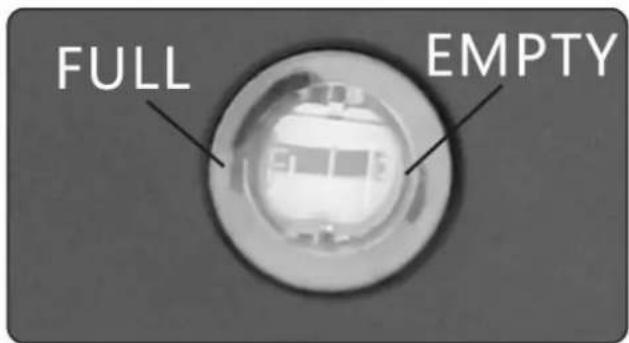
18. Fuel gauge
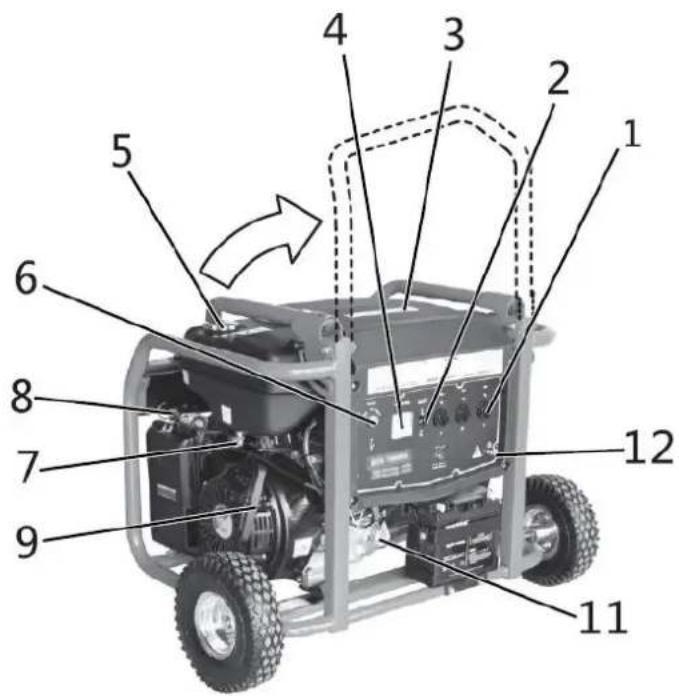
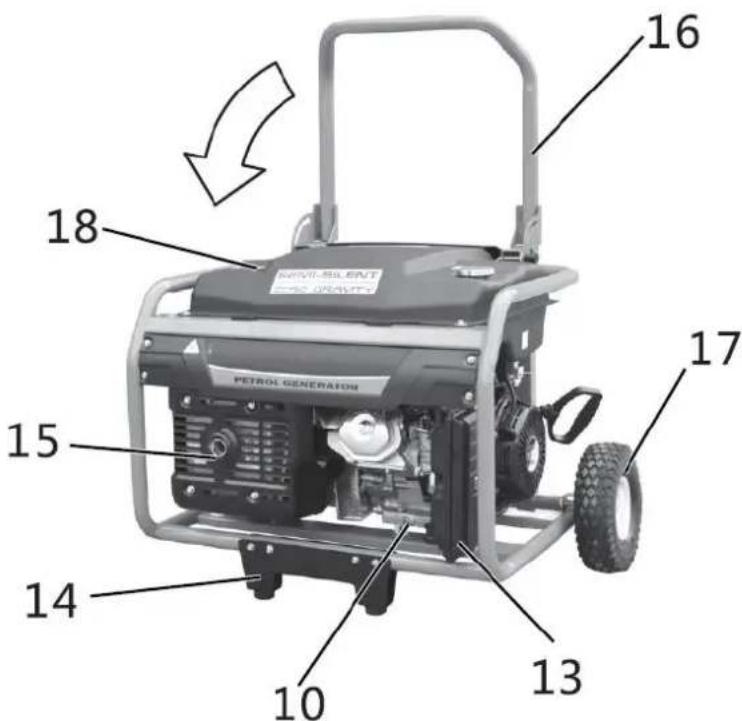
Eurom models are hand-started and do not have a battery as shown.
Fuel gauge
Earthing point
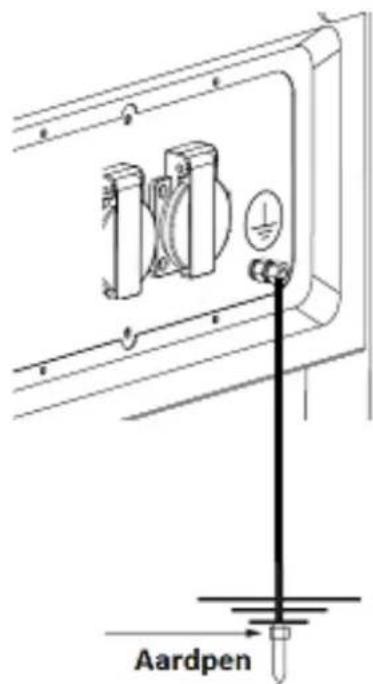
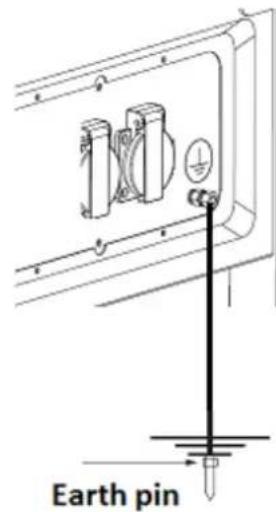
Your generator should be properly earthed to avoid electric shock. This is why your generator is equipped with an earthing point.
You can create a proper earthing conductor by inserting a solid copper wire (2.5 mm diameter) between the generator's earthing point and a copper pipe or pin driven into the ground. Get in touch with your local electrician to make sure you are also complying with all local regulations with this.
Circuit breaker
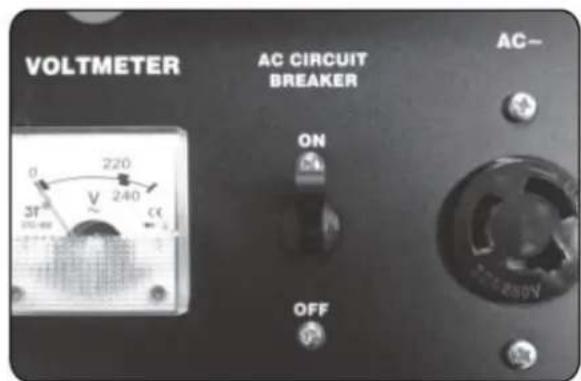
Your generator is protected by AC protection or a circuit breaker. If the generator is overloaded, or a short circuit occurs somewhere then the protection / circuit breaker will switch it off. When this happens, disconnect all connected equipment and try to identify and fix the cause before using the generator again. When overload is the cause, reduce the load.
CAUTION! If the AC protection or circuit breaker trips frequently, it may cause damage to the generator or connected equipment.
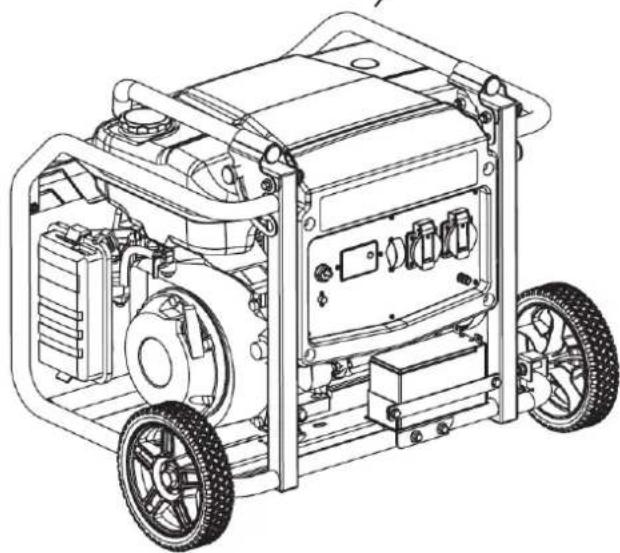
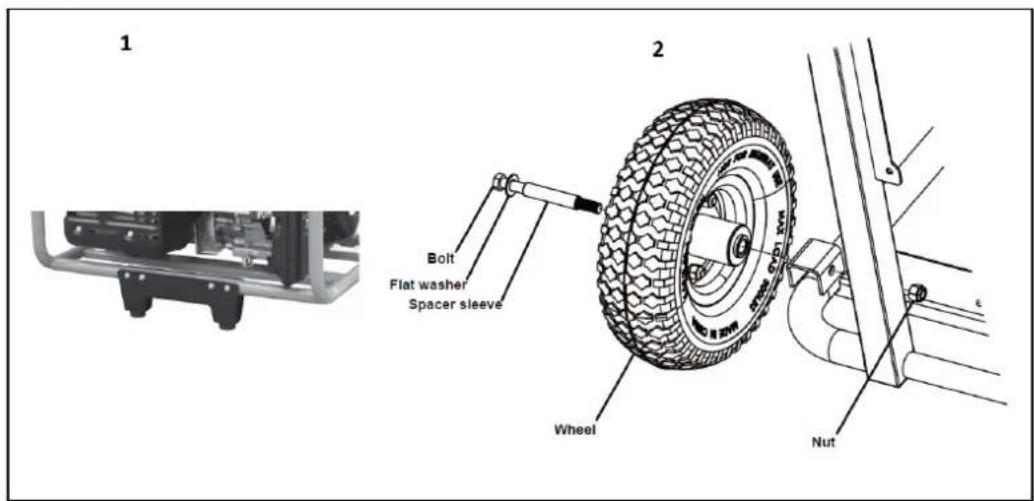
Mounting bracket and wheel set
- Attach the support bracket to the front of the device using the mounting material provided, see point 1.
- Attach the wheels to the back of the device according to the drawing below, see point 2.
Before commissioning
Check the oil level
WARNING! Never start the engine without oil!
Your generator is shipped from the factory without oil in the crankcase; using it without oil may damage the engine. For general use at all temperatures, SAE 10W-30 or 10W-40 oil is recommended. Check the oil level using the oil dipstick every time before starting the device. Always gauge with the device switched off and cooled down! Top up the oil level to the maximum level on the dipstick or until the oil runs out of the opening. Finally, tighten the oil dipstick firmly back into the opening.
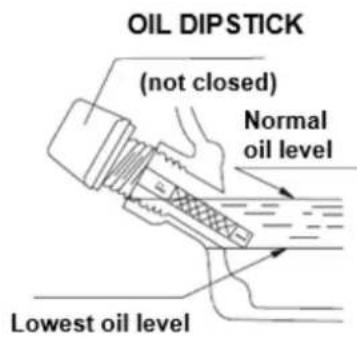
Caution! The device is equipped with an oil level sensor. If the oil level becomes lower than desirable, the sensor will issue a warning signal and stop the engine.
If the engine stops while the oil level is up to level, check whether the generator may be skewed and place it on a horizontal surface.
If the generator refuses to start, the oil level could be insufficient. Then top up oil to the maximum level.
Running the engine with too little oil can lead to serious engine damage.
Check the fuel level
WARNING! Never top up fuel while smoking, being near open flames or under other flammable conditions. That could lead to accidents!
- Never top up the tank with the engine running or still hot.
- Turn off the petrol tap before adding fuel.
Take care that no dust, dirt, water or any foreign substances get into the fuel. - Remove spilt fuel carefully before restarting the generator.
- Keep open fire away from the generator and fuel.
If checking the fuel level shows that it is low, fuel should be topped up:
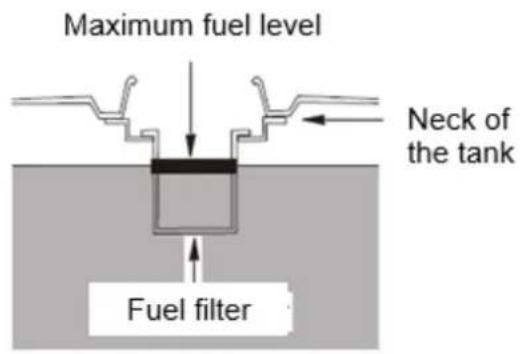
Unscrew the cap of the tank.
The fuel filter should be clean and in the neck of the tank.
Then fill the tank with clean, fresh, unleaded petrol as used in cars.
Screw the cap firmly back on to the tank.
Avoid repeated or prolonged contact of fuel with skin and inhalation of petrol fumes. KEEP OUT OF CHILDREN'S REACH.
Check that the air filter is clean
If it is not, read how it can be cleaned under MAINTENANCE.
Check the generator for loose or missing parts and damage
During transport, parts may rattle loose or be damaged. Secure them again and contact your supplier in case of damage. Do not operate a damaged device!
Check that the generator is correctly earthed
Commissioning
Starting the generator
Ensure that the generator is standing firmly and horizontally, that all safety instructions and warnings have been observed and that all prescribed checks have been carried out.
- Disconnect all connected electrical equipment from the generator.
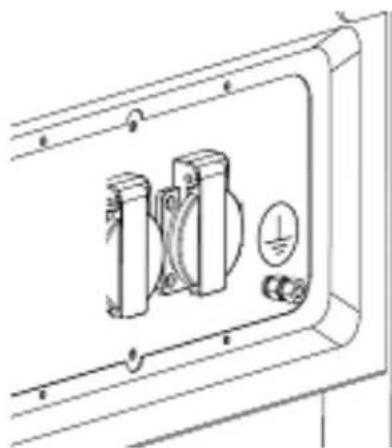
- Turn the circuit breaker to the OFF mode.
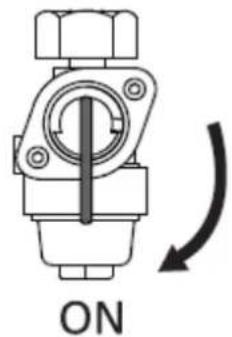
- Turn the fuel tap open (to the ON mode).
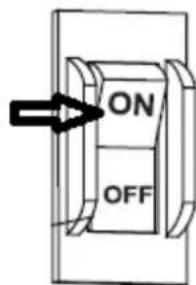
- Turn on the motor switch: ON pressed.
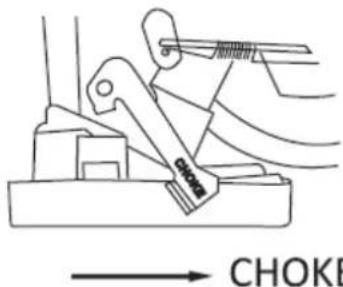
Move the choke lever to the "start" mode. If - the engine is still warm, you can skip this step.
Now gently pull the pull cord until you feel resistance. This is the compression point. - Run the cord back to its original position and now pull quickly and firmly until the engine starts. Repeat several times if necessary.
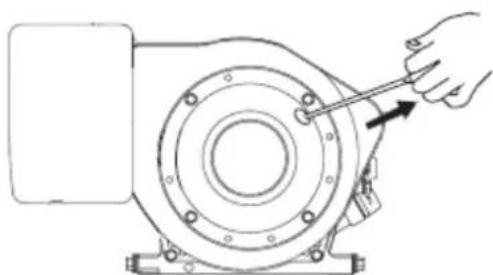
WARNING! To avoid accidentally injuring people when pulling out the pull cord, make sure there are no bystanders (especially children) or pets near you.
CAUTION! The handle can be withdrawn very quickly. This may cause your hand to be pulled forcefully towards the generator, with a risk of injury. Do not let the pull cord handle recoil against the motor, but gently guide it back to its home position to avoid damage to the device.
- Immediately return the choke lever to the RUN mode as soon as the engine is running.
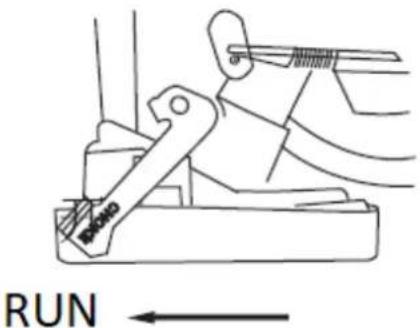
Let the engine warm up for about three minutes and only then connect load. The
- voltage is controlled by the speed of the motor, which is set correctly at the factory. Modifications to it will void the warranty!
CAUTION! When connecting load, make sure not to exceed in total the maximum connectable power of the generator. Keep in mind the peak current draw! Also, do not exceed the maximum power (amp) of each of the sockets separately.
CAUTION! Do not connect a heavy electrical load for the first two to three hours of operation (the break-in period).
Stopping the generator.
- Stop and disconnect all connected devices
- Run the generator unloaded for another two minutes.
- Then turn the motor switch to the OFF mode (OFF pressed)
- Keep making sure the generator stops completely.
- Close the fuel tap when cleaning up or moving the generator.
- If you want to cover the generator, wait to do so until it has cooled down completely.
CAUTION! Turn off the motor switch immediately (press OFF) to switch off the motor in emergency situations.
Maintenance
Always switch off the generator and let it cool down completely before carrying out maintenance.
Maintenance schedule
| Item | Note | For every use | First time after 25 hours | Every 50 hours | Every 100 hours |
| Spark plug | Check condition, adjust distance and clean. Replace if necessary. | * | |||
| Motor oil | Check oil level. | * | |||
| Oil change. | * | * | |||
| Air filter | Clean and replace if necessary. | * | |||
| Fuel filter | Clean and replace if necessary. | * | |||
| Fuel hose | Check for kinks and damage. Replace if necessary. | * | |||
| Exhaust system | Check for leaks. If necessary, reseal or replace seal. | * | |||
| Check exhaust grille. Clean or replace as necessary. | * | ||||
| Carburettor | Check operation of choke. | * | |||
| Cooling system | Check the fan for damage. | * | |||
| Starting system | Check the operation of the pull cord. | * | |||
| Couplings and valves | Check all couplings, connections and valves and correct their position if necessary. | * |
CAUTION! To avoid accidentally starting the generator while performing maintenance beforehand, always remove the spark plug or disconnect the spark plug cable.
How do you carry out maintenance work?
Change engine oil
- Drain the oil by removing the drain plug and dipstick while the engine is still warm. Collect the drained oil and dispose of it according to government regulations.
- Fix the drain plug back in place and top up oil to the upper level of the dipstick.
- Carefully remove all spilled oil.
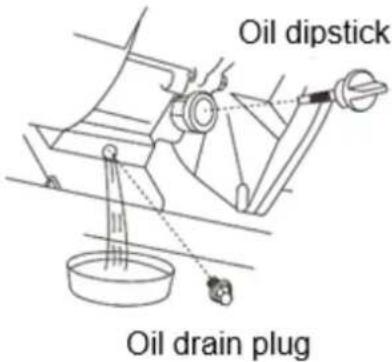
WARNING! The engine may still be hot. Let it cool for at all. Oil drain plug least two minutes before unscrewing the dipstick. Do so carefully to release any pressure gently.
Cleaning spark plug
If the spark plug is contaminated with carbon, it should be removed with a wire brush. If necessary, adjust the gap to anywhere between 0.7 and 0.8mm
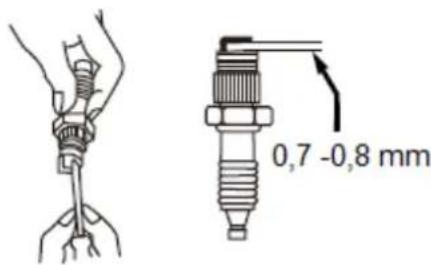
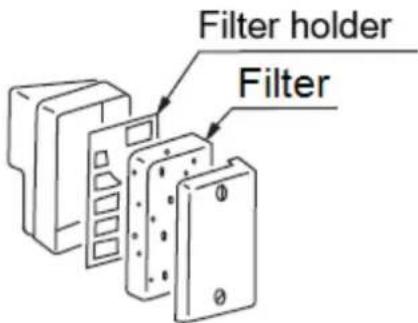
Clean air filter
- Unscrew the cover on the air filter.
- Remove the filter and wash it thoroughly in e.g. benzene or a universal detergent.
- Drizzle a little oil on the filter; squeeze a few times to spread the oil and remove excess oil.
- Replace the filter and cover it again with the lid.
- Check that cover fits the seal properly and screw it back on. Do not use petrol of solvents with a low flash point for cleaning. These are highly flammable and explosive under certain conditions. Never run the engine without an air filter. This will lead to accelerated engine wear.
Cleaning carbon brushes
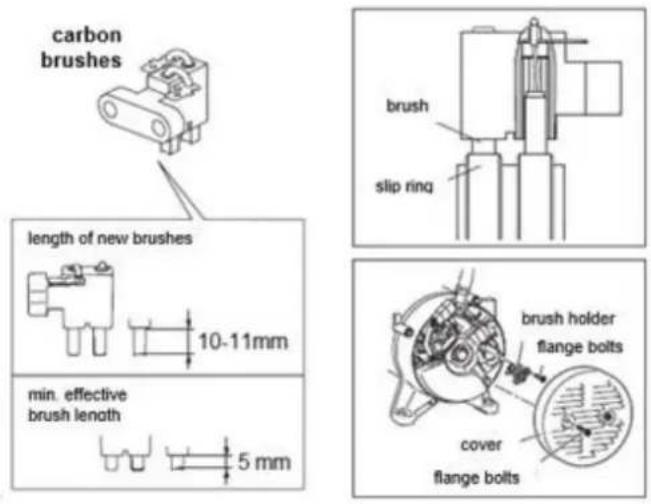
The carbon brushes slide on the slip ring, therefore they should remain smooth. When the brushes become very worn, the pressure with which they slide over the slip ring changes. This can roughen the surface of the slip ring and result in irregular generator operation. Check the carbon brushes for wear every 300 hours of operation or when the generator operates erratically. Replace brushes when they are shorter than 5mm .
Storage
If you want to store the generator for a period, longer than three months, take the following measures:
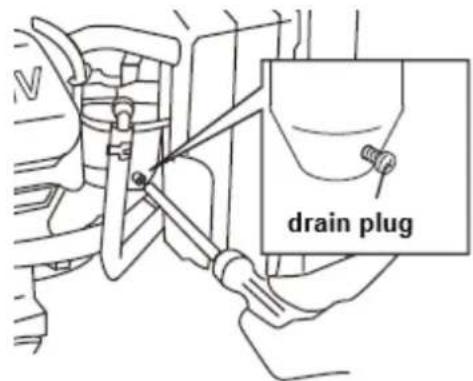
- Drain the fuel. To do so, open the petrol tap and loosen the drain screw located on the side of the carburettor float chamber. Drain the fuel completely.
Caution! There are two screws on the carburettor. The vertical one fixes the carburettor's float chamber. The other one, on the side of the carburettor's float chamber, is the drain screw. Gently and carefully tighten the drain screw again to avoid damaging the fuel compartment.
-
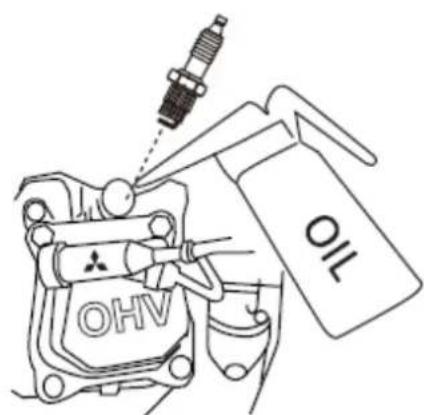
Remove the spark plug and pour 2 to 3 cc of engine oil into the cylinder. Rotate the crankshaft several times. Now replace the spark plug. Then pull out the pull cord a few times until you feel resistance and let it recoil gently.
-
Store the generator in a well-ventilated room with low humidity.
Problems and solutions
Caution: if your generator detects that there is little oil in the engine, the engine will automatically shut down. Therefore, always check the oil level first if you cannot start the generator.
The engine does not start, or produces little power, or runs erratically
Insufficient compression
- The spark plug is loose; tighten it properly.
Engine runs very irregularly and smokes - Set the choke lever to "run".
Engine does not start - Set the circuit breaker to 'ON'.
No fuel enters the combustion chamber - No fuel in tank; refill fuel.
- Petrol tap is closed; turn it open.
Insufficient pull speed on the pull cord. Pull strongly on the pull cord. - Foreign substances in the fuel tank. Clean the tank.
- The fuel supply is clogged somewhere. Clean the fuel route.
Wrong type of fuel in the tank
- Check the fuel and replace it if necessary.
The generator is overloaded - Check the load and reduce it if necessary.
The generator is overheated - The generator is overloaded; check the load and reduce it if necessary.
- The fan does not work or works poorly. Check the fan and contact your service point if necessary.
Oil level too low
- Top up oil.
Motor runs but socket does not provide power
The circuit breaker has tripped
- Reset it by flipping the switch again (ON).
Plug is not properly in the socket or an incorrect load is connected - Check the connections and rating plates of connected equipment.
The socket is broken
- Contact your service point.
There is a fault in the circuit breaker - Contact your service point.
Problem in generator - Contact your service point.
For all other problems, contact your supplier or service point
Caution! Never make repairs to your generator yourself but take it to your service point or a technician qualified in this field. Repairs carried out improperly will void the warranty and liability of the supplier, importer and manufacturer!

Dispose of the device at the end of its service life in accordance with local laws and regulations or return the device to your supplier.
To protect the environment, generators, batteries, engine oil, etc. should not be disposed of with normal waste. Comply with legal requirements.
Dispose of waste motor oil in the legally prescribed manner. You should dispose of the oil in a sealed container at a designated collection point.
When disposing of batteries, follow local regulations. An unplugged battery can have a heavy impact on the environment.
Wiring diagram
The wiring diagram can be found at the end of this manual
Attachments
The CE declaration can be found at the end of this manual.
Danke
declares that this declaration of conformity is under the sole responsibility of the manufacturer
Product: petrol generator
Brand name: EUROM
Model: MM3500, MM5500, MM6500
Item number:
Complies with the following harmonization rules:
Low Voltage Directive: LVD 2014/35/EU
Electromagnetic compatibility Directive: EMC 2014/30/EU
Restriction of Hazardous Substances RoHS Directive: 2011/65/EU&(EU)2015/863
Machine Directive: 2006/42/EC
Regulation relating to gaseous ... EURO V 2016/1628/EUR
Individual room heaters: (EU) 2015/1188
Applied harmonized standards:
EN 60204-1:2006+A1:2009
EN 61000-3-2:2014
EN 61000-3-3:2013
EN 61000-6-2 :2005
EN 61000-6-4:2007+A1 :2011
EN 8528-13:2016
EN 12100:2010
Signed for and on behalf of:
Genemuiden, 08-06-2023
W.J. Bakker, alg. Dir.
EUROM
Kokosstraat 20
8281 JC Genemuiden
The Netherlands
info@eurom.nl
www.eurom.nl
- Ingebruikname
- De generator is overbelast
- De generator is oververhit
- Explanation of symbols
- Safety regulations
- Warning label
- Total wattage, voltage and installation
- Total wattage
- Voltage
- WARNING!
- Installation
- Description
- Fuel gauge
- Earthing point
- Circuit breaker
- Mounting bracket and wheel set
- Before commissioning
- Check the oil level
- Check the fuel level
- Check that the air filter is clean
- Commissioning
- Stopping the generator.
- Maintenance
- Maintenance schedule
- Change engine oil
- Cleaning spark plug
- Clean air filter
- Cleaning carbon brushes
- Storage
- Problems and solutions
- The engine does not start, or produces little power, or runs erratically
- Wiring diagram
- Attachments
- Danke
- declares that this declaration of conformity is under the sole responsibility of the manufacturer
- Complies with the following harmonization rules:
- Applied harmonized standards:
- Signed for and on behalf of:
- EUROM
Brand : Eurom
Model : MM5500
Category : Generator