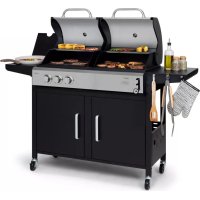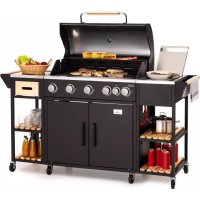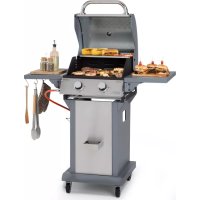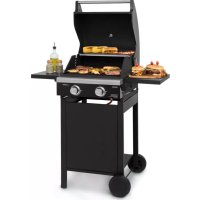
Klarstein Valdosta 2.0 - Grill plate

Valdosta 2.0 - Grill plate Klarstein - Free user manual and instructions

Find the device manual for free Valdosta 2.0 Klarstein in PDF.

📄 120 pages English EN 💬 AI Question
Notice Klarstein Valdosta 2.0 - page 25
View the manual : Français FR English EN Español ES Italiano IT Slovenčina SK

Questions des utilisateurs sur Valdosta 2.0 Klarstein

0 question sur cet appareil. Repondez a celles que vous connaissez ou posez la votre.

Poser une nouvelle question sur cet appareil

L'email reste privé : il sert seulement à vous prévenir si quelqu'un répond à votre question.

Aucune question pour l'instant. Soyez le premier à en poser une.

Download the instructions for your Grill plate in PDF format for free! Find your manual Valdosta 2.0 - Klarstein and take your electronic device back in hand. On this page are published all the documents necessary for the use of your device. Valdosta 2.0 by Klarstein.
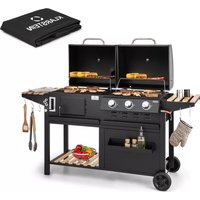
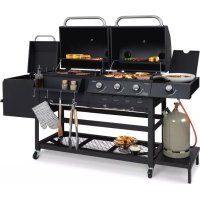
USER MANUAL Valdosta 2.0 Klarstein

Dear customer, Congratulations on purchasing this device. Please read the following instructions carefully and follow them to prevent possible damages. We assume no liability for damage caused by disregard of the instructions and improper use. Scan the QR code to get access to the latest user manual and more product information. CONTENTS Safety Instructions27 Gas Connection30 Leak Test31 Package Contents32 Parts List33 Assembly34 Installation34 Operation36 Storage38 Cleaning and Maintenance39 Troubleshooting40 Disposal Considerations44 Manufacturer & Importer (UK)44 Assembly Instructions111 TECHNICAL DATA Article number 10045158 Total heat output (Hs) 7.2 kW (254g/h) - per main burner (number) 3.6 kW (2) Gas category I3B/P(30) I3+(28~30/37) Countries LU, NL, DK, FI, SE, CY, CZ, EE, LT, MT, SK, SI, BG, IS, NO, TR, HR, RO, IT, HU, LV BE, FR, IT, LU, IE, GB, GR, PT, ES, CY, CZ, LT, SK, CH, SI, LV Gas Propane, butane and mixtures Butane/propane Gas pressure 28~30mbar 28~30/37mbar26

  • WARNING: Accessible parts can be very hot. Keep small children away.
  • Read the instructions before using the appliance.
  • Only use the device outdoors. 1336-20 a) Select the appropriate controller according to the equipment category and your local standard. The controller should conform to EN 16129 and the local standard. The exible hose with EN16436-1:2014 approval. b) The marking on the injector (e. g., 0.91) indicates that the size of the injector is 0.91 mm.27
  • Read these operating instructions carefully before using the appliance. Failure to follow the instructions can lead to problems and dangers during use.
  • Keep these operating instructions for future reference.
  • This gas grill may only be used outdoors. Do not operate the grill inside buildings, garages or other enclosed areas.
  • Children must not use the appliance! Mentally, sensory and physically impaired persons may only use the device if they have been informed in detail about the functions and safety precautions by a supervisor responsible for them beforehand and understand the associated risks. WARNING Risk of burns! Accessible parts of the appliance may be very hot during operation and after use. Use oven gloves to protect against burns and make sure that small children and pets are at a safe distance from the grill.
  • Keep the appliance away from ammable materials during use.
  • Place your gas grill on a safe, level surface, away from ammable objects such as wooden fences or overhanging tree branches.
  • Do not store or use petrol, mentholated fuels or other ammable vapours and liquids near this appliance while it is in use.
  • Do not move the grill during use.
  • Exercise extreme caution when handling your grill. Never leave the grill unattended while it is in use. After use, turn off the gas supply at the gas cylinder.
  • When grilling, the appliance must be placed on a at, stable, non-combustible surface and at a safe distance from combustible materials. It is recommended to keep a minimum distance of 0.5 to 1.0 metre from combustible materials.
  • Before using the grill, always carry out a leakage test as described in these instructions. Check the hose, regulator, valve and all other gas lines for holes. Never use the appliance if you nd a gas leak.
  • Turn off the gas supply to the appliance in the event of a leak at the gas valve, extinguish open ames, open the lid and check the appliance and all connections for damage, leaking connections, etc. Contact your local gas dealer immediately if the problem cannot be recti ed.
  • Do not attempt to loosen the gas connections or joints while using the grill.
  • If rain, snow, hail, sleet or other forms of precipitation get into the grill while you are cooking with oil or fat, cover the cooking container immediately and turn off the burner and the gas supply. Do not try to move the appliance or the cooking bowl.
  • This device should never be used as a heater.
  • The device or device components may not be modi ed by the user.Any modi cation to the device can be dangerous and can lead to property damage, personal injury or death. Do not tamper with the controls of this gas grill, i.e. gas taps, injectors, valves, etc., without authorisation.28
  • Do not tamper with any parts that have been sealed by the manufacturer or its representative. Do not attempt to repair the device yourself. Repairs may only be carried out by qualied specialist personnel.
  • The gas grill should be serviced at least once a year by a qualied technician. Do not attempt to service this device yourself.
  • Before each use of the appliance, check for insects or insect nests in the burner, pipes and appliance openings. Remove them, if present. Spiders and small insects may nest in the pipes and unit openings when the unit is not in use. This can block the ow of air and gas, causing a yellow ame to ash back and cause a re below the burner. Therefore, remove insects and insect nests before each use, if present. Gas requirements Note: A gas pressure regulator approved according to EN16129 and a gas hose approved according to EN16436-1 with a length of at least one metre must be used for the device. If not included in the scope of delivery, these must be purchased additionally.
  • Contact your local gas cylinder dealer for the exact use of your gas cylinders.
  • Never use a gas cylinder with a damaged tank, valve, base or ring.
  • A deformed or rusted gas cylinder can be dangerous and should therefore be checked for functionality by your local gas cylinder dealer before use.
  • Never connect the appliance to a non-regulable gas source. Turn off the gas when the appliance is not in use.
  • The appliance may only be operated with propane or butane gas or a gas mixture of both types of gas. The gas bottle must not be dropped or handled roughly. The gas bottle must be disconnected when the grill is not in use. After disconnecting, put the cap back on the gas bottle.
  • Before connecting the gas bottle to the grill, make sure the gas valve is turned off, there are no open ames near the appliance and the sealing ring is in good condition. Then connect the pressure regulator to the gas bottle.
  • The connection hose must be replaced every two years.
  • Check the connection hose once a month and every time the gas cylinder is changed. If the connection hose shows cracks or other signs of deterioration, it must be replaced with a new one.
  • If local regulations require it, the connection hose must be replaced.
  • Make sure that the connection hose is not kinked or twisted and does not come into contact with the surfaces of hot devices.
  • Before changing the gas bottle, make sure that the gas has been turned off and that there are no naked ames or other heat sources near the appliance. Make sure the gas cylinder is always in an upright position.
  • Only use the connections and accessories of the device for their intended purposes.
  • Do not turn the gas bottle upside down to use the remaining gas.
  • Never ignite a gas barbecue with petrol or similar liquids.29

Notes on refi lling gas cylinders Certain LPG dealers can ll LPG cylinders for use in the barbecue beyond the capacity of the cylinders. This "over lling" can lead to a dangerous condition. The "over lling" of tanks can cause excess pressure to build up. As a safety device, the tank's pressure relief valve vents gas vapour to relieve this excess pressure. This vapour is ammable and can therefore be ignited accidentally. To reduce this danger, you should take the following safety precautions:

  • If you have your gas cylinder lled, be sure to tell the gas dealer that no more than 80% of the total capacity of the gas cylinder may be lled.
  • If you have or use an extra reserve gas bottle or have an unconnected gas bottle, never store it near or under the grill or heat box or near any other source of ignition or heat. WARNING Danger of re and explosion! If you smell gas:

1. Turn off the gas supply to the appliance at the gas bottle.

4. If the smell of gas persists, stay away from the appliance and call the

GAS CONNECTION The gas connection line between the gas pressure regulator and the grill can be made using metal bellows or a gas-approved rubber hose with a maximum length of 1.5m. Gas grills that run on liqueed petroleum gas (LPG) should be connected with a gas approved rubber hose.

  • If a rubber hose is used, a universal air inlet tting is required.
  • The two ends of the gas hose are connected to the grill and the gas valve respectively. Please install the rubber hose adapter directly on the main gas pipe without any adapters in between. The diameter of the gas hose is 8-10mm and varies depending on the adapter used. If in doubt, ask your local gas dealer which adapter and gas hose is compatible with the gas bottles available in your country. Never operate the device if you have any doubts about compatibility or if you are unsure whether the connection is properly insulated.
  • Only approved gas hoses and regulators may be connected to a (rellable) gas cylinder. All components should comply with local regulations.
  • Make sure that the gas hose is not twisted, kinked or bent by other objects. After installation is complete, a gas leak detection (leak test) should be performed.
  • Do not expose the gas hose to high temperatures.
  • It is recommended that an annual air tightness test be carried out on the gas grill.
  • Before each use, make sure the rubber hose is in good condition. Replace it if it shows signs of wear or cracks. Gas connection with Type E adapter Gas connection (France) If a rubber hose is being used, please install the appropriate adapter (see image above) directly on the main gas pipe without any adapters in between. When using the gas grill in France, please ensure that the appropriate adapter (see image above) is connected to the main gas line.31
  • Perform the leak test each time the gas cylinder is connected or reconnected.
  • Never use an open ame to check for gas leaks.
  • Never smoke while performing the leak test.
  • Always perform the leak test outdoors, in a well-ventilated area, and away from sources of ignition such as gasoline, open ames, sparks, or electrical equipment.
  • The device must be checked regularly for gas leaks. If a smell of gas is noticeable, the leak test must be carried out immediately. Carrying out the leak test
  • Make a soapy solution of soap and water in a 1:3 ratio. The soap solution can be applied with a bottle, brush, dish soap bottle or cloth to the areas to be tested: gas cylinder valve, pressure regulator, all gas connections, hose connections and along the entire length of the connection hose.
  • The gas valve must be turned to the "OFF" position when applying the soap solution. Once the soapy solution has been applied all over, turn on the gas valve to the "ON" position.
  • If there is a leak at one point, soap bubbles will appear at the corresponding point.
  • If there is a leak, close the gas valve immediately. Tighten the leaking connectors, open the gas valve and recheck all points.
  • If the leak does not stop after several attempts, contact your local gas dealer or similarly qualied person. Never use the grill if there is a leak!32

ASSEMBLY Make sure your grill is assembled correctly. Each grill comes with detailed assembly instructions that include assembly procedures speci c to each model. Follow these instructions carefully to ensure the correct and safe assembly of the grill. CAUTION Risk of injury! Despite all efforts to make assembly as easy as possible, when handling the steel parts it is possible that corners and edges can cause cut injuries if handled improperly during assembly. Be careful when handling parts during assembly. It is strongly recommended to wear work gloves during assembly. INSTALLATION Preparation

  • To operate this gas grill you need a gas bottle (liquid gas) and a suitable gas pressure regulator. The controllers should comply with the EN 12864 standard (as amended) and national regulations.
  • Connect the hose and regulator to the gas container on the left-hand side of the gas grill, taking care to keep the gas container away from heat and in a safe position. The hose should have a diameter of 8-10 mm. The recommended length of the hose must not exceed 1.5 m. The exible hose should comply with the relevant standard and local regulations. Installation After purchasing a suitable gas bottle, you can set it up with your gas grill.
  • Change the gas cylinder away from any source of ignition.
  • Position the gas bottle on the left side of your gas grill or place it in the gas bottle compartment inside the barbecue. Make sure that the gas bottle is protected from heat and stored in a safe position.
  • When your gas grill is ready for use, insert the regulator into the valve of the gas bottle and tighten it rmly. WARNING Risk of injury and damage to property! Before attempting to light your gas grill, read and understand all instructions, warnings, and safety precautions outlined in this owner's manual.35
  • Check the hose for cracks, cuts or abrasions before each use. If the hose is damaged in any way, do not use your gas grill.
  • When changing the gas bottle, make sure that there are no sources of ignition nearby, e.g. re, cigarettes, open ames, etc. Make sure the device is turned off.
  • Make sure that the hose is not twisted, which could affect the gas ow when installing your gas grill. In addition, the hose must not be excessively taut and must not touch any potentially hot parts of the gas barbecue.
  • Choose a exible hose whose heat resistance is higher than 80 °C.
  • The exible hose should be changed every 2 years. It is necessary to change the exible hose when national regulations require it. Changing the gas cylinder Note: Screw the gas cylinder regulator shut (no spanner is required!)
  • The gas bottle should have the following dimensions: 80 cm high and max. 35 cm wide. Connecting the gas cylinder
  • Turn the orange cap so that the arrow points to the gap in the housing.
  • Remove the orange safety cap by pulling out the trigger band and then using it to pull out the safety cap. Do not use tools. Leave the cap hanging.
  • Check that the black sealing washer inside the bottle valve is properly seated. Connect the regulator to the valve.
  • Turn the gas bottle regulator clockwise and then start up the gas grill as described. Gas connection for model without gas bottle compartment: Gas connection Hose Gas bottle Regulator Hose Connection of grill and hose Connection of gas bottle, regulator and hose36

WARNING Danger of re and explosion! First check the connection of the gas hose for leaks with a soapy water solution. After completing the installation, carry out a leak test again on all connections using soapy water. Disconnecting the gas cylinder

  • Turn off the gas tap, except in the case of a two-bottle system with a changeover valve, if the appliance is equipped with one. Wait until the burner and the pilot ame have gone out. For systems with a changeover valve, only the empty gas cylinder must be switched off.
  • Replace the orange safety cap on the empty gas bottle. OPERATION Notes on setup
  • Place your gas grill on a safe, level surface, away from ammable objects such as wooden fences or overhanging tree branches. Never use your gas grill indoors!
  • Always check all gas connection joints for leaks with soapy water after connecting the gas bottle. Turn off the gas cylinder valve if there is a gas leak. If the leak persists, contact the manufacturer or customer service. Notes on operation
  • Be prepared in case of an accident or re. You must know where the rst aid kit and re extinguishers are and how to use them. Keep a re extinguisher handy.
  • Keep electrical supply cables and the gas supply hose away from all hot surfaces.
  • The top cover must always be open when the burner is lit.
  • Do not move your gas grill after lighting it and do not leave it unattended.
  • The gas grill gets hot when in use, so only handle the lid etc. with protective gloves.
  • Accessible parts can be very hot. Keep small children away! WARNING Risk of burns! The black marked area of the handle (see picture below) gets hot when the gas grill is in use, be careful! Do not touch the black area.37
  • Use oven gloves and sturdy, long-handled gas grill tools when cooking on the grill.
  • Always take the utmost care when barbecuing.
  • Do not heat unopened glass or metal containers with food on the grill. Pressure may build up and cause the container to burst, resulting in serious injury or damage to the grill.
  • After each use, turn off the gas supply at the gas cylinder. NOTE: You can place a pot or pan on the side burner. The diameter of the pot or pan should be max. Ø 24 cm and min. Ø 8 cm. Lighting the gas grill CAUTION Fire and burn hazard! The lid must be open when lighting the burner! Do not hold your face directly over the gas grill when lighting it. Your gas grill has the following ignition methods: Ignition with the pilot gas control (main burner or main burner with side burner)
  • When all the controls on the gas grill are in the "OFF" position, turn the gas bottle valve on the gas pressure regulator to the "ON" position. To create a spark, you need to press the throttle knob and hold it in that position for 3-5 seconds to allow gas ow. Then turn it anti-clockwise to "HIGH". Sparks are generated in the burner tube. You will hear a click from the igniter and you will see an orange ame coming out of the burner tube on the left side of the burner.
  • Keep the gas control knob depressed for 2 seconds after the crackle to pass the gas completely through the burner tube and ensure ignition.
  • When the burner ame is burning, you can also light adjacent burners by setting their knobs to "HIGH".
  • At the "HIGH" setting, the burner ame should be about 12-20 mm, with a minimum of orange ame.
  • Turn the control knob fully anti-clockwise for the minimum (low) setting.
  • If you have dif culty lighting your gas grill when following the above steps, contact the manufacturer or customer service. Note: If the automatic ignition does not work, remove the grill grate and the heat distributor (hot plate) and turn the valve anti-clockwise 90° to light the grill with a grill lighter at a distance of 5 mm from the burner re hole. Re t the grill grate and the heat distributor (hot plate). Be sure to wear reproof and heat-resistant gloves during this process. WARNING Danger of re and explosion! If the burner still does not light, turn the gas control knob to "OFF" and wait 5 minutes for the unburnt gas to dissipate before trying to light the gas grill again.38

Tips for energy-saving use

  • Reduce the time that the lid is open.
  • Switch off the grill as soon as the cooking process is complete.
  • Preheat the gas barbecue for 10 to 15 minutes only (except when using it for the rst time).
  • Do not preheat the gas grill longer than recommended.
  • Do not use a higher setting than required. STORAGE Note: Make sure that the grill has cooled down completely before storing. Storage of the gas cylinder
  • Disconnect the gas bottle from the gas grill when it is no longer in use.
  • Make sure you are outdoors and away from any ignition sources before attempting to disconnect your gas bottle from the gas grill.
  • Store the gas cylinder outdoors in a well-ventilated area. Storage of the gas grill
  • When you return your gas grill to service after a period of storage, check the unit and all connections for gas leaks. Before use, also check whether the burner or nozzles are clogged. Follow the cleaning instructions to ensure that the gas grill is safe to use.
  • If the gas grill is stored outdoors, make sure that all areas under the front panel are free from obstructions (insects, etc.). This area must be kept clear, otherwise the ow of combustion or ventilation air may be impaired.39

CLEANING AND MAINTENANCE

CAUTION Risk of burns! All cleaning and maintenance work must only be carried out when the gas grill has cooled down and the connection to the gas cylinder has been disconnected. Maintenance

  • It is recommended that the gas grill be serviced by a competent technician every 90 days, or at least once a year. Do not attempt to service the device yourself. Cleaning
  • The gas grill should be cleaned after each use.
  • Allow the grill to "burn off" after each use to minimise food residue on the grill grid. To do this, switch on the burner for 15 to 20 minutes. The drops of fat on your grill will be burned off. Make sure the device has cooled down before proceeding with the cleaning.
  • Clean the grill grates regularly by soaking them in soapy water and washing them.
  • The inside surfaces of the grill housing cover should also be cleaned with hot soapy water. Use a wire brush, steel wool or a scouring pad to remove stubborn stains.
  • Check the burner regularly to make sure it is free of insects and spiders that could clog the gas line and divert the gas ow. Be sure to clean the venturi tubes on the burner very carefully, and make sure there are no blockages. It is recommended that you use a tube cleaner to clean the venturi area.
  • Do not block the re opening of the grill. If the re opening is blocked, use a round rod with a diameter of 1.6 mm to clean it.
  • Be careful not to enlarge the burner ori ces or nozzles when cleaning the burner or valves.
  • Any modi cations to this unit can be dangerous and are not permitted.40

TROUBLESHOOTING Problem Potential cause Prevention / Solution Gas leaks from a ruptured/cut/burnt hose. Damaged hose Turn off gas at the gas bottle. Replace the hose if it is cut or torn. Reconnect the gas bottle to the grill and carry out a leak test. Gas leaks from the gas cylinder. Mechanical wear due to storage or incorrect operation. Turn off the gas bottle valve. Gas leaks from the gas cylinder valve. Defective gas cylinder valve due to mechanical wear or incorrect operation Close the gas cylinder valve and take the gas cylinder back to your gas dealer. Gas leaks at the connection of the gas bottle and gas pressure regulator. Faulty installation, leaking connection or defective rubber seal Close the gas cylinder valve, remove the gas pressure regulator from the gas cylinder and visually inspect the rubber seal for damage. Follow the instructions for the leak test and for connecting the gas pressure regulator to the gas cylinder (in the "Safety Instructions" and "Installation" sections) Flames erupt from the controls. Fire in the burner tube due to blockages. Immediately set all knobs to "OFF" and close the gas cylinder valve. After the ames have gone out and the grill has cooled down, remove the burner and inspect it for spider nests or rust (see section "Cleaning"). Grease re or constant aring of the grill surface. Too much grease has accumulated in the burner area. Close the gas supply on the gas bottle. Leave the lid open to allow the ames to die down. After the grill has cooled down, remove food residues and grease residues from the combustion chamber, the grease drip tray and other surfaces.41

Problem Potential cause Prevention / Solution The burner will not light with the igniter. Gas problems: You tried to light the wrong burner See the instructions for lighting the grill in the "Operation" section. The burner is not supplied with gas via the regulator valve. Make sure that the valves inside the burner tubes are positioned correctly. Blockage in the burner. Make sure that the burner tubes are not blocked by cobwebs or other matted parts, see section "Cleaning and Maintenance" No gas ow. Make sure that the gas bottle is not empty. See "Sudden drop in gas ow" (below). Vapour barrier on the union nut of the gas cylinder. Set the knobs to "OFF" and loosen the union nut on the gas bottle. Reconnect the gas bottle and try to light the burner again. The union nut on the gas cylinder valve is not properly tightened. Turn the union nut about half to three quarters.42

Problem Potential cause Prevention / Solution The burner will not light with the igniter. Electrical problems: The electrode is cracked or broken; "spark at crack" Replace electrode. The electrode tip is not in the correct position. The tip of the electrode should point towards the opening in the burner. The distance should be 1/8 to 3/16 inches. Adjust if necessary. Wire and/or electrode are covered with cooking residue. Clean the wire and/or electrode with rubbing alcohol and a clean swab. The wires are loose or not connected. Reconnect the wires or replace the electrode/wire assembly. The wires have a short circuit (spark) between the igniter and the electrode. Replace the fuse wire. The push button clamps to the underside and sparks between the igniter and the electrode. Replace the igniter. The insulation of the wires could be damaged. Check the insulation of the wires and the proper connection. Replace wires when insulation is broken. The burner cannot be lit with a match. See "Gas problems" (on the previous page) See: Instructions for lighting the barbecue in the "Operation" section of this manual. Lighting with a match is the wrong method of ignition. Sudden drop in gas ow or low ame. Fat accumulation Clean the burners, the inside of the grill/the combustion chamber. Greasy grilled food. Cut the fat off the meat before grilling. Grill temperature too high. Turn the adjustment knob anti- clockwise to a lower setting.43

Problem Potential cause Prevention / Solution The ame goes out. Strong or gusty wind. Turn the front of the grate against the wind or increase the ame intensity. The gas is almost empty. Replace the gas cylinder or have it relled by your gas dealer. Overow valve triggered. See "Sudden drop in gas ow" (above). Persistent grease re Grease residues are bound by food residues in the burner area. Turn the knobs to "OFF". Close the gas supply on the gas bottle. Leave the lid in the current position and wait until the re has gone out. After the grill has cooled down, remove and clean all appliance parts. Flame ashback - Fire in burner tube(s). The burner and the burner tubes are blocked. Turn the knobs to "OFF". When the appliance has cooled down, clean the burner and/or the burner tubes (see section "Cleaning and Maintenance") Flare-up Grease residues. Clean the burners, the inside of the grill/the combustion chamber. Greasy grilled food. Cut the fat off the meat before grilling. Grill temperature too high. Set a lower grill temperature. The gas bottle cannot be relled. Some dealers have outdated lling nozzles with worn threads. Worn nozzles do not have enough "bite" to grip the valve. Try a second gas dealer. One burner cannot be lit over the other burners. Grease residues or food residues at the end of the transfer tube. Clean the transmission tube with a wire brush. Note: If the above information does not solve your problem, please contact your local gas dealer.44

DISPOSAL CONSIDERATIONS If there is a legal regulation in your country regarding the disposal of electrical and electronic equipment, this symbol on the product or on the packaging indicates that this product must not be disposed of with household waste. Instead, it must be taken to a collection point for the recycling of electrical and electronic equipment. By disposing of this product in accordance with the regulations, you are protecting the environment and the health of those around you from negative consequences. For information on recycling and disposal of this product, contact your local government or household waste disposal service. MANUFACTURER & IMPORTER (UK) Manufacturer: Chal-Tec GmbH, Wallstrasse 16, 10179 Berlin, Germany. Importer for Great Britain: Berlin Brands Group UK Limited PO Box 42 272 Kensington High Street London, W8 6ND United Kingdom45

Manual assistant
Powered by ChatGPT
Waiting for your message
Product information

Brand : Klarstein

Model : Valdosta 2.0

Category : Grill plate