HG311MF30IL - Hob Atag - Free user manual and instructions
Find the device manual for free HG311MF30IL Atag in PDF.



| Brand | Atag |
| Model | HG311MF30IL |
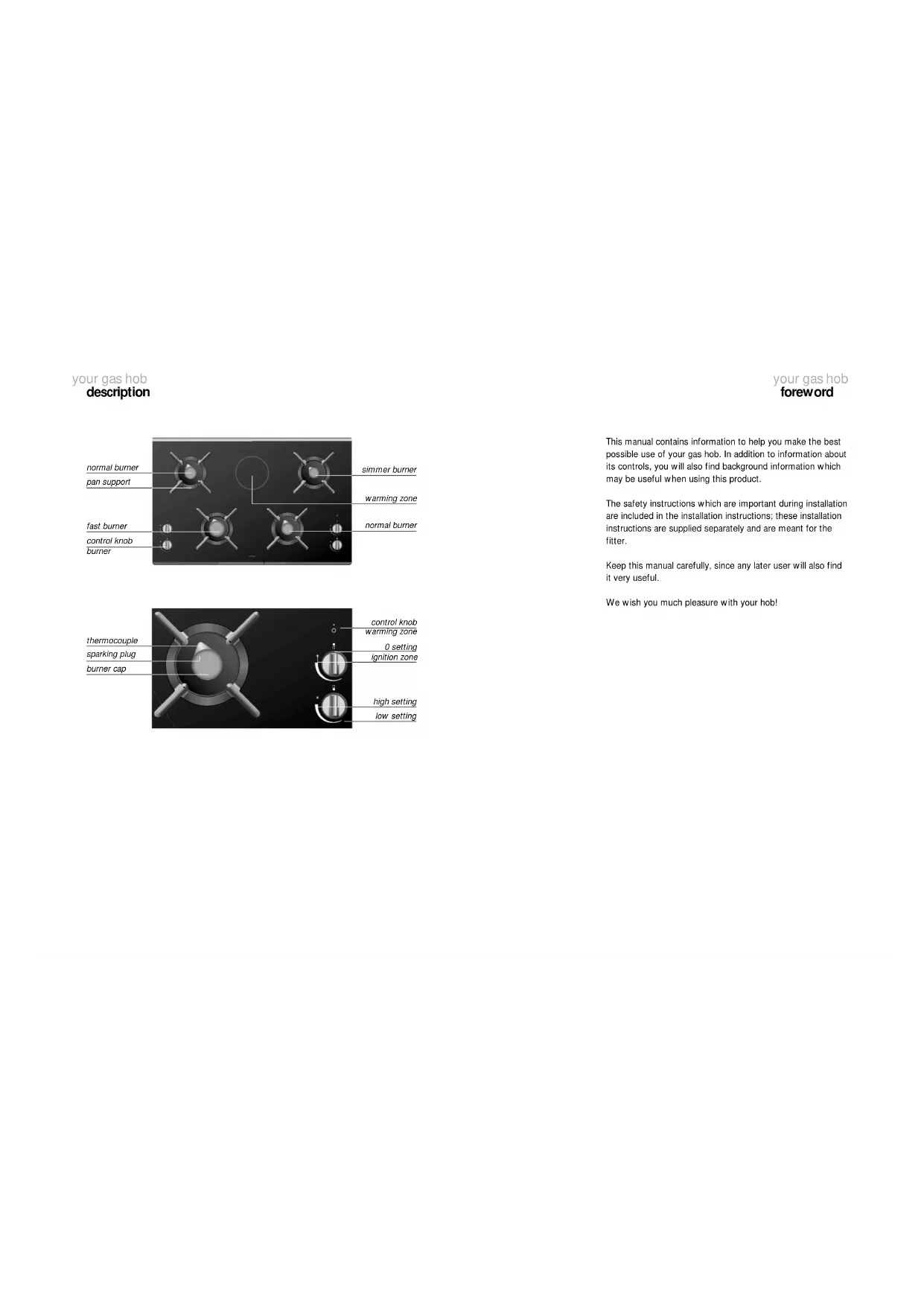
| Product type | Gas hob with electric warming zone |
| Number of gas burners | 4 (1 powerful, 2 normal, 1 gentle simmer) |
| Warming zone | Electric, 13 cm diameter, automatic shut-off after 2 hours |
| Ignition | Electronic spark ignition |
| Flame safety | Thermocouple on each burner (gas shuts off if flame goes out) |
| Cooking surface | Ceramic glass |
| Grates | Cast iron |
| Dimensions (W x D) | 580 x 510 mm (estimate) |
| Weight | Approximately 12 kg (estimate) |
| Power supply | Gas (natural or LPG depending on conversion) and 230 V for the electric zone |
| Powerful burner power | Approximately 3.5 kW |
| Normal burners power | Approximately 2.5 kW each |
| Gentle simmer burner power | Approximately 1.5 kW |
| Warming zone power | 100 W |
| Minimum distance to non-fire-resistant wall | 2 cm |
| Recommended pan diameter | 12 to 28 cm for gas burners |
| Cleaning | Gentle cleaner for ceramic glass; avoid powder and abrasive sponges |
| Burner maintenance | Clean and dry regularly; do not immerse caps in cold water |
| Repairability | Spare parts available via after-sales service |
| Warranty | Consult Atag after-sales service |
Frequently Asked Questions - HG311MF30IL Atag
User questions about HG311MF30IL Atag
0 question about this device. Answer the ones you know or ask your own.
Ask a new question about this device
Download the instructions for your Hob in PDF format for free! Find your manual HG311MF30IL - Atag and take your electronic device back in hand. On this page are published all the documents necessary for the use of your device. HG311MF30IL by Atag.
USER MANUAL HG311MF30IL Atag
natural_image
3D rendering of a mechanical component with multiple circular features and mounting holes (no text or symbols visible)instructions for use gas hob
gbe 41.01.03.0D05VTE212NB
natural_image
Three people in lab coats examining a sample in a laboratory setting (no visible text or symbols)ATAG
ATAG
natural_image
Two identical illustrations of a cooking pot on a stovetop, showing heating and cooling process (no text or symbols)fout goed
deksel
natural_image
Pure electrical circuit lines without any symbolstémoin lumineux touche sensitive
natural_image
Two identical illustrations of a cooking pot on a stovetop, showing heat transfer from a pan to a pan (no text or symbols)faute correct
couvercle
natural_image
Two identical illustrations of a cooking pot on a stovetop, showing heating and cooling stages (no text or symbols)falsch richtig
Deckel
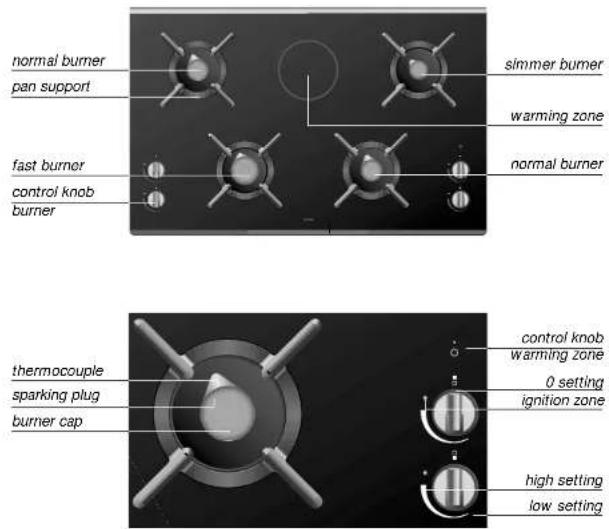
your gas hob description
your gas hob foreword
This manual contains information to help you make the best possible use of your gas hob. In addition to information about its controls, you will also find background information which may be useful when using this product.
The safety instructions which are important during installation are included in the installation instructions; these installation instructions are supplied separately and are meant for the fitter.
Keep this manual carefully, since any later user will also find it very useful.
We wish you much pleasure with your hob!
your gas hob introduction
your gas hob contents
This Atag gas hob has been designed for the real lover of cooking. The generous separation of the burners makes for comfortable working. In addition, the gas hob has been equipped with an electrical warming zone.
On this warming zone, food which is not going to be eaten immediately can be kept warm. Food which is kept warm for longer than half an hour, however, will lose some of its quality. Cooling it and then heating it up again is a better option.
The output of the warming zone is sufficient for preparing "sensitive" dishes, such as melting chocolate or preparing a zabaglione, a foamy sauce thickened with eggs.
safety
what you should pay attention to 4 - 5
controls
igniting and adjusting 6
warming zone 7
comfortable cooking
burners 7
pans 8
maintenance
cleaning 9
faults
what should I do if ... 10
environmental aspects
disposing of packaging and appliance 11
safety
what you should pay attention to
safety
what you should pay attention to
general
The use of gas cooking appliances releases heat and moisture into the room in which the appliance is fitted. Take care that the room is sufficiently ventilated; keep natural ventilation openings open or install a mechanical ventilator (extractor hood).
If the hob is in use for a long time, extra ventilation may be necessary - for example, an open window, or a higher setting for the ventilator (extractor hood).
during use
This cooking appliance has been designed for domestic use. Only use it for preparing foods.
Do not use the appliance to heat the kitchen. This will cause the atmosphere to become damp.
Flambéing under an extractor hood is not permitted. The high flames can cause a fire, even when the extractor hood is switched off.
The appliance is hot during and after use. Bear this in mind if young children come anywhere near the appliance. Do not leave young children alone near a hot cooking appliance.
flame protection
This appliance is fitted with a thermocouple. This is a thermoelectric protection system. It ensures that the gas tap is closed if the flame goes out.
It is important that you check regularly whether or not this protection system is working properly.
testing
-
Blow out the flame and wait for one minute. The gas tap now closes, and no more gas should come out of the burner.
-
Hold a lighted match next to the burner. The burner should not ignite now. If it does, you should contact the service department immediately.
attention!
The distance between a pan and a wall that is not heat-resistant should be greater than 2 cm. If the pan is any closer, it may cause the wall to discolour or deform.
Do not use the appliance if the glass top is broken or cracked. Phone the service department.
controls
igniting and adjusting
controls
warming zone
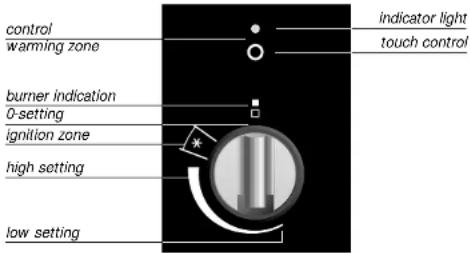
igniting
- Carefully turn the control knob to the ignition zone.
- Press the control knob and keep it pressed for about 5 seconds.
The burner ignites. - Once the burner has ignited, turn the control knob further to the position required.
If the burner does not ignite, check whether:
– the cap is on the burner properly;
– the burner is clean and dry.
adjusting
The burner is continuously adjustable between the high and low settings.
attention!
You can only ignite the burner in the ignition zone.
switching on
Press the touch control for one second (see illustration). The red indicator light comes on. The warming zone switches on.
switching off
The warming zone switches off automatically after two hours.
Press the touch control and the red indicator light goes out. The warming zone switches off.
comfortable cooking
burners
fast burner
Sautéing and frying, deep-frying and blanching, boiling large quantities and stir-frying are best done on the fast burner. This has the highest output. Pay attention to the diameter of the pan, however. A diameter of between 16 and 28cm is best, although a pan of 12cm also fits on this burner.
normal burner
The normal burner is highly suitable for stewing and steaming, boiling average-size portions (about four people) and making a roux.
Pay attention to the diameter of the pan, however. A diameter of between 16 and 28cm is best, although a pan of 12cm also fits on the burner.
simmer burner
Preparing sauces, simmering and boiling can be done best on the simmer burner. On its high setting this burner is large enough for cooking food right through.
comfortable cooking pans
maintenance cleaning
diameter
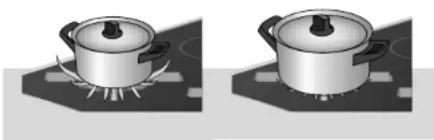
Use pans of the correct size.
Use pans with a maximum size of 28 cm for the simmer, fast and normal burners. Do not use pans with a base diameter of less than 12 cm. Smaller pans are not very stable; larger pans can result in walls becoming too hot.
The tips of the flames are the hottest. If the flames play around the pan, a lot of heat is wasted. To make the most efficient use of gas, you should use a pan with a large diameter.
natural_image
Two identical illustrations of a cooking pot on a stovetop, showing heating and cooling process (no text or symbols)wrong right
lid
Cook with a lid on the pan. You will make energy savings of up to 50%.
warming zone
Although the warming zone has a diameter of 13 cm, you can place a pan of any size on it. In general, pans conduct heat so well that the diameter of the pan is less important for keeping the food warm.
Regular cleaning immediately after use prevents food that has boiled over from affecting the hob over a period of time and causing stubborn stains that are hard to remove.
First clean the control knobs, burners and pan supports and only then the glass top. This prevents the top from becoming dirty again while you are cleaning.
daily
For daily cleaning of your gas hob, it is best to use a mild cleaning agent. Do not use too much liquid, since this could get into the burner or ventilation openings.
stubborn stains
A liquid cleaning agent is best for removing stubborn stains. Never use scouring powders, abrasive cleaning agents or scouring pads. Clean the glass top with a special cleaning agent for ceramic hobs. Water marks and lime deposits are most easily removed using vinegar.
attention!
Remove food remains that have boiled over immediately, particularly red cabbage, apple sauce and rhubarb. If these remains are allowed to affect the hob over a period of time, they can cause discoloration.
Never immerse hot burner caps in cold water. The rapid cooling can damage the enamel.
faults
what should I do if...
environmental aspects
disposal of packaging and appliance
If the appliance does not work properly, it does not always mean that it is defective. Try to deal with the problem yourself first. Phone the service department if the advice given below does not help.
| fault | cause | solution |
| Burner does not burn or ignite properly. | Burner is dirty or damp. | Clean and/or dry the burner. |
| Burner cap not fitted on the burner correctly. | Fit the burner cap on the burner correctly. | |
| The ventilation slots at the rear of the appliance are blocked. | Unblock the ventilation slots. | |
| Appliance is not suitable for the type of gas used. | Check the data plate and have the appliance converted by a qualified fitter if necessary. | |
| The spark ignition sparks, but does not ignite. | Sparking plug dirty. | Clean the sparking plug. |
| Burner is dirty or damp. | Clean and/or dry the burner. | |
| Burner cap not fitted on the burner correctly. | Fit the burner cap on the burner correctly. | |
| The indicator light for the warming zone blinks. | The warming zone switches off automatically after two hours. The indicator light then starts to blink. | Press the touch control for one second until the red indicator light goes out. The warming zone switches off. |
| There is an object on top of the touch control. | Remove the object from the touch control. Press the touch control for one second until the red indicator light goes out. |
The appliance's packaging is recyclable. The following can be used:
- cardboard;
• polyethylene film (PE);
• CFC-free polystyrene (PS rigid foam).
Dispose of these materials in a responsible way and in accordance with government regulations.
The authorities can provide you with information about how to dispose of discarded domestic appliances in a responsible way.
- deksel
- couvercle
- Deckel
- your gas hob description
- your gas hob foreword
- your gas hob introduction
- your gas hob contents
- safety
- controls
- comfortable cooking
- maintenance
- faults
- environmental aspects
- what you should pay attention to
- general
- during use
- flame protection
- testing
- attention!
- igniting and adjusting
- warming zone
- igniting
- adjusting
- switching on
- switching off
- burners
- fast burner
- normal burner
- simmer burner
- comfortable cooking pans
- maintenance cleaning
- diameter
- lid
- daily
- stubborn stains
- disposal of packaging and appliance
Brand : Atag
Model : HG311MF30IL
Category : Hob