IAN 311036 - Jump rope CRIVIT - Free user manual and instructions
Find the device manual for free IAN 311036 CRIVIT in PDF.



| Product Type | Jump Rope |
| Brand | Crivit |
| Model | IAN 311036 |
| Maximum Length | Adjustable, optimal length when handles reach armpits |
| Handle Material | Plastic |
| Rope Material | Synthetic |
| Intended Use | Cardio training and muscle strengthening |
| Safety | Consult a doctor before use, warm-up mandatory, free space of 0.6 m around |
| Length Adjustment | Via screws on handles, loosen, adjust, tighten |
| Exercises | Basic jump, running, slalom, single-leg jumps, crossovers, double unders, squat jump |
| Cleaning | Damp cloth, without harsh chemicals |
| Storage | Dry place, room temperature, do not fold or hang |
| Warranty | 3 years from date of purchase |
| Package Contents | 1 jump rope, 1 instruction manual |
| Manufacturing Date | 10/2019 |
| IAN Code | 311036_1904 |
Frequently Asked Questions - IAN 311036 CRIVIT
User questions about IAN 311036 CRIVIT
0 question about this device. Answer the ones you know or ask your own.
Ask a new question about this device
Download the instructions for your Jump rope in PDF format for free! Find your manual IAN 311036 - CRIVIT and take your electronic device back in hand. On this page are published all the documents necessary for the use of your device. IAN 311036 by CRIVIT.
USER MANUAL IAN 311036 CRIVIT
text_image
PDF ONLINE www.lidl-service.comSPRINGSEIL
DE AT CH
SPRINGSEIL
Gebrauchsanweisung
IT CH
CORDA PER SALTARE
Istruzioni d'uso
FR CH
CORDE À SAUTER
Instructions for use
text_image
A 1 1a 1b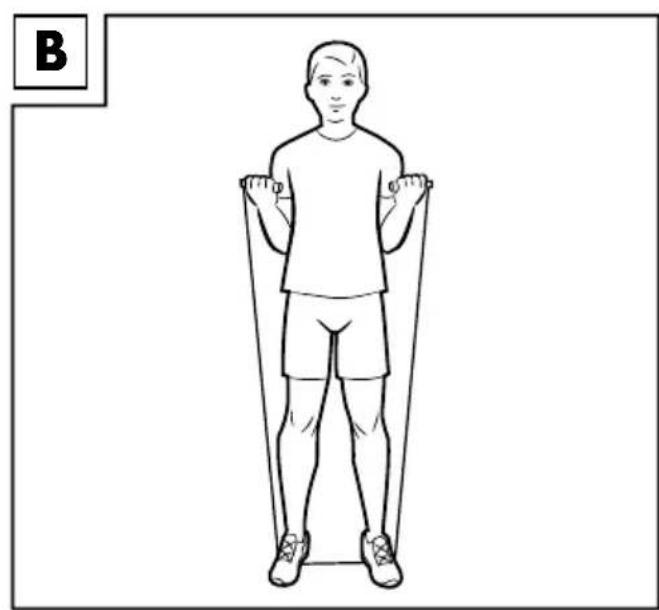
natural_image
Line drawing of a person standing with arms raised, holding a resistance bar (no text or symbols)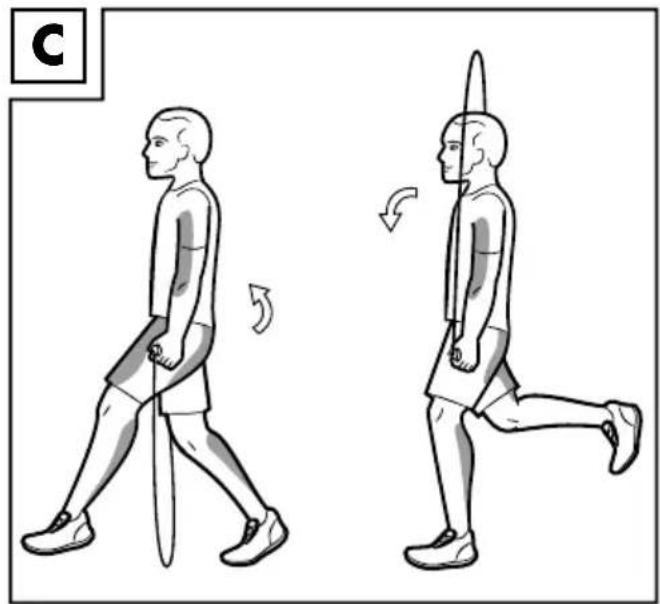
natural_image
Illustration of a person performing two different postures of a walking motion, showing posture changes (no text or symbols)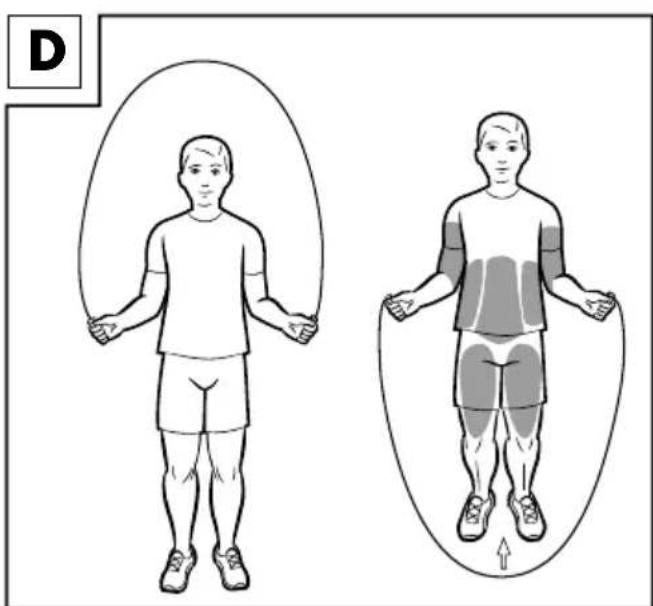
natural_image
Illustration of two individuals jumping rope, one with arms extended and the other with a highlighted band (no text or symbols)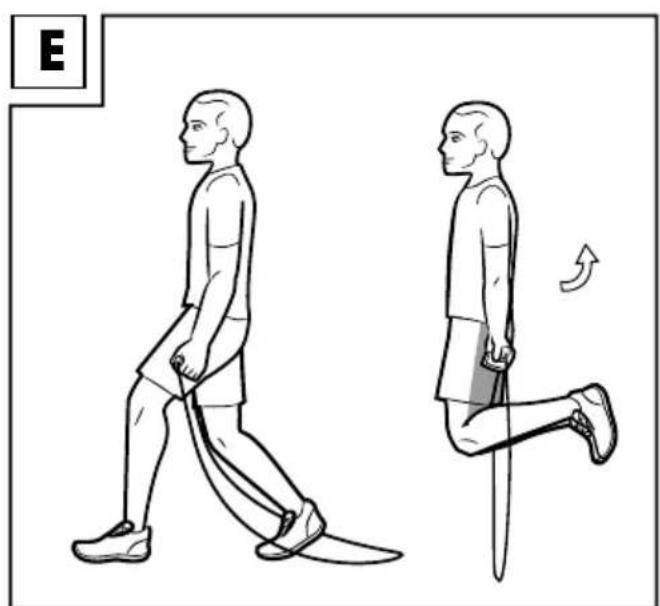
natural_image
Illustration of a person performing a walking or stretching pose, showing front and side views with motion arrows (no text or symbols)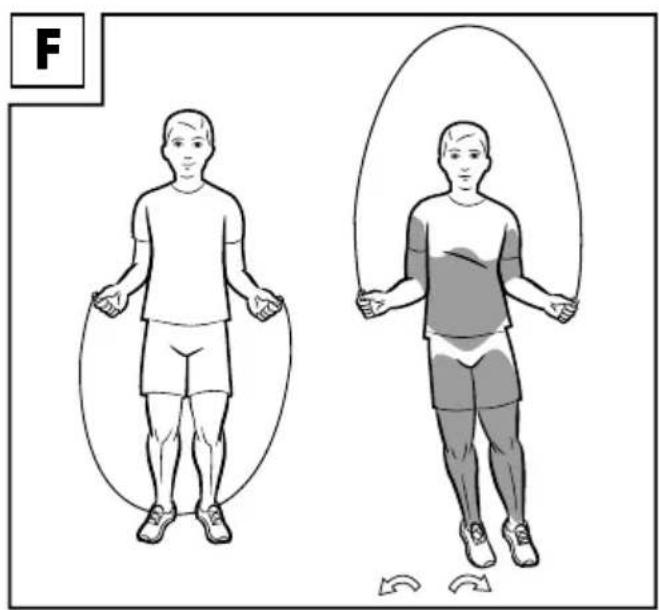
natural_image
Illustration of two individuals jumping rope, one standing and one in a circle, with no text or symbols present.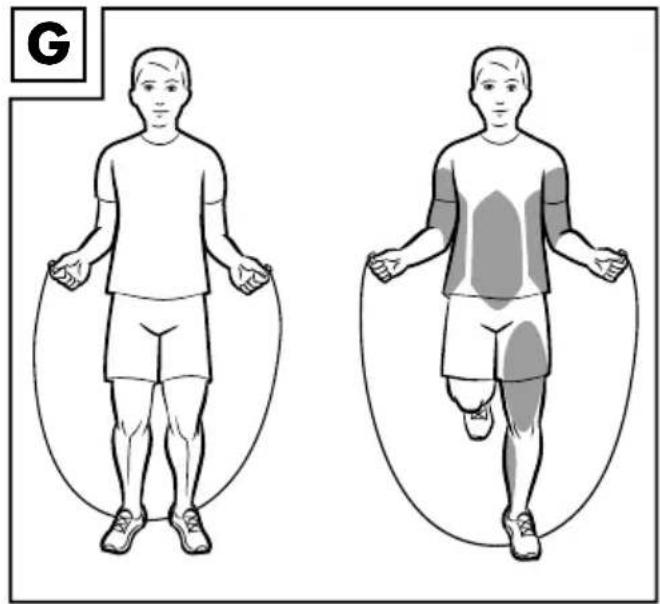
natural_image
Illustration of a person jumping rope, showing two different positions (no text or symbols present)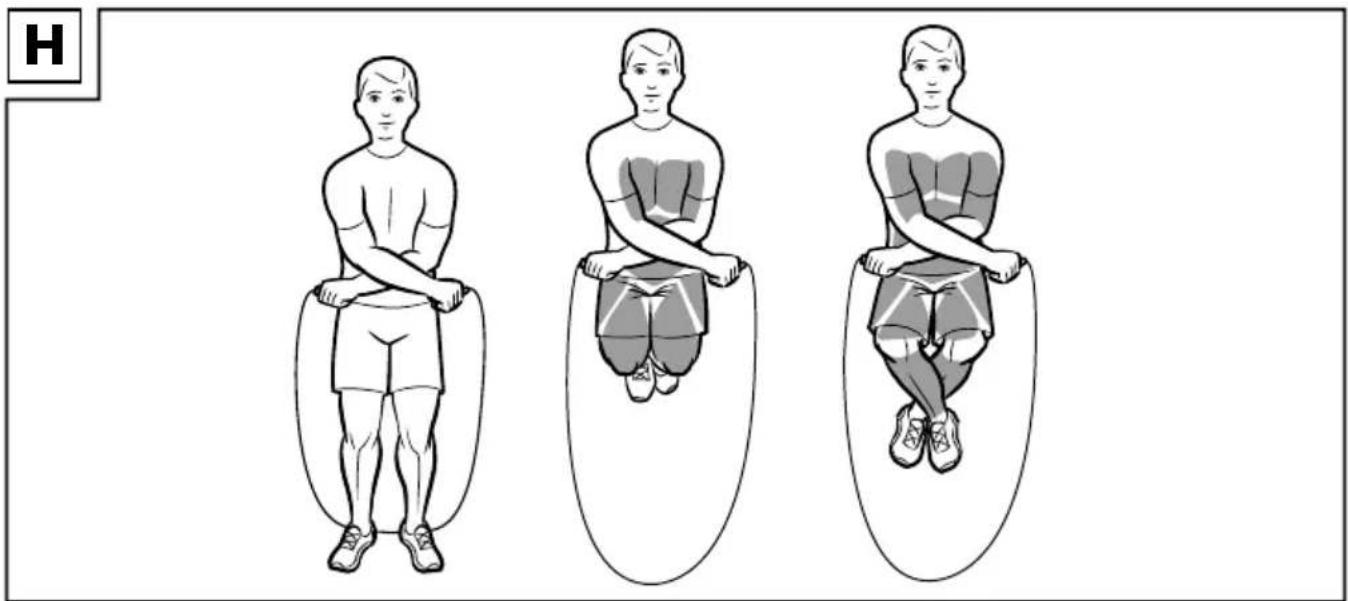
natural_image
Three identical line drawings of a person performing jump rope exercises, no text or symbols present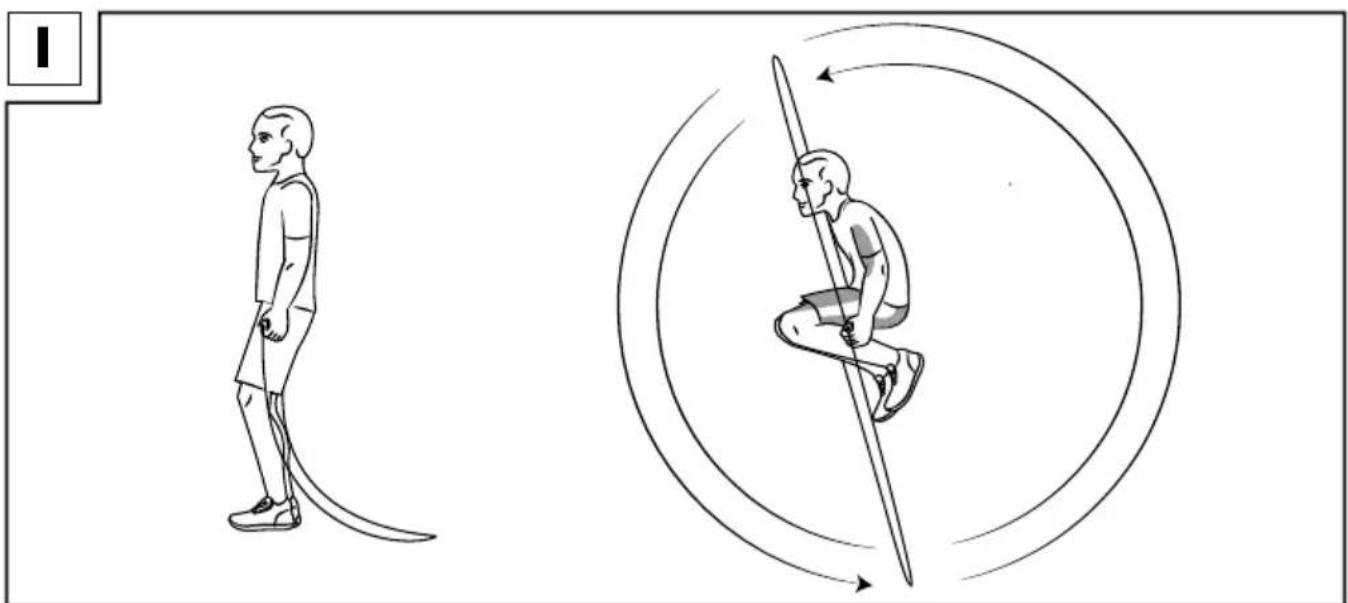
natural_image
Illustration showing a person performing a stretching exercise with motion arrows (no text or symbols)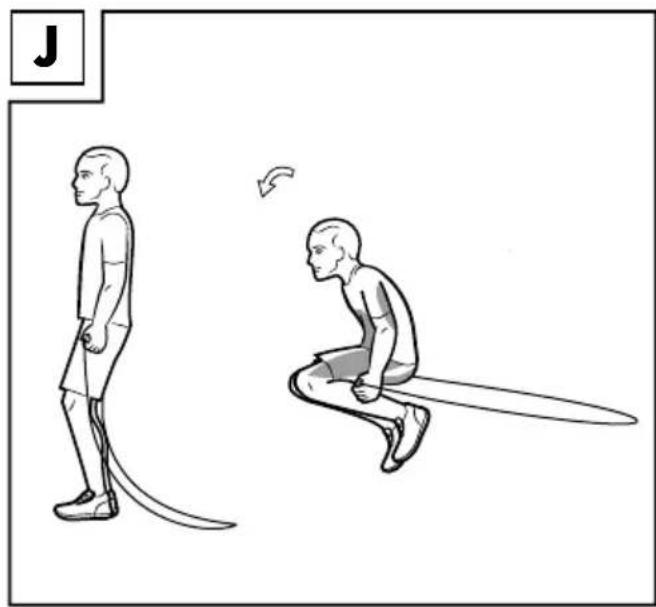
natural_image
Illustration showing two human body poses: one standing with a long tail, the other sitting with a long horizontal bar (no text or symbols)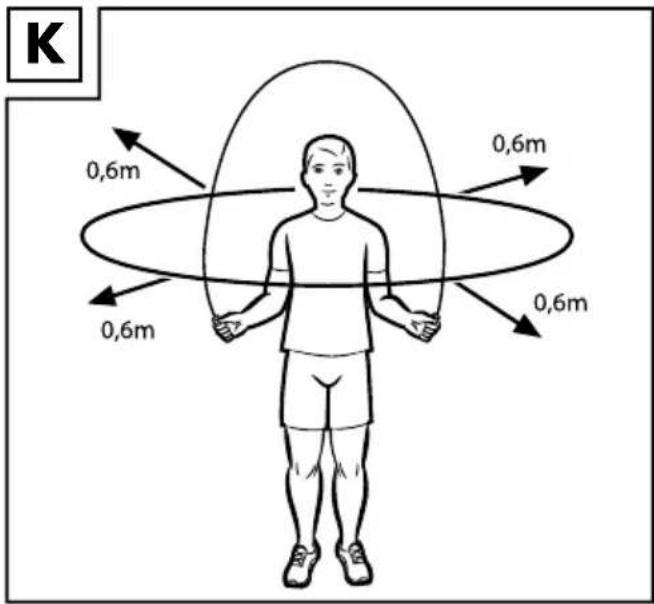
text_image
K 0,6m 0,6m 0,6m 0,6mDE AT CH
Lieferumfang 6
Technische Daten 6
Extra caution - risk of injury to children! .....24
Dangers due to wear and tear 24
Adjusting the rope length 24
The optimal rope length 24
General training instructions 24-25
Warming up 25
Exercise suggestions 25-27
Stretching 27
Storage, cleaning 28
Disposal 28
Warranty and servicing information 28
You have chosen to purchase a high-quality product. Familiarise yourself with the product before using it for the first time.

Read the following instructions for use carefully.
Use the product only as described and only for the given areas of application. Store these instructions for use carefully. When passing the product on to third parties, please also hand over all accompanying documents.
Package contents
1 x skipping rope
1 x instructions for use
Technical data

Date of manufacture (month/year): 10/2019
Intended use
This product was developed as exercise equipment to provide you with a full-body workout. Any other use, e.g. as a tow rope or for abseiling, is not permissible.

Safety information
Risk of injury!
- Consult your doctor before you start training. Make sure you are healthy enough to train.
- Always remember to warm up before training and train according to your current performance ability. High exertion and over-training can lead to serious injuries. Stop exercising immediately and contact a doctor if you experience pain, weakness or fatigue.
- Always keep the instructions for use with the exercise instructions readily available.
- There must be a clear space of approx. 0.6m around the training area (Fig. K).
- Train on a flat, non-slip surface only.
- Do not use the product near steps or landings.

Extra caution – risk of injury to children!
- Do not allow children to use this product unsupervised. Show them the correct use of the training equipment and supervise them. Only allow the use of the product if the child's mental and physical development allows it. This product is not a toy.

Dangers due to wear and tear
- The product may only be used if it is in perfect condition. Check the product for damage or wear before each use. The safety of the product can only be guaranteed if it is regularly inspected for damage and wear and tear. If damaged, it must not be used anymore.
- Use only original replacement parts.
- Protect the product from extreme temperatures, sun and dampness. Improper storage and use of the product could lead to premature wear and tear, which could result in injury.
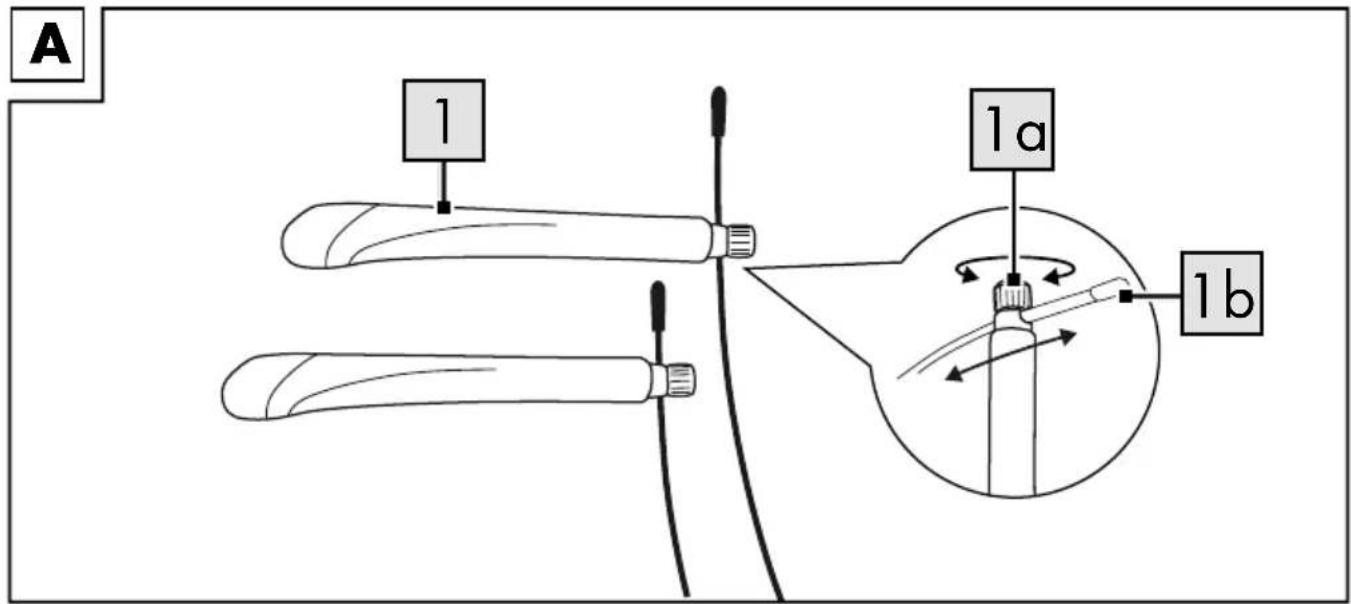
Adjusting the rope length (Fig. A)
- Loosen the screws (1a) on the skipping rope hand grips (1).
- Lengthen or shorten the rope (1b) to the optimal length.
- Tighten the screws (1a) so that the rope stays in place even under tension.
The optimal rope length
- Check whether the rope is the optimal length for you. The length is optimal if you stand on the middle of the rope and both ends (incl. hand grips) reach up to your armpits (Fig. B).
- If the rope is not at the optimal length, adjust the length.
General training instructions Training procedure
- Wear comfortable sports clothing and athletic shoes.
- Warm up before each training session and end the session gradually.
• Take sufficient brakes between the exercises and drink enough.
- If you are a beginner, never train with too much intensity. Increase the intensity of the training sessions slowly.
- Perform all exercises smoothly, not jerkily or fast.
- Be sure to breathe steadily. Exhale during exertion and inhale upon release.
- Maintain correct body posture while exercising.
General training plan
Create a training plan that suits your needs with sets of 6–8 exercises. Pay attention to the following fundamentals:
- A set should consist of approx. 15 repetitions of one exercise.
• Each set can be repeated 3 times. - You should take a 30-second break in between each set.
- Warm up your different muscle groups well before each training session.
- We also recommend stretching after each training session.
Warming up
Take sufficient time before each training session to warm up. Some simple exercises to do this are shown below.
You should repeat each exercise 2 to 3 times.
Neck muscles
- Turn your head slowly to the left and to the right. Repeat this movement 4 to 5 times.
- Rotate your head slowly, first in one direction then in the other.
Arms and shoulders
- Clasp your hands behind your back and pull them carefully upwards. If you bend your upper body forwards at the same time, all your muscles will be maximally warmed up.
- Rotate both shoulders forwards at the same time and change direction after one minute.
- Pull your shoulders up to your ears and then let them drop again.
- Circle your right and left arms alternately forwards and then, after one minute, backwards.
Important: don't forget to keep breathing steadily!
Leg muscles
- Stand on one leg and lift the other leg, with the knee bent, approx. 20cm off the floor.
- Rotate your raised foot first in one direction, then change direction after a few seconds.
- Switch legs and repeat this exercise.
- Lift your legs one after another and take a few steps on the spot. Make sure you only lift your legs to a height where you are still able to maintain your balance well.
Exercise suggestions
Below are a selection of possible exercises.
Note: make sure you are turning the skipping rope from your wrists with small circles. The jumps should be economical, i.e., only jump enough for the rope to pass under your feet.
Stance
- Hold the hand grips loosely in your hands.
- Keep your shoulders and elbows relaxed, with your elbows close to your body.
- Slightly bend your knees and hold your back straight.
Basic jump walking/running (Fig. C) Starting position
- Step one foot forward and hold the product so that the rope lies between the front and back foot.
- Relax your arms and keep your elbows close to your body.
End position
- Tense your arm and abdominal muscles.
- Pull your back foot up and swing the rope from the wrists backwards and over your head.
- Lift the front foot just high enough that the rope can pass under it.
- Repeat the exercise 10 to 15 times in three sets and then put the other foot forward.
Important: pay attention to body tension during the exercise and avoid jumping here. Move the skipping rope so that you can still walk or run. Move the skipping rope only with movements of the wrist. Cushion each landing by slightly bending your knees.
Basic jump both legs (Fig. D)
Starting position
- Stand with your feet hip-width apart, with knees slightly bent. The rope should be behind your feet.
- Bend your arms slightly and keep your elbows close to your body.
End position
-
Tense your arm and abdominal muscles.
-
Simultaneously swing the skipping rope forwards over your head using your wrists, and take a small jump to let the rope pass under your feet.
-
Repeat the exercise 10 to 15 times in three sets.
Important: maintain body tension during the exercise and avoid jumping too high. Move the skipping rope only with movements of the wrist. Cushion each landing by slightly bending your knees.
Stride jump (Fig. E)
Starting position
- Step one foot forward and hold the product so that the rope lies behind your feet.
- Relax your arms and keep your elbows close to your body.
End position
- Tense your arm and abdominal muscles.
- Using your wrists, swing the skipping rope over your head from behind.
- When lifting your feet, pull them slightly backwards and swing the rope under your feet in a striding position.
- Repeat the exercise 10 to 15 times in three sets and then put the other foot forward.
Important: maintain body tension during the exercise and avoid jumping too high. Move the skipping rope only with movements of the wrist. Cushion each landing by slightly bending your knees.
Slalom both legs (Fig. F)
Starting position
-
Stand with your feet hip-width apart, with knees slightly bent. The rope should be behind your feet.
-
Bend your arms slightly and keep your elbows close to your body.
End position
-
Tense your arm and abdominal muscles.
-
Simultaneously swing the skipping rope forwards over your head using your wrists, and take a small jump to let the rope pass under your feet.
-
When you land, place your feet off to one side and then, after the next jump, off to the other side, so that you are jumping from side to side.
-
Repeat the exercise 10 to 15 times in three sets.
Important: maintain body tension during the exercise and avoid jumping too high. Move the skipping rope only with movements of the wrist. Cushion each landing by slightly bending your knees.
One-leg jumps (Fig. G)
Starting position
- Stand with your feet hip-width apart, with knees slightly bent. The rope should be behind your feet.
- Bend your arms slightly and keep your elbows close to your body.
End position
- Tense your arm and abdominal muscles.
- Simultaneously swing the skipping rope forwards over your head using your wrists, and jump on one leg, letting the rope pass under your feet. Bend the other, non-jumping leg backwards.
- Change the jumping leg each time and repeat the exercise 10 to 15 times in three sets.
Important: maintain body tension during the exercise and avoid jumping too high. Move the skipping rope only with movements of the wrist. Cushion each landing by slightly bending your knees.
Rope - crossing (Fig. H)
Starting position
-
Stand with your feet hip-width apart, with knees slightly bent. The rope should be behind your feet.
-
Cross your arms in front of your body, slightly bent. Hold the hand grips of the product as shown in the illustration and hold your elbows close to your body.
End position
- Tense your arm and abdominal muscles.
- Simultaneously swing the skipping rope forwards over your head using your wrists, and jump with your feet together and pulled back, or with crossed legs, letting the rope pass under your feet.
- Repeat the exercise 10 to 15 times in three sets.
Important: maintain body tension during the exercise. Move the skipping rope only with movements of the wrist. Cushion each landing by slightly bending your knees.
Double pass (Fig. I)
Starting position
- Stand with your feet hip-width apart, with knees slightly bent. The rope should be behind your feet.
- Bend your arms slightly and keep your elbows close to your body.
End position
- Tense your arm and abdominal muscles.
- Swing the skipping rope forwards over your head using your wrists, and pull your knees in to your body while jumping high, letting the rope pass under your feet twice.
- Repeat the exercise 10 to 15 times in three sets.
Important: maintain body tension during the exercise and jump high enough that you can swing the skipping rope twice around your body. Move the skipping rope only with movements of the wrist. Cushion each landing by slightly bending your knees.
Squat jumps (Fig. J)
Starting position
- Stand with your feet hip-width apart, knees slightly bent, and go into a squat. The rope should be behind your feet.
- Bend your arms slightly and keep your elbows close to your body.
End position
- Tense your arm and abdominal muscles.
- Simultaneously swing the skipping rope forwards over your head using your wrists, and jump out of the squat, pulling your knees in to your body and letting the rope pass under your feet.
- Repeat the exercise 10 to 15 times in three sets.
Important: maintain body tension during the exercise and avoid jumping too high. Move the skipping rope only with movements of the wrist. Cushion each landing by slightly bending your knees.
Stretching
Take sufficient time to stretch after each training session. Some simple exercises to do this are shown below.
You should perform each exercise 3 times per side for 15–30 seconds.
Neck muscles
- Stand in a relaxed posture.
- Pull your head gently to one side with one hand, first to the left and then to the right.
This exercise stretches the sides of your neck.
Arms and shoulders
- Stand up straight with your knees slightly bent.
- Bend your right arm behind your head until your right hand is between your shoulder blades.
- Grip your right elbow with your left hand and pull it backwards.
- Change sides and repeat the exercise.
Leg muscles
- Stand upright and lift one foot off the floor.
- Rotate it slowly first in one direction, then the other.
- Switch feet after a while.
Important: make sure your thighs remain parallel to each other. Push your pelvis forwards, keeping your upper body upright.
Storage, cleaning
Store the product out of reach of children. Roll up the skipping rope when not in use. Never hand the skipping rope on a hook or similar, and do not kink it. This could result in the skipping rope becoming permanently deformed. When not in use, always store the product clean and dry at room temperature. Only clean the product with a damp cloth and wipe dry afterwards. Clean the skipping rope regularly, preferably after each use.
IMPORTANT! Never clean the product with harsh cleaning agents.
Disposal
Dispose of the article and the packaging materials in accordance with current local regulations. Packaging materials such as foil bags are not suitable to be given to children. Keep the packaging materials out of the reach of children.
Dispose of the products and the packaging in an environmentally friendly manner.
The recycling code is used to identify various materials for recycling. The code consists of the recycling symbol – which is meant to reflect the recycling cycle – and a number which identifies the material.
Notes on the guarantee and service handling
The product was produced with great care and under constant supervision. You receive a three-year warranty for this product from the date of purchase. Please retain your receipt. The warranty applies only to material and workmanship and does not apply to misuse or improper handling. Your statutory rights, especially the warranty rights, are not affected by this warranty.
With regard to complaints, please contact the following service hotline or contact us by e-mail. Our service employees will advise as to the subsequent procedure as quickly as possible. We will be personally available to discuss the situation with you.
Any repairs under the warranty, statutory guarantees or through goodwill do not extend the warranty period. This also applies to replaced and repaired parts. Repairs after the warranty are subject to a charge.
IAN: 311036_1904

Service Great Britain
Tel.: 0800 404 7657
E-Mail: deltasport@lidl.co.uk
DELTA-SPORT HANDELSKONTOR GMBH
Wragekamp 6 • DE-22397 Hamburg
GERMANY

10/2019