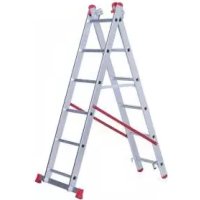
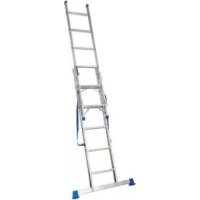
HG02335 - Ladder POWERFIX - Free user manual and instructions
Find the device manual for free HG02335 POWERFIX in PDF.



| Brand | Powerfix |
| Model | HG02335 |
| Product type | Aluminum multifunction ladder |
| Material | Aluminum |
| Weight | Approximately 6.15 kg |
| Maximum load | 150 kg (user + tools) |
| Intended use | Domestic, short-term tasks |
| Warranty | 5 years from date of purchase |
| Cleaning | Well-wrung lint-free cloth |
| Storage | Safe and dry place |
| Maintenance | Regular lubrication of hinge mechanism |
| Repairs | Must be carried out by a professional |
| Safety | Anti-slip rubber feet, locking devices |
| Number of sections | Not specified |
| Maximum height | Not specified |
| Country of origin | Not specified |
Frequently Asked Questions - HG02335 POWERFIX
User questions about HG02335 POWERFIX
0 question about this device. Answer the ones you know or ask your own.
Ask a new question about this device
Download the instructions for your Ladder in PDF format for free! Find your manual HG02335 - POWERFIX and take your electronic device back in hand. On this page are published all the documents necessary for the use of your device. HG02335 by POWERFIX.
USER MANUAL HG02335 POWERFIX
natural_image
Black-and-white photo of four different metal ladders arranged in a row, each with a wooden floor and a cabinet (no text or symbols visible)ALUMINIUM MULTI-PURPOSE LADDER
GB IE NI
ALUMINIUM MULTI-PURPOSE LADDER
Operation and safety notes
DK
MULTIFUNKTIONSSTIGE AF ALUMINIUM
GB/IE/NI Operation and safety notes Page 16
natural_image
Line drawing of a metal ladder structure with a maximum weight label (150 kg) shown in the corner.A
natural_image
Technical line drawing of a mechanical linkage assembly with tool and component details (no text or symbols)
B
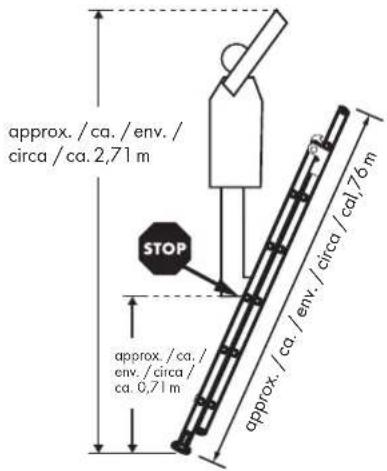
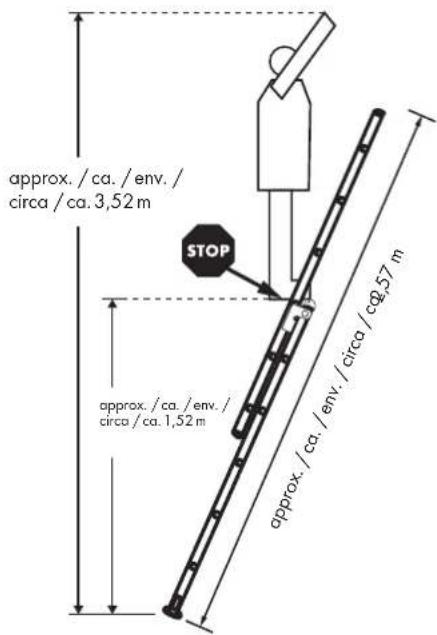

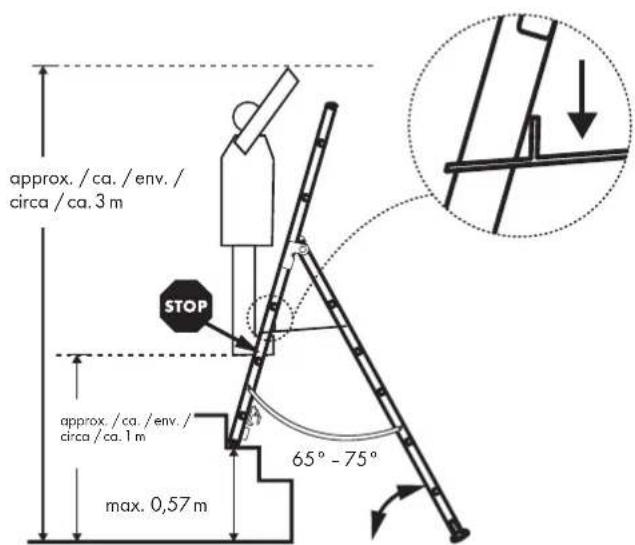
Follow the advices on the pictograms to avoid accidents: /
Safety instructions....Page 17
General safety instructions ...... Page 17
Safety instructions with regard to setting up the ladder. . . . . . . . . Page 17
Safety instructions for using the ladder....Page 19
Before use....Page 21
Positioning and erecting the ladder ...... Page 21
Using the ladder....Page 22
List of items to be inspected....Page 22
Repairs, maintenance and storage .... Page 23
Cleaning and care ...... Page 24
Disposal Page 24
Warranty Page 24
ALUMINIUM MULTI- PURPOSE LADDER
Introduction
We congratulate you on the purchase of your new product. You have chosen a high quality product. Familiarise yourself with the product before using it for the first time. In addition, please carefully refer to the operating instructions and the safety advice below. Only use the product as instructed and only for the indicated field of application. Keep these instructions in a safe place. If you pass the product on to anyone else, please ensure that you also pass on all the documentation with it.
Intended use
This product is only intended to be used as an aid to reach high objects or areas in private households. The product is not intended for commercial use.
- Technical data
Weight: approx. 6.15 kg
⚠️ Safety instructions
● General safety instructions
Inspect the ladder after delivery and before first use to confirm condition and operation of all parts;

Maximum total load 150 kg.
The weight of the user plus tools and other materials must not exceed 150 kg.
- Keep the ladder clean and remove any dirt. Keep the ladder dry to avoid any slippage or toppling over.
■ Before using a ladder at work a risk assessment should be carried out respecting the legislation in the country of use.
● Safety instructions with regard to setting up the ladder
- Inspect all parts prior to each use. Discontinue use if any parts of the ladder are missing, damaged or worn in any way.
- Do not use any other attachments, components or accessories manufactured by other supplier.
■ Never attempt to fix a damaged ladder. Always have a qualified repair person fix the damaged ladder.
■ Use extreme caution when used in windy, rainy or icy conditions.
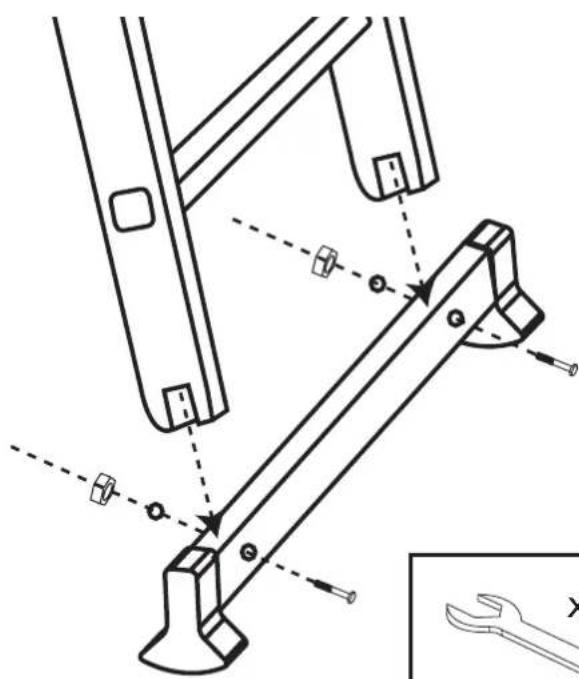
■ Always place ladder on even, firm surfaces for stability. Never try to increase the height of the ladder in any position by placing anything under the stabilizer bars.
■ Always make sure all four rubber feet of the stabilizer bars are firmly supported.
■ Always use caution when getting on or off ladder.
■ Never set up the ladder in front of doors that are not locked.
■ Always use extreme caution when using ladder on a drop cloth, carpet or other protective surface. This will prevent the rubber feet from gripping the surface properly.
- Do not use ladder jacks with this ladder.
■ Pushing or pulling anything while on the ladder or scaffold may cause the ladder to tip and you to fall. Use extreme caution if you must push or pull from the ladder.
■ Never attempt to jump, walk or move ladder while on it. If you need to move the ladder get off it first. Move it, then reposition yourself.
■ To avoid losing balance and/or tipping ladder or scaffold, never overreach. Always stay balanced while on ladder. Keep your body centered between side rails.
■ Never use ladder as a brace in any way.
■ Never place yourself or allow anyone to stand or work under scaffolding or ladder while in use.
■ Do not stand on ladder while releasing the locking mechanism.
■ Never use on stairs if they are not level. This could cause the ladder to tip or cause you to lose your balance.
■ Always wear skid resistant shoes while using this ladder or scaffold.
■ Before using it, check all parts of the ladder. Do not use the ladder if any parts are missing, damaged or worn.
- Check all locking devices. Before using the ladder, make sure that all locking devices are locked in place.
■ Place the ladder only on a horizontal, dry, immovable firm surface.
■ Ladders shall not be positioned on slippery surfaces (such as ice, shiny surfaces or significantly contaminated solid surfaces) unless additional effective measures are taken to prevent the ladder slipping or ensuring contaminated surfaces are sufficiently clean.
- Do not use the ladder as a bridging structure.
■ Leaning ladder should lean against a flat non-fragile surface and should be secured before use, e.g. tied or use of a suitable stability device.
■ Attention! Metal is an electrical conductor! Make sure that no part of the ladder is touching a live cable.
■ When positioning the ladder take into account risk of collision with the ladder e.g. from pedestrians, vehicles or doors.
■ Ladder shall be stood on its feet, not the rungs or steps.
● Safety instructions for using the ladder
- Do not use the ladder if you are under the influence of alcohol, drugs or strong medication. Do not use the ladder if you are ill or do not feel well.
- Do not use the ladder if it is wet, damaged or if it has become slippery because of water, ice or snow.
■ Always hold on tightly to the ladder and always face the ladder when getting on and off the ladder.
■ Do not carry bulky or heavy objects when climbing up the ladder.
- Do not try to change the location of the ladder when you are standing on it or from above. Get off the ladder first and then change the position of the ladder. Then get onto the ladder again.
- Do not lean out too far when you are on the ladder. Keep the centre of your body between the ladder stringers and stand with both feet on the same rung. User should keep their belt buckle (navel) inside their stiles.
- Do not step off a leaning ladder at a higher level without additional security, such as tying off or use of a suitable stability device.
This ladder is not a toy and is not suitable for use by children. Make sure that the ladder cannot be used by children. Do not leave the ladder unattended after you have set it up.
■ Make sure that you do not get tired when working and take breaks. Tiredness represents an increased security risk and could lead to accidents.
■ Ladders should only be used for light work of short duration.
■ Use non-conductive ladders for unavoidable live electrical work.
- Do not use the ladder outside in adverse weather conditions, such as strong wind.
■ Maintain a handhold whilst working from a ladder or take additional safety precautions if you cannot.
- Avoid any tasks in which a lateral load is exerted on the standing ladder, e.g. drilling sideways into solid material (e.g. masonry or concrete).
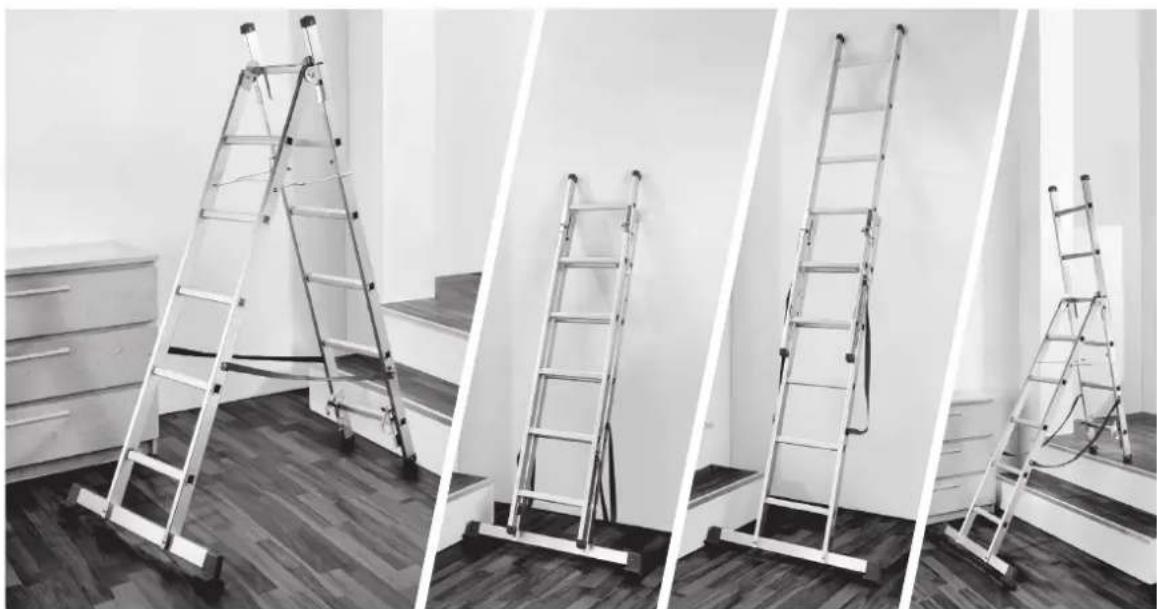
- Do not use the top three rungs of the ladder as a platform if you are using the ladder as a lean-to ladder (see Figure B).
- Do not use the top two rungs of the ladder as a platform if you are using the ladder as a stepladder (see Figure B).
- Do not stand on the top four steps / rungs of a standing ladder with an extending ladder at the top (see Figure B).
- Do not stand on the top two steps / rungs of a standing ladder without a platform and hand / knee rail.
■ Do not modify the ladder design.
■ Attached to the ladder frame you will find labels with pictograms for a safe use of the ladder.
Follow the advices on the pictograms to avoid accidents.
Before use
■ Ensure that you are fit enough to use a ladder. Certain medical conditions or medication, alcohol or drug abuse could make ladder use unsafe;
■ When transporting ladders on roof bars or in a truck, ensure they are suitably placed to prevent damage;
- Inspect the ladder after delivery and before first use to confirm condition and operation of all parts;
■ Visually check the ladder is not damaged and is safe to use at the start of each working day when the ladder is to be used;
■ For professional users regular periodic inspection is required;
■ Ensure the ladder is suitable for the task;
■ Do not use a damaged ladder;
■ Remove any contamination from the ladder, such as wet paint, mud, oil or snow;
● Positioning and erecting the ladder
■ Ladder shall be erected at the correct position, such as the correct angle for a leaning ladder (angle of inclination approximately 1:4) with the rungs or treads level and complete opening of a standing ladder;
■ Locking devices shall be fully secured before use;
■ Ladder shall be on an even, level and unmoveable base;
■ Leaning ladder should lean against a flat non-fragile surface and should be secured before use, e.g. tied or use of a suitable stability device;
■ Ladder shall never be repositioned from above;
■ When positioning the ladder take into account risk of collision with the ladder e.g. from pedestrians, vehicles or doors. Secure doors (not fire exits) and windows where possible in the work area;
- Identify any electrical risks in the work area, such as overhead lines or other exposed electrical equipment;
■ Ladder shall be stood on its feet, not the rungs or steps;
● Using the ladder
- Do not exceed the maximum total load for the type of ladder;
■ Do not use standing ladders for access to another level;
■ Do not stand on the top three rungs of a leaning ladder; - Do not stand on the top two rungs of a standing ladder without a platform and hand/knee rail;
- Do not stand on the top four steps/ rungs of a standing ladder with an extending ladder at the top;
■ Take precautions against children playing on the ladder;
- Secure doors (not fire exits) and windows where possible in the work area;
■ Face the ladder when ascending and descending;
- Keep a secure grip on the ladder when ascending and descending;
■ Wear suitable footwear when climbing a ladder;
■ Leaning ladders used for access to a higher level should be extended at least 1 m above the landing point;
■ Equipment carried while using a ladder should be light and easy to handle;
- Avoid work that imposes a sideways load on standing ladders, such as side-on drilling through solid materials (e.g. brick or concrete);
■ Maintain a handhold whilst working from a ladder or take additional safety precautions if you cannot.
● List of items to be inspected
The ladder must be inspected before use. For regular inspection, the following items shall be taken into account:
-is the ladder tag in place and up to date?
-check that the rung hooks are not missing, damaged, loose or corroded and engage properly on the rungs;
-check that guide brackets are not missing, damaged, loose or corroded and engage property on the mating stile;
- are the instructions readable?
-check that the stiles / legs (uprights) are not bent, bowed, twisted, dented, cracked, corroded or rotten;
-check that the stiles / legs around the fixing points for other components are in good condition;
-check that fixings (usually rivets, screws or bolts) are not missing, loose, or corroded;
-check that rungs / steps are not missing, loose, excessively worn, corroded or damaged;
-check that the hinges between front and rear sections are not damaged, loose or corroded;
-check that the locking stays horizontal, back rails and corner braces are not missing, bent, loose, corroded or damaged;
-check that the stabilizer bars are fixed and in a good condition.
-check that plastic feet / end caps are not missing, loose, excessively worn, corroded or damaged;
-check that the entire ladder is free from contaminants (e.g. dirt, mud, paint, oil or grease);
-check that locking catches (if fitted) are not damaged or corroded and function correctly;
If any of the above checks cannot be fully satisfied, you should NOT use the ladder.
● Repairs, maintenance and storage
- Keep ladder clean and free of all foreign materials that could destroy hinges and ladder function.
■ Lubricate mechanism of locks regularity.
■ Property secure and support ladder while in transit.
■ Never store materials on ladder.
■ Repair and maintenance work on the ladder must be carried out by a technical expert.
- When not using it, store the ladderchoice – free of charge to you. in a safe, dry place.
The warranty period begins on
The warranty for this product is 5 years from the date of purchase.
Should this product show any fault in materials or manufacture within 5 years from the date of purchase, we will repair or replace it – at our
echoice - free of charge to you.
● Cleaning and care
■ To do so, use a slightly damp, lint-free cloth.
● Disposal
The packaging is made entirely of recyclable materials, which you may dispose of at local recycling facilities.
Contact your local refuse disposal authority for more details of how to dispose of your worn-out product.
Warranty
The product has been manufactured to strict quality guidelines and meticulously examined before delivery. In the event of product defects you have legal rights against the retailer of this product. Your legal rights are not limited in any way by our warranty detailed below.
The warranty period begins on the date of purchase. Please keep the original sales receipt in a safe location. This document is required as your proof of purchase. This warranty becomes void if the product has been damaged, or used or maintained improperly.
The warranty applies to defects in material or manufacture. This warranty does not cover product parts subject to normal wear, thus possibly considered consumables (e.g. batteries) or for damage to fragile parts, e.g. switches, rechargeable batteries or glass parts.
Indledning Side 26


- ALUMINIUM MULTI-PURPOSE LADDER
- MULTIFUNKTIONSSTIGE AF ALUMINIUM
- Safety instructions....Page 17
- Before use....Page 21
- Positioning and erecting the ladder ...... Page 21
- Using the ladder....Page 22
- List of items to be inspected....Page 22
- Repairs, maintenance and storage .... Page 23
- Cleaning and care ...... Page 24
- Disposal Page 24
- Warranty Page 24
- ALUMINIUM MULTI- PURPOSE LADDER
- Introduction
- Intended use
- - Technical data
- ⚠️ Safety instructions
- ● General safety instructions
- ● Safety instructions with regard to setting up the ladder
- ● Safety instructions for using the ladder
- Before use
- ● Positioning and erecting the ladder
- ● Using the ladder
- ● List of items to be inspected
- ● Repairs, maintenance and storage
- ● Cleaning and care
- ● Disposal
- Warranty
- Indledning Side 26
Brand : POWERFIX
Model : HG02335
Category : Ladder