Primo Viaggio Convertible - Car seat PEG PEREGO - Free user manual and instructions

Find the device manual for free Primo Viaggio Convertible PEG PEREGO in PDF.

📄 104 pages English EN 💬 AI Question
Notice PEG PEREGO Primo Viaggio Convertible - page 55
View the manual : Français FR English EN
Manual assistant
Powered by ChatGPT
Waiting for your message
Product information

Brand : PEG PEREGO

Model : Primo Viaggio Convertible

Category : Car seat

Download the instructions for your Car seat in PDF format for free! Find your manual Primo Viaggio Convertible - PEG PEREGO and take your electronic device back in hand. On this page are published all the documents necessary for the use of your device. Primo Viaggio Convertible by PEG PEREGO.

USER MANUAL Primo Viaggio Convertible PEG PEREGO

2.3 - 20.4 kg (5 - 45 lbs)

RÉFÉRENCE AU SOL- 20 -

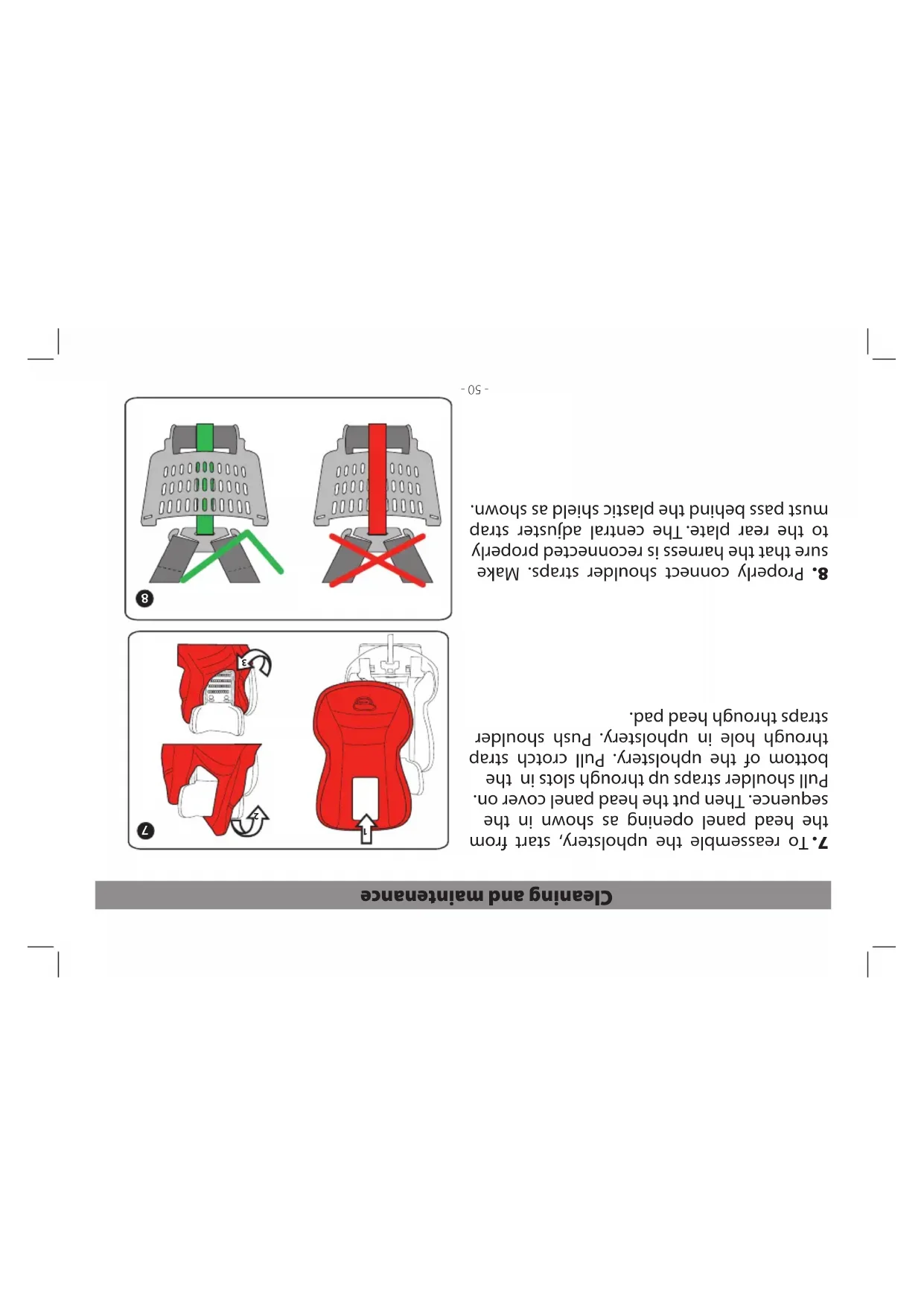
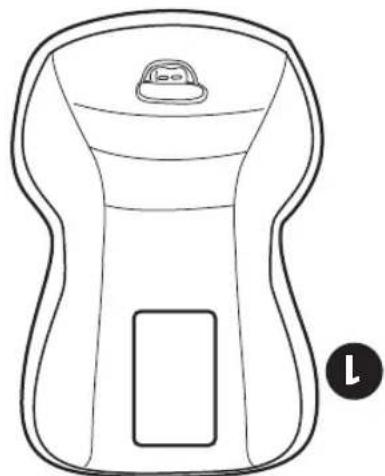
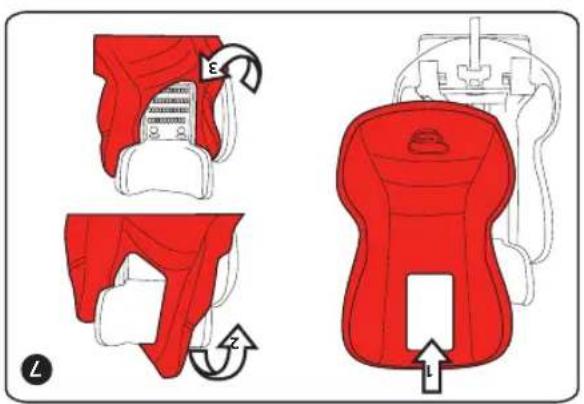
7. To reassemble the upholstery, start from

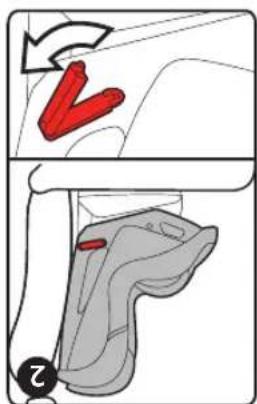
the head panel opening as shown in the sequence. Then put the head panel cover on. Pull shoulder straps up through slots in the bottom of the upholstery. Pull crotch strap through hole in upholstery. Push shoulder straps through head pad.

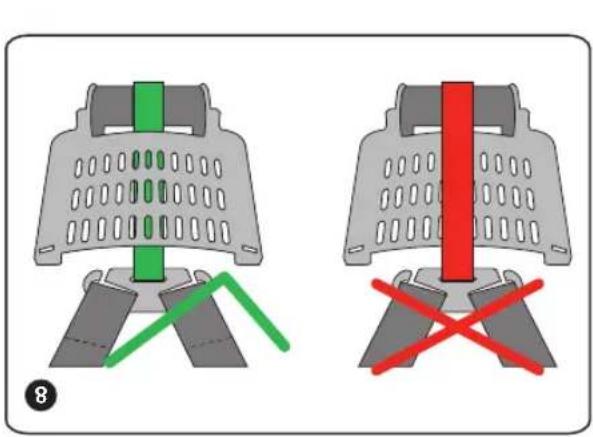
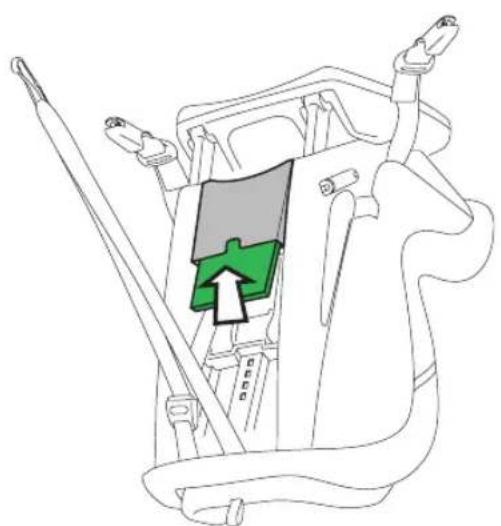
8. Properly connect shoulder straps. Make

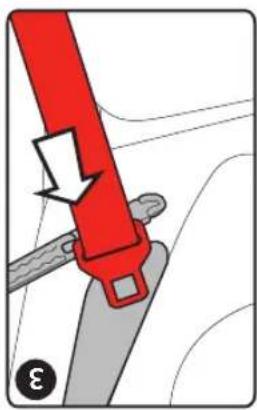
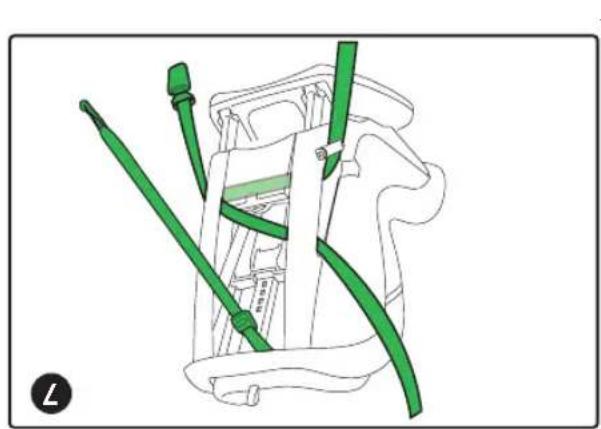
sure that the harness is reconnected properly to the rear plate. The central adjuster strap must pass behind the plastic shield as shown.

Cleaning and maintenance- 49 -

5. Check that the adjuster is free of food

particles or debris that could prevent correct functioning.

6. Remove the padding from bottom to top

making sure that the side impact wings white EPS are not bent or broken in the process.

Cleaning and maintenance- 48 -

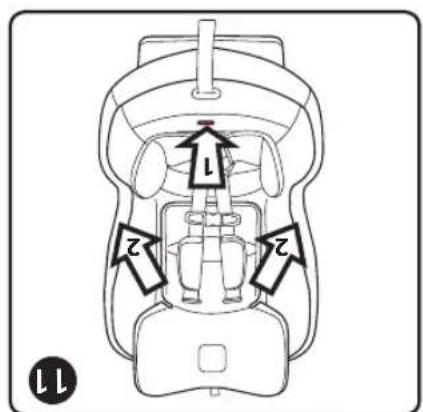
2. Remove head panel padding following

the procedure (1, then 2). Take care of the soft white EPS insert.

Undo the lower part of upholstery and remove it from the crotch strap. The crotch portion of the harness does not need to be removed.

4. Pull the bottom part of the upholstery

upward making sure that the shoulder belts are let through the side openings.

Cleaning and maintenance- 47 - Cleaning and maintenance

1. Pull the head panel all the way up. Detach

shoulder belts from rear metal plate in the back of the child restraint. Turn it around and pull the straps from the openings at shoulder level.

Your child restraint requires a minimum of cleaning and maintenance. Do not clean with harsh products or solvents. Keep moving parts clean. In case, clean plastic parts with a damp cloth. Do not use water with harness and latching mechanisms. Protect it from extreme cold, water, rain and sun exposure. Prolonged exposures to these elements can change the colors in the material but also change their mechanical properties. Store it in a dry area if not used for long periods. Warning! Do not use or purchase the child restraint 7 years after the production date labelled on the seat or shell. The upholstery is likely to be removed and cleaned frequently. Follow the procedure below to remove the fabric and reassemble it properly. Check the child restraint features before disassembly and make sure that the same features are still working once it is set up for use again. Extra care is required when removing padding to avoid breaking the white EPS panels on the product.- 46 -

13. To complete the operation, put the soft

cover on the crotch in the new position by sliding the buckle through the openings in the upholstery and in the croch protection

14. Important! The seat is supplied

with a specically designed ller cushion for smaller children. This cushion must be used in rear facing mode only; this cushion must be used for children up to 22 lbs

Securing your child into the child restraint- 45 -

CROTCH STRAP ADJUSTMENT

12. Your Primo Viaggio SIP Convertible is

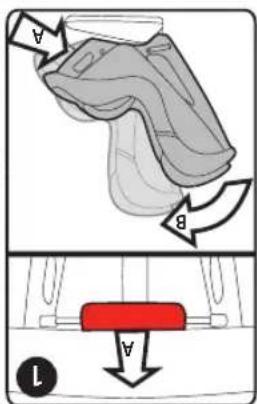
equipped with a repositionable crotch strap. The child restraint is assembled with the crotch located in the forward position (A). However, for children up to 22 lbs, the crotch strap must be relocated in the rear position (B). To change position, lift the upholstery so that the crotch attachment is visible (g.1). Remove the crotch metal plate from above (g.2). Insert the metal plate from above in position B, then turn the strap below the shell so that the metal plate is pulled out and locked in position A (g.3) Pull the buckle through the buckle pad and through the seat upholstery. Securing your child into the child restraint

10. When the harness is tightened, check that

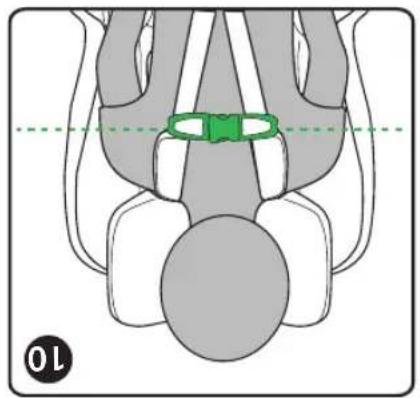
the chest clip is at arm pit level. If necessary remove the shoulder pads (attached with Velcro) as they are not considered as safety features. Important! A snug strap should not allow any slack. It lies in a relatively straight line without sagging. It does not press on the child’s flesh or push the child’s body into an unnatural position.

11. To loosen the harness, press and hold

the harness adjuster button inside the slot located at your child’s feet and pull the top harness as shown in the picture. To undo the latch plates, press the red button and pull the latches up.

Securing your child into the child restraint- 43 - Securing your child into the child restraint

8. The harness is equipped with a chest

clip. This device is used in order to guarantee that the shoulder harness is positioned correctly on the shoulder, preventing the risk of the straps falling down the shoulder in an accident. To close the chest clip push the two parts together as shown.

9. To tighten the harness, pull the adjuster

strap at the bottom of the child restraint until strap is snug. Make sure you leave one nger width between the harness and your child’s collar bone.

Securing your child into the child restraint

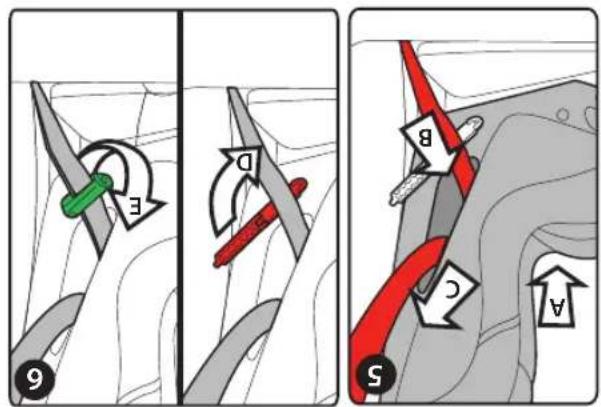
6. To adjust the shoulder strap level,

from bottom to top, pull the arrow strap located on top of headrest until the panel is disengaged and able to move. Once the desired position is reached, make sure that the panel is properly latched. To adjust the shoulder strap level from top to bottom pull the arrow strap with one hand and push the panel down with the other hand at the same time. Check that the panel is properly latched. Note: The lower 7 head panel positions can be used in the rear facing mode. Positions 8, 9 and 10 should only be used in the forward facing mode.

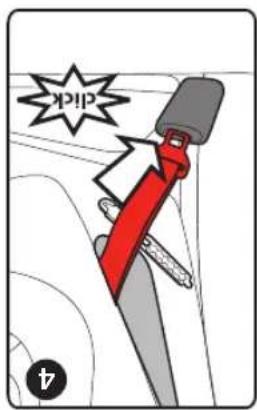
7. Insert both latch plates into the buckle

until you hear them click. Pull on the straps to make sure that both plates are latched securely.

Securing your child into the child restraint

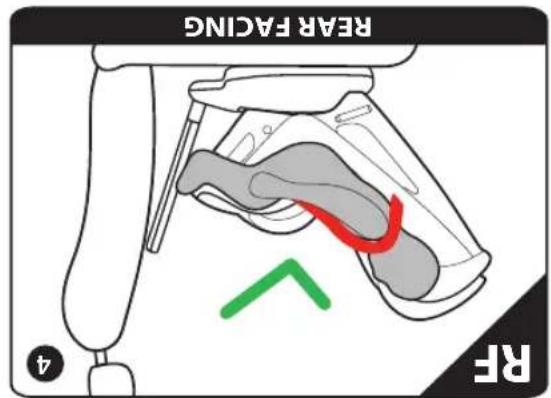
4. Put your child in the child restraint with his/

her bottom and back at against the child restraint. Bring the two shoulder straps over your child’s shoulders. Make sure that the straps are not twisted behind the backrest or over your child’s chest. Check that the harness is at the right shoulder height. When the child restraint is used in rear facing mode, the correct shoulder position is when the shoulder straps are located at or just below shoulder level, as shown in the picture.

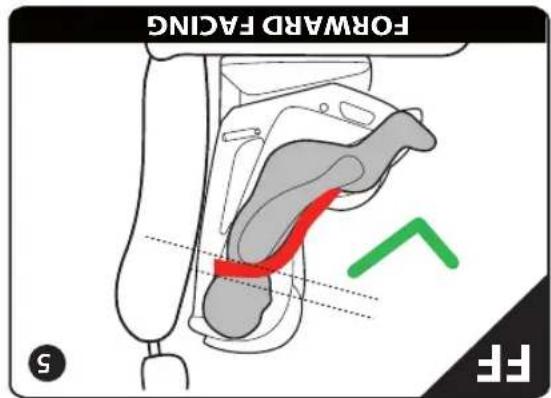
5. When the child restraint is used in forward

facing mode, the correct shoulder position is when the shoulder straps are located at or just above shoulder level, as shown in the picture.

FORWARD FACING- 40 - Securing your child into the child restraint

1. This child restraint uses a 5 point harness

system to secure your child. Before placing your child in the seat, push the release button (A) and pull the shoulder straps (B) as shown in the picture.

2. Open the buckle by pushing on the

red button (C) as shown in the picture. Open the chest clip following the procedure shown in the picture (A and B).

3. Insert the buckle tongues into the side

bands and pull the crotch portion of the harness assembly in forward position, to make room for your child. Make sure that the seating area is free of any harness or other objects.

Installing your child restraint in an aircraft

2. Installation in forward facing mode:

please refer to page 36 for proper belt t. Use of locko clips is not required. After installation make sure that the child restraint is properly levelled and safely rm on the aircraft seat. Should you need further help, please contact aircraft crew.

Installing your child restraint in an aircraft This child is certied for use in an aircraft. Most airlines should allow the use of a restraint which is labelled for use according to FAA regulations. However, due to the size and weight of the Primo Viaggio SIP Convertible, it is recommended that airline is contacted for further information prior to booking or ight. Aircraft seatbelts are waist only type (Type I belt).

1. Installation in rear facing mode: please refer

to the section on page 29 for proper belt t. IMPORTANT: Do not use rebound bar; keep rebound bar under the seat base.

5. Push the child restraint rmly into the

vehicle seat (A) and pull the vehicle belt (B) in order to tighten the seat, eliminating any slack.

6. Make sure that the belt passes through

the opened locko clips and then close them on both sides following the procedure shown in picture (C and D).

7. Attach TOP TETHER strap to your vehicle

following instructions at page 20. Picture shows the correct belt pattern when the product is installed in the forward facing mode using a lap belt and top tether. Verify that the child restraint is secure. A secure child restraint will not move more than 1 inch near the seat belt anchors.

Installing your child restraint in the vehicle- 36 - Installing your child restraint in the vehicle Important! Remove newborn ller cushion in forward facing mode (see page 46). Important! Do not use rebound bar in forward facing mode.

1. Before installing the child restraint in the

vehicle, make sure that the backrest is in the upright position or adjust it using the handle located below the front edge of the shell (A) as shown in detail.

2. Lean the upright child restraint, unoccupied,

on the selected vehicle seat. Make sure that the LUAS straps are stored in their proper location (page 31 - picture2) and that the rear openings in the structure are free and ready for use. Open the lock-o clips, as shown in the picture .

3. Pull the vehicle belt at full available length

and thread the belt through the openings in the structure behind the child restraint as shown in the picture.

4. Buckle the vehicle belt and check that the

vehicle belt is free of any entanglement.

Installing your child restraint in the vehicle

5. Push the child restraint rmly into the

vehicle seat and pull the vehicle belt in order to tighten the child restraint, eliminating any slack. Follow the procedure shown in the picture making sure that while the seat is pushed down (A), the lap portion of the belt is pulled from the xed point toward the buckle (B). Then pull the diagonal portion of the belt (C).

6. Make sure that only the lap portion of the

belt passes through the opened locko clips and then close them on both sides following the procedure shown in picture (D and E).

7. Attach TOP TETHER strap to your

vehicle following instructions at page 20. Picture shows the correct belt pattern when the child restraint is installed in the forward facing mode using a lap and shoulder belt and top tether. Verify that the child restraint is secure. A secure child restraint will not move more than 1 inch near the seat belt anchor.

E- 34 - Installing your child restraint in the vehicle

WARNING: Do not use lockoff clips in

forward facing mode for children whose weight is less than 11 kg (25lbs). Important! Remove newborn ller cushion in forward facing mode (see page 46). Important! Do not use rebound bar in forward facing mode.

1. Make sure that the backrest is in the upright

position or adjust it using the handle below the front edge of the shell (A).

2. Lean the upright child restraint,

unoccupied, on the selected vehicle seat. Make sure that the LUAS straps are stored in their proper location (page 31 - picture2) and that the rear openings in the structure are free and ready for use. Open the lock o clips on both sides as shown in the picture.

3. Pull the vehicle belt at full available

length and thread both the lap and shoulder portions of the belt through the openings in the structure behind the child restraint.

4. Buckle the vehicle belt and check that the

vehicle belts are both threaded through the openings, free of any entanglement.

1 2- 33 - IMPORTANT NOTE: Unless where specied dierently, lower anchors (LUAS) may be used for a child whose weight is less than 40 lbs. However most vehicle lower anchors can withstand much greater forces. Please, check your vehicle owner’s manual or contact the vehicle manufacturer in order to determine what the weight limit is for the use of lower anchors. When the weight of the child is beyond these limits, the vehicle seatbelt must be used to install the child restraint properly and securely. Installing your child restraint in the vehicle- 32 -

4. Attach the lower connectors to the lower

anchors of your vehicle located at the joint line between seat and backrest. Check your vehicle owner’s manual to learn what is the best place for your car . When the LUAS straps are connected to the lower anchors, an audible click will be heard. If this is not the case, repeat the operation and double check that the latch is attached and working by trying to pull the lower connector away from the lower anchor.

5. Push down the child restraint (A) into the

seat with your own body weight and at the same time pull the strap ends (B) in order to tighten the latch straps. Check that the connectors are evenly tightened and that the seat is not leaning sideways.

6. Attach TOP TETHER strap to your vehicle

following instructions at page 20. Verify that the child restraint is secure. A secure child restraint will not move more than 1 inch near the seat belt anchors. Installing your child restraint in the vehicle

B- 31 - Installing your child restraint in the vehicle Important! Remove newborn ller cushion in forward facing mode (see page 46). Important! Do not use rebound bar in forward facing mode.

1. Recline the child restraint pulling the

handle located below the front edge of the shell (A) as shown in detail. This will make access to the latch storage area easier.

2. Disconnect the latch straps from the

storage bar by pushing on the red button and pulling the straps at the same time.

3. Pull the handle and move the child restraint

to the upright position. You should hear a "click" when locked in the upright position. Lean the child restraint on the vehicle seat making sure that the lock o clips are closed. Take the LUAS strap from front to rear sliding the straps along their tubing.

4. Under the seat that the adjuster strap is

not entangled with the vehicle seatbelt.

5. Push the seat rmly into the vehicle seat

(1) and pull the vehicle belt (2) in order to tighten the seat, eliminating any slack.

6. The picture shows the correct belt path

when the seat is attachd to the vehicle using a lap belt . Once the installation is completed check that the seat is properly levelled following the section on page 19. Verify that the child restraint is secure. A secure child restraint will not move more than 1 inch near the latch anchors. Installing your child restraint in the vehicle

1. Recline the child restraint to the rearfacing

position as shown in the picture. To recline the seat, pull the handle located below the front edge of the shell (A) as shown in detail. An audible "click" is heard when the seat is properly locked into position.

2. Disengage the rebound bar under the seat

and rotate it until it clicks in position as shown at page 24. Lean the reclined child restraint, unoccupied, on the selected vehicle seat.

3. Pull the vehicle belt at full available length

and thread through the openings under the seat area as shown in the picture. IMPORTANT: check inside the shell openings; verify that the belt is placed as shown in the picture. Installing your child restraint in the vehicle

B- 28 - Installing your child restraint in the vehicle

4. Buckle the vehicle belt and check under the

seat that the adjuster strap is not entangled with the vehicle seat belt.

5. Push the child restraint rmly into the

vehicle seat and pull the vehicle belt in order to eliminate any slack. Follow the procedure shown in the picture making sure that while the child restraint is pushed down (A), the lap portion of the belt is pulled from the xed point toward the buckle (B). Then pull the diagonal portion of the belt upwards (C).

6. The picture shows the correct belt path

when the child restraint is attachd to the vehicle using a lap/shoulder belt. Make sure the child restraint is properly leveled as explained on pag. 19 Verify that the child restraint is secure. A secure child restraint will not move more than 1 inch near the latch anchors.

Installing your child restraint in the vehicle

1. Recline the child restraint to the rearfacing

position as shown in the picture. To recline the child restraint, pull the handle located below the front edge of the shell (A) as shown in detail. An audible "click" is heard when the seat is properly locked into position.

2. Disengage the rebound bar under the seat

and rotate it until it clicks in position as shown at page 24. Lean the reclined child restraint, unoccupied, on the selected vehicle seat.

3. Pull the vehicle belt at full available length

and thread both the lap and shoulder portion of the belt through the openings under the seat area as shown in the picture. IMPORTANT: check inside the shell openings; verify that the waiste position of the belt is placed as shown in the picture.

B- 26 - Installing your child restraint in the vehicle IMPORTANT NOTE : Unless where specied dierently, lower anchors (LUAS) may be used for a child whose weight is less than 40 lbs. However most car lower anchors can withstand much greater forces. Please, check your vehicle owner’s manual or contact the vehicle manufacturer in order to determine what the weight limit is for the use of lower anchors. When the weight of occupant is beyond these limits, vehicle seatbelt must be used to install the child restraint properly and securely.- 25 - Installing your child restraint in the vehicle

5. Attach the lower connectors to the lower

anchors of your vehicle located at the joint line between seat and backrest. Check your vehicle owner’s manual to learn what is the best place for your child restraint. When the LUAS straps are connected to the lower anchors, an audible click will be heard. If this is not the case, repeat the operation and double check that the latch is attached and working by trying to pull the lower connector away from the lower anchor.

6. Push down the child restraint (1) into

the seat with your own body weight and at the same time pull the strap ends in order to tighten the latch straps (2). Check that the connectors are evenly tightened and that the seat is not leaning sideways.

7. Picture shows the correct strap path

when the seat is attached using the LUAS connectors. Make sure the seat is properly leveled as explained on page 19. Verify that the child restraint is secure. A secure child restraint will not move more than 1 inch near the latch anchors.

Installing your child restraint in the vehicle

1. Recline the child restraint to the rearfacing

position as shown in the picture. To recline the child restraint, pull the handle located below the front edge of the shell (A)as shown in detail. An audible "click" is heard when the seat is properly locked into position.

2. Disconnect the latch straps from the

storage bar by pushing on the red button and pulling the straps at the same time.

3. Disengage the rebound bar under the

seat and rotate it until it clicks in position as shown in picture.

4. Slide the straps toward the front of the

child restraint. Check that the straps are not reversed. Lean the reclined seat, unoccupied, on the selected vehicle seat in the rearfacing mode making sure that the front part of the seat touches the vehicle seat backrest.

4. Attach the tether to the designated tether

anchor and pull the free strap until the tether is fully tensioned and free of any slack. Picture shows the tether anchor located on the back of the seat.

5. Another common location is the vehicle

trunk. Installing your child restraint in the vehicle

3. The tether is used to prevent excessive

rotation in an impact in forward facing mode, thus reducing the risk for the child to impact objects in front of him. Attach the tether hook to the designated tether anchor and pull the free strap until the tether is fully tensioned and free of any slack. Picture shows the tether anchor located on the rear shelf. Installing your child restraint in the vehicle

Installing your child restraint in the vehicle

2. To use top tether, open the plastic pouch,

detach the hook from its rear attachment pressing on adjuster button in order to lengthen the strap to the required length. When not in use, keep the tether attached to the shell, in order to prevent injury hazard to your child or other occupant due to a metal part free to move inside the vehicle interior.

A- 20 - Installing your child restraint in the vehicle

USE OF TOP TETHER STRAP

1. The top tether is a strap attached at the

top of the Primo Viaggio SIP Convertible shell equipped with a hook and an adjuster. When used in forward facing mode, your Primo Viaggio SIP Convertible is certied for use with a top tether in conjunction with a lap, lap and shoulder belt or lower anchors (LUAS). The top tether has to be connected to a suitable tether attachment points in the vehicle. To locate the proper point on the vehicle, please refer to your vehicle owner’s manual. Do not attach the Primo Viaggio Tether to vehicle anchorage points not designed as child restraint tether anchorage points, as this may result in a failure during a crash. Always use Top Tether in Forward Facing mode.

Installing your child restraint in the vehicle

When properly installed according to the following sections, the child restraint used in rear facing mode should have a backrest angle of 35° - 45° from vertical. If it is not possible to reach such angle, use a pool noodle or a rolled towel to further recline the seat. Use the line drawn on the product as a reference. When the line is horizontal, the backrest angle will be at 45° with vertical. NOTE: make sure that the angle does not exceed 45° with vertical. Important! Newborn infants should be properly reclined. If the seat reclines too much, your infant can be ejected from the seat in an accident. If too upright, it can cause breathing problems. 45°-35° HORIZONTAL LINE GROUND REFERENCE- 18 - Installing your child restraint in the vehicle

Use rear facing with children who weigh between 5 and 45 pounds (2.3 and 20.4 kg); and whose maximum height is 119 cm (47 inches).

  • Use rear facing if head is at least one inch below headrest edge.
  • The correct shoulder position is when shoulder straps are located at or just below shoulder level, as shown in the picture. Note: The lower 7 head panel positions can be used in the rear facing mode. Positions 8, 9 and 10 should only be used in the forward facing mode. Refer to page 42 for head panel adjustment.
  • Use forward facing with children who weigh between 22 and 65 pounds (10 and 30 kg); and whose maximum height is 125 cm (49 inches).
  • Use forward facing if head is no more than one inch above headrest edge.
  • The correct shoulder position is when straps slot are located at or just above shoulder level, as shown in the picture.

NON COMPATIBLE VEHICLE SEAT DESIGNS

WARNING: do not use Primo Viaggio SIP

Convertible with the following vehicle belt design:

1. Lap/motorized shoulder belts.

Belts mounted on the door

2. Side facing seats

3. Rear facing seats or seats that rotate in

dierent positions For your child’s safety, always read your vehicle owner’s manual for further information.

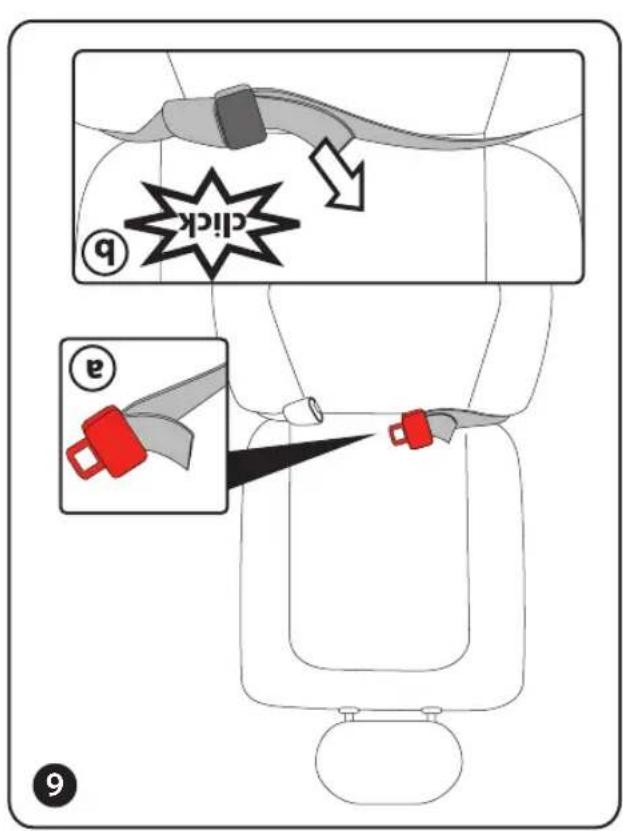
6. Lap belt (2-point) with a locking latch

plate. This type of belt can be adjusted by pulling/releasing the strap at the latch plate adjuster. Some vehicles may have seatbelts with large rigid buckles. These designs may cause the installation to be troublesome and aect stability of the child restraint during normal use. Also, it may cause slack in the belt that may result in poor performance in case of a sudden stop or crash. In this situation, try another seating position in the vehicle or consult your vehicle owner’s manual. Please consult a certied child restraint passenger safety technician for other installation options.

Vehicle seatbelts design and compatibility- 15 -

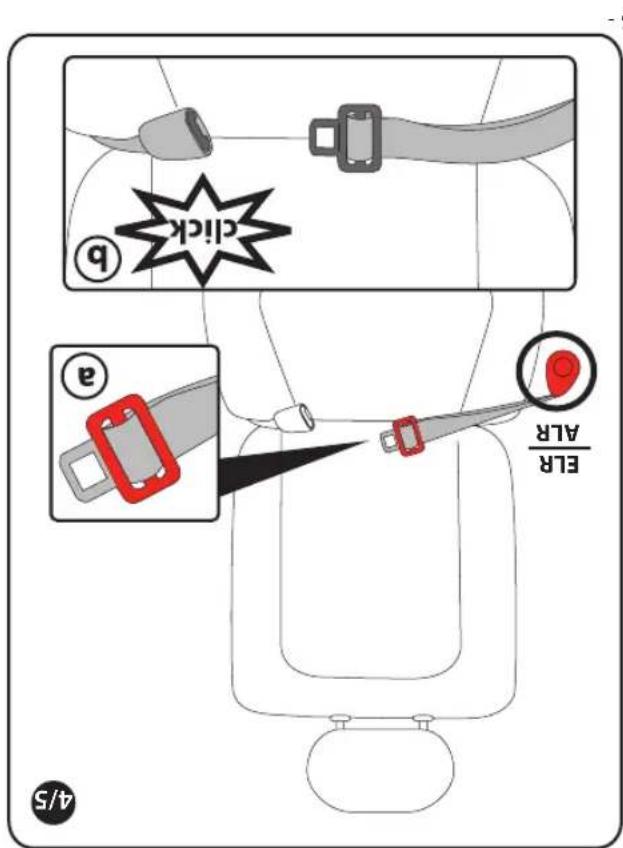
4. Lap belt (2-point) with Automatic

Locking Retractor (ALR). This type of seat belt has a latch plate that is sewn to the end of the belt. To activate ALR retractor for child seats installation, some vehicle models may require to pull the belt all the way through; some other vehicle models may require to pull the belt for a certain length (check vehicle owner’s manual for details). Tighten the belt around the seat feeding the belt back into the retractor. The belt will not extend unless you unbuckle the belt and repeat the operation from the beginning. With these belts, use of a locking clip is not required.

5. Lap belt (2-point) with Emergency

Locking Retractor (ELR). This type of seat belt has a latch plate sewn at the end of the belt; it will only lock in an emergency (sudden stop or crash). Important note: DO NOT USE Primo Viaggio SIP Convertible with these belts. ELR ALR 4/5 Vehicle seatbelts design and compatibility- 14 - Vehicle seatbelts design and compatibility ELR

3. Lap/shoulder belt (3-point) with

Emergency Locking Retractor (ELR) and free sliding latch plate. This type of seat belt has a latch plate that moves freely along the belt; it will only lock in an emergency (sudden stop or crash) so you must use a Locking Clip to secure this type of belt. To obtain a locking clip and instructions for installation, call Peg Perego customer service at 800-671-1701. Important note: The lock o clips located on the side of the Convertible seat are used to enhance the stability during normal use. They are not designed to replace a locking clip. A locking clip must be used to properly secure the seat with a belt as described above.- 13 - Vehicle seatbelts design and compatibility

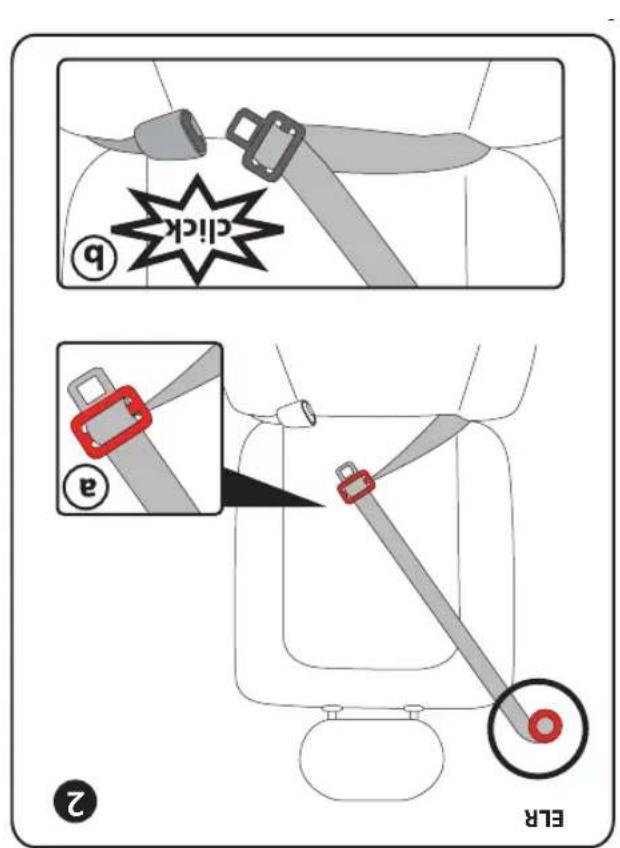
2. Lap/shoulder belt (3-point) with

Emergency Locking Retractor (ELR) and with a locking latch plate. This type of belt can be adjusted by pulling/releasing the strap at the latch plate adjuster. Please refer to your vehicle owner’s manual for details.

ELR- 12 - Vehicle seatbelts design and compatibility

1. Lap/shoulder belt (3-point) with

Automatic Locking Retractor (ALR) and free sliding latch plate. This type of seat belt has a latch plate that moves freely along the belt. To activate ALR retractor for child restraint installation, some vehicle models may require to pull the belt all the way out; some other vehicle models may require to pull the belt for a certain length (check vehicle owner’s manual for details). Tighten the belt around the seat feeding the belt back into the retractor. The belt will not extend unless you unbuckle the belt and repeat the operation from the beginning. With these belts, use of a locking clip is not required. Important Note: The lock o clips located on the side of the Convertible seat are used to enhance the stability during normal use. The lock os are not designed to replace an automatic locking retractor or a locking latch plate. The vehicle belt must be properly tightened to secure the Convertible seat to the vehicle. ALR

Vehicle classes compatibility Primo Viaggio SIP Convertible is designed to be installed on the following vehicle classes:

multi-purpose passenger vehicle

passenger car Primo Viaggio SIP Convertible shall not be installed on the following vehicle classes:

three - wheeled vehicle

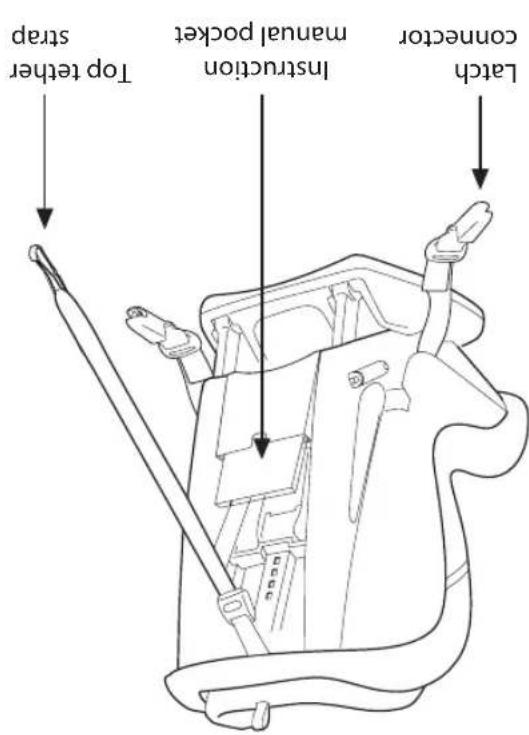
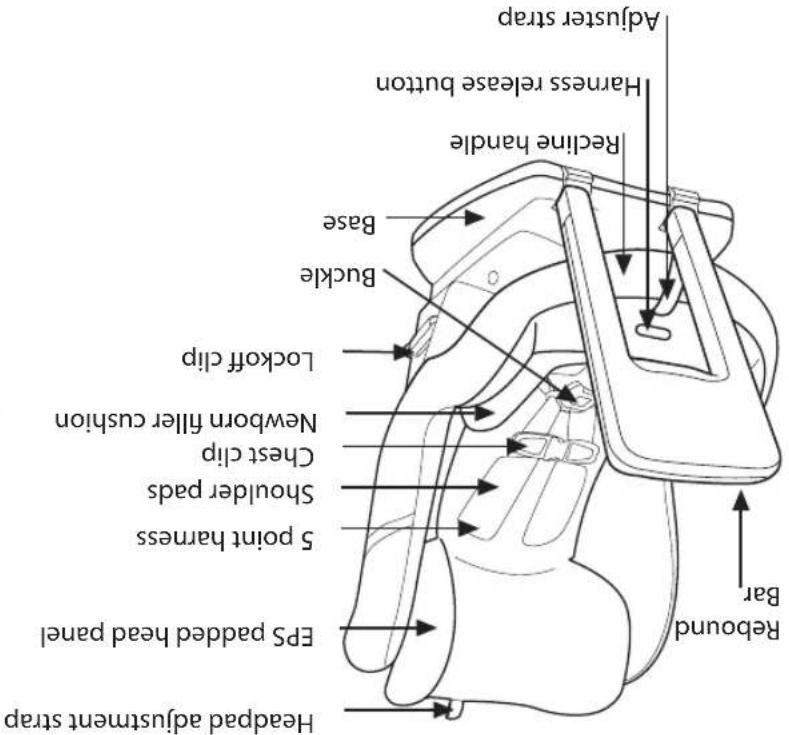
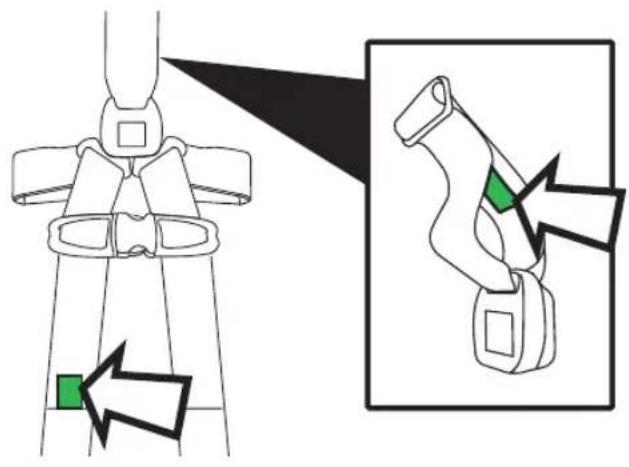
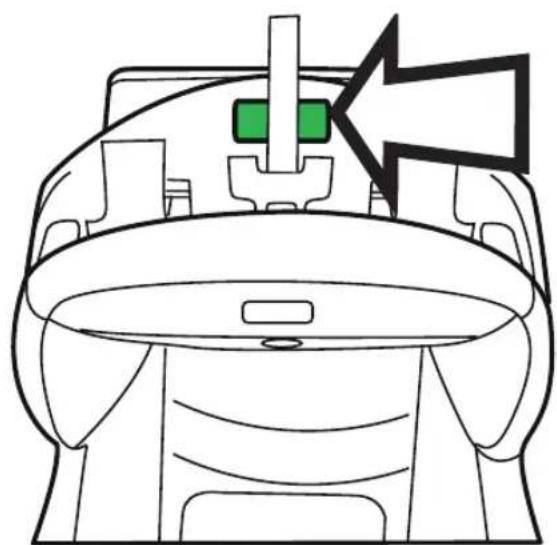
trucks Primo Viaggio SIP Convertible is designed to be installed with vehicle belts commonly fitted on most of the available cars. However, in the market there are several different types of vehicles manufactured in different periods. As a result, there are many different vehicle belt designs. Unfortunately, some may be unsuitable for a safe installation of Primo Viaggio SIP Convertible. Please read carefully the list below and in case of problems or doubts, double check your vehicle owner’s manual or call Peg Perego Customer Service @ 1-800-661-5050 for additional help. Vehicle seatbelts design and compatibility- 10 - Locko clip Headpad adjustment strap 5 point harness Shoulder pads Chest clip Buckle Harness release button EPS padded head panel Base Latch connector Instruction manual pocket Top tether strap Recline handle Adjuster strap Newborn ller cushion Rebound Bar Your child restraint- 9 - Registration form Harness serial number is also indelibly printed on the buckle and the webbing and could provide useful information in case of accident or defects. See picture below for location explanation.- 8 - Registration form Important! Child restraints could be recalled for safety reasons. You must register this restraint to be reached in a recall. Send your name, address and the restraint's model number and manufacturing date to: Peg Perego Canada, Inc. 585 Granite Court Pickering Ontario Canada L1W3K1 Or call 1-800-661-5050 (toll free) For recall information, call Transport Canada’s Road Safety Information Centre at 1-800-333-0371. Registration form is attached to the product cover. Detach the form, ll in and mail to PegPerego. No stamp is needed. We have already paid for it. Should the registration form be missing, please call Customer Service @ 1-800-661-5050 for a replacement form. Model number, model name, date of manufacturing, etc. are indelibly printed on a label located in the picture shown here.- 7 - Safety information

  • Use only with children who weigh between

2.3 and 30 kg (5 and 65 lbs).

  • When placing your child in the seat, make sure that bulky jackets or covers are removed. This will ensure that the harness is used correctly.
  • Do not leave your child unattended in the car, even for a short period. He/she could get tangled in the straps and be seriously injured or could move or tip the child restraint.
  • Do not leave the child restraint under direct sunlight for a prolonged time. The seat may become very hot and burn your child’s skin.
  • When not in use, store the product, away from light, moisture, excessive heat or cold.
  • Be sure the child restraint is properly levelled. If the seat reclines too much, your child can be injured or ejected from the seat. If the seat is too upright, it can cause your child to have breathing problems, which could lead to injury or death.
  • Do not place this child restraint on countertops, tables or soft surfaces. Do not use this unit after seven (7) years from the date of production labelled on the seat.
  • Do not try to remove or add parts unless where explained in this manual; do not try to repair this product. In case of damage or defective components, call customer service @ 1-800-661-5050 for help.
  • Do not leave loose objects, bags or luggage in the vehicle interior. In case of an accident they could suddenly move causing the occupants to be injured.- 6 - owner’s manual for further details.
  • When using Primo Viaggio Convertible in rear facing mode, never place it in vehicle seats equipped with an active air bag. Death or serious injuries can occur if an air bag hits the unit. Check your vehicle owner's manual for child restraint and vehicle seat compatibility.
  • This child restraint is designed to be installed on front facing vehicle seats only. Never use on seats looking sideways or rearward facing. Do not use in cars with door-mounted or motorized shoulder belts. Read your vehicle owner’s manual for additional information.
  • According to accident statistics, children are safer when properly restrained in the rear seating positions.
  • When the child restraint is installed on the vehicle seat, check that vehicle belts or LUAS and top tether straps are snugly tted around the child restraint structure and that there is no slack. An incorrectly fastened child restraint may result in an additional excursion or deceleration on your child in case of an accident.
  • Complete and send in the registration form provided with this product right away. In case of accident: if this car seat is involved in a car accident, it may be no longer safe for use. You may need to get a new unit. Call customer service @ 1-800-661-5050 for help.
  • Seat covers and pads provided with this product are part of the product and the certication program. The use of non approved covers or other accessories are not recommended .
  • EPS components (white soft foam located below the upholstered covers) are integrated in the product as safety related parts and should never be removed or severely damaged.
  • EPP component (black soft part located behind the shell) is integrated in the product as safety related part and should never be removed.
  • Secure this child restraint in the car even when not occupied. This child restraint is a heavy object that could cause severe damage to other occupants in case of an accident.
  • Do not lift this child restraint by harnesses to avoid unnecessary wear or stress on the webbing. Lift it by the hard structure.
  • Keep ngers away from moving parts. Warning- 5 -
  • Do not install or use this child restraint until you read and understand all the instructions in this manual and the labels on the product. To avoid serious injuries to your child, follow the instructions carefully. Keep the instruction manual in the dedicated pocket for future reference.
  • Your child could be seriously injured if you do not follow instructions and warning labels correctly.
  • This car seat meets or exceeds all applicable Canada Motor Vehicle Safety Standard 213 ,

213.1 requirements for use in motor vehicles

  • Always restrain your child with the 5-point integral harness provided with the product. Be sure that the buckle is correctly latched. Snugly adjust the belt around the child's body making sure that the belt lies at with no slack. Use the chest clip to be sure that the belts are in the correct position.
  • Primo Viaggio SIP Convertible can be used in two main modes: rear facing, when child sitting in the restraint looks at the back of the vehicle; forward facing when child sitting in the restraint looks at the front of the vehicle.
  • Use Primo Viaggio SIP Convertible in rear facing mode with children weighing 2,3 - 20,4 kg (5 - 45 lbs) and having a maximum height of 119 inches (47 cm); in forward facing mode with children weighing in the range 10 - 30 kg (22 - 65 lbs) and having a maximum height of 125 inches (49 cm).
  • Keep your child in rearward facing mode as long as possible: NEVER use Primo Viaggio Convertible in forward facing mode if baby weighs less than 22 lbs (10 kg).
  • Primo Viaggio SIP Convertible can be secured to your vehicle by means of lap or lap/shoulder belts available in your vehicle. However, not all available models of seatbelts are approved for use with this product. Refer to the dedicated section in this manual for further details.
  • Primo Viaggio SIP Convertible can be secured to your vehicle by means of lower universal anchorage system (LUAS) in conjunction with a top tether, both provided with this product. Refer to the dedicated section in this manual for installation details and check your vehicle Warning- 4 - Should you see any malfunctioning feature, after taking the necessary familiarization or if you see broken parts, do not hesitate to call Peg Perego Canada customer service at 1-800-661-5050 (toll free) for information about repairs or spare parts. Now that you know your new Primo Viaggio SIP Convertible, you are ready to enjoy safe and happy journeys with your family and your children. Introduction- 3 - Thank you for choosing a PegPerego Primo Viaggio SIP Convertible. As with any other PegPerego product, your Convertible has been designed and certied by a dedicated team of engineers inside Peg Perego Research and Development Department. Your Convertible has been manufactured and assembled in a Peg Perego plant under certied quality procedures and using high quality materials from certied suppliers. As with every child restraint, Primo Viaggio Convertible is used with a child inside a vehicle, travelling fast on highways or slow in the chaotic trac of today’s cities. This means that you need to use this car seat as a concerned parent, driving carefully when you have a child on board but also, before this, taking your time to explore the child restraint, knowing all the features it has, the dierent possible uses, the proper and best installations. Go through this manual entirely, keeping your new child restraint in sight, checking every point and understanding it. Install the child restraint in your vehicle taking the necessary time and making tting trials before using it with your child. Once you have read the manual, store it again in its proper pocket. This will ensure that everybody looking after your child and using this seat will be able to look for help in this manual. Introduction- 2 - © 2012 Peg Perego. All rights reserved. Table of Contents Introduction...............................................................................................................................................3 Warning............................................................................................................................................... 5 Safety information ................................................................................................................................. 7 Registration form ................................................................................................................................... 8 Your child restraint ...............................................................................................................................10 Installing your child restraint in a vehicle.................................................................................... 11 Vehicle classes compatibility ..................................................................................11 Vehicle seatbelts design and compatibility .........................................................11 Non compatible vehicle seat designs ................................................................... 17 Weight and dimension range .................................................................................. 18 Proper levelling of child restraint in rear facing mode.................................... 19 Use of top tether strap ............................................................................................... 20

Do not install or use this child restraint until you read and understand all instructions in this manual. To avoid serious injuries to your child, follow the instructions carefully and be sure to buckle your child using the 5-point harness. Weight limits in rear-facing mode:

2.3 - 20.4 kg (5 - 45 lbs)

Maximum height: 119 cm (47 inches) Weight limits in forward-facing mode: