250 SE (2023) - Motorcycle Sherco - Free user manual and instructions
Find the device manual for free 250 SE (2023) Sherco in PDF.


| Product type | Off-road motorcycle |
| Brand | Sherco |
| Model | 250 SE (2023) |
| Category | Enduro |
| Engine | Single-cylinder 2-stroke, liquid-cooled |
| Displacement | 249.32 cm³ |
| Bore x stroke | 66.4 x 72 mm |
| Fuel system | Carburetor KEIHIN PWK 36S AG |
| Ignition | DC-CDI with digital advance |
| Spark plug | NGK BR7ES or DENSO W22ESR-U, gap 0.7 mm |
| Starting | Electric (push button) |
| Battery | 12V 2Ah (Factory) / 12V 4Ah (Racing) |
| Transmission | 6-speed, manual, multi-disc hydraulic oil bath clutch |
| Secondary drive | 13 x 50 (250 SE) |
| Frame | Semi-perimeter CrMo steel, aluminum rear subframe |
| Front suspension | Kayaba USD fork ∅48 mm, travel 300 mm |
| Rear suspension | Kayaba with separate reservoir, travel 330 mm |
| Front brake | Disc ∅260 mm, hydraulic caliper |
| Rear brake | Disc ∅220 mm, hydraulic caliper |
| Tires | Front 90/90-21", rear 140/80-18" |
| Tire pressure (off-road) | 0.9 bar front and rear |
| Dimensions (L x W x H) | 2260 x 820 x ? mm (seat height 950 mm) |
| Wheelbase | 1480 mm |
| Ground clearance | 355 mm |
| Fuel tank capacity | 10.4 L (including 1 L reserve) |
| Fuel | Unleaded premium 95 octane, mixed with 2% 2T oil |
| Engine oil (gearbox) | 750 ml of 5W40 |
| Coolant | 1.1 L of Motul® Motocool Factory Line -35°C |
| Brake fluid | DOT 4 (Motul® RBF 700) |
| Regular maintenance | Gearbox oil change every 20 h, air filter every 5 h, etc. |
Frequently Asked Questions - 250 SE (2023) Sherco
User questions about 250 SE (2023) Sherco
0 question about this device. Answer the ones you know or ask your own.
Ask a new question about this device
Download the instructions for your Motorcycle in PDF format for free! Find your manual 250 SE (2023) - Sherco and take your electronic device back in hand. On this page are published all the documents necessary for the use of your device. 250 SE (2023) by Sherco.
USER MANUAL 250 SE (2023) Sherco
natural_image
Empty white rectangle with a thin black border (no text or symbols)DESCRIPTION DU VEHICULE
natural_image
Close-up of a mechanical component with blurred background and no visible text or symbolsnatural_image
Close-up of a bicycle steering wheel with labeled parts (B and 1), no visible text or symbols beyond labelsTableau de bord
Contacteur à clé
natural_image
Close-up of a mechanical component with a circular opening and textured surface (no visible text or symbols)natural_image
Close-up of a mechanical valve or knob with a labeled component (number 1) and a small connector, no readable text or symbols present.natural_image
Close-up of a mechanical component with a labeled section (1) and 'POSITION 1 POSIT' text below (no other readable symbols or text)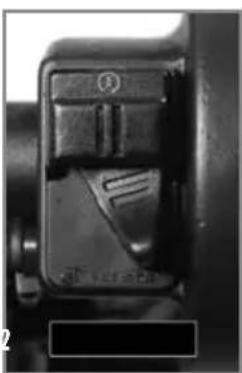
natural_image
Close-up of a mechanical component with no visible text or symbolsPosition 1. Courbe "soft".
Position 2. Courbe "hard".
ORGANES DE COMMANDES ET DE CONTRÔLE
COMMANDE AUX PIEDS : SÉLECTEUR DE VITESSE, BÉQUILLE, FREIN ARRIÈRE
natural_image
Close-up of a mechanical assembly with a circular component labeled 'ENERGY' and a numbered marker '1' (no readable text beyond label)natural_image
Close-up of a mechanical assembly with visible gears and chains, no readable text or symbolsFig 1 Fonction SPD
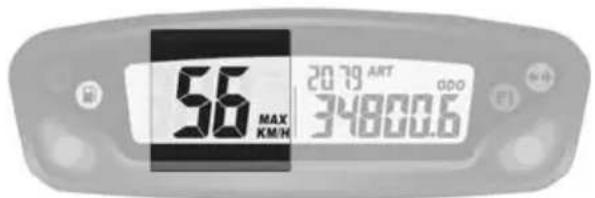
Fig 2 Fonction MAX
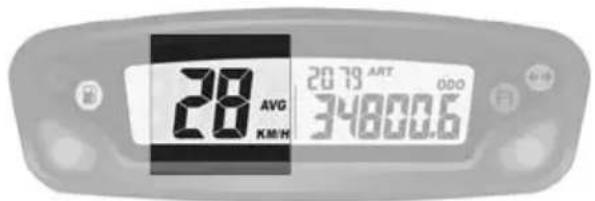
Fig 3 Fonction AVG
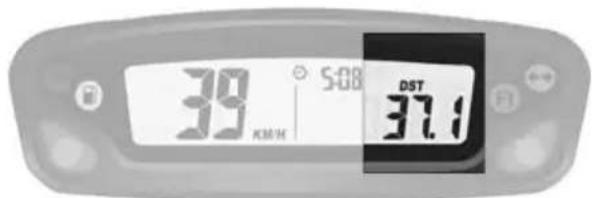
Fig 4 Fonction DST
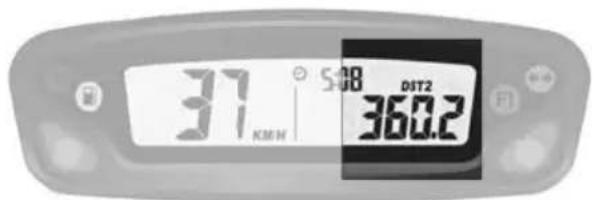
Fig 5 Fonction DST2
natural_image
Close-up of a motorcycle's front wheel and suspension system (no visible text or symbols)natural_image
Close-up of a hand adjusting a motorcycle engine component, no visible text or symbols on the device itself.natural_image
Close-up of a mechanical assembly with visible components and a numbered label (1) on the wheel (no readable text or symbols beyond the label)natural_image
Close-up of a mechanical assembly with hoses and components (no visible text or symbols)natural_image
Close-up of a hand adjusting a car engine component with a tool (no visible text or symbols)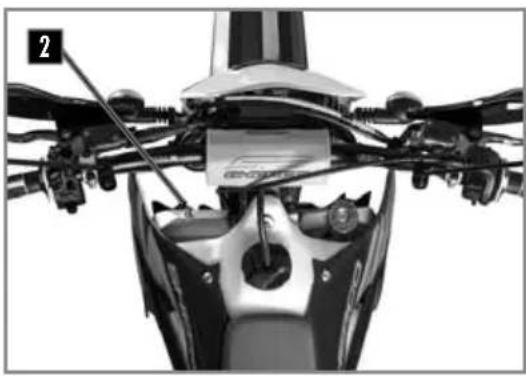
natural_image
Top-down view of a motorcycle's front wheel and side-mounted sensors (no visible text or symbols)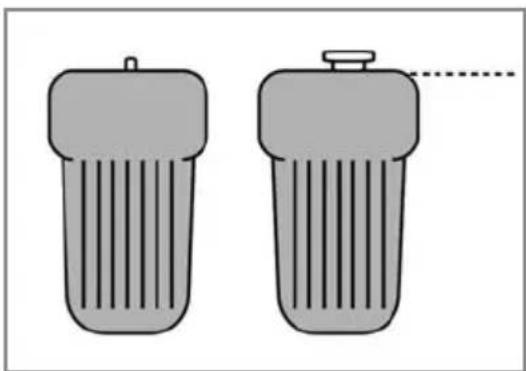
natural_image
Two gray cylindrical containers with ribbed tops, one with a small protrusion and the other with a dashed line extending from its side (no text or symbols)Moto horizontal
! ATTENTION
natural_image
Close-up of a white motorcycle's side panel showing key points and components (no text or symbols visible)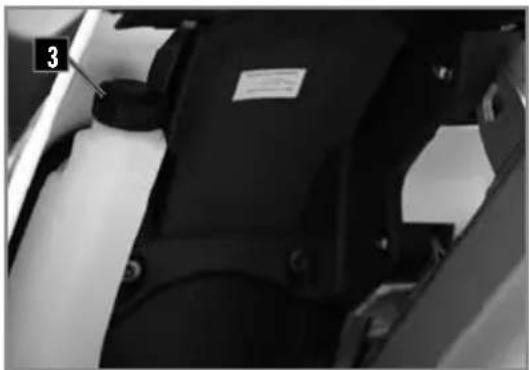
natural_image
Close-up of a mechanical component with a label and numbered marker (no readable text or symbols)natural_image
Close-up of a gloved hand adjusting a mechanical component with a tool, no visible text or symbols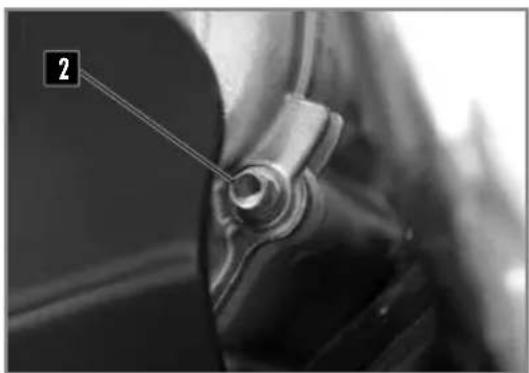
natural_image
Close-up of a mechanical component with a labeled section '2' (no readable text or symbols)ATTENTION
natural_image
Close-up of a mechanical component with a labeled section (2), showing no visible text or symbols.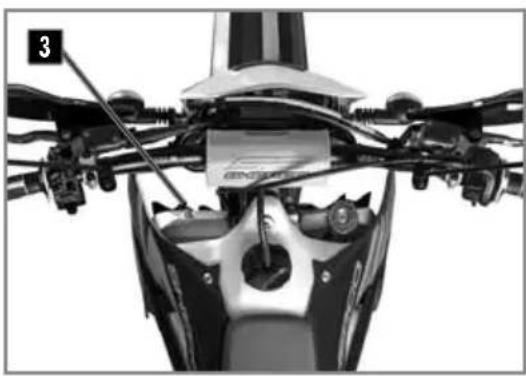
natural_image
Top-down view of a motorcycle's front wheel and drivetrain components (no visible text or symbols)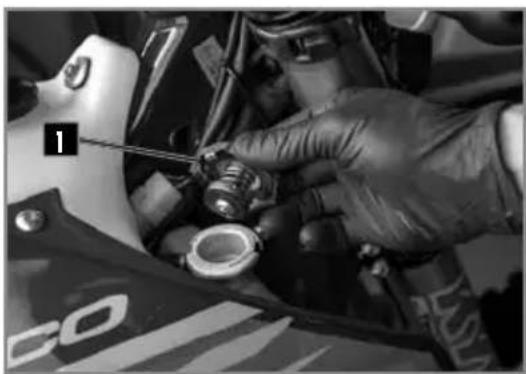
natural_image
Close-up of a hand using a tool to adjust or install a mechanical component (no visible text or symbols)natural_image
Close-up of a bicycle brake lever handle and grip assembly (no text or symbols visible)natural_image
Close-up of a mechanical assembly with a connector and pipe fitting (no visible text or symbols)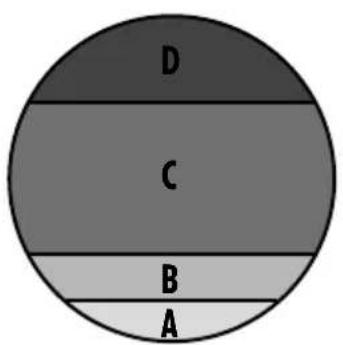
natural_image
Close-up of a mechanical component with a central gear and mounting holes (no visible text or symbols)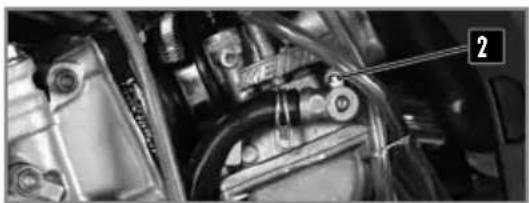
natural_image
Close-up of a car engine bay with visible components and a numbered label (2), no readable text or symbols present.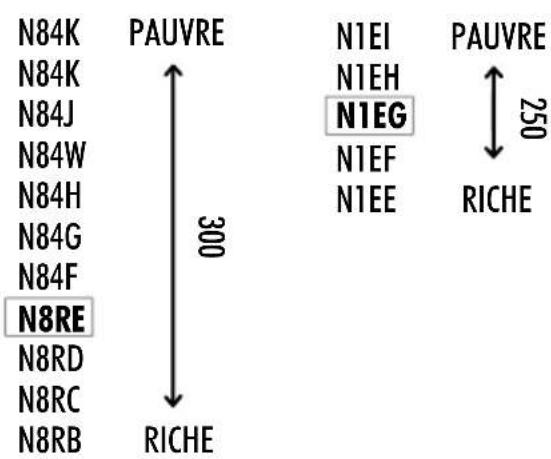
other
| Label | PAUVRE | RICHE | |-------|--------|-------| | N84K | | | | N84K | | | | N84J | | | | N84W | | | | N84H | | | | N84G | | | | N84F | | | | N8RE | | | | N8RD | | | | N8RC | | | | N8RB | | | | N1EI | | | | N1EH | | | | N1EG | | | | N1EF | | | | N1EE | | | | PAUVRE| 250 | |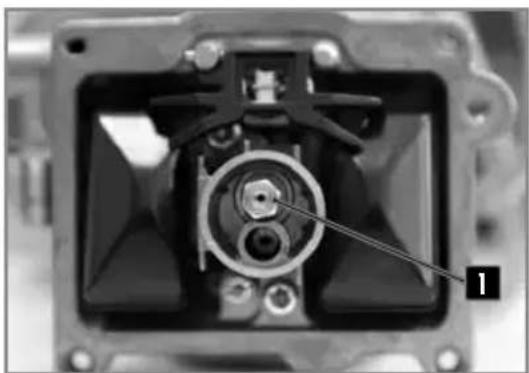
natural_image
Close-up of a mechanical component with a labeled section (1), showing internal components and mounting holes (no readable text or symbols)natural_image
Mechanical gear assembly with meshing gears and a highlighted shaft (no visible text or symbols)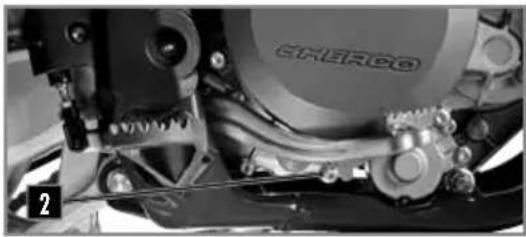
natural_image
Close-up of a mechanical assembly with visible gears and components (no readable text or symbols)natural_image
Close-up of a hand adjusting a mechanical component with a numbered annotation (3), no visible text or symbols.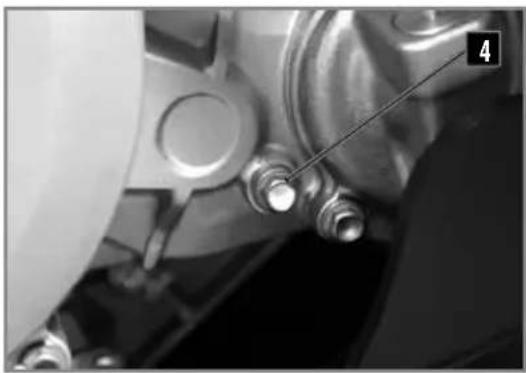
natural_image
Close-up of mechanical components with a numbered annotation (4) pointing to a detail on a metallic component (no readable text or symbols)natural_image
Close-up of a motorcycle's seatbelt and dashboard (no visible text or symbols)natural_image
Technical illustration of mechanical components with exploded view and assembly detail (no text or symbols)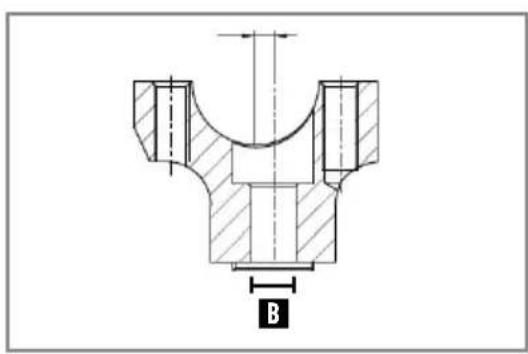
natural_image
Close-up of mechanical components with numbered annotations (1 and 2) pointing to specific parts, no readable text or symbols present.natural_image
Close-up of a motorcycle's front wheel and side-mounted brake lever (no visible text or symbols)KAYABA RACING
natural_image
Close-up of a motorcycle's head assembly with visible gears and levers (no text or symbols)KAYABA FACTORY
natural_image
Close-up of a mechanical assembly with visible gears and springs (no text or symbols)KAYABA RACING
natural_image
Close-up of mechanical components with a labeled component '1' (no readable text or symbols)KAYABA FACTORY
natural_image
Close-up of a motorcycle's front wheel and dashboard components (no visible text or symbols)KAYABA
natural_image
Close-up of mechanical components with no visible text or symbolsnatural_image
Mechanical component with coiled spring and cylindrical housing (no visible text or symbols)natural_image
Close-up of a hand adjusting a car seatbelt component (no visible text or symbols)natural_image
Close-up of a mechanical component with a tool inserted, showing internal structure and mounting bracket (no visible text or symbols)natural_image
Close-up of a hand holding a mechanical component with a numbered label (2), no visible text or symbols on the main subject.Démonter la selle.
natural_image
Top-down view of a black hat with radial metal lines and a central hub, no visible text or symbolsnatural_image
Close-up of a mechanical assembly with a cylindrical component and a rectangular housing (no visible text or symbols)natural_image
Close-up of mechanical components with wires and connectors (no visible text or symbols)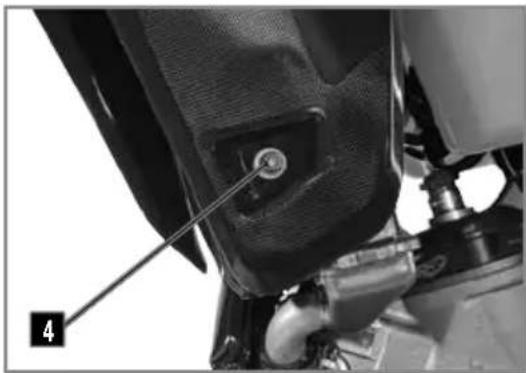
natural_image
Close-up of a mechanical component with a tool inserted, showing no visible text or symbolsnatural_image
Close-up of a mechanical assembly with visible components and wiring (no text or symbols)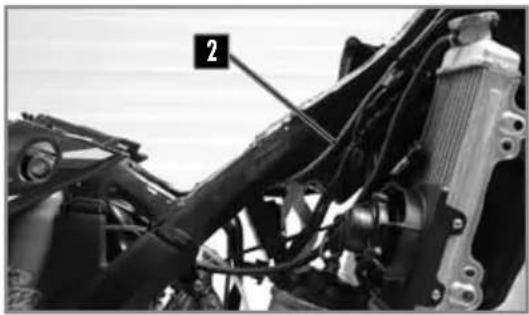
natural_image
Close-up of a mechanical assembly with visible springs, gears, and components (no text or symbols)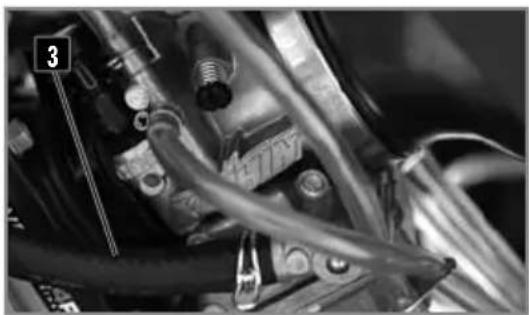
natural_image
Close-up of automotive engine components including hoses and sensors (no visible text or symbols)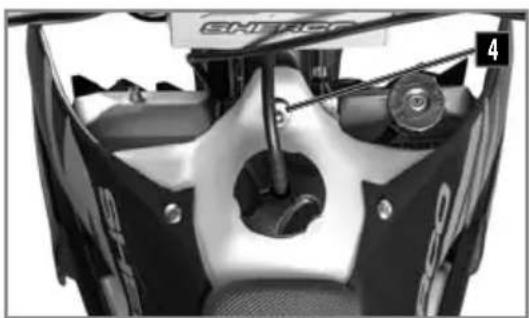
natural_image
Close-up of a mechanical device with labeled parts, no readable text or symbols present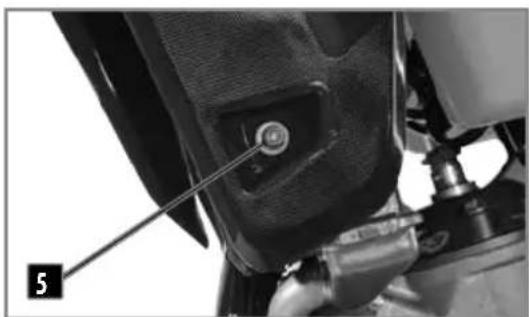
natural_image
Close-up of a mechanical assembly with a tool inserted, no visible text or symbolsnatural_image
Close-up of metallic cylindrical components with black caps, no visible text or symbolsMoto sur trépied.
natural_image
Close-up of a motorcyclist's wheel and tire assembly with motion arrows indicating rotational direction (no text or symbols)Moto sur trépied.
natural_image
Close-up of a motorcycle's front wheel and suspension system, showing hoses and brackets (no text or symbols visible)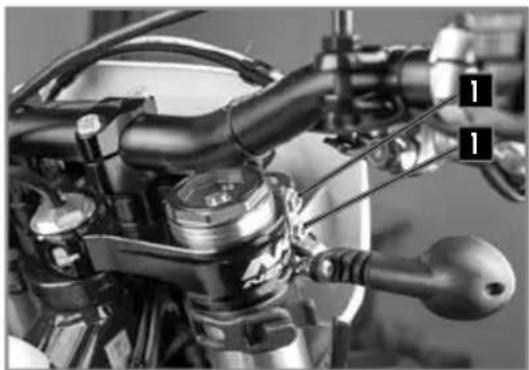
natural_image
Close-up of a motorcycle's front wheel and intake manifold (no visible text or symbols)NETTOYAGE DE LA CHAÎNE
natural_image
Diagram showing spray application on a chain with a spray gun, no text or symbols presentCONTRÔLE DE LA TENSION DE CHAÎNE
Moto sur trépied.
natural_image
Mechanical assembly diagram showing a gear and housing component (no text or symbols visible)RÉGLAGE EMBRAYAGE
! ATTENTION
natural_image
Close-up of a mechanical lever handle with a circular arrow indicating refresh or cycle (no text or symbols)natural_image
Mechanical component diagram showing internal structure with no visible text or symbolsREMONTAGE DE L'AMORTISSEUR
Moto sur trépied.
natural_image
Close-up of a bicycle wheel assembly with visible spokes and hub (no text or symbols)REMONTAGE DE LA ROUE AVANT
Moto sur trépied.
natural_image
Close-up of hands installing a mechanical component with numbered callouts (1 and 2), no visible text or symbols on the main subject.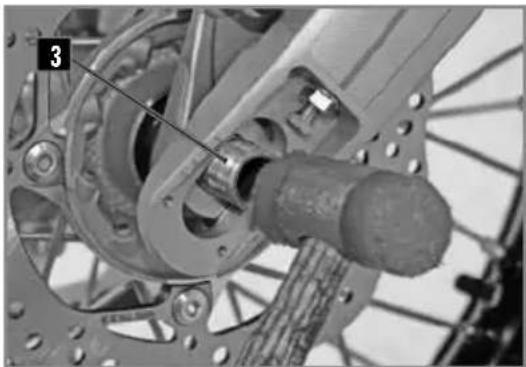
natural_image
Mechanical assembly diagram showing a motor and wheel components (no text or symbols visible)natural_image
Close-up of a bicycle wheel with gear and hub, showing internal components and mounting holes (no text or symbols visible)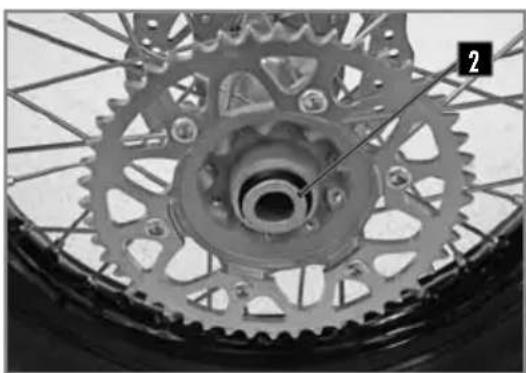
natural_image
Close-up of a bicycle wheel with visible teeth and central hub, no text or symbols presentnatural_image
Close-up of a bicycle's wheel and gear assembly, showing teeth and spokes (no text or symbols visible)natural_image
Close-up of bicycle wheel assembly with labeled components (no readable text or symbols)natural_image
Close-up of a bicycle wheel with a pressure gauge and cable, no visible text or symbolsnatural_image
Close-up of hands using a screwdriver to adjust the wheel rim and brake disc (no text or symbols visible)natural_image
Close-up of a mechanical lever handle and grip with a labeled component 'A' (no text or symbols beyond label)natural_image
Close-up of a bicycle brake lever mechanism with handle and grip (no visible text or symbols)natural_image
Close-up of a small electronic device with a black top and circular lens, partially covered by dark fabric (no visible text or symbols)Mettre le bocal en position horizontale.
natural_image
Close-up mechanical assembly showing two labeled parts (1 and 2) with no visible text or symbolsnatural_image
Close-up of a mechanical component with a metallic cylindrical part and mounting holes (no visible text or symbols)natural_image
Close-up of a mechanical component with labeled section A (no readable text or symbols beyond label)FREINS
DÉMONTAGE DES PLAQUETTES DE FREIN AVANT ET ARRIÈRE
CONTRÔLE DES PLAQUETTES DE FREIN AVANT ET ARRIÈRE
natural_image
Simple line diagram of a rectangular object with an arrow labeled 'A' and a horizontal line, no text or symbols present.natural_image
Close-up of an electrical connector with visible wiring and terminal blocks (no text or symbols)natural_image
Close-up of a mechanical component with a labeled tool pointing to a component (no visible text or symbols)natural_image
Close-up of a mechanical assembly with hoses and connectors (no visible text or symbols)natural_image
Close-up of a mechanical device with a labeled component (2), no visible text or symbolsENTRETIEN CIRCUIT ÉLECTRIQUE
REMONTAGE DE LA PLAQUE PHARE
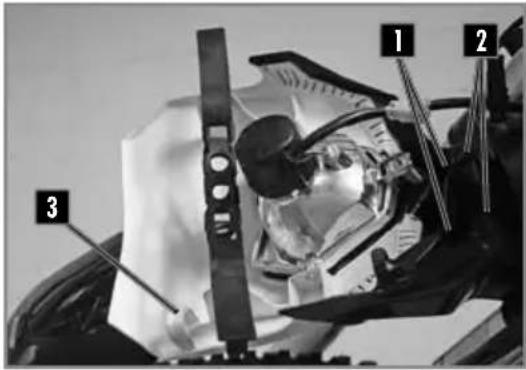
natural_image
Close-up of mechanical components with numbered labels 1 and 3, no readable text or symbols beyond labelsnatural_image
Close-up of hands assembling a mechanical component with tools, no visible text or symbols| Ampoule de phare S2 | 12V 35/35W |
natural_image
Close-up of a mechanical component with a transparent lens and metallic base (no visible text or symbols)natural_image
Close-up of mechanical components with wires and a numbered label (1), no readable text or symbols present.natural_image
Close-up of mechanical components with no visible text or symbolsnatural_image
Close-up of a hand holding a handheld electronic device with wires and a coin, no visible text or symbols.LAVAGE DE LA MOTO REMISAGE DE LA MOTO
We want to thank you for the trust that you have placed in us by purchasing this product.
You are now the owner of a SHERCO 250-300 SE. All the pleasures of driving are promised to you if you follow the advice and instructions that SHERCO has set in this manual, and ride it in compliance with the applicable traffic laws.
This manual explains the operation, inspection, basic maintenance and focus of your SHERCO. If you have any questions about this manual or your machine, you should contact your SHERCO dealer: www.sherco.com / under «Dealers».
Be sure to carefully read this manual in its entirety before using your machine.
To keep your SHERCO in perfect condition for many years, perform all of the care and maintenance described in the manual.
(The vehicle you purchased may differ slightly from the vehicle presented in this manual.)
SHERCO reserves the right to make changes without providing notice.
SERIAL NUMBER REGISTRATION
Save the serial numbers of the vehicle in a safe location
Dealer stamp.
Frame number (p.91)
Type and serial number of the motor (p.91)
SUMMARY
Technical Specifications 86
Description of the vehicle 90
Location of the serial numbers 91
Control devices and controls 92
Hand operated controls: Clutch lever, front brake lever and control switches 92
Foot controls: gear selector, side stand, rear brake ..... 95
Motorcycle computer instructions 96
Opening and closing the fuel tank 100
Riding the motorcycle 102
Safety information ....103
Cooling System 104
Servicing the cooling system 104
Draining the coolant 105
Filling the coolant 106
Motor settings 107
Checking the play in the throttle cable 107
Setting the idle speed 108
Setting the carburetor 108
Carburetor setting table 250 SE 110
Carburetor setting table 300 SE 111
Engine maintenance 112
Draining the gear box oil 112
Refilling the gear box with oil 112
Emptying the carburetor float chamber 113
Adjusting the chassis 114
Handlebar position 114
Adjusting the steering angle 115
Basic setting of the chassis according to the rider weight .... 115
Setting the fork compression 116
Fork rebound adjustment 116
Adjusting the rear shock low-speed compression setting .... 117
Adjusting the rear shock high-speed compression setting .. 117
Rebound damper 118
Setting the riding sag 118
Setting the rear shock sag 118
Rear shock Kayaba 119
Changing the shock spring 119
Chassis maintenance ....120
Removing the seat 120
Reinstalling of the seat 120
Removing the air filter 120
Cleaning the air filter 121
Reinstalling the air filter 121
Removing the fuel tank 122
Reinstalling the fuel tank 123
Purging the air from the forks 124
Cleaning the fork dust seals 124
Checking the play of the steering head bearin 124
Adjusting the steering head bearing play 125
Cleaning the chain 125
Checking the chain tension 125
Adjusting the chain tension 126
Adjusting the lever 126
Checking the clutch fluid level 127
Removing the engine protector 127
Removing the rear shock 128
Reinstalling the rear shock 128
Wheels, tires 129
Removing the front wheel 129
Reinstalling the front wheel 129
Removing the rear wheel 130
Reinstalling the rear wheel 130
Checking the tire pressure 131
Checking for wear and damage 132
Cheching spoke tension 132
Brakes 133
Checking the front brake lever adjustment 133
Adjusting the front brake lever 133
Checking the front brake fluid level 133
Filling the front brake reservoir with brake fluid .....134
Adjusting the position of the rear brake pedal 134
Checking the travel of the rear brake pedal 134
Adjusting the travel of the rear brake pedal 135
Checking the rear brake fluid level 135
Filling the rear brake reservoir with brake fluid .....135
Removing the front and rear brake pads 136
Checking the condition of the brake pads 136
Reinstalling the front and rear brake pads 136
Electrical system maintenance ....137
Removing the battery 137
Reinstalling the battery 138
Charging the battery 138
Replacing the main fuse 139
Replacing the fuse for the lights 139
Removing the headlight housing 139
Reinstalling the headlight housing 140
Replacing the headlight bulb or the pilot lamp 140
Adjusting the headlight beam 141
Replacing the motorcycle computer battery ..... 141
Washing and storage 142
Washing the bike 142
Storing the bike 142
Recommissioning after storage 142
Maintenance schedule 143
Tightening torques ....146
Warranty 151
TECHNICAL SPECIFICATIONS
| DIMENSIONS | |
| Overall length | 2260 mm |
| Overall width | 820 mm |
| Seat height | 950 mm |
| Wheelbase | 1480 mm |
| Ground clearance | 355 mm |
| MOTOR 250 SE 300 SE | ||
| Type | Single cylinder 2 stroke liquid cooled | |
| Displacement | 249,32 cc | 293,14 cc |
| Bore / Stroke | 66,4 x 72 mm | 72 x 72 mm |
| Fuel system | Carburator KEIHIN PWK 36 | |
| Cooling | Liquid system with forced circulation | |
| Starting System | Electric starter | |
| Battery | 12V 2Ah (Factory) / 12V 4Ah (Racing) | |
| Ignition system | DC-CDI no switch with digital advance | |
| Spark plug | NGK BR7ES / DENSO W22ESR-U | |
| Spark plug gap | 0.7 mm | |
| Alternator | 220W | |
| Engine oil | 750 ml 5W40 | |
| CARBURETOR | 250 SE 300 SE | |
| Type | KEIHIN PWK 36S AG | |
| Needle position | 3rd position from the top | |
| Needle jet | N1EG (N84K) | N8RE (N84K) |
| Main jet | KEA 162 (KEA 115) | KEA 165 (KEA115) |
| Pilot jet | KEP 40 (KEA38) | |
| Starter jet | 85 (50) | |
| Air screw adjustment | 1T 14 | 1T 12 |
| Slide cut | N°7 | |
| TRANSMISSION | 250 SE 300 SE | |
| Type | Manual | |
| Clutch | Multi disc clutch in oil bath, hydraulically operated | |
| Primary drive | 27 x 75 | |
| Gearbox | 6 speed | |
| Secondary drive | 13 x 50 | 13 x 48 |
TECHNICAL SPECIFICATIONS
CHASSIS
| Frame | Semi-perimeter CrMo steel with aluminum subframe |
| Fork | KAYABA USD ∅48mm closed cartridge (Factory)KAYABA USD ∅48mm open Cartridge (Racing) |
| Rear suspension | KAYABA with separate cylinder (Factory) |
| Course avant/arrière | 300/330mm |
| Front brake disc | Disc ∅260mm |
| Rear brake disc | Disc ∅220mm |
| Disc brakes wear limit | Limite d'usure : 2.7mm front and 3.6mm rear |
| Front tire | 90/90-21'' |
| Rear tire | 140/80-18'' |
| Pressure off-road front / rear | 0,9 bar |
| Fuel tank capacity with reserve | 10,4L with 1L of reserve |
| Fuel requirement | Unleaded gasoline with an octane index of at least 95 mixed with 2 stroke oil (2%) |
ELECTRICAL EQUIPMENT
| Battery | BS BSLi-02 Lithium (Factory) | 12V 2Ah |
| Yuasa YTX5 LBS (Racing) | 12V 4Ah | |
| Headlight | S2 | 12V 35/35W |
| Pilot | W5W | 12V 5W |
| Rear tail / stop | LED | |
| Flasher | R10W | 12V 10W |
| Speedometer battery | CR 2032 | Battery voltage: 3V |
| Plate light | W5W | 12V 5W |
SETTINGS - KAYABA USD FORK (FACTORY) ∅48MM
| Compression | Comfort | 20 clicks back |
| Standard | 12 clicks back | |
| Sport | 8 clicks back | |
| Rebound | Comfort | 18 clicks back |
| Standard | 12 clicks back | |
| Sport | 10 clicks back | |
| Spring stiffness | Rider weight: 65-75kg | 4.0N/mm |
| Rider weight: 75-85kg | 4.2N/mm | |
| Rider weight: 85-95kg | 4.4N/mm | |
| Type of oil | KAYABA 01M | 345 CC |
TECHNICAL SPECIFICATIONS
| SETTINGS - KAYABA USD FORK (RACING) ∅48MM | ||
| Compression | Confort | 18 clicks back |
| Standard | 14 clicks back | |
| Sport | 12 clicks back | |
| Rebound | Confort | 14 clicks back |
| Standard | 12 clicks back | |
| Sport | 10 clicks back | |
| Spring stiffness | Rider weight: 65-75kg | 4.2N/mm |
| Rider weight: 75-85kg | 4.4N/mm (Original) | |
| Rider weight: 85-95kg | 4.6N/mm | |
| Type of oil | KAYABA 01M | 345 cm ^3 |
| Oil level measurement (fork compressed and spring removed) from the top of the fork tube | 120 mm | |
| ADJUSTMENT - SHOCK ABSORBER KAYABA | ||
| Low-speed compression | Comfort | 20 clicks back |
| Standard | 14 clicks back | |
| Sport | 12 clicks back | |
| High-speed compression | Comfort | 2 turns back |
| Standard | 1,5 turns back | |
| Sport | 1 turn back | |
| Rebound | Comfort | 15 clicks back |
| Standard | 13 clicks back | |
| Sport | 11 clicks back | |
| Spring stiffness | Rider weight: 65-75kg | 46N/mm |
| Rider weight: 75-85kg | 48N/mm (Original) | |
| Rider weight: 85-95kg | 50N/mm | |
TECHNICAL SPECIFICATIONS
CLEANING PRODUCTS AND CONSUMABLES
| Gear Box Oil | SAE 5W40 | Motul® 300V 4T Off Road |
| Gas/Oil Fuel Mix (2%) | Motul® 800 2T Factory Line Off Road | |
| Coolant | Motul® Motocool Factory Line -35°C | |
| Brake Fluid | DOT 4 | Motul® RBF 700 DOT 4 |
| Fork oil | KAYABA 01M | |
| Shock oil | KAYABA K2C | |
| Aerosol chain lube | Motul® C3 Chain Lub OffRoad | |
| Air filter cleaner | Motul® A1 Air Filter Clean | |
| Air filter lubricant | Motul® A2 Air Filter Oil | |
| Plastic cleaner | Motul® E9 Wash & Wax Spray | |
| Wheel Cleaner | Motul® E3 Wheel Clean | |
| Disc brake Cleaner | Motul® P2 Brake Clean | |
| Universal lubricant | Motul® P4 EZ Lub |
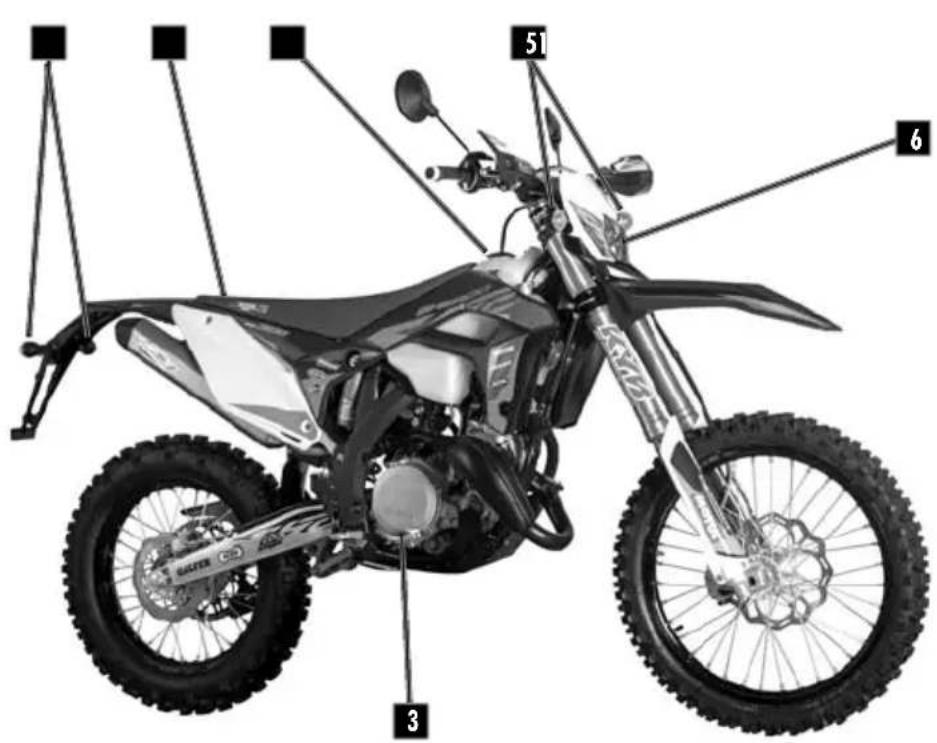
Right side
1 - Rear turn signals.
2 - Seat.
3 - Rear brake pedale.
4 - Tank.
5 - Front turn signals.
6 - Headlight.
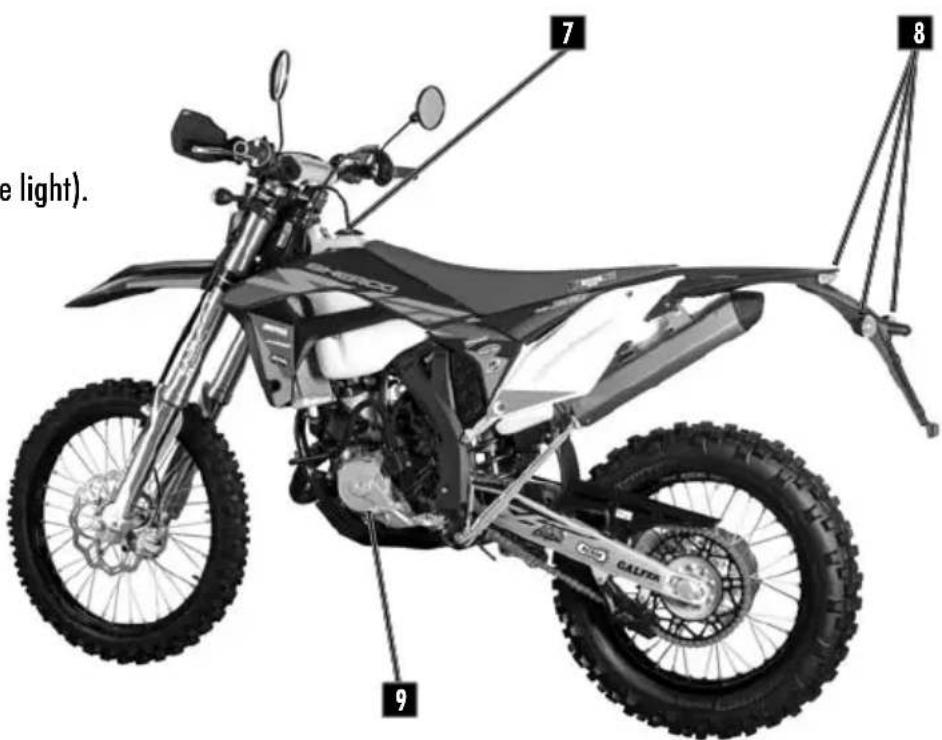
Left side
7 - Fuel tank cap.
8 - Rear light
(tail / brake light / plate light).
9 - Gear selector pedal.
DESCRIPTION OF THE VEHICLE
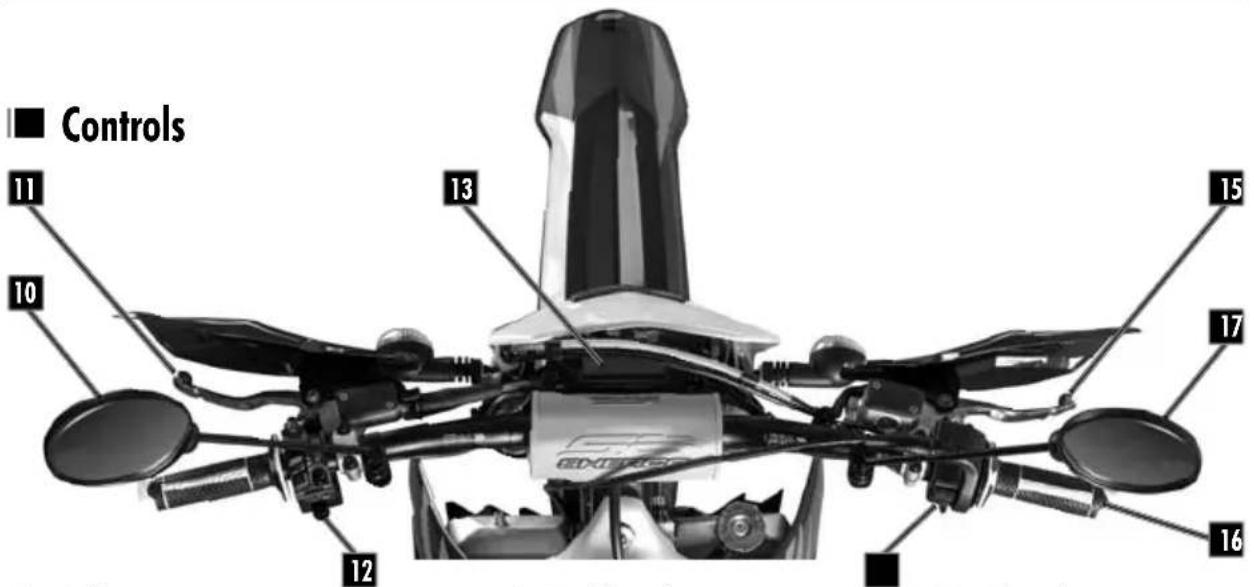
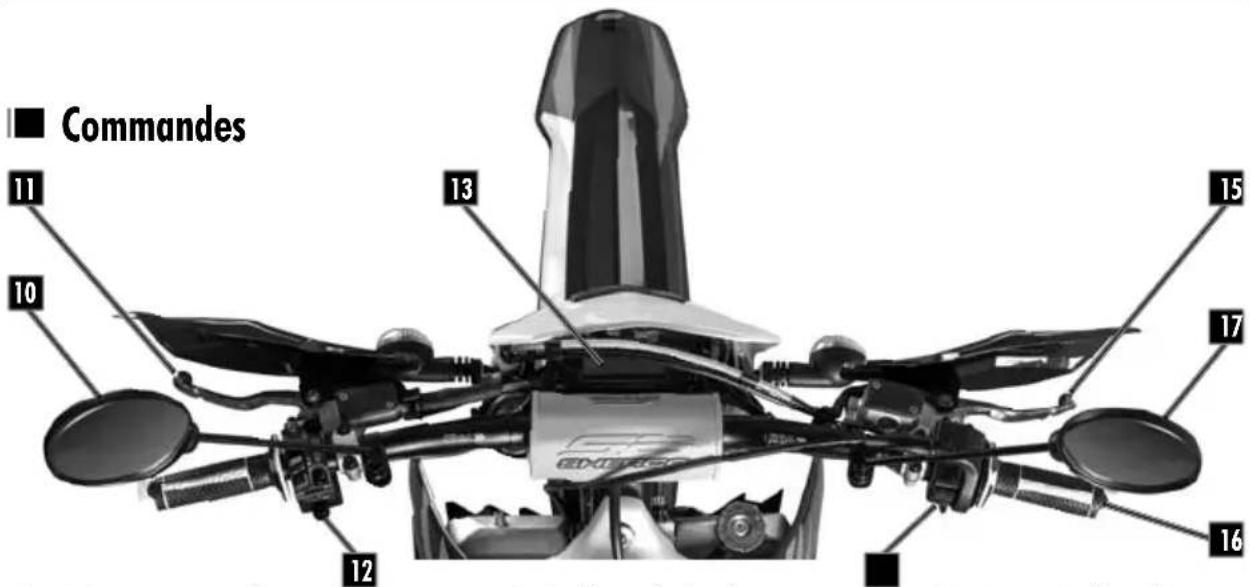
10 - Left mirror.
11 - Clutch lever.
12 - Left switch.
13 - Dashboard.
14 - Right switch.
15 - Front brake lever.
16 - Throttle grip.
17 - Right mirror.
LOCATION OF THE SERIAL NUMBERS
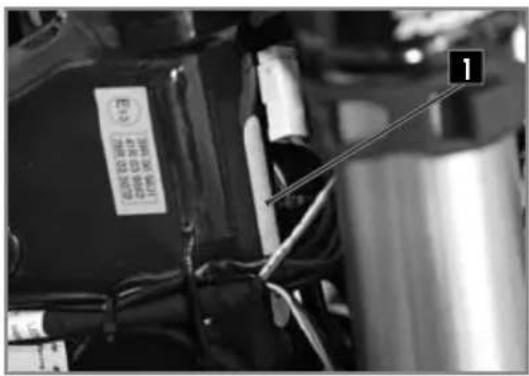
■ Vehicle serial number location
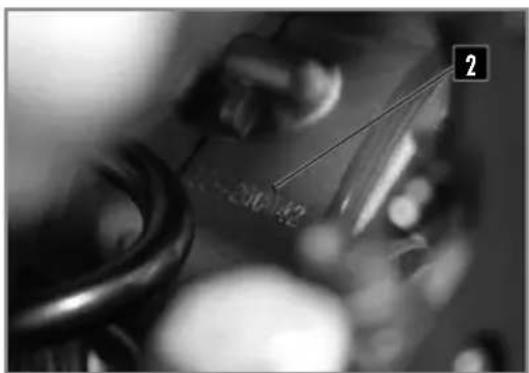
■ Engine serial number location
natural_image
Close-up of a mechanical component with blurred background and no visible text or symbols1 The serial number of the vehicle is stamped on the right side of the steering tube.
2 The engine number is stamped on the rear part of the right crankcase.
CONTROL DEVICES AND CONTROLS
HAND OPERATED CONTROLS:
CLUTCH LEVER, FRONT BRAKE LEVER AND CONTROL SWITCHES
Clutch lever
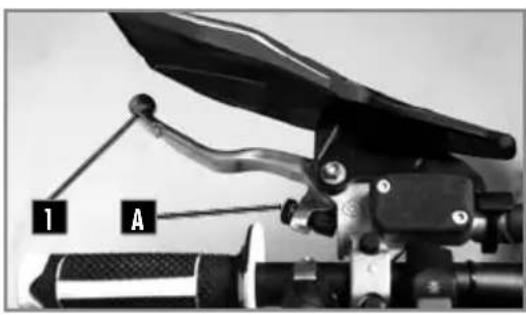
The clutch lever 1 is on the left handlebar and has an adjustment screw A.
Front brake lever
natural_image
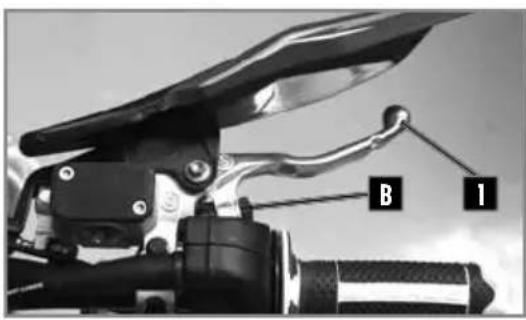
Close-up of a bicycle steering wheel with labeled parts (B and 1), no visible text or symbols beyond labelsThe front brake lever 1 is on the right side of the handlebar and has an adjustment screw B.
Left switch
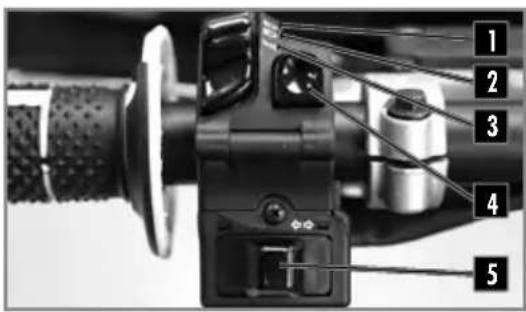
1 High beam (Headlight)
2 Low beam (Headlight)
3 Night light
4 Horn
5 Turn light
Light switch On/Off (Racing)
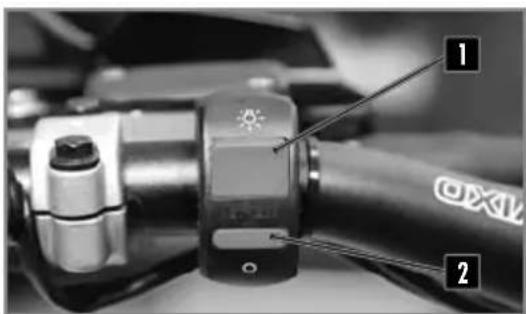
Two possible positions:
Position ON 1 : All lights are on.
Position OFF 2 : All lights are off.
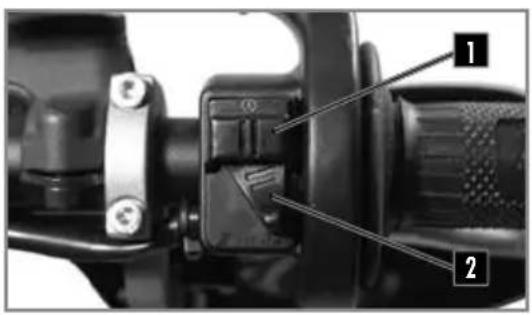
Rigth switch
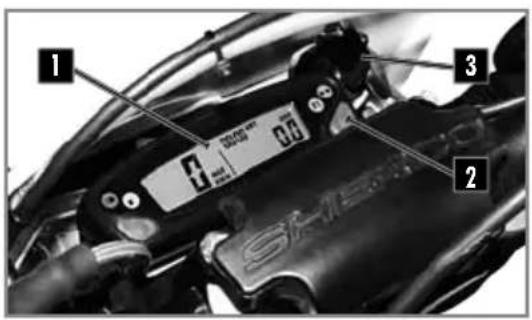
Dashboard
Key switch
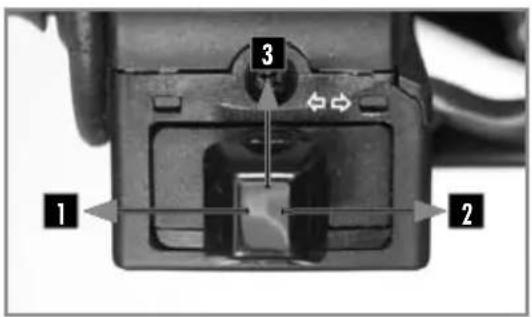
Turn light switch
1 Starter button.
2 Injection system mapping selection button.
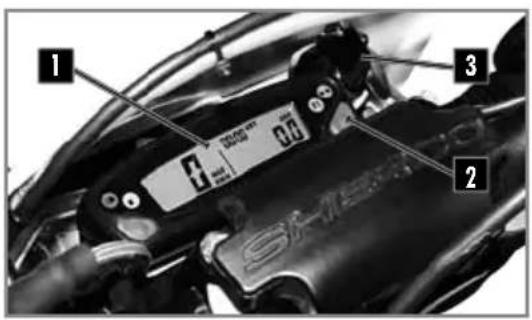
1 Dashboard.
2 Mode selection button.
3 Key switch.
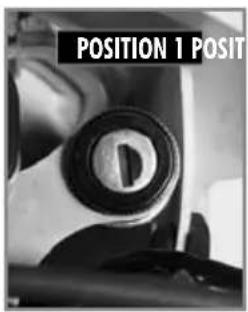
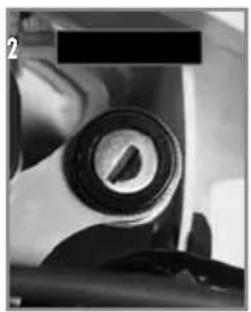
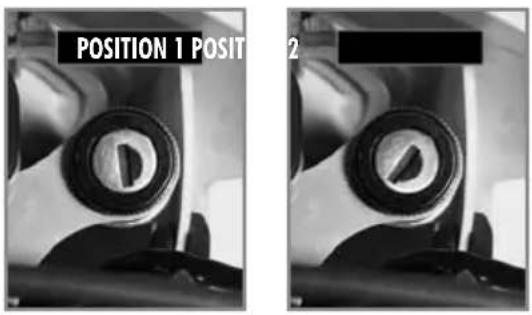
The main switch has two positions:
Position 1.
The engine is off and can not be started.
Position 2.
The motor can be started.
1 Left turn position.
2 Right turn position.
3 Off position.
CONTROL DEVICES AND CONTROLS
KEYLESS system
The bike has a "Keyless" system. It allows the bike to start without a key or ON/OFF switch. It automatically turns on and it turns off after 30 seconds of non-use of the bike. Lithium-ion batteries are far lighter than lead batteries, have a low self-discharge rate, and have more starting power at temperatures over 15^ (60°F). At low temperatures, however, the starting power of lithium-ion batteries drops to below that of lead batteries.
Multiple starting attempts may be needed. Press the electric starter button for 5 seconds, and wait 30 seconds between attempts. The pauses are necessary so that the created heat can distribute through the lithium-ion battery and the battery is not damaged.
If the charged lithium-ion battery does not or only weakly turns over the electric starter when temperatures are below 15 ^ ( 60 ^ ), then the battery is not faulty, but needs to be warmed up internally to increase its starting power (current output). The starting power increases as the battery warms up.
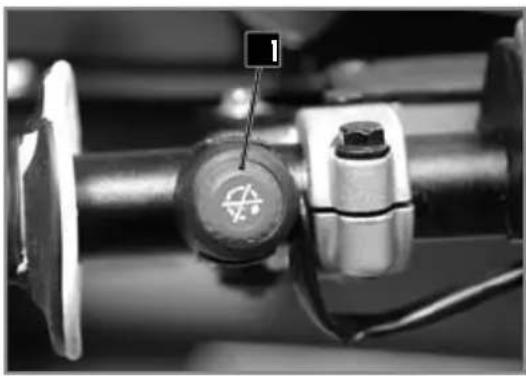
■ Egine emergency stop
natural_image
Close-up of a mechanical valve with a circular dial and a numbered component (no visible text or symbols)Two possible positions:
The button 1 is released: in this position, the bike can be ridden.
The button 1 is held down: in this position the motor is Off when released the motor can be restarted.
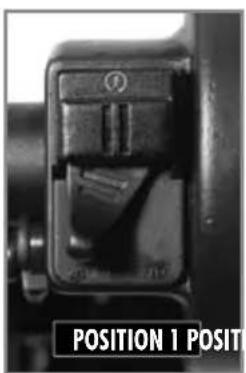
■ Injection system mapping switch
natural_image
Close-up of a mechanical component with a labeled section (no readable text or symbols)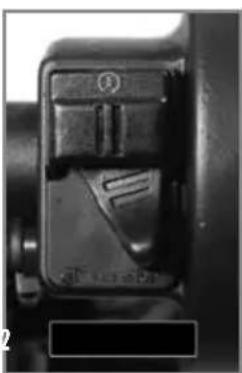
natural_image
Close-up of a mechanical component with no visible text or symbolsPosition 1. "Soft".
Position 2. "Hard".
CONTROL DEVICES AND CONTROLS
FOOT CONTROLS:
GEAR SELECTOR, SIDE STAND, REAR BRAKE
Gear selector
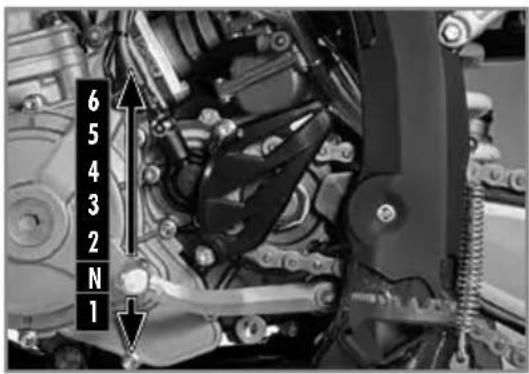
The drawing shows the path of the gear selector for each of the 6 speeds.
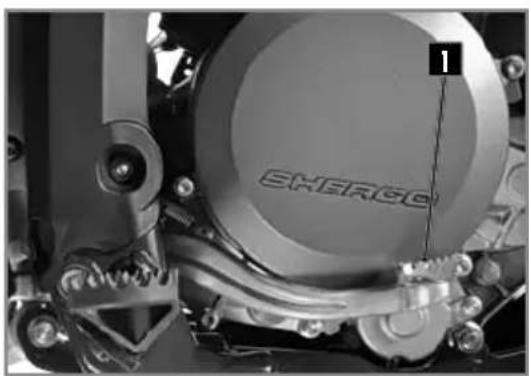
Footbrake
natural_image
Close-up of a mechanical component with a circular dial and labeled part '1' (no readable text or symbols beyond the label)1 Rear brake control.
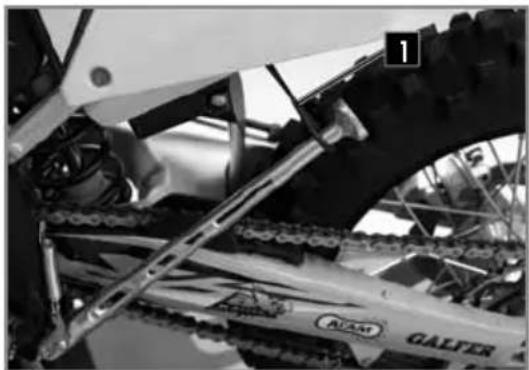
Side stand
natural_image
Close-up of a mechanical assembly with visible gears and chains, no readable text or symbolsRemove the rubber safety latch 1, using your foot on the shaft unfold it until it supports the weight of the bike.
WARNING
- The stand has a security system which automatically folds the stand when the bike is moved into an upright position.
- The stand has been designed to withstand the sheer weight of the bike.
CONTROL DEVICES AND CONTROLS
MOTORCYCLE COMPUTER INSTRUCTIONS
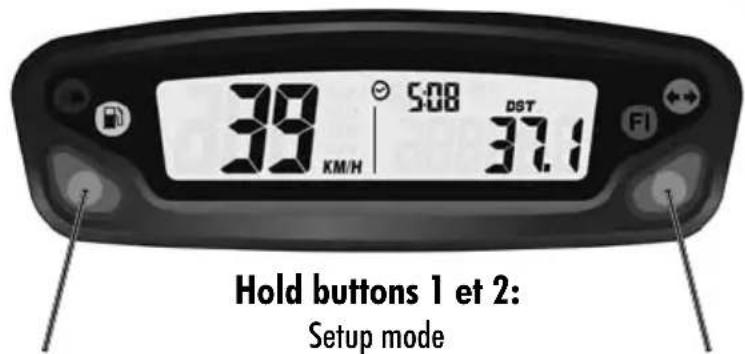
CAUTION
In order to avoid any water ingress, keep a minimal washing distance of 20cm.
Button 1:
Change screens 1,2,3
Hold button 1:
Screen 1: DST Adjust
Screen 2: DST2 Adjust
Button 2:
Change screens 1,2,3
Hold button 2:
Screen 1: Reset DST
Screen 2: Reset DST2
Screen 3: Reset MAX/ AVG
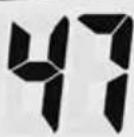
KM/H

12:57
Screen 1: Speed, Clock, Distance 1
AVG
MAX
KM/H
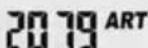
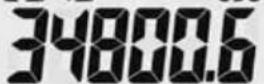
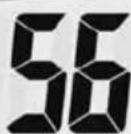
Screen 3: Alternating AVG/MAX speed, Accumulated run time, ODO
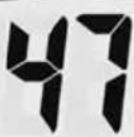
KM/H

12:57
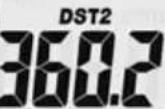
Screen 2: Speed, Clock, Distance 2

Turn indicator

High beam

Fuel injection (MIL): EFI problem

Low fuel
Mode buttons
The vehicle doesn't need to be switched on.
Left button:
Switch between the three display screens Enter adjustable trip distance mode ( DST and DST2) Decrement distance while in adjustable distance mode.
Right button:
Switch between the three display screens Resets Trip distance 1, Trip distance 2, maximum and average speed (when pressed and held for three seconds). Increments distance while in adjustable distance mode.
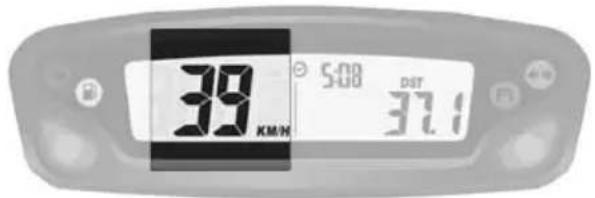
Fig 1 SPD function
SPD function Current speed (screens 1 and 2):
displays the current speed of the vehicle.
The speed can be displayed in km/h (default)
or mph. (p.99).
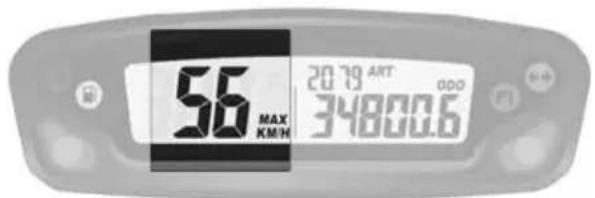
Fig 2 MAX speed function
MAX speed (screen 3):
displays the maximum speed since the last reset was performed. The maximum speed can be displayed in km/h (default) or mph. (p. 99).
Reset to 0 → MAX Function → Hold the right
Button down for 3seconds →0→Reset to 0 done.
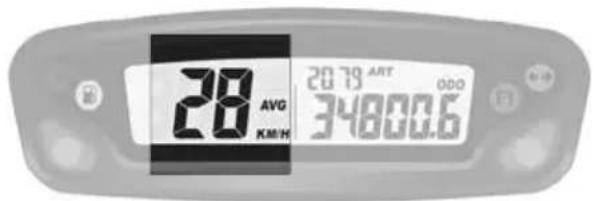
Fig 3 AVG function
AVG function Average speed (screen 3):
displays the average speed of the vehicle since the last reset was performed.
The average speed is displayed in the chosen units, km/h (default) or mph. (p.99).
Reset to 0 → AVG Function → Hold the right.
Button down for 3seconds →0→Reset to 0 done.
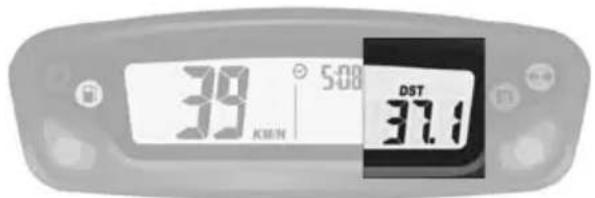
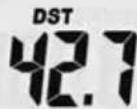
Fig 4 DST function
DST function (screen 1):
displays the mileage traveled by the vehicle since the last reset was performed.
The distance is displayed in the selected units, km/h (default) or mph. (p.99).
Reset to 0→DST Function→Hold the right.
Button down for 3seconds→0.0→Reset to 0 done.
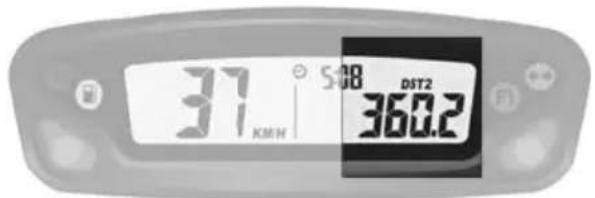
Fig 5 DST2 function
DST2 function (screen 1):
displays the mileage traveled by the vehicle since the last reset was performed.
The distance is displayed in the selected units, km/h (default) or mph. (p.99).
Reset to 0→DST2 Function→Hold the right.
Button down for 3seconds→0.0→Reset to 0 done.
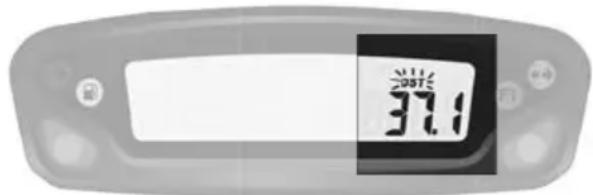
Fig 6 Adjustable trip distance function
DST and DST2 can be incremented or decremented by the user.
DST set up (screen 1)→Hold the left Button down for 3 seconds→DST» icon will flash→Hold left Button to decrement/ Hold the right Button to increment→ back to screen 1.
DST set up (screen 2)→Hold the left Button down for 3 seconds→DST2» icon will flash→Hold left Button to decrement/ Hold the right Button to increment → back to screen 2.
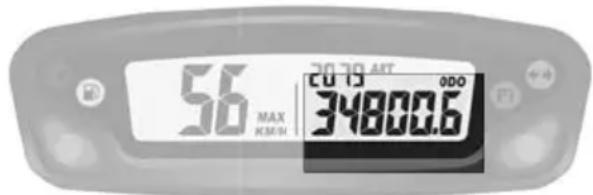
Fig 7 ODO function
ODO function Odometer (screen 3):
displays the total mileage traveled by the vehicle. The total distance is displayed in the selected units, km/h (default) or mph. (p.99).
This information can not be reset to 0.
Beyond 399 999 km (or miles), the counter goes back to 0.
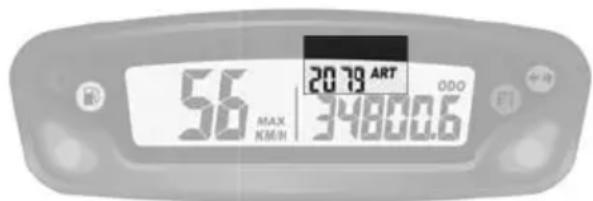
Fig 8 ART function
ART function Accumulated Ride Time (screen 3):
displays the hours of operation of the vehicle.
This information can not be reset to 0.
Until 99h59min → displayed in one minute increments. After 99h59min up to 9999h → displayed in one hour increments If the unit should reach 9999 hours of accumulated ride time, the display will stop incrementing, and will remain at that number.
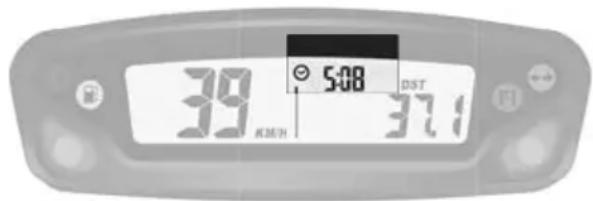
Fig 9 Clock function
Clock function (screens 1 et 2):
displays clock information.

Fig 10 Low battery/ Low battery error function
Low battery/ Low battery error function:
→ When the battery voltage drops to less than 2.40V, the LO battery warning will turn on.
→ When the internal battery is critically low, the unit will only display a blinking «LO» icon.
Set up menu
| Left and right buttons pressed simultaneously for 3s activates the Set up mode | |
| Left button | Right button |
| Toggle between M/H and KM/H settingsToggle between 24 Hour et 12 Hour | |
| Decrement time of day value | Increment time of day value |
| Decrement maintenance reminder value | Increment maintenance reminder value |
The meter will automatically advance from one setting option to the next, after 5s of no button activation
| UNIT(Unit type) | LIFE(Wheel circumference) | PPr(Pulse per revolution) | (Clock format) (Clock setup) (Maintenance reminder) | ||
| ↓Miles or kmDefault: kmDo not modify these settings | ↓12 or 24hDefault: 24h | ↓Clock setup Maintenance reminder setting (in hours)Default setting:5h (first oil change) | |||
| OFF:disabled | Set the value | ||||
Maintenance reminder:
maintenance reminder function is a countdown from a user defined number.
When the maintenance countdown gets to zero, the maintenance icon will appear on the LCD.
Follow these steps to reset or display the remaining accumulated ride time until next service reminder:
Displaying the remaining accumulated ride time (screen 3):
Hold the left Button down for 3 seconds → the remaining value is displayed → no button activation → back to screen 3.
Resetting the remaining accumulated ride time (screen 3):
Hold the left Button down for 3seconds→the remaining value is displayed→Hold the right Button down for 3seconds→The maintenance reminder is reset to zero (will begin the countdown again according to the maintenance interval already chosen in the set up menu).
Note:
If the maintenance icon is already on, the distance displayed will be zero.
If the maintenance reminder is turned off, the information displayed on the screen will be OFF.
CONTROL DEVICES AND CONTROLS
OPENING AND CLOSING THE FUEL TANK
Fuel
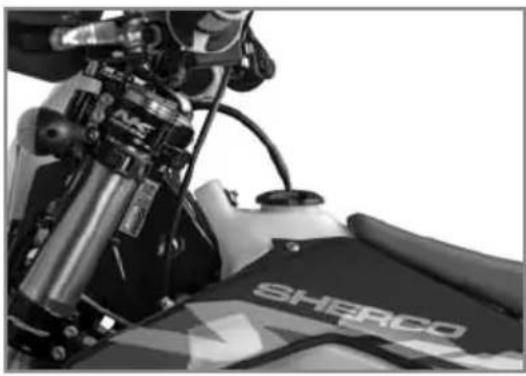
natural_image
Close-up of a motorcycle's front wheel and suspension system (no visible text or symbols)Use only unleaded fuel with an octane index of at least 95 mixed with 2 stroke oil (2%).
Filler cap
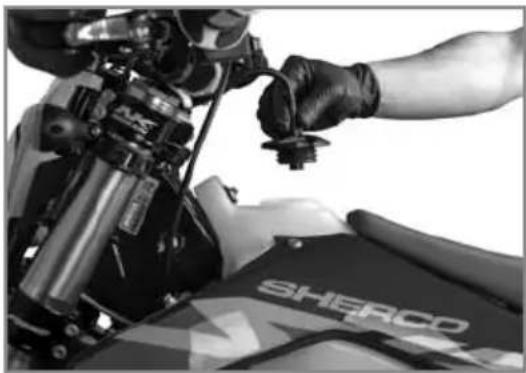
natural_image
Close-up of a hand adjusting a motorcycle engine component, no visible text or symbols on the device itself.Open: Turn the cap counter clockwise. The opposite direction to the hands of a watch.
Close: Turn the cap clockwise. The same direction as the hands of a watch.
Fuel tap
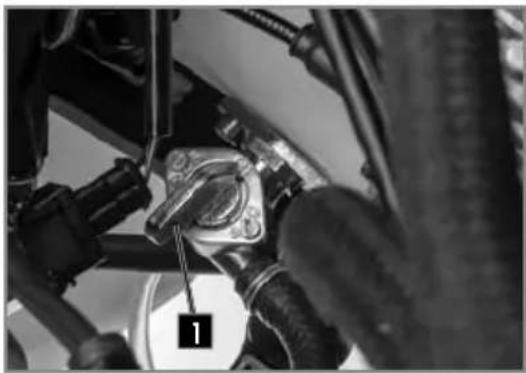
natural_image
Close-up of a mechanical assembly with a labeled component (number 1) and no visible text or symbols.The fuel tap is on the right side of fuel tank.
Tap handle 1 on the fuel tap is used to open or close the supply of fuel to the carburetor.
OFF: Fuel cannot flow from the fuel tank to the carburetor.
ON: Fuel can flow from the fuel tank to the carburetor. The fuel tank empties to the point of reserve capacity.
RES: Fuel can flow from the fuel tank to the carburetor. The fuel tank empties fully.
Choke
natural_image
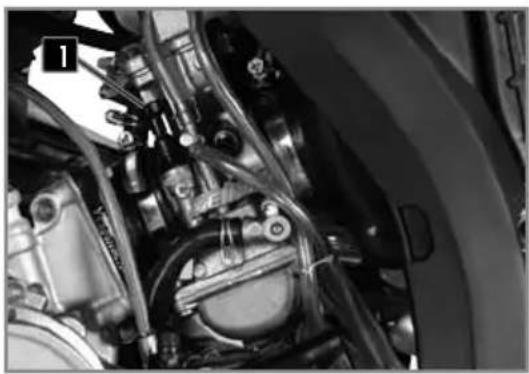
Close-up of a mechanical assembly with hoses and components (no visible text or symbols)The choke lever 1 is fitted on the left side of the carburetor.
Choke function activated→The choke lever is pulled out all the way.
Choke function deactivated→The choke lever is pushed in all the way.
! WARNING
If the engine is warm, the choke function must be deactivated.
Cold engine starting
- Set the gear selector to neutral.
- Pull the choke.
- Start the engine by pressing the starter button, without accelerating.
- Allow the engine to warm up for a few minutes.
- Push in the choke.
Hot engine starting
Follow the previous instructions without steps 2-4 and 5.
■ Shifting gears
- The positions of the gear selector are shown on (p.95).
- To find the neutral position, press the selector down into first gear (a resistance will be felt), then move the selector up slightly.
- Close the throttle before changing gears.
- Engage the lowest gear.
- Partially open the throttle while engaging the clutch.
Parking
- Stop the engine with the stop button. The Keyless system will automatically switch off the ignition after 30 seconds of non-use of the bike.
Become familiar with all of the controls and their functions before using the vehicle.
SAFETY INFORMATION
- Do not drive after consuming alcohol.
- Wear a helmet when using the vehicle.
- Keep the machine in good working order and maintain it properly so that it is reliable and safe for use.
- Gasoline is flammable, refuel the motorcycle when the engine is stopped.
- Exhaust fumes are toxic, you should never start the engine in a closed building.
- Always park the vehicle on a flat hard surface, do not park the vehicle on a slope or on soft ground. Always control the balance of the vehicle.
- Check the following every day before riding the motorcycle:
Tires: Wear and pressure.
Engine oil: Level (p.112).
Gasoline: Check the level and make sure there is no leaks.
Transmission chain: Properly lubed and adjusted (p.126).
Direction of travel: check for hard spots.
Brakes: Operation, fluid leakage, brake pad wear (p.133 to p.137).
Throttle: Proper operation (p.107).
Clutch: Proper operation (p.127).
Electrical Equipment: Operation of the horn and lights (p.92 to p.93).
Components (nut, bolts ...): Verify that all components of the vehicle are properly tightened (☐ p.146).
If you experience a problem with any of the components of the motorcycle, consult the Service and Adjustments section of this manual or contact a Sherco dealer.
SERVICING THE COOLING SYSTEM
natural_image
Close-up of a hand adjusting a car engine component with a tool (no visible text or symbols)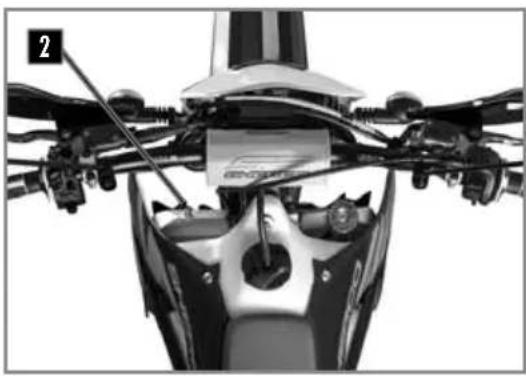
natural_image
Top-down view of a motorcycle's front wheel and drivetrain components (no visible text or symbols)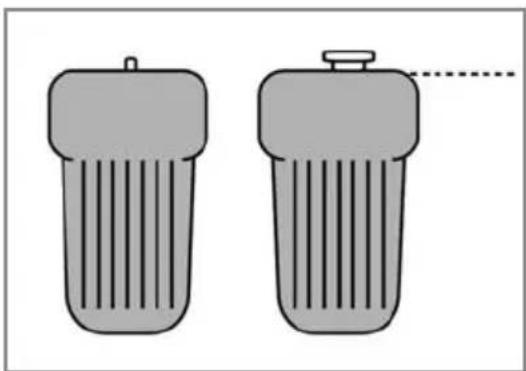
natural_image
Two gray cylindrical containers with vertical stripes, one with a small top and the other with a dashed line extending from its side (no text or symbols)Motorcycle horizontal
! WARNING
- The hot liquid can cause severe injuries.
- The coolant is harmful.
- After contact with skin or eyes, or ingestion, or injuries caused by hot liquids: Consult a physician.
- Use protective gloves.
- Do not replace the coolant with water or other not approved fluids: it could damage your engine.
-
Follow these procedures carefully and always fill the engine with coolant when the engine is cold.
-
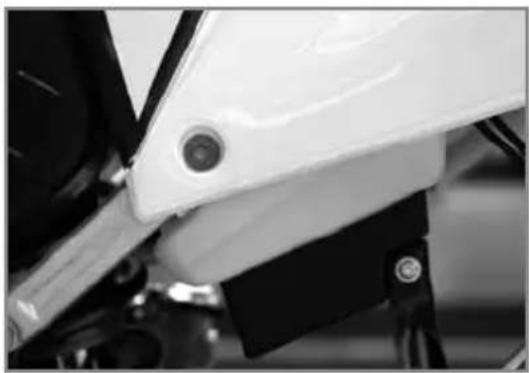
Place the bike upright on a horizontal surface.
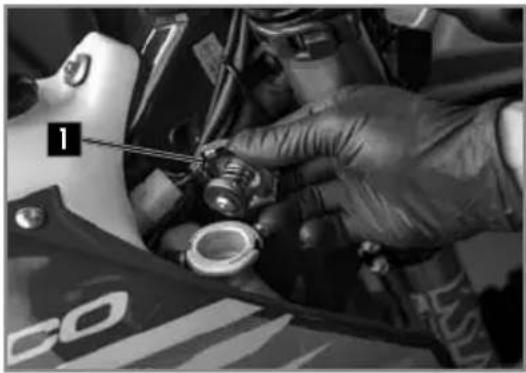
- Remove the cap 1.
| Approved Coolant Motul | ® MotocoolFactory Line -35°C |
- Remove the bleed screw 2.
- Fill the radiator full so that there is no air in the system.
| Radiator Bleed screw | M6X8 8Nm |
Fill the coolant to the top of the radiator.
Replace the cap 1 and check to make sure it is tight.
! ATTENTION
It is important to follow this procedure.
The lack of fluid, or the presence of a pocket of air left in the radiator can cause serious damage to the engine.
COOLING SYSTEM
natural_image
Close-up of a white motorcycle's side panel with visible joints and mounting brackets (no text or symbols)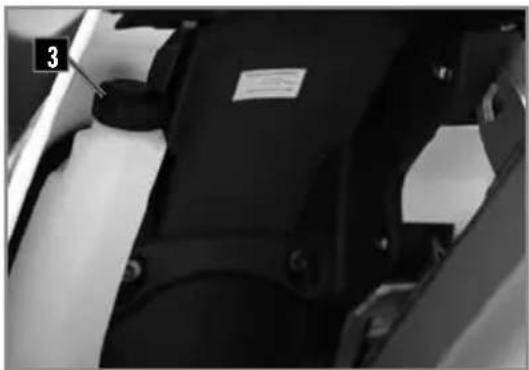
natural_image
Close-up of a mechanical component with a label and numbered marker (no readable text or symbols)natural_image
Close-up of a gloved hand adjusting a mechanical component with a tool, no visible text or symbols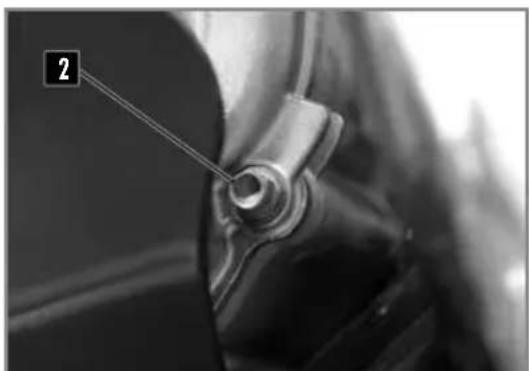
natural_image
Close-up of a mechanical component with a labeled section '2' (no readable text or symbols beyond label)Check the fluid level in the expansion container. The liquid should reach the level on the container where it indicates "LEVEL MIN". If the level is not correct, unscrew the cap 3. Fill with fluid until it reaches the LEVEL MIN mark.
| Coolant Motul | ® MotocoolFactory Line -35°C |
Replace the cap 3.
WARNING
Make sure the bike is vertical and on a horizontal surface.
- Place a container under the bike.
- Remove the cap 1 and screw 2.
- Allow the coolant to drain.
NOTE
To protect the environment deposit the drained coolant at an approved collection center.
FILLING THE COOLANT
natural_image
Close-up of a mechanical component with a labeled section '2' (no readable text or symbols beyond label)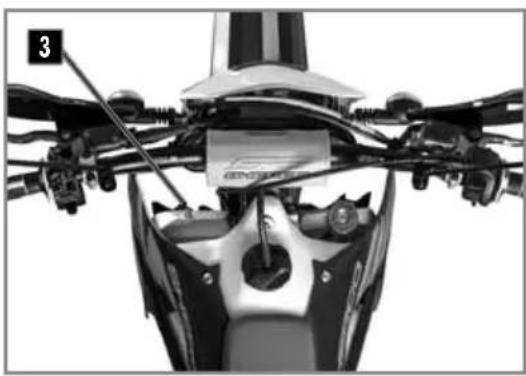
natural_image
Top-down view of a motorcycle's front wheel and drivetrain components (no visible text or symbols)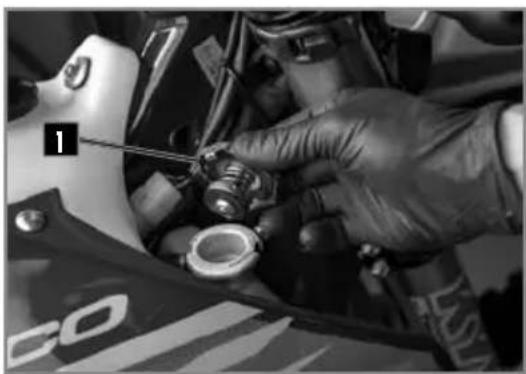
natural_image
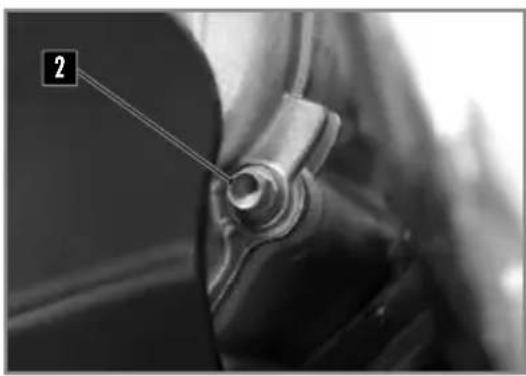
Close-up of a hand adjusting a mechanical component with a tool, no visible text or symbols- Replace the bleed screw 2 using a new gasket. - Refill the coolant into the radiator through the cap 1.
| Coolant | Motul® MotocoolFactory Line -35°C |
- Fill coolant until is going out from the screw 3. - Put the screw 3 back in with a new seal.
| Radiator bleed screw | M6X45 8Nm |
- Continue filling. - Fill until the coolant reaches the level (approximately 1.1 liters). - Put the bike on the side stand and follow the rest of the filling procedure (p.104). - Replace the cap 1.
MOTOR SETTINGS
CHECKING THE PLAY IN THE THROTTLE CABLE
■ Checking the throttle cable play
natural_image
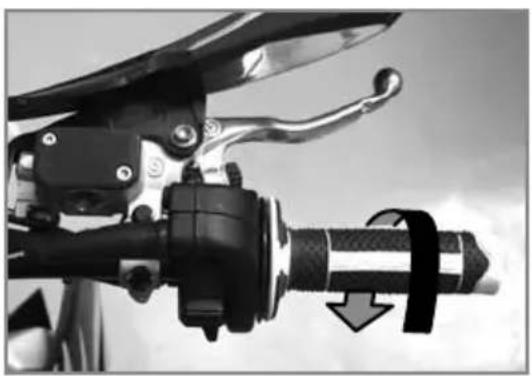
Close-up of a bicycle brake lever mechanism with a black handle and blue caliper, showing a blue arrow indicating motion direction (no text or symbols present)With the handlebars facing straight ahead, check that the throttle twist grip functions properly.
Throttle cable play 2....4mm
If the cable play is not correct, adjust the accelerator throttle cable play.. (→ ci-dessous).
Start the bike and let it run at idle. Turn the handlebars and check that the idle speed is constant. If the speed changes, readjust the play in the throttle cable ( ci-dessous).
■ Adjusting the play in the throttle cable
natural_image
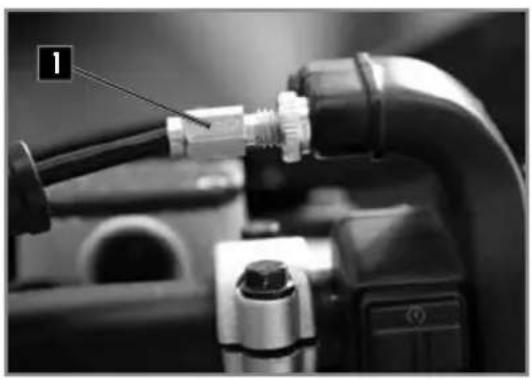
Close-up of a mechanical assembly with a connector and pipe fitting (no visible text or symbols)Adjust the throttle cable play at the location shown with the adjuster.
SETTING THE IDLE SPEED
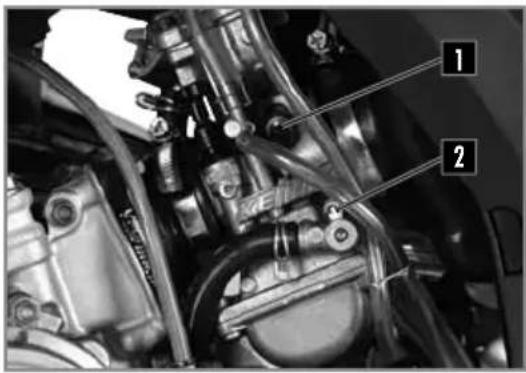
- The idle speed is adjust with adjusting screw 1.
- The idle mixture is adjusted with the idle air adjusting screw 2.
Start the bike and allow it to reach operating temperature.
Adjust the idle speed by turning the idle screw 1 2000 +/- 100 rpm
Close the adjust air screw all the way and turn it back to 1 turn 14 .
Idle speed 2000 +/- 100 rpm
Idle air adjusting open 1T 14
SETTING THE CARBURETOR
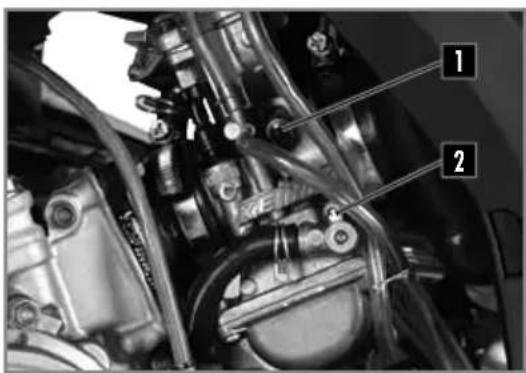
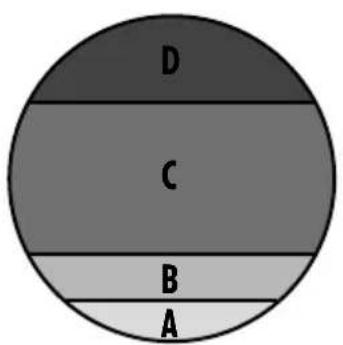
How the opening of the throttle slide influences performance:
The composition of the mixture (Air-Gas) is a function of the opening of the slide:
A: Idle range
From 0 to 18 opening of the throttle slide, this range is regulated by the idle screw 1 and the air screw 2.
• B: Transition range
From 18 to 14 opening of the throttle slide, this range is regulated by the idle jet and the shape of the slide.
• C: Mid-range
From 14 to 34 opening of the throttle slide, this range is regulated by the needle valve (shape and position). In the lower range, the idle circuit, and in the higher range, the main jet take into account the control of the motor.
• D: Full load
From 34 to full throttle slide opening, this range is controlled by the main jet and the needle jet.
natural_image
Close-up of a mechanical component with internal gears and mounting holes (no visible text or symbols)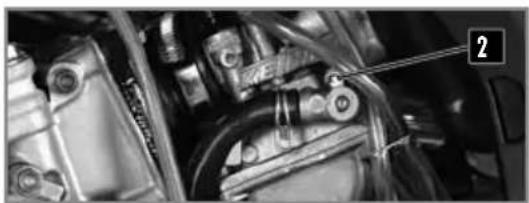
natural_image
Close-up of a car engine bay with visible components and wiring (no text or symbols)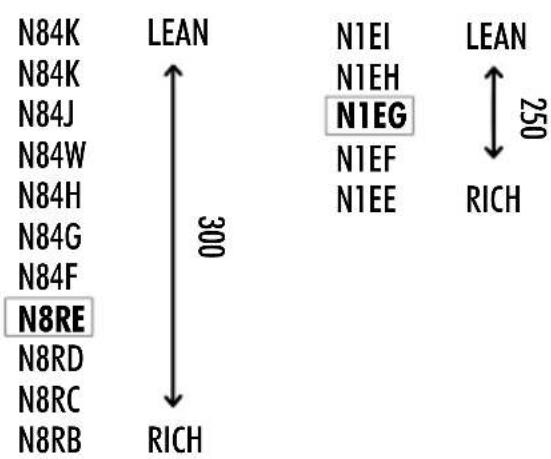
other
| Category | Value | | -------- | ----- | | N84K | ↑ | | N84J | ↑ | | N84W | ↑ | | N84H | ↑ | | N84G | ↑ | | N84F | ↑ | | N8RE | 300 | | N8RD | | | N8RC | | | N8RB | | | LEAN | | | N1EI | | | N1EH | | | N1EG | | | N1EF | | | N1EE | | | RICH | 250 |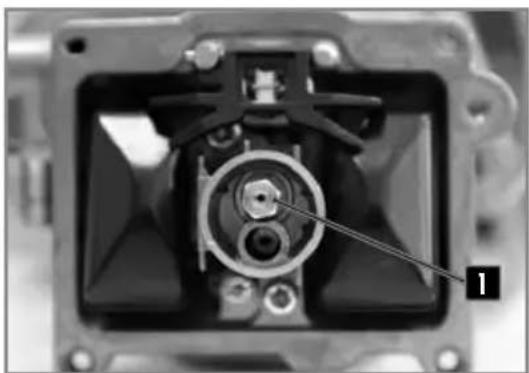
natural_image
Close-up of a mechanical component with a labeled part (1), showing internal gears and housing (no text or symbols visible)Pilot jet and pilot (air) screw:
In order to adjust the idle range A to B transition you can change the pilot jet 1 (its size is stamped on it) and adjust the air screw 2, turning the screw in richens the mixture.
Proceed by turning the screw 1/8 of a turn at a time, if you move out of the rage of 1T-2.5T, change the size of the pilot jet.
Needle:
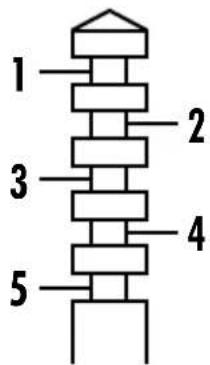
The needle has 5 notches for adjustment, 1 to 5, from rich to lean.
The reference number of the needle is engraved on it. In the tables the adjusting position of the clip on the needle is defined from the upper position.
Main jet:
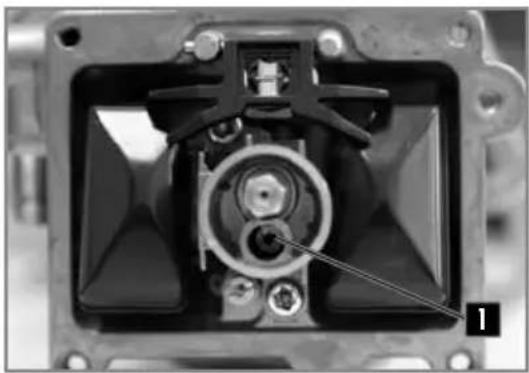
The main jet is shown in the photo as 1. The size of the jet is engraved on it.
CARBURETOR SETTING TABLE 250 SE
| ALTITUDE↓ | TEMPERATURE→ | -20°CA-7°C | -6°CA5°C | 6°CA15°C | 16°CA24°C | 25°CA36°C | 37°CA49°C |
| 3000 mA2301 m | Idle air adjusting screw | 1 T 1⁄4 | 1 T 3⁄4 | 1 T 3⁄4 | 2 T 1⁄4 | 2 T 1⁄4 | |
| Idling jet | 40 | 40 | 38 | 38 | 35 | ||
| Needle | N1EG | N1EG | N1EH | N1EH | N1EI | ||
| Needle position | 3 | 2 | 2 | 2 | 2 | ||
| Main jet | 165 | 162 | 160 | 160 | 158 | ||
| 2300 mA1501 m | Idle air adjusting screw | 1 T 1⁄4 | 1 T 1⁄4 | 1 T 3⁄4 | 1 T 3⁄4 | 2 T 1⁄4 | 2 T 1⁄4 |
| Idling jet | 40 | 40 | 40 | 38 | 38 | 35 | |
| Needle | N1EG | N1EG | N1EG | N1EH | N1EH | N1EI | |
| Needle position | 3 | 3 | 2 | 2 | 2 | 2 | |
| Main jet | 165 | 165 | 162 | 160 | 160 | 158 | |
| 1500 mA750 m | Idle air adjusting screw | 1 T | 1 T 1⁄4 | 1 T 1⁄4 | 1 T 3⁄4 | 1 T 3⁄4 | 2 T 1⁄4 |
| Idling jet | 42 | 42 | 40 | 40 | 38 | 38 | |
| Needle | N1EF | N1EG | N1EG | N1EG | N1EH | N1EH | |
| Needle position | 3 | 3 | 3 | 2 | 2 | 2 | |
| Main jet | 168 | 165 | 165 | 162 | 160 | 158 | |
| 750 mA301 m | Idle air adjusting screw | 1 T | 1T | 1 T 1⁄4 | 1 T 1⁄4 | 1T 1⁄2 | 1 T 3⁄4 |
| Idling jet | 42 | 42 | 40 | 40 | 40 | 38 | |
| Needle | N1EF | N1EF | N1EG | N1EG | N1EG | N1EH | |
| Needle position | 4 | 3 | 3 | 3 | 2 | 2 | |
| Main jet | 170 | 168 | 165 | 162 | 162 | 160 | |
| 300 mA0 m | Idle air adjusting screw | 1 T | 1 T | 1 T | 1 T 1⁄4 | 1 T 1⁄4 | 1 T 3⁄4 |
| Idling jet | 45 | 45 | 42 | 42 | 42 | 40 | |
| Needle | N1EE | N1EF | N1EF | N1EG | N1EG | N1EG | |
| Needle position | 4 | 4 | 3 | 3 | 3 | 2 | |
| Main jet | 172 | 170 | 168 | 165 | 165 | 162 |
CARBURETOR SETTING TABLE 300 SE
| ALTITUDE↓ | TEMPERATURE→ | -20°CA-7°C | -6°CA5°C | 6°CA15°C | 16°CA24°C | 25°CA36°C | 37°CA49°C |
| 3000 mA2301 m | Idle air adjusting screw | 1T 1⁄2 | 1 T 1⁄2 | 2 T | 2 T 1⁄2 | 3 T | 3T |
| Idling jet | 40 | 38 | 35 | 35 | 32 | 32 | |
| Needle | N8RE | N8RF | N8RF | N8RG | N8RG | N8RH | |
| Needle position | 3 | 3 | 3 | 3 | 3 | 3 | |
| Main jet | 165 | 162 | 162 | 160 | 160 | 158 | |
| 2300 mA1501 m | Idle air adjusting screw | 1 T | 1 T 1⁄2 | 1 T 1⁄2 | 2T | 2 T 1⁄2 | 3 T |
| Idling jet | 40 | 38 | 38 | 35 | 35 | 32 | |
| Needle | N8RE | N8RE | N8RF | N8RF | N8RG | N8RG | |
| Needle position | 3 | 3 | 3 | 3 | 3 | 3 | |
| Main jet | 168 | 165 | 165 | 165 | 162 | 162 | |
| 1500 mA750 m | Idle air adjusting screw | 1 T | 1 T | 1 T 1⁄2 | 1 T 1⁄2 | 2 T | 2 T 1⁄2 |
| Idling jet | 40 | 40 | 40 | 38 | 38 | 38 | |
| Needle | N8RD | N8RE | N8RE | N8RF | N8RF | N8RG | |
| Needle position | 3 | 3 | 3 | 3 | 3 | 3 | |
| Main jet | 170 | 168 | 165 | 165 | 165 | 165 | |
| 750 mA301 m | Idle air adjusting screw | 1 T | 1T | 1 T | 1 T 1⁄2 | 1 T 1⁄2 | 2T |
| Idling jet | 42 | 40 | 40 | 40 | 40 | 38 | |
| Needle | N8RD | N8RD | N8RE | N8RE | N8RF | N8RF | |
| Needle position | 3 | 3 | 3 | 3 | 3 | 3 | |
| Main jet | 172 | 170 | 168 | 165 | 165 | 165 | |
| 300 mA0 m | Idle air adjusting screw | 1 T | 1 T | 1 T | 1 T | 1 T 1⁄2 | 1 T 1⁄2 |
| Idling jet | 45 | 42 | 42 | 40 | 40 | 40 | |
| Needle | N8RC | N8RD | N8RD | N8RE | N8RE | N8RF | |
| Needle position | 3 | 3 | 3 | 3 | 3 | 3 | |
| Main jet | 175 | 172 | 170 | 168 | 165 | 165 |
ENGINE MAINTENANCE
natural_image
Mechanical gear assembly with meshing gears and a highlighted shaft (no visible text or symbols)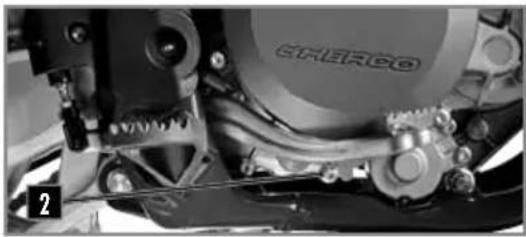
natural_image
Close-up of a mechanical assembly with visible gears and components (no readable text or symbols)REFILLING THE GEAR BOX WITH OIL
natural_image
Close-up of a hand adjusting a mechanical component with a numbered annotation (3), no visible text or symbols.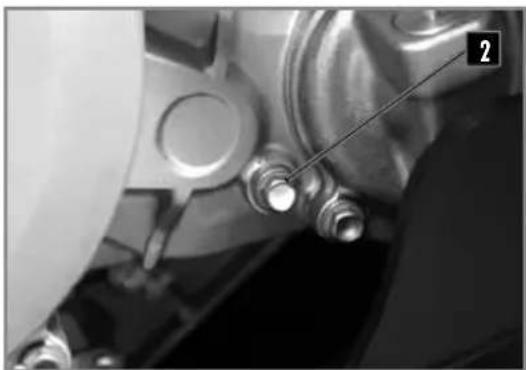
natural_image
Close-up of mechanical components with a numbered annotation (2) pointing to a detail, no readable text or symbols present.- Remove the engine guard (p.127).
- When draining the oil the engine should be warm.

WARNING
Use protective gloves.
- Position the motorcycle upright on a level surface.
- Place a container under the bike to catch the old oil.
- Remove the drain plug 1.
- Remove the drain plug 2.
- Allow the oil to drain.
- Clean the drain plugs 1 and 2 with a degreaser.
- Install the drain plug 1 and 2 with a new gasket.
Drain plug 1 & 2 M16 15Nm
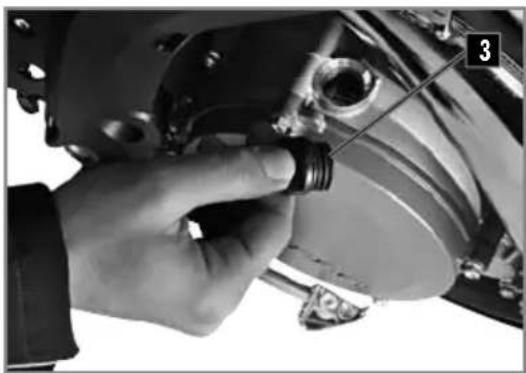
Remove the engine oil filler cap 3.
- Unscrew the oil level screw 4.
- Fill with engine oil until the oil flows out of the level screw.
Motor oil 0,75 L SAE 5W40
- Once the level is done, replace the copper seal and tighten the screw 4 to 7Nm.

WARNING
To protect the environment, oil, oil filters and used material must be deposited in a collection center and not down drain or in the wild.
ENGINE MAINTENANCE
EMPTYING THE CARBURETOR FLOAT CHAMBER
natural_image
Close-up of a motorcycle seatbelt with visible mechanical components and a numbered label (1) pointing to the side.- Turn handle of fuel tap to the OFF position.
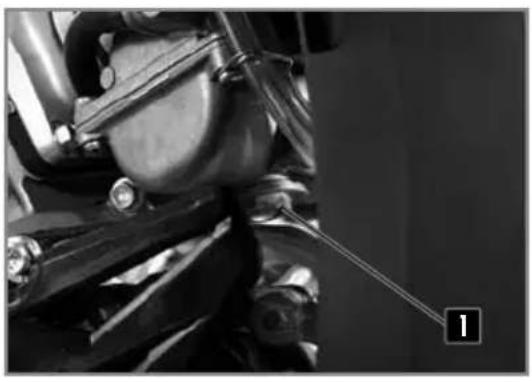
- Place a cloth beneath the carburetor to soak up emerging fuel.
- Remove plug 1.
- Completely drain the fuel.
- Mount and tighten the plug.
HANDLEBAR POSITION
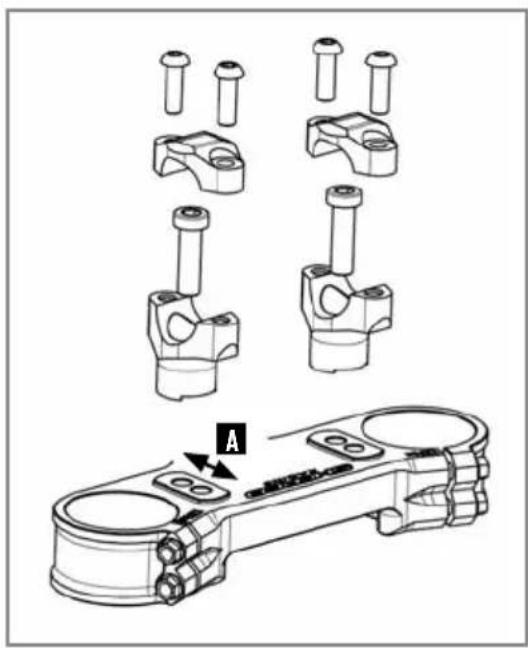
natural_image
Technical illustration of mechanical components with exploded view and assembly detail (no text or symbols)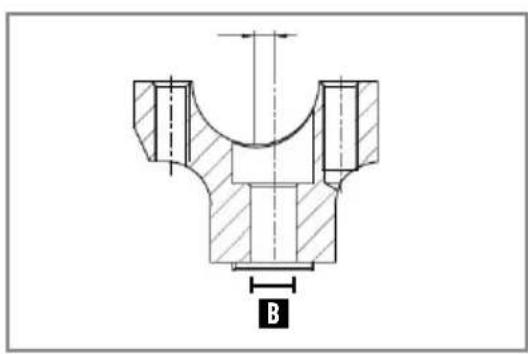
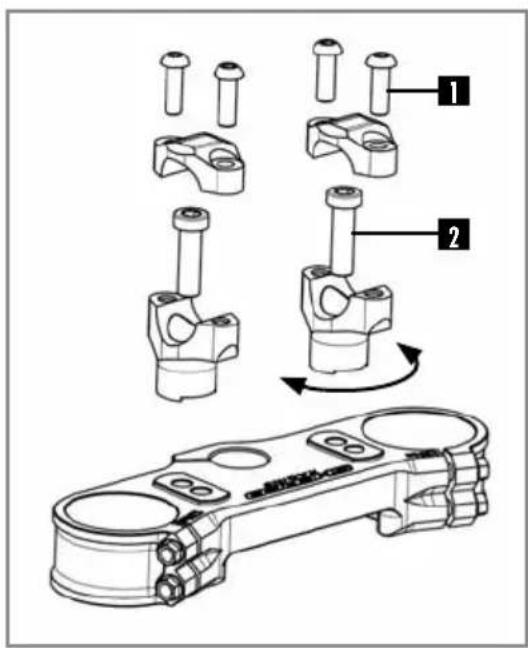
The triple clamps have two holes separated by a distance A.
| Distance between holes A | 13mm |
The handlebar clamps are offset by a distance B.
| Handlebar offset B | 4mm |
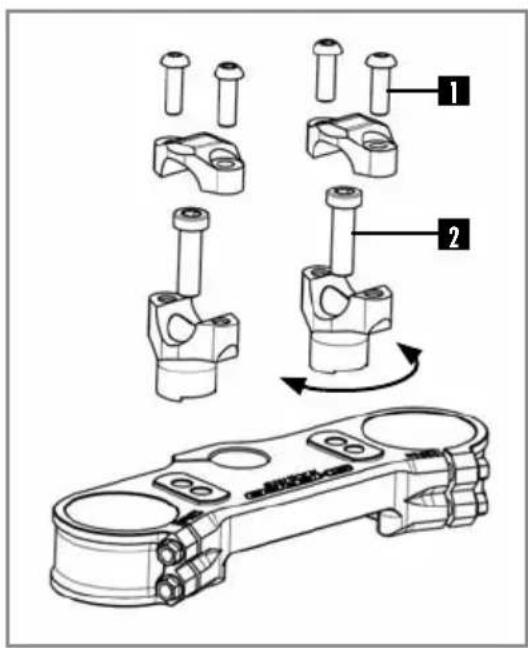
The bike comes standard with the handlebars in the rear most position.
Remove the four screws 1. Remove the handlebar top clamps and remove the handlebar.
Remove the two screws 2. Remove the lower clamps and place them in the desired position.
| Handlebar lower clamp | M10x35 | 40Nm | Loctite® 243TM |
Replace the handlebars and top clamps.
Replace the four screws 1 and tighten evenly.
| Handlebar clamps fixing screws | M8x25 | 25Nm |
The handlebars can be rotated forward and rearward in the clamps.
ADJUSTING THE CHASSIS
ADJUSTING THE STEERING ANGLE
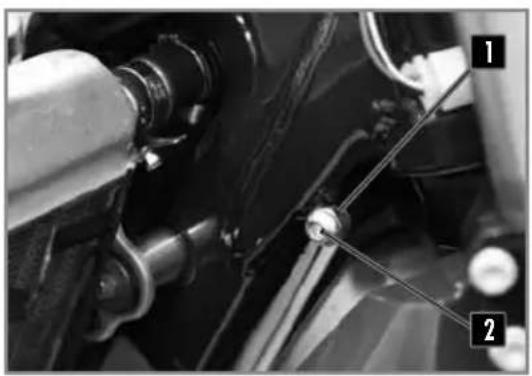
natural_image
Close-up of mechanical components with numbered annotations (1 and 2) pointing to specific parts, no readable text or symbols present.The steering angle can be changed using the set screws located on the bottom of the steering column. Loosen the nut 1 and tighten the screw 2 until you have the steering angle desired.
Tighten the nut and do the same operation on the other side.
| Steering angle lock nut | M8 20Nm |
BASIC SETTING OF THE CHASSIS ACCORDING TO THE RIDER WEIGHT
If the weight of the rider is above or below the standard, compensate by changing the stiffness of the springs (forks and shock).
| Standard weight of therider (with equipment) | 75 to 85kg |
ADJUSTING THE CHASSIS
SETTING THE FORK COMPRESSION
natural_image
Close-up of a motorcycle's front wheel and side-mounted brake lever (no visible text or symbols)KAYABA RACING
natural_image
Close-up of a motorcycle's internal components and brake lever (no visible text or symbols)KAYABA FACTORY
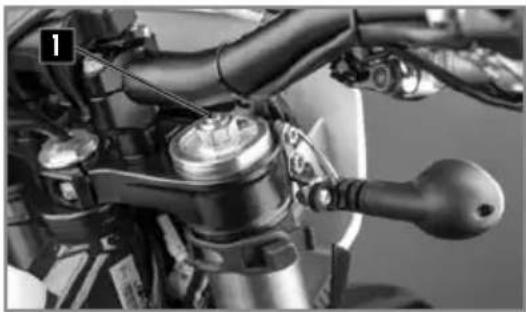
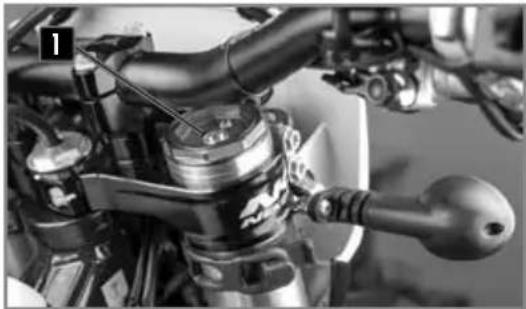
Screws 1 determine the behavior of the fork when it is compressed. Turning in the screwclockwise increases the hydraulic force (and vice versa).
Turn screw1 clockwise to the stop and go back the number of clicks required.
| Setting compression KAYABA suspension (Racing) | Comfort | 18 clicks |
| Standard | 14 clicks | |
| Sport | 10 clicks | |
| Réglage de compression KAYABA (Factory) | Comfort | 20 clicks |
| Standard | 12 clicks | |
| Sport | 8 clicks | |
FORK REBOUND ADJUSTMENT
natural_image
Close-up of a mechanical assembly with visible gears and springs (no text or symbols)KAYABA RACING
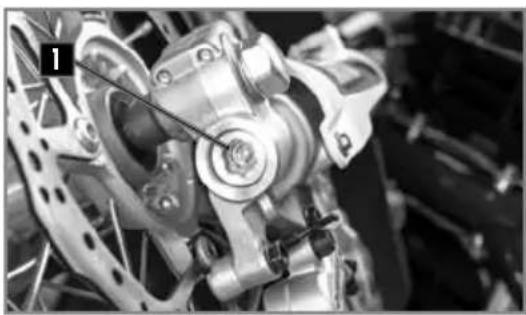
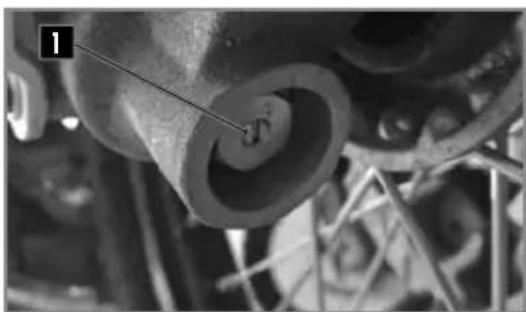
The adjusting screws 1 determine the behavior of the fork when it rebounds. Turning the screws clockwise increases the hydraulic force (and vice versa).
The adjustment screws 1 are located at the end of the lower fork legs.
Turn the screw 1 clockwise to the stop then go back the number of clicks required.
natural_image
Close-up of mechanical components with a labeled component '1' (no readable text or symbols)KAYABA FACTORY
| Setting rebound KAYABA (Racing) | Comfort | 14 clicks |
| Standard | 12 clicks | |
| Sport | 10 clicks | |
| Setting rebound KAYABA (Factory) | Comfort | 18 clicks |
| Standard | 12 clicks | |
| Sport | 10 clicks | |
ADJUSTING THE REAR SHOCK LOW-SPEED COMPRESSION SETTING
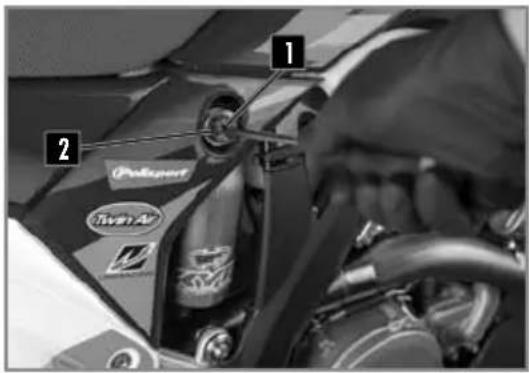
KAYABA
The adjusting screw 1 determines the slow speed behavior of the rear shock (sensitivity Turning the screw clockwise increases the hydraulic force (and vice versa).
Turn the screw 1 clockwise with a screwdriver until it stops and then turn it back the number of clicks required.
Do not loosen the nut 2.
REAR SHOCK KAYABA
| Low-speed compression setting | Comfort | 20 clicks |
| Standard | 14 clicks | |
| Sport | 12 clicks |
ADJUSTING THE REAR SHOCK HIGH-SPEED COMPRESSION SETTING
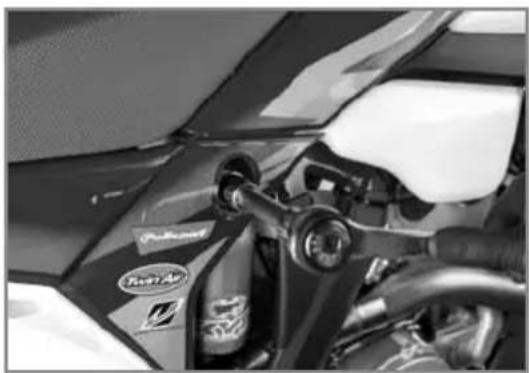
natural_image
Close-up of a motorcycle's head and engine compartment, showing no visible text or symbolsKAYABA
The adjusting nut 2 determines the high speed behaviour of the rear shock (big hits). Turning the screw clockwise increases the hydraulic force (and vice versa).
Turn the nut 2 clockwise with a socket wrench until it stops and then back the number of clicks required.
Do not loosen the screw 1.
REAR SHOCK KAYABA
| High-speed compression setting | Comfort | 2,5 turns |
| Standard | 1,5 turns | |
| Sport | 1 turn |
REBOUND DAMPER
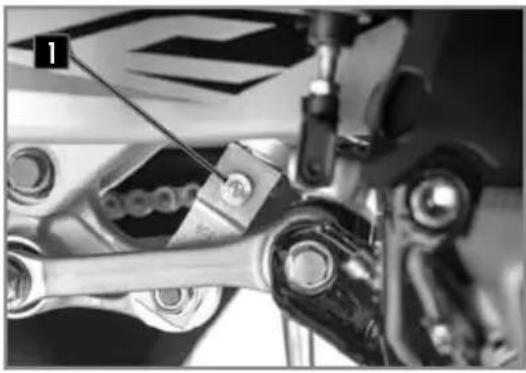
natural_image
Close-up of mechanical components with no visible text or symbolsSETTING THE REAR SHOCK SAG
SETTING THE RIDING SAG
The adjusting screw 1 determines the Shock rebound behavior. Turning the screw clockwise increases the hydraulic force (and vice versa).
Turn the screw 1 clockwise to the stop then go back the number of clicks required.
REAR SHOCK KAYABA
| Rebound damping | Comfort | 15 clicks |
| Standard | 13 clicks | |
| Sport | 11 clicks |
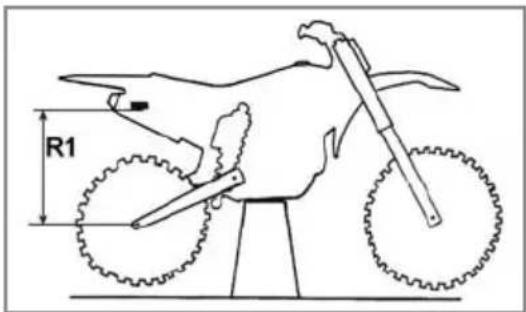
With the bike on an appropriate stand
Measure the dimension R1 between a fixed point on the chassis and the rear axle.
With the bike setting on its wheels
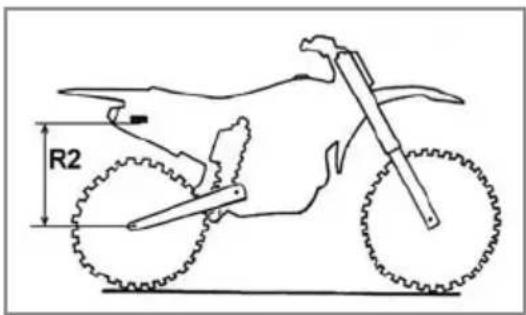
Measure the dimension R2 from the same fixed point on the chassis and the rear axle. The static deflection is the difference between R1-R2.
| Static deflection | 35mm-40mm |
If the static deflection is not correct, adjust the preload of the shock (p.119).
With the rider on the motorcycle
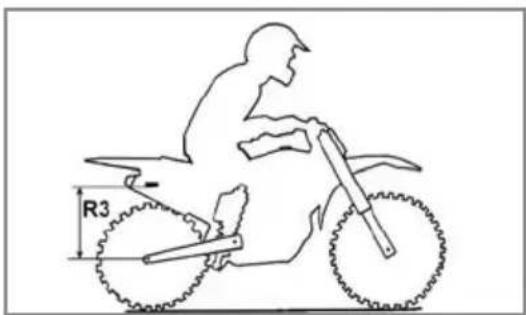
Measure the dimension R3 between the same fixed point on the chassis and the rear axle.
The sag is the difference between R1-R3.
| Sag | 95mm-100mm |
If the sag is not correct, change the spring (p.119).
REAR SHOCK KAYABA
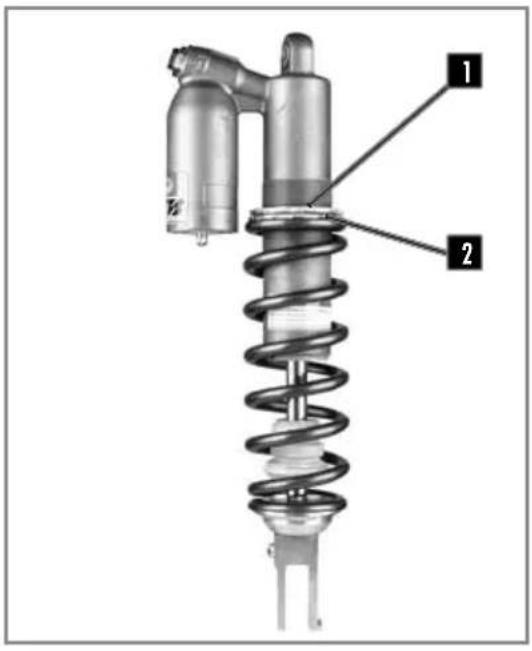
- Remove and clean the rear shock unit (p.128). Loosen the collar 1.
Loosen / tighten the red plastic ring 2 depending on the length required.
| Indications | Loosening one turn | Decreases the overall length by 4mm. |
| Tightening one turn | Increases the overall length by 4mm. |
- Tighten the collar 1.
- Reinstall the shock (p.128)
- Recheck the settings (p.118)
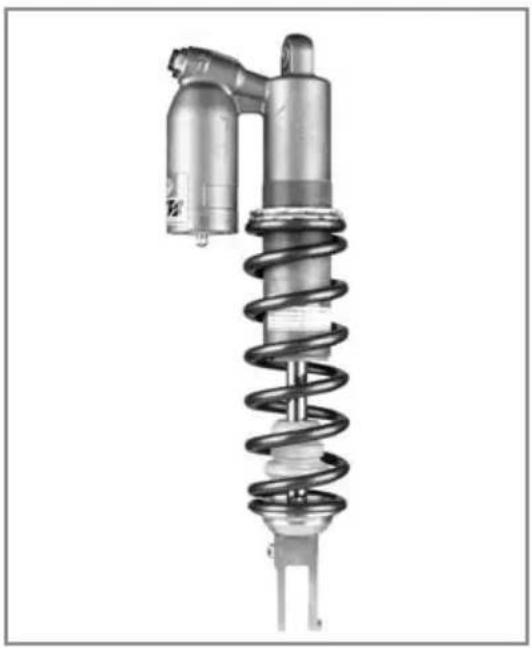
CHANGING THE SHOCK SPRING
natural_image
Mechanical component with coiled spring and cylindrical housing (no visible text or symbols)- Remove and clean the rear shock unit (p.128).
-
Select and install a spring based on your weight.
-
Reinstall the shock.
- Adjust the sag (p.118).
-- Adjust the riding sag (p.118).
| Spring Rate | KAYABA |
| Rider Weight (with equipment): 65-75kg | 44N/mm |
| Rider Weight (with equipment): 75-85kg | 46N/mm |
| Rider Weight (with equipment): 85-95kg | 48N/mm |
CHASSIS MAINTENANCE
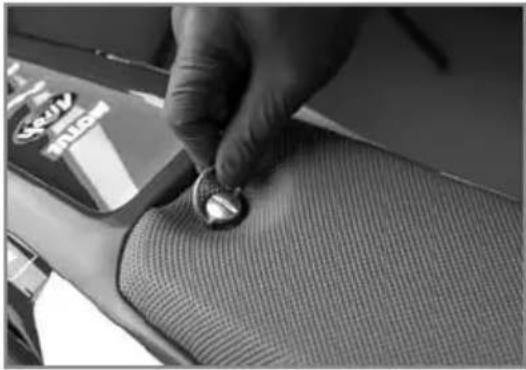
REMOVING THE SEAT
natural_image
Close-up of a hand adjusting a car seatbelt component (no visible text or symbols)Turn the Dzeus fastner 1 a quarter turn counterclockwise to release the saddle.
Remove the seat by pulling it towards the back of the bike.
REINSTALLING OF THE SEAT
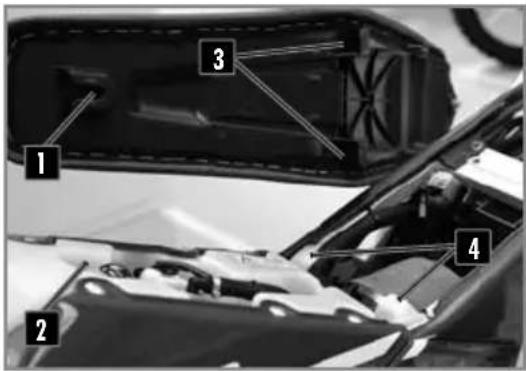
Install the saddle by sliding it forward, making sure that the slot 1 in the seat pan engages the post 2 in the reservoir. The three notches 3 in the saddle must pass through the tabs on the subframe 4 that are provided for this purpose.
Lock the Dzeus fastner by turning it a quarter turn clockwise.
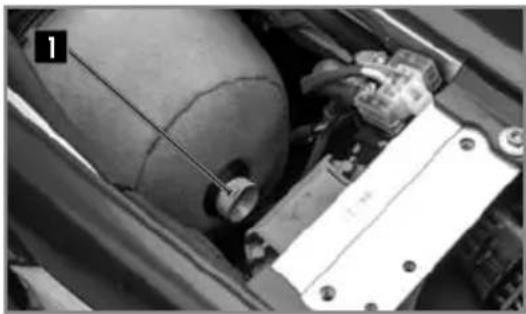
REMOVING THE AIR FILTER
natural_image
Close-up of a mechanical component with a tool inserted, showing internal structure and mounting bracket (no visible text or symbols)The air filter is vital for the smooth operation of your engine. Maintenance is therefore essential.
A dirty air filter reduces the performance of your bike, increases fuel consumption and, at worst, impurities can pass into the engine and cause premature wear.
natural_image
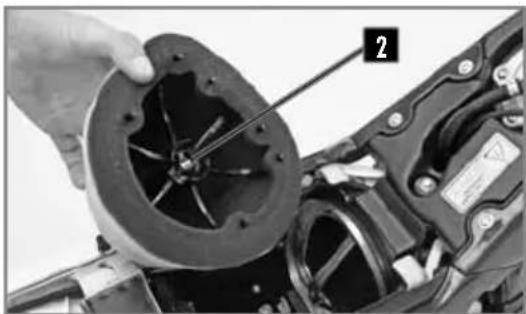
Close-up of a hand holding a mechanical component with a numbered label (2), no visible text or symbols on the main subject.Remove the seat.
Unscrew the thumb screw 1.
Remove the filter with the plastic carrier 2.
Separate the filter from its plastic holder.
CHASSIS MAINTENANCE
CLEANING THE AIR FILTER
Clean the foam air filter with a special liquid cleaner and let dry.
i INFO
Do not clean the air filter with a solvent or gasoline.
| Air filter cleaner | Motul® A1 Filter Clean |
i INFO
Do not wring out the filter by twisting. Press only. Soak the air filter in an air filter oil.
| Air Filter oil | Motul® A2 Air Filter Oil |
If necessary clean the inside of the air box with a cloth.
REINSTALLING THE AIR FILTER
natural_image
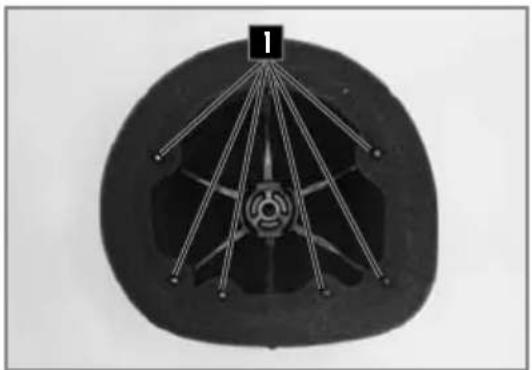
Top-down view of a black hat with radial metal lines and a central hub, no visible text or symbolsReposition the filter on its support.
Be sure to engage on all six tabs 1.
Apply a film of grease on the face of the filter element.
natural_image
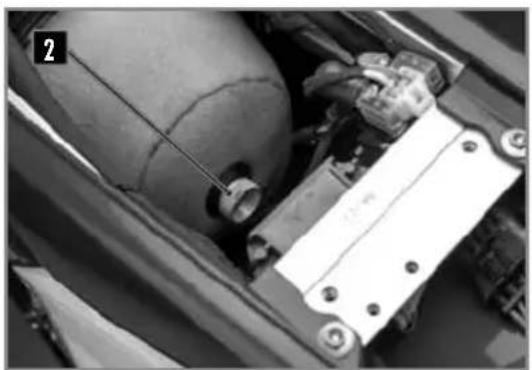
Close-up of a mechanical assembly with a cylindrical component and a rectangular housing (no visible text or symbols)Reinstall the filter and its support by taking special care to make sure it is centered.
Refit the knurled screws 2.
Check to make sure the air filter is properly seated.
Install the seat (p.120).
CHASSIS MAINTENANCE
REMOVING THE FUEL TANK
natural_image
Close-up of automotive engine components with hoses and wiring (no visible text or symbols)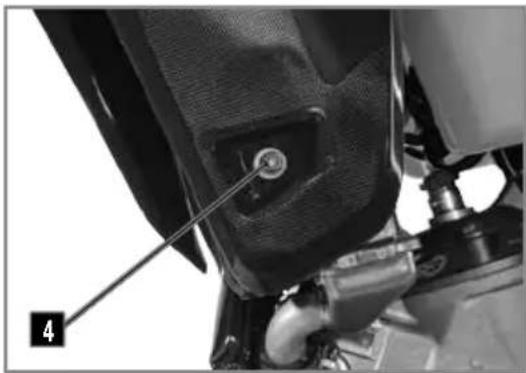
natural_image
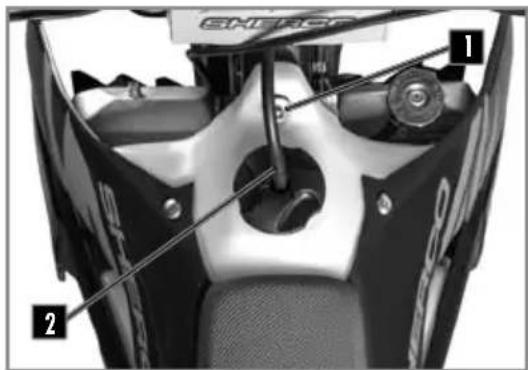
Close-up of a mechanical component with a tool inserted, showing no visible text or symbolsRemove the seat (p120).
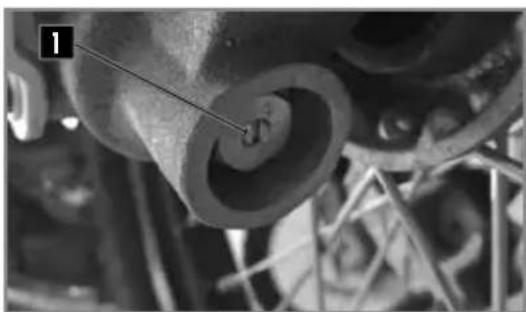
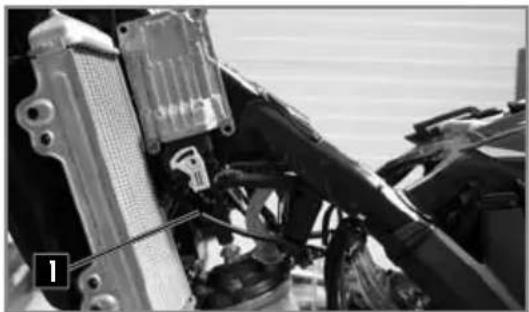
Unscrew the fuel tank fixing screws 1.
Remove the hose that attaches to the triple clamp 2.
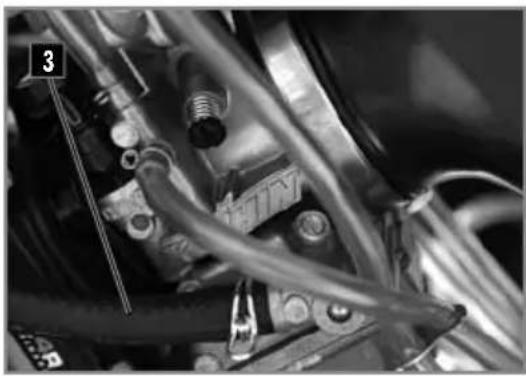
Disconnect the fuel hose 3 by removing the clamp and pulling the hose forward.
Prevent ingress of dirt in the gasoline fuel line.
This can lead to a seizure.
Unscrew the screws 4 on the right and left radiator panel.
Remove the fuel tank by pulling upwards, provide lateral clearance by slightly moving the radiator panelss. Use caution when removing the fuel tank and do not damage any of the fuel hoses or electrical connections.
CHASSIS MAINTENANCE
REINSTALLING THE FUEL TANK
natural_image
Close-up of a mechanical assembly with visible components and wiring (no text or symbols)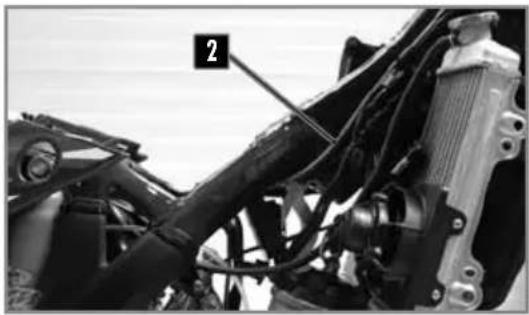
natural_image
Close-up of a mechanical assembly with visible components and a numbered label (2), no readable text or symbols present.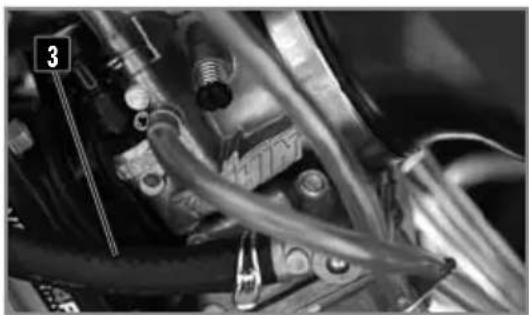
natural_image
Close-up of automotive engine components including hoses and sensors (no visible text or symbols)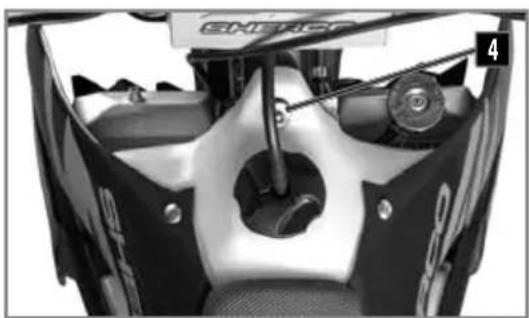
natural_image
Close-up of a motorcycle's front wheel and side seat assembly (no visible text or symbols)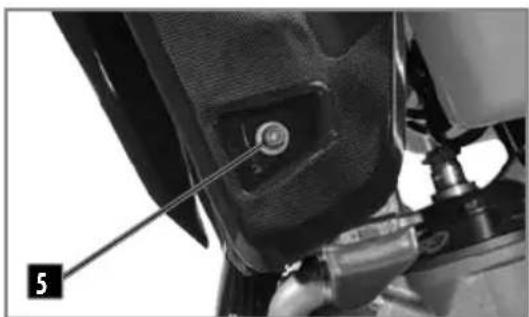
natural_image
Close-up of a mechanical assembly with a tool inserted, no visible text or symbolsReassembly of the fuel tank. Be sure to correctly position the throttle 1 and clutch cable 2.
Locate all of the fuel hoses / electrical connections under the fuel tank well.
Install the tank by moving the radiator guards away from the radiator to provide clearance for the fuel tank and make sure that all of the cables, wires and hoses are free, clear and not pinched. Check the adjustment of the radiator guards in relationship to the fuel tank.
Connect the fuel line 3.
Install the fuel tank mounting screws 4 along with their rubber inserts.
Install the radiator side panel screws 5.
Chassis screws M6 10Nm
Install the fuel vent hose.
Reinstall the seat (p.120).
CHASSIS MAINTENANCE
PURGING THE AIR FROM THE FORKS
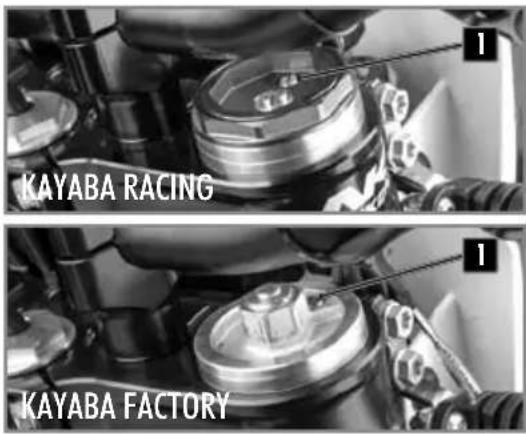
After some time of operation, the air accumulates under pressure in the fork.
Every 5 to 10 hours (depending on the riding intensity), it should be purged.
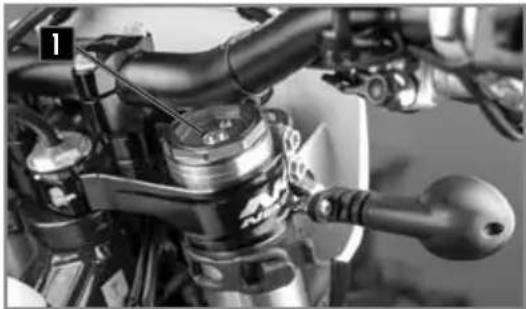
With the fork cold and fully extended, loosen and then retighten both fork screws caps 1.
CLEANING THE FORK DUST SEALS
natural_image
Close-up of laboratory glass pipettes with black caps and blue fittings (no visible text or symbols)Place the motorcycle on a suitable stand.
Remove the front wheel (p.129).
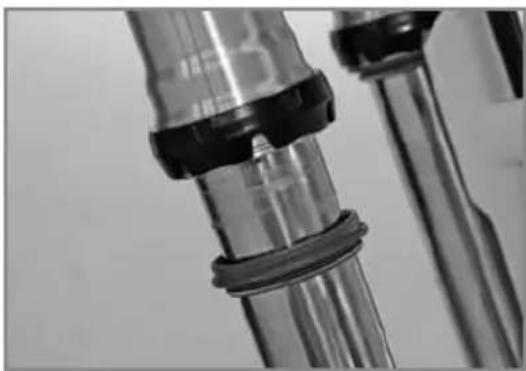
Remove the fork protectors. Slide the dust cover down.
Clean and lubricate the dust cover and the fork tube.
Universal lubricant Motul® P4 EZ Lub
Reinstall the dust cover and clean off any left over oil.
Reinstall the fork protection.
Reinstall the front wheel (p.129).
Take the bike off of the stand.
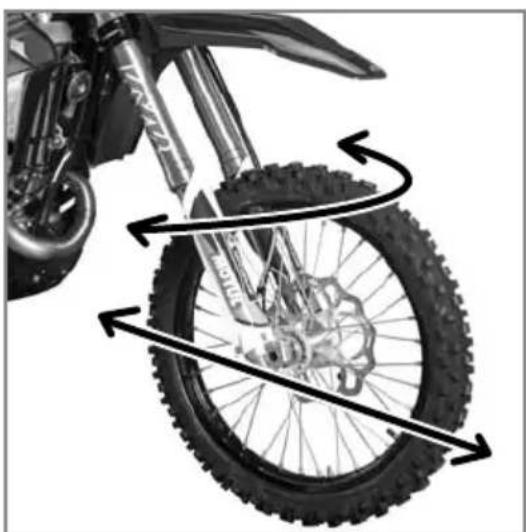
CHECKING THE PLAY OF THE STEERING HEAD BEARINGS
natural_image
Close-up of a motorcyclist's wheel and tire assembly with motion arrows indicating rotational direction (no text or symbols)Place the motorcycle on a suitable stand.
Exert a back and forth force on the fork legs.
There should not be any play in the bearings in any direction in the steering bearings.
If there is play and / or resistance, adjust and / or change the bearings.
Adjust the bearing free play (p.125).
Take the bike off of the stand.
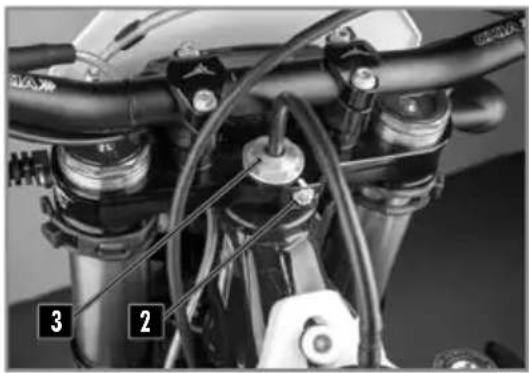
ADJUSTING THE STEERING HEAD BEARING PLAY
natural_image
Close-up of a motorcycle's front wheel and suspension system, showing hoses and wiring (no text or symbols visible)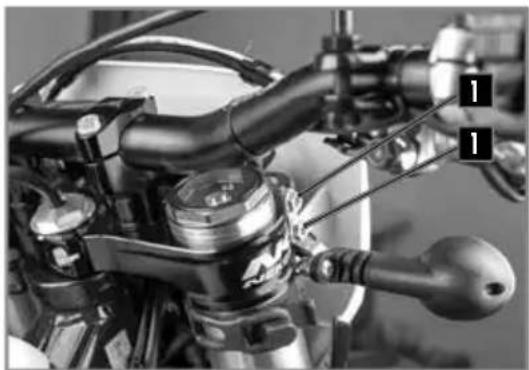
natural_image
Close-up of a motorcycle's front wheel and drivetrain components (no visible text or symbols)CLEANING THE CHAIN
natural_image
Diagram showing spray application on a chain with a spray gun, no text or symbols presentCHECKING THE CHAIN TENSION
Place the motorcycle on a suitable stand.
Loosen screws 1 and 2.
Loosen or tighten the nut 3 to adjust the steering bearing play.
| Steering nut | M20 | 30Nm |
Tighten the screws 1.
| Top triple clamp screws | M8x35 | 17Nm |
Tighten the screws 2.
| Top clamping screw | M8x30 | 17Nm | Loctite®243TM |
Check the play of the steering head bearings. (p.124). Remove the bike from the stand.

NOTE
The bearings should be greased at least once a year with a good quality grease.
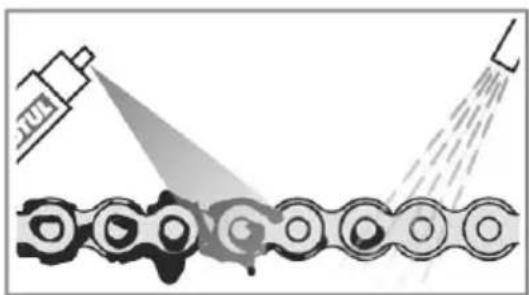
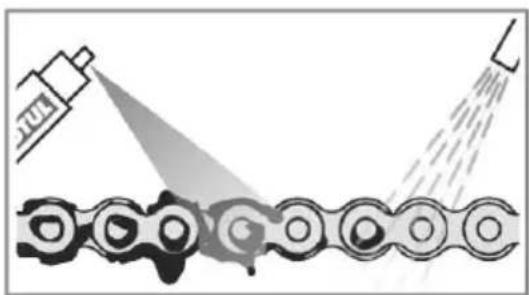
Regularly cleaning the chain considerably increases its service life.
Clean the chain and apply chain lubricant.
| Chain Cleaner | Motul ^ C1 Chain clean |
| Chain grease | Motul ^ C3 Chain Lub Off Road |
Place the motorcycle on a suitable stand.
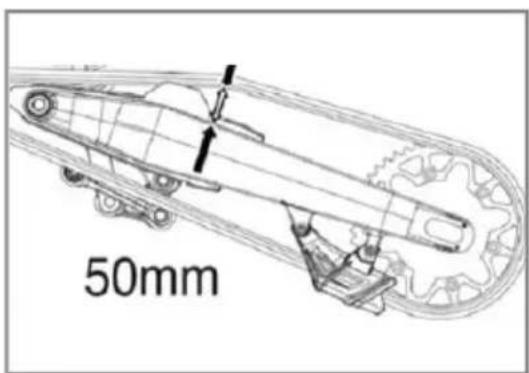
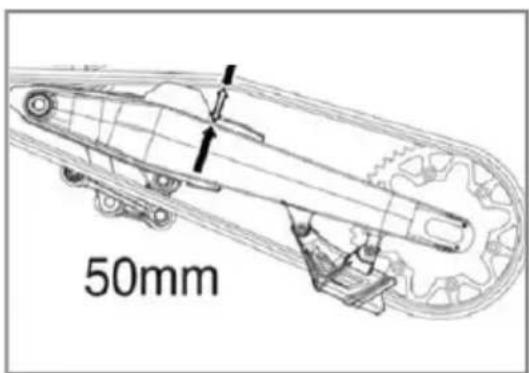
Push the chain up and measure the chain movement as shown in the diagram.
| Chain tension | 50mm...53mm |
If the chain tension is not correct, see how to adjust the chain (p.126).
Otherwise, remove the bike from the stand.
CHASSIS MAINTENANCE
ADJUSTING THE CHAIN TENSION
natural_image
Mechanical assembly diagram showing a gear and housing component (no text or symbols visible)Improper chain tension can cause mechanical damage.
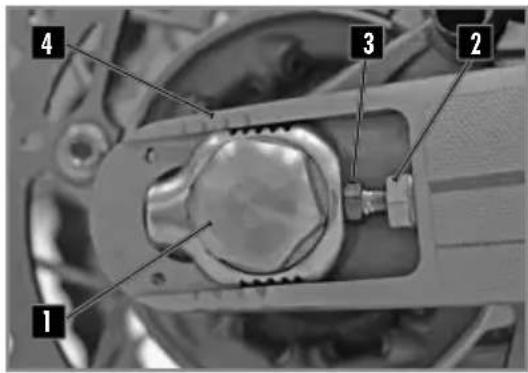
Place the motorcycle on a suitable stand.
Loosen nut 1.
Loosen the nuts 2.
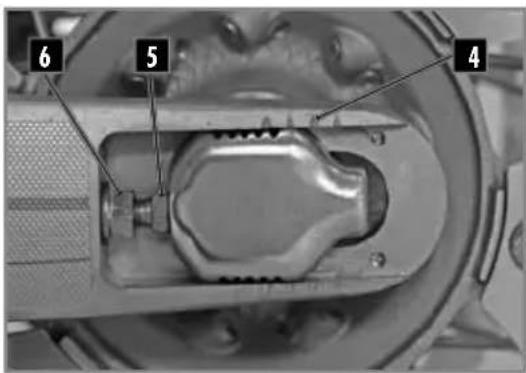
Loosen or tighten the screws 3 until you have the correct chain tension.
Chain tension 50mm...53mm
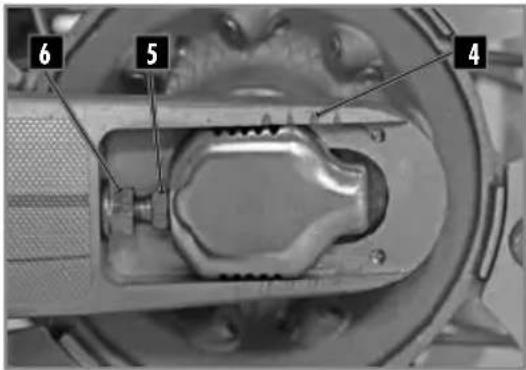
Monitor the symmetry of the two sides by observing the position of the marks 4.
Tighten the screws 5.
Tighten the nut 6.
Rear axle nut M24 100Nm
Remove the bike from the stand.

NOTE
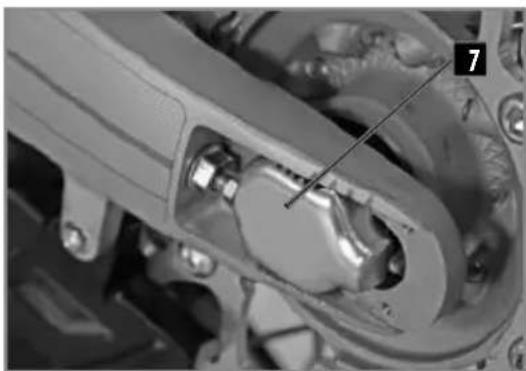
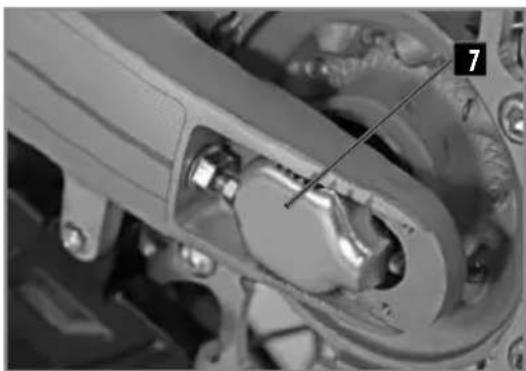
The sliding piece 7 is designed to accommodate longer chains by turning it 180 degrees.
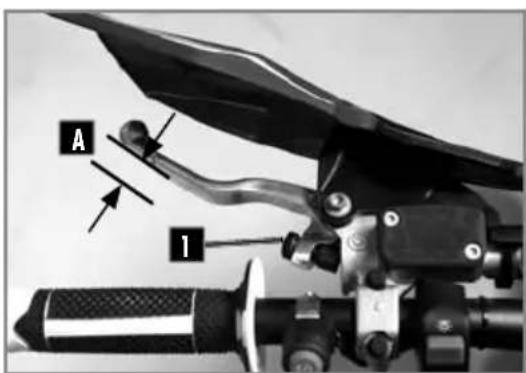
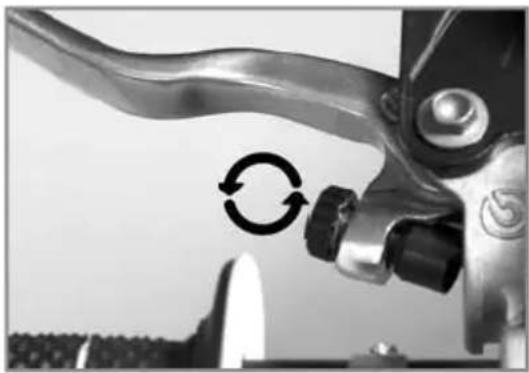
The position of the lever can be adjusted to meet the needs of the rider.
- Turn the knob 1 clockwise to move the lever closer to the handlebar.
CHASSIS MAINTENANCE
natural_image
Close-up of a mechanical lever handle with a circular arrow indicating refresh or cycle (no text or symbols)CHECKING THE CLUTCH FLUID LEVEL
- Turn the knob 1 in the opposite direction to move the lever away from the handlebar.
Clutch lever free play A ≥3mm

WARNING
- The hydraulic fluid is highly corrosive it can be dangerous to the skin.
- Read the recommendations on the container.
Position the master cylinder horizontally.
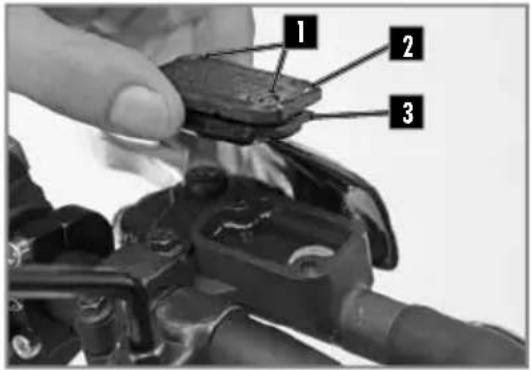
- Remove the two screws 1, the cover 2 and the membrane 3.
- Check the fluid level and fill if necessary.
Level of brake fluid below the top of the reservoir.
4mm
Motul® RBF 700 brake fluid DOT 4
- Reinstall the lid with the membrane and the screws.
REMOVING THE ENGINE PROTECTOR
natural_image
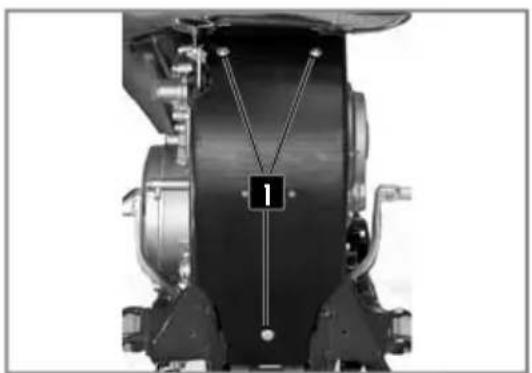
Mechanical component diagram showing internal structure with no visible text or symbolsRemove the screws 1 and remove the engine protector.
CHASSIS MAINTENANCE
REMOVING THE REAR SHOCK
REINSTALLING THE REAR SHOCK
natural_image
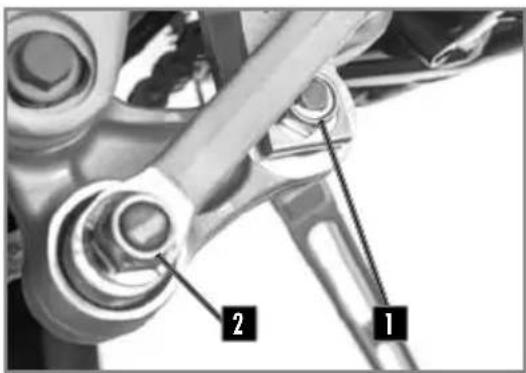
Close-up of mechanical components with numbered annotations (1 and 2), no readable text or symbols beyond labels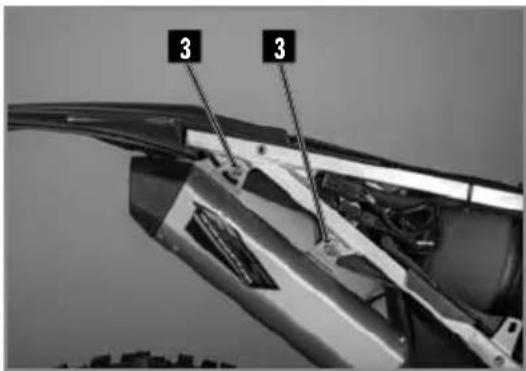
Place the motorcycle on a suitable stand.
Remove the right side plate.
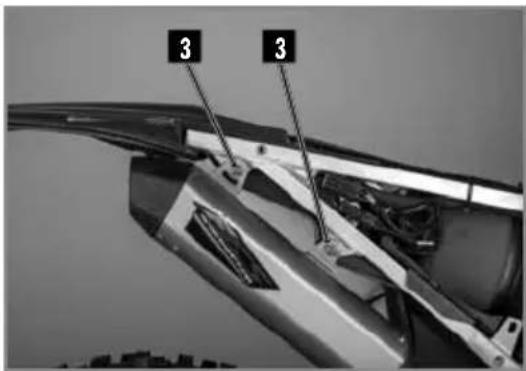
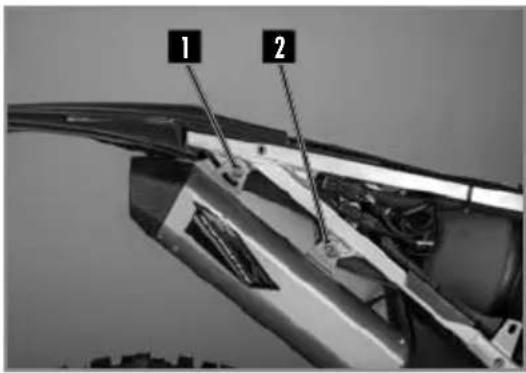
Remove the screws 1 and 2 and the muffler along.

ATTENTION
Do not remove the muffler after operating the motorcycle.
It can behot and there is a risk of being burned.
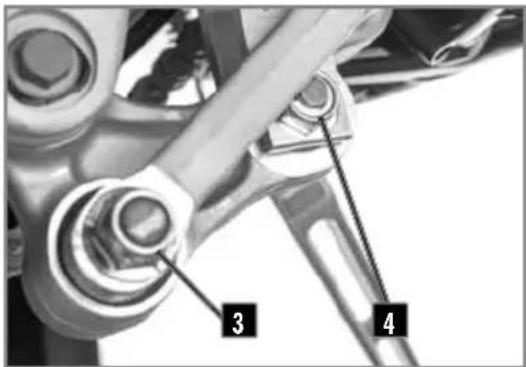
Remove the shaft 3.
Remove the screw 4.
Remove the top screw of the shock.
Remove the shock from the top.
Install the shock from the top.
Install the top screw and tighten.
| Upper shock screw | M10 | 50Nm | Loctite®2701 |
Position the rods and "H" link.
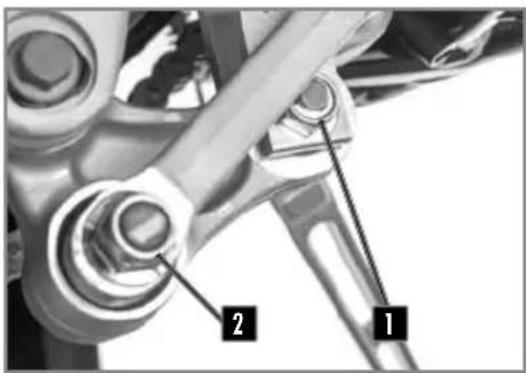
Install the lower shock screw 1 and tighten.
| Lower shock screw | M10 | 50Nm | Loctite®2701 |
Install the lower shock shaft 2 and tighten.
| Link axle | M12 | 60Nm |
Reassemble the exhaust, the 2 springs and the 2 bush.
Reassemble the rear silencer and tighten screws 3 using the nylock self-locking nuts.
| Chassis screws | M6 | 10Nm |
Install right side plate.
Remove the bike from the stand.
WHEELS, TIRES
REMOVING THE FRONT WHEEL
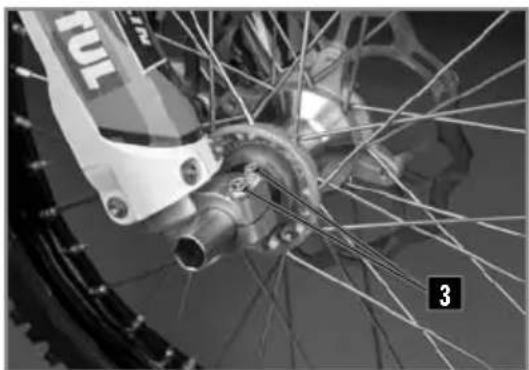
natural_image
Close-up of a bicycle wheel assembly with visible spokes and hub (no text or symbols)REINSTALLING THE FRONT WHEEL
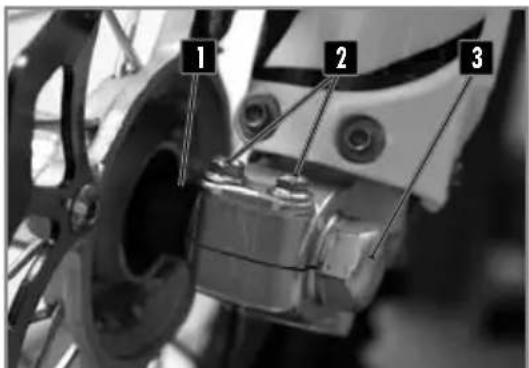
Place the motorcycle on a suitable stand.
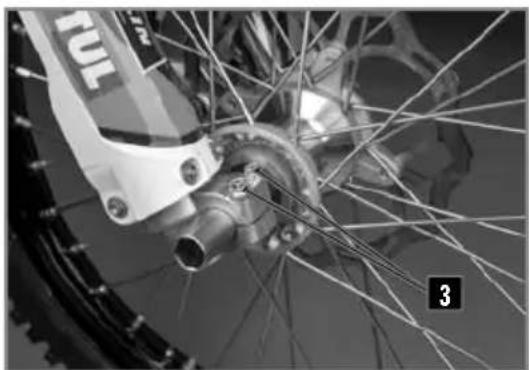
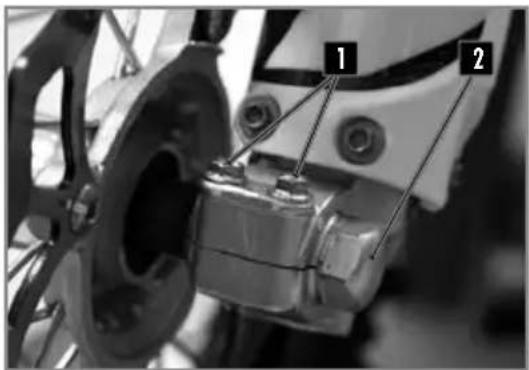
Remove the two screws 1 and the nut 2.
Loosen the two screws 3.
Pull the axle through the right side.
Remove the wheel from the fork.

WARNING
Do not operate the front brake lever when the front wheel is removed.
Check if the brake disc is not dirty or contaminated with oil or grease. If it is, clean the disc with brake cleaner.
Motul® P2 Brake CleanBrake clea
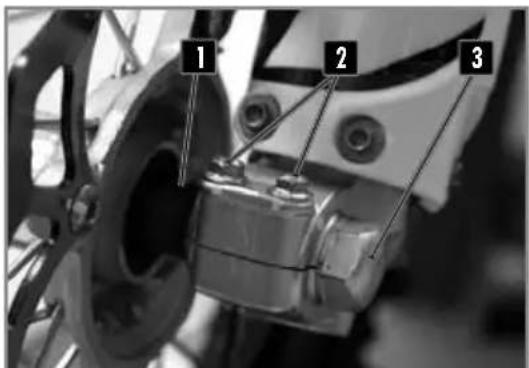
Install the spacer 1 on the left side of the wheel hub. Install the front wheel in the fork and install the axle (grease the axle prior to installation).
Tighten the screws 2.
| Fork screws | M8 | 20Nm |
Install and tighten the axle nut 3.
| Front wheel axle nut | M20 | 60Nm |
Tighten the screws on the right side of the bike.
| Fork leg screws | M8 | 20Nm |
Operate the front brake lever several times until the pads touch the disc. Remove the bike from the stand and push down on the fork several times.
WHEELS, TIRES
REMOVING THE REAR WHEEL
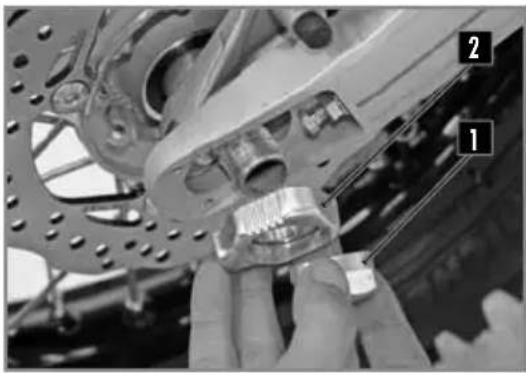
natural_image
Close-up of hands installing a mechanical component with numbered callouts (1 and 2), no visible text or symbols on the main subject.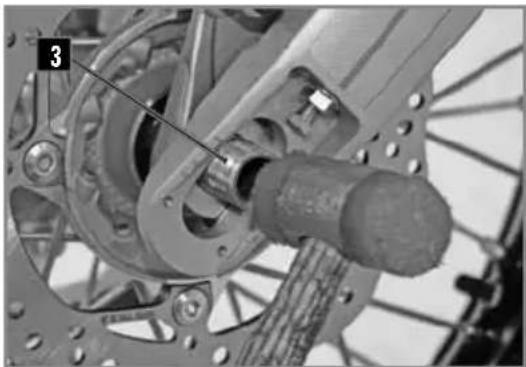
natural_image
Mechanical assembly diagram showing a motor and wheel components (no text or symbols visible)Place the motorcycle on a suitable stand.
- Unscrew the nut 1 and remove the adjuster 2.
- Tap the axle 3 out using a nylon hammer.
- Remove the axle.
- Move the wheel as far forward as possible.
- Remove the chain and wheel.
! WARNING
Do not operate the rear brake pedal when the rear wheel is removed.
REINSTALLING THE REAR WHEEL
natural_image
Close-up of a bicycle wheel with visible gear and hub, no text or symbols present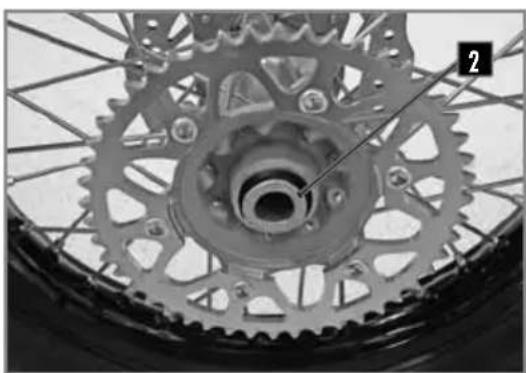
natural_image
Close-up of a bicycle wheel with visible teeth and central hub, no text or symbols presentCheck if the brake disc is not dirty or contaminated with oil or grease.
If it is, clean the disc with brake cleaner.
Motul® P2 Brake CleanBrake cleaner
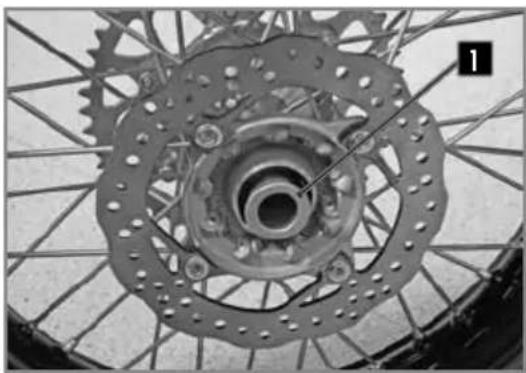
Install the two spacers 1 and 2 and make sure they are positioned correctly.
natural_image
Close-up of a bicycle's wheel and gear assembly, showing teeth and spokes (no text or symbols visible)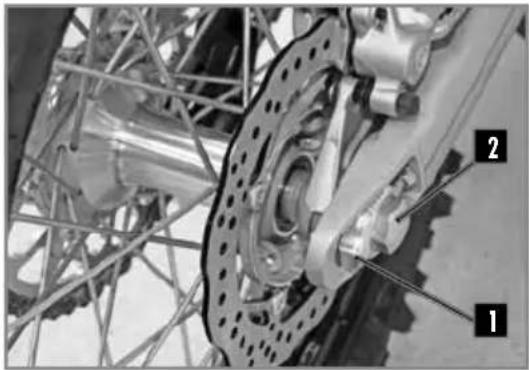
natural_image
Close-up of a bicycle wheel assembly with visible components and structural details (no text or symbols)CHECKING THE TIRE PRESSURE
natural_image
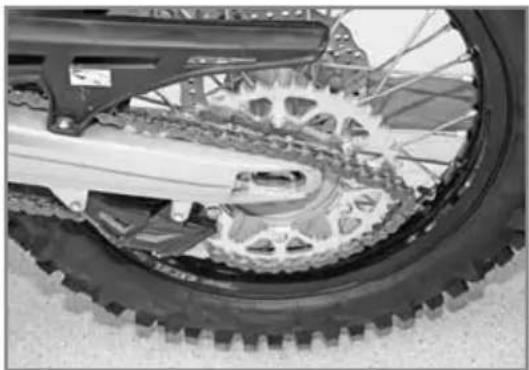
Close-up of a bicycle tire with a pressure gauge and cable, no visible text or symbolsInstall the rear wheel in the swing arm and install the axle (grease the axle prior to installation). Mount the chain.
Install the chain tensioner 1 and install the nut 2 but do not tighten.
Check the chain tension (☐ p.126).
Tighten the nut 2.
| Rear axle nut M24 100Nm |
Operate the rear brake pedal several times until the pads touch the disk.
Remove the bike from the stand.
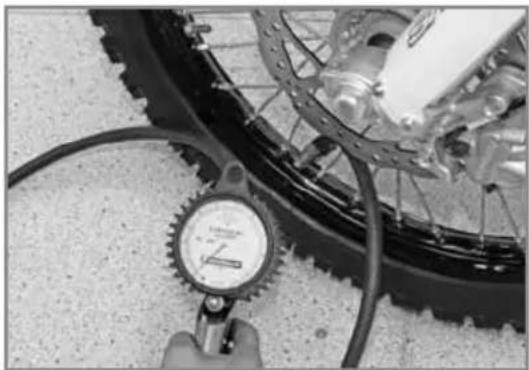
Regularly check the tire pressure with a precision pressure gauge.
- Remove the valve cap.
- Check air pressure when the tire is cold.
Tire air pressure when used in rough terrain.
| Front | 0,9bar (13 psi) |
| Rear | 0,9bar (13 psi) |
If the pressure does not comply with the above table:
- Correct the pressure.
- Replace the valve cap.
WHEELS, TIRES
CHECKING FOR WEAR AND DAMAGE
- Regularly check the depth of the tread.
Tread depth ≥3mm
If the depth is less than the value shown:
- Change the tire.
Check for cuts, cracks, nails, sharp objects and bulges on the tire.
If the tire is damaged:
- Change the tire.
CHECKING SPOKE TENSION
natural_image
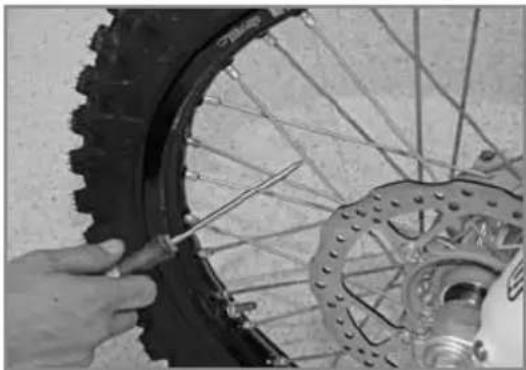
Close-up of hands using a screwdriver to adjust the wheel rim and disc (no text or symbols visible)Do not neglect the tension of the spokes.
WARNING
Proper tension ensures stability and secure riding.
- Check the spoke tension before and after each use of the bike, especially if the spokes are new or have been recently adjusted.
- Use a screwdriver to tap on each spoke.
The sound must be sharp. - If it is dull, take the bike to a Sherco dealer to get the spokes properly adjusted.
Indicative tightening torque 5 - 6 Nm
BRAKES
natural_image
Close-up of a bicycle brake lever with labeled component A (no text or symbols beyond label)Pull the lever toward the handlebar and check the free play A.
Free play of the front brake lever ≥3mm
If the free play does not meet the specification, do the following.
natural_image
Close-up of a bicycle brake lever mechanism with handle and grip (no text or symbols visible)Set the free play using the adjustment screw 1.
- Turn clockwise to decrease the free play.
- Turn it counterclockwise to increase the free play.
natural_image
Close-up of a small electronic device with a circular lens and black casing, partially covered by mechanical components (no visible text or symbols)Make sure that the reservoir is in a horizontal position. Check the fluid level through the sight glass.
Ensure that the level is (between the arrows) it should be closest to the up arrow.

If the level is below the MIN mark, top up the brake fluid according to the instructions below.
- The hydraulic fluid is highly corrosive.
- It can be dangerous to the skin.
- Read the recommendations on the container.
- Remove the two screws 1. Remove the cover 2 and the membrane 3. Fill the tank with brake fluid to the correct level A.
| Level of brake fluid below the top of the reservoir. | 5mm |
| Motul® RBF 700 brake fluid DOT4 | |
- Reinstall the membrane, the cover and the screws.
natural_image
Close-up mechanical assembly showing two labeled parts (1 and 2) with no visible text or symbolsThe position of the brake pedal can be adjusted as follows: loosen the lock nut 1 loosen or tighten the screw 2 to obtain the desired position.
Tighten the lock nut when the pedal is properly located.
Brake pedal lock nut 10NmM6
Check the pedal travel ( below).
CHECKING THE TRAVEL OF THE REAR BRAKE PEDAL
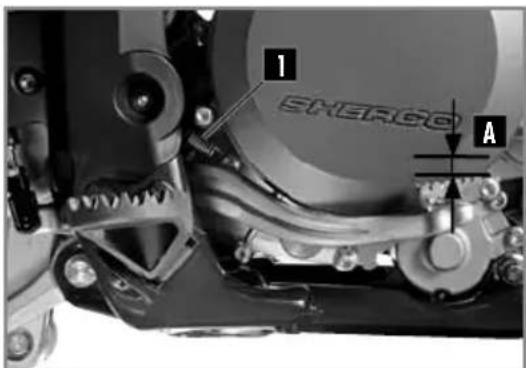
- Remove the spring 1.
- Operate the pedal several times.
Rear brake pedal travel ≥3mm A ≥5mm
- Replace the spring 1. If the travel does not meet the specification, refer to the rear brake travel adjustment.(p.135).
BRAKES
ADJUSTING THE TRAVEL OF THE REAR BRAKE PEDAL
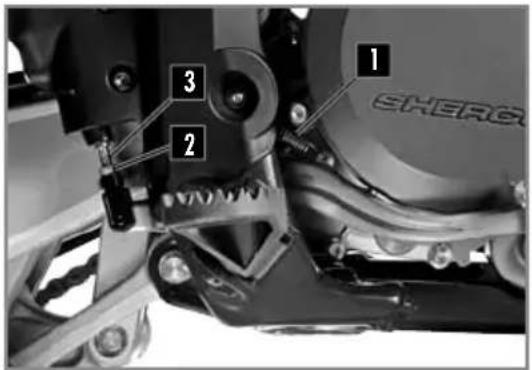
- Remove the spring 1. - Loosen the nut 2 and turn the shaft 3.
Rear brake pedal travel ≥3mm A ≥5mm
Hold the shaft 3 and tighten the nut 2.
Nut ? 10Nm
natural_image
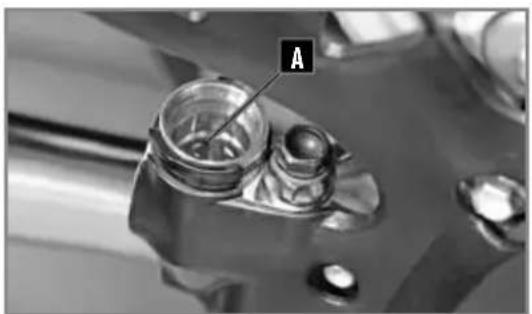
Close-up of a mechanical component with a central cylindrical feature and mounting holes (no visible text or symbols)Position the motorcycle on a flat surface. Check the fluid level through the sight glass. Ensure that the level (between the arrows) is closest to the up arrow.

If the level is below the MIN mark, top up the brake fluid according to the instructions below.
Remove the cap 1 with its membrane 2. Fill with fluid to the mark as shown A.
Motul® RBF 700 brake fluid DOT4
- Reinstall the membrane and the cover using a new O-ring.
natural_image
Close-up of a mechanical component with labeled part 'A' (no other text or symbols visible)BRAKES
REMOVING THE FRONT AND REAR BRAKE PADS
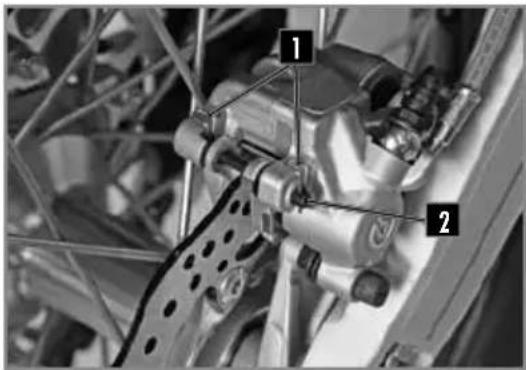
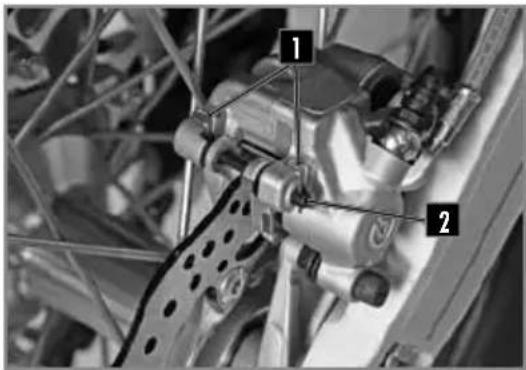
- Remove the clip 1 and retaining pin 2.
- Remove the brake pads.
Do not operate the front brake lever or rear brake pedal when the brake pads are removed.
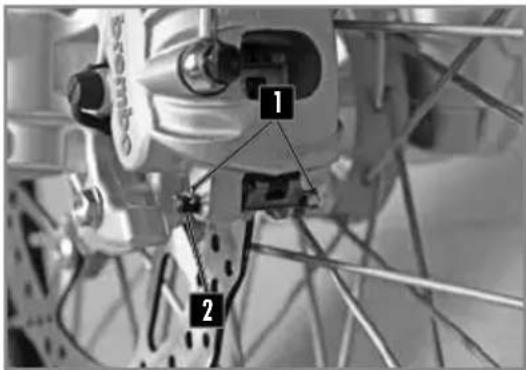
CHECKING THE CONDITION OF THE BRAKE PADS
natural_image
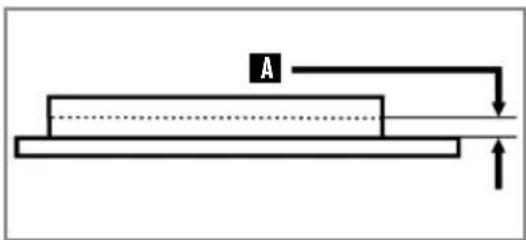
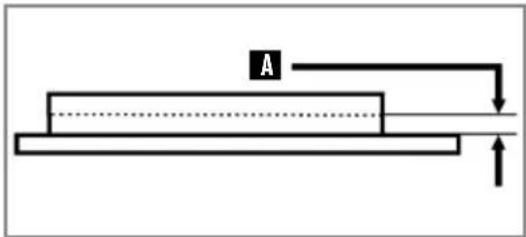
Simple line diagram of a rectangular object with an arrow labeled 'A' and a horizontal line, no text or symbols present.Check the pads for wear.
Minimum pad thickness A ≥1mm
If replacement is necessary, always change the pads in pairs.
REINSTALLING THE FRONT AND REAR BRAKE PADS
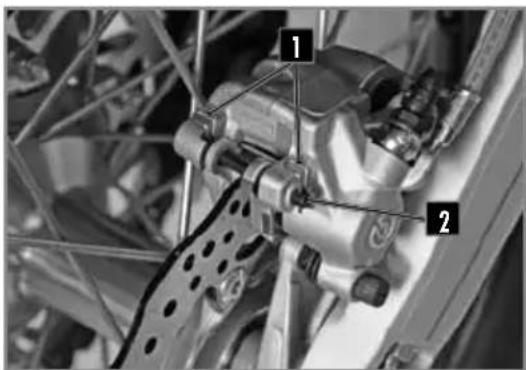
Check if the brake discs are not contaminated with oil or grease. In they are, clean the discs with brake cleaner.
Motul® P2 Brake CleanBrake cleaner
BRAKES
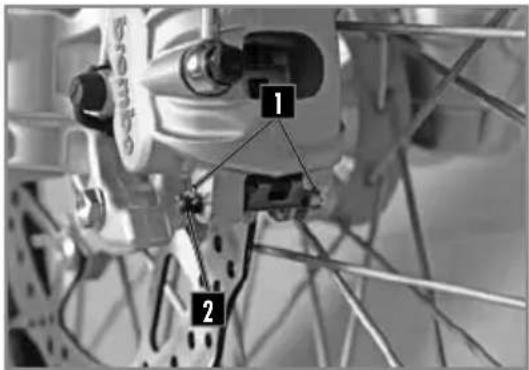
Install the new pads.
Reinstall the retaining pins 2 and clips 1.
Check the brake fluid level and fill if necessary (p.130 and p.131).
CAUTION
Do not use the bike until the brake lever and the pedal are operational. «Pump» the brake lever / brake pedal up and down until the brake pads are in contact with the discs.
Turn off all electric devices and stop the engine.
CAUTION
WAIT AT LEAST 30 SECONDES BIKE TURNED OFF AND STOPPED SO THAT THE KEYLESS SYSTEM TURNS OFF. IF THIS IS NOT DONE THERE IS A SIGNIFICANT RISK OF DAMAGE TO THE COMPUTER (ECU)
- Remove the seat (p.120).
- Remove the air filter (p.120).
The battery is located at the bottom of the filter housing.
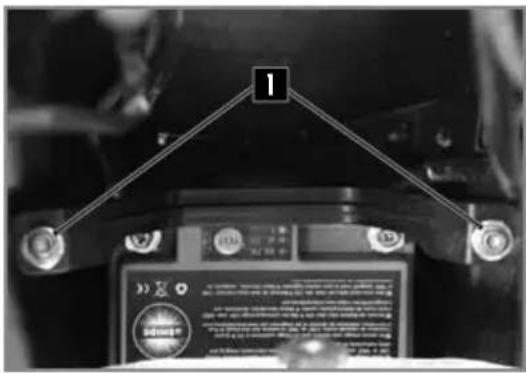
- Remove the two screws 1 that retain the battery retaining bracket.
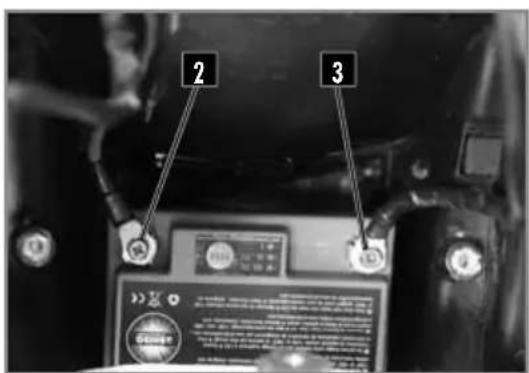
- Disconnect the negative cable from the battery 2.
- Disconnect the battery positive cable 3.
- Remove the battery from the top.
REINSTALLING THE BATTERY
CHARGING THE BATTERY
- Insert the battery into place.
- Connect the positive cable to the battery.
- Connect the negative cable to the battery.
- Install the battery retaining bracket and tighten the two screws ■.
Chassis screws 10NmM6
- Check the positioning of the battery cables to make sure that they do not interfere with the installation of the air filter.
- Replace the air filter (p.121).
- Replace the sea (p.120).
The battery is a maintenance-free type. If the vehicle is not used for an extended period, it is recommended that the battery be disconnected and stored in a dry place. See removing the battery (p.137).
Check the voltage of the battery with a voltmeter:
Battery voltage
12.5V
If the voltage is below the specification, remove the battery and recharge it using a battery charger.
Factory version need a specific lithium charger.
Battery charging (12V)
0.5 A for 10 hours or 5A for 30 minutes
Disconnect the charger after charging.
Install the battery ( above).
REPLACING THE MAIN FUSE
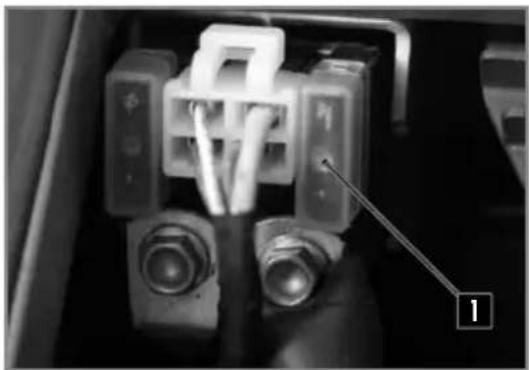
natural_image
Close-up of a mechanical connector with labeled parts, showing internal components and wiring (no readable text or symbols)REPLACING THE FUSE FOR THE LIGHTS
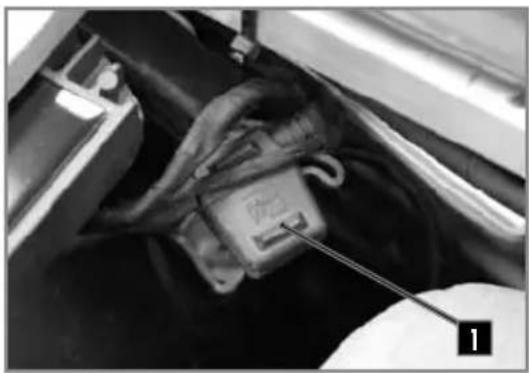
natural_image
Close-up of a car's seatbelt component being adjusted with a tool, no visible text or symbolsREMOVING THE HEADLIGHT HOUSING
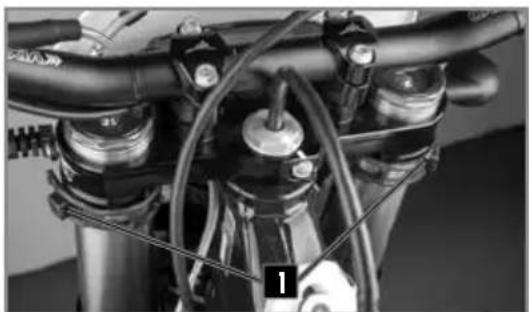
natural_image
Close-up of a mechanical assembly with hoses and connectors (no visible text or symbols)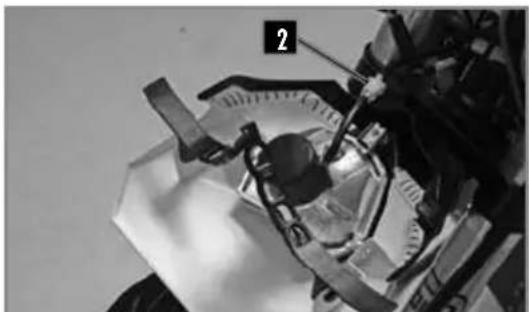
natural_image
Close-up of a mechanical device with visible components and a numbered label (2), no readable text or symbols present.Remove the seat (p.120).
The main fuse 1 is on a relay by the starter.
Remove the defective fuse and replace with a new fuse of the same value.
| Main fuse 30A | 30A |
Put a new spare fuse in the reserve location in the fuse box.
- Replace the seat (p.120).
Remove the seat (p.116).
The light fuse 1 is located in a high location on the wiring harness on the right side of the bike.
Remove the defective fuse and replace with a new fuse of the same value.
| Light fuse | 15A |
- Replace the seat (p.116).
Wait 30 second ignition to turn off.
Unclip the left and right rubber fastners 1 on each side of the fork.
Separate all of the brake hoses / cables from the meter bracket at the top and bottom.
Move the top plate up to clear the housing.
Disconnect the connector 2 and remove the headlight housing.
Connect the electrical connector.
Engage the light plate, ensuring that the holes in the plate 1 are in place 2.
Place all of the brake hoses / cables in the interior of meter upper guide 3.
Attach the rubber fastners.
Check the setting of headlight beam.(p.141).
REPLACING THE HEADLIGHT BULB OR THE PILOT LAMP
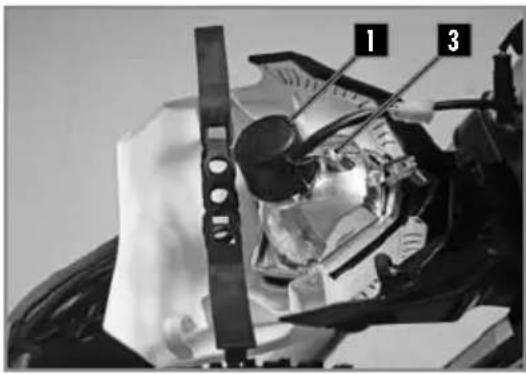
natural_image
Close-up of a mechanical device with labeled parts (1, 3), no readable text or symbols beyond labelsRemove the headlight housing assembly (p.139)
Remove the protective rubber 1.
Turn the socket a quarter turn counterclockwise to remove it from the headlight assembly.
Gently press the bulb in while turning it counterclockwise and remove it from the socket.
Install a new bulb 2.
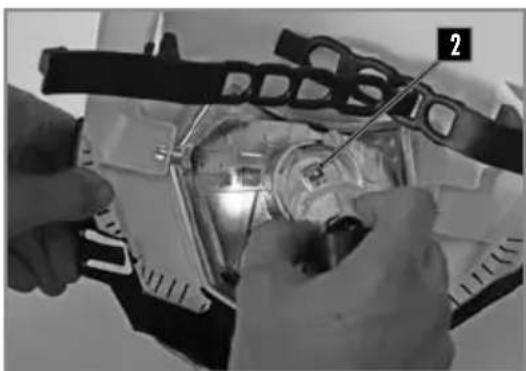
natural_image
Close-up of hands assembling a mechanical component with tools (no visible text or symbols)Headlight bulb S2 12V 35/35W
Reinstall the socket with the bulb in the headlight assembly by turning it in a clockwise direction.
Reinstall the protective rubber.
To replace the pilot light 1 simply remove the socket from the reflector 3.
Pilot light W5W 12V 5W
Reinstall the headlight housing assembly.
natural_image
Close-up of a robotic head with a transparent mechanical component, no visible text or symbolsThe headlight beam is adjusted with the motorcycle in a state of operation with its driver seated on the saddle.
To set the headlight beam, tighten or loosen the screw at the base of the headlight housing.
Tightening the screw 1 raises the headlight beam.
Loosening the screw 1 lowers the headlight beam.
REPLACING THE MOTORCYCLE COMPUTER BATTERY
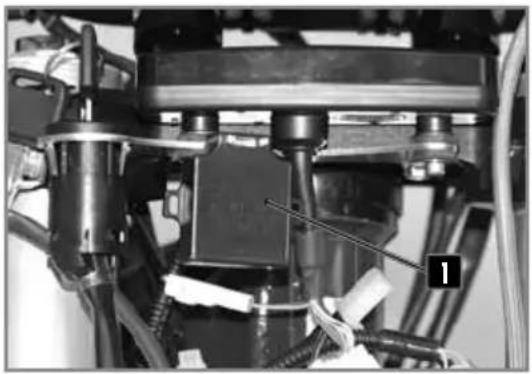
natural_image
Close-up of mechanical components with wires and a numbered label (1), no readable text or symbols present.- Remove the headlight housing (p.139).
- Remove the turn 1 signal flasher in order to access the motorcycle computer screws.
- Remove the screws 2 and remove the computer to get it out of the way.
- Disconnect the main connector from the computer.
- Open the dashbord with a coin.
- Install a new battery (with the marking up).
Computer battery CR 2032 3A
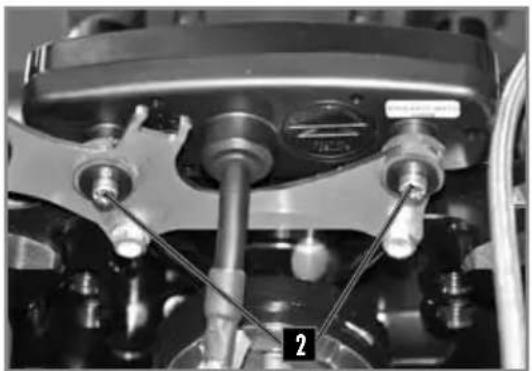
natural_image
Close-up mechanical assembly showing internal components and shafts (no visible text or symbols)- Replace the cover, taking care not to damage the O-ring.
- Plug the main connector into the computer.
- Install it on the bike and check to make sure the meter works.
- Reinstall the computer support.
- Install screws 2 and replace the turn signal flasher.
- Replace the headlight housing (p.140).
- Set the computer (p.99).
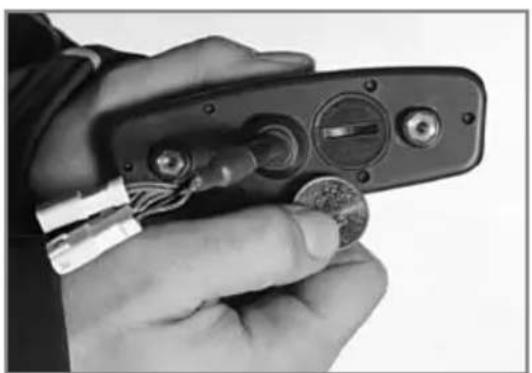
natural_image
Close-up of a hand holding a handheld electronic device with wires and a coin inserted (no visible text or symbols)WASHING AND STORAGE
WASHING THE BIKE STORING THE BIKE
SHERCO advises you to wash your bike as often as possible in order to maintain it in good working order and prolong its life.
- Cover the end of the exhaust silencer and the air filter (to cover the exhaust outlet use part number 8527, to cover the air intake use part number 4476).
- To degrease the engine, apply a degreaser, clean with a brush then rinse the engine with a water hose.
- Wash the rest of the vehicle with hot soapy water.
- Rinse with clear water.
- Dry with a chamois or a clean, soft cloth.
- Clean the chain and lubricate it with a special chain lube.
- When the cleaning is finished, remove the air filter and exhaust protection, Start the engine and let it run atidle for a few minutes.
Avoid using high pressure equipment which may cause water to leak into the bearings and fork seals and cause serious damage.
Use an average strength detergent rather than a strong detergent.
CAUTION
In order to avoid any water ingress, keep a minimal washing distance of 20cm.
Before storing the vehicle Long-Term (more than 2 months), follow these instructions:
- Wash the whole bike.
- Empty the fuel tank.
- Remove the spark plug and inject a protective spray inside the engine through the hole in the cylinder. Install the spark plug. Cycle the engine a few revolutions to apply a protective film on the cylinder walls.
- Remove the battery (p.133).
- Charge the battery (p.134).
- Lubricate all cables with a spray lubricant.
- Jack the motorcycle up so that the wheels are off the ground.
- Cover the exhaust outlet with a plastic bag to prevent moisture from entering.
- Spray a protective oil film on all unpainted metal surfaces of the motor and also on the electrical wiring.
- Cover the motorcycle with a cover.
RECOMMISSIONING AFTER STORAGE
Reinstall the battery (p.138).
Fill the fuel tank.
Perform lubrication and maintenance (p.143)
Perform a road test.
MAINTENANCE SCHEDULE
| MAINTENANCE | After 5 hours | Every 20 hours |
| ENGINE | ||
| Change gear box oil | ● | ● |
| Check the valves and booster system | ● | |
| Replace spark plug (after 50 hours) | ||
| CARBURATOR | ||
| Clean the carburator and emptying float chamber | ● | |
| ACCESSORIES | ||
| Check cooling system for leaks | ● | ● |
| Check sealing and attachment of the exhaust | ● | ● |
| Check status, flexibility and position of the cables, adjust and lubricate | ● | ● |
| Check oil level in clutch master cylinder | ● | ● |
| Clean air filter and housing | ● | ● |
| Check status and position of the electrical wiring | ● | ● |
| Check function of electric components (headlight/tail/stop turn signals, computer control unit, etc.) | ● | ● |
| BRAKES | ||
| Check brake fluid level, brake pad thickness and the brake discs | ● | ● |
| Check status and sealing of the brake lines | ● | |
| Check status, of the foot brake pedal and hand brake lever | ● | ● |
| Check tightness of brake system fastners and discs | ● | ● |
| CHASSIS | ||
| Check for leaks and function of fork and shock | ● | ● |
| Clean the dust covers | ● | ● |
| Purge air from the fork legs | ● | ● |
| Check general tightness of bolts and screws | ● | ● |
| Check / adjust steering head bearings | ● | ● |
| WHEELS | ||
| Check rims and spoke tension | ● | |
| Check condition of the tires and tire pressure | ● | ● |
| Check chain, sprockets, guides, chain tension | ● | ● |
| Lubricate the chain | ● | ● |
| Check wheel bearing clearance | ● | ● |
MAINTENANCE SCHEDULE
ANNUAL MAINTENANCE
| MAJOR MAINTENANCE ITEMS THAT SHOULD BE PERFORMED BY THE DEALER | Au moins 1X par an | |
| Fork | ● | |
| Shock | ● | |
| Clean and grease steering head bearings and seals | ● | |
| Replace fiberglass in the muffler | ● | |
| Treat electric contacts and switches with an aerosol protector | ● | |
| Replace the clutch hydraulic fluid | ● | |
| Replace the brake fluid | ● | |
| CHECKS AND MAJOR MAINTENANCE TO BE PERFORMED BY THE RIDER | Before each use | After each use |
| Check the engine oil level | ● | |
| Check brake fluid level | ● | |
| Check status of the brake pads | ● | |
| Verify operation of the lights | ● | |
| Verify operation of the horn | ● | |
| Lubricate throttle cable | ● | |
| Regularly purge the air from the fork legs | ● | |
| Regularly clean the fork dust seals | ● | |
| Clean and lubricate chain, check tension and adjust if necessary | ● | |
| Clean air filter and box | ● | |
| Check tires and tire pressure | ● | |
| Check the coolant level | ● | |
| Check fuel lines for leaks | ● | |
| Check status of all the controls | ● | |
| Check the brakes | ● | ● |
| Spray anti-corrosion protector on all non painted parts (except for the brake parts and the exhaust system) | ● | |
| Spray protector on electrical switches | ● | |
| Check tightness of nuts, screws and clamps | ● | |
! WARNING
Check the tightening of the screws of your bike after the first ride / the first hours of use.
In competition you have to perform the 20 hour maintenance schedule after each race!
This should not be exceeded by more than 2 hours.
The services performed by the Sherco dealer do not replace routine service and maintenance by the rider!
MAINTENANCE SCHEDULE
IMPORTANT CHECKS AND MAINTENANCE WORK TO BE CARRIED OUT BY A SHERCO WORKSHOP
| Competition use | At 10H | At 20H | At 40H | At 80H |
| Recreational user | At 20H | At 40H | At 80H | |
| Check the clutch disc wear | ● | ● | ● | |
| Check the length of the clutch springs | ● | ● | ● | |
| Check that the clutch nut is not loose | ● | ● | ||
| Check that the clutch housing is not loose | ● | ● | ||
| Check the wear of the cylinder and piston | ● | ● | ||
| Replace the piston | ● | ● | ||
| Check the good working of valves and boosters | ● | ● | ● | |
| Check the run-out at the end of the crankshaft | ● | ● | ||
| Check the condition of the connecting rod | ● | ● | ||
| Replace the contacting rod | ● | ● | ||
| Replace the crankshaft bearings | ● | ● | ||
| Replace the bearings and countershaft balancer | ● | ● | ||
| Check all of the gearbox components for wear | ● | ● | ||
| Check the reed valve petals | ● | ● | ||
| Replace fiberglass packing in the muffler | ● | ● | ● | ● |
TIGHTENING TORQUES
| TIGHTENING TORQUES CYCLE PART | Dimension | Value (Nm) | Thread |
| Emergency stop button screw | M3 | 3Nm | |
| Spoke nut | M4 | 5Nm | |
| Battery screw (Factory) | M4 | 7Nm | |
| Master cylinder cover screw | M4 | 7Nm | |
| Odometer screw | M4 | 5Nm | Blue |
| Rear light screw | M4 | 1Nm | Blue |
| Frame protection screw | M4 | 2Nm | |
| Other frame nuts | M4 | 5Nm | |
| Other frame screw | M4 | 5Nm | |
| Other frame nuts | M5 | 7Nm | |
| Other frame screw | M5 | 7nm | |
| Air filter support nut | M5 | 10Nm | |
| Kickstand return plate | M5 | 7Nm | Blue |
| Filter flap screw | M5 | 7Nm | Blue |
| Gas control screw | M5 | 10Nm | |
| Light switch screw | M5 | 7Nm | |
| Brake pedal end screw | M5 | 7Nm | Blue |
| Fork air bleed screw | M5 | 3Nm | |
| Regulator screw | M5 | 8Nm | Blue |
| Brake hose support screw | M5 | 7Nm | Blue |
| Hand protection support screw | M5 | 10Nm | |
| Expansion tank screw | M5 | 10Nm | Blue |
| Other frame nuts | M6 | 10Nm | |
| Other chassis screw | M6 | 10Nm | |
| Starter lug nut | M6 | 7Nm | |
| Battery screw (Racing) | M6 | 10Nm | |
| Odometer support screw | M6 | 10Nm | Blue |
| Front mudguard screw | M6 | 12Nm | Blue |
| Chain guide screw | M6 | 12Nm | Blue |
| Lower bashplate screw | M6 | 8Nm | Blue |
| Rear master cylinder screw | M6 | 8Nm | |
| Clutch master cylinder screw | M6 | 10Nm | |
| Front brake master cylinder scre | M6 | 10Nm | |
| Radiator side panel screw (tank) | M6 | 3Nm | |
| Chain guide pad screw | M6 | 8nm | Blue |
| Chain protection screw | M6 | 10Nm | |
| Fork protection screw | M6 | 8Nm | Blue |
| Chain sprocket protection screw | M6 | 12Nm | Blue |
| Brake pedal stop adjustment screw | M6 | 8Nm | |
| Brake pedal adjustment screw | M6 | 8Nm |
TIGHTENING TORQUES
| ENGINE TIGHTENING TORQUES | Dimension | Value (Nm) | Thread |
| Relay screw, starter relay lug | M6 | 6Nm | |
| Selector screw | M6 | 12Nm | Blue |
| Screw silent block exhaust | M6 | 10Nm | Blue |
| Mud flap support screw | M6 | 12Nm | Blue |
| Seat lock screw | M6 | 10Nm | Blue |
| Other frame nuts | M8 | 25Nm | |
| Other chassis screw | M8 | 25Nm | |
| Valve nut | M8 | 8Nm | |
| Gripster nut | M8 | 12Nm | |
| Upper sub frame nut | M8 | 25Nm | |
| Chain tensioner nut | M8 | 25Nm | |
| Handlebar clamp screw | M8 | 20Nm | Cooper grease |
| Sprocket screw | M8 | 30Nm | |
| Steering stop screw | M8 | 25Nm | Blue |
| Brake disc screw | M8 | 35Nm | Red |
| Front brake caliper screw | M8 | 25Nm | Cooper grease |
| Frame chain guide screw | M8 | 25Nm | Blue |
| Lower sub frame screw | M8 | 25Nm | Blue |
| Fork foot screw | M8 | 20Nm | Cooper grease |
| Steering column clamp screw | M8 | 25Nm | Cooper grease |
| Front caliper bleed screw | M8 | 10Nm | |
| Chain rollers screw | M8 | 25Nm | Blue |
| Cylinder head support screw | M8 | 25Nm | Blue |
| Lower triple clamp screw | M8 | 12Nm | Cooper grease |
| Upper triple clamp screw | M8 | 17Nm | Cooper grease |
| Other engine nuts | M10 | 40Nm | |
| Other engine screw | M10 | 40Nm | |
| Engine axle | M10 | 60Nm | |
| Shock absorber foot axle | M10 | 50Nm | |
| Upper shock absorber axle | M10 | 50Nm | |
| Kickstand nut | M10 | 25Nm | |
| Brake hose banjo bolt | M10 | 25Nm | |
| Brake pedal screw | M10 | 25Nm | |
| Handlebar support screw | M10 | 40Nm | Red |
| Delta link axle | M12 | 60Nm | |
| H link axel | M12 | 60Nm | |
| H-link-chassis axle | M12 | 60Nm | |
| Swing arm axle | M16 | 100Nm | |
| Front wheel axle nut | M20 | 60Nm | Cooper grease |
| Steering column nut screw | M20 | 30Nm |
TIGHTENING TORQUES
| Dimension | Value (Nm) | Thread | |
| Rear wheel nut | M24 | 100Nm | Grease |
| Hose guide screw | Parker | 2Nm | |
| Headlight switch screw (Racing) | Parker | 2nm | |
| Hand guard screw | Parker | 3Nm | |
| Mud flap support screw | Parker | 3Nm | |
| Fan screw | Auto-perforante | 3nm | |
| Clamp of tightening | 7Nm |
COUPLES DE SERRAGE
| ENGINE TIGHTENING TORQUES | Dimension | Value (Nm) | Thread |
| Other engine nuts | M4 | 5Nm | |
| Other engine screws | M4 | 5Nm | |
| Valve blocking screw | M4 | 5Nm | |
| Bearing lock plate screw | M5 | 8Nm | Blue |
| Electric starter screws | M5 | 7Nm | Grease |
| Engine speed sensor screw | M5 | 7Nm | Red |
| Expansion chamber cover screw | M5 | 7Nm | |
| Main valve cover screw | M5 | 7Nm | |
| Other engine nuts | M5 | 7Nm | |
| Other engine screw | M5 | 7Nm | |
| Stator screw | M5 | 7Nm | Red |
| Clutch housing screw | M6 | 10Nm | Grease |
| Clutch receiver cylinder screw | M6 | 10Nm | Grease |
| Clutch spring screw | M6 | 10Nm | |
| Coolant drain screw | M6 | 7Nm | Grease |
| Engine crankcase screw | M6 | 10Nm | Grease |
| Exhaust flange nut | M6 | 10Nm | |
| Ignition casing screw | M6 | 10Nm | Grease |
| Oil level control screw | M6 | 10Nm | |
| Other engine nuts | M6 | 10Nm | |
| Other engine screw | M6 | 10Nm | |
| Selection locking finger screw | M6 | 10Nm | Blue |
| Selection star screw | M6 | 10Nm | Blue |
| Water pump cover screw | M6 | 10Nm | Grease |
| Water pump turbine nut | M6 | 10Nm | Blue |
| Cylinder head screw | M8 | 1st pass 15Nm2nd pass a 25Nm | Grease |
| Other engine nuts | M8 | 25Nm | |
| Other engine screw | M8 | 25Nm | |
| Other engine nuts | M10 | 40Nm | |
| Other engine screw | M10 | 40Nm | |
| Cylinder stud | M10 | 20Nm | Blue |
| Top dead center sight plug | M10 | 10Nm | Grease |
| Ignition nut | M12 | 80Nm | Blue |
| Water temperature sensor | M12 | 20Nm | Yellow |
| Spark plug | M14 | 15Nm | Copper grease |
| Magnetic drain plug screw | M16 | 15Nm | Grease |
| Primary gear/crankshaft nut | M20 | 120Nm | Blue |
| Water connection | M20 | 15Nm | Yellow |
| Clutch basket nut | M22 | 100Nm | Blue |
| Ignition casing cap | M27 | 15Nm | Grease |
WARRANTY
WARRANTY
VEHICLE INFORMATION
VEHICLE:
VIN:
ENGINE N°:
CUSTOMER:
ADDRESS:
POSTAL CODE : COUNTRY:
DATE :
SELLER :
Dealer's stamp.
WARRANTY
WARRANTY TERMS
SHERCO MOTORCYCLES grants a contractual guarantee that can vary from one month to two years depending on the model. The duration of this will be indicated to you by your dealer in accordance with the warranty conditions.
The conditions and cover of this contractual guarantee are detailed below.
VEHICULE REGISTRATION:
On the day of delivery of the motorcycle, the dealer and the customer undertake to complete this booklet as well as the vehicle acceptance form. The vehicle must then be registered by the dealer on the dedicated website. No warranty will be accepted if the vehicle has not been registered.
In case of resale of the vehicle, the contractual guarantee is transferable to the new owner by means of this book.
OBTAINING SERVICES UNDER THE CONTRACTUAL WARRANTY:
Any questions regarding the warranty should be discussed directly with your dealer.
All warranty repairs should be performed by an authorized SHERCO dealer. When requesting warranty coverage, present this booklet to your dealer.
SHERCO MOTORCYCLES suggests contacting your dealer who sold the vehicle; however, all authorized SHERCO dealers can perform warranty repairs.
CONDITIONS FOR OBTAINING THE CONTRACTUAL WARRANTY
Any request for coverage under the contractual warranty is subject to compliance with the maintenance procedures and intervals detailed in this booklet and in the owner's manual. This duly completed booklet, as well as the invoices, are proof of vehicle maintenance.
The supporting documents (invoices) detailing the operations carried out will be essential to benefit from the contractual warranty granted by SHERCO MOTORCYCLES.
INFORMATIONS:
It is recommended that maintenance be carried out with an authorized SHERCO dealer because only he has the specific tools and technical information for proper maintenance.
The use of genuine SHERCO parts only will guarantee the validity of the contractual warranty
The recommended maintenance does not in any way exempt the user from performing certain daily checks (refer to the owner's manual). In the event of an anomaly, contact your dealer as soon as possible. It is the responsibility of the vehicle owner to take all precautions and measures to avoid further damage. Any indirect damage resulting from continued use of the vehicle after a problem has been identified will not be covered by the contractual warranty.
CONTRACTUAL WARRANTY COVERAGE
Excluded from the warranty are all round-trip transport costs to the dealership, accommodation or meals costs, breakdown assistance or delivery costs and loss of use of the vehicle.
This warranty does not cover accidental damage, natural disasters, fires, nor does it cover any other cause which is beyond the control of SHERCO MOTORCYCLES.
Will not be covered by the contractual guarantee, any damage resulting from modifications which would have to increase the engine power, poor lubrication due to incorrect carburetion settings, fitting of a part or accessory not sold by SHERCO MOTORCYCLES, Use lubricants or fluids not recommended by SHERCO MOTORCYCLES and failure to follow periodic and daily maintenance procedures.
Not covered by the contractual warranty, maintenance and upkeep work, replacement of wearing parts, aesthetic phenomena that do not affect the proper functioning of the vehicle, surface imperfections related to external constraints (heat, cold ...) And with aging, vibrations and noises linked to the operation of the vehicle, the replacement of parts in the context of design changes.
WARRANTY
LIMITATION OF WARRANTY AND REMEDIES:
The warranty does not provide cover for consumer products, wear parts, products in contact with friction surfaces, or exposed to the elements. SHERCO MOTORCYCLES assumes no liability towards anyone for direct or indirect damage of any kind whatsoever covered by any other warranty, express or implied or resulting from any other contract, negligence or abuse of any kind.
CONTROL AND MAINTENANCE
Mandatory minimum annual check
To ensure safe driving and allow you to fully enjoy your motorcycle, a minimum annual check must be carried out (refer to the owner's manual).
Frequency of maintenance
The frequency of maintenance has been defined according to average use. For vehicles subjected to extreme driving, maintenance should be carried out more frequently.
Extreme driving definition
- Prolonged use at high speed
- Prolonged use at low speed
- Use in cold weather
- Use in dusty or saline environment
Please present this log at every service so that the dealer can stamp it and provide service information.
WARRANTY
Date:
KM / Hours:
Dealer stamp & signature.
The image contains no text or characters. It is a graphical element (a blank rectangle) and contains no OCR-able content. Therefore, the correct OCR output is an empty string.
Sherconetwork® maintenance registration number. - www.sherconetwork.com
Maintenance carried out:
NEXT MAINTENANCE:
Date:
KM / Hours:
Dealer stamp & signature.
Sherconetwork® maintenance registration number. - www.sherconetwork.com
Maintenance carried out:
NEXT MAINTENANCE:
WARRANTY
Date:
KM / Hours:
Dealer stamp & signature.
The image contains no text or characters. It is a graphical element (a blank rectangle) and does not contain any legible content. Therefore, the correct OCR output is an empty string.
Sherconetwork® maintenance registration number. - www.sherconetwork.com
Maintenance carried out:
NEXT MAINTENANCE:
WARRANTY
Date:
KM / Hours:
Dealer stamp & signature.
Sherconetwork® maintenance registration number. - www.sherconetwork.com
Maintenance carried out:
NEXT MAINTENANCE:
WARRANTY
Date:
KM / Hours:
Dealer stamp & signature.
The image contains no text or characters. It is a graphical element (a blank rectangle) and does not contain any legible content. Therefore, the correct OCR output is an empty string.
Sherconetwork® maintenance registration number. - www.sherconetwork.com
Maintenance carried out:
NEXT MAINTENANCE:
WARRANTY
Date:
KM / Hours:
Dealer stamp & signature.
Sherconetwork® maintenance registration number. - www.sherconetwork.com
Maintenance carried out:
NEXT MAINTENANCE:
NOTES
ÍNDICE
FRANÇAIS p. 4
■ ENGLISH p. 84
■ ESPAÑOL p. 164
DEUTSCH s. 244

natural_image
Close-up of a mechanical component with blurred background (no visible text or symbols)natural_image
Close-up of a mechanical lever handle and grip assembly (no visible text or symbols)Interruptor luz on/off
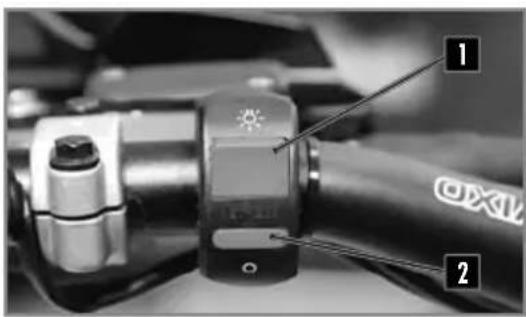
Velocímetro
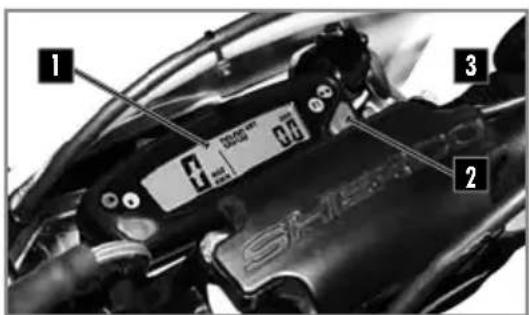
Contacto de llave
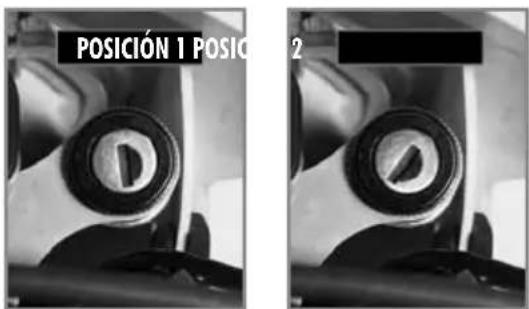
natural_image
Close-up of a mechanical valve component with a dial indicator and labeled pin (1), no readable text or symbols beyond the number.natural_image
Close-up of a mechanical assembly with a circular component labeled 'SHERGOL' and a numbered marker '1' (no readable text beyond label)natural_image
Close-up of a mechanical assembly with visible gears and chains, no readable text or symbolsFig 1 Función SPD
Fig 3 Función AVG
Fig 9 Función Hora
natural_image
Close-up of a motorcycle's front wheel and suspension system (no visible text or symbols)natural_image
Close-up of a hand adjusting a motorcycle engine component, no visible text or symbols on the device itself.natural_image
Close-up of a mechanical assembly with a labeled component (number 1) and no visible text or symbols.natural_image
Close-up of a mechanical assembly with hoses and components (no visible text or symbols)natural_image
Close-up of a hand using a tool to adjust or install a car body component (no visible text or symbols)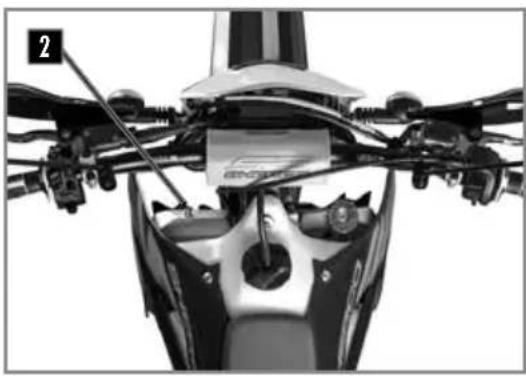
natural_image
Top-down view of a motorcycle's front wheel and side-mounted sensors (no visible text or symbols)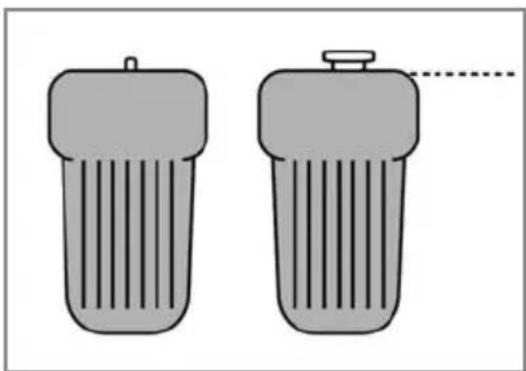
natural_image
Two gray cylindrical containers with vertical stripes, one with a small top and the other with a dashed line extending from its side (no text or symbols)Moto horizontal
! ATENCIÓN
natural_image
Close-up of a white motorcycle's side panel showing key points and components (no text or symbols visible)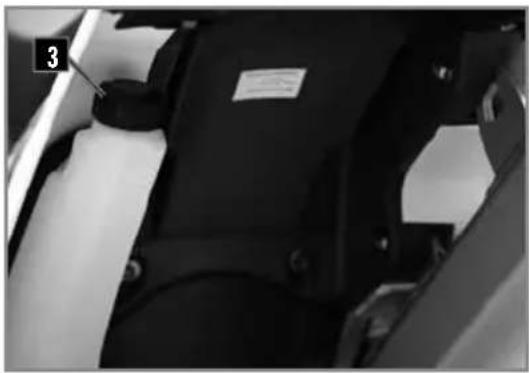
natural_image
Close-up of a mechanical component with a label and numbered marker (no readable text or symbols)natural_image
Close-up of a hand adjusting a mechanical component with a tool, no visible text or symbols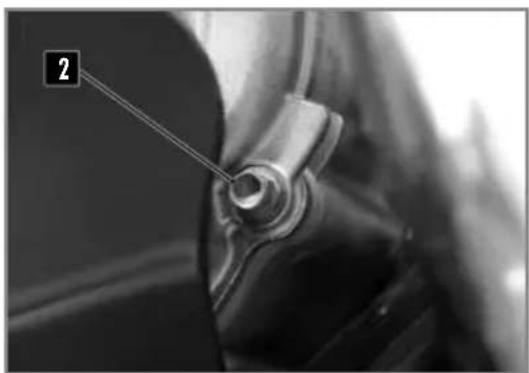
natural_image
Close-up of a mechanical component with a labeled section '2' (no visible text or symbols beyond the label)! ATENCIÓN
natural_image
Close-up of a mechanical component with a labeled section '2' (no readable text or symbols beyond label)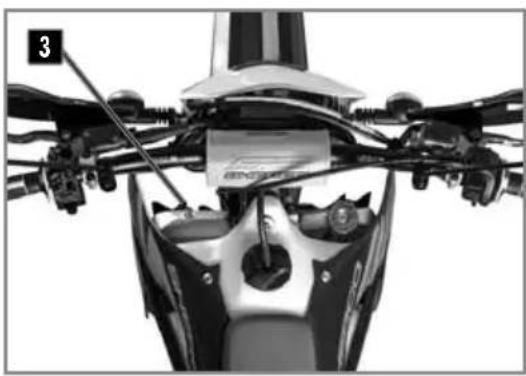
natural_image
Top-down view of a motorcycle's front wheel and side-mounted sensors (no visible text or symbols)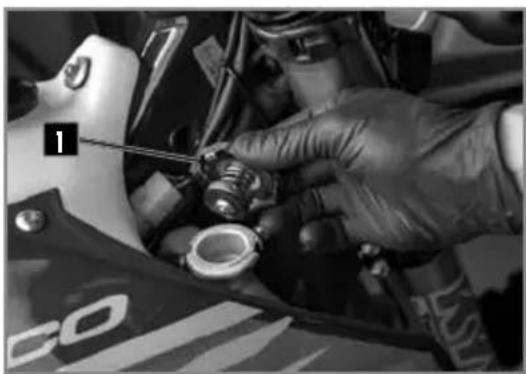
natural_image
Close-up of a hand adjusting a mechanical component with a tool, no visible text or symbolsnatural_image
Close-up of a bicycle brake lever handle and grip assembly (no text or symbols visible)natural_image
Close-up of a mechanical component with a labeled connector (no visible text or symbols)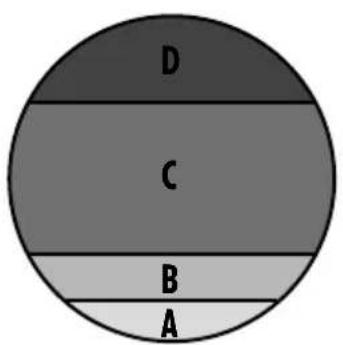
natural_image
Close-up of a mechanical component with internal gears and mounting holes (no visible text or symbols)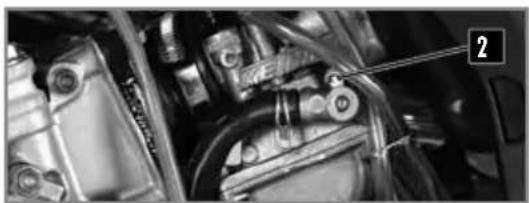
natural_image
Close-up of internal mechanical components with no visible text or symbols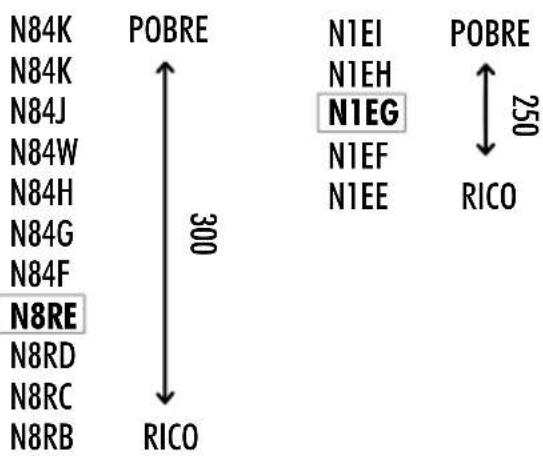
other
| Category | Value | | -------- | ----- | | POBRE | 300 | | RICO | 250 |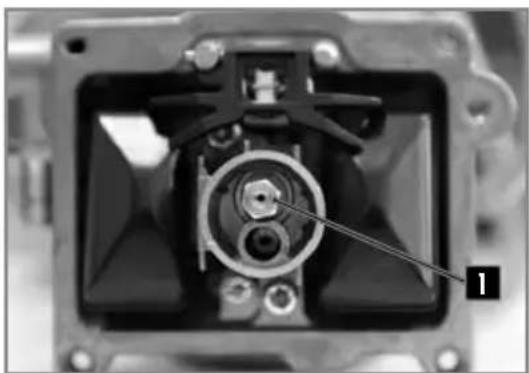
natural_image
Close-up of a mechanical component with a labeled part (1), showing internal structure and mounting holes (no text or symbols visible)natural_image
Mechanical gear assembly with meshing gears and a highlighted shaft (no visible text or symbols)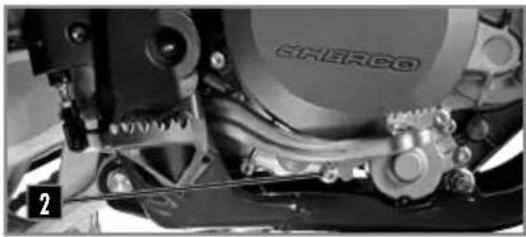
natural_image
Close-up of a mechanical assembly with visible gears and components (no readable text or symbols)LLENADO ACEITE CAMBIO
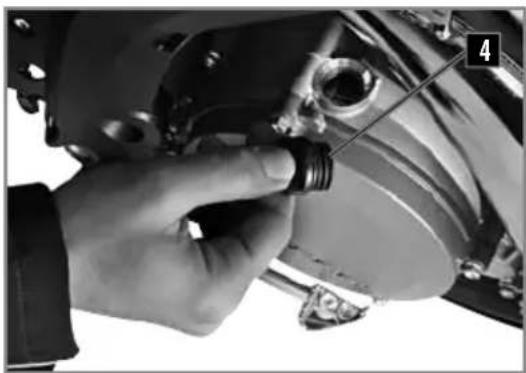
natural_image
Close-up of a hand adjusting a mechanical component with a numbered annotation (4) on the side, no visible text or symbols.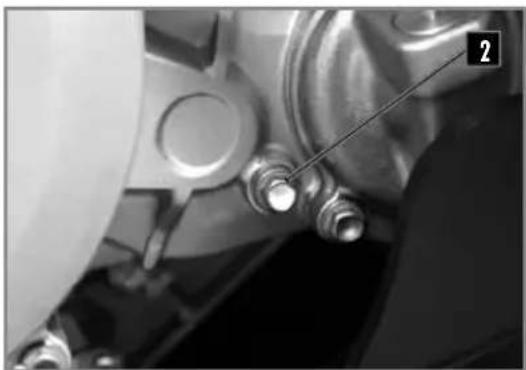
natural_image
Close-up of mechanical components with a tool inserted, no visible text or symbolsnatural_image
Close-up of a motorcycle seatbelt with visible mechanical components and a numbered label (1) pointing to the side.natural_image
Technical illustration of mechanical components with exploded view and assembly detail (no text or symbols)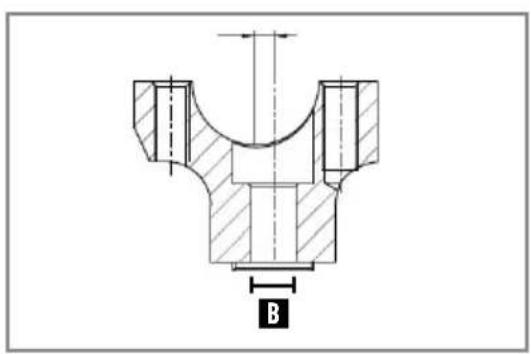
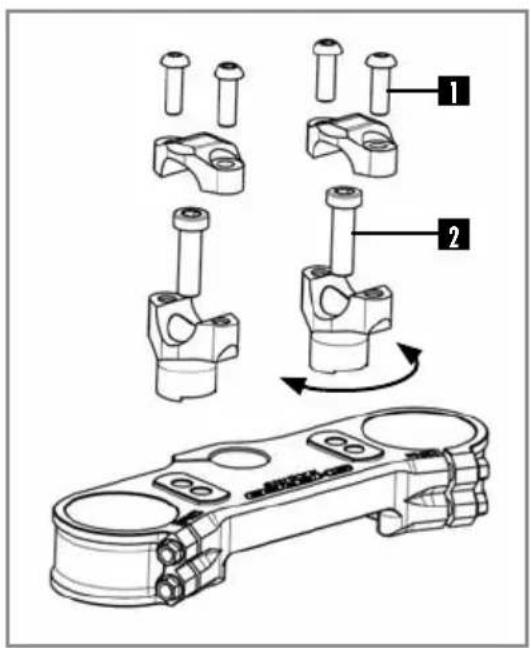
| Handlebar clamps fixing screws | M8x25 | 25Nm |
natural_image
Close-up of mechanical components with numbered annotations (1 and 2) pointing to specific parts, no readable text or symbols present.natural_image
Close-up of a motorcycle's front wheel and side-mounted lever (no visible text or symbols)KAYABA RACING
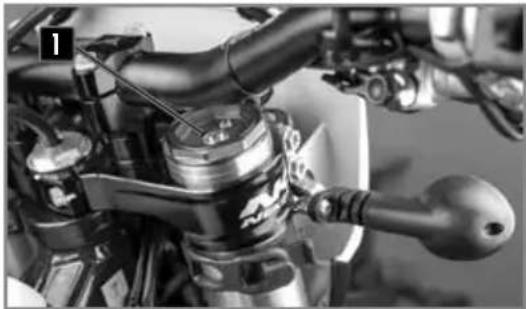
natural_image
Close-up of a motorcycle's head and front wheel assembly (no visible text or symbols)KAYABA FACTORY
natural_image
Close-up of a mechanical assembly with visible gears and springs (no text or symbols)KAYABA RACING
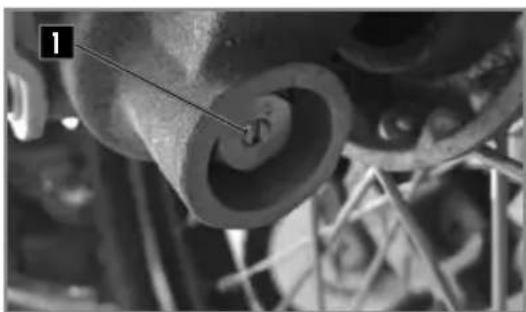
natural_image
Close-up of mechanical components with no visible text or symbolsKAYABA FACTORY
natural_image
Close-up of a motorcycle's engine compartment showing keyway and brake calipers (no visible text or symbols)KAYABA
natural_image
Close-up of mechanical components with no visible text or symbolsnatural_image
Mechanical assembly of a vertical spring with two cylindrical components (no visible text or symbols)natural_image
Close-up of a hand adjusting a car seatbelt component (no visible text or symbols)natural_image
Close-up of a mechanical component with a cylindrical part inserted, showing internal wiring and mounting brackets (no visible text or symbols)natural_image
Close-up of a hand holding a mechanical component with a numbered label (2), no visible text or symbols on the main subject.natural_image
Top-down view of a black hat with a starburst pattern and a numbered label '1' at the top (no text or symbols on the hat itself)natural_image
Close-up of mechanical components with a cylindrical part inserted, showing wiring and mounting brackets (no visible text or symbols)natural_image
Close-up of automotive engine components with hoses and wiring (no visible text or symbols)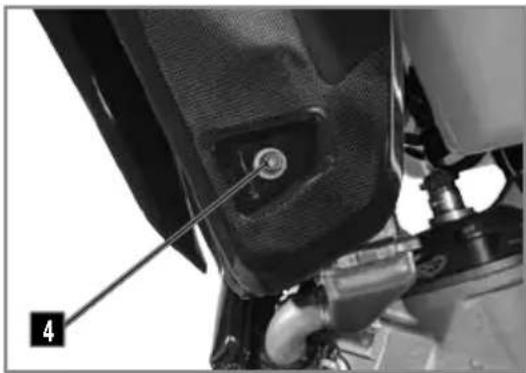
natural_image
Close-up of a mechanical component with a screw and pipe assembly (no visible text or symbols)natural_image
Close-up of a mechanical assembly with visible components and wiring (no text or symbols)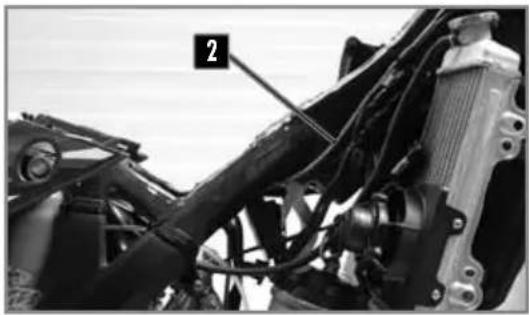
natural_image
Close-up of a mechanical assembly with visible components and a numbered label (2), no readable text or symbols present.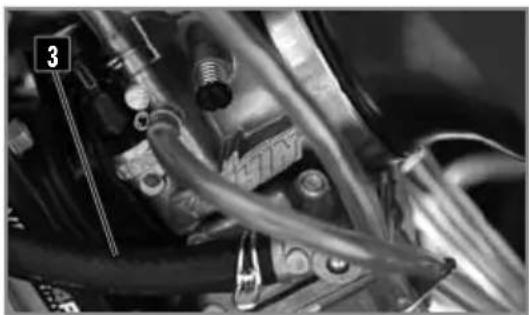
natural_image
Close-up of automotive engine components including hoses and motors (no visible text or symbols)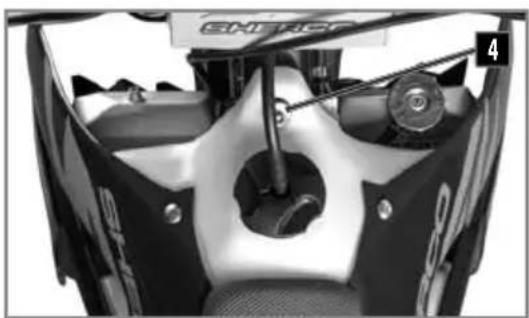
natural_image
Close-up of a mechanical component with no visible text or symbols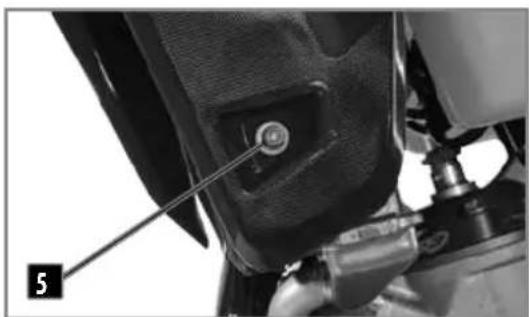
natural_image
Close-up of a mechanical assembly with a tool inserted, no visible text or symbolsnatural_image
Close-up of metallic cylindrical components with black caps and a coiled base (no visible text or symbols)Moto sobre trípode.
natural_image
Close-up of a motorcyclist's wheel and tire assembly with motion arrows indicating rotational direction (no text or symbols)Moto sobre trípode.
natural_image
Close-up of a motorcycle's front wheel and suspension system, showing hoses and wiring (no text or symbols visible)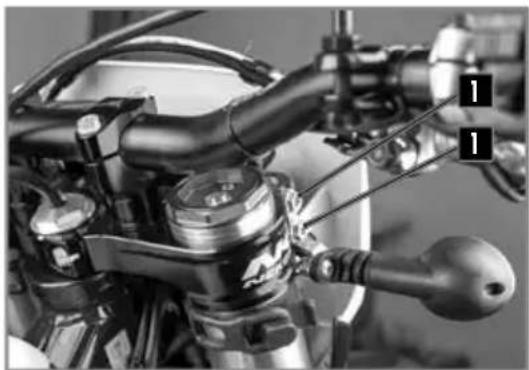
natural_image
Close-up of a motorcycle's front wheel and drivetrain components (no visible text or symbols)LIMPIEZA DE LA CADENA
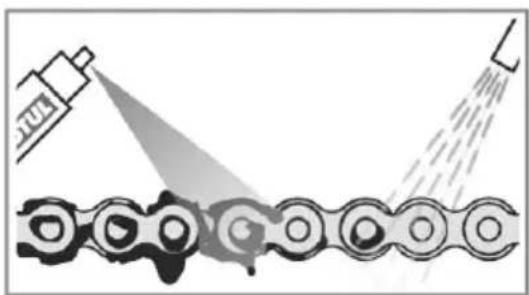
natural_image
Diagram showing spray application on a chain with a spray gun, no text or symbols present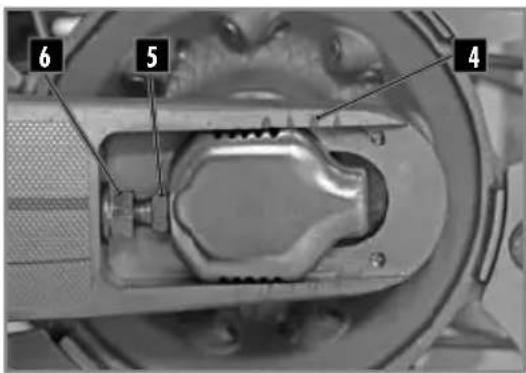
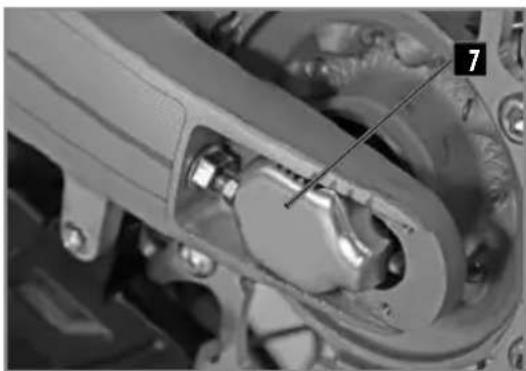
natural_image
Mechanical assembly diagram showing a component with labeled parts (no readable text or symbols)AJUSTE DEL EMBRAGUE
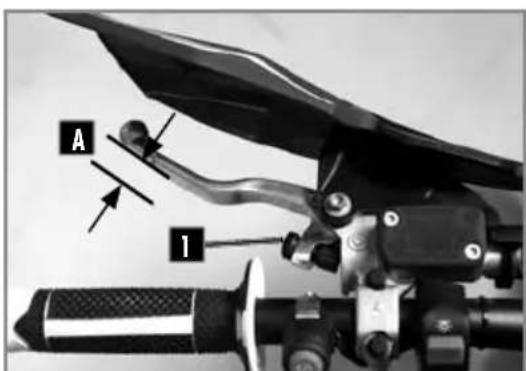
! ATENCIÓN
natural_image
Close-up of a mechanical lever handle with a circular arrow indicating refresh or cycle (no text or symbols)CONTROL NIVEL DE LÍQUIDO EMBRAGUE
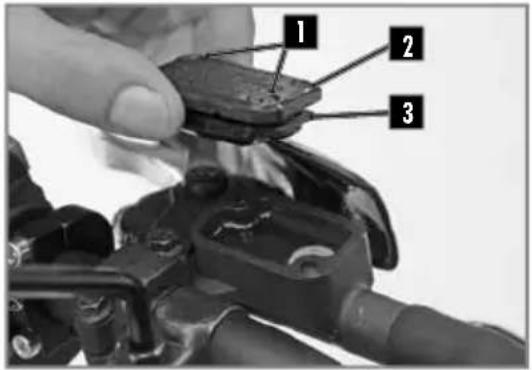
natural_image
Mechanical component diagram showing a cylindrical assembly with labeled parts (no readable text or symbols)MONTAJE DEL AMORTIGUADOR
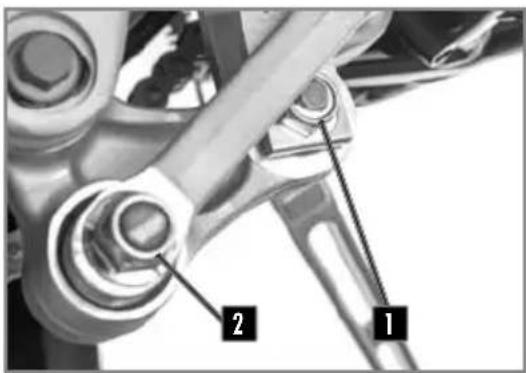
natural_image
Close-up of mechanical components with numbered annotations (1 and 2), no readable text or symbols beyond labels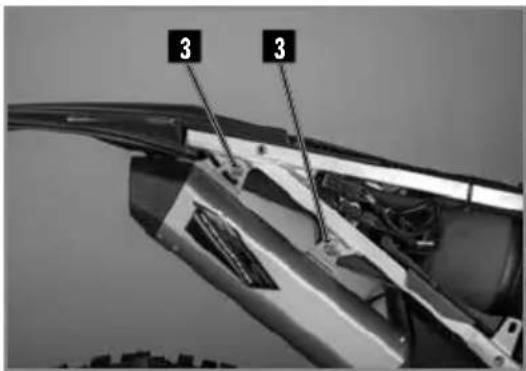
Moto sobre trípode.
Desmontar la placa lateral derecha.
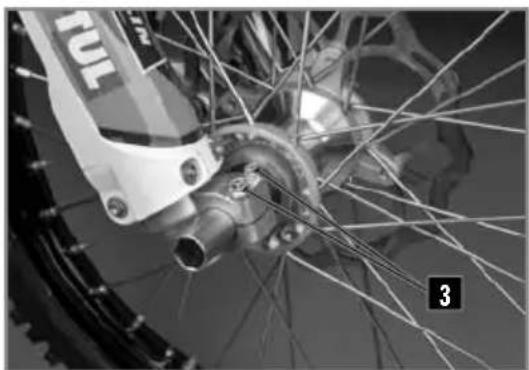
natural_image
Close-up of a bicycle wheel assembly with visible spokes and hub (no text or symbols)MONTAJE DE LA RUEDA DELANTERA
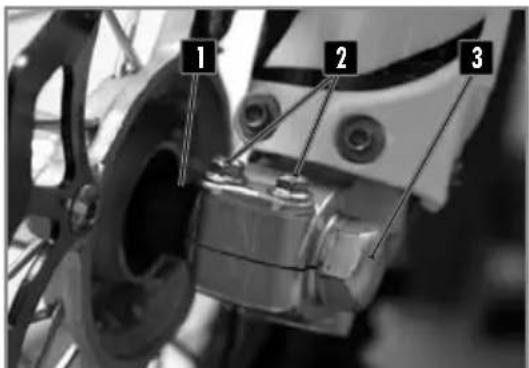
Moto sobre trípode.
natural_image
Close-up of hands installing a mechanical component with numbered callouts (1 and 2), no visible text or symbols on the main subject.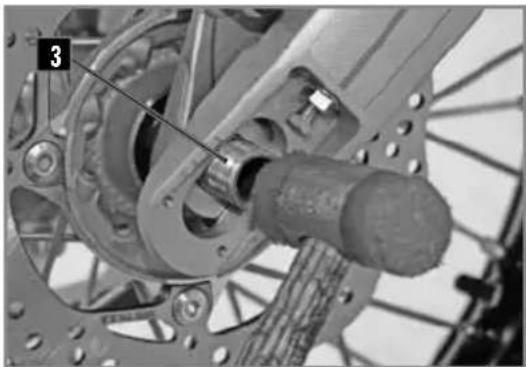
natural_image
Mechanical assembly diagram showing a motor and wheel components (no text or symbols visible)Instalar la moto sobre un trípode.
natural_image
Close-up of a bicycle wheel with visible gear and hub, showing internal components and mounting holes (no text or symbols)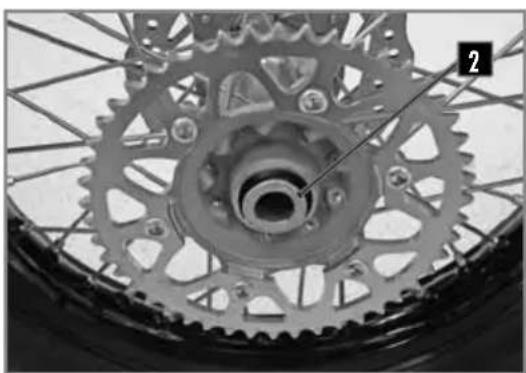
natural_image
Close-up of a bicycle wheel with visible teeth and central hub (no text or symbols)natural_image
Close-up of a bicycle's wheel and gear assembly, showing teeth and chain (no text or symbols visible)natural_image
Close-up of a bicycle brake system with labeled components (1 and 2), no readable text or symbols beyond labelsnatural_image
Close-up of a bicycle wheel with a pressure gauge and cable, no visible text or symbolsnatural_image
Close-up of hands using a screwdriver to adjust the wheel rim and brake disc (no text or symbols visible)natural_image
Close-up of a bicycle brake lever with labeled component A (no text or symbols beyond label)natural_image
Close-up of a bicycle brake lever mechanism with handle and grip (no visible text or symbols)natural_image
Close-up of a small electronic device with a lens and black casing, partially covered by hands (no visible text or symbols)natural_image
Close-up mechanical assembly showing two labeled parts (1 and 2) with no visible text or symbolsnatural_image
Close-up of a mechanical component with a metallic fitting and mounting holes (no visible text or symbols)natural_image
Close-up of a mechanical component with labeled section A (no readable text or symbols beyond label)FRENOS
DESMONTAJE DE LAS PASTILLAS DE FRENO DELANTERO Y TRASERO
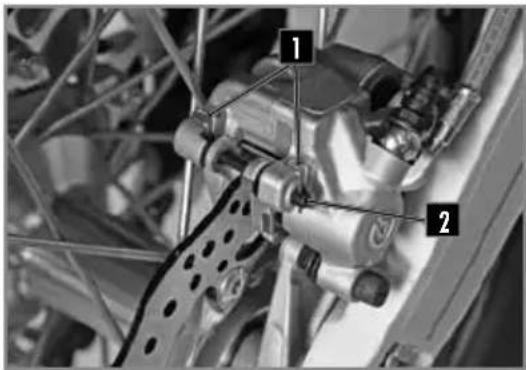
natural_image
Simple line diagram of a rectangular object with an arrow labeled 'A' and a horizontal line, no text or symbols present.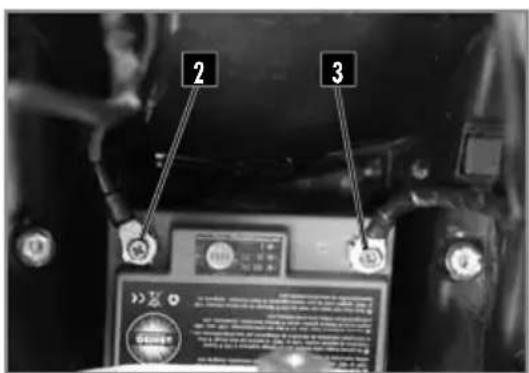
natural_image
Close-up of a mechanical connector with wires and connectors (no visible text or symbols)natural_image
Close-up of a mechanical component with wires and a labeled part (no readable text or symbols)natural_image
Close-up of a mechanical assembly with hoses and connectors (no visible text or symbols)natural_image
Close-up of a mechanical device with a labeled component (2), no visible text or symbolsMANTENIMIENTO CIRCUITO ELÉCTRICO
MONTAJE DEL FARO
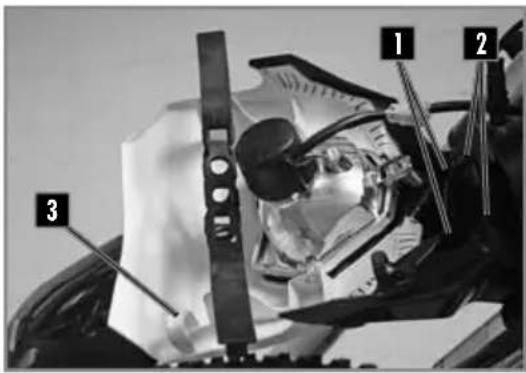
natural_image
Close-up of mechanical components with numbered labels (1, 3) indicating parts of a device or assembly (no readable text or symbols beyond labels)natural_image
Close-up of hands installing or adjusting a mechanical component with tools (no visible text or symbols)Bombilla de faro S2 12V 35/35W
natural_image
Close-up of a robotic head with a transparent mechanical component, no visible text or symbolsnatural_image
Close-up of mechanical components with wires and a numbered label (1), no readable text or symbols present.natural_image
Close-up of an internal combustion engine cylinder head with labeled components (no readable text or symbols)natural_image
Close-up of a hand holding a black handheld device with wires and a coin inserted (no visible text or symbols)LIMPIEZA DE LA MOTO ALMACENAMIENTO DE LA MOTO
Reinstalling the fuel tank 283
natural_image
Close-up of mechanical components with no visible text or symbolsnatural_image
Close-up of a bicycle brake lever with labeled parts B and 1 (no text or symbols beyond labels)Instrumentenanzeige
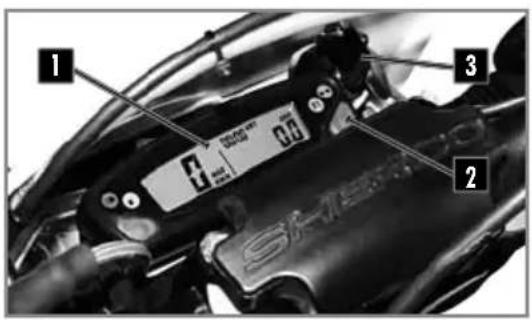
Schlüsselschalter
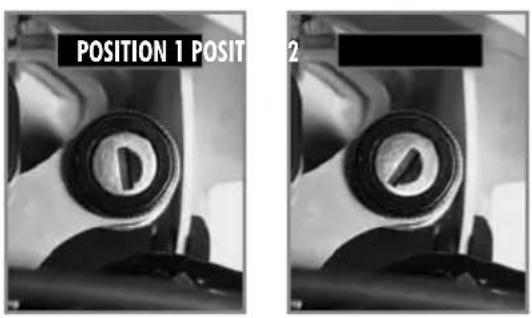
Blinkerschalter
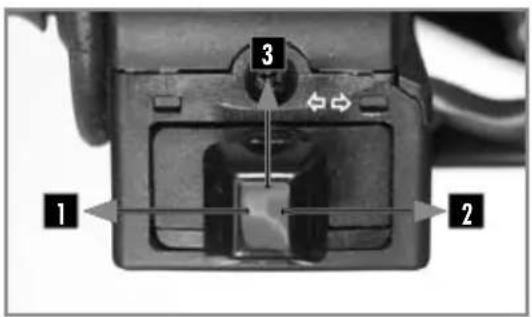
natural_image
Close-up of a mechanical valve or knob with a labeled component (number 1) and a small connector, no readable text or symbols present.natural_image
Close-up of a mechanical component with no visible text or symbolsnatural_image
Close-up of a mechanical component with a circular dial and labeled part '1' (no readable text or symbols beyond the label)natural_image
Close-up of a mechanical assembly with visible gears and chains, no readable text or symbolsAbb. 1 Funktion SPD
Abb. 5 Funktion DST2
natural_image
Close-up of a motorcycle's front wheel and suspension system (no visible text or symbols)natural_image
Close-up of a hand adjusting a motorcycle engine component, no visible text or symbols on the device itself.natural_image
Close-up of a mechanical assembly with no visible text or symbolsnatural_image
Close-up of a mechanical assembly with hoses and components (no visible text or symbols)natural_image
Close-up of a hand adjusting a car engine compartment with a tool, no visible text or symbols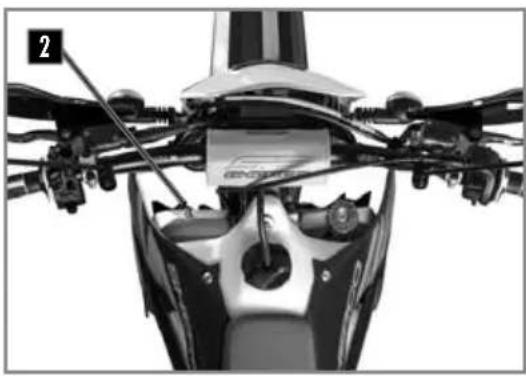
natural_image
Top-down view of a motorcycle's front wheel and side-mounted sensors (no visible text or symbols)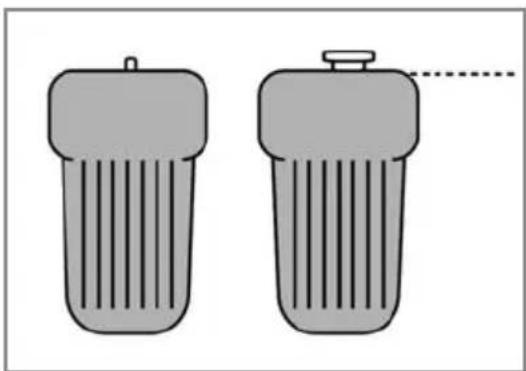
natural_image
Two gray cylindrical containers with vertical stripes, one with a small top and the other with a dashed line extending from its side (no text or symbols)Motorrad horizontal
! ACHTUNG
natural_image
Close-up of a white motorcycle's side panel showing key points and components (no text or symbols visible)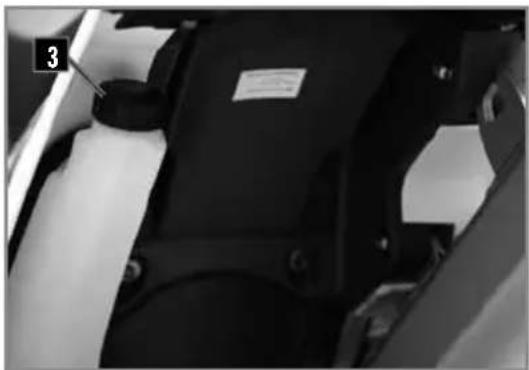
natural_image
Close-up of a mechanical component with a label pointing to part 3 (no visible text or symbols)natural_image
Close-up of a hand adjusting a mechanical component with a tool, no visible text or symbols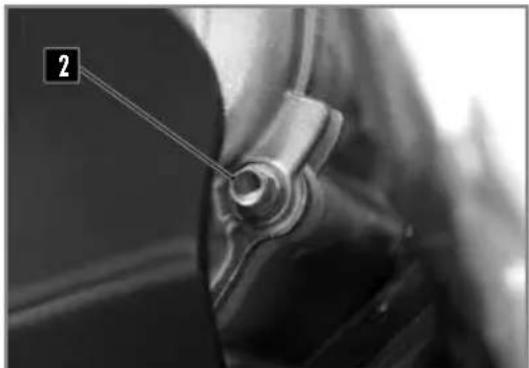
natural_image
Close-up of a mechanical component with a labeled section (2), showing no visible text or symbols.natural_image
Close-up of a mechanical component with a labeled section (2), showing no visible text or symbols.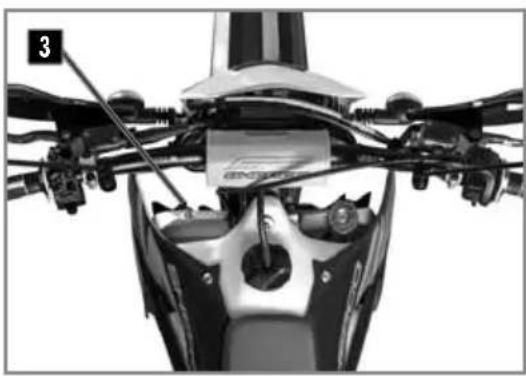
natural_image
Close-up of a motorcycle's front wheel and side-mounted sensors (no visible text or symbols)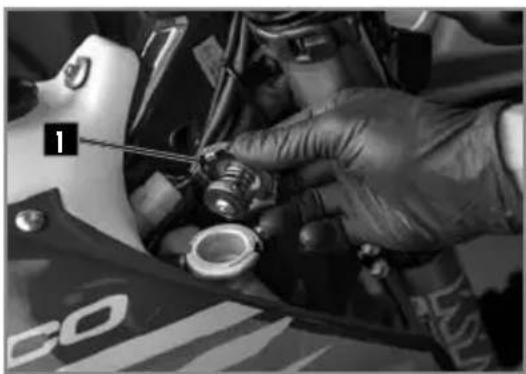
natural_image
Close-up of a hand adjusting a mechanical component with a tool, no visible text or symbolsnatural_image
Close-up of a bicycle brake lever handle and grip mechanism (no text or symbols visible)natural_image
Close-up of a mechanical component with a labeled connector (no visible text or symbols)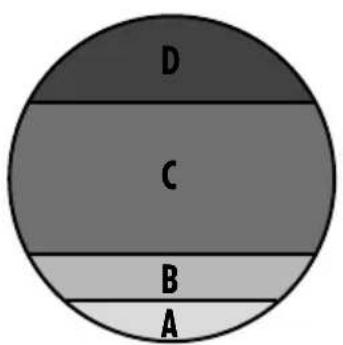
natural_image
Close-up of a mechanical component with internal gears and mounting holes (no visible text or symbols)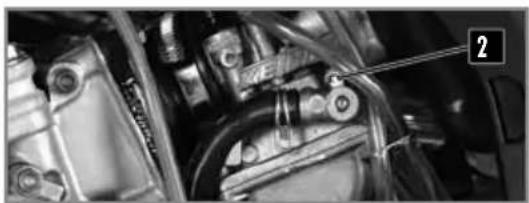
natural_image
Close-up of internal mechanical components with no visible text or symbols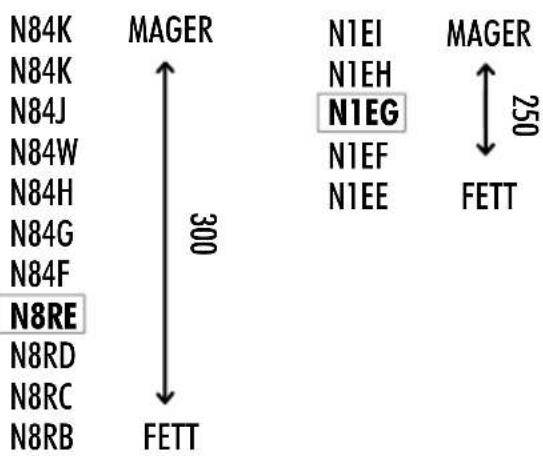
other
| Variant | MAGER Value | FETT Value | |---------|-------------|------------| | N84K | | | | N84K | | | | N84J | | | | N84W | | | | N84H | | | | N84G | | | | N84F | | | | N8RE | 300 | | | N8RD | | | | N8RC | | | | N8RB | | | | N1EI | | | | N1EH | | | | N1EG | | | | N1EF | | | | N1EE | | | | MAGER | 250 | 250 |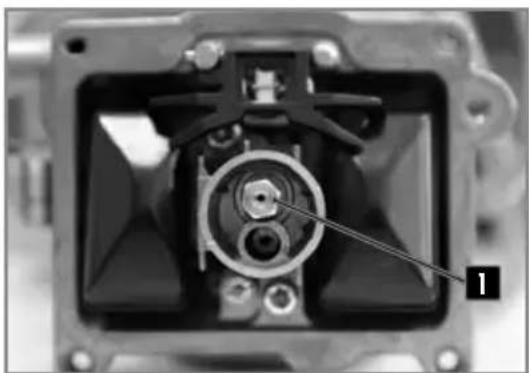
natural_image
Close-up of a mechanical component with a labeled part (1), showing internal gears and housing (no text or symbols visible)natural_image
Mechanical gear assembly with meshing gears and a connecting rod (no visible text or symbols)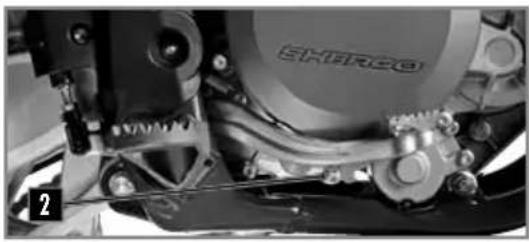
natural_image
Close-up of a mechanical assembly with no visible text or symbolsnatural_image
Close-up of a hand adjusting a mechanical component with a tool, no visible text or symbols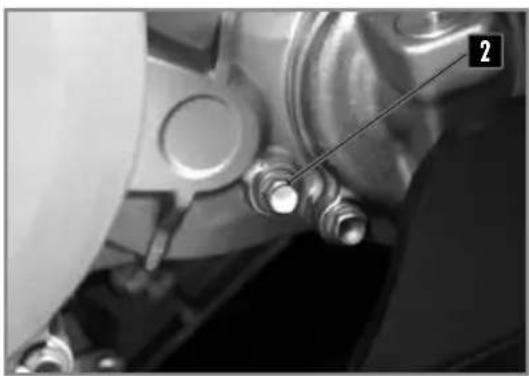
natural_image
Close-up of mechanical components with a tool inserted, no visible text or symbolsnatural_image
Close-up of a motorcycle's seat and dashboard with visible mechanical components (no text or symbols)natural_image
Technical illustration of mechanical components with exploded view and assembly detail (no text or symbols)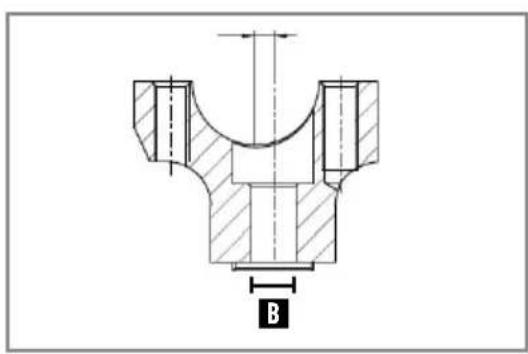
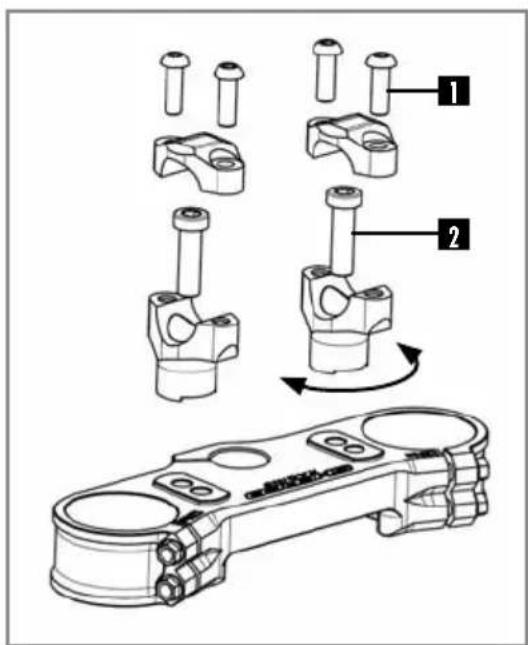
natural_image
Close-up of mechanical components with numbered annotations (1 and 2) pointing to specific parts, no readable text or symbols present.natural_image
Close-up of a motorcycle's front wheel and drivetrain components (no visible text or symbols)KAYABA RACING
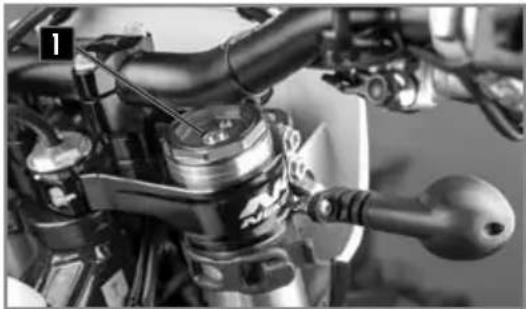
natural_image
Close-up of a motorcycle's front wheel and drivetrain components (no visible text or symbols)KAYABA FACTORY
natural_image
Close-up of a mechanical assembly with visible gears and springs (no text or symbols)KAYABA RACING
natural_image
Close-up of mechanical components with no visible text or symbolsKAYABA FACTORY
natural_image
Close-up of a motorcycle's hood and engine compartment, showing no visible text or symbolsKAYABA
natural_image
Close-up of mechanical components with no visible text or symbolsnatural_image
Mechanical assembly of a vertical spring with two cylindrical components (no visible text or symbols)natural_image
Close-up of a hand adjusting a car seatbelt component (no visible text or symbols)natural_image
Close-up of a mechanical component with a curved surface and wiring, no visible text or symbolsnatural_image
Close-up of a hand holding a mechanical component with a numbered label (2), no visible text or symbols on the main subject.natural_image
Top-down view of a black hat with radial metal lines and a central hub, no visible text or symbolsnatural_image
Close-up of mechanical components with a cylindrical part inserted, no visible text or symbolsnatural_image
Close-up of mechanical components with wires and connectors (no visible text or symbols)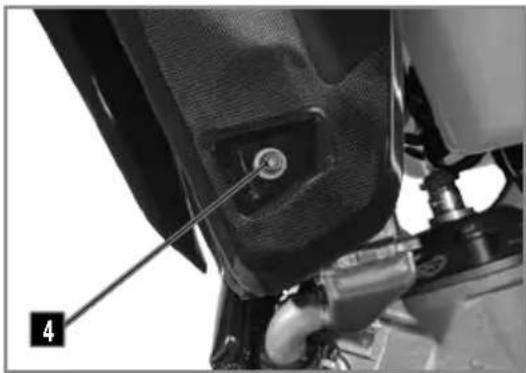
natural_image
Close-up of a mechanical component with a screw and pipe assembly (no visible text or symbols)natural_image
Close-up of a mechanical assembly with visible components and wiring (no text or symbols)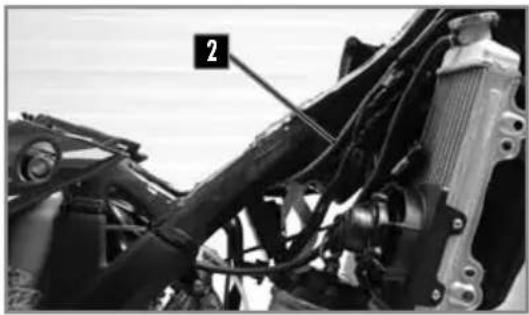
natural_image
Close-up of a mechanical assembly with visible components and wiring (no text or symbols)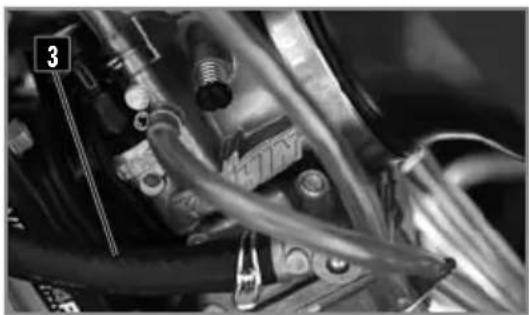
natural_image
Close-up of automotive engine components including hoses and sensors (no visible text or symbols)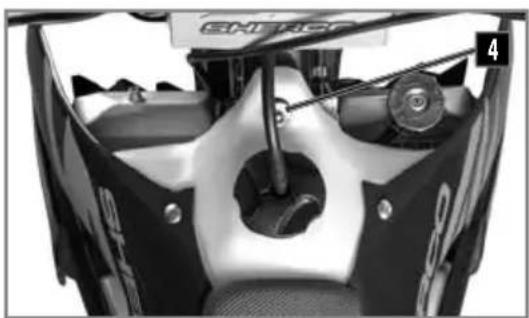
natural_image
Interior view of a vehicle's internal components, showing engine, wheel, and dashboard (no visible text or symbols)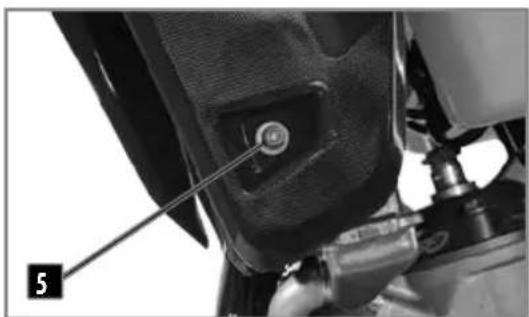
natural_image
Close-up of a mechanical component with a tool inserted, no visible text or symbolsnatural_image
Close-up of metallic mechanical components with black caps and a coiled base (no visible text or symbols)natural_image
Close-up of a motorcyclist's wheel and tire assembly with motion arrows indicating rotational direction (no text or symbols)natural_image
Close-up of a motorcycle's front wheel and suspension system, showing hoses and brackets (no text or symbols visible)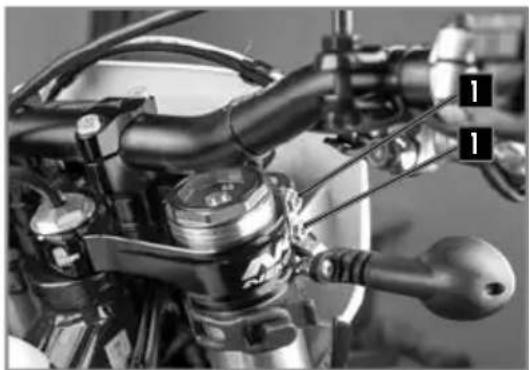
natural_image
Close-up of a motorcycle's front wheel and drivetrain components (no visible text or symbols)REINIGUNG DER KETTE
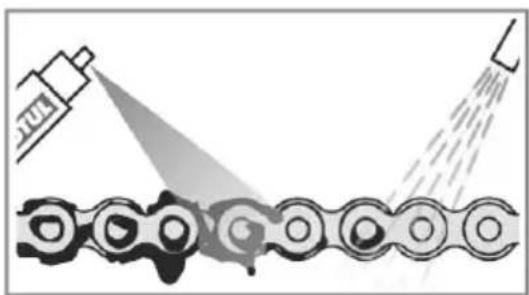
natural_image
Diagram showing spray application on a chain with a spray gun, no text or symbols present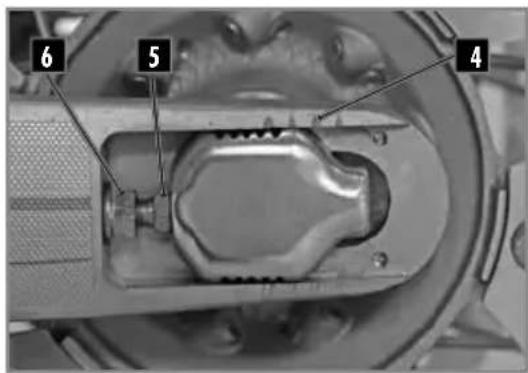
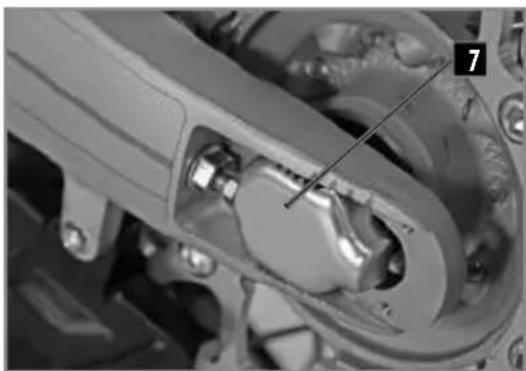
natural_image
Mechanical assembly diagram showing a gear and housing component (no visible text or labels)natural_image
Close-up of a mechanical lever handle with a circular arrow indicating refresh or cycle (no text or symbols)natural_image
Mechanical component diagram showing a cylindrical assembly with labeled parts (no readable text or symbols)WIEDEREINBAU DES STOSSDÄMPFERS
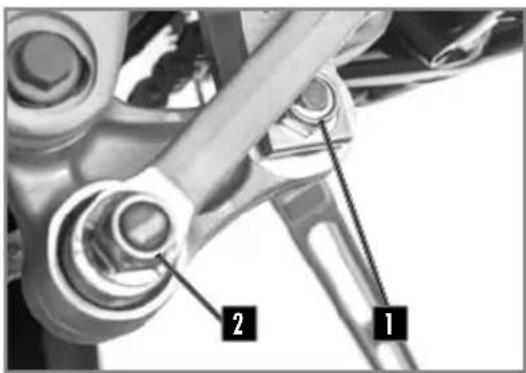
natural_image
Close-up of mechanical components with numbered annotations (1 and 2), no readable text or symbols beyond labels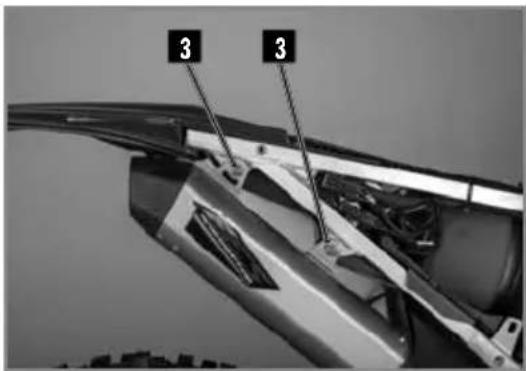
natural_image
Close-up of hands assembling a mechanical component with labeled parts (1 and 2), no readable text or symbols beyond labels.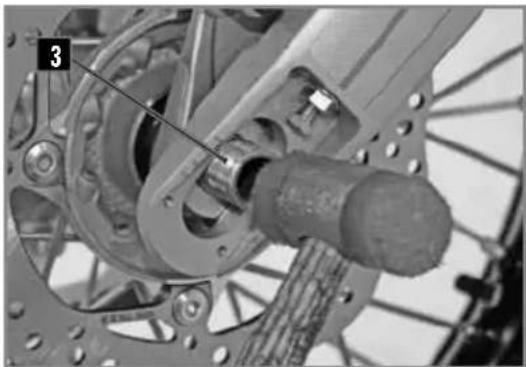
natural_image
Mechanical assembly diagram showing a motor and wheel components (no text or symbols visible)natural_image
Close-up of a bicycle wheel with gear and hub, showing internal components and no visible text or symbols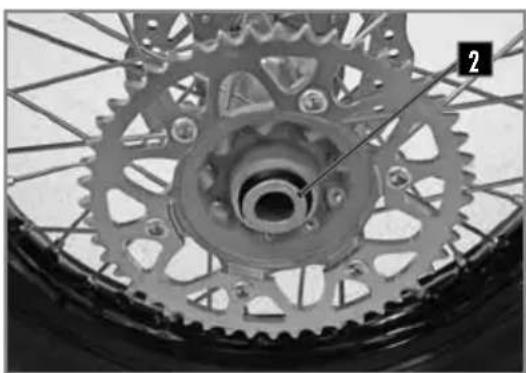
natural_image
Close-up of a bicycle wheel with visible teeth and central hub, no text or symbols presentnatural_image
Close-up of a bicycle wheel with visible tire, gear, and hub (no text or symbols)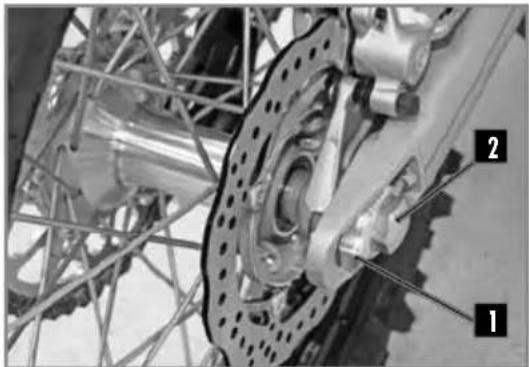
natural_image
Close-up of bicycle wheel assembly with labeled components (no readable text or symbols)KONTROLLE DES REIFENDRUCKS
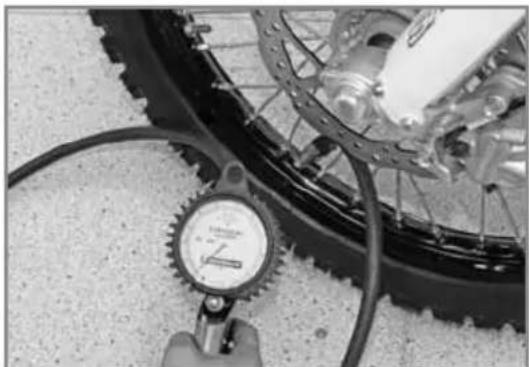
natural_image
Close-up of a bicycle wheel with a pressure gauge and cable, no visible text or symbolsnatural_image
Close-up of hands using a screwdriver to adjust the wheel rim and disc (no visible text or symbols)natural_image
Close-up of a bicycle brake lever with labeled component A (no text or symbols beyond label)natural_image
Close-up of a bicycle brake lever mechanism with handle and grip (no visible text or symbols)natural_image
Close-up of a small electronic device with a black top and circular lens, partially covered by mechanical components (no visible text or symbols)natural_image
Close-up mechanical assembly showing two labeled parts (1 and 2) with no visible text or symbolsKONTROLLE DER BREMSBELÄGE VORN UND HINTEN
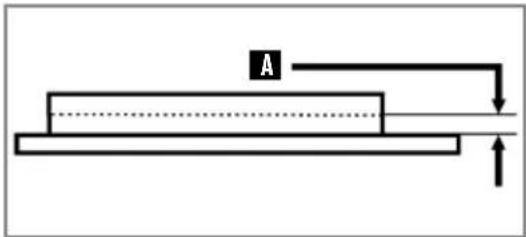
natural_image
Simple line diagram of a rectangular object with an arrow labeled 'A' and a horizontal line, no text or symbols present.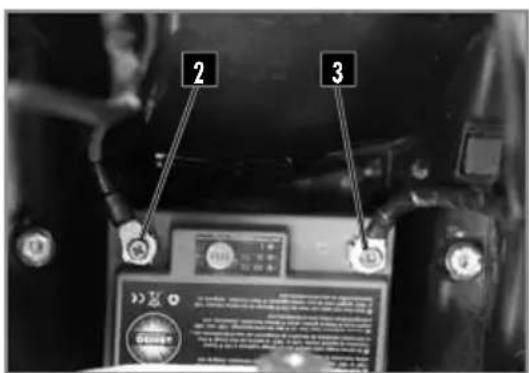
natural_image
Close-up of an electrical connector with wires and connectors (no visible text or symbols)natural_image
Close-up of a mechanical component with wires and a labeled part (no readable text or symbols)natural_image
Close-up of a mechanical assembly with hoses and connectors (no visible text or symbols)natural_image
Close-up of a mechanical device with a labeled component (2), no visible text or symbolsnatural_image
Close-up of mechanical components with numbered labels 1 and 3, no readable text or symbols beyond labelsnatural_image
Close-up of hands assembling a mechanical component with tools, no visible text or symbolsnatural_image
Close-up of a robotic head with a transparent mechanical component, no visible text or symbolsnatural_image
Close-up of mechanical components with wires and a numbered label (1), no readable text or symbols present.natural_image
Close-up of a mechanical assembly with labeled parts (no readable text or symbols)natural_image
Close-up of a hand holding a handheld electronic device with wires and a coin, no visible text or symbols.natural_image
Side profile of a black and white semi-traw bike with visible dynamics, tires, and front wheel (no text or symbols)SHERCO recommends MOTUL
MOTUL
KENNY
Airoh
KYB - Technolast Touch
MICHELIN
Polisport
VERTEX
GALFER



Scott

OXI-LIGHT