ManualGo.com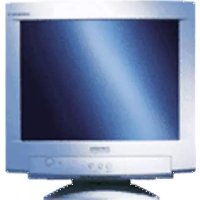
Diamond Plus 73 - Monitor NEC - Free user manual and instructions
Find the device manual for free Diamond Plus 73 NEC in PDF.



Download the instructions for your Monitor in PDF format for free! Find your manual Diamond Plus 73 - NEC and take your electronic device back in hand. On this page are published all the documents necessary for the use of your device. Diamond Plus 73 by NEC.
USER MANUAL Diamond Plus 73 NEC
For future reference, record the serial number of your display monitor in the space below: SERIAL No. The serial number is located on the rear cover of the monitor.
MODEL : N0701 USER'S MANUALIBM is registered trademark of International Business Machines Corporation Apple and Macintosh are registered trademarks of Apple Computer Inc. Microsoft and Windows are registered trademarks of the Microsoft Corporation. ENERGY STAR is a U.S. registered mark. All other trademarks or registered trademarks are property of their respective owners.ENERGY STAR
Product As an ENERGY STAR Partner, NEC-Mitsubishi Electronics Display has determined that this product meets the ENERGY STAR guidelines for energy efficiency. The ENERGY STAR emblem does not represent EPA endorsement of any product or service. RADIO INTERFERENCE REGULATIONS STATEMENT FOR U.S.A. This equipment has been tested and found to comply with the limits for a Class B digital device, pursuant to Part 15 of the FCC Rules. These limits are designed to provide reasonable protection against harmful interference in a residential installation. This equipment generates, uses and can radiate radio frequency energy and, if not installed and used in accordance with the instructions, may cause harmful interference to radio communications. However, there is no guarantee that interference will not occur in a particular installation. If this equipment does cause harmful interference to radio or television reception, which can be determined by turning the equipment off and on, the user is encouraged to try to correct the interference by one or more of the following measures: - Reorient or relocate the receiving antenna. - Increase the separation between the equipment and receiver. - Connect the equipment into an outlet on a circuit different from that to which the receiver is connected. - Consult the dealer or an experienced radio/TV technician for help. NO USER SERVICEABLE PARTS INSIDE. DO NO ATTEMPT TO MODIFY THIS EQUIPMENT. IF MODIFIED, YOUR AUTHORITY TO OPERATE THIS EQUIPMENT MIGHT BE VOIDED BY FCC. Declaration of Conformity-United States only Product Name: 17in.(43cm)Color Display Monitor Type: N0701 Brand Name: MITSUBISHI This device complies with Part 15 of the FCC Rules. Operation is subject to the following two conditions : (1) this device may not cause harmful interference, and (2) this device must accept any interference received, including interference that may cause undesired operation. U.S Responsible party: NEC-Mitsubishi Display of America,Inc. Adress: 1250 N. Arlington Heights Road ltasca, illinois 60143 Tel. No.: (630)467-3000 To identify this product, refer to the model number found on the product.T-1 TCO'99 Congratulations! You have just purchased a TCO’99 approved and labelled product! Your choice has provided you with a product developed for professional use. Your purchase has also contributed to reducing the burden on the environment and also to the further development of environmentally adapted electronics products. Why do we have environmentally labelled computers? In many countries, environmental labelling has become an established method for encouraging the adaptation of goods and services to the environment. The main problem, as far as computers and other electronics equipment are concerned, is that environmentally harmful substances are used both in the products and during their manufacture. Since it is not so far possible to satisfactorily recycle the majority of electronics equipment, most of these potentially damaging substances sooner or later enter nature. There are also other characteristics of a computer, such as energy consumption levels, that are important from the viewpoints of both the work (internal) and natural (external) environments. Since all methods of electricity generation have a negative effect on the environment (e.g.acidic and climate-influencing emissions, radioactive waste), it is vital to save energy. Electronics equipment in offices is often left running continuously and thereby consumes a lot of energy. What does labelling involve? This product meets the requirements for the TCO’99 scheme which provides for international and environmental labelling of personal computers. The labelling scheme was developed as a joint effort by the TCO (The Swedish Confederation of Professional Employees), Svenska Naturskyddsforeningen (The Swedish Society for Nature Conservation) and Statens Energimyndighet (The Swedish National Energy Administration). Approval requirements cover a wide range of issues: environment, ergonomics, usability, emission of electric and magnetic fields, energy consumption and electrical and fire safety. The environmental demands impose restrictions on the presence and use of heavy metals, brominated and chlorinated flame retardants, CFCs (freons) and chlorinated solvents, among other things. The product mustT-2 be prepared for recycling and the manufacturer is obliged to have an environmental policy which must be adhered to in each country where the company implements its operational policy. The energy requirements include a demand that the computer and/or display, after a certain period of inactivity, shall reduce its power consumption to a lower level in one or more stages. The length of time to reactivate the computer shall be reasonable for the user. Labelled products must meet strict environmental demands, for example, in respect of the reduction of electric and magnetic fields, physical and visual ergonomics and good usability. Below you will find a brief summary of the environmental requirements met by this product. The complete environmental criteria document may be ordered from: TCO Development SE-114 94 Stockholm, Sweden Fax: +46 8 782 92 07 Email (Internet): development@tco.se Current information regarding TCO’99 approved and labelled products may also be obtained via the Internet, using the address: http://www.tco-info.com/ Environmental requirements Flame retardants Flame retardants are present in printed circuit boards, cables, wires, casings and housings. Their purpose is to prevent, or at least to delay the spread of fire. Up to 30% of the plastic in a computer casing can consist of flame retardant substances. Most flame retardants contain bromine or chloride, and those flame retardants are chemically related to another group of environmental toxins, PCBs. Both the flame retardants containing bromine or chloride and the PCBs are suspected of giving rise to severe health effects, including reproductive damage in fish-eating birds and mammals, due to the bio-accumulative* processes. Flame retardants have been found in human blood and researchers fear that disturbances in foetus development may occur. The relevant TCO’99 demand requires that plastic components weighing more than 25 grams must not contain flame retardants with organically bound bromine or chlorine. Flame retardants are allowed in the printed circuit boards since no substitutes are available.T-3 Cadmium** Cadmium is present in rechargeable batteries and in the colour- generating layers of certain computer displays. Cadmium damages the nervous system and is toxic in high doses. The relevant TCO’99 requirement states that batteries, the colour-generating layers of display screens and the electrical or electronics components must not contain any cadmium. Mercury** Mercury is sometimes found in batteries, relays and switches. It damages the nervous system and is toxic in high doses. The relevant TCO’99 requirement states that batteries may not contain any mercury. It also demands that mercury is not present in any of the electrical or electronics components associated with the labelled unit. CFCs (freons) The relevant TCO’99 requirement states that neither CFCs nor HCFCs may be used during the manufacture and assembly of the product. CFCs (freons) are sometimes used for washing printed circuit boards. CFCs break down ozone and thereby damage the ozone layer in the stratosphere, causing increased reception on earth of ultraviolet light with e.g. increased risks of skin cancer (malignant melanoma) as a consequence. Lead** Lead can be found in picture tubes, display screens, solders and capacitors. Lead damages the nervous system and in higher doses, causes lead poisoning. The relevant TCO’99 requirement permits the inclusion of lead since no replacement has yet been developed.
- Bio-accumulative is defined as substances which accumulate within living organisms. ** Lead, Cadmium and Mercury are heavy metals which are Bio-accumulative.English Deutsch Français Español ItalianoE E-1 Monitor box* should contain the following:
- Remember to save your original box and packing material to transport or ship the monitor.
- Complete and mail in warranty card. (for North America)
- Color Monitor Diamond Plus 73
- Warranty card (for North America)
- Questionnaire card (for North America)
- Power cord (Put only one Type) Contents CAUTION The power cord provided with this monitor is designed for safety and must be used with a properly grounded outlet to avoid possible electrical shock. Do not remove the monitor cabinet as this can expose you to very high voltages and other hazards. MANUFATURER DECLARATIONFOR CE-MARKING:We, NEC-Mitsubishi Electric Vi s u a lSystems Corporation, declare under oursole re s p o n s i b i l i t y, that this product is inc o n f o rmity with the following standard s :EN60950 EN55022(Class B)EN61000-3-2EN61000-3-3EN55024(IEC61000-4-2)(IEC61000-4-3)(IEC61000-4-4)(IEC61000-4-5)(IEC61000-4-6)(IEC61000-4-8)(IEC61000-4-11)following the provisions of:73/23/EEC Low Voltage Directive89/336/EEC EMC Directive WARNING! This product is not designed for use in life support devices and NEC-Mitsubishi Electric Visual SystemsC o r p o r a t i o n makes no representations to the contrary. Life support devices are those devices which are used to measure, diagnose, or evaluate the tissue, systems or functions of the human body; or other devices employed to support or sustain life or good health. UL/CSA (or) Europe (or) UKE-2 Quick Start To attach the Monitor to your system, follow these instruction: 1 Turn off the power to your computer and the monitor. 2 If necessary, install the display card. For more information, refer to the display card manual. 3 For the PC: Connect the 15-pin mini D-SUB of the captive signal cable to the connector of the display card in your system (Figure A.1) Tighten all screws. For the Mac: Connect the Macintosh Cable Adapter (not included) to the monitor connector on the Macintosh (Figure B.1). Attach the 15- pin mini D-SUB end of the captive signal cable to the Macintosh cable adapter on the computer (Figure B.1). Tighten all screws. 4 Connect one end of the power cord to the monitor and the other end to the power outlet (Figure C.1). 5 Turn on the monitor (Figure D.1) and the computer. 6 This completes the installation. NOTE: If you have any problems, please refer to the Troubleshooting section of this User's Manual. Captive Signal Cable 15-pin-mini-D-SUB Figure A.1E E-3 Captive Signal Cable Computer Power Outlet Power cord Mac Adapter (not included) *For Mac Adapter contact your dealer 15-pin mini D-SUB Figure B.1 Figure C.1 Figure D.1 CAUTION: The socket-outlet shall be installed near the equipment and shall be easily accessible. During servicing, disconnect the plug from the socket-outlet.E-4 Controls OSD(On-screen Display) control buttons on the front of the monitor function as follows: SELECT Enters and exits the OSD menu. -/+ Selects one of the controls and decreases or increases the adjustment. RESET Resets the highlighted control to the factory setting. Press -/+ button at the same time for approximately 1 sec. Brightness: Adjusts the overall image and background screen brightness. Contrast: Adjusts the image brightness in relation to the background.(Contrast control is also effective with “-,+” button even though OSD window is not visible.) R Red Color Control: Adjust the red contrast of the display. G Green Color Control: Adjust the green contrast of the display. B Blue Color Control: Adjust the blue contrast of the display. Horizontal: Moves the image horizontally left or right. Vertical position: Moves the image vertically up or down. Horizontal size: Decreases or increases the horizontal size of the image. Vertical size: Decreases or increases the vertical size of the image. The Geometry controls allow you to adjust the curvature or angle of the sides of your display.E E-5 Pincushion/Barrel: Decreases or increases the curvature of the sides either inward or outward. Trapezoid: Decreases or increases the bottom of the screen to be the same as the top. Parallelogram: Decreases or increases the tilt of the sides either to the left or right. Bow (Pincushion Balance): Decreases or increases the curvature of the sides either to the left or right. Rotates: Rotates the image. Degauss: Select the degauss icon on “Icon select window” and push “SELECT” button. It will eliminate the stray magnetic field and correct the scan of the electron beam, which affect the purity, focus and convergence. Note: Allow a minimum interval of 20 minutes to elapse between uses of the degauss function. 9300K Color Temperature: Select the Color Temperature icon on “Icon Select Window” and push “SELECT” button. OSD: There are 3 background colours (Blue, Black, and white). These can be selected by “SELECT” button after the selection of “OSD” on ”Icon select window”. exit EXIT: To exit OSD window. Select EXIT on “Icon select window”, then push “SELECT” button. Note:If you do not push buttons within 10 seconds in OSD condition, the window will automatically disappear.E-6 Recommended use Safety Precautions and Maintenance
FOR OPTIMUM PERFORMANCE, PLEASE NOTE THE
FOLLOWING WHEN SETTING UP AND USING
- DO NOT OPEN THE MONITOR. There are no user serviceable parts inside and opening or removing covers may expose you to dangerous shock hazards or other risks. Refer all servicing to qualified service personnel.
- Use the monitor in a clean, dry area.
- Do not spill any liquids into the cabinet or use your monitor near water.
- Do not insert objects of any kind into the cabinet slots, as the may touch dangerous voltage points, which can be harmful or fatal or may cause electric shock, fire or equipment failure.
- Do not place any heavy objects on the power cord. Damage to the cord may cause shock or fire.
- Do not place this product on a sloping or unstable cart, stand or table, as the monitor may fall, causing serious damage to the monitor.
- Keep the monitor away from high capacity transformers, electric monitors and other devices such as external speakers or fans, which may create strong magnetic fields.
- If possible, position the monitor so that it is facing the east to minimize the effects of the earth‘s magnetic field.
- Changing the direction of the monitor while it is powered on may cause image discoloration. To correct this, turn the monitor off for 20 minutes before powering it back on.
- To separate the equipment from the power source you have to remove the plug from the inlet socket.
- When operating the Diamond Plus 73 with its AC 220-240V worldwide power supply, use a power supply cord that matches the power supply voltage of the AC power outlet being used. The power supply cord you use must have been approved by and comply with the safety standards of your country. Immediately unplug your monitor from the wall outlet and refer servicing to qualified service personnel under the following conditions:
- When the power supply cord or plug is damaged.
- If liquit has been spilled, or objects have fallen into the monitor.
- If the monitor has been exposed to rain or water.
- If the monitor has been dropped or the cabinet damaged.E E-7
- If the monitor does not operate normally by following operating instructions.
- Allow adequate ventilation around the monitor so that heat can properly dissipate. Do not block ventilated openings or place them monitor near a radiator or other heat sources. Do not put an thing on top of monitor.
- The power cable connector is the primary means of detaching the system from the power supply. The monitor should be installed close to a power outlet which is easily accessible.
- Handle with care when transporting. Save packaging for transporting .
CORRECT PLACEMENT AND ADJUSTMENT OF THE
- Adjust the monitor height so that the top of the screen is at or slightly below eye level. Your eyes should look slightly downward when viewing the middle of the screen.
- Position your monitor no closer than 40 cm and no further away than 70 cm from your eyes. The optimal distance is 50 cm.
- Rest your eyes periodically by focusing on an object at least 6 m away. Blink often.
- Position the monitor at a 90˚ Xangle to windows and other light sources to minimize glare and reflections. Adjust the monitor tilt so that ceiling lights do not reflect on your screen.E-8
- If reflected light makes it hard for you to see your screen, use an anti-glare filter.
- Adjust the monitorís brightness and contrast controls to enhance readability.
- Use a document holder placed close to the screen.
- Position whatever you are looking at most of the time (the screen or reference material) directly in front of you to minimize turning your head while you are typing .
- Get regular eye checkups. Cleaning Your Monitor When cleaning the monitor, please follow these guidelines:
- Always unplug the monitor before cleaning.
- Wipe the screen and cabinet front and sides with a soft cloth.
- If the screen requires more than dusting, apply a household window cleaner to a soft cloth to clean the monitor screen.
- Do not use benzene, thinner or any volatile substances to clean the unit as the finish may be permanently marked.
- Never leave the monitor in contact with rubber or vinyl for an extended time period.
- Do not spray directly on the screen as cleaner may drip into the monitor and damage the circuitry.
- Never use an abrasive cleaner on the screen surface as this will damage the anti-reflection coating. Ergonomics To realize the maximum ergonomics benefits, we recommend the following :
- Adjust the brightness until the background raster disappears .
- Do not position the contrast controls to its maximum setting .
- Use the preset size and position controls with standard signals .
- Use the preset color setting and sides Left / Right controls.
- Use non-interlaced signals with a vertical refresh rate between 75-120Hz.
- Do not use primary color blue on a dark background, as it is difficult to see and may produce eye fatigue due to insufficient contrast. CAUTIONE E-9 Specifications Monitor Specifications Picture Tube Diagonal : Viewable Image Size: Radius: Input Signal Video: Sync: Display Colors Analog input: Synchronization Horizontal: Range Vertical: Resolutions Supported Resolution based on horizontal and vertical frequencies only Active Display Area Horizont: (Factory setting) Vertical: Active Display Area (Full scan) Power Supply Current Rating Dimensions Weight Environmental Considerations Operating Temperature: Humidity: Altitude: Storage Temperature: Humidity: Altitude: NOTE: Technical specifications are subject to change without notice. Diamond Plus 73 Monitor 43cm(17inch) 41cm(16inch) 50000mm ANALOG 0.7 Vp-p/75 Ohms Separate sync. TTL Level Horizontal sync. Positive/Negative Vertical sync. Positive/Negative Unlimited number of Colors 31kHz to 70kHz 55Hz to 120Hz 640 x 480 @60 to 120Hz 800 x 600 @55 to 110Hz 832 x 624 @55 to 105Hz 1024 x768 @55 to 87Hz.... 1280 x 1024 @55 to 66Hz 310mm 232mm 325mm 243mm AC 100-240V, 50-60Hz 1.5A @ 100-240V 403(W)x420(H)x420(D)mm 16.4kg 0˚C to +35˚C 30% to 80% 0 to 3000m -20˚C to + 60˚C 10% to 90% 0 to 13700m Notes 90˚ deflection, 0.25mm grille pitch, medium short persistence phosphor, aperture grille CRT, multi-layered, anti- staticscreen coating, dark-tint screen. Depends on the display card used. Automatically Automatically Some systems may not support all modes listed Recommended resolution at 85 Hz for optimal display performance. Dependent upon signal timing used, and does not include border area. Dependent upon signal timing used, and does not include border area.E-10 Features Flat Aperture Grille CRT: Delivers an unparalleled viewing experience with a virtually flat image, eliminating distortion and reducing glare so that what you see on-screen is what you get on your printed output. The striped phosphor alignment of the CRT delivers superior vertical definition with improved brightness for more uniform image contrast. Screen Surface
Reduces reflection and glare and increases contrast without sacrificing focus level, clarity or brightness. Along with the flat square technology CRT, a high contrast screen with 0.25 mm grille pitch delivers crisp, clean text and graphics. Dual Dynamic Beam Focus : Provides precise, continuous focus adjustment of the electron beams and optimum image quality, even to the far edge of the screen. Color Control System: Allows you to change between five color settings on your display to match your personal preference. OSD(On-Screen Display) Controls: Allow you to quickly and easily adjust all elements of your screen image via simple to use on- screen menus. Ergonomice Features: Enhance human ergonomics to improve the working environment, protect the health of the user and save money and is compliant with TCO'99 and MPRII for lower emissions . Plug and Play: The Microsoft
solution with the Windows
95/98 operating system facilitates setup and installation by allowing the monitor to send its capabilities (such as screen size and resolutions supported) directly to your computer, automatically optimizing display performance. Power Management System: Provides innovative power-saving methods that allow the monitor to shift to a lower power consumption level when on but not in use, saving your monitor energy costs, reducing emissions and lowering the air conditioning costs of the workplace and is compliant with VESA DPMS and EPA ENERGY STAR
Mode LED Indicator Power Saving On Green None Off (IPM Mode) Orange Maximum(<5 Watts, Slow Recovery) Off(Power Switch, Off) No Light No Power Used(Fully Off)E E-11 Reduced Magnetic Field Technology: Reduces magnetic and alternating electric field emissions and static electricity, addressing ergonomic concerns regarding potential risks from extended computer monitor use and is compliant with MPRII and TCO‘99. Multiple Frequency Technology: Automatically adjusts monitor to the display card‘s scanning frequency, thus displaying the resolution required. FullScan Capability: Allows you to use the entire screen area in most resolutions, significantly expanding image size.E-12 Troubleshooting No Picture
- The display card should be completely seated in its slot.
- Power Switch and computer power switch should be in the ON position.
- The signal cable should be completely connected to the display card/computer.
- Check the connector for bent or pushed-in pins. Image is scrolling or unstable
- Signal cable should be completely attached to the computer.
- Check the pin assignment and signal timing of your monitor and display card with respect to the recommended timing and pin assignment .
- If the MAC adapter is used, check for proper connection or make sure the display card is MAC compatible and that the card is properly seated in the computer. LED on the monitor is not lit (no green or orange color can be seen)
- Power Switch should be in the ON position and the power cord should be connected. Picture is fuzzy or Color looks blotchy
- Adjust the Brightness and Contrast Controls.
- Access the Degauss Control through OSD. Activate the Degauss Control. CAUTION: A minimum interval of 20 minutes should exist before the Degauss Function is used a second time. P i c t u re bounces or a waving pattern is present in the picture
- Move electrical devices that may be causing electrical interference away from the monitor. Edges of the display image are not square
- Use the OSD Geometry Controls to straighten the edges.
- If possible, position the front of the monitor facing east. Display image is not centered, too small, or too large
- Use the OSD Size and Position controls to adjust the image.E E-13 Black vertical lines are visible on the screen
- Thin vertical black lines on one or both sides of the screen. This minor condition is caused by grille element overlap which can occur during shipping.
- Position an open white window over the affected area of the screen and maximize the brightness and contrast controls. This will cause localized heating of the overlap which will clear in a few minutes. Be sure to readjust the brightness and contrast controls back to the normal viewing level after this procedure. Two fine horizontal lines are visible on the screen
- The 2 very faint thin lines across the screen are normal. They are caused by the aperture grille stabilization filaments(Damper Wires)which are required for all aperture grille CRTs'. A buzzing sound when power on