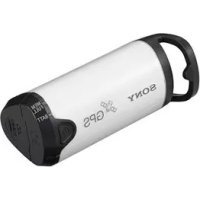
GPSCS1KASP - Other camera accessories SONY - Free user manual and instructions
Find the device manual for free GPSCS1KASP SONY in PDF.


| Product type | GPS unit kit for cameras |
| Brand | Sony |
| Model | GPSCS1KASP |
| Dimensions (L x H x W) | Approx. 87 x 36 x 36 mm (excluding protrusions) |
| Weight | Approx. 55 g (battery not included) |
| Power supply | 1 LR6 (AA) alkaline battery or HR6 (AA) nickel-metal hydride battery (not supplied) |
| Battery life (25 °C) | Approx. 10 hours (Sony LR6 alkaline battery) / approx. 14 hours (Sony HR6 Ni-MH battery) |
| Interface | USB 2.0 full speed |
| Internal memory | Approx. 31 MB (allows up to 360 hours of GPS log recording) |
| Reception frequency | GPS 12-channel |
| Recording interval | Approx. 15 seconds |
| Main functions | GPS log recording (position and time), applying coordinates to images, map viewing via supplied software |
| Supplied software | GPS Image Tracker, Picture Motion Browser |
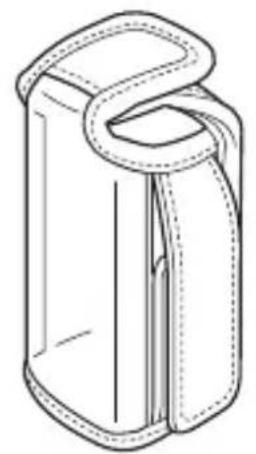
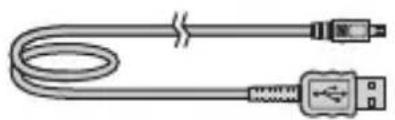
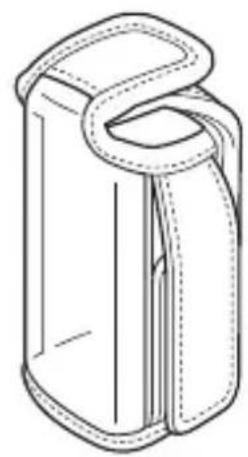
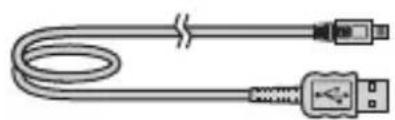
| Included accessories | GPS unit, carabiner, stand, mount, armband, carrying case, USB cable, software CD-ROM, documents |
| Care and cleaning | Clean the exterior with a soft cloth slightly dampened with water, then wipe with a dry cloth. Avoid chemical products (thinner, benzine, alcohol, etc.) |
| Safety | Do not use in an airplane. Avoid shocks, moisture, dust. Do not expose to extreme temperatures. Water and dust resistance not guaranteed. |
| Operating temperature | 0 to 40 °C |
| Storage temperature | -20 to +60 °C |
Frequently Asked Questions - GPSCS1KASP SONY
User questions about GPSCS1KASP SONY
0 question about this device. Answer the ones you know or ask your own.
Ask a new question about this device
Download the instructions for your Other camera accessories in PDF format for free! Find your manual GPSCS1KASP - SONY and take your electronic device back in hand. On this page are published all the documents necessary for the use of your device. GPSCS1KASP by SONY.
USER MANUAL GPSCS1KASP SONY
Operating Instructions
Mode d'emploi
GB
FR
http://www.sony.net/

Printed on 70% recycled paper using VOC (Volatile Organic Compound)-free vegetable oil based ink.

3398844110
GPS-CS1KASP
Printed in Japan © 2008 Sony Corporation
English
Before operating the unit, please read this manual thoroughly, and retain it for future reference.
WARNING
To reduce fire or shock hazard, do not expose the unit to rain or moisture.
For Customers in the U.S.A.
If you have any questions about this product, you may call:
Sony Customer Information Services Center
1-800-222-SONY (7669)
The number below is for the FCC related matters only.
Regulatory Information
Declaration of Conformity
Trade Name: SONY
Model No.: GPS-CS1
Responsible Party: Sony Electronics Inc.
Address: 16530 Via Esprillo, San Diego CA 92127 U.S.A
Telephone number: 858-942-2230
This device complies with Part 15 of the FCC Rules. Operation is subject to the following two conditions: (1) This device may not cause harmful interference, and (2) this device must accept any interference received, including interference that may cause undesired operation.
CAUTION
You are cautioned that any changes or modifications not expressly approved in this manual could void your authority to operate this equipment.
Note:
This equipment has been tested and found to comply with the limits for a Class B digital device, pursuant to Part 15 of the FCC Rules.
These limits are designed to provide reasonable protection against harmful interference in a residential installation. This equipment generates, uses, and can radiate radio frequency energy and, if not installed and used in accordance with the instructions, may cause harmful interference to radio communications. However, there is no guarantee that interference will not occur in a particular installation. If this equipment does cause harmful interference to radio or television reception, which can be determined by turning the equipment off and on, the user is encouraged to try to correct the interference by one or more of the following measures:
– Reorient or relocate the receiving antenna.
- Increase the separation between the equipment and receiver.
- Connect the equipment into an outlet on a circuit different from that to which the receiver is connected.
- Consult the dealer or an experienced radio/TV technician for help.
The supplied interface cable must be used with the equipment in order to comply with the limits for a digital device pursuant to Subpart B of Part 15 of FCC Rules.
For Customers in Canada
This Class B digital apparatus complies with Canadian ICES-003.
For Customers in Europe
CE
Hereby, Sony Corporation, declares that this GPS-CS1 GPS unit is in compliance with the essential requirements and other relevant provisions of the Directive 1999/5/EC.
For details, please access the following URL:
http://www.compliance.sony.de/
This product has been tested and found compliant with the limits set out in the R&TTE Directive for using connection cables shorter than 3 meters (9.8 feet).
Disposal of Old Electrical & Electronic Equipment (Applicable in the European Union and other European countries with separate collection systems)
natural_image
Symbol of a trash bin crossed with a diagonal line, no text or numbers presentThis symbol on the product or on its packaging indicates that this product shall not be treated as household waste. Instead it shall be handed over to the applicable collection point for the recycling of electrical and electronic equipment. By ensuring this product is disposed of correctly, you will help prevent potential negative consequences for the environment and human health, which could otherwise be caused by inappropriate waste handling of this product. The recycling of materials will help to conserve natural resources. For more detailed information about recycling of this product, please contact your local Civic Office, your household waste disposal service or the shop where you purchased the product.
Table of contents
Precautions 7
What is GPS?...... 10
Features 13
Preparing
Checking included items 15
Identifying parts.... 17
Inserting a battery 18
Use the GPS unit outside
Cautions on carrying the unit 20
Carrying the GPS unit using the carabiner.... 20
Inserting the GPS unit into the carrying case.... 21
Carrying the GPS unit with the carrying case 21
Carrying the GPS unit using the armband 22
Attach the GPS unit to the handle of a bicycle or a motorcycle using the holder 24
Using the unit
Record the GPS log using the GPS unit 27
Using the software
Using the supplied software 31
Installing the supplied software 33
Apply position information to the images using "GPS Image Tracker" 35
View images on the "Picture Motion Browser" screen 38
Additional information
Trouble shooting.... 39
Specifications.... 41
Precautions
When using this unit, please keep the following in mind.
On a battery
A battery is not supplied
An LR6 (size AA) alkaline battery or an HR6 (size AA) Nickel-Metal Hydride battery is necessary for recording log data in this unit. Purchase a battery before using the unit.
Notes on a Nickel-Metal Hydride battery
- Charge the Nickel-Metal Hydride battery before using the unit for the first time. Refer to instructions supplied with the battery on charging.
- The battery can be charged even if it is not completely discharged. Also, even if the battery is not fully charged, you can use the partially charged capacity of the battery as is.
- If you do not intend to use the battery for a long time, use up the existing charge and remove it from the unit, then store it in a cool, dry place. This is to maintain the battery's functions.
On recorded data on the unit
If you remove the battery while using the unit, the log data may be damaged. Be sure to replace the battery with a new one after you turn the power off.
Compensation for damaged log data will not be made
If position information (GPS log files) is not recorded properly due to malfunction of the recording memory or the system, compensation for damaged log data or images with position information will not be made.
On use and storage
- Before you use the unit, make sure that the unit works properly by checking its operation.
- Do not shake or strike this unit hard. In addition to malfunctions and an inability to record the log, this may cause recorded data breakdown.
- This unit is neither dust-proof, nor splash-proof, nor water-proof.
Do not use/store the unit in the following places.
- In an extremely hot, cold or humid place In places such as in a car parked in the sun, the unit body may become deformed and this may cause a malfunction.
- In places near a heater
The unit may become discolored or deformed, and this may cause a malfunction.
• Near strong magnetic place - In sandy or dusty places Be careful not to let sand or dust get into the unit. This may cause the unit to malfunction, and in some cases this malfunction cannot be repaired.
Note on the bracket
- When attaching the GPS unit to a bicycle or a motorcycle, be sure the GPS unit does not interfere with the operation of the bicycle or the motorcycle.
- Be sure not to operate the GPS unit while riding a bicycle or a motorcycle.
- When you check the LED indicator on the GPS unit while riding a bicycle or a motorcycle, be sure to stop operating the bicycle or the motorcycle before checking the GPS unit.
- Do not apply the bracket other than the handle.
Note on the armband
- If using the armband causes skin irritation, stop using the armband immediately.
- Be careful not to fasten the armband too tightly while using it. This may interfere with the circulation of the blood.
- Do not attach the armband to the parts other than the arm.
Note on the included items
- Keep the included items out of the reach of children.
On carrying the unit
- Do not sit on a chair etc., with the unit in the back pocket of your pants or skirt, as this may cause malfunction or damage the unit.
On cleaning the unit
Cleaning the unit surface
Clean the unit surface with a soft cloth slightly moistened with water, then wipe the surface with a dry cloth. Do not use the following as they may damage the finish or the casing.
- Chemical products such as thinner, benzine, alcohol, disposable cloths, insect repellent, sunscreen or insecticide, etc.
- Do not touch the unit with the above on your hand.
- Do not leave the unit in contact with rubber or vinyl for a long time.
Note on the location where you use the GPS unit
Do not use the GPS unit in an airplane.
The radio wave may affect the airplane and this may cause an accident due to the malfunction of the airplane.
Note on applying position information to still images taken with digital still cameras or digital video cameras other than Sony products
If the still images are JPEG files compatible with Exif 2.1 or later, you can apply position information to those images.
However, please note that the application of the position information to still images cannot be guaranteed for cameras from all manufacturers. We recommend that you save the images under different file names after applying position information, or backup the images before processing. Also please note that the functions which will be unavailable after processing with the program depend on each manufacturer.
What is GPS?
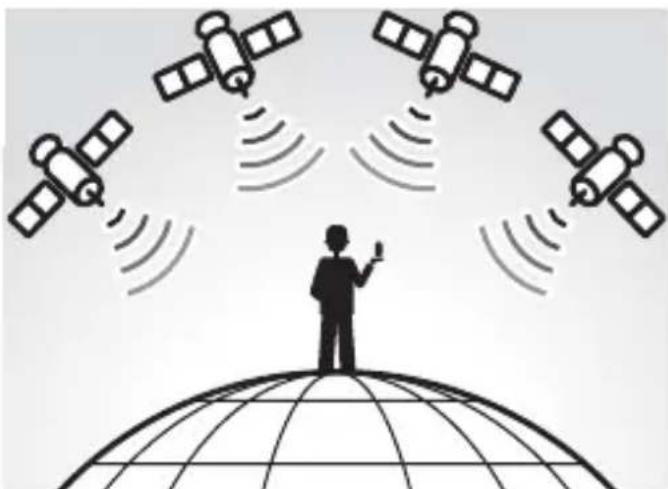
The GPS is a navigational system that calculates position from accurate US aviation satellites. This system allows you to track down your exact location on the earth. The GPS satellites are located in six orbits, 20,000 km above us. The GPS consists of a total of 24 GPS satellites: Four of the satellites are placed into each orbit, and at least three satellites are required to pinpoint your location. A GPS receiver receives radio signals from the satellites, and calculates the present location based on the orbital information (almanac data) and travel time of the signals, etc.
natural_image
Silhouette of a person standing on a globe with multiple satellites emitting signals (no text or symbols)Measuring a location is called “tracking”. A GPS receiver can track down the location’s latitude and longitude by receiving signals from three satellites.
Notes
- The positions of GPS satellites vary. Depending on the location and time you use a GPS receiver, it may take longer for tracking or the receiver may not track the location at all.
- “GPS” is the system tracking location by receiving radio signals from GPS satellites. Avoid using the unit in the places where radio signals are blocked or reflected, such as a shadowy place surrounded by buildings or trees, etc. Use the unit in open sky environments.
natural_image
Illustration of a child and a person outdoors, one taking a photo with a laptop, no text or symbols present- You may not record a GPS log at the locations or in the situations where the radio signals from the GPS satellites do not reach to the unit as follows.
- In tunnels, indoors or under shades of buildings.
- Between tall buildings or at narrow streets surrounded by buildings.
- At underground locations, surrounded by dense trees, under an elevated bridge or at the locations where magnetic fields are generated such as near high voltage cables.
- Near the devices that generate the radio signals of the same frequency band as the unit: near the 1.5 GHz band mobile telephones, etc.
- The unit may not track when you are moving at the speed of about 500 km/hour (300 miles/hour) or faster.
On tracking errors
Error caused by position of GPS satellites
The unit automatically tracks your present location when the unit receives radio signals from three or more GPS satellites. The tracking error caused by the GPS satellites is about to ±10 m. Depending on the environment of the location, the tracking error can be greater. In this case, your actual location may not match with the location on the map based on GPS information.
Error during tracking process
This unit records position information every fifteen seconds.
When you have an image recorded at any moment other than the moments when the unit records your position, the position information at that moment can be provided using the supplied software “GPS Image Tracker”. A rough position can be calculated by measuring the distances between the locations before and after the image is recorded. In this case, the actual position may not match completely with the location on the map based on GPS information.
On error due to incorrect clock setting on a camera
When the clock setting on your camera is incorrect, you cannot apply the correct position information to the images. The position information is applied to the images based on the time information of the GPS log files and the time stamps of the images. So if the time stamps are incorrect, you cannot match the images with the GPS log files properly. Adjust the clock setting of your camera properly. Refer to the operating instructions of your camera on how to set the clock settings.
- For details on modification of the time stamp of the images, refer to the help files of “GPS Image Tracker”.
Features
This unit is a portable GPS unit to receive and record position information.
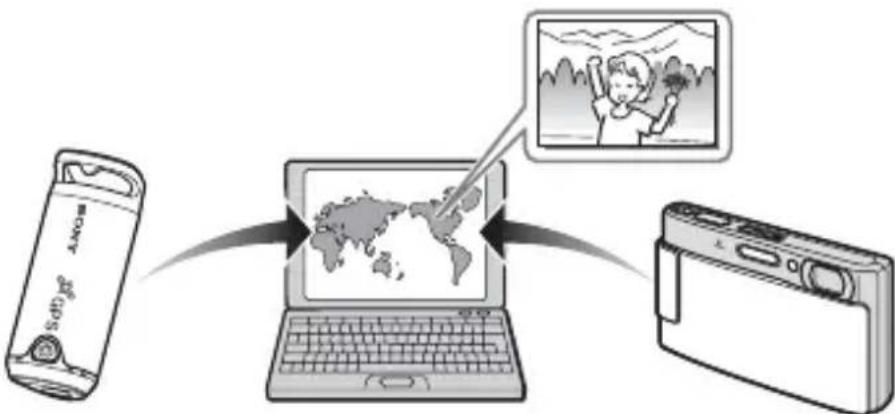
Using this unit and the supplied software, you can:
- Check the locations of where you record still images or movies (hereinafter collectively called “images”) on a trip, etc.
- Apply position information to the images you record, organize the images by shooting date on the computer.
- You can display the recorded images and the tracks on the map and send this map via e-mail.
flowchart
graph TD
    A["手机"] --> B["Laptop"]
    B --> C["笔记本电脑"]
    D["手机"] --> E["Laptop"]
    E --> F["笔记本电脑"]
GB

Use the GPS unit outside
Using the supplied attachments, you can carry the GPS unit in various situations (page 20).

Record the GPS log using the GPS unit
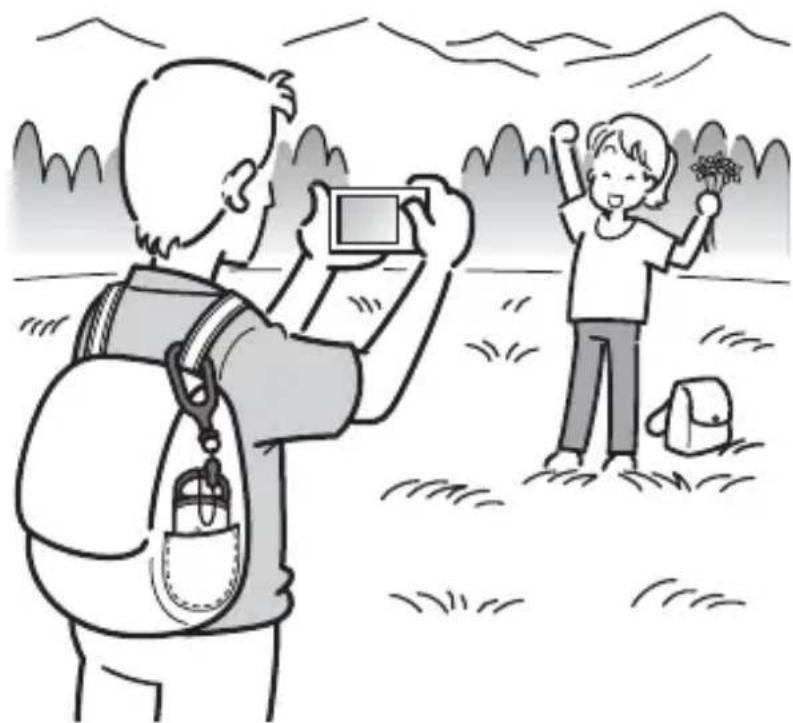
Turn on the unit, before you start recording images with your digital camera, camcorder or digital single lens reflex camera (hereinafter collectively called “camera”). The unit records the GPS log (position and time) during your trip until the power is turned off (page 27).
3
Apply position information to the images using "GPS Image Tracker"
①Import the images taken with your camera to the computer using the supplied software (Picture Motion Browser).
②Launch the supplied software (GPS Image Tracker) and import the GPS log recorded on the unit to your computer.
③Load the images imported to your computer to “GPS Image Tracker”.
④Match the imported images with the GPS log files while checking on the map, then apply the position information of where you recorded the images (page 36).
4
View images on the "Picture Motion Browser" screen
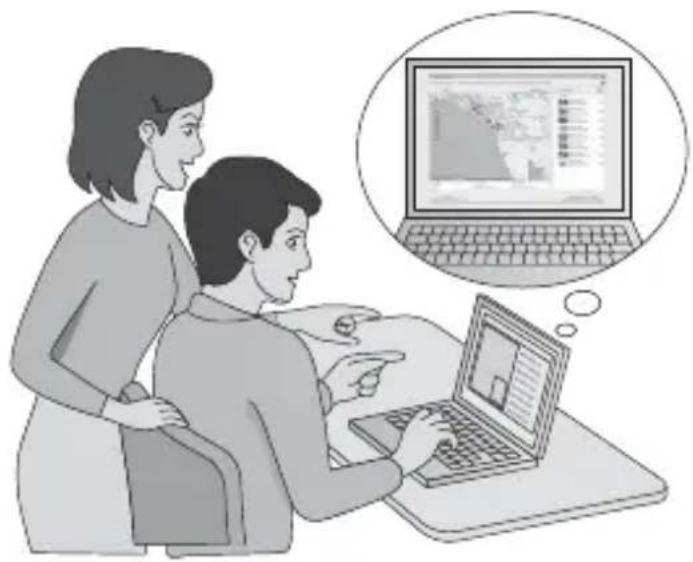
- You can show the tracks and images on the on-line map using the “Map View” function of “Picture Motion Browser” (page 38).
- You can send the original map data you created using the e-mail.
natural_image
Illustration of two people using a laptop with a thought bubble showing a screen (no text or symbols present)Preparing
Checking included items
Make sure you have following things supplied with your GPS unit. The number in parenthesis indicates the number of that item supplied.*1

• GPS unit (GPS-CS1) (1) • Carabiner (1)
GB
natural_image
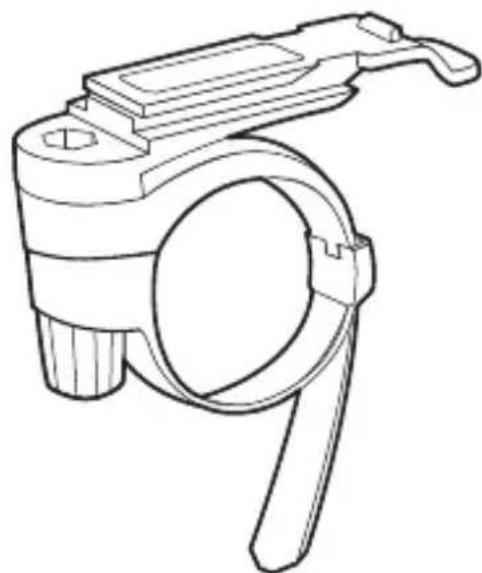
Line drawing of a mechanical device with handle and circular body (no text or symbols)- Bracket (1) *2
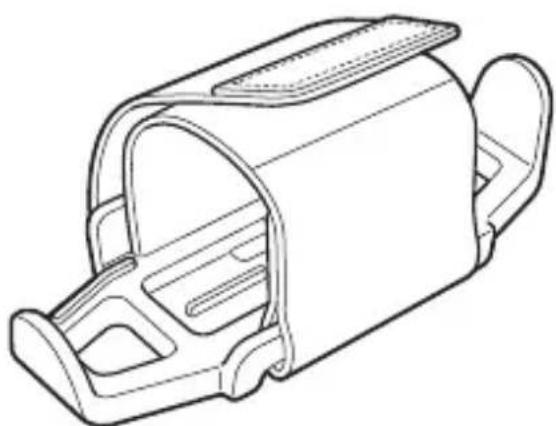
natural_image
Technical line drawing of a mechanical component with internal channels and mounting brackets (no text or symbols)- Holder (1) ^*2
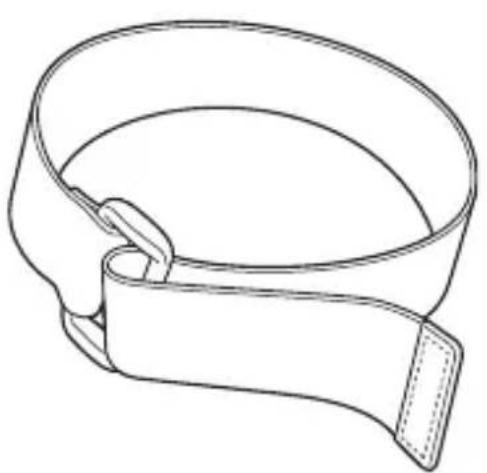
natural_image
Line drawing of a mechanical component with a curved handle and side clip (no text or symbols)- Armband (1) ^*2
natural_image
Line drawing of a cylindrical object with a looped handle and side panel (no text or symbols)- Carrying case (1) ^*2
natural_image
Illustration of a U-shaped cable with two USB connectors (no text or symbols)- USB cable (1)
- CD-ROM
“GPS Unit Application Software” (1)
- Operating Instructions (this manual) (1)
- Set of other printed documentation
*1 An LR6 (size AA) alkaline battery or an HR6 (size AA) Nickel-Metal Hydride battery is not supplied with this unit.
*2 The bracket, the holder, the armband and the carrying case are collectively called the Attachment Kit.
Identifying parts
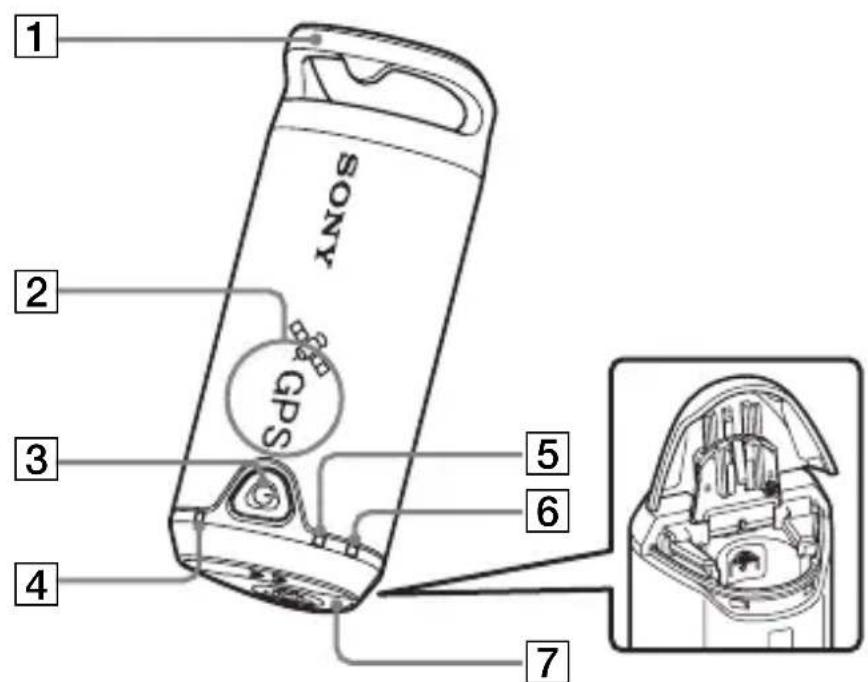
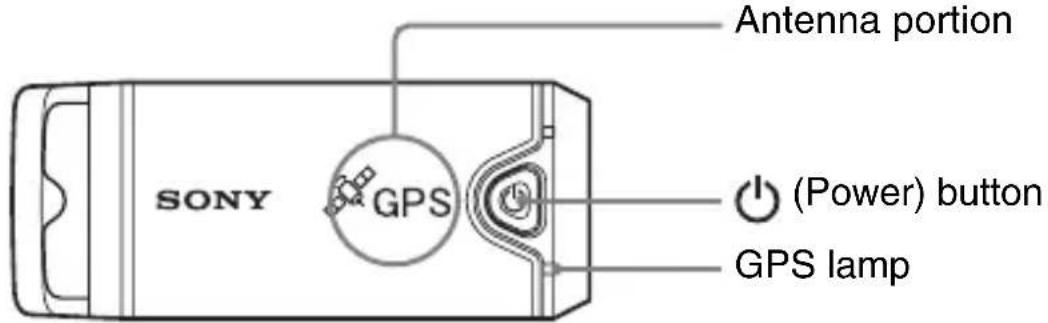
1 Carabiner attachment loop 2 Antenna portion
3 (Power) button 4 GPS lamp
5 BATT (Battery) lamp 6 MEM FULL (Memory Full) lamp
7 Battery cover
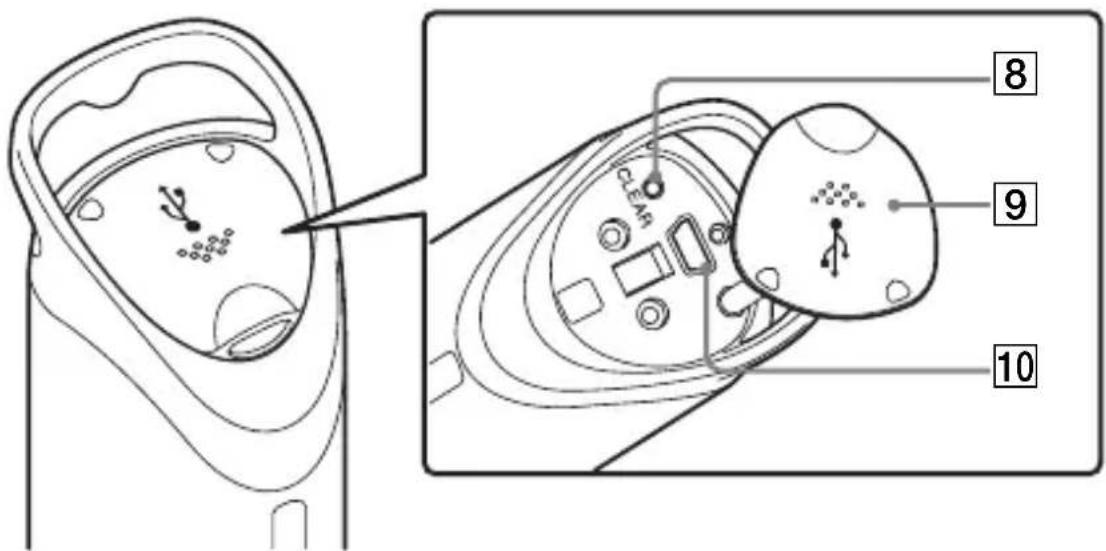
8 CLEAR button
10 ♂ (USB) jack
9 Jack cover
Inserting a battery
The following batteries are acceptable.
- LR6 (size AA) alkaline battery*
- HR6 (size AA) Nickel-Metal Hydride battery (recommended for use at low temperatures)
* When an LR6 (size AA) alkaline battery is used, the battery life is shorter at a low temperature.
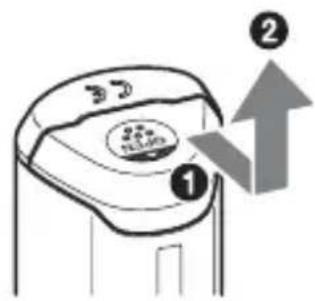
1 Slide the battery cover.
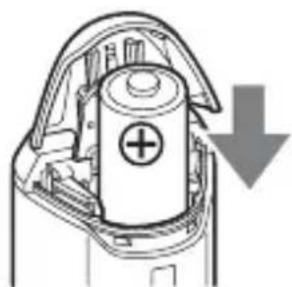
2 Insert a battery into the unit with the + side of the battery facing up.
natural_image
Cross-sectional diagram of a battery internal structure with a plus sign and downward arrow (no text or symbols)3 Close the battery cover.
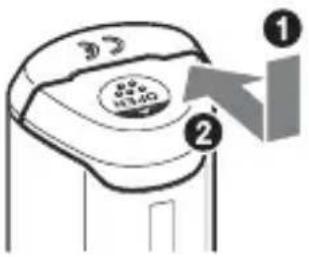
To remove the battery
Turn the power off and hold the unit with the battery cover up, then remove the battery.
Be sure not to drop the battery.
Battery duration
(When used at 25 °C (77 °F))
| LR6 (size AA) Sony alkaline battery (not supplied) | HR6 (size AA) Sony Nickel-Metal Hydride battery (not supplied) |
| about 10 hours about 14 hours |
- When you use the unit at low temperatures, we recommend you use a Nickel-Metal Hydride battery.
- The battery duration may differ from the above depending on the situation or the environmental condition.
Cautions
If you mishandle the battery, there is a danger of leakage or explosion. Be sure to observe the following.
- Insert a battery with the correct polarity +/-.
- Do not charge a dry battery.
- Remove the battery when you do not use the unit for a long time.
Otherwise, it may result in leakage of the battery.
Use the GPS unit outside
Cautions on carrying the unit
- When you carry the unit, direct and hold the antenna-side upward or outward.
- You can use the unit being covered with cloth, etc.
- The unit cannot receive radio signals when it is in a metallic bag such as an attache case, or when it is covered with a metallic object.
Carrying the GPS unit using the carabiner
You can attach the GPS unit to the bag etc., using the carabiner.
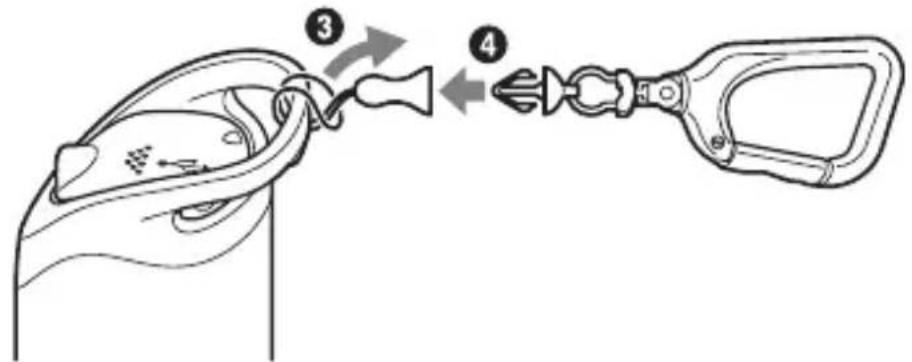
1 Detach the attachment string from the main body of the carabiner as illustrated below (①) and draw the string through the carabiner attachment loop of the unit (②).
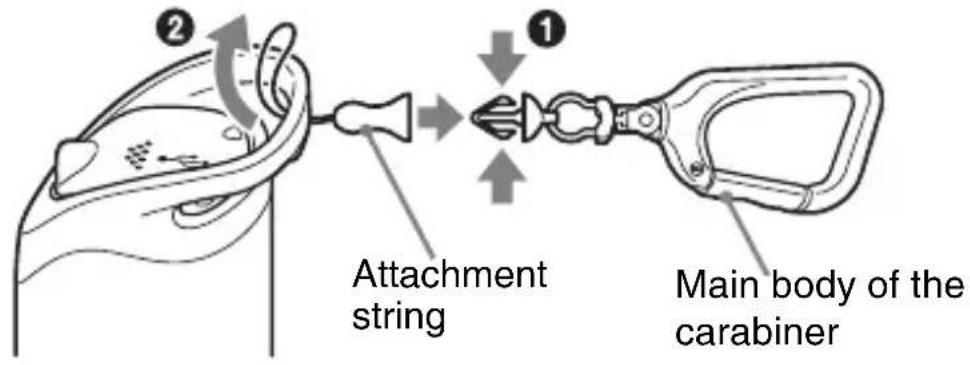
2 Thread the carabiner string through the carabiner loop (③), then attach it in the main body (④).
Caution
- Do not use the supplied carabiner for any other purpose.
Inserting the GPS unit into the carrying case
When you put in the GPS unit in the carrying case as illustrated below, you can carry the GPS unit in various ways.
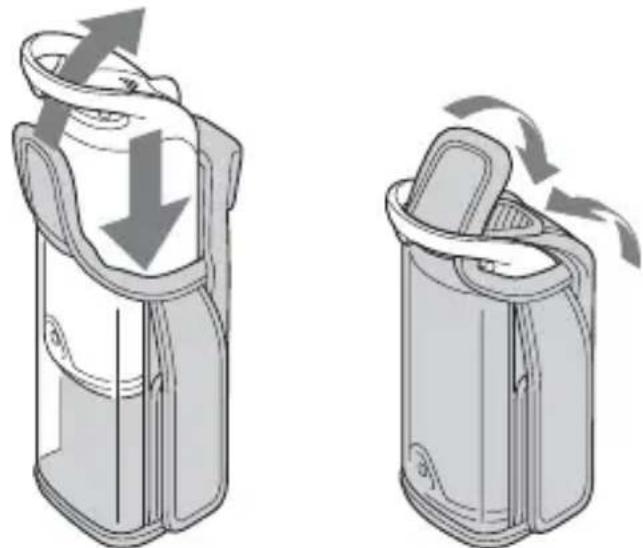
natural_image
Illustration of two different types of containers with arrows indicating motion or movement, no text or symbols present.Carrying the GPS unit with the carrying case
You can attach the GPS unit to the belt of the trousers or the bag with the GPS unit held in the carrying case.
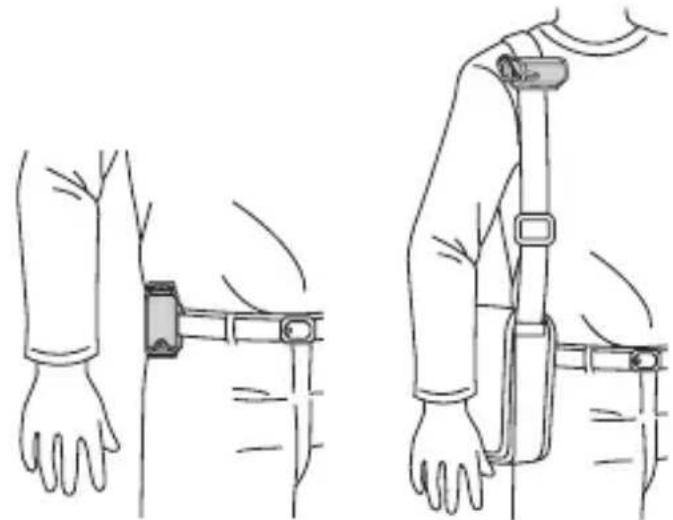
natural_image
Line drawing showing two different types of human arm seatbelt buckle (no text or symbols)Carrying the GPS unit using the armband
Using the supplied armband, you can attach the GPS unit to your arm.
1 Insert the GPS unit into the carrying case.
2 Attach the armband to the carrying case as illustrated below.
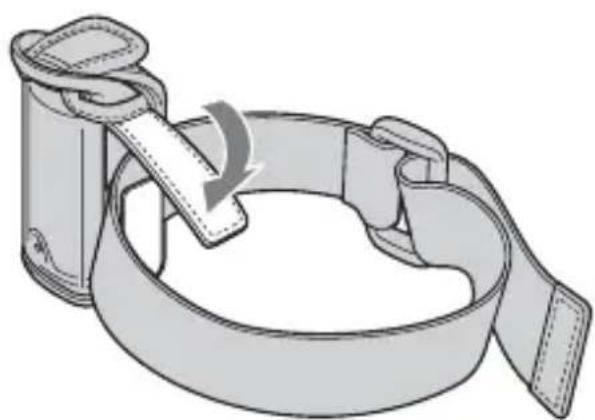
natural_image
Illustration of a belt buckle with a belt buckle being adjusted, showing no text or symbols.3 Attach the armband to your arm, then fasten the armband appropriately.
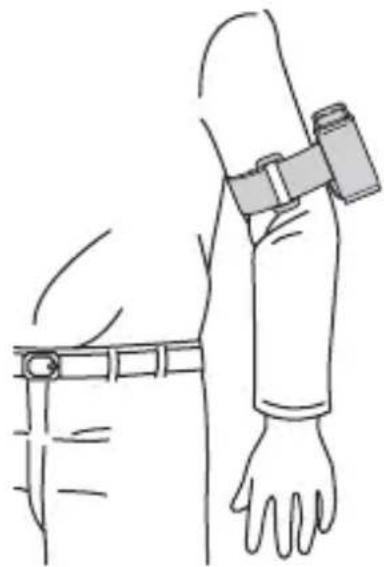
natural_image
Line drawing of a human arm with wrist strap and wristband, no text or symbols presentGB
Caution
- Do not apply the armband other than the GPS unit.
- If using the armband causes skin irritation, stop using the armband immediately.
- Be careful not to fasten the armband too tightly while using it. This may interfere with the circulation of the blood.
Attach the GPS unit to the handle of a bicycle or a motorcycle using the holder
Using the supplied holder and bracket, you can attach the GPS unit to the handle of a bicycle or a motorcycle.
- The diameter of the handle supported by the bracket is 20 mm to 35 mm.
- Attach the bracket to the part where the GPS unit will not interfere with the operation of the bicycle or motorcycle.
- The compatibility of the bracket cannot be guaranteed for all bicycles or motorcycles.
1 Attach the bracket to the handle of the bicycle etc., following the procedure below.
①Remove the screw cap of the bracket, then wind the belt around the handle.
②Adjust the belt and leave approx. 3 mm of space for the part [A] as illustrated below.
③ Tighten the screw of the bracket firmly to fix it to the handle.
![Pull both sides of the belt to loosen the belt. 3 mm [A] Screw cap](/content/2026/03/510470/images/f5d428c3e025cc8147ebcebf08ebb942e70a55b75d7468680923b227bb1ecc92.jpg)
2 Insert the GPS unit into the carrying case.
3 Place the GPS unit inserted in the carrying case on the holder, then attach the GPS unit to the belt of the holder using the hook-and-loop fastener on the side of the carrying case.
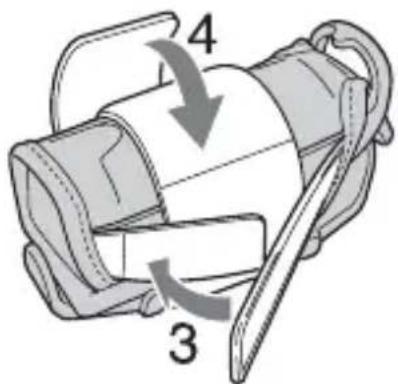
GB
4 Fix the GPS unit firmly using the hook-and-loop fastener of the holder.
5 Align the groove on the bottom of the holder with the groove of the bracket, then push the holder into the bracket all the way until it clicks.
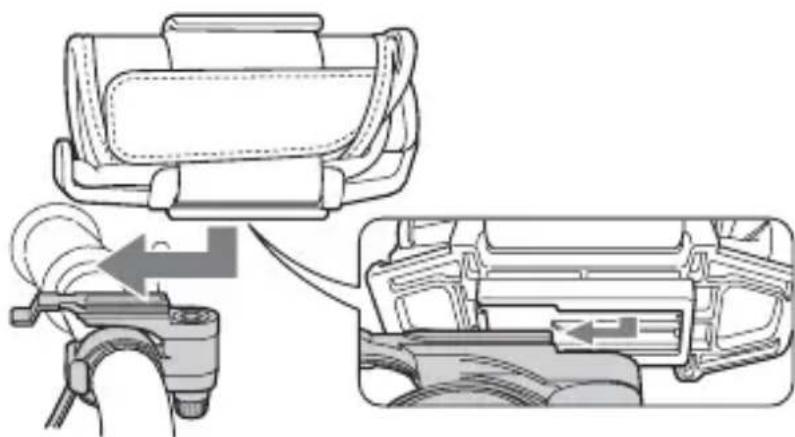
natural_image
Diagram showing car seat assembly with a bracket and cable, no text or symbols present6 When removing the holder from the bracket, slide the holder in the direction as illustrated below while pressing down the knob of the bracket.
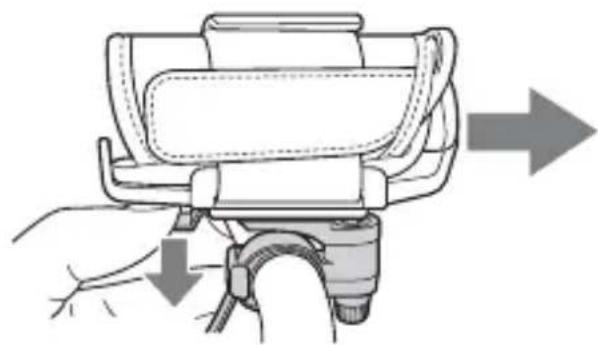
natural_image
Diagram of a car seatbelt device with arrows indicating movement or force direction (no text or symbols)Caution
- Do not apply the bracket other than the handle.
- When attaching the GPS unit to a bicycle or a motorcycle, be sure the GPS unit does not interfere with the operation of the bicycle or the motorcycle.
- Be sure not to operate the GPS unit while riding a bicycle or a motorcycle.
- When you check the LED indicator on the GPS unit while riding a bicycle or a motorcycle, be sure to stop operating the bicycle or the motorcycle before checking the GPS unit.
- If you attach the GPS unit to the holder without using the carrying case, this may damage the GPS unit, or cause the GPS unit to fall. Be sure to use the carrying case.
Using the unit
Record the GPS log using the GPS unit
This unit can record your position and time (GPS log files) in the internal memory. When you turn on the power, tracking starts, and GPS log recording starts. The unit tracks the location automatically and records the position every fifteen seconds after tracking starts.
1 Press the (Power) button longer to turn on the unit.
Direct the antenna portion of the unit to the sky in open sky environments and hold it for about a minute until the GPS lamp is in the tracking process.
The GPS lamp status differs as illustrated below depending on the operating status of the unit.
While searching\*
flashes twice rapidly
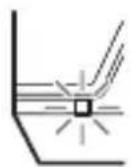
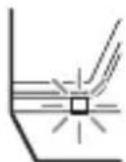

flashes twice rapidly
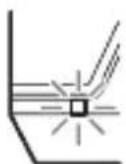
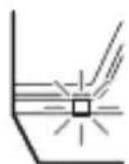
While tracking\*
flashes once slowly
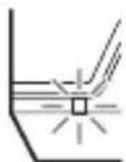
2 seconds
flashes once slowly
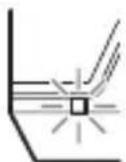
* searching: the unit is searching for the GPS satellites and GPS log recording hasn't started.
tracking: the unit is tracking and recording the GPS log.
- When it is difficult to make tracking and while the GPS lamp is in searching, direct the antenna portion of the unit upward and wait for a while. If the unit cannot track even after waiting for five minutes, you may be in a location where the radio signals from GPS satellites cannot be reached. Try again in open sky environments.
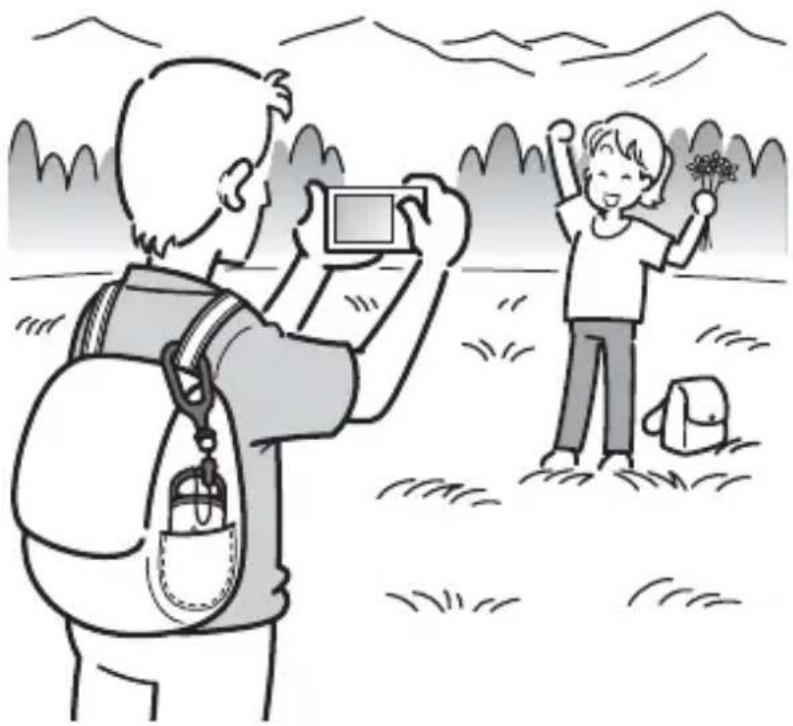
2 Record images with a camera.
natural_image
Illustration of a child and a person outdoors, one taking a photo with a smartphone, the other holding flowers (no text or symbols)3 Press the ⏻ (Power) button longer to turn the unit off after using.
- The GPS log recorded on the unit is stored as a log file during the time the unit is turned on.
Tips
- Tracking may be difficult depending on the environmental condition. Check the status of the GPS lamp at times.
- You can merge two GPS log files recorded separately due to on/off of the power into one file using the supplied software. The position information will be completed by this procedure. Be aware that once you merge the log files into one, it cannot be separated again.
Checking remaining battery power
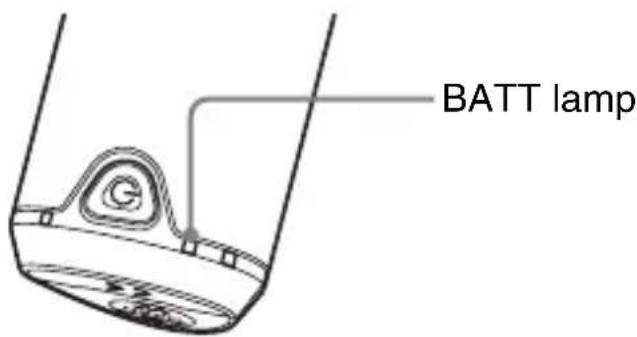
- You can check the remaining battery power on the status of the BATT lamp by pressing (Power) button shorter with the power turned on. Lights in green: 70 % or more power remains.*
Flashes green: 20 % to 70 % power remains.*
When the available remaining power becomes 20 % or lower, the BATT lamp flashes red. When the remaining power becomes even lower, the BATT lamp flashes more frequently and the unit is deactivated for tracking. Replace the battery with a new one.
* This function may not operate properly when using a Nickel-Metal Hydride battery.
The unit consumes more battery power while searching than while tracking.
Even if the unit calculates the remaining battery power and makes the BATT lamp flash red while searching, when the unit switches from searching to tracking, you may be able to use the unit longer.
On the internal memory
The unit can record GPS log files up to about 360 hours.
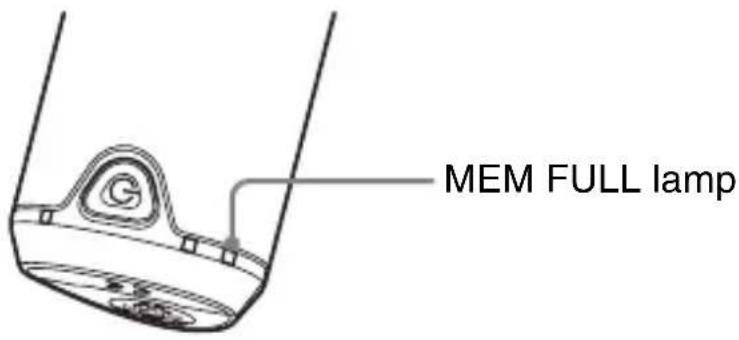
- When the available internal memory becomes about 10 % or lower, the MEM FULL lamp flashes red. When the internal memory becomes full, the power is turned off automatically after the MEM FULL lamp lights up for a minute.
- If you press the CLEAR button (page 17) longer with an object with a tapered tip while the power is turned on, all the GPS log files in the internal memory will be erased and the power goes off automatically.
Using the software
Using the supplied software
You can view the GPS log files recorded in the unit on the computer and check the locations of where you recorded images on the map using the supplied software.
This section describes the English version of screen contents.
The supplied CD-ROM contains “GPS Unit Application Software” (“GPS Image Tracker” and “Picture Motion Browser”).
"GPS Image Tracker"
You can import the GPS log recorded in the unit to your computer, view and manage the GPS log files. You can apply position information to the images you recorded with your camera.
"Picture Motion Browser"
- You can organize the images on the calendar by date recorded and view the images.
- Using the “Map View” function, you can check the recorded location of the images and the tracks of the GPS log imported to the “GPS Image Tracker” on the map.
- You can send the original map created with the “Map View” function via e-mail.
Recommended computer environment
The following environment is recommended for using the supplied software.
OS (pre-installed): Microsoft Windows 2000 Professional SP4/Windows XP* SP2/Windows Vista*
* 64-bit editions and Starter (Edition) are not supported.
CPU/Memory: Pentium III 500 MHz or faster/256 MB or more (Pentium III 800 MHz or faster/512 MB or more is recommended)
Hard Disk: Disk space required for installation – approximately 400 MB
Display: 1024 × 768 dots or more
- To operate movies, you need a computer system environment that supports “Picture Motion Browser” supplied with your Cyber-shot or Handycam.
Notes on connecting the unit to a computer
- Operations are not guaranteed for all the recommended computer environments mentioned above.
- If you connect two or more USB devices to a single computer at the same time, some devices, including your camera, may not operate, depending on the types of USB devices you are using.
- Operations are not guaranteed when using a USB hub.
- When your computer resumes from a suspend or sleep mode, communication between the unit and your computer may not recover at the same time.
Installing the supplied software
Check the following before installing the supplied software.
- When handling the movies recorded with a Handycam or a Cyber-shot, you need to install “Picture Motion Browser” supplied in their kit additionally.
- Be aware of the following when installing “Picture Motion Browser” supplied with the Handycam or the Cyber-shot (hereinafter collectively called “cameras”).
- When the version of “Picture Motion Browser” installed on your computer is older than “3.0.xx.xxxxx”, install “Picture Motion Browser” supplied with the cameras first, then install “Picture Motion Browser” using the CD-ROM supplied with this kit.
- When the version of “Picture Motion Browser” installed on your computer is equivalent to “3.0.xx.xxxxx” or later, install “Picture Motion Browser” using the CD-ROM supplied with this kit, then install “Picture Motion Browser” supplied with the cameras. By doing this, extra functions will be added.
Install the supplied software in the following procedures.
- Log on to a computer as Administrator.
Installing "GPS Image Tracker" and "Picture Motion Browser"
1 Turn on your computer, and insert the supplied CD-ROM into the CD-ROM drive.
The screen to select the Setup Language appears.
- For Windows Vista, the AutoPlay screen appears. Select “Run Setup.exe.” and follow the instruction that appears on the screen to proceed with the installation.
- If the installation does not start, click [Start] → [My Computer] (for Windows 2000, double-click [My Computer]), then double-click the 📋 (SONYPICTUTIL) icon.
2 Select the desired language, then click [Next].
The “License Agreement” screen appears.
3 Read the agreement carefully. If you accept the terms of this agreement, click the radio button next to [I accept the terms of the license agreement] and then click [Next].
The screen that shows the completion of the installation preparation appears.
4 Confirm the installation setting and click [Install].
5 Follow the instructions on the screen to complete the installation.
- When the restarting confirmation message appears, restart the computer by following the instructions on the screen.
- The installation screen of the software may appear depending on the system environment of your computer. Follow the instruction to proceed the installation.
6 Remove the CD-ROM after the installation is complete.
Apply position information to the images using “GPS Image Tracker”
Connect the unit to the computer, launch the supplied software, “GPS Image Tracker”, and import GPS log files to the computer. You can then apply the position information to the imported images.
- Before operating “GPS Image Tracker”, import the recorded images to the computer using the supplied software “Picture Motion Browser”. For details on the procedure to import images from the camera to the computer, refer to the instruction manual supplied with the camera.
- Select [Help] → [About Picture Motion Browser] → [Supported Formats] from the menu bar of “Picture Motion Browser” to check the available types of the movie files.
- For details on “GPS Image Tracker”, refer to its help files ( ).
- When connecting the unit to the computer, it does not need a battery as the power is supplied from the computer.
1 Launch "GPS Image Tracker".
Double-click [T] (GPS Image Tracker) on the desktop. Or, from the Start menu: Click [Start] → [All Programs] (for Windows 2000, [Programs]) → [Sony Picture Utility] → [GPS Image Tracker].
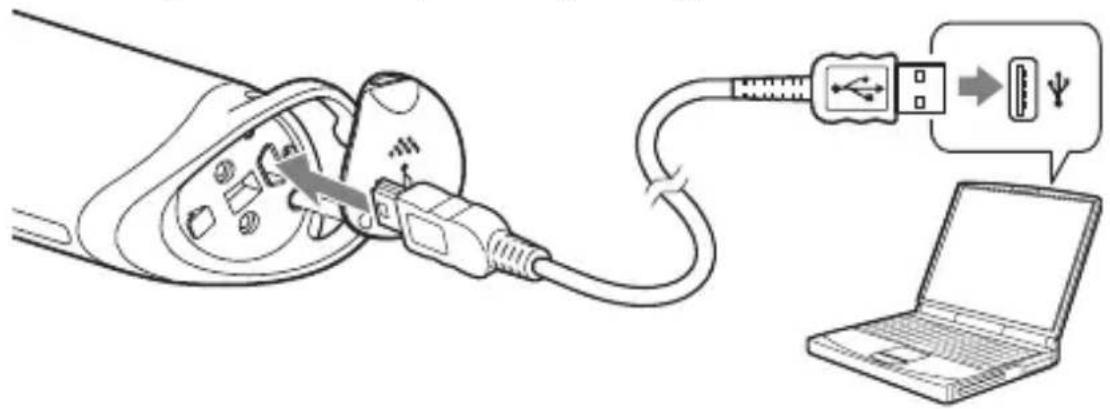
2 Connect the unit to the computer.
Pull out the jack cover as illustrated in the following and connect the unit with the GPS log files to the computer using the supplied USB cable.
Using the software
Note
The screen of the removable disk may appear, be sure not to update the data in the GPS folder.
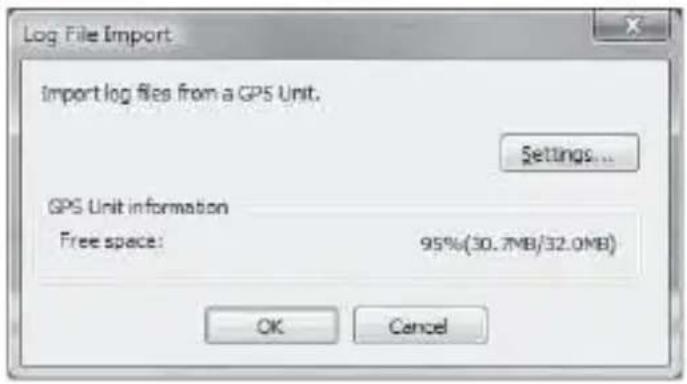
3 Import the GPS log files.
Click [OK] on the "Log File Import" window.
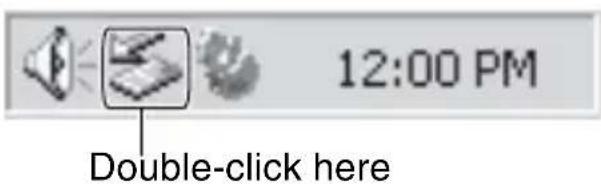
4 Delete the USB connection.
①Double-click on the tasktray.
② Click 🏠 (USB Mass Storage Device) → [Stop].
③Confirm the device on the confirmation window, then click [OK].
④Click [Close].
The unit is disconnected from the computer.
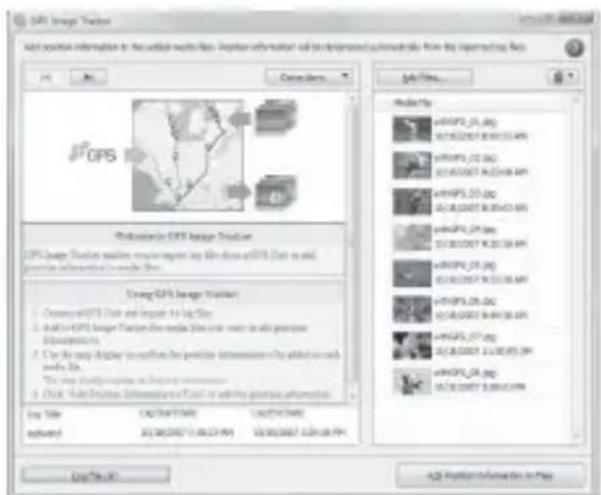
5 Add images and apply position information to the images.
To add images, select the image files to which you want to apply position information on “Picture Motion Browser”, then drag and drop them to the Media File list on the main window of the “GPS Image Tracker”.
To apply the position information to all image files in the list, click [Add Position Information to Files] on the main window, then click [Add].
- When using a computer that is connected to the Internet, you can match the images and the GPS log files while checking on the map.
Main window
![Media File list [Add Position Information to Files] button](/content/2026/03/510470/images/c593387525b67ebfbf2b38355b619c6fb8009f7c9946a630ad135d0adde23729.jpg)
- When using a computer that is not connected to the Internet, you can execute the matching, but you cannot display the map.
Caution
- When you handle many images at once, the operation of your computer may become slow depending on the system environment of your computer.
- When the application of the position information to the images is completed, be sure to exit “GPS Image Tracker”.
View images on the “Picture Motion Browser” screen
The images and the tracks matched with “GPS Image Tracker” can be viewed by using the “Map View” function of “Picture Motion Browser”.
1 Launch "Picture Motion Browser" on the computer.
Double-click [] (Picture Motion Browser) on the desktop.
Or, from the Start menu: Click [Start] [All Programs] (for Windows 2000,
[Programs]) → [Sony Picture Utility] → [Picture Motion Browser].
2 Select the images that you want to display on the map.
You can only display the images with position information on the map. The image files of the thumbnails with icons displayed on the upper right carry the position information.
3 Click the icon.
The “Map View” window appears, and the selected images and the tracks corresponding to the images are displayed.
* If you have not imported the log file of the same date as the images selected on "GPS Image Tracker", the tracks will not be displayed.
For details on using “Picture Motion Browser”, refer to the “PMB Guide”
* To use “Map View” function, your computer needs to be connected to the Internet.
Technical support
Additional information on this product and answers to frequently asked questions can be found at the Sony Customer Support Website.
http://www.sony.net/
Additional information
Trouble shooting
If you run into any problem using the unit, use the following table to troubleshoot the problem. If the problem persists, contact your Sony dealer or local authorized Sony service facility.
A recorded log file is missing.
- You may have used the unit in the locations where the GPS unit cannot track. Avoid using the unit in the locations such as in tunnels, underground locations or among obstructions such as tall buildings or trees.
The unit cannot receive radio signals from GPS satellites.
- You may be in a location where the radio signals from GPS satellites cannot be reached.
Avoid using the unit in the locations such as in tunnels, underground locations or among obstructions such as tall buildings or trees.
It takes much time to receive radio signals from GPS satellites.
- It may take a long time to track the location depending on the positions of GPS satellites.
For details, refer to “What is GPS?” on page 10.
You press the (Power) button, but the unit is not turned on.
- There may be a bad contact between the battery cover and the battery. Open the battery cover and re-insert the battery.
- You may have used a battery with lower remaining power. Replace the battery with a new one.
- The battery may not be inserted properly. Insert a battery properly according to the procedures in “Inserting a battery” (page 18).
- You cannot record the GPS log while the GPS unit is connected to the computer. The BATT (battery) lamp will not light even if you press the ⏻ (Power) button.
Your computer does not recognize the unit.
- Your computer may not properly recognize the unit because you connected the unit and your computer with the USB cable before you started your computer.
Disconnect the USB cable and restart your computer, then connect the USB cable again.
The images are not displayed at the correct position (Tracking error is large).
- You may not apply the accurate position information to the images in the following (page 12).
- The clock setting of the camera is incorrect. You can change the date and time of your images using “Picture Motion Browser”. Set the date and time correctly, then match the images and the GPS log files again. For details on changing date and time, refer to the help files of “Picture Motion Browser”.
- The setting of time adjustments (time zone or daylight saving time) is incorrect. Using “GPS Image Tracker”, set the time adjustments of the GPS log file correctly, then match the images and GPS log files again. For details on the software, refer to the help files of “GPS Image Tracker”.
- The GPS log file was not recorded when recording images.
- There is a certain limitation to the accuracy of the position information applied by “GPS Image Tracker” due to the following reasons.
- This unit records position information every fifteen seconds. If you have an image recorded at any moment other than when the unit records your position, a rough position is estimated by calculation.
- The GPS unit itself has tracking error. At locations surrounded by tall buildings, etc. the tracking accuracy may deteriorate.
Specifications
Power
LR6 (size AA) alkaline battery or HR6 (size AA) Nickel-Metal Hydride battery × 1 (Power is supplied from the USB bus power while in the USB connection.)
Power consumption
Approx. 0.3 W (Operating on a battery)
Operating time on a battery (When used at 25 °C (77 °F))
Approx. 10 hours (When using an LR6 (size AA) Sony alkaline battery),
Approx. 14 hours (When using an HR6 (size AA) Sony Nickel-Metal Hydride battery)
Operating time may differ depending on the situation or the environmental condition.
Receiving frequency
1575.42 MHz (L1 band, C/A code)
Receiving method
12 channel all-in-view tracking
Receiving sensitivity
-150 dBm or less (average, while tracking)
Interface
USB 2.0 full speed
Memory capacity
Approx. 31 MB
Logging interval
Approx. 15 seconds
Operating temperatures
Approx. 0 to 40 °C (32 to 104 °F)
Storage temperature
Approx. -20 to +60^ (-4 to +140^)
Dimensions
Approx. 87 mm × 36 mm × 36 mm ( 3^1/2 × 1^7/16 × 1^7/_16 inches) (w/h/d, excluding the projecting parts)
Mass
Approx. 55 g (2 oz) (excluding a battery)
Supported image format
JPEG (compatible with Exif 2.1 or later)
Movie file taken with your Sony Digital Still Camera or Sony Digital Camcorder
(You need to install Picture Motion Browser supplied with your Sony Digital Still Camera or Sony Digital Camcorder to your computer.)
Included items
• GPS Unit (GPS-CS1) (1)
- Carabiner (1)
- Bracket (1)
- Holder (1)
- Armband (1)
- Carrying case (1)
- USB cable (1)
- “GPS Unit Application Software” installer disc (1)
- Set of printed documentation
Design and specifications are subject to change without notice.
Trademarks
- Google is a registered trademark of Google Inc.
- Microsoft, Windows are either registered trademarks or trademarks of Microsoft Corporation in the United States and/or other countries.
- Pentium is a trademark or registered trademark of Intel Corporation.
- In addition, system and product names used in this manual are, in general, trademarks or registered trademarks of their respective developers or manufacturers. However, the ^TM or marks are not used in all cases in this manual.
Français
natural_image
Simple line drawing of a trash bin with two crossed lines indicating no waste or prohibition (no text or symbols)
natural_image
Silhouette of a person standing on a globe with multiple satellites emitting signal waves (no text or symbols)natural_image
Illustration of a child and a person outdoors, one taking a photo with a smartphone, no text or symbols presentflowchart
graph TD
    A["SdD26"] --> C["Laptop"]
    B["ANO8"] --> C["Laptop"]
    C --> D["Photo: 1 person pointing at a world map"]
    D --> E["Digital Phone"]
FR
natural_image
Illustration of two people using a laptop with a thought bubble showing a screen (no text or symbols present)Préparation
natural_image
Line drawing of a mechanical clamp or clip device (no text or symbols)- Unité GPS (GPS-CS1) (1) • Mousqueton (1)
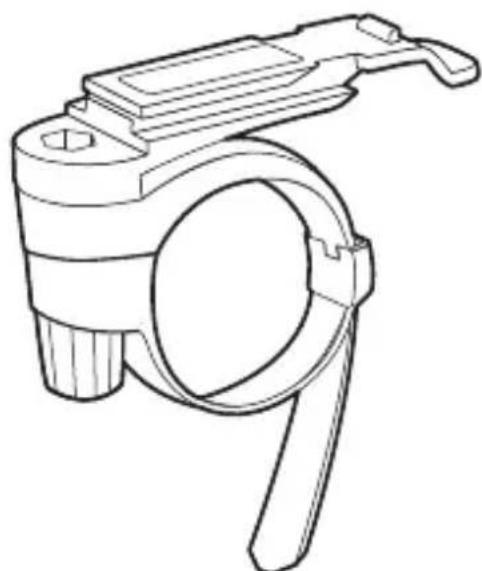
natural_image
Line drawing of a mechanical device with a handle and circular lens (no text or symbols)• Support (1) ^*2
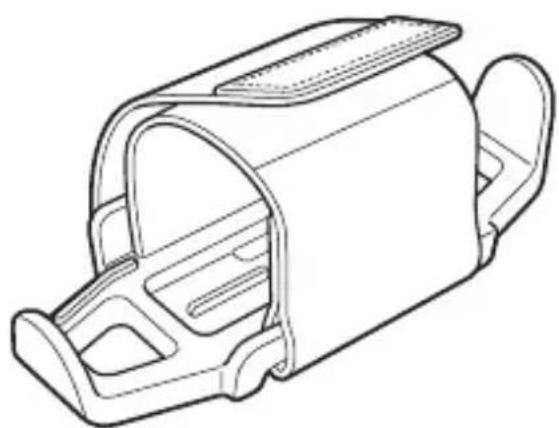
natural_image
Technical line drawing of a mechanical component with no visible text or symbols- Monture (1) ^*2
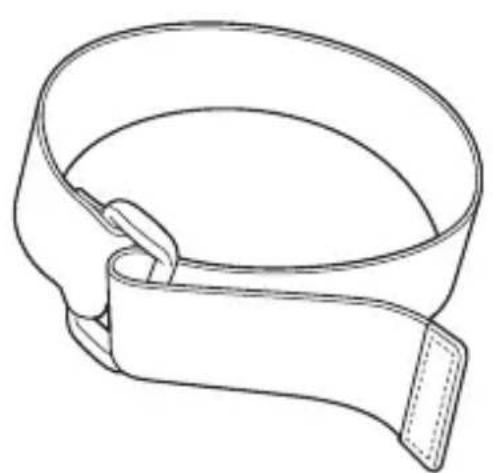
natural_image
Line drawing of a mechanical belt or grip component (no text or symbols)- Brassard (1) ^*2
natural_image
Line drawing of a cylindrical object with a looped handle and dashed outline (no text or symbols)- Etui de transport (1) ^*2
natural_image
Illustration of a U-shaped cable with two USB connectors (no text or symbols)- Câble USB (1)
- CD-ROM
natural_image
Diagram of a battery inside a device with a downward arrow indicating compression or disassembly (no text or symbols present)Précaution
natural_image
Illustration of two mechanical devices with directional arrows indicating motion (no text or symbols)natural_image
Line drawing showing two different types of hand seatbelt buckle mechanisms (no text or symbols)natural_image
Illustration of a belt buckle with a belt buckle being adjusted (no text or symbols)natural_image
Line drawing of a human arm with wrist strap and wristband, no text or symbols presentPrécaution
natural_image
Diagram showing a mechanical assembly with a component being inserted into a housing, and a close-up of the interior panel (no text or symbols present)natural_image
Diagram of a bicycle seat assembly with arrows indicating direction (no text or symbols)Précaution
natural_image
Illustration of a child and a person outdoors, one taking a photo with a smartphone, no text or symbols presentFR
Remarque
Précaution
1575,42 MHz (bande L1, code C/A)
- English
- WARNING
- For Customers in the U.S.A.
- Regulatory Information
- Declaration of Conformity
- CAUTION
- Note:
- For Customers in Canada
- For Customers in Europe
- CE
- Disposal of Old Electrical & Electronic Equipment (Applicable in the European Union and other European countries with separate collection systems)
- Table of contents
- Preparing
- Use the GPS unit outside
- Using the unit
- Using the software
- Additional information
- Precautions
- On a battery
- A battery is not supplied
- Notes on a Nickel-Metal Hydride battery
- On recorded data on the unit
- Compensation for damaged log data will not be made
- On use and storage
- Note on the bracket
- Note on the armband
- Note on the included items
- On carrying the unit
- On cleaning the unit
- Cleaning the unit surface
- Note on the location where you use the GPS unit
- Note on applying position information to still images taken with digital still cameras or digital video cameras other than Sony products
- What is GPS?
- Notes
- On tracking errors
- Error caused by position of GPS satellites
- Error during tracking process
- On error due to incorrect clock setting on a camera
- Features
- Using this unit and the supplied software, you can:
- Record the GPS log using the GPS unit
- 3
- Apply position information to the images using "GPS Image Tracker"
- 4
- View images on the "Picture Motion Browser" screen
- Checking included items
- Identifying parts
- Inserting a battery
- Slide the battery cover.
- Insert a battery into the unit with the + side of the battery facing up.
- Close the battery cover.
- To remove the battery
- Cautions
- Cautions on carrying the unit
- Carrying the GPS unit using the carabiner
- Inserting the GPS unit into the carrying case
- Carrying the GPS unit with the carrying case
- Carrying the GPS unit using the armband
- Attach the GPS unit to the handle of a bicycle or a motorcycle using the holder
- Attach the bracket to the handle of the bicycle etc., following the procedure below.
- Insert the GPS unit into the carrying case.
- Press the (Power) button longer to turn on the unit.
- While searching\*
- While tracking\*
- Record images with a camera.
- Press the ⏻ (Power) button longer to turn the unit off after using.
- Tips
- Checking remaining battery power
- On the internal memory
- Using the supplied software
- "GPS Image Tracker"
- "Picture Motion Browser"
- Recommended computer environment
- Notes on connecting the unit to a computer
- Installing the supplied software
- Installing "GPS Image Tracker" and "Picture Motion Browser"
- Turn on your computer, and insert the supplied CD-ROM into the CD-ROM drive.
- Select the desired language, then click [Next].
- Read the agreement carefully. If you accept the terms of this agreement, click the radio button next to [I accept the terms of the license agreement] and then click [Next].
- Confirm the installation setting and click [Install].
- Follow the instructions on the screen to complete the installation.
- Remove the CD-ROM after the installation is complete.
- Apply position information to the images using “GPS Image Tracker”
- Launch "GPS Image Tracker".
- Connect the unit to the computer.
- Note
- Import the GPS log files.
- Delete the USB connection.
- Add images and apply position information to the images.
- View images on the “Picture Motion Browser” screen
- Launch "Picture Motion Browser" on the computer.
- Select the images that you want to display on the map.
- Click the icon.
- Technical support
- Trouble shooting
- A recorded log file is missing.
- The unit cannot receive radio signals from GPS satellites.
- It takes much time to receive radio signals from GPS satellites.
- You press the (Power) button, but the unit is not turned on.
- Your computer does not recognize the unit.
- The images are not displayed at the correct position (Tracking error is large).
- Specifications
- Power
- Power consumption
- Operating time on a battery (When used at 25 °C (77 °F))
- Receiving frequency
- Receiving method
- Receiving sensitivity
- Interface
- Memory capacity
- Logging interval
- Operating temperatures
- Storage temperature
- Dimensions
- Mass
- Supported image format
- Included items
- Trademarks
- Français
- Préparation
- Précaution
- Remarque
Brand : SONY
Model : GPSCS1KASP
Category : Other camera accessories