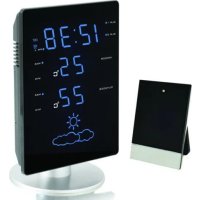
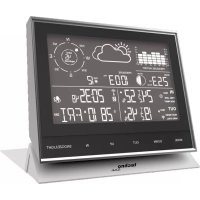
WS 6820 - Weather Station TECHNOLINE - Free user manual and instructions
Find the device manual for free WS 6820 TECHNOLINE in PDF.

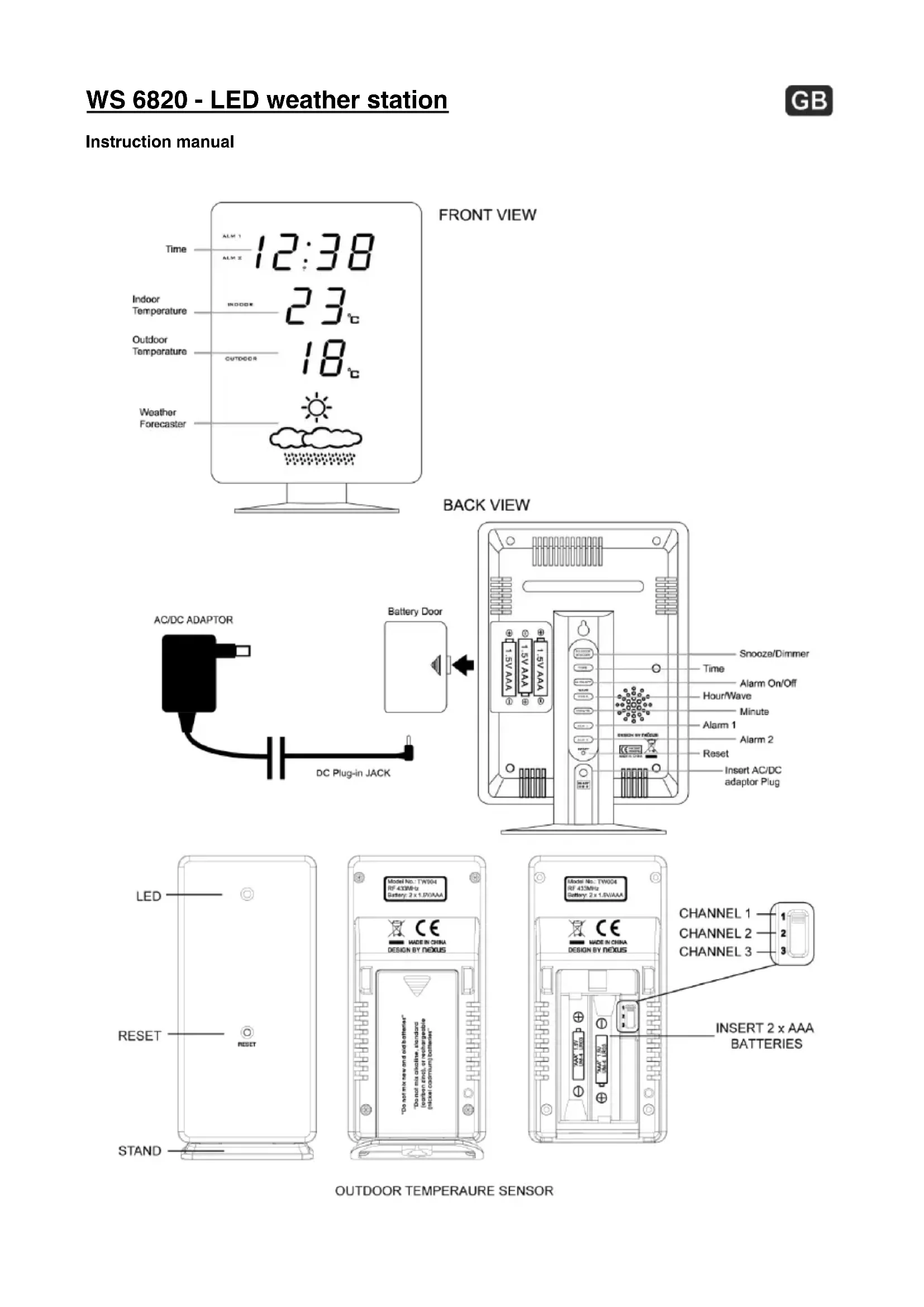


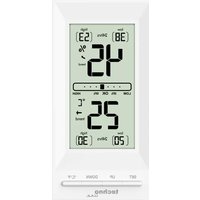
| Product Type | Weather station with DCF radio-controlled clock |
| Brand | TECHNOLINE |
| Model | WS 6820 |
| Main power supply | AC/DC adapter (included) + 3 AAA backup batteries (not included) |
| Outdoor transmitter power supply | 2 AAA batteries (not included) |
| Indoor temperature range | 0°C to +45°C |
| Outdoor temperature range | -40°C to +70°C |
| Temperature accuracy | ±1°C |
| Display | LED screen with adjustable backlight (SNOOZE/DIMMER) |
| Time reception | DCF signal (automatic 1h, 2h, 3h; manual via WAVE/HOUR button) |
| Time zones | Adjustable GMT+0, +1, +2 |
| Alarms | 2 independent alarms (ALM1 and ALM2) with adjustable snooze (5 to 60 min) |
| Weather forecast | Built-in barometer, icons for 12-24h (sunny, cloudy, rain, snow) |
| Outdoor transmitter range | Up to 100 m in open space |
| Operating temperature | 0°C to +45°C |
| Cleaning | With a soft, dry cloth; avoid solvents |
| Safety | Do not open the housing, avoid shocks, humidity, extreme temperatures |
| Battery instructions | Use alkaline batteries, respect polarities, do not recharge, remove if prolonged inactivity |
| Repairability | Spare parts not specified; reset via RESET button |
Frequently Asked Questions - WS 6820 TECHNOLINE
User questions about WS 6820 TECHNOLINE
0 question about this device. Answer the ones you know or ask your own.
Ask a new question about this device
Download the instructions for your Weather Station in PDF format for free! Find your manual WS 6820 - TECHNOLINE and take your electronic device back in hand. On this page are published all the documents necessary for the use of your device. WS 6820 by TECHNOLINE.
USER MANUAL WS 6820 TECHNOLINE
The weather station obtains the accurate time and outdoor transmitter data with wireless technology. Same as all wireless devices, the reception is maybe affected by the following circumstances:
- long transmitting distance
• nearby mountains and valleys - near freeway, railway, airports, high voltage cable etc.
- near construction site
- among tall buildings
• inside concrete buildings - near electrical appliances (computers, TV's, etc) and metallic structures
• inside moving vehicles
Place the weather station at a location with optimal signal, i.e. close to a window and away from metal surfaces or electrical appliances.
QUICK SETUP
Step 1 Plug in the AC/DC adaptor to any AC household outlet. Then plug in the power jack to the back of the weather station.
Step 2 Slide open the battery cover at the back of the weather station and insert 3 x AAA batteries (not included) into the battery compartment by observation the correct +/- polarity. Replace the battery cover.
Step 3 Keep the weather station and outdoor transmitter next to each other. Slide opens the battery cover at the back of the outdoor transmitter. Make sure the channel selector on the back of the
outdoor transmitter is set at position 1 (top position) and insert 2 x AAA batteries (not included) into the battery compartment by observation the correct +/- polarity. Replace the battery cover. The weather station will receive data signal from the outdoor transmitter in few seconds.
Note: Only one outdoor transmitter is receivable by the weather station.
Keep in mind that the outdoor transmitter has a maximum open-area transmission of 100 meter with no obstructions. Actual transmission range will depend on any obstruction in the path of the signal. Each obstruction (roof, walls, floors, ceilings, thick trees, etc.) will effectively cut signal range in half.
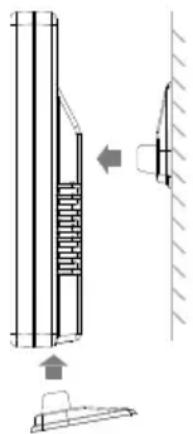
Insert the holder to the bottom of the outdoor transmitter for desktop or insert it to the back of the outdoor transmitter for wall mount purpose. Then place the outdoor transmitter in a dry and shaded area outdoor.
Step 4 Peel off the protective label on the front of the weather station. Now the weather station is ready to work.
After the weather station has received the outdoor temperature from outdoor transmitter, it will start to search for the DCF-time-signal. This may take overnight. In case the weather station does not catch the DCF-time-signal, set the clock manually.
During any reception of DCF-time-signal, the thermometer does not take temperature measurement. It will change to low brightness and will resume to high brightness after reception of DCF-time-signal. After first time installation, the temperature readings will get stable and become more accurate in around 30 minutes.
Back-up batteries
When the power supply is not in use or interrupted, the weather station will be powered by the back-up batteries. The LED display is turned off, but time and alarm time remain stored (also in the event of a power failure). Also the alarm functions work as usual.
DCF-TIME-SIGNAL AND SIGNAL STRENGTH DISPLAY
After the weather station has received the outdoor temperature from outdoor transmitter, it will start to search for the DCF-time-signal. 📋 icon blinks. Time display shows 0:00.
When strong DCF-time-signal is detected, display shows with 3 bars ≡:00.
When weak or no DCF-time-signal is detected, display shows with 1 bar -:□□ or r:-□□. Replace the weather station to another area for better reception or unplug the power jack to start reception of DCF-time-signal again.
During reception, the signal strength may move from 1 bar to 2 bars to 3 bars. That is normal because the weather station is detecting DCF-time-signal and other signals in the air at the same time.
If the clock does not receive DCF-time-signal within 21 minutes, it will stop to search for the DCF-time-signal.
During reception, press and hold the WAVE/HOUR button to stop the reception of DCF-time-signal. Press and hold WAVE/HOUR again to return to reception mode and signal strength indication.
Press TIME button once to switch to normal time display.
Successful or failed reception
icon becomes static (stop blinking) when reception is successful.
icon disappears when reception is failed.
Automatic and manual reception
The weather station starts automatic reception everyday at 1:00, 2:00, and 3:00 o'clock. If it fails to receive the DCF-time-signal until 3:00 o'clock, it will start again reception at 4:00 o'clock. If it fails again, it will start again reception at 5:00 o'clock. If it fails again, it will start again automatic reception at 1:00 o'clock at the next day.
To start manually the reception of DCF-time-signal press WAVE/HOUR button once anytime. The time display will go to radio reception mode :00
Select time zone
Press TIME and SNOOZE button together, time display changes to 01. Release SNOOZE button and keep pressing TIME button, then press MINUTE button to set the time zone:
00 = GMT + 0 hour (e.g. UK) 01 = GMT + 1 hour (Central European time e.g. Germany) 02 = GMT + 2 hours (Eastern European time e.g. Finland)
MANUAL TIME SETTING
Press and hold TIME button and at the same time press HOUR button once at a time to set the hour. Press and hold TIME button and at the same time press MINUTE button once at a time to set the minutes.
Note: The time is displayed in 24-hour display format.
ALARM SETTING
Press and hold ALM 1 or ALM 2 button and at the same time press HOUR button once at a time to set the hour. Press and hold ALM 1 or ALM 2 button and at the same time press MINUTE button once at a time to set the minutes.
Turn ON/OFF alarm 1 and/or alarm 2
To turn on alarm 1 only, press AL ON-OFF button. ALM 1 LED lights up on upper left of the hour digits. To turn on alarm 2 only, press AL ON-OFF button again, ALM 2 LED lights up on lower left of the hour digits. To turn on both alarms 1 and 2, press AL ON-OFF button again. ALM 1 and ALM 2 LED light up. To turn off both alarms 1 and 2 permanently, press AL ON-OFF button again. Both ALM 1 and ALM 2 LED disappear from the display.
Note: Alarm duration is 5 minutes.
Snooze alarm
When time reaches the set alarm 1 or alarm 2 time, the clock will beep with blinking ALM 1 or ALM 2 LED. Press SNOOZE button once, the alarm sound will stop and ALM 1 or ALM 2 LED keeps blinking. Alarm will sound again in 5 minutes.
Set snooze duration (from 5 to 60 minutes)
Press and hold SNOOZE button and time display will show 05 (default snooze duration). Then press MIN button to set the desired snooze duration.
Stop the alarm
When time reaches the set alarm 1 or alarm 2 time, the clock will beep with blinking ALM 1 or ALM 2 LED. Press ALM 1 or ALM 2 button, the alarm sound will stop and ALM 1 or ALM 2 LED becomes static. The alarm will beep again same time next day.
WEATHER FORECAST AND BAROMETER
The weather station has a built-in barometer which measures the barometric pressure. After power up, the display shows Sunny & Cloudy icon. The weather station takes around 24 hours to gather data of barometric pressure changes and predicts next 12 – 24 hours weather conditions.
Note: The weather station predicts next 12 – 24 hours weather conditions. It may not match with the current weather condition outside.
There are four types of weather icons for predicted weather condition:
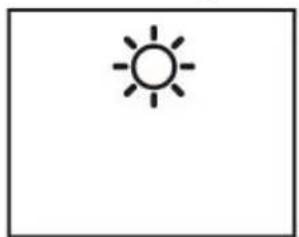
SUNNY
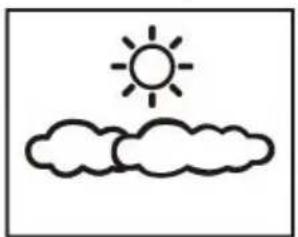
SUNNY & CLOUDY
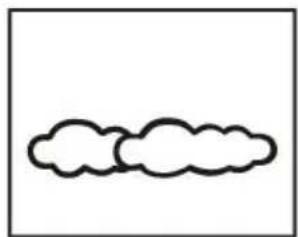
CLOUDY
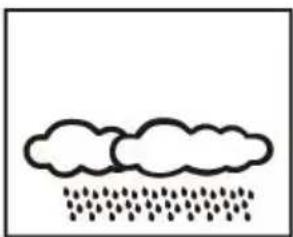
RAINY
Note: Moving the weather station around your house or building will affect its accuracy because the sudden change of temperature or height/ attitude will affect the accuracy of the weather station. It will take 24 hours to get stable again to predict next 12 – 24 hours weather conditions.
TROUBLE SHOOTING
Press RESET button of the weather station and then press RESET button of the outdoor transmitter. The weather station will be reset to default settings and needs to be updated by DCF-time-signal again.
Losing the outdoor temperature
When the outdoor temperature digits show “—”, the wireless transmission is either interrupted or lost. Press MINUTE button of the weather station, then press RESET button of the outdoor transmitter. If the weather station continues to lose the outdoor temperature display, try placing the outdoor transmitter in a different location until you have smooth transmission of temperature data.
DIMMER FUNCTION
Press SNOOZE/ DIMMER button to adjust high or low brightness of the LED display.
SPECIFICATIONS
Operation temperature: 0° C to +45° C
Temperature measuring range:
Indoor: 0° C to +45° C
(display shows HH.H / LL.L if out of this range)
Outdoor: -40°C to +70°C
(display shows HH.H / LL.L if out of this range)
Temperature resolution: 1°C
Alarm duration: 5 minutes
Snooze duration: 5 to 60 minutes
PRECAUTIONS
- This main unit is intended to be used only indoors.
- Do not subject the unit to excessive force or shock.
- Do not expose the unit to extreme temperatures, direct sunlight, dust or humidity.
- Do not immerse in water.
- Avoid contact with any corrosive materials.
- Do not dispose this unit in a fire as it may explode.
- Do not open the inner back case or tamper with any components of this unit.
Batteries safety warnings
- Please read all instructions carefully before use.
- Use only alkaline batteries, not rechargeable batteries.
• Install batteries correctly by matching the polarities (+/-).
• Always replace a complete set of batteries. - Never mix used and new batteries.
- Remove exhausted batteries immediately.
- Remove batteries when not in use.
- Do not recharge and do not dispose of batteries in fire as the batteries may explode.
- Ensure batteries are stored away from metal objects as contact may cause a short circuit.
- Avoid exposing batteries to extreme temperature or humidity or direct sunlight.
- Keep all batteries out of reach from children. They are a choking hazard.
Consideration of duty according to the battery law
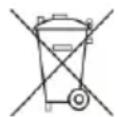
Old batteries do not belong to domestic waste because they could cause damages of health and environment. You can return used batteries free of charge to your dealer and collection points. As end-user you are committed by law to bring back needed batteries to distributors and other collecting points!
Consideration of duty according to the law of electrical devices
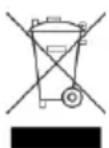
This symbol means that you must dispose of electrical devices from the General household waste when it reaches the end of its useful life. Take your charger to your local waste collection point or recycling centre. This applies to all countries of the European Union, and to other European countries with a separate waste collection system.
Soleil
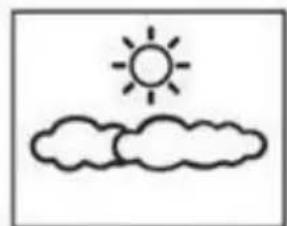
Soleil et nuages
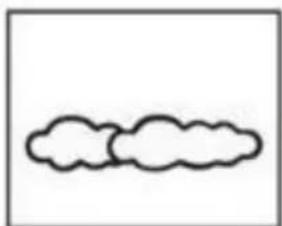
Nuages
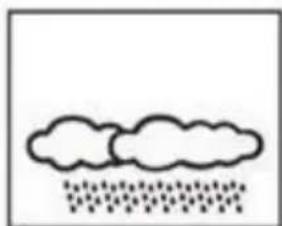
Pluie
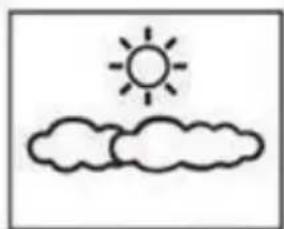
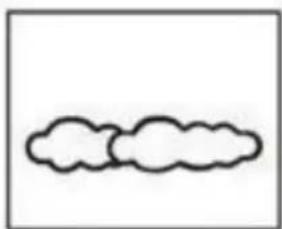
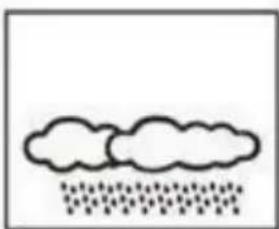
Slunný
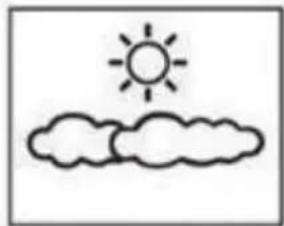
Slunný & zakalený
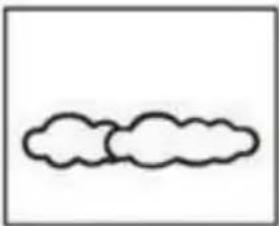
Zakalený
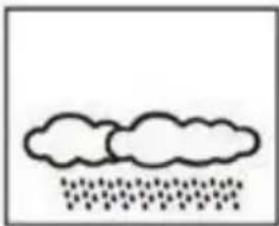
Deštivý
WYŚWIETLACZ SYGNAŁU CZASU DCF I SIŁY SYGNAŁU
- QUICK SETUP
- BACK-UP BATTERIES
- DCF-TIME-SIGNAL AND SIGNAL STRENGTH DISPLAY
- SUCCESSFUL OR FAILED RECEPTION
- AUTOMATIC AND MANUAL RECEPTION
- SELECT TIME ZONE
- MANUAL TIME SETTING
- ALARM SETTING
- TURN ON/OFF ALARM 1 AND/OR ALARM 2
- SNOOZE ALARM
- SET SNOOZE DURATION (FROM 5 TO 60 MINUTES)
- STOP THE ALARM
- WEATHER FORECAST AND BAROMETER
- TROUBLE SHOOTING
- LOSING THE OUTDOOR TEMPERATURE
- DIMMER FUNCTION
- SPECIFICATIONS
- PRECAUTIONS
- BATTERIES SAFETY WARNINGS
- WYŚWIETLACZ SYGNAŁU CZASU DCF I SIŁY SYGNAŁU
Brand : TECHNOLINE
Model : WS 6820
Category : Weather Station