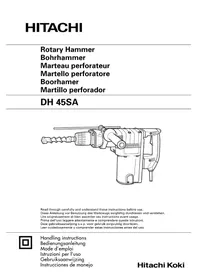
DH 45SA - Drill HITACHI - Free user manual and instructions
Find the device manual for free DH 45SA HITACHI in PDF.



User questions about DH 45SA HITACHI
0 question about this device. Answer the ones you know or ask your own.
Ask a new question about this device
Download the instructions for your Drill in PDF format for free! Find your manual DH 45SA - HITACHI and take your electronic device back in hand. On this page are published all the documents necessary for the use of your device. DH 45SA by HITACHI.
USER MANUAL DH 45SA HITACHI
natural_image
Line drawing of a mechanical drill press tool (no text or symbols)Read through carefully and understand these instructions before use. Diese Anleitung vor Benutzung des Werkzeugs sorgfältig durchlesen und verstehen. Lire soigneusement et bien assimiler ces instructions avant usage. Prima dell'uso leggere attentamente e comprendere queste istruzioni. Deze gebruiksaanwijzing s.v.p. voor gebruik zorgvuldig doorlezen. Leer cuidadosamente y comprender estas instrucciones antes del uso.

Handling instructions Bedienungsanleitung Mode d'emploi Istruzioni per l'uso Gebruiksaanwijzing Instrucciones de manejo
text_image
1 ① ②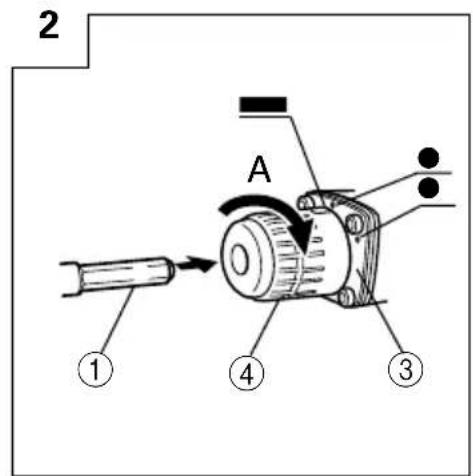
text_image
2 A ① ④ ③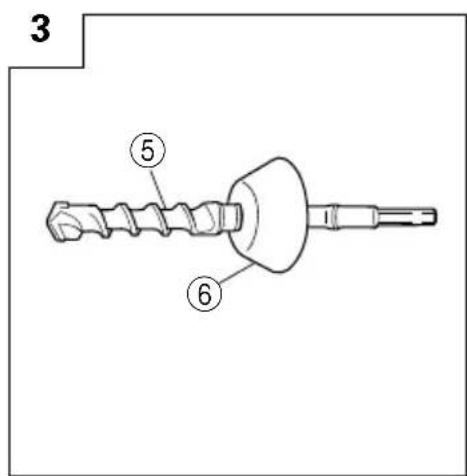
text_image
3 ⑤ ⑥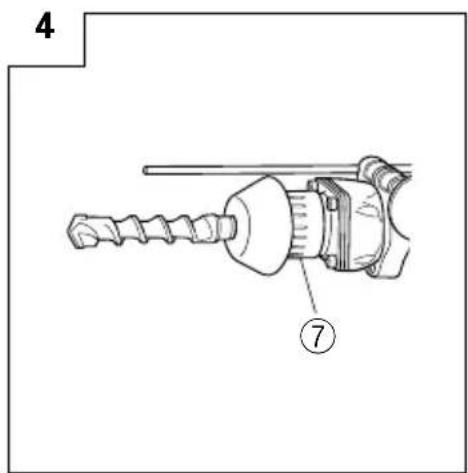
text_image
4 ⑦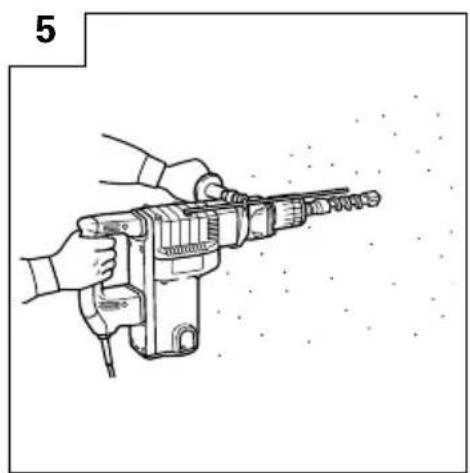
natural_image
Line drawing of a hand using a drill bit gun to measure a drill bit (no text or symbols present)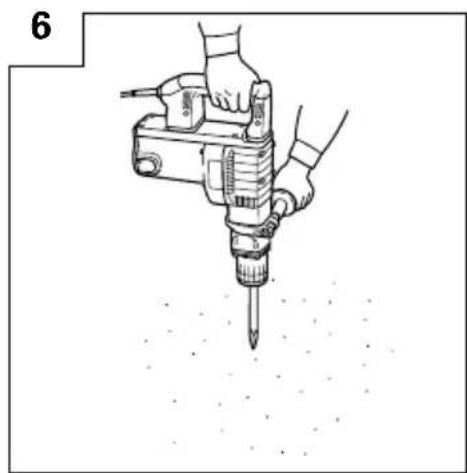
natural_image
Illustration of a hand using a drill press to lift a screwdriver, with no text or symbols present.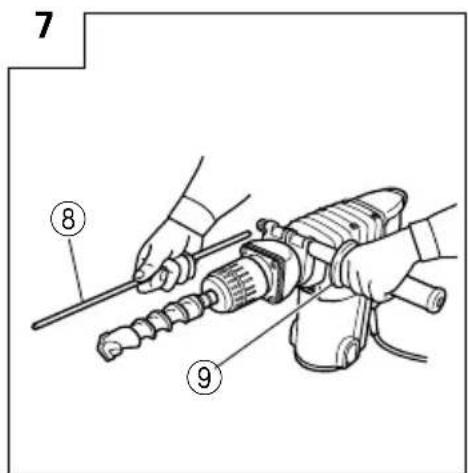
text_image
7 ⑧ ⑨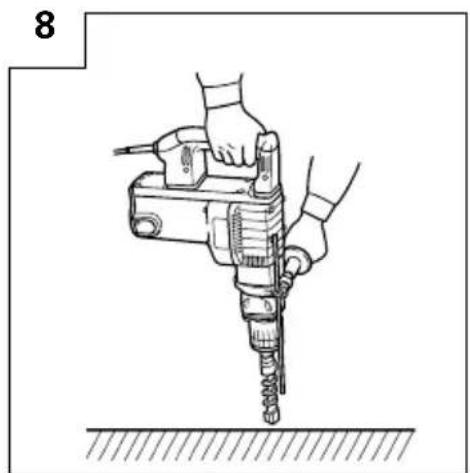
natural_image
Illustration of a hand using a drill press to lift a screwdriver (no text or symbols present)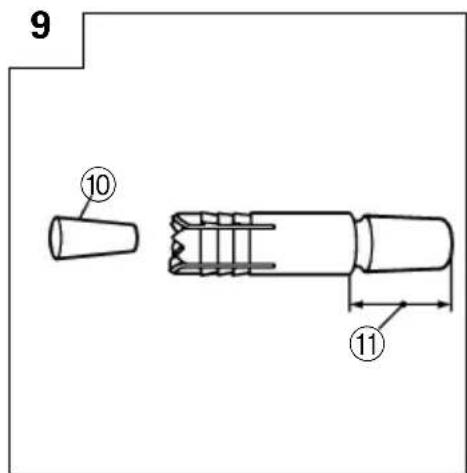
text_image
9 ⑩ ⑪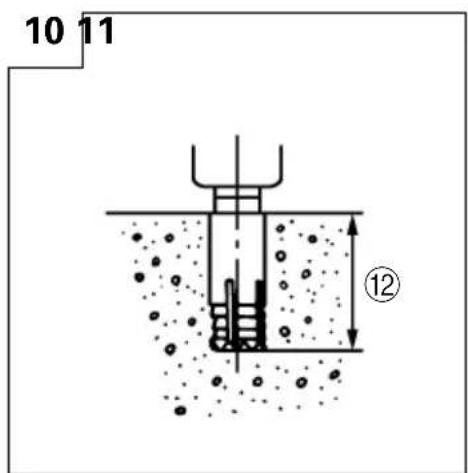
text_image
10 11 ⑫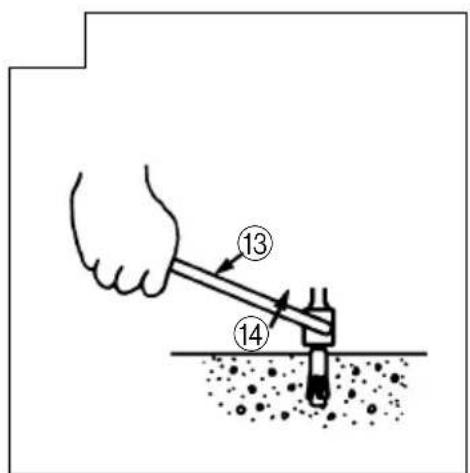
text_image
Diagram showing a hand using a tool to lift a small object into a pit, with numbered annotations 13 and 14 indicating parts of the process.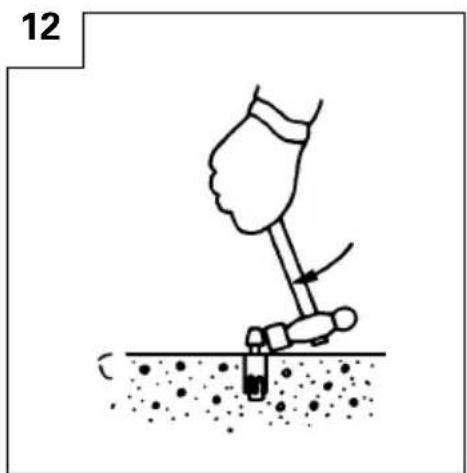
natural_image
Illustration of a hand using a tool to dig or press over soil (no text or symbols)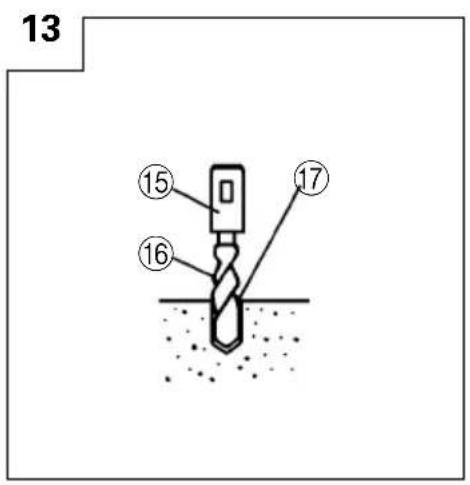
text_image
13 ⑮ ⑯ ⑰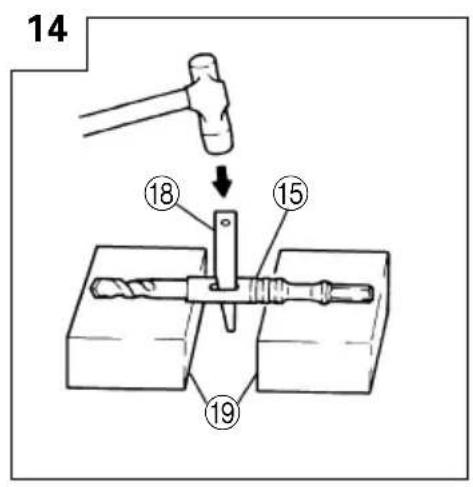
text_image
14 ⑱ ⑮ ⑲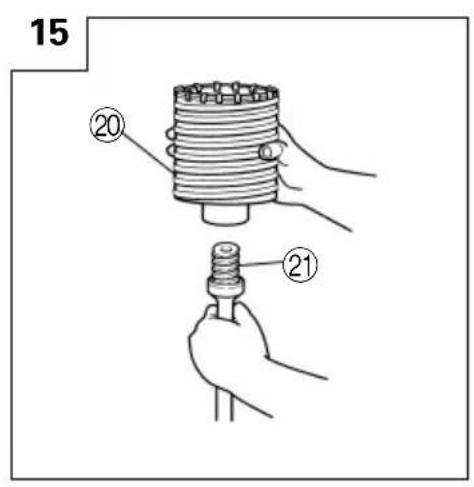
text_image
15 ⑳ ②1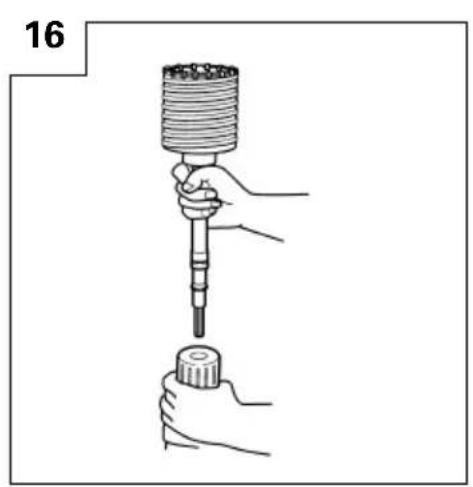
natural_image
Illustration of a hand using a pipette to press a cylindrical component (no text or symbols present)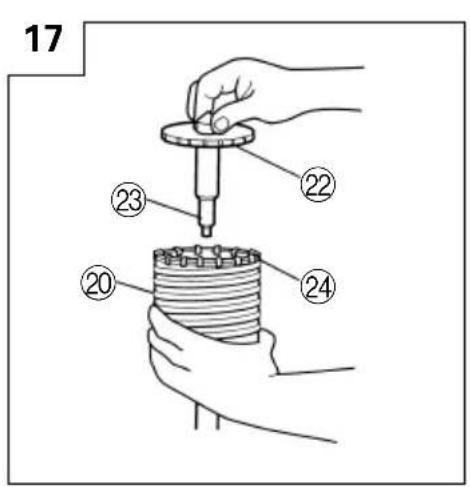
text_image
17 23 22 20 24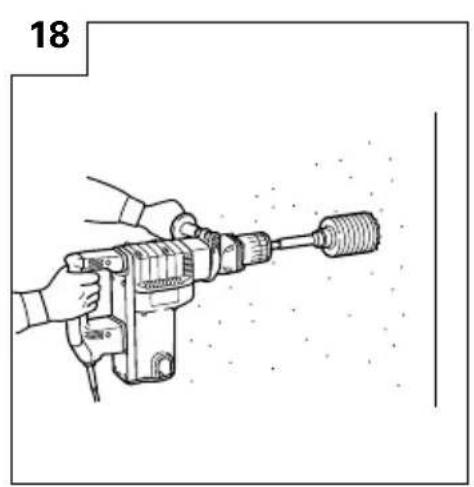
natural_image
Illustration of a hand using a drill press to drill a drill bit (no text or symbols visible)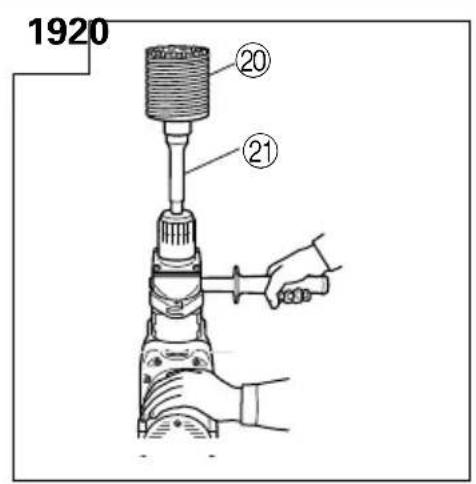
text_image
1920 ⑳ ⑲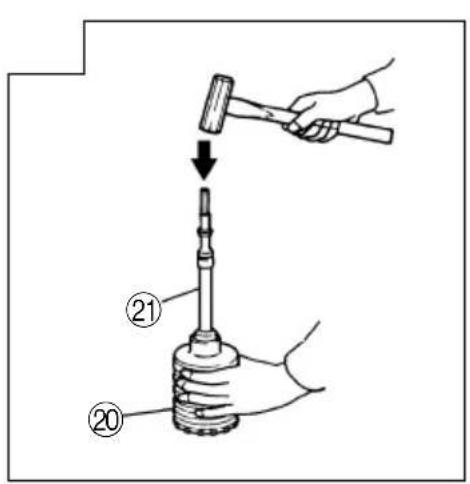
text_image
Diagram showing a hand using a hammer to press a screwdriver into a base, with numbered parts labeled ② and ②1.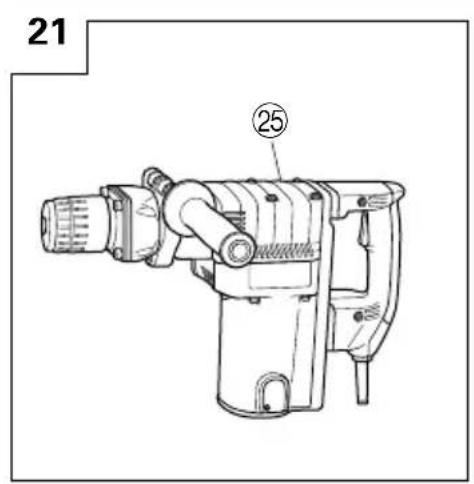
text_image
21 ②5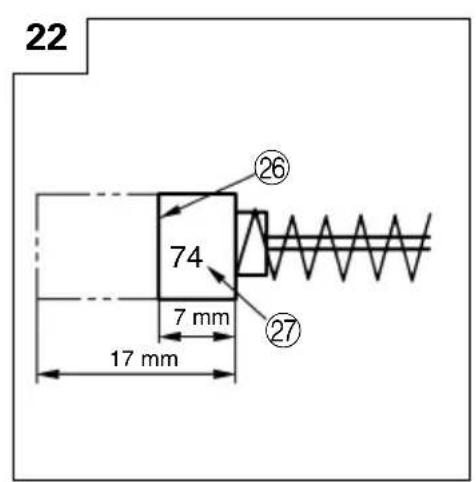
text_image
22 74 7 mm 17 mm ②6 ②7| English | Deutsch | Français | |
| 1 | Tool shank | Werkzeugschaft | Queue |
| 2 | Grease | Schmierfett | Graisse |
| 3 | Front washer | Vordere Beilegscheibe | Rondelle avant |
| 4 | Grip | Spannbacke | Attache coulissante |
| 5 | Drill bit | Bohren | Mèche |
| 6 | Dust cup | Staubfänger | Godet à poussière |
| 7 | Tool holder | Werkzeughalter | Porte-outil |
| 8 | Stopper | Anschlagstange | Quenouille |
| 9 | Side handle | Seitengriff | Poignée latérale |
| 10 | Plug | Stopfen | Bouchon |
| 11 | Snap off this portion after driving in the self-drilling anchor. | Diesen Teil nach Eindrehen des Selbstbohr-Ankers abbrechen. | Enlevez cette partie après enfoncement de l'ancre auto-enfonceur. |
| 12 | Hole depth | Lochtiefe | Profondeur de trou |
| 13 | Drift key | Austreibkeil | Mandrin |
| 14 | Gouge | Herausdrehen | Arracher |
| 15 | Taper shank adapter | Konusschaftadapter | Raccord de queue conique |
| 16 | Drill bit (taper shank) | Bohren (mit konischem Schaft) | Mèche (Queue conique) |
| 17 | Indicating groove shows standard depth matching the outside diameter of the anchor for drilling. | Anzeigerille zeigt Normalloch-tiefe gemäß Außendurchmesser des Ankers für Bohren. | La rainure indicatrice montre la profondeur standard adaptée au diamètre extérieur de l'ancre pour le perçage. |
| 18 | Cotter | Keil | Clavette |
| 19 | Rest | Auflage | Support |
| 20 | Core bit | Bohrkrone | Couronne |
| 21 | Core bit shank | Bohrkronenschenkel | Queue de couronne |
| 22 | Guide plate | Führengsplatte | Plaque de guidage |
| 23 | Center pin | Mittelstift | Goujon central |
| 24 | Core bit tip | Bohrkronenspitze | Bout de couronne |
| 25 | Crank case cover | Kurbelgehäuseabdeckung | Cache de carter |
| 26 | Wear limit | Verschleißgrenze | Limite d'usure |
| 27 | No. of Carbon Brush | Nr. der Kohlebürste | No. de balai en carbone |
| Italiano | Nederlands | Español | |
| 1 | Gambo | Boorschacht | Barrena |
| 2 | Grasso | Smering | Grasa |
| 3 | Rondella anteriore | Voorste tussenring | Arandela delantera |
| 4 | Presa davanti | Greep | Sujetador |
| 5 | Punta del trapano | Booreinde | Broca de barrena |
| 6 | Raccoglipolvere | Stofkap | Copa para el polvo |
| 7 | Sostegno utensile | Gereedschaphouder | Portabrocas |
| 8 | Bacchetta d'arresto | Stopper | Tope |
| 9 | Impugnatura laterale | Zijgreep | Mango lateral |
| 10 | Tappo | Plug | Tapón |
| 11 | Spezzar via questa parte, dopo aver inserito l'ancora autotrapanante. | Breek dit gedeelte af, nadat het zelf-borende anker ingedreven is. | Sacar esta parte luego de colocar el anclaje de autoperforación. |
| 12 | Profondità del foro | Gat-diepte | Prof. del orificio |
| 13 | Chiave del punteruolo | Drijfsleutel | Cuña sacabarrena |
| 14 | Sgorbia | Trekken | Palanca |
| 15 | Adattatore del gambo conico | Schachtadaptor | Adaptador de barrena ahusada |
| 16 | Punta del trapano (gambo conico) | Booreinde (vernauwde schacht) | Broca de barrena (barrena ahusada) |
| 17 | Scanalatura di riferimento indicante la profondità standard con il diametro esterno dell'ancora per il trapanaggio. | Indikatiegroef laat de standaard-diepte zien, die gelijk is aan de diameter van het anker voor boren. | Ranura indicadora que muestra la profundidad normal de coincidencia del diámetro exterior del anclaje para taladrar. |
| 18 | Chiave trasversale | Cotter | Chaveta |
| 19 | Appoggio | Steun | Apoyo |
| 20 | Corona | Kernstuk | Barrena tubular |
| 21 | Gambo della corona | Kernstukschacht | Espiga de barrena |
| 22 | Piastra di guida | Plaatje | Placa guía |
| 23 | Perno ralla | Middenpin | Pasador central |
| 24 | Punta della corona | Top van kernstuk | Punta barrena tubular |
| 25 | Coperchio del carter | Krukkastafdekking | Cubierta de la cubierta del cigüeñal |
| 26 | Limite d'usura | Slijtagelimiet | Límite de desgaste |
| 27 | Numero delle spazzole di carbone | Nr. van koolborstels | N° de escobilla de carbón |
GENERAL SAFETY RULES
WARNING!
Read all instructions
Failure to follow all instructions listed below may result in electric shock, fire and/or serious injury.
The term "power tool" in all of the warnings listed below refers to your mains operated (corded) power tool or battery operated (cordless) power tool.
SAVE THESE INSTRUCTIONS
1) Work area
a) Keep work area clean and well lit.
Cluttered and dark areas invite accidents.
b) Do not operate power tools in explosive atmospheres, such as in the presence of flammable liquids, gases or dust.
Power tools create sparks which may ignite the dust of fumes.
c) Keep children and bystanders away while operating a power tool.
Distractions can cause you to lose control.
2) Electrical safety
a) Power tool plugs must match the outlet.
Never modify the plug in any way.
Do not use any adapter plugs with earthed (grounded) power tools.
Unmodified plugs and matching outlets will reduce risk of electric shock.
b) Avoid body contact with earthed or grounded surfaces such as pipes, radiators, ranges and refrigerators.
There is an increased risk of electric shock if your body is earthed or grounded.
c) Do not expose power tools to rain or wet conditions.
Water entering a power tool will increase the risk of electric shock.
d) Do not abuse the cord. Never use the cord for carrying, pulling or unplugging the power tool.
Keep cord away from heat, oil, sharp edges or moving parts.
Damaged or entangled cords increase the risk of electric shock.
e) When operating a power tool outdoors, use an extension cord suitable for outdoor use.
Use of a cord suitable for outdoor use reduces the risk of electric shock
3) Personal safety
a) Stay alert, watch what you are doing and use common sense when operating a power tool.
Do not use a power tool while you are tired or under the influence of drugs, alcohol or medication.
A moment of inattention while operating power tools may result in serious personal injury.
b) Use safety equipment. Always wear eye protection.
Safety equipment such as dust mask, non-skid safety shoes, hard hat, or hearing protection used for appropriate conditions will reduce personal injuries.
c) Avoid accidental starting. Ensure the switch is in the off position before plugging in.
Carrying power tools with your finger on the switch or plugging in power tools that have the switch on invites accidents.
d) Remove any adjusting key or wrench before turning the power tool on.
A wrench or a key left attached to a rotating part of the power tool may result in personal injury.
e) Do not overreach. Keep proper footing and balance at all times.
This enables better control of the power tool in unexpected situations.
f) Dress properly. Do not wear loose clothing or jewellery. Keep your hair, clothing and gloves away from moving parts.
Loose clothes, jewellery or long hair can be caught in moving parts.
g) If devices are provided for the connection of dust extraction and collection facilities, ensure these are connected and properly used.
Use of these devices can reduce dust related hazards.
4) Power tool use and care
a) Do not force the power tool. Use the correct power tool for your application.
The correct power tool will do the job better and safer at the rate for which it was designed.
b) Do not use the power tool if the switch does not turn it on and off.
Any power tool that cannot be controlled with the switch is dangerous and must be repaired.
c) Disconnect the plug from the power source before making any adjustments, changing accessories, or storing power tools.
Such preventive safety measures reduce the risk of starting the power tool accidentally.
d) Store idle power tools out of the reach of children and do not allow persons unfamiliar with the power tool or these instructions to operate the power tool.
Power tools are dangerous in the hands of untrained users.
e) Maintain power tools. Check for misalignment or binding of moving parts, breakage of parts and any other condition that may affect the power tools operation.
If damaged, have the power tool repaired before use.
Many accidents are caused by poorly maintained power tools.
f) Keep cutting tools sharp and clean.
Properly maintained cutting tools with sharp cutting edges are less likely to bind and are easier to control.
g) Use the power tool, accessories and tool bits etc., in accordance with these instructions and in the manner intended for the particular type of power tool, taking into account the working conditions and the work to be performed.
Use of the power tool for operations different from intended could result in a hazardous situation.
5) Service
a) Have your power tool serviced by a qualified repair person using only identical replacement parts.
This will ensure that the safety of the power tool is maintained.
PRECAUTION
Keep children and infirm persons away.
When not in use, tools should be stored out of reach of children and infirm persons.
PRECAUTIONS ON USING ROTARY HAMMER
- Wear ear protections Exposure to noise can cause hearing loss.
- Do not touch the bit during or immediately after operation. The bit becomes very hot during operation and could cause serious burns.
- Before starting to break, chip or drill into a wall, floor or ceiling, thoroughly confirm that such items as electric cables or conduits are not buried inside.
-
Use auxiliary handles supplied with the tool. Loss of control can cause personal injury.
-
Always hold the body handle and side handle of the power tool firmly. Otherwise the counterforce produced may result in inaccurate and even dangerous operation.
-
Wear a dust mask Do not inhale the harmful dusts generated in drilling or chiseling operation. The dust can endanger the health of yourself and bystanders.
SPECIFICATIONS
| Voltage (by areas)* (110V, 115V, 120V, 127V, 220V, 230V, 240V) | |
| Power input 1400 W* | |
| Capacity Drill bit: 45 mm | Core bit: 120 mm |
| No load speed 300/min. | |
| Full-load impact rate 2500/min. | |
| Weight (without cord, side handle) 9.8 kg |
- Be sure to check the nameplate on product as it is subject to change by areas.
STANDARD ACCESSORIES
(1) Case (Molded plastic) 1
(2) Side Handle .... 1
(3) Stopper 1
(4) Hammer Grease A 1
(5) Dust Cup .... 1
Standard accessories are subject to change without notice.
OPTIONAL ACCESSORIES (sold separately)
○Through-hole drilling (Rotation + Hammering)

(1) Drill bit (hexagon shank)
Overall length: 280, 400, 505 mm
External dia.: 16, 19, 22, 25, 28, 32, 38 mm
○Anchor hole drilling (Rotation + Hammering)
text_image
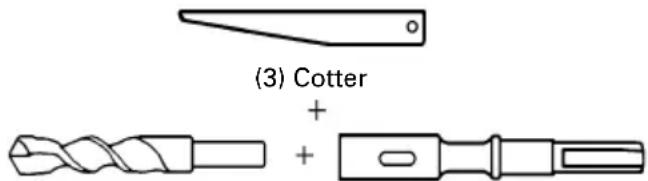
(3) Cotter +(1) Drill bit (taper shank)
External dia.: 11, 12, 14.3,
14.5, 17.5,
21.5 mm
(2) Taper shank adapter
| Taper shank adapter | Application drill bit |
| Morse taper (No. 1) | Drill bit (taper shank)11, 12, 14.3, 14.5, 17.5 mm |
| Morse taper (No. 2) | Drill bit (tape shank)21.5 mm |
| A-taper | Taper shank adapter formed A-taper or B-taper is provided as optional accessory, but drill bit for it is not provided. |
| B-taper |
○Large dia. hole boring (Rotation + Hammering)

text_image
Diagram showing three types of screwdrivers: two with a pencil, one with a gear and screw, and one with a threaded screw.(1) Center pin
(Guide plate)
(2) Core bit
(3) Core bit shank
(1) Center pin
●Applied to core bits from 38 mm to 120 mm
●Applied to core bits 32 mm and 35 mm NOTE
Do not use core bits 25 mm or 29 mm.
(2) Core bit
●External dia. 25, 29, 32, 35, 38, 45, 54, 64, 79, 94, 105, 120 mm (with guide plate, not applicable to cores 25 mm or 29 mm)
(3) Core bit shank
●Applied to core bits above 38 mm
●Applied to core bits below 35 mm
○Anchor work (for self-drilling anchors)

(1) Anchor adapter (for Rotation + Hammering) Anchor sizes:
W1/4, W5/16, W3/8, W1/2, W5/8 (No. 20) (No. 25) (No. 30) (No. 40) (No. 50)
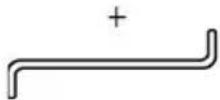
(2) Drift key
○Crushing (Hammering)

(1) Bull point
Overall length: 280, 450 mm
○Groove digging and edging (Hammering)

(1) Cold chisel
Overall length: 280, 450 mm
○Asphalt cutting (Hammering)

(1) Cutter
○Syringe (for chip removal)
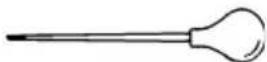
○Hammer grease A
500 g (in a can) 70 g (in a green tube) 30 g (in a green tube)
Optional accessories are subject to change without notice.
APPLICATIONS
○Drilling holes in concrete
○Drilling anchor holes
○Demolishing concrete, chiseling, digging, and squaring (by applying optional accessories)
PRIOR TO OPERATION
1. Power source
Ensure that the power source to be utilized conforms to the power requirements specified on the product nameplate.
2. Power switch
Ensure that the power switch is in the OFF position. If the plug is connected to a receptacle while the power switch is in the ON position, the power tool will start operating immediately, which could cause a serious accident.
3. Extension cord
When the work area is removed from the power source, use an extension cord of sufficient thickness and rated capacity. The extension cord should be kept as short as practicable.
4. How to install tool NOTE
For tools such as a bull point and a cold chisel, use only Hitachi genuine parts.
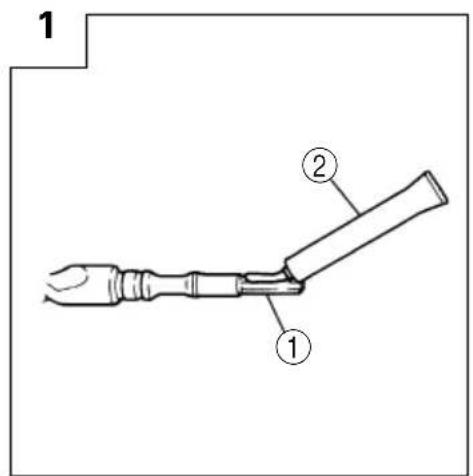
(1) Clean, then smear the tool shank with the grease provided in the green tube (Fig. 1).
(2) Turn the grip fully in the direction of the arrow mark A, and put the mark ● of the front washer and the mark □ of the grip together. (Fig. 2)
(3) Insert the shank part of the tool into the hole deeply until it hits the end. (Fig. 2)
(4) Bring the grip back to its home position. The tool will be fixed if you put the mark ● of the front washer and the mark ■ of the grip together.
Pull the tool and check if the tool is surely fixed. For removal, perform the operation mentioned in (2) above, and pull the tool out.
5. Fixing Dust cup
When a worker is engaged in an operation with the main body faced upward, if a dust cup is fixed to a drill bit, the inside of a tool holder can be prevented from any possible invasion of dust. The dust cup should be fixed as explained below.
(1) Insert the dust cup into the drill bit. (Fig. 3)
(2) Fix the drill bit to the tool holder. (Fig. 4)
(3) Insert the drill bit until it hits the end of the hole, and make sure that the dust cup is not in contact with the tool holder. If the dust cup is found to be in contact with the tool holder, shift it a little forward.
HOW TO USE THE ROTARY HAMMER
1. How to drill holes (Fig. 5)
(1) Pull the switch trigger after applying the drill bit tip to the drilling position.
(2) It is unnecessary to forcibly press the Rotary Hammer main body. It is sufficient to slightly press the Rotary Hammer to an extent that shavings are freely discharged.
CAUTION
Although this machine is equipped with a safety clutch, if the drill bit becomes bound in concrete or other material, the resultant stoppage of the drill bit could cause the machine body to turn in reaction. Ensure that the main handle and side handle are gripped firmly during operation.
2. How to chisel or demolish (Fig. 6)
By applying the drill bit tip to the chiseling or demolishing position, operate the Rotary Hammer by utilizing its own weight.
Forcible pressing or thrusting is unnecessary.
3. Install the stopper (Fig. 7)
(1) Loosen the side handle and insert the straight portion of the stopper into the handle bolt hole.
(2) Move the stopper to the specified position and rotate the side handle clockwise to fix the stopper.
4. Warming up (Fig. 8)
The grease lubrication system in this unit may require warming up in cold regions.
Position the end of the bit so makes contact with the concrete, turn on the switch and perform the warming up operation. Make sure that a hitting sound is produced and then use the unit.
CAUTION
When the warming up operation is performed, hold the side handle and the main unit securely with both hands to maintain a secure grip and avoid being turned around by the drill.
DRILLING AND DRIVING-IN OPERATIONS FOR ANCHORS
Use the optional accessories for anchors, such as anchor adapter and taper shank adapter.
- When a rotation striking anchor adapter is used.
(1) Install the self-drilling anchor in the anchor adapter (Fig. 9).
(2) Turn ON the switch and drill a base hole with the self-drilling anchor. (Fig. 10)
At the start of the hole-drilling slightly tilt the Rotary Hammer to determine the hole position.
(3) After cleaning out dust with a syringe, attach the plug to the anchor tip and drive in the anchor with a manual hammer.
(4) After driving in the anchor, use the drift key to separate the anchor. (Fig. 11)
(5) By employing a manual hammer or pliers, snap off the tapered portion of the anchor. (Fig. 12)
CAUTION
Since the snapped-off tapered portion will fly about, pay attention to the snapping direction.
- When a taper shank adapter is used. (Fig. 13)
(1) Install drill bit with taper shank in the taper shank adapter.
(2) Turn the power on and drill a base hole to the depth sounded by indicating groove on the drill bit.
(3) After cleaning out dust with a syringe, attach the plug to the anchor tip and drive in the anchor with a manual hammer.
(4) To remove the drill bit (taper shank), insert the cotter into the slot of the taper shank adapter and strike the head of the cotter with a hammer supporting on a rest. (Fig. 14)
HOW TO HANDLE A CORE BIT
When a core bit is used, large caliber holes and blind holes can be drilled. In this case, use optional accessories for core bits (such as a center pin and core bit shank) for more rational operation.
1. Mounting
CAUTION
Prior to mounting a core bit, always disconnect the plug from the receptacle.
(1) Mount the core bit on the core bit shank. (Fig. 15)
Before that, feed oil to the screw portion of core bit shank for easy dismount.
(2) Mount the core bit shank on the drill main body in the same manner as in mounting the drill bit and the bull point. (Fig. 16)
(3) Insert the center pin into the guide plate until it reaches the extremity.
(4) Fit in the guide plate by aligning its concaved portion with the core bit tip. When the position of the concave is shifted by turning the guide plate right or left, the guide plate never slips off even when the drill is used in a downward direction. (Fig. 17)
2. Drilling holes
(1) Insert the plug into a receptacle.
(2) A spring is built in the center pin. By straightly and gently pressing it to the wall or floor surface, the entire surface of the core bit tip attains contact to start the hole drilling job. (Fig. 18)
(3) When the hole depth reaches approximately 5 mm, the hole position can be determined. Then remove the center pin and guide plate from the core bit and continue the hole drilling job.
CAUTION
When removing the center pin and guide plate, always disconnect the plug from the receptacle.
3. How to dismount the core bit
(1) By holding the drill (with the core bit inserted) in an upward position, drive the drill to repeat impact operation two or three times, whereby the screw is loosened and the drill becomes ready for disassembly. (Fig. 19)
(2) Remove the core bit shank from the drill, hold the core bit with one hand, and strongly strike the head of the hexagonal portion of the core bit shank with a hand hammer two or three times, whereby the round head screw is loosened and the drill is ready for disassembly. (Fig. 20)
HOW TO REPLACE GREASE
This machine is of full air-tight construction to protect against dust and to prevent lubricant leakage. Therefore, the machine can be used without lubrication for long periods. Replace the grease as described below.
1. Grease replacement period
After purchase, replace grease after every 6 months of usage. Ask for grease replacement at the nearest authorized Hitachi Service Agent. Proceed for replacement of grease.
2. Grease replacement
CAUTION
Before replacing the grease, turn the power off and pull out the power plug.
(1) Remove the crank case cover and wipe off the grease inside. (Fig. 21)
(2) Supply 20g of Hitachi Electric Hammer Grease A (Standard accessory, contained in tube) to the crank case.
As the tube contain 30g of grease, supply 2/3 of the contained grease.
(3) After replacing the grease, install the crank case cover securely.
NOTE
The Hitachi Electric Hammer Grease A is of the low viscosity type. If necessary purchase from an authorized Hitachi Service Agent.
MAINTENANCE AND INSPECTION
1. Inspecting the tool
Since use of a dull tool will degrade efficiency and cause possible motor malfunction, sharpen or replace the tool as soon as abrasion is noted.
2. Inspecting the mounting screws:
Regularly inspect all mounting screws and ensure that they are properly tightened. Should any of the screws be loose, retighten them immediately. Failure to do so could result in serious hazard.
3. Maintenance of the motor
The motor unit winding is the very “heart” of the power tool. Exercise due care to ensure the winding does not become damaged and/or wet with oil or water.
4. Inspecting the carbon brushes (Fig. 22)
The Motor employs carbon brushes which are consumable parts. When they become worn to or near the "wear limit", it could result in motor trouble. When an auto-stop carbon brush is equipped, the motor will stop automatically. At that time, replace both carbon brushes with new ones which have the same carbon brush Numbers shown in the figure. In addition, always keep carbon brushes clean and ensure that they slide freely within the brush holders.
5. Replacing carbon brushes
Loosen the tapping screws and remove the brush cap cover. Then, remove the brush caps and take out the carbon brushes. After replacement, be sure to fasten the brush caps and fix the brush cap cover firmly using the tapping screws.
6. Service parts list
A: Item No.
B: Code No.
C: No. Used
D: Remarks
CAUTION
Repair, modification and inspection of Hitachi Power Tools must be carried out by an Hitachi Authorized Service Center.
This Parts List will be helpful if presented with the tool to the Hitachi Authorized Service Center when requesting repair or other maintenance.
In the operation and maintenance of power tools, the safety regulations and standards prescribed in each country must be observed.
MODIFICATIONS
Hitachi Power Tools are constantly being improved and modified to incorporate the latest technological advancements.
Accordingly, some parts (i.e. code numbers and/or design) may be changed without prior notice.
GUARANTEE
We guarantee Hitachi Power Tools in accordance with statutory/country specific regulation. This guarantee does not cover defects or damage due to misuse, abuse, or normal wear and tear. In case of complaint, please send the Power Tool, undismantled, with the GUARANTEE CERTIFICATE found at the end of this Handling instruction, to a Hitachi Authorized Service Center.
NOTE
Due HITACHI's continuing program of research and development, the specifications herein are subject to change without prior notice.
IMPORTANT
Correct connection of the plug
The wires of the main lead are coloured in accordance with the following code:
Blue: — Neutral
Brown: — Live
As the colours of the wires in the main lead of this tool may not correspond with the coloured markings identifying the terminals in your plug proceed as follows: The wire coloured blue must be connected to the terminal marked with the letter N or coloured black. The wire coloured brown must be connected to the terminal marked with the letter L or coloured red. Neither core must be connected to the each terminal.
NOTE
This requirement is provided according to BRITISH STANDARD 2769: 1984.
Therefore, the letter code and colour code may not be applicable to other markets except The United Kingdom.
Information concerning airborne noise and vibration
The measured values were determined according to EN60745 and declared in accordance with ISO 4871.
Measured A-weighted sound power level: 101 dB (A) Measured A-weighted sound pressure level: 88 dB (A) Uncertainty KpA: 3 dB (A).
Wear ear protection.
The typical weighted root mean square acceleration value: 9.5 m/s ^2 .
natural_image
Technical line drawing of a twist drill bit and a rectangular tool (no text or symbols)(1) Bohrer (mit
konischem Schaft)
Außendurchmesser:
text_image
Diagram showing three types of screwdrivers: one with a pencil, one with a gear and screw, and one with a threaded screw.(Führungsplatte)
(1) Mittelstift (2) Bohrkrone (3) Bohrkronen-
schenkel
(1) Mittelstift
W1/4, W5/16, W3/8, W1/2, W5/8
text_image
(plaque de guidage)(1) Goujon central
(2) Couronne
W1/4, W5/16, W3/8, W1/2, W5/8
(No. 20) (No. 25) (No. 30) (No. 40) (No. 50)
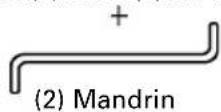
○Broyage (percussion)

W1/4, W5/16, W3/8, W1/2, W5/8
(No. 20) (No. 25) (No. 30) (No. 40) (No. 50)

natural_image
Technical line drawing of two different types of drill bit designs: a twist drill and a rectangular tool (no text or symbols)W1/4, W5/16, W3/8, W1/2, W5/8
(No. 20) (No. 25) (No. 30) (No. 40) (No. 50)
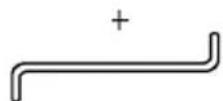
(2) Drijfsleutel
○ Breken (Slaan)

(1) Puntboor
Totale lengte: 280 450 mm
W1/4, W5/16, W3/8, W1/2, W5/8
Largo total: 280 450 mm
○Excavar, ranurado y rebordes (Martilleo)

(1) Cortafrio
Largo total: 280 450 mm
natural_image
Line drawing of a quill pen with inkwell (no text or symbols)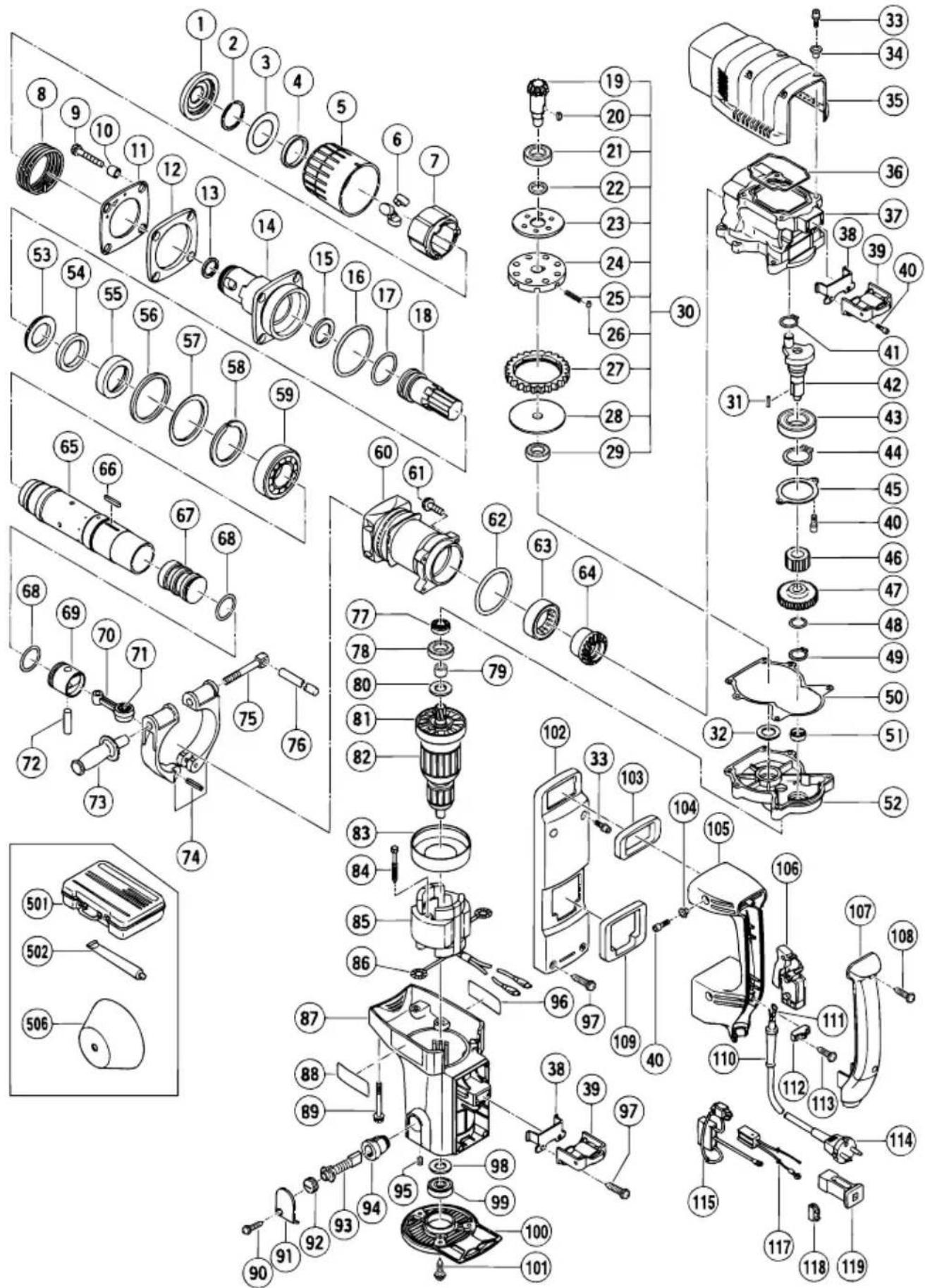
text_image
Exploded view diagram of a mechanical assembly with numbered parts for identification| A | B | C | D |
| 1 318-758 | 1 | ||
| 2 318-757 | 1 D35 | ||
| 3 318-756 | 1 | ||
| 4 318-755 | 1 | ||
| 5 318-754 | 1 | ||
| 6 313-069 | 3 | ||
| 7 318-752 | 1 | ||
| 8 318-753 | 1 | ||
| 9 306-437 | 4 M8×30 | ||
| 10 986-892 | 4 | ||
| 11 319-075 | 1 | ||
| 12 319-074 | 1 | ||
| 13 318-759 | 1 | ||
| 14 318-751 | 1 | ||
| 15 318-762 | 1 | ||
| 16 956-996 | 1 1AS-60 | ||
| 17 986-882 | 1 | ||
| 18 318-743 | 1 | ||
| 19 318-551 | 1 | ||
| 20 944-109 | 1 3×3×8 | ||
| 21 620-2DD | 1 6202DDCMPS2L | ||
| 22 313-058 | 1 | ||
| 23 318-552 | 1 | ||
| 24 318-554 | 1 | ||
| 25 318-555 | 8 | ||
| 26 313-057 | 8 D6×6 | ||
| 27 318-553 | 1 | ||
| 28 318-556 | 1 | ||
| 29 629-VVM | 1 629VVC2PS2L | ||
| 30 318-550 | 1 "19-29" | ||
| 31 945-072 | 2 5×5×15 | ||
| 32 944-525 | 1 | ||
| 33 313-082 | 6 M5×16 | ||
| 34 991-711 | 4 | ||
| 35 318-584 | 1 "34" | ||
| 36 313-084 | 1 | ||
| 37 318-543 | 1 | ||
| 38 980-750 | 2 | ||
| 39 980-727 | 2 | ||
| 40 878-181 | 8 M5×16 | ||
| 41 939-542 | 1 | ||
| 42 318-544 | 1 | ||
| 43 620-5DD | 1 6205DDCMPS2L | ||
| 44 965-469 | 1 | ||
| 45 318-548 | 1 | ||
| 46 318-545 | 1 | ||
| 47 318-546 | 1 | ||
| 48 318-547 | 1 | ||
| 49 967-261 | 1 | ||
| 50 318-549 | 1 | ||
| 51 939-299 | 1 M661 | ||
| 52 318-595 | 1 | ||
| 53 993-235 | 1 | ||
| 54 318-745 | 1 | ||
| 55 318-746 | 1 | ||
| 56 318-748 | 1 | ||
| 57 318-747 | 1 | ||
| 58 318-582 | 1 D40 | ||
| 59 600-8CM | 1 6008CM | ||
| 60 318-749 | 1 | ||
| 61 318-451 | 4 M6×35 | ||
| 62 985-779 | 1 | ||
| 63 985-782 | 1 M526320 |
| A | B | C | D |
| 64 318-741 1 | |||
| 65 318-740 1 | |||
| 66 971-750 2 | 3 × 3 × 20 | ||
| 67 318-742 1 | |||
| 68 318-917 2 | FPM 710 | ||
| 69 985-772 1 | |||
| 70 318-557 1 | "71" | ||
| 71 980-756 1 | AJ50 1203 | ||
| 72 955-593 1 | |||
| 73 318-574 1 | |||
| 74 318-575 1 | |||
| 75 318-576 1 | |||
| 76 971-786 1 | |||
| 77 318-596 1 | FPM 707 | ||
| 78 620-3VV 1 | 6203VVCMPS2L | ||
| 79 318-597 1 | |||
| 80 318-594 1 | |||
| 81 318-918 1 | |||
| 82 360-526E 1 | 220V-230V "81" | ||
| 83 318-633 1 | |||
| 84 953-121 2 | D5X50 | ||
| 85 340-467E 1 | 220V-230V "86" | ||
| 86 958-032 2 | |||
| 87 318-764 1 | "94, 95" | ||
| 88 ———— 1 | |||
| 89 318-570 6 | |||
| 90 307-811 2 | D4×16 | ||
| 91 318-599 2 | |||
| 92 940-540 2 | |||
| 93 999-074 2 | |||
| 94 980-487 2 | |||
| 95 938-477 2 | M5×8 | ||
| 96 ———— 1 | |||
| 97 305-558 4 | D5×25 | ||
| 98 944-954 1 | |||
| 99 620-1VV 1 | 6201VVCMPS2L | ||
| 100 318-598 1 | |||
| 101 303-273 3 | D5×16 | ||
| 102 318-750 1 | "103, 109" | ||
| 103 318-572 1 | |||
| 104 991-711 4 | |||
| 105 318-601 1 | |||
| 106 313-093 1 | |||
| 107 318-602 1 | |||
| 108 301-653 2 | D4X20 | ||
| 109 318-573 1 | |||
| 110 940-778 1 | D10.7 | ||
| 111 980-063 1 | "SAF" | ||
| 112 960-266 1 | |||
| 113 984-750 2 | D4×16 | ||
| 114 ———— 1 | |||
| 115 313-142 1 | |||
| 116 959-141 1 | |||
| 117 318-648 1 | |||
| 118 938-307 1 | |||
| 119 318-603 1 | |||
| 501 318-646 1 | |||
| 502 981-840 1 | |||
| 506 315-871 1 | |||
natural_image
Line drawing of a quill pen with inkwell (no text or symbols)| English | Italiano | ||
| GUARANTEE CERTIFICATE | CERTIFICATO DI GARANZIA | ||
| 1Model No.2Serial No.3Date of Purchase4Customer Name and Address5Dealer Name and Address(Please stamp dealer name and address) | 1Modello2N° di serie3Data di acquisto4Nome e indirizzo dell'acquirente5Nome e indirizzo del rivenditore(Si prega di apporre il timbro con questi dati) | ||
| Deutsch | Nederlands | ||
| GARANTIESCHEIN | GARANTIEBEWIJS | ||
| 1Modell-Nr.2Serien-Nr.3Kaufdaturn4Name und Anschrift des Kunden5Name und Anschrift des Händlers(Bitte mit Namen und Anschrift des Handlers abstempeln) | 1Modelnummer2Serienummer3Datum van aankoop4Naam en adres van de gebruiker5Naam en adres van de handelaar(Stempel a.u.b. naam en adres vande de handelaar) | ||
| Français | Español | ||
| CERTIFICAT DE GARANTIE | CERTIFICADO DE GARANTIA | ||
| 1No. de modèle2No. de série3Date d'achat4Nom et adresse du client5Nom et adresse du revendeur(Cachet portant le nom et l'adresse du revendeur) | 1Número de modelo2Número de serie3Fecha de adquisición4Nombre y dirección del cliente5Nombre y dirección del distribudor(Se ruega poner el sellú del distribudor con su nombre y dirección) | ||
HITACHI
| 1 | |
| 2 | |
| 3 | |
| 4 | |
| 5 |
Hitachi Koki

natural_image
Symbol of a trash bin crossed with no text or numbers, representing waste sorting or disposal (no text present)English
Only for EU countries
Do not dispose of electric tools together with household waste material!
In observance of European Directive 2002/96/EC on waste electrical and electronic equipment and its implementation in accordance with national law, electric tools that have reached the end of their life must be collected separately and returned to an environmentally compatible recycling facility.
Deutsch
Nur für EU-Länder