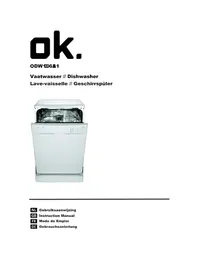
ODW 10026 A1 - Dishwasher OK - Free user manual and instructions
Find the device manual for free ODW 10026 A1 OK in PDF.



| Product Type | Dishwasher |
| Brand | OK |
| Model | ODW 10026 A1 |
| Capacity | 9 standard place settings |
| Dimensions (W x D x H) | 456 x 580 x 850 mm |
| Electrical supply | 220-240 V ~ 50 Hz, 1760-2100 W |
| Energy class | A+ |
| Annual energy consumption | 222 kWh |
| Annual water consumption | 2940 L |
| Noise level | 52 dB(A) |
| Water pressure | 0.04 - 1.0 MPa |
| Wash programs | Pre-wash, Normal (EN 50242), Quick, 3 in 1, etc. |
| Main functions | Adjustable water softener, rinse aid dispenser, height-adjustable upper basket, lower basket with foldable tines, cutlery basket |
| Safety | Frost protection, grounding, door lock |
| Maintenance | Removable filters, detachable spray arms |
| Warranty | 24 months |
Frequently Asked Questions - ODW 10026 A1 OK
User questions about ODW 10026 A1 OK
0 question about this device. Answer the ones you know or ask your own.
Ask a new question about this device
Download the instructions for your Dishwasher in PDF format for free! Find your manual ODW 10026 A1 - OK and take your electronic device back in hand. On this page are published all the documents necessary for the use of your device. ODW 10026 A1 by OK.
USER MANUAL ODW 10026 A1 OK
HET APPARAAT VERPLAATSEN
PLAATSING HET APPARAAT
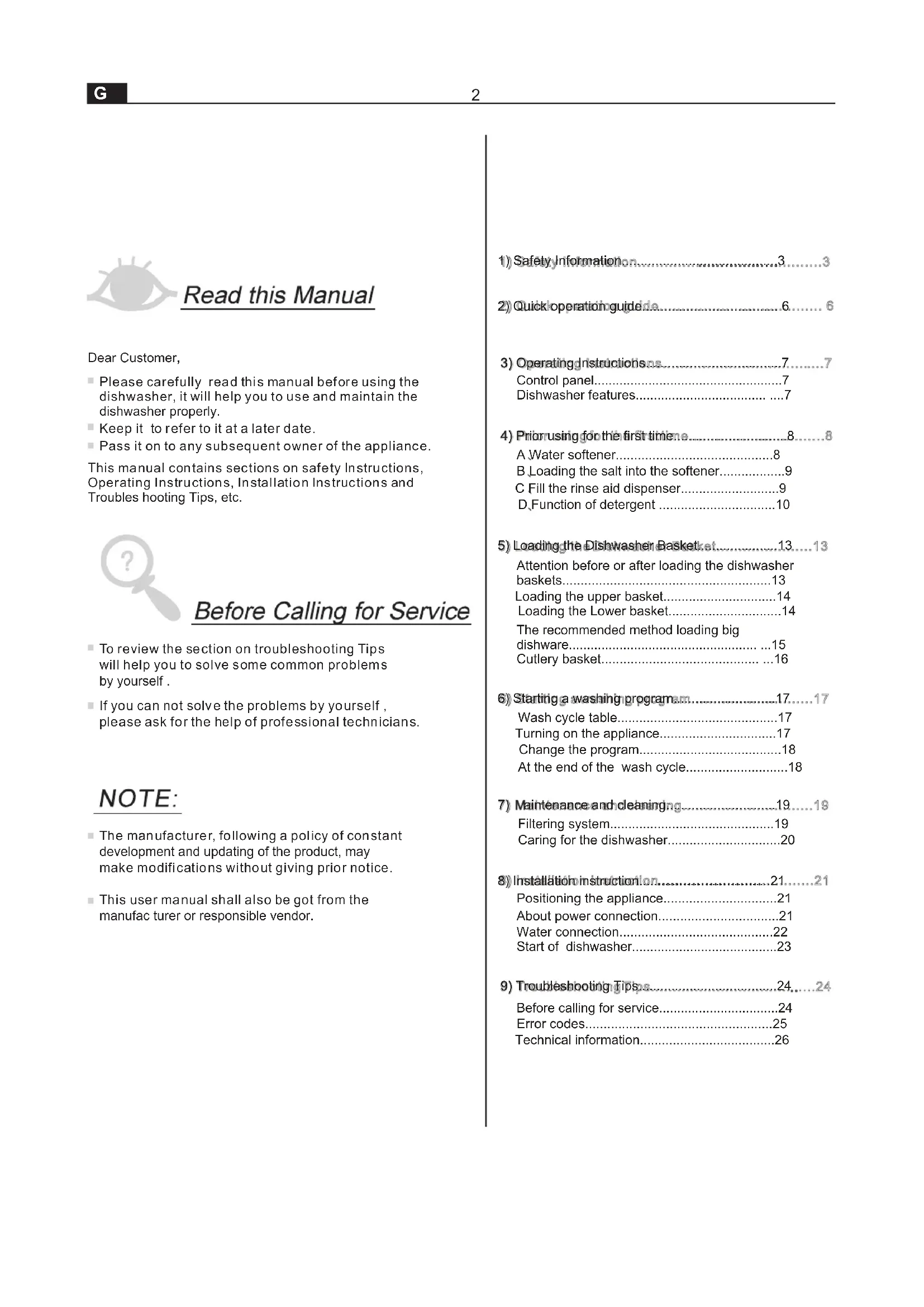
Please carefully read this manual before using the dishwasher, it will help you to use and maintain the dishwasher properly.
Keep it to refer to it at a later date.
Pass it on to any subsequent owner of the appliance.
This manual contains sections on safety Instructions, Operating Instructions, Installation Instructions and Troubles hooting Tips, etc.

Before Calling for Service
To review the section on troubleshooting Tips will help you to solve some common problems by yourself.
If you can not solve the problems by yourself, please ask for the help of professional technicians.
NOTE:
The manufacturer, following a policy of constant development and updating of the product, may make modifications without giving prior notice.
This user manual shall also be got from the manufac turer or responsible vendor.
1)Safety Information 3
2)Quickoperationguide 6.
3) Operating disriuctiois.7
Control panel. 7
Dishwasher features. 7
4) Priming for the first time 8.
A Water softener. 8
B Loading the salt into the softener. 9
C Fill the rinse aid dispenser. 9
D. Function of detergent 10
5) Loading the Dishwasher Basketket 13.13
Attention before or after loading the dishwasher baskets. 13
Loading the upper basket. 14
Loading the Lower basket. 14
The recommended method loading big dishware. 15
Cutlery basket. 16
6)Starting a washing programm 17.17
Wash cycle table. 17
Turning on the appliance. 17
Change the program. 18
At the end of the wash cycle. 18
7) Maintenance and cleaning. 19....19
Filtering system. 19
Caring for the dishwasher. 20
8) Installation instruction 21.
Positioning the appliance. 21
About power connection. 21
Water connection 22
Start of dishwasher. 23
9) Troubleshooting Tips 24.24
Before calling for service. 24
Error codes. 25
Technical information. 26
1.IMPORTANT SAFETY INFORMATION

WARNING! When using your dishwasher, follow the precautions listed b
This appliance is intended to be used in household and similar applications such as:
- staff kitchen areas in shops, offices and other working environments;
-farm houses;
-by clients in hotels, motels and other residential type environments;
-bed and breakfast type environments.
This appliance can be used by children aged from 8 years and above and persons with reduced physical, sensory or mental capabilities or lack of experience and knowledge if they have been given supervision or instruction concerning use of the appliance in a safe way and understand the hazards involved. Children shall not play with the appliance. Cleaning and user maintenance shall not be made by children without supervision. (For EN60335-1)
This appliance is not intended for use by persons (including children) with reduced physical, sensory or mental capabilities, or lack of experience and knowledge, unless they have been given supervision or instruction concerning use of the appliance by a person responsible for their safety. (For IEC60335-1)
This appliance is for indoor use only, for household use only. To protect against the risk of electrical shock, do not immerse the unit, cord or plug in water or other liquid.
■ Please unplug before cleaning and maintenance the appliance .Use a soft cloth moisten with mild soap, and then use a dry cloth to wipe it again .

EARTHING INSTRUCTIONS
This appliance must be earthed. In the event of a malfunction or breakdown, earthing will reduce the risk of anelectric shock by providing a path of least resistance of electric current. This appliance is equipped with a cord having an equipment-earthing conductor and a earthing plug.
The plug must be plugged into an appropriate outlet that is installed and earthed in accordance with all local codes and ordinances.
■ Improper connection of the equipment-earthing conductor can result in the risk of an electric shock. Check with a qualified electrician or service representative if you are in doubt whether the appliance is properly earthed.
- Do not modify the plug provided with the appliance; If it does not fit the outlet. Have a proper outlet installed by a qualified electrician.
G
■ Do not abuse, sit on, or stand on the door or dish rack of the dishwasher.
■ Do not operate your dishwasher unless all enclosure panels are properly in place.
- Open the door very carefully if the dishwasher is operating, there is a risk of water squirting out.
- Do not place any heavy objects on or stand on the door when it is open. The appliance could tip forward.
■ When loading items to be washed:
1) Locate sharp items so that they are not likely to damage the door seal;
2) Warning: Knives and other utensils with sharp points must be loaded in the basket with their points down or placed in a horizontal position.
Check that the detergent powder is empty after completion of the wash cycle.
Do not wash plastic items unless they are marked dishwasher safe or the equivalent. For plastic items not so marked, check the manufacturer's recommendations.
Use only detergent and rinse additives designed for an automatic dishwasher.
Never use soap, laundry detergent, or hand washing detergent in your dishwasher.
Children should be supervised to ensure that they do not play with the appliance.
The door should not be left open, since this could increase the risk of tripping.
If the supply cord is damaged, it must be replaced by the manufacturer or its service agent or a similarly qualified person in order to avoid a hazard.
During installation, the power supply must not be excessively or dangerously bent or flattened.
■ Do not tamper with controls.
The appliance is to be connected to the water mains using new hose sets and that old hose-sets should not be reused.
The maximum number of place settings to be washed is .9
The maximum permissible inlet water pressure is 1MPa
The minimum permissible inlet water pressure is 0.04MPa
Disposal
- Dispose of the dishwasher packaging material correctly. All packaging materials can be recycled.
Plastic parts are marked with the standard international abbreviations:
PE for polyethylene, e.g. sheet wrapping material
PS for polystyrene, e.g. padding material
■ POM polyoxymethylene, e.g. plastic clips
PP polypropylene, e.g. Salt filler
■ ABS — Acrylonitrile Butadiene Styrene, e.g. Control Panel .

WARNING!
■ Packaging material could be dangerous for children!
For disposing of package and the appliance please go to a recycling centre. Therefore cut off the power supply cable and make the door closing device unusable.
- Cardboard packaging is manufactured from recycled paper and should be disposed in the waste paper collection for recycling.
By ensuring this product is disposed of correctly, you will help prevent potential negative consequences for the environment and human health, which could otherwise be caused by inappropriate waste handling of this product.
For more detailed information about recycling of this product, please contact your local city office and your household waste disposal service.
DISPOSAL: Do not dispose this product as unsorted municipal waste. Collection of such waste separately for special treatment is necessary.
2.Quick operation guide
For detailed operating method read the corresponding content on the instruction manual.
Switch on the appliance
Press the On/Off button to switch on the appliance, Open the door.
Fill the detergent dispenser
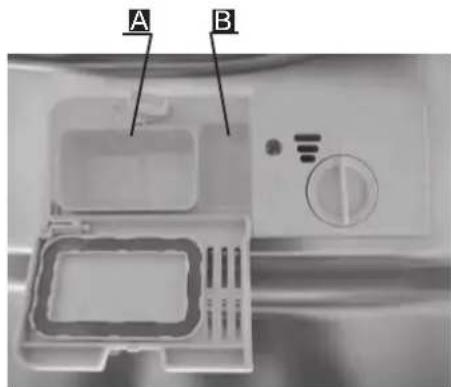
Compartment A:
With each wash cycle.
Compartment B:
For programs with pre-wash only.
(Follow the user instructions!)
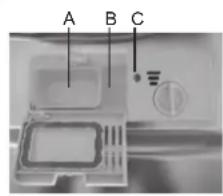
Check the rinse aid level
Mechanical Indicator C.
Electric indicator on control panel (if provided)
Check the regeneration salt level
(On models with water softener system only.)
Electric indicator on control panel (if provided).
If there is no salt warning light in the control panel
(for some models), you can estimate when to fill the salt into the softener by the number of cycles the dishwasher has run.
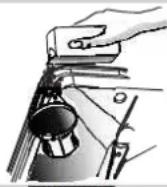
Load the baskets
Scrape off any large amount of leftover food. Soften remnants of burnt food in pans, then load the baskets. Refer to the dishwasher loading instructions.
Select a program
Close the door, press the program button to select the desired program.
(See the section entitled "Operation instruction")
Running the dishwasher
Turn on the water tap and press the Start/Pause button. The dishwasher will start working after about 10 seconds.
-
Changing the program
-
A running cycle can only be modified if it has been running for a short time. Otherwise the detergent may have already been released and the water already drained. If this is the case, the detergent dispenser must be refilled.
- Press the Start/Pause button to pause the appliance, then press the Program button more than 3 seconds to cancel the current program.
- Select a new program
-
Restart the dishwasher.
-
Add forgotten dishes in the dishwasher.
-
Press the Start/Pause button to stop the washing
- After the spray arms stop working, you can open the door completely.
3.Add the forgotten dishes.
4.Close the door, and press the Start/Pause button, the dishwasher will start running again after 10 seconds.
If the appliance is switched off during a wash cycle.
If the appliance is switched off during a wash cycle, when switched on again, please re-select the washing cycle and operate the dishwasher according to the original Power-on state).
Switch off the appliance
When the working cycle has finished, the buzzer of the dishwasher will sound 8 times, then stop.
Turn off the appliance using the ON/OFF button.
Turn off the water tap, unload the baskets
Warning: wait a few minutes (about 15 minutes) before unloading the dishwasher to avoid handling the dishes and utensils while they are still hot and more susceptible to break.
They will also dry better. Unload the appliance, starting from the lower basket.

WARNING!
Open the door r carefully. Hot steam may escape when the door is opened!
3. Operation Instruction

IMPORTANT To get the best performance from your dishwasher, read all operating instructions before using it for the first time.
Control Panel

1 Power switch & indicator light: To turn on/off and shows the power supply.
2 Half load function button & indicator light (With this Hal f load function you can only use it when you have only about or less than 6 place setting dish wave, and you will see less water and energy consumption).
3 Door handle: Pull it to open the door.
104 Program button & indicator light: To press it to select your appropriate program and to show which program you have chose.
5 Rinse aid warning & Salt lights: To show when the Rinse aid dispenser or the salt container need to be refilled.
8 6 Child lock button&indicator light:press the two buttons simultaneously to lock the program.
97 Delay Button & indicator lights : To Press the button to delay the starting time and show the delay hours.
11 Start/Pause button: To start or pause the selected washing program or reset the washing program when the machine is working.
Dishwasher Features
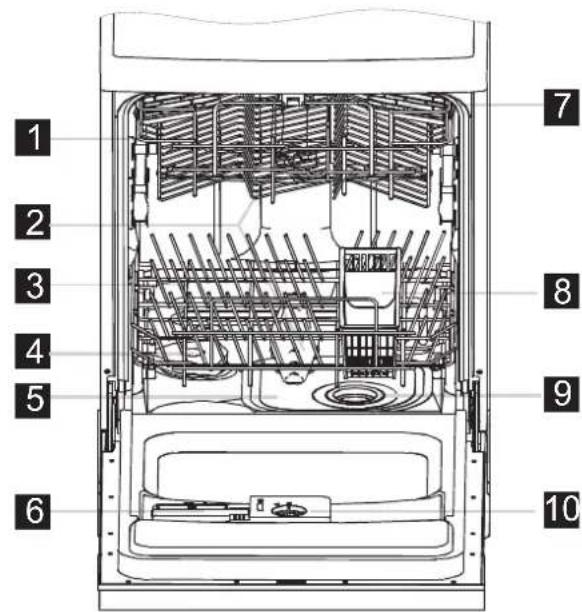
Front view
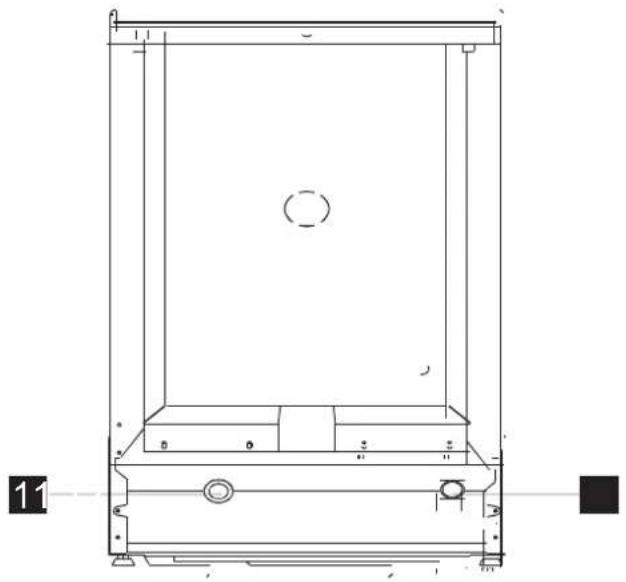
Back View
1 Upper Basket t
Spray Arms
3 Lower Basket t
4 Salt Container
5 Main Filter
6 Detergent Dispenser
7 Cup Shelf
Cutlery Basket
Coarse Filter
10 Rinse Aid Dispenser
11 Drain pipe connector
12 Inlet pi pe connector
4.Prior using for the first time
Before using your dishwasher for the first time:
A. Set the water softener
B. Add 1.5 ~Kg dishwasher salt and then full fill the salt container with water
C. Fill the rinse aid dispenser
D. Fill in detergent
A. Water Softener
The water softener must be set manually, using the water hardness dial. The water softener is designed to remove minerals and salts from the water, which would have a detrimental or adverse effect on the operation of the appliance. The higher the content of these minerals and salts, the harder your water is. The softener should be adjusted according to the hardness of the water in your area. Your local Water Authority can advise you on the hardness of the water in your area.
Adjusting Salt Consumption
The dishwasher is designed to allow for adjustment in the amount of salt consumed based on the hardness of the water used. This is intended to optimise and customise the level of salt consumption.
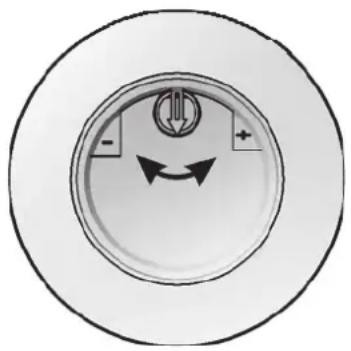
Please follow the steps below for adjustment in salt consumption.
- Unscrew the cap from the salt container.
- There is a ring on the container with an arrow on it (see figure on the side), if necessary, rotate the ring in the anticlockwise direction from the "-" Setting toward the "+" sign, based on the hardness of the water being used.
It is recommended that adjustments should be made in accordance with the following scheme:
| WATER HARDNESS | Selector Position | Salt consumption (gra m/cycle) | Auto nomy (cycles/1kgs) | |||
| dH | fH | Clarke | mmol/l | |||
| 0~140~8 0~1 | 4 0~10 | / | 0 | / | ||
| 14~398~22 1 | 4~3.9 -10~28 | 20 | 50 | |||
| 22~45 | 39~80 | 28~56 | 3.9~8 | Mid | 40 | 25 |
| 45~60 | 80~107 | 56~75 | 8~11 | + | 60 | 16 |
Note:1
1°dH=1.25Clarke=1.78fH=0.178mmol/l
^ DH: German degree
^ : French degree
Clark: British degree
Note:2
| "/" | No salt need added |
| "- " | Setting tow ard the"- " sign |
| "+ " | Setting tow ard the"+ " sign |
| "Mid" | Setting tow ard between the "-" sign and "+" sign |
Contact your local water board for information on the hardness of your water supply.

NOTE: If your model does not have any water softener, you may skip this section.
WATER SOFTENER
The hardness of the water varies from place to place. If hard water is used in the dishwasher, deposits will form on the dishes and utensils.
The appliance is equipped with a special softener that uses a salt container specifically designed to eliminate lime and minerals from the water.
B. Loading the Salt Into the Softener
Always use the salt intended for use with dishwasher.
The salt container is located beneath the lower basket and should be filled as explained in the following:
Attention!
Only use salt specifically designed for the use in dishwashers! Every other type of salt not specifically designed for the use in a dishwasher, especially table salt, will damage the water softener. In case of damages caused by the use of unsuitable salt the manufacturer does not give any warranty nor is liable for any damages caused.
■ Only fill with salt just before starting one of the complete washing programs.
This will prevent any grains of salt or salty water, which may have been spilled, remaining on the bottom of the machine for any period of time, which may cause corrosion.
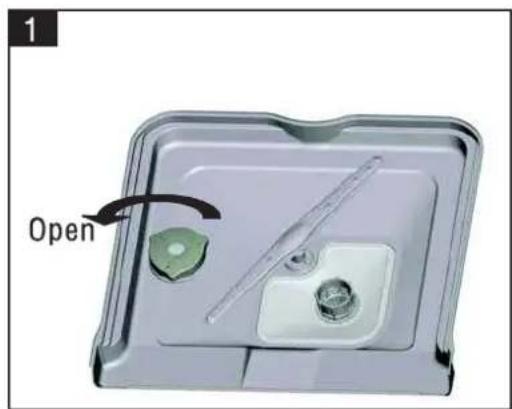
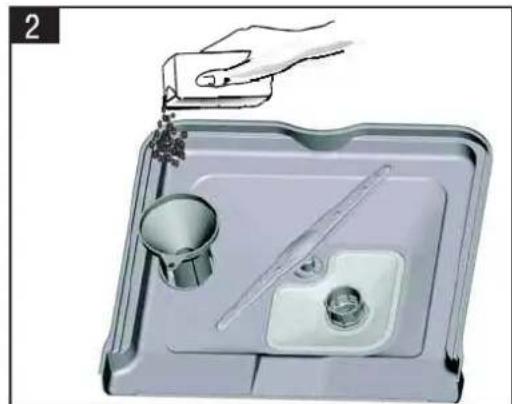
A Remove the lower basket and then unscrew and remove the cap from the salt container. Place the end of the funnel(supplied) into the hole and introduce about 1.5kg of dishwasher salt.2 Full fill the salt container with water. It is normal for a small amount of water to come out of the salt container. After filling the container, screw the cap tightly back clockwise. Usually, the salt warning light will stop being illuminated within 2-6 days after the salt container has been filled with salt.
F Immediately after filling the salt into the salt container, a washing program should be started (We suggest to use the soak or rapid program). Otherwise the filter system, pump or other important parts of the machine may be damaged by salty water. This is out of warranty.

NOTE:
- The salt container must only be refilled when the salt warning light in the control panel comes on. Depending on how well the salt dissolves, the salt warning light may still be on even though the salt container is filled.
If there is no salt warning light in the control panel (for some Models), you can estimate when to fill the salt into the softener by the cycles that the dishwasher has run. - If there are spills of the salt, a soak or a rapid program should be run to remove the excessive salt.
C. Fill the Rinse Aid Dispenser
Rinse Aid Dispenser
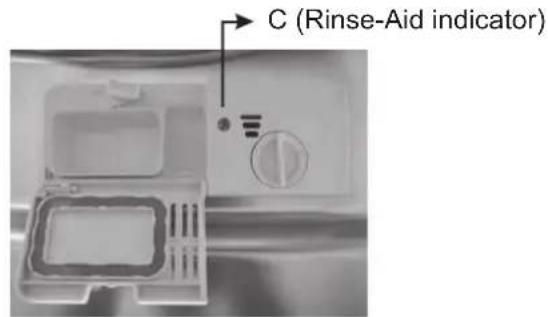
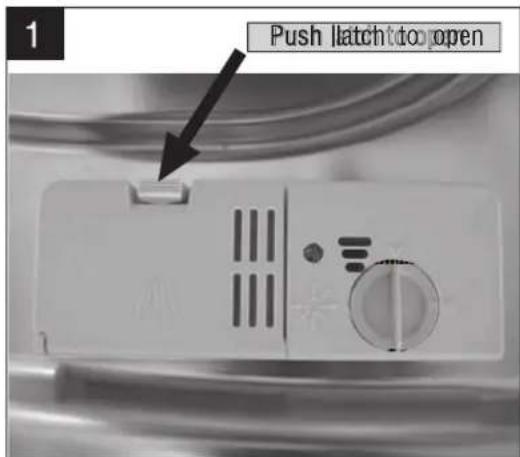
The rinse aid is released during the final rinse to prevent water from forming droplets on your dishes, which can leave spots and streaks. It also improves drying by allowing water to roll off the dishes. Your dishwasher is designed to use liquid rinse aids. The rinse aid dispenser is located inside the door next to the detergent dispenser. To fill the dispenser, open the cap and pour the rinse aid into the dispenser until the level indicator turns completely black. The volume of the rinse aid container is about 110ml.
Function of Rinse Aid
Rinse aid is automatically added during the last rinse, ensuring thorough rinsing, and spot and streak free drying.
Attention!
Only use branded rinse aid for dishwasher. Never fill the rinse aid dispenser with any other substances (e.g. Dishwasher cleaning agent, liquid detergent). This would damage the appliance.
When to Refill the Rinse Aid Dispenser
If there is no rinse-aid warning light in the control panel, you can estimate the amount from the colour of the optical level indicator"C"located next to the cap. When the rinse-aid container is full, the whole indicator will be dark. As the rinse-aid diminishes, the size of the dark dot decreases. You should never let the rinse aid level fall 1/4 full.
As the rinse aid diminishes, the size of the black dot on the rinse aid level indicator changes, as illustrated below.
Full
3/4 full
1/2 full
1/4 full - Should refill to eliminate spotting
Empty
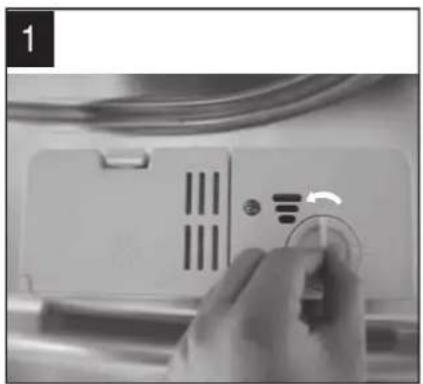
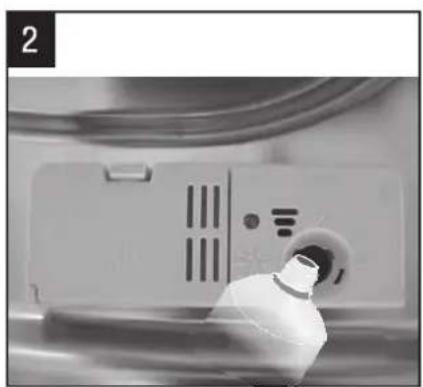
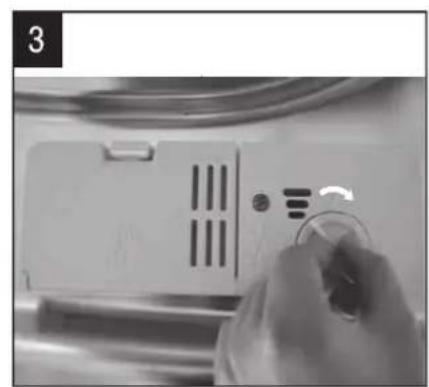
To open the dispenser, turn the cap to the "open" (left) arrow and lift it out.
Pour the rinse aid into the dispenser, being careful not to overfill.
3 Replace the cap by inserting it aligned with "open" arrow and turning it to the closed (right) arrow.

NOTE: Clean up any rinse aid spilled while during filling with an absorbent cloth to avoid excessive foaming during the next washDon't forget to replace the cap before you close dishwasher door.
Adjusting Rinse Aid Dispenser
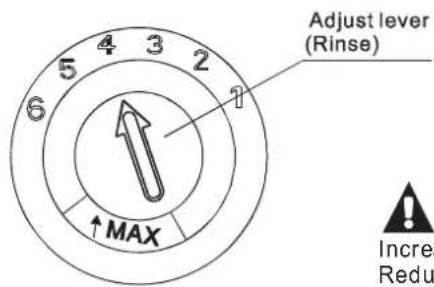
The rinse aid dispenser has six or four settings. Always start with the dispenser set on "4". If spots and poor drying are a problem, increase the amount of rinse aid dispensed by removing the dispenser lid and rotating the dial to "5". If the dishes still are not drying properly or are show spots, adjust the dial to the next higher lever until your dishes are spot-free. The recommended setting is "4". (Factory value is "4".)
NOTE:
Increase the dose if there are drops of water or lime spots on the dishes after washing. Reduce it if there are sticky whitish stains on your dishes or a bluish film on glassware or knife blades.
D. Function of Detergent
Detergents with its chemical ingredients are necessary to remove dirt, crush dirt and transport it out of the dishwasher. Most of the commercial quality detergents are suitable for this purpose.
Detergents
There are 3 sorts of detergents
- With phosphate and with chlorine
- With phosphate and without chlorine
- Without phosphate and without chlorine
Normally new pulverised detergent is without phosphate. Thus the water softener function of phosphate is not given. In this case we recommend to fill salt in the salt container even when the hardness of water is only 6^ . If detergents without phosphate are used in the case of hard water often white spots appear on dishes and glasses. In this case please add more detergent to reach better results. Detergents without chlorine do only bleach a little. Strong and coloured spots will not be removed completely. In this case please choose a program with a higher temperature.
Concentrated Detergent
Based on their chemical composition, detergents can be split in two basic types:
conventional, alkaline detergents with caustic components
low alkaline concentrated detergents with natural enzymes
Detergent Tablets
Detergent tablets of different brands dissolve at different speeds. For this reason some detergent tablets cannot dissolve and develop their full cleaning power during short programs. Therefore please use long programs when using detergent tablets, to ensure the complete removal of detergent residuals.
Detergent Dispenser
The dispenser must be refilled before the start of each wash cycle following the instructions provided in the wash cycle table. Your dishwasher uses less detergent and rinse aid than Conventional dishwasher. Generally, only one tablespoon of detergent is needed for a normal wash load. More heavily soiled items need more detergent. Always add the detergent just before starting the dishwasher, otherwise it could get damp and will not dissolve properly.
Amount of Detergent to Use
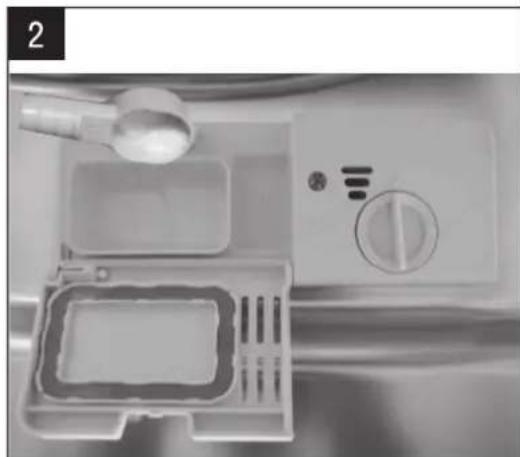

NOTE:
If the lid is closed: press release button. The lid will spring open.
Always add the detergent just before starting each wash cycle.
Only use branded detergent aid for dishwasher.

WARNING!
Dishwasher detergent is corrosive!
Take care to keep it out of reach of children.
Proper Use of Detergent
Use only detergent specifically made for the use in dishwashers. Keep your detergent fresh and dry.
Don't put powdered detergent into the dispenser until you're ready to wash dishes.
Fill in Detergent
Fill the detergent dispenser with detergent. The marking indicates the dosing levels, as illustrated on the right:
A The place of main wash cycle detergent placed.
The place of pre-wash cycle detergent placed.
Please observe the manufacturers do sing and storage Recommendations as stated on the detergent packaging.
Close the lid and press until it locks in place.
If the dishes are heavily soiled, place an additional detergent dose in the pre-wash detergent chamber. This detergent will take effect during the pre-wash phase.

NOTE:
You find information about the amount of detergent for the single program on the last page.
Please aware, that according to the level soiling and the specific hardness of water differences are possible.
Please observe the manufacturer's recommendations on the detergent packaging.
5. Loading the Dishwasher Baskets
Recommendation
■ Consider buying utensils which are identified as dishwasher-proof.
Use a mild detergent that is described as 'kind to dishes'. If necessary, seek further information from the detergent manufacturers.
For particular items, select a program with as low a temperature as possible.
To prevent damage, do not take glass and cutlery out of the dishwasher immediately after the program has ended.
For washing in the dishwasher the following cutlery/dishes
Are not suitable
Cutlery with wooden, horn china or mother-of-pearl handles
Plastic items that are not heat resistant
Older cutlery with glued parts that are not temperature resistant
Bonded cutlery items or dishes
Pewter or cooper items
Crystal glass
Steel items subject to rusting
Wooden platters
Items made from synthetic fibres
Are of limited suitability
Some types of glasses can become dull after a large number of washes
Silver and aluminum parts have a tendency to discolour during washing
Glazed patterns may fade if machine washed frequently
Attention before or after loading the Dishwasher Baskets
(For best performance of the dishwasher, follow these loading guidelines.
Features and appearance of baskets and cutlery baskets may vary from your model.)
Scrape off any large amounts of leftover food. Soften remnants of burnt food in pans.
It is not necessary to rinse the dishes under running water.
Place objects in the dishwasher in following way:
- Items such as cups, glasses, pots/pans, etc. are faced downwards.
2.Curved items, or ones with recesses, should be loaded aslant so that water can run off. - All utensils are stacked securely and can not tip over.
- All utensils are placed in the way that the spray arms can rotate freely during washing.

NOTE: Very small items should not be washed in the dishwasher as they could easily fall out of the basket.
- Load hollow items such as cups, glasses, pans etc. With the opening facing downwards so that water cannot collect in the container or a deep base.
Dishes and items of cutlery must not lie inside one another, or cover each other.
To avoid damage to glasses, they must not touch.
Load large items which are most difficult to clean into the lower basket.
The upper basket is designed to hold more delicate and lighter dishware such as glasses, coffee and tea cups
Long bladed knives stored in an upright position are a potential hazard!
Long and/or sharp items of cutlery such as carving knives must be positioned horizontally in the upper basket.
Please do not overload your dishwasher. This is important for good results and for reasonab le consumption of energy.
Removing the Dishes
To prevent water dripping from the upper basket into the lower basket, we recommend that you empty the lower basket first and then the upper basket.
The Method Loading Normal Dishware
Loading the Upper Basket
The upper basket is designed to hold more delicate and lighter dishware such as glasses, coffee and tea cups and saucers, as well as plates, small bowls and shallow pans (as long as they are not too dirty).
Position the dishes and cookware so that they will not get moved by the spray of water.
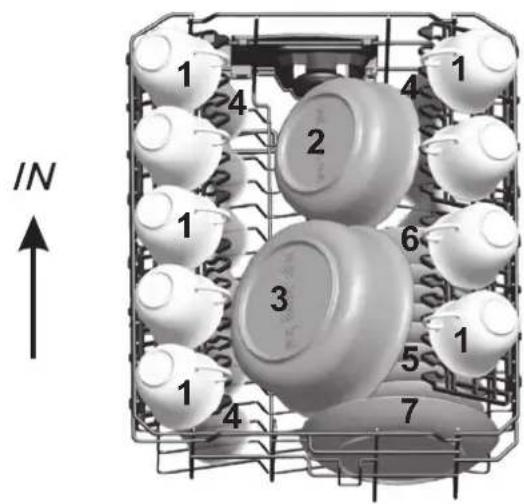
1 Cups
2 Small serving bowl
3 Large serving bowl
4 Glasses
5 Saucers
6 Dish
7 Dessert dishes
Loading the Lower Basket
We suggest that you place large items and the most difficult to clean items are to be placed into the lower basket: such as pots, pans, lids, serving dishes and bowls, as shown in the figure below. It is preferable to place serving dishes and lids on the side of the racks in order to avoid blocking the rotation of the top spray arm.
Please be reminded that:
Pots, serving bowls, etc, must always be placed top down.
Deep pots should be slanted to allow water to flow out.
The Bottom Basket features folding spikes so that larger or more pots and pans can be loaded.
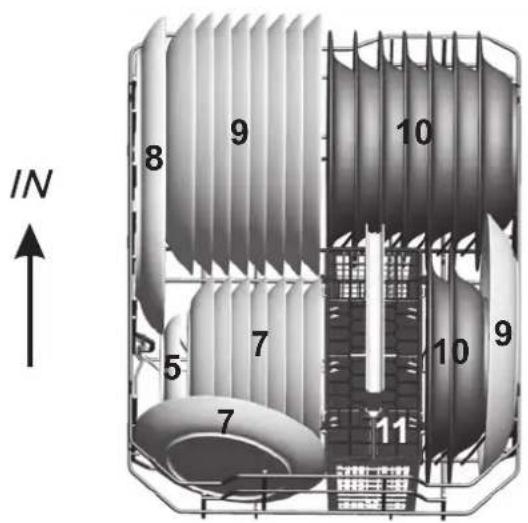
7 Dessert dishes
8 Oval platter
9 Dinner plates
10 Soup plates
11 Silverware basket
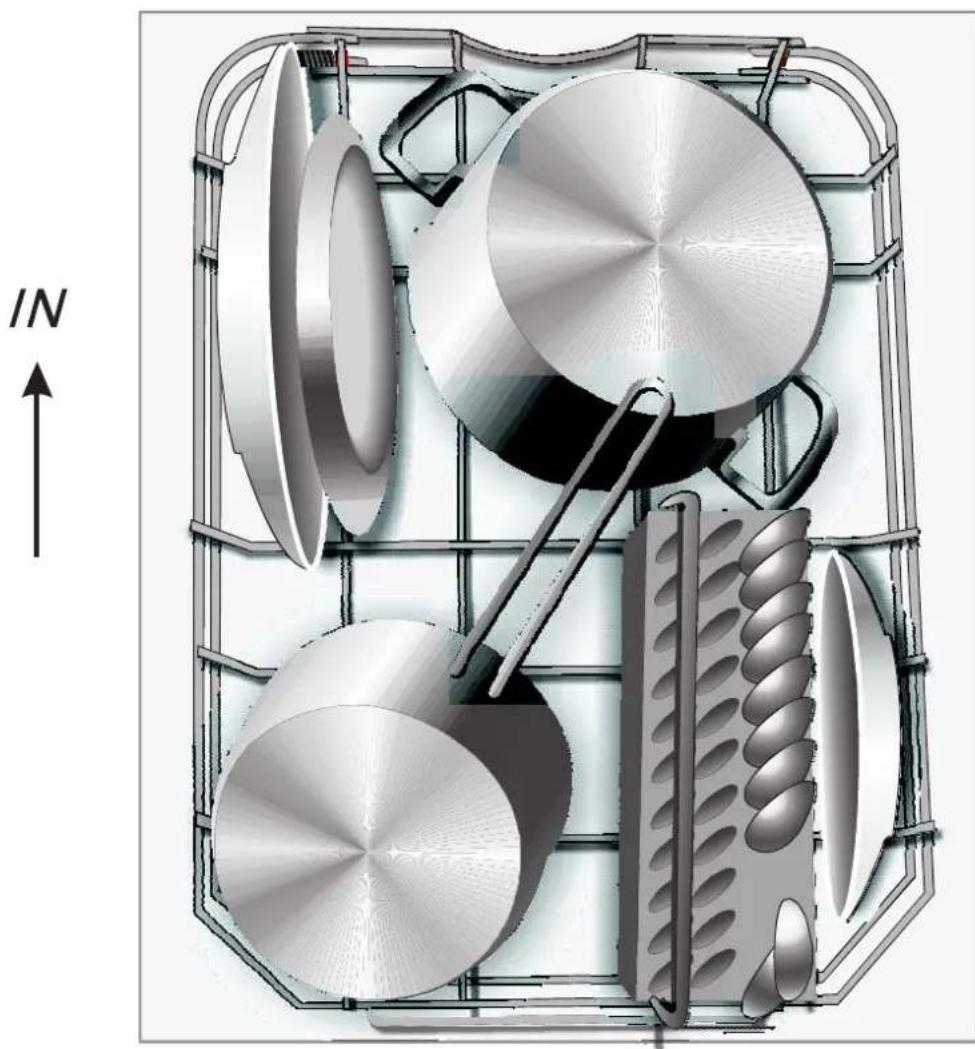
The recommended method loading big dishware (applicable to the special dishware: e.g. big pan, plate)
Adjusting the Upper Basket
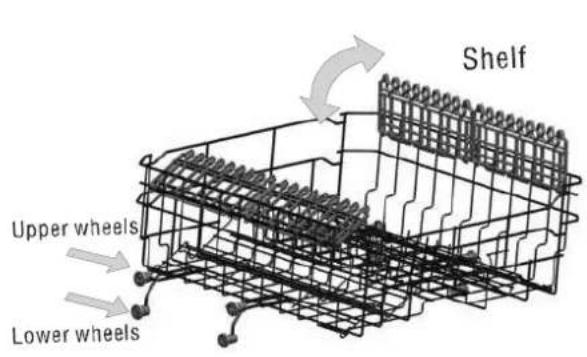
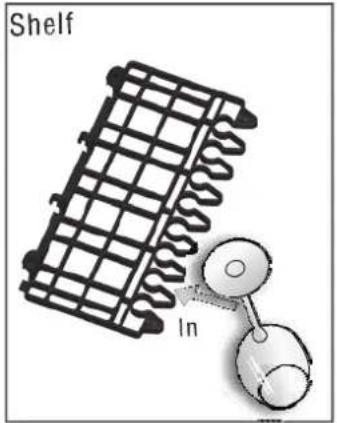
The height of the upper basket can be adjusted in order to create more space for large utensils both for the upper/lower basket. The height of the upper basket can be adjusted by placing the wheels on different height of the rails. Long items, serving cutlery, salad servers and knives should be placed on the shelf so that they do not obstruct the rotation of the spray arms. The shelf can be folded back or be removed when not required for use.
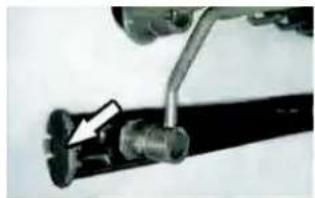
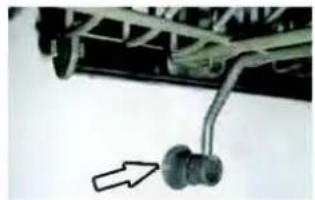
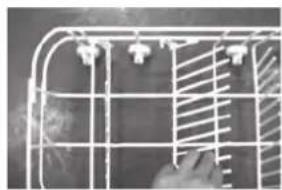
Folding Spikes of Lower Basket
For better stacking of pots and pans, the spikes can be folded down as show in the picture right.
Cutlery Basket
Cutlery should be placed in the cutlery basket with the handles at the bottom. If the rack has side baskets, the spoons should be loaded separately into the appropriate slots, especially long utensils should be placed in the horizontal position at the front of the upper basket as shown in the picture.

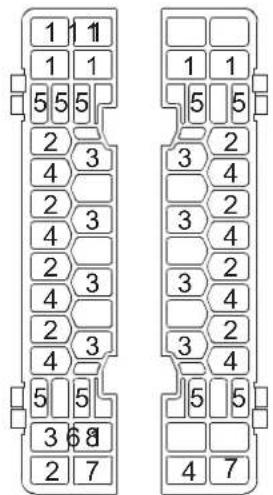
1.fork
2.soup spoon
3.dessert spoon
4. tea spoon
5.knife
6.serving fork
7.serving spoon
8.gravy ladle
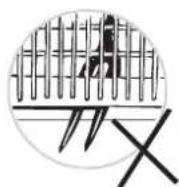

WARNING!
- Do not let any item extend through the bottom.
Always load sharp utensils with the sharp point down!
For personal safety and a top quality cleaning, place the silverware in the basket making sure that:
They do not nest together.
■ Silverware is placed with the handles-down.
But place knives and other potentially dangerous utensils are placed handles-up.
6. Starting a washing program
Wash Cycle Table
| Program | Cycle Selection Information | Description of Cycle | Detergent pre/maln | Running time(min) | Energy (Kwh) | Water (L) | Rinse Aid |
| Intensive | For heaviest soiled crockery, and normally soiled pots, pans, dishes etc with dried on soiling; | Pre-wash(50 °Wash (65 °C) Rinse Rinse Rinse (55 °CDrying | 5/22g | 120 | 1.13 | 16.0 | ★ |
| Normal | For normally soiled loads, such as pots, plates, glasses and lightly soiled pans. | Pre-wash(50 °Wash (5 5 °C) Rinse Rinse(65 °CDrying | 5/22g | 155 | 1.09 | 13.0 | ★ |
| ECO (*EN 50242) | This is standard programme, it is suitable to clean normally soiled tableware and it is the most efficient programme in terms of its combined energy and water consumption for that type of tableware. | pre-wash Wash (50 °C) Rinse (60 °CDrying | 5/22g | 175 | 0.77 | 10.5 | ★ |
| 1 Hour | For lightly soiled loads that do not need excellent drying efficiency. | Wash(60°C) Rinse Rinse (50 °CDrying | 27g | 60 | 0.77 | 10.0 | ★ |
| Rapid | A shorter wash for ligh tly soiled loads and quick wash | Wash (4 0 °C) Rinse Rinse (40 °C) | 15 g. | 30 | 0.50 | 9.0 | |
| 3 In1 | For normally soiled loads, use multifunctional detergent | Pre-wash (50°C) Wash(55 °C) Rinse Rinse (65 °CDrying | 3 in 1 | 150 | 1.08 | 13.5 |

NOTE:
*EN 50242 : This programme is the test cycle. The information for comparability test in accordance with EN 50242, as follows:
Capacity: 9 setting
Position Upper basket: upper wheels on rails.
■ Rinse aid setting: 6
The power consumption of off-mode is 0w left-on mode is 0.4w
Turning On the Appliance
Starting a cycle wash
1 Draw out the lower and upper basket, load the dishes and push them back. It is commended to load the lower basket first, then the upper one (see the section entitled "Loading the Dishwasher).
Pour in the detergent (see the section entitled "Salt, Detergent and Rinse Aid").
Insert the plug into the socket. The power supply is 220-240 VAC/50 HZ, the specification of the socket is 10A 250VAC. Make sure that the water supply is turned on to full pressure.
4 Close the door, press the ON/OFF button, and the ON/OFF light will turn on. Press the program button to select a desired wash cycle. Then press the Start/Pause button, the machine will work after 10 seconds.
If you want to delay the washing, you should press the Delay Button after selecting washing program, and the indicator light will show the delay hours.
If you want to select half washing, you should press Half washing button after selecting washing program, and the half washing light will be on, then press the Start/Pause button to start.
Change the Program...
Premise
1 A cycle that is underway can only be modified if it has only been running for a short time. Otherwise, the detergent may have already been released, and the appliance may have already drained the wash water. If this is the case, the detergent dispenser must be refilled (see the section entitled "Loading the Detergent").
Press the Start/Pause, but dishwasher will be paused the Programmen press 3 button more than seconds to cancel the current program, you can change the program to the desired cycle setting (see the section entitled "Starting a wash cycle...").
3 The indicator lights show the state of the dishwasher: a)One of the program lights on- - - - - - - - - - - - - - - - - - - - - - - - - - - - - - - - - - - - - - - - - - - - - - - - - - - - - - - - - - - - - - - - - - - - - - - - - - - - - - - - - - - - - - - - - - - - - - - - - - - - - -
b)One of the program lights blinking slowly -- run;
c)Some of the the program lights fast blinking-- error.

NOTE:
If you open the door, irthe amavashmecy wale pause. the buzzer will moing every minute unless you close the door . After you close the door ,the machine will keep on working after 10 seconds.
Forgot to Add a Dish?
A forgotten dish can be added any time before the detergent cup opens.
1 Press the Start/Pause button
4 Close the door
After the spray arms stop working, you can open the door completely.
Press the Start/Pause button, the dishwasher will run after 10 seconds.
3 Add forgotten dishes.
At the End of the Wash Cycle
When the working cycle has finished, the buzzer of the dishwasher will sound for 8 seconds, then stop. Turn off the appliance using the ON/OFF button, shut off the water supply and open the door of the dishwasher. Wait for a few minutes before unloading the dishwasher to avoid handling the dishes and utensils while they are still hot and more susceptible to breakage. They will also dry better.
Switch Off the Dishwasher
- Switch off the dishwasher by pressing the ON/OFF button.
- Turn off the water tap!
Open the door carefully.
Hot dishes are sensitive to knocks. The dishes should therefore be allowed to cool down around 15 minutes before removing from the appliance.
Open the dishwasher's door, leave it ajar and wait a few minutes before removing the dishes. In this way they will be cooler and the drying will be improved.
Unloading the dishwasher
It is normal that the dishwasher is wet inside.
Empty the lower basket first and then the upper one. This will avoid water dripping from the upper Basket onto the dishes in the lower one.

WARNING!
It is dangerous to open the door when washing, because the hot water may scald you.
7.Maintenance and Cleaning
Filtering System
The filter prevents larger remnants of food or other objects from getting inside the pump. The residues may block the filter, in this case they must be removed.
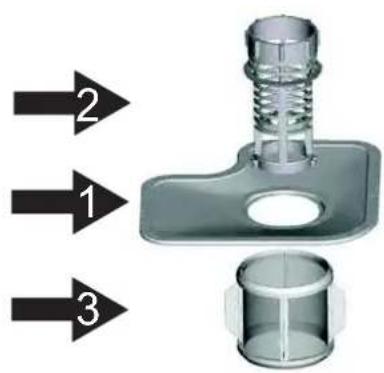
The filter system consists of a coarse filter, a flat (Main filter) And a microfilter(Fine filter).
Main filter 1 Food and soil particles trapped in this filter are pulverized by a special jet on the lower spray arm and washed down to drain.
Coarse filter 2
Larger items, such as pieces of bones or glass, that could block the drain are trapped in the coarse filter. To remove the items caught by the filter, gently squeeze the tap on the top of this filter and lift out.
Fine filter 3
This filter holds soil and food residues in the sump area and prevents it from being redeposit on the dishes during wash cycle.
Filter assembly
The filter efficiently removes food particles from the wash water, allowing it to be recycled during the cycle. For best performance and results, the filter must be cleaned regularly. For this reason, it is a good idea to remove the larger food particles trapped in the filter after each wash cycle by rinsing the semicircular filter and cup under running water. To remove the filter device, pull the cup handle in the upward direction.

WARNING!
The dishwasher must never be used without the filters.
■ Improper replacement of the filter may reduce the performance level of the appliance and damage dishes and utensils.

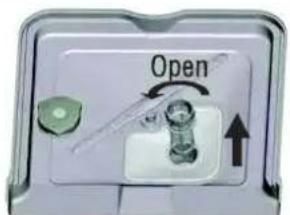
Step 1: Turn the filter in anti-clockwise direction, then lift it up.

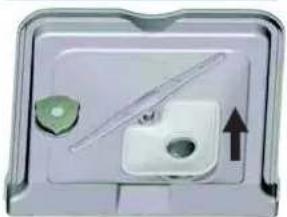
Step 2 lift the Main filter up:

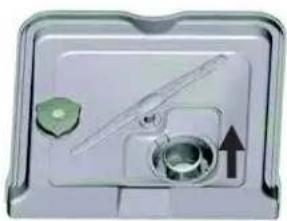
Step 3: lift the Fine filter up

NOTE: When following this procedure from step1 to step 3, the filter system will be removed; when following it from Step 3 to Step 1, the filter system will be installed.
Remarks:
- Inspect the filters for blocking after every time the dishwasher has been used.
- By unscrewing the coarse filter, you can remove the filter system. Remove any food remnants and clean the filters under running water.

NOTE: The entire filter assembly should be cleaned once a week.
Cleaning the Filter
To clean the coarse filter and the fine filter, use a cleaning brush. Reassemble the filter parts as shown in the figures on the last page and reinsert the entire assembly in the dishwasher, positioning it in its seat and pressing downwards.

WARNING!
When cleaning the filters, don't knock on them. Otherwise, the filters could be contorted and the performance of the dishwasher could be decreased.
Caring for the Dishwasher
The control panel can be cleaned by using a lightly dampened cloth.
After cleaning, make sure to dry it thoroughly.
For the exterior, use a good appliance polish wax.
Never use sharp objects, scouring pads or harsh cleaners on any part of the dishwasher.
Cleaning The Door
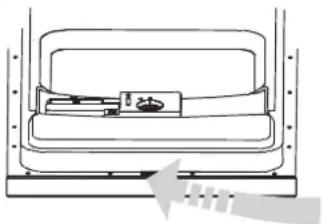
To clean the edge around the door, you should use only a soft warm, damp cloth. To avoid penetration of water into the door lock and electrical components, do not use a spray cleaner of any kind.

WARNING!
- Never use a spray cleaner to clean the door panel as it may damage the door lock and electrical components.
- Abrasive agents or some paper towels should not be used because of the risk of scratching or leaving spots on the stainless steel surface.
Protect Against Freezing
please take frost protection measures on the dishwasher in winter. Every time after washing cycles, please operate as follows :
1.Cut off the electrical power to the dishwasher.
2. Turn off the water supply and disconnect the water inlet pipe from the water valve.
3.Drain the water from the inlet pipe and water valve. (Use a pan to catch the water)
4. Reconnect the water inlet pipe to the water valve.
5. Remove the filter at the bottom of the tub and use a sponge to soak up water in the sump.

NOTE: If your dishwasher cannot work because of the ice, please contact professional service persons.
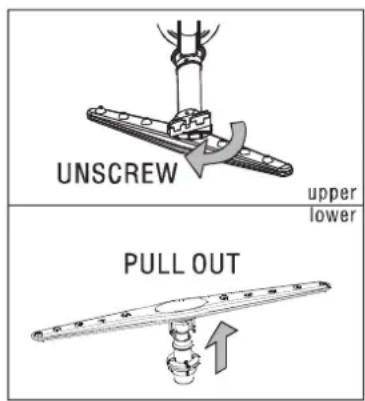
Cleaning the Spray Arms
It is necessary to clean the spray arms regularly for hard water chemicals will clog the spray arm jets and bearings.
To remove the upper spray arm, screw off the nut clockwise then remove the arm.
To remove the lower spray arm, pull out the spray arm upward.
Wash the arms in soapy and warm water and use a soft brush to clean the jets. Replace them after rinsing them thoroughly.
How to Keep Your Dishwasher in Shape
After Every Wash
After every wash, turn off the water supply to the appliance and leave the door slightly open so that moisture and odours are not trapped inside.
Remove the Plug
Before cleaning or performing maintenance, always remove the plug from the socket.
No Solvents or Abrasive Cleaning
To clean the exterior and rubber parts of the dishwasher, do not use solvents or abrasive cleaning products. Only use a cloth with warm soapy water. To remove spots or stains from the surface of the interior, use a cloth dampened with water an a little vinegar, or a cleaning product made specifically for dishwashers.
When not in Use for a LongTime
It is recommend that you run a wash cycle with the dishwasher empty and then remove the plug from the socket, turn off the water supply and leave the door of the appliance slightly open. This will help the door seals to last longer and prevent odours from forming within the appliance.
■ Moving the Appliance
If the appliance must be moved, try to keep it in the vertical position. If absolutely necessary, it can be positioned on its back.
Seals
One of the factors that cause odours to form in the dishwasher is food that remains trapped in the seals. Periodic cleaning with a damp sponge will prevent this from occurring.
8.Installation instruction
Positioning the Appliance
Position the appliance in the desired location. The back should rest against the wall behind it, and the sides, along the adjacent cabinets or walls. The dishwasher is equipped with water supply and drain hoses that can be positioned either to the right or the left sides to facilitate proper installation.
Levelling the Appliance
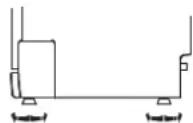
Once the appliance is positioned for levelling, the height of the dishwasher may be altered via adjustment of the screwing level of the feet. In any case, the appliance should not be inclined more than 2^ .
About Power Connection

WARNING!
For personal safety:
- Do not use an extension cord or an adapter plug with this appliance.
- Do not, under any circumstances, cut or remove the earthing
- Connection from the power cord.
Electrical Requirements
Please look at the rating label to know the rating voltage and connect the dishwasher to the appropriate power supply. Use the required fuse 10 amp, time delay fuse or circuit breaker recommended and provide separate circuit serving only this appliance.
Insure proper ground exists before use
Electrical Connection
Ensure the voltage and frequency of the power being corresponds to those on the rating plate. Only insert the plug into an electrical socket which is earthed properly. If the electrical socket to which the appliance must be connected is not appropriate for the plug, replace the socket, rather than using a adaptors or the like as they could cause overheating and burns.
Water Connection
Cold Water Connection
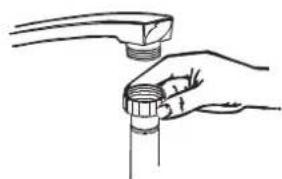
Connect the cold water supply hose to a threaded 3/4 (inch) connector and make sure that it is fastened tightly in place. If the water pipes are new or have not been used for an extended period of time, let the water run to make sure that the water is clear. This precaution is needed to avoid the risk of the water inlet to be blocked and damage the appliance.

WARNING!
Please close the hydrant after using.
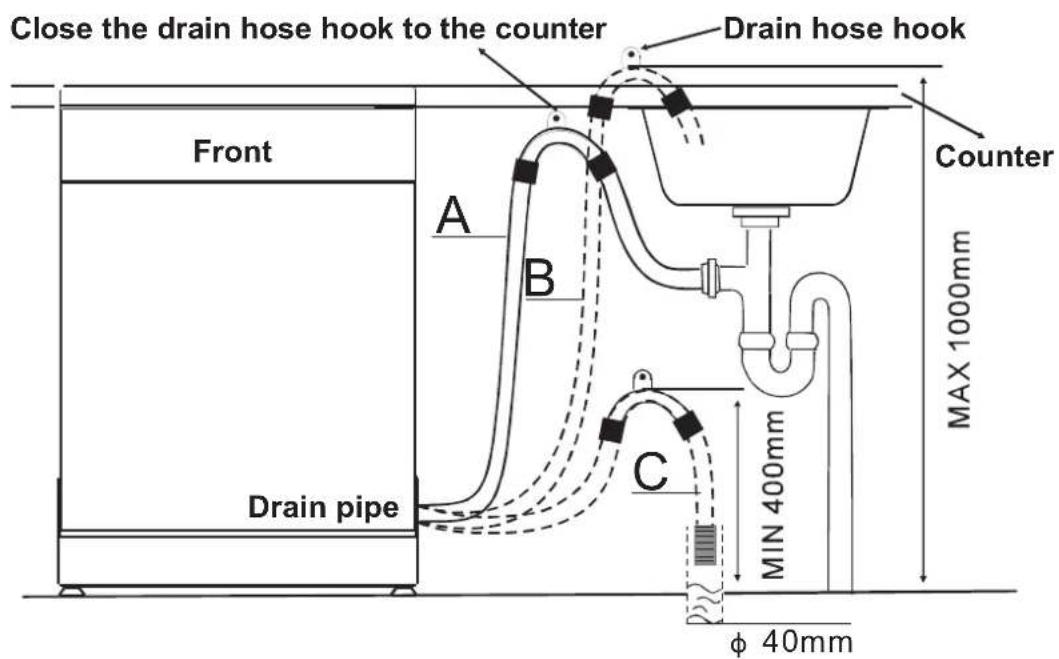
Drain hose Connection
Insert the drain hose into a drain pipe with a minimum diameter of 4cm , or let it run into the sink, making sure to avoid bending or crimping it. Use the special plastic support that comes with the appliance. The top of the hose must be at a height between 40 and 100cm . The free end of the hose must not be immersed in water to avoid the back flow of it.

PLEASE HANG UP THE DRAIN HOSE EITHER WAY OF A, B, C
How to Drain Excess Water From Hoses
If the sink is 1000 higher from the floor, the excess water in hoses cannot be drained directly into the sink. It will be necessary to drain excess water from hoses into a bowl or suitable container that is held outside and lower than the sink.
Water Outlet
Connect the water drain hose. The drain hose must be correctly fitted to avoid water leaks. Ensure that the water drain hose is not kinked or squashed.
Extension Hose
If you need a drain hose extension, make sure to use a similar drain hose. It must be no longer than 4 metres; otherwise the cleaning effect of the dishwasher could be reduced.
Syphon Connection
The waste connection must be at a height of between 40~cm (minimum) and 100~cm (maximum) from the bottom of the dish. The water drain hose should be fixed by a hose clip. The free end of the hose must not be immersed in water.
Start of Dishwasher
The following things should be checked before starting the dishwasher.
The dishwasher is level and fixed properly
The inlet valve is open
There is a leakage at the connections of the conducts
4 The wires are tightly connected
The power is switched on
6 The inlet and drain hoses are knotted
All packing materials and printings should be taken out from the dishwasher

Attention: After installation, please make sure to keep this manual.
The content of this manual is very helpful to the users.
9.Troubleshooting Tips
Before Calling for Service
Review the charts on the following pages may save you from calling for service.

Problem
Dishwasher doesn't start
Possible Causes What To Do
Fuse blown, or the circuit breaker acted Power supply is not turned on
Replace fuse or reset circuit breaker. Remove any other appliances sharing the same circuit with the dishwasher
Water pressure is low
Make sure the dishwasher is turned on and the door is closed securely.
Make sure the power cord is properly plugged into the wall socket.
Door of dishwasher not properly closed.
Check that the water supply is connected properly and the water is turned on.
Kink in drain hose
Make sure to close the door properly and latch it.
water not pumped form dishwasher
Kink in drain hose
Check drain hose.
Filter clogged
Check coarse the filter
(see section titled "Cleaning The Filter")
Kitchen sink clogged
Check the kitchen sink to make sure it is draining well. If the problem is the kitchen sink not draining, you may need a plumber rather than a serviceman for dishwash
Suds in the tub
Improper detergent
Use only the special dishwasher detergent to avoid suds. If this occurs, open the dishwasher and let suds evaporate. Add 1 gallon of cold water to the tub. Close and latch the dishwasher, then Start any wash cycle to drain out the water. Repeat if necessary.
Spilled rinse-aid
Always wipe up rinse-aid spills immediately.
Stained tub interior
Detergent with colourant was used
Make sure that the detergent is the one without colourant.
General problems
White film on inside surface
Hard water minerals
To clean the interior, use a damp sponge with dishwasher detergent and wear rubber gloves. Never use any other cleaner than dishwasher detergent for the risk of foaming or suds.
There are rust stains on cutlery
The affected items are not corrosion resistant.
Always run the quick wash program. without any crockery in the dishwasher and without selecting the Turbo function (if present), after adding dishwasher salt.
The lid of the softer is loose
Check the lip. Ensure the fix is fine.
Knocking noise in the wash cabinet
A spray arm is knocking against an item in a basket
Interrupt the program, and rearrange the items which are obstructing the spray arm.
Noise
Rattling noise in the wash cabinet
Items of crockery are loose in the wash cabinet
Interrupt the program, and rearrange the items of crockery.
Knocking noise in the water pipes
This may be caused by on-site installation or the cross-section of the piping.
This has no influence on the dishwasher function. if in doubt, contact a suitably qualified plumber.
| ? | Problem | Possible Causes | What To Do |
| The dishes are not clean | The dishes were not loaded correctly. | See notes in "Loading the Dishwasher Baskets". | |
| The program was not powerful enough. | Select a more intensive program.See" Wash Cycle Table." | ||
| Not enough detergent was dispensed. | Use more detergent, or change your detergent. | ||
| Items are blocking the path of sp ay arms.r | Rearrange the items so that the spray can rotate freely. | ||
| The filter combination in the base of wash cabinet is not clean or is not correctly fitted.This may cause the spray arm jets to get blocked. | Clean and/or fit the filter combination correctly.Clean the spray arm jets. See "Cleaning the Spray Arms". | ||
| Unsatis -factory washing result | Cloudiness on glassware | Combination of soft water and too much detergent. | Use less detergent if you have soft water and select a shortest cycle to wash the glassware and to get them clean. |
| Black or gray marks on dishes | Aluminum utensils have rubbed against dishes. | Use a mild abrasive cleaner to eliminate those marks. | |
| Detergent left in dispenser cups | Dishes block detergent cups. | Re-loading the dishes properly. | |
| Unsatis -factory drying result | The dishes are not drying | Improper loading | Load the dishwasher as suggested in the directions. |
| Too little rinse-aid | Increase the amount of rinse-aid/refill the rinse-aid dispenser. | ||
| Dishes are removed too soon | Do not empty your dishwasher immediately after washing. Open the door slightly so that the steam can escape. Begin unloading the dishwasher only once t he dishes are barely warm to the touch. Empty the low basket first. This prevents water from dropping off dishes in the upper basket. | ||
| Wrong program has been selected | In short program the washing temperature is lower. This also lowers cleaning performance. Choose a program with a long washing time. | ||
| Use of cutlery with a low-quality coating | Water drainage is more difficult with these items.Cutlery or dishes of this type are not suitable for washing in the dishwasher. |
Error Codes
When some malfunctions come on, the appliance will display error codes to warn you:
| Codes | Meanings | Possible Causes |
| The 3in1 program indicator light flicker fleetly | Longer inlet time. | Tap is not opened, or water intake is restricted,or water pressure is too low. |
| The 1Hour program indicator light flicker fleetly | Overflow. | Some element of dishwasher leaks . |

WARNING!
If overflow occurs, turn off the main water supply before calling a service.
If there is water in the base pan because of an overfill or small leak, the water should be removed before restarting the dishwasher.
Technical Information
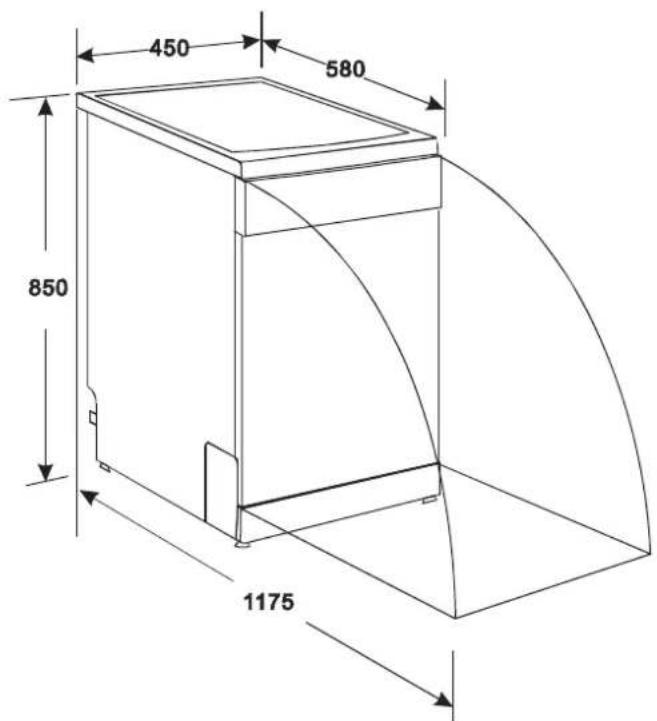
| Height : 850mm | |
| Width : 450mm | |
| Depth : 580mm | |
| Water pressure: 0.04-1.0MPa | |
| Power supply: see rating label | |
| Capacity: 9 place settings | |
Technical Data Sheet
Sheet of household dishwasher according to EU Directive 1059/2010:
| Manufacturer | OK |
| Type / Description | ODW100 26A1 |
| Standard place settings | 9 |
| Energy efficiency class ① | A+ |
| Annual energy consumption ② | 222 kWh |
| Energy consumption of the standard cleaning cycle | 0.77 kWh |
| Powe r consumption of off-mode | 0 W |
| Powe r consumption of left-on mode | 0.4 W |
| Annual water consumption ③ | 2940 liter |
| Drying efficien cy class ④ | A |
| Standard cleaning cycle ⑤ | ECO 50 °C |
| Program duration of the standard cleaning cycle | 175 min |
| Noise level | 52 dB(A) re 1 pW |
| Mounting | Free standing |
| Could be built-in | Yes |
| Height | 85 cm |
| Width | 45 cm |
| Depth (with connectors) | 58 cm |
| Powe r consumption | 1760-2100 W |
| Rated voltage / freque ncy | 220-240 V~/ 50 Hz |
| Water pressure (flow pressure) | 0.4-10 bar = 0.04-1 MPa |
NOTE:
1 A+++ (highest efficiency) to D (lowest efficiency)
Energy consumption "222" kWh per year, based on 280 standard cleaning cycles using cold water fill and the consumption of the low power modes. Actual energy consumption will depend on how the appliance is used.
Water consumption "2940" litres per year, based on 280 standard cleaning cycles. Actual water consumption will depend on how the appliance is used.
A (highest efficiency) to G (lowest efficiency)
This program is suitable for cleaning soiled normally soiled tableware and that it is the most efficient programme in terms of its combined energy and water consumption for that type of tab leeware.
The device meets the European standards and the directives in the current version at delivery:
- LVD 2006/95/EC
- EMC 2004/108/EC
ErP 2009/125/EC
The above values have been measured in accordance with standards under specified operating conditions. Results may vary greatly according to quantity and pollution of the dishes, water hardness, amount of detergent, etc.
The manual is based on the European Union's standards and rules.
Warranty
We provide a warranty for this device in according to the following conditions:
- In accordance with the conditions below (points 2-6) we will remove defects of the device free of charge, it they are evidently due to material and/or production errors, and if they are reported to us immediately after detection and within 24 months of delivery to the first end user.
- The warranty does not cover easily break-able parts such as glass, plastic or light bulbs. A warranty obligation is not triggered by minor deviations from the target conditions, which are not significant to the value and usability of the device, by damages due to chemical and electrochemical effects of water, in general by abnormal environmental conditions or improper operating conditions, or if the device otherwise comes into contact with unsuitable substances. A warranty can also not be assumed if the defects on the device are due to transport damage which is not caused by us, improper installation and assembly, incorrect operation, non-household usage, a lack of maintenance or the non-observation of the operating or assembly instructions. Warranty claims are void if repairs or interventions are carried out by people who are not authorized by us to do so, or if our devices have been equipped with spare parts, supplements or accessories, which are not original parts and therefore cause a defect.
- The warranty service is performed by either repairing the defect parts or replacing them with non-defect parts, at our discretion. Devices which can be transported (e.g. in a car) and on which a warranty service is claimed within the scope of this warranty, are to be handed over or sent to our closest customer service office or our contracted customer service office, Repairs at the place of installation can only be requested for devices which are operated on site (stationary devices). The respective sales receipt stating the purchase and /or delivery date is to be submitted. Replaced parts become our property.
- If the rectification of the defect device is rejected by us or fails, we will provide a re-placement of equal value and at no charge within the above-mentioned warranty period, at the request of the end user.
- Warranty services neither invoke an extension of the warranty period, nor start a new warranty period. The warranty period for built-in replacement parts ends with the warranty period for the whole device.
- Any other or further claims, in particular those regarding compensation for damage caused outside of the device are ruled out - provided liability is not obligatory by law.
- We are furthermore liable without restrictions in accordance to legal requirements for damage covered by the liability scope of the Product Liability Act, as well as for damage caused by intentional and gross negligent contract violations plus fraudulent intent by us, our legal representatives or vicarious agents.
- This warranty bond does not affect your legal warranty claims.
Service number for the Netherlands:0900-0401104 WWW.OKINFO.NL
Service number for Belgium 02-4002342
Service number for Luxembourg : 800-28242
François