LBTXG80 - Hi-Fi System SONY - Free user manual and instructions
Find the device manual for free LBTXG80 SONY in PDF.



| Technical Features | SONY LBTXG80 Hi-Fi System, 80W output power, Bluetooth compatibility, CD player, FM/AM radio, USB input. |
|---|---|
| Usage | Ideal for listening to music at home, wireless connection with compatible devices, playback of CDs and audio files via USB. |
| Maintenance and Repair | Regularly clean surfaces, check audio connections, consult a professional for internal repairs. |
| Safety | Use only with a compatible power source, avoid exposure to moisture, do not block ventilation openings. |
| General Information | Compact dimensions for easy placement, modern design, 2-year manufacturer warranty. |
Frequently Asked Questions - LBTXG80 SONY
User questions about LBTXG80 SONY
0 question about this device. Answer the ones you know or ask your own.
Ask a new question about this device
Download the instructions for your Hi-Fi System in PDF format for free! Find your manual LBTXG80 - SONY and take your electronic device back in hand. On this page are published all the documents necessary for the use of your device. LBTXG80 by SONY.
USER MANUAL LBTXG80 SONY
Compact Hi-Fi Stereo System
Operating Instructions GB
Mode d'emploi FR
To avoid electrical shock, do not open the cabinet. Refer servicing to qualified personnel only.
Do not install the appliance in a confined space, such as a bookcase or built-in cabinet.
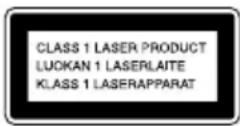
This appliance is classified as a CLASS 1 LASER product. The CLASS 1 LASER PRODUCT MARKING is located on the rear exterior.
To prevent fire, do not Cover the ventilation of the apparatus with newspapers, table-cloths, curtains, etc. And don't place lighted candles on the apparatus.
To prevent fire or shock hazard, do not place vases on the apparatus.
Don't throw a battery, dispose it as the injurious wastes.
This stereo system is equipped with the Dolby B-type noise reduction system*.
- Manufactured under license from Dolby Laboratories Licensing Corporation.
DOLBY and the double-D symbol are trademarks of Dolby Laboratories Licensing Corporation.
Table of Contents
Parts Identification
Main unit 4
Remote control 5
Getting Started
Hooking up the system 6
Inserting two size AA (R6) batteries into the remote 7
Setting the time. 8
Saving the power in standby mode..... 8
CD
Loading the CD 9
Playing the CD
— Normal Play/Shuffle Play/
Repeat Play 9
Playing CDs without interruption —Non-Stop Play 10
Programming the CD tracks
— Program Play 10
DJ Effects 11
Using the CD display 11
Tuner
Preseting radio stations. 12
Listening to the radio Preset Tuning 13
Using the Radio Data System (RDS)* 13
Tape
Loading a tape 15
Playing a tape 15
Recording to a tape
— CD Synchro Recording/
High Speed Dubbing/Recording
Manually/Program Edit 16
Timer-recording radio programs 17
Sound Adjustment
Adjusting the sound 18
Selecting the audio emphasis effect .... 18
Selecting the surround effect 18
Making a personal audio emphasis file Personal File. 19
Other features
Changing the spectrum analyzer display 20
Singing along: Karaoke 20
Playing a guitar 21
Enhancing video game sound Game Sync 21
Falling asleep to music — Sleep Timer 21
Waking up to music Daily Timer 22
Hooking up the optional components
Connecting MD deck/VCR/camcorder/video game 23
Connecting a turntable/mixer 24
Additional Information
Precautions 25
Troubleshooting 26
Specifications 28
- For European models only
Parts Identification
The items are arranged in alphabetical order.
Refer to the pages indicated in parentheses ( ) for details.
Main unit
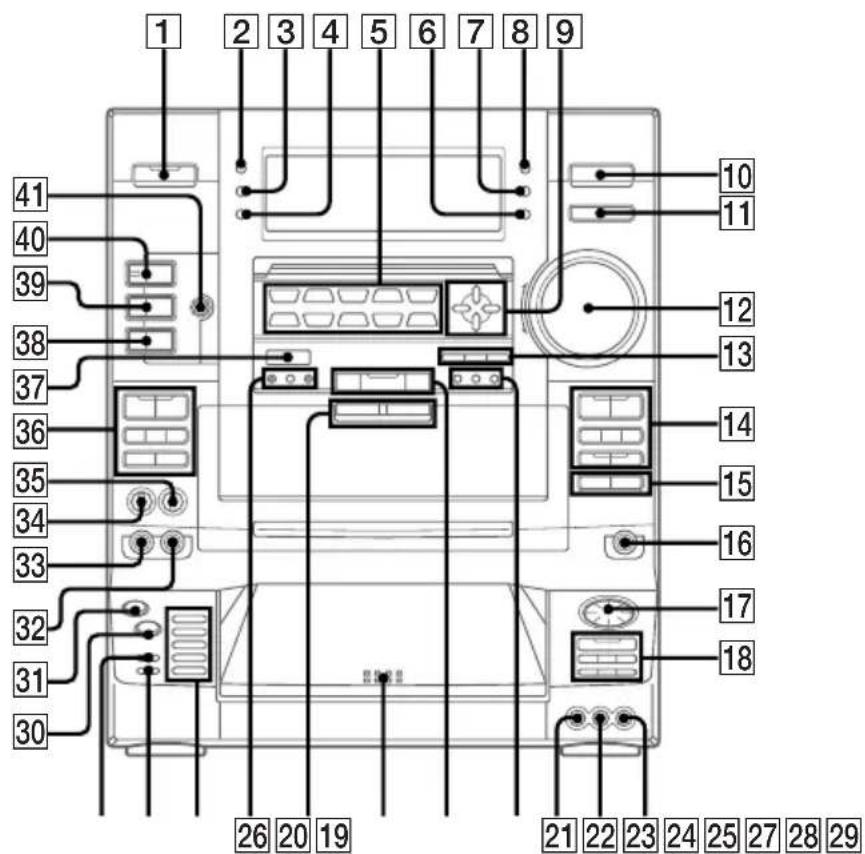
A EJECT / B EJECT 25 (15)
AUDIO L 20 (23)
AUDIO R 19 (23)
CD SYNC 15(16,17)
DIRECT EQUALIZER 5 (18)
SALSA
REGGAE
SAMBA
TANGO
MOVIE
GUITAR
ROCK
JAZZ
DANCE
GAME
DIRECTION 36(15,16,17)
DISCSKIP[89,10,17)
DISC 1~5 [27] (9)
DISPLAY 3 (8,11,13)
DOLBY NR 36 (15,16)
EDIT 29 (17)
ENTER 26 (12,14)
ENTER/NEXT 13 (8,17,19,22,27)
FLASH [30] (11)
FLAT [13] (18)
FUNCTION[10] (7,9,10,16,17,23,24)
GAME [11] (21)
GROOVE 40 (18)
GUITAR DISTORTION 26 (21)
GUITAR jack 32 (21)
GUITAR LEVEL 35 (21)
H SPEED DUB 15 (16)
Jog dial (AMSI/▶▶) 17
(9,10,11,17)
LOOP 31(7,11)
MIC LEVEL 34 (20)
MIX GUITAR/KARAOKE 37 (20,21)
MIX MIC jack 33 (20)
NON STOP 28 (10)
P.FILE 13 (18,19)
PHONES jack 16
PLAY MODE [18] (9,10,17)
POWER SAVE/DEMO
(STANDBY) 2 (8)
PTY [22] (14) *European model only
PUSH OPEN 24 (9)
REPEAT [18] (9)
SLEEP [7] (21)
SPECTRUM ANALYZER 4 (20)
STEREO/MONO 22 (13)
SUPER WOOFER 39 (18)
SUPER WOOFER MODE 38 (18)
SURROUND [41] (16,18)
TIMER SELECT [8] (17, 22)
TUNER/BAND 23(12,13,16)
TUNER MEMORY [26] (12)
TUNING MODE 22 (12,13)
VIDEO 21 (23)
VOLUME control 12 (9.13)
BUTTON DESCRIPTIONS
10
/CLOCK SET 6
A/V/V/ □ 9
REC 14
14
AMS1/>>1436
<1,> [14]36
141836
A
18
+/- 23
Remote control
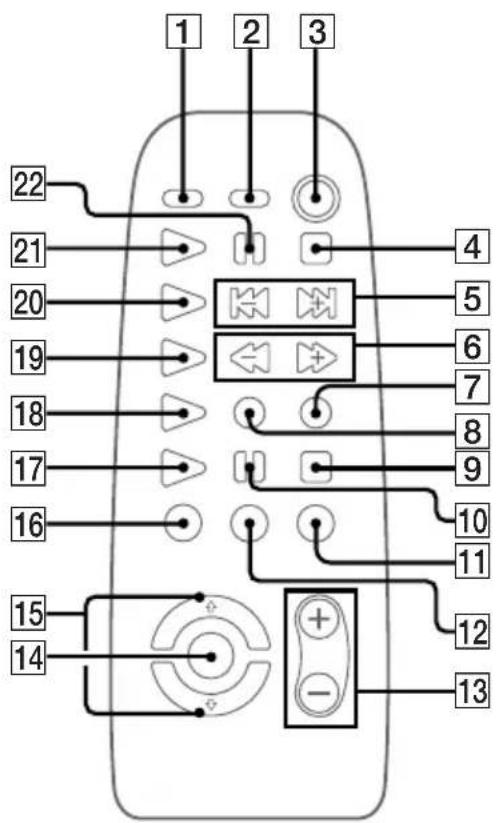
AMS1/1, PRESET+/-5 (9,13,14,15)
CD 21 (9)
CHECK 8 (10)
CLEAR 7 (10)
DECK A 19 (15)
DECK B 18 (15)
DISCSKIP(9,10,17)
FILE SELECT ON/OFF 14 (18)
FILE SELECT 日 /日 15 (11)
FLASH 12 (11)
FUNCTION [11] (7,9,10,16,17,23,24)
LOOP 16 (11)
MD 17
MD 10
MD 9
SLEEP 2 (21)
TUNER/BAND 20 (12,16)
VOL + / - [13] (9,13)
BUTTON DESCRIPTIONS
1/0 3


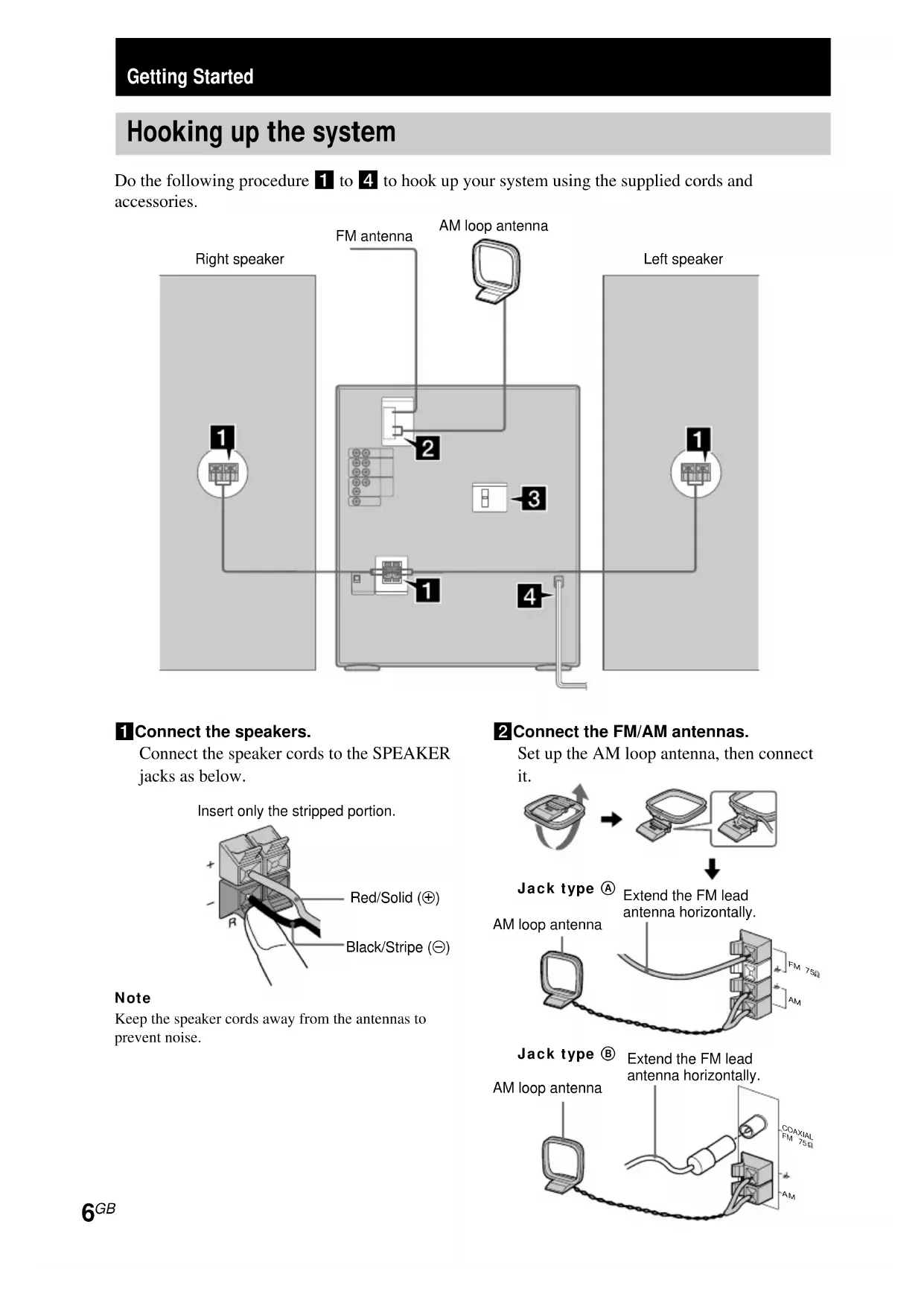
Hooking up the system
Do the following procedure 1 to 4 to hook up your system using the supplied cords and accessories.
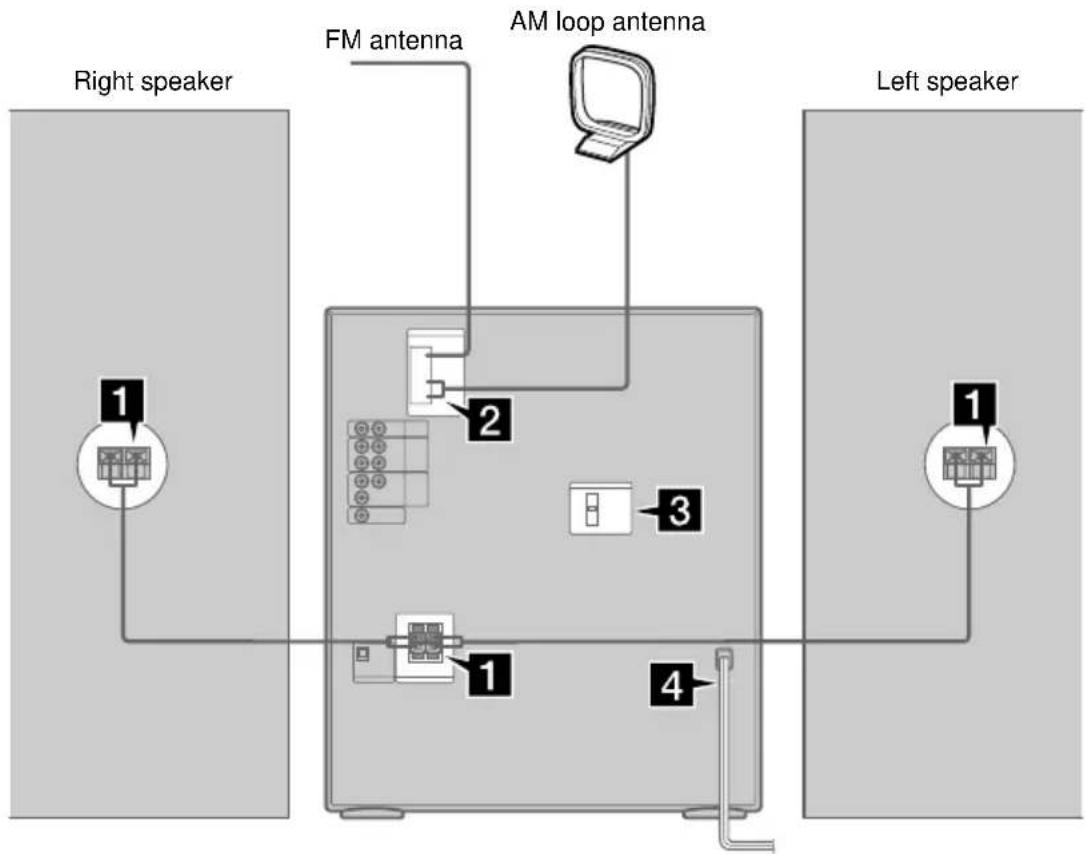
1 Connect the speakers.
Connect the speaker cords to the SPEAKER jacks as below.
Insert only the stripped portion.
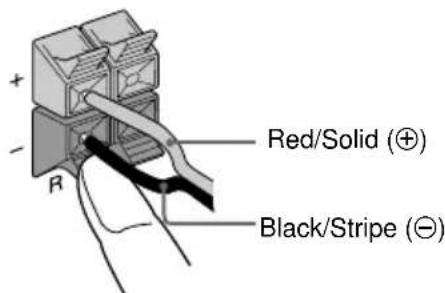
Note
Keep the speaker cords away from the antennas to prevent noise.
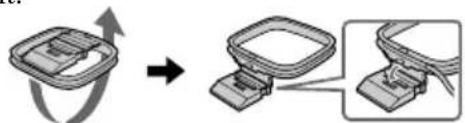
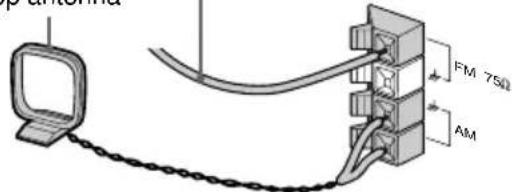
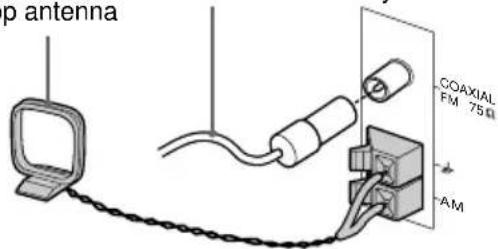
2 Connect the FM/AM antennas.
Set up the AM loop antenna, then connect
it.
Jack type A
Extend the FM lead antenna horizontally.
AM loop antenna
Jack type 8
Extend the FM lead antenna horizontally.
AM loop antenna
3 For models with a voltage selector, set VOLTAGE SELECTOR to the position of your local power line voltage.
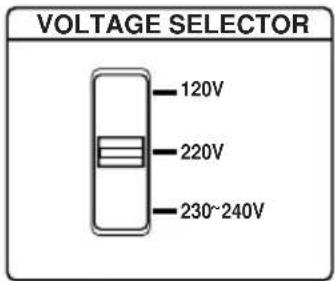
4 Connect the power cord to a wall outlet.
The demonstration appears in the display. When you press / , the system turns on and the demonstration automatically ends. If the supplied adaptor on the plug does not fit your wall outlet, detach it from the plug (only for models equipped with the adaptor).
When carrying this system
Do the following to protect the CD mechanism.
1 Make sure that all discs are removed from the unit.
2 Press FUNCTION repeatedly until "CD" appears.
3 Hold down LOOP and then press I/ until "LOCK" appears.
4 Unplug the AC power cord.
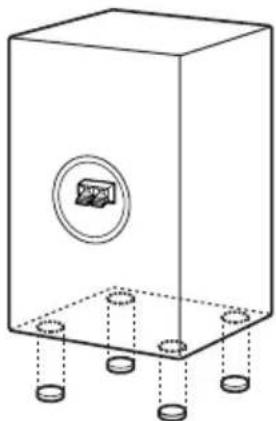
Before connecting the Front speaker
Stick the supplied front speaker pads to the bottom of the front speakers to stabilize the speakers and prevent them from slipping.
Inserting two size AA (R6) batteries into the remote
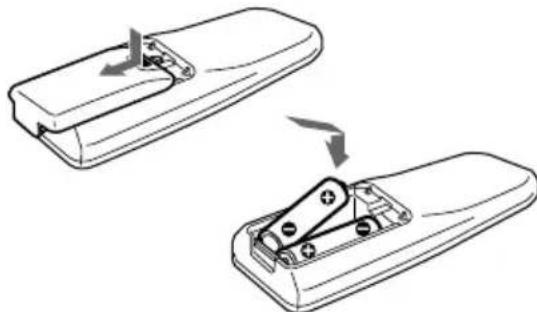
Tip
When the remote no longer operates the system, replace both batteries with new ones.
Note
If you do not use the remote for a long period of time, remove the batteries to avoid possible damage from battery leakage.
Setting the time
1 Turn on the system.
2 Press /CLOCK SET.
When you set the time for the first time, skip to the step 5.
3 Press / repeatedly to select SET CLOCK.
4 Press ENTER/NEXT.
5 Press / repeatedly to set the hour.
6 Press ENTER/NEXT.
The minute indication flashes.
7 Press / repeatedly to set the minute.
8 Press ENTER/NEXT.
The clock starts working.
Tip
If you've made a mistake or want to change the time, start over from step 1.
Note
The clock settings are canceled when you disconnect the power cord or if a power failure occurs.
Saving the power in standby mode
Press POWER SAVE/DEMO (STANDBY) when the power is off. Every time you press the button, the system switches as follows:
Power Saving Mode Demonstration
The system is turned on/off by pressing / .
Tips
- I/ indicator lights up even in the Power Saving Mode.
- The timer works in the Power Saving Mode.
- Every time you press DISPLAY when the power is off, the display changes as follows: Demonstration Clock
Note
You cannot set the time in the Power Saving Mode.
To cancel the Power Saving Mode
Press POWER SAVE/DEMO (STANDBY) to show the demonstration.
Loading the CD
1 Press PUSH OPEN.
The front cover opens.
2 Place a CD with the label side up on the disc tray.
When you play a CD single, place it on the inner circle of the tray.
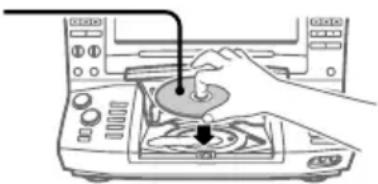
To insert additional discs, press DISC SKIP to rotate the disc tray.
3 Close the front cover.
Playing the CD
Normal Play/Shuffle Play/Repeat Play
This unit lets you play the CD in different play modes.
Disc number in the playing position
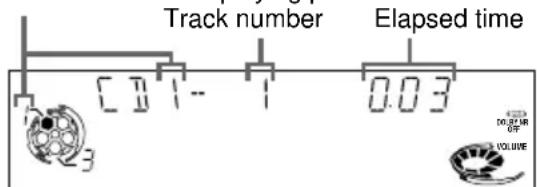
1 Press FUNCTION repeatedly until "CD" appears.
2 Press PLAY MODE repeatedly until the mode you want appears.
| Select | To play |
| ALL DISCS | All CDs in the disc tray continuously. |
| 1 DISC | The CD you selected in the original order. |
| ALL DISCS SHUFFLE | The tracks on all CDs in random order. |
| 1 DISC SHUFFLE | The tracks on the CD you selected in random order. |
| PROGRAM | The tracks on all CDs in the order you want them to be played (see “Programming the CD tracks” on page 10). |
3 Press II (or CD on the remote).
Other Operations
| To | Do this |
| Stop playback | Press■. |
| Pause | Press▶■(or■on the remote). Press again to resume play. |
| Select a track | During play or pause, turn the jog dial clockwise (to go forward) or counterclockwise (to go backward) or press AMSI( to go forward) or AMS( to go backward) on the remote). |
| Find a point in a track | Press and hold ▷ or ▼ during playback, and release at the desired point. |
| Select a CD | Press DISC 1~5 or DISC SKIP (or DISC SKIP on the remote). |
| Switch to CD function from another source | Press DISC 1~5 or ▷(or CD ▷ on the remote) (Automatic Source Selection). |
| Play repeatedly (Repeat Play) | Press REPEAT during playback until “REPEAT” or “REPEAT1” appears. REPEAT: For all the tracks on the CD. REPEAT1: For a single track only. To cancel playing repeatedly, press REPEAT until “REPEAT” or “REPEAT1” disappears. |
| Remove the CD | Press PUSH OPEN. |
| Adjust the volume | Turn VOLUME (or press VOL +/- on the remote). |
Tip
You can change the CD in the loading position during playback of the CD in the playing position.
Playing CDs without interruption
Non-Stop Play
You can play CDs without pausing between tracks.
1 Press FUNCTION repeatedly until "CD" appears, then load a CD.
2 Press NON STOP so that the indicator on this button lights up.
3 Press II.
To cancel Non-Stop Play
Press NON STOP so that the indicator on this button goes off.
Programming the CD tracks
- Program Play
You can make a program of up to 32 tracks from all the CDs in the order you want them to be played.
1 Press FUNCTION repeatedly until "CD" appears, then load a CD.
2 Press PLAY MODE repeatedly until "PROGRAM" appears.
3 Press DISC SKIP to select a CD.
4 Turn the jog dial until the track you want appears.
5 Press PLAY MODE once. The track is programmed. First "STEP" and the programmed playing order appear, then the total playing time appears.
6 To program additional tracks, repeat steps 3 to 5.
Skip step 3 to select tracks from the same disc.
7 Press II.
| To | Press |
| Cancel Program Play | PLAY MODE repeatedly until “PROGRAM,” “ALL DISCS SHUFFLE” or “1 DISC SHUFFLE” disappears. |
| Check the program | CHECK on the remote repeatedly. After the last track, “CHECK END” appears. |
| Clear a track from the end | CLEAR on the remote in stop mode. |
| Clear a specific track in stop mode | CHECK on the remote repeatedly until the number of the track to be erased lights up, then press CLEAR. |
| Add a track to the program in stop mode | 1 Press DISC SKIP to select a CD.2 Turn the jog dial to select a track.3 Press PLAY MODE. |
| Clear the entire program | ■ once in stop mode or twice while playing. |
Tips
The program you made remains in the CD player after it has been played back. Press to play the same program again.
- If "---" appears instead of the total playing time during programming, this means:
you have programmed a track number which exceeds 20.
- the total playing time has exceeded 100 minutes.
DJ Effects
Looping and flashing part of a CD
With the loop function, you can repeat part of a CD during playback. With the flash function, you can "flash" part of a CD sound during playback. Both functions let you create original recordings.
| To | Do this |
| Start the function at the point you want | Press and hold LOOP or FLASH during playback. |
| Resume normal play | Release LOOP or FLASH. |
| Adjust the function length (LOOP lengths or FLASH lengths) | Turn the jog dial while holding LOOP or FLASH (or press FILE SELECT \(\text{且}\)/\(\text{且}\) while holding LOOP or FLASH on the remote). |
| Use FLASH and LOOP together | Press and hold both LOOP and FLASH at the same time. |
Notes
- Adjust the loop and flash lengths independently before using the functions if necessary.
- To record the loop or flash effect, use the tape deck on this unit.
Using the CD display
You can check the remaining time of the current track or that of the CD.
When a CD TEXT disc is loaded, you can check the information stored on the disc, such as the titles or artist names. When the unit detects CD TEXT discs, the "CD-TEXT" indication appears.
Press DISPLAY.
During normal playback
Playing time on the current track Remaining time on the current track Remaining time on current CD (1 DISC mode) or "----" display (ALL DISCS mode) Title name of the current track* Clock display (for a few seconds) Effect status
In the stop mode
When the CD player is in program mode and there is a program:
The last track number of the program and the total playing time The last track number of the current CD and the total playing time Clock display (for a few seconds) Effect status
In other conditions:
The current disc number Disc title* The artist information* Total number of tracks and total playing time Clock display (for a few seconds) Effect status
- With CD TEXT discs only (certain characters cannot be displayed). When the CD contains more than 20 tracks, CD TEXT is not displayed from track 21 on.
Notes
- The display may not show all the characters depending on the disc.
- This player can only display the disc titles, track titles and artist names from CD TEXT discs. Other information cannot be displayed.
Presetting radio stations
You can preset 20 stations for FM and 10 stations for AM.
1 Press TUNER/BAND repeatedly until the band you want appears.
Each time you press this button, the band changes as follows:
FM AM
2 Press TUNING MODE repeatedly until "AUTO" appears.
3 Press + / - until the frequency indication starts to change.
Scanning stops when the system tunes in a station. "TUNED" and "STEREO" (for a stereo program) appear.
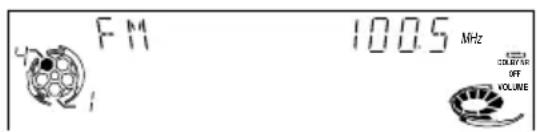
4 Press TUNER MEMORY.
The next available preset number flashes in the display. The stations are stored from preset number 1.
Preset number
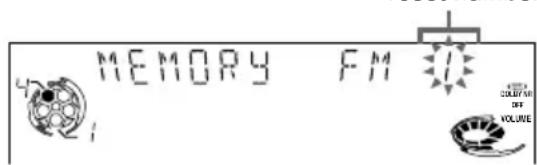
5 Press ENTER.
"COMPLETE" appears and the station is stored.
6 Repeat steps 1 to 5 to store other stations.
To tune in a station with a weak signal
Press TUNING MODE repeatedly until "MANUAL" appears in step 2, then press + / - to tune in the station.
To set another station to the existing preset number
Start over from step 1. After step 4, press +/- to select the preset number you want to store for another station.
You can add a new preset number after the last preset number.
To erase the preset station
1 Hold down TUNER MEMORY until a preset number appears.

2 Press + / - to select the preset number you want to erase.
Select "ALL ERASE" when you want to erase all the preset stations.
3 Press ENTER.
"COMPLETE" appears.
When you erase a preset number, the preset number decreases by one and all preset numbers following the erased one are renumbered.
To change the AM tuning interval (Except for the European and Middle Eastern models)
The AM tuning interval is factory set to 9kHz (10 kHz in some areas). To change the AM tuning interval, tune in any AM station first, then turn off the power. While holding down the ENTER button, turn the power back on. When you change the interval, AM preset stations will be erased. To reset the interval, repeat the same procedure.
Tip
The preset stations are retained for half a day even if you unplug the power cord or if a power failure occurs.
Listening to the radio
— Preset Tuning
Preset radio stations in the tuner's memory first (see "Presetting radio stations" on page 12).
1 Press TUNER/BAND repeatedly until the band you want appears.
2 Press TUNING MODE repeatedly until "PRESET" appears.
Each time you press this button, the tuning mode changes cyclically as follows:
MANUAL AUTO PRESET
3 Press + / - (or PRESET + / - on the remote) to tune in the preset station you want.
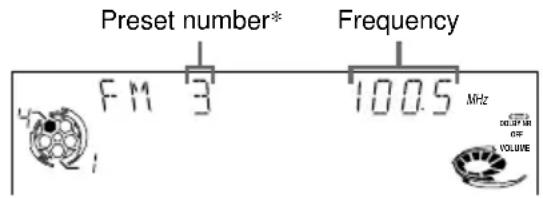
- When only one station is preset, "ONE PRESET" appears.
| To | Do this |
| Turn off the radio | Press I/O. |
| Adjust the volume | Turn VOLUME (or press VOL +/- on the remote). |
To listen to non-preset radio stations
Press TUNING MODE repeatedly in step 2 until "MANUAL" appears, then press + / - to tune in the desired station.
Tips
- When an FM program is noisy, press STEREO/MONO so that "MONO" appears. There will be no stereo effect, but the reception will improve.
- To improve broadcast reception, reorient the antennas.
Using the Radio Data System (RDS)
(For European model only)
What is the Radio Data System?
Radio Data System (RDS) is a broadcasting service that allows radio stations to send additional information along with the regular program signal. This tuner offers convenient RDS features, such as station name display and location of stations by program type. RDS is available only on FM stations*.
Note
RDS may not work properly if the station you are tuned to is not transmitting the RDS signal properly or if the signal strength is weak.
- Not all FM stations provide RDS service, nor do they all provide the same types of services. If you are not familiar with the RDS system, check with your local radio stations for details on RDS services in your area.
Receiving RDS broadcasts
Simply select a station from the FM band.
When you tune in a station that provides RDS services, the station name appears.
To check the RDS information
Each time you press DISPLAY, the display changes cyclically as follows:
Station name* Frequency Program type* Clock display Effect status
- If the RDS broadcast is not received, the station name and program type may not appear in the display.
continued
Using the Radio Data System (RDS) (continued)
Locating a station by program type (PTY)
You can locate a station you want by selecting a program type. The tuner tunes in the type of programs currently being broadcast from the RDS stations stored in the tuner's preset memory.
The types of programs include NEWS, AFFAIRS (current news), INFORMATION, SPORT, EDUCATION (education programs), DRAMA, CULTURE, SCIENCE, VARIORED (interviews, games and comedy), POP, ROCK, EASY MUSIC (Easy listening), L.CLASSICAL (Classical music, such as instrumental, vocal, and choral works), S.CLASSICAL, OTHER MUSIC (music, such as rhythm and blues and reggae), WEATHER, FINANCE, CHILDREN, SOCIAL, RELIGION, PHONE IN, TRAVEL, LEISURE, JAZZ, COUNTRY (country music), NATION (nation's popular music), OLDIES, FOLK, DOCUMENTARY (investigative features), ALARM TEST (test signal for emergency broadcast), ALARM-ALARM (emergency broadcast), and NONE (any programs not defined above).
1 Press PTY while listening to the radio.
2 Press + / - to select the program type you want.
3 Press ENTER.
"SEARCH" and the selected program type are shown alternately in the display. When the tuner receives a program, the preset station number flashes.
4 Press + / - to continue searching for the station number you want.
5 Press ENTER while the preset station number you want is flashing.
To stop the search while it is in progress
Press PTY.
Loading a tape
1 Press A EJECT or B EJECT.
2 Insert a tape in deck A or B with the side you want to play facing forward.
Insert with the side you want to play/record facing forward.
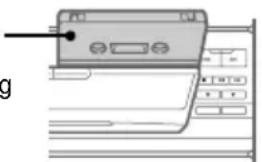
Playing a tape
You can play any type of tape. TYPE I (normal), TYPE II (CrO_2) or TYPE IV (metal). The deck automatically detects the tape type.
1 Load a recorded tape.
2 Press DIRECTION repeatedly to select to play one side. Select () to play both sides. Select RELAY (Relay Play)* to play both decks in succession.
3 Press
Press to play the reverse side. The tape starts playing.
- Relay Play always follow this cyclic sequence: Deck A (front side) → Deck A (reverse side) → Deck B (front side) → Deck B (reverse side)
| To | Do this |
| Stop play | Press■. |
| Pause (deck B only) | Press■. Press again to resume play. |
| Fast-forward | Press▶ or ← in stop mode. |
| Rewind | Press ← or▶ in stop mode. |
| Remove the cassette | Press A EJECT ▲ (or ▲ B EJECT). |
Tips
- The deck stops automatically after repeating the sequence five times.
- You can fast-forward or rewind the tape, regardless of the selected source.
- When you want to reduce the hiss noise in low-level high-frequency signals, press DOLBY NR so that "DOLBY NR B" appears.
Searching for the beginning of a track (AMS)
During playback, press or repeatedly for the number of songs you want to skip forward (or backward).
The search direction, + (forward) or - (back), and number of songs being skipped (1 9) appear.
Example: searching forward 2 songs
TYPE R : : +2
Note
The AMS function may not operate correctly under the following circumstances:
- When the unrecorded space between songs is less than 4 seconds long.
- When the unit is placed near a television.
Recording to a tape
— CD Synchro Recording/High Speed Dubbing/Recording Manually/ Program Edit
You can record from a CD, tape or radio. You can use TYPE I (normal) or TYPE II (CrO_2) tapes. The recording level is adjusted automatically.
| Steps | Recording from a CD (CD Synchro Recording) | Recording from a tape (High-Speed Dubbing) | Recording Manually |
| 1 | Insert a recordable tape into deck B. | ||
| 2 | Press FUNCTION repeatedly until “CD” appears. | Press FUNCTION repeatedly until “TAPE” appears. | Press FUNCTION or TUNER/BAND repeatedly until the source or band you want to record appears. |
| 3 | Insert the CD you want to record. | Insert the tape you want to record into deck A. | Insert the CD/tape, or tune to the station you want to record. |
| 4 | Press CD SYNC. | Press H SPEED DUB. | Press ● REC. |
| DECK B stands by for recording. To reduce the hiss noise in low level high frequency signals, press DOLBY NR so that “DOLBY NR B” appears in the display (except when recording from the tape). | |||
| 5 | Press DIRECTION repeatedly to select ⇌ to record on one side. Select ⇌ (or RELAY) to record on both sides. | ||
| 6 | Press II. Recording starts. | ||
| 7 | Start playing the source to be recorded. | ||
To stop recording
Press ■.
Tips
- When you want to record on the reverse side, press after pressing REC so that the indicator on the button (for the reverse side) lights up green.
- When you record on both sides, be sure to start from the front side. If you start from the reverse side, recording stops at the end of the reverse side.
- For recording from the tape: If you set the direction to when the tapes you use have different lengths, the tapes in each deck reverses independently. If you select RELAY, the
tapes in both decks reverse together.
To record with the surround effect, press SURROUND so that "SUR" appears. The equalizer settings will not be recorded.
- For recording from the radio: If noise is heard while recording from the radio, move the respective antenna to reduce the noise.
Recording a CD by specifying track order
- Program Edit
When programming, make sure the playing times for each side do not exceed the length of one side of the tape.
1 Load CDs and a recordable tape into deck B, then press FUNCTION repeatedly until "CD" appears.
2 Press PLAY MODE repeatedly until "PROGRAM" appears.
3 Select a CD and track by pressing DISC SKIP and turning the jog dial, then press PLAY MODE once.
Repeat this procedure to program the remaining tracks for A side.
4 Press II on the remote to insert a pause at the end of side A.
"P" appears and the total playing time resets to "0.00" in the display.
5 Repeat step 3 to program the remaining tracks to be recorded on side B.
6 Press CD SYNC.
Deck B stands by for recording.
7 Press DIRECTION repeatedly to select to record on one side.
Select () (or RELAY) to record on both sides.
8 Press II.
Recording starts.
9 Press on the deck B and the CD player to stop recording.
Tip
To check the required tape length for recording a CD, press EDIT so that "EDIT" flashes after you have loaded a CD and switched function to CD. The required tape length for the currently selected CD appears, followed by the total playing time for side A and side B respectively (Tape Select Edit).
Notes
- You cannot use Tape Select Edit for discs containing over 20 tracks.
- You cannot use this function when Program Play mode has been set. After clearing the entire program, follow the above procedure.
Timer-recording radio programs
To timer-record, you must preset the radio station (see "Presetting radio stations" on page 12) and set the clock (see "Setting the time" on page 8) beforehand.
1 Tune in the preset radio station (see "Listening to the radio" on page 13).
2 Press /CLOCK SET.
3 Press / repeatedly to select "REC," then press ENTER/NEXT.
"ON" appears and the hour indication flashes in the display.
4 Set the time to start recording.
Press to set the hour, then press ENTER/NEXT.
The minute indication starts flashing.
Press to set the minute, then press ENTER/NEXT.
The hour indication flashes again.
5 Set the time to stop recording following the above procedure.
The start time appears, followed by the stop time, the preset radio station to be recorded (e.g., "TUNER FM 5"), then the original display appears.
6 Insert a recordable tape into deck B.
7 Turn off the power.
When the recording starts, the volume level is set to the minimum.
| To | Do this |
| Check the setting | Press TIMER SELECT. Press ▲/▼ to select “SEL REC.” Then, press ENTER/NEXT. To change the setting, start over from step 1. |
| Cancel timer operation | Press TIMER SELECT. Press ▲/▼ to select “TIMER OFF.” Then, press ENTER/NEXT. |
Notes
The system turns on 15 seconds before the preset time.
- If the system is on at the preset time, the Timer recording will not be made.
- When you use the Sleep Timer, Daily Timer and Timer recording will not turn on the system until the Sleep Timer turns it off.
- Recording starts from the front side.
Adjusting the sound
To reinforce lower bass sound (SUPER WOOFER)
Press SUPER WOOFER.
Each time you press this button, the super woofer level display changes cyclically as follows:
SUPER WOOFER FLAT LOW HIGH
To select the super woofer mode
Press SUPER WOOFER MODE while the super woofer is on.
Each time you press this button, the super woofer mode display changes as follows:
MODE MOVIE MODE MUSIC
For a powerful sound (GROOVE)
Press GROOVE.
The volume switches to power mode, the equalizer curve changes, and the indicator on the GROOVE button lights up.
Press GROOVE again to return to the previous volume.
Note
Canceling the Groove mode cancels the equalizer curve and super woofer level. Adjust the equalizer settings to obtain the desired effect.
Selecting the audio emphasis effect
Selecting the preset effect from the music menu
Press DIRECT EQUALIZER button you want.
The preset effect name appears.
See the chart "Music menu options."
| To | Press |
| Select USER FILE | P.FILE |
| Cancel the effect | FLAT (or FILE SELECT ON/OFF on the remote). |
Music menu options
"SUR appears if you select an effect with surround effects.
| Effect | For |
| SALSA | standard music sources |
| REGGAE | |
| SAMBA | |
| TANGO | |
| MOVIE | |
| DANCE | |
| JAZZ | |
| ROCK | |
| GAME | soundtracks and special |
| GUITAR | listening situations |
Selecting the surround effect
Press SURROUND.
Every time you press the button, the display changes as follows:
SURROUND ON (SUR{
↑ SURROUND OFF
Making a personal audio emphasis file
— Personal File
You can create personal files of audio patterns (surround effect and graphic equalizer) and store them in the system's memory. Later, you can call up an audio pattern when playing a favorite tape, CD, or radio program. Before operating, first select the basic audio emphasis you want for your sound.
1 Press to select the frequencies, then press to adjust the level.
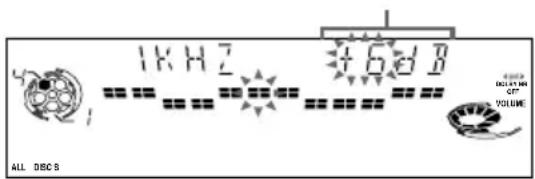
Frequency level
2 Press ENTER/NEXT.
This setting is automatically stored as P.FILE.
Any settings previously stored at this memory location are erased and replaced by the new settings.
To call up the personal file
Press P.FILE.
Tip
If you choose another audio emphasis, the adjusted sound effect is lost. To retain the adjusted sound effect, press P.FILE.
Other features
Changing the spectrum analyzer display
Press SPECTRUM ANALYZER.
Each time you press the button, the display changes cyclically as follows:
IMAGE ILLUMINATION IMAGE NORMAL ILLUMINATION NORMAL
Singing along: Karaoke
You can sing along with any stereo CD or tape by turning down the singer's voice. You need to connect an optional microphone.
1 Turn MIC LEVEL to MIN to turn down the microphone control level.
2 Connect an optional microphone to MIX MIC.
3 Press MIX GUITAR/KARAOKE.
Each time you press the button, the display changes as follows:
MIX GUITAR/KARAOKE OFF or audio emphasis name
The indicator appears when karaoke mode is activated.
To sing karaoke by decreasing the vocal level of a CD or tape, select "MIX GUITAR/KARAOKE."
4 Start playing the music and adjust the volume.
5 Adjust the microphone volume by turning MIC LEVEL.
After you have finished
Turn MIC LEVEL to MIN and disconnect the microphone from MIX MIC, then press MIX GUITAR/KARAOKE repeatedly until " " disappears.
Notes
- With some songs, vocals may not be canceled when you select "MIX GUITAR/KARAOKE."
- During MIX GUITAR/KARAOKE, equalizer and surround settings cannot be changed.
- If you select a sound effect, the karaoke mode is canceled.
- The instrumental sound may be reduced as well as the singer's voice when the sound is recorded in monaural.
- The singer's voice may not be reduced when: only a few instruments are playing.
a duct is being played.
the source has strong echoes or chorus.
the singer's voice deviates from the center.
the voice on the source is singing in high soprano or tenor.
Mixing and recording sound
1 Do the procedure for "Singing along" (steps 1 through 5). Then, load a recordable tape in deck B.
2 Press FUNCTION repeatedly to select the source you desire and set it to pause mode.
3 Press REC.
4 Press DIRECTION repeatedly to select to record on one side. Select (or RELAY) to record on both sides.
5 Press II.
6 Press II to start playing the CD (or on deck A to start playing the tape). Start singing along with the music.
To stop recording
Press ■.
Tips
- If acoustic feedback (howling) occurs, move the microphone away from the speakers or change the direction of the microphone.
- If you want to record your voice through the microphone only, you can do so by selecting the CD function and not playing a CD.
- When high level sound signals are input, the unit automatically adjusts the recording level to prevent distortion of the recorded sound signal (Auto Level Control Function).
Playing a guitar
You can enjoy playing the guitar by connecting an electric guitar to the GUITAR jack on the front panel.
When you select "MIX GUITAR/KARAOKE" by pressing MIX GUITAR/KARAOKE, you can play along with any stereo CD or tape.
You can select your preferred sound characteristics by adjusting the GUITAR LEVEL.
Using the Guitar distortion effect
Press GUITAR DISTORTION.
The indicator on the GUITAR DISTORTION button lights up.
Once GUITAR DISTORTION is activated, it will remain active while the power is on even if the function is changed.
To turn off GUITAR DISTORTION, press GUITAR DISTORTION again, the indicator on this button goes off.
Note
Playing a guitar with this unit may cause distortion or howling. To avoid this, do the followings:
- Move the guitar away from the speakers.
Turn down the guitar volume.
Enhancing video game sound
Game Sync
You can enjoy the sound effect of video games.
1 Connect a video game player (see "Connecting MD deck/VCR/camcorder/video game" on page 23).
2 Press GAME at the right side corner on the front panel (see 11, "Parts Identification" on page 4).
Falling asleep to music
— Sleep Timer
You can have the system turn off at a preset time, so you can fall asleep to music.
Press SLEEP.
Each time you press the button, the minute display (the turn-off time) changes as follows:
$$ \begin{array}{l}\mathrm {A U T O} \rightarrow 9 0 \rightarrow 8 0 \rightarrow 7 0 \rightarrow \dots \rightarrow 1 0 \rightarrow\\mathrm {O F F} \rightarrow \mathrm {A U T O} ^ {*} \dots\end{array} $$
- The power turns off when the current CD or tape finishes playback (for up to 100 minutes).
| To | Press |
| Check the remaining time | SLEEP once. |
| Change the time to turn off | SLEEP to select the time you want. |
| Cancel the Sleep Timer function | SLEEP repeatedly until “SLEEP OFF” appears. |
Waking up to music
Daily Timer
You can wake up to music at a preset time every day. Make sure you have set the clock (see "Setting the time" on page 8).
1 Prepare the music source you want to play.
- CD: Load a CD. To start from a specific track, make a program (see "Programming the CD tracks" on page 10).
- Tape: Load a tape with the side you want to play facing forward.
- Radio: Tune in the preset station you want (see "Presetting radio stations" on page 12).
2 Adjust the volume.
3 Press /CLOCK SET.
"SET" appears and "DAILY" flashes in the display.
4 Press / repeatedly to select "DAILY," then press ENTER/NEXT.
"ON" appears and the hour digits flash in the display.
5 Set the time to start playback.
Press / repeatedly to set the hour, then press ENTER/NEXT.
The minute indication starts flashing.
Press / repeatedly to set the minute, then press ENTER/NEXT.
The hour indication flashes again.
6 Set the time to stop playback following the above procedure.
7 Press / repeatedly until the music source you want appears.
The indication changes as follows:

8 Press ENTER/NEXT.
The start time, stop time, and the music source appear, then the original display appears.
9 Turn off the power.
| To | Do this |
| Check the setting | Press TIMER SELECT and then press▲/▼ to select “DAILY,” then press ENTER/NEXT. |
| Change the setting | Start from step 1. |
| Cancel the timer operation | Press TIMER SELECT and then▲/▼ to select “OFF,” then press ENTER/NEXT. |
Note
When you use the Sleep Timer, Daily Timer and Timer recording will not turn on the system until the Sleep Timer turns it off.
Tip
The power turns on 15 seconds before the preset time.
Hooking up the optional components
Connecting MD deck/VCR/camcorder/video game
To the audio outputs of your MD deck
To the audio inputs of your MD deck
To the audio outputs of your VCR
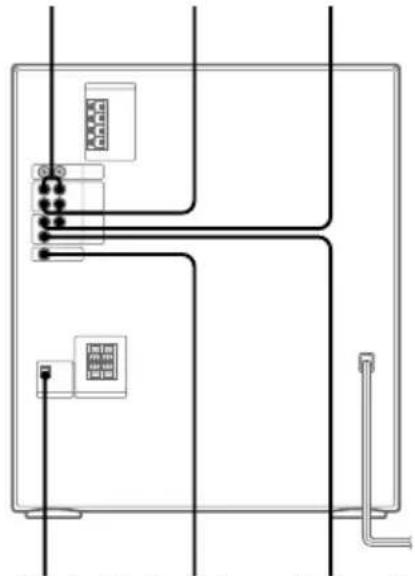
To the digital input of your MD deck
To the video input of your TV
To the video output of your VCR
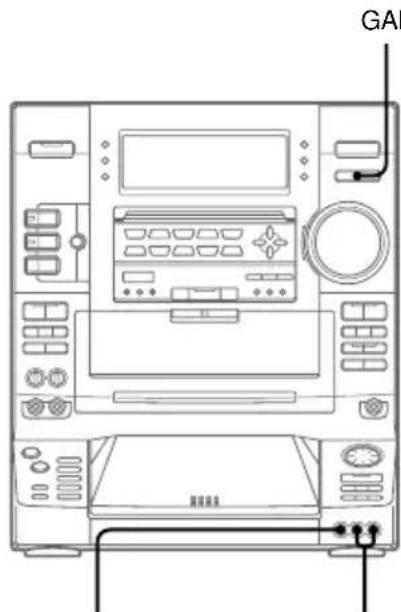
To the video output of your video game
To the audio outputs of your video game
| To | Do This |
| Make a digital recording from CD to MD | Connect the optical cable. |
| Listen to the connected MD deck | Press FUNCTION repeatedly until “MD” appears. |
| Listen to the connected VCR | Press FUNCTION repeatedly until “VIDEO” appears. |
| Listen to the sound from the connected camcorder or video game | Press FUNCTION repeatedly until “GAME” appears or press GAME at the right side corner on the front panel. |
Notes
- If sound is distorted when you connect your VCR to the VCR input jack of the unit, connect your VCR to the MD input jack instead.
- Be sure to match the color of the plugs and the connectors.
Connecting a turntable/ mixer
(mixer for European, North American, and Mexican models only)
To the outputs of your mixer
To the inputs of your mixer
To the audio outputs of your turntable

| To | Do This |
| Listen to the connected turntable | Press FUNCTION repeatedly until “PHONO” appears. |
| Listen to the connected mixer | 1 Remove the jumper from the unit. |
| 2 Connect the SEND jack of the unit to the IN jack of the mixer with an optional cable. | |
| 3 Connect the RETURN jack of the unit to the OUT jack of the mixer with an optional cable. | |
| 4 Press FUNCTION repeatedly until “CD” appears. |
Tip
You can also record the sound produced by the mixer onto a tape.
Notes
- Using a turntable at high volume may cause distortion or howling. This is often caused by the bass sound from the speakers. The bass sound may produce the distortion or howling. To avoid this, do the following:
1 Keep some distance from speakers and the turntable.
2 Stop using the surround effect.
3 Install the speakers or the turntable on a firm and stable surface.
4 Press SUPER WOOFER repeatedly until the indicator on this button goes off. - Replace the jumpers when the mixer is not in use. Otherwise, no sound will be heard. Be sure to connect the jumpers from the RETURN jack to the SEND jack of the unit.
Two jumpers are pre-installed connecting the DJ MIX RETURN and SEND jacks.
Precautions
On operating voltage
Before operating the unit, check that the operating voltage of your unit is identical with the voltage of your local power supply.
On safety
- The unit is not disconnected from the AC power source (mains) as long as it is connected to the wall outlet, even if the unit itself has been turned off.
- Unplug the unit from the wall outlet (mains) if it is not to be used for an extended period of time. To disconnect the cord (mains lead), pull it out by the plug. Never pull the cord itself.
- Should any solid object or liquid fall into the component, unplug the unit and have the component checked by qualified personnel before operating it any further.
- The AC power cord must be changed only at the qualified service shop.
On placement
- Do not place the unit in an inclined position.
- Do not place the unit in locations where it is:
extremely hot or cold
— dusty or dirty
very humid
vibrating
— subject to direct sunlight
On heat buildup
- Although the unit heats up during the operation, this is not the malfunction.
- Place the unit in a location with adequate ventilation to prevent heat build-up in the unit.
If you continuously use this unit at a large volume, the cabinet temperature of the top, side and bottom rises considerably. To avoid burning yourself, do not touch the cabinet.
To prevent a malfunction, do not cover the ventilation hole for cooling fan.
On operation
- If the unit is brought directly from a cold to a warm location, or is placed in a very damp room, moisture may condense on the lens inside the CD player. Should this occur, the unit will not operate properly. Remove the CD and leave the unit turned on for about an hour until the moisture evaporates.
- When you move the unit, take out any discs.
If you have any questions or problems concerning your unit, please consult your nearest Sony dealer.
Notes on CDs
- Before playing, clean the CD with a cleaning cloth. Wipe the CD from the center out.
- Do not use solvents.
-
Do not expose the CD to direct sunlight or heat sources.
-
Discs with non-standard shapes (e.g., heart, square, star) cannot be played on this unit. Do not use such discs.
Cleaning the cabinet
Use a soft cloth slightly moistened with mild detergent solution.
To save a tape permanently
To prevent a tape from being accidentally recorded over, break off the cassette tab from side A or B as illustrated.
If you later want to reuse the tape for recording, cover the broken tab with adhesive tape. However, be careful not to cover the detector slots which allow the tape player to automatically detect the type of tape.
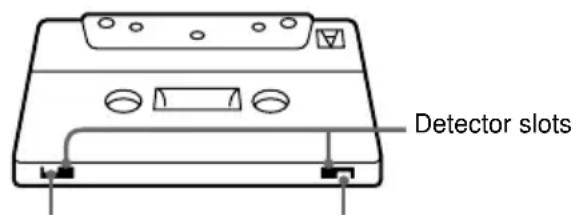
Tab of side B Tab of side A
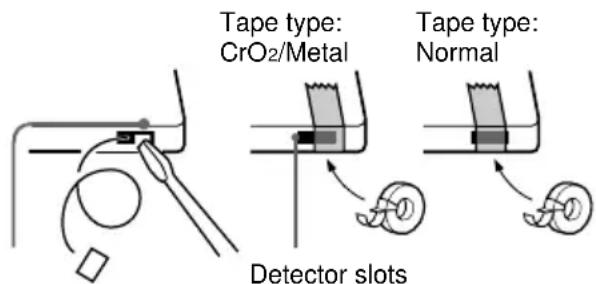
Break off the cassette tab of side A
Before placing a cassette in the tape deck
Take up any slack in the tape. Otherwise the tape may get entangled in the parts of the tape deck and become damaged.
When using a tape longer than 90 minutes
The tape is very elastic. Do not change the tape operations such as play, stop, and fast-winding, etc. frequently. The tape may get entangled in the tape deck.
Cleaning the tape heads
Clean the tape heads after every 10 hours of use. Make sure to clean the tape heads before you start an important recording or after playing an old tape. Use separately sold dry-type or wet-type cleaning cassette. For details, refer to the instructions of the cleaning cassette.
Demagnetizing the tape heads
Demagnetize the tape heads and the metal parts that have contact with the tape every 20 to 30 hours of use with a separately sold demagnetizing cassette. For details, refer to the instructions of the demagnetizing cassette.
Troubleshooting
If you run into any problem using this unit, use the following check list.
First, check that the power cord is connected firmly and the speakers are connected correctly and firmly.
Should any problem persist, consult your nearest Sony dealer.
General
The display starts flashing as soon as you plug in the power cord even though you haven't turned on the power.
Refer to demonstration (see page 7, step 4).
The clock setting is canceled.
- The power cord is disconnected or a power failure occurs. Redo "Setting the time" (on page 8). If you have set the timer, redo "Waking up to music" (on page 22) and "Timer-recording radio programs" (on page 17).
The radio presetting/timer setting is canceled.
- The power cord is disconnected or a power failure occurs for longer than half a day. Redo "Presetting radio stations" (on page 12).
There is no sound.
- The jumpers for the DJ MIX jacks are not connected (for European, North American, and Mexican models only).
- Turn VOLUME clockwise.
- The headphones are connected.
- Insert only the stripped portion of the speaker cord into the SPEAKER jack. Inserting the vinyl portion of the speaker cord will obstruct the speaker connections.
- The protective device on the amplifier has been activated because of a short circuit. ("PROTECT" and "PUSH POWER" flash alternately.) Turn off the unit, eliminate the short-circuit problem and turn on the power again.
- There is no audio output during timer recording.
There is no microphone sound.
- Turn VOLUME or MIC LEVEL to adjust the microphone volume.
- Make sure the microphone is connected to the MIX MIC jack correctly.
There is no guitar sound.
- Turn VOLUME or GUITAR LEVEL to adjust the guitar volume.
- Make sure the guitar is connected to the GUITAR jack correctly.
- Select "MIX GUITAR/KARAOKE" by pressing MIX GUITAR/KARAOKE.
There is severe hum or noise.
- A TV or VCR is placed too close to the stereo system. Move the stereo system away from the TV or VCR.
"0:00" (or "12:00 AM") flashes in the display.
- A power interruption occurred. Set the clock and timer settings again.
The timer does not function.
- Set the clock correctly.
DAILY and REC do not appear when you press the /CLOCK SET button.
- Set the timer correctly.
- Set the clock.
The remote does not function.
- There is an obstacle between the remote and the system.
- The remote is not pointing in the direction of the system's sensor.
- The batteries have run down. Replace the batteries.
There is acoustic feedback.
Decrease the volume level.
- Move the microphone away from the speakers or change the direction of the microphone.
The color irregularity on a TV screen persists.
- Turn off the TV set once, then turn it on after 15 to 30 minutes. If the color irregularity still persists, place the speakers farther away from the TV set.
Speakers
"PROTECT" and "PUSH POWER" appear alternately.
- A strong signal was input. Press I / to turn off the power, leave the system turned off for a while, then press I / again to turn on the power.
- Check the speaker cables in case "PROTECT" and "PUSH POWER" appear alternately again after you turn the system on.
Sound comes from one channel or unbalanced left and right volume.
- Check the speaker connection and speaker placement.
CD Player
The CD tray does not close.
The CD is not placed properly.
The CD will not play.
- The CD is not lying flat in the disc tray.
The CD is dirty (see "Notes on CDs" on page 25). - The CD is inserted label side down.
The CD is moist.
Play does not start from the first track.
- The player is in program or shuffle mode. Press PLAY MODE repeatedly until "PROGRAM," "ALL DISCS SHUFFLE," or "1 DISC SHUFFLE" disappears.
Tape Deck
The tape does not record.
- The tab has been removed from the cassette (see "To save a tape permanently" on page 25).
- The tape has reeled to the end.
The tape does not record nor play, or there is a decrease in sound level.
- The heads are dirty (see "Cleaning the tape heads" on page 25).
- The record/playback heads are magnetized (see "Demagnetizing the tape heads" on page 25).
The tape does not erase completely.
- The record/playback heads are magnetized (see "Demagnetizing the tape heads" on page 25).
There is excessive wow or flutter, or the sound drops out.
- The capstans or pinch rollers are dirty (see "Cleaning the tape heads" on page 25).
Noise increases or the high frequencies are erased.
- The record/playback heads are magnetized (see "Demagnetizing the tape heads" on page 25).
Tuner
Severe hum or noise ("TUNED" or "STEREO" flashes in the display).
- Adjust the antenna.
- The signal strength is too weak. Connect the external antenna.
A stereo FM program cannot be received in stereo.
- Press STEREO/MONO so that "STEREO" disappears.
If other troubles not described above occur, reset the system as follows:
1 Press ⑦ /CLOCK SET, ENTER/NEXT and I/ at the same time.
2 Unplug the power cord.
3 Plug the power cord back in.
4 Press 1 / 1 to turn on the power. The unit is reset to factory settings. All the settings you made are cleared.
Specifications
Amplifier section
Canadian model:
LBT-XG500
Continuous RMS power output (reference)
160 + 160 watts (6 ohms at
1 kHz, 10% THD)
Total harmonic distortion less than 0.07%
(6 ohms at 1kHz 70~W )
European model:
LBT-XG700
DIN power output (rated) 200 + 200 watts
(6 ohms at 1 kHz, DIN)
Continuous RMS power output (reference)
250 + 250 watts
(6 ohms at 1 kHz, 10% THD)
Music power output (reference)
430 + 430 watts
(6 ohms at 1 kHz, 10% THD)
LBT-XG500
DIN power output (rated) 110 + 110 watts
(6 ohms at 1 kHz, DIN)
Continuous RMS power output (reference)
140 + 140 watts
(6 ohms at 1 kHz, 10% THD)
Music power output (reference)
240 + 240 watts
(6 ohms at 1 kHz, 10% THD)
Other models:
LBT-XG80
The following measured at AC 120/220/240V, 50Hz
DIN power output (rated) 240 + 240 watts
(4 ohms at 1 kHz, DIN)
Continuous RMS power output (reference)
320 + 320 watts
(4 ohms at 1 kHz, 10% THD)
LBT-XG60
The following measured at AC 120/220/240V, 50Hz
DIN power output (rated) 150 + 150 watts
(6 ohms at 1 kHz, DIN)
Continuous RMS power output (reference)
200 + 200 watts
(6 ohms at 1 kHz, 10% THD)
Inputs
DJ MIX*:
(phono jacks) sensitivity 250mV
impedance 47 kilohms
GUITAR IN:
.phone jack) sensitivity 75mV
impedance 470 kilohms
PHONO IN:
(phono jacks) sensitivity 3mV
impedance 47 kilohms
MIX MIC:
.phone jack) sensitivity 1mV
impedance 10 kilohms
VIDEO IN:
(phono jacks) sensitivity 250mV
impedance 47 kilohms
GAME IN:
(phono jacks) sensitivity 250mV
impedance 47 kilohms
MD IN:
(phono jack) sensitivity 450mV
impedance 47 kilohms
Outputs
DJ MIX*:
(phono jacks) sensitivity 250mV
impedance 1 kilohms
PHONES:
(stereo phone jack) accepts headphones of
8 ohms or more
VIDEO OUT:
(phono jack) voltage 250mV
impedance 1 kilohm
MD OUT:
(phono jacks) voltage 250mV
impedance 1 kilohm
FRONT SPEAKER:
LBT-XG80: accepts impedance of 4 to
16 ohms
LBT-XG700/XG500/XG60:
accepts impedance of 6 to
16 ohms
- European, North American, and Mexican models only
CD player section
System Compact disc and digital
audio system
Laser Semiconductor laser
( = 780nm) ,Emission
duration: continuous
Wavelength 780-790 nm
Frequency response 2Hz - 20kHz (± 0.5 dB
Signal-to-noise ratio More than 90 dB
Dynamic range More than 90 dB
CD OPTICAL DIGITAL OUT
(Square optical connector jack, rear panel)
Wavelength: 660nm
Output level-18 dBm
Tape player section
Recording system 4-track 2-channel stereo
Frequency response 40 - 13,000Hz (± 3dB)
(DOLBY NR OFF) using Sony TYPE I cassette
40 - 14,000Hz (± 3dB)
using Sony TYPE II cassette
Wow and flutter ± 0.15% W.Peak (IEC)
0.1% W.RMS (NAB)
± 0.2% W.Pcak (DIN)
Tuner section
FM stereo, FM/AM superheterodyne tuner
FM tuner section
Tuning range
North American models: 87.5 - 108.0 MHz
(100 kHz step)
Other models: 87.5 - 108.0MHz
(50 kHz step)
Antenna FM lead antenna
Antenna terminals 75 ohm unbalanced
Intermediate frequency 10.7 MHz
AMtunersection
Tuning range
Pan-American models: 530 - 1,710kHz
(with the interval set at
10kHz
531-1,710 kHz
(with the interval set at
9 kHz)
European and Middle Eastern models:
531-1,602 kHz
(with the interval set at
9 kHz)
Other models: 531 - 1,602kHz
(with the interval set at
9 kHz)
530 - 1,710kHz
(with the interval set at
10 kHz)
Antenna AM loop antenna
Antenna terminals External antenna terminal
Intermediate frequency 450kHz
Speakers
North American and European models: SS-XG500 for LBT-XG500
Speaker system
3-way BUILT IN SW, bass-reflex type
Speaker units
Super Woofer/Woofer:
Tweeter:
Rated impedance
Dimensions (w/h/d)
17 cm/17 cm, cone type
2.5cm , horn type
6 ohms
Approx. 255· 530· 330
mm (North American model)
Approx. 255·530·375
mm (European model)
Mass
Approx. 9kg net per
speaker (North American model)
Approx. 10kg net per
speaker (European model)
Other models speaker SS-XG60 for LBT-XG60
Speaker system
3-way BUILT IN SW,
bass-reflex type,
magnetically shielded type
Speaker units
Super Woofer/Woofer:
17 cm/17 cm, cone type
Tweeter:
2.5cm , horn type
Rated impedance
6 ohms
Dimensions (w/h/d)
Approx. 255 · 530 ·
375 mm
Mass
Approx. 10kg net per
speaker
SS-XG700/XG80 for LBT-XG700/XG80
Speaker system
3-way BUILT IN SW,
bass-reflex type,
magnetically shielded type
Speaker units
Super Woofer:
22 cm, cone type
20~cm cone type
Tweeter:
2.5 cm, horn type
Rated impedance
SS-XG80
4 ohms
SS-XG700
6 ohms
Dimensions (w/h/d)
Approx. 290·615·435
mm
Mass
Approx. 16kg net per
speaker
continued
Specifications (continued)
General
Power requirements
North American models: 120VAC,60Hz
European models: 230V AC, 50 / 60Hz
Mexican model: 120VAC,50 / 60Hz
Australian model: 230 - 240VAC 50/60
Hz
Other models: 120V 220V or 230-
240 V AC, 50/60 Hz
Adjustable with voltage
selector
Power consumption
U.S.A. models:
LBT-XG500 240 watts
Canadian model:
LBT-XG500 320VA
European models:
LBT-XG700 220 watts
LBT-XG500 220 watts
0.6 watts (at the power
savig mode)
0.6 watts (at the power
savig mode)
Other models:
LBT-XG80 300 watts
LBT-XG60 180 watts
Dimensions (w/h/d)
Approx. 355 · 425 ·
450mm
Mass :
LBT-XG700 Approx. 15.5kg
LBT-XG500 Approx. 13.5kg
LBT-XG80 Approx. 16.0kg
LBT-XG60 Approx. 15.0kg
Supplied accessories: AM loop antenna (1)
FM lead antenna (1)
Speaker cords (2)
Speaker pads (8)
Remote commander (1)
Batteries (2)
Design and specifications are subject to change without notice.
AVENTISSEMENT
Appareil principal 4
Télécommande 5
Preparation
Commande VOLUME 12 (9,13)
DIRECT EQUALIZER 5 (18)
SALSA
REGGAE
SAMBA
TANGO
MOVIE
GUITAR
ROCK
JAZZ
DANCE
GAME
DIRECTION 36(15,16,17)
DISCSKIP[89,10,17)
DISC 1~5 [27] (9)
DISPLAY 3 (8,11,13)
DOLBY NR 36 (15,16)
EDIT 29 (17)
ENTER 26 (12,14)
ENTER/NEXT 13 (8,17,19,22,27)
FLASH [30] (11)
FLAT [13] (18)
FUNCTION[10] (7,9,10,16,17,23,24)
GAME 11 (21)
GROOVE 40 (18)
GUITAR DISTORTION 26 (21)
GUITAR LEVEL [35] (21)
H SPEED DUB 15 (16)
LOOP 31(7,11)
MIC LEVEL 34 (20)
MIX GUITAR/KARAOKE 37 (20,21)
FUNCTION [11] (7,9,10,16,17,23,24)
LOOP 16 (11)
MD 17
MD 10
MD 9
SLEEP 2 (21)
TUNER/BAND 20(12,16)
VOL + / - 13 (9.13)
DESCRIPTION DES TOUCHES
1/0 3
4
12
Specifications (suite)
Généralités
Puissance de raccordement
FUNCTION [11] (7,9,10,16,17,23,24)
LOOP 16 (11)
MD 17
MD 10
MD 9
SLEEP (2) (21)
TUNER/BAND 20 (12,16)
VOL + / - 13 (9,13)
Pulse SPECTRUM ANALYZER.
CD OPTICAL DIGITAL OUT
(Toma de conector optico cuadrada, panel posterior)
Longitud de onda: 660nm
Nivel de salute -18 dBm
LBT-XG700 220 ratios
LBT-XG500 220 ratios
LBT-XG60 Aprox. 15,0kg