Amplitude - Remote control toy ROBBE - Free user manual and instructions
Find the device manual for free Amplitude ROBBE in PDF.


User questions about Amplitude ROBBE
0 question about this device. Answer the ones you know or ask your own.
Ask a new question about this device
Download the instructions for your Remote control toy in PDF format for free! Find your manual Amplitude - ROBBE and take your electronic device back in hand. On this page are published all the documents necessary for the use of your device. Amplitude by ROBBE.
USER MANUAL Amplitude ROBBE
Instructions and User Manual
Instructions and User Manual
GENERAL INFORMATION
- The model is designed for the components specified by us. Unless otherwise stated, servos and other electronic components are designed for standard supply voltage. Recommended cell count for Lipo batteries also refers to standard Lipos voltage of 3.7V per cell. If you use other servos, a different motor and controller, batteries, or propellers, please make sure they fit first. In the event of deviations, corrections and adjustments must be made by yourself.
- Before starting construction, always put the servos into neutral. To do this, switch on the remote control and move the joysticks and trim buttons (save the one for the throttle) to the middle position. Connect the servos to the corresponding outputs of the receiver and supply them with a suitable power source. Please observe the connection diagram and the operating instructions of the remote control system manufacturer.
- Do not leave your model in the blazing sun or in your vehicle for long periods of time. Too high temperatures can lead to deformation/distortion of plastic parts or blistering of covering foils.
- Before the first flight, check the wing symmetry, tail unit and fuselage. All parts of the model should have the same spacing from the left and right wing or tail plane to the centre of the fuselage or the same angle.
If necessary, rebalance the propellers if vibrations are noticeable when the motor is running up. - Bubble formation in the covering foils normal to a certain extent due to temperature and humidity differences and can be easily eliminated with a foil iron or hairdryer.
- For models in shell construction ("full GFRP/CFRP"), burrs may occur at the seams due to the production process. Carefully remove them with fine sandpaper or a file.
GENERAL SAFETY INFORMATION
- Be sure to read the safety instructions carefully before operating your model.
Always follow the procedures and settings recommended in the instructions. - If you are using remote-controlled model aircraft, helicopters, cars or ships for the first time, we recommend that you ask an experienced model pilot for help.
- Remote-controlled models are not toys in the usual sense and may only be used and operated by young people under 14 years of age under the supervision of adults.
- Their construction and operation requires technical understanding, careful craftsmanship and safety-conscious behaviour.
- Mistakes or negligence during construction, flying or driving can result in considerable damage to property or personal injury.
- Since the manufacturer and seller have no influence on the proper construction/assembly and operation of the models, these risks are expressly pointed out and any liability is excluded.
- Propellers on aircraft and all moving parts in general pose a constant risk of injury. Avoid touching such parts at all costs.
Note that motors and controllers can reach high temperatures during operation. Avoid touching such parts at all costs. - Never stay in the danger area of rotating parts with electric motors with connected drive batteries.
- Overcharging or incorrect charging can cause the batteries to explode. Make sure the polarity is
- Protect your equipment and Models from dust, dirt and moisture. Do not expose the equipment to excessive heat, cold or vibration.
- Use only recommended chargers and charge your batteries only up to the specified charging time. Always check your equipment for damage and replace defects with original spare parts.
- Do not use equipment that has been damaged or got wet due to a fall, even if it is dry again! Either have it checked by your specialist dealer or in the Robbe Service or have it replaced. Hidden faults can occur due to wetness or a crash, which lead to a functional failure after a short operating time.
- Only the components and accessories recommended by us may be used.
- Do not make any changes to the remote control which are not described in these instructions.
AMPLITUDE
SAFETY INSTRUCTIONS FOR CONTROLLER
- Observe the technical data of the controller.
- Observe the polarity of all connection cables.
- Avoid short circuits at all costs.
- Install or package the regulator so that it cannot come into contact with grease, oil or water.
- Ensure adequate air circu
- Never reach into the turning circle of the propeller during start-up Risk of injury
Important information:
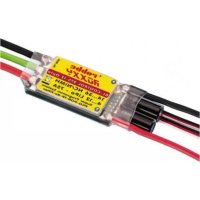
The receiver system is powered by the built-in BEC system of the controller.
For commissioning, always move the throttle stick to the "Motor off" position and switch on the transmitter. Only then connect the battery. To switch off always disconnect the connection battery motor controller, first then turn off the transmitter. During the functional test, move the servos of the rudders to neutral position with the remote control (stick and trimming lever on the transmitter to the middle position). Please make sure to leave the throttle stick in the lowest position so that the engine does not start. For all work on
to the parts of the remote control, motor or controller, follow the instructions supplied with the units. Also read the instructions of the battery and the charger carefully before commissioning.
Check the engine mounting bolts in the fuselage regularly for tightness.
Attention, danger of injury!
Always keep a safe distance from your model aircraft.
- Never fly over spectators, other pilots or yourself.
Always perform flight figures in a direction away from the pilot or spectators.
- Never endanger people or animals.
Never fly near power lines or residential areas.
- Do not operate your model near locks or public shipping.
- Do not operate your model on public roads, motorways, paths and squares, etc., but only in approved locations.
- Do not operate the model in thunderstorms.
Before each flight, check your remote control system for sufficient function and range.
After flying, remove all batteries from the model.
Do not "aim" the transmitter antenna at the model during operation. In this direction, the transmitter has the lowest radiation. The best position of the antenna is to the side of the model.
Use of devices with image and/or sound recording function:
If you equip your model with a video or Image recording device (e.g. FPV cameras, action scams etc.) or the model is already equipped with such a device at the factory, please note that you could violate the privacy of one or more persons by using the recording function. An overflight or driving on private ground without the appropriate permission of the owner or approaching private ground can also be regarded as an invasion of privacy. You, as the operator of the model, are solely and fully responsible for your actions.
In particular, all applicable legal requirements must be observed, which can be found in the roof associations or the relevant authorities. Failure to comply can result in substantial penalties.
CONFORMITY

Modelbau Lindinger GmbH hereby declares that this device complies with the essential requirements and other relevant regulations of the corresponding CE directives. The original declaration of conformity can be found on the Internet at www.robbe.com, in the detailed product view of the respective device description or on request. This product can be operated in all EU countries.
DISCLAIMER
Modelbau Lindinger GmbH cannot monitor compliance with the assembly and operating instructions or the conditions and methods for installation, operation, use and maintenance of the model components. Therefore, we accept no liability for losses, damage or costs arising from or in any way connected with incorrect use and operation. To the extent permitted by law, the obligation to pay damages, irrespective of the legal grounds, shall be limited directly to the invoice value of the claims arising from the event causing the damage.
DISPOSAL
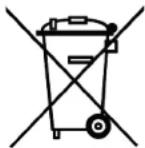
This symbol means that small electrical and electronic devices must be disposed of at the end of their useful life, separated from the household refuse. Dispose of the device at your local municipal collection point or recycling centre. This applies to all countries of the European Union and other European countries with a separate collection system.
DISTRIBITOR

Phone: +43(0)7582/81313-0
Mail:info@robbe.com
UID No.:ATU69266037
"robbe Modellsport" is a registered Trademark by Modellbau Lindinger GmbH
Errors, misprints and technical changes reserved.
Copyright 2019
Modellbau Lindinger 2019
Copy and reprint only with our permission.
Service-Address
Contact your Dealer or
service@robbe.com, +43(0)7582-81313-0
WARRANTY
Our articles are equipped with the legally required 24 months warranty. Should you wish to assert a justified warranty claim, always contact your dealer, who is responsible for the warranty and the processing. During this time, any functional defects that may occur, as well as manufacturing or other problems, will be rectified. Material defects corrected by us free of charge. Further claims, e.g. for consequential damages, are excluded. The transport to us must be free, the return transport to you is also free. Freight collect shipments cannot be accepted. We cannot accept liability for transport damage and loss of your consignment. We recommend appropriate insurance.
To process your warranty claims, the following requirements must be met:
- Attach the proof of purchase (receipt) to your shipment.
The units have been operated in accordance with the operating instructions.
- Only recommended power sources and original robbe accessories have been used.
- There is no moisture damage, external interference, reverse polarity, overloading or mechanical damage.
- Attach relevant information for finding the fault or defect.
INSURANCE
Ground-based models are usually covered by personal liability insurance. Additional insurance or extension is required for aircraft models. Check your insurance policy (private liability) and take out suitable insurance if necessary.
www.robbe.com

Instructions and User Manual
PREFACE
Congratulations on your purchase of the new AMPLITUDE!
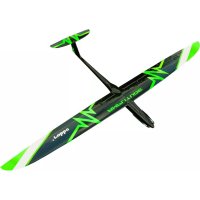
The AMPLITUDE is a high-quality FRP hotliner with a dynamic flight envelope. It can be flown within a broad speed range. There are various ways of constructing the model, depending on your preferences. Therefore the solutions stated in this manual should only be considered as recommendations. For the most part, the PNP (plug and play) version is already pre-assembled.
The ARF version (almost ready to fly) requires modeling experience and basic technical knowledge in construction. Thus there are different ways to achieve a model with good flight skills.
This is why most steps are explained in the manual but not necessarily shown in the pictures.
PLEASE READ THIS MANUAL CAREFULLY BEFORE YOU START ASSEMBLING THE MODEL.
FLIGHTINSTRUCTIONS
Before the first flight, observe the instructions in the Safety Instructions" section.
- When flying the model, you should choose a day with as little wind as possible
- A large, flat area without obstacles (trees, fences power lines etc.) is suitable for the first flights.
- Please carry out a functional test of the drive train / power set and remote control.
After assembling the model on the airfield, check once again that all model components such as wing, tail units, wing mounts, engine, linkages, etc. are firmly and properly fastened.
For a hand start a helper should be present, who can throw the model with enough thrust into the air.
The start usually takes place against the wind.
- Do not stall the model near the ground
- Do not initiate tight turns in the immediate vicinity of the ground.
- Check the reactions of the model to the rudder deflections. If necessary, adjust after landing to increase or decrease the deflections accordingly.
The minimum flight speed must be at an adequate safety altitude.
- Initiate the landing with sufficient speed
SAFETY INSTRUCTIONS FOR RECHARGEABLE BATTERIES
Do not immerse the battery in water or other liquids.
Do not heat, throw into fire or microwave.
- Do not short-circuit or charge with reversed polarity
Do not expose deform or throw the battery
- Do not solder directly on the battery
Do not change or open the battery.
Only charge the battery with suitable chargers, never connect it directly to a power supply unit.
- Never charge or discharge the battery or charger on a flammable surface.
- Never leave the battery unattended during charging or discharging processes.
- Never charge or discharge the battery in direct sunlight or near heaters or fire.
- Do not use the battery in places subject to high static discharge.
All this can cause the battery to be damaged, explode or even catch fire!
- Keep the battery away from children
- Keep leaked electrolyte away from fire, as it is highly flammable and may ignite.
- The electrolyte liquid should not get into the eyes, if it does, rinse immediately with plenty of clear water and then see a doctor.
The electrolyte liquid can also escape from clothes and other objects with a lot of water or washed off.
Observe the safety instructions of the battery manufacturer and the charger manufacturer.
AMPLITUDE
TECHNICAL DATA
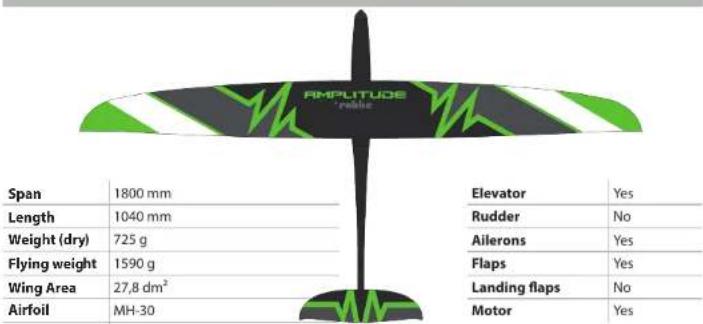
3-72mm behind the leading edge
BOX CONTENT/NEEDED ACCESSORIES
| ARF PNP | ||
| Motor not Included Robbe X36-800 (included) | ||
| ESC not included from RoControl 6-60 (not included) | ||
| Battery not included 45 3200-4000mAh (not included) | ||
| Servo ELE not included 1x Robbe FS-155 BB MG HV (included) | ||
| Servo RUD not included - | ||
| Servo AILE not included 2x Robbe FS-155 BB MG HV (included) | ||
| Servo FLAP not included 2x Robbe FS-155 BB MG HV (included) | ||
| Servo LANDING FLAP not included - | ||
| Servo cable not included 3x 50cm, 2x 20cm, 4x 25cm MPX-JR Plug (included) | ||
| Landing gear not included No | ||
| MULTITock not included No | ||
| MPX plugs Yes (not included) - | ||
| Adhesives | UHU Por (not included) | - |
| Epoxy resin Yes (not included) - | ||
| Locking screw | Yes (not included) | - |
| Velcro strap | not included | Yes |
| Spinner | not included Alu Turbo Spinner 38mm (included) | |
| Propeller | not included 12x8" CAM Prop (included) | |
| TX | min. 5 channels (not included) | min. 5 channels (not included) |
| RX | min. 7 channels (not included) | min. 7 channels (not included) |

Instructions and User Manual
AMPLITUDE
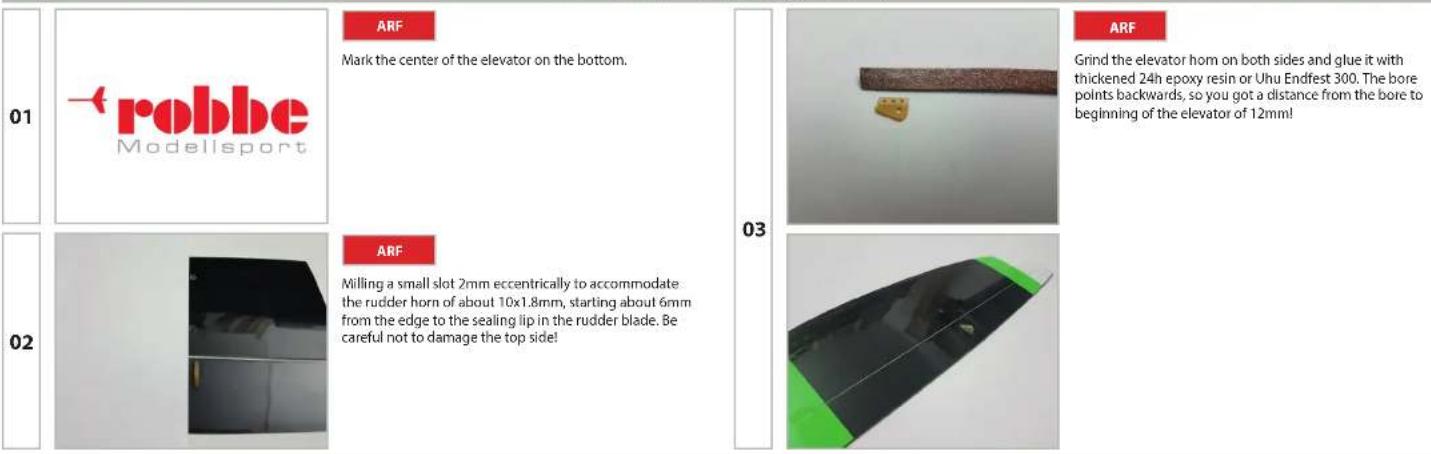
THE HORIZONTAL STABILIZER
FUSELAGE
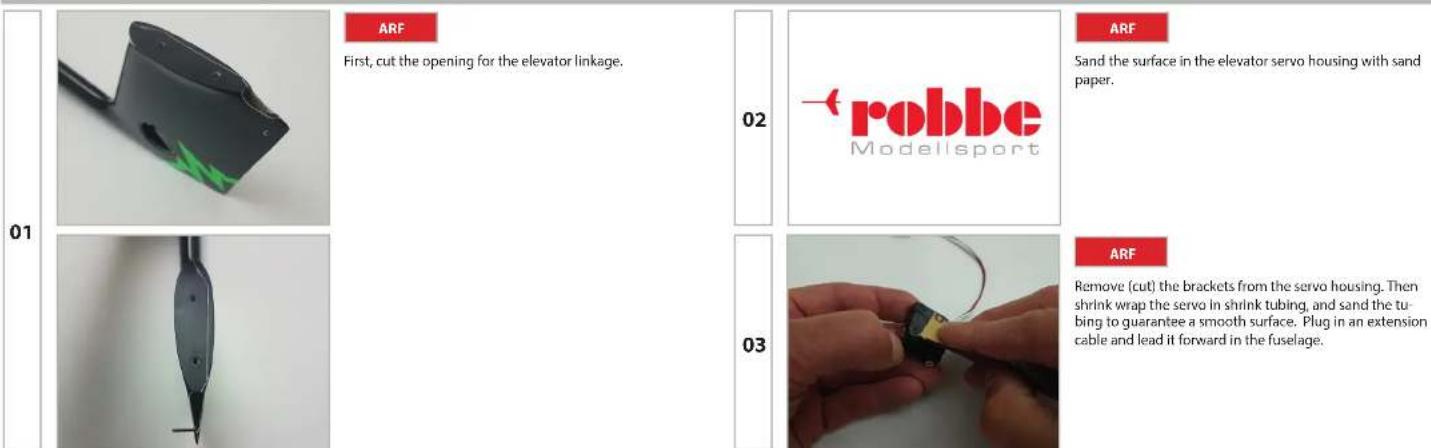

Instructions and User Manual
AMPLITUDE
FUSELAGE
ARF Now mount a shortened servo arm with a bore distance of 5-6mm in 90^ position on the servo. Make sure the servo is in the neutral position before doing so.
ARF Make a linkage with Z-bend and 90^ angle. The shaft distance is 115mm. Make sure that the linkages are rotated 90^ to each other!
ARF Now thread the linkage suspended in the servo into the fuselage and out through the outlet. Connect the servo wire to the extension and pull it into the front of the fuselage.
ARF Glue the servo with thickened 24h epoxy and fix it roughly.

Hook the elevator horn into the linkage and mount the elevator to the fuselage with the M3 countersunk screws.

Due to the fastened neutral position elevator and the servo horn in 90^ position, the final position of the servo is now automatically obtained. The servo axis should be 90^ to the linkage. Also make an adhesive connection from the servo to the fuselage opening. This increases the stability greatly. Wait until the resin has fully cured.

Solder the esc with the cables of the motor as shown in the picture. If your controller does not have a programmable direction reversal, please check the direction of rotation in advance and change it if necessary by replacing two cables!


Insulate the solder joints with shrink tubing and fix the cables to the motor using a cable tie.
robbe
Instructions and User Manual
AMPLITUDE
ARF
The entire drive train can now be inserted behind the bulkhead in the fuselage. Attach the motor with the M3x6 screws. Controller, battery and receiver can be fixed with Velcro. The receiver finds its place in the rear fuselage part and should be well padded installed.
ARF
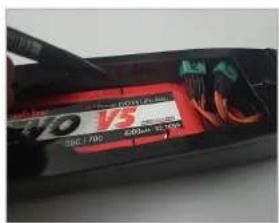
For later adjustment of the center of gravity, the battery may vary in position. Only after accurately determining the center of gravity do you make a mark on the battery and the fuselage wall so that the center of gravity remains reproducible.
13
AP
IF PNI
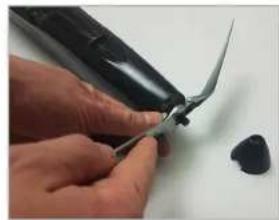
Mount the aircrew center section with propeller blades on the motor shaft. Pay attention to a firm but sensitive tightening of the nut. This is an aluminum thread!
WINGS
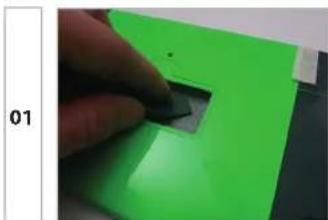
ARF
Sand the surface in the servo housings with sand paper.
02
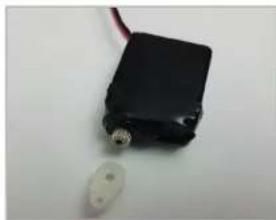
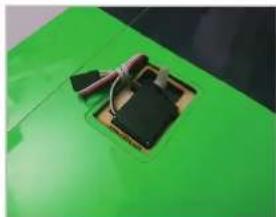
ARF
Remove (cut) the brackets from the servo housing. Then shrink wrap the servo in shrink tubing, and sand the tubing to guarantee a smooth surface. Plug in an extension cable and guide it through the opening in the center of the wing. Optionally, you can also install the wing servos with our Robbe servo installation frames. These are then easier to dismantle for maintenance purposes.

Instructions and User Manual
AMPLITUDE
WINGS
03
ARF
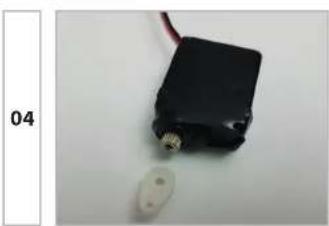
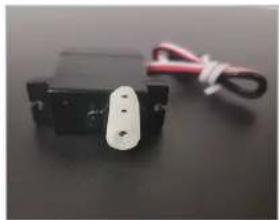
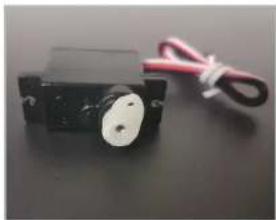
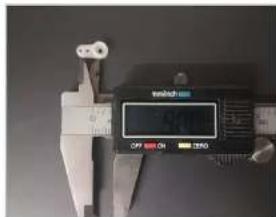
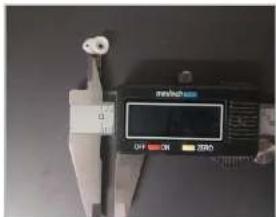
Now mount the servo arms in 90^ position on the previously neutral servo. Drill a hole in the alleron servo arm at a distance of approx. 9mm from the output to 1.6mm. For flap servo arm select a bore distance of approx. 6mm. The servo arm is screwed on one tooth forward (towards the leading edge).
04
04
ARF
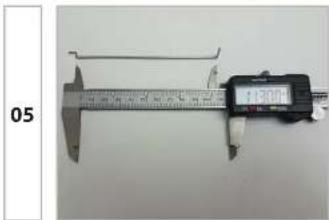
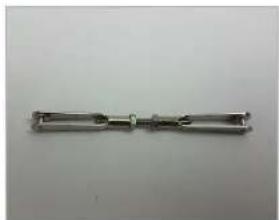
Now make two 43mm long linkages for the ailerons from the M2 clevis, nuts and threaded rods. For the flaps take the linkage with Z-bend and clevis.
05
06
07
ARE
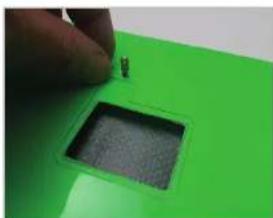
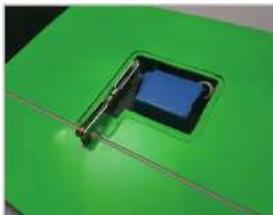
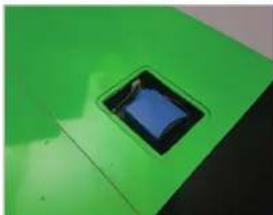
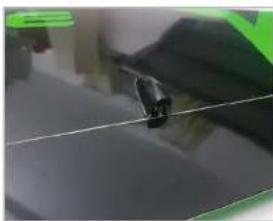
Screw the brass rudder horns with thread locking compound into the threads in the rudders. Then hook the linkage into the holes on the rudder and servo levers.
ARF
Now glue both alleron servos with slightly thickened epoxy resin. The exact position is now determined by the neutrally fastened rudder blade, the 90^ servo lever and the rod length.
ARF
The flaps are cross-jointed in the classic way, i.e. from the underside of the wing to the top. Now make two 44mm long linkages for the flaps from the short Z-booms and M2 clevis. The gluing is done in the same way as for the allerons, but now the servo arm is slightly tilted forward in the electronic neutral position.
robbe Modelreport
08
Instructions and User Manual
ARF
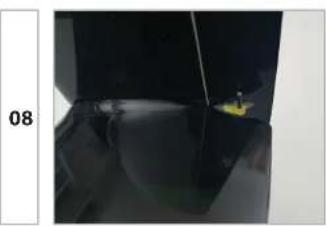
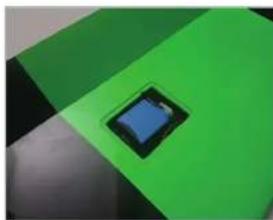
This way a mechanical locking is achieved during full deflection downwards by the linkage running in line with the servo arm.
AMPLITUDE
09
ARI
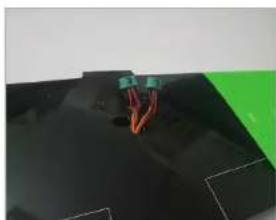
For electrical connection between fuselage and wing, please use the reliable 6-pin multiplex plugs and sockets and solder them to the ends of the servo cables and the corresponding opposite side to the receiver. Ensure clean and correct soldering and insulation.
INSTALLATION AND TUNING PROCESS, ARF/PNP
01
AREPNP
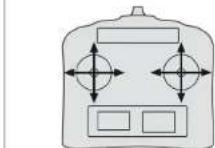
Turn on the transmitter using the preset model memory and connect the battery. Also connect the wing cables to the receiver.
02
ARFPI
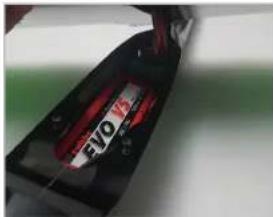
Mount the wing on the fuselage. Make sure that no cables are trapped between the fuselage and the wing!
03
ARF
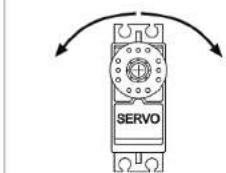
First, as far as possible, adjust all rods mechanically. Then, the control and adjustment of the servo directions and travel ways as shown in the table below.
04
ARI
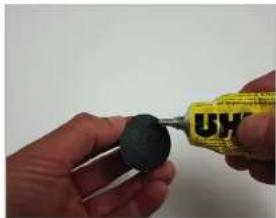
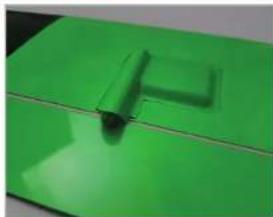
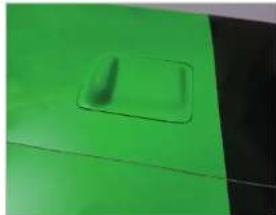
Finally, the servo covers are glued with UHU Por.
05
ARF
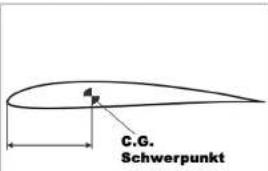
The center of gravity (CG) is 68-72mm behind the leading edge. For beginner-compatible flight behavior, first set the center of gravity to 68mm by moving the battery. For performance-optimized Hotliner behavior, the center of gravity can slowly be moved further back.

Instructions and User Manual
AMPLITUDE
06
PNP
Later mark the exact position of the CG on the battery and fuselage, as well as the alleron servo plugs.
CONTROL THROWS
ENDING
| Function Normal Speed Thermal Landing | ||||
| Elevator +/- 5/3 mm; 20% Expo - - 1 mm | ||||
| Rudder - - - | ||||
| Ailerons +/- 12/8 mm; 35% Expo - - + 10 mm | ||||
| Flaps - - - 23 mm |
Now look for a day with suitable weather conditions for the first flight. With the recommended settings you should prevent any bad suprises. We recommend, at least on the first flight, to make the start with a starting helper.
We wish you lots of fun and fast flying hours with your new hotliner and always happy landings!
SPARE PARTS
FOR YOUR NOTES
| Spare Part item Number | |
| Fuselage Amplitude ARF w/o elektronic 263701 | |
| Wing set Amplitude ARF w/o servos 263702 | |
| Stabilizer Amplitude ARF | 263703 |
INFORMATIONS GÉNÉRALES
Telephone: 143(0)7582/81313-0
Email: info@robbe.com
UID Nr.:ATU69266037
service@robbe.com, +43 7582-81313
www.robbe.com
AVANT-PROPOS
service@robbe.com, +43(0)7582-81313-0
www.robbe.com