Stereo 2 - Radio SONORO - Free user manual and instructions
Find the device manual for free Stereo 2 SONORO in PDF.

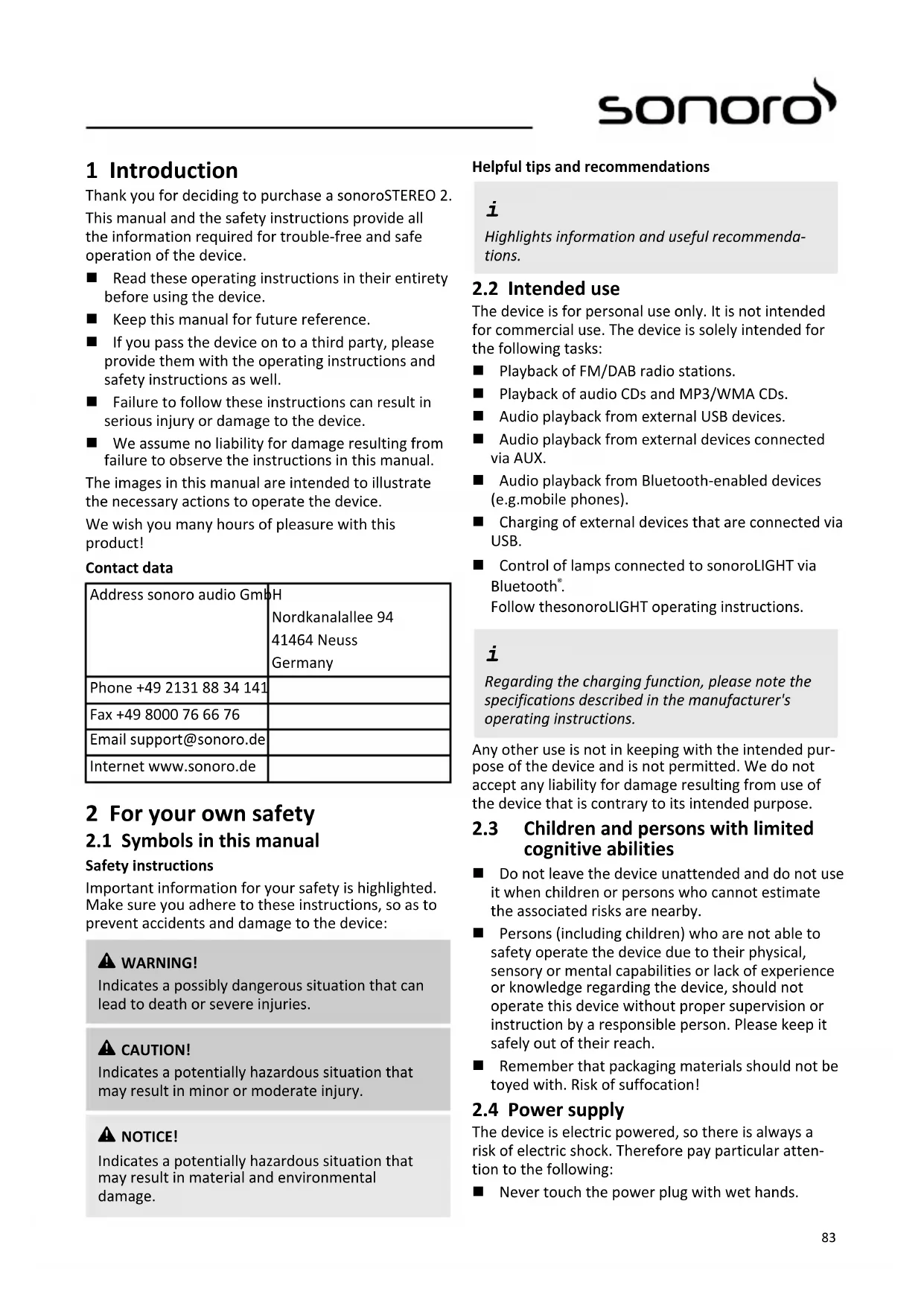


| Product type | Stereo radio with CD player, Bluetooth, DAB+, FM |
| Dimensions (W x D x H) | approx. 450 x 262.5 x 153 mm |
| Weight | approx. 6.3 kg |
| Power supply | Mains 100-240 V, 50/60 Hz (built-in adapter) |
| FM range | 87.5 MHz – 108 MHz |
| DAB/DAB+ range | 174.928 MHz – 239.2 MHz |
| Bluetooth | Version 4.0, profiles AVRCP 1.0, A2DP 1.0 |
| CD playback | Audio CD, MP3-CD, WMA-CD, CD-R/RW |
| USB playback | MP3, WMA; up to 32 GB, FAT16/32 |
| AUX input | 2 × (RCA and 3.5 mm jack) |
| Line output | RCA, 2 V/47 kOhm |
| Headphone | 3.5 mm jack |
| Antenna | FM/DAB supplied (flexible and telescopic rod) |
| Main functions | Dual alarm, sleep timer, equalizer, sonoroLIGHT compatibility |
| Display | LCD with adjustable backlight |
| Backup battery | CR2032 (for clock) |
| Remote control | Included, with CR2032 button cell batteries |
| Cleaning | Soft dry cloth, no solvents |
| Safety | Auto power off, class 1 laser |
| Warranty | 2 years (1 year North America/Australia) |
| Box contents | Unit, remote control, batteries, power cord, antenna, gloves, manual |
Frequently Asked Questions - Stereo 2 SONORO
User questions about Stereo 2 SONORO
0 question about this device. Answer the ones you know or ask your own.
Ask a new question about this device
Download the instructions for your Radio in PDF format for free! Find your manual Stereo 2 - SONORO and take your electronic device back in hand. On this page are published all the documents necessary for the use of your device. Stereo 2 by SONORO.
USER MANUAL Stereo 2 SONORO
sonoroSTEREO 2 (SO-320)
Stereo-Musik-System
13 Bluetooth-weergave 67
[Tune to FM RDS station to set time & date (Voor auto..., tijd/datum RDS-zender selecteren)].
i
13 Bluetooth-weergave
Stereo Music System with Bluetooth® Technology
Table of contents
1 Introduction 83
2 For your own safety 83
2.1 Symbols in this manual 83
2.2 Intended use 83
2.3 Children and persons with limited cognitive abilities 83
2.4 Power supply 83
2.5 Batteries 84
2.6 Laser 84
2.7 Transport 84
2.8 Ambient conditions 84
2.9 Operation 85
2.10 Headphone use.. 85
2.11 Defects 85
2.12 Cleaning 85
3 Scope of delivery. 86
3.1 sonoroSTEREO 2. 86
3.2 sonoroLIGHT (available as an option) 86
4 Compatible formats 87
5 Controls and ports. 87
6 Display 91
7 Unpacking the device and first use. 92
7.1 Unpacking the device 92
7.2 Inserting the battery 92
7.3 Connecting the power cord 92
7.4 Connecting the antenna 93
7.5 Preparing the remote control 93
7.6 Connecting sonoroLIGHT 93
7.7 Connecting the headphones.. 94
8 Setting the basic functions. 94
8.1 Switching on the device for the first time 94
8.2 Standby mode 94
8.3 Settings menu 95
8.4 Adjusting the sound 96
8.4.1 Setting bass and treble 96
8.4.2 Setting the equalizer 97
8.5Sound effect 97
8.6 Setting the Sleep Timer 97
8.7 Switching the light on and off 98
9 Alarm function 98
9.1 Setting the alarm time 98
9.2 Setting the alarm source 99
9.3 Setting the alarm volume 99
9.4 Setting the alarm repetition 99
9.5 Programming the alarm light (sunrise) 99
9.6 Switching the alarm function on/off. 100
9.7 Switching off the alarm clock after the alarm sounds 100
9.8 Setting the Snooze function 100
10 General audio playback functions 100
10.1 Selecting a playback mode 100
10.2 Setting the volume. 101
10.3 Setting playback to mute 101
11 Radio playback 101
11.1 FM radio. 101
11.1.1 Searching an FM station 101
11.1.2 Storing FM stations 102
11.1.3 Accessing saved FM stations 102
11.2 DAB radio 102
11.2.1 Finding a DAB station 102
11.2.2 Storing a DAB station 103
11.2.3 Accessing saved DAB stations 103
11.2.4 Accessing DAB information 103
11.2.5 Setting the DRC. 103
12 CD playback 104
13 Bluetooth playback 105
13.1 Connecting and deleting Bluetooth devices 105
13.2 Playing music via Bluetooth 105
14 AUX playback. 105
15 USB playback 106
16 Relaxation and meditation music 107
17 Demo Music playback 109
18 Troubleshooting 110
19 Cleaning. 111
20 Technical Data. 112
21 Disposal 113
22 Symbols 113
23 Declaration of Conformity 113
24 Warranty 113
1 Introduction
Thank you for deciding to purchase a sonoroSTEREO 2. This manual and the safety instructions provide all the information required for trouble-free and safe operation of the device.
Read these operating instructions in their entirety before using the device.
- Keep this manual for future reference.
If you pass the device on to a third party, please provide them with the operating instructions and safety instructions as well.
Failure to follow these instructions can result in serious injury or damage to the device.
We assume no liability for damage resulting from failure to observe the instructions in this manual.
The images in this manual are intended to illustrate the necessary actions to operate the device.
We wish you many hours of pleasure with this product!
Contact data
| Address sonoro audio GmbH | H Nordkanalallee 94 41464 Neuss Germany |
| Phone +49 2131 88 34 141 | |
| Fax +49 8000 76 66 76 | |
| Email support@sonoro.de | |
| Internet www.sonoro.de |
2 For your own safety
2.1 Symbols in this manual
Safety instructions
Important information for your safety is highlighted. Make sure you adhere to these instructions, so as to prevent accidents and damage to the device:

WARNING!
Indicates a possibly dangerous situation that can lead to death or severe injuries.

CAUTION!
Indicates a potentially hazardous situation that may result in minor or moderate injury.

NOTICE!
Indicates a potentially hazardous situation that may result in material and environmental damage.
Helpful tips and recommendations
i
Highlights information and useful recommendations.
2.2 Intended use
The device is for personal use only. It is not intended for commercial use. The device is solely intended for the following tasks:
Playback of FM/DAB radio stations.
Playback of audio CDs and MP3/WMA CDs.
Audio playback from external USB devices.
Audio playback from external devices connected via AUX.
Audio playback from Bluetooth-enabled devices (e.g-mobile phones).
- Charging of external devices that are connected via USB.
Control of lamps connected to sonoroLIGHT via Bluetooth.
Follow thesonoroLIGHT operating instructions.
i
Regarding the charging function, please note the specifications described in the manufacturer's operating instructions.
Any other use is not in keeping with the intended purpose of the device and is not permitted. We do not accept any liability for damage resulting from use of the device that is contrary to its intended purpose.
2.3 Children and persons with limited cognitive abilities
- Do not leave the device unattended and do not use it when children or persons who cannot estimate the associated risks are nearby.
Persons (including children) who are not able to safety operate the device due to their physical, sensory or mental capabilities or lack of experience or knowledge regarding the device, should not operate this device without proper supervision or instruction by a responsible person. Please keep it safely out of their reach.
Remember that packaging materials should not be toyed with. Risk of suffocation!
2.4 Power supply
The device is electric powered, so there is always a risk of electric shock. Therefore pay particular attention to the following:
Never touch the power plug with wet hands.
- When you want to pull the power plug from the wall outlet, always pull directly on the plug itself. Never pull on the cable. It could break.
Ensure unobstructed access to the power outlet so that the power plug can be pulled out immediately in case of an emergency.
Make sure that the power cord is not bent, pinched or run over. Lay the power cord in such a way that it is not a tripping hazard or within reach of children.
Only use extension cords that are rated for the current of the device. - Keep the device away from rain and moisture and any heat sources.
Only operate the device if the electrical voltage indicated on the device nameplate and the power plug matches the voltage of your power outlet. Incorrect voltage may destroy the device.
To avoid a fire hazard, disconnect the device completely from the power supply when you are not using the device for a long time. Do this by unplugging the power cord from the AC outlet.
The power cord is used as a disconnected device, the disconnect device shall remain readily accessible.
Symbols

This is CLASS II apparatus with double insulation, and no protective earth provided.

Nature of supply: a.c. only
2.5 Batteries
Remove the batteries from the battery compartment as soon as they are empty or if you do not intend to use the device for a prolonged period of time.
- Never dispose of any batteries in an open fire and never expose them to high temperatures.
Take attention to the environmental aspects of battery disposal
- Never attempt to recharge normal batteries. Never attempt to open or short-circuit the batteries. Risk of explosion!
Liquid discharged from the batteries when they are used incorrectly can cause skin irritation. If you come in contact with the liquid, wash it off with plenty of water. If the liquid gets into your eyes, never rub your eyes, but rinse them straight away with water for 10 minutes and contact a doctor immediately.
Only use batteries of the same or equivalent type. Risk of explosion!
- Button type batteries can be easily swallowed. Swallowing can lead lead to searious injury or death. Keep the battery out of reach of children at all times. If you suspect that a battery has been swallowed, seek immediate medical attention.
If the battery compartment does not close securely, stop using the product and keep it away from children.
2.6 Laser
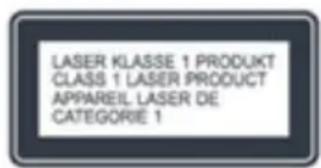
Fig. 1: Laser
This device is classified as a Class 1 laser device. Laser beams can injure your eyes. So please observe the following:
Do not attempt to disassemble the device.
To avoid risks: All maintenance and repair work must only be performed by the manufacturer or its customer service department.
2.7 Transport
To avoid damage to the inserted medium, remove it from the device before transporting/shipping the device.
Whilst driving in a vehicle, store the device so as not to endanger its occupants.
If you ship the device, please stow it in its original packaging. Keep the packaging for this purpose.
2.8 Ambient conditions
Safe operation of the device is only ensured if it is used under suitable ambient conditions. So please observe the following:
- Protect the device against the effects of the weather. Never use the device outdoors and never place it where it is exposed to strong sunlight.
- Never place the device on or near heat and fire sources such as burning candles, cooker plates, ovens etc.
Position the device so that sufficient air circulation is ensured. This will prevent heat accumulating inside the device. Always keep the device at a minimum distance of 10cm from other equipment or from walls.
Do not cover the ventilation openings on the rear and underside of the device by covering the ventilation openings with items, such as newspapers, table-cloths, curtains, etc.
The device is suitable for use in tropical and/or moderate climates.
Protect the remote control from the weather, humidity and high temperatures (e.g. from direct sunlight).
Protect the device against dripping water and splashes. Never place a container of liquid next to or on the device.
Protect the device against mechanical shocks and place it on a firm surface.
Protect the remote control from the weather, humidity and high temperatures (e.g. from direct sunlight).
Protect the device against dripping water and splashes. Never place a container of liquid next to or on the device.
2.9 Operation
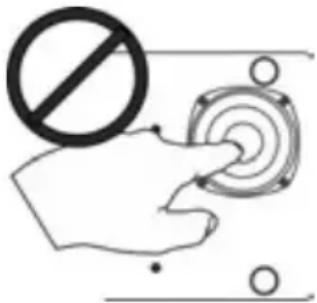
Fig. 2: Subwoofer
Do not touch or push the subwoofer on the bottom of the device (Fig. 2). This can destroy the loudspeaker.
Do not insert any object other than the permitted CDs into the CD slot of the device. Special formats can result in damage to your device.
Do not use any media other than those specified in this manual.
The rubber feet of the device may produce stains on certain surfaces. Please choose a suitable surface on which you will place the device.
2.10 Headphone use
Always decrease the volume of the device before putting on the headphones. Increase the volume to the desired level only after the headphones are in the correct position.
Do not adjust the volume too high when listening on headphones. If you hear permanent noise or background noise in your ears (ringing), immediately decrease the volume or stop using the headphones altogether.
Even if your headphones are designed in such a way that you can hear outside noises, remember to never adjust the volume so high that you are no longer aware of your immediate surroundings.
2.11 Defects
If the device should be defective, never try to carry out repairs your-self.
If the mains plug, the adapter or the mains cable of the device is damaged, it must be replaced by the manufacturer or the customer service department to prevent the risk of electric shock.
If liquids have entered the device or it has been damaged in any other way, it must be inspected by an authorised specialist. Disconnect the device from the AC adapter and contact an authorised specialist.
2.12 Cleaning
Only clean the outside of the device with a dry, soft cloth. Never use aggressive cleaning agents or solvents to clean the device, as these corrode its surface.
If the device is badly soiled, wipe it with a slightly moistened cloth and dry it immediately with a dry, soft cloth.
3 Scope of delivery
3.1 sonoroSTEREO 2
The sonoroSTEREO 2 is supplied with a number of accessories that you need to receive radio signals or to connect additional devices.
■sonoroSTEREO2 with protective cover
Remote control
Two button cells (CR2032, 3 V)
■Power cord (CE)
FM/DAB antenna
Gloves
■Operating instructions
3.2 sonoroLIGHT (available as an option)
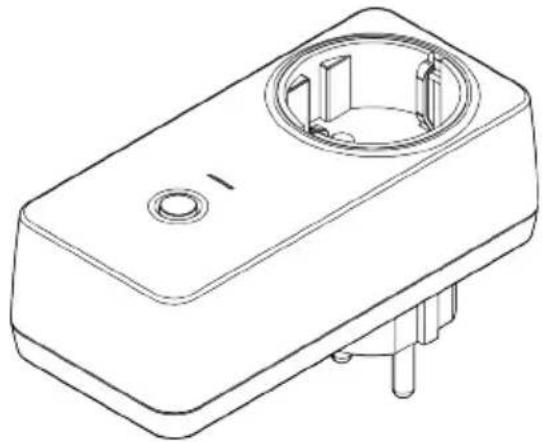
Fig. 3: sonoroLIGHT
To use the full scope of functions and be able to control a lamp that is connected via Bluetooth, you need the sonoroLIGHT dimmer module.
sonoroLIGHT can be connected to sonoroSTEREO 2 and it is available from specialist shops. sonoroLIGHT is not part of the scope of supply of sonoroSTEREO 2.
4 Compatible formats
Compatible CD formats
A NOTICE!
Using an incorrect CD format can result in material damages!
Inserting a mini-disc can damage the device.
-
Only use compatible CD formats.
-
Compact Disc Digital Audio CD-DA
CD-R
CD-RW
Compatible audio formats
CD-DA
MP3
WMA
5 Controls and ports
sonoroSTEREO 2 front view
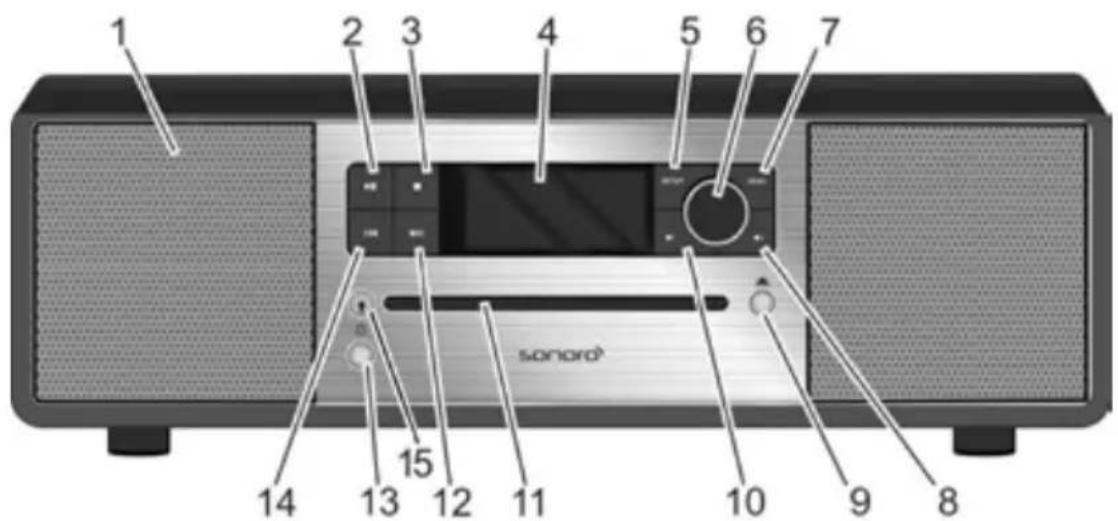
Fig. 4: sonoroSTEREO 2 front view
| Item (Fig. 4) | Designation Function | |
| 1 Loudspeaker Loudspeaker opening. | ||
| 2 Play/Pause CD/USB start/pause playback. | ||
| 3 Stop CD/USB stop playback. | ||
| 4 | LCD Display | Displays current time and date when the device is switched off. Displays mode-related information when the device is switched on. |
| 5 Open and close the menu items. | ||
| 6 Click wheel | Turn: set volume, FM/DAB station, alarm, navigation. Press: confirm individual submenus, FM station list/DAB station list, start/stop audio playback, stop alarm. Press and hold, then turn: set FM frequency/DAB frequency manually. | |
| 7 | MENU | Switch to next playback mode. |
| 8 Alarm 2 | Press: switch alarm 2 on/off, stop alarm. Press and hold: set alarm. | |
| 9 Eject Eject CD | ||
| 10 Alarm | Press: switch alarm 1 on/off, stop alarm. Press and hold: set alarm. | |
| 11 CD slot | Loads CD when the device is switched on or in Standby mode. | |
| 12 Next | Press: navigate menu items; search FM/DAB stations, next track in CD, USB, Bluetooth, Relax Music, Demo Music modes. Press and hold: fast forward. | |
| 13 Standby Switch device | on/off. Stop alarm. | |
| 14 Previous | Press: navigate menu items; search FM/DAB stations, previous track in CD, USB, Bluetooth, Relax Music, Demo Music modes. Press and hold: fast reverse. | |
| Item (Fig. 4) | Designation Function | ction |
| 15 Light | ● | ■ Press briefly: switch sonoroLIGHT on/off. ■ Press and hold: connect sonoroLIGHT. - Flashes while connecting - Lights up when connected ■ Press and hold: Increase/decrease the brightness of sonoroLIGHT gradually. |
sonoroSTEREO 2 rear view
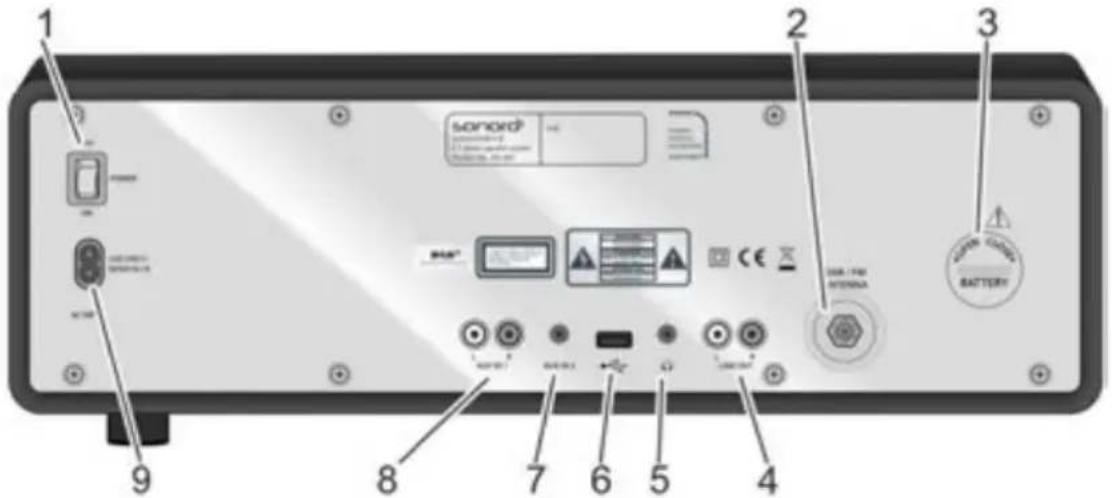
Fig. 5: sonoroSTEREO 2 rear view
| Item (Fig. 5) | Designation Function | |
| 1 On/off switch | Switch Switch device on/off. | |
| 2 DAB/FM | ANTENNA | Port for the included antenna or an external antenna. |
| 3 Battery | com-partment | The battery (CR2032 button cell, 3 V) ensures continued operation of the clock in case of power failure. |
| 4 LINE OUT | Port for external | audio playback. |
| 5 Headphones | Port for headphones. | |
| 6 USB-Charge &Playback | Port for USB stick or USB cable. Port to charge external devices via a USB cable. | |
| 7 AUX IN | Port for external | audio devices (3.5 mm jack). |
| 8 AUX IN | Port for external | audio devices (RCA). |
| 9 AC INPUT | 100 to 240V socket for included power cable. | |
Remote control
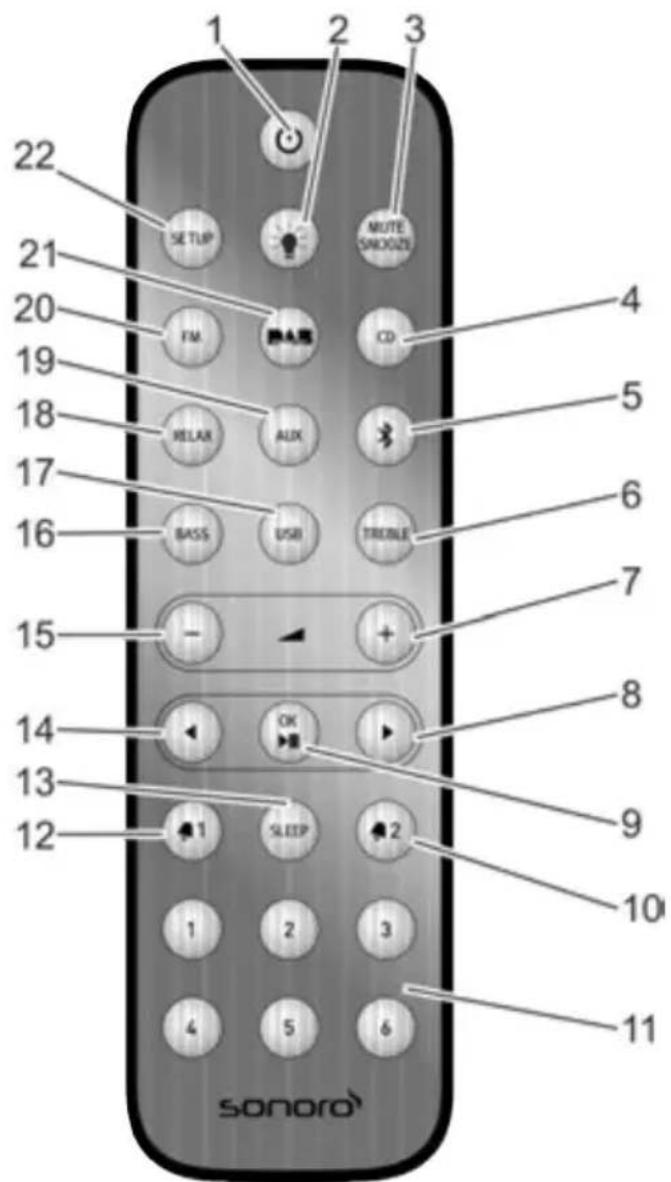
Fig. 6: Remote control
| Item (Fig. 6) | Button Function | |
| 1 Standby | Switch the device on/off. | |
| 2 Light | Press briefly: switch sonoroLIGHT on/off. Press and hold: connect sonoroLIGHT. Press and hold: Increase/decrease the brightness of sonoroLIGHT gradually. | |
| 3 MUTE | SNOOZE | Press briefly (in playback mode): Switch mute on/off. Press briefly (in Alarm mode): start the snooze function. Press and hold: opens the [Snoopze Setting] menu to set the snooze time. |
| 4 CD Switch CD playback on/off. Press briefly (in CD mode): display ID3 tags. | ||
| 5 Bluetooth Switch Bluetooth | ||
| 6 TREBLE Adjust the treble | ||
| 7 VOL + All playback modes: increase the volume. | ||
| 8 Next Scan channels and | navigate the menus. | |
| 9 OK, Play/Pause Confirm | the selected settings in the menu. Play or pause the selected track. | |
| 10 Alarm | Press: switch Alarm 2 on/off, stop the alarm. Press and hold: Set the alarm. | |
| 11 Memo | 1-6 Station memory. | |
| 12 Alarm | Press: switch Alarm 1 on/off, stop the alarm. Press and hold: Set the alarm. | |
| 13 SLEEP | Switch the auto disconnect (Sleep Timer) function on/off. Press briefly (in Standby mode): The device switches itself on. | |
| 14 Previous Scan channels | and navigate the menus. | |
| 15 VOL - | All playback modes: decrease the volume. In standby: set the brightness of sonoroLIGHT. | |
| 16 BASS Adjust the bass. | ||
| 17 USB Switch USB on/off. | Switch between artist and track info (if available). | |
| 18 RELAX Switch the stored Relax Music on/off. | ||
| 19 AUX Switch AUX on/off. | ||
| 20 FM | Switch the FM radio on/off. Press briefly (in FM mode): switch RDS on/off. | |
| 21 DAB | Switch DAB radio on/off. Press briefly (in DAB mode): switch DAB info. | |
| 22 SETUP Open the menu. | ||
6 Display
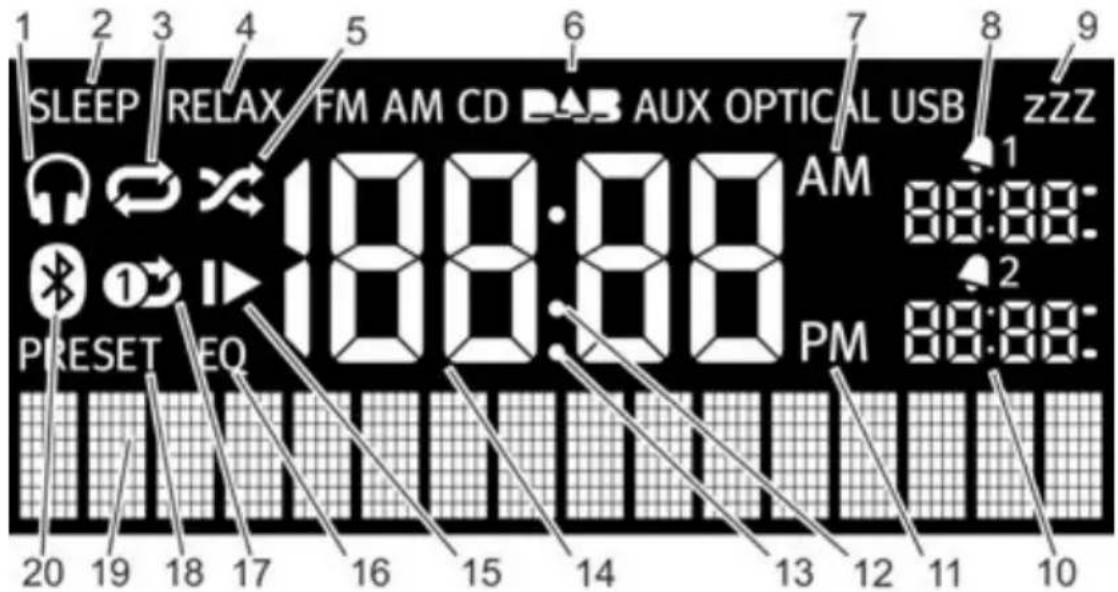
Fig. 7: Display
| Item (Fig. 7) | Symbol Function | |
| 1 Headphones | ones Headphones | are connected. |
| 2 Sleep Sleep Timer is active. | ||
| 3 Repeat CD: repeat all tracks on the CD. | ||
| 4 Relax Relax mode is active. | ||
| 5 Shuffle CD: shuffle the play order of individual tracks. | ||
| 6 FM/AM/CD/DAB/AUX/USB | CD/ DAB/AUX/USB | Shows the selected operating mode. |
| 7 AM Time suffix in the 12-hour setting. | ||
| 8 Alarm 1 Displays the set Alarm 1 time. | ||
| 9 Snooze Snooze function is activated. | ||
| 10 Alarm 2 Displays the set Alarm 2 time. | ||
| 11 PM Time suffix in the 12-hour setting. | ||
| 12 Colon Flashes to indicate seconds. | ||
| 13 Dot For FM frequency range. | ||
| 14 Time Displays the current time. | ||
| 15 Resume CD: resume playback. | ||
| 16 EQ equalizer to adjust the sound. | ||
| 17 Repeat One CD: repeat one track. | ||
| 18 Preset Station memory. | ||
| 19 Lower display section | display for date, menus, frequencies etc. | |
| 20 Bluetooth Bluetooth is active. |
7 Unpacking the device and first use
Only connection cables and external devices that are designed for this product in terms of safety, electromagnetic compatibility and shielding quality may be used in conjunction with the device.
7.1 Unpacking the device
All parts of the device are delivered in a cardboard box.

WARNING!
The packaging is not a toy! Risk of suffocation!
There is a risk of suffocation if the packaging is used for playing.
-
Keep the packaging in a place that is inaccessible to children and persons who cannot assess the dangers.
-
Unpack the device and all accessories and check the content to ensure that all parts are included and intact.
i
Should you detect any damage, please contact your dealer or sonoro support (Contact data' on page 83) immediately.
- Place the device in a suitable location and remove the protective foil from the display.
i
Always comply with the safety instructions regarding the ambient conditions (Chapter 2 'For your own safety' on page 83).
3.

NOTICE!
Damage to the subwoofer!
Carefully remove the cover from the subwoofer without touching it.
7.2 Inserting the battery
The battery ensures the function of the clock in case of power failure.

WARNING!
Risk of injury if batteries are handled incorrectly!
The incorrect handling of batteries can lead to injuries due to an explosion hazard.
- Never attempt to recharge, open or short-circuit the batteries. Risk of explosion!
- Never damage or deform the batteries.
- Never dispose of any batteries in an open fire or expose them to high temperatures.
- Keep batteries out of reach of children, as it poses a suffocation risk.
- Fluid may escape due to misuse and cause skin irritation. In case of skin contact:
Rinse it off with plenty of water.
- Do not rub your eyes, but rinse eyes with plenty of water for 10 minutes and seek immediate medical attention.

NOTICE!
Improper handling of batteries can lead to material damages!
Improper handling of batteries can damage the device.
- Do not insert batteries the wrong way. Ensure that they have the correct polarity.
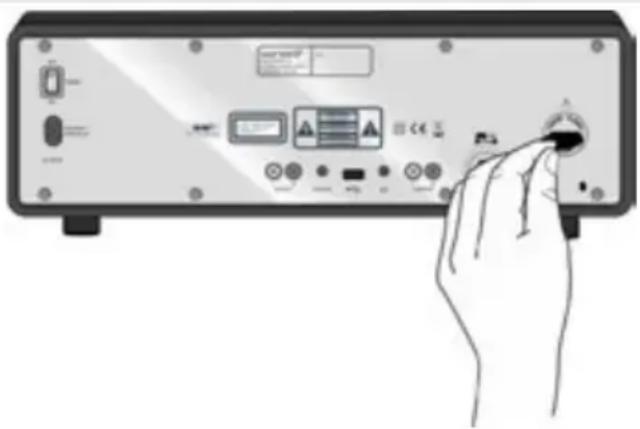
Fig. 8: Inserting the battery
- Open the battery compartment cover on the back of the device with a small coin (Fig. 8).
- Insert the supplied battery with the label side up.
- Insert the battery compartment cover and close it with a small coin.
7.3 Connecting the power cord
The device is supplied with power by means of the supplied mains cable. The AC transformer is integrated in the device itself.
WARNING!
Risk of injury if handled incorrectly!
Risk of electric shock if the mains cable is handled incorrectly.
- Pull the mains cable straight out of the outlet.
A NOTICE!
Risk of damage to equipment in the event of incorrect power connection!
Connection ratings that exceed the maximum permissible values of the device can destroy it.
- Only use the mains cable supplied with the device.
-
Only use the device if the indicated voltage corresponds with the voltage of your mains socket.
-
Insert the plug of the mains cable into the power socket on the back of the device.
- Insert the mains plug in the outlet.
7.4 Connecting the antenna
The scope of supply contains a cable antenna and a rod antenna. For optimum radio reception, you must use one of the two antennae.
1. Screw the desired antenna located on the back of the device to the DAB/FM antenna connector.
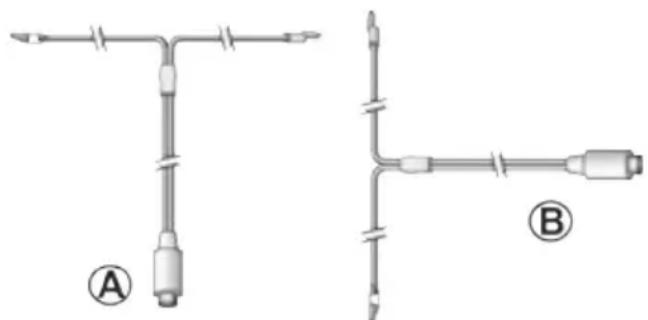
Fig. 9: Aligning the cable antenna
- Unfold the cable antenna or pull the arms of the rod antenna apart and align the antenna so that you have the best possible reception.
i
For good FM/DAB radio reception, the two ends of the cable antenna should form a "T" (dipole) with the connecting cable.
Fig. 9/A: Recommended alignment for FM
Fig. 9/B: Recommended alignment for DAB
For even better reception, attach the cable to a suitable house antenna.
7.5 Preparing the remote control
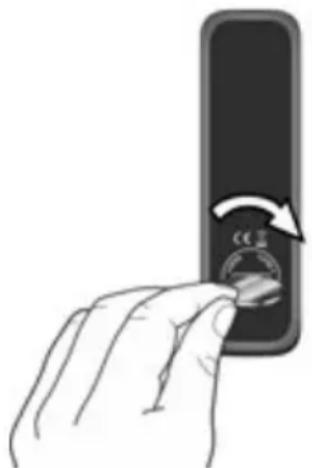
Fig. 10: Inserting the battery in the remote control
- Open the battery compartment of the remote control (Fig. 10).
- Insert the supplied button celle (CR2032, 3 V) with the label side (+) up.
- Close the battery compartment.
7.6 Connecting sonoroLIGHT
In order to be able to control a lamp using the Bluetooth function, you must connect sonoroLIGHT and sonoroSTEREO 2 once. Connected devices are stored and later connected automatically.
i
Follow the sonoroLIGHT operating instructions.
- Plug sonoroLIGHT into a socket.
- Ensure that sonoroLIGHT and sonoroSTEREO 2 are no more than 10m away from one another. Other-wise, no connection can be established.
- Press the button on your sonoroLIGHT.
⇔ sonoroLIGHT searches for another Bluetooth device.
- Press the [Light] button on your sonoroSTEREO 2 and hold it for 3 seconds.
⇒ The devices are connected to one another. No password needs to be entered. Once the devices are successfully connected, the [Light] button lights up in white.
- Connect a lamp to the socket on your sonorLIGHT.
7.7 Connecting the headphones
Headphones with a 3.5mm jack plug (not supplied) can be connected to the device.
WARNING!
Risk of injury if headphones are used incorrectly! Incorrect use of headphones can cause severe accidents and damage your health.
-
When you are using the headphones, do not set an excessively high volume.
-
Turn the click wheel to the left to set the volume to minimum.
- Insert the headphone jack plug into the port on the back of the device.
- Slowly turn the click wheel to the right to increase the volume.
8 Setting the basic functions
The individual menus let you select the functions and settings of the device.
8.1 Switching on the device for the first time
After you have switched the device on for the first time, the LCD display shows the clock display and the [Tune to FM RDS station to set time & date] message.
i
In FM/DAB mode, the time and date are set automatically unless this function has been disabled.
8.2 Standby mode
The following settings can be configured in the Standby mode:
Setting the time manually.
Setting the date manually.
Switch the date on the display on/off.
The procedure to set the individual functions is the same.
Setting the time manually
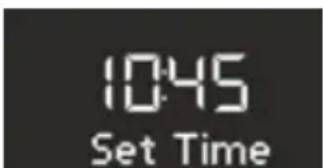
Fig. 11: Setting the time manually
- In Standby mode, press the [SETUP] button on the device or the remote control.
⇔ The display shows the [Set Time] menu (Fig. 11).
- Press the click wheel to set the hours.
The hour display will flash.
- Turn the click wheel to set the hours.
- Press the click wheel to confirm the setting.
⇒ The minute display will flash. - Turn the click wheel to set the minutes.
- Press the click wheel to confirm the setting.
⇒ The time is set.
i
Use the [Next] and [Previous] buttons to toggle between the hours and minutes display.
i
After 10 seconds of inactivity, the device automatically switches to Standby mode without saving the settings.
Setting the date manually
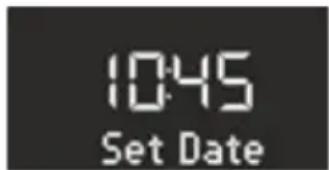
Fig. 12: Setting the date
- In Standby mode, press the [SETUP] button on the device or the remote control.
The display shows the [Set Time] menu (Fig. 11).
-
Turn the click wheel until [Set Date] is shown.
-
Press the click wheel.
⇒ Now you can set the date by rotating the click wheel.
i
You can switch between the day, month and year display by pressing the click wheel.
Switching the date on/off
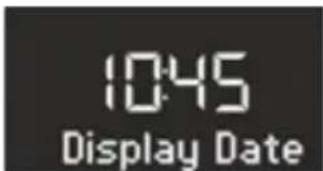
Fig. 13: Switching the date on/off
- In Standby mode, press the [SETUP] button on the device or the remote control.
The display shows the [Set Time] menu (Fig. 11).
- Turn the click wheel until [Display Date] is shown.
- Press the click wheel.
Now you can switch the date on or off.
8.3 Settings menu
In operating mode, the following configurations can be made in the [Settings] menu:
When the device is switched on, you can make the following configurations in the [Settings] menu:
Set the time format.
Set the date format.
Setting display dimmer
Setting alarm light (only with sonoroLIGHT).
Set the automatic time/date update function.
Set the display language.
Activate/deactivate Demo Sound.
Reset the device to the factory settings.
To adjust the settings, proceed as follows:
- Press the [SETUP] button on the front of the device or the remote control to enter the corresponding submenu.
- Press the [Next] or [Previous] button or turn the click wheel to scroll through the individual menu items.
- To open the selected menu item, briefly press the click wheel or the [OK] button on the remote control.
- To exit the menu, briefly press the [MENU] button on the device or on the remote control.
i
If you do not make any further entries, the menu will close and the display switches to the previous mode.
Setting the time format
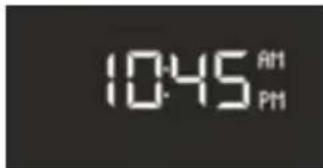
Fig. 14: Setting the time format
You can choose between the 24-hour and 12-hour formats. In the 12-hour format, the time of day is indicated by [AM] and [PM].
Setting the date format
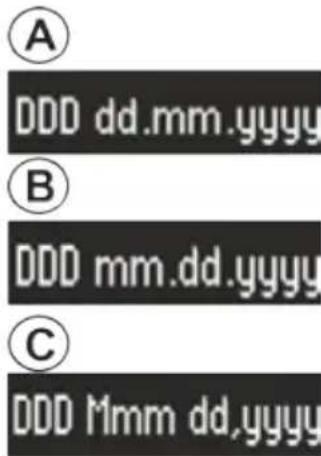
Fig. 15: Setting the date format
You can set three different date formats (Fig. 15/A, B und C) as well as the current day. The configuration options are:
A: Current day, day, month, year.
B: Current day, month, day, year.
C: Current day, month (in words), day, year.
Setting display dimmer
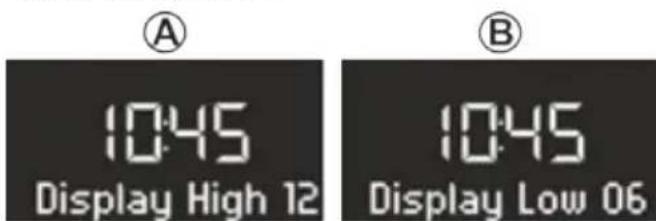
Fig. 16: Setting display dimmer
Depending on the ambient brightness, the display is switched to bright or dark. The ambient brightness is detected by a sensor beside the display.
You can set the desired brightness level.
■Display High: Level 08 to 15 (Fig. 16/A)
■Display Low: Level 01 to 08 (Fig. 16/B)
To this end, you can proceed as follows to set the desired brightness of the alarm light and the time-frame in which the alarm light should reach this brightness:
Setting alarm light
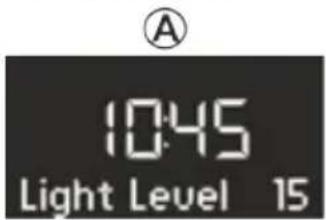
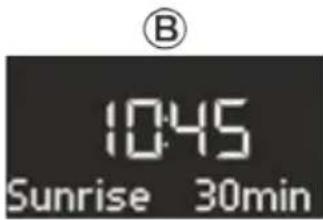
Fig. 17: Setting alarm light
In addition to the alarm, you can also be woken up in the mornings with a light that gets gradually brighter (only in conjunction with sonoroLIGHT).
To this end, you can proceed as follows to set the desired brightness of the alarm light and the time-frame in which the alarm light should reach this brightness:
Brightness: 01 to 32 (Fig. 17/A)
Alarm light: 0 to 60 min (Fig. 17/B)
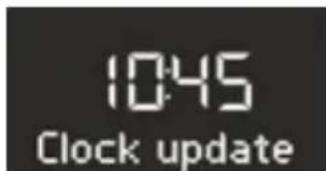
Setting the automatic time/date update function
Fig. 18: Setting the automatic update function You can select the automatic update function in the [Set Time] submenu (Fig. 18). Switching on this function automatically synchronizes the time and date in the FM radio and DAB radio operating modes.
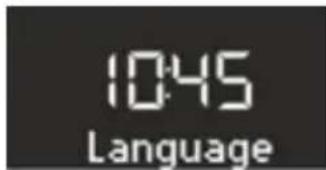
Setting the display language
Fig. 19 Setting the language
You can set the language for the menu and the play-back display (Fig. 19). The following languages are available:
■ English,
German and
French
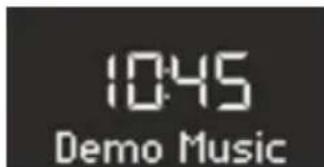
Switching Demo Sound on/off
Fig. 20: Switching Demo Sound on/off
You can switch the Demo Sound function on or off (Fig. 20).
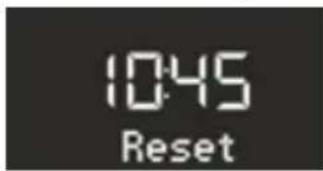
Resetting the device to the factory settings
Fig. 21: Resetting to the factory settings
If necessary, you can reset all specified settings, such as language and time formats and saved stations, to the default factory settings (Fig. 21).
8.4 Adjusting the sound
8.4.1 Setting bass and treble
When the device is switched on, the sound of the audio playback can be adjusted via the bass and treble controls.
Configuring settings via the remote control
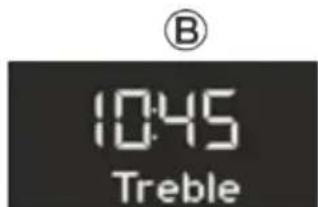
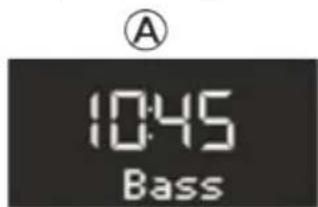
Fig. 22: Adjusting the sound
- Press the [Bass] or [Treble] button on the remote control.
- To adjust the bass, select [Bass] (Fig. 22/A) and press the [VOL + ] or [VOL - ] button.
- To adjust the treble, select [Treble] (Fig. 22/B) and press the [VOL + ] or [VOL - ] button.
- Press the [OK] button or wait 10 seconds to confirm the setting.
Configuring settings via the device
- Press the [SETUP] button in the front of the device.
- Turn the click wheel until [Bass] or [Treble] is shown.
- Press the click wheel to confirm your selection.
- To configure the bass, select [Bass] and turn the click wheel. To configure the treble, select [Treble] and turn the click wheel.
- Press the click wheel or wait 10 seconds to confirm the setting.
8.4.2 Setting the equalizer
Activating and setting the equalizer
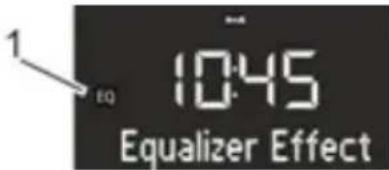
Fig. 23: Setting the equalizer
- Press the [SETUP] button while the device is switched on.
- Turn the click wheel until [Equalizer Effect] is shown (Fig. 23).
- Press the click wheel to confirm your selection.
- Turn the click wheel to select a default setting.
You can select one of the following default settings:
Maximum bass
Maximum voice
Maximum treble
- Press the click wheel to confirm your selection.
The display shows the [EQ] symbol (Fig. 23/1).
Deactivating the equalizer
- Turn the click wheel in the [Equalizer Effect] submenu until the display shows [Equalizer Off].
- Press the click wheel to confirm your selection.
The [EQ] symbol no longer appears in the
8.5 Sound effect
Switching the sound effect on
- Press the [SETUP] button while the device is switched on.
- Turn the click wheel until [Equalizer Effect] is shown (Fig. 23).
- Press the click wheel to confirm your selection.
- Turn the click wheel until [Max. Stereo] is shown.
- Press the click wheel to confirm your selection.
- Turn the click wheel until [Max. Stereo On] is shown.
- Press the click wheel to confirm your selection. ⇒ The sound effect is switched on.
Switching off the sound effect
- Turn the click wheel in the [Max. Stereo] submenu until [Max.Stereo Off] is shown.
- Press the click wheel to confirm your selection.
⇒ The sound effect is switched off.
8.6 Setting the Sleep Timer
The Sleep Timer is an automatic power-off function that switches the device to Standby mode after the specified time has expired.
Setting the Sleep Timer
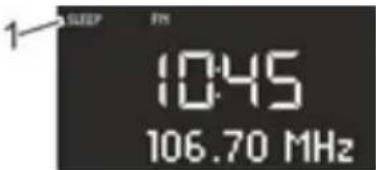
Fig. 24: Switching on/off the Sleep Timer
- Press [SLEEP] button on the top of the device or the remote control.
The display shows the [SLEEP] symbol (Fig. 24/1).
Switching off the Sleep Timer
- To switch off the sleep timer, press the [SLEEP] button again.
The symbol on the display is hidden.
i
If the device was switched off by the Sleep Timer, it will start in the last heard mode when you turn it on again.
Setting the time interval for the Sleep Timer
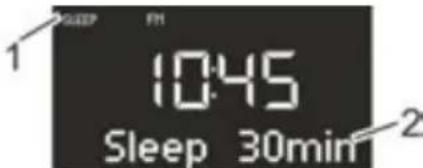
Fig. 25: Setting the time interval for the Sleep Timer
- Hold down the[SLEEP] button on the top of the device or the remote control.
The Sleep Timer appears (Fig. 25) and the Sleep symbol flashes (Fig. 25/1). - Turn the click wheel to select the desired time interval length (Fig. 25/2). The maximum time interval is 120 minutes.
i
Alternatively, you can also use the [Next] or [Previous] buttons to adjust the values.
- Press the click wheel to confirm the entry.
When the specified time expires, playback gradually fades out.
Dimming light (sunset)
In addition to a Sleep Timer, you can also dim or switch off a connected lamp (only in conjunction with sonoroLIGHT).
- Ensure that sonoroLIGHT is connected and that its dimmer function is switched on.
- Switch on the light Chapter 8.7 'Switching the light on and off' on page 98.
- Program a Sleep Timer.
⇒ After the Sleep Timer has elapsed, the light is reduced gradually and is switched off after 40 seconds.
i
If you press the [Standby] button during the Sleep Timer, the light remains switched on.
If you press the [Light] button while the light is being dimmed, the light is switched off immediately.
8.7 Switching the light on and off
You can switch a connected lamp on and off (only in conjunction with sonoroLIGHT).
- Ensure that sonoroLIGHT is connected and that its dimmer function is switched on.
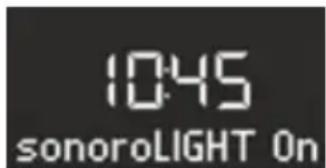
Fig. 26: Switching on the light
- Press the [Light] button on the device or the remote control.
The light is switched on (brightness level 8) and the display shows the text[sonoroLIGHT On] (Fig. 26).
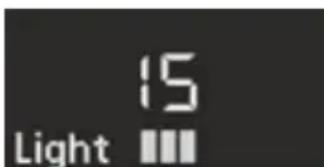
Fig. 27: Setting the brightness
- Turn the click wheel within 4 seconds to set the brightness of the light (level 00 to 32, Fig. 27).
i
If the device is turned off, you can wait longer.
- Press the [Light] button again to switch the light off.
If the device is turned off, you can turn the click wheel directly to switch the light on and set the brightness.
9 Alarm function
You can use the device to wake up with FM/DAB radio, CD, Relax Music or alarm ringtones. The alarm functions can also be set in the device's Standby mode.
The alarm setup menu is structured as follows:
Set the Alarm Time → Set the Alarm Source
→ Set the Alarm Volume → Set the Alarm Repetition
→ End'
i
If you do not press any buttons for approx.
10 seconds when setting the alarm, the setting is terminated without saving it.
9.1 Setting the alarm time
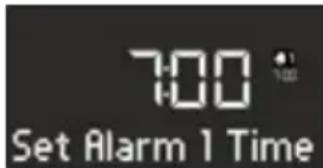
Fig. 28: Setting Alarm 1
- Keep the [Alarm 1] or [Alarm 2] button pressed.
⇒ The display shows the [Set Alarm 1] (Fig. 28) or [Set Alarm 2] menu.
- Turn the click wheel to set the hours.
- Press the click wheel to confirm the entry.
The minute display flashes.
- Turn the click wheel to set the minutes.
- Press the click wheel to confirm the entry.
i
Use the [Next] or [Previous] button to switch between the hours and minutes display.
The alarm time is set.
9.2 Setting the alarm source
After you have set and confirmed the alarm time, you can set the source for the alarm.
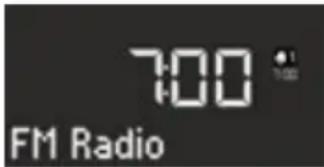
Fig. 29: Setting the alarm source
- Turn the click wheel to select the medium you want to use (Fig. 29):
| FM Select an FM station preset from the station memory that you wish to start the device with and wake up to. |
| DAB Select a DAB station preset from the station memory that you wish to start the device with and wake up to. |
| CD Select a track from the CD you wish to start the device with and wake up to. |
| Relax Music Select a Relax Music track from the memory you wish to start the device with and wake up to. |
| Ringtone Select a ringtone from the memory that you wish to start the device with and wake up to. |
- Press the click wheel or the [OK] button on the remote control to confirm your setting.
The alarm source is set.
9.3 Setting the alarm volume
After you have set and confirmed the alarm source, you can set the alarm volume.
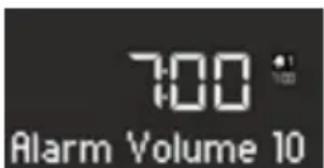
Fig. 30: Setting the alarm volume
- Turn the click wheel to set the desired volume (Fig. 30).
- Press the click wheel or the [OK] button on the remote control to confirm your setting.
⇒ The alarm volume is set.
i
The alarm audio playback always starts with the minimum volume and gradually increases to the specified volume level.
9.4 Setting the alarm repetition
After you have set and confirmed the alarm volume, you can set the alarm repetition.
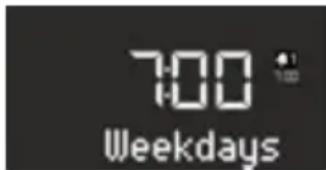
Fig. 31: Setting the alarm repetition
- Turn the click wheel to set the desired alarm repetition (Fig. 31). You can choose between the following settings:
Once
Daily
At weekends
On weekdays
- Press the click wheel or the [OK] button on the remote control to confirm your setting.
The alarm repetition is set.
9.5 Programming the alarm light (sunrise)
After you have set and confirmed the alarm repetition, you can set whether you would also like to be woken with an alarm light (with sonoroLIGHT only).
- Ensure that sonoroLIGHT is connected and that its dimmer function is switched on.
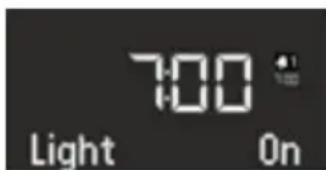
Fig. 32: Setting alarm light
-
Turn the click wheel to switch the alarm light on and off (Fig. 32).
-
Press the click wheel or the [OK] button on the remote control to confirm your setting.
The alarm light is programmed.
If you would also like to be woken with an alarm light, the light is switched on before the alarm goes off at the time you have set to ensure that it has reached the specified brightness when the alarm goes off.
To set the alarm light Setting alarm light' on page 95.
Example
Settings made:
Alarm time: 07:00 a.m.
Brightness: 15
Timeframe: 30 min
At 06:30 a.m., the alarm light is switched on and the brightness is increased gradually from level 0 to level 15 by 07:00 a.m.
9.6 Switching the alarm function on/off Switching the alarm function on
- To switch on the alarm clock, briefly press the [Alarm 1] or [Alarm 2] button on the front of the device or the remote control.
Switching the alarm function off
- To switch off the alarm clock, briefly press the [Alarm 1] or [Alarm 2] button again.
9.7 Switching off the alarm clock after the alarm sounds
- To switch off the alarm, press one of the following buttons:
[Alarm 1]
[Alarm 2]
■ Click wheel
[Standby]
The alarm will remain activated for the next day. This does not apply if the non-recurring alarm setting is in use. The alarm light remains on and retains its current brightness.
i
After 60 min, the alarm is switched off automatically.
- Press the [Light] button to switch the alarm light off.
- To switch the alarm clock off and have it come back on after a set period of time (Snoopze), press the [SNOOZE] button on the remote control.
i
Alternatively, you can turn the click wheel when the alarm sounds to set the snooze time. Press the click wheel to confirm.
The remaining snooze time is displayed. After the set time expires, the alarm will sound again.
9.8 Setting the Snooze function
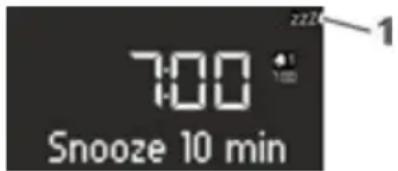
Fig. 33: Setting the snooze function
- Briefly press the [SNOOZE] button on the remote control in Standby mode. If the device is switched on, press and hold the [SNOOZE] button on the remote control until the Snooze sub-menu appears (Fig. 33).
The display shows the [Snoopze] symbol (Fig. 33/1).
- Turn the click wheel to set the duration.
- Press the click wheel to confirm the entry.
10 General audio playback functions
10.1 Selecting a playback mode
Select the desired mode for audio playback of the different media or from external devices.
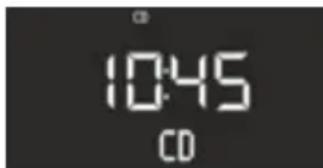
Fig. 34: Selecting a playback mode
-
Switch on the sonoroSTEREO 2.
-
Press the [MENU] button on the front of the device until the desired mode is shown, or select it on the remote control.
i
Alternatively, you can also turn the click wheel after pressing the [MENU] button to toggle through the different modes. Press the click wheel to confirm the mode.
The selected mode is displayed (Fig. 34).
10.2 Setting the volume
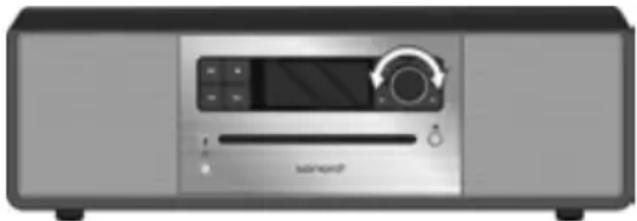
Fig. 35: Setting the volume
- Turn the click wheel to increase or decrease the volume (Fig. 35).
A volume control is shown in the display.
10.3 Setting playback to mute
Mute
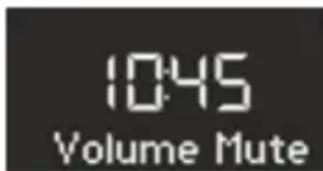
Fig. 36: Mute
- In playback mode, briefly press the [MUTE] button on the remote control to mute the sound during playback.
⇔ The display will show the text [Volume Mute] (Fig. 36).
2. Switching the sound back on
To switch the sound on again, press the [MUTE] button on the remote control again or turn the click wheel clock-wise.
11 Radio playback
- Press the [MENU] button on the front of the device until FM or DAB mode is shown, or select the respective mode on the remote control.
The display will show the [FM Radio] or [DAB Radio] symbol.
The display shows the following information in radio mode:
Mode: FM Radio or DAB Radio.
- Stored program channel, if the radio station is stored in the program memory.
Station name, if the station transmits RDS text.
RDS text transmitted by the station, if the station transmits RDS text.
i
RDS is only available for stations in the FM frequency range and only if the corresponding station transmits RDS data.
If the station does not broadcast RDS text, then the frequency is displayed instead of the station name.
11.1 FM radio
11.1.1 Searching an FM station
Automatic tuning
Condition:
The DAB/FM antenna is connected.
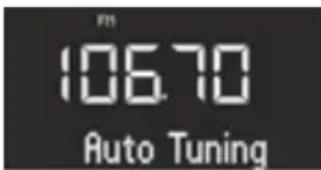
Fig. 37: Automatic tuning
- In FM playback mode, press and hold the [Next] or [Previous] button to activate the automatic tuning function.
The display shows the [Auto Tuning] text (Fig. 37).
Manual tuning
Condition:
The DAB/FM antenna is connected.
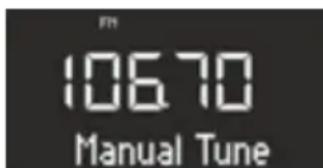
Fig. 38: Manual tuning
- Press and hold the click wheel to activate manual tuning.
The display shows the [Manual Tune] text (Fig. 38).
- Turn the click wheel to change the frequency range.
- Press the click wheel to confirm your selection.
Automatic tuning
Automatic tuning automatically generates and stores a station list of up to 30 stations. The stations are sorted according to strength of reception.
Condition:
The DAB/FM antenna is connected.
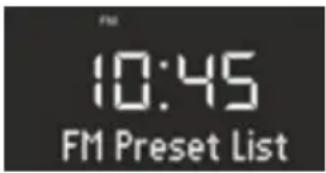
Fig. 39: FM Preset List
- Press the [SETUP] button.
⇒ The display shows the [FM Preset List] text (Fig. 39). - Turn the click wheel until [FM Auto Search] is displayed.
- Press the click wheel.
⇒ The display shows the [Auto Search YES] text. - Press the click wheel again.
The automatic tuning is started. After the search is complete, the device will jump to the first station on the list.
11.1.2 Storing FM stations
Via the remote control
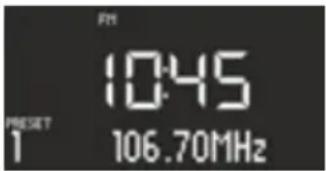
Fig. 40: Storing FM stations
- Press and hold one of the station preset buttons on the remote control.
The display shows the station preset (Fig. 40).
i
You can save up to 6 FM stations via the remote control.
In the menu
- Press the [SETUP] button.
The display shows the [FM Preset List] text.
- Turn the click wheel until [FM Preset store] is shown.
The display shows the station preset.
- Press the click wheel to select the desired station preset.
- Press the click wheel to save the station.
11.1.3 Accessing saved FM stations
- Briefly press one of the station preset buttons on the remote control.
⇒ The selected station is played.
11.2 DAB radio
11.2.1 Finding a DAB station
Automatic tuning
Condition:
The DAB/FM antenna is connected.
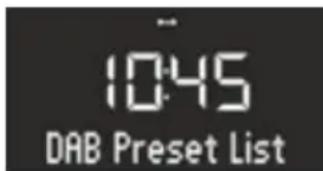
Fig. 41: Automatically finding a DAB station
- In DAB playback mode, press the [SETUP] button.
⇒ The display shows [DAB Preset List] (Fig. 41). - Turn the click wheel until [DAB Full Scan] is displayed.
- Press the click wheel on the device or the [OK] button on the remote control to confirm the selection.
The device now searches for available radio stations and plays the first available station.
i
The station scan takes place automatically when first switching to DAB mode or after resetting to factory settings.
Manual tuning
Condition:
The DAB/FM antenna is connected.
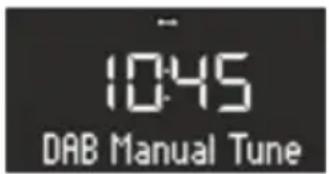
Fig. 42: Manually tuning a DAB station
- In DAB playback mode, press the [SETUP] button.
The display shows [DAB Preset List].
- Turn the click wheel until [DAB Manual Tune] is displayed (Fig. 42).
- Press the click wheel on the device or the [OK] button on the remote control to confirm the selection.
- Turn the click wheel to different frequencies.
- Press the click wheel to confirm your selection.
Removing inactive stations - Prune list Condition:
The DAB station list created using the DAB scan function is out of date (e.g., after moving to a different location).
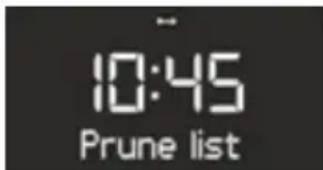
Fig. 43: Deleting inactive DAB stations
- In DAB playback mode, press the [SETUP] button.
⇔ The display shows [DAB Preset List].
- Turn the click wheel until [Prune list] is shown (Fig. 43).
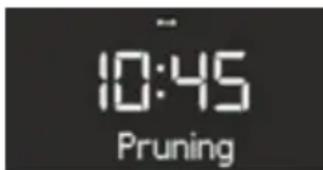
Fig. 44: Pruning
- Press the click wheel to confirm your selection.
The inactive DAB stations will be deleted.
The display will show [Pruning] during this process (Fig. 44).
11.2.2 Storing a DAB station
- Press and hold one of the station preset buttons on the re-mote control.
The display shows the station preset.
i
You can save up to 6 DAB stations via the remote control.
11.2.3 Accessing saved DAB stations
- Briefly press one of the station preset buttons on the remote control.
The selected station is played.
11.2.4 Accessing DAB information
In DAB mode, you can access information about the station, program, etc. The information is shown in the following order:
Station name (starting point)
■ Broadcaster
DLS ("Dynamic Label Service", program-related information such as artist, track, etc.)
Program type (e.g. sports)
Station frequency
Signal quality
- In DAB mode, press the [STOP] button on the device to access the DAB information. Alternatively, you can press the [DAB] button on the remote control.
The display shows the information in the sequence indicated above.
- Press the [STOP] button on the device or the [DAB] button on the remote control again.
The display shows the next information.
- Proceed accordingly to access the remaining DAB information.
11.2.5 Setting the DRC
The DRC setting (Dynamic Range Compression) reduces the difference in volume between quiet and loud passages.
There are 3 different setting possibilities for the DRC:
The device is in DAB mode.
- Press the [SETUP] button.
The display shows the [DAB Preset List] text.
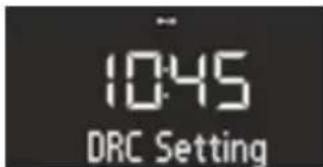
Fig. 45: DRC Setting
- Turn the click wheel until [DRC Setting] is shown (Fig. 45).
- Press the click wheel or the [OK] button on the remote control to confirm the selection.
- Turn the click wheel to carry out the desired setting.
- Press the click wheel to confirm the setting.
12 CD playback
A NOTICE!
Improper operation can result in material damages!
Do not insert any recording media that deviate from the standard CD format (e.g. mini-discs, etc.) into the CD player. These may not be played and ejected correctly. Insert only one disc at a time into the CD player.
- Switch on the sonoroSTEREO 2.
- Insert the CD into the CD slot with the label side up.
The CD player will automatically load the CD and start playback.
i
If the device is in a different mode, it will automatically switch to CD mode.
The display shows the following information in CD mode:
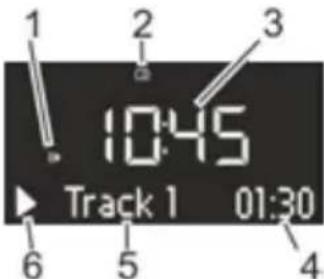
Fig. 46: Display in CD mode
1 Playback sequence (Repeat, Shuffle, CD Resume)
2 CD mode
3 Time
4 Elapsed playback time in minutes
5 Track number
6Playback status (Play/Pause)
To pause playback of the CD, press the [Play/Pause] button.
To resume playback of the CD, press the [Play/Pause] button.
To switch to the next track, press the [Next] button once.
To fast forward through a track, press and hold [Next].
To switch to the previous track, press the [Previous] button.
To fast reverse through a track, press and hold [Previous].
To stop CD playback, press [Stop].
To eject the CD, press [Eject]
Adjusting CD playback
You can choose different playback sequences to play tracks on a CD.
- Press the [SETUP] button to open the CD menu. This includes the following functions:
Repeat a single track
Repeat all tracks on the CD
Shuffle
CDResume
Adjust bass
Adjusttreble
Equalizer Effect
Settings
- Press the click wheel to select the function.
- Press the click wheel to confirm your selection.
Repeating a single track
The current track is played repeatedly. This function is terminated when you switch modes or eject the disc.
Repeating all tracks
All tracks on the CD are played repeatedly. This function is terminated when you switch modes or eject the disc.
Shuffle
The tracks on the CD are played in random sequence. This also happens when you press [Next] or [Previous]. This function is terminated when you switch modes or eject the disc.
CD Resume
The CD will resume playback from the last played position, even if you have switched modes or switched the device to Standby mode. This function is terminated when you eject the CD. This function is intended for audio books, for example.
13 Bluetooth playback
Mobile phones and other Bluetooth-enabled devices can be connected to the sonoroSTEREO2 via Bluetooth.
i
Consult the manual of your mobile phone or your Bluetooth-enabled device for help.
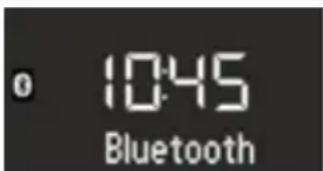
Fig. 47: Setting Bluetooth mode
-
Switch on the sonoroSTEREO 2.
-
Press the [MENU] button on the front of the device until the device shows the [Bluetooth] symbol on the display. You can also press the [Bluetooth] button on the remote control.
⇒ The Bluetooth mode is now active (Fig. 47).
- Connect your mobile phone or your Bluetooth-enabled device to the sonoroSTEREO 2 via Bluetooth.
i
The sonoroSTEREO 2 can store up to 8 Bluetooth-enabled devices and connects automatically to previously configured devices if Bluetooth is activated.
13.1 Connecting and deleting Bluetooth devices
Connecting Bluetooth-enabled devices
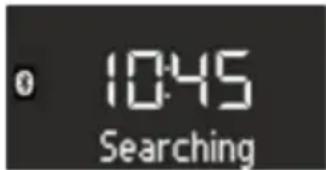
Fig. 48: Searching for Bluetooth
- Activate Bluetooth mode.
⇒ The display will show [Searching] and the [Bluetooth] symbol will flashing (Fig. 48).
- Connect your mobile phone or your Bluetooth-enabled device to the sonoroSTEREO 2 via Bluetooth.
⇔ After connecting, the display will permanently show the [Bluetooth] text.
Deleting connected devices
-
- Press and hold the [Stop] button on the front of the sonoroSTEREO 2 to delete the Bluetooth-enabled device and interrupt the connection.
13.2 Playing music via Bluetooth
Starting playback
- Press the click wheel or the [Play/Pause] button on the front of the sonoroSTEREO 2 or on the remote control to start playback.
Pausing playback
- To pause playback, press the click wheel or the [Play/Pause] button again.
i
The operation of an external device using the buttons on the sonoroSTEREO 2 is possible to a limited extent.
14 AUX playback
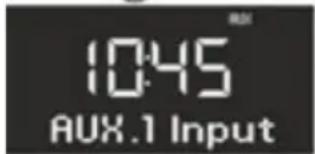
Using an RCA cable, you can connect and play additional audio devices via the AUX 1 port. Using a 3.5mm jack plug, you can connect additional audio devices to the sonoroSTEREO 2 via the AUX 2 port.
A
B
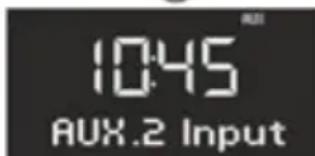
Fig. 49: Activating AUX playback
- Switch on the sonoroSTEREO 2.
- Plug the RCA cable into the AUX 1 port or the 3.5mm jack plug into the AUX 2 port on the rear of the device.
- Press the [MENU] button until the display shows [AUX.1 Input] or [AUX.2 Input]. You can also press the [AUX] button on the remote control.
The display will show the [AUX.1 Input] or [AUX.2 Input] (Fig. 49).
- Switch on the external device and start playback on the external device.
15 USB playback
You can connect additional devices and play music using the USB Charger & Playback port on the rear of the sonoroSTEREO 2.
i
The MP3 and WMA formats can be played back.
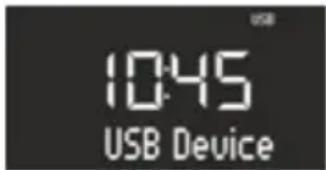
Fig. 50: Setting USB playback
- Switch on the sonoroSTEREO 2.
- Press the [MENU] button until the display shows [USB Device] or press the [USB]-button on the remote control.
⇔ The display shows [USB Device] (Fig. 50).
- Connect an external USB device to the sonoroSTEREO 2.
The display shows [Searching].
- Press the [Play/Pause] button to start playback.
i
You can display the ID3 metadata, if available, by pressing the [USB] button on the remote control. The sequence is:
Track → Artist → Album → Elapsed time
Pause/Stop USB playback
- Press the click wheel or the [Stop] button on the front of the device to pause or stop USB playback.
Selecting MP3 folders
- Press the [Preset 1] button to select the previous MP3 folder.
- Press the [Preset 2] button to select the next MP3 folder.
16 Relaxation and meditation music
The device can offer language-specific relaxation and meditation music, which is sorted into various folders.
| Language Folder Track Name | ||
| English 1-Brief relaxation 1 Intro - Relaxing by feeling your pulse | ||
| 2 Relaxing | by feeling your pulse | |
| 2 -Meditative relaxation 1 | Quick Relaxation Exercise - Relax by letting go of stress | |
| 2 Relaxing | by meditating on our breath | |
| 3 -Fantasising 1 | Intro - A journey of the imagination 'Beach and Warmth' | |
| 2 | A journey of the imagination "Beach and Warmth" | |
| 4 -Progressive muscle relaxa-tion | 1 Intro - Progresive Muscle Relaxation according to Jacobson | |
| 2 Progressive Muscle Relaxation according to Jacobson | ||
| 5 - Relaxation music 1 Relax Music 1 | ||
| 2 Relax Music 2 | ||
| 3 Relax Music 3 | ||
| 4 Relax Music 4 | ||
| 5 Relax Music 5 | ||
| 6 - Sounds of nature Ocean Surf | ||
| 2 | Whales | |
| 3 | Birds | |
| 4 | Rain | |
| 5 | Wind Chimes | |
| 6 | Fireplace | |
- Switch on the device.
- Hold down the[RELAX] button on the top of the device or the remote control.
⇒ The display shows the [Relax] symbol.
- Press the [SETUP] button.
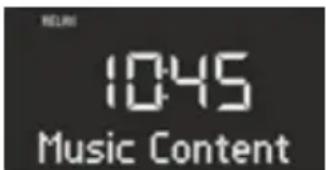
Fig. 51: Selecting the language menu
- Turn the click wheel until the display shows [Music Content].
- Press the click wheel to confirm your selection.
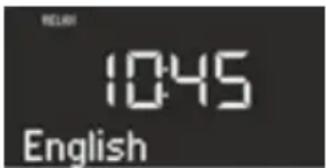
Fig. 52: Setting the language
- Turn the click wheel to set the desired language.
- Press the click wheel to confirm your selection.
- Press one of the memory buttons 1-6 to select the desired folder.
⇒ Playback of the first track in this folder begins.
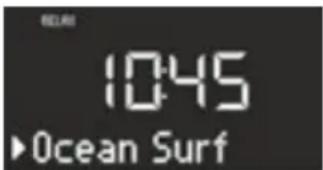
Fig. 53: Track name
- Press the [Next] or [Previous] button to select a track within the folder.
⇒ The display briefly shows the number and then the name of the track.
17 Demo Music playback
Demo Music can be played in Standby mode to demonstrate the device in a shop, for example.
Activating Demo Music mode
- Press and hold the click wheel for approx. 3 seconds.
The Demo Music mode is activated.
- Press the 1-6 preset keys on the remote control to select a demo track.
The display shows the demo music track.
i
The following buttons are active:
-Play/Pause
-Mute
-Stop
- Next
- Previous
Volume
Exiting Demo Music mode
- Press the [Standby] button or press and hold the click wheel for approx. 3 seconds to exit Demo Music mode.
18 Troubleshooting
Faults can occur on all electrical devices. This does not necessarily mean that the device is defective. Use the information in the following table to see if you can remedy the fault yourself.
| Malfunction Possible cause Elimination | |||
| The device does not switch on Mains | cable is not connected properly | Connect the mains cable properly (see Chapter 7.3 'Connecting the power cord' on page 92). | |
| No sound Volume is set to minimum | Increase the volume (see Chapter 10.2 'Setting the volume' on page 101). | ||
| Sound is switched off | Switch the sound on (see Chapter 10.3 'Setting playback to mute' on page 101). | ||
| Headphones are connected Remove | the headphones from the socket. | ||
| Different mode is selected | Set the correct mode (see Chapter 10.1 'Selecting a playback mode' on page 100). | ||
| CD playback does not start CD format | is not compatible Insert a different CD | CD into the CD slot. | |
| CD is dirty Clean the CD. | |||
| CD is damaged Insert a different CD | into the CD slot. | ||
| CD is upside down in the CD slot Eject | the CD and insert it in the CD slot the right way up. | ||
| USB playback does not start USB device | ice is not plugged in | Plug the USB device into the port on the rear of the device (see Chapter 15 'USB playback' on page 106). | |
| USB device is not compatible | Check if your USB device is compatible with the sonoroSTEREO 2. | ||
| USB device contains no readable audio files | Check the files on the USB device. | ||
| No or faulty Bluetooth connection In | Increase the distance between the sonoroSTEREO 2 and the TV. | ||
| Software is not up to date | Make sure that the current software version is installed on your external Bluetooth device. | ||
| Device does not react | Error in the device | Switch the device off and then on again. | |
| Poor FM/DAB reception quality | The FM/DAB antenna is not correctly positioned | Change the position of the FM/DAB antenna. | |
| Remote control does not work correctly or does not work at all | Distance is too great | Reduce the distance between the remote control and the device. | |
| The battery is empty | Exchange the battery in the remote control (see Chapter 7.5 'Preparing the remote control' on page 93). | ||
| Interference caused by other radio transmitters or devices | Increase the distance between the source of interference and the sonoroSTEREO 2. Connect the device to a different socket, so that the source of the interference and the sonoroSTEREO 2 are connected to different branch circuits. | ||
| Alarm does not work Alarm is not switched on | Switch the alarm on (see Chapter 9.6 'Switching the alarm function on/off' on page 100). | ||
| Alarm volume is set to minimum | Increase the volume (see Chapter 9.3 'Setting the alarm volume' on page 99). | ||
| Headphones are connected Remove | the headphones from the socket. | ||
| Alarm light does not work. sonoroLIGHT | HT is not connected. | Connect sonoroLIGHT and set the alarm light (see Chapter 9.5 'Programming the alarm light (sunrise)' on page 99). | |
| sonoroLIGHT is connected but the dimmer function is switched off. | Switch on the dimmer function on sonoroLIGHT. | ||
| The lamp connected to sonoro-LIGHT is switched off. | Switch the connected lamp on. | ||
19 Cleaning

NOTICE!
Material damage from improper cleaning!
Only clean the device from the outside using a dry, soft cloth. Never use abrasive or solvent-based cleaning agents as these may damage the surface of the device.
20 Technical Data
| Specification Value | |
| Dimensions (WxDxH) approx. 450 x 262.5 x 153 mm | |
| Weight approx. 6.3 kg | |
| FM reception range 87.5 MHz - 108 MHz | |
| DAB/DAB+ reception range 174.9 28 MHz - 239.2 MHz | |
| Tuning range (FM) 50 KHz | |
| Mains cable, power Input: 100 - 240 V ~50/60 Hz | |
| Bluetooth | Version: 4.1 Profile: AVRCP 1.0, A2DP 1.0 |
| AUX1-IN Port: RCA | Sensitivity: 500 mV |
| AUX2-IN Port: 3,5 mm jack | Sensitivity: 300 mV |
| LINE-OUT Port: RCA | Sensitivity: 2 V/47 kOhm |
| Batterien Lithium battery: 3 V, CR 2032 type (button cell) | |
| Laser Class 1 | |
| Ports Headphones, AUX1-IN, AUX2-IN, USB, Line-Out (Charge and play USB device) | |
| CD Playback formats: Audio CD, MP3 CD, WMA CD, CD-R* and CD-RW* (*Playback depends on the CD and the recording quality) | |
| USB Playback formats: MP3, WMA Output: DC 5V, 1A Compatible systems: FAT 16, FAT 32 (no NTFS systems are supported) Maximum capacity of the USB device: 32 GB Maximum supported file size: < 2 GB Maximum supported tracks: 999 Supports ID3 tags for track/artist display | |
i
Subject to technical modifications!
21 Disposal
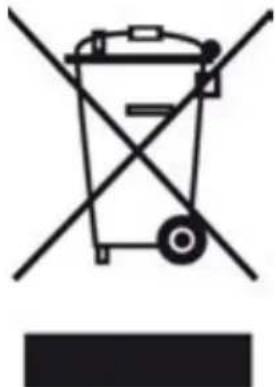
Fig. 54: Do not dispose of in household waste
It is not permitted to dispose of devices marked with this symbol with the household waste. They must be taken to a collection and recycling point for electrical and electronic devices. Information and advice regarding the disposal of old devices can be obtained from your local administration, the local waste disposal service provider or the retailer from which you purchased this product. Correct disposal of old devices will protect the environment and your health.
Batteries can contain heavy metals and must be treated as toxic waste. Dispose of all batteries at a municipal collection point or have them disposed of by a specialist company.
22 Symbols
Bluetooth

Fig. 55: Bluetooth symbol
Bluetooth
The Bluetooth® word mark and logos are registered trademarks owned by the Bluetooth SIG, Inc. and any use of such marks by sonoro audio GmbH is under license. Other trademarks and trade names are those of their respective owners..
23 Declaration of Conformity
Declaration of Conformity

Fig. 56: CE marking
Product: sonoroSTEREO 2
Model: SO-320
Manufacturer: sonoro audio GmbH, Nordkanalallee 94, 41464 Neuss, Germany
We hereby declare that the sonoroSTEREO 2 meets the essential requirements of the EMC Directive 2014/30/EU, the Low Voltage Directive 2014/35/EU, the Radio Equipment Directive 2014/53/EU, the Ecodesign Directive 2009/125/EC and the Directive on the restriction of the use of certain hazardous substances in electrical and electronic equipment 2011/65/EU, including changes valid at the time of the declaration, due to its design, engineering and build.
24 Warranty
When submitting warranty claims, the following is valid - without restricting - your legal rights:
Warranty claims can only be asserted within a period of max. 2 years (1 year in North America and Australia), calculated from the date of purchase.
sonoro audio GmbH shall, at its own discretion, repair or replace the device free of charge any defects caused by material or manufacturing defects within the warranty period.
In case of a complaint, please contact our customer service department. You can find contact details in this manual (Contact data on page 83) or at www.sonoro.de.
No new warranty period begins following repair or replacement of the device. The warranty period of 2 years (1 year in North America and Australia) from date of purchase remains applicable.
Excluded from the warranty are batteries, damage caused by improper use, normal wear and tear, as well as defects which only minimally affect the value or usability of the device. The warranty also expires for any modifications not made by our authorised service centre.
sonoroSTEREO 2 (SO-320)
[Tune to FM RDS station to set time & date].
i
Bass MAX
Voice MAX
Treble MAX

- SONOROSTEREO 2 (SO-320)
- STEREO-MUSIK-SYSTEM
- 13 BLUETOOTH-WEERGAVE 67
- I
- 13 BLUETOOTH-WEERGAVE
- STEREO MUSIC SYSTEM WITH BLUETOOTH® TECHNOLOGY
- TABLE OF CONTENTS
- 1 INTRODUCTION 83
- 2 FOR YOUR OWN SAFETY 83
- 3 SCOPE OF DELIVERY. 86
- 4 COMPATIBLE FORMATS 87
- 5 CONTROLS AND PORTS. 87
- 6 DISPLAY 91
- 7 UNPACKING THE DEVICE AND FIRST USE. 92
- 8 SETTING THE BASIC FUNCTIONS. 94
- 9 ALARM FUNCTION 98
- 10 GENERAL AUDIO PLAYBACK FUNCTIONS 100
- 11 RADIO PLAYBACK 101
- 12 CD PLAYBACK 104
- 13 BLUETOOTH PLAYBACK 105
- 14 AUX PLAYBACK. 105
- 15 USB PLAYBACK 106
- 16 RELAXATION AND MEDITATION MUSIC 107
- 17 DEMO MUSIC PLAYBACK 109
- 18 TROUBLESHOOTING 110
- 19 CLEANING. 111
- 20 TECHNICAL DATA. 112
- 21 DISPOSAL 113
- 22 SYMBOLS 113
- 23 DECLARATION OF CONFORMITY 113
- 24 WARRANTY 113
- 1 INTRODUCTION
- 2 FOR YOUR OWN SAFETY
- 2.1 SYMBOLS IN THIS MANUAL
- SAFETY INSTRUCTIONS
- WARNING
- CAUTION
- NOTICE
- HELPFUL TIPS AND RECOMMENDATIONS
- 2.2 INTENDED USE
- 2.3 CHILDREN AND PERSONS WITH LIMITED COGNITIVE ABILITIES
- 2.4 POWER SUPPLY
- 2.5 BATTERIES
- 2.6 LASER
- 2.7 TRANSPORT
- 2.8 AMBIENT CONDITIONS
- 2.9 OPERATION
- FIG. 2: SUBWOOFER
- 2.10 HEADPHONE USE
- 2.11 DEFECTS
- 2.12 CLEANING
- 3 SCOPE OF DELIVERY
- 3.1 SONOROSTEREO 2
- 3.2 SONOROLIGHT (AVAILABLE AS AN OPTION)
- 4 COMPATIBLE FORMATS
- COMPATIBLE CD FORMATS
- A NOTICE
- COMPATIBLE AUDIO FORMATS
- 5 CONTROLS AND PORTS
- SONOROSTEREO 2 REAR VIEW
- REMOTE CONTROL
- 6 DISPLAY
- 7 UNPACKING THE DEVICE AND FIRST USE
- 7.1 UNPACKING THE DEVICE
- 3
- 7.2 INSERTING THE BATTERY
- 7.3 CONNECTING THE POWER CORD
- 7.4 CONNECTING THE ANTENNA
- 7.5 PREPARING THE REMOTE CONTROL
- 7.6 CONNECTING SONOROLIGHT
- 7.7 CONNECTING THE HEADPHONES
- 8 SETTING THE BASIC FUNCTIONS
- 8.1 SWITCHING ON THE DEVICE FOR THE FIRST TIME
- 8.2 STANDBY MODE
- SETTING THE TIME MANUALLY
- SETTING THE DATE MANUALLY
- FIG. 12: SETTING THE DATE
- SWITCHING THE DATE ON/OFF
- 8.3 SETTINGS MENU
- SETTING THE TIME FORMAT
- SETTING THE DATE FORMAT
- SETTING DISPLAY DIMMER
- SETTING ALARM LIGHT
- 8.4 ADJUSTING THE SOUND
- 8.4.1 SETTING BASS AND TREBLE
- CONFIGURING SETTINGS VIA THE DEVICE
- 8.4.2 SETTING THE EQUALIZER
- ACTIVATING AND SETTING THE EQUALIZER
- FIG. 23: SETTING THE EQUALIZER
- DEACTIVATING THE EQUALIZER
- 8.5 SOUND EFFECT
- SWITCHING THE SOUND EFFECT ON
- SWITCHING OFF THE SOUND EFFECT
- 8.6 SETTING THE SLEEP TIMER
- SETTING THE SLEEP TIMER
- FIG. 24: SWITCHING ON/OFF THE SLEEP TIMER
- SWITCHING OFF THE SLEEP TIMER
- SETTING THE TIME INTERVAL FOR THE SLEEP TIMER
- DIMMING LIGHT (SUNSET)
- 8.7 SWITCHING THE LIGHT ON AND OFF
- 9 ALARM FUNCTION
- 9.1 SETTING THE ALARM TIME
- 9.2 SETTING THE ALARM SOURCE
- 9.3 SETTING THE ALARM VOLUME
- 9.4 SETTING THE ALARM REPETITION
- 9.5 PROGRAMMING THE ALARM LIGHT (SUNRISE)
- EXAMPLE
- 9.6 SWITCHING THE ALARM FUNCTION ON/OFF SWITCHING THE ALARM FUNCTION ON
- SWITCHING THE ALARM FUNCTION OFF
- 9.7 SWITCHING OFF THE ALARM CLOCK AFTER THE ALARM SOUNDS
- 9.8 SETTING THE SNOOZE FUNCTION
- 10 GENERAL AUDIO PLAYBACK FUNCTIONS
- 10.1 SELECTING A PLAYBACK MODE
- 10.2 SETTING THE VOLUME
- 10.3 SETTING PLAYBACK TO MUTE
- MUTE
- SWITCHING THE SOUND BACK ON
- 11 RADIO PLAYBACK
- 11.1 FM RADIO
- 11.1.1 SEARCHING AN FM STATION
- AUTOMATIC TUNING
- CONDITION
- MANUAL TUNING
- 11.1.2 STORING FM STATIONS
- VIA THE REMOTE CONTROL
- IN THE MENU
- 11.1.3 ACCESSING SAVED FM STATIONS
- 11.2 DAB RADIO
- 11.2.1 FINDING A DAB STATION
- REMOVING INACTIVE STATIONS - PRUNE LIST CONDITION
- 11.2.2 STORING A DAB STATION
- 11.2.3 ACCESSING SAVED DAB STATIONS
- 11.2.4 ACCESSING DAB INFORMATION
- 11.2.5 SETTING THE DRC
- 12 CD PLAYBACK
- ADJUSTING CD PLAYBACK
- REPEATING A SINGLE TRACK
- REPEATING ALL TRACKS
- SHUFFLE
- CD RESUME
- 13 BLUETOOTH PLAYBACK
- 13.1 CONNECTING AND DELETING BLUETOOTH DEVICES
- DELETING CONNECTED DEVICES
- 13.2 PLAYING MUSIC VIA BLUETOOTH
- STARTING PLAYBACK
- PAUSING PLAYBACK
- 14 AUX PLAYBACK
- 15 USB PLAYBACK
- PAUSE/STOP USB PLAYBACK
- SELECTING MP3 FOLDERS
- 16 RELAXATION AND MEDITATION MUSIC
- 17 DEMO MUSIC PLAYBACK
- ACTIVATING DEMO MUSIC MODE
- EXITING DEMO MUSIC MODE
- 18 TROUBLESHOOTING
- 19 CLEANING
- 21 DISPOSAL
- 22 SYMBOLS
- BLUETOOTH
- 23 DECLARATION OF CONFORMITY
- DECLARATION OF CONFORMITY
- 24 WARRANTY
Brand : SONORO
Model : Stereo 2
Category : Radio